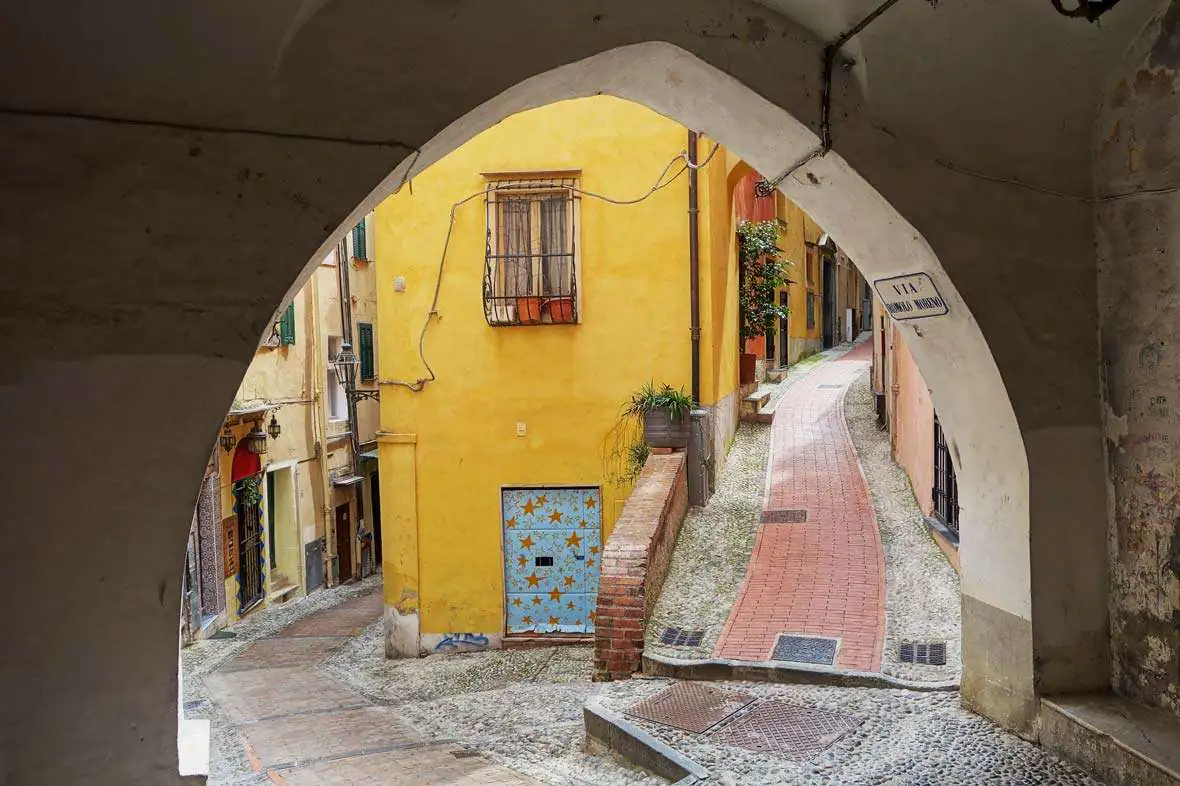
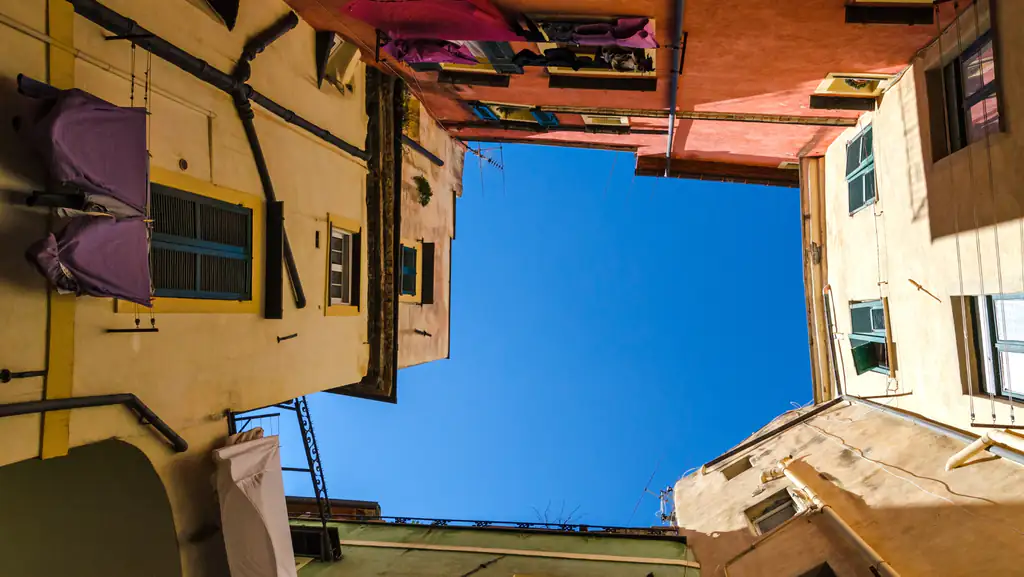
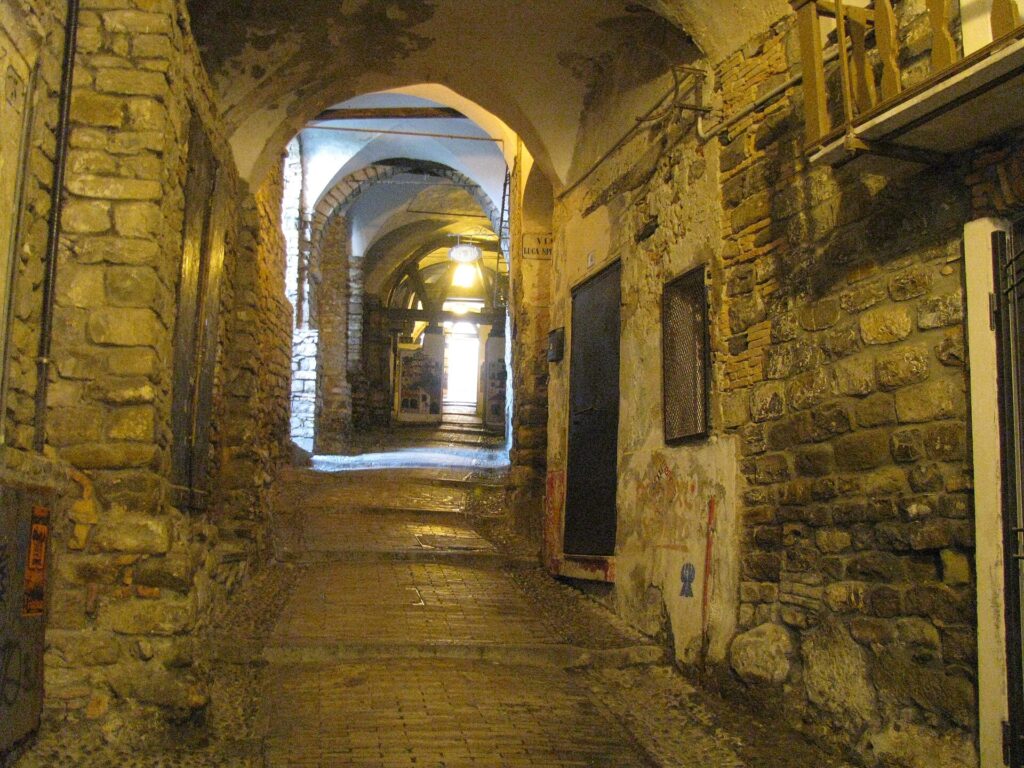
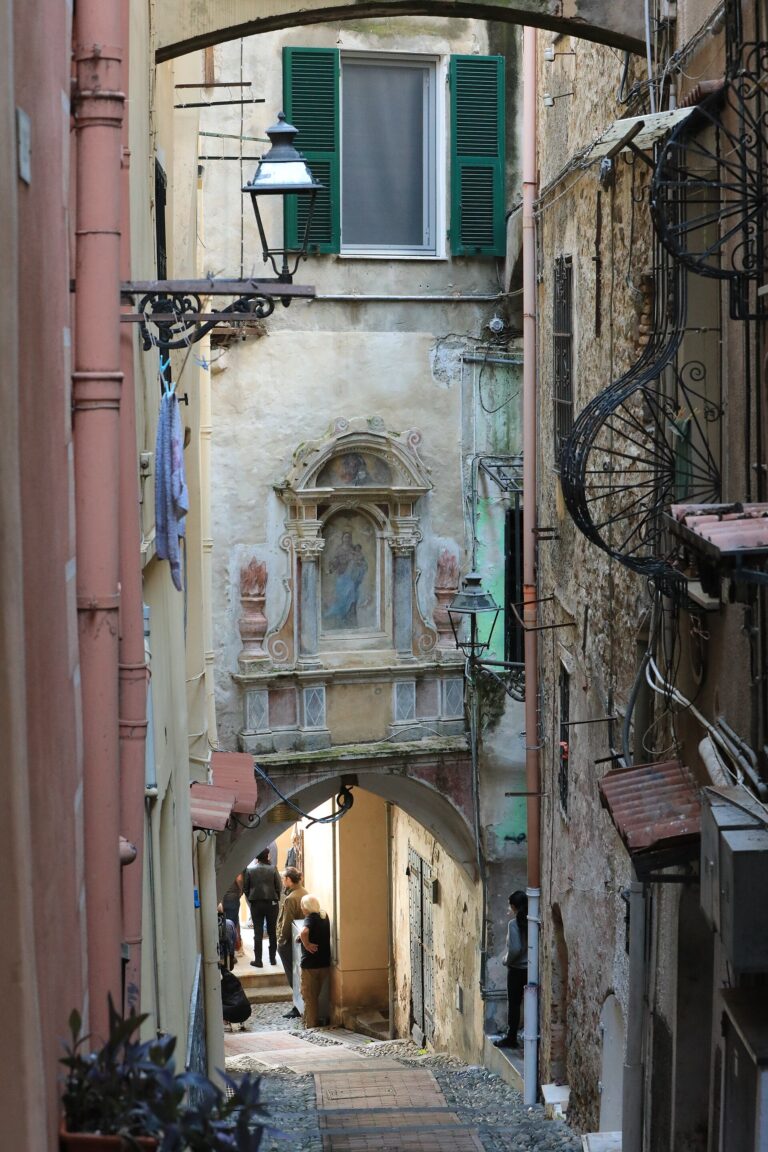
La Pigna is the medieval old town of Sanremo: a hillside district built in concentric rings, with steep alleys, staircases, arches and covered passages climbing from the newer town up to the gardens and the sanctuary at the top. You explore it on foot, for free, in one to two hours; the classic entrance is the Porta di Santo Stefano.
The name comes from the shape of the quarter, which from above looks like a pine cone. There is no ticket, but there are plenty of stairs: good shoes matter more than a guidebook.
By Italian Riviera editorial team·Updated on ·5 min read
History: why it looks like this
The core grew around the 11th century on a defensible hill and was extended and strengthened until the 16th century to protect residents from Barbary corsair raids. That is why the quarter grows in rings, with houses leaning on each other, gates and covered passages: it was a town designed to shut itself in.
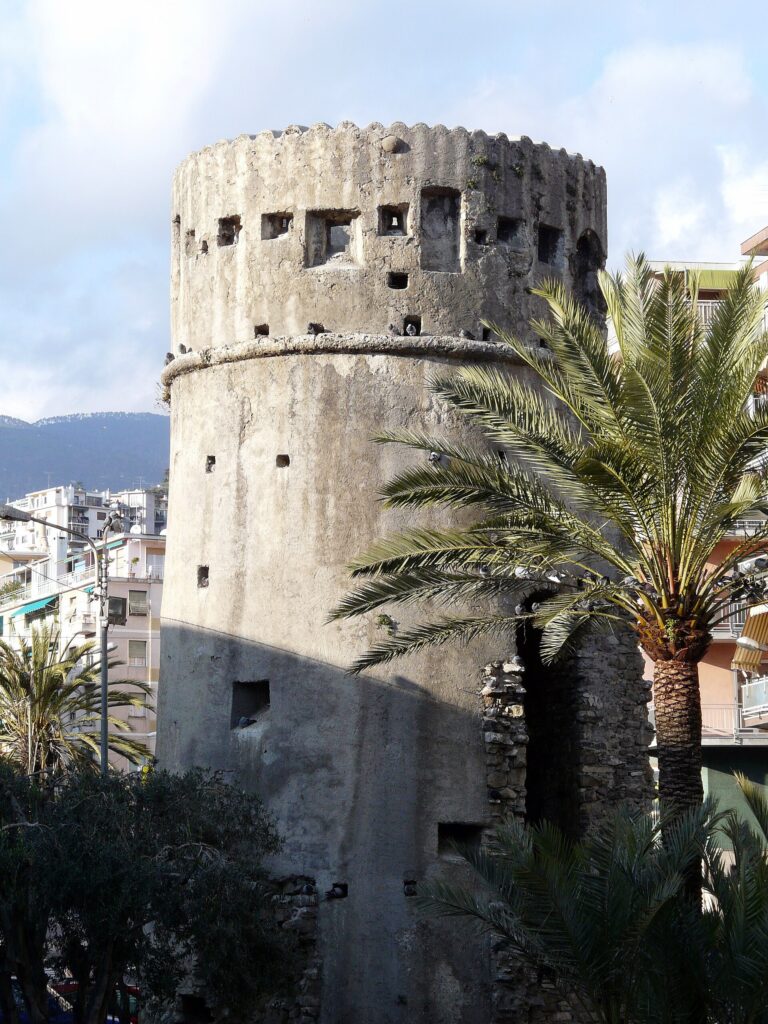
In 1550 the Torre Saracena was built, a slim circular lookout tower, now separate from the quarter. After the revolt against Genoa in 1753 the Genoese demolished the medieval castle at the top; the earthquake of 23 February 1887 flattened more houses and left room for the gardens that now bear Queen Elena’s name. In the 19th century tourism pulled the city towards the sea and the Pigna was left behind for decades.
Porta di Santo Stefano and the walls
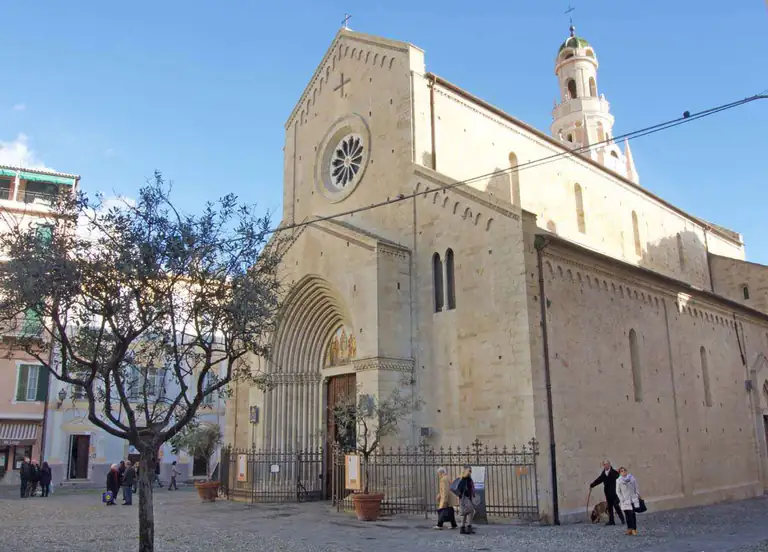
The Santo Stefano arches, from the 14th century, mark the entrance from the lower side and divide the old town from the new one. Walking up from Piazza Cassini you pass three gates from different eras: the oldest, from the first half of the 14th century, has a marble plaque dated 1321 with worn coats of arms; then a 15th-century one; finally a 16th-century gate, built against the corsairs, with a tower now turned into a home. At San Giuseppe a gate also keeps its machicolation, the opening used to strike attackers.
A walking route through the Pigna
There is no official marked route: this is a sensible order for climbing without repeating streets. Keep a map open, the alleys are confusing.
Rivolte di San Sebastiano and Piazza dei Dolori
Just inside the gate, on the left, the covered passage of the Rivolte di San Sebastiano leads to Piazza dei Dolori: arcades, medieval coats of arms and the Oratory of San Sebastiano, built after the plague of 1502 and with restored 17th-century frescoes. Pope Paul III is recorded as praying here in May 1538; a fire damaged the oratory on the night of 16–17 April 1945. Palazzo Gentile-Spinola also stands on the square.
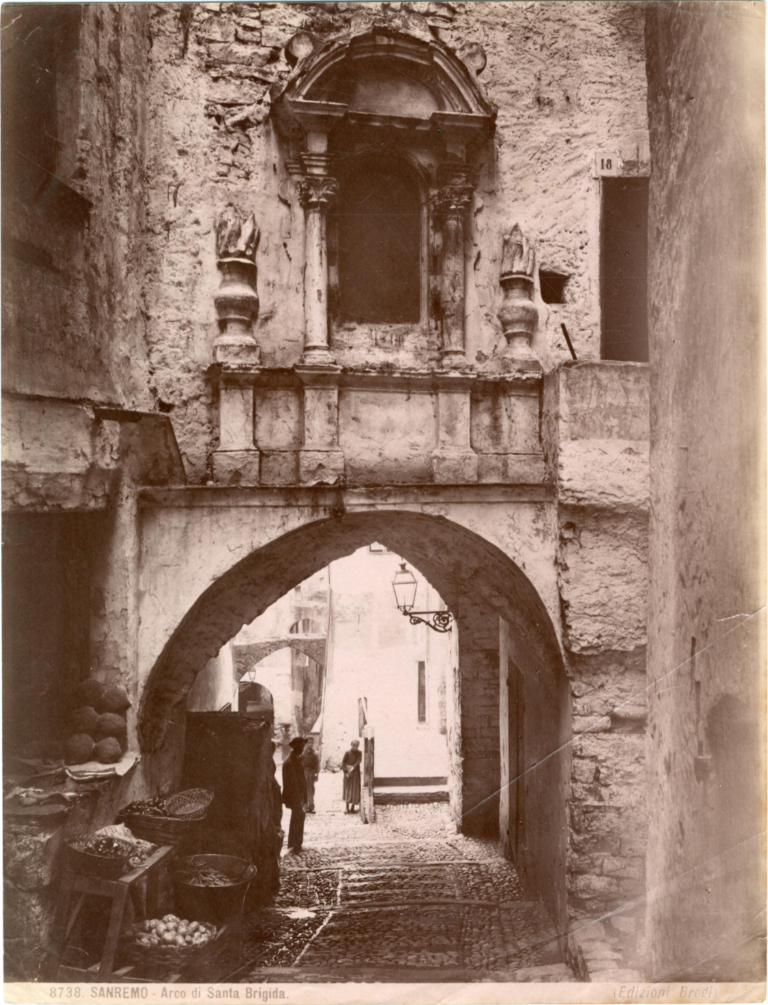
Piazza Santa Brigida
This is the liveliest square in the quarter: a market and, in summer, an open-air cinema. The deconsecrated church is now a cultural centre. The square was redone as part of the neighbourhood regeneration works.
Via Palma and Piazza della Cisterna
Via Palma was the main axis of the quarter, lined with the houses of leading families: Casa Manara, considered the finest house in Sanremo, hosted Paul III on 17–18 May 1538, and Palazzo Sapia-Rossi recalls the dinner of Napoleon, then an artillery commander, on 7 September 1794. Piazza della Cisterna is named for the cisterns that collected rainwater before the aqueduct; there is a votive shrine from the late 18th century, the «Madonna del latte».
San Giuseppe church and San Costanzo oratory
San Giuseppe, begun in the 17th century and finished in the 19th, is the largest church in the quarter. The Oratory of San Costanzo was rebuilt in 1897 after the 1887 earthquake and holds the martyr’s relics and the body of St Faustino, patron saint of florists.
At the top: gardens and sanctuary
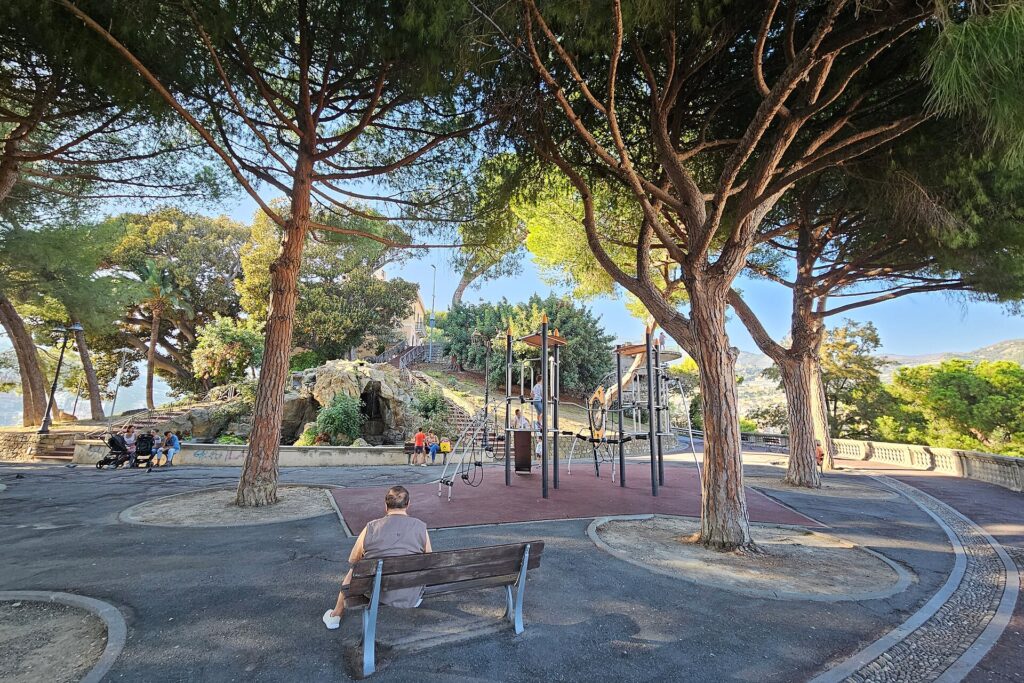
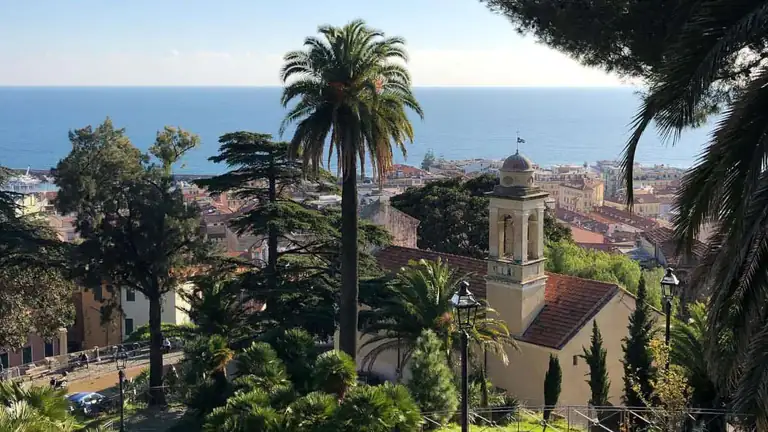
The Regina Elena Gardens date from after the 1887 earthquake, in the upper part of the quarter, and give a wide view over roofs and sea. Higher still, about 100 metres above sea level, the Sanctuary of the Madonna della Costa is Baroque (building of 1630, 18th-century dome) and its forecourt looks out over the whole bay.
Come down a different way: the Pigna is best enjoyed on the descent.
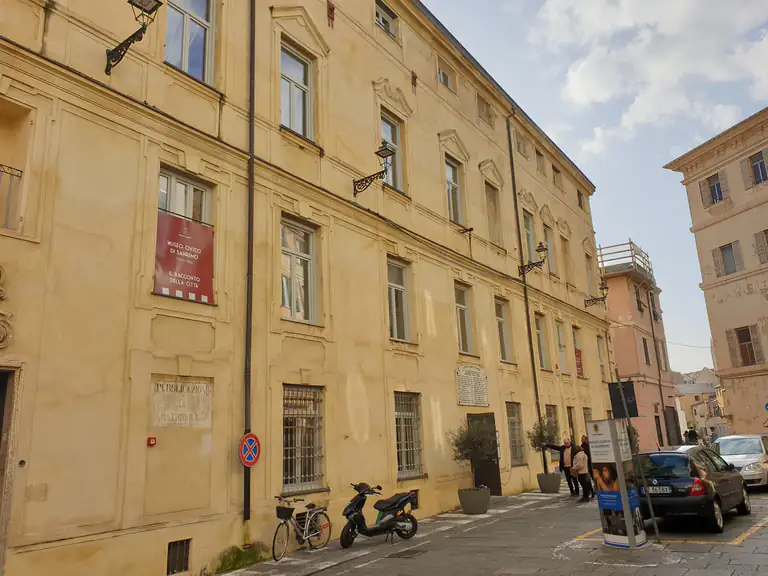
The Civic Museum has been in Palazzo Nota, Piazza Alberto Nota 2, since 2016. According to the town it opens Tuesday to Sunday, 10:00–18:00 (page updated May 2026); summer hours differ.
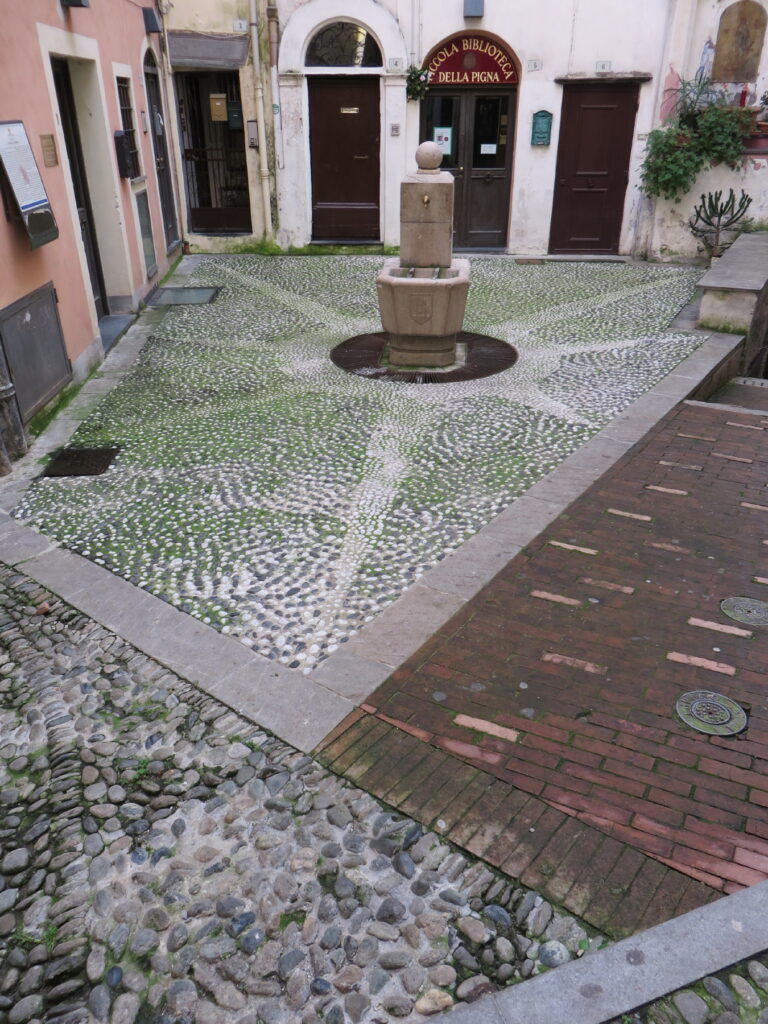
The quarter is coming back to life: craft workshops, a few bistros, redone squares. It is part of the «La Pigna UP» project, also funded by Italy’s recovery plan (PNRR), which covers the restoration of squares, streets and historic buildings, including the Santa Brigida oratory, the Bottini Chapel and the gardens. We found no 2026 update on the state of the building sites: if you meet barriers or closed paths, that is why.
Practical tips
Go in the morning or late afternoon: in summer the steps are hot and shadeless.
Wear shoes with good soles; pushchairs and suitcases are awkward and wheelchairs are often impossible.