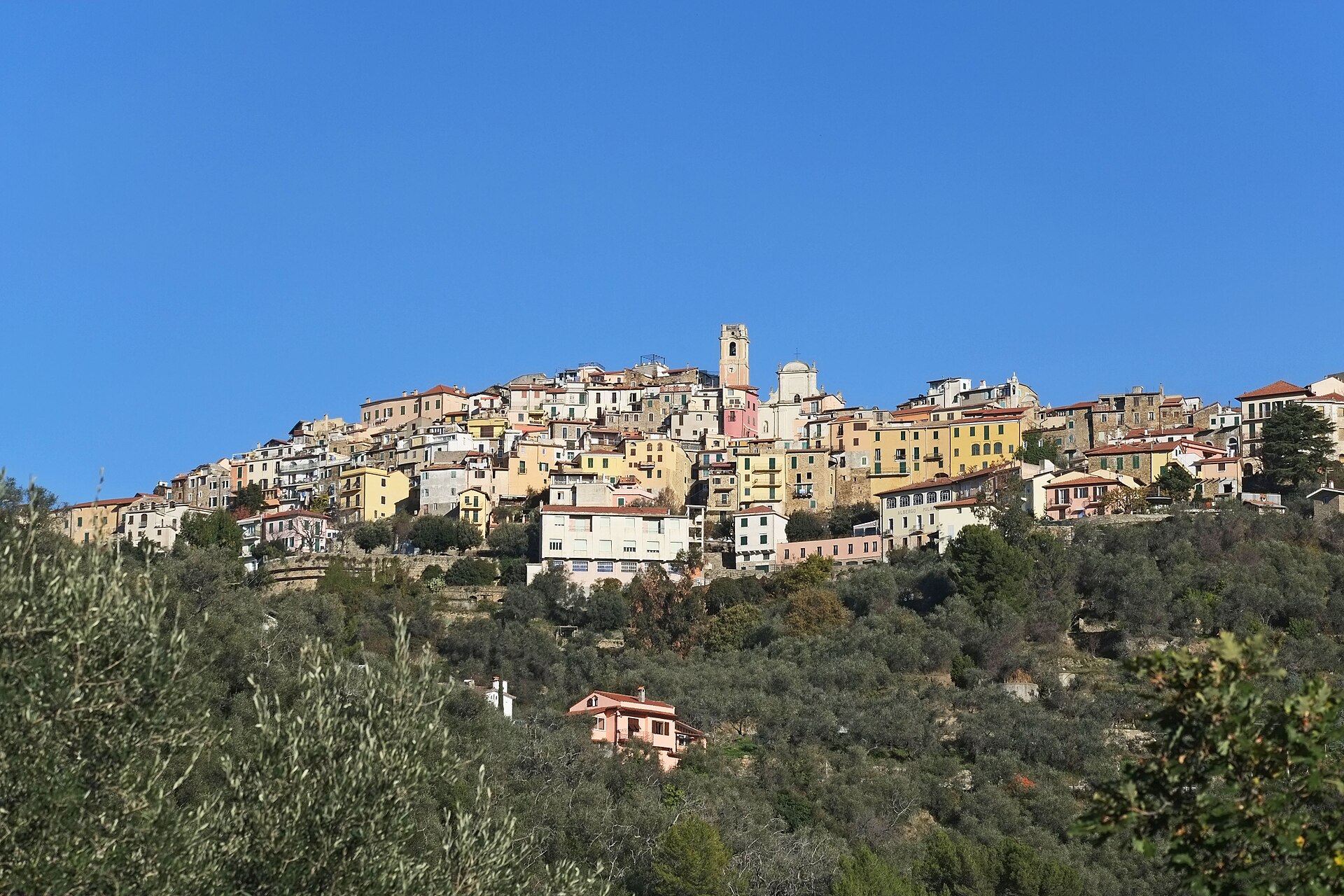
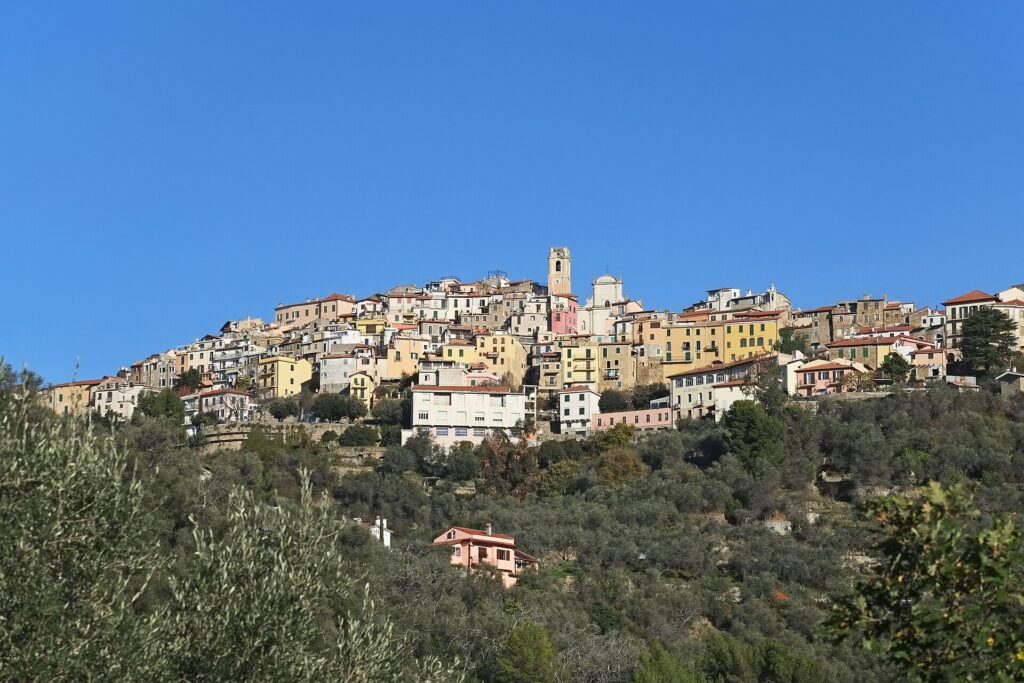
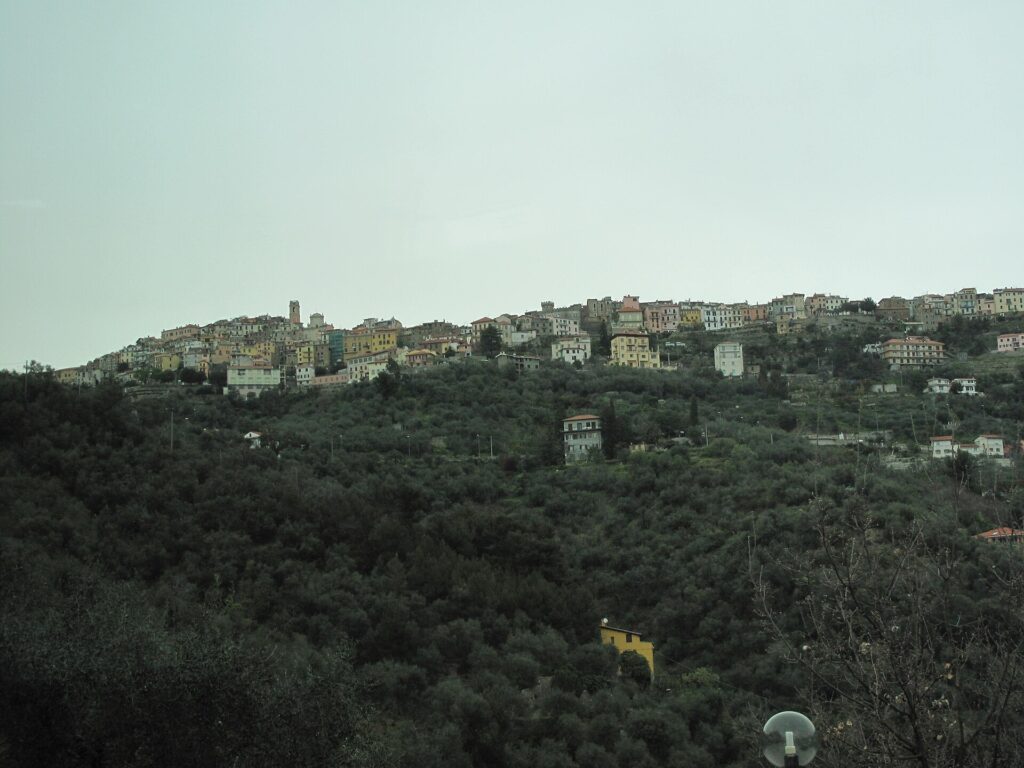
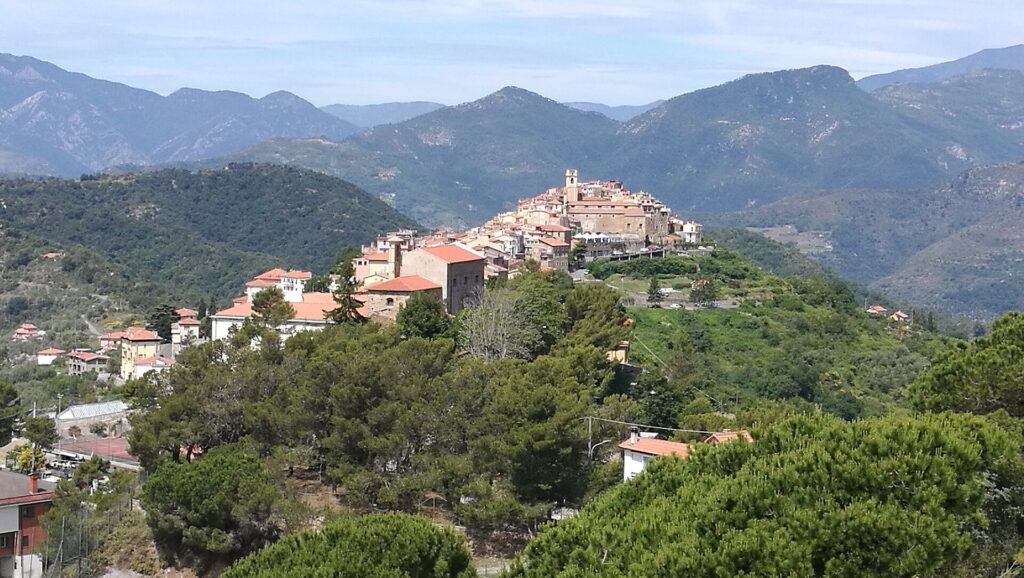
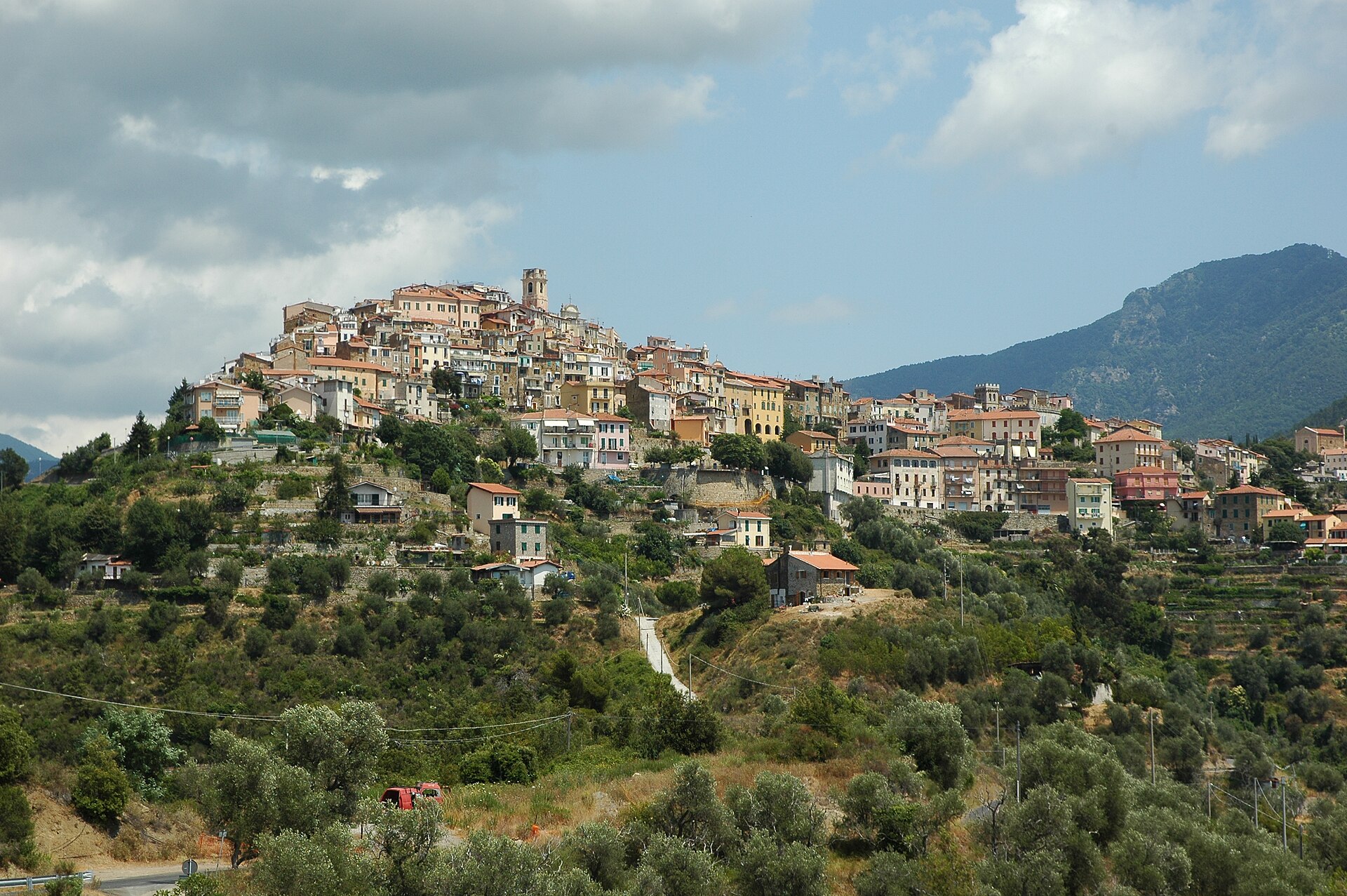
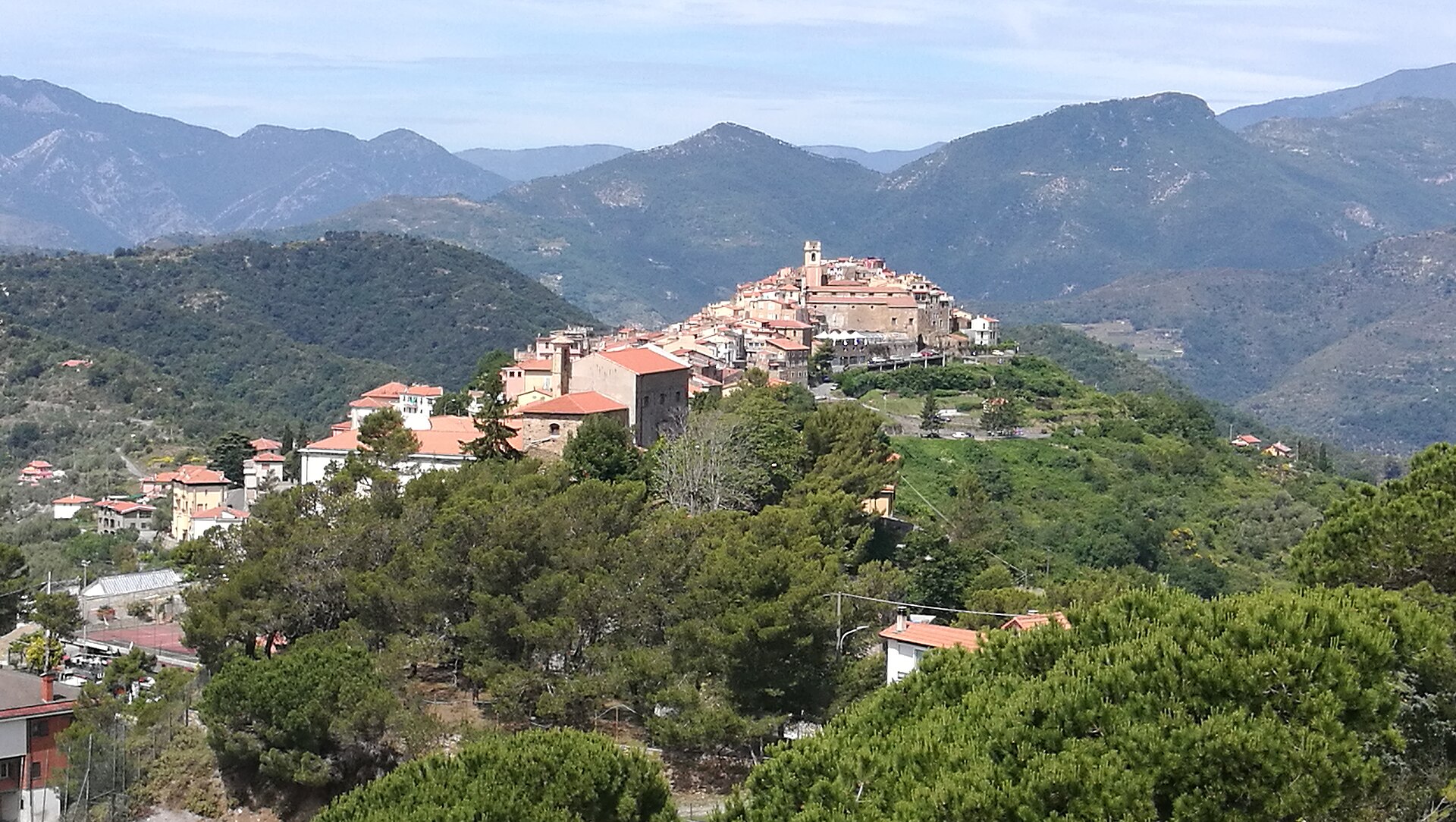
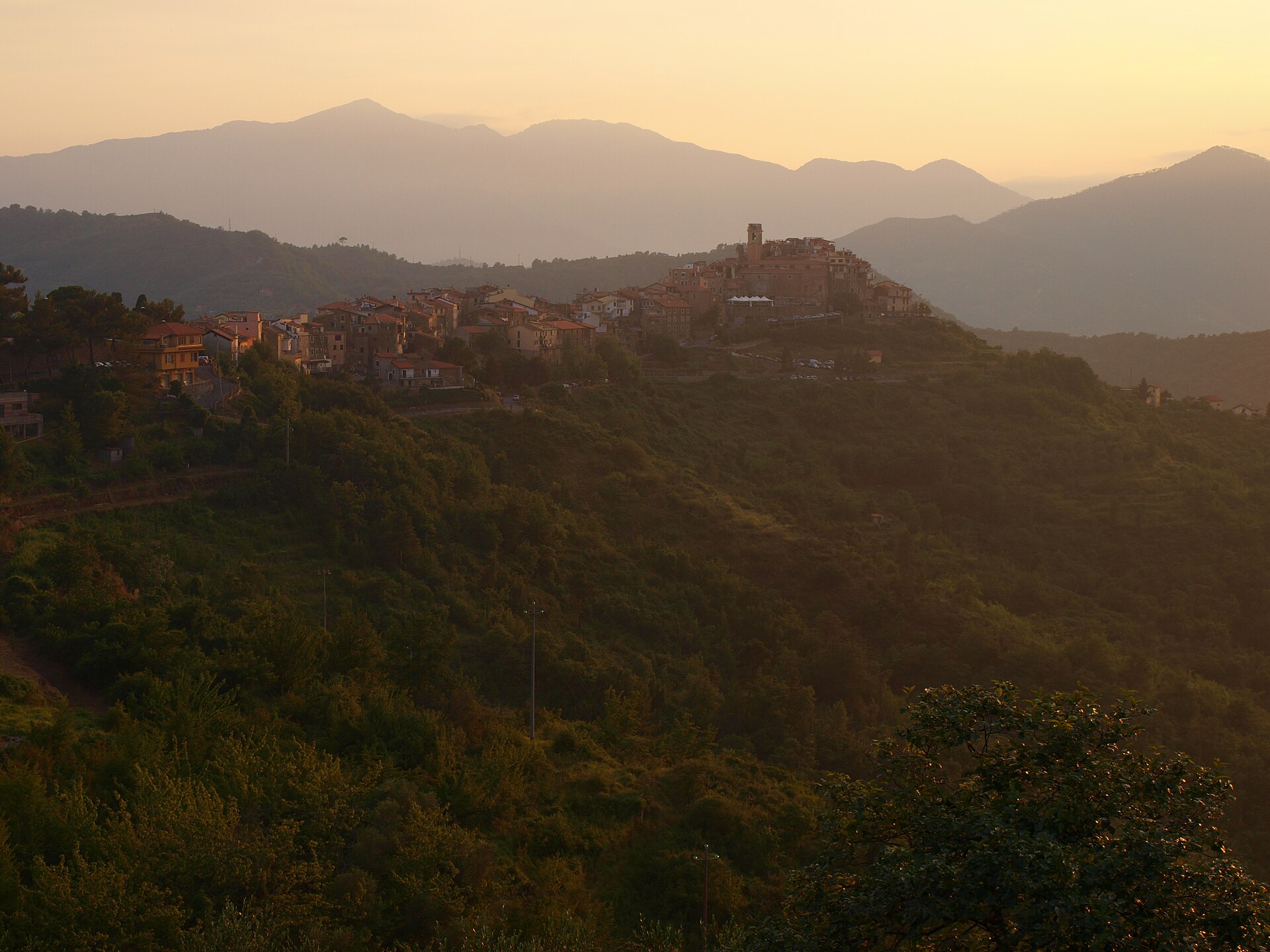
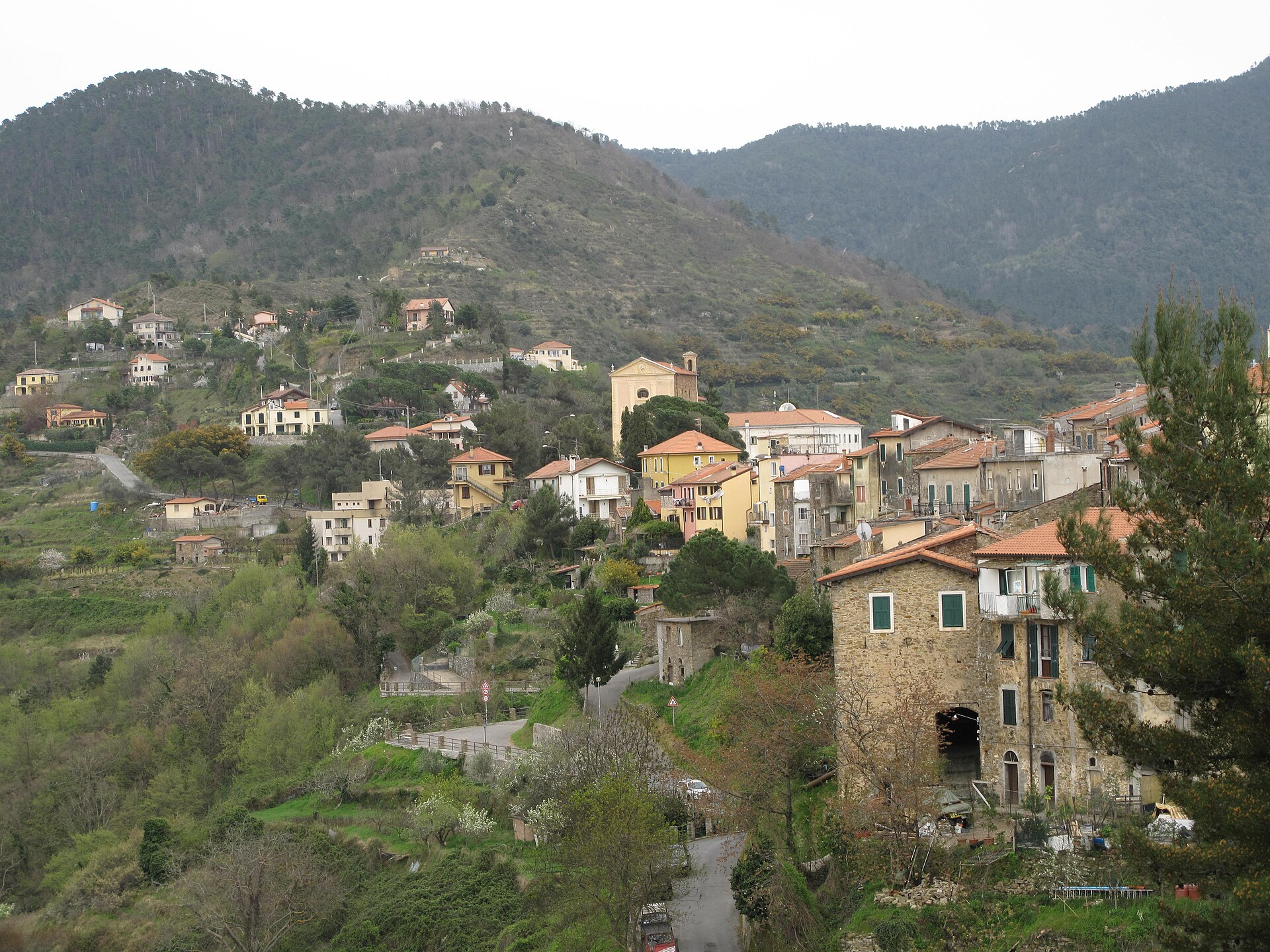
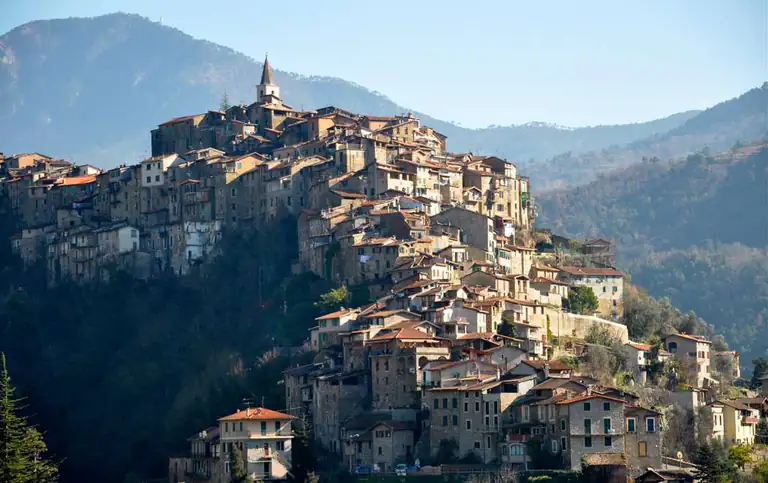
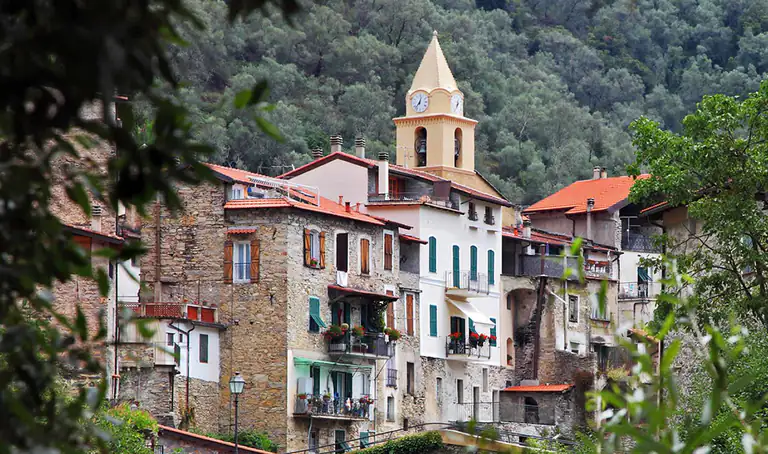
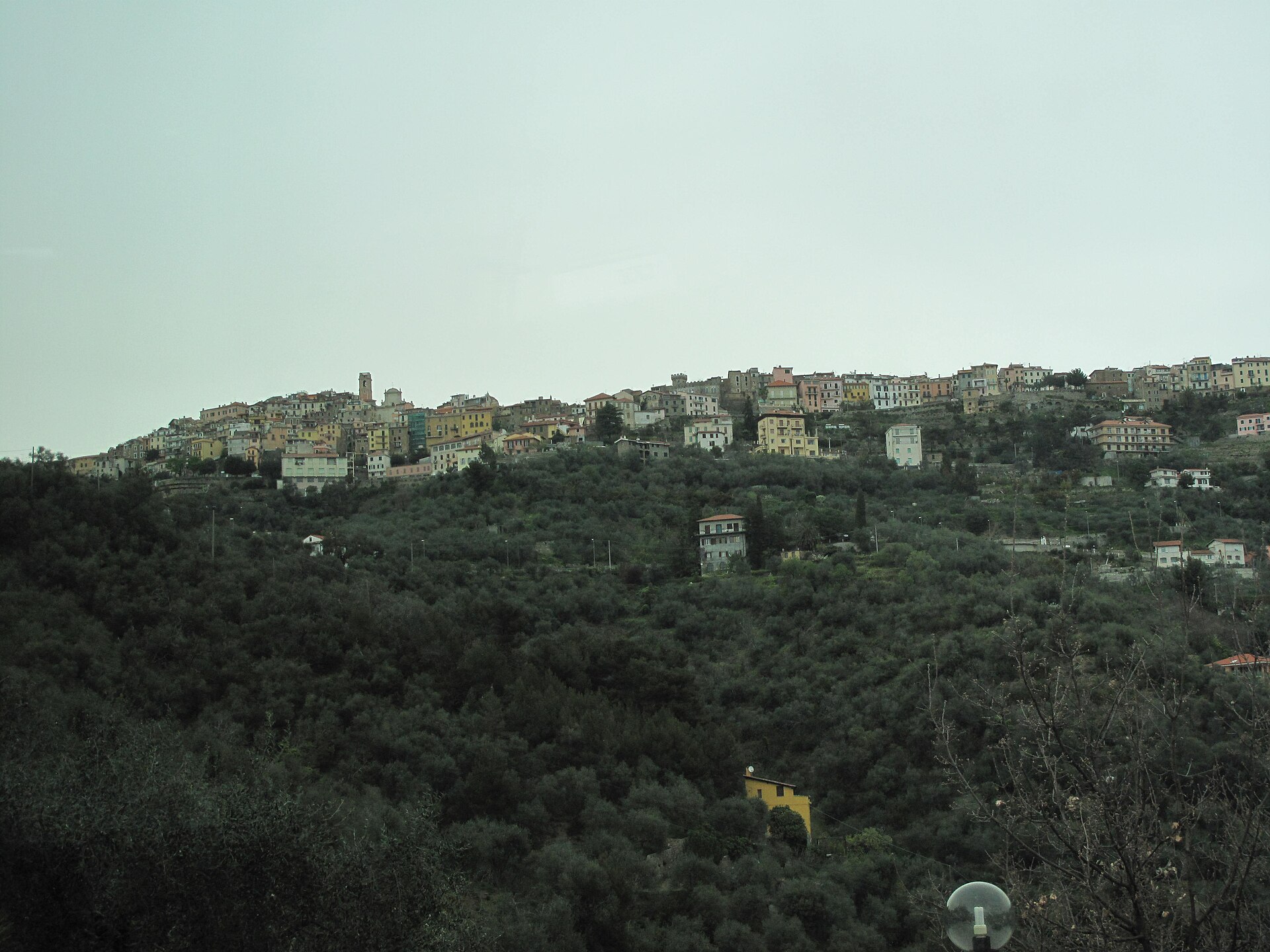
Perinaldo is a hill village in the hinterland of Imperia, 572 metres above sea level, on a ridge between the Nervia valley and the Verbone valley, behind Bordighera and Vallecrosia. About 800 people live here. You get steep lanes, a square with a view of the sea and, down in the valley, the roofs of Apricale. It belongs to the Most Beautiful Villages of Italy and is a Touring Club Orange Flag village (in 2026 the certification is listed as under renewal).
People come for one reason: Giovanni Domenico Cassini was born here in 1625. From Paris he discovered four moons of Saturn and the gap in its rings that carries his name. The village remembers him with an observatory on the roof of the town hall, a museum, a sundial inside the church of the Visitation and a scale model of the solar system along a street. On top of the stars comes the violet artichoke, a Slow Food Presidium grown here between 400 and 600 metres.
It is a half-day or full-day trip, easy to combine with Apricale, Dolceacqua and the sea at Bordighera, about half an hour away by road. There is no beach and no nightlife: you walk the village slowly, ideally with an evening booked at the observatory. Everything about the observatory, how to visit and Cassini is in our guide to the Cassini Observatory.
By Italian Riviera editorial team·Updated on ·8 min read
Where is Perinaldo?
Perinaldo is in Liguria (Riviera di Ponente, Riviera dei Fiori, province of Imperia).
The old centre takes about two hours on foot, stops included. The lanes are steep and partly stepped, so wear comfortable shoes.
The old town and its lanes
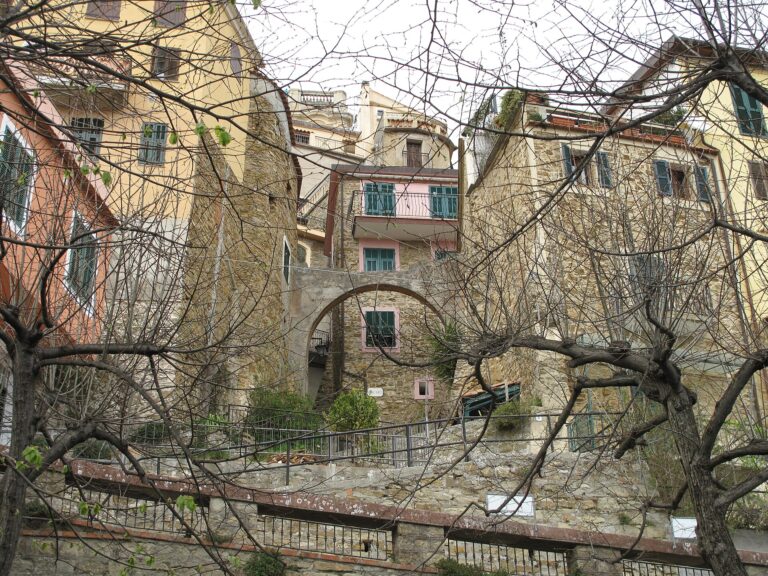
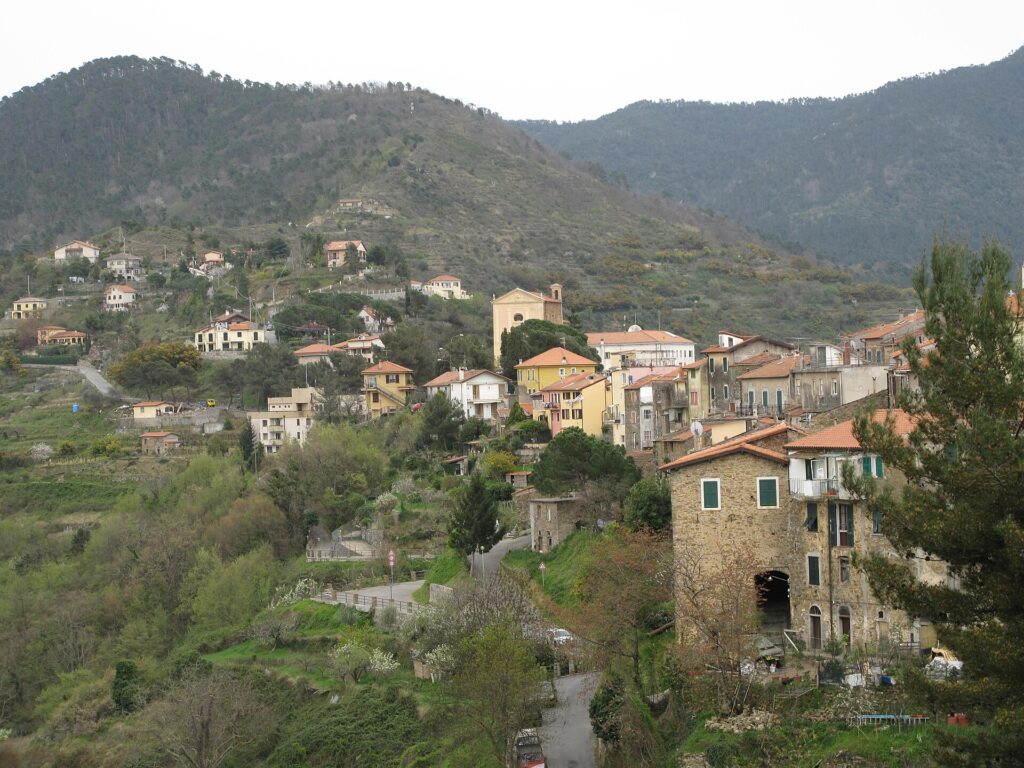
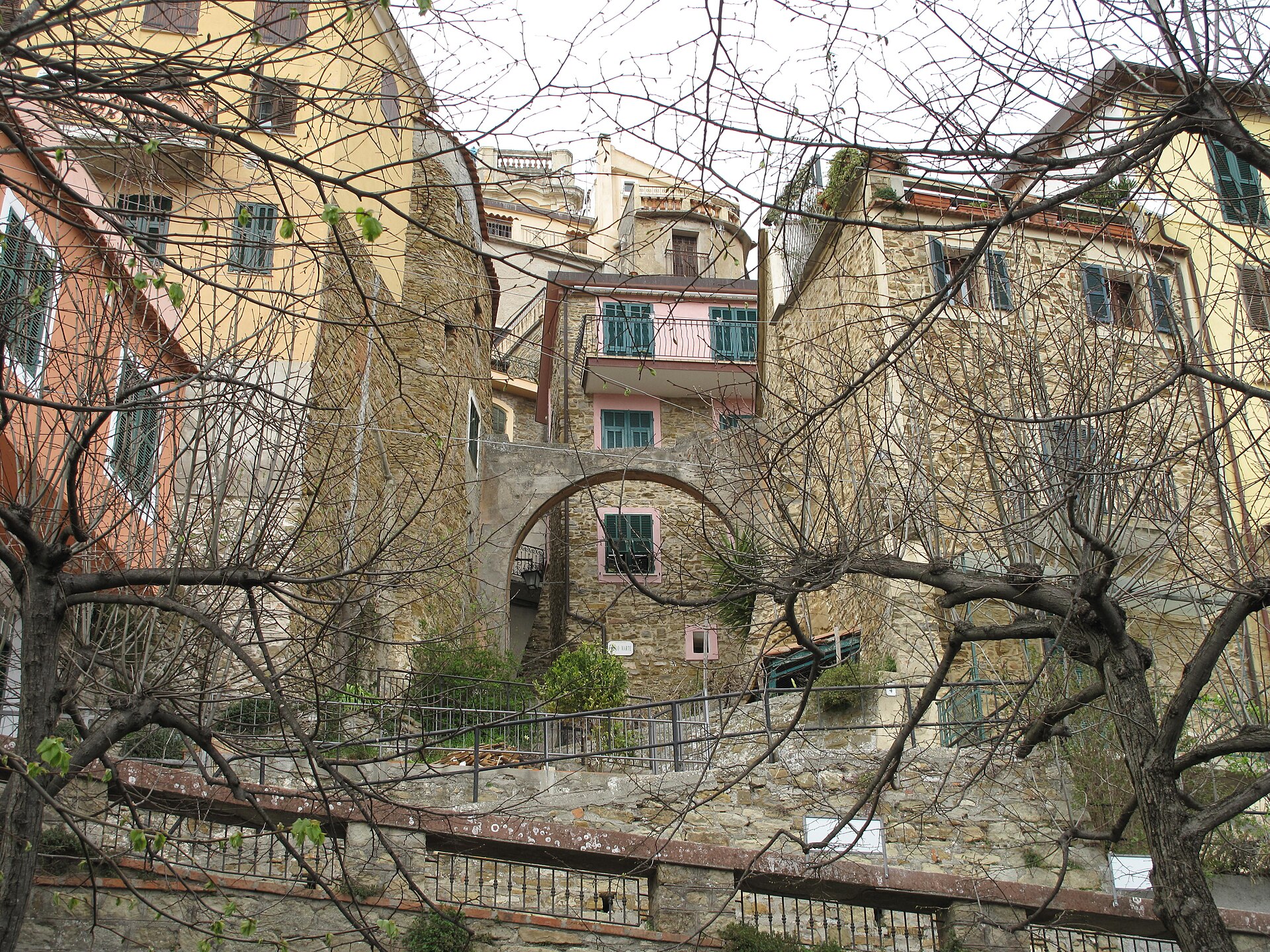
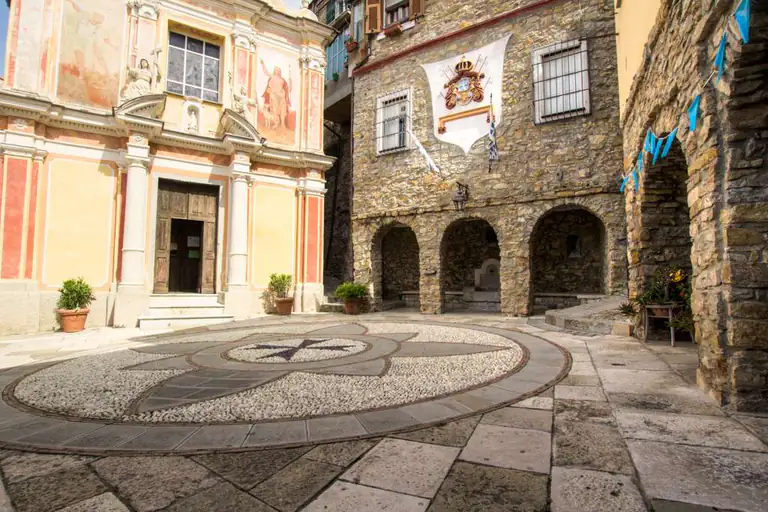
Perinaldo is a ridge-top village: tall narrow houses, arches over the lanes, stone stairs and small squares that suddenly open onto the hills. The name comes from Podium Rainaldi, the “hill of Rinaldo” of the counts of Ventimiglia. The castle is mentioned as early as 1164, from 1288 the village was a Doria fief like Dolceacqua and Apricale, and in 1672 the castle fell to Corsican troops serving Genoa. The ruins stand west of the village.
The parish church of San Nicolò da Bari
The main church is medieval in origin and was rebuilt in Baroque style in the 17th century. Sources disagree on the year it was built, so we give no date. Inside you find three naves, a 15th-century wooden crucifix, a 17th-century canvas from the workshop of Guercino, the Maraldi family chapel and an organ built in 1829 by Giosuè Agati, now restored. The patron saint’s day is 6 December.
Sant'Antonio and San Benedetto
The church of Sant’Antonio da Padova was built in 1641 by the Franciscan friars, who also replaced the wild olive with the Taggiasca olive tree here. It has a single nave and a Nativity attributed to Bartolomeo Puppo. The oratory of San Benedetto dates from 1580. Both are short stops.
The G. D. Cassini Observatory
The municipal observatory sits on the roof of the town hall, a former convent, and opened in 1989. Its 3-metre dome holds six people at most; since 2020 it has been run by Orbita APS. What matters for visitors: in 2026 it can be visited only during events, with compulsory online booking, and in mid-October the calendar was empty. The public evenings are mostly July to September. Details are in the Cassini Observatory guide.
The Cassini Museum
The museum is in the same building, in piazzale Sant’Antonio. Open since 1997, it holds documents, observation notes, drawings, letters and portraits in ten themed display cases, plus a Cassini–Maraldi family tree. Opening hours are not confirmed: a 2020 ministry record gives weekday mornings, while the observatory operator now speaks of visits at events only. Check hours and booking with the Information Office (tel. +39 380 4761705) before you climb up.
Via Cassini and the scale solar system
Murals and panels along via Cassini recall the astronomer and lay out a solar system to scale. It is free, you simply walk along it, and children like it. We have no official length for the route.
The sundial in the Church of the Visitation
The sanctuary stands at the entrance to the village, near the turn-off for Apricale, and dates from 1602–1612. Since 2007 it has held a camera-obscura sundial: a 15 mm hole sends a sunbeam onto a line about 20 metres long at solar noon. It was designed by Giancarlo Bonini with the Stellaria association. A story says the church was aligned on the meridian thanks to Cassini, but there are no documents, and today it is off by about 6.5 degrees.
Casa Maraldi and Castello Maraldi
Giacomo Filippo Maraldi was Cassini’s nephew and assistant, and studied the poles of Mars and comets. The so-called Castello Maraldi is a noble house rebuilt around 1730 and traditionally linked to Cassini’s birth. It is a private home, so you see it only from outside. Casa Maraldi in the old town keeps remains of the family library and instruments; visits are not confirmed.
The fountain and the square
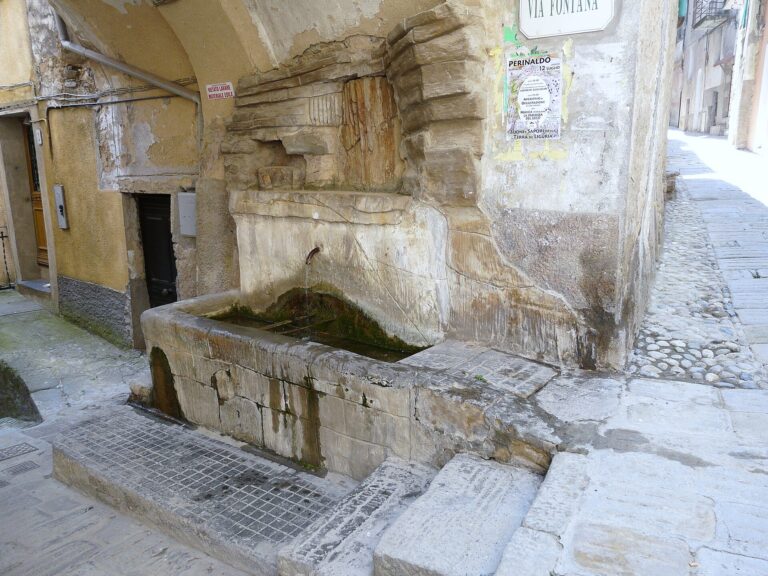
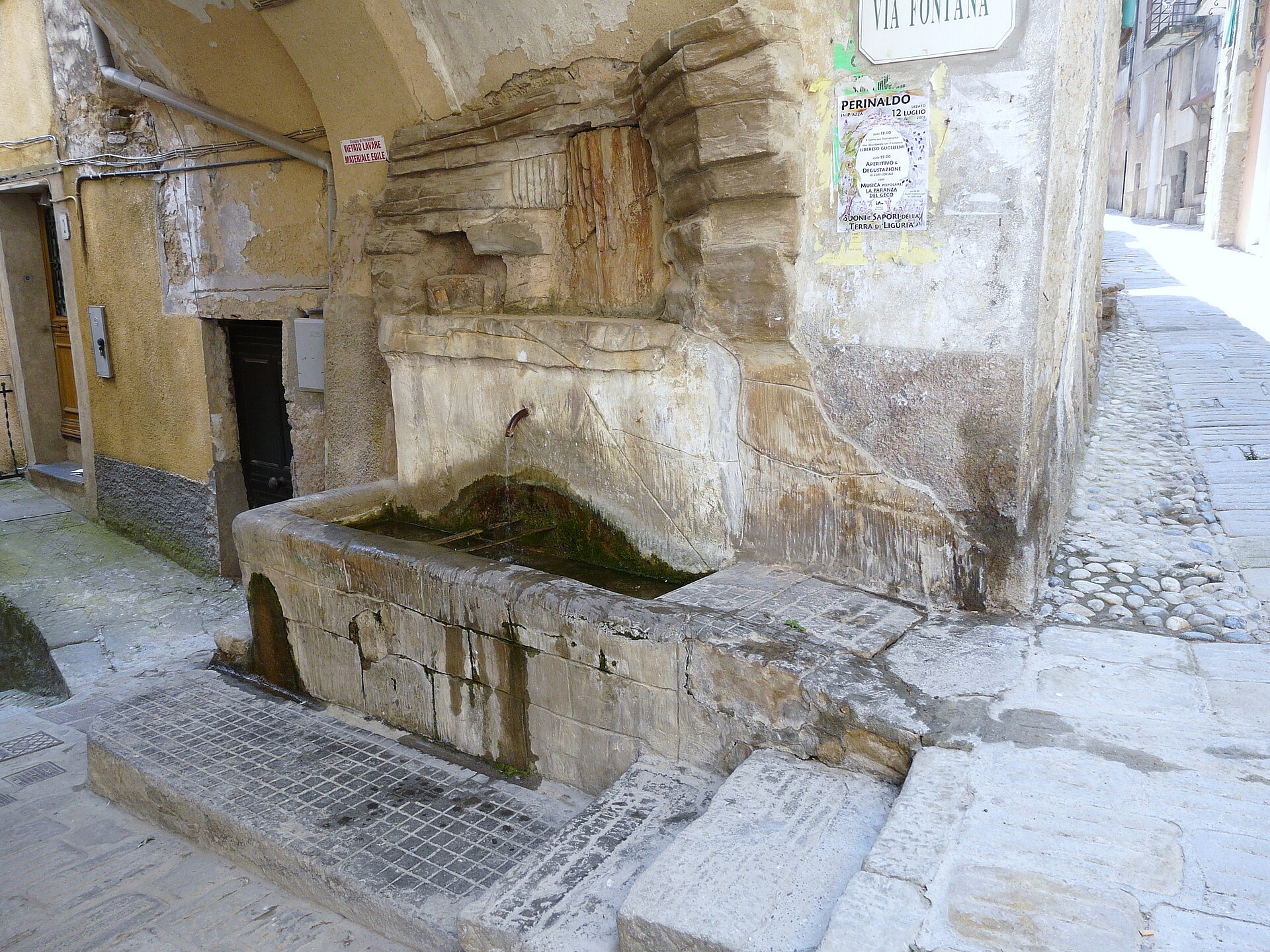
Near Castello Maraldi stands the Fontana dei Leoni. Piazza Maurizio Passerone has a view of the sea, and from a small square near piazza Castello you can see Apricale.
Where to stay
Where to stay in Perinaldo
There are no hotels in Perinaldo. You find holiday houses and flats in the old town, three farm stays, one B&B and one guest-room offer. We name no properties: the municipal list has 33 entries, nearly all houses.
Old town: houses within the village, everything on foot, stairs and no car at the door.
Hamlets towards Curli and Negi: farm stays and isolated houses, quieter, car needed.
Motorhomes: an equipped area at località Convento, according to the Touring Club.
If you want an evening at the observatory, book your bed early. For more choice, stay in Bordighera, Apricale or Dolceacqua and come up for the day.
Leave the A10 at Bordighera (or Sanremo or Ventimiglia) and climb a narrow, winding mountain road. From Bordighera it is about 15 km and 20–30 minutes. From France take the A8 and exit at Ventimiglia.
By train
There is no station. The nearest are on the Genoa–Ventimiglia line: Vallecrosia, Bordighera and Ventimiglia. From there you need a bus or a taxi.
By bus
Riviera Trasporti runs a link from Vallecrosia to Perinaldo with few runs. We have no official timetable: check Riviera Trasporti before you go. A local shuttle also runs in the village: a ticket costs 1.50 euros if bought in advance at “A Butega Perinaldo – Pasta Fresca Morena”, via Maraldi 17, and 2.50 euros on board.
By air
Nice Côte d’Azur is the most convenient airport: about 70 km and an hour and a half by road (estimate).
Parking
The centre is small and tight: leave the car at the edge of the village and walk up. We have no verified places or fees. Information: Information Office, via del Popolo 8, tel. +39 380 4761705, the Perinaldo tourism site and the municipality website.
A10, exit Bordighera, then a narrow mountain road: about 20–30 minutes ⚠️
By train
No station: Vallecrosia, Bordighera or Ventimiglia, then a Riviera Trasporti bus (few runs) or taxi ⚠️
By plane
Nice Côte d'Azur, about 70 km and an hour and a half by road ⚠️
The guide
The violet artichoke of Perinaldo
The Perinaldo artichoke is a Slow Food Presidium: a violet variety of Provençal origin, spineless, tender and without the inner choke, grown at 400–600 metres with very few treatments. Slow Food counts 55,000–60,000 heads a year from small growers in a consortium. A legend credits Napoleon with bringing the plants from France, but the dates differ between sources, so treat it as a story.
Fresh artichokes are harvested in May and June. They are eaten raw in salads, in omelettes, baked with parmesan and mushrooms, or fried in batter with garlic and parsley. The rest of the year you find them preserved in Taggiasca extra-virgin olive oil. Each year on the second Sunday of May the village holds a gastronomic fair of the artichoke and Taggiasca oil. The 2026 and 2027 dates are not confirmed: ask the Information Office.
What to eat in Perinaldo
The cooking is that of the Imperia hinterland: stuffed courgette flowers (meesana), Ligurian rabbit, stockfish with Taggiasca olives and ring-shaped pan tondo bread. The local wine is Rossese di Dolceacqua DOC. The weekly market is on Wednesday morning. We name no restaurants because we have no verified list: ask at the Information Office, via del Popolo 8.
Walks and hikes
From Apricale to Perinaldo
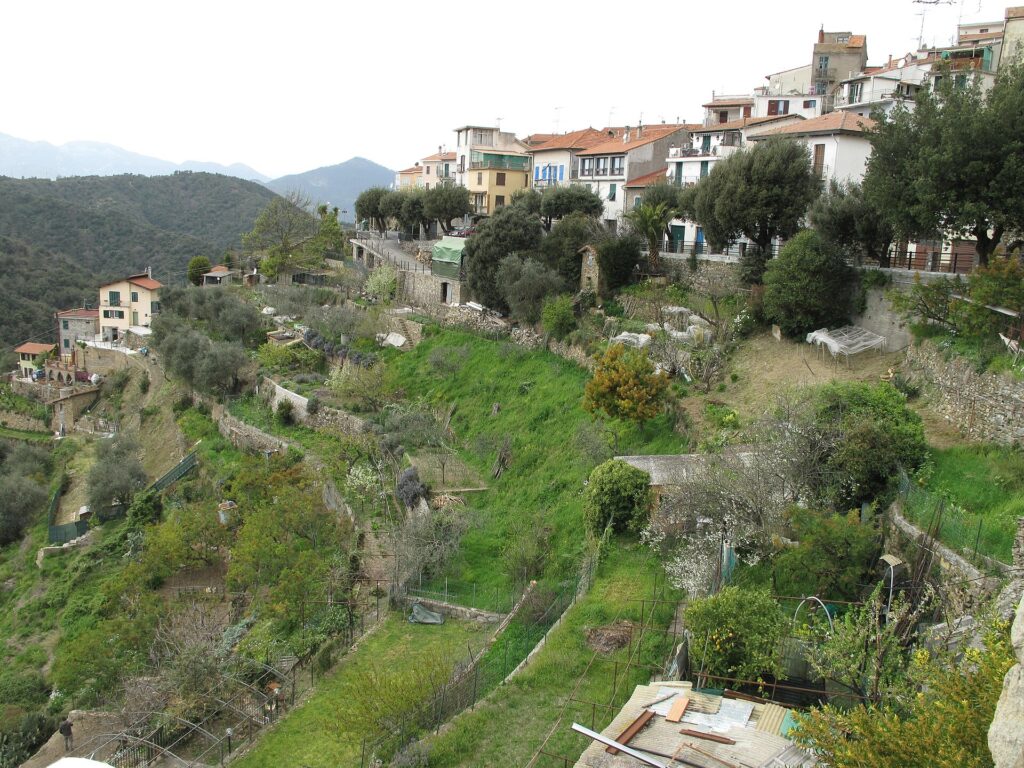
The old mule track between Apricale and Perinaldo takes about an hour and a half, uphill from Apricale. It drops to the stream, crosses a stone bridge and climbs through holm oaks and terraced vineyards. We have no official trail numbers or verified climbs: carry water and wear hiking shoes.
The Giro dei Santuari
The Giro dei Santuari is a series of walking stages among the village’s country shrines. In 2026 the stages were 27 September at Santa Giusta and 29 September at San Michele, closing on 6 December at San Nicolò. The 2027 edition is not confirmed.
When to go to Perinaldo
May is best for the artichoke. July to September brings the evenings at the observatory (online booking). In winter, at 572 metres, it gets cold early and places close early. Other 2026 events, as a guide: the spring equinox at the sundial (21 March), the Noir literary prize at the end of June, the Grande Castagnata in October and San Nicolò on 6 December. Wait for confirmation of the 2027 editions.
Day trips from Perinaldo
Distances are road estimates, not official timetables.
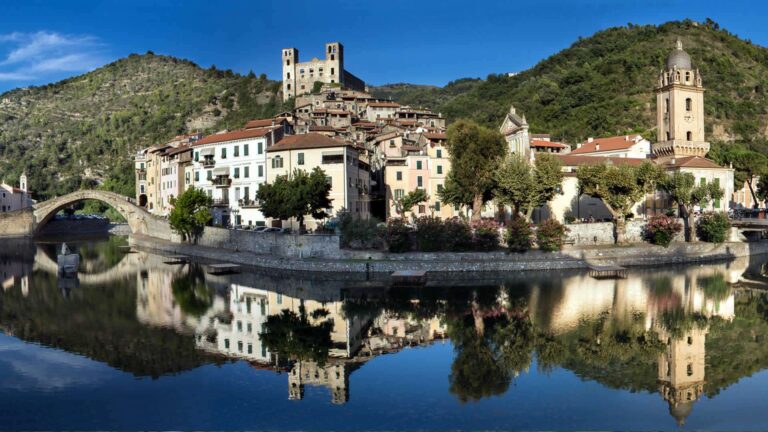
Apricale: about 3.5 km, 12 minutes by car, or 1.5 hours on foot.
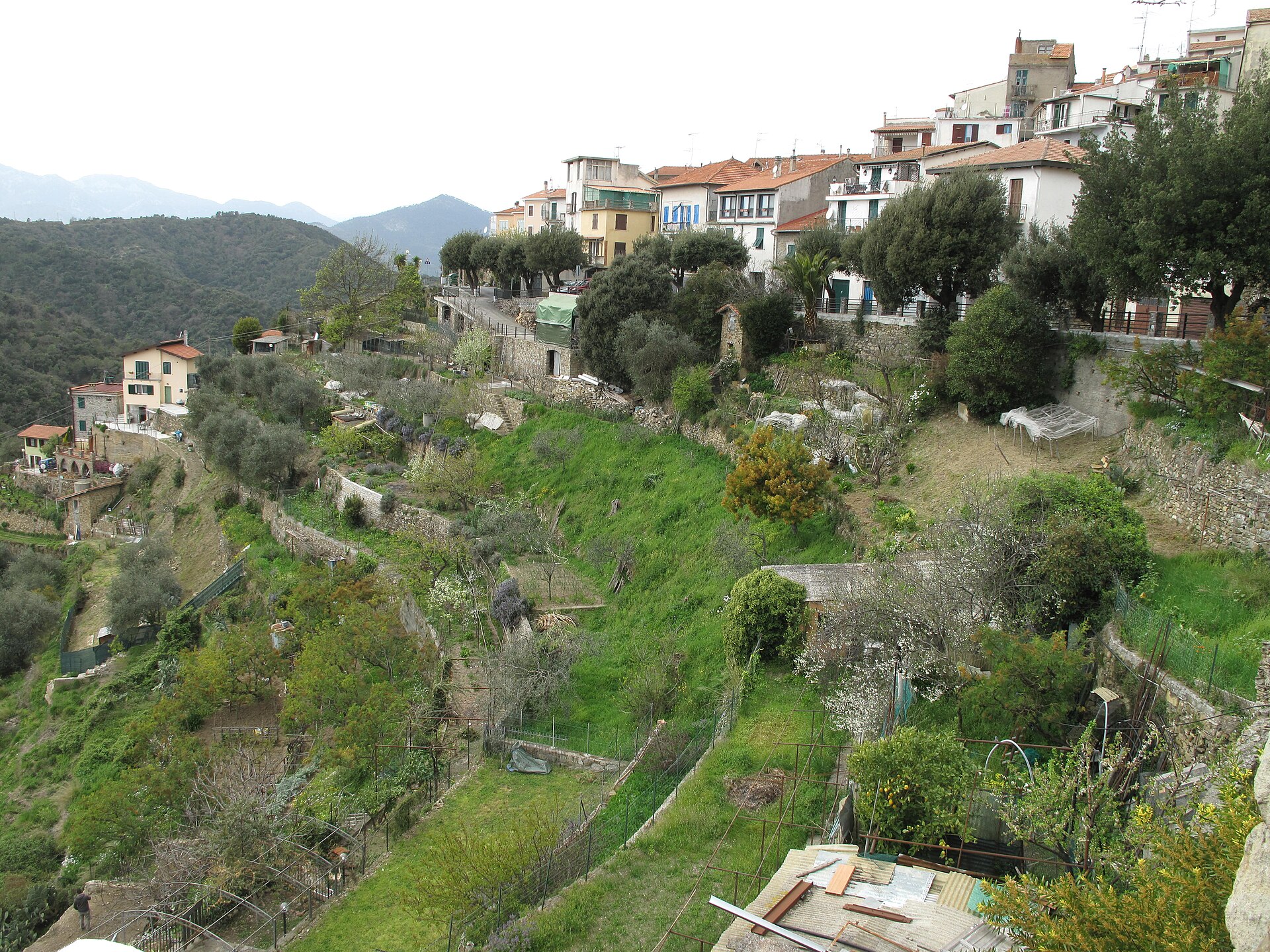
Perinaldo e il campanile sulla collinaPerinaldo vista da sudPerinaldo tra le montagne dell'entroterraPerinaldo al tramontoGli orti terrazzati sotto il borgo di PerinaldoLe case di Perinaldo e le collineUn vicolo con archi a Perinaldo
FAQ
Frequently asked questions about Perinaldo
Is Perinaldo in the Nervia valley?
Not strictly. It sits on a ridge between the Merdanzo valley, which leads to Apricale, and the Verbone valley, which runs to the coast. “Between the Nervia and Verbone valleys” is more accurate.
Can I visit the observatory without booking?
No. In 2026 it is open only during events, with compulsory online booking through the operator, Orbita.
When can I see the sky?
The 2026 public calendar was concentrated between July and September. 2027 dates are not confirmed.
Can I visit Cassini's birthplace?
No. Castello Maraldi, traditionally linked to his birth, is a private home. The Cassini museum is in the town hall.
When do I eat the violet artichoke?
Fresh in May and June; preserved ones all year. The fair is on the second Sunday of May, but dates need confirming.
How do I get there without a car?
Train to Vallecrosia, Bordighera or Ventimiglia, then a bus or taxi. Buses are few: check Riviera Trasporti.
Can I walk from Apricale?
Yes, on the old mule track: about an hour and a half, uphill.
Is there a beach?
No. The nearest sea is at Bordighera and Vallecrosia, about half an hour away.
How long do I need?
Half a day for the centre and museum, a full day with the walk to Apricale, ideally ending with an evening at the observatory.
Is it worth going in winter?
The village is quiet and pleasant to walk, but it gets cold early and places close early. Check museum and observatory openings first.