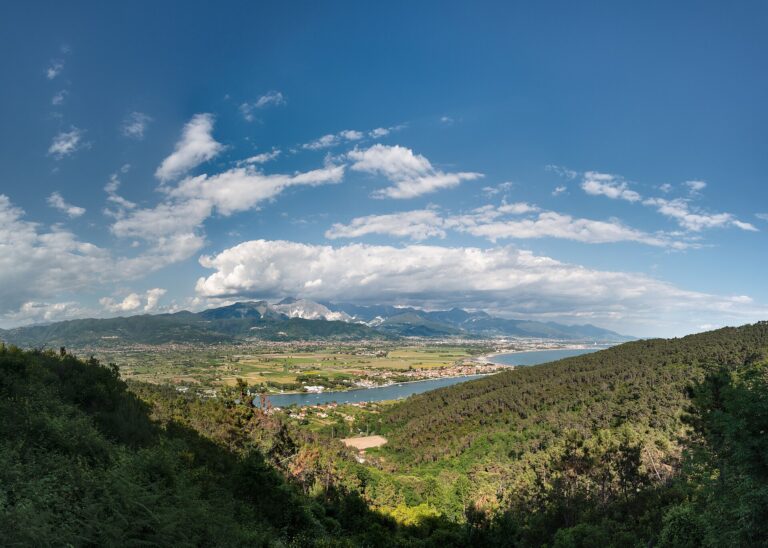
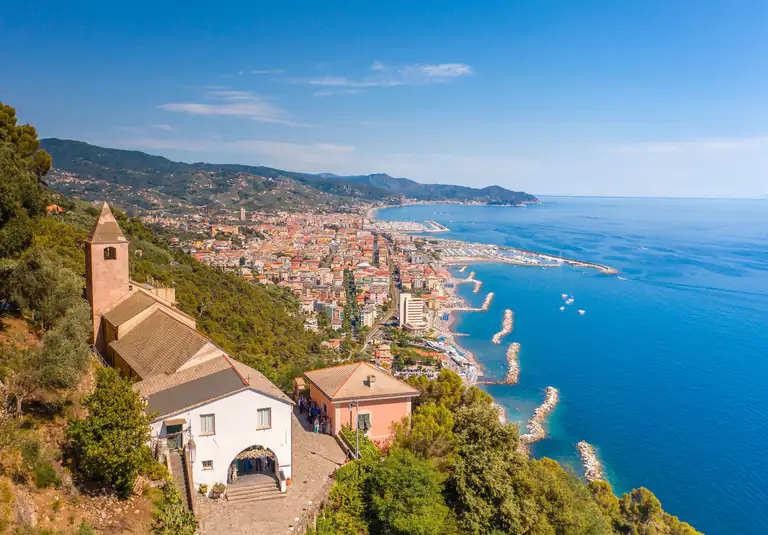
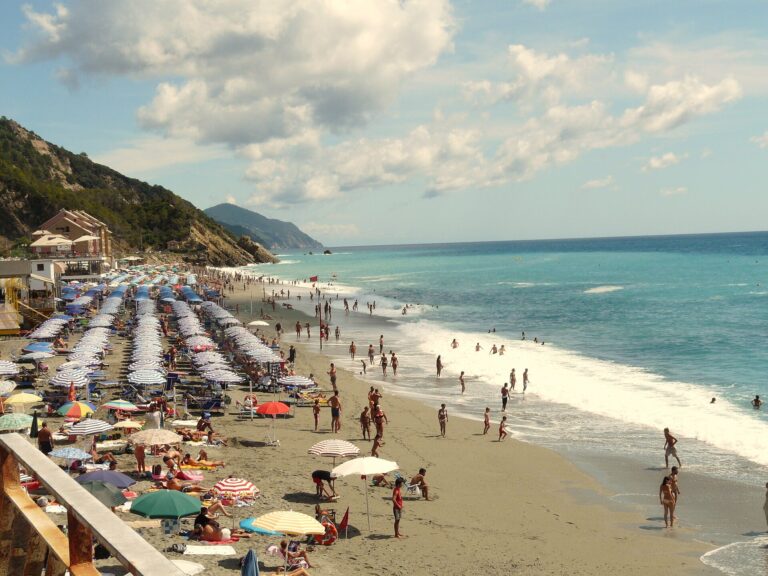
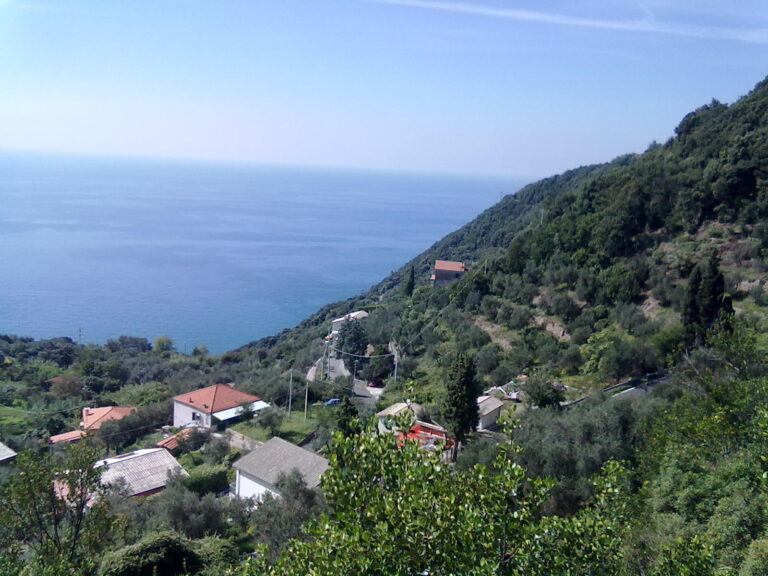
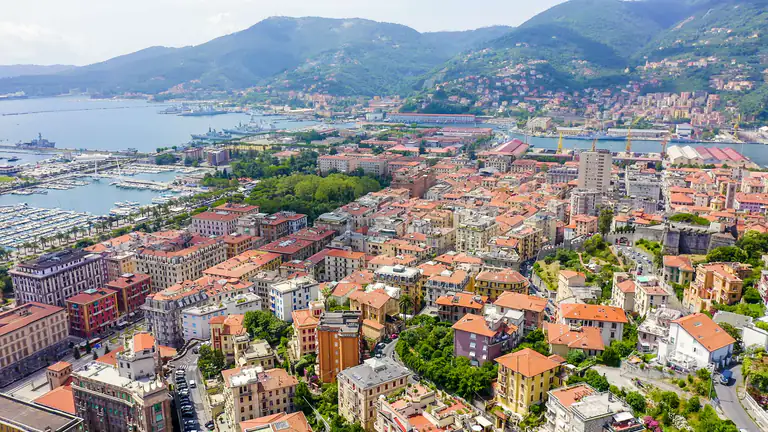
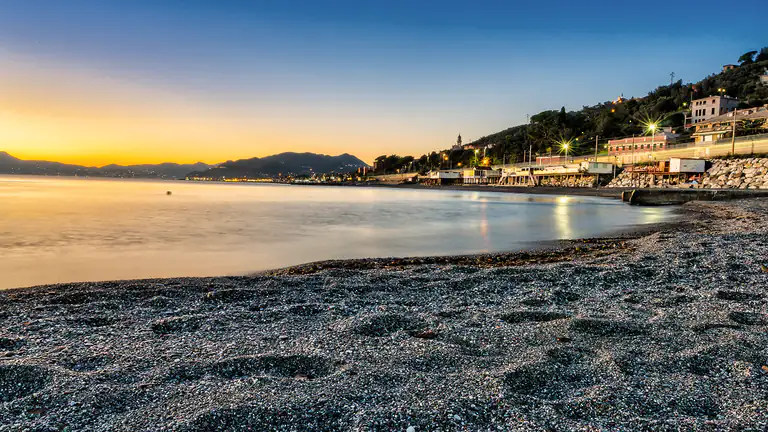
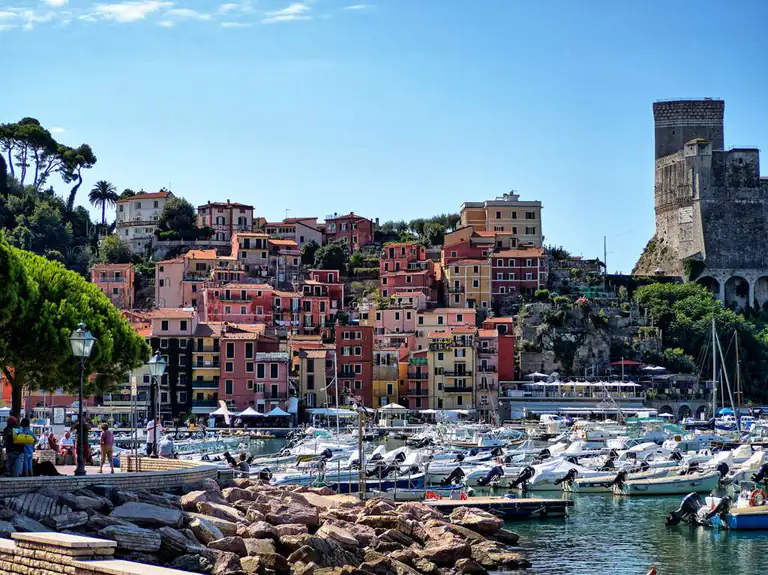

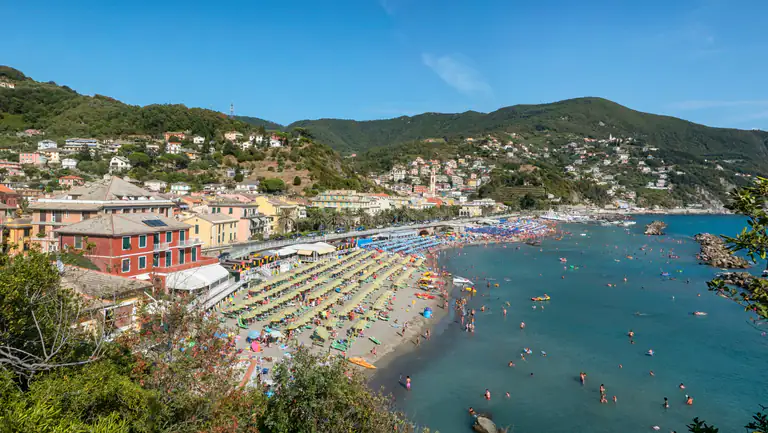
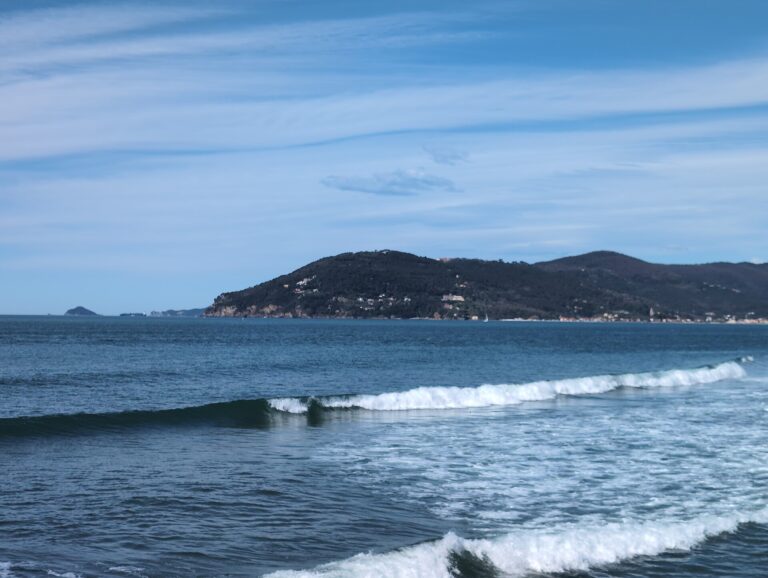
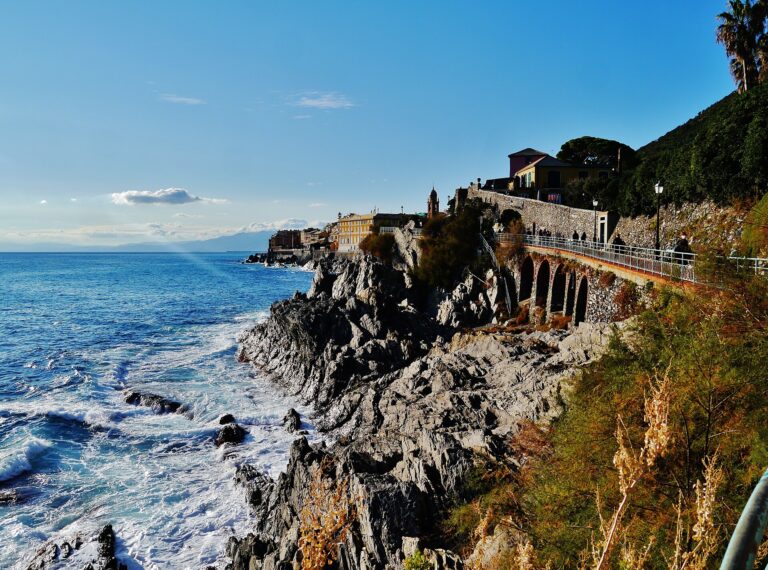

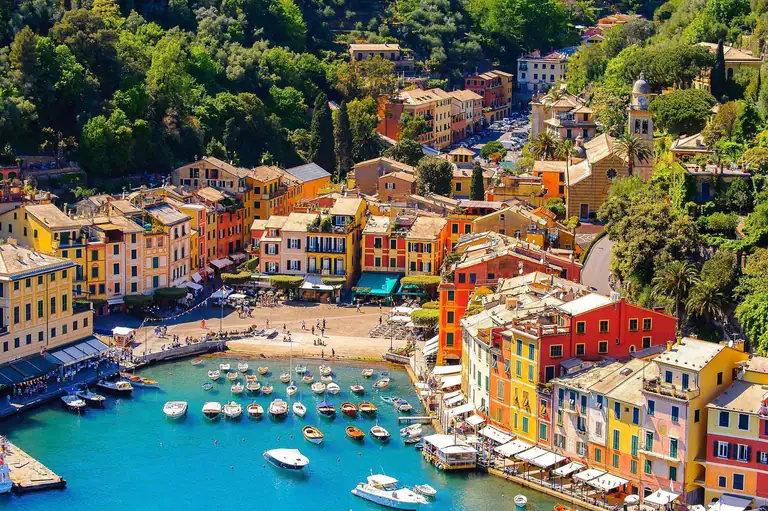
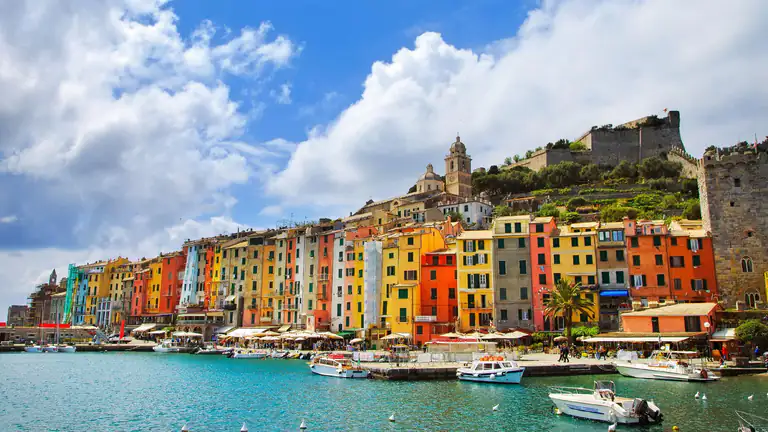
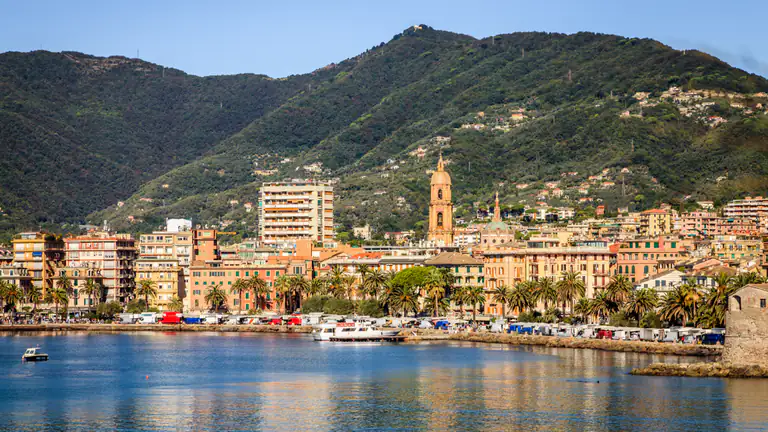

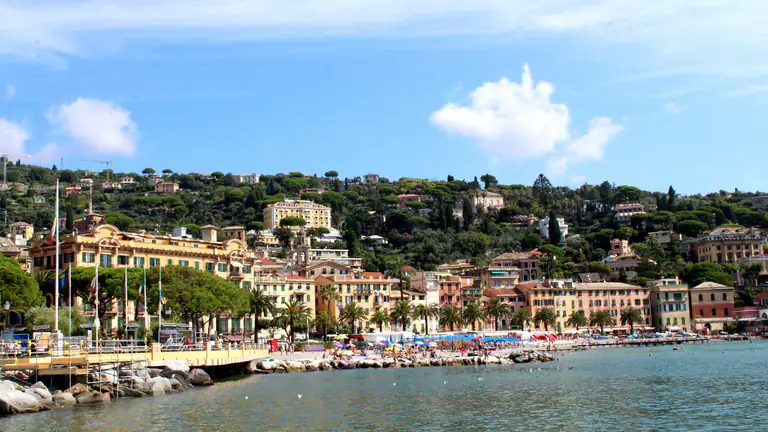
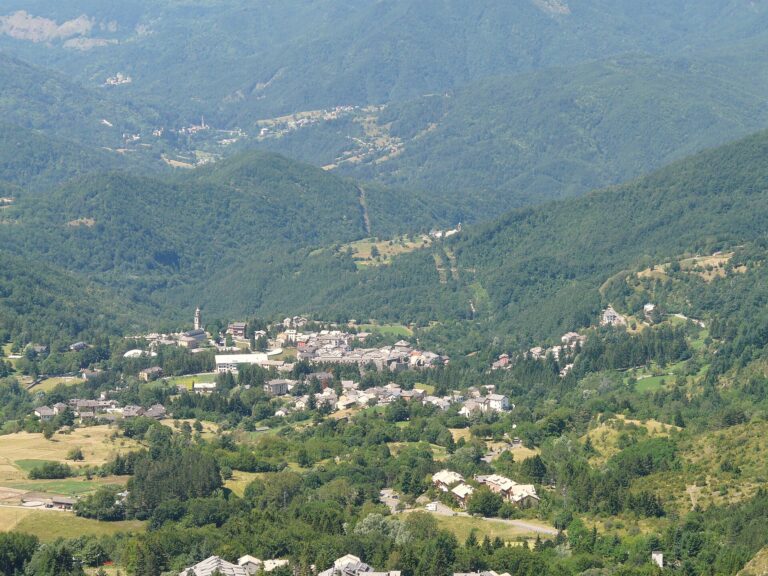

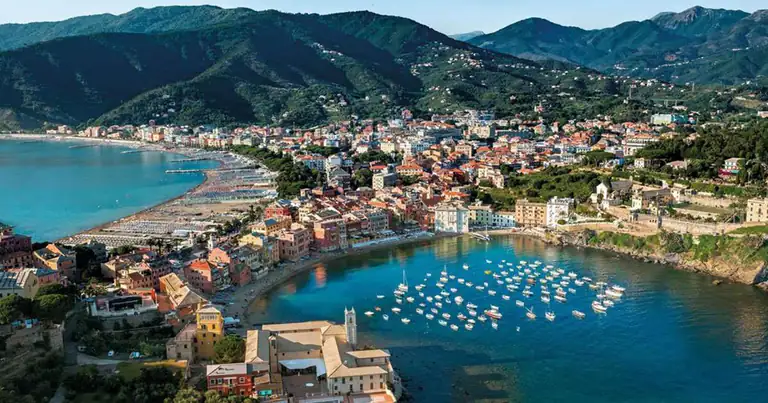
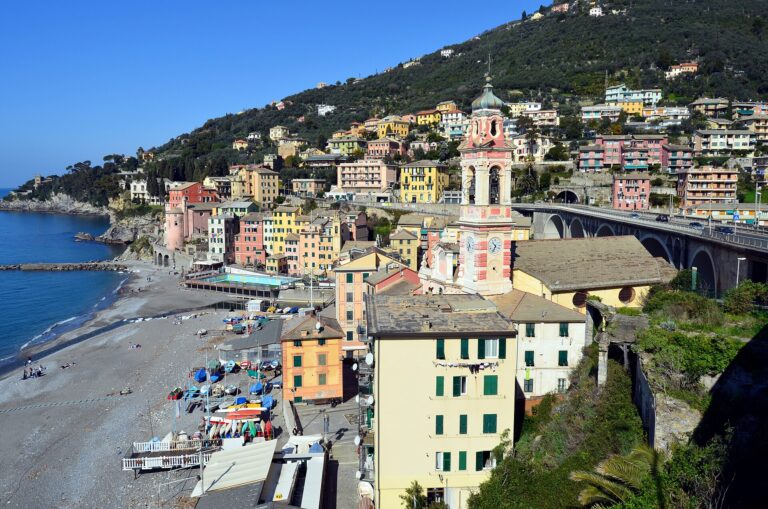

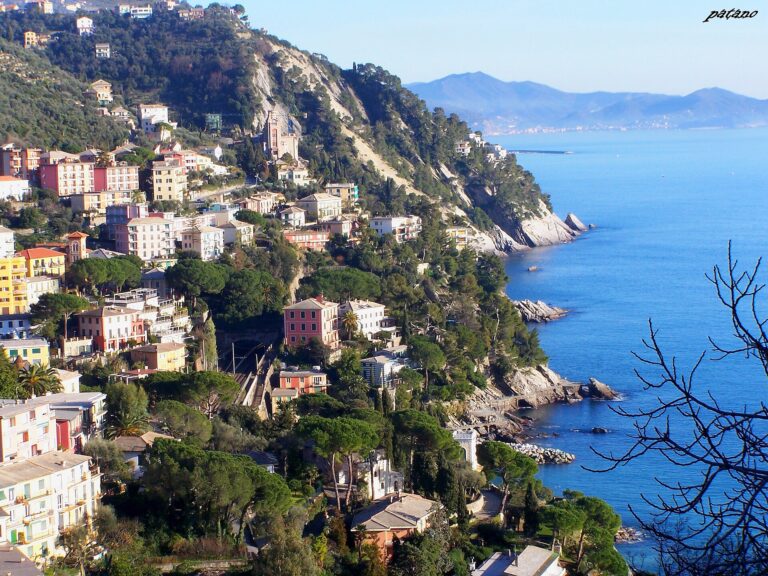
The Riviera di Levante is the stretch of Liguria east of Genoa. It starts at the Golfo Paradiso, just outside the city, and runs to the Magra valley on the border with Tuscany. Along the way you get the Portofino promontory, the Gulf of Tigullio, the Cinque Terre and the Gulf of Poets. It is the most famous part of the Italian Riviera and also the steepest: mountains drop almost straight into the sea, towns are squeezed into small bays and the coast road is slow and winding.
The easiest way to get around is by train. The Genoa–La Spezia line stops in almost every town, and from the stations you can pick up boats to the places without a railway, such as Portofino, San Fruttuoso and Portovenere. Below you will find how the area is laid out, how to get around, what not to miss, where to stay and when to go. The five villages of the national park have their own guide: Cinque Terre.
How the Riviera di Levante is laid out
From west to east the coast falls into a few quite different sections. It is worth knowing them, because each one suits a different kind of trip: fishing villages and hiking trails, elegant seaside towns, long family beaches, historic towns inland.
Golfo Paradiso
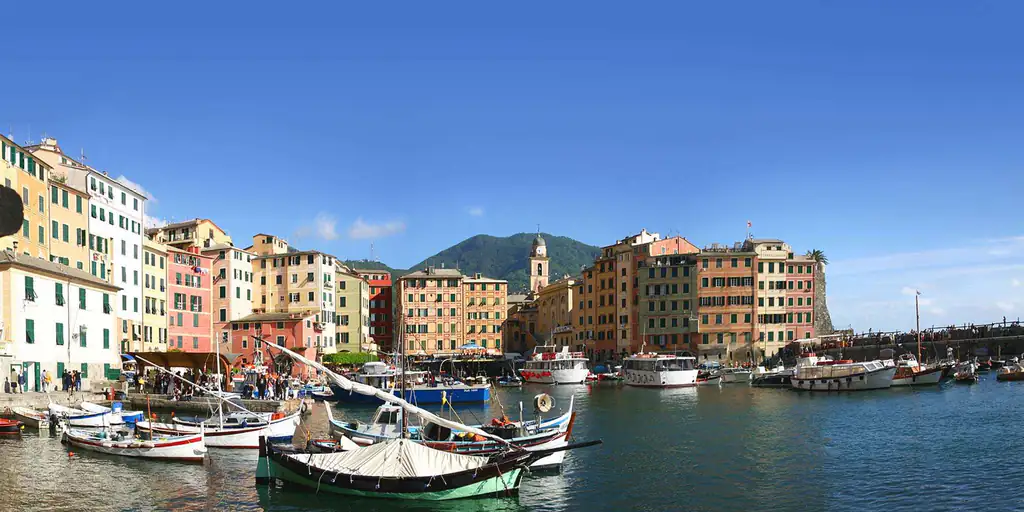
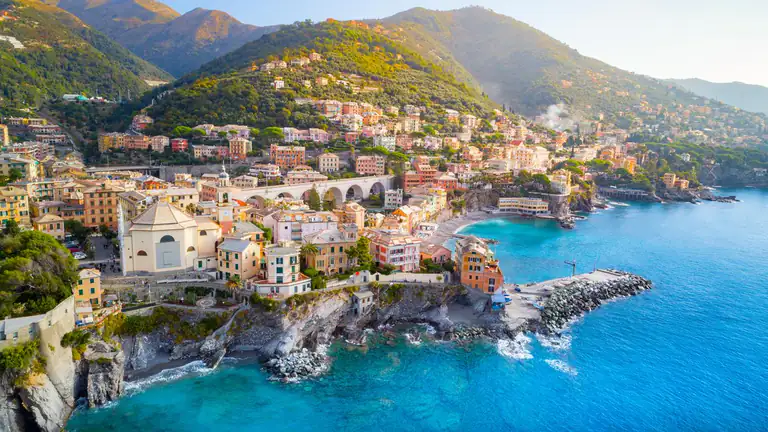
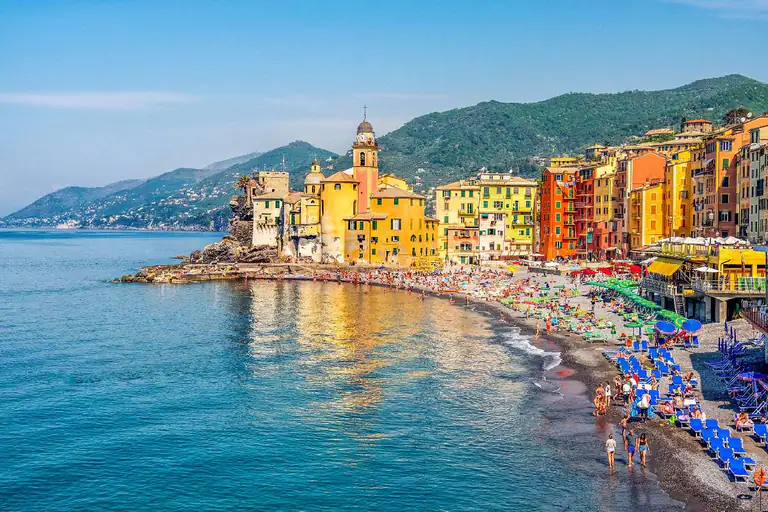
The first stretch after Genoa runs from Bogliasco to Camogli, through Pieve Ligure, Sori and Recco. The towns are close together, linked by frequent trains, with pebble beaches and terraced hills behind. Bogliasco has a small fishing village around a medieval bridge, and in 2026 its beach made the European Best Destinations ranking (Bogliasco beaches). Recco is the home of focaccia col formaggio, the cheese focaccia with protected status. Camogli is the village of tall, colourful houses on a tiny harbour. The Portofino Park starts here, with trails to San Rocco, Punta Chiappa and San Fruttuoso.
Portofino promontory and the Gulf of Tigullio
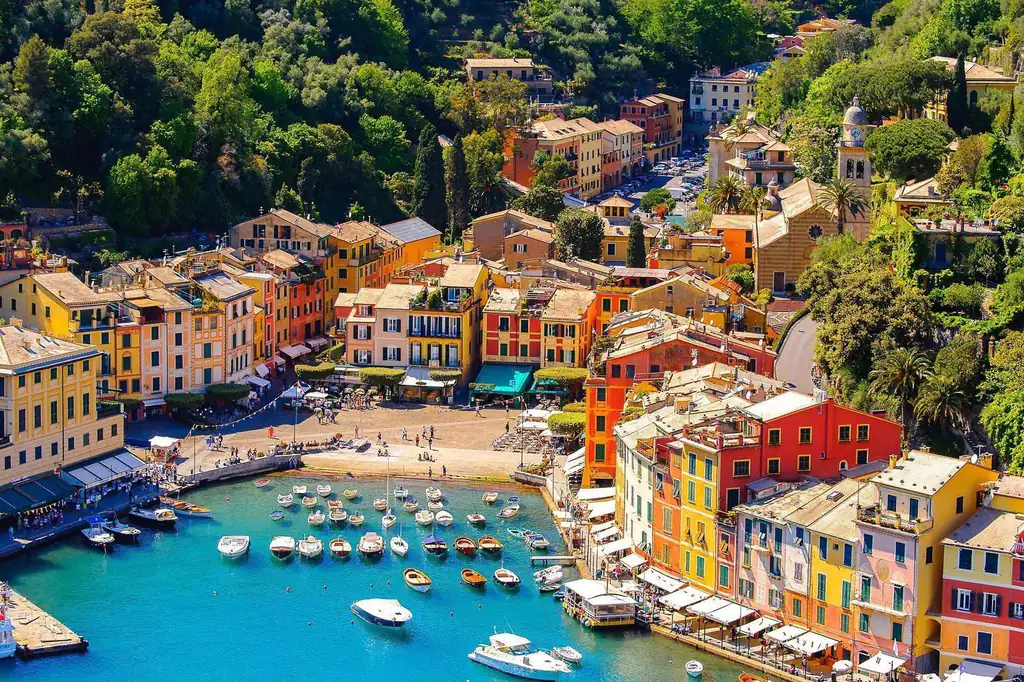
Beyond the promontory lies the Tigullio, the best-known gulf in Liguria. At the tip is Portofino, tiny and world-famous. Then come Santa Margherita Ligure, with its harbour and hillside villas, and Rapallo, the largest town on the gulf, with a castle standing in the sea and the Montallegro sanctuary above. Next are Chiavari, with arcaded streets and a town centre that stays lively all year, and Lavagna, just across the Entella river, with a long sandy beach. The gulf ends at Sestri Levante, the “town of two seas”, wedged between the Baia delle Favole and the Baia del Silenzio.
From Sestri Levante to Levanto
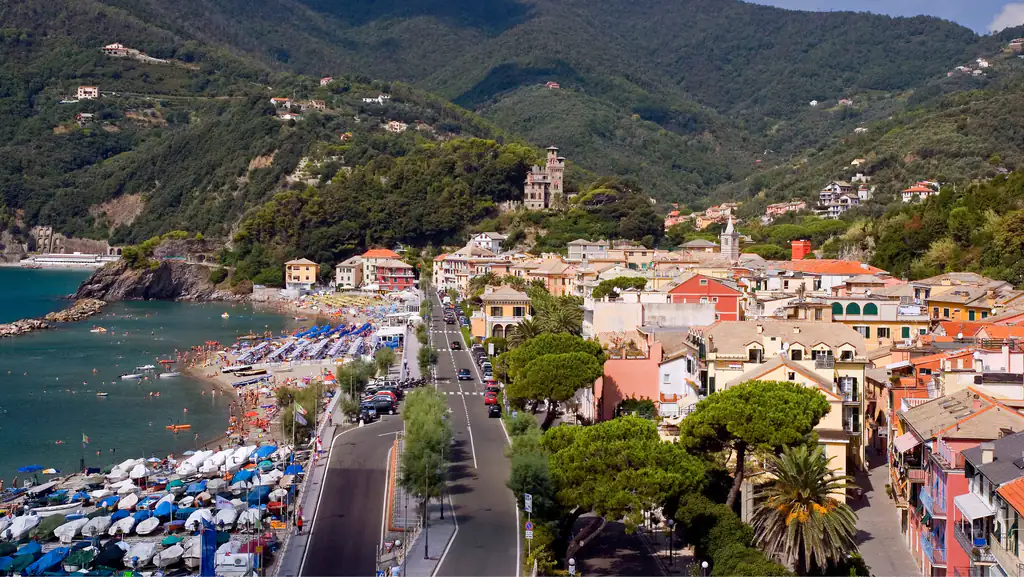
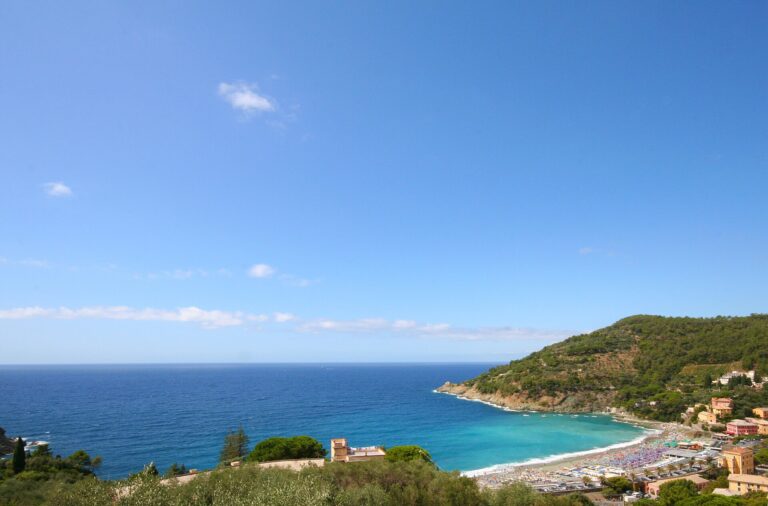
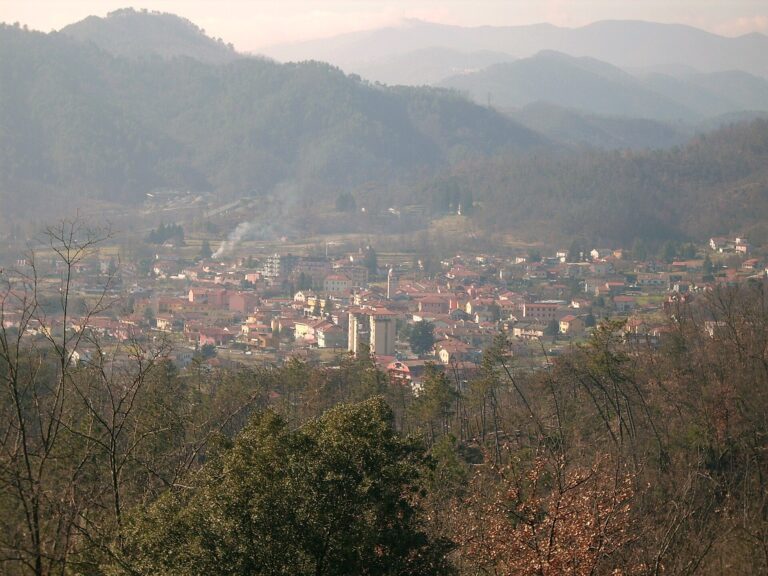
After Sestri the coast gets wilder and the villages smaller: Moneglia, Deiva Marina, Framura and Bonassola, up to Levanto. Moneglia, Deiva Marina and Framura are all listed among the Borghi più belli d’Italia, the “most beautiful villages in Italy”. This is the stretch to pick for quieter beaches and slightly lower prices, with the Cinque Terre a few minutes away by train. Levanto has a sandy bay, winter waves that draw surfers and a cycle path on the old railway line to Bonassola and Framura.
Cinque Terre
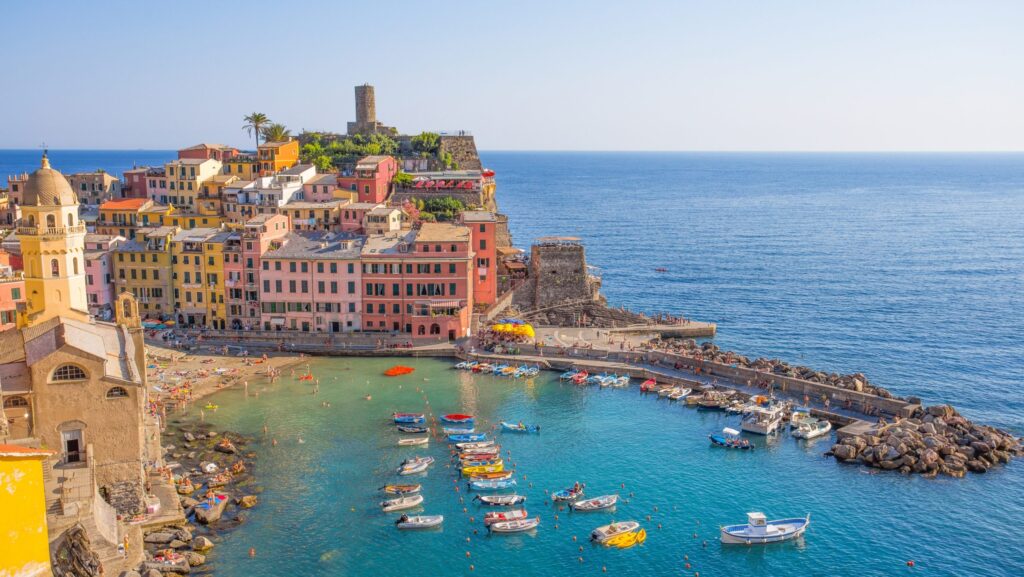
Past Punta Mesco begin the Cinque Terre: Monterosso, Vernazza, Corniglia, Manarola and Riomaggiore. They are the most famous part of the Levante, a national park and a UNESCO World Heritage Site since 1997. They have their own rules for trains, trails and parking: see the Cinque Terre guide, the train timetable and the page on the hiking trails.
Gulf of Poets
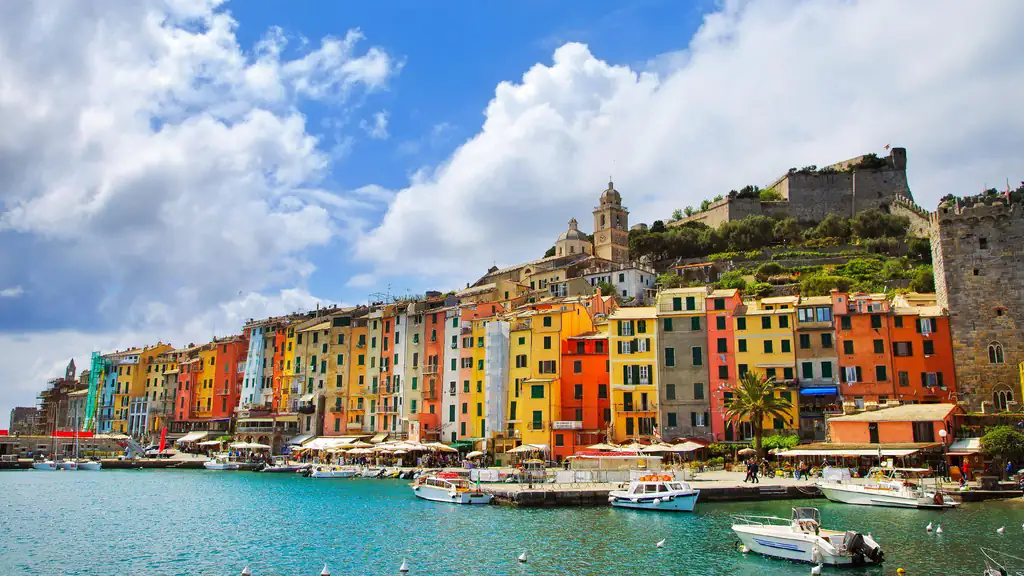
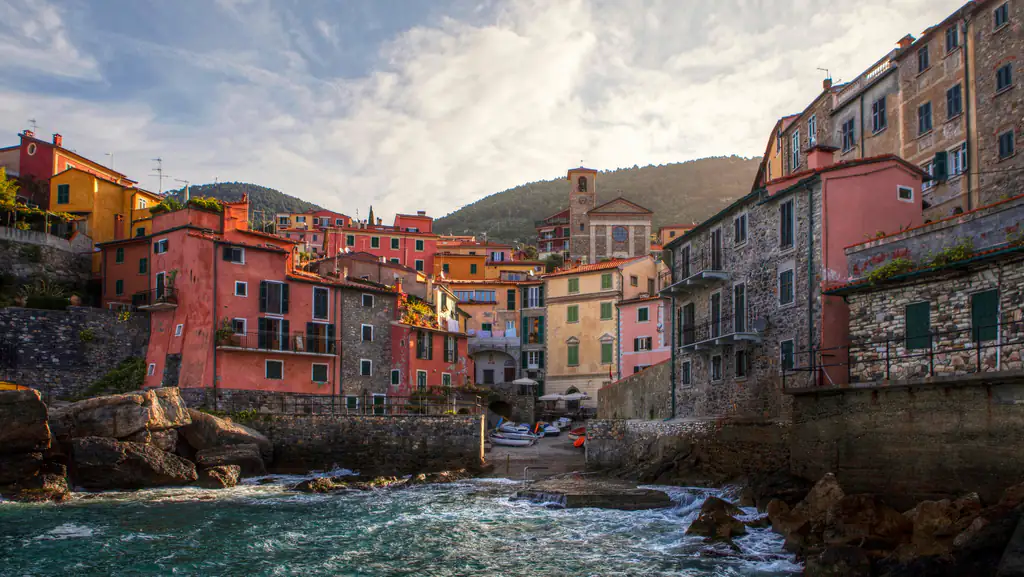
This is the Gulf of La Spezia, named after the English Romantic poets: the Shelleys lived at San Terenzo and Byron came through too. La Spezia is a real working city with good museums, a long seafront promenade and the station where Cinque Terre trains start. On the western tip is Portovenere, with the church of San Pietro on the cliff and, just across the channel, Palmaria island. On the opposite shore are Lerici, with its castle above the harbour and sandy beaches, and Tellaro, a fishing village built on the rocks and one of the Borghi più belli d’Italia.
Magra valley
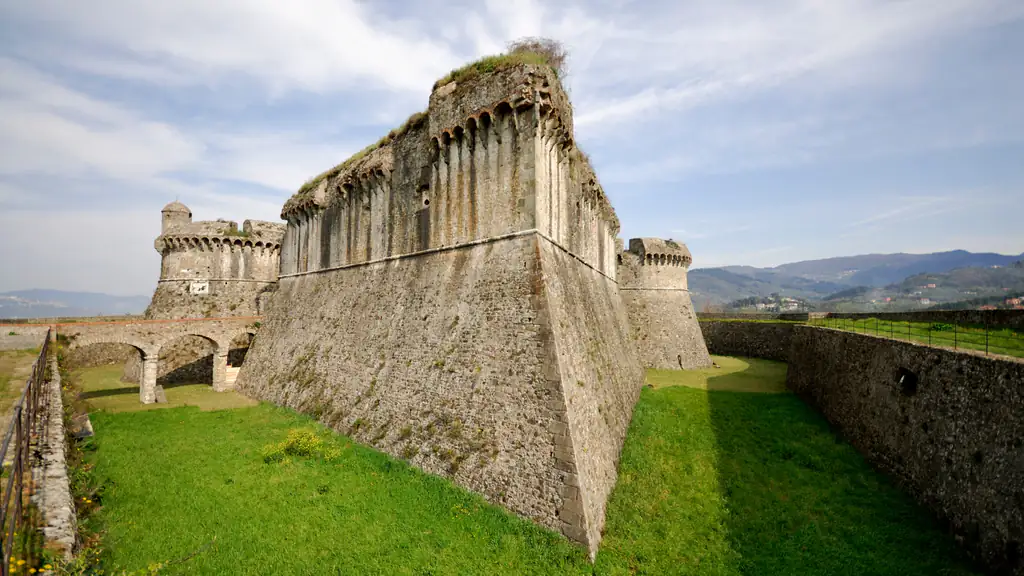
The last stretch before Tuscany is flat. Here you find Sarzana, a historic town with two 15th-century fortresses, a cathedral and a main street full of antique shops. A few kilometres away are the ruins of the Roman town of Luni and the beaches at the mouth of the Magra. It is a good stop if you are coming from Pisa, or for an evening away from the seaside crowds.
Hotels, B&Bs and apartments all over Liguria: compare prices and availability.
Getting around
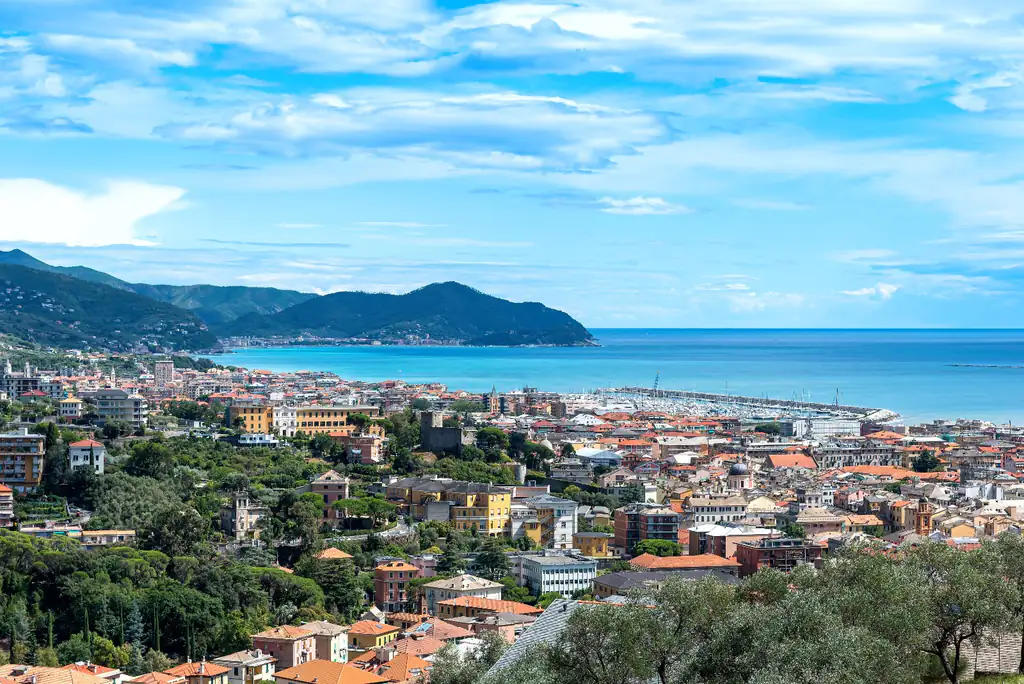
On the Riviera di Levante a car is less useful than you might think. The prettiest villages have small, expensive car parks, and in summer traffic on the coast crawls. If you can, arrive by train, or leave the car where you sleep and use trains and boats.
By train
The Genoa–La Spezia line follows the whole coast, mostly through tunnels. From Genova Brignole it takes about 15 minutes to Bogliasco, around half an hour to Recco, Camogli or Rapallo, and about an hour and a half on a regional train to La Spezia. Between neighbouring towns it is just a few minutes. Two exceptions: Portofino and Portovenere have no station. For Portofino, get off at Santa Margherita Ligure and take bus 782. For Portovenere, go to La Spezia and take ATC bus 11/P, or a boat. Lerici and Tellaro are also reached by bus from La Spezia or Sarzana.
Between Levanto and La Spezia, in the Cinque Terre, regional trains have a special fare from March to November, and the Cinque Terre Express runs in season; in 2026 some of its trains continue to Sestri Levante. Details are in the Cinque Terre train timetable.
By boat
The sea is often the most beautiful route, and sometimes the only one. There are three operators, each covering its own area:
- Golfo Paradiso: from Recco and Camogli to Punta Chiappa, San Fruttuoso and Portofino, April to September (weekends only in spring).
- Servizio Marittimo del Tigullio: Rapallo–Santa Margherita–Portofino–San Fruttuoso all year, with seasonal timetables; May to September also routes to the Cinque Terre and Portovenere from Chiavari, Lavagna and Sestri Levante.
- Navigazione Golfo dei Poeti: from La Spezia to Portovenere, Palmaria, Lerici and the Cinque Terre, from late March to late October or early November.
Boats do not sail in rough seas and timetables change every season, so check the day before. The classic trip is to the abbey of San Fruttuoso, which you can only reach by sea or on foot.
By car
The A12 Genoa–Livorno motorway runs parallel to the coast, with exits at Recco, Rapallo, Chiavari, Lavagna, Sestri Levante, Carrodano-Levanto, La Spezia and Sarzana; the A15 comes in from Parma. From the exits, roads down to the sea are often narrow and full of bends. Portofino has a single road from Santa Margherita, which jams up in summer. For Lerici, see the page on parking in Lerici.
Be aware that the tunnel road between Sestri Levante, Moneglia and Deiva Marina, built on the old railway line, has been closed since spring 2025 after rockfalls, and at least one link is not expected to reopen before 2027. To reach Moneglia by car you have to go inland, which takes longer. The train is running normally.
On foot
Many towns are linked by footpaths: Camogli–San Fruttuoso–Portofino in the Portofino Park, the walk from Santa Margherita to Portofino, Levanto–Monterosso over Punta Mesco, and the trails around Tellaro and Montemarcello. Some paths on the promontory, such as the Via dei Tubi and the Passo del Bacio, are closed by local order: stick to the park’s waymarked trails.
What not to miss
If you only have a few days, these are the things that make the trip. Each has its own page with opening times and tips.
- San Fruttuoso: an abbey at the end of a bay with no road. Go by boat or on the trail from Portofino.
- Portofino from above: the Piazzetta, then the climb to Castello Brown and the lighthouse at Punta del Capo. Go early in the morning or late in the afternoon.
- Camogli and Punta Chiappa: the seafront of painted houses and a swim off the rocks at Punta Chiappa. For swimming see Camogli beaches.
- Montallegro: the sanctuary above Rapallo at 612 metres, by cable car or on foot. All the details on the Montallegro sanctuary page.
- Chiavari antiques market: once a month the town centre fills with stalls. Dates on the Chiavari antiques market page.
- Baia del Silenzio in Sestri Levante: the small beach with colourful houses, best out of season or at sunset.
- The beaches of Moneglia and Levanto: the easiest on this stretch, close to the station. See Moneglia beaches and Levanto beaches.
- Portovenere and Palmaria: the church of San Pietro, Doria castle and the boat trip around the three islands.
- Tellaro at sunset: the village on the rocks and the church of San Giorgio, a few kilometres from Lerici.
- Festivals: the Camogli fish festival in May, the Andersen Festival in Sestri in June, the Torta dei Fieschi in Lavagna on 14 August, the Recco fireworks in September.
Where to stay
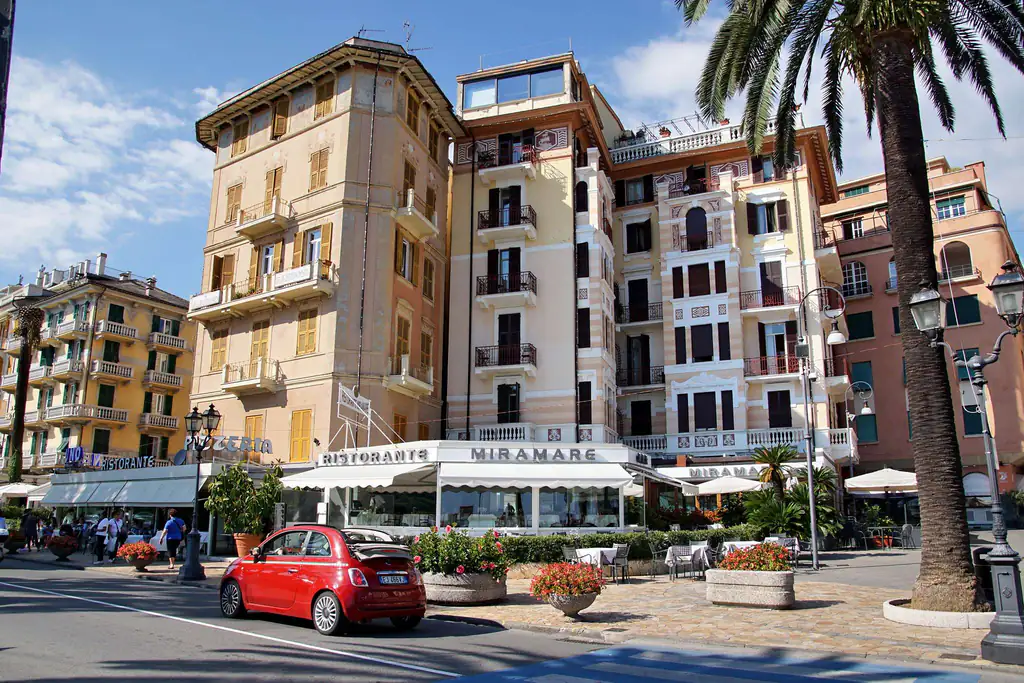
The right base depends on what you want to do. In general the larger towns cost less than the famous villages and are better placed for trains and boats.
- For Portofino and the Tigullio without a car: Rapallo or Santa Margherita Ligure. You get a station, buses and boats to Portofino and San Fruttuoso.
- For a village by the sea: Camogli on the Golfo Paradiso, Portovenere or Tellaro on the Gulf of Poets. Few rooms and high summer prices, so book early.
- For a beach holiday with children: Sestri Levante, Lavagna, Moneglia or Levanto, with sandy beaches and the station nearby.
- For visiting the Cinque Terre: La Spezia or Levanto, at either end of the park’s train line, with far more choice and lower prices than the five villages. If you want to sleep in the villages, see Cinque Terre hotels.
- For year-round life and lower prices: Chiavari, Rapallo or La Spezia, real towns that stay open in winter.
To compare with the rest of the region, see the guide to where to stay in Liguria.
When to go
May, June and September are the best months: the sea is warm, boats are running, trails are in good shape and there are fewer people than in August. July and August mean crowded beaches, near-impossible parking and high prices, especially in Portofino and the Cinque Terre. If you go then, start early in the day and leave the car behind.
October and spring are perfect for walking, though boats run fewer services. Winter is quiet and bright: towns such as Rapallo, Chiavari and La Spezia stay lively, while many places in the smaller villages close. For month-by-month temperatures, see the Liguria weather page.
Frequently asked questions
Where does the Riviera di Levante start and end?
It starts just east of Genoa with the Golfo Paradiso and runs to the Magra valley on the Tuscan border, covering the coast of the provinces of Genoa and La Spezia. Versilia is already in Tuscany.
What are the most beautiful towns on the Riviera di Levante?
The best known are Portofino, Camogli, the five Cinque Terre villages, Portovenere and Tellaro. For a more relaxed stay, Santa Margherita Ligure, Sestri Levante, Moneglia, Levanto and Lerici work very well. For a selection across the whole region, see our guide to the most beautiful towns in Liguria.
Can you visit the Riviera di Levante without a car?
Yes, and it is the easiest way. The Genoa–La Spezia train stops in almost every town; Portofino has a bus from Santa Margherita, Portovenere a bus or boat from La Spezia. Seasonal boats link the gulfs.
Is the road between Sestri Levante and Moneglia open?
No. The tunnel road between Sestri, Moneglia and Deiva Marina has been closed since spring 2025 and is not expected to reopen before 2027. Reach Moneglia by train, or by car via the inland road.
Where should I stay to see both Portofino and the Cinque Terre?
Sestri Levante and Levanto sit halfway. From Sestri you get seasonal boats to Portofino and the Cinque Terre; from Levanto, the park’s trains. Alternatively, split your stay between Santa Margherita or Rapallo and La Spezia.
How many days do I need for the Riviera di Levante?
Three days let you see one gulf properly, for example Camogli, San Fruttuoso, Portofino and Santa Margherita. With a week you can add the Cinque Terre and the Gulf of Poets, changing base halfway.
Are there sandy beaches on the Riviera di Levante?
Yes, but not everywhere. The longest are at Lavagna, Sestri Levante (Baia delle Favole), Moneglia, Levanto and Lerici. Around the Golfo Paradiso and Portofino it is mostly pebbles and rocks. For the whole region, see our guide to Liguria’s beaches.
Riviera di Levante or Riviera di Ponente?
The Levante has the most dramatic scenery, the most famous villages and the biggest crowds. The Ponente has longer sandy beaches, quieter hill villages and the French Riviera next door. See our guide to the Riviera di Ponente.