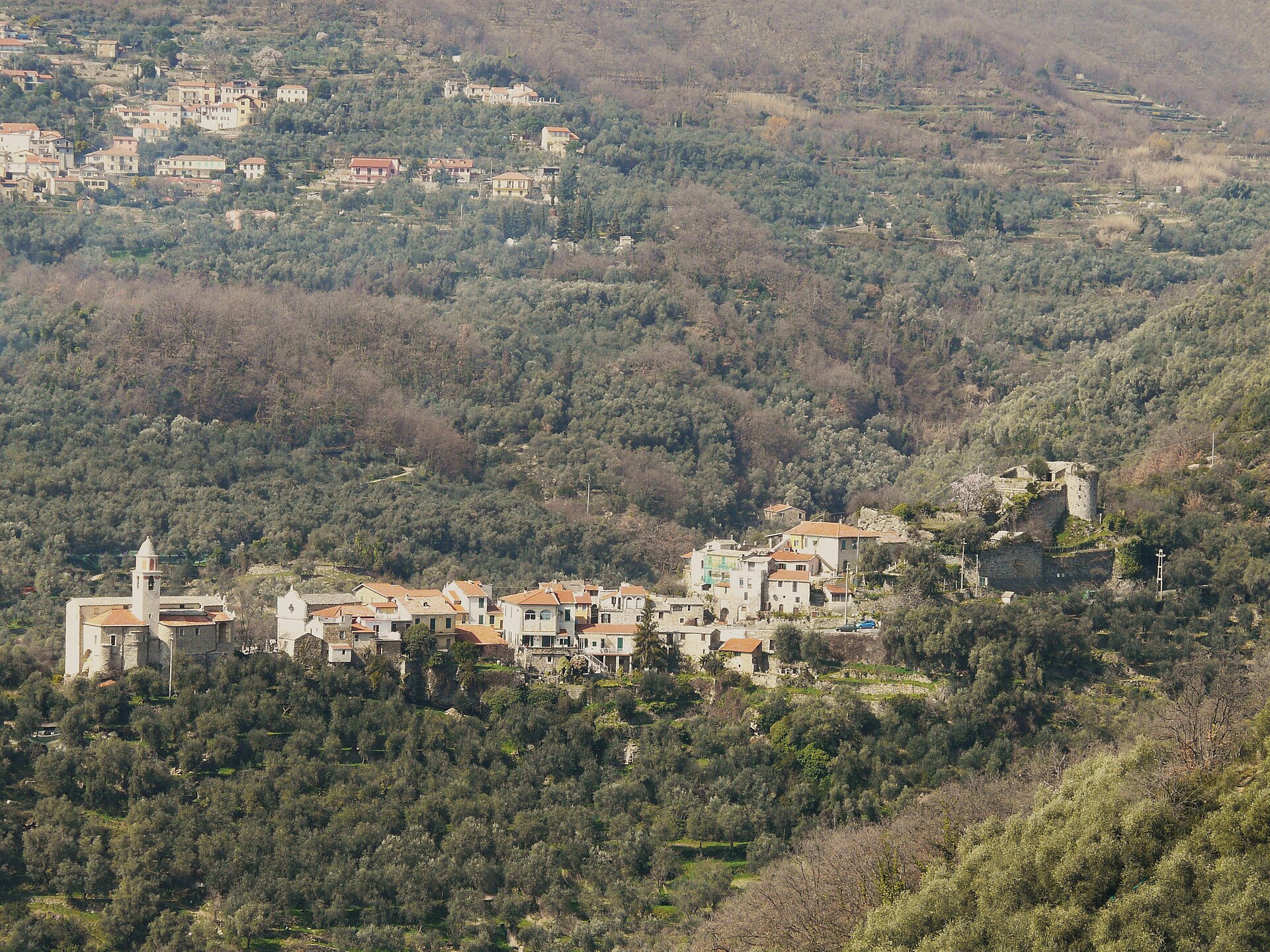
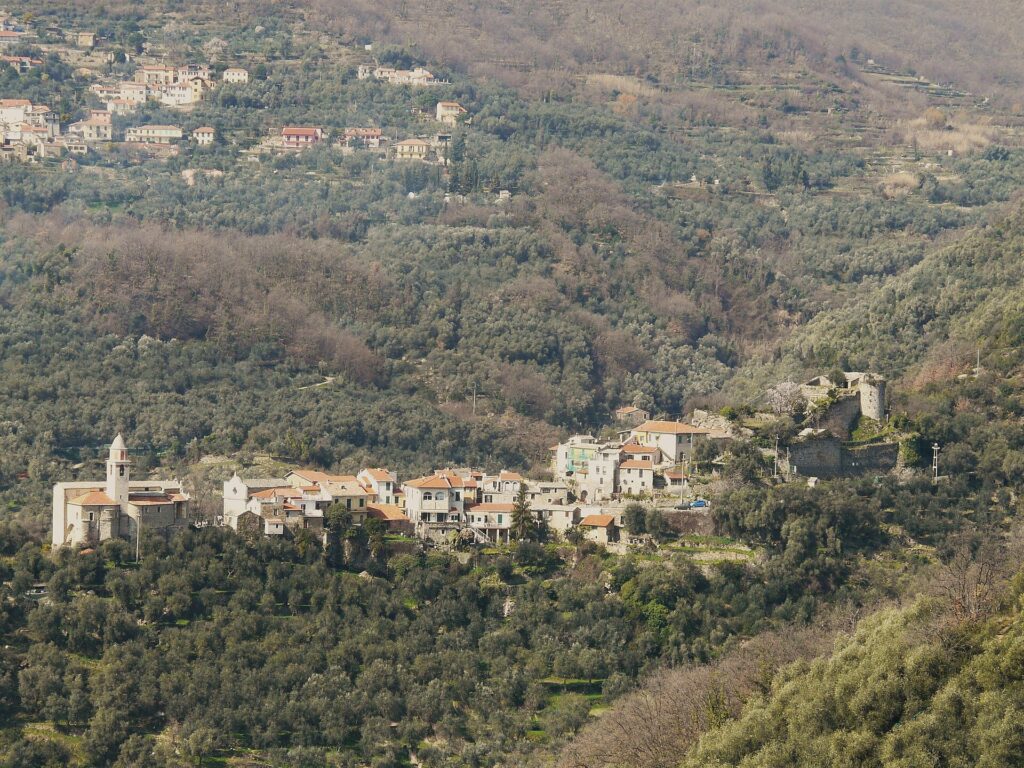
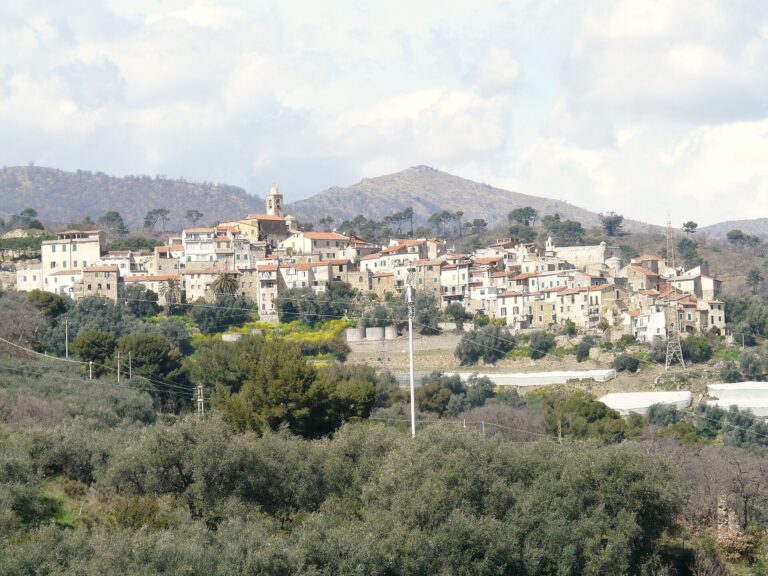
Valloria is a stone village at 437 metres in the Val Prino, about 15 kilometres from Imperia. On paper it is a hamlet (frazione) of the municipality of Prelà, and it should not be confused with the Valloria district of Savona; until 1928 it was a municipality in its own right. Only a few dozen people live here today, against 360 in 1750. The name is traditionally traced to the Latin Vallis Aurea, the «golden valley», because for centuries olive oil was the village’s wealth.
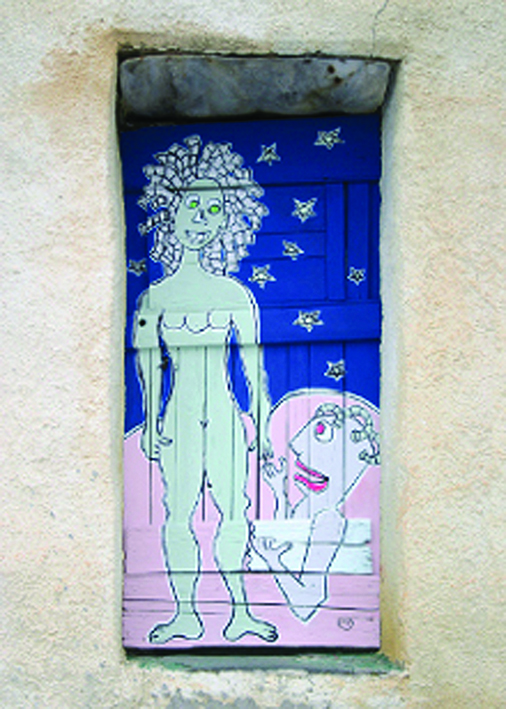
People come for the painted doors. Since 1994 the Amici di Valloria association has invited painters to decorate the old doors of stables, storerooms and cellars along the lanes: depending on the source there are now between 150 and 170. It is an open-air gallery, free, walked on foot through narrow alleys and steps. The doors belong to real, often lived-in buildings, so look and photograph but do not touch. Besides the doors there are three eighteenth-century fountains, a church with a 1523 polyptych and a small museum of farming objects.
It is a half-day trip, easy to combine with Dolcedo, further down the valley, and with the sea at Imperia. There are no beaches. Everything about the doors and how to walk the route is in our guide to the painted doors of Valloria.
By Italian Riviera editorial team·Updated on ·9 min read
Where is Valloria?
Valloria is in Liguria (Riviera di Ponente, Riviera dei Fiori, province of IM).
You can cross the village in a few minutes, but the tour of the doors, with stops, takes an hour or two. The stops below follow the order in which you meet them from the car park.
The painted doors
The idea dates from 1994, after the association was founded in 1991 to bring back a village that was emptying out. The first hundred doors were celebrated on 2 June 2007. The exact number varies between sources, from 144 to 167, so we do not give one as certain. Subjects range from portraits and landscapes to sacred and everyday scenes and fantastical figures; some works are bas-reliefs. The artists are Italian and foreign, from young painters to established names.
The doors are numbered along a route that starts at the entrance to the village. From the fountains, according to the association, blue signs mark the «suggested route»: follow them, because the maze of lanes is easy to get lost in even in a village this small.
The mural at the entrance
As you arrive you are greeted by a large mural, «La raccolta delle olive» (the olive harvest), painted by students of the art school in Imperia. It replaced an earlier one that weather had damaged: if you read elsewhere about a mural by Mario Carattoli, that one is gone.
The three fountains and the square
The main square has the three fountains that gave the association its name. In 1715 an aqueduct with lead pipes, commissioned by the Confraternity of Santa Croce, brought them water from a spring near the Cappella dei Castagneti. Traces of the aqueduct can still be seen. The route of the doors starts here, and so does the climb to the church of San Giuseppe.
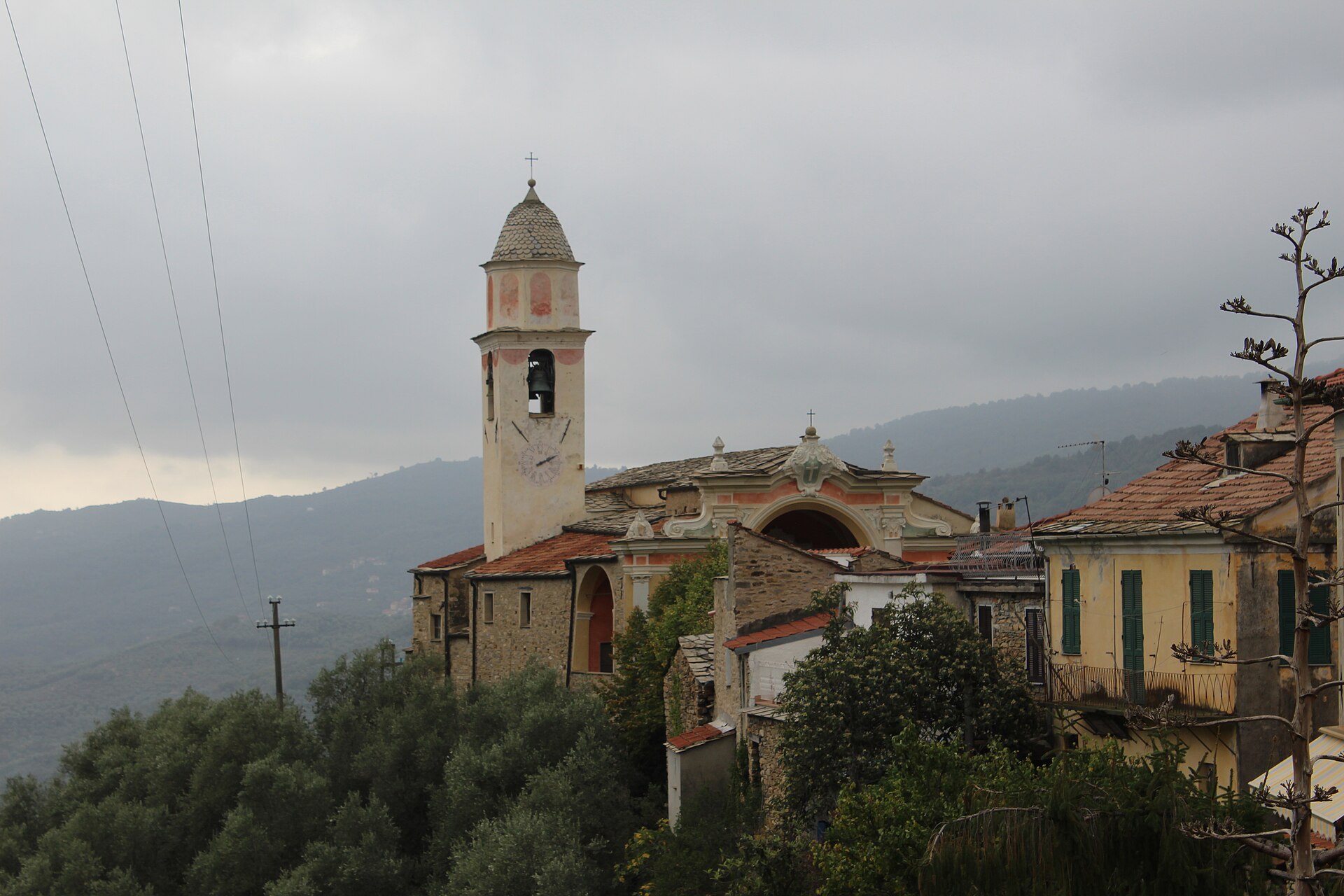
The parish church of Santi Gervasio e Protasio
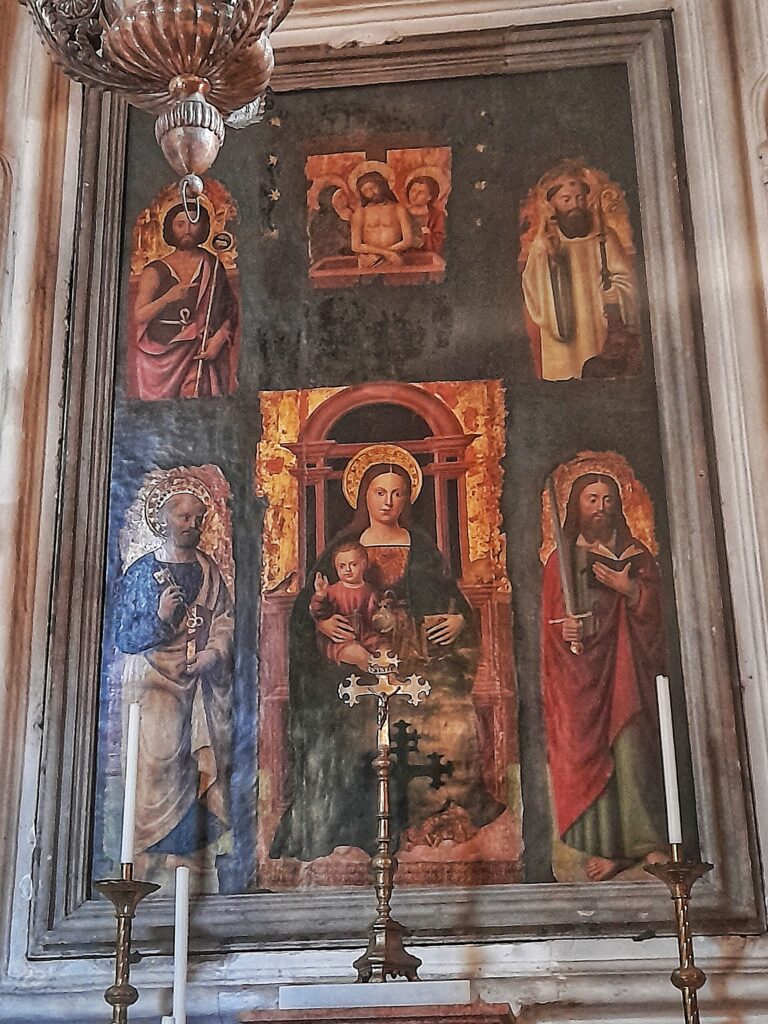
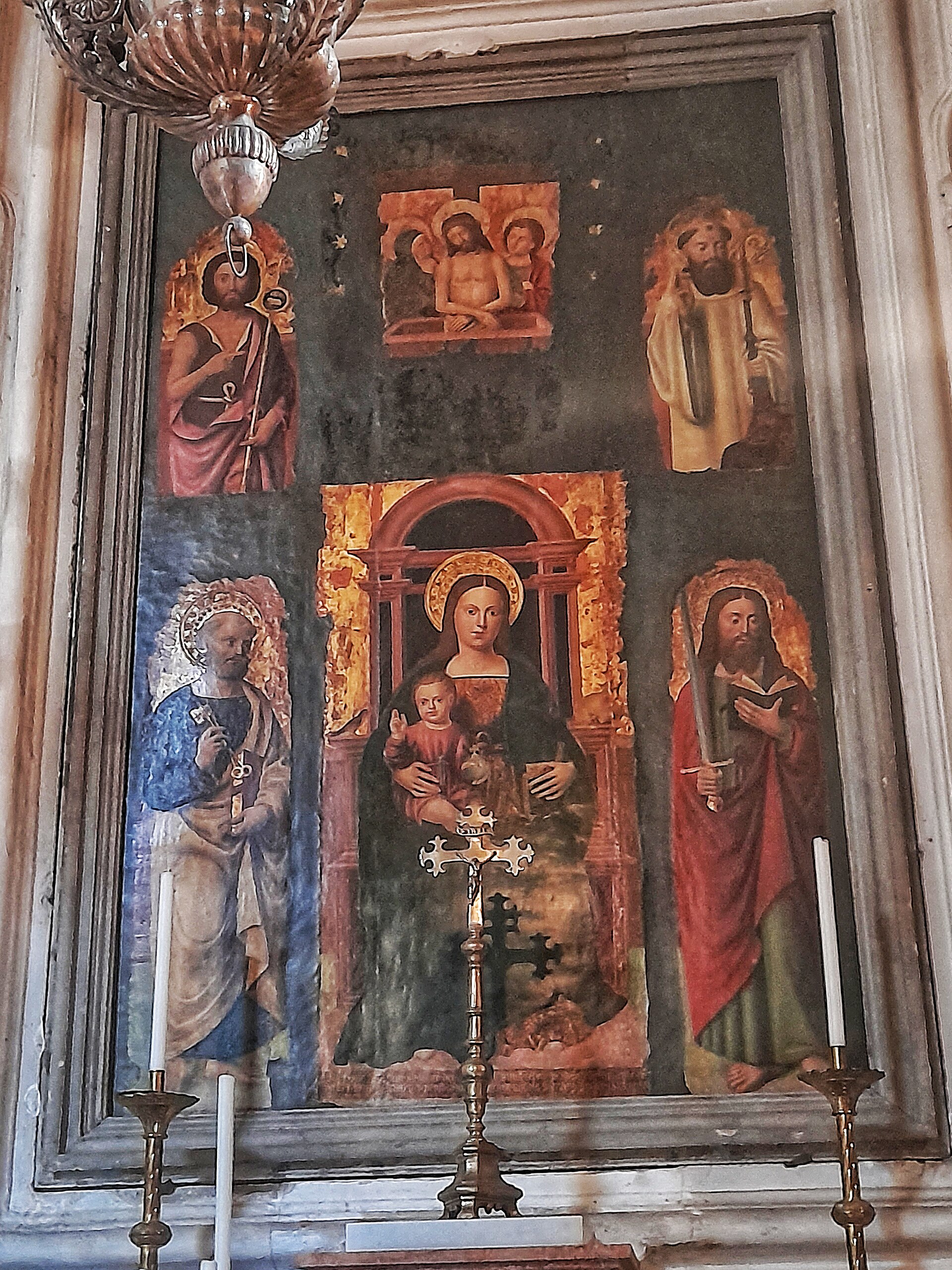
The parish church is Baroque, remodelled in 1689. The piece to see, if you find it open, is the polyptych by Agostino Casanova, dated 1523, with the Madonna and Child between Saints Peter and Paul: the painter left works in many churches of the valley, from Dolcedo to Villatalla. Tradition says the church was built on a pagan temple, but there is no firm proof. The old apse was incorporated into the cemetery chapel, while columns and capitals decorate the square.
The Museum of Forgotten Things
The Museo delle Cose Dimenticate is in the former oratory of Santa Croce, in piazza Vittorio Emanuele, restored in 1994 by the association. It collects everyday objects of the past: tools for olive growing and oil, a primitive plough, oil lamps, millstones, coffee roasters, hand-woven cloth. The oddest exhibit is the «ripercussiva», an instrument halfway between a piano and a barrel organ built by Giacomo Pisani, known as Minetto (1886–1959), born in Valloria, who also built a violin and a camera with a self-timer.
No opening hours are published. According to the association it is visited on request, and recent guides suggest asking at the restaurant on the square: call ahead on +39 0183 282742 if you want to be sure it is open ⚠️.
The church of San Giuseppe and the view
From the climb behind the fountains it takes about ten minutes to reach the little Baroque church of San Giuseppe above the village. The reason to climb is the view over the valley and the sea; on clear days, the association says, you can make out the outline of Corsica. Wear shoes with a decent sole: the climb is steep.
Castello, the Sun Stone and the legends
Older stories survive around the village. In the surroundings are the ruins of the village of Castello, with its lanes and the Stonzo well: the legend says its inhabitants, fleeing an invasion of ants, founded Valloria. Along the mule track that went down to the parish church is the «Bauso del Morto», a big flat stone where the bearers rested the coffin. Near the cemetery is the «Pietra del Sole», a boulder that tradition says was worshipped as the sun god. These are the association’s stories, not archaeological findings.
Molini di Prelà: San Giovanni del Groppo
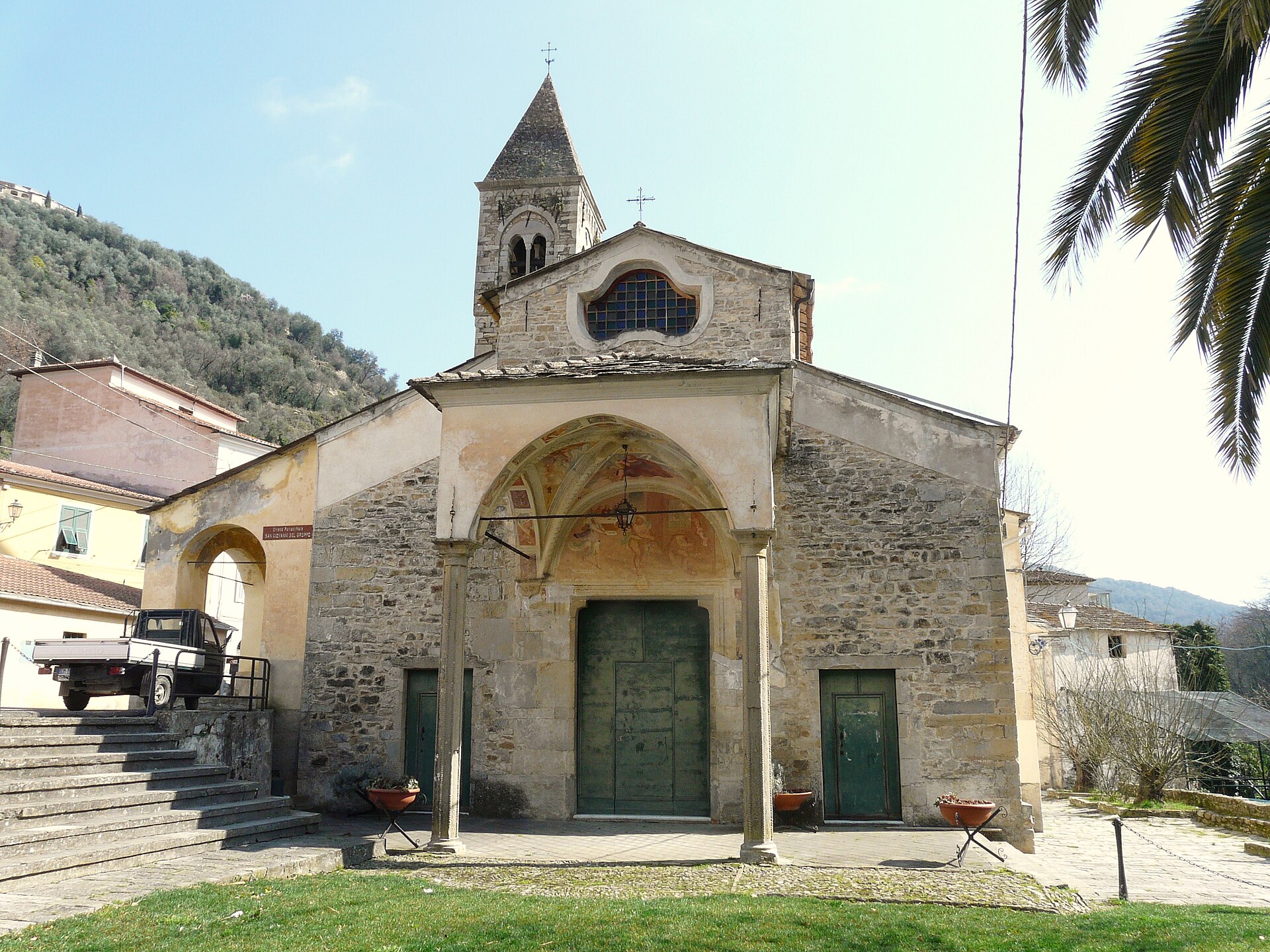
In the main village of the municipality, Molini di Prelà, further down the valley, the parish church of San Giovanni Battista (known as del Groppo) dates from the fifteenth century and has a frescoed porch of the same century. The municipality also has the sanctuary of the Madonna del Piano, with a Way of the Cross of 14 shrines, and that of the Madonna della Neve in the woods above Villatalla. The municipality announces a chestnut festival at Molini on 1 November 2026 at 14:30: details are on the Comune di Prelà website.
Where to stay
Where to stay in Valloria
We found no hotel in the village: the association lists an agriturismo above the village, but it is not confirmed that it is open in 2026, so check first. The real choice of places to stay is in Dolcedo, for quiet among the olive trees, and in Imperia, for more choice, the station and the sea. Staying in Imperia and coming up for the day is the simplest option if you have no car.
A10, exit Imperia Ovest, then about 15 km via Piani, Dolcedo and Prelà; small car parks at the entrance ⚠️
By train
No station: get off at Imperia, then a Riviera Trasporti bus (few runs, to be checked) or taxi ⚠️
By plane
Nice or Genoa, then train to Imperia and bus or taxi ⚠️
By car
From the A10 motorway take the Imperia Ovest exit and follow the signs for Piani, Dolcedo, Prelà and Valloria: about 15 km of narrow, winding valley road. After Molini di Prelà and the hamlet of Costiolo you reach the turn for Valloria. The association advises against coaches longer than 10.40 metres.
By train
There is no station: get off at Imperia, on the Genoa–Ventimiglia line, and continue by bus or taxi.
By bus
The association mentions two runs a day from Imperia with Riviera Trasporti, a figure that dates from several years ago. Line, times and frequency are not confirmed today: call the company (+39 0183 7001) or check the Riviera Trasporti website before setting out ⚠️.
By air
The handiest airports are Nice and Genoa: from either you reach Imperia by train and continue as above.
Parking
There are a few small car parks at the entrance to the village: leave the car there and continue on foot, because the lanes are narrow. The number of spaces is not confirmed and on festival days they can be full.
The slogan comes from the fair the association has held since 1991 in an olive grove with a dance floor, which started it all. The traditional menu includes the piattone di Valloria, zemin, tripe Valloria-style, skewers and grandmother’s cake; in the past, painters painted new doors live while people ate.
The dates, however, are not confirmed. In 2014 there were festivals in July and August; other sources mention the first weekend of July or August, and a recent guide says they are no longer held. Before planning a trip around the festival, check with the association, which has the website valloria.it (not always reachable) and a Facebook group.
What to eat in Valloria
There is a restaurant-bar on the square, «Antiche Bontà di Valloria», with traditional cooking: ask directly about opening days and hours ⚠️. The dish the association always serves at its festivals is the piattone di Valloria, with zemin (the Ligurian chickpea stew) and tripe. The rest is cooking from the Imperia hinterland, with Taggiasca extra virgin olive oil as the star: the Val Prino is one of the olive-oil valleys. To see how oil is made, read our guide to olive oil and mills in Dolcedo.
Walks and hikes
Two short walks start from the village. The first climbs to San Giuseppe, behind the fountains. The second, harder according to the association, starts from the parish church square, follows via Garibaldi to a farm track among the olive trees and reaches the Passo della valle and, if you like, the chapel of the Madonna del Tuvo. Along the paths you see the «caselle», small round dry-stone shelters with slate roofs covered in earth, used by shepherds.
For longer walks the association mentions a marked path from Valloria up to Monte Moro (1,184 m) and Monte Faudo, also suitable for mountain bikes «with a little preparation». Times, ascent and waymarks are not confirmed: ask in the village or at the municipality first, check the forecast and start early. In summer, in dry heat, access to the woods may be banned because of wildfire risk.
When to go to Valloria
The doors can be seen all year, but spring and autumn are best, with clear light and mild temperatures. At 437 metres evenings are cooler than on the coast. If the festival is on, it will be in summer; in winter the village is very quiet and the restaurant may be closed, so call ahead. For the ten-day forecast and the climate table see the Valloria weather page.
Day trips from Valloria
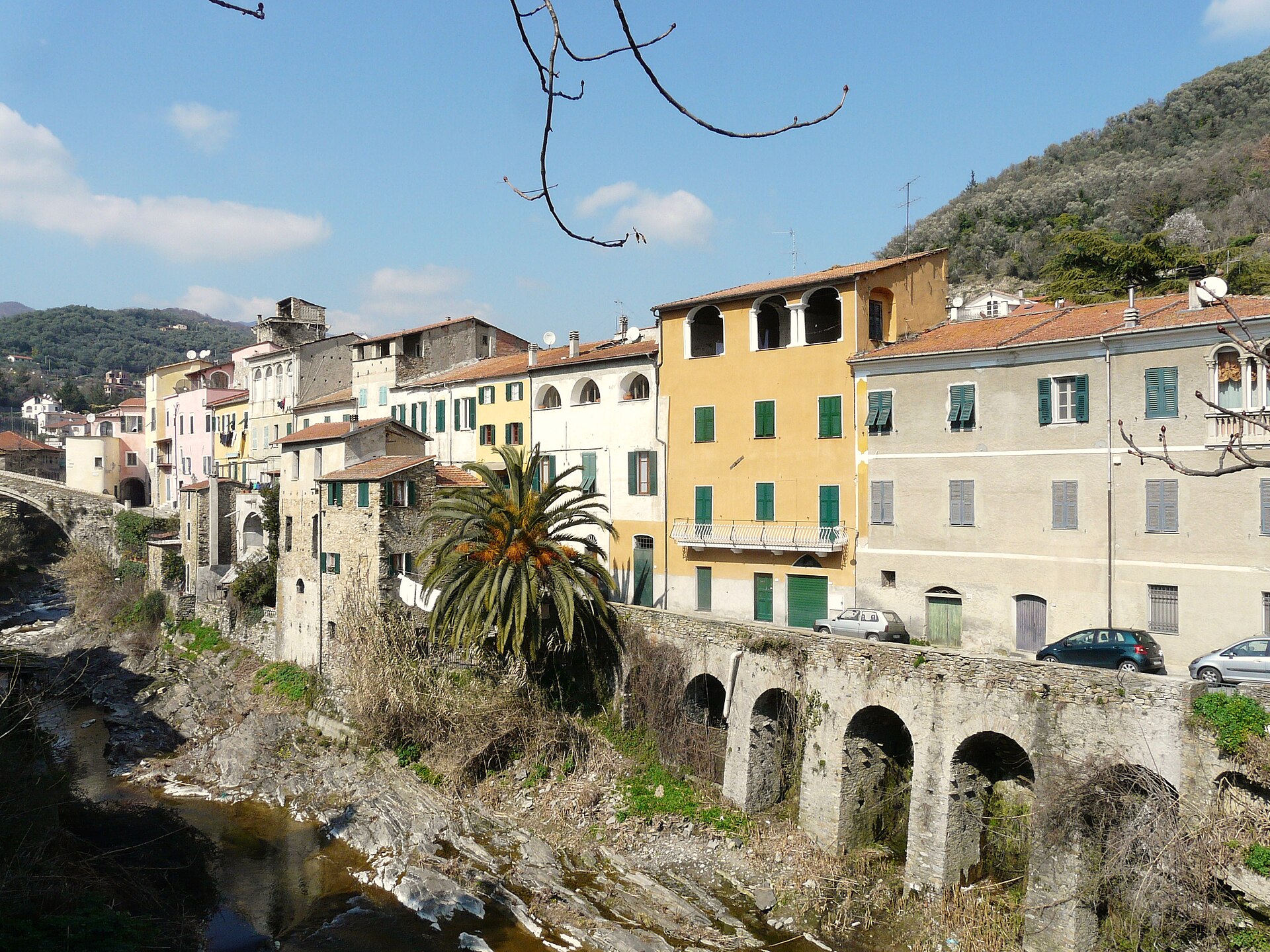
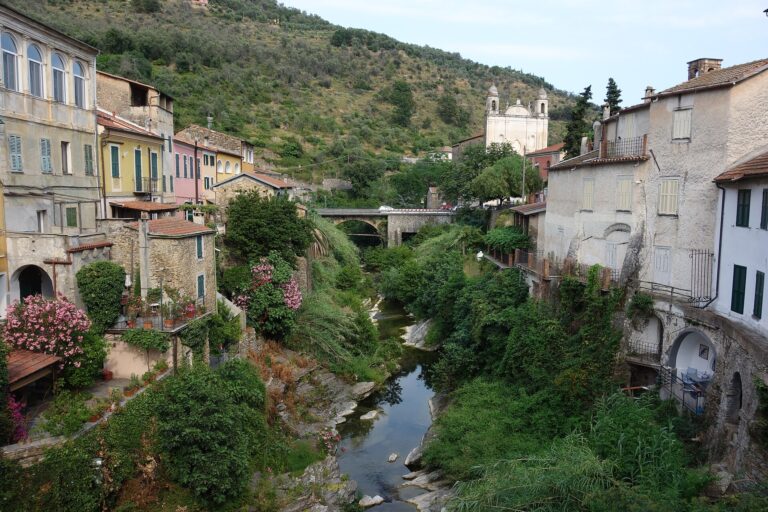
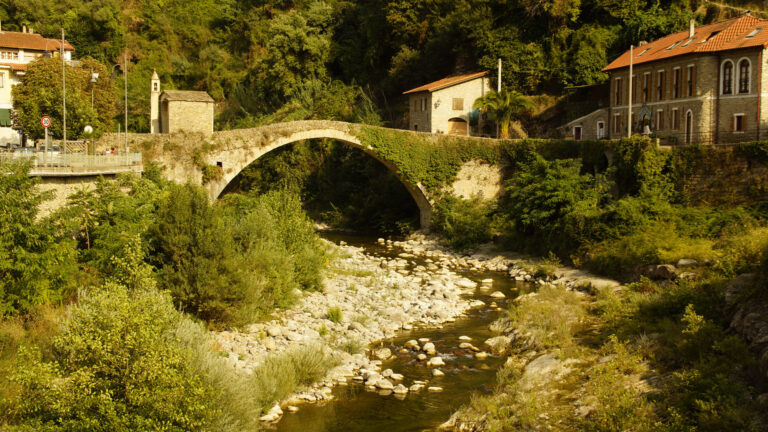
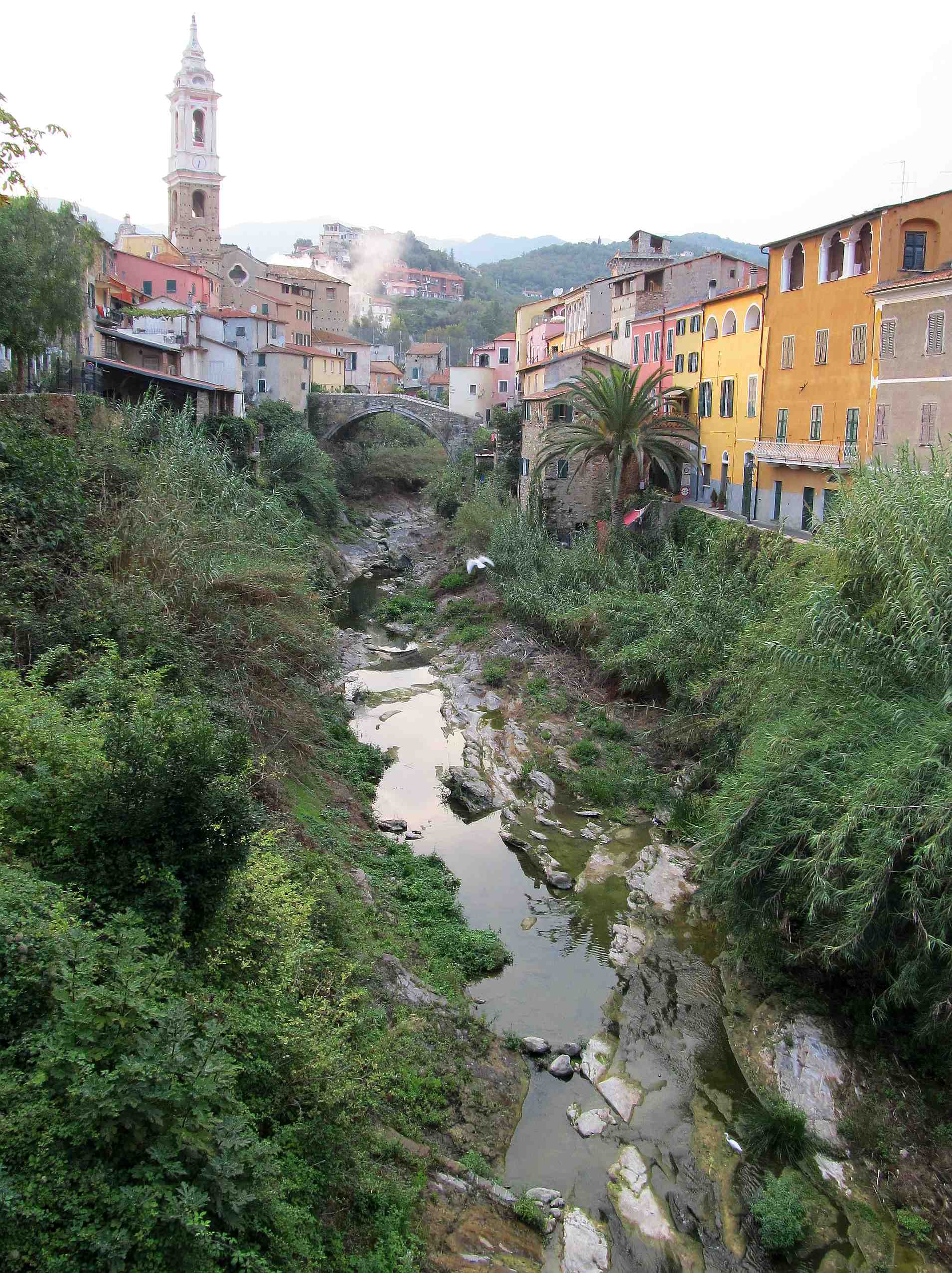
Dolcedo: the biggest village of the Val Prino, with stone bridges over the stream and old mills.
Imperia: Porto Maurizio, Oneglia and the Olive Museum, about 15 km away.
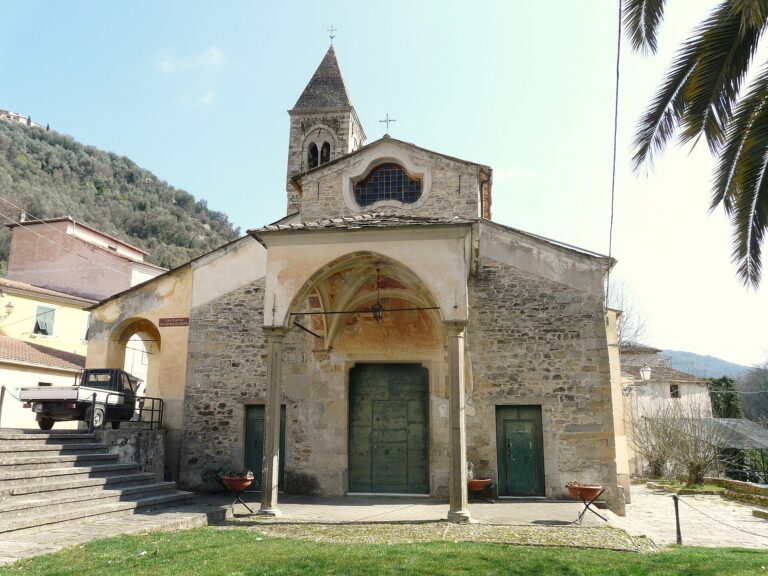
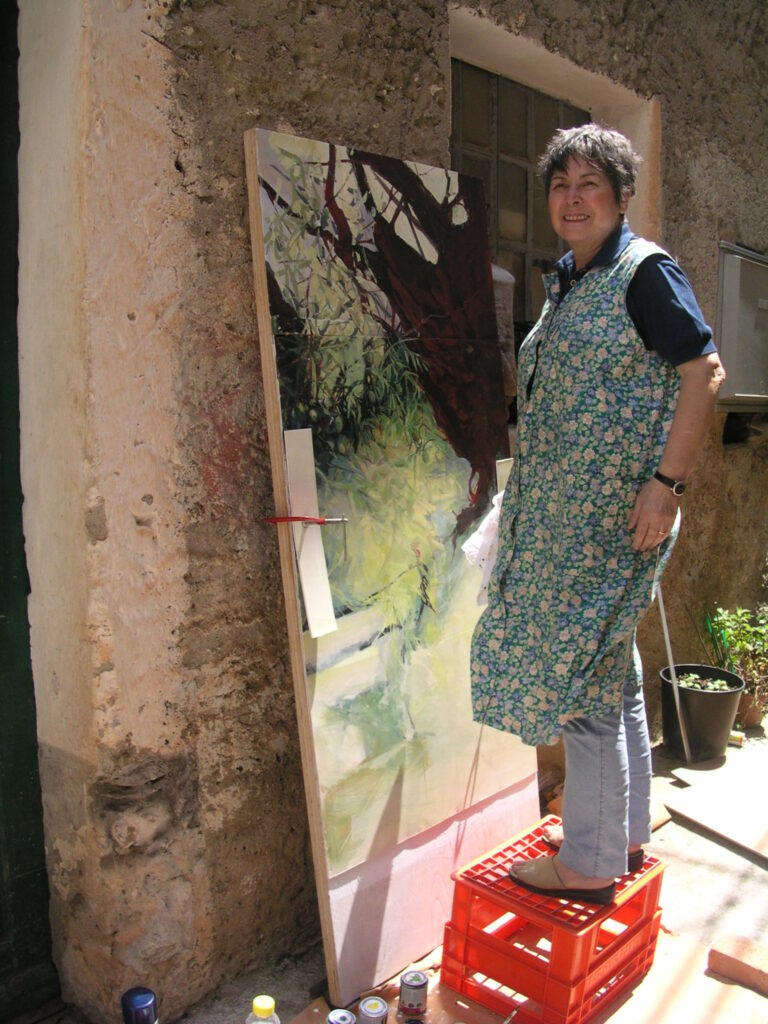
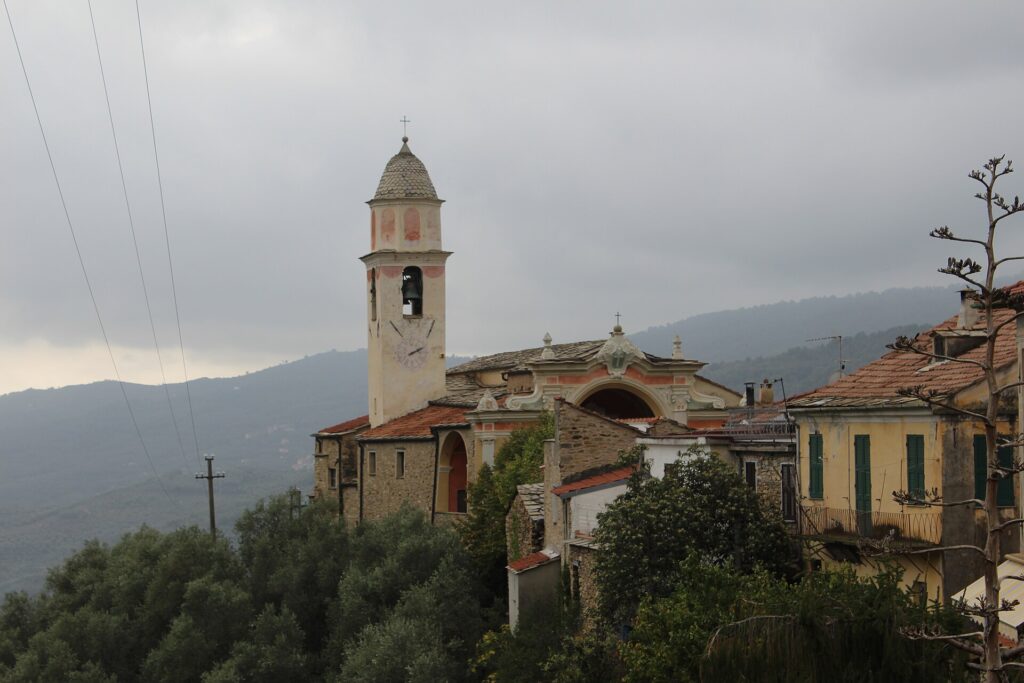
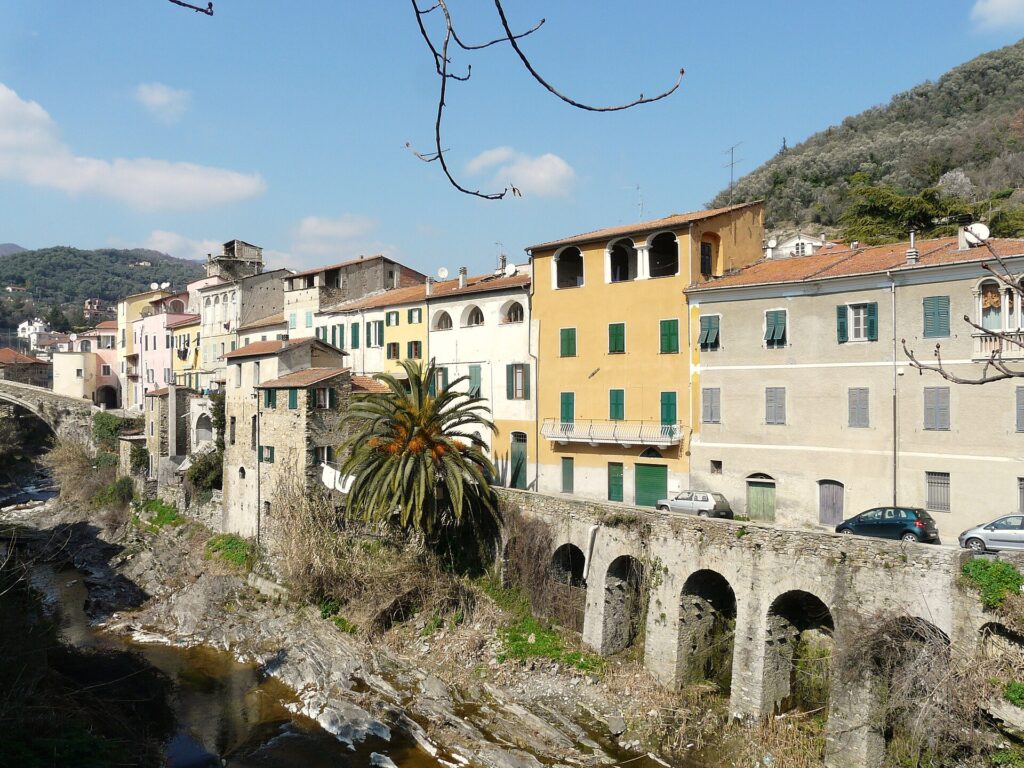
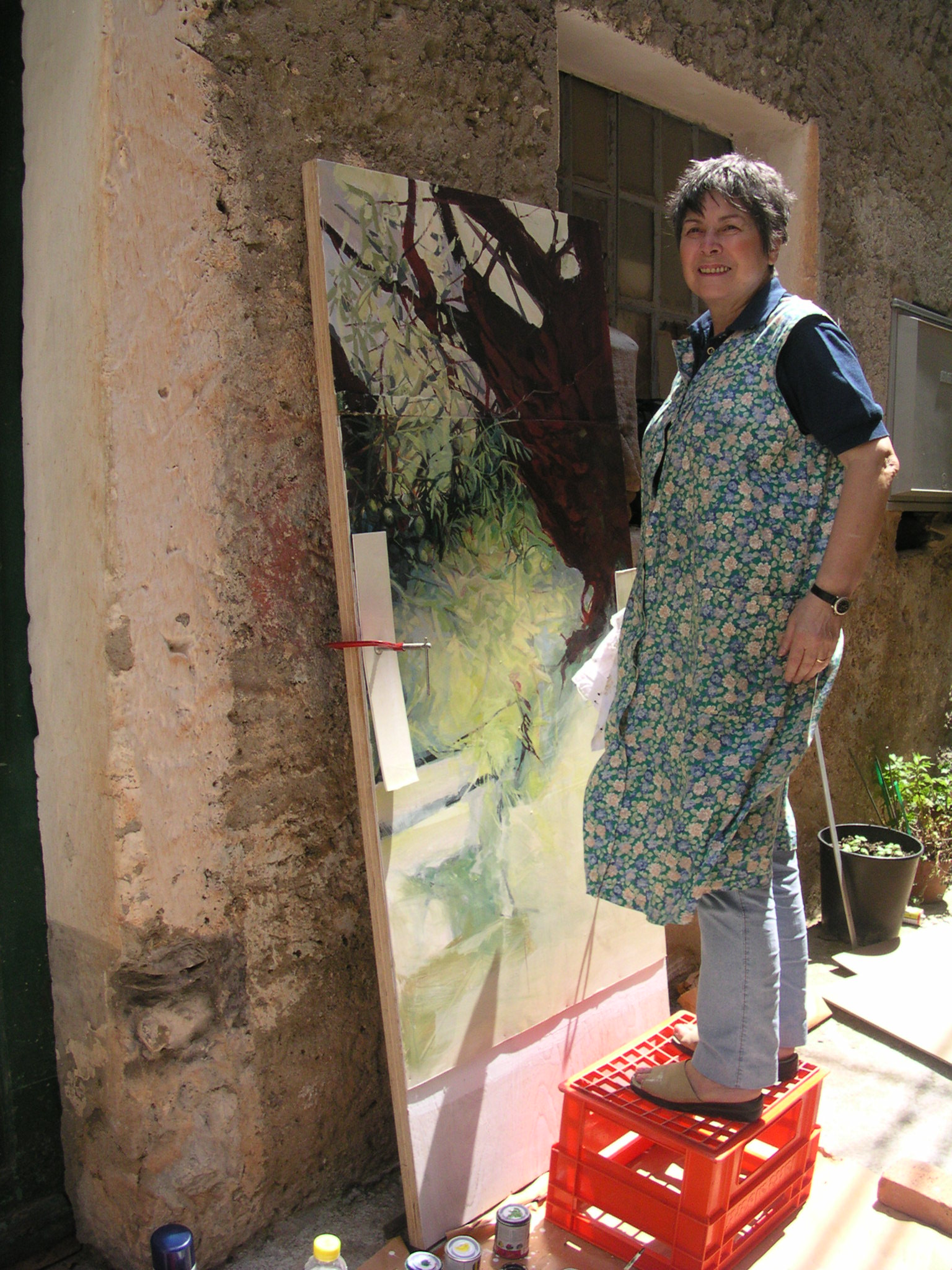
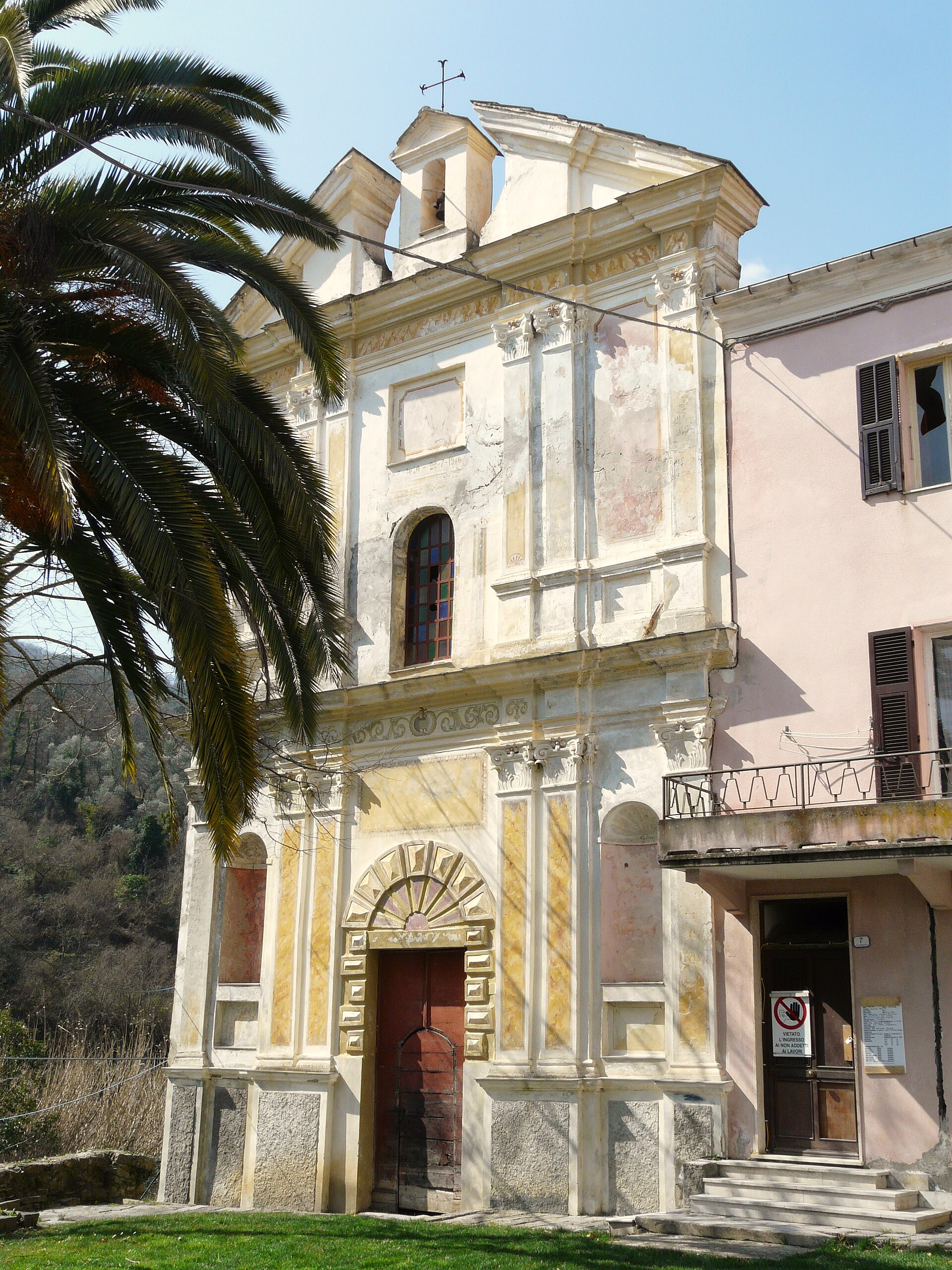
Prelà Castello e gli uliveti della Val PrinoUna pittrice al lavoro su una tela nei vicoli di Valloria durante la manifestazione «Le porte dipinte»Il polittico di Agostino Casanova nella chiesa parrocchiale di ValloriaLa chiesa di San Giovanni del Groppo a Molini di PrelàL'ex oratorio accanto alla chiesa di San Giovanni del Groppo a PrelàIl campanile e le case di Prelà CastelloDolcedo, il centro più grande della Val Prino
FAQ
Frequently asked questions about Valloria
Where is Valloria?
In the Val Prino, a hamlet of the municipality of Prelà, in the hinterland of Imperia, about 15 km away. It is at 437 metres above sea level.
How many painted doors are there in Valloria?
Between 150 and 170, depending on the source: the number changes because doors are added and restored. There is no official up-to-date figure.
Do you pay to see the doors?
No, the walk round the village is free. The doors are on lived-in buildings: look and photograph, but do not touch.
How long does a visit to Valloria take?
An hour or two for the doors and the square; half a day if you add San Giuseppe, the museum and lunch.
Is the Museum of Forgotten Things open?
No hours are published. It is visited on request: the association gives the restaurant on the square as the contact point, so call ahead.
When is the «A Valloria fai baldoria» festival?
In the past in July or August, but the 2026 dates are not confirmed and some say it is no longer held. Ask the association.
How do you get to Valloria without a car?
By train to Imperia, then by Riviera Trasporti bus: runs are few and must be checked. Otherwise, a taxi from Imperia.
Where do you park in Valloria?
In small car parks at the entrance to the village: continue on foot from there.
Is the sea nearby?
Not at Valloria: the nearest sea is at Imperia and San Lorenzo al Mare, about fifteen kilometres away.
Can Valloria be combined with Dolcedo?
Yes: Dolcedo is on the same valley road, further down. For oil and mills, see Dolcedo.