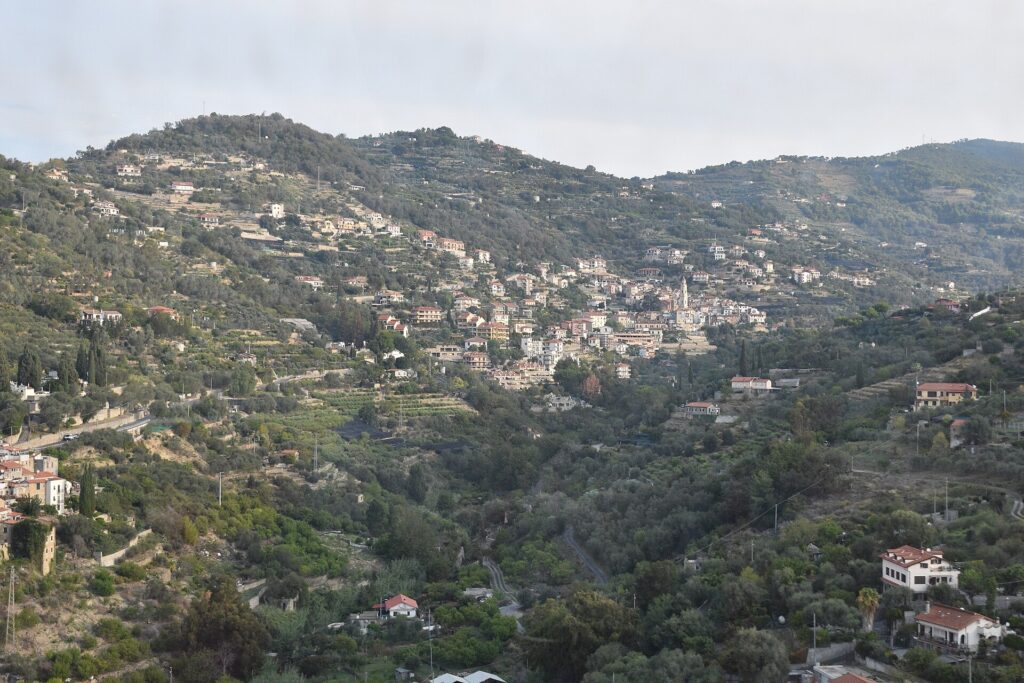
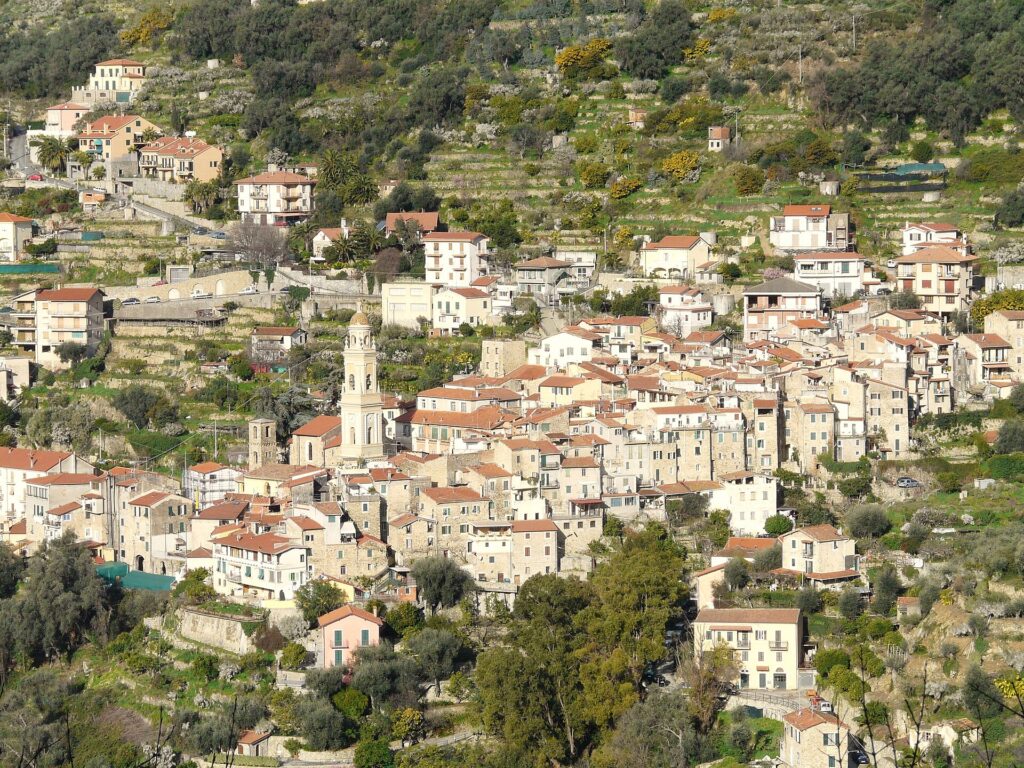
Vallebona is a village in the hills behind Bordighera, in the province of Imperia, at 149 metres above sea level in the valley of the Rio Borghetto. About 1,200 people live here, in an area of less than six square kilometres, and the sea is 6 kilometres away by road, around ten minutes by car. The name comes from the Latin vallis bona, the “good valley”, and the terraces around the village are still olive groves, vineyards and flower fields. It has held the Touring Club’s Bandiera Arancione (Orange Flag) since 2021, confirmed in 2024.
People come for the old town, which you walk on foot because cars stay outside: alleys, arches, stairways and stone gates around the parish church of San Lorenzo. The curiosity everyone mentions is the Piazza dei Quattro Elementi, which is why Vallebona is also called “the village of the five elements”; below we explain why there are four and where to look for the fifth. The village is also known for its decorated Piaggio Ape three-wheelers, bitter orange blossom water (a Slow Food Presidium) and raviöi cu pesigu, the local ravioli.
It is a half-day trip, easy to combine with Bordighera, Perinaldo and Seborga. There are no beaches and no nightlife: it is a place to walk slowly, eat and move on. If you want a longer walk, the official routes are collected in our guide to the walks around Vallebona.
By Italian Riviera editorial team·Updated on ·12 min read
Where is Vallebona?
Vallebona is in Liguria (Riviera di Ponente, Riviera dei Fiori, province of IM).
The old town takes an hour and a half or two hours, stops included. The stops below follow the route suggested by the village tourist office, from the entrance to the upper part. Wear comfortable shoes: the alleys go up and down.
The Porta della Madonna and the village gates
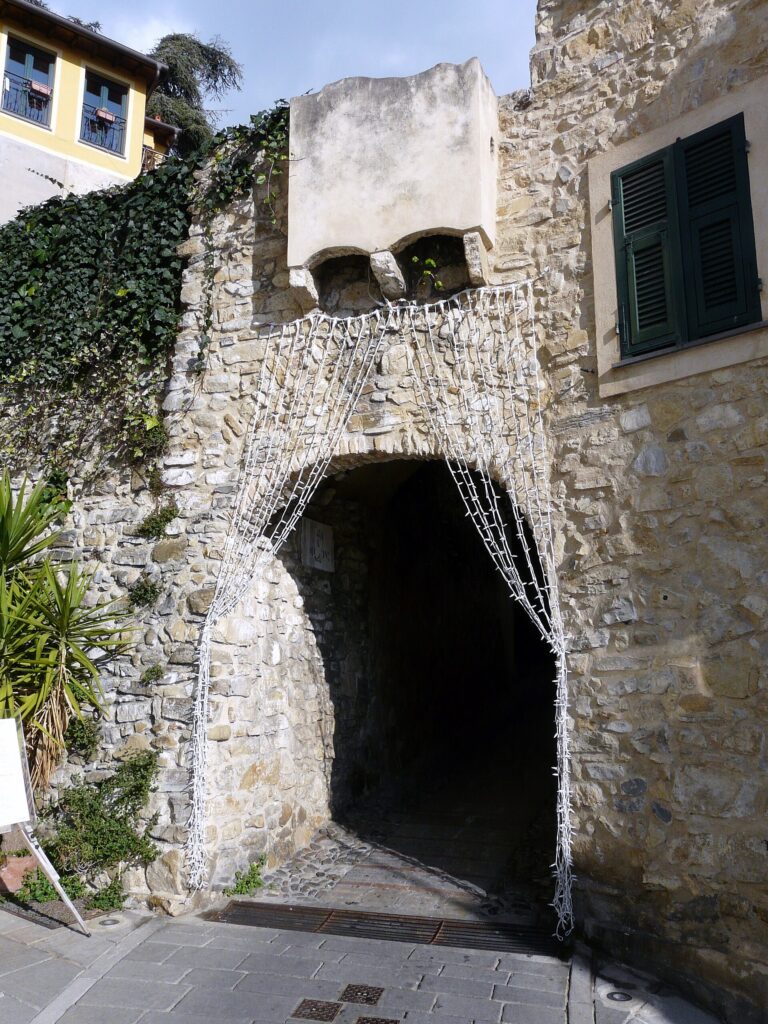
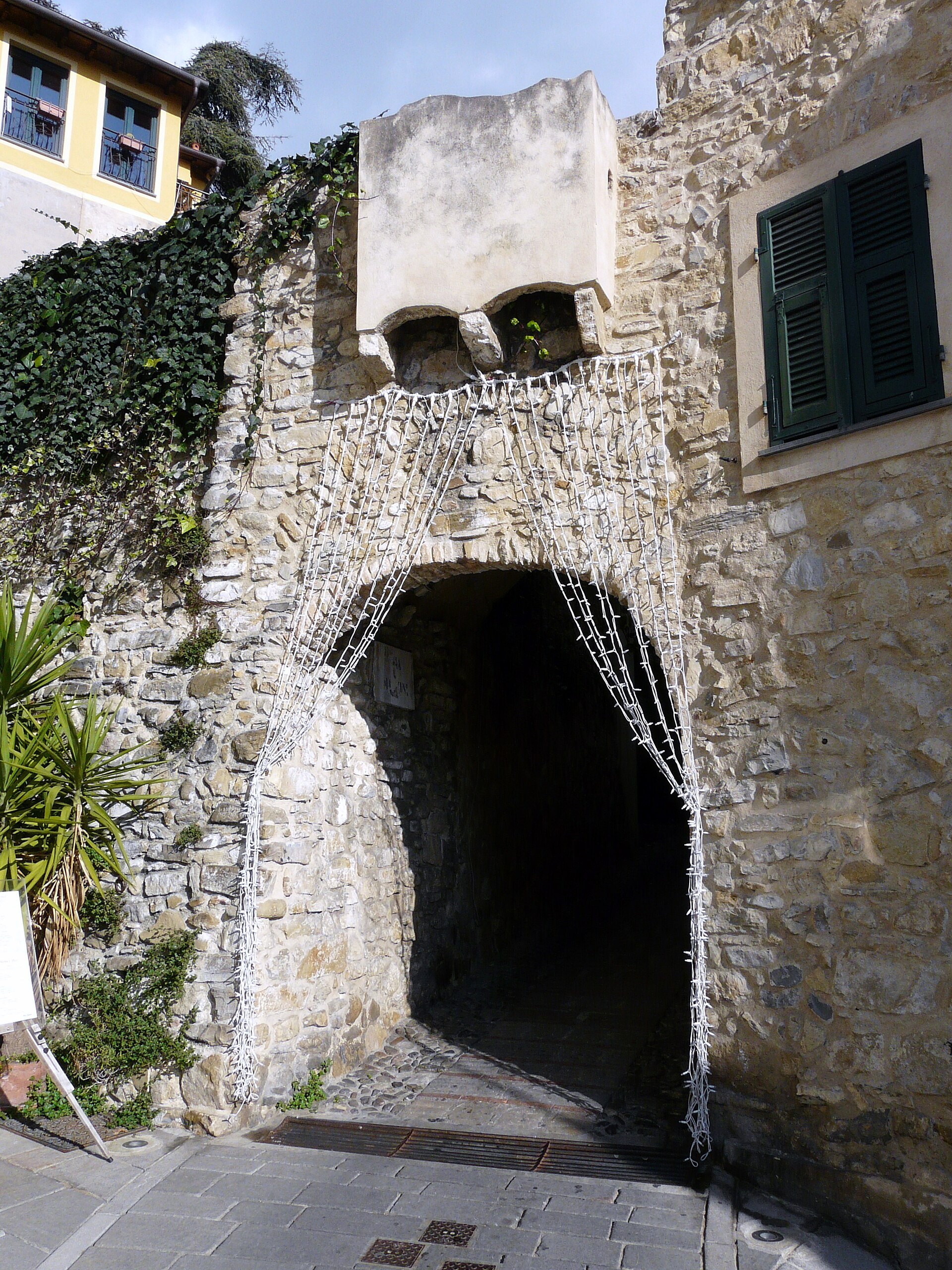
The large square at the entrance is where cars and buses end their run, and from there you enter the medieval village through the Porta della Madonna on the south side. According to the history published by the village, it was built in 1580 to defend against raids and looting: it had wooden doors opened in the morning and closed in the evening, and the machicolations through which boiling oil and water were poured are still visible at the top. The other gates were San Sebastiano to the west, San Bernardo to the north and Fontana to the east; the Porta du Cantu is the oldest.
The Piazza dei Quattro Elementi
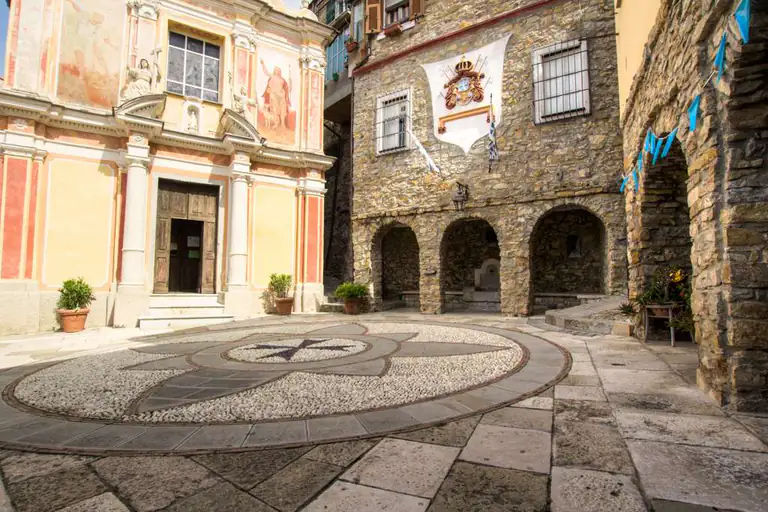
Past the gate you reach the Piazza dei Quattro Elementi, also called Piazza Marconi. From the edge you see the valley, the village of Sasso, a house with a cypress tree and, in the distance, the sea at Bordighera. We explain the four elements in the section below; here it is enough to know that the square is where the village stops to talk, and that it hosts evenings in the open air.
The medieval tower and the old bell tower
The main square is dominated by a stone tower, the “old bell tower”. Built as a lookout tower, from 1492 it was the bell tower of the nearby church for over three centuries, until a larger one replaced it. The village dates it differently on its own pages (to the 11th and to the 13th century), so we do not give a year: it is a medieval tower, and you only need to look up to recognise it.
The parish church of San Lorenzo
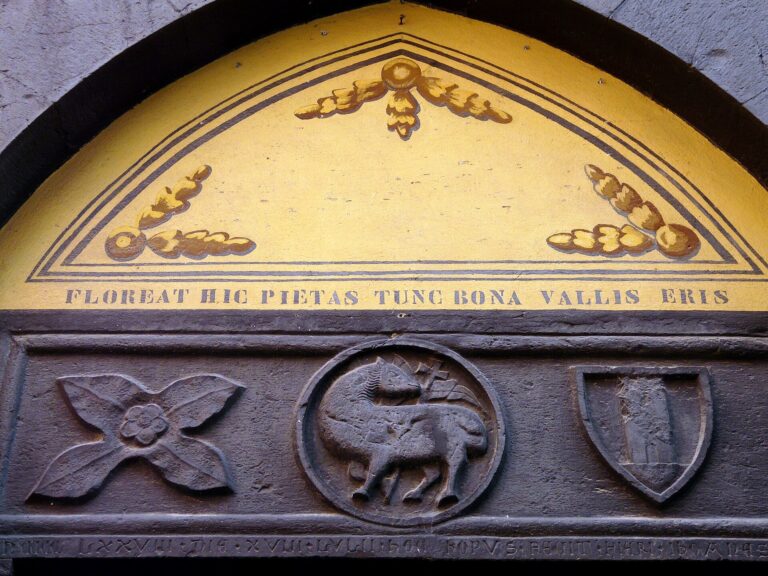
The parish church is dedicated to the patron saint, San Lorenzo (Saint Lawrence), celebrated on 10 August. It has medieval origins and a Baroque look; the slate portal and the crucifix inside date from the 15th century. Opening times are not published: if it is closed, ask at the tourist office (IAT) in Piazza XX Settembre.
The 1850 Agati organ
The most unusual thing inside the church is the organ, built by the Agati brothers of Pistoia (opus Nicomede no. 384) and installed in 1850. It arrived in 24 crates: by sea from Livorno to Nice, then by boat to Ventimiglia and finally by mule and by hand to Vallebona. Organ concerts are held in the church in summer; in 2024 there were three, the first in July. The 2026 dates are not confirmed.
The ouge and the tithe stones
In front of the church the porticoes, called ouge in dialect, were the meeting and gossip place for villagers and above all for the Consuls, the old administrators. Under the porticoes you find the “decime”, stones set up by the Church around the 12th century to collect a tenth of each family’s harvest: half went to the bishop and the rest to the eight priests of the chapter, including Vallebona’s parish priest. In 1544 the villagers rebelled against the tax and the stones were walled up. Four centuries later, around 1950, they were rediscovered and restored.
The Oratory of the Nativity of Mary
The oratory is Baroque, with a frescoed interior and a painting of the Nativity of the Virgin by Maurizio Carrega, a painter from Porto Maurizio active in the 18th and 19th centuries. The oratory also holds a restored 16th-century wooden altarpiece: the restoration was presented in March 2024 by the heritage authority (Soprintendenza). Here too, opening times are not published.
Alleys and lanes of the old town
Via Scudier leads towards the countryside and the Fontana Vecchia. Via Guglielmi is the old long alley, with old shop signs and well-kept houses. Then come Vico Forno, Vico Montebello and Via Garibaldi, where narrow, dark passages contrast with colourful facades. Piazza Nicola Rossi, called in nu ciassà in dialect, was the commercial heart of the village; from there a wide staircase leads back up to the church square.
The Loggia dell'Aria and the oil mill
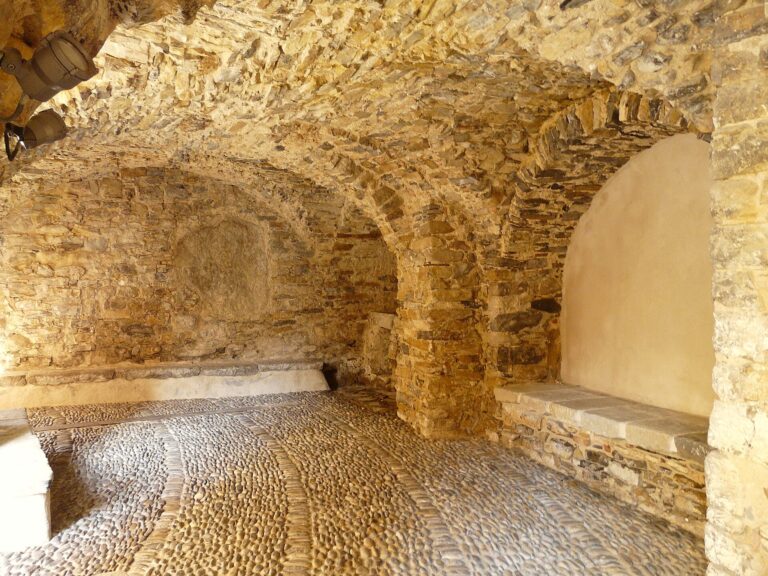
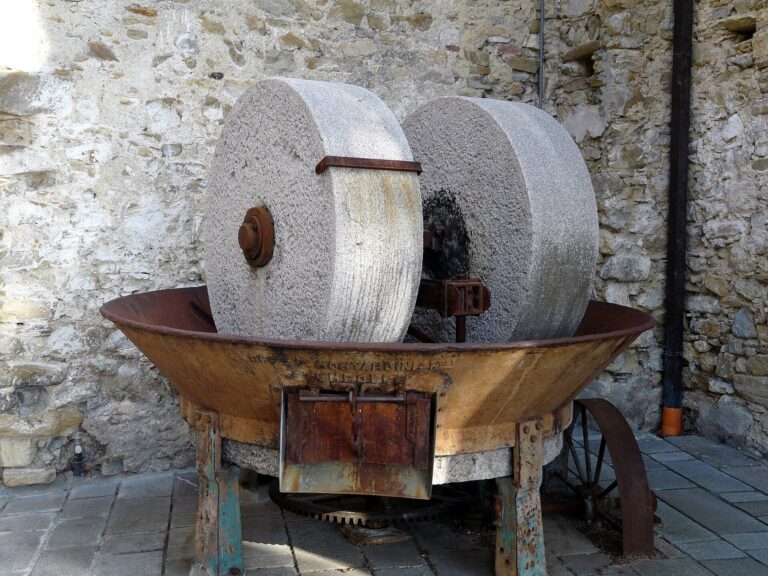
The Loggia dell’Aria is a newer covered, panoramic passage that looks onto Piazza XX Settembre and leads to the old oil mill, with the millstones still in place, and to small gardens.
The Cassini meridian
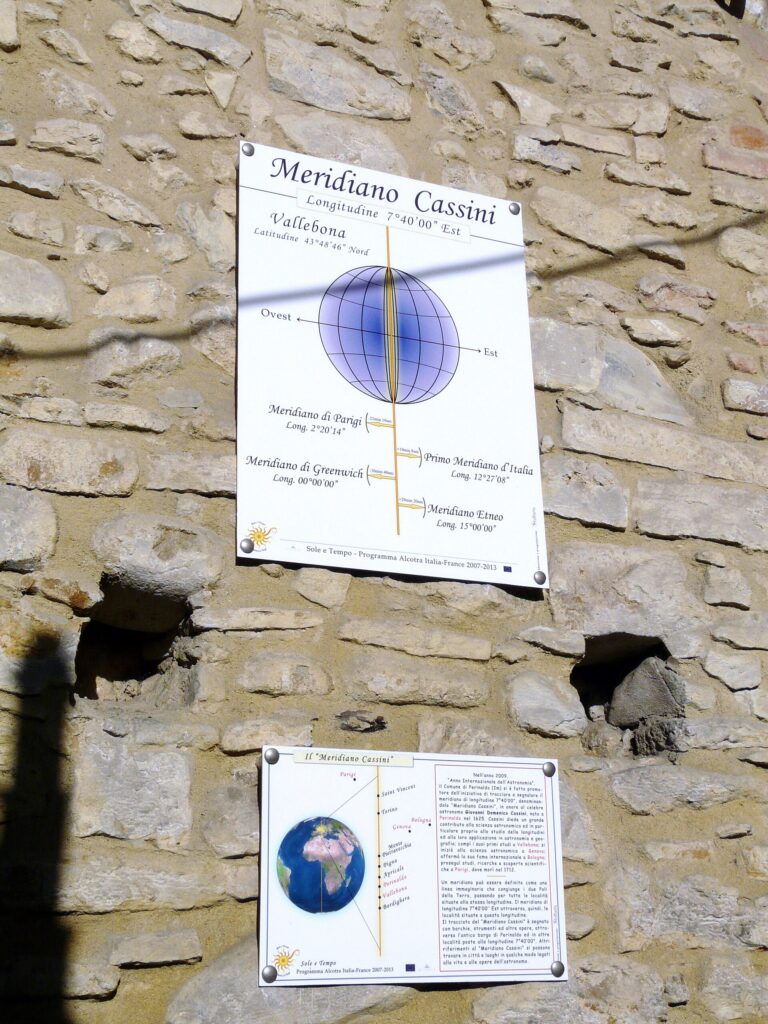
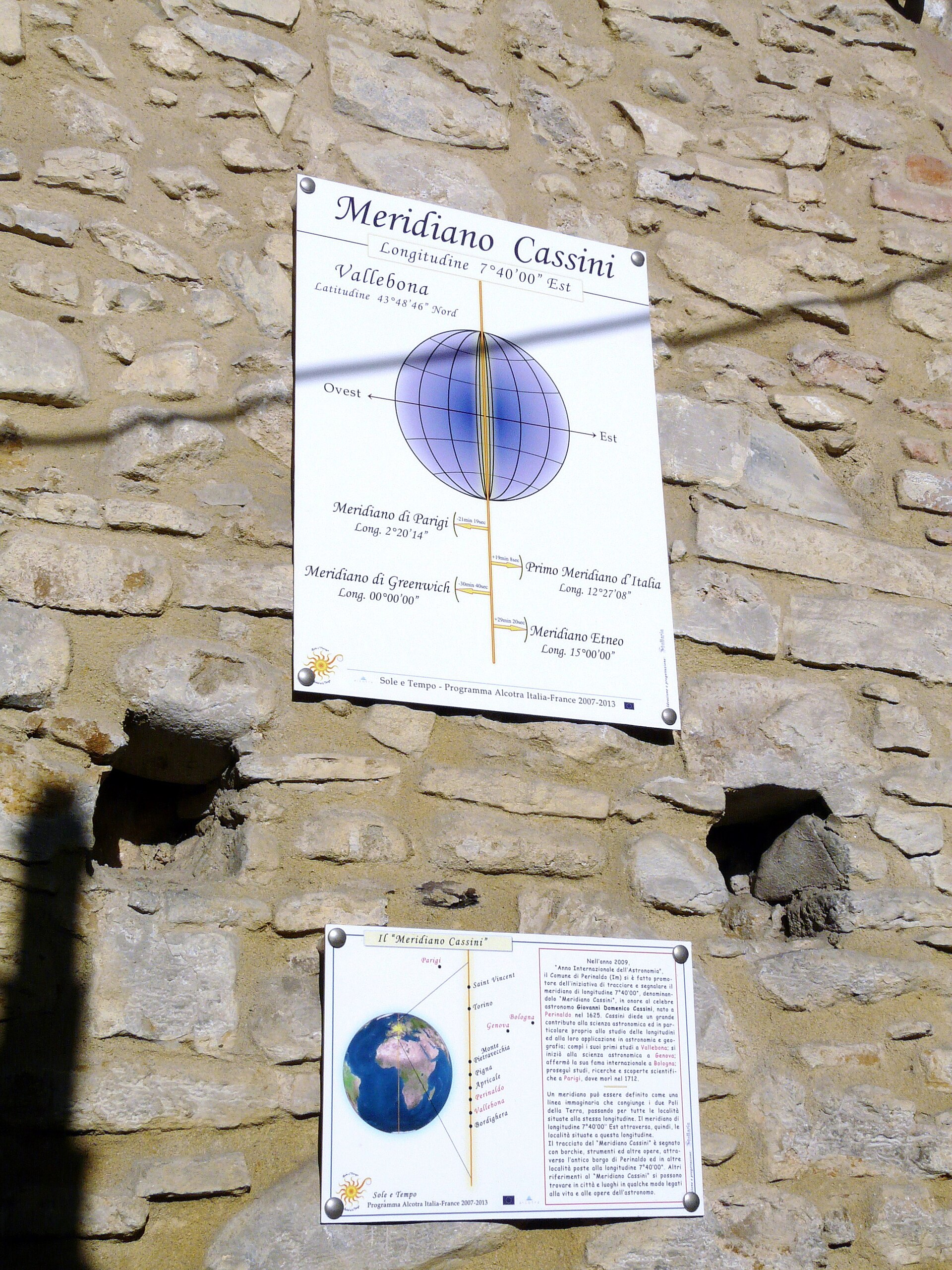
In the old town two plaques mark Vallebona as lying on the “Cassini meridian”, at longitude 7°40′ East, the same line on which guides place the sundial of Perinaldo, home village of the astronomer Giovanni Domenico Cassini. The plaques come from the European “Sole e Tempo” project of the Italy-France Alcotra programme (2007–2013) and compare the meridian with those of Paris and Greenwich. The village places them at the Porta du Cantu. There is no line on the ground: they are two panels, and a good excuse to stop and read.
The Latin plaque
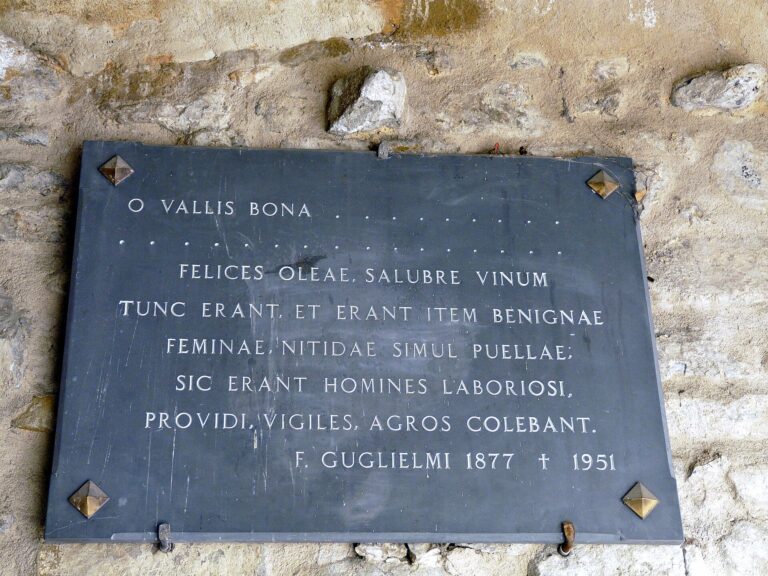
A Latin plaque signed F. Guglielmi (1877–1951) recalls what the “good valley” was like: happy olive trees, wholesome wine, hardworking men who tilled the fields.
The decorated Apes
The streets of Vallebona are full of Apes, the Piaggio three-wheelers: for years they were the only work vehicle able to manage country paths, roads and alleys. In the early 2000s the women of the village began using them as scenery in the “Vallebona in Fiore” contest. In 2005 the Ape, drawn by the architect Simona Alborno, became the symbol of the village, and in 2006 the first “Ape in Fiore” took place. Since 2019, according to the village, the festival has become a permanent exhibition: Apes decorated with flowers and colours stay along the streets of the old town all year round.
The Due Ponti walk
The Due Ponti walk starts outside the village, on old country paths, with views of the Vecchie Fontane and the ruins of old forges. The official loop is 2.1 kilometres long and takes about three quarters of an hour: all the figures are in our guide to the walks around Vallebona.
Where to stay
Where to stay in Vallebona
There are no hotels in Vallebona. The village lists 30 places to stay: 8 farm stays (agriturismi), 2 B&Bs and about 20 apartments and holiday homes. We do not give names: the village list is long and changes.
Old town: apartments in the alleys, everything on foot, but with stairs and no car at the door.
In the countryside: farm stays and isolated houses, more quiet and views; you need a car.
In Bordighera: if you want hotels, the sea and the train, stay on the coast and come up for the day: it is 6 km.
A10, exit Bordighera, then Via Pasteur up the valley: 6 km, about 10 minutes
By train
No station: Bordighera or Ventimiglia, then bus 9 from Bordighera (weekdays only) or taxi ⚠️
By plane
Nice Côte d'Azur, then train to Ventimiglia; about an hour by road ⚠️
By car
Leave the A10 at Bordighera, follow the coast road towards the centre and take Via Pasteur, which climbs up the valley through Borghetto San Nicolò: 6 km and about 10 minutes. From France take the A8 to Ventimiglia and then the A10.
By train
Vallebona has no station. The nearest are Bordighera and Ventimiglia, on the Genoa–Ventimiglia line: from there take a taxi (the village speaks of a few minutes’ ride) or the bus.
By bus
Bus line 9 links Bordighera station to Vallebona. According to the 2026/27 winter timetable of Riviera Trasporti it runs only on weekdays; the village website speaks of about 10 runs a day. Check the timetable on the Riviera Trasporti website before you leave, and do not count on the bus on Sundays.
By air
The nearest airport is Nice Côte d’Azur: from there take the train to Ventimiglia, then a bus or taxi. By car it is about an hour’s drive (estimate).
Parking
The large square at the entrance to the village is where cars and buses end their run: leave the car there and walk up, because the centre is pedestrian. We have no verified numbers of spaces or fees. For information: tourist office (IAT), Piazza XX Settembre 2, tel. +39 0184 290572, or the Vallebona tourism website.
The village of the five elements: there are four, the fifth you look for
The village website speaks of a Piazza dei Quattro Elementi, not five, and describes them like this: fire, in the space where a bonfire is lit every Christmas; water, in the fountain; air, in the blades of the windmill; earth, in the ground where the olive tree planted in the square grows. The fifth has no place: no plaque or map points to it.
Fire: the fogü, a large bonfire lit in the square on Christmas Eve, 24 December, and kept burning until Epiphany, 6 January. People dance and toast around the fire, and you can throw on a log.
Water: the fountain in the square. The thread of water continues in Via Scudier, with the Fontana Vecchia, and in the village’s symbolic product, bitter orange blossom water.
Air: the blades of the windmill. One guide puts air in the Loggia dell’Aria, the panoramic passage described above: sources disagree, and the two are a few steps apart.
Earth: the olive tree, symbol of local olive growing, and the earth of the terraces planted with olives, vines and flowers around the village.
The fifth element is an idea from regional tourism promotion. One article identifies it with the aroma and taste of the raviöi cu pesigu ravioli; other guides leave it to the reader.
What to eat and buy in Vallebona
Raviöi cu pesigu
Raviöi cu pesigu is the dish of the village. The “pesigu” is the pinch with which each ravioli is sealed by hand. The filling is herbs (borage, which the women used to gather in the fields) or meat, served with sage or as you like. Once they were the first course of feast days: meat came later, the classic filling was only chard. The Pro Loco organises a festival dedicated to the ravioli, but the dates are not published.
Bitter orange blossom water
Bitter orange blossom, called zagara, was Vallebona’s first flower crop and for over a century, together with lemons, a pillar of the economy: a village too close to the sea to make excellent olive oil needed something else. The distillery was founded in 1856 by the great-grandfather of Pietro Guglielmi, who reopened it after about fifty years and replanted the orange trees. Today Vallebona’s bitter orange blossom water is a Slow Food Presidium. It is used by Italian pastry chefs and gelato makers, and in the village it flavours bugie, the fried sweet eaten here all year. Where to buy it and whether the distillery can be visited is not published: ask the tourist office.
Other dishes and products
The village cites rabbit, which families cooked every Sunday, the tortaverde, the summer vegetable tart baked in the communal ovens, and stuffed vegetables. In winter, from December to April, the terraces fill with mimosa and broom, grown here since the 1950s. The village lists five restaurants and eateries; we do not give names, the list is on the village tourist website.
Walks and hikes
Vallebona is a good starting point for walkers. The village offers five routes with downloadable tracks: a three-quarter-hour loop between two bridges, a two-hour loop among country chapels, a walk down to Bordighera, a long, demanding trek on Monte Nero and a stage of the Sentiero Liguria. The walk down to Bordighera is 5.9 kilometres, takes about two hours and leads to the Sentiero del Beodo, the old canal path of Bordighera painted by Monet. For the return there is bus 9 (weekdays only). All the figures, gradients and advice are in our guide to the walks around Vallebona.
When to go to Vallebona
You can come all year, because the centre is small and the climate is mild. Winter has two reasons: the Christmas bonfire, from 24 December to 6 January, and the mimosa in bloom, from December to April. Spring is the time of the orange blossom. Summer and early autumn are the season for trails and open-air events.
Christmas fogü: from 24 December to Epiphany, in the Piazza dei Quattro Elementi.
Verità, bugie e fior d’arancio: an annual festival in the squares after the blossom harvest, with music, markets and bugie dipped in orange blossom water. The month is not confirmed.
Saints Peter and Paul: 29 June. With the San Lorenzo feast it is one of the two main festivals of the village.
San Lorenzo: 10 August, the patron saint.
Other events:L’anciua in se crote, an aperitif with fried anchovies in the square, and Vallebon’art-e, art in the alleys every two years. Dates are not published: ask the tourist office.
Day trips from Vallebona
Bordighera: 6 km, about 10 minutes. Beaches, the old town and the Sentiero del Beodo.
Seborga: the “principality” on the heights, on the route of the Monte Nero trek.
Perinaldo: about 6 km (estimate), Cassini’s village with its observatory and sundial.
Ospedaletti: on the coast, to the east, with the sea and a promenade.
Sanremo: the Festival city, about 15–20 km (estimate).
Vallebona e la sua valle, con il mare in fondoIl borgo di Vallebona tra le terrazze coltivateVallebona sul versante della valle, vista da lontano (foto di zona)La parrocchiale di San Lorenzo con il vecchio campanileIl portale in ardesia della parrocchiale di San Lorenzo, con la lunettaLa facciata dell'oratorio della Natività di MariaUna loggia coperta del centro storico di Vallebona, con panche in pietra
FAQ
Frequently asked questions about Vallebona
Why is Vallebona called the village of the five elements?
Because the main square, the Piazza dei Quattro Elementi, stands for fire, water, air and earth. There are four elements; the fifth has no place and is interpreted in different ways.
What are the four elements and where are they?
Fire is the Christmas bonfire in the square, water is the fountain, air is the blades of the windmill, earth is the olive tree. They are all in the Piazza dei Quattro Elementi, also known as Piazza Marconi.
How far is Vallebona from Bordighera?
6 kilometres, about 10 minutes by car. On foot there is an official route of 5.9 km from Vallebona to Bordighera Alta.
Can you reach Vallebona without a car?
Yes, by train to Bordighera and then bus 9, which runs only on weekdays, or by taxi.
What are the Apes of Vallebona?
They are Piaggio Apes, the three-wheeled work vehicles that became the symbol of the village. Since 2019 they stay decorated in the streets of the centre all year, according to the village.
Can you buy the bitter orange blossom water?
It is a Slow Food Presidium made in the village, but points of sale and distillery visits are not published. Ask the tourist office, tel. +39 0184 290572.
When is the best time to visit Vallebona?
All year. For the Christmas bonfire from 24 December to 6 January, for the mimosa from December to April, for trails in spring and autumn.
Is Vallebona in the Val Nervia?
No. It lies in the valley of the Rio Borghetto, behind Bordighera, close to Perinaldo and Seborga.