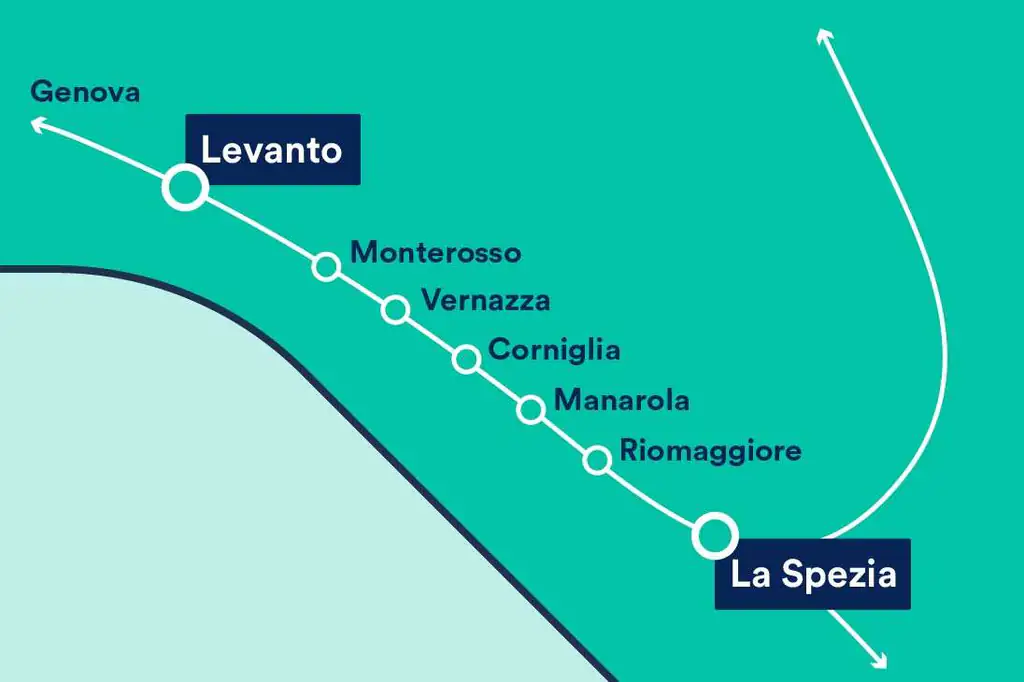
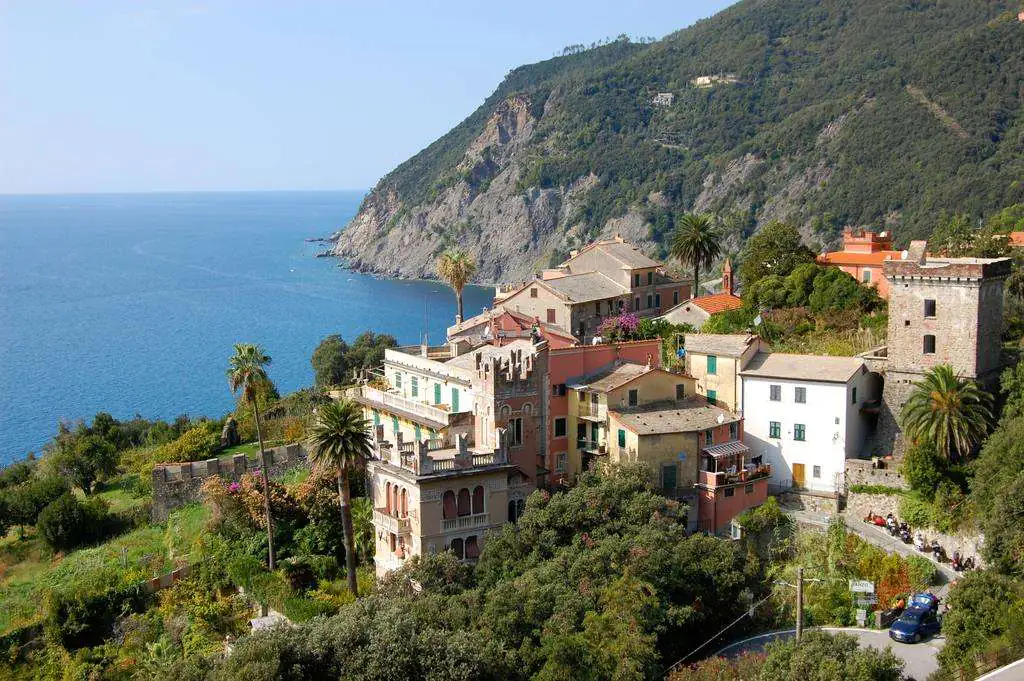
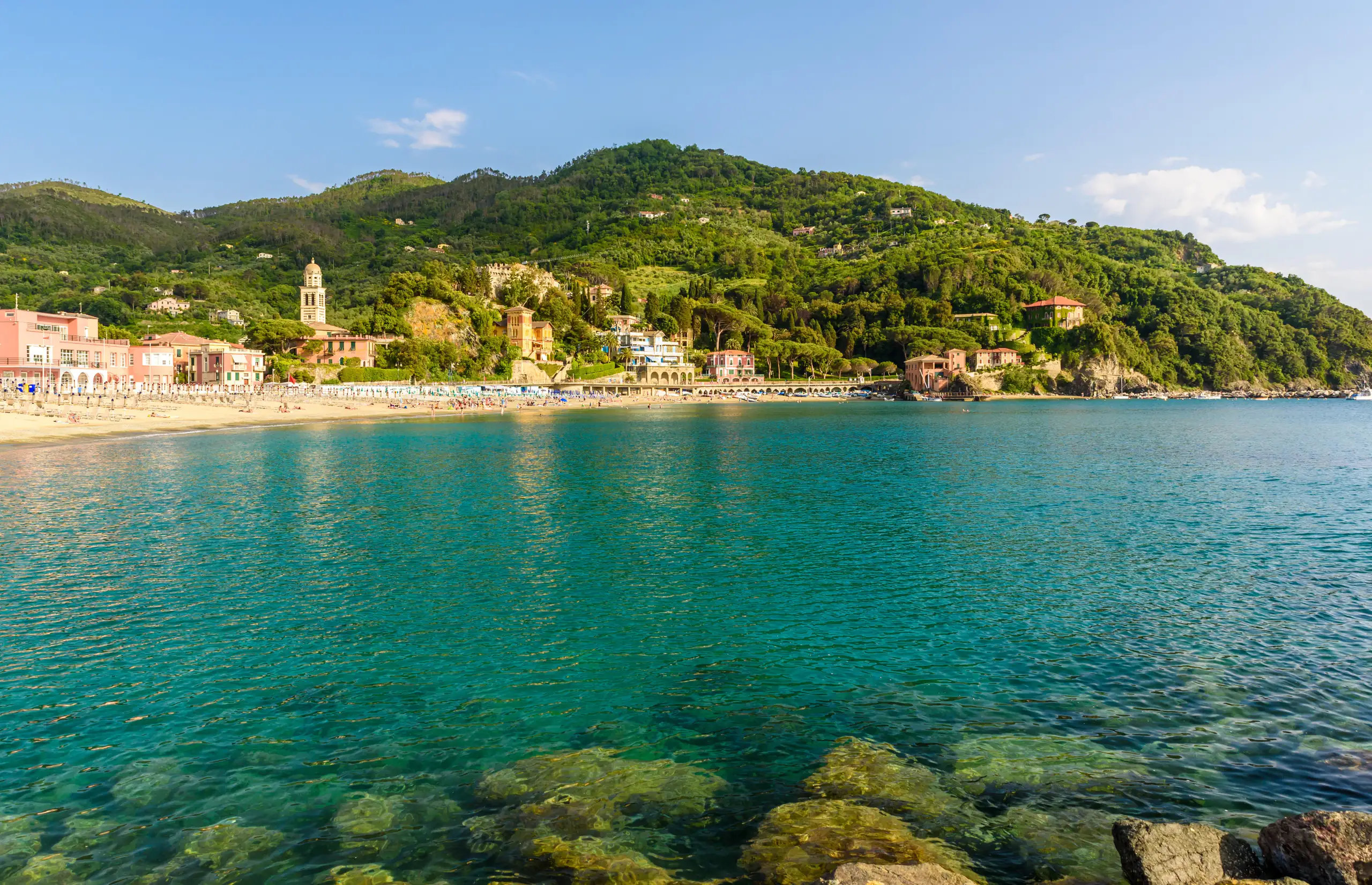
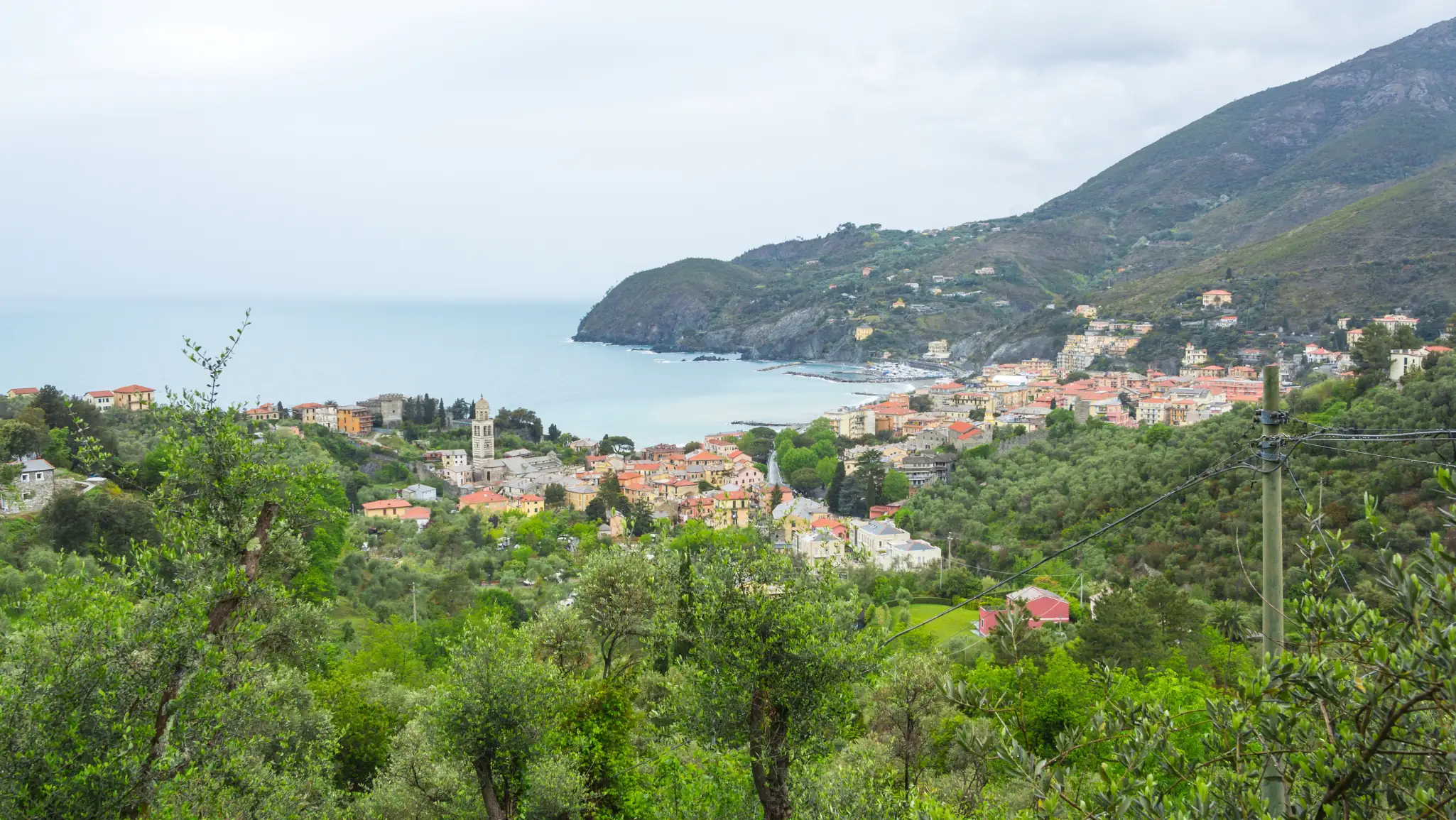
Levanto is a town of about 5,000 people in the province of La Spezia, at the mouth of a green valley that opens onto a wide, sandy bay. It sits just west of Punta Mesco, the headland where the Cinque Terre begin: Monterosso is a few minutes away by train. It has a medieval old town with walls and a loggia, one of the longest beaches on the eastern Riviera, and winter waves that draw surfers from all over northern Italy.
Most visitors choose it for practical reasons. Levanto is the western terminus of the Cinque Terre regional trains, so you board at the first stop, often find a seat, and reach the villages in minutes. It also has car parks, campsites and a much wider choice of accommodation than the five villages, where space is tight and prices are high.
It is more than a dormitory for hikers, though. In the evening the seafront and old lanes have a life of their own, the beach works well for families, and the old coastal railway has become a walking and cycling path to Bonassola and Framura. Allow two or three days to see the town and tour the Cinque Terre, or a week if you want to mix beach days and trails.
By Italian Riviera editorial team·Updated on ·10 min read
Where is Levanto?
Levanto is in Liguria (Riviera di Levante, province of La Spezia).
You can walk around the centre in a couple of hours. The medieval core lies on the east side, between the church of Sant’Andrea, the Loggia and the walls climbing the hill; the newer Borgo Nuovo spreads across the plain of the Ghiararo stream towards the station.
Church of Sant'Andrea
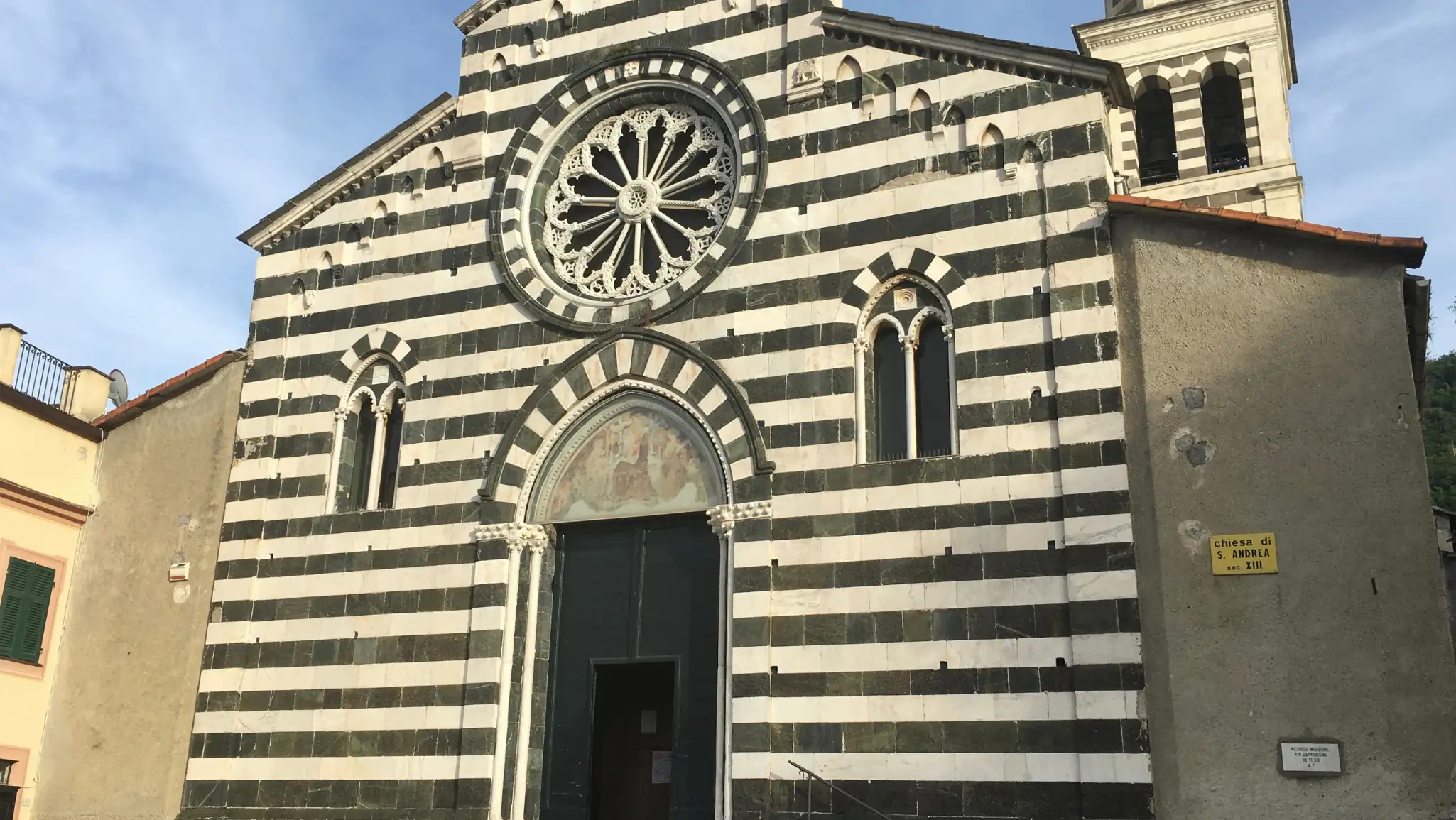
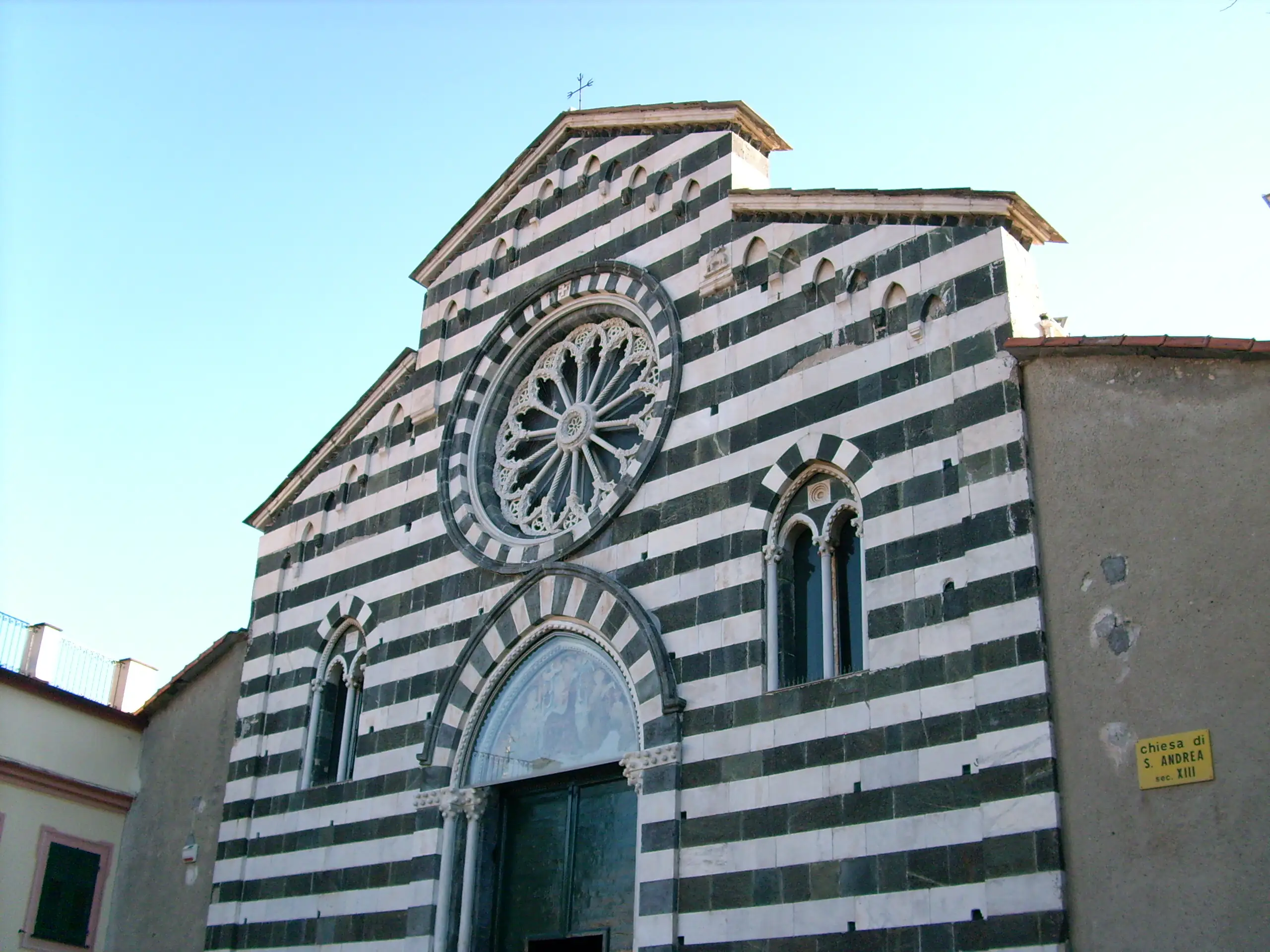
Levanto’s landmark is a Ligurian Gothic church built in 1222 and enlarged in the 15th century, with a black-and-white striped façade and a rose window over the door. Inside are five aisles, a 14th-century black crucifix, a 16th-century Martyrdom of Saint Sebastian and an Adoration of the Magi by Andrea Semino. Its most precious piece, a chalice linked to Emperor Henry VII, is shown only on special occasions such as the patron saint’s day, 30 November.
Medieval Loggia
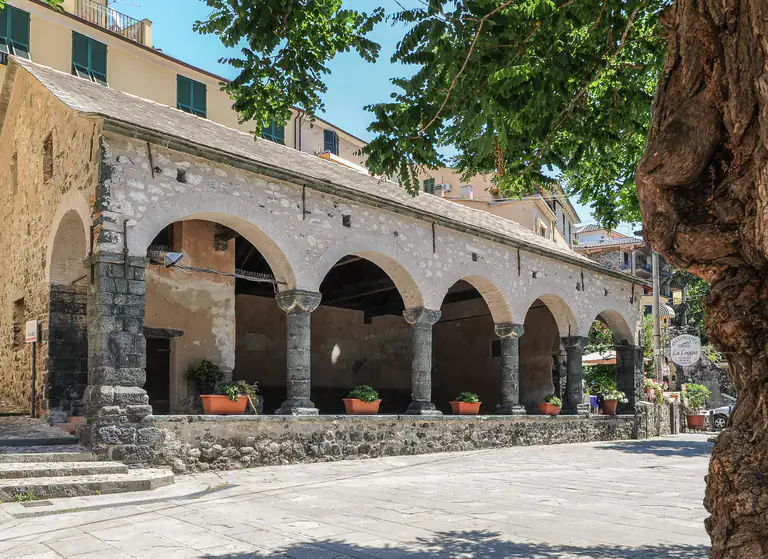
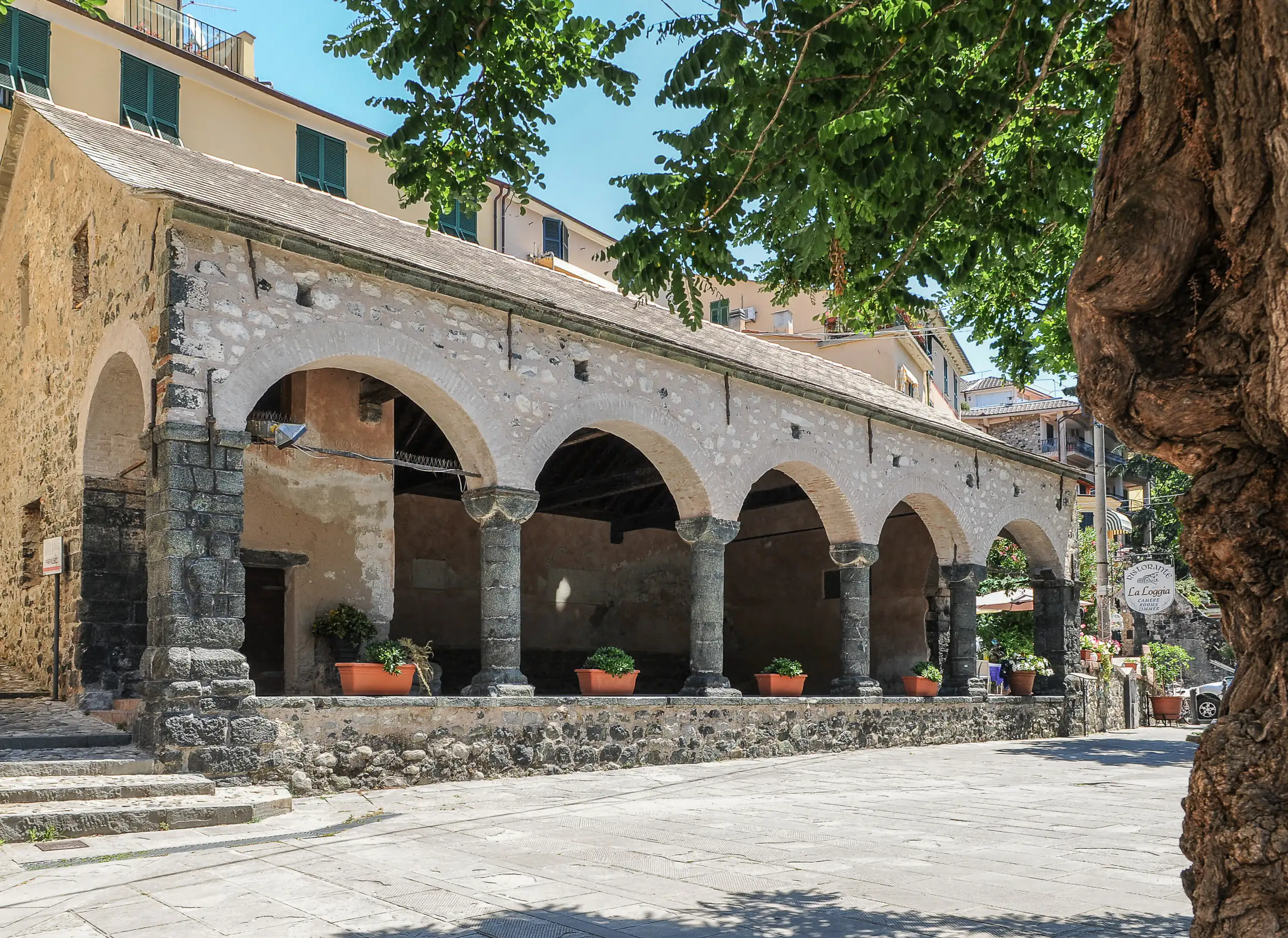
In Piazza del Popolo, at the heart of the old town, the 13th-century communal Loggia opens onto the square with stone arches where business and assemblies took place for centuries. In 2007 UNESCO recognised it as a “monument bearing witness to culture and peace”. It is a public space: you will pass it many times, but stop to look at the pillars.
Levanto Castle
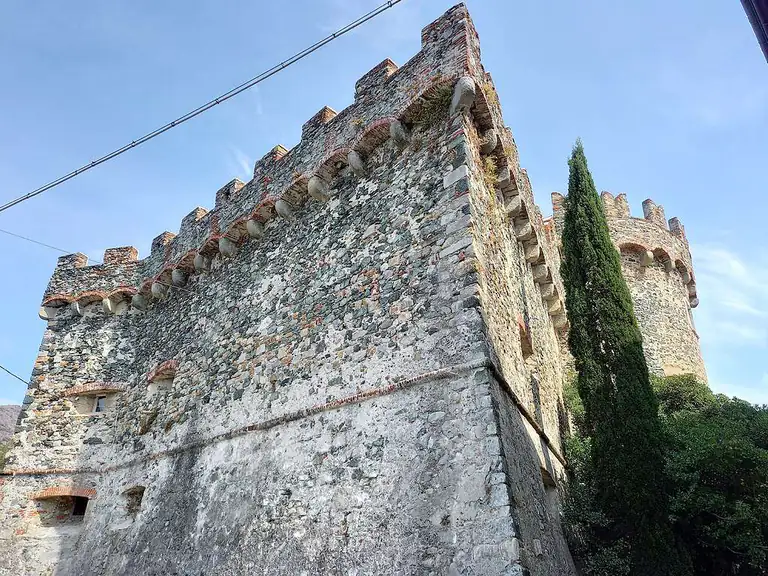
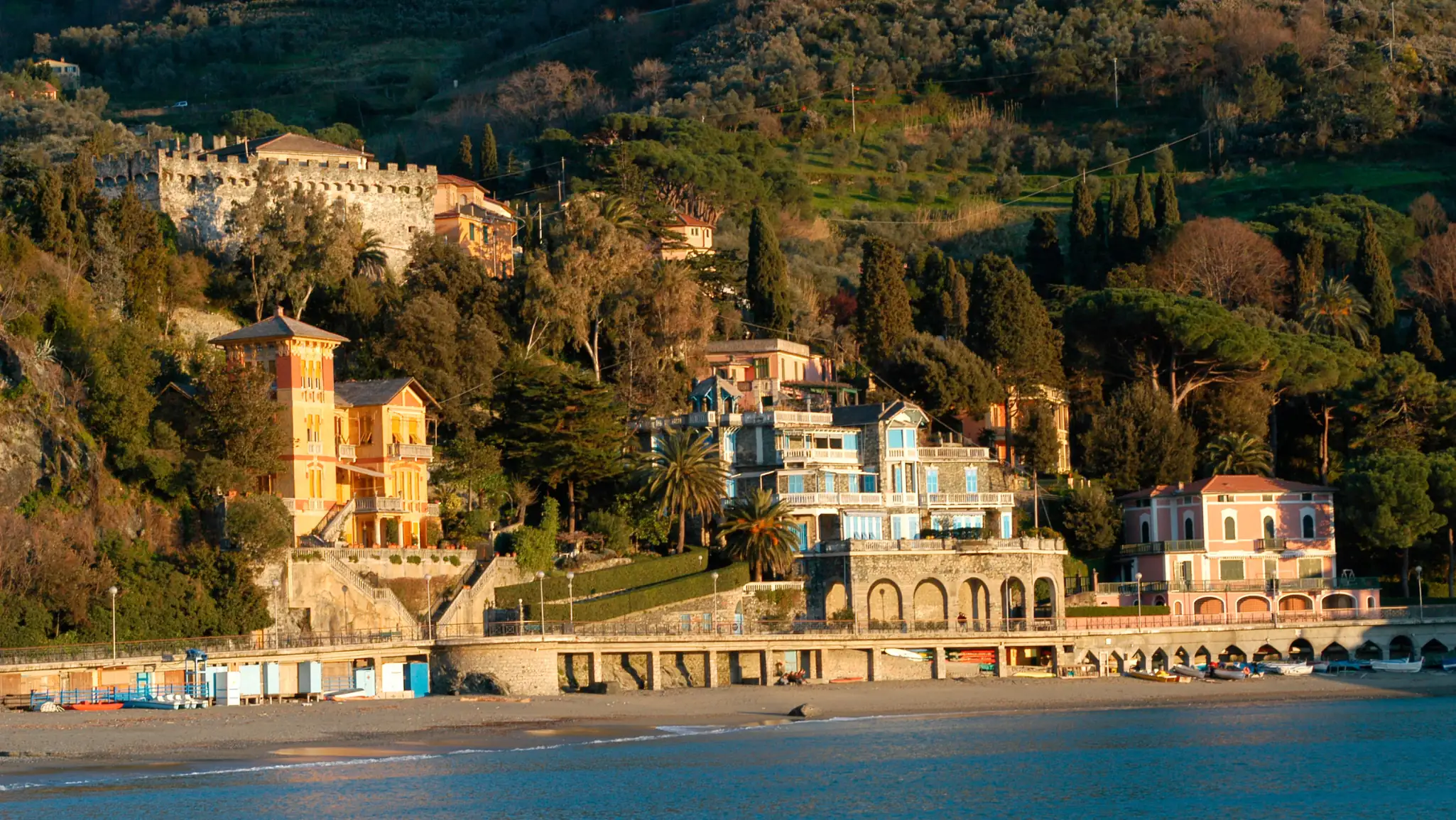
The castle overlooks the old town from the sea side. The Republic of Genoa built it in 1265 on the remains of a Malaspina fortress, with a square plan and a round tower. It is privately owned and closed to visitors, but you get a good view of its walls from the seafront promenade and from the climb to the Clock Tower.
Town walls and Clock Tower
The medieval walls were planned in the early 13th century and much of them survives. From the castle they drop to the Cantarana stream and climb the Costa hill to the Torre dell’Orologio, the round clock tower at the highest point of the circuit and the best preserved of the six original towers. The walk up through the lanes is worth it for the views over the rooftops and the valley; the tower interior is not always open, so treat it as a sight to see from outside.
Santa Maria della Costa and the Oratory of San Giacomo
On the Costa hill, the church of Santa Maria della Costa is probably the oldest religious building in town, possibly 13th century, with a relief of Saint George and the dragon. Next door is the Oratory of San Giacomo, home of the confraternity that organises the Festa del Mare every July.
Casa Restani and the old lanes
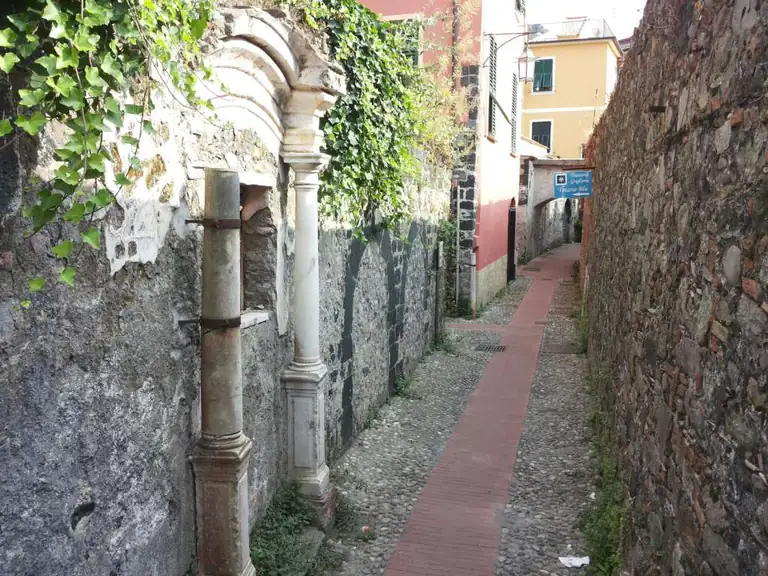
Heading down towards Piazza del Popolo you pass narrow houses with stone doorways, arches and covered passages. Among them is Casa Restani, a medieval merchant’s house from the days when Levanto lived on the trade in salt, wine, oil and the red marble from its quarries. Further down, the Borgo Nuovo has 17th- and 18th-century palazzi.
Church of the Santissima Annunziata
The 15th-century church of the Annunziata holds a canvas attributed to Bernardo Strozzi and a Saint George by Pier Francesco Sacchi: a short stop if you like Genoese painting.
Seafront and La Pietra
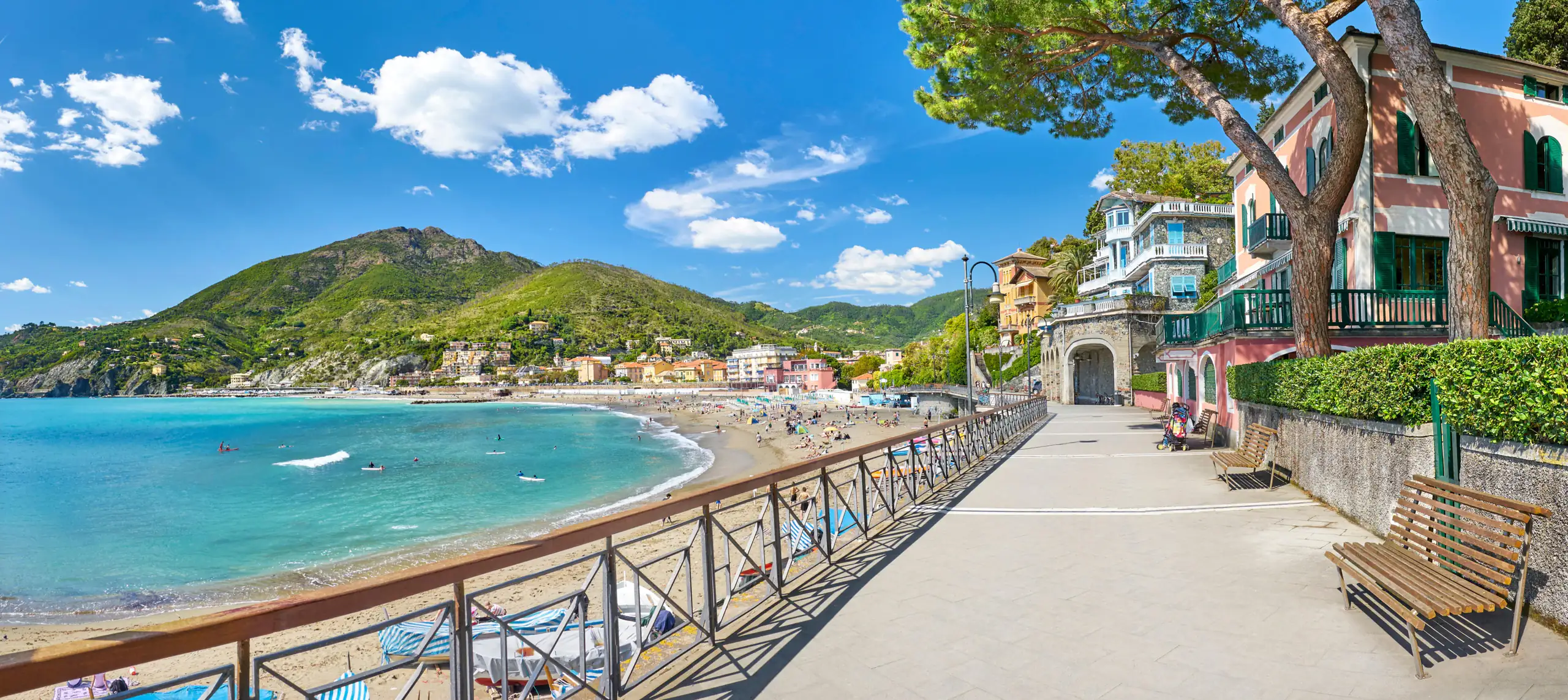
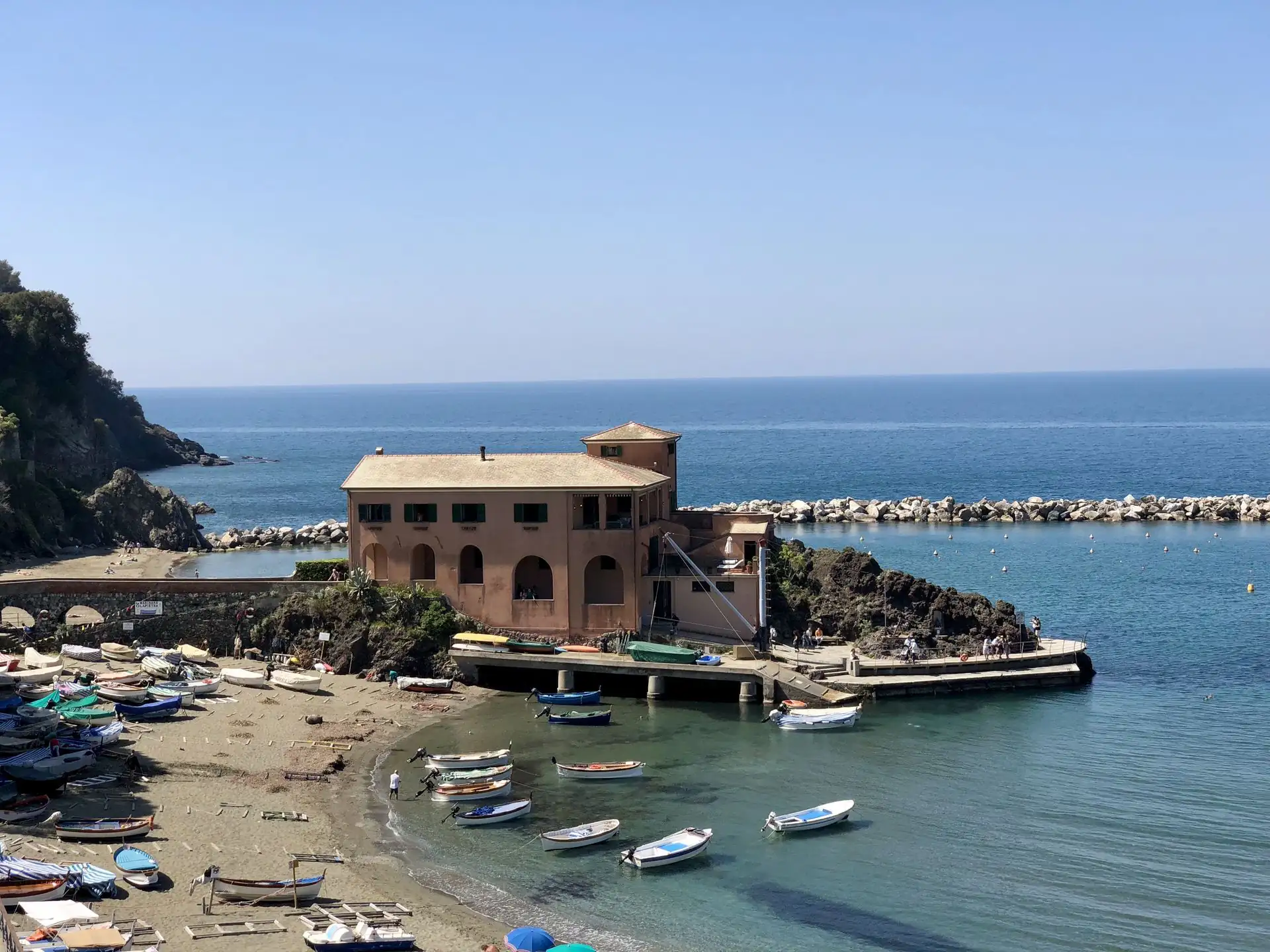
The promenade runs the length of the bay, partly on top of the arches that shelter the beach. At its eastern end it reaches La Pietra, the rock that closes the cove below Villa Agnelli (private), with a view over the whole bay. Come here at sunset, when the light comes in low from the west.
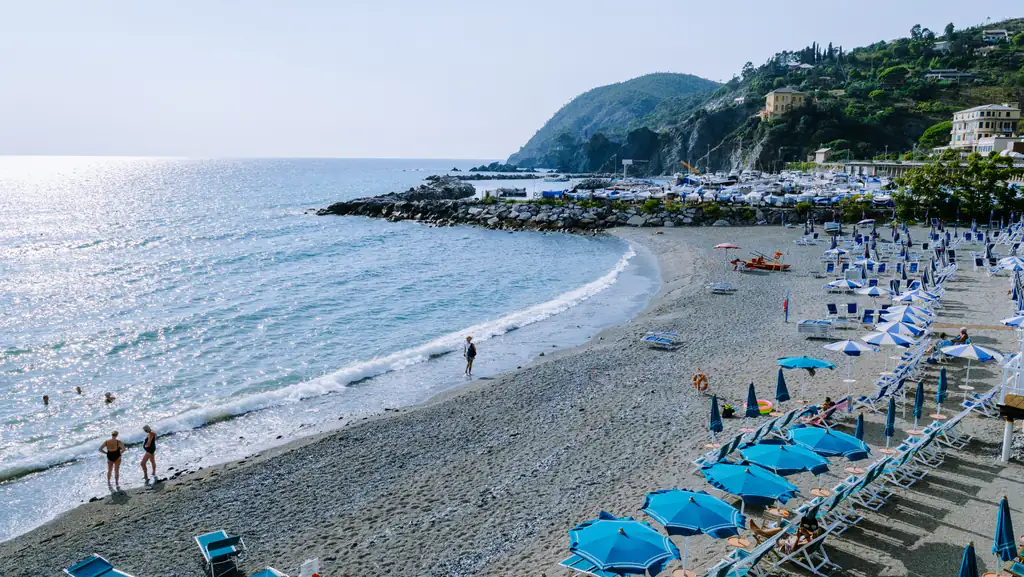
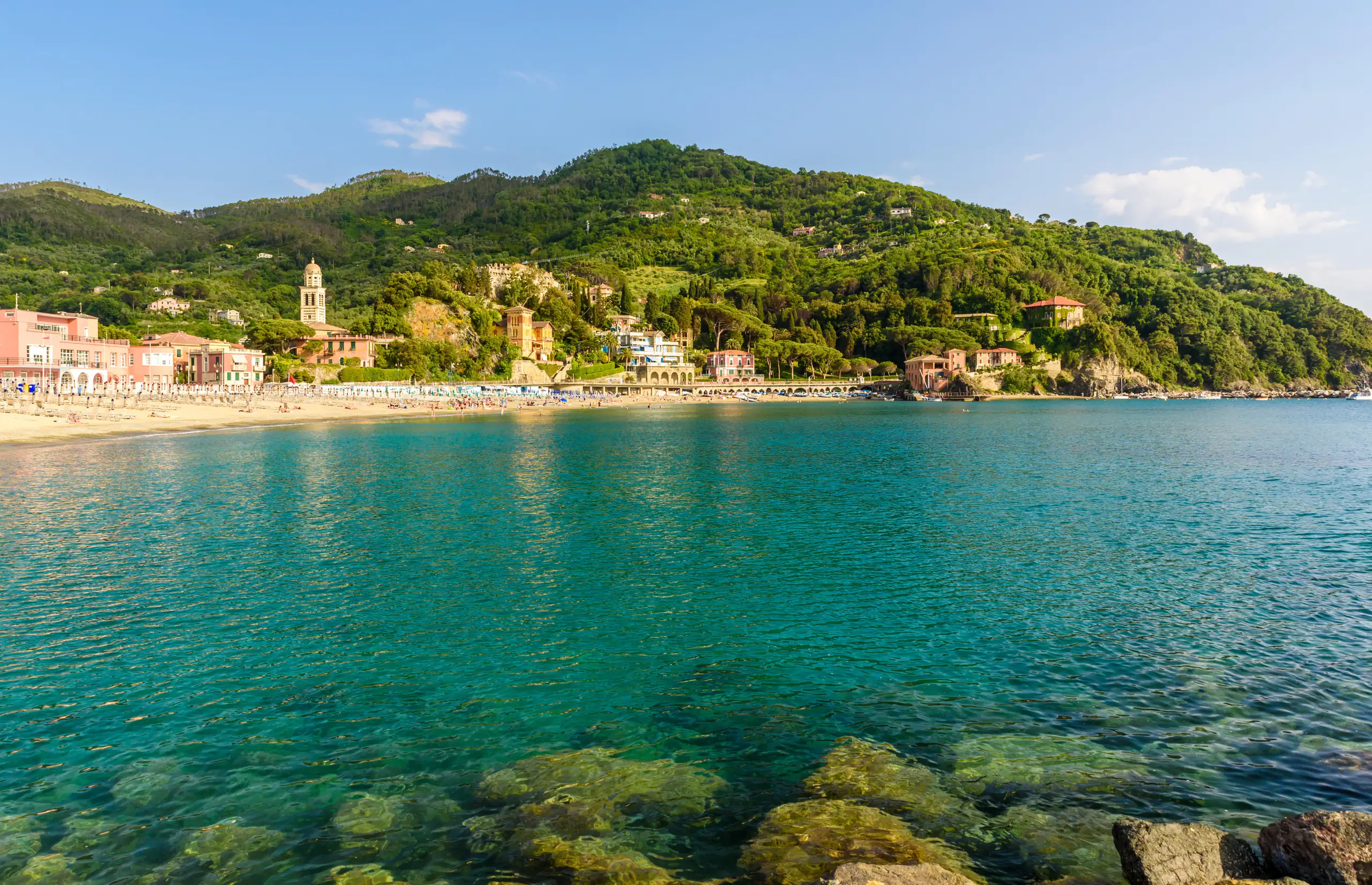
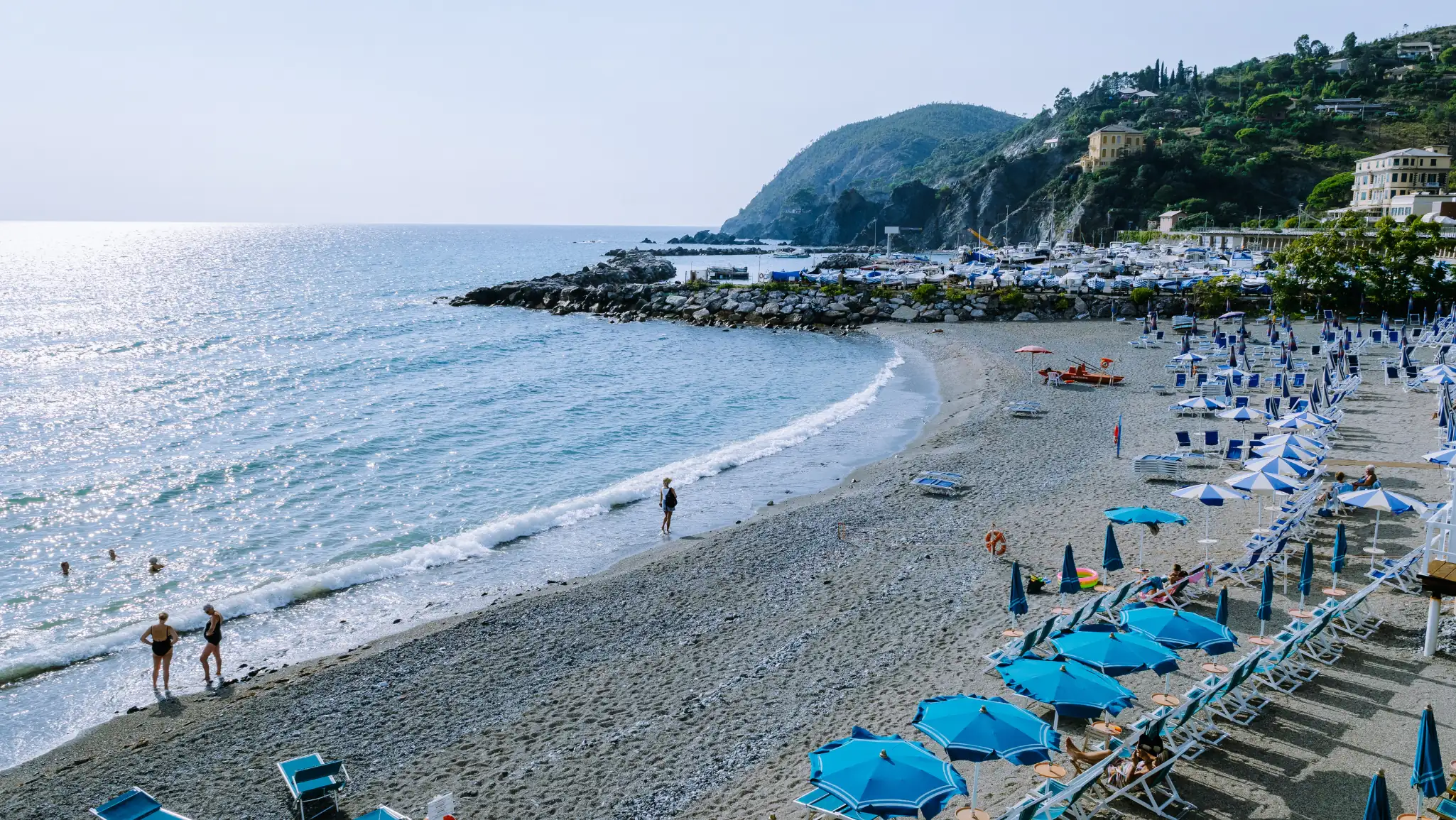
Levanto’s beach covers almost the whole bay: small pebbles and shingle with stretches of sand, private beach clubs alternating with free beaches. In 2026 it holds the Blue Flag. The sea is a 10–15 minute walk from the station. There are four main free beaches: behind the pier towards La Pietra, two in the middle of the bay and Vallesanta, past the small harbour towards Bonassola, with shallow water suited to young children.
In summer the sea is usually calm; in autumn and winter, with south-westerly and north-westerly winds, the bay becomes one of Italy’s best-known surf spots, with schools and board hire on the beach. Free and paid sections, where to swim and where to surf: all in the guide to Levanto’s beaches.
Where to stay
Where to stay in Levanto
Levanto has more choice than the Cinque Terre and lower average prices: hotels, B&Bs, guest rooms, apartments, agriturismi and campsites. Where to stay depends on your plans.
Near the beach and seafront: for a beach holiday with everything on foot. The most sought-after area in summer.
Old town: to enjoy the evenings, 5–10 minutes from the sea. The centre is a limited traffic zone: ask your host where to park.
Near the station: handy if you take the train to the Cinque Terre every day.
Hills and hamlets: agriturismi and houses with a view, quieter, but you need a car.
Campsites: a few near the sea and the start of the Mesco trail, popular with hikers and campervans; they fill up early in summer and on long weekends.
From June to September book well ahead: Levanto is a favourite base for visiting the Cinque Terre.
Take the A12 Genoa–Livorno motorway to the Carrodano–Levanto exit, then drive down to the coast on a winding road with hairpin bends. From La Spezia and Genoa the motorway is always the better option.
By train
Levanto station is on the Genoa–La Spezia line and is the terminus of the Cinque Terre regional trains towards La Spezia, with frequent services in season. From the station it is a 10–15 minute downhill walk to the sea.
By boat
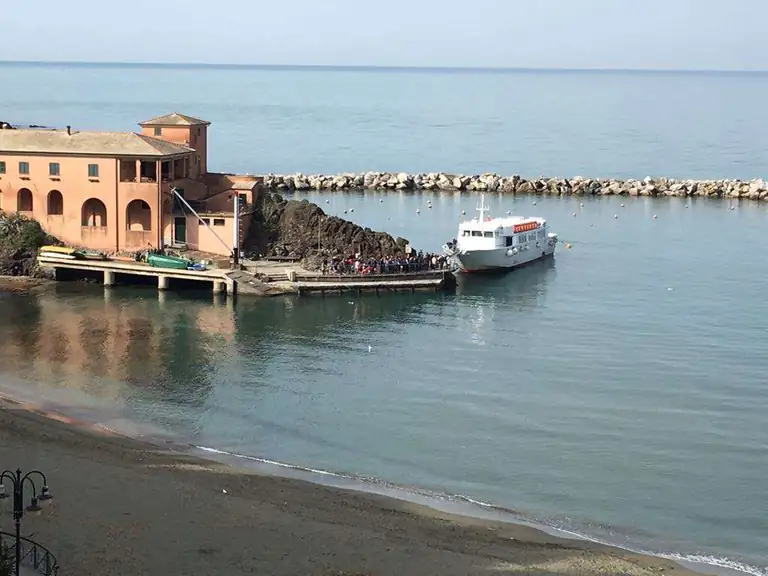
In season, boats run by the Consorzio Marittimo Turistico Cinque Terre Golfo dei Poeti link Levanto with the Cinque Terre villages, Portovenere and La Spezia. The pier is at the eastern end of the seafront. Sailings are cancelled in rough seas: check times and dates on the Navigazione Golfo dei Poeti website.
By plane
The nearest airports are Genoa, about 90 km away, and Pisa, about 110 km. From either, carry on by train: from Genoa the coastal line runs straight to Levanto; from Pisa change at La Spezia.
Parking
The old town is a limited traffic zone (ZTL) with camera-controlled entrances: do not drive in without a permit. All car parks are paid or time-limited. The main ones are the seafront car park, the station forecourt, the Moltedi car park near the new station, Piazzale Galli and, for short stops, Orti Bardellini and Piazza Pertini. In summer the spaces near the sea fill up early in the morning. If you are visiting the Cinque Terre, leave the car in Levanto and take the train: parking in the villages is scarce and expensive.
A12, Carrodano-Levanto exit, then a winding road; old town is a ZTL
By train
Levanto station (Genoa–La Spezia line), terminus of the Cinque Terre regional trains
By sea
Boats from La Spezia, Lerici, Portovenere and the Cinque Terre (summer)
By plane
Genoa (about 90 km) or Pisa (about 110 km), then train
The guide
Things to do in Levanto
Cycle the old railway to Bonassola and Framura
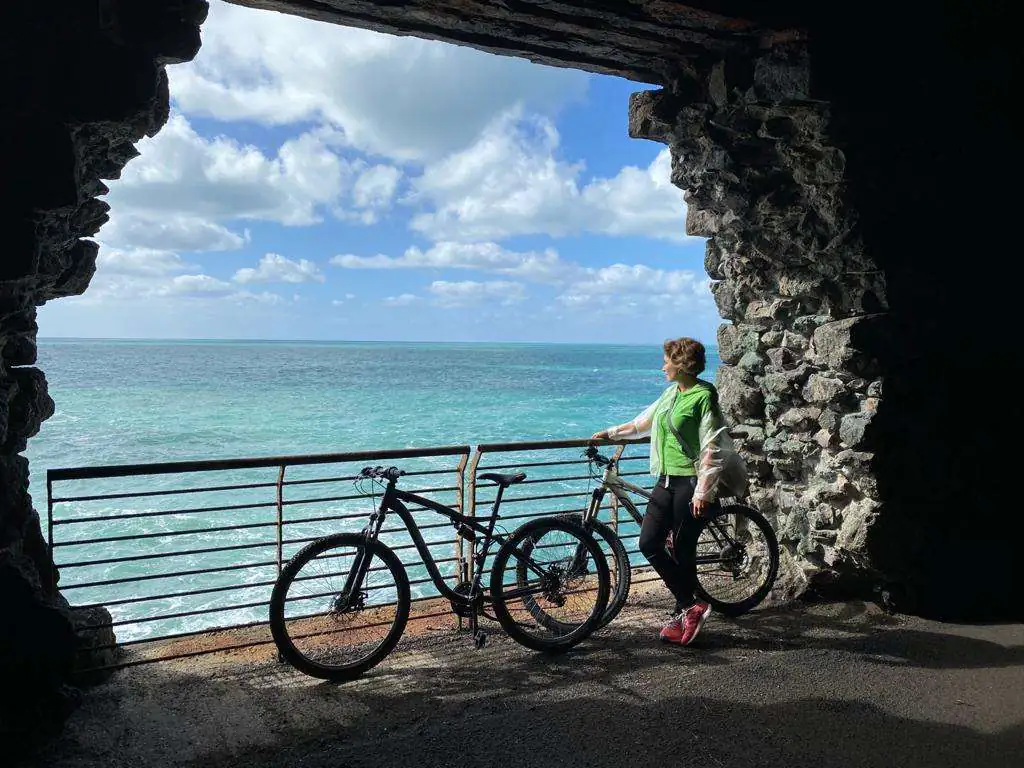
The original railway ran along the sea; when it was moved inland in 1970, the old line became a flat, paved walking and cycling path of about 5–6 km. It starts from Levanto’s seafront, passes Bonassola and ends in Framura, mostly inside lit tunnels with openings onto the sea. It suits children and works on foot, by bike or by scooter. Bring a light jumper: the tunnels are cool even in August. Between Bonassola and Framura the route is almost entirely underground, so the first stretch is the most scenic.
Surfing
Levanto has a long surfing tradition: the bay has several peaks, some over sand, others over rock. Good waves come mainly in autumn and winter with south-westerly and north-westerly swells. Surf schools on the beach rent boards and teach beginners: ask them which peak suits your level on the day.
The Cinque Terre by train
From Levanto, regional trains on the Cinque Terre fare stop at all five villages and run on to La Spezia. Monterosso is a few minutes away, with Vernazza, Corniglia and Manarola just beyond. In 2026, from 14 March to 1 November, a single ticket costs €5 to €10 depending on the period and is valid for 75 minutes; the alternative is the Cinque Terre Card Treno, valid all day. Check fares and dates on Trenitalia Cinque Terre and on the official Cinque Terre Card site.
Food to try
The local dish is gattafin, a large fried ravioli filled with wild greens and cheese, celebrated with a food festival in June. Otherwise expect eastern Riviera cooking: trofie with pesto, fresh anchovies (stuffed or marinated), focaccia and a glass of Vermentino.
Walks and hikes
Levanto to Monterosso via Punta Mesco
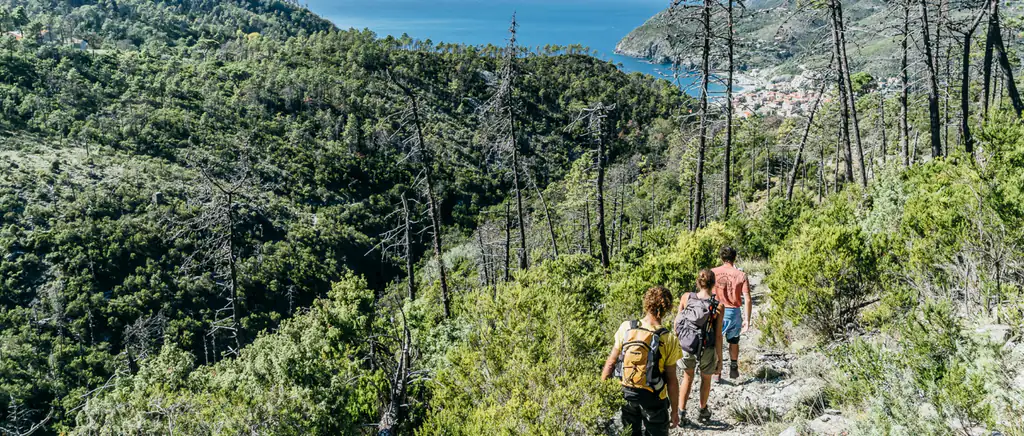
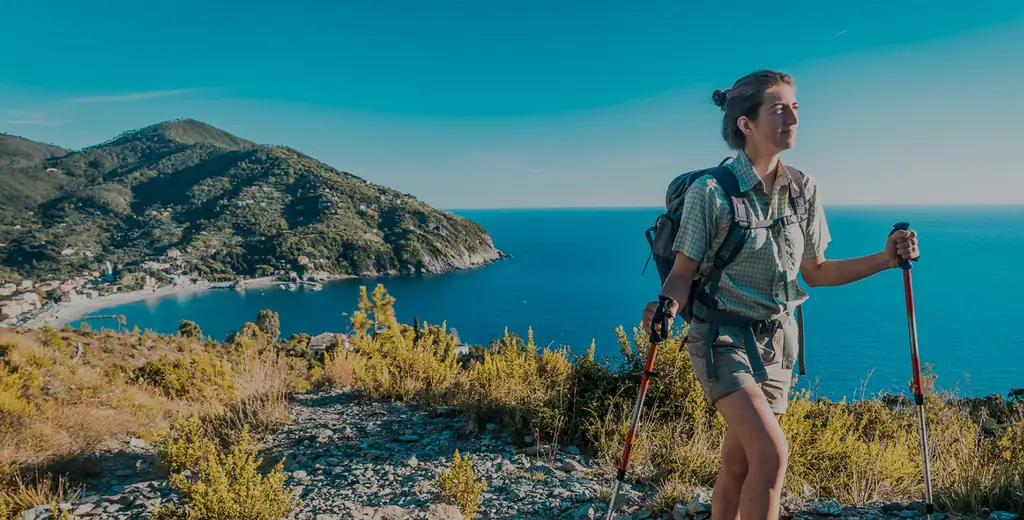
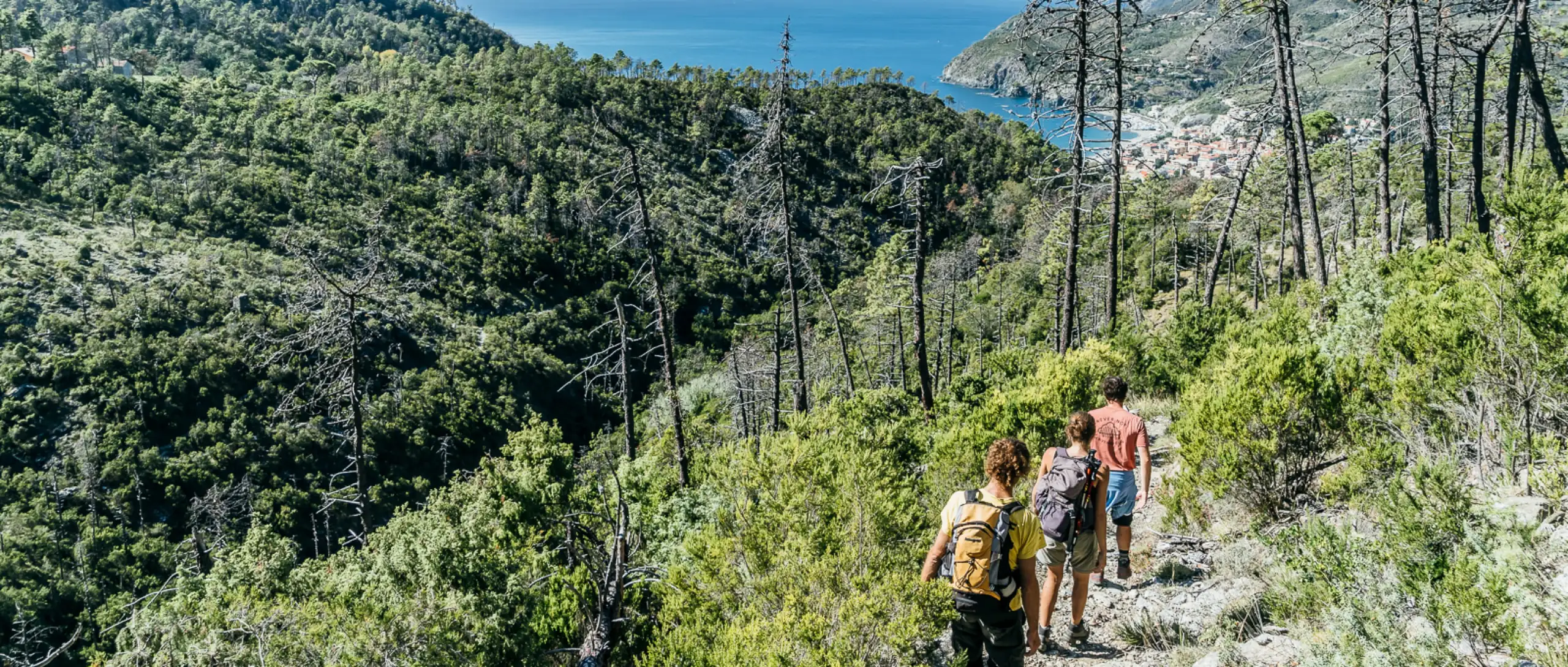
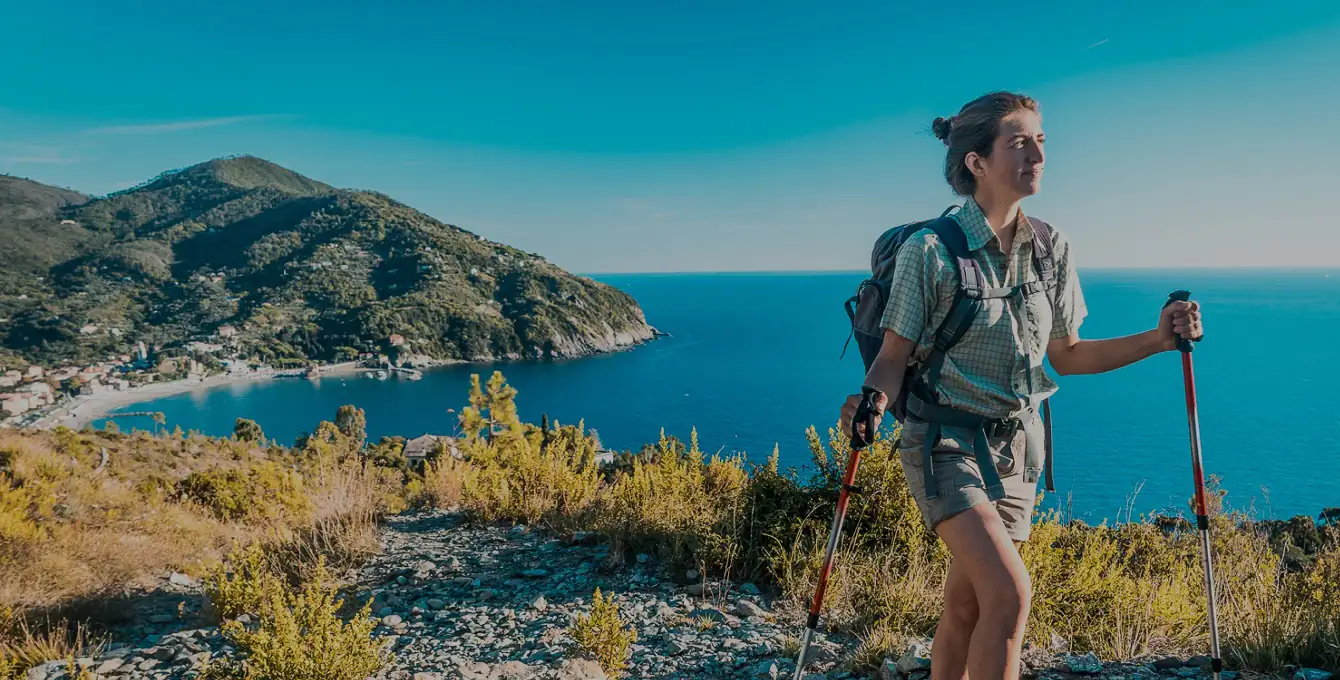
This is Levanto’s classic hike. It starts on the east side of town, climbs through holm oak woods and rocks to the ruined hermitage of Sant’Antonio del Mesco, then drops to Monterosso with a view over the whole Cinque Terre. Allow about 6–7 km and 3 hours, with a steep first climb; wear hiking shoes and carry plenty of water. It is normally free: the Cinque Terre Card is needed on the Blue Trail sections further south. Come back by train.
Before setting off, check trail status on the Cinque Terre National Park website: in September 2026 the Monterosso–Vernazza–Corniglia section was closed for geological checks.
Sanctuary of Nostra Signora della Guardia
A shorter walk climbs through olive groves to the Guardia sanctuary on the hill above town, with a good view over the bay. Its feast day is 29 August.
Day trips from Levanto
Bonassola and Framura: the two neighbouring villages on the cycle path; Bonassola has a wide, quiet beach, Framura a cluster of hamlets stepping down to the sea.
Monterosso al Mare: on foot via Punta Mesco or a few minutes by train; the largest beaches in the Cinque Terre.
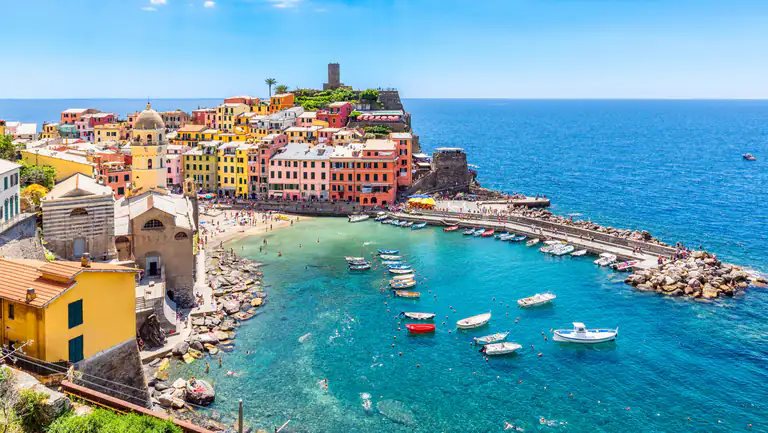
Vernazza: the most photographed harbour in the Cinque Terre, with the Doria castle.
Corniglia: the only hilltop village, reached by a long flight of steps from the station.
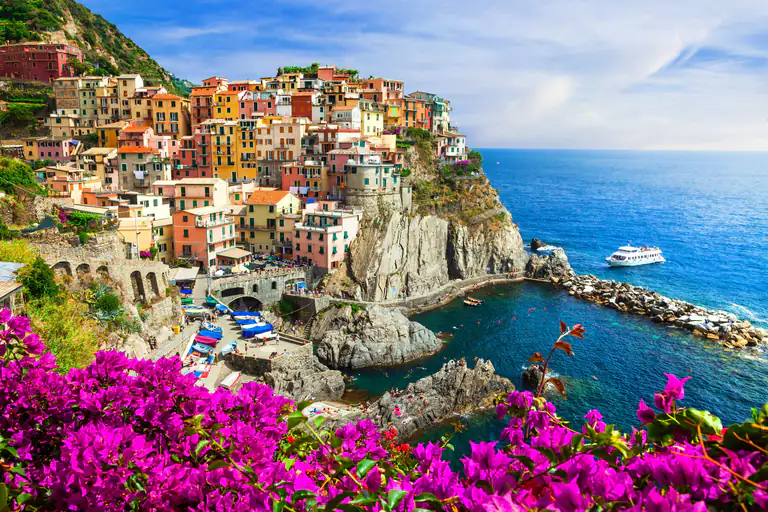
Manarola: colourful houses on the rock and vineyards above the sea.
La Spezia: end of the line, with the Naval Museum and boats to the islands of the gulf.
Sestri Levante: the Bay of Silence and its peninsula, by train along the coast towards Genoa.
Moneglia: a quiet beach and village, by train along the coast to the west.
Weather
Weather and best time to visit Levanto
May–June and September for beach and trails; autumn and winter for surfing
🌧️
16°CNow · wind 16 km/h
Thu 8🌦️16° 16°
Fri 9🌦️21° 14°1 mm
Sat 10🌧️20° 14°1 mm
Sun 11🌦️22° 13°1 mm
Mon 12🌤️22° 15°12 mm
Tue 13🌦️20° 12°1 mm
Forecast: MET Norway (Yr), CC BY 4.0 licence. Updated hourly.
Levanto beach and clear seaMedieval loggia of LevantoClear water in the bay of LevantoLevanto beaches and seafrontLevanto beach with umbrellasLevanto and the coast seen from the hillBlack-and-white striped church of Sant'Andrea in Levanto
FAQ
Frequently asked questions about Levanto
Is Levanto part of the Cinque Terre?
No. The Cinque Terre are Monterosso, Vernazza, Corniglia, Manarola and Riomaggiore. Levanto lies just to the west, beyond Punta Mesco, and is the terminus of the trains that connect them.
Is Levanto a good base for the Cinque Terre?
Yes, one of the best: more accommodation, generally lower prices, car parks and campsites, and Monterosso is just a few minutes away by train.
How long does it take from Levanto to Monterosso?
A few minutes by train, or about 3 hours on foot over Punta Mesco.
Do I need the Cinque Terre Card for the Levanto–Monterosso trail?
Normally no: the card is required on the paid Blue Trail sections between Monterosso and Corniglia. Check the trail status on the Park website before you go.
Is Levanto beach sandy?
It is mainly small pebbles and shingle, with sandy patches, especially under the promenade arches. There are four free beaches and several beach clubs.
When is the surf season in Levanto?
Mainly autumn and winter, with south-westerly or north-westerly swells. Summer waves are rare.
How long is the Levanto–Framura cycle path?
About 5–6 km, flat and mostly in tunnels, from Levanto to Bonassola and Framura.
Where can I park in Levanto?
In the paid car parks on the seafront, at the station and on Via Nuova Stazione (Moltedi), or at Piazzale Galli. The old town is a ZTL.
When is the Festa del Mare?
In late July, for Saint James: historical parade, procession and fireworks over the sea. In 2026 it ran from 22 to 25 July.
When is the best time to visit Levanto?
May, June and September for beach and trails without the crowds; July and August for beach life; autumn and winter for surfing.