The most beautiful towns in Liguria are not all on the coast. Alongside the famous seaside names, such as Portofino, Camogli, Vernazza and Portovenere, there are stone villages in the hills, towns with a medieval centre and fishing villages where the beach starts at your door. This guide covers 25 of them, grouped by area from west to east. For each one we tell you in a few lines why it is worth going and what kind of trip it suits.
It is not a ranking. We picked places that are worth the trip on their own and places that make a good base for exploring. For sights and experiences across the region, see our guide to what to see in Liguria; this page is about towns and villages.
Which town to choose
If you are short on time, start from what you are looking for:
- Picture-postcard seaside village: Camogli, Portofino, Vernazza, Portovenere, Tellaro, Varigotti.
- Beach holiday with children: Alassio, Laigueglia, Celle Ligure, Sestri Levante, Moneglia.
- Medieval hill village: Dolceacqua, Apricale, Seborga, Triora, Finalborgo.
- Historic town, lively all year: Genoa, Sanremo, Albenga, Sarzana.
- Easy base without a car: Bordighera, Santa Margherita Ligure, Sestri Levante, Lerici.
Riviera dei Fiori and the Imperia hills
The far west, between Sanremo and the French border, has a mild climate all year and, behind the coast, the valleys with the most medieval villages in the region. The French Riviera is half an hour away.
Bordighera
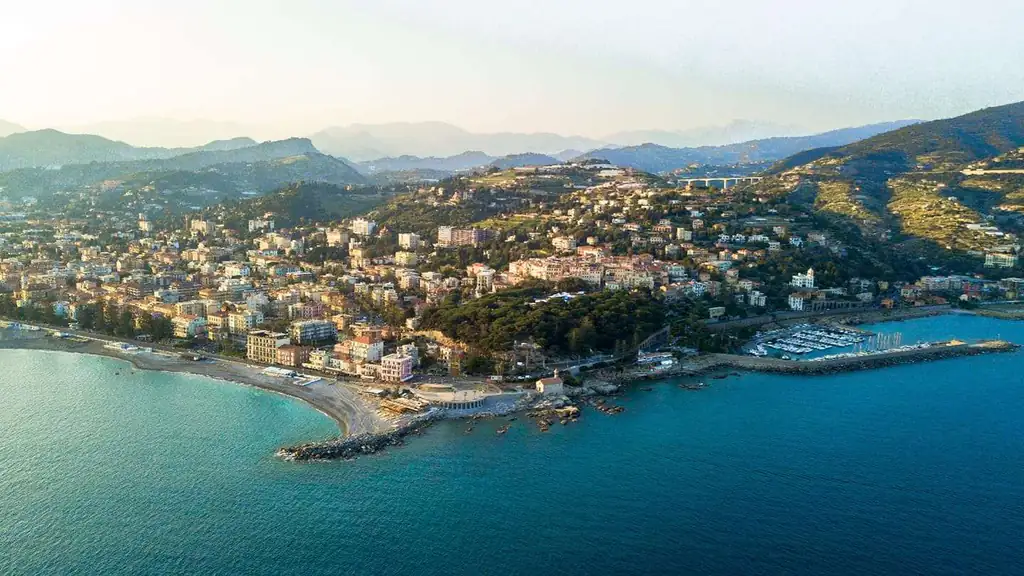
Bordighera is the town of palm trees: a fortified old town on the Capo, a seafront of more than two kilometres and 19th-century villas built by the English colony. In 1884 Claude Monet stayed almost three months painting its gardens and olive groves, and today there is a trail in his footsteps: see Monet in Bordighera. It is elegant but relaxed, has a station on the line to France and is the most convenient base for the villages of the Nervia valley.
Sanremo
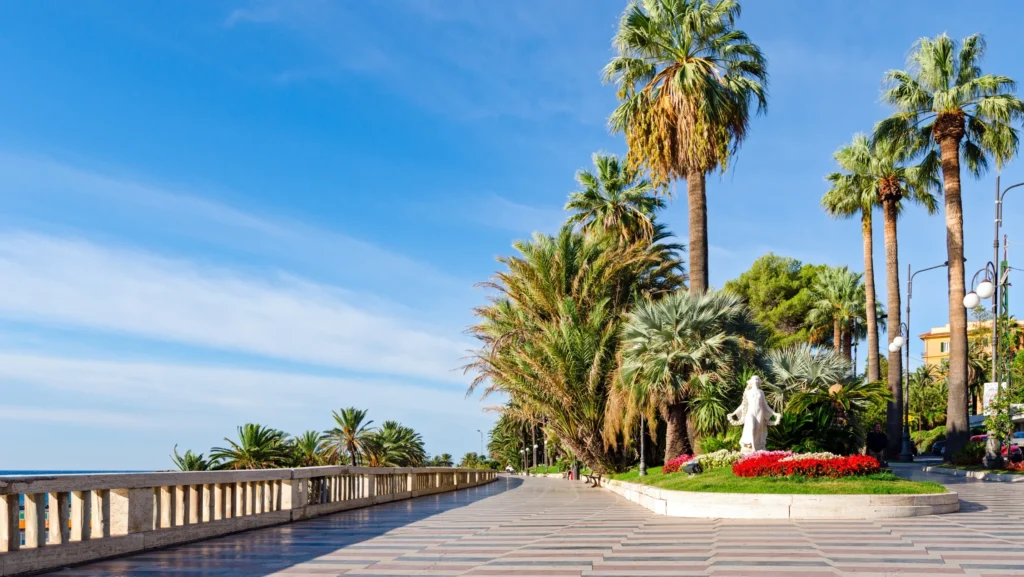
Sanremo is the largest town on the western Riviera, with more than 50,000 people, and it is lively all year. Beyond the song festival and the Art Nouveau casino it has La Pigna, the medieval quarter climbing the hill, the Corso Imperatrice promenade and a cycle path that runs along the sea for dozens of kilometres. On the hill behind is Bussana Vecchia, the village destroyed by the 1887 earthquake and resettled by artists.
Dolceacqua

Dolceacqua is the best-known hill village: a humpbacked medieval bridge over the Nervia, stone houses and, above, the Doria castle. Monet painted it in 1884 and the view has hardly changed. This is where Rossese, the valley’s red wine, is made. It lies about ten kilometres from the sea and takes half a day. It holds the Touring Club’s Orange Flag for inland villages.
Apricale
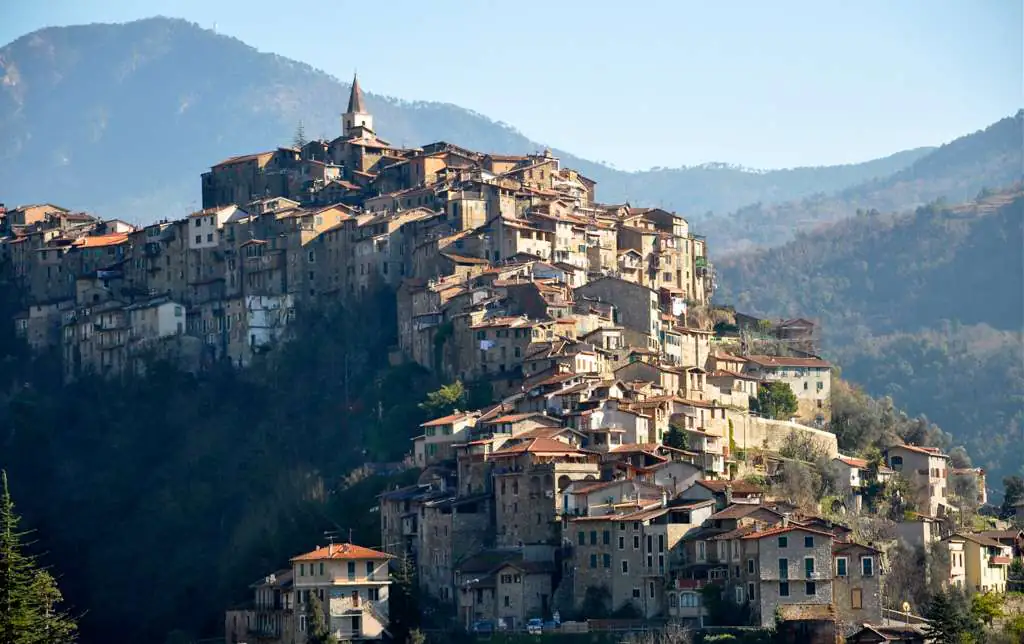
Apricale clings to a sunny slope, which gives it its name: stepped lanes, a square that feels like a stage, murals and the Castello della Lucertola. It is one of the Borghi più belli d’Italia, the “most beautiful villages in Italy”. Combine it with Dolceacqua on the same day. Higher up the valley is Pigna, gateway to the Ligurian Alps park, and in a side valley you will find Rocchetta Nervina with its river pools for a swim.
Seborga
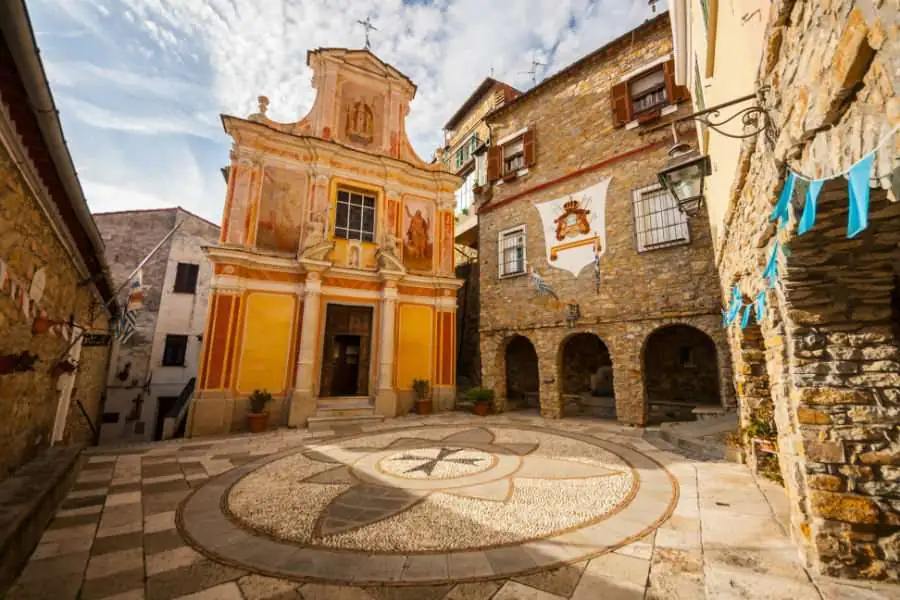
Seborga sits at 500 metres above Bordighera, with views of the sea and the Alps. For centuries it was a small fief of the monks of Lérins until it was sold to the House of Savoy in 1729; from this comes the story of the principality, celebrated today with flags and symbolic coins. The village is small and well kept, one of the Borghi più belli d’Italia: a couple of hours is enough.
Triora
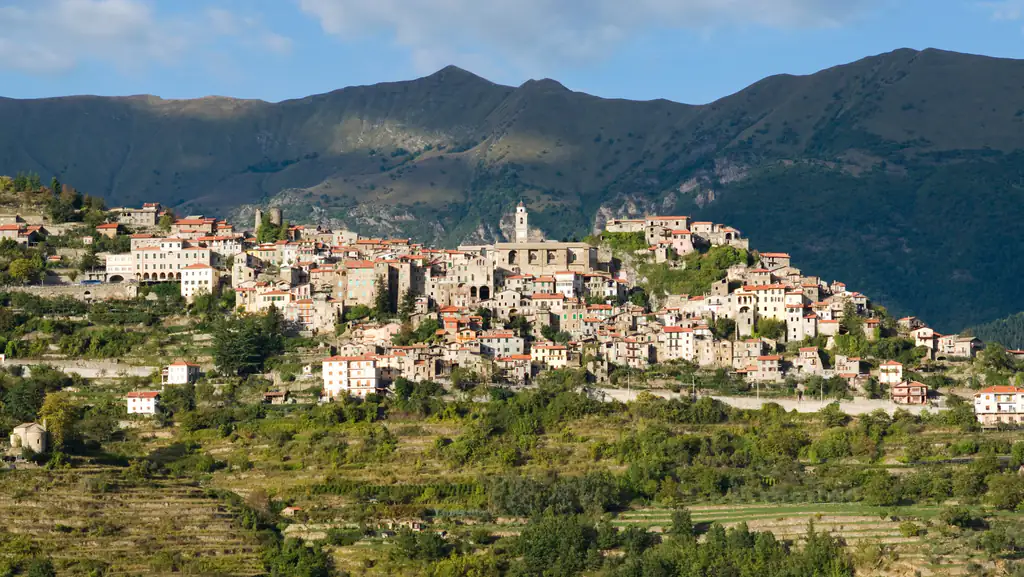
Triora is the “witches’ village”: a stone village at 780 metres in the upper Argentina valley, where one of Italy’s best-known witch trials took place between 1587 and 1589. Covered alleys, carved doorways, a museum about the trial and mountains all around. It is one of the Borghi più belli d’Italia. The full story is on our page about the witches of Triora. It is about thirty kilometres of valley road from Arma di Taggia, so allow a full day.
Cervo
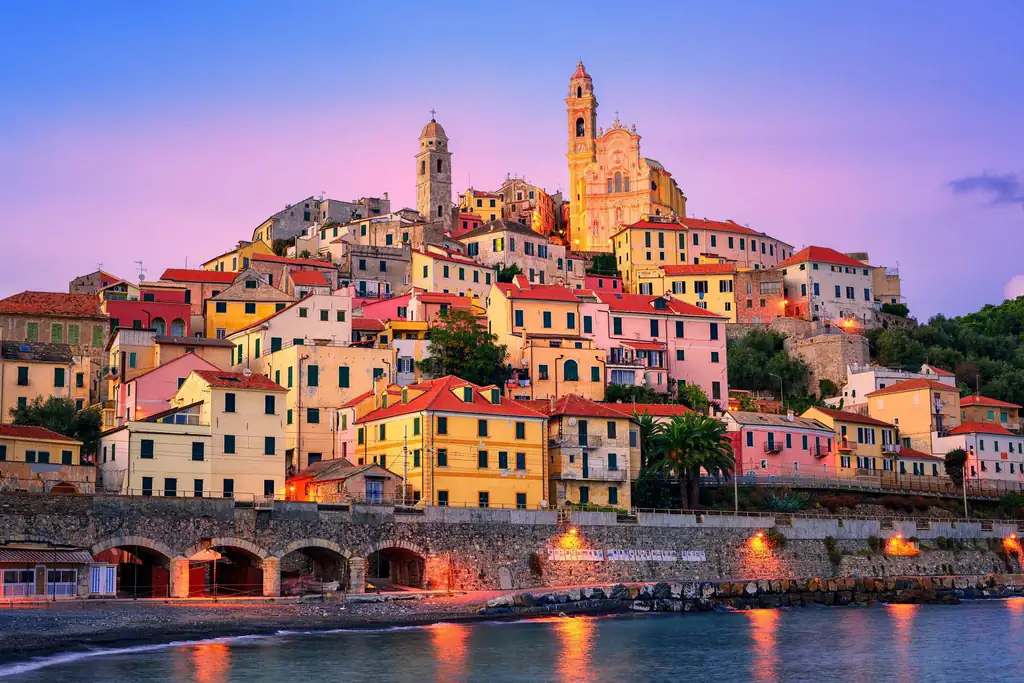
Cervo is a terraced village running down the hill to the sea, crowned by the Baroque façade of the Corallini church. The centre is entirely pedestrian, and in summer the churchyard above the sea hosts a chamber music festival. It is one of the Borghi più belli d’Italia. A couple of hours is enough, with a swim off the rocks and dinner in the square.
Riviera delle Palme and the Savona coast
Between Andora and Savona the coast opens into wide bays with sandy beaches, while the historic villages sit a few steps from the sea. This is the best area for families.
Laigueglia
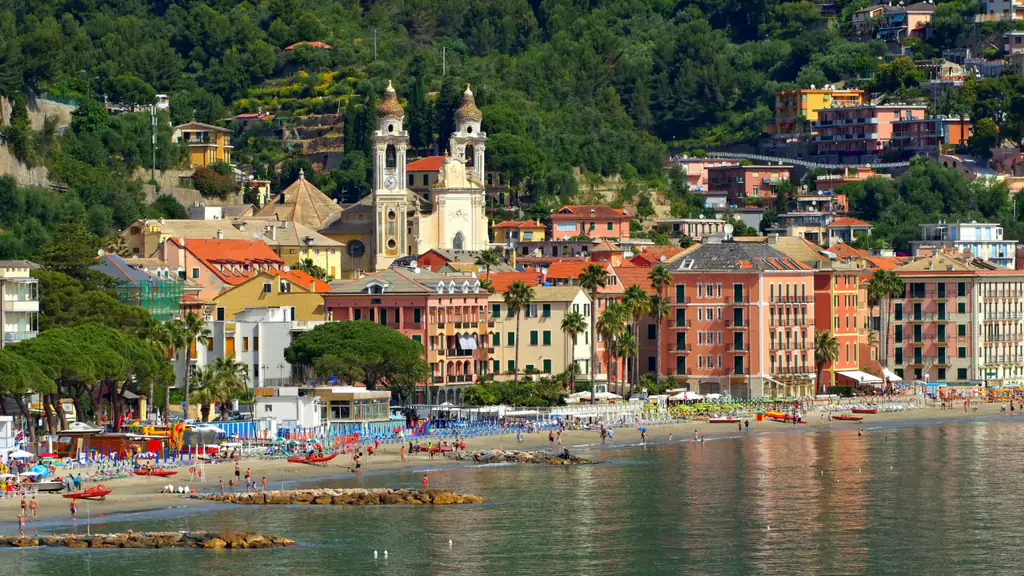
Laigueglia is a fishing village with pastel houses right on the sand and the church of San Matteo with its domed bell towers. It is one of the Borghi più belli d’Italia and has a 2026 Blue Flag. It is quiet, with Alassio a short walk away and the path to the hamlet of Colla Micheri behind it.
Alassio
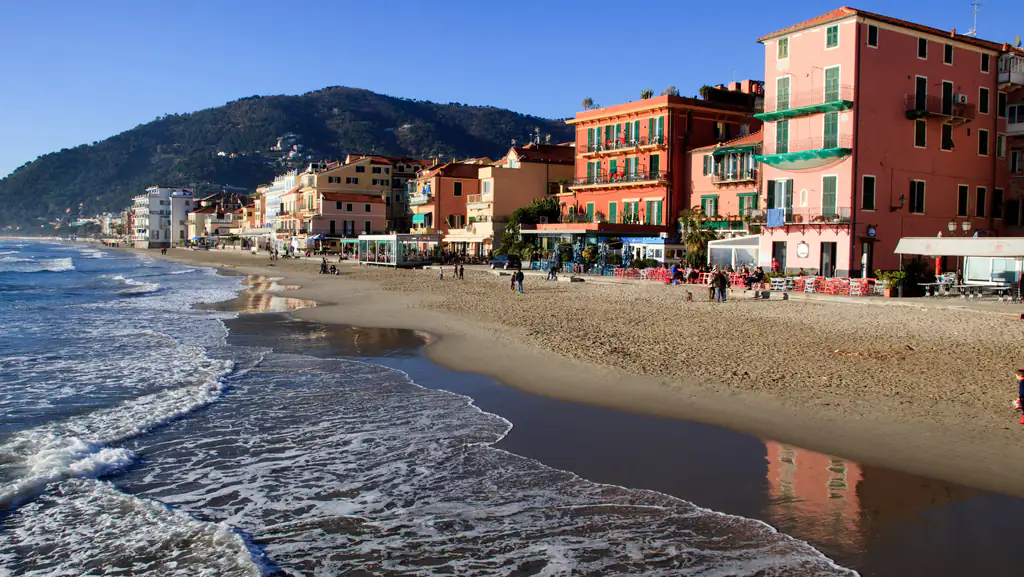
Alassio has more than three kilometres of fine sand with shallow water, a narrow shopping street and the Muretto, a wall of tiles signed by famous people. It is the best-known beach resort on the western Riviera and ideal with children: every beach is on our Alassio beaches page. Offshore lies the island of Gallinara.
Albenga
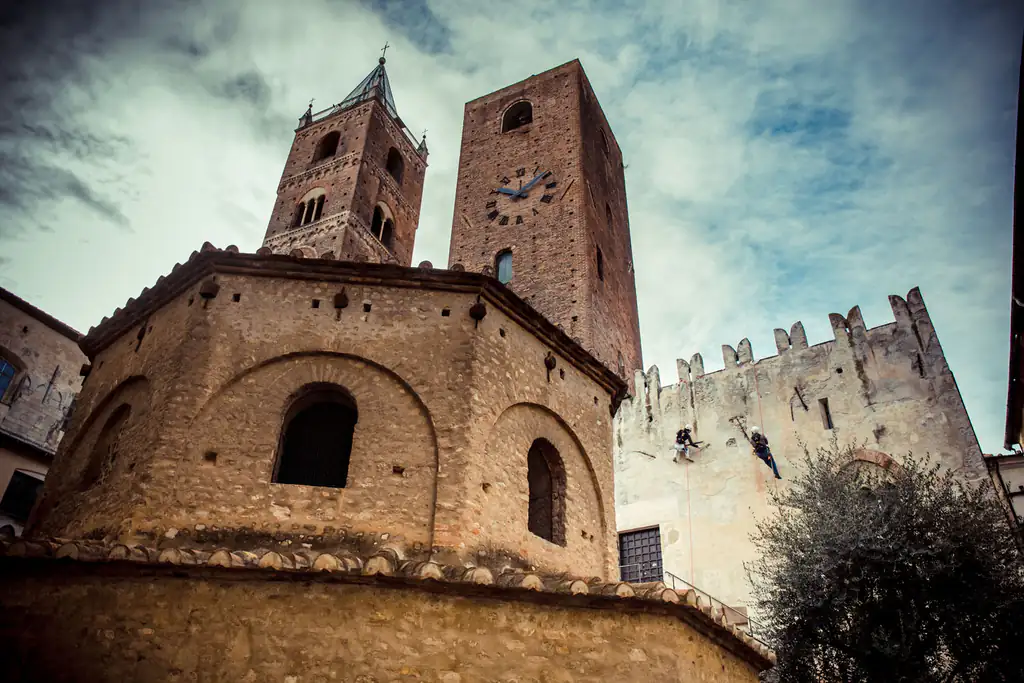
Albenga is the town of towers: a medieval brick centre built on the plan of Roman Albingaunum, with tower houses of noble families, a cathedral and an early Christian baptistery. It lives from farming as well as tourism, and you can tell: markets, small shops and the produce of the plain, such as purple asparagus. Alassio is a few minutes away by train.
Finalborgo
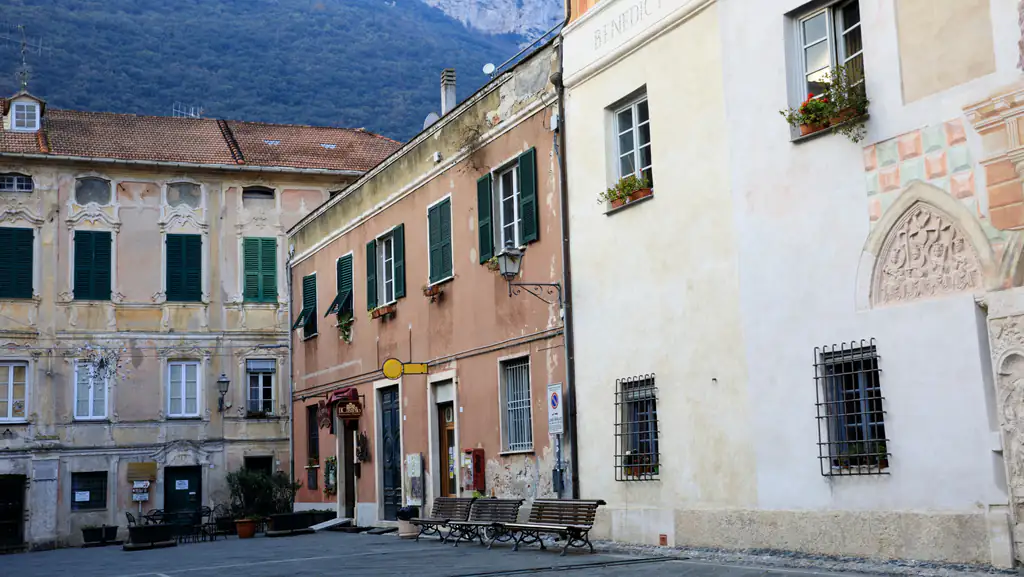
Finalborgo is the walled old town of Finale Ligure, two kilometres from the sea; for almost four centuries it was the capital of the Marquisate of Finale. Fifteenth-century walls, colourful squares, the basilica of San Biagio and, above, the Del Carretto castles. It is one of the Borghi più belli d’Italia. Pair it with a beach day in Finale Ligure or with climbing and mountain biking in the hills.
Varigotti

Varigotti is nicknamed the “Saracen village”: low pastel houses built right on the beach, with boats pulled up in front of the doors. It belongs to Finale Ligure and sits between Punta Crena and Capo Noli. Just beyond, below Punta Crena, is the Baia dei Saraceni.
Noli
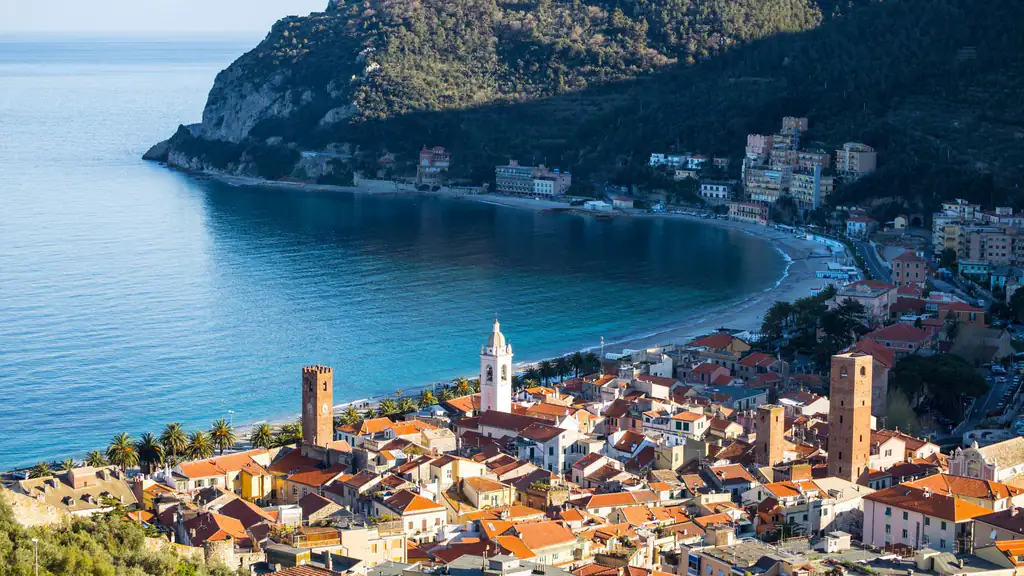
Noli was a small independent maritime republic from 1192 to 1797. What remains: towers above the rooftops, walls climbing to Monte Ursino castle and the Romanesque church of San Paragorio. The old town is flat and takes half a day; behind it start the Sentiero del Pellegrino and the trails of Capo Noli. It is one of the Borghi più belli d’Italia and has a 2026 Blue Flag.
Celle Ligure

Celle Ligure is a fishing village with colourful houses packed above the beach and lanes running parallel to the sea. It is one of the Borghi più belli d’Italia, has a 2026 Blue Flag and is a family favourite: sandy beaches, with the station and the motorway exit close by. Pope Sixtus IV was born nearby in 1414. All the beaches of Celle are on their own page.
Hotels, B&Bs and apartments all over Liguria: compare prices and availability.
Genoa and the Golfo Paradiso
Genoa
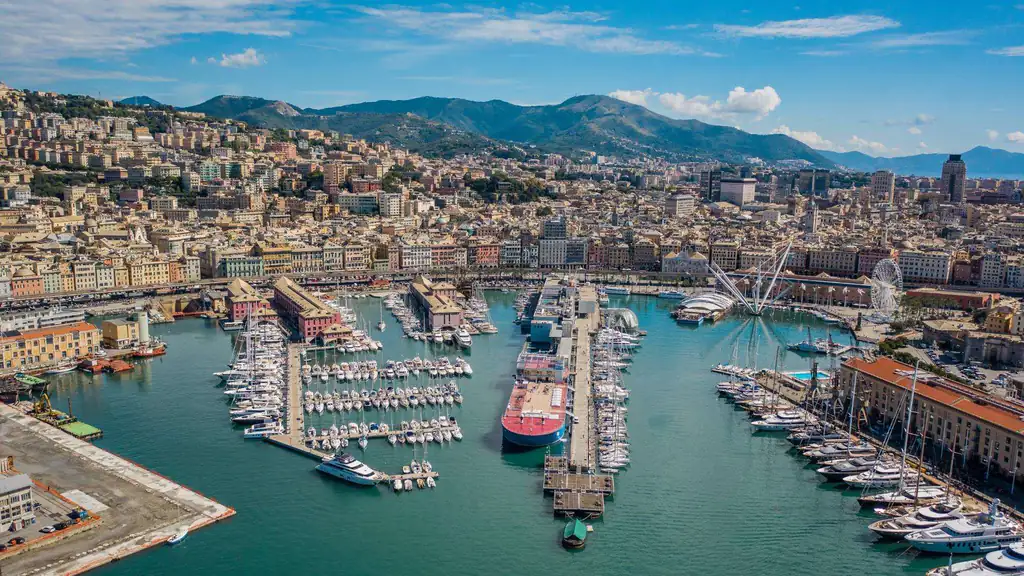
Genoa is the regional capital and the only big city in Liguria, with about 565,000 people. It has one of the largest medieval centres in Europe, the UNESCO-listed Palazzi dei Rolli, the Porto Antico with the Aquarium and seaside quarters such as Boccadasse. Give it at least two days. It is also a good base for the Riviera: Camogli is half an hour away by train. And then there is the food: see what to eat in Genoa.
Camogli

Camogli is the fishing village of the Golfo Paradiso: tall, colourful houses on the sea, a small harbour with wooden boats, the basilica and the castle on the rock. Behind it rises Monte di Portofino, with trails to San Rocco, Punta Chiappa and the abbey of San Fruttuoso. It has a station, boats all summer and a big fish festival in May. Nearby are Recco, home of cheese focaccia, and Bogliasco.
Portofino and the Tigullio
Portofino
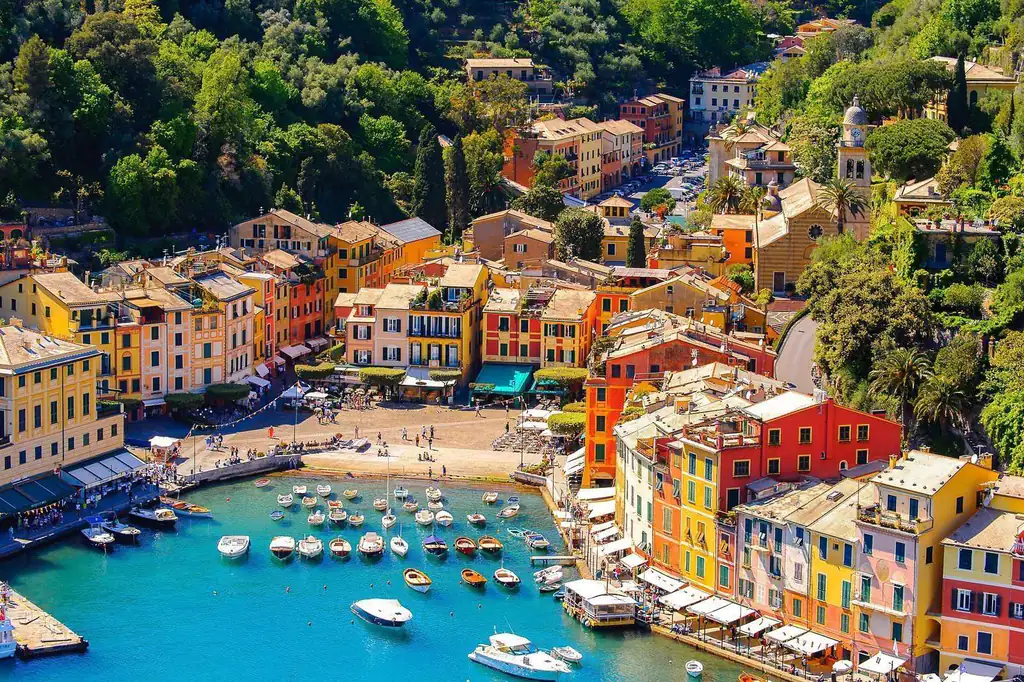
Portofino is the most photographed fishing village in Liguria: a horseshoe harbour, the Piazzetta, Castello Brown above the bay and the green promontory all around. It has about 360 residents and takes a few hours. The best way in is the bus or boat from Santa Margherita, or on foot: there is the trail to San Fruttuoso.
Santa Margherita Ligure
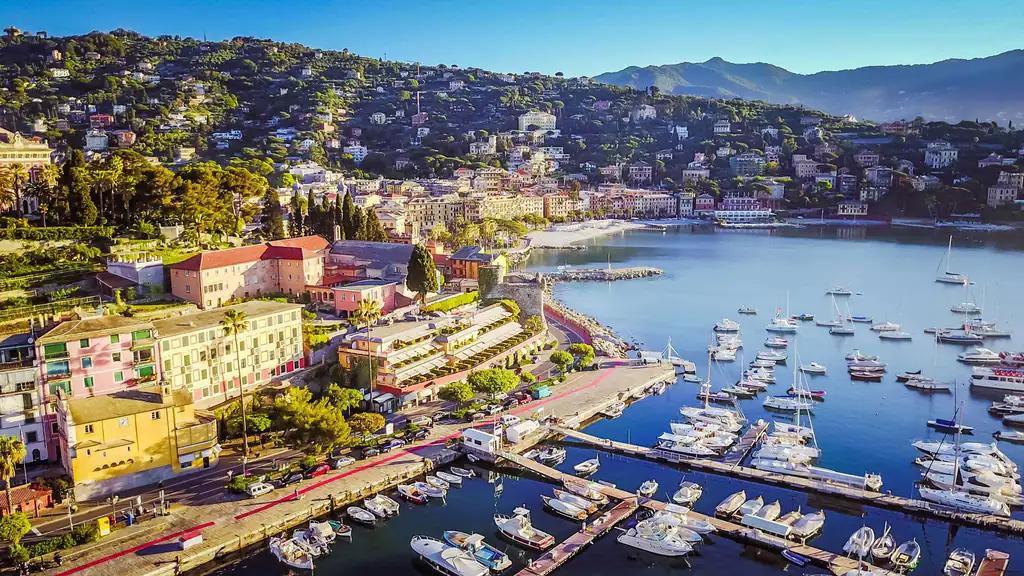
Santa Margherita Ligure is the elegant town of the Tigullio: the harbour, a palm-lined seafront, Villa Durazzo and its park, and the bay of Paraggi a few kilometres away. It is a real town, open all year, and the most practical base for Portofino; you can even walk to Portofino. Next door is Rapallo, larger and a little cheaper.
Sestri Levante
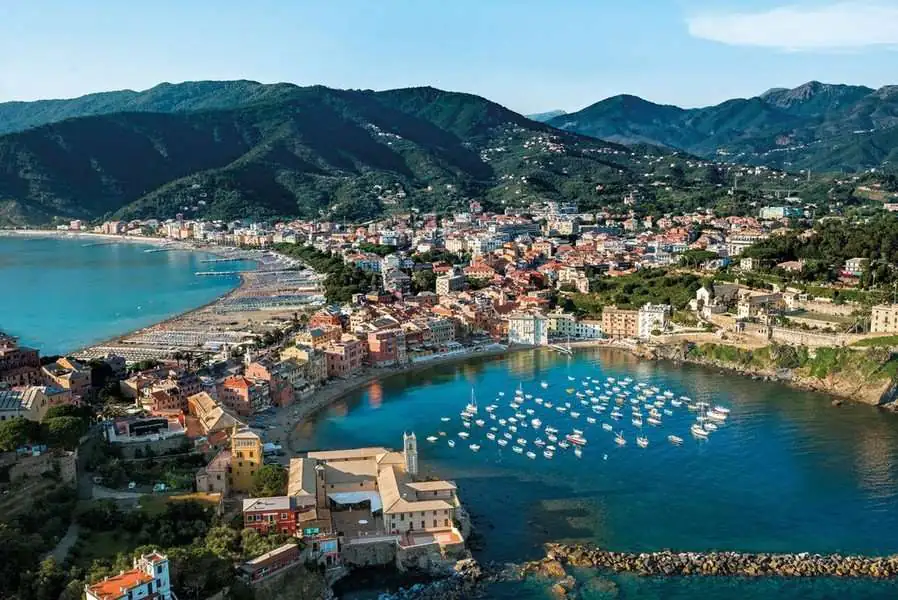
Sestri Levante is the “town of two seas”: the old town sits on a strip of land between the long sandy Baia delle Favole and the small Baia del Silenzio. It suits families, has a station and seasonal boats to Portofino and the Cinque Terre. The Andersen Festival is in June. A little further west are Chiavari and Lavagna.
Moneglia
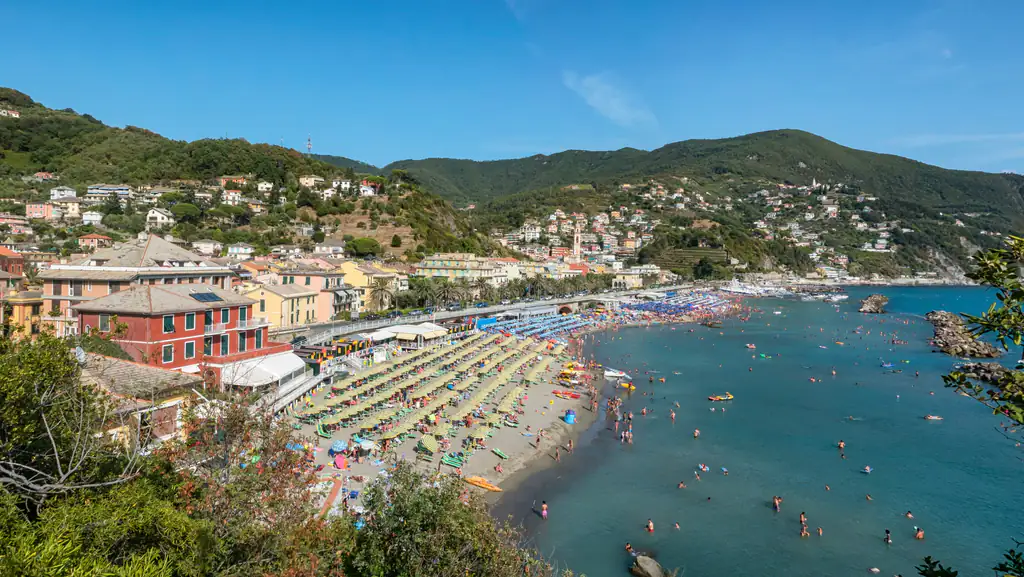
Moneglia has a kilometre-long beach in front of the village, a medieval main lane and two Genoese forts on the hills. It is one of the Borghi più belli d’Italia and quieter than its neighbours. Come by train: the tunnel road from Sestri Levante has been closed since 2025. All the Moneglia beaches are on their own page.
Cinque Terre and the Gulf of Poets
Vernazza and the Cinque Terre
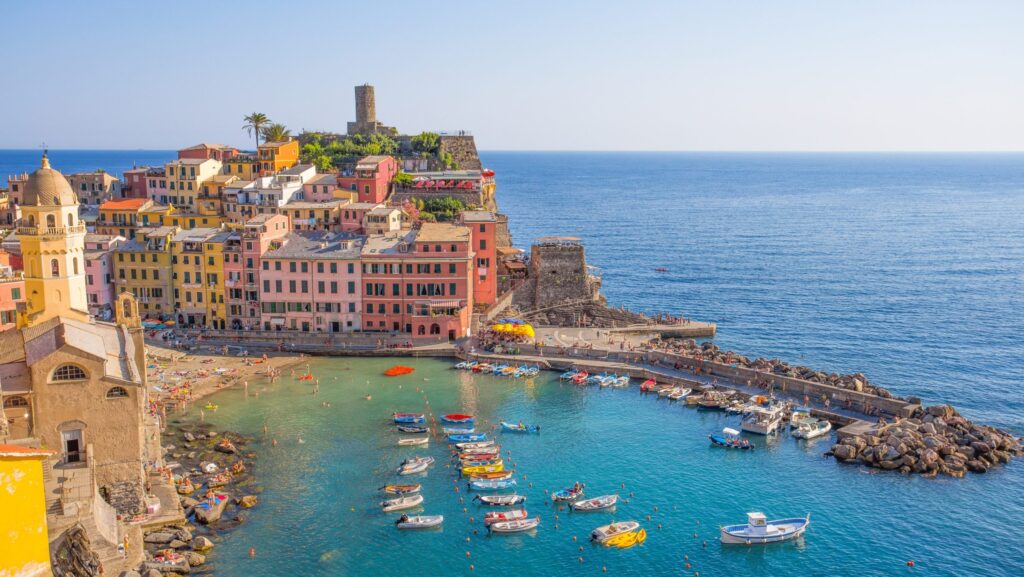
Vernazza is the Cinque Terre village with the only real natural harbour: a square open to the sea, the church with its octagonal bell tower and the tower of the Doria castle. It is one of the Borghi più belli d’Italia. The other four are all worth it: Monterosso with the widest beach, Corniglia on top of its headland, Manarola with colourful houses on a spur of rock, and Riomaggiore. Trains, trails and rules are in our Cinque Terre guide.
Portovenere
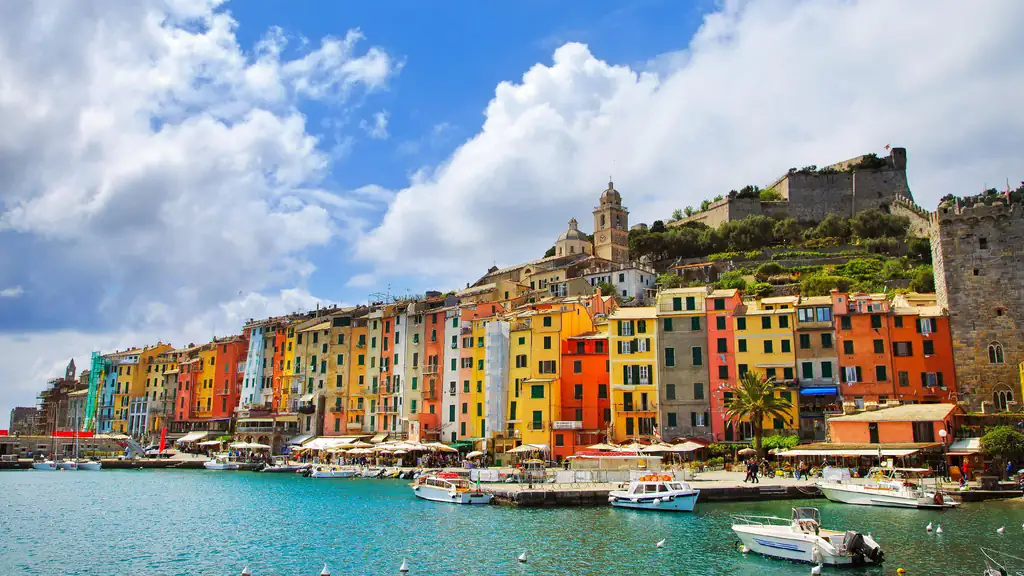
Portovenere closes the Gulf of Poets to the west: colourful tower houses on the harbour, Doria castle above and the church of San Pietro on the cliff. It has been a UNESCO site, together with the Cinque Terre, since 1997. Opposite lies Palmaria island. Arrive by boat or bus from La Spezia, which is also the most practical base for the whole area.
Lerici
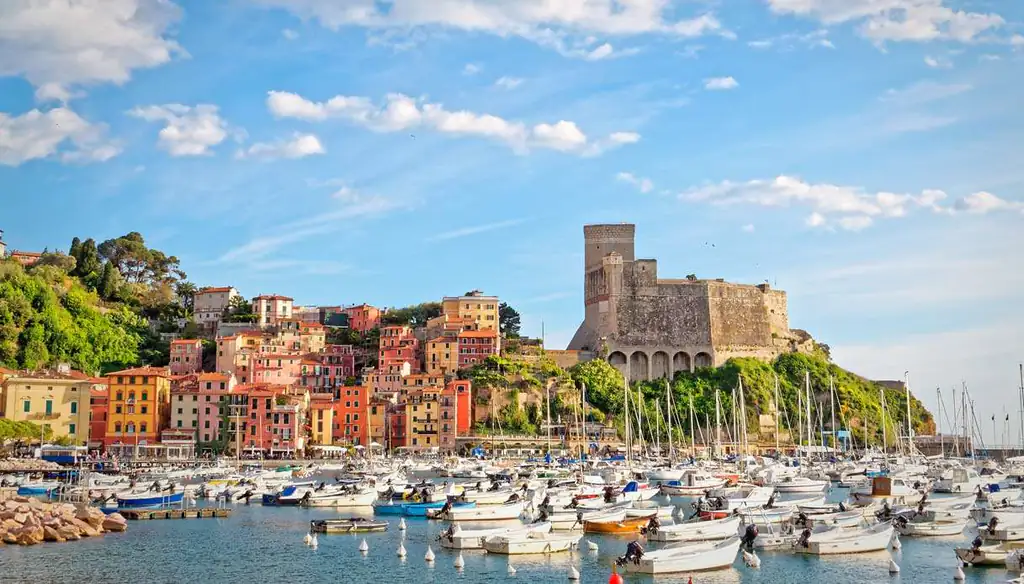
Lerici is a pastel-coloured town gathered around its harbour and overlooked by the castle of San Giorgio, on the other side of the gulf. It has sandy beaches in town and at San Terenzo, a three-kilometre seafront and boats to Portovenere and the Cinque Terre. A good base for a beach holiday: see the Lerici beaches page.
Tellaro
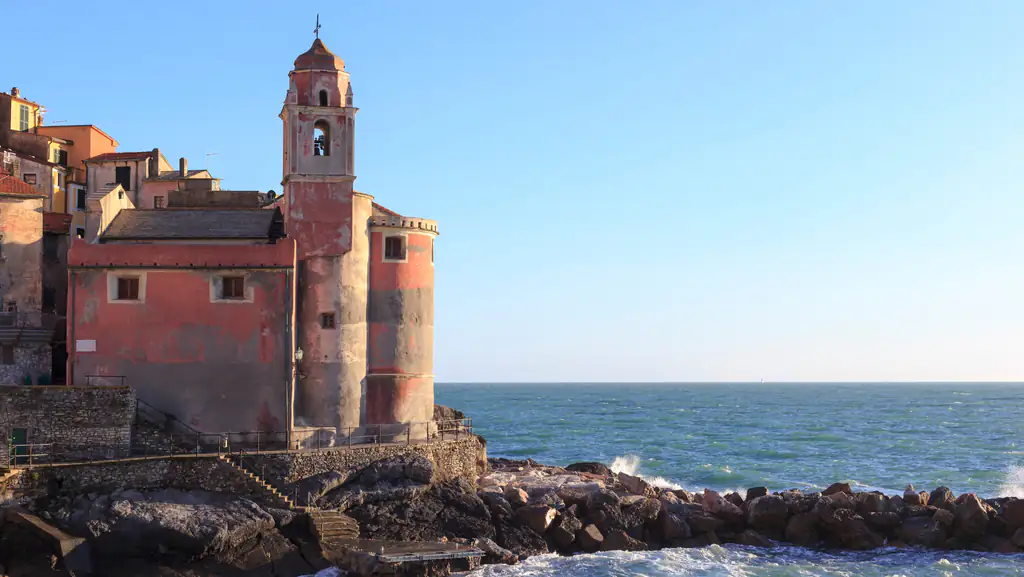
Tellaro is a hamlet of Lerici built on the rocks: tall, narrow houses, lanes and steps down to the sea and the pink church of San Giorgio on the reef. It is one of the Borghi più belli d’Italia. Get there by bus or car, then walk; for hikers there are the Tellaro trails towards Montemarcello.
Sarzana

Sarzana is the historic town of the far east of Liguria, a few kilometres from Tuscany. Two 15th-century fortresses, a cathedral with a painted cross from 1138, a main street full of antique shops and a square where the town meets in the evening. Good for half a day, or as a first stop if you arrive from Pisa.
The Borghi più belli d’Italia in Liguria
The “Borghi più belli d’Italia” club, Italy’s association of its most beautiful villages, lists 29 Ligurian villages as of October 2026. Many are inland and still little known. Those with a guide on this site are linked.
- Province of Imperia: Apricale, Badalucco, Ceriana, Cervo, Diano Castello, Lingueglietta, Perinaldo, Pieve di Teco, Seborga, Taggia, Triora.
- Province of Savona: Castelvecchio di Rocca Barbena, Celle Ligure, Colletta, Finalborgo, Laigueglia, Millesimo, Noli, Verezzi, Zuccarello.
- Genoa area: Campo Ligure, Moneglia.
- Province of La Spezia: Brugnato, Deiva Marina, Framura, Montemarcello, Tellaro, Varese Ligure, Vernazza.
The list changes over time, with villages joining and leaving. Dolceacqua, for example, is not on it, but like Apricale, Seborga and Triora it holds the Touring Club’s Orange Flag.
Planning your trip
Liguria is long and narrow: from Ventimiglia to Sarzana is well over three hours by train. Do not try to see everything in one trip. Pick one area, two at most, and change base halfway.
- Coastal towns: almost all are on the coastal railway. The exceptions are Portofino and Portovenere (bus or boat) and Tellaro (bus from Lerici).
- Hill villages: you need a car, or a local bus with few departures. Dolceacqua, Apricale and Seborga make an easy day trip from Bordighera or Sanremo; Triora needs a full day; Finalborgo is a walk or a short bus ride from Finale Ligure.
- When to go: May, June and September for the sea without crowds; spring and autumn for villages and walking. In winter the towns stay lively, the small villages much less so.
To choose where to sleep, see where to stay in Liguria; to get your bearings, see the map of Liguria. Our area guides cover the Riviera dei Fiori, the Riviera di Ponente and the Riviera di Levante.
Frequently asked questions
What is the most beautiful town in Liguria?
There is no single answer. On the coast the most famous are Portofino, Camogli, Vernazza and Portovenere; inland, Dolceacqua, Apricale and Triora. For a less crowded village, try Tellaro, Cervo or Laigueglia.
How many Borghi più belli d’Italia are there in Liguria?
As of October 2026 the club’s official list includes 29, among them Apricale, Cervo, Finalborgo, Noli, Moneglia, Tellaro, Triora and Vernazza. The list is updated over time.
What are the main cities in Liguria?
Genoa is by far the largest, followed by La Spezia, Savona and Sanremo; Imperia is the capital of its province. For culture, Albenga and Sarzana are also worth a visit.
Which Ligurian towns can I visit without a car?
Almost all the coastal ones: the railway runs from Ventimiglia to La Spezia and stops in every main town. Portofino and Portovenere have buses and boats. For the hill villages a car is much easier.
What are the best hill villages in Liguria?
Dolceacqua, Apricale, Seborga, Pigna and Triora in the Imperia area; Finalborgo, Zuccarello, Colletta and Castelvecchio di Rocca Barbena around Savona; Varese Ligure and Brugnato near La Spezia.
Where to go in Liguria with children?
Choose towns with sandy beaches and shallow water: Alassio, Laigueglia, Celle Ligure, Sestri Levante, Moneglia and Lerici. See our guide to sandy beaches in Liguria.
Riviera di Ponente or Riviera di Levante?
The Levante has the most dramatic scenery and the most famous villages, but also more people. The Ponente has longer sandy beaches, quiet hill villages and the French Riviera next door.