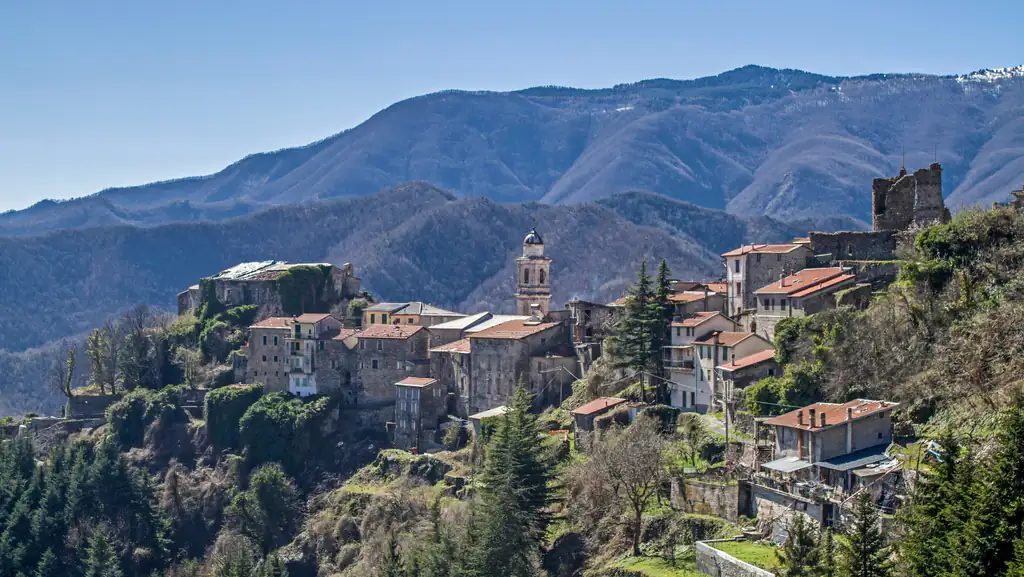
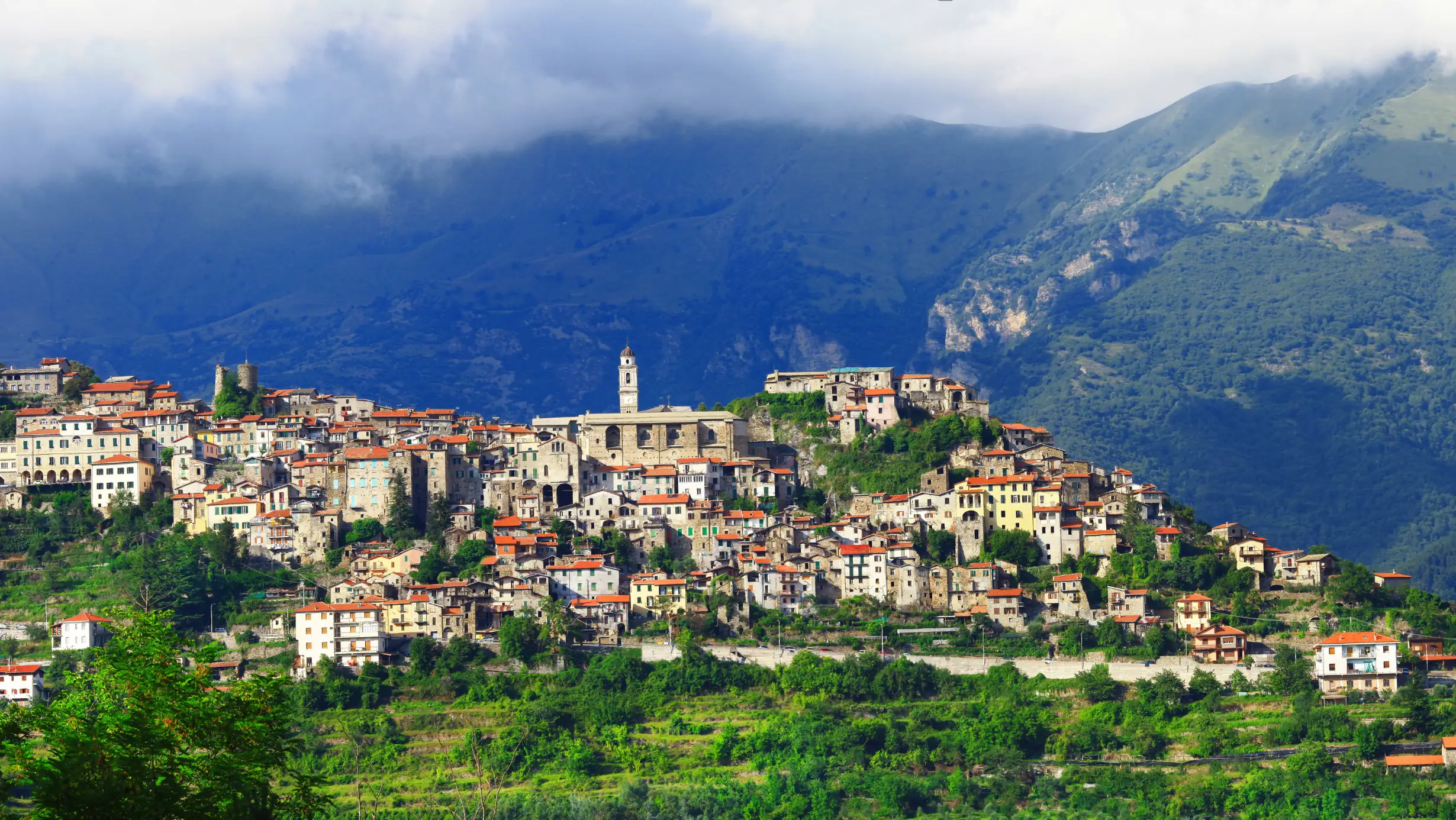
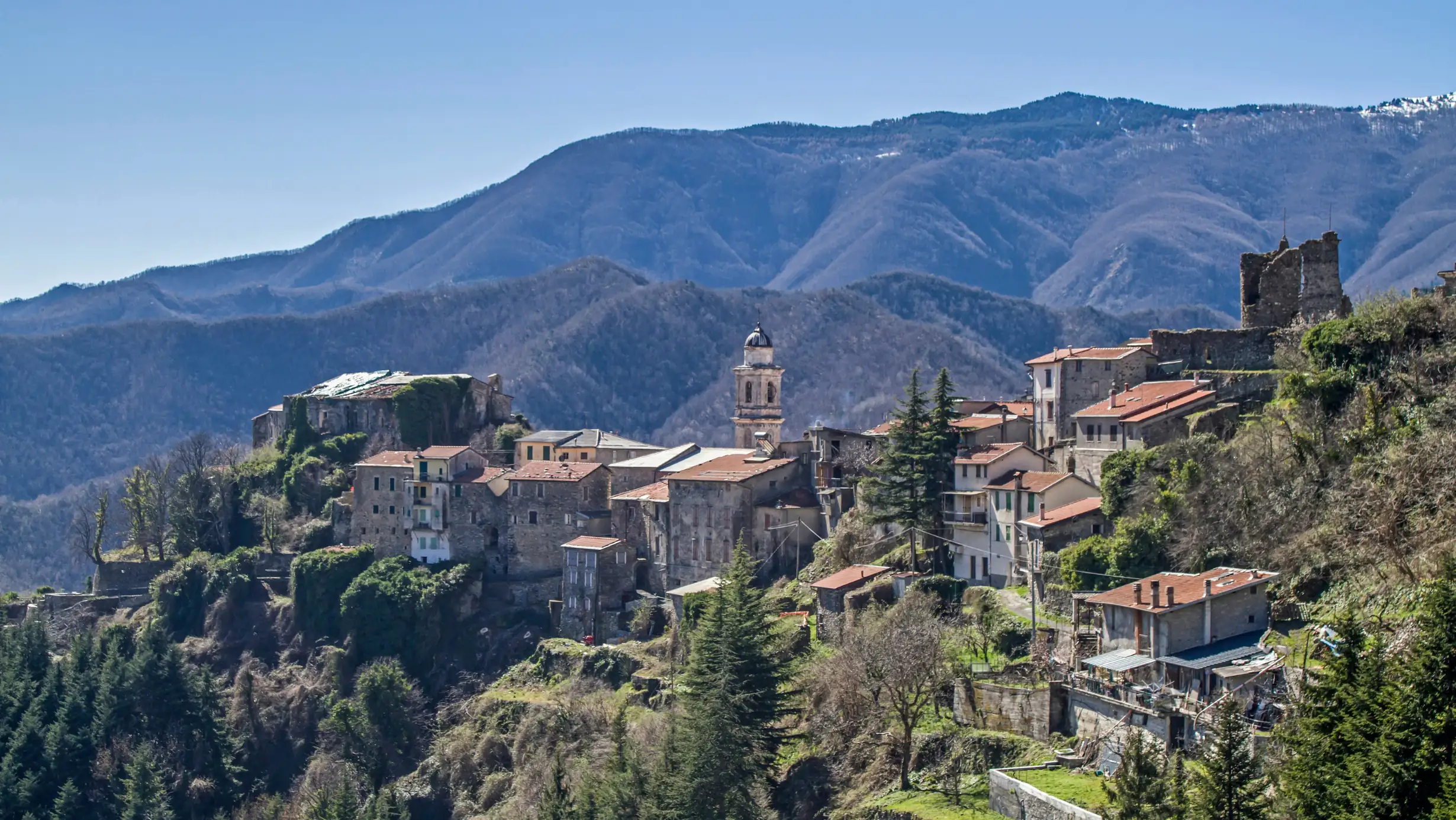
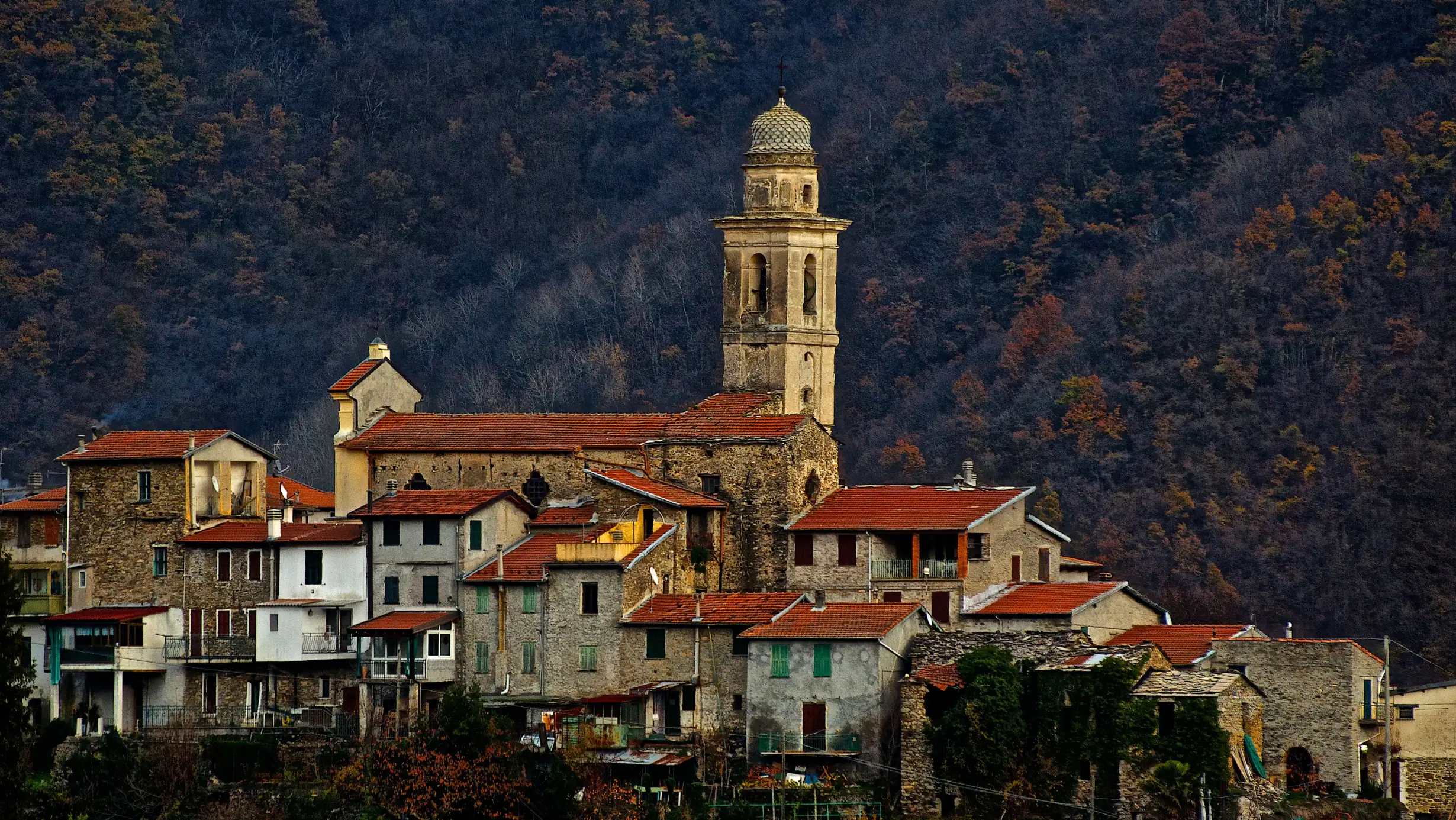
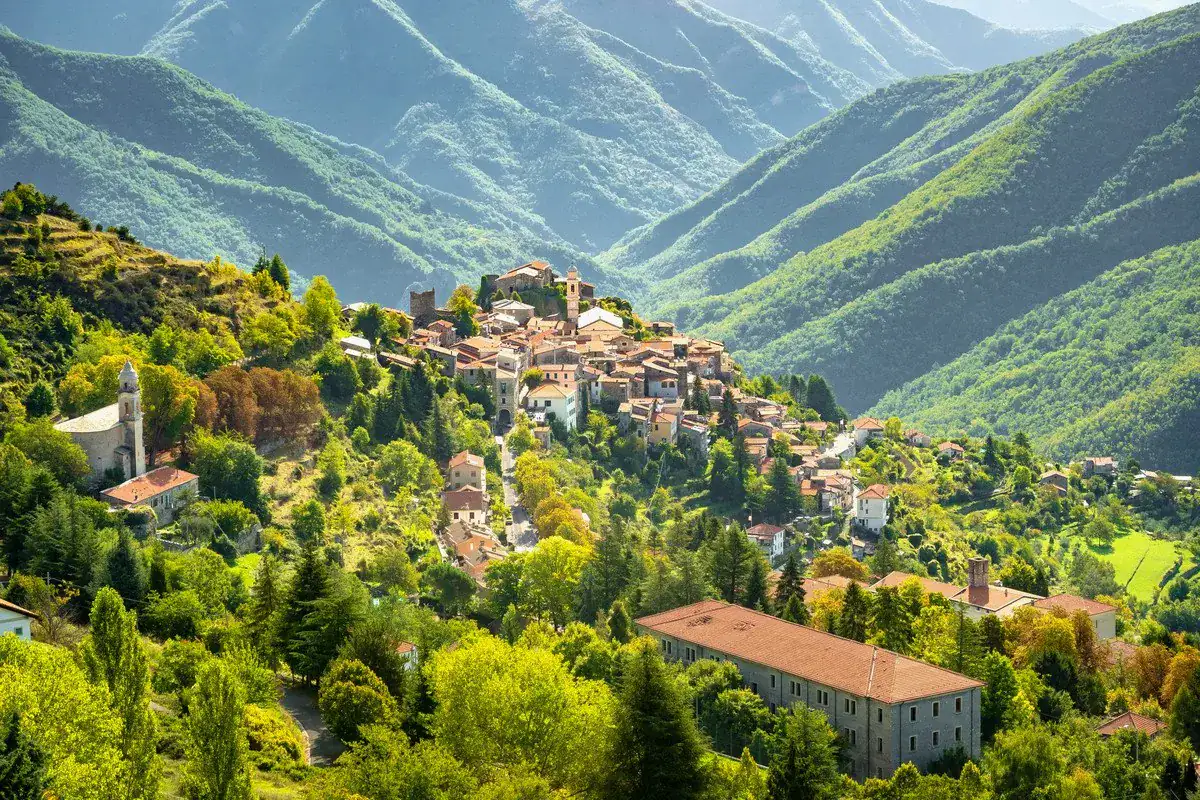
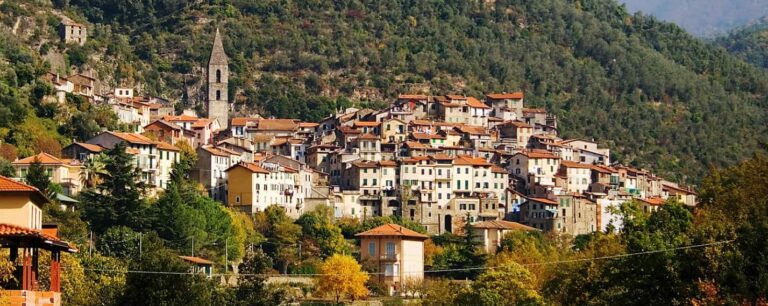
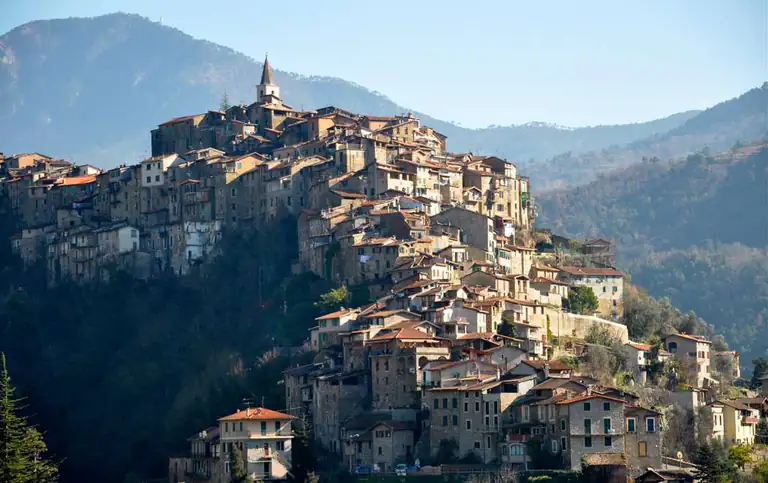
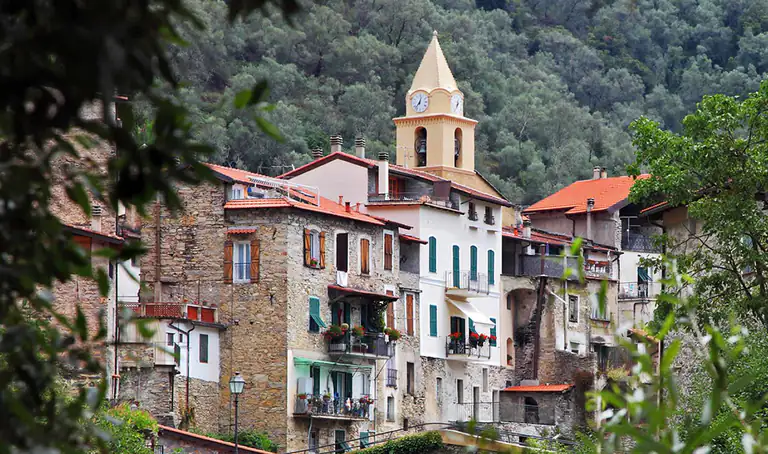
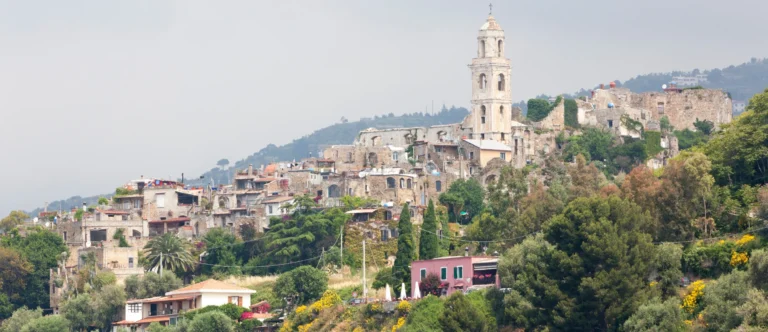
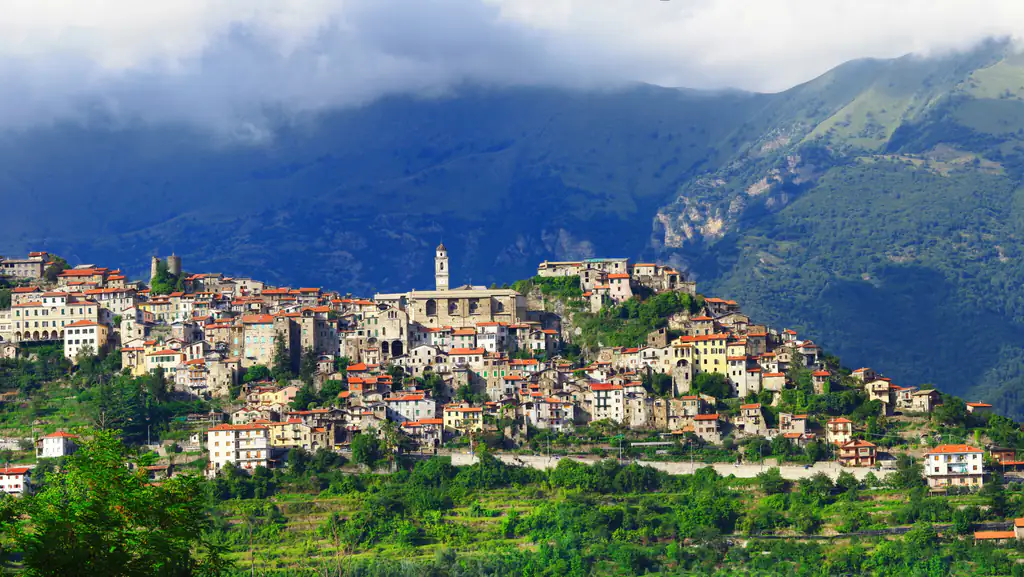
Triora perched on the mountainside

Triora

The village of witches in the upper Argentina valley: medieval alleys, witchcraft museum, Collegiata, Cabotina and trails up to Monte Saccarello.

Triora perched on the mountainside
Area
Riviera dei FioriRiviera di Ponente · Province of Imperia
Ideal for
History, legends and mountainshikers, couples and families
Beaches
The nearest sea is at Arma di Taggia, about 32 km40–45 minutes
Best time to go
Spring to autumncooler than the coast in summer; Strigora in August
By train
Taggia-Arma stationabout 30 km), then Riviera Trasporti bus: few services, about 1 hour
By car
A10, Arma di Taggia exit, then SP 548 up the Argentina valley: about 32 km40–45 minutes
Airport
Nice Côte d'Azur (about 100 km)over 1 hour 30 by car
How long to stay
Half a day or a day2–3 days with hiking

Welcome to Triora

The village of witches

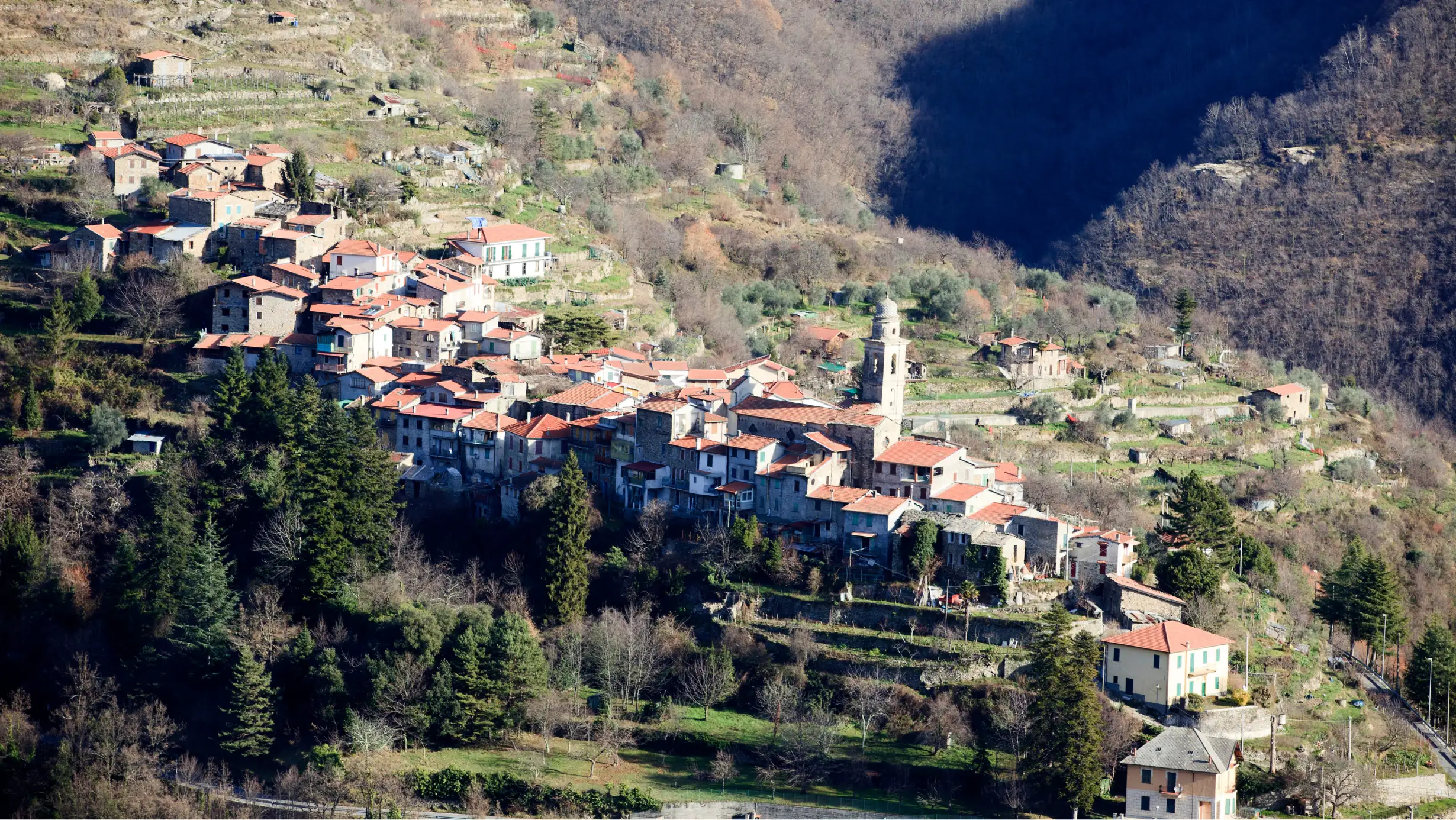
Triora is the “village of witches”: a medieval stone village at 780 metres above sea level in the upper Argentina valley, inland from Arma di Taggia. Covered alleys, carved doorways, the remains of castles and forts, a museum devoted to the 16th-century witch trial and, all around, the mountains of the Ligurian Alps Nature Park, up to Monte Saccarello, the highest peak in Liguria.

The village grew up around the year 1000 and in 1261 came under Genoa, which made it the seat of a podesteria with wide self-government: it was a stronghold on the road to France. According to tradition, the name comes from “Tria ora”, three mouths, linked to the valley’s three products: wheat, grapes and chestnuts. Between 1587 and 1589 a famine sparked one of the best-known witch trials in Italy, which is where the village’s fame comes from.

Today Triora has about 400 inhabitants and is the largest municipality by area in the province of Imperia. It is one of the Borghi più belli d’Italia, holds the Touring Club’s Bandiera Arancione and is the only Ligurian municipality in the Mountaineering Villages network. It makes an easy day trip from the coast, but it is worth a night if you want to walk in the mountains.

Where is Triora?

Triora is in Liguria (Riviera di Ponente, Riviera dei Fiori, province of Imperia).

Map: where Triora is in LiguriaPIEDMONTLOMBARDYEMILIA-ROMAGNATUSCANYFRANCERIVIERA DI PONENTERIVIERA DI LEVANTELIGURIAN SEASavonaImperiaSanremoLa SpeziaTriora
Boundaries: ISTAT, Natural Earth · Interactive map →

What to see

What to see in Triora

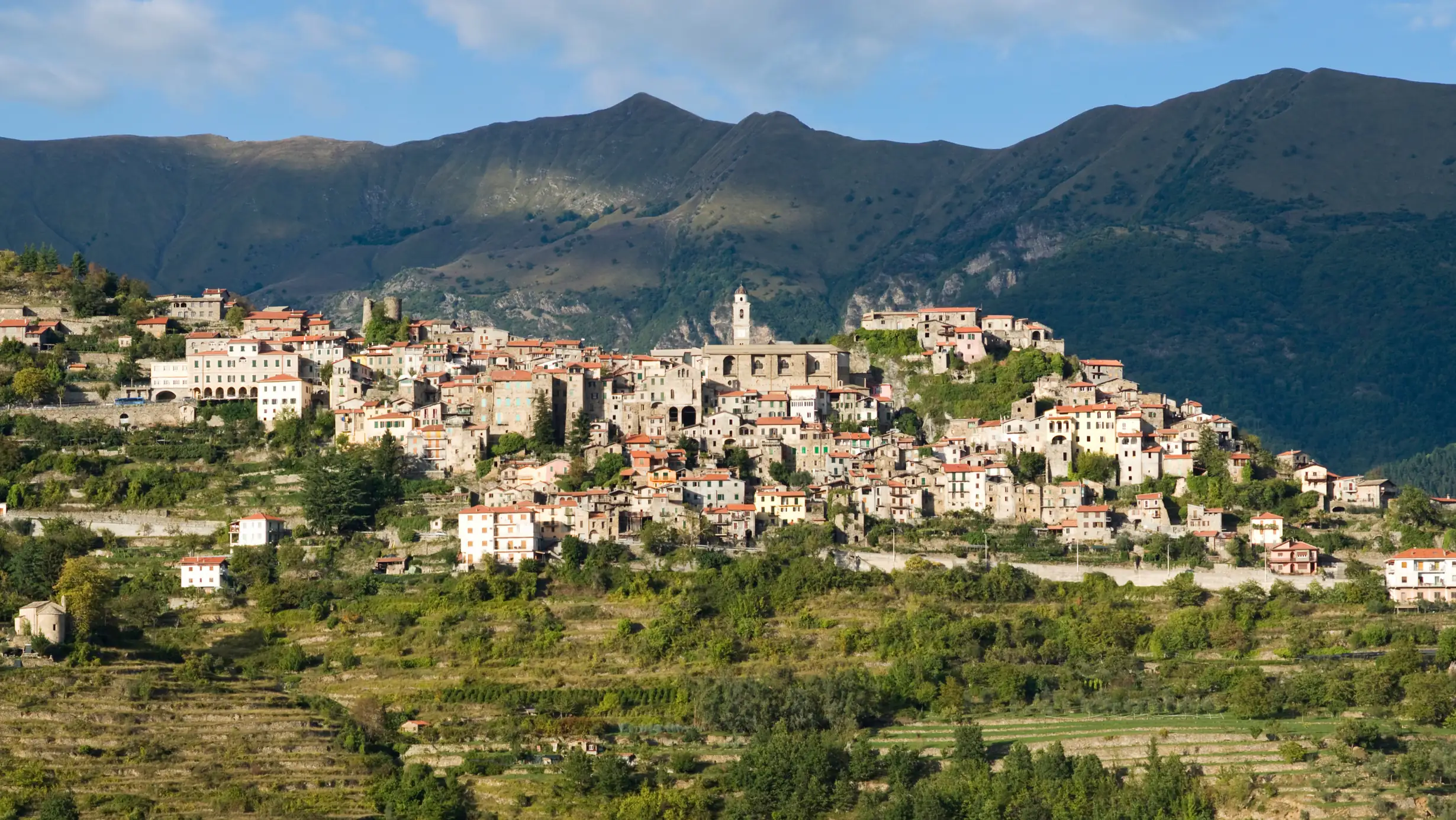
View of Triora, the village of witches

You can explore the old centre on foot in a couple of hours, museum included. The streets are paved, steep and partly stepped, so wear comfortable shoes.

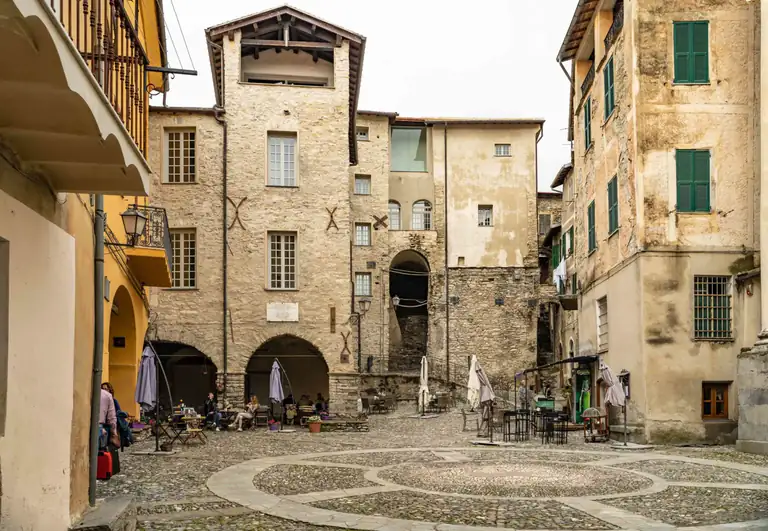
Square in Triora near the Ethnographic and Witchcraft Museum

Ethnographic and Witchcraft Museum

At the entrance to the village, on corso Italia, the Museo Regionale Etnografico e della Stregoneria opened in 1983 and fills three floors of the old town hall. The rooms tell the story of farming life in the valley, with the cycles of wheat, chestnuts and milk; in the basement the interrogations of the trial are recreated, with copies of the documents and instruments of torture.

In 2026 it is open every afternoon and, at weekends and in summer, in the morning too. A full-price ticket costs 3 euros. Check the current opening hours on the museum website before you drive up.

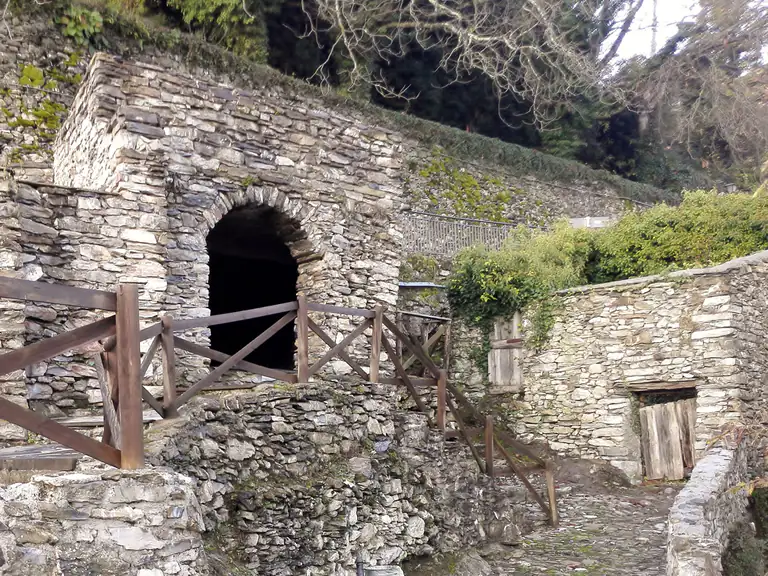
La Cabotina, the witches' place in Triora

La Cabotina

Just outside the walls, near the Fontana Soprana gate, the Cabotina is a ruined farmhouse where, according to legend, the “bagiue”, the witches in local dialect, used to meet. It is not a monument, but it is the place most closely tied to the village’s myth, with a fine view over the valley. The true story of the trial, separated from the legend, is in the guide to the witches of Triora.

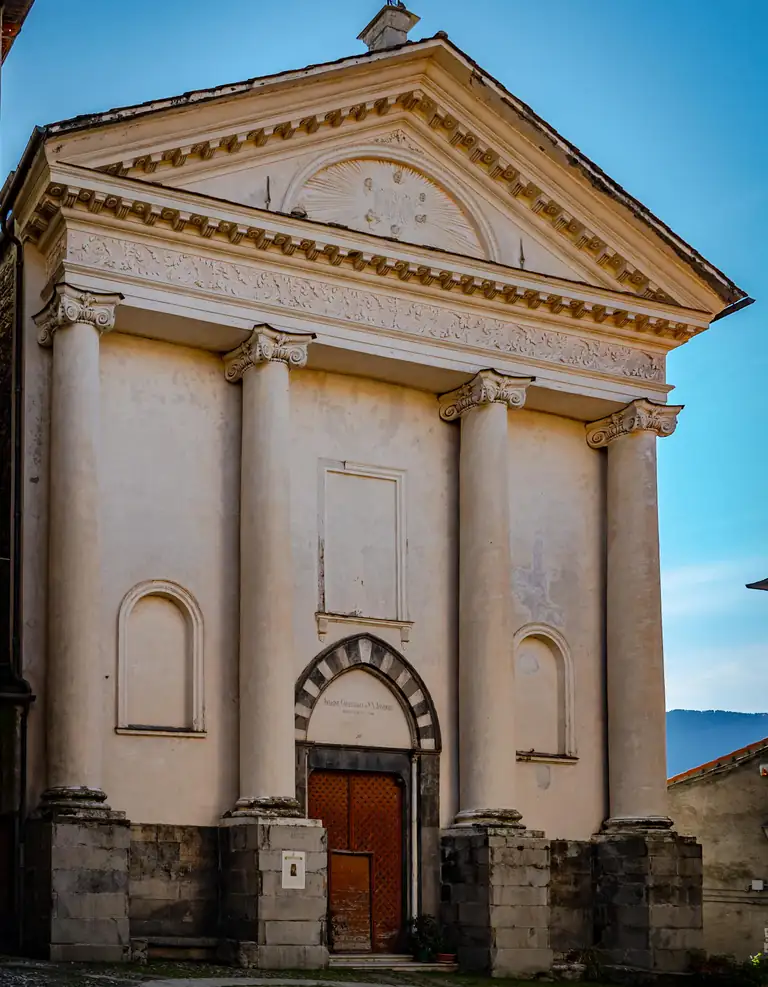
Façade of the Collegiate Church of the Assumption in Triora

Collegiata dell'Assunta

The village’s main church was originally Romanesque-Gothic with three naves; it was rebuilt in the 16th century and turned into a single hall in the 18th. The doorway and the base of the bell tower survive from the first building. Inside is the “Baptism of Christ” by Taddeo di Bartolo, dated 1397: it is the oldest signed and dated work in the province of Imperia. There are also two panels from the early 15th century and a canvas by Luca Cambiaso.

Oratorio di San Giovanni Battista

Next to the Collegiata, the 17th-century oratory stands on pillars that raise it to the level of the square. It holds paintings by the Triora-born painter Lorenzo Gastaldi and a statue by Anton Maria Maragliano, the great Genoese woodcarver.

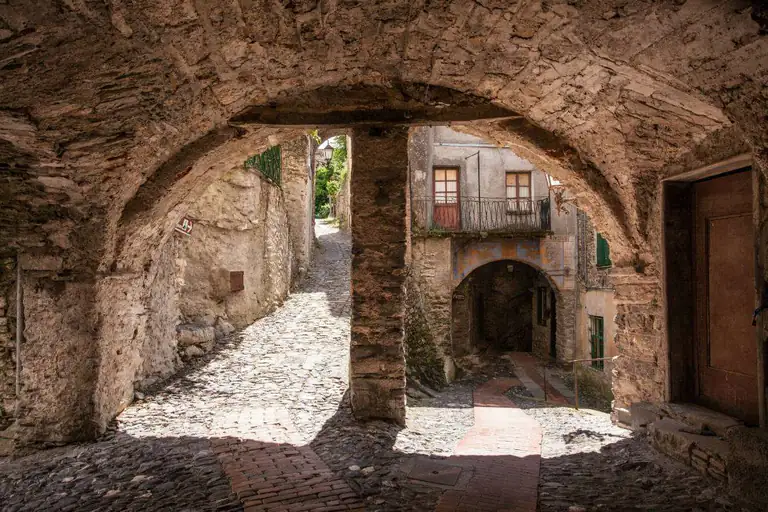
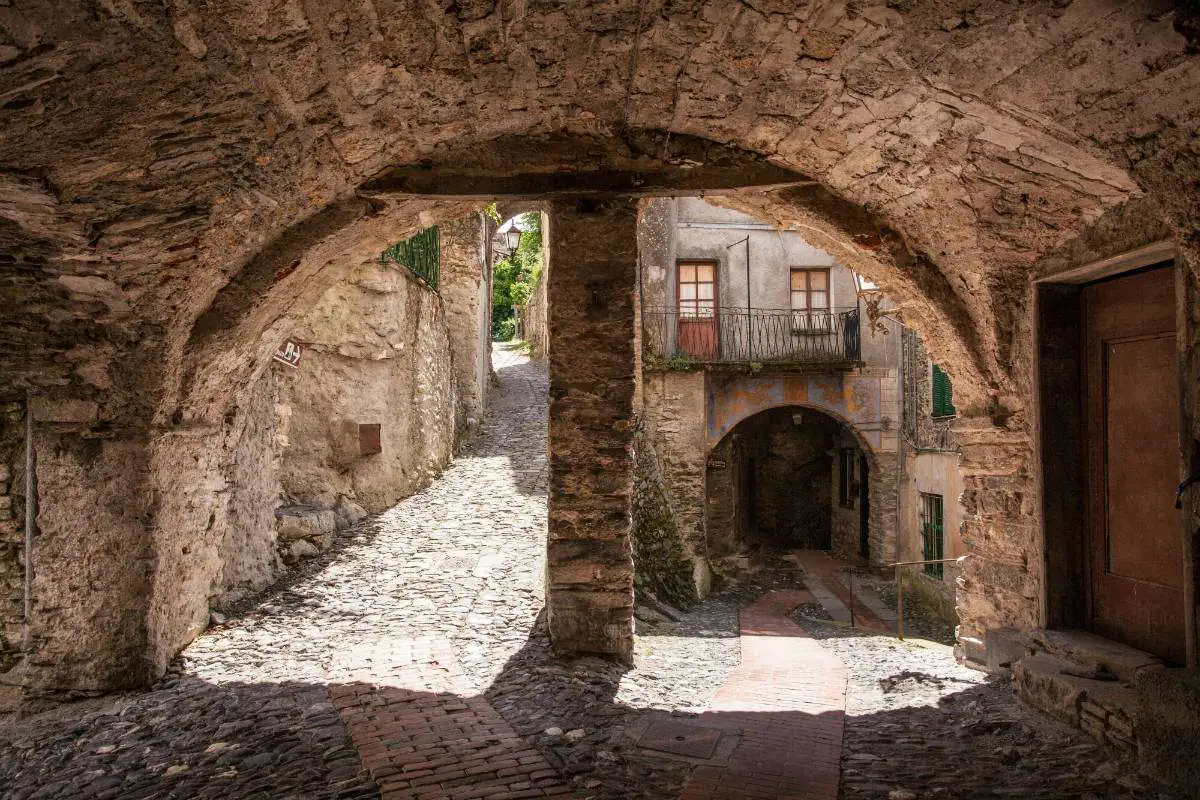
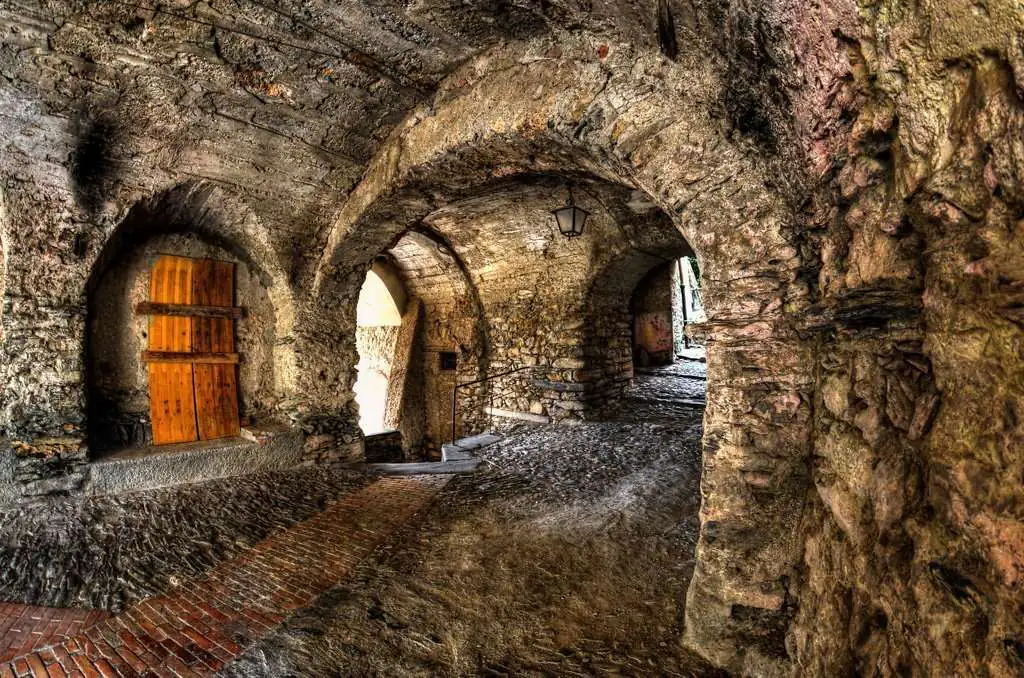
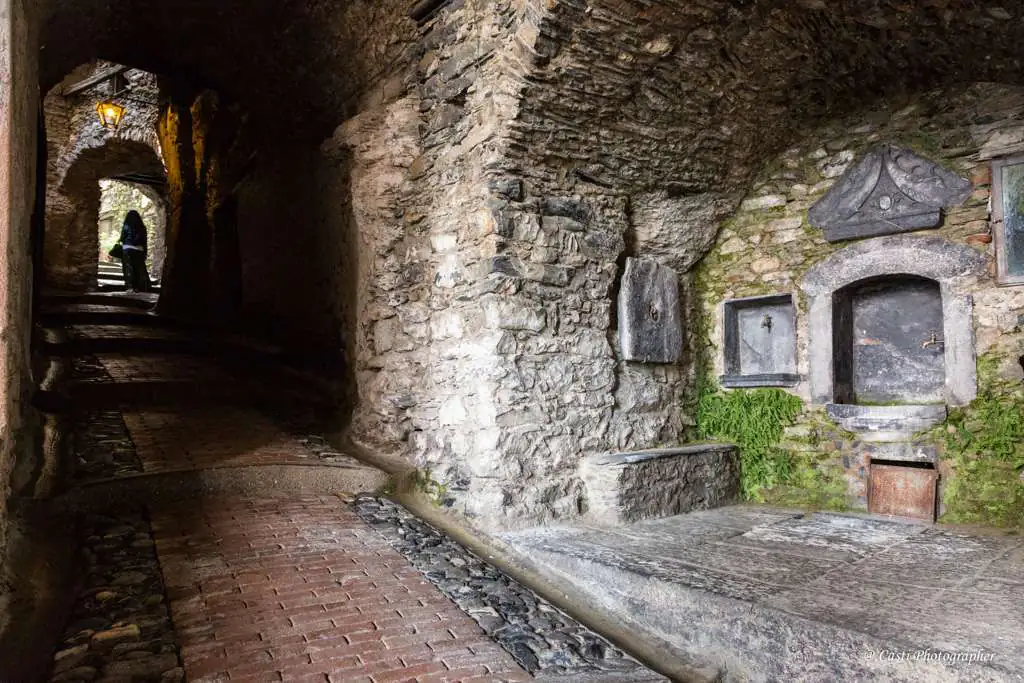
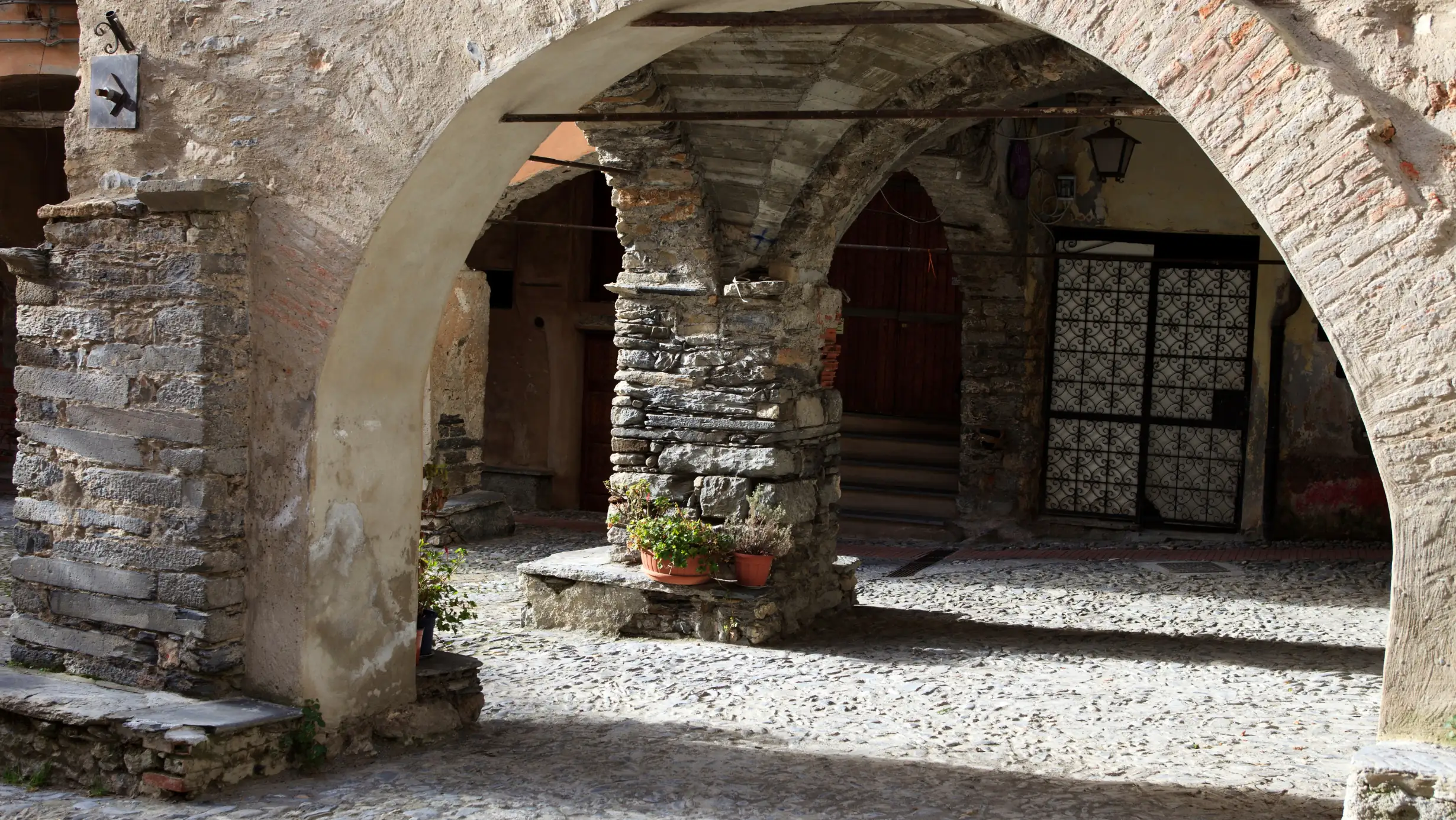
Medieval arcades and alleys of Triora

The carruggi, the gates and the three trails

The centre has kept its medieval layout: houses packed together, covered passages, small squares and some of the seven old gates. To find your way, follow the three routes marked by round stickers on the paving: red for art and history, blue for curiosities and legends, yellow for children.

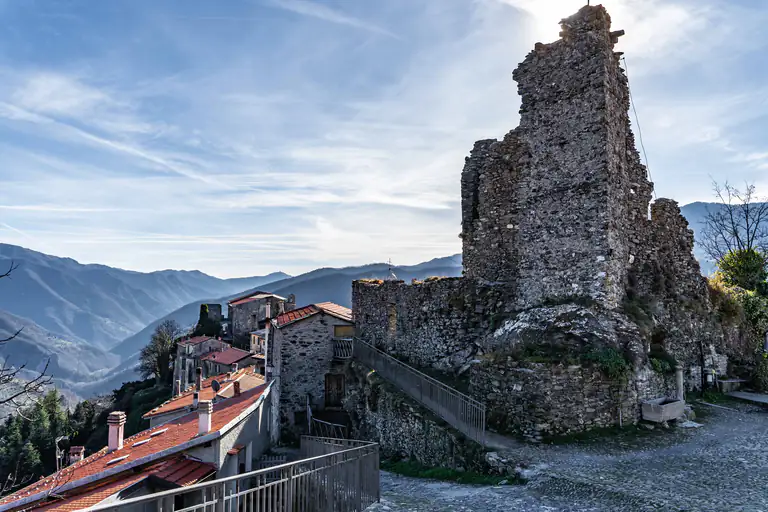
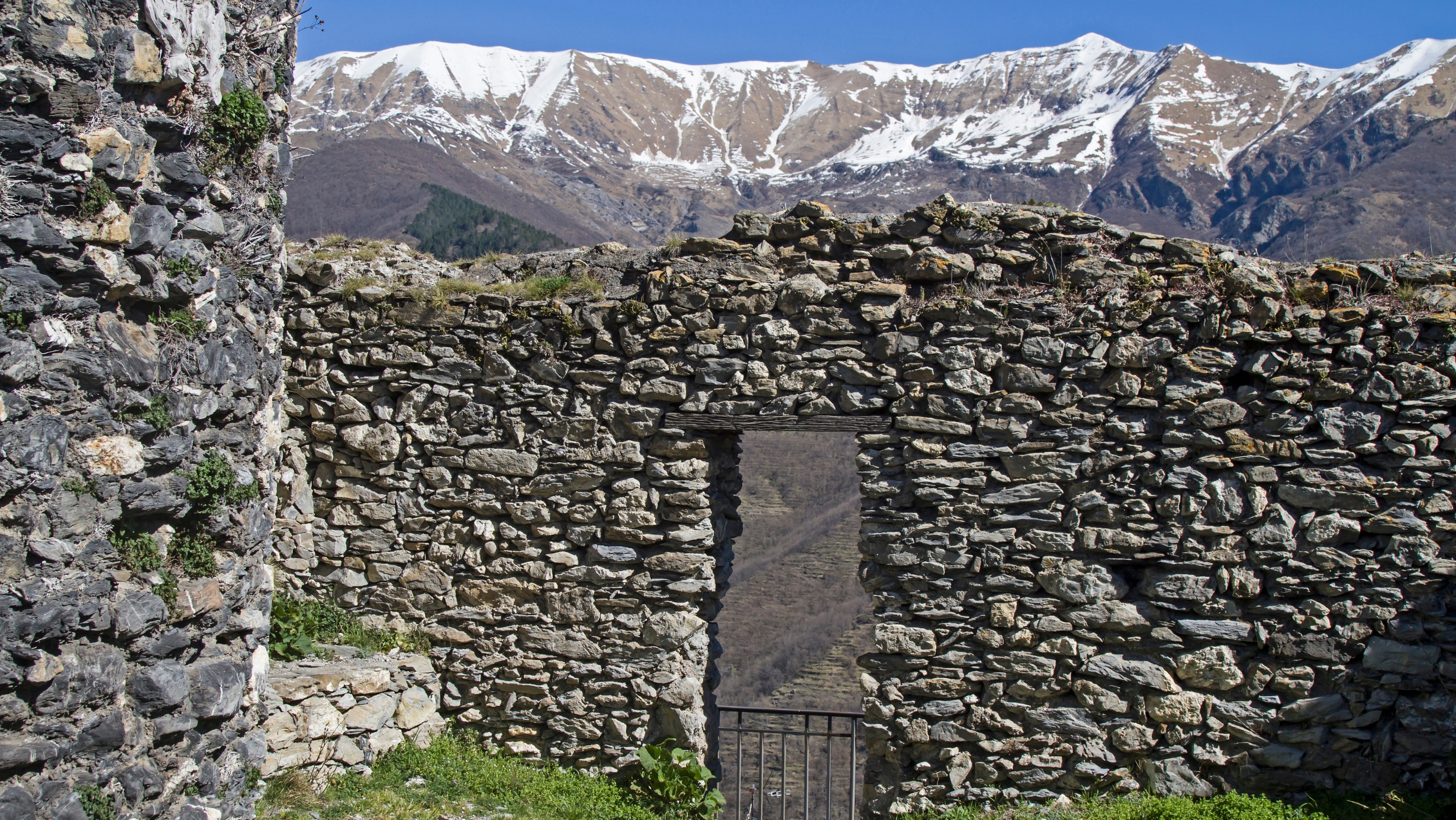
Ruins of Triora Castle

Triora Castle

At the highest point of the village stand the walls and a tower of the 13th-century castle, the “castrum vetus”. From here you can see Triora’s strategic position, perched above the valley. Nearby are the remains of the 13th-century church of San Dalmazzo, with traces of 14th-century frescoes, and of a fort.

Santa Caterina

What survives of the church of Santa Caterina is mainly its doorway, dated 1390 and bearing an inscription, one of the oldest details in the village. It is a short stop on the route between the gates and the castle.

Church of San Bernardino in Triora

Chiesa di San Bernardino

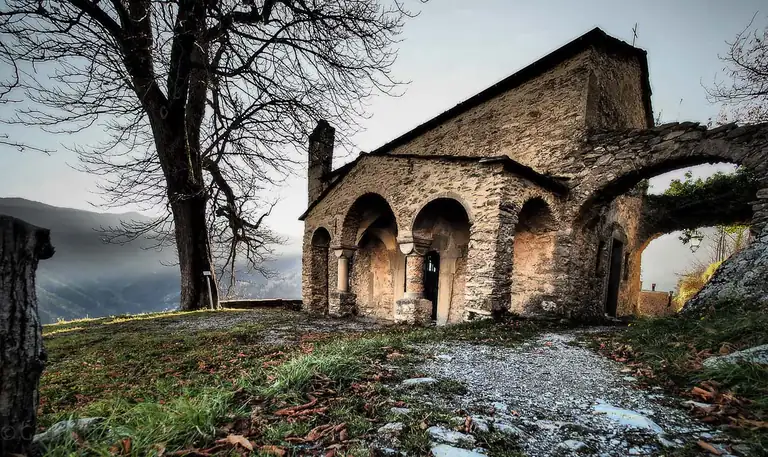
Just outside the centre, the country church of San Bernardino has a stone portico and, inside, 15th-century frescoes attributed to Giovanni Canavesio, the painter of the painted churches of the Maritime Alps. If it is closed, ask in the village or at the museum.

Ponte di Loreto

Heading down towards the hamlet of Loreto, the bridge built in 1959 spans the deep gorge of the Argentina stream and leads towards Cetta. It is one of the most spectacular spots in the valley and worth a stop by car or on foot.

The Argentina valley and mountains around Triora

Ligurian Alps Park and Monte Saccarello

Triora lies inside the Parco naturale regionale delle Alpi Liguri. Above the village rise woods, pastures and the mountain hamlets of Realdo and Verdeggia, on the border with France, up to Monte Saccarello, 2,201 metres. Between May and June its slopes are covered in flowering rhododendrons.

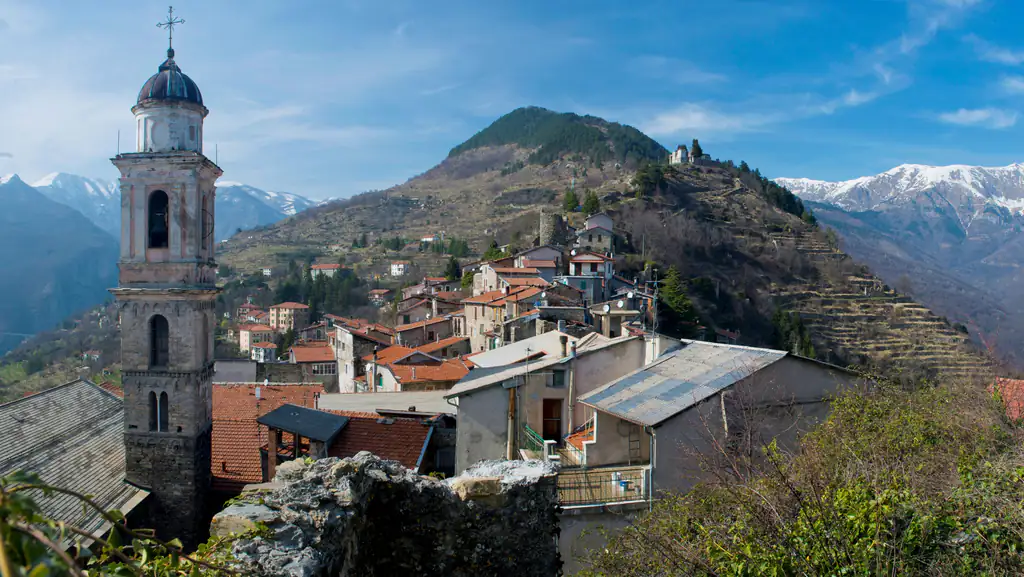
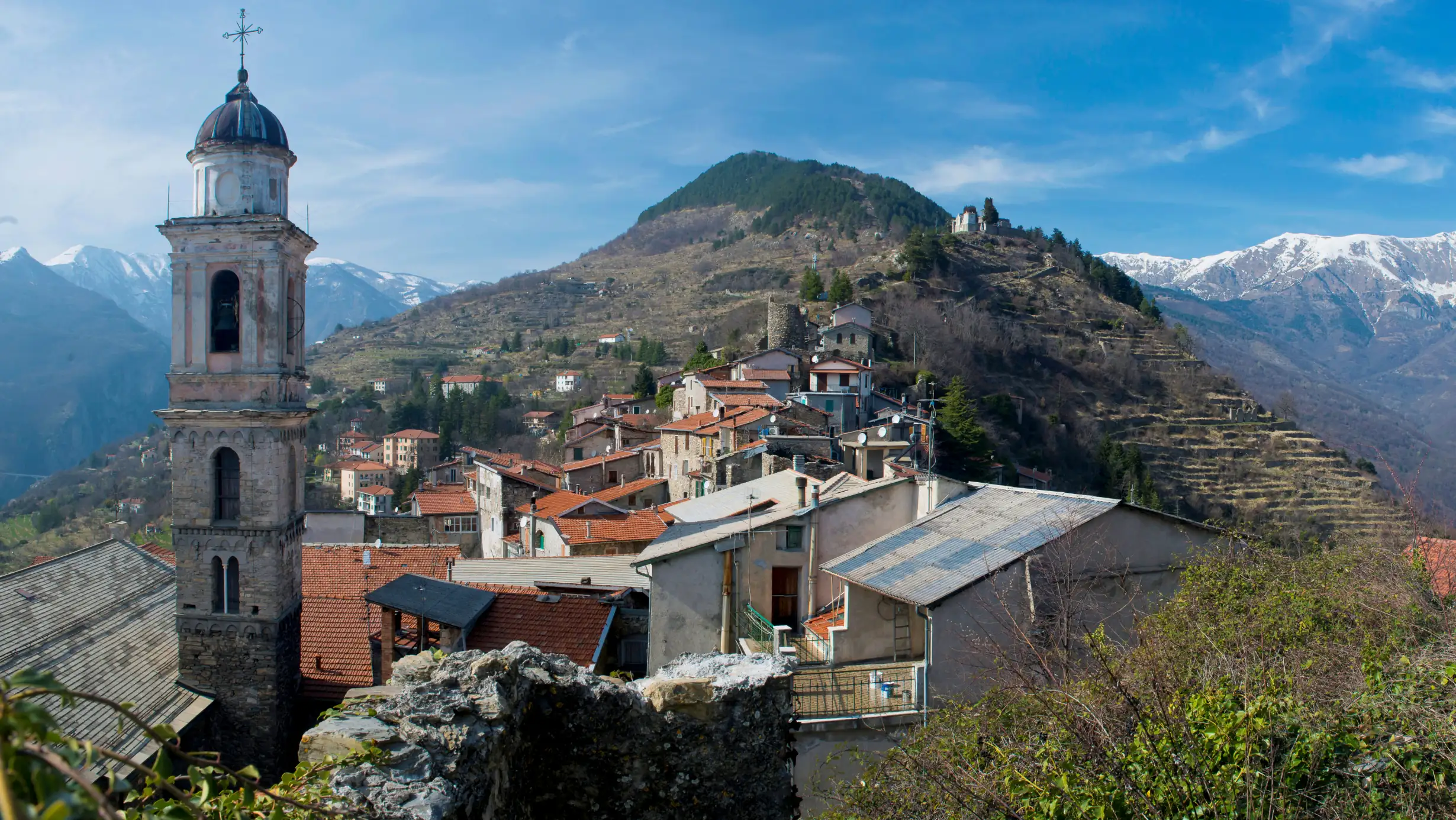
Bell tower and rooftops of Triora with the Ligurian Alps

Where to stay

Where to stay in Triora

In the village and its hamlets the choice is small: a few B&Bs, guest rooms, holiday homes and agriturismi in the valley, plus mountain huts higher up. Staying in Triora makes sense if you want to walk early in the morning or enjoy the village in the evening, once the day visitors have left. For Strigora and Halloween, book well in advance.

The alternative is to stay on the coast, in Arma di Taggia or Sanremo, where the choice of hotels is much wider, and drive up for the day: allow about three quarters of an hour each way.

Getting there

How to get to Triora

By car

Take the A10 Genoa–Ventimiglia motorway to the Arma di Taggia exit, then the SP 548 provincial road up the Argentina valley, which passes through Badalucco and Molini di Triora. It is about 32 kilometres of winding mountain road: allow 40–45 minutes.

By train

The nearest station is Taggia-Arma, on the Genoa–Ventimiglia line, about 30 kilometres away; the alternative is Sanremo, about 38. From there, continue by bus or car.

By bus

Riviera Trasporti buses link Taggia station with Triora along the valley: there are only a few services a day and the journey takes about an hour. Check the timetable on Riviera Trasporti before you set off, especially for the return trip.

By plane

The nearest airport is Nice Côte d’Azur, about 100 kilometres away: by car it takes more than an hour and a half, half on the motorway and half on the valley road.

Parking

The old centre is made up of alleys and stairways and cannot be driven through. Leave the car in the car parks along the road at the entrance to the village, in the lower part, and walk up. During the big festivals such as Strigora and Halloween spaces fill up quickly: arrive in the morning and check the Comune’s website for any shuttle buses and outlying car parks.
By car

A10, Arma di Taggia exit, then SP 548 up the Argentina valley: about 32 km (40–45 minutes)

By train

Taggia-Arma station (about 30 km), then Riviera Trasporti bus: few services, about 1 hour

By plane

Nice Côte d'Azur (about 100 km); over 1 hour 30 by car

The guide

Triora in a day: a suggested itinerary

  • Morning: drive up from the coast along the Argentina valley and visit the Ethnographic and Witchcraft Museum.
  • Late morning: follow the red route through the carruggi to the Collegiata and the oratory of San Giovanni.
  • Lunch: pane di Triora with bruzzu and a mountain dish in a village trattoria.
  • Afternoon: climb to the castle, the Cabotina and the Fontana Soprana, then walk on to San Bernardino.
  • Return: stop at the Loreto bridge or at Molini di Triora before heading back down to the sea.

With a second day, give the whole day to the mountains: Realdo, Verdeggia or a trail towards the Saccarello.

Food and local specialities

The cooking is that of the upper valley: bread, cheese, chestnuts, herbs and potatoes rather than the fish of the coast.

  • Pane di Triora: a low, wide loaf made with type 1 flour and bran, baked on boards dusted with bran. It has a hard crust and a dense crumb and keeps for days.
  • Bruzzu: fermented sheep’s ricotta, creamy and sharp, typical of the high valleys around Imperia. It is spread on pane di Triora.
  • Alpine pasture cheeses: made in the pastures of the valley and the Saccarello.
  • Bügaéli and vegetable pies: chestnut-flour gnocchi and savoury pies of vegetables and potatoes.
  • Mushrooms, chestnuts and honey: the produce of the woods around the village, especially in autumn.
  • Sweets: “baci di strega” and “palle del diavolo”, created on the wave of the witch myth.

Events and festivals

  • Strigora (August): the witches’ festival, with a medieval market, music in the small squares and re-enactments of the trial in the carruggi. In 2026 it took place on Sunday 23 August.
  • Halloween (31 October): every year the village puts on a themed day with shows, stalls and costume parties. In the past, entry to the village required a paid ticket: check the 2026 programme on the Comune’s website.
  • Traditional festivals: the Good Friday procession, the San Tusco fair in July and the chestnut festival in November.

Hiking and trails

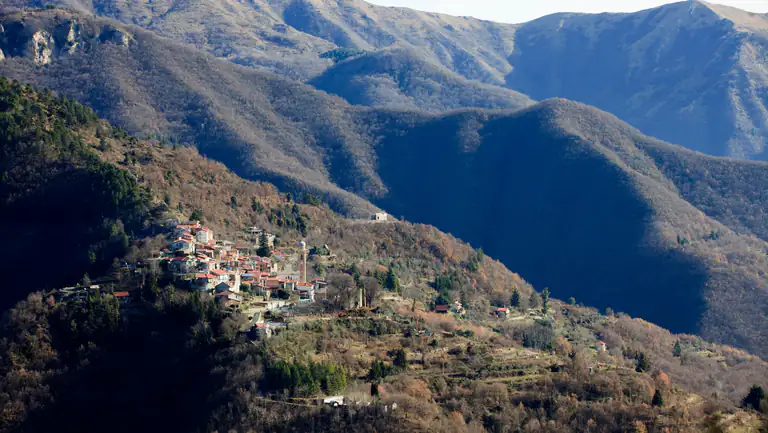
Triora among the mountains of the Argentina valley

Triora is a mountain village, and that is exactly what the Mountaineering Villages network recognises. Trails start from the village and its hamlets; before setting off, check the weather and the waymarking, because at altitude the weather changes quickly.

  • Monte Saccarello: the highest summit in Liguria. From the village the climb takes about seven hours with 1,420 metres of ascent; many hikers start higher up, from the hamlets.
  • Triora–Realdo: a crossing through the woods to the hamlet overlooking the Roia valley, about five hours.
  • Alta Via dei Monti Liguri: the long ridge trail can be reached from Triora in several stages.
  • Winter: snowshoeing and ski touring around the Saccarello; at Colle Melosa there is a groomed cross-country ski track.
  • Water: the Argentina valley is known for canyoning, to be done with a guide.

Day trips from Triora

  • Molini di Triora: the village of mills, a few kilometres further down on the road up from Taggia.
  • Arma di Taggia (about 32 km): the nearest seaside, with the old centre of Taggia a few minutes away.
  • Bussana Vecchia: the artists’ village reborn after the 1887 earthquake, on the hill towards Sanremo.
  • Sanremo (about 38 km from the station): the Pigna, the Casino and the seafront promenade.
  • Pigna, Apricale and Dolceacqua: the villages of the Nervia valley, to combine in a tour of the hinterland.

Weather

Weather and best time to visit Triora

Spring to autumn; cooler than the coast in summer; Strigora in August

🌙
14°CNow · wind 13 km/h
  1. Thu 8🌙14° 14° 
  2. Fri 9🌦️18° 10°1 mm
  3. Sat 10🌤️19° 10°1 mm
  4. Sun 11⛅19° 11° 
  5. Mon 12🌤️19° 13°1 mm
  6. Tue 13⛅19° 9° 

Forecast: MET Norway (Yr), CC BY 4.0 licence. Updated hourly.

Weather across Liguria →

MonthJanFebMarAprMayJunJulAugSepOctNovDec
SeaOff seasonOff seasonOff seasonOff seasonPossibleGoodIdealIdealIdealPossibleOff seasonOff season
Sightseeing and hikingPossiblePossibleGoodIdealIdealIdealIdealIdealIdealIdealGoodPossible
CrowdsQuietQuietFew peopleFew peopleFew peopleFew peopleBusyVery busyFew peopleBusyFew peopleQuiet
Don't missStrigoraHalloween

IdealGoodPossibleOff season

Crowds:QuietFew peopleBusyVery busy

Gallery

Photos of Triora

FAQ

Frequently asked questions about Triora

Why is Triora called the village of witches?

Because of the witch trial of 1587–1589: after a famine, around thirty women were accused of causing it with spells, imprisoned and tortured. The memory of those events has become the village’s identity.

Were the witches of Triora burned at the stake?

No. Some women died in prison or from torture, but the Republic of Genoa did not authorise the death sentences and in 1589 the trial was halted.

What can you see in Triora in one day?

The Ethnographic and Witchcraft Museum, the Collegiata dell’Assunta with the work by Taddeo di Bartolo, the carruggi along the marked routes, the castle ruins, the Cabotina and the church of San Bernardino.

How much does the Triora witch museum cost?

In 2026 a full-price ticket costs 3 euros, 2 euros for groups and 1 euro for children and schools. It is open every afternoon and at weekends in the morning too.

When is Strigora?

In August, usually on the Sunday after Ferragosto. In 2026 it took place on 23 August.

How far is Triora from the sea?

About 32 kilometres from Arma di Taggia, the nearest seaside: by car it takes 40–45 minutes of mountain road.

Can you reach Triora without a car?

Yes, by train to Taggia-Arma and then on the Riviera Trasporti bus, but services are few: plan your outward and return journeys in advance.

Where can you park in Triora?

In the car parks along the road at the entrance to the village, then walk up. The old centre cannot be driven through.

When is the best time to visit Triora?

Spring, summer and autumn. In summer it is cooler than on the coast, in autumn there are chestnuts and mushrooms; in August and at the end of October the village fills up for Strigora and Halloween.

Nearby

What to see near Triora

11 km as the crow flies

Pigna

Medieval village in the upper Val Nervia: the chibi alleys, the loggia, San Michele with Canavesio's polyptych, Buggio, Pigna beans…

Discover →

15 km as the crow flies

Apricale

Sun-drenched stone village in the val Nervia: the Castello della Lucertola, murals, a theatre-like square, pansarola and the Teatro della…

Discover →

18 km as the crow flies

Rocchetta Nervina

Medieval village in the Val Nervia on the Barbaira stream: humpback bridge, carruggi, E Dubarìe museum, natural swimming pools and…

Discover →

18 km as the crow flies

Bussana Vecchia

The village destroyed by the 1887 earthquake and reborn as an artists' village: roofless Sant'Egidio, castle, studios and carruggi above…

Discover →
Scroll to Top