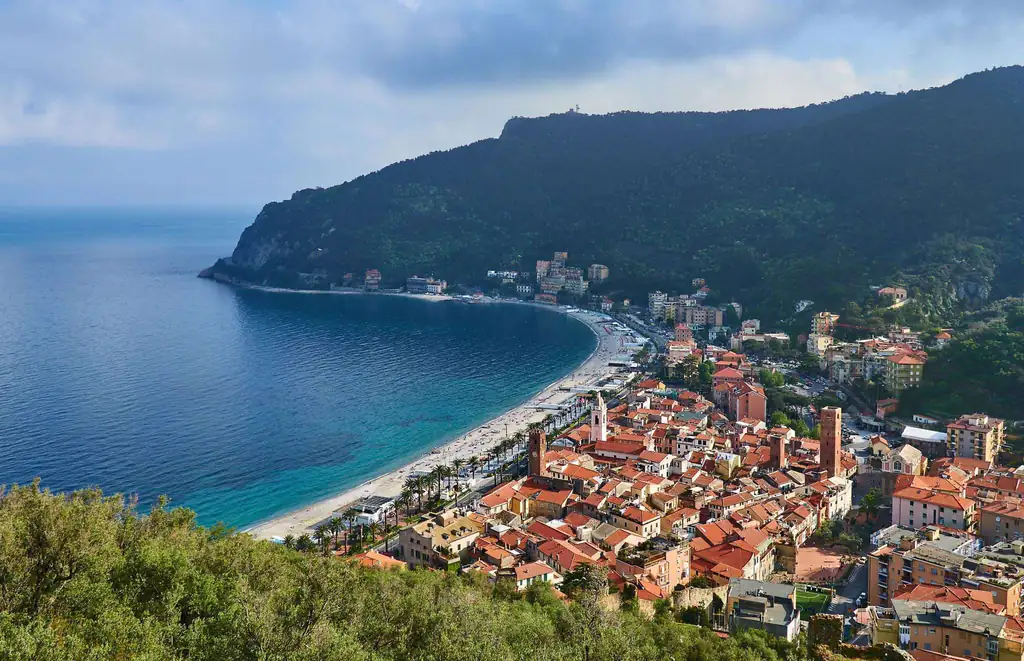
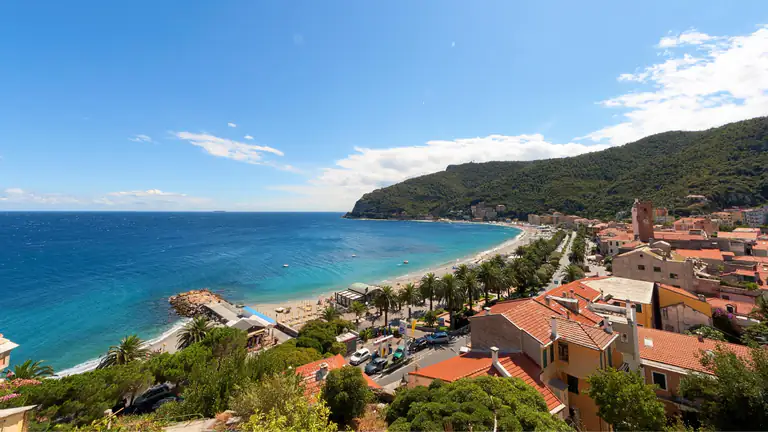
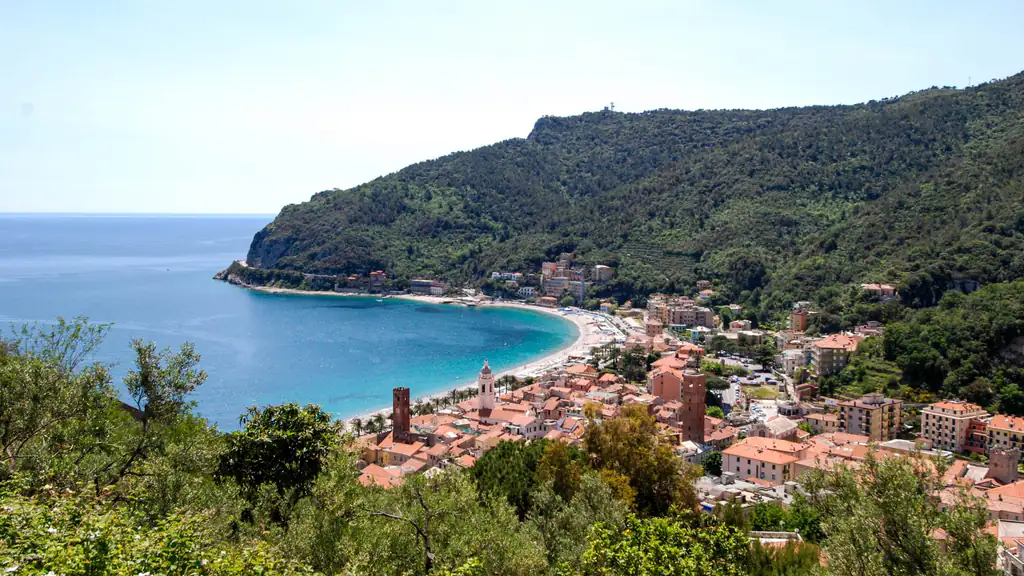
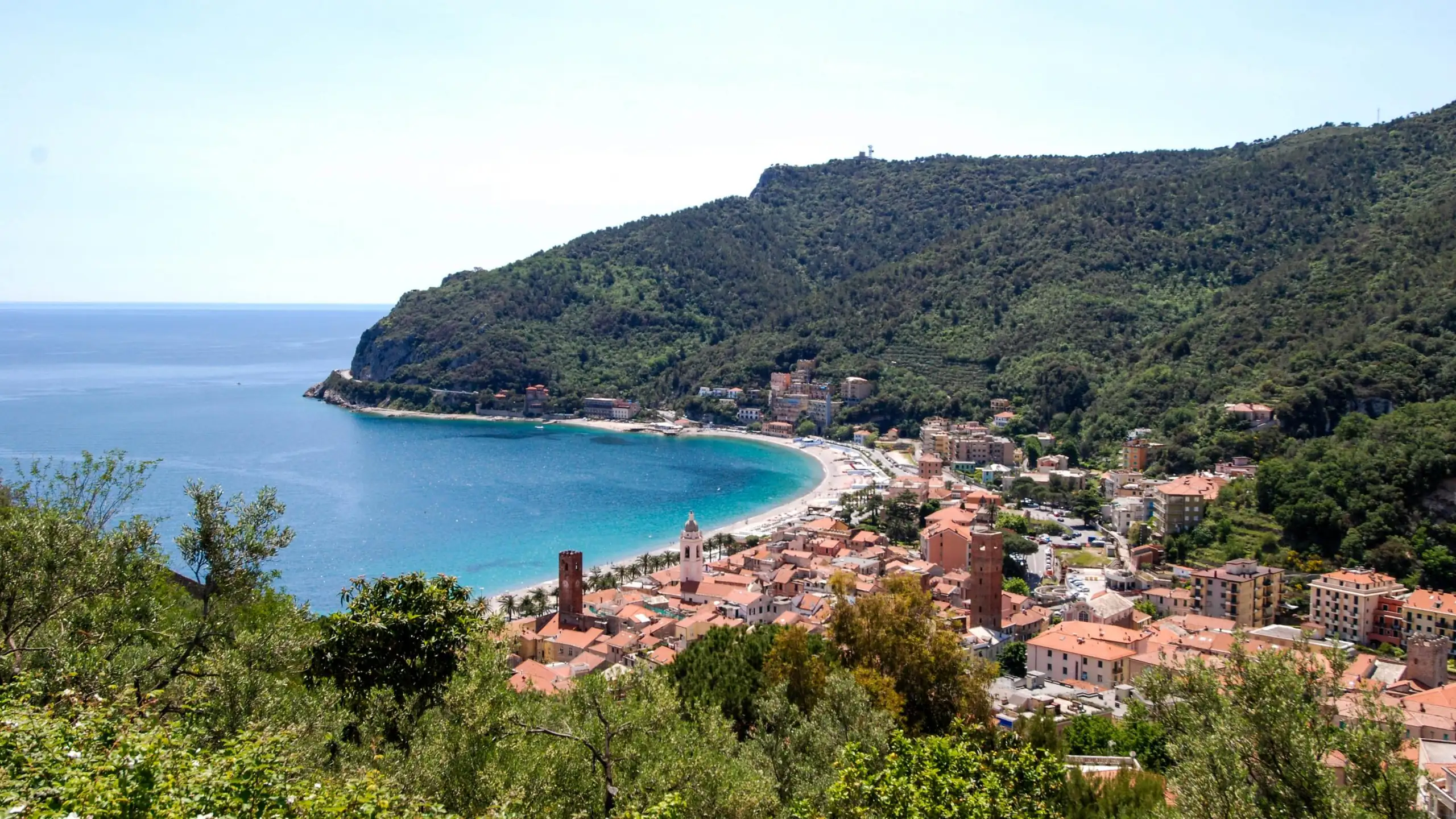
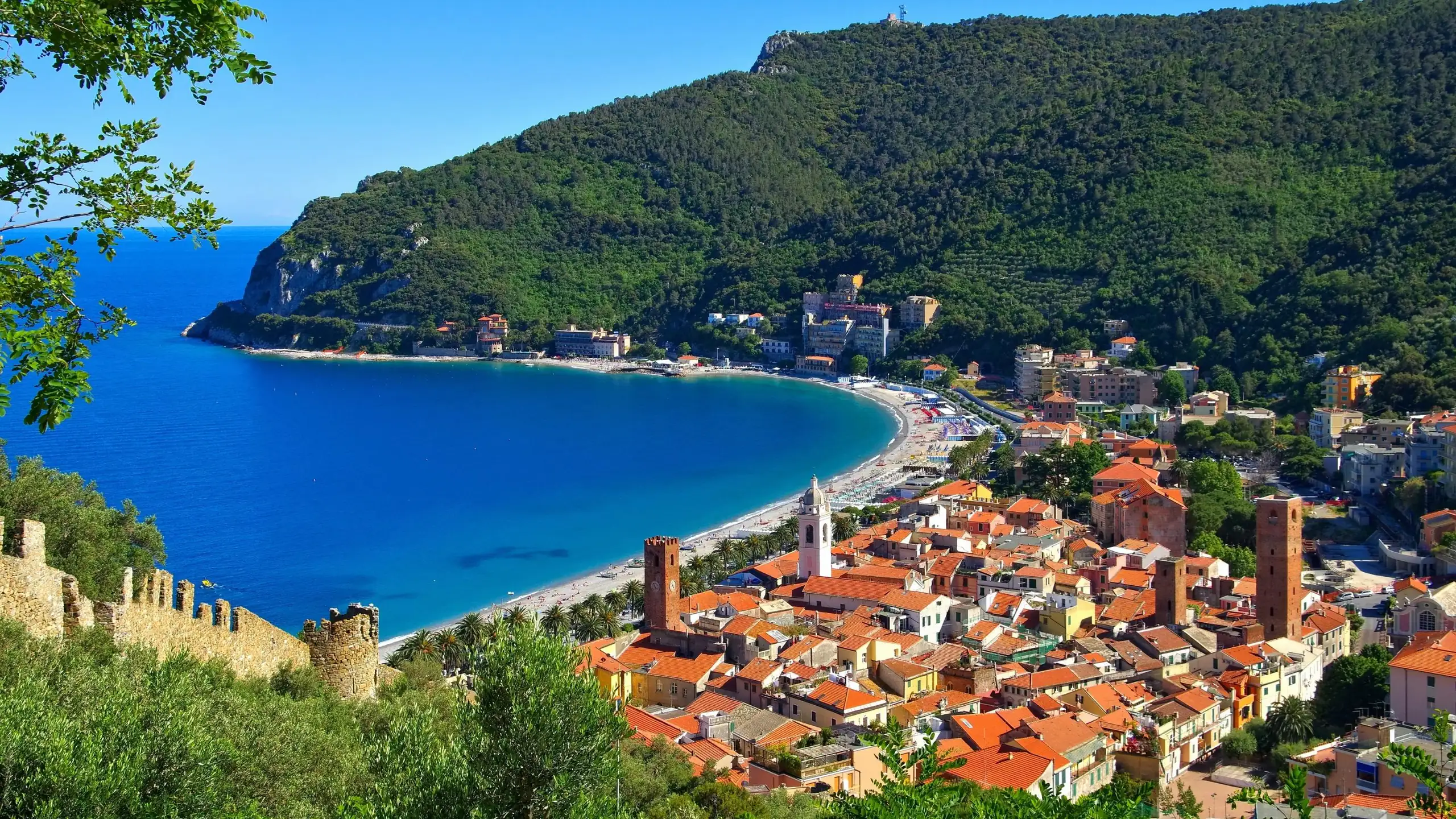
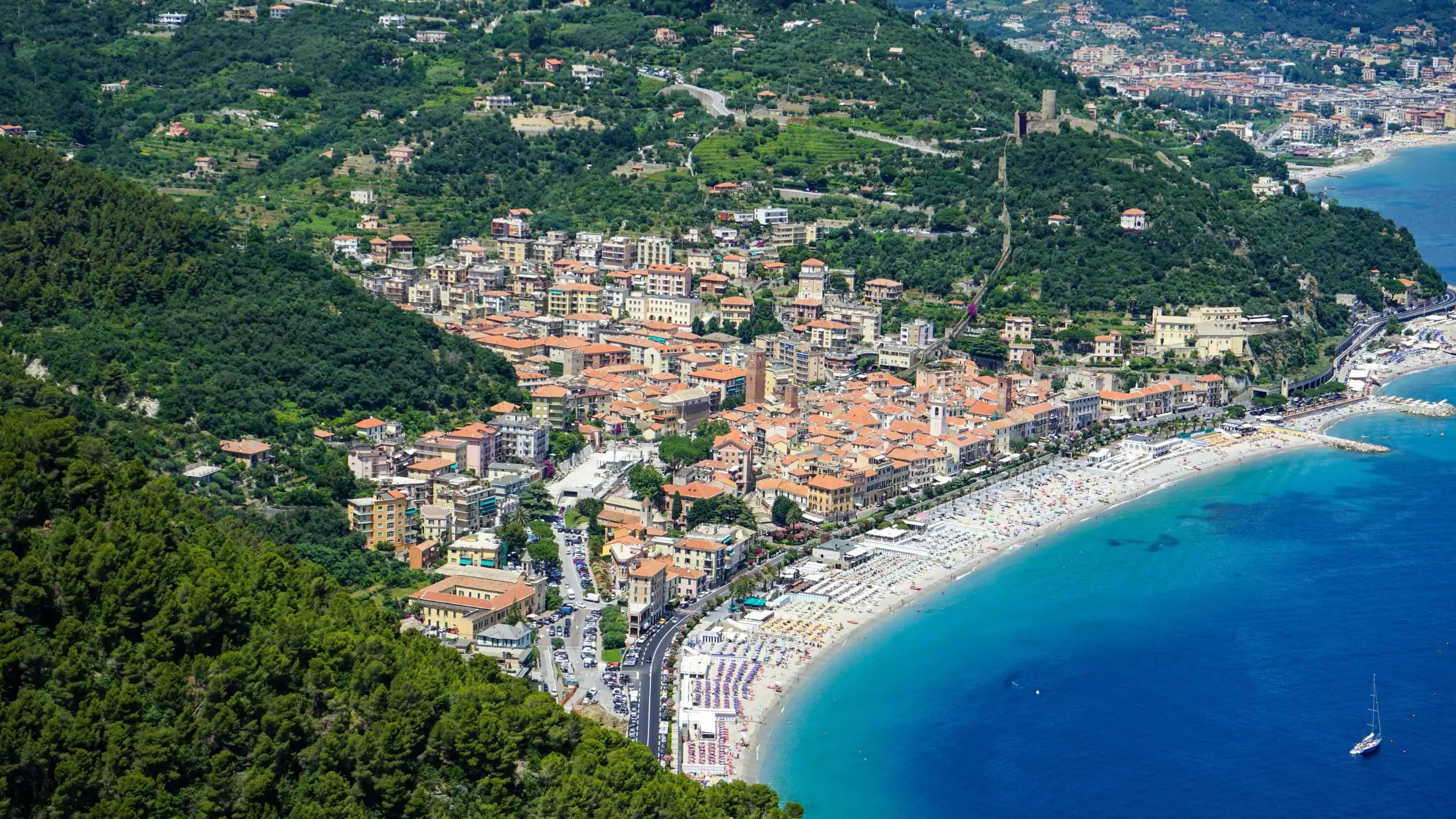
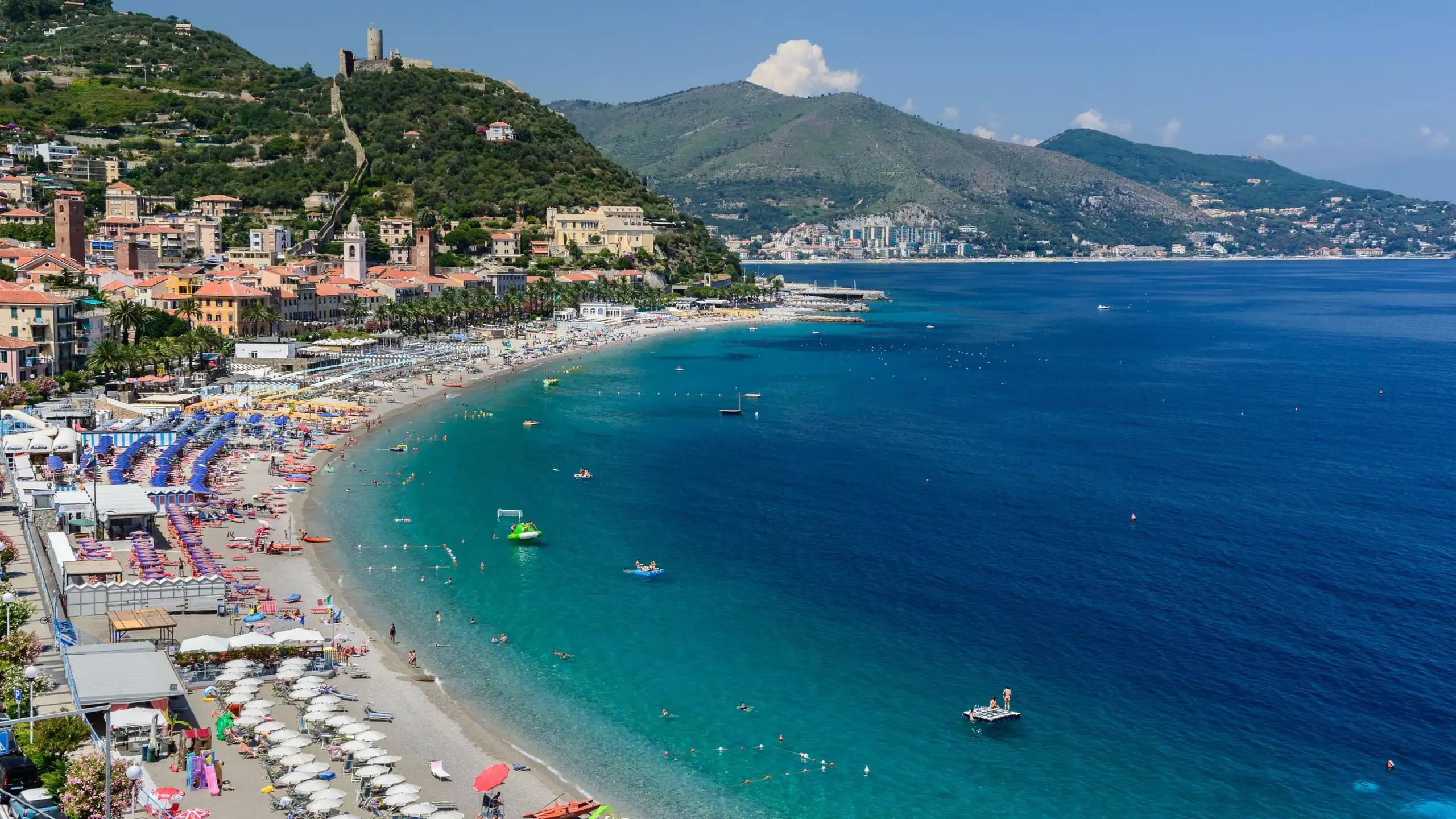
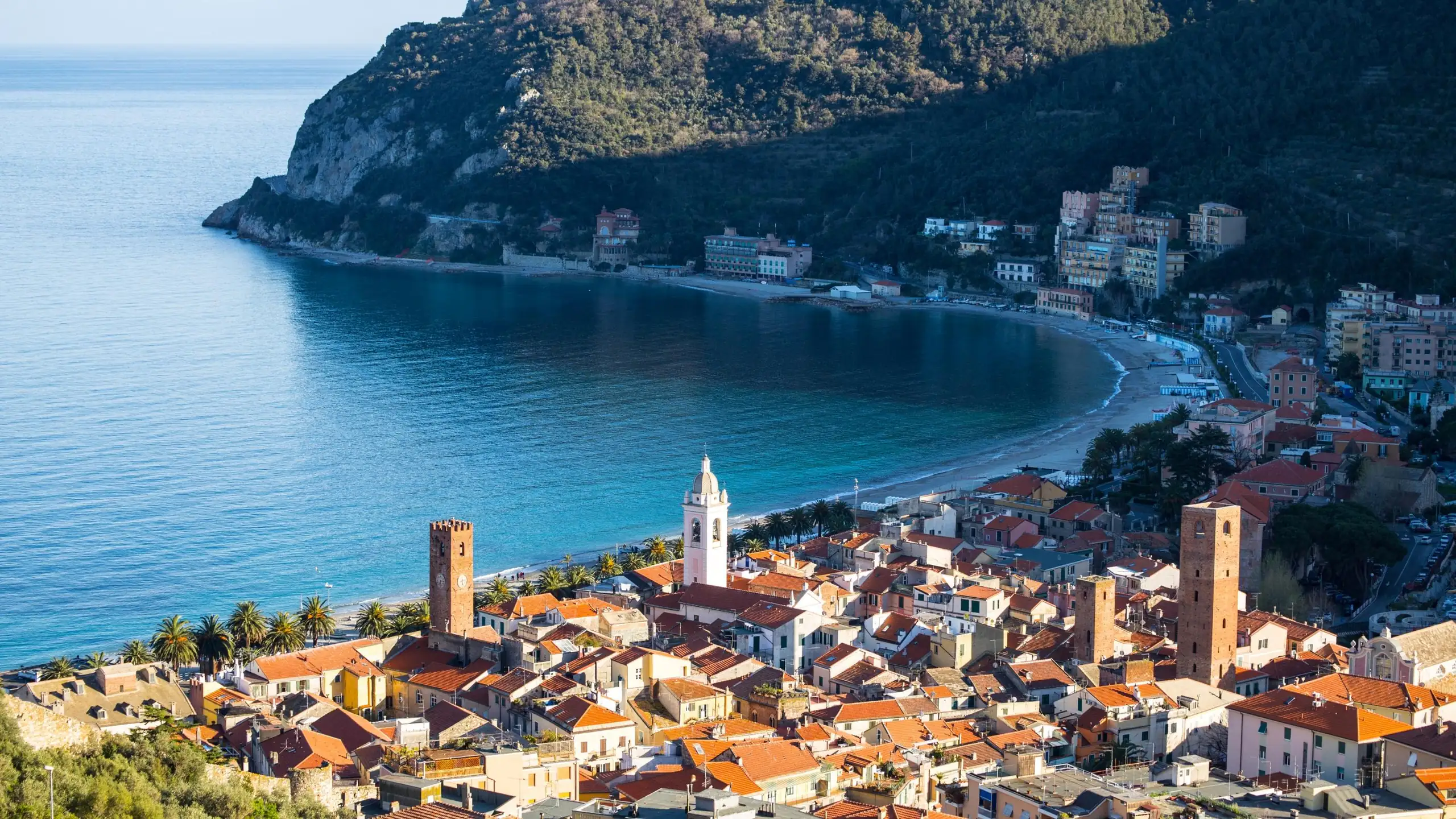
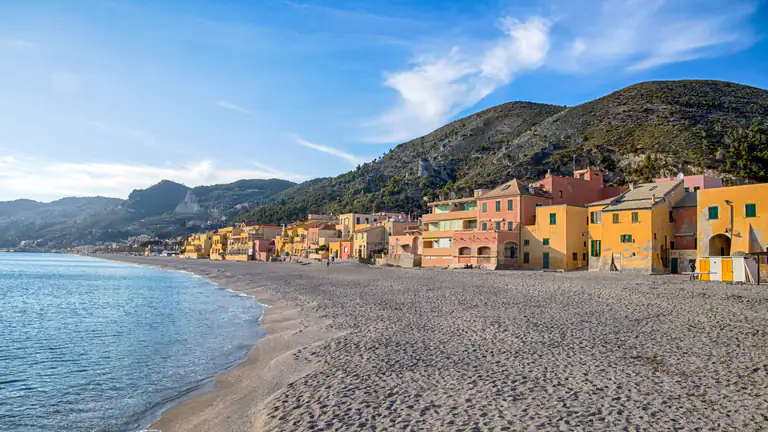
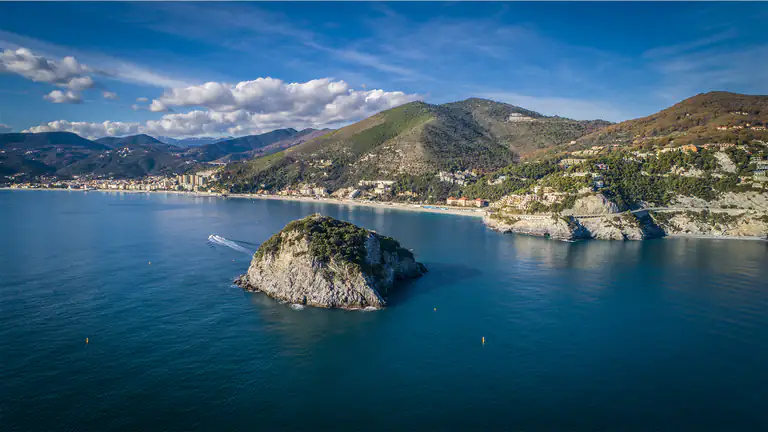
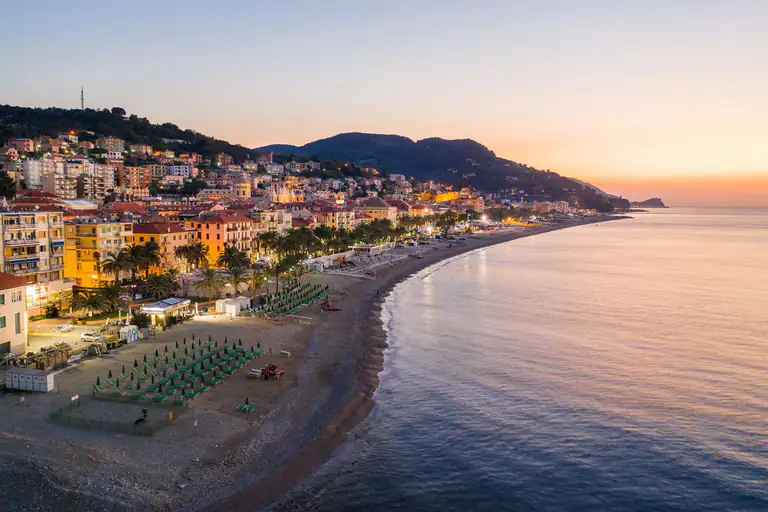
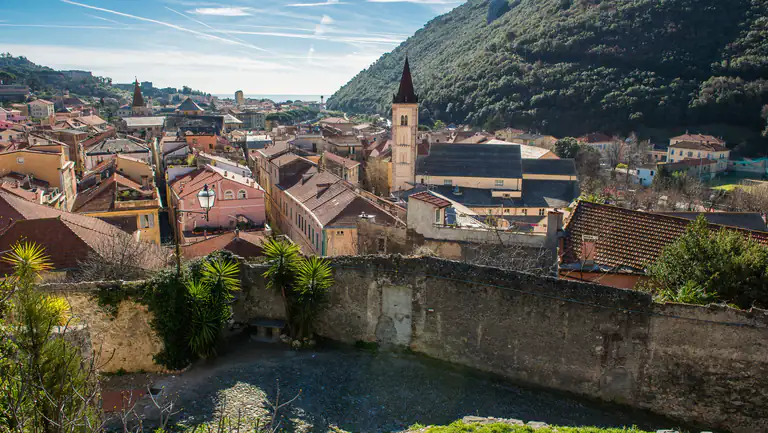
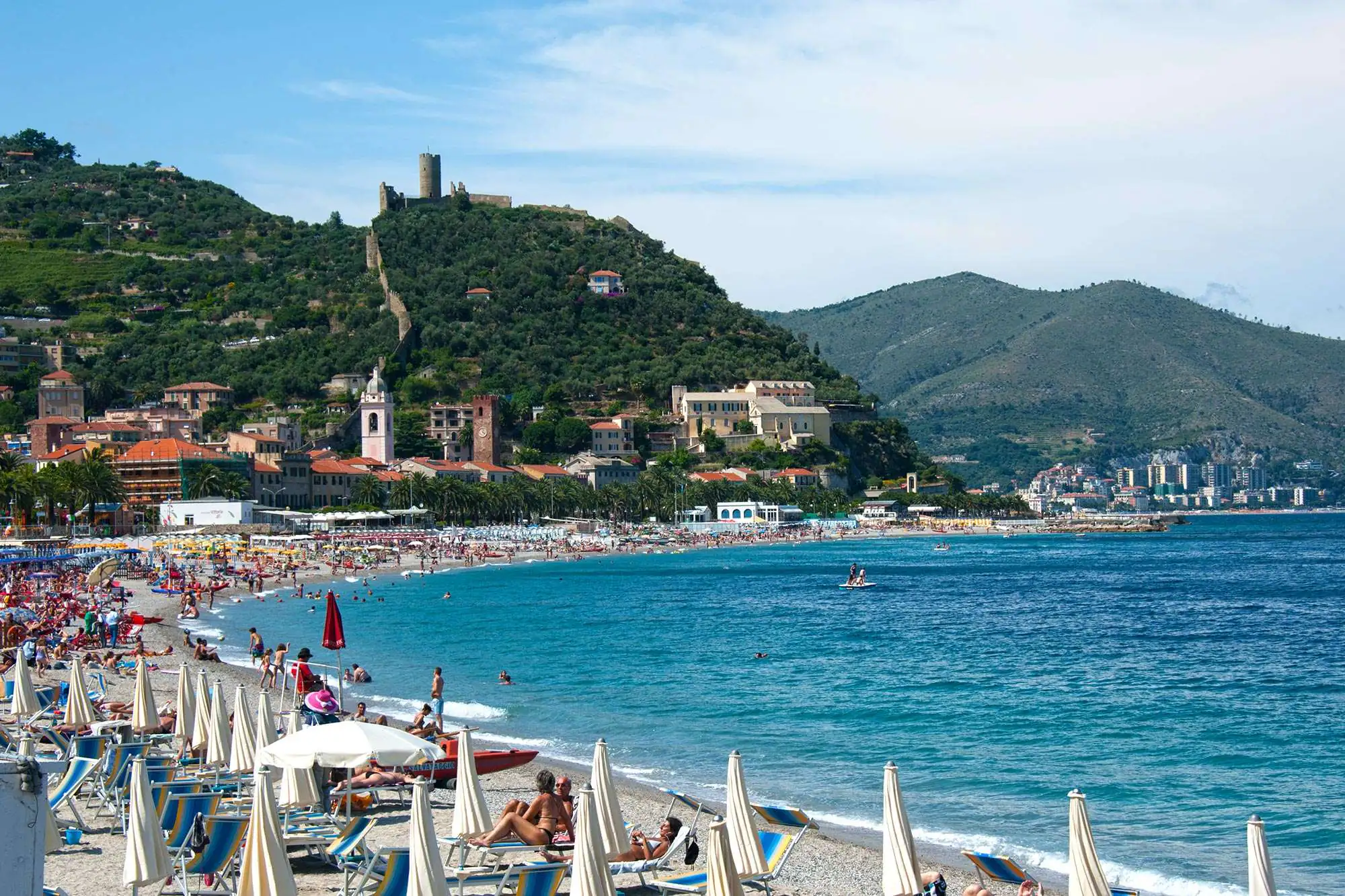
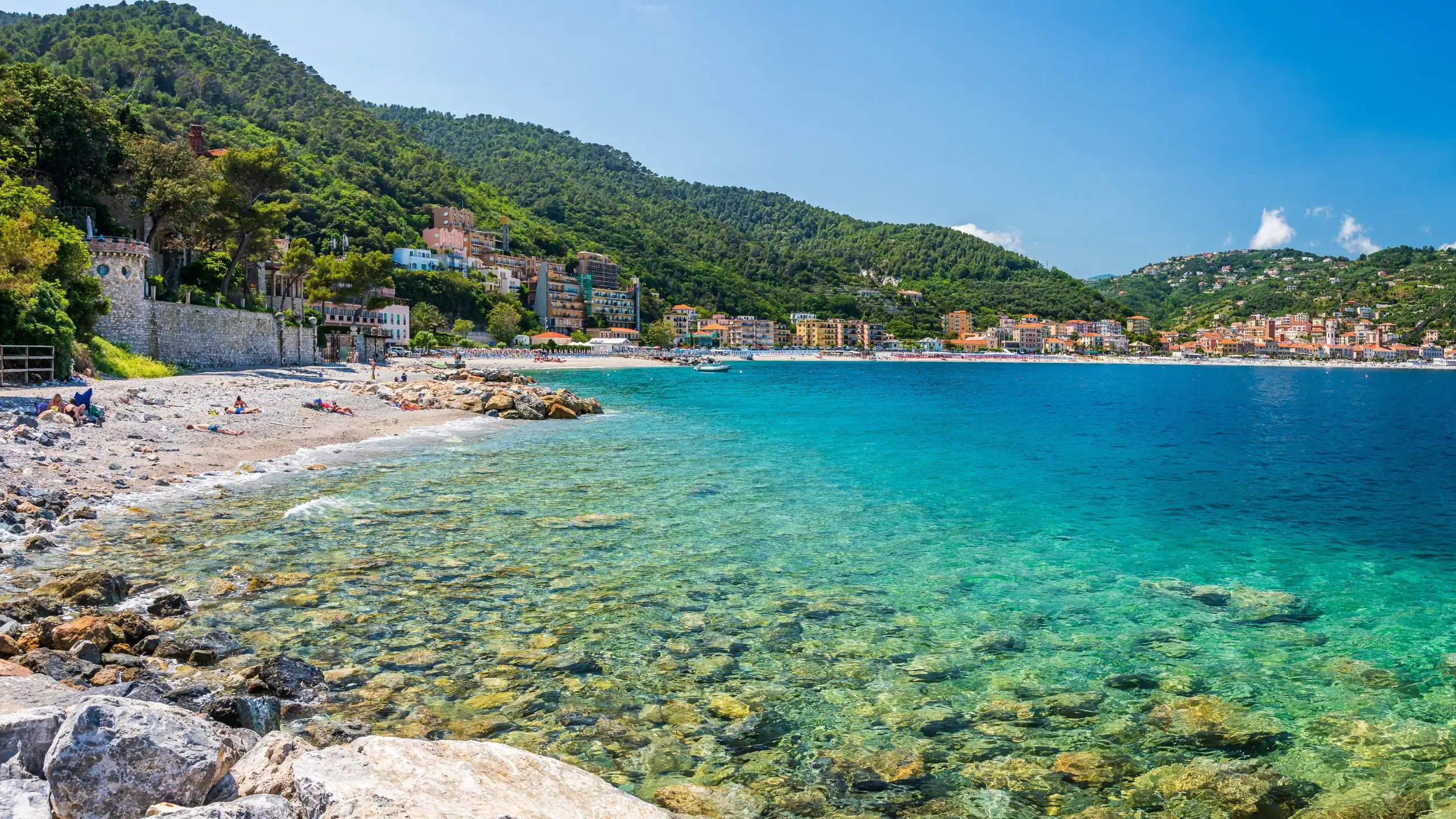
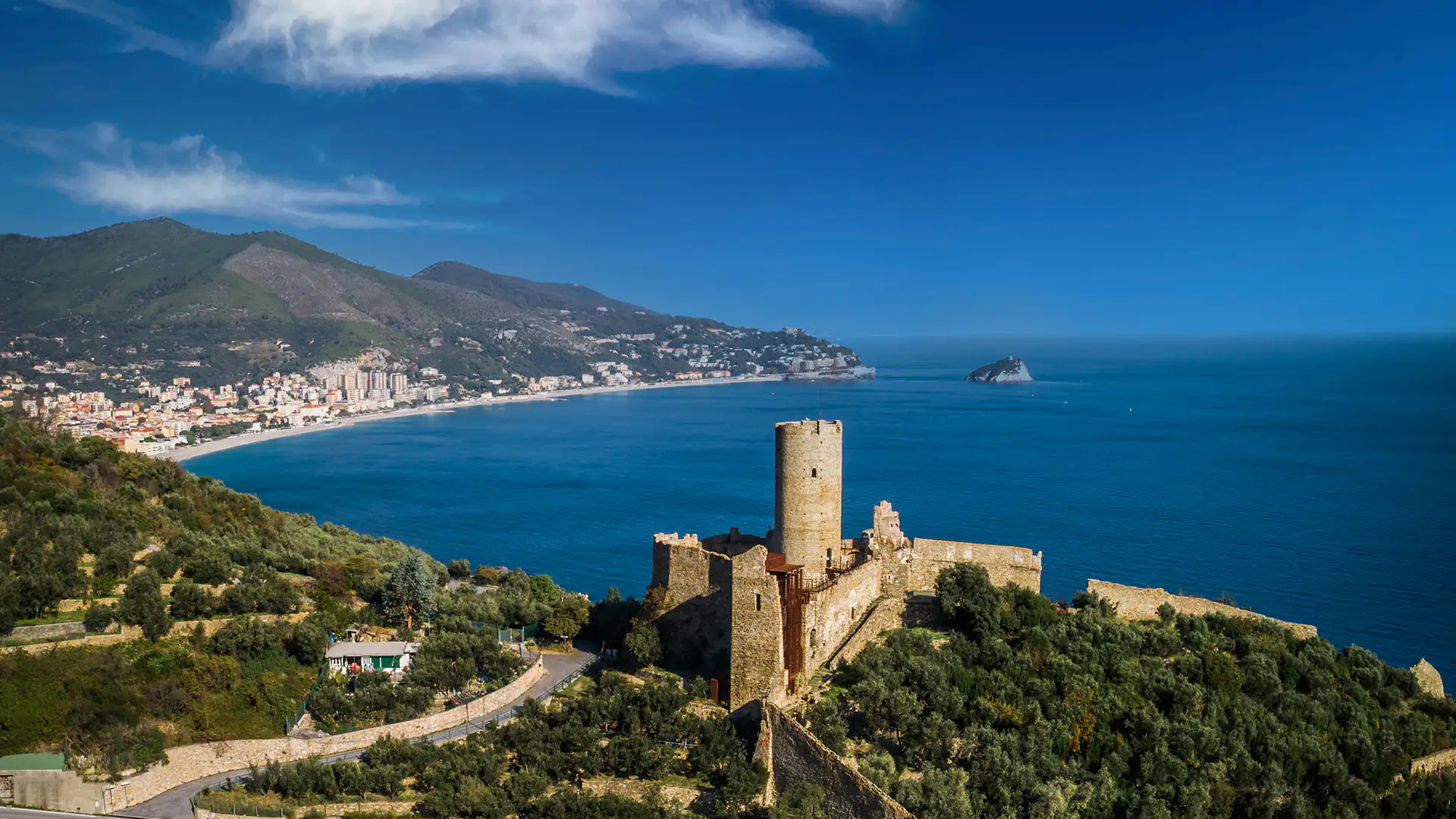
Noli is a medieval seaside village on the Riviera di Ponente, the western Italian Riviera, in the province of Savona, between Spotorno and the Capo Noli headland. From 1192 to 1797 it was a tiny independent maritime republic allied with Genoa, which is why Italians sometimes call it “the fifth maritime republic”, after Venice, Genoa, Pisa and Amalfi. That past is still visible: towers rising above the rooftops, walls climbing to Monte Ursino castle, the loggia where the republic’s government met, and San Paragorio, one of the finest Romanesque churches in Liguria.
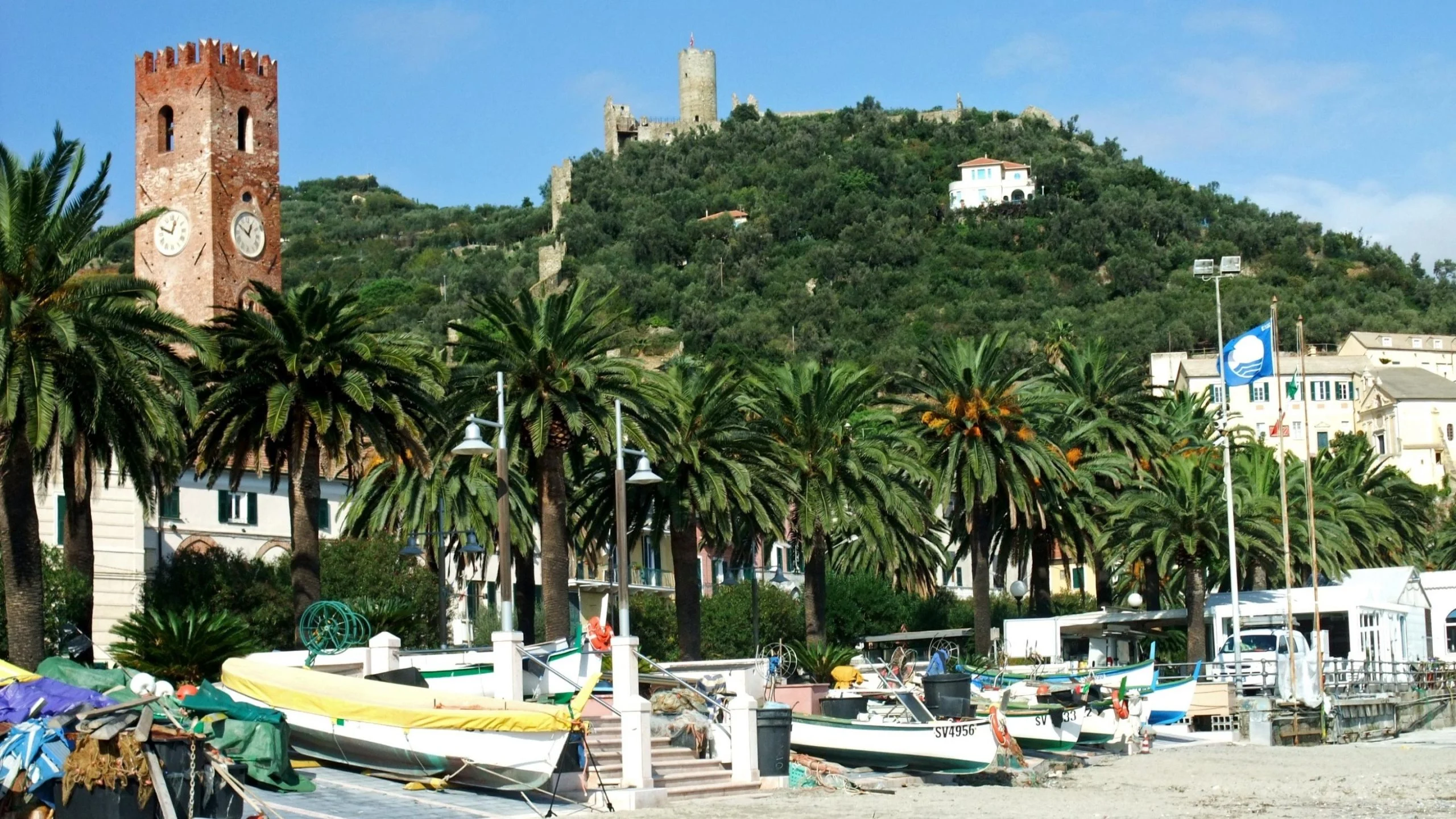
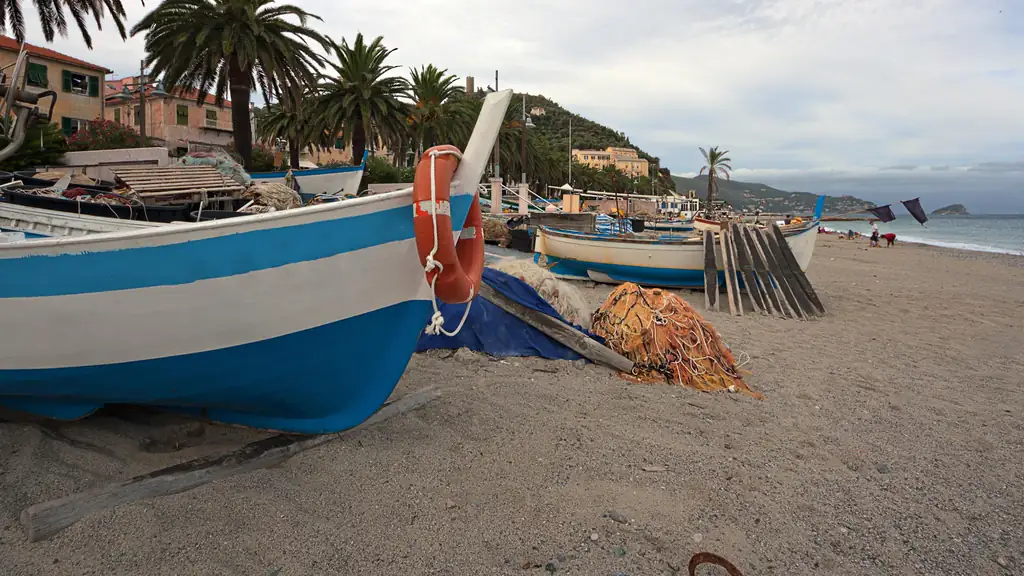
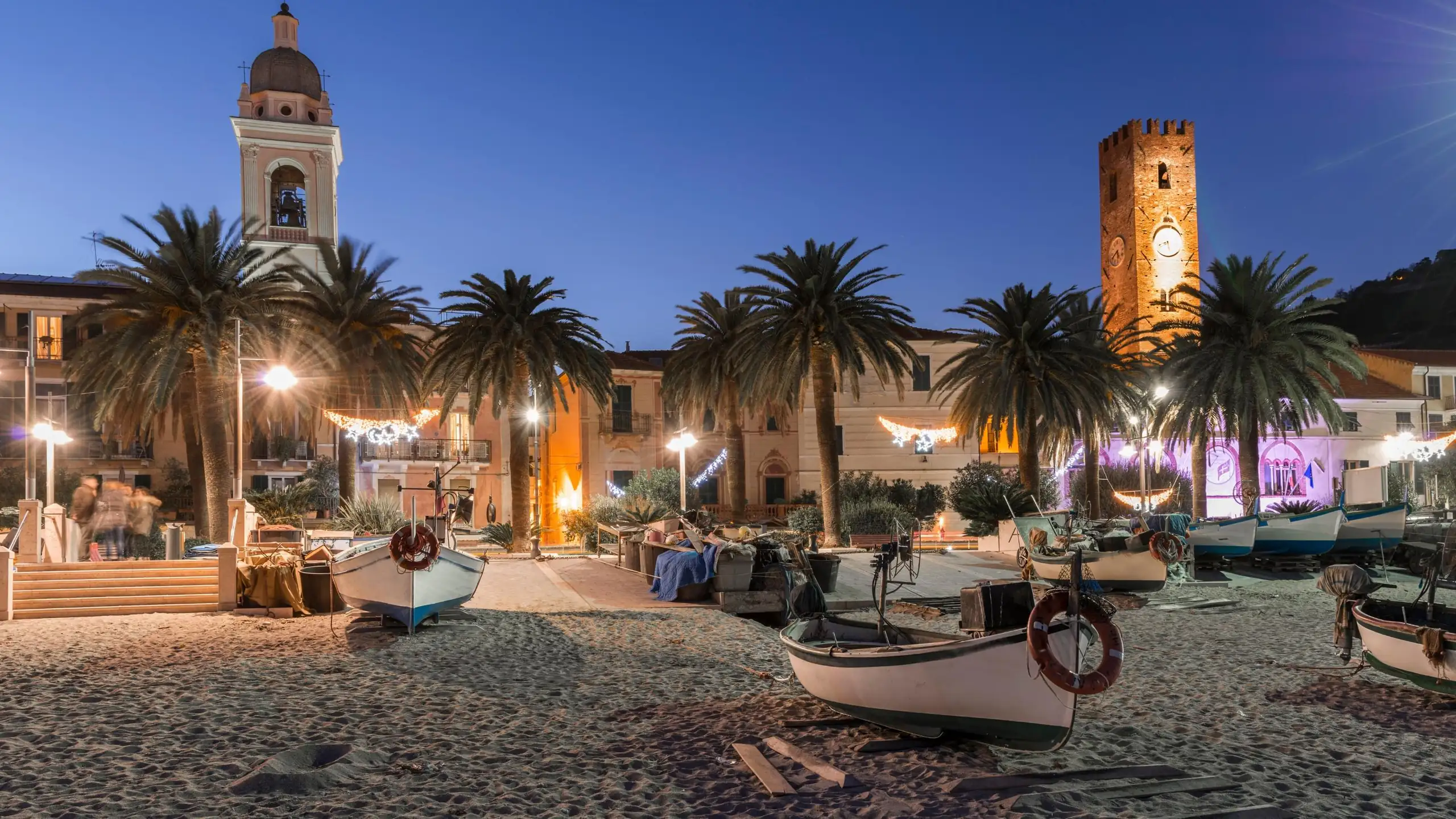
The old town is compact and flat, squeezed between the beach and the hill. In front of it is a bay of sand and pebbles where fishermen still pull their wooden boats up on the shore and sell the catch in the morning. Behind it, footpaths climb onto Capo Noli, the headland between Noli and Varigotti, with the Grotta dei Falsari sea cave and the Pilgrim’s Path.
Noli has about 2,300 residents, is listed among “I Borghi più belli d’Italia” (the most beautiful villages in Italy) and holds a Blue Flag for its beaches in 2026. It is small: you can see the village in half a day. But with the sea, the trails and easy day trips by bus, it works well as a base for a few days, and it is far less crowded than the Cinque Terre or Portofino.
By Italian Riviera editorial team·Updated on ·11 min read
Where is Noli?
Noli is in Liguria (Riviera di Ponente, Riviera delle Palme, province of Savona).
Allow two to three hours to explore the old town on foot, plus an extra hour or so if you walk up to the castle. Churches and castle have irregular opening times, especially outside summer: if seeing the interiors matters to you, ask locally or at the tourist office before planning your day.
San Paragorio church
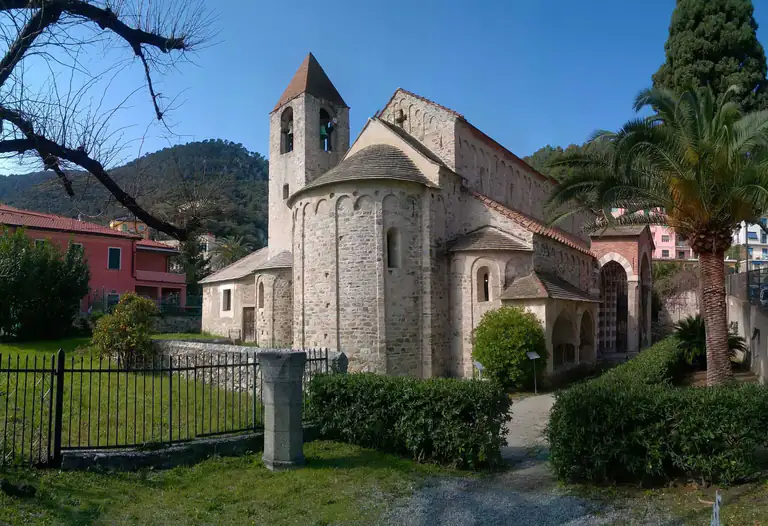
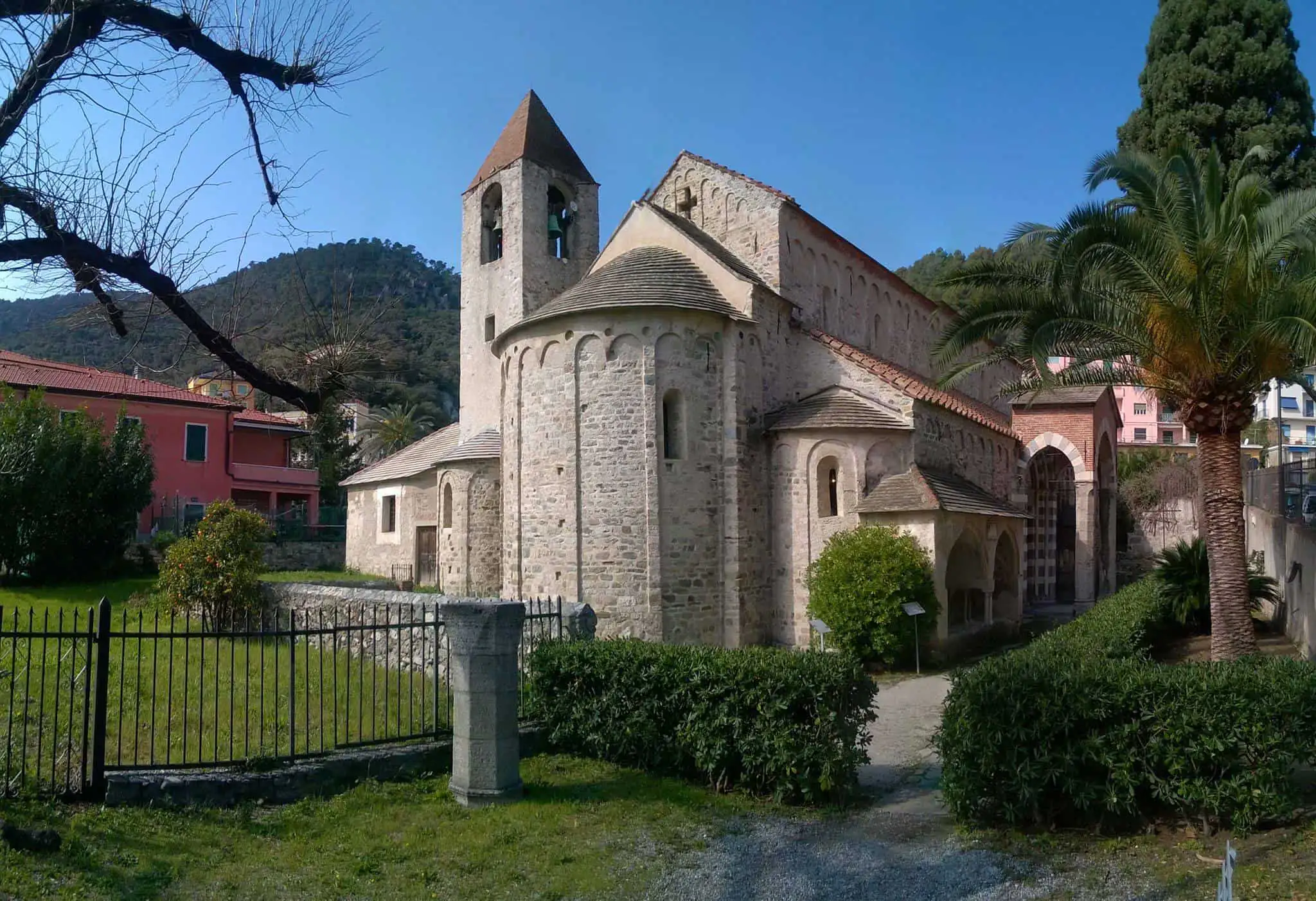
This is Noli’s most important monument and one of the best examples of Romanesque architecture in Liguria. The present church dates from the 11th century and stands on top of an early Christian building: three naves, an apse decorated with small blind arches and pilasters, and a crypt of the same period beneath the altar. Inside are a medieval wooden crucifix of the “Volto Santo” type, with a long tunic, a 13th-century wooden bishop’s throne and 14th-century frescoes.
San Paragorio was Noli’s cathedral until 1572, when the title passed to San Pietro inside the walls. It was restored at the end of the 19th century by the architect Alfredo d’Andrade and has been a national monument since 1890. It stands just outside the old centre, to the west, near the sea. Opening hours are limited and seasonal, but the apse alone is worth the stop.
The medieval towers
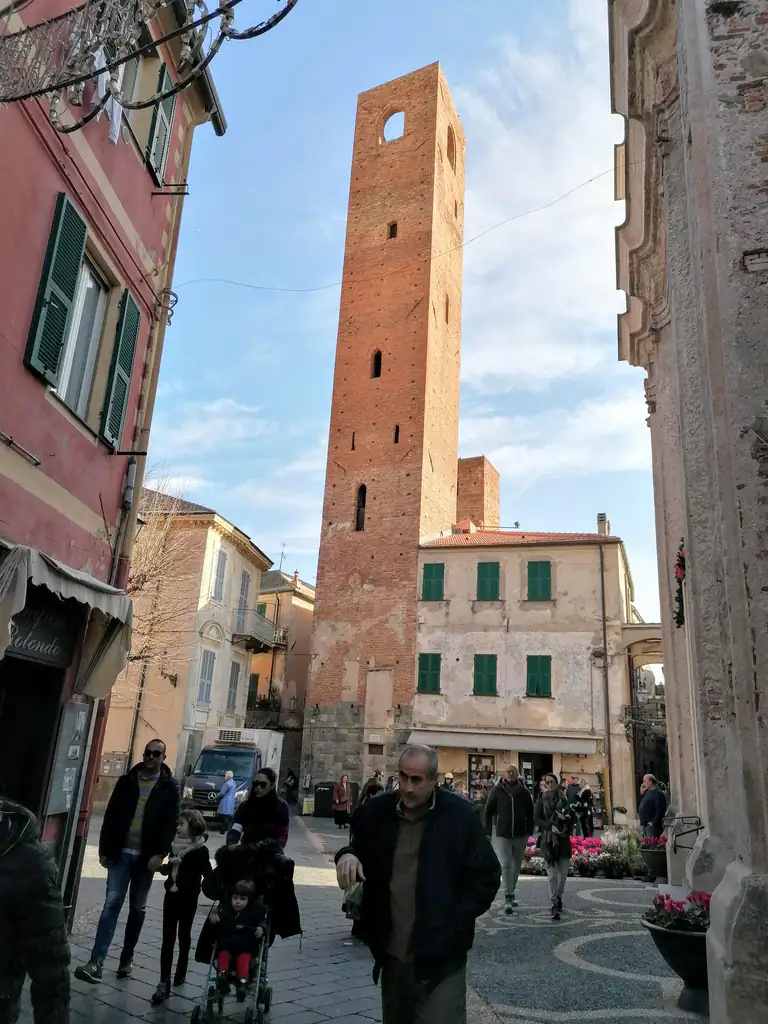
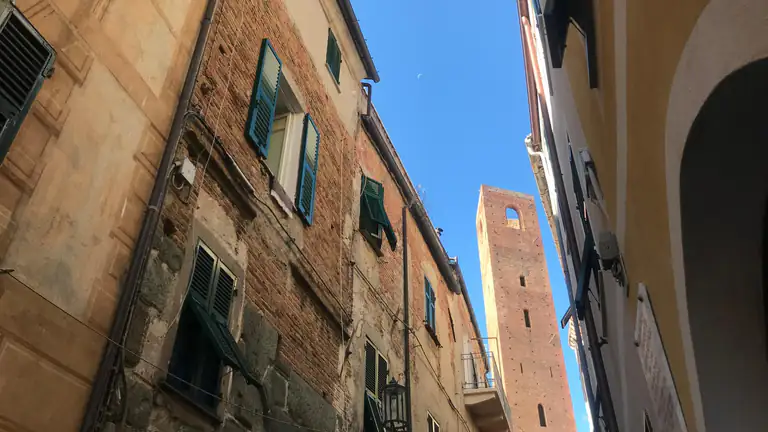
Tradition has it that in the 13th century Noli had more than seventy towers, most of them belonging to wealthy families. Only a few survive, but they still define the village’s skyline. The tallest is the Torre dei Quattro Canti (also called Torre del Canto), 38 metres high, at the crossroads of the main lanes.
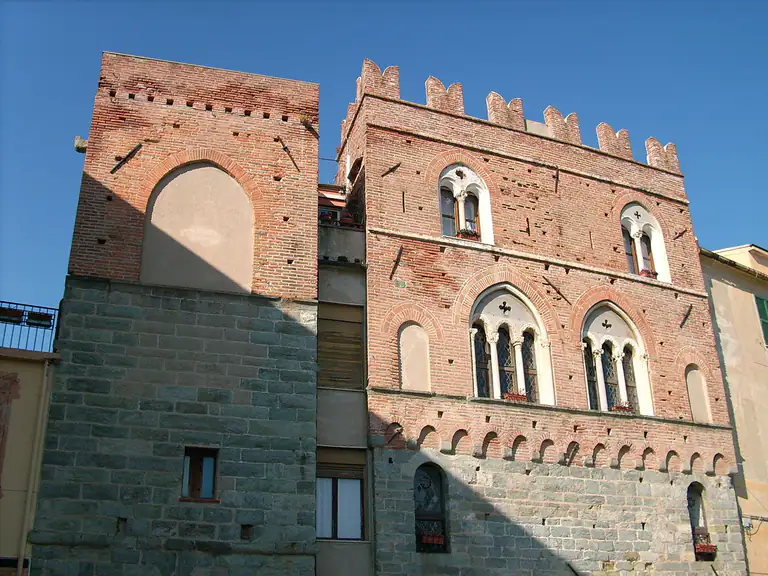
Next to the town hall is the Torre del Comune, from the late 13th century, easy to spot by its swallowtail battlements. Coming in from the north you pass the Torre del Papone, about 20 metres tall, built to defend the gate of the same name; further north is the Torre di San Giovanni. The best way to see them all is simply to wander the lanes and keep looking up.
Town hall and Loggia della Repubblica
On the seafront, the Palazzo del Comune was the seat of the Republic of Noli’s government. Beside it is the Loggia della Repubblica, the covered public square where citizens met. Plaques on its walls recall the town’s history, including one to Dante, who mentions the steep descent to Noli in Purgatory. Right next to it, the Porta di Piazza was the main gate from the sea.
San Pietro cathedral
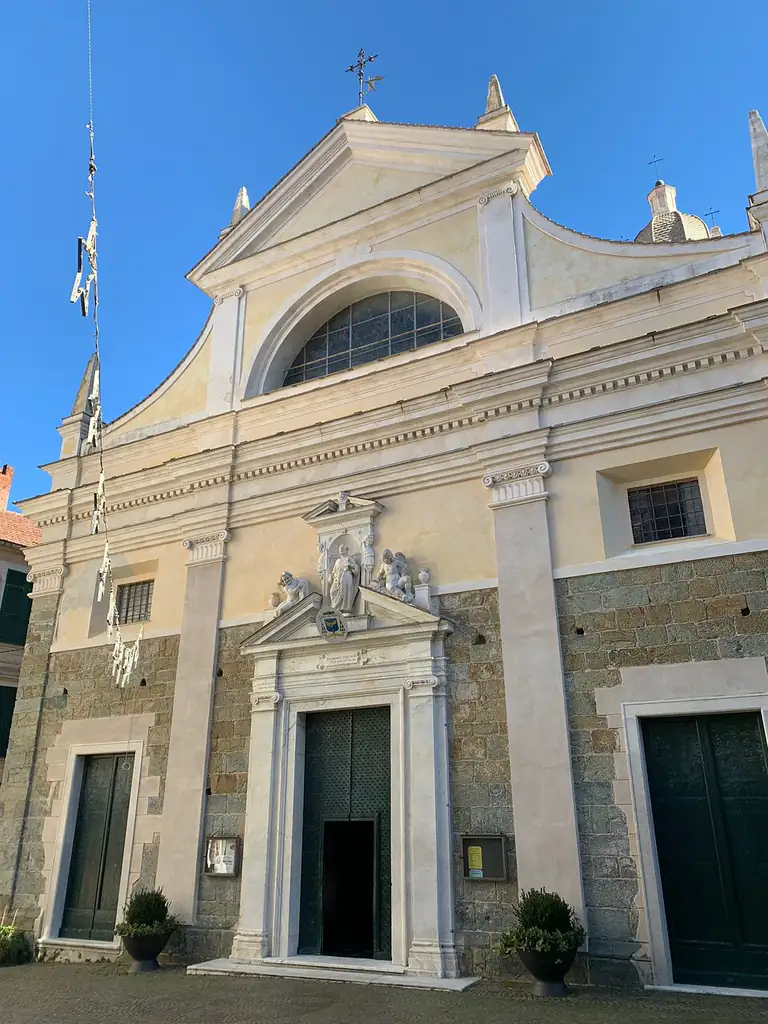
Tucked between the houses of the centre, the co-cathedral of San Pietro has medieval origins, but the interior was remodelled in Baroque style. From outside you can still see the stone walls of the older church. It is a few steps from the loggia, so look in as you walk the lanes.
Monte Ursino castle and the walls
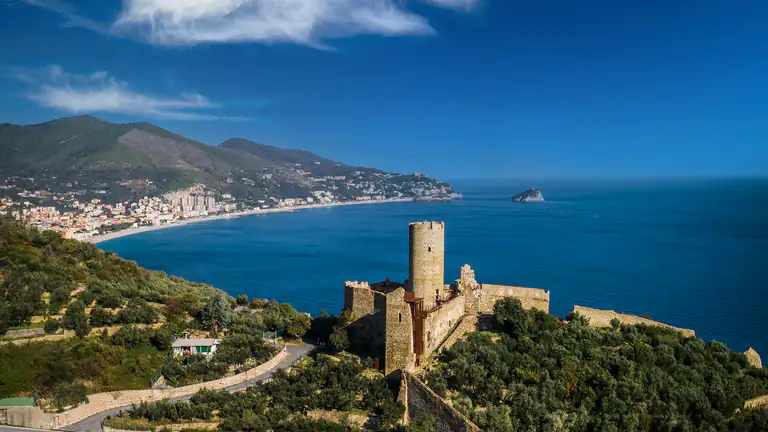
On the hill above the village, Monte Ursino castle took its present form in the 15th century under the Del Carretto family and was reworked in the 16th. At the top is a large round tower; from there two rings of walls with round towers run down the slope to enclose the village. It is one of the best-preserved fortified villages on the western Riviera.
The walk up from the village takes 20–30 minutes, with a steep stretch. The easiest route starts near the Torre del Papone and passes the old bishop’s palace (path no. 4). Even if the castle is closed, the view over the bay, Capo Noli and Spotorno is worth the climb. Go early in the morning or around sunset: in summer the sun is fierce.
The lanes of the old town
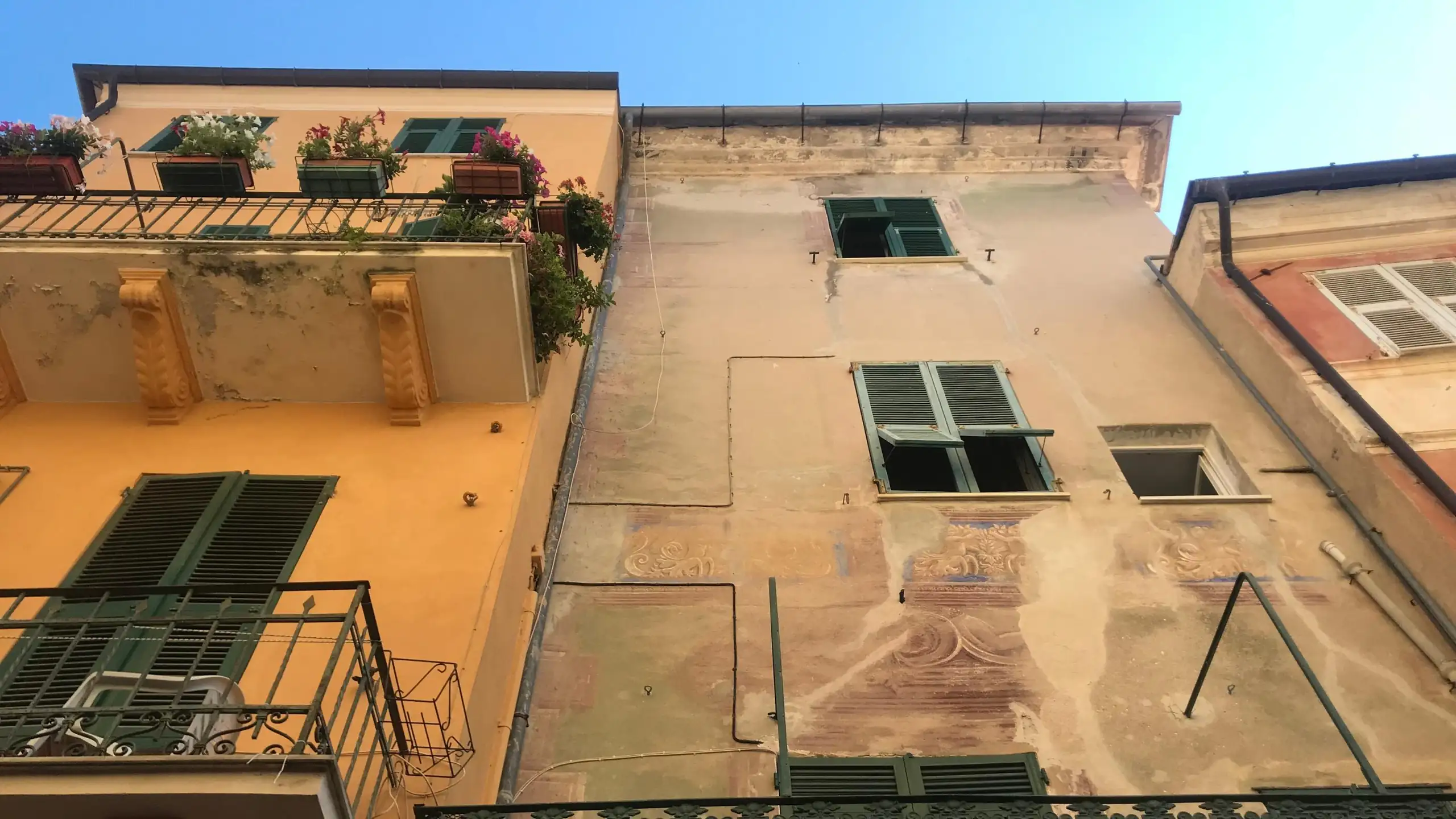
The centre is a web of narrow lanes, called carruggi, with arches, small squares, pastel façades and the odd carved stone doorway. It stays lively outside the season too: shops, focaccia bakeries and bars are used by locals, not only by visitors. Look out for the oratory of Sant’Anna, where the path to the little Romanesque church of San Michele begins, and for the alleys that open straight onto the seafront.
Capo Noli and the Grotta dei Falsari
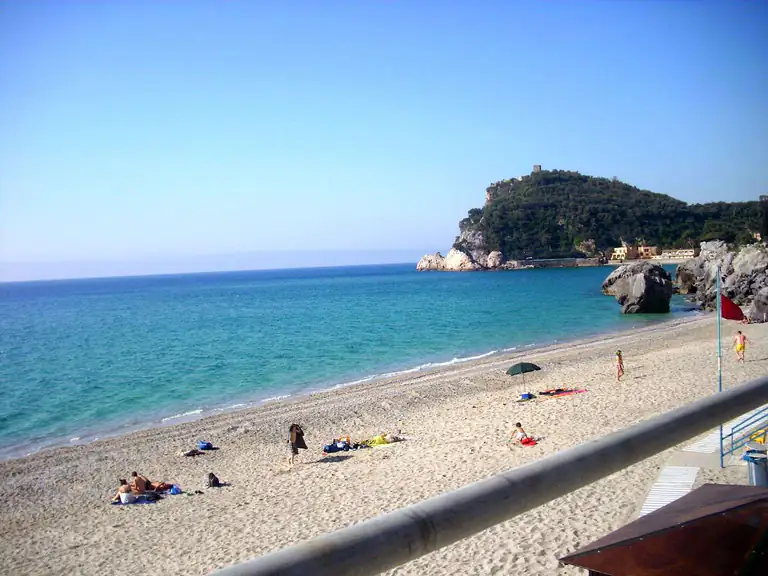
Capo Noli is the headland closing the bay to the west, covered in Mediterranean scrub with cliffs dropping into the sea. At the top stands the old Semaforo signal station; halfway up is the Grotta dei Falsari, the “forgers’ cave”, a huge opening in the rock framing the sea, said to have been used by smugglers. From Noli it is about an hour’s walk. All routes, with times and difficulty, are in our guide to the Pilgrim’s Path and Capo Noli.
Sea
Beaches in Noli
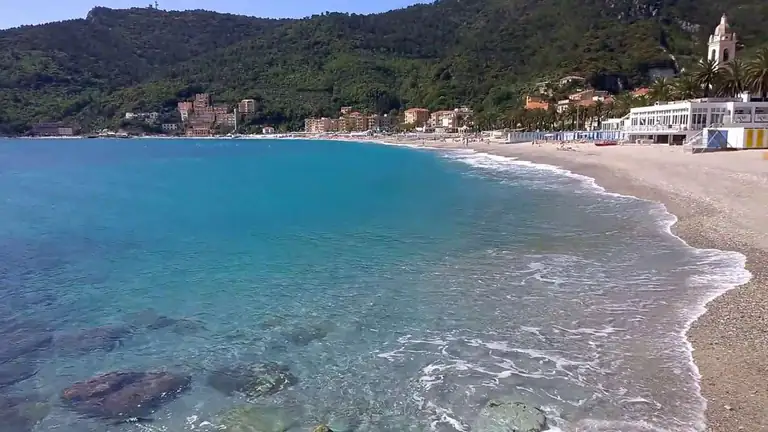
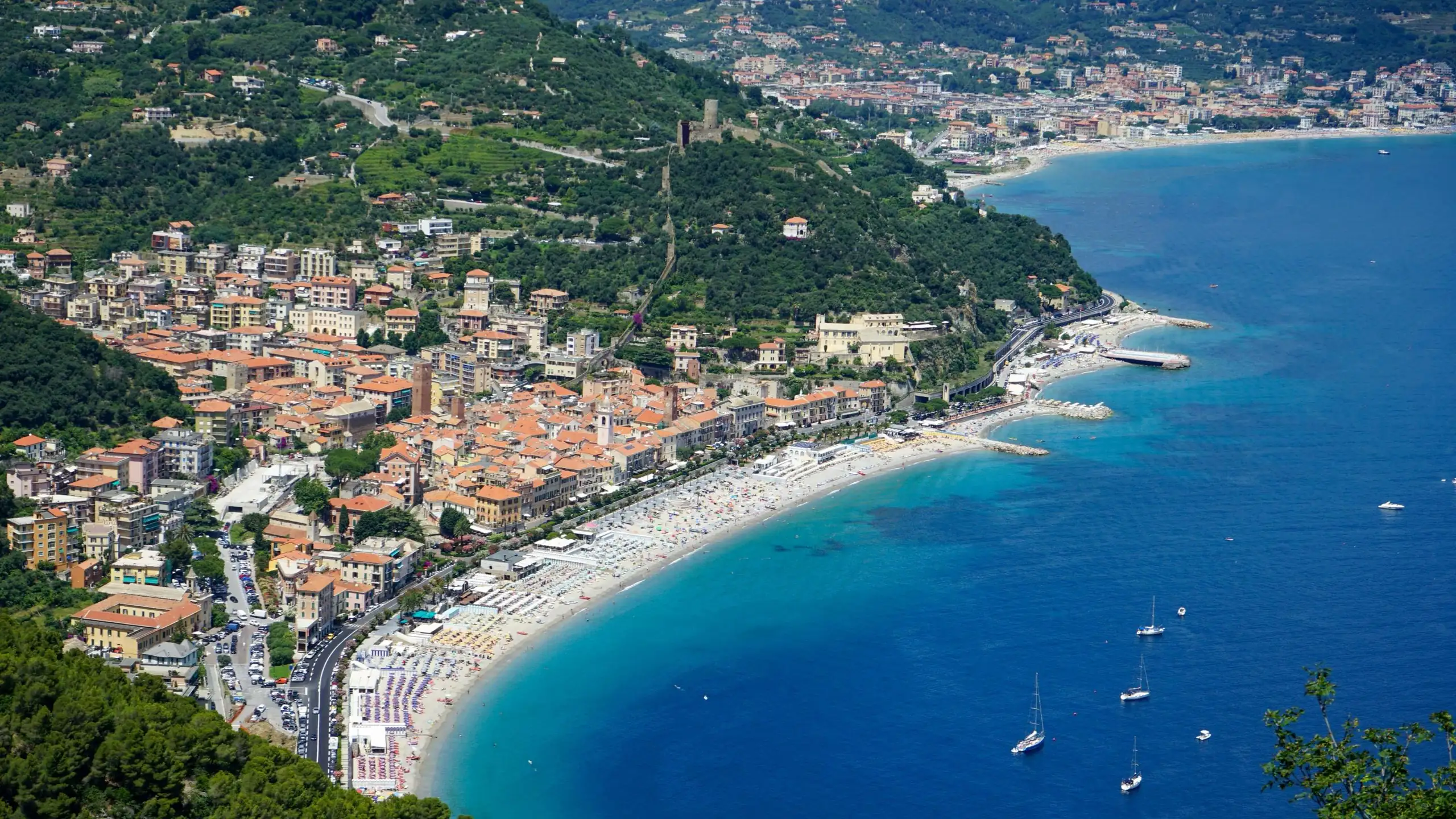
The main beach runs along the whole bay in front of the village: sand mixed with pebbles, water that gets deep fairly quickly, and paid beach clubs (stabilimenti, where you rent a sunbed and umbrella for the day) alternating with free public stretches. It is handy for families because everything is close by: cafés, showers, ice cream and the old town right behind you. In July and August, especially at weekends, it fills up early.
Spiaggia dei Pescatori
the fishermen’s beach in front of the centre, where the boats are pulled up on the shore. Free, with colourful wooden boats as a backdrop, and the most photographed spot in Noli.
Towards Capo Noli
RocksBeach clubs
the western stretch under the headland, with beach clubs and a few rocks.
Baia delle Sirene and the Capo Noli coves
PebblesRocks
small pebble and rock coves between the cliffs, with no facilities. Easiest to reach from the water, by kayak or paddleboard.
Malpasso
beyond the Capo Noli tunnel, already in the municipality of Finale Ligure. Wilder, with a Blue Flag in 2026. You also see it from above on the path to the Torre delle Streghe.
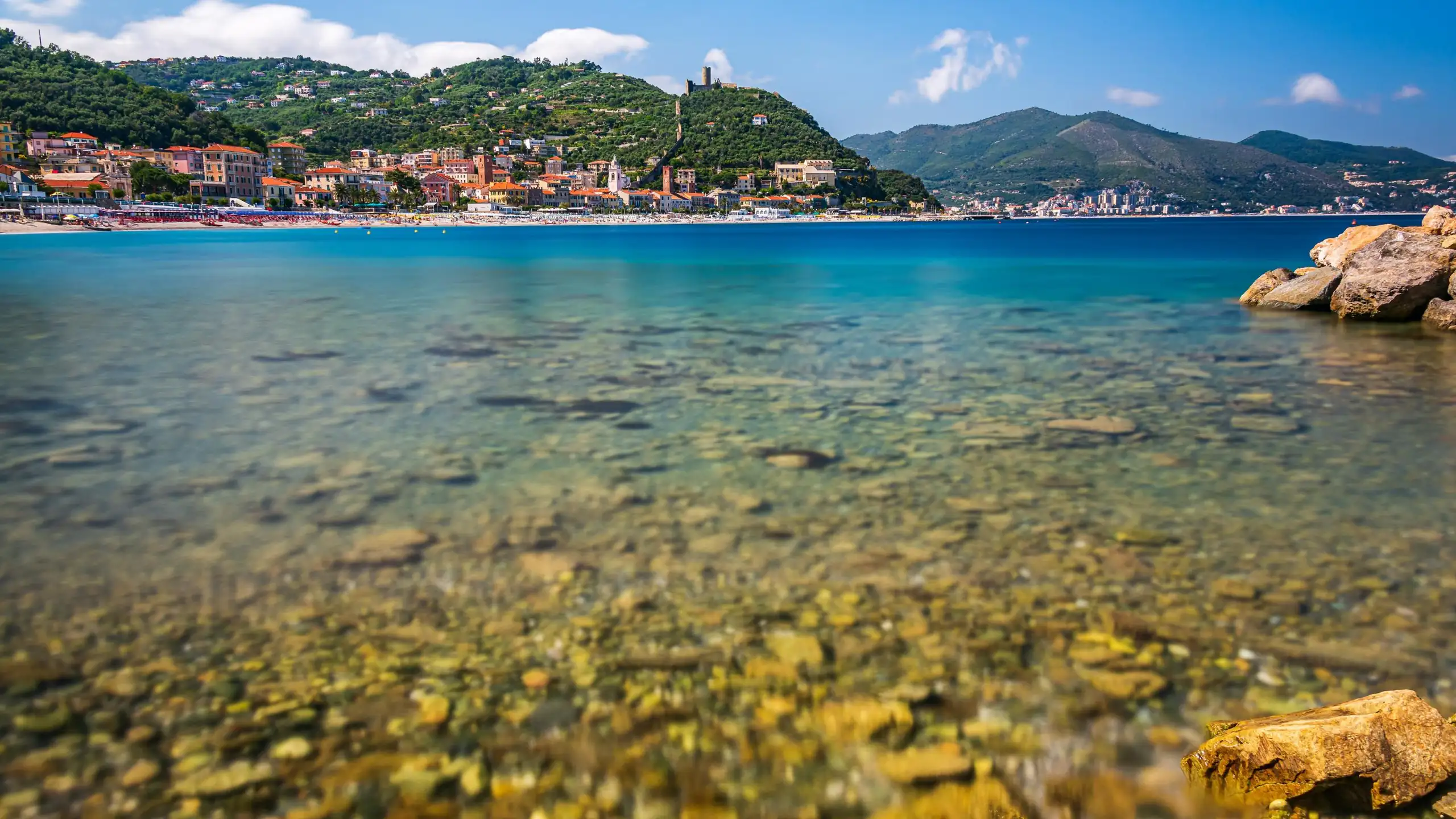
Outside the season most of the beach is free and pleasant for a walk, or for a swim in September, when the sea is still warm.
Where to stay
Where to stay in Noli
Noli has hotels, B&Bs, guesthouses and holiday apartments, almost all between the seafront and the old town. This is the best area if you want to do everything on foot: beach, restaurants and trails. Rooms with a view of the bay are few, and in summer they book up months ahead.
On the hillside towards Voze and Tosse there are quieter holiday homes and farm stays with sea views, but you will need a car. If Noli is full, look in Spotorno, a few minutes away, or in Varigotti and Finale Ligure, both connected by bus.
Take the A10 Genoa–Ventimiglia motorway and exit at Spotorno. From there follow the Via Aurelia coast road west: Noli is a few minutes away. Coming from the west, you can also exit at Finale Ligure and follow the Aurelia east through Varigotti and the Capo Noli tunnel, one of the most scenic coastal drives on the Riviera.
By train
Noli no longer has a station: its own closed in 1977. The nearest is Spotorno-Noli, on the Genoa–Ventimiglia line, about 3 km away. From there take the bus or walk along the Aurelia. Alternatively, get off at Finale Ligure Marina and continue by bus. From Genoa, regional trains run along the coast; check times on Trenitalia.
By bus
TPL Linea buses run along the Aurelia between Savona, Spotorno, Noli and Finale Ligure and stop on the seafront. They are the easiest way to reach Noli from the stations and to get back after the Pilgrim’s Path. Check routes and times on TPL Linea.
By plane
The nearest airport is Genoa Cristoforo Colombo, about 60 km away: 45–50 minutes by car on the motorway. From the airport you can also get to Genoa’s main stations and take a regional train to Spotorno-Noli. Nice Côte d’Azur is about 140 km away, a good option if you are combining the trip with the French Riviera.
Parking
The old town is pedestrianised, and in summer finding a space is the hardest part of the day. There are paid car parks and some free spaces close to the centre, between Via XXV Aprile and Piazza Monsignor Vivaldo, where the path to Capo Noli also starts. On summer weekends they are full by mid-morning: arrive early, or park in Spotorno and take the bus.
A10 Genoa–Ventimiglia, Spotorno exit, then the Aurelia west: a few minutes
By train
Spotorno-Noli station (about 3 km), then TPL Linea bus or a walk along the Aurelia
By plane
Genoa Cristoforo Colombo (about 60 km, 45–50 minutes); Nice about 140 km
The guide
Things to do in Noli
Buy fish from the fishermen
Noli is one of the few places in Liguria where you can watch small-scale fishing from the promenade. The village’s fishing cooperative goes out in traditional wooden boats and sells the catch at the Mercato dei Pescatori, the fishermen’s market on the seafront, usually in the morning. The fish changes with the seasons: cuttlefish and red mullet in winter, octopus, hake and small oily fish such as anchovies in summer.
Noli’s signature is the sciabica, a beach seine: two small boats lay the net in a horseshoe close to shore, and it is then hauled onto the beach by hand. The method is documented at least since the 13th century and has been a Slow Food Presidium since 2014. It is used to catch cicciarelli, small silvery fish that live under the sand, eaten fried or marinated “in carpione”.
Walk on Capo Noli
Several waymarked paths start from the village. The best known is the Pilgrim’s Path, which passes the Semaforo and the Torre delle Streghe (“witches’ tower”) and drops down to Varigotti. There are shorter options too, such as the climb to the little church of San Michele (about 20 minutes) or the bishop’s palace path towards Spotorno (about half an hour).
On and in the water
The cliffs of Capo Noli are a well-known sea-cliff climbing area, together with the crags around Finale. From the water, by kayak or paddleboard, you see the headland and the coves that are hard to reach on foot. In summer you can rent gear on the beach.
Events
In September Noli holds the Regata Storica dei Rioni: the village’s four districts race rowing boats across the bay after a medieval costume parade with drummers and flag-throwers. Also in September, in recent years, the Repubblica del Gusto food festival has featured local produce and sciabica fishing demonstrations. Check the dates for the current year on the town council website.
Day trips from Noli
Varigotti (about 5 km): colourful houses on the beach and the Baia dei Saraceni. You can walk there on the Pilgrim’s Path and come back by bus.
Finale Ligure (about 9 km): wide beaches, a long promenade and one of Europe’s top destinations for climbing and mountain biking.
Finalborgo (about 11 km): the walled medieval village inland from Finale, with Castel Gavone and the Santa Caterina complex.
Bergeggi (about 7 km towards Savona): the island and coastline are a marine protected area. You cannot land on the island, but you can circle it by kayak or snorkel along the shore.
Savona (about 16 km): the Priamar fortress, the Torretta and the old town, plus the cruise port.
Celle Ligure (about 25 km): a fishing village with colourful houses on the beach, beyond Savona.
Weather
Weather and best time to visit Noli
June–September for the sea; spring and autumn for the village and trails
🌙
16°CNow · wind 12 km/h
Sat 10⛅22° 15°
Sun 11⛅22° 15°1 mm
Mon 12☀️22° 16°
Tue 13🌤️22° 15°
Wed 14⛅22° 14°
Thu 15☀️23° 13°
Forecast: MET Norway (Yr), CC BY 4.0 licence. Updated hourly.
Noli and the Capo Noli headlandThe bay and village of Noli from aboveThe Gulf of Noli seen from aboveNoli beach and village from the hillsideNoli beach with umbrellas seen from aboveClear seabed and the coast of NoliRooftops of Noli and the bay from above
FAQ
Frequently asked questions about Noli
Why is Noli called the fifth maritime republic?
Because from 1192 to 1797 it was an independent republic living from sea trade, allied with Genoa. The title is not official, but it reflects six centuries of self-government.
What can you see in Noli in one day?
San Paragorio, the towers, the Loggia della Repubblica, San Pietro and the lanes in the morning; in the afternoon the climb to Monte Ursino castle or the path to the Grotta dei Falsari, then a swim in front of the village.
Are there free beaches in Noli?
Yes. Free stretches alternate with beach clubs, including the fishermen’s beach in front of the old town. In July and August arrive early.
Are Noli's beaches sandy?
They are sand mixed with pebbles. The coves towards Capo Noli are pebbles and rock, so water shoes help.
Can you get to Noli by train?
Not directly: the nearest station is Spotorno-Noli, about 3 km away, from where you continue by bus or on foot.
Where can you park in Noli?
In the car parks near the centre, between Via XXV Aprile and Piazza Monsignor Vivaldo, partly paid. In summer they fill up early.
How long is the Pilgrim's Path?
Noli to Varigotti takes about 2–3 hours one way including stops, with around 300 metres of climbing. From Noli to the Grotta dei Falsari and the Semaforo is about an hour.
Can you visit San Paragorio?
Yes, but opening times are limited and change with the season. Ask locally before you go.
Where can you buy fish from Noli's fishermen?
At the Mercato dei Pescatori on the seafront, usually in the morning. What is on sale depends on the sea and the season.
When is the best time to visit Noli?
June to September for the sea; May, June, September and October for walking on Capo Noli and seeing the village without crowds.
Finale Ligure's walled medieval village: 15th-century gates, San Biagio, Santa Caterina cloisters, archaeology museum and castles on the Strada Beretta.