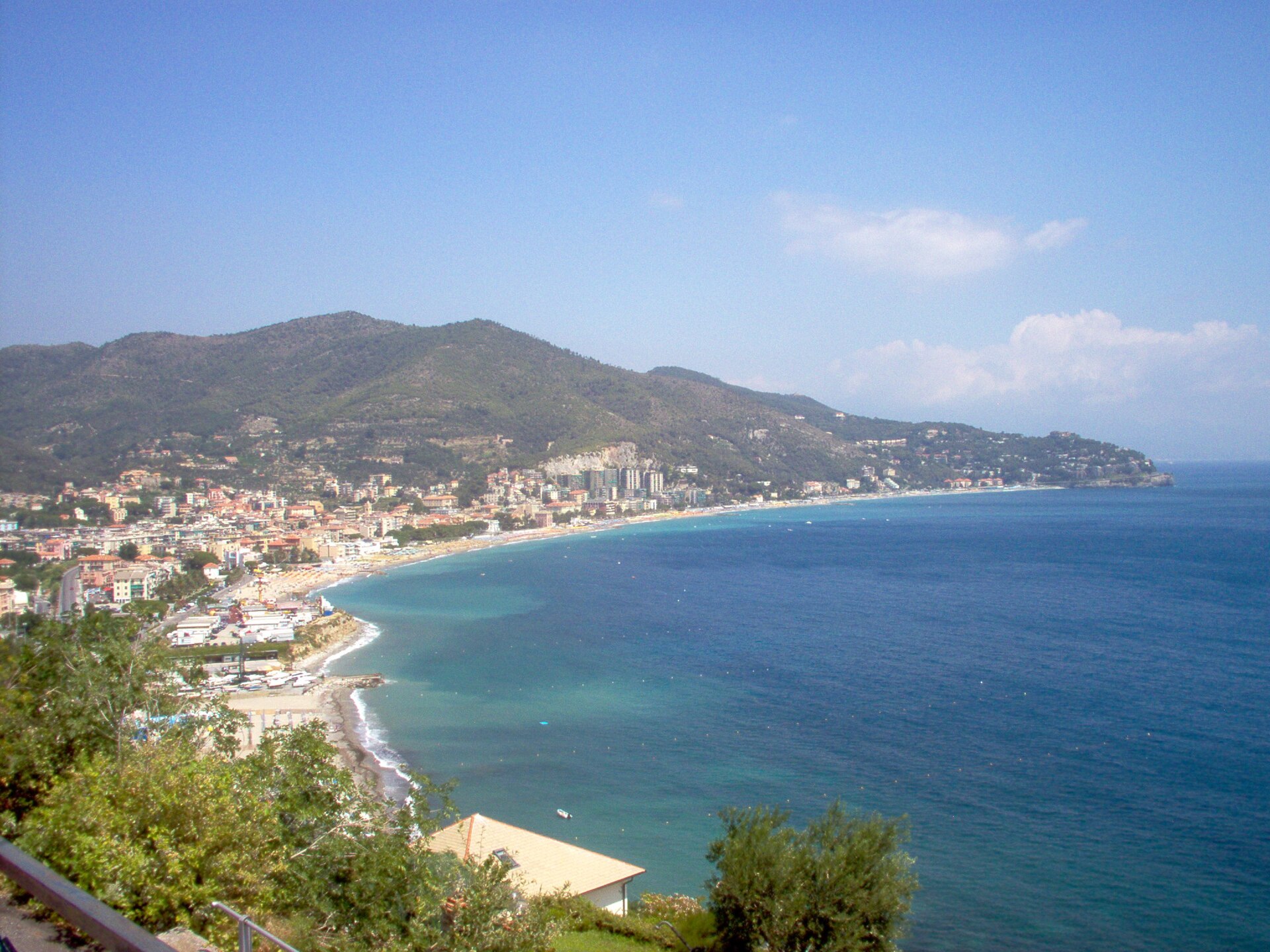
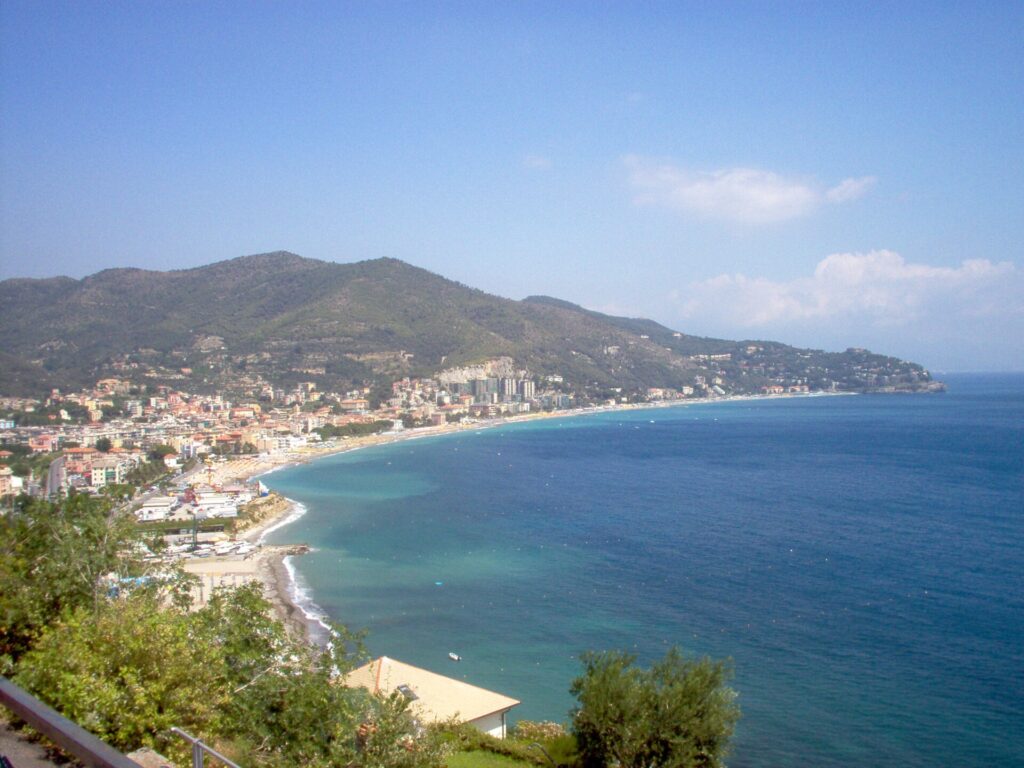
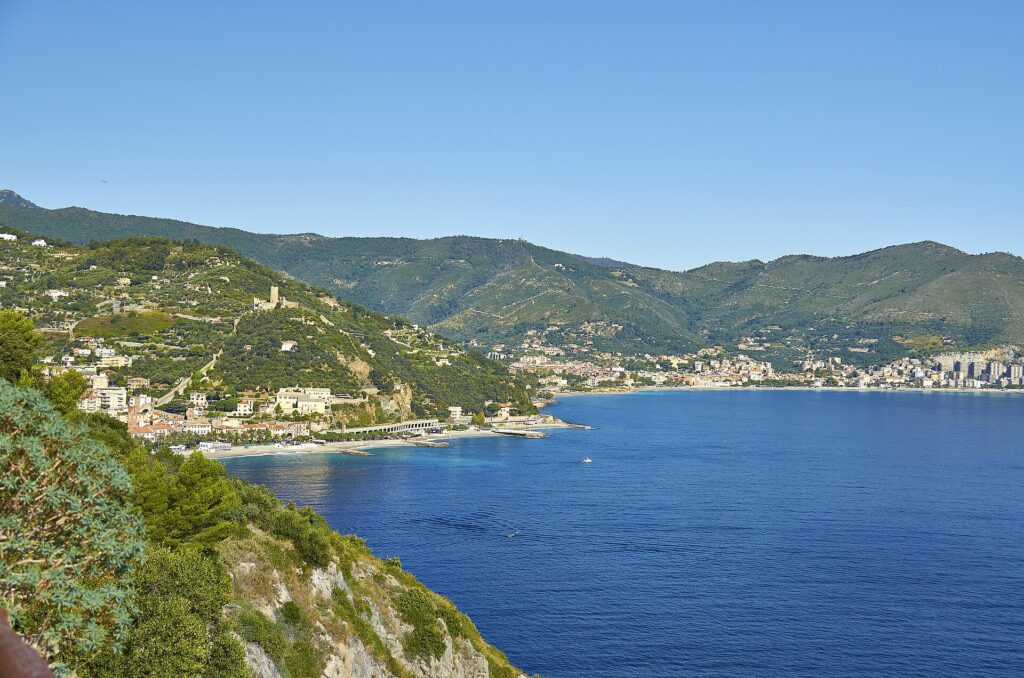
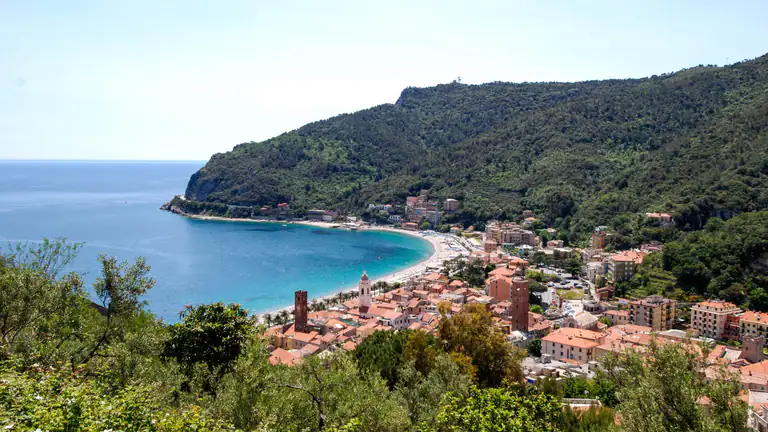
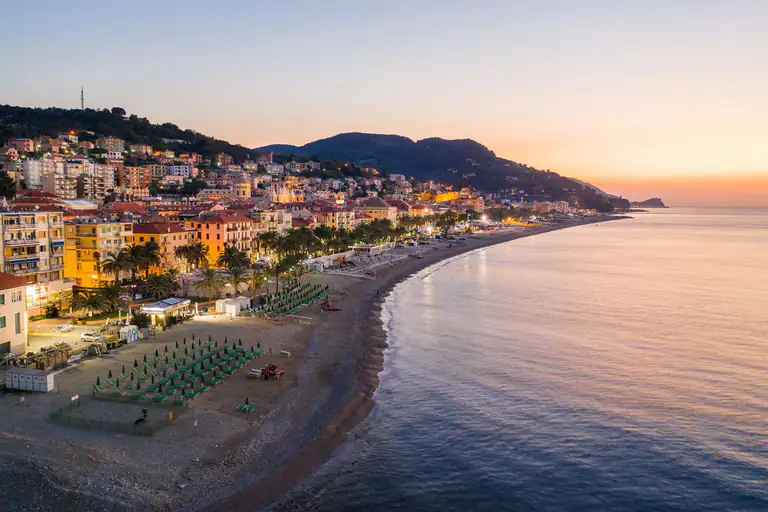
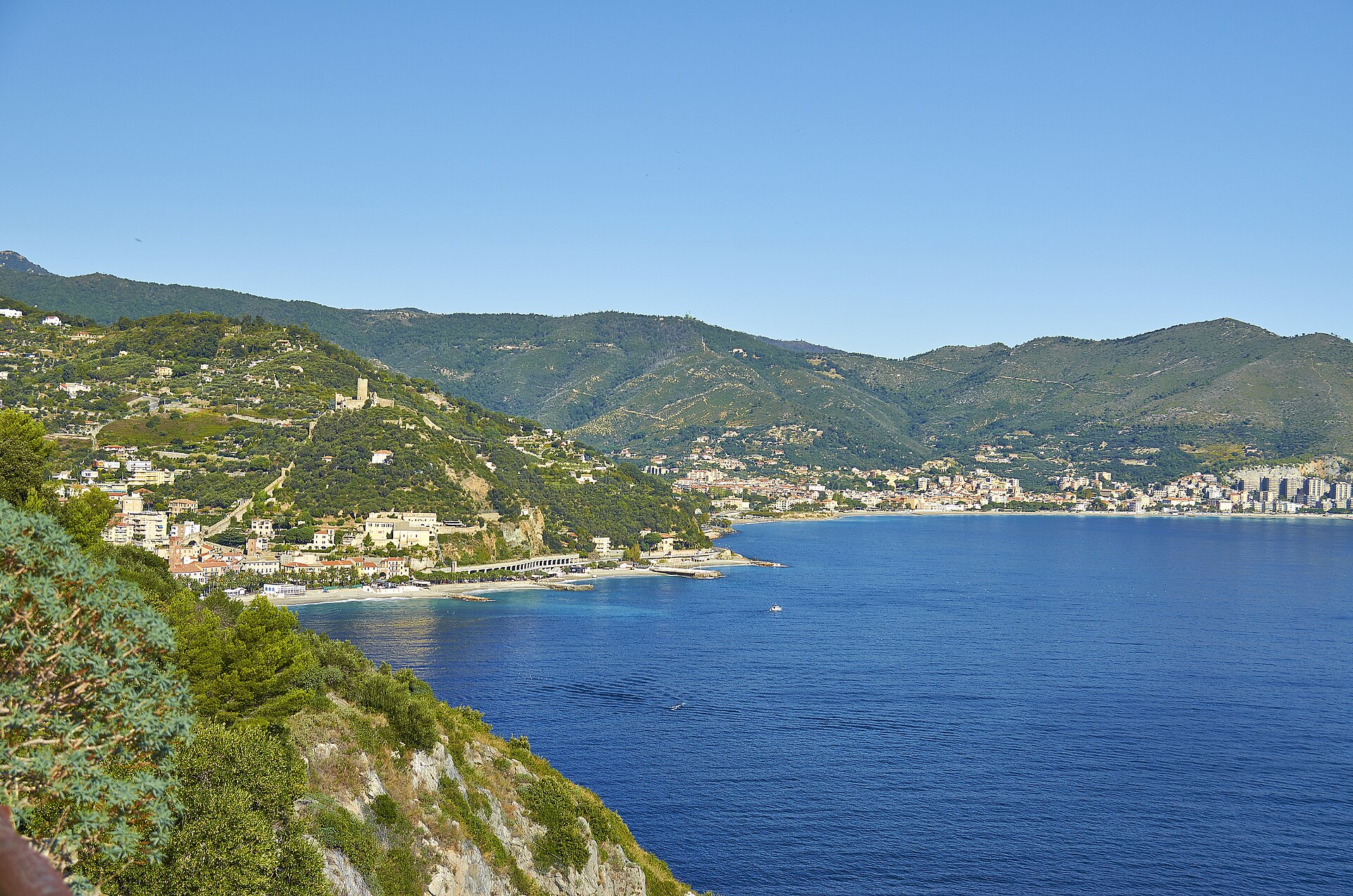
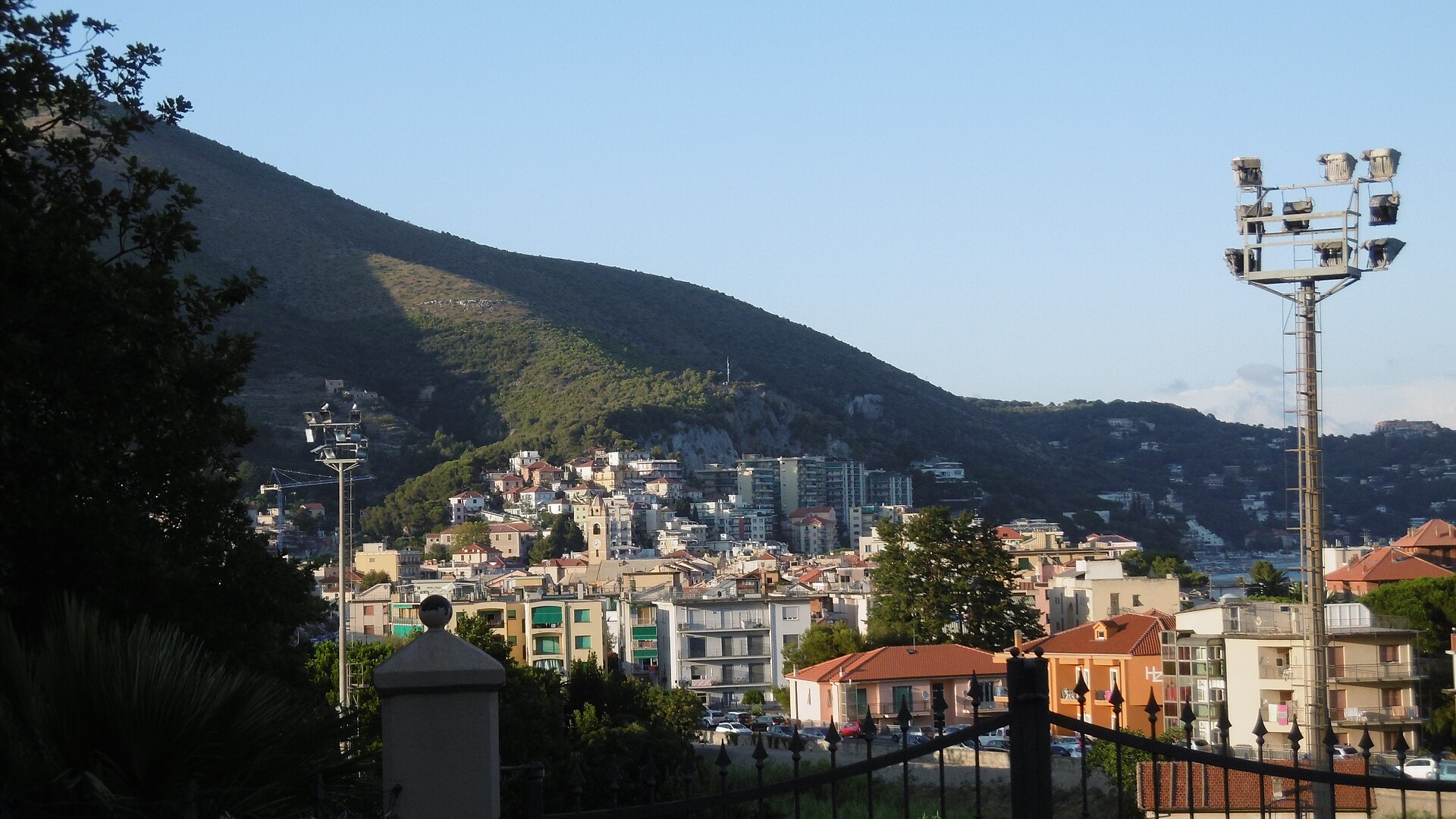
Spotorno is a beach town on the Riviera delle Palme, in the province of Savona, between Noli and Bergeggi. It has about 3,300 residents, a long sandy beach set in a bay, a seafront promenade where the whole town strolls on summer evenings and, right opposite, the island of Bergeggi, at the heart of a marine protected area. The Lido stretch of beach holds a 2026 Blue Flag.
It is a classic Italian seaside resort shaped by 20th-century beach tourism: apartment blocks on the front, one beach club after another, gelato shops and bars open late. Behind the promenade, though, there is a small old town with the Annunziata church, the ruins of a castle that belonged to the bishops of Savona, and a story few visitors know: D.H. Lawrence spent the winter of 1925–26 here and wrote one of his short stories in the town.
Spotorno works well as a car-free base. Spotorno-Noli station is on the Genoa–Ventimiglia line, Savona is about ten minutes away by train and Noli is a 30-minute walk. One day covers the town and the walks; for a beach holiday, plan a week.
By Italian Riviera editorial team·Updated on ·11 min read
Where is Spotorno?
Spotorno is in Liguria (Riviera di Ponente, Riviera delle Palme, province of Savona).
The town is squeezed between the sea and the hills. The promenade runs along the bottom, with the Via Aurelia and the old town just behind it, and houses scattered among olive trees and scrub higher up. You can see everything on foot in half a day, beach break included.
The old town
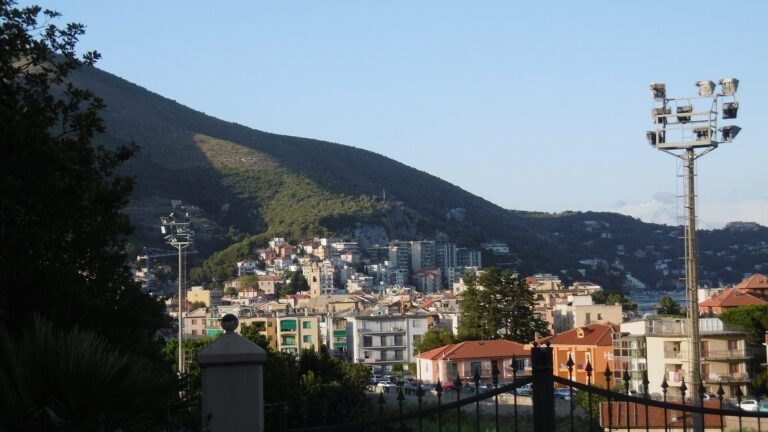
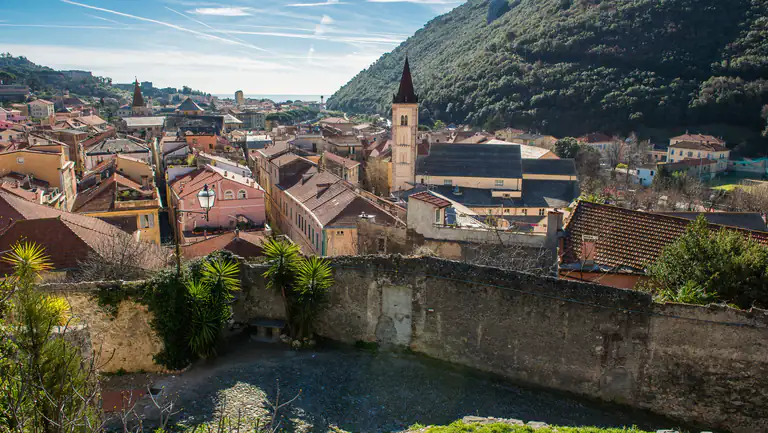
The historic core is small: a few streets running parallel to the coast, tall painted houses, vaulted passages and little squares. The town is recorded as early as the 12th century as Spelturnum. For centuries it was a fief of the bishops of Savona, until Pope Urban VI sold it to the Republic of Genoa in 1385. It got its own statutes in 1582.
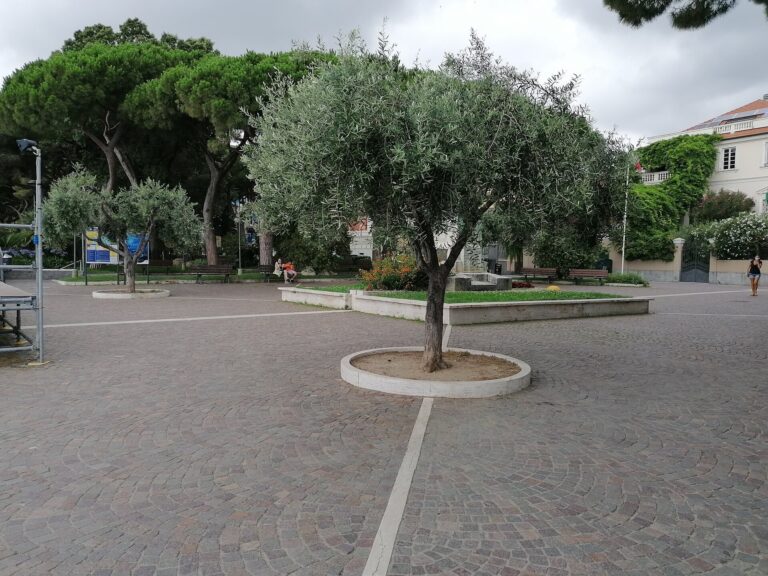
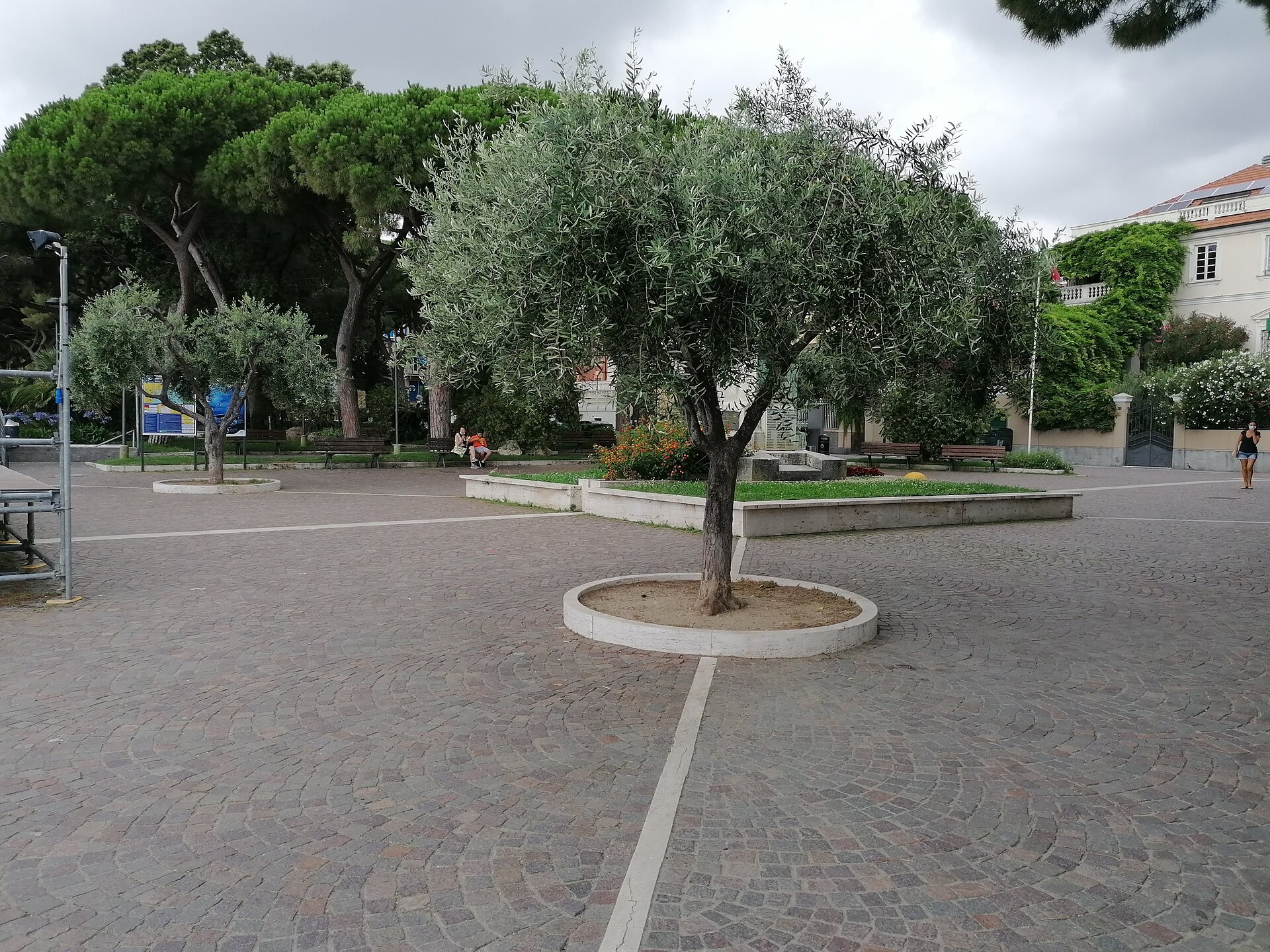
By day it is a quiet area of shops and cafés used mostly by locals; on summer evenings it fills up with people coming up from the seafront. Piazza della Vittoria is the easiest place to get your bearings.
Santissima Annunziata church
The parish church is dedicated to the Santissima Annunziata (the Annunciation), the town’s patron, celebrated on 25 March. The current building was reconsecrated in 1694 and has a decorated façade you will spot from the old-town lanes. Inside are 17th- and 18th-century works; the most important is a canvas by Domenico Piola, one of the leading painters of the Genoese Baroque, showing the Madonna and Child with Saints Anthony of Padua and Francis. The organ, by Filippo Piccaluga, dates from 1772.
The church is open for services and has no fixed visiting hours: go in the morning and avoid Mass times. Next door is the 17th-century oratory of the Santissima Annunziata, home of the local confraternity.
The castle ruins
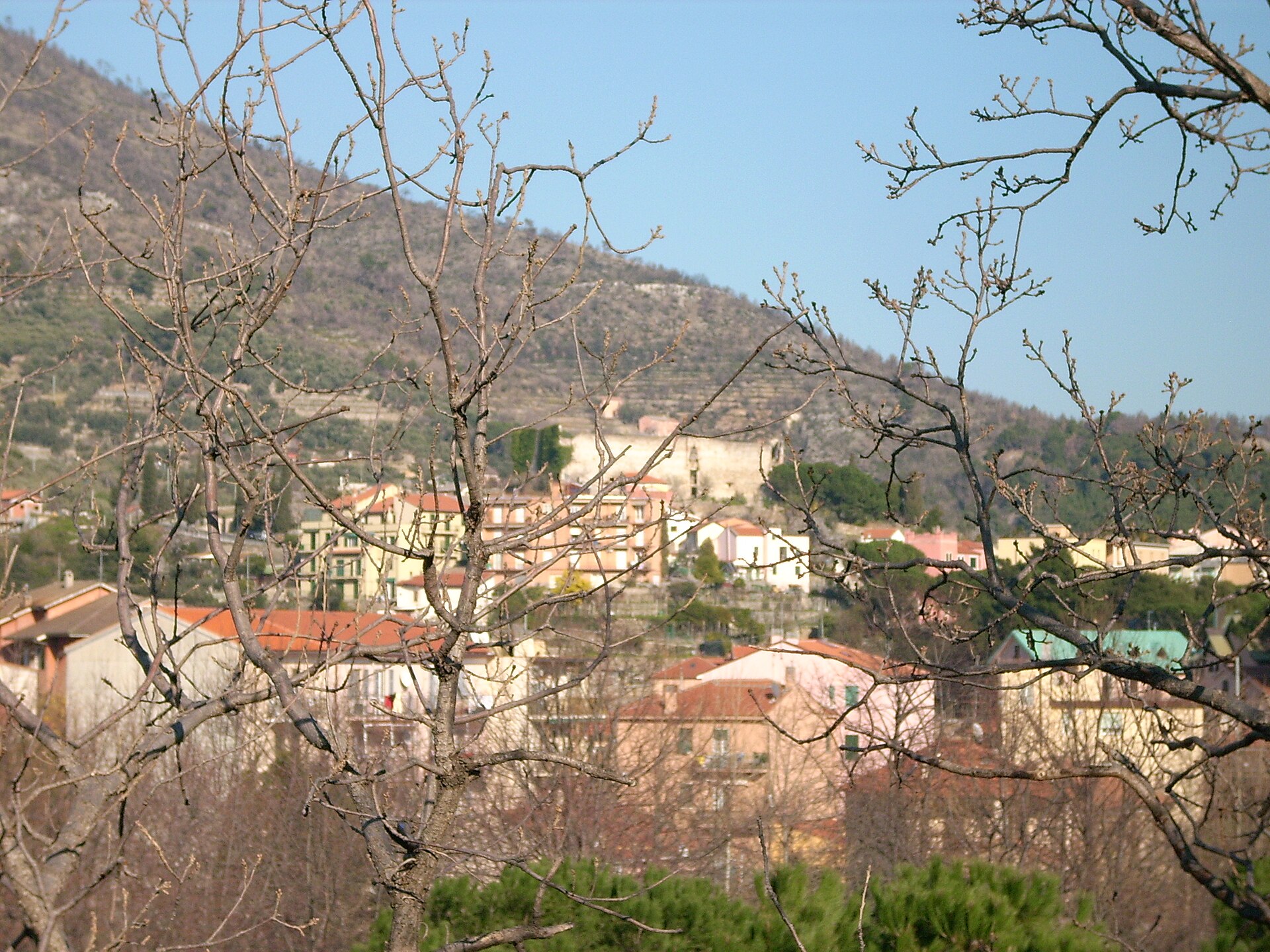
On the hill above the town stand the walls of the castle. It already belonged to the bishops of Savona in 1180; the square structure you can make out today was reworked in the 16th century, when Genoa strengthened its coastal defences against raids from the sea. Sources disagree on the exact dates, but the overall picture is clear: a medieval castle that became part of the Genoese defence system.
The ruins are privately owned and closed to visitors. You see them from the old town and as you climb the hill: treat them as a landmark, not a monument to tour.
Towers and villas
In the 16th century Genoa also built watchtowers along the coast; in Spotorno the towers of Sant’Antonio and Coreallo are recorded. Villa Canesi, one of the town’s historic residences, dates from the 17th century. These are buildings to look at from outside as you walk between the old town and the hills.
The seafront promenade
The promenade runs right around the bay, in front of the beach clubs, and is the real centre of summer life: evening strolls, gelato, sunset behind Capo Noli. From one end to the other is about a 20-minute walk. In the hot months the best times are early morning and after dinner; there is little shade at midday.
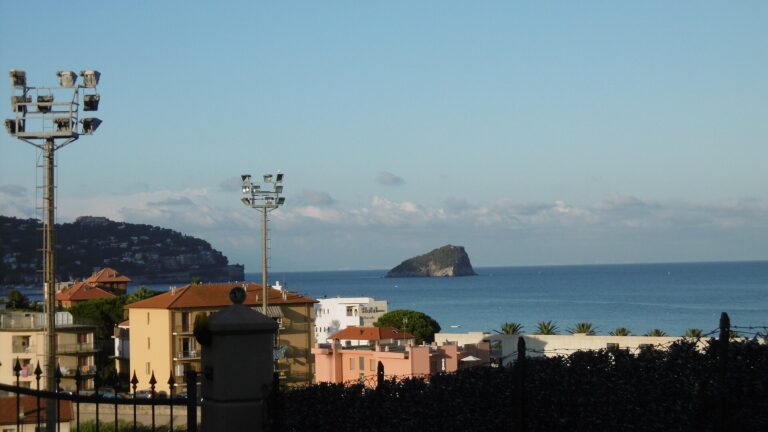
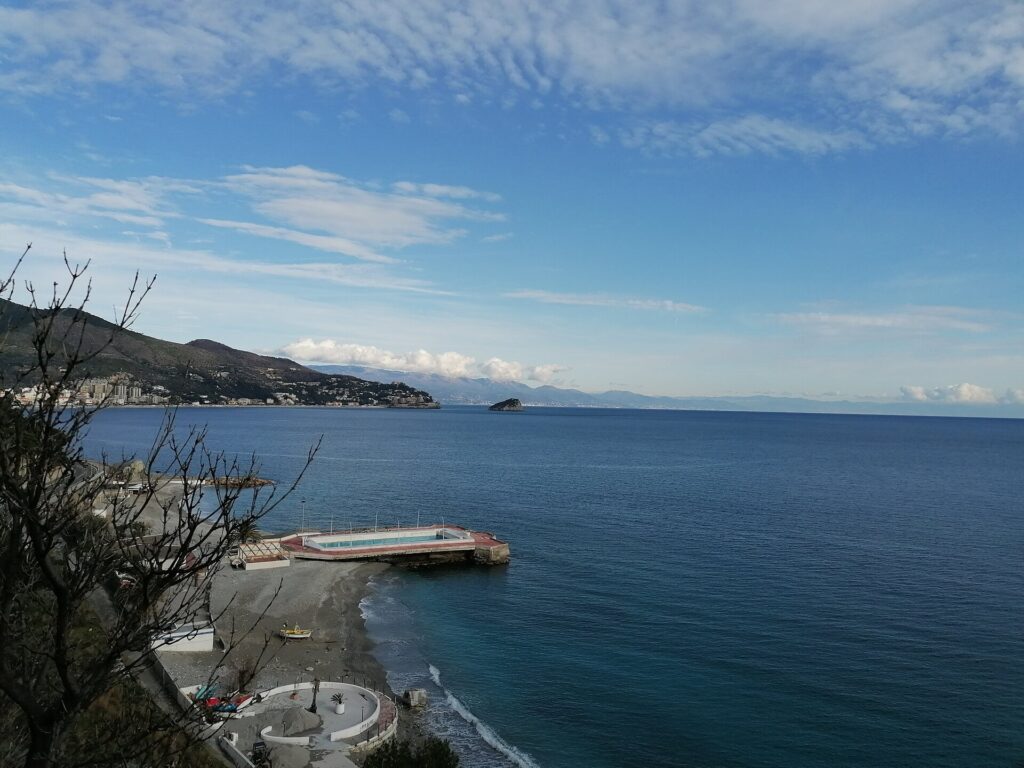
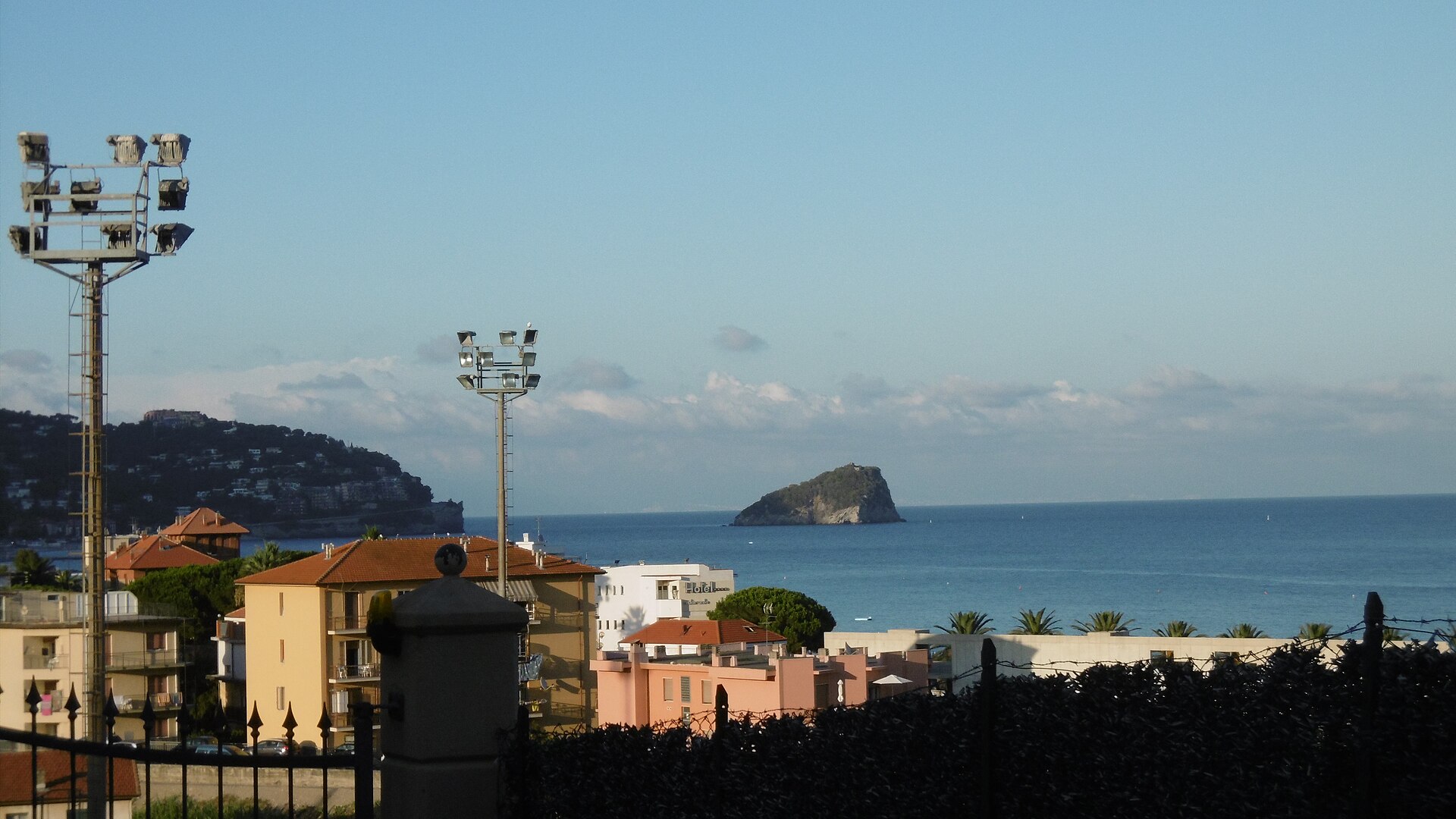
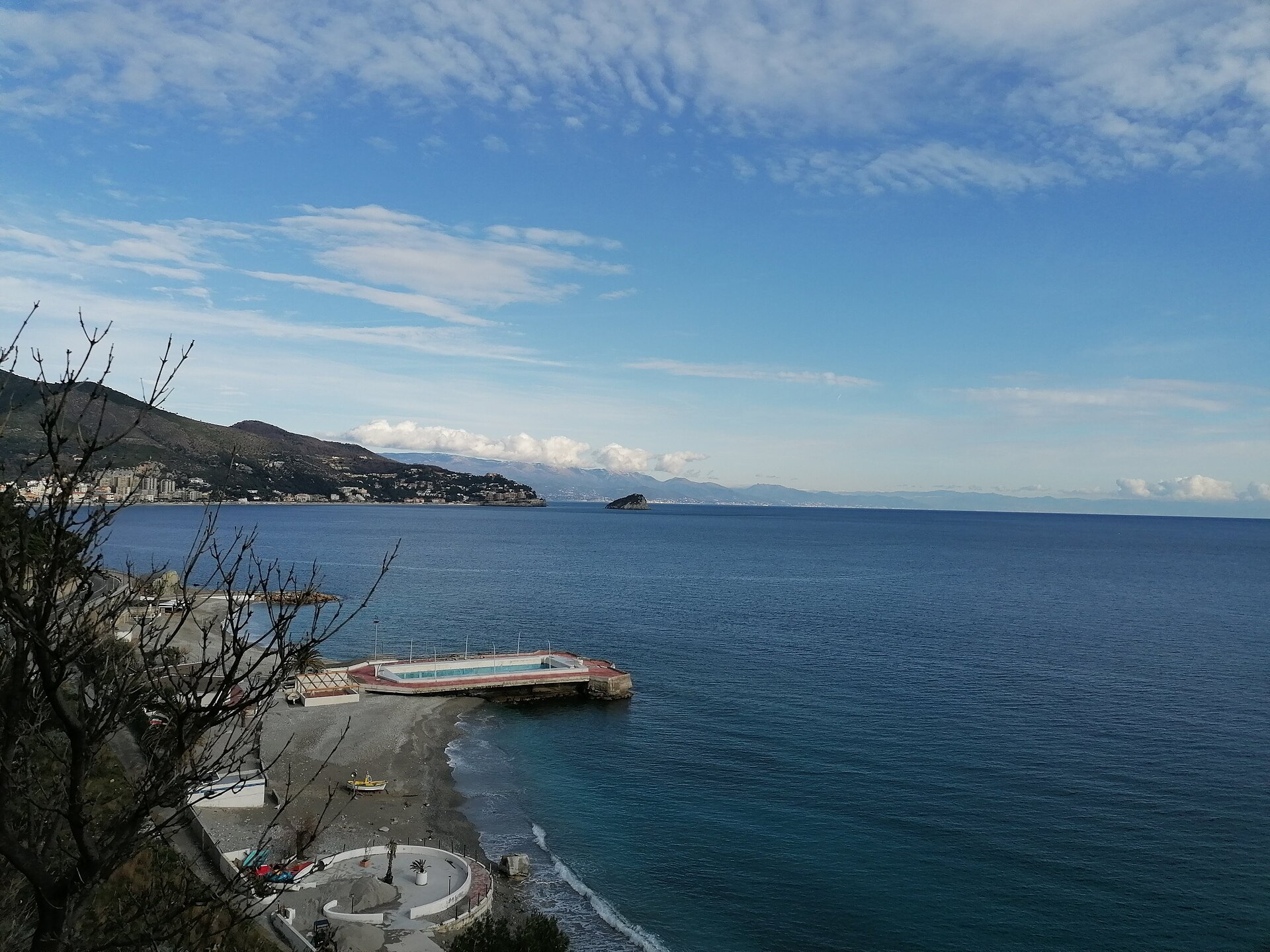
Opposite Spotorno, a few hundred metres off the Bergeggi coast, lies the island of the same name: a limestone rock about 50 metres high, with the remains of a Roman tower and of a monastery founded in 992. It has been a nature reserve since 1985 and the core of a marine protected area since 2007. Landing is not allowed; you see it from the beach, from the promenade and from the hill paths. For kayaking, snorkelling and the protected-area rules, read our guide to Bergeggi island.
In November 1925 the English writer D.H. Lawrence arrived in Spotorno with his wife Frieda and within three days had rented Villa Bernarda, a house above the town with a view of the sea. The landlord was Angelo Ravagli, an officer in the Bersaglieri, who years later became Frieda’s partner and then her husband. Here Lawrence wrote the short story “Sun” and began “The Virgin and the Gipsy”, works that foreshadow the themes of “Lady Chatterley’s Lover”. In spring the couple left for Florence.
There is no house museum and no dedicated trail: this is a story to know rather than a place to visit. But it explains why, a century ago, Spotorno was already drawing foreigners looking for a mild winter.
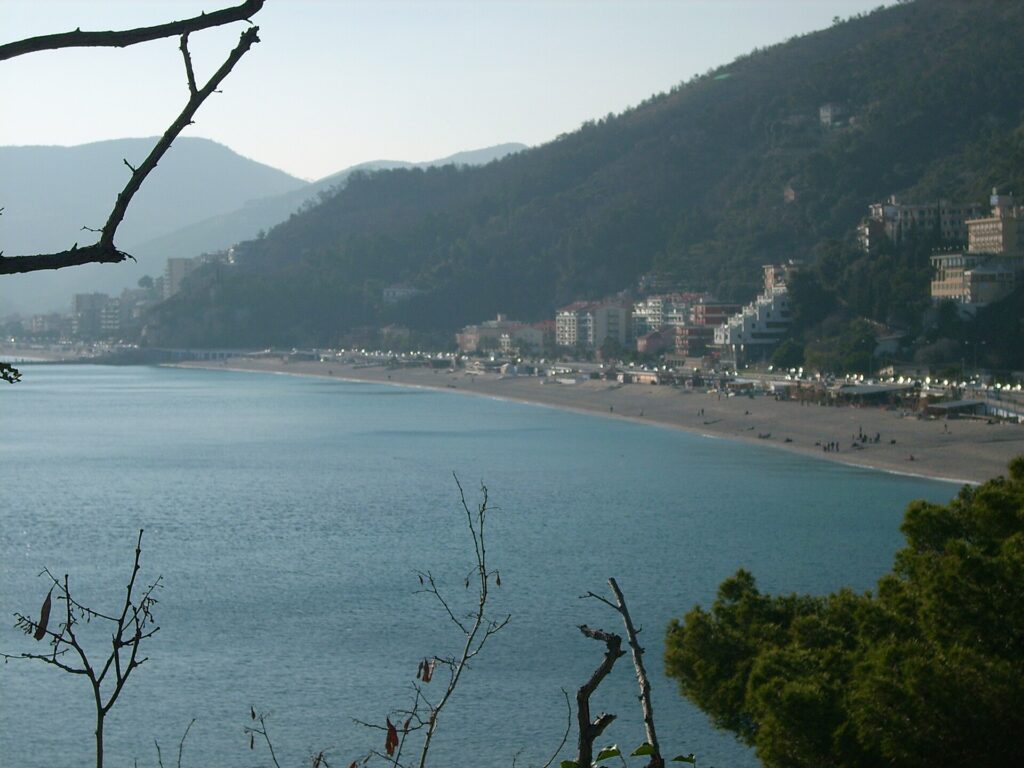
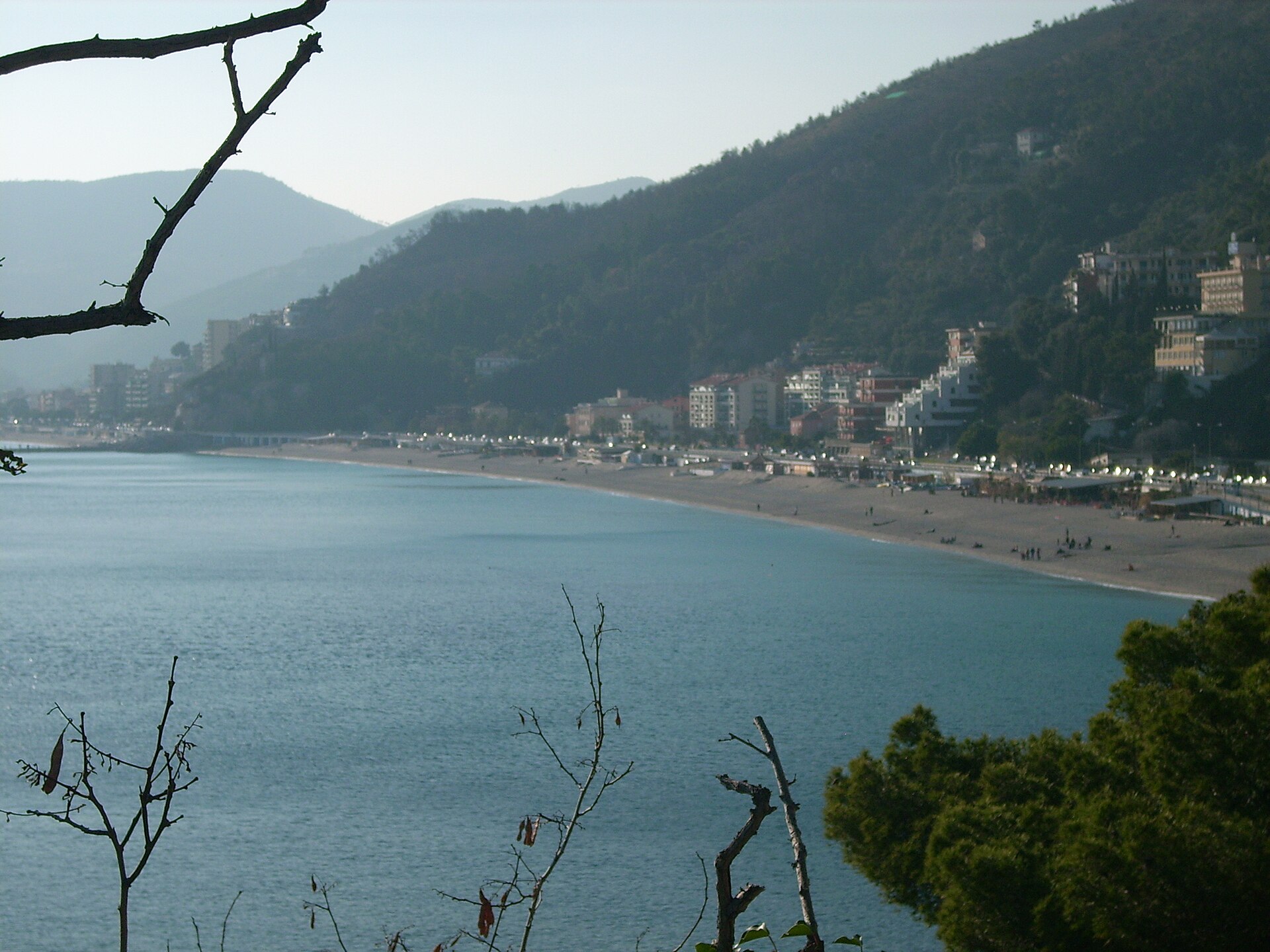
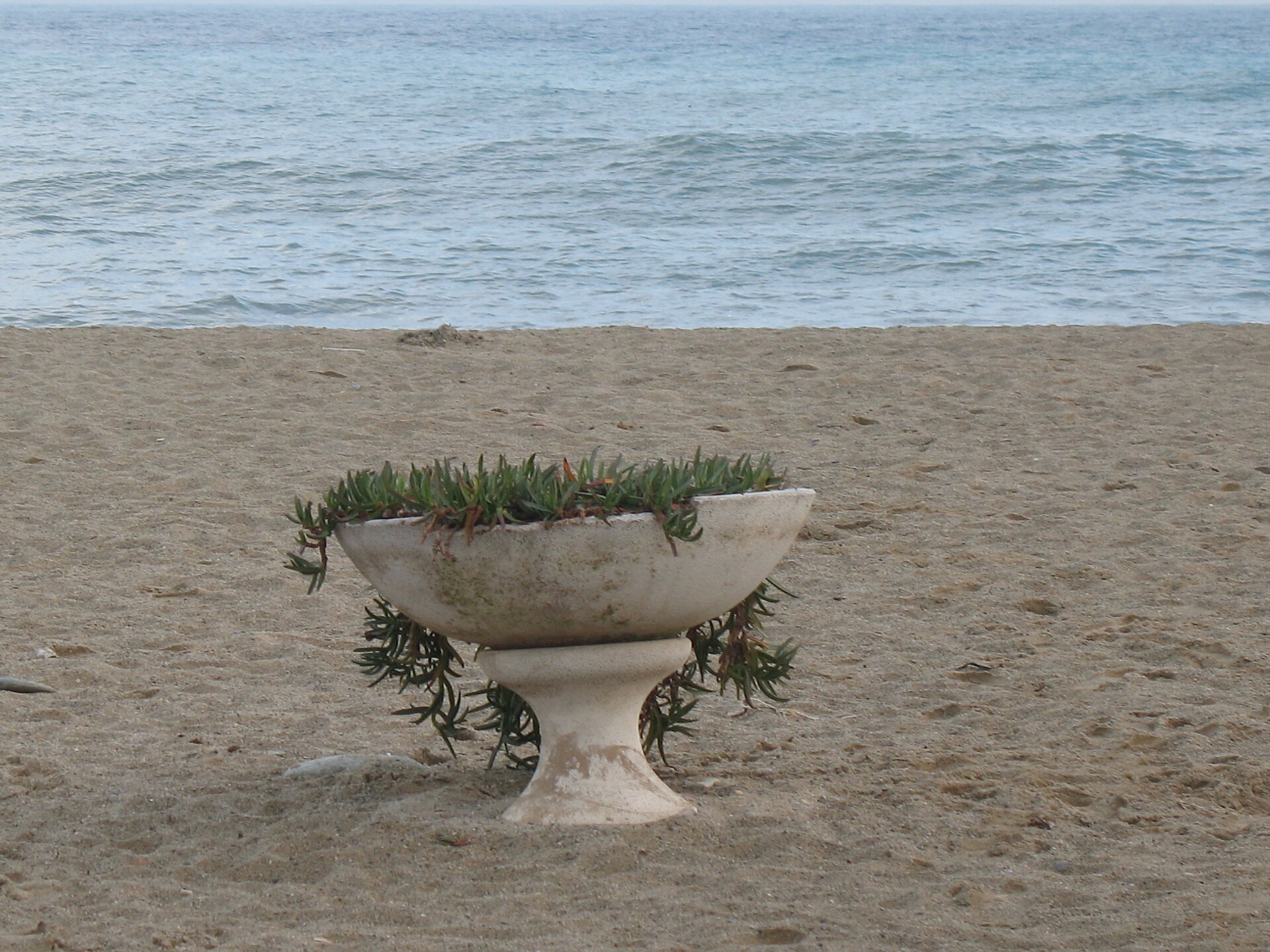
The beach fills almost the whole bay. It is sandy and shelves gently, which is why Spotorno is popular with families. The Lido stretch has a 2026 Blue Flag, as do neighbouring Noli and Bergeggi. Towards Bergeggi the sand gives way to rocks, with deeper, clearer water.
Free public beach is scarce: almost the whole shoreline is taken by around forty beach clubs. The free stretches are at the edges of the bay and near the fishing-boat pier, and in summer they fill up early. In 2026 the town council presented a plan to add more free and free-with-services beach from the 2027 season, still contested by the beach operators. Where the free stretches are, what the plan changes, the Sentiero Blu swimming trail towards Bergeggi and tips for children and dogs: see our guide to Spotorno’s beaches.
Where to stay
Where to stay in Spotorno
Spotorno has plenty of family-run hotels, apartments and holiday homes, plus a few B&Bs and residences. In summer many properties ask for weekly stays; prices are in line with the rest of the western Riviera and highest in August.
On the seafront: for a beach holiday with everything on foot. The most sought-after and liveliest area in the evening.
In the old town: handy for restaurants and shops, with the beach a short walk away; can be noisy on summer nights.
Near the station: practical if you travel by train to Savona, Finale and Genoa.
In the hills: houses with views and gardens, quieter, but you need a car and parking.
From June to September, and on spring holiday weekends, book early: Spotorno is very popular with Italian families and the seafront rooms go first.
Take the A10 Genoa–Ventimiglia motorway and exit at Spotorno: the sea is a few minutes from the toll booth. It is the same exit used for Noli and Bergeggi. Genoa is about 50 kilometres away. The Via Aurelia runs through the town, linking it with Bergeggi and Savona on one side and Noli and Finale on the other.
By train
The station is called Spotorno-Noli and is on the Genoa–Ventimiglia line; it also serves Noli, which no longer has a station of its own. Regional trains stop here: about ten minutes from Savona and about an hour from Genoa on direct services. The station is a short walk from the centre and the sea. Timetables and tickets on Trenitalia.
By bus
TPL Linea buses run along the Via Aurelia between Savona, Bergeggi, Spotorno, Noli and Finale Ligure. They are useful for reaching Noli and Bergeggi without a car. Current timetables on TPL Linea.
By plane
The nearest airport is Genoa, about 50–55 kilometres away: from there get to the railway station and take a train to Spotorno-Noli. Nice is about 140 kilometres away and has more international flights.
Parking
Near the sea almost all parking is paid, and in summer spaces run out early. There is more room towards the entrance of town, coming from the motorway, and near the station: always check the signs for hours and rates. If you are staying in Spotorno, ask your accommodation whether it has parking.
A10, Spotorno exit a few minutes from the sea; Via Aurelia SS1 to Noli and Savona
By train
Spotorno-Noli station (Genoa–Ventimiglia line): Savona about 10 minutes, Genoa about an hour
By plane
Genoa (about 50–55 km); Nice about 140 km
The guide
Things to do in Spotorno
Swim the Sentiero Blu
Between Bergeggi and Spotorno the marine protected area has marked out a sea trail, the Sentiero Blu: about 2.5 kilometres lined by 27 buoys, open from May to the end of September and closed to motor and sailing boats. It is designed for swimmers, snorkellers, kayakers and paddleboarders who want to stay clear of boats. If you snorkel, a diver-down buoy is compulsory. Up-to-date information on the Isola di Bergeggi Marine Protected Area website.
Water sports
The open bay suits sailing and windsurfing, and on the right days you will see kitesurfers too. Some beach clubs run courses and rent pedalos, canoes and boards. On the water, keep the protected-area rules in mind near the island: no jet skis and speed limits for boats.
Events
Besides the patron saint’s day on 25 March, Spotorno has a few regular events: the Festival del Vento in spring, with kites from around the world on the beach; Spotorno Comics in summer, a night of cartoons with illustrators and satirists in the squares; and a beach CrossFit competition in September. Dates change every year: check the official tourist portal Il Golfo dell’Isola.
What to eat
The food is that of the western Riviera: farinata (chickpea flatbread), focaccia, vegetable pies, stuffed vegetables, catch of the day and anchovies. Nearby Noli still fishes cicciarelli, small silvery fish served fried, with the traditional beach-seine net. For a drink with a view, pick a bar on the seafront at sunset, when the sun drops behind Capo Noli.
Walks and hikes
On foot to Noli
Spotorno and Noli are linked by a hillside path above the Via Aurelia that follows the old road between the two towns. On the Noli side it starts at the Torre del Papone, climbs to the old bishop’s palace (Vescovado) and passes the chapel of the Madonna dello Scoglio: according to the Comune di Noli it takes about 30 minutes with 100 metres of climb, an easy walk. The view over the bay of Spotorno with Bergeggi island behind is the reason to do it. Return by bus or on foot, or carry on to Noli, with its medieval village and its beaches.
Monte Mao
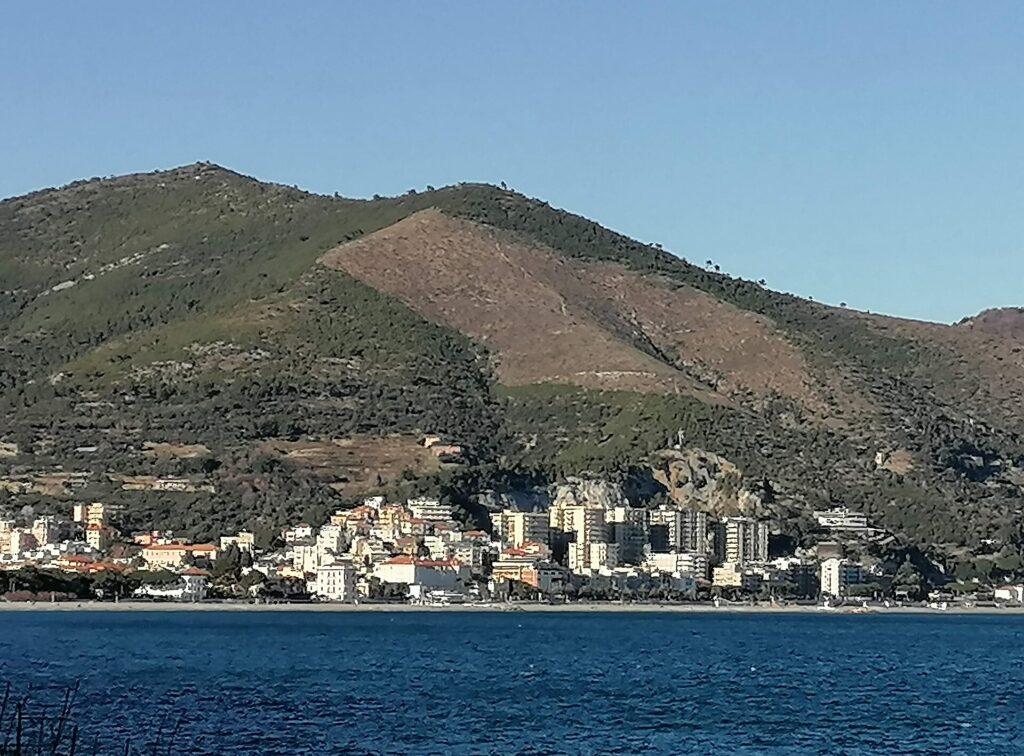
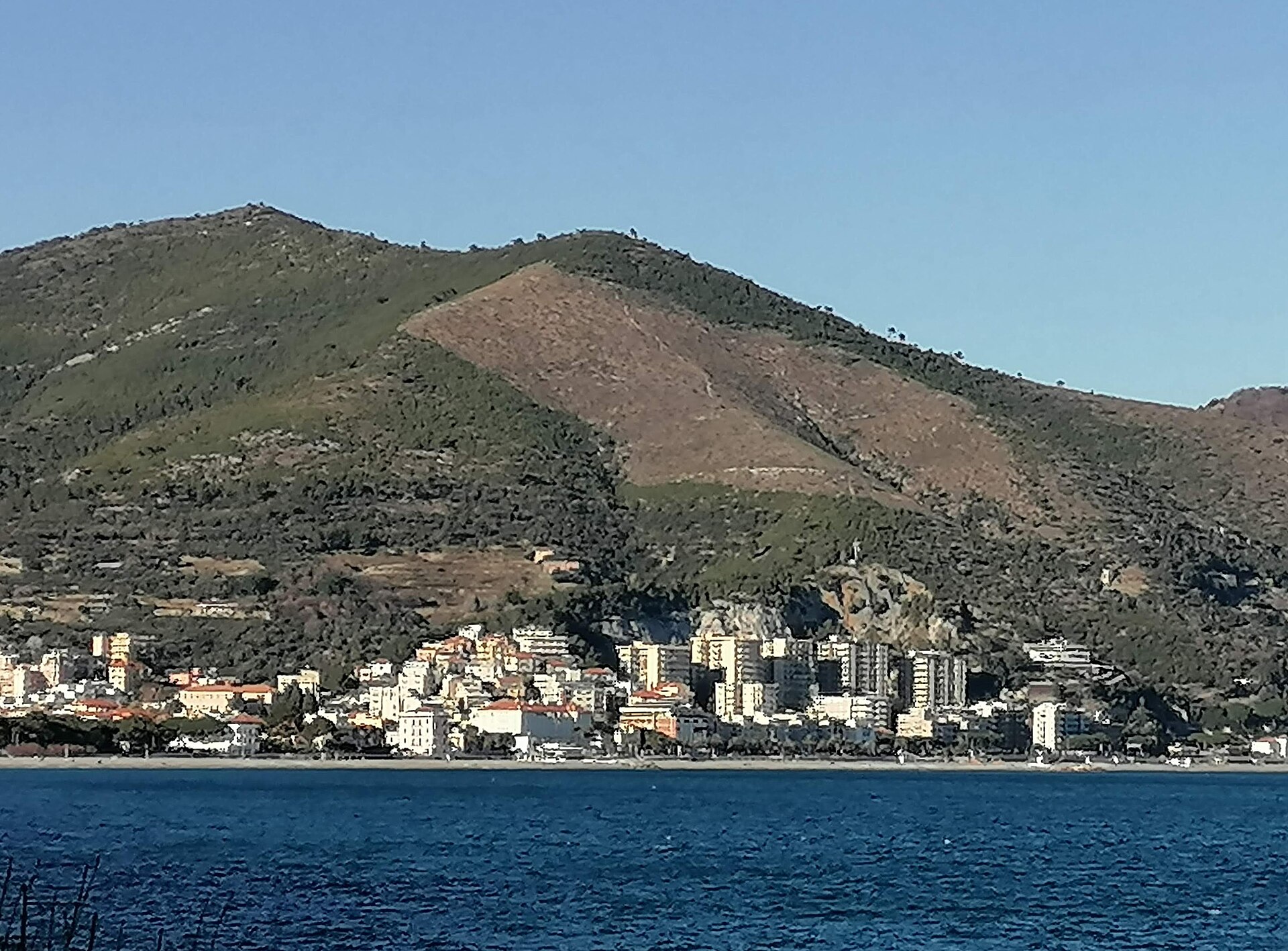
Monte Mao, 440 metres, is the summit behind Spotorno and lies within a Natura 2000 site. The path starts at the edge of town, around Via Antica Romana, and climbs steeply through pines and Mediterranean scrub: about 400 metres of ascent in less than two kilometres. From the top you see the bay of Spotorno, Bergeggi island, Capo Noli and, to the east, the Gulf of Savona with the Vado industrial area.
Allow half a day at an easy pace, with hiking shoes and water; in summer start early, as shade is scarce. Waymarking is patchy in places and there are many mountain-bike tracks, so carry a GPS track. You can loop down towards Bergeggi and return along the coast.
Towards Bergeggi and Torre del Mare
To the east, a hillside path links Spotorno with Torre del Mare, the seaside part of Bergeggi, with glimpses of the island. More trails start from Bergeggi, such as the botanical path above the village. Traffic on the Via Aurelia is heavy: use the paths wherever you can.
Day trips from Spotorno
Noli: a medieval village with towers, the Romanesque church of San Paragorio and Monte Ursino castle; 30 minutes on foot or a few minutes by bus.
Bergeggi: the island, the sea cave and the beaches facing the marine protected area, just to the east.
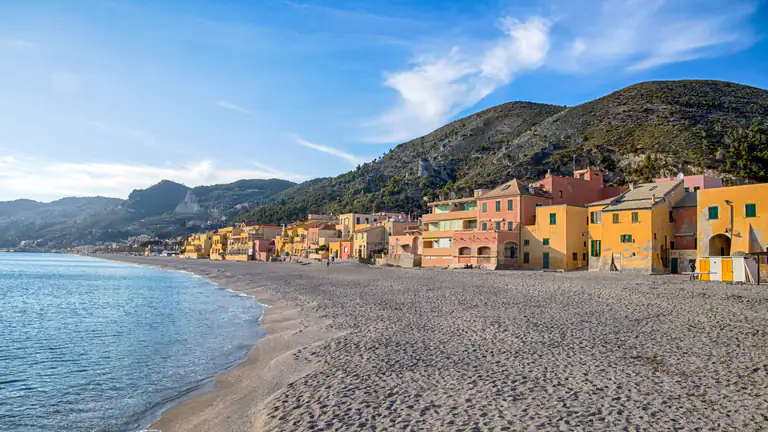
Varigotti: colourful houses right on the beach beyond Capo Noli, also reachable on the Sentiero del Pellegrino from Noli.
Finale Ligure and Finalborgo: wide beaches, climbing, mountain biking and a walled village; a few minutes by train.
Savona: the Priamar fortress, the Torretta, the cathedral and the port, about ten minutes by train.
Genoa: the aquarium, the old town and the Rolli palaces, about an hour by train.
Weather
Weather and best time to visit Spotorno
June and September for the beach; spring and autumn for Monte Mao and the trails
🌙
15°CNow · wind 8 km/h
Sun 11🌦️22° 15°3 mm
Mon 12☀️22° 15°
Tue 13☀️22° 14°
Wed 14⛅22° 14°
Thu 15☀️23° 14°
Fri 16🌤️22° 13°
Forecast: MET Norway (Yr), CC BY 4.0 licence. Updated hourly.
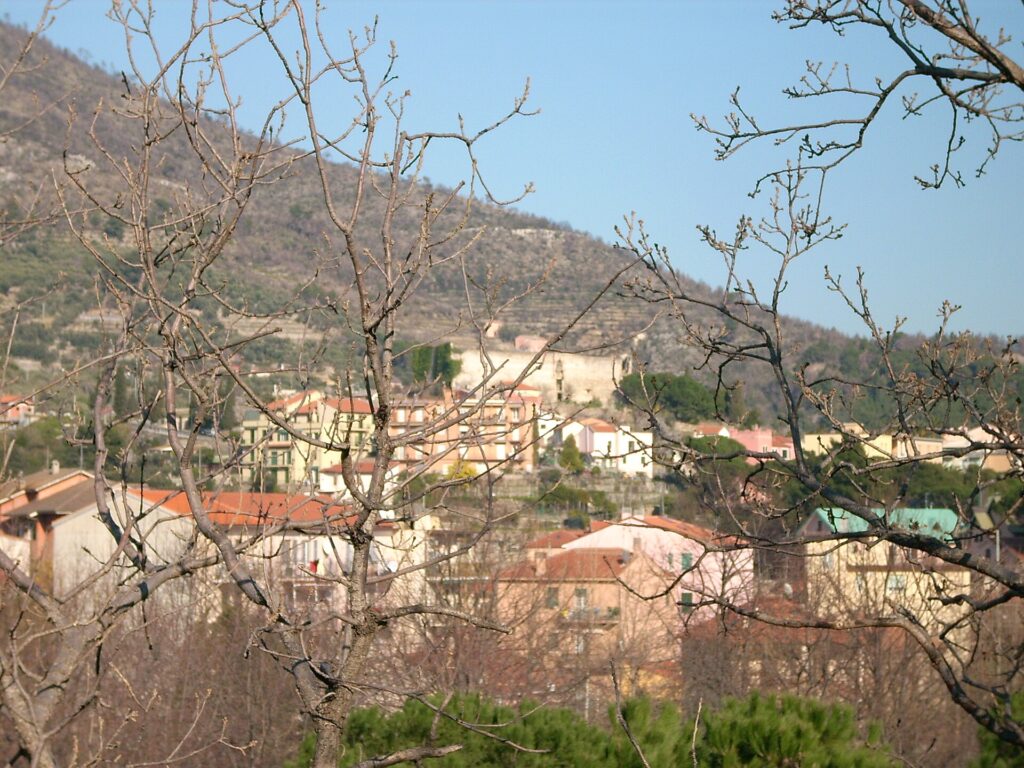
Il golfo di Spotorno visto dall'altoLa spiaggia e la baia di SpotornoIl mare di Spotorno con l'isola di BergeggiI tetti del centro di SpotornoPiazza della Vittoria a SpotornoSpotorno vista dalla strada vecchia di NoliIl monte Mao e Spotorno dalla passeggiata Noli–Spotorno
FAQ
Frequently asked questions about Spotorno
Does Spotorno have a sandy beach?
Yes. The beach in the bay is sandy and shelves gently; towards Bergeggi the coast becomes rocky.
Does Spotorno have a Blue Flag in 2026?
Yes, the “Spotorno – Lido” stretch is on the FEE 2026 Blue Flag list.
Are there free beaches in Spotorno?
Only a few: almost the whole beach is taken by beach clubs. The town plans to add more free beach from 2027.
Can you visit Spotorno castle?
No. Only ruins remain and they are private: you see them from outside, from the old town and the hill.
Can you walk from Spotorno to Noli?
Yes, on the hillside path via the Vescovado of Noli: about half an hour, easy.
Can you land on Bergeggi island?
No. The island is a nature reserve and marine protected area: you view it from the water, by kayak or boat, without landing.
Does Spotorno have a train station?
Yes, Spotorno-Noli station on the Genoa–Ventimiglia line, served by regional trains.
What is the link between Spotorno and D.H. Lawrence?
The writer spent the winter of 1925–26 at Villa Bernarda and wrote the short story “Sun” there.
When is the patron saint's day?
On 25 March, feast of the Santissima Annunziata.
When is the best time to visit Spotorno?
June and September for the beach without the August crowds; spring and autumn for the trails and Monte Mao.
Finale Ligure's walled medieval village: 15th-century gates, San Biagio, Santa Caterina cloisters, archaeology museum and castles on the Strada Beretta.