The Cinque Terre have a Mediterranean climate: hot, dry summers and mild but rainy winters, with the heaviest rain between October and December. In summer daytime highs often top 28 °C; in winter they stay around 11–13 °C, and snow by the sea is rare. The sea is warm enough for swimming from June to September and peaks in August.
Below you’ll find the forecast for each of the five villages, the climate month by month and what the weather means in practice: here it decides whether the trails are open, whether the boats run and how crowded the trains will be.
Cinque Terre weather right now
Live conditions are measured at Vernazza, in the middle of the coast. The villages are only a few kilometres apart, but you’ll notice differences: Corniglia sits high up and catches more wind, while the villages at the bottom of the valleys are more sheltered.
Climate month by month
Indicative averages from the La Spezia weather station, the nearest one with a published long-term record. Values on the Cinque Terre coast are similar; on the ridges, at 400–700 metres, it’s a few degrees cooler.
| Month | High | Low | Rainy days |
|---|---|---|---|
| January | 11 °C | 4 °C | 9 |
| February | 12 °C | 5 °C | 9 |
| March | 15 °C | 7 °C | 10 |
| April | 18 °C | 10 °C | 10 |
| May | 22 °C | 14 °C | 6 |
| June | 26 °C | 17 °C | 6 |
| July | 29 °C | 20 °C | 4 |
| August | 28 °C | 19 °C | 4 |
| September | 25 °C | 17 °C | 6 |
| October | 21 °C | 13 °C | 10 |
| November | 16 °C | 9 °C | 11 |
| December | 13 °C | 6 °C | 12 |
The sea ranges from about 13 °C between January and March to about 25 °C in August, and stays above 19 °C from June to October. November and December are the wettest months, July the driest.
Hotels, B&Bs and rooms in the Cinque Terre villages: compare prices and availability.
When to visit the Cinque Terre
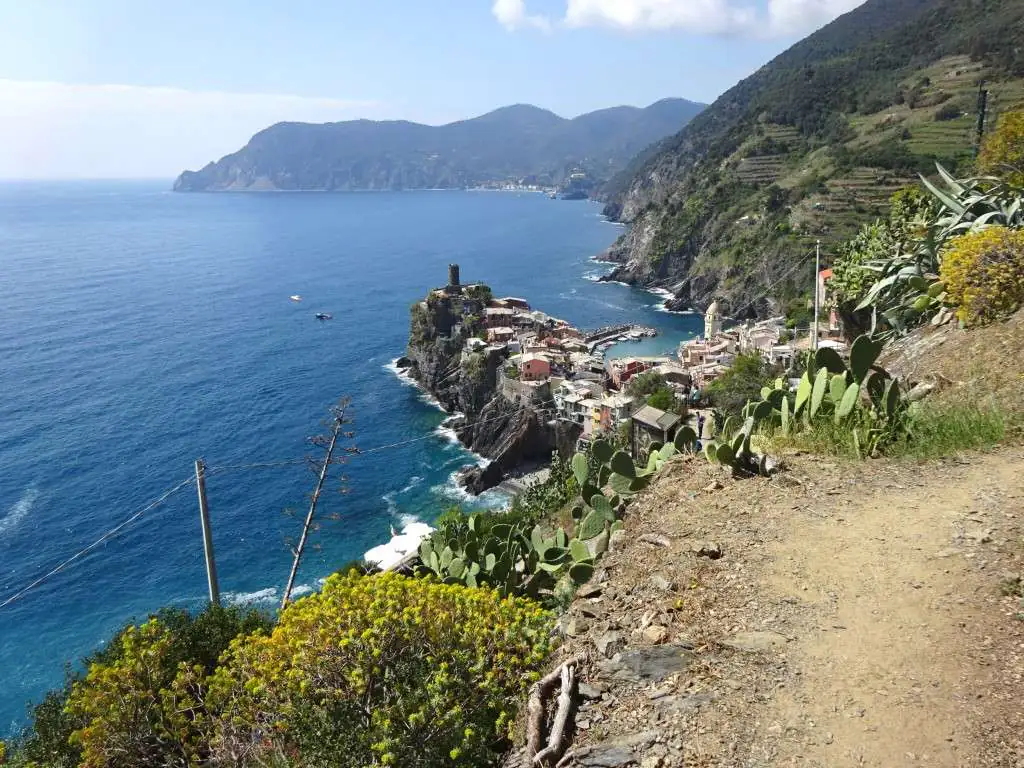
April, May, September and early October are the best months for hiking and seeing the villages: comfortable temperatures on the trails, long days, and in September the sea is still pleasant. Don’t expect peace and quiet, though: Vernazza, Manarola and Riomaggiore are busy from May onwards, especially at weekends and on Italian public holidays.
July and August are for the sea: warm water and little rain, but real heat on the stairways and packed trains in the middle of the day. Walk at dawn or late afternoon and keep the midday hours for swimming. From November to March the villages are quiet and prices lower, but expect more rain, some restaurants closed and trails that may be shut. In December the illuminated Nativity scene in Manarola is worth the trip.
Rain, weather alerts and trails
In autumn the coast can get intense rain in just a few hours. The Liguria Region issues yellow, orange or red alerts, published on AllertaLiguria. During an alert the trails and the Via dell’Amore are closed, and rough seas can stop the boats. The train remains the most reliable way to get around.
Trail status also changes because of landslides and repair works: before you set off, check the notices on the Cinque Terre National Park website. Routes, walking times and cards are in our guide to the Cinque Terre trails.
Monterosso al Mare forecast
Monterosso has the widest beach in the Cinque Terre, Fegina, and the only beach clubs on this stretch of coast: it’s the village where a beach day makes most sense, and the first to fill up on sunny days. When the sea is rough, stay on the sand.
Vernazza forecast
Vernazza has the only natural harbour on the coast. It still remembers the flood of October 2011: a good reason to take autumn weather alerts seriously.
Corniglia forecast
Corniglia is the only village not right on the sea: it sits on a headland about a hundred metres up and is more exposed to the wind. From the station you climb the Lardarina, 377 steps, which you’ll feel in the summer heat.
Manarola forecast
Manarola has no beach: people swim off the rocks by the harbour, in deep water, which is not advisable when the sea is rough. Its most famous view is at sunset: if the sky to the west is overcast, try another day.
Riomaggiore forecast
Riomaggiore is the first village coming from La Spezia, about ten minutes away by train. If the weather looks uncertain it’s a practical base: even in the rain you can reach the city and its museums quickly. To choose where to stay, see our guide on where to stay in Liguria.
Frequently asked questions
What is the best month to visit the Cinque Terre?
May and September are the best compromise: good hiking weather, the sea already or still warm, long days. They are busy months, though, so book your accommodation early.
When can you swim in the Cinque Terre?
From June to September the water is above 19–20 °C, reaching about 25 °C in August. In May and October you’ll only swim on the warmest days.
Does it rain a lot in the Cinque Terre?
Not in summer: July and August average four rainy days. From October to December it rains often and sometimes heavily, with alerts that close the trails.
Are the trails open when it rains?
During a weather alert the trails and the Via dell’Amore are closed, and some sections can stay shut for a long time because of landslides or safety checks. Always check the Park’s notices before you go.
Is it worth visiting the Cinque Terre in winter?
Yes, if you want quiet: the villages are empty and the light is beautiful. Expect rain, some restaurants closed, fewer trains and no swimming.
How hot is it in summer?
Average highs in July and August are around 28–29 °C, but on stairways and exposed trails the heat feels stronger. Hike early in the morning and carry plenty of water.