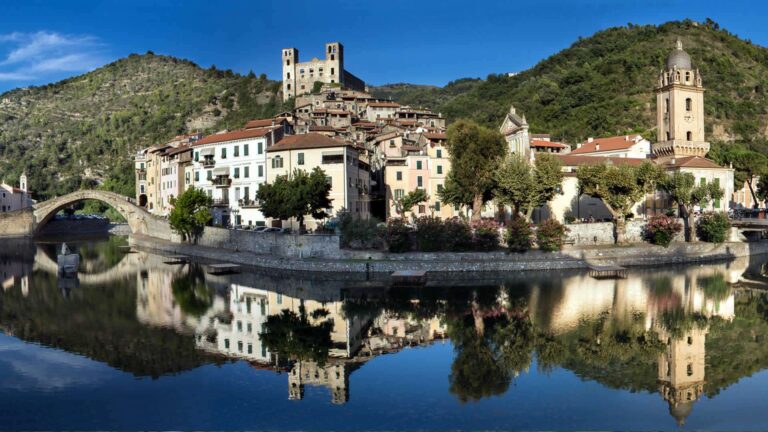
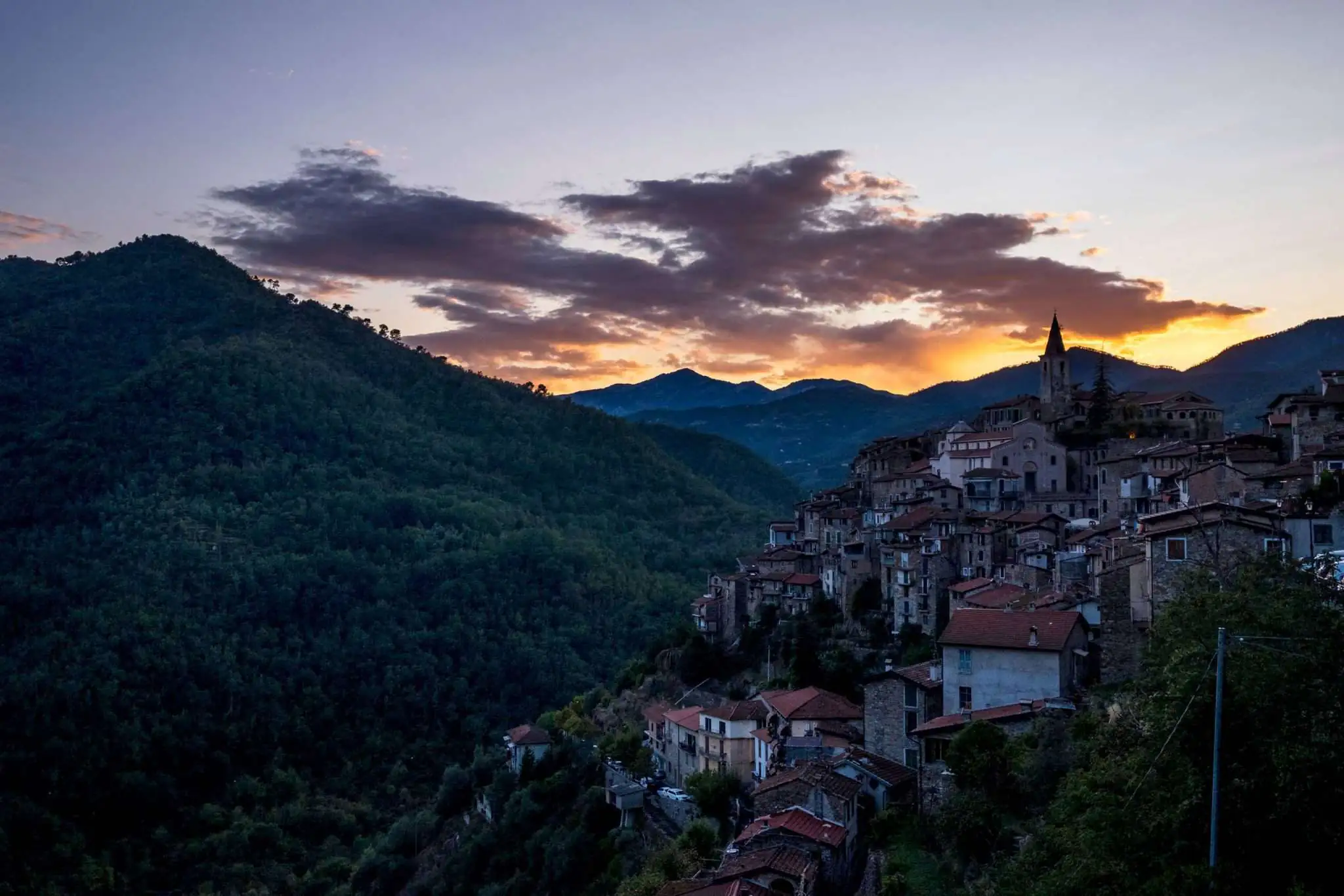
Apricale at sunset

Apricale

Sun-drenched stone village in the val Nervia: the Castello della Lucertola, murals, a theatre-like square, pansarola and the Teatro della Tosse in August.

Apricale at sunset
Area
Riviera dei FioriRiviera di Ponente · Province of Imperia
Ideal for
Villages, art, inland cooking and hikingcouples and slow travellers
Beaches
The nearest sea is at Bordighera, about 16 km20 minutes
Best time to go
Spring and autumnAugust for the Teatro della Tosse, September for the sagra
By train
Bordighera or Ventimiglia stations, then Riviera Trasporti busfew services) or taxi
By car
A10, Bordighera exit, then the val Nervia road to Isolabonaabout 16 km, 20 minutes
Airport
Nice Côte d'Azur (about 62 km)about 1 hour by car
How long to stay
Half a day1–2 days with Dolceacqua, Perinaldo and the trails

Welcome to Apricale

The sunny village of the Val Nervia

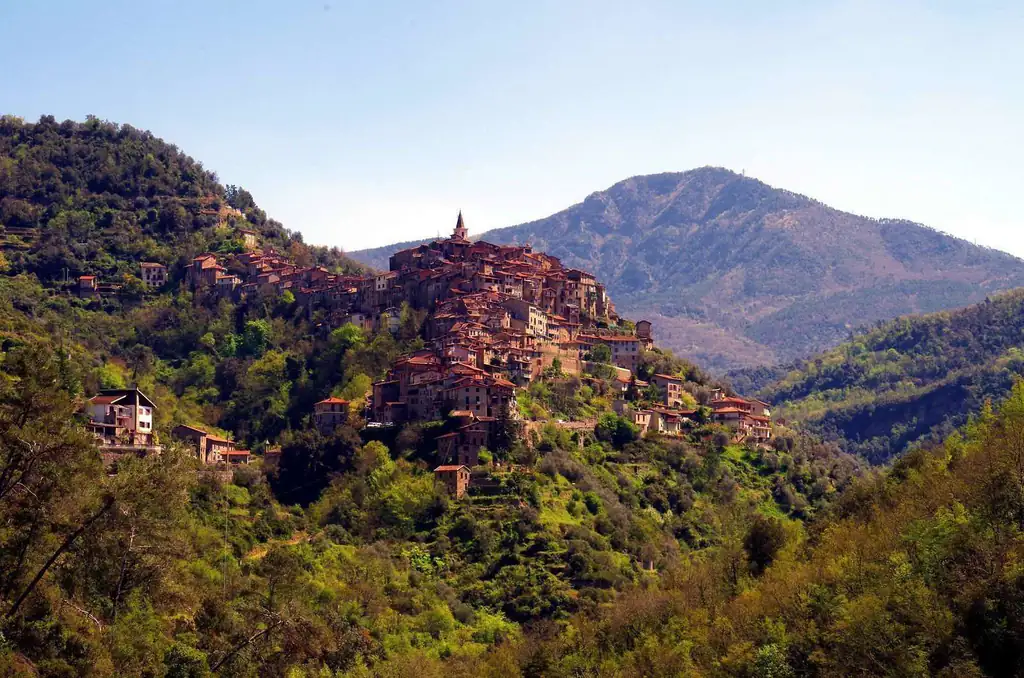
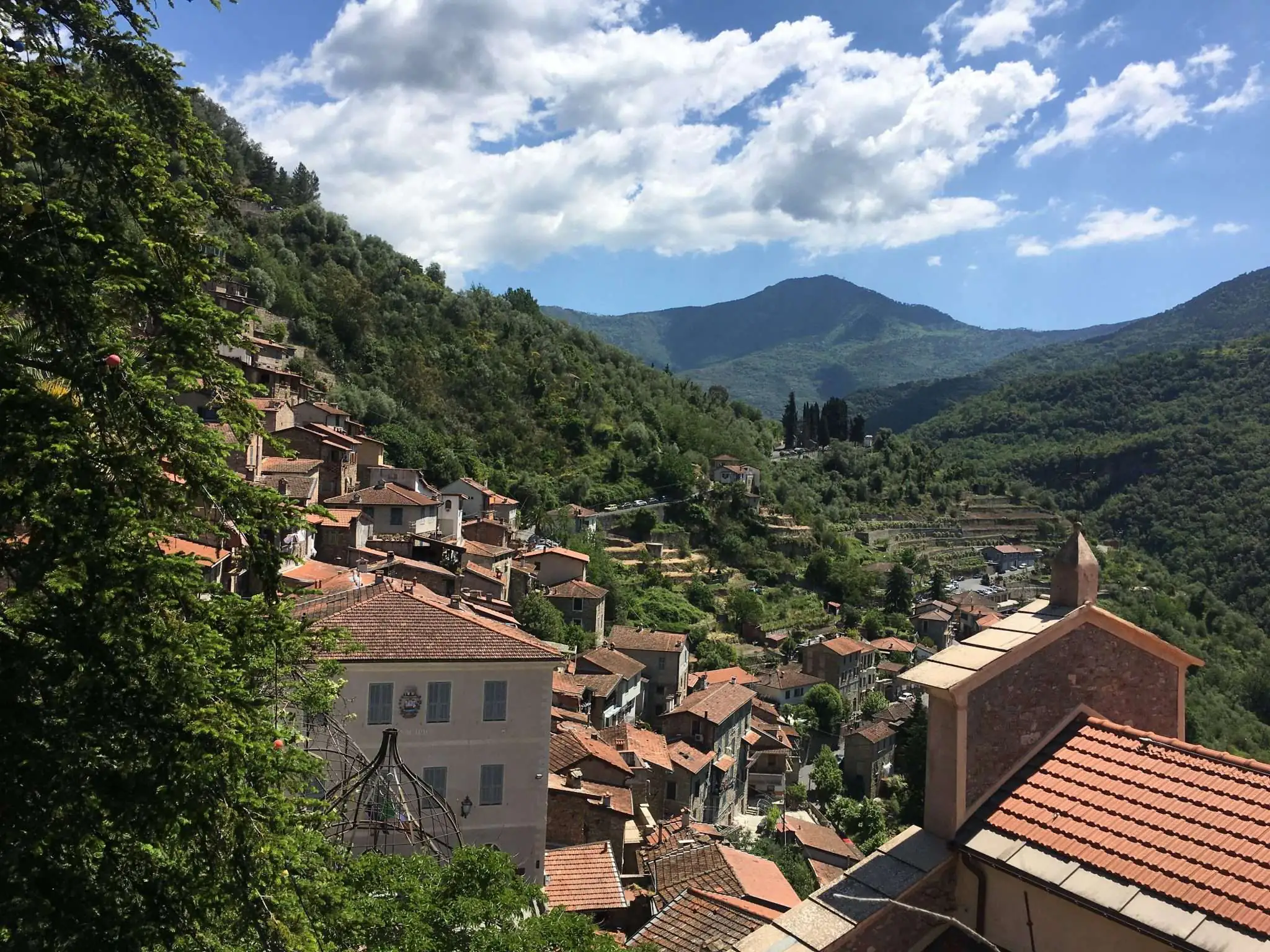
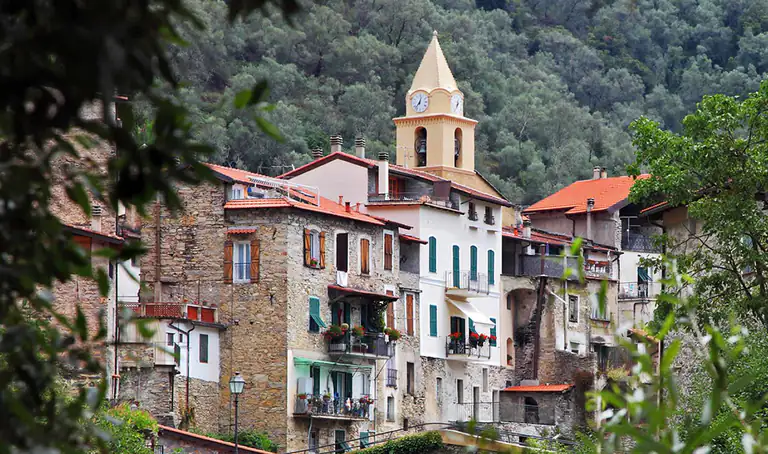
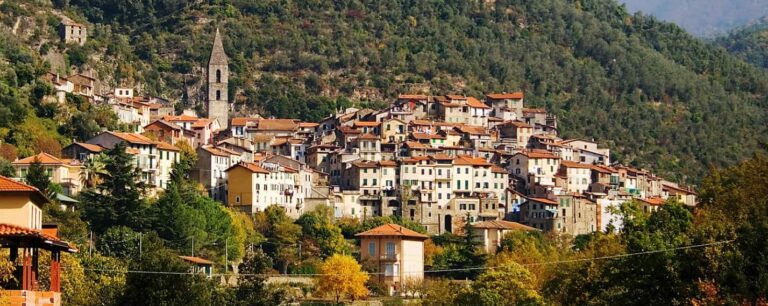
Apricale is a medieval stone village perched on a steep south-facing slope in the val Nervia, one of the valleys that climb inland from the coast between Bordighera and Ventimiglia. It sits at just under 300 metres above sea level, about 13 kilometres from the sea, and has just under six hundred inhabitants. It is one of the Borghi più belli d’Italia (the most beautiful villages in Italy) and holds the Touring Club’s Bandiera Arancione (Orange Flag).

The name comes from the Latin “apricus”, meaning exposed to the sun: all the houses face south and get light from morning to evening. The castle was built around the year 1000 by the Counts of Ventimiglia; the village is first mentioned in 1092, and its Statutes of 1267 are among the oldest in Liguria. At the end of the 13th century it passed to the Doria family and the marquisate of Dolceacqua.

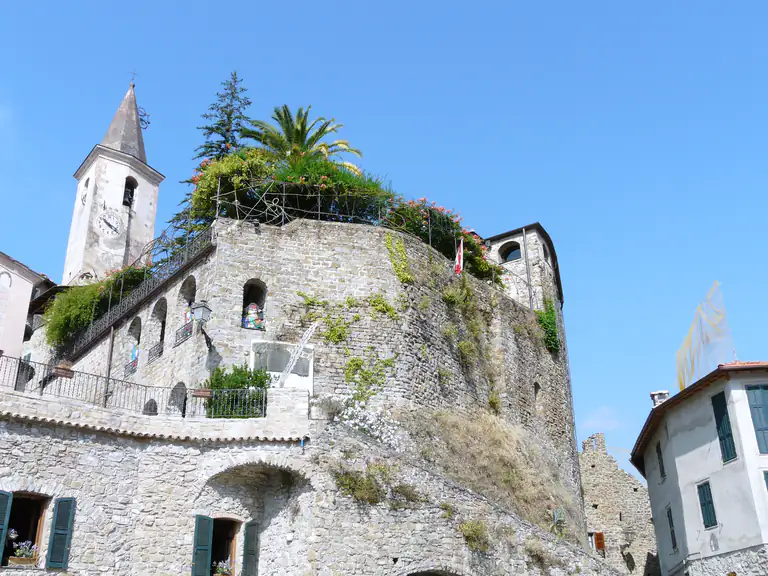
It is worth a visit for its stepped carruggi (narrow lanes), the square that looks like a theatre, the murals and the Castello della Lucertola. You can explore it on foot in half a day, and it pairs well with Dolceacqua and Perinaldo. In summer its streets become the stage of the Teatro della Tosse, and in September the village celebrates the pansarola.

Where is Apricale?

Apricale is in Liguria (Riviera di Ponente, Riviera dei Fiori, province of Imperia).

Map: where Apricale is in LiguriaPIEDMONTLOMBARDYEMILIA-ROMAGNATUSCANYFRANCERIVIERA DI PONENTERIVIERA DI LEVANTELIGURIAN SEASavonaImperiaSanremoLa SpeziaApricale
Boundaries: ISTAT, Natural Earth · Interactive map →

What to see

What to see in Apricale

The village is small and you discover it by climbing up and down lanes and steps: wear comfortable shoes and leave the car at the entrance to the village.

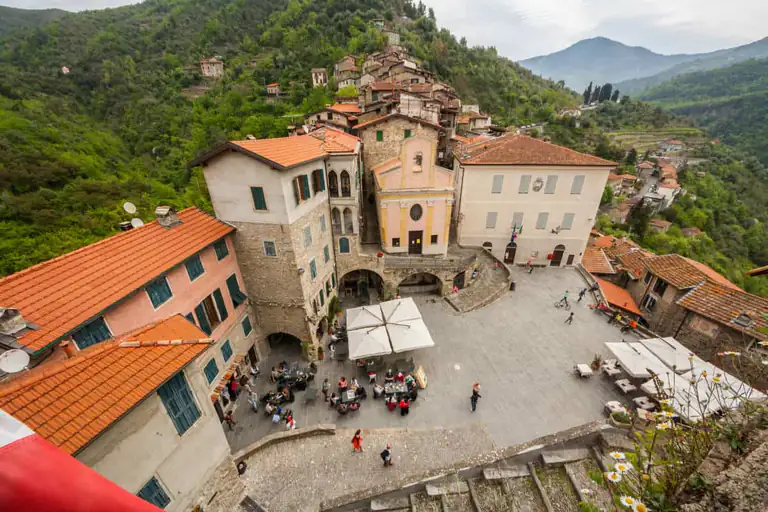
Piazza Vittorio Emanuele in Apricale seen from above

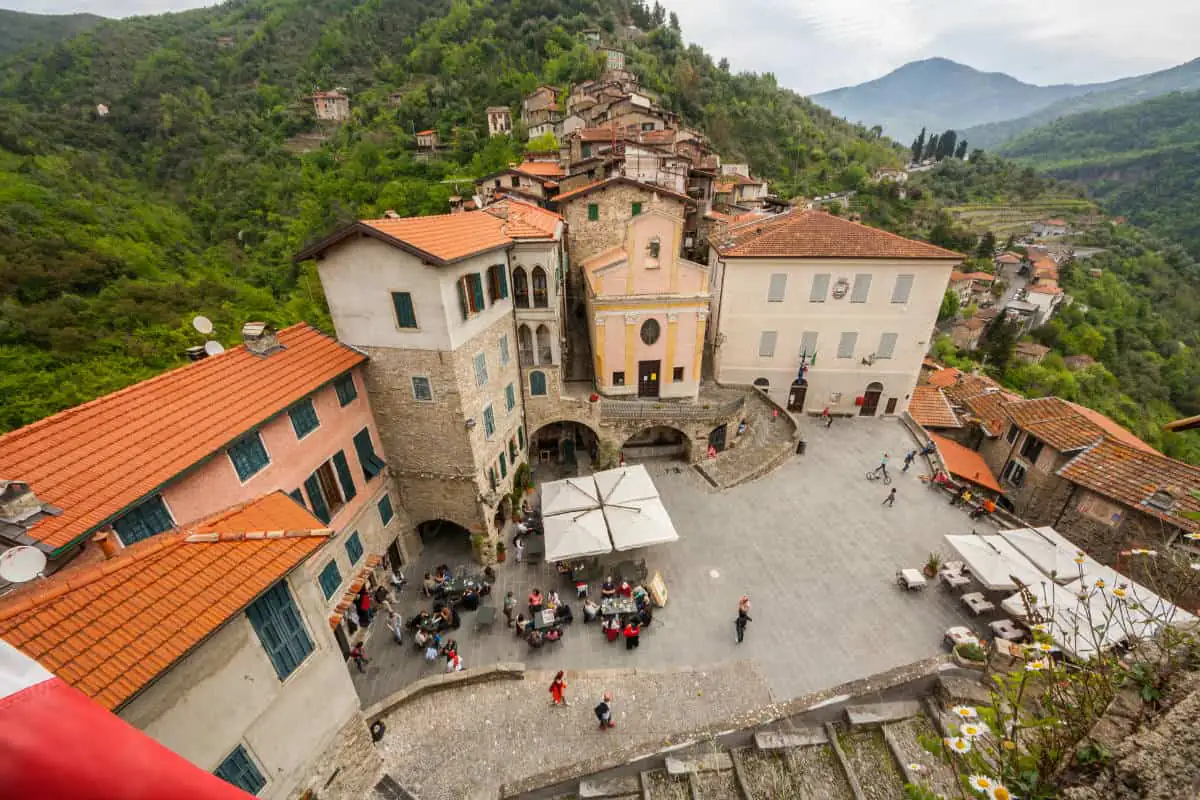
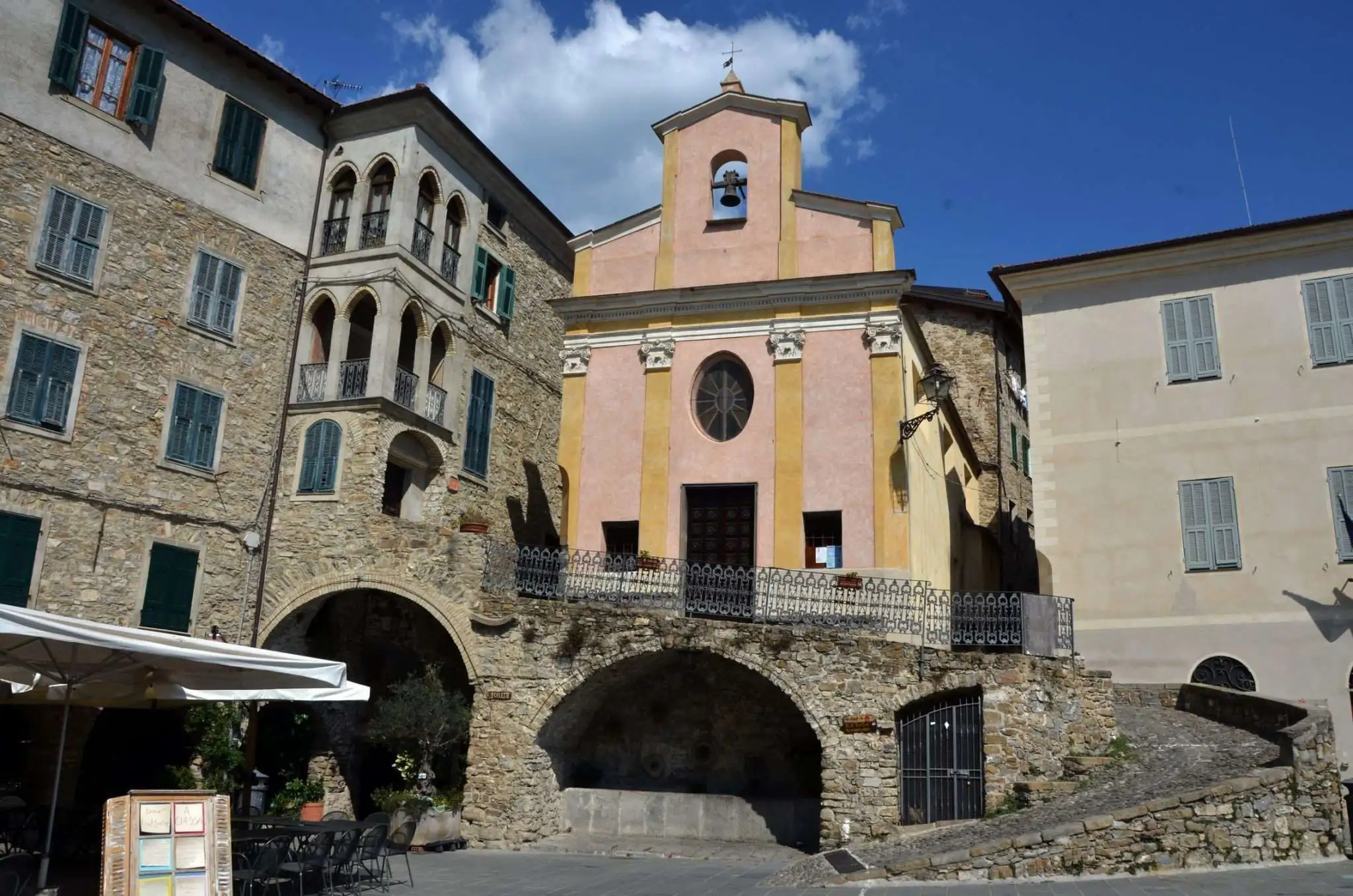
Piazza Vittorio Emanuele

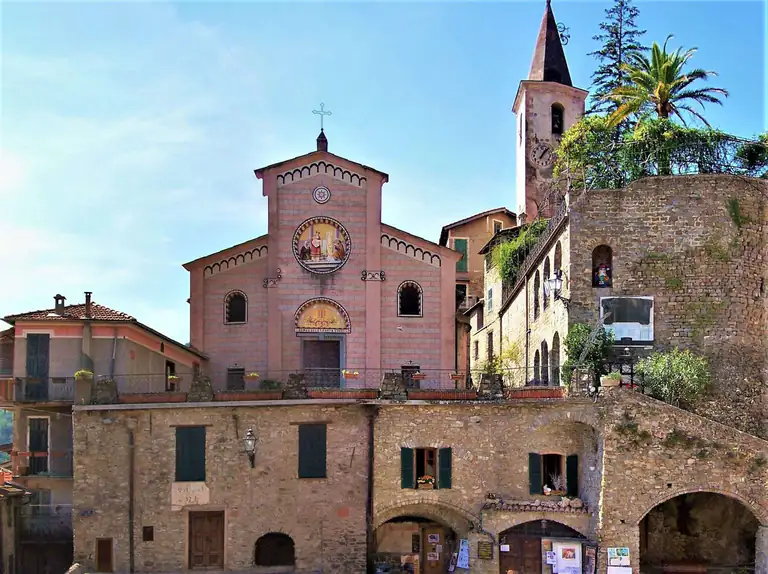
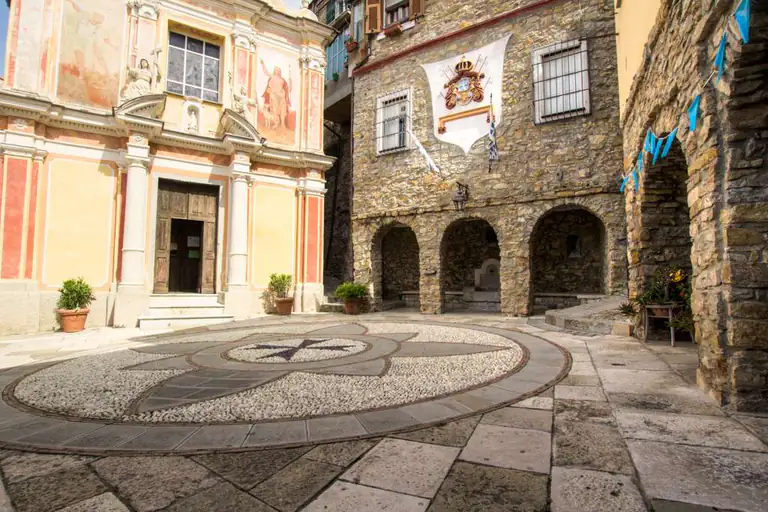
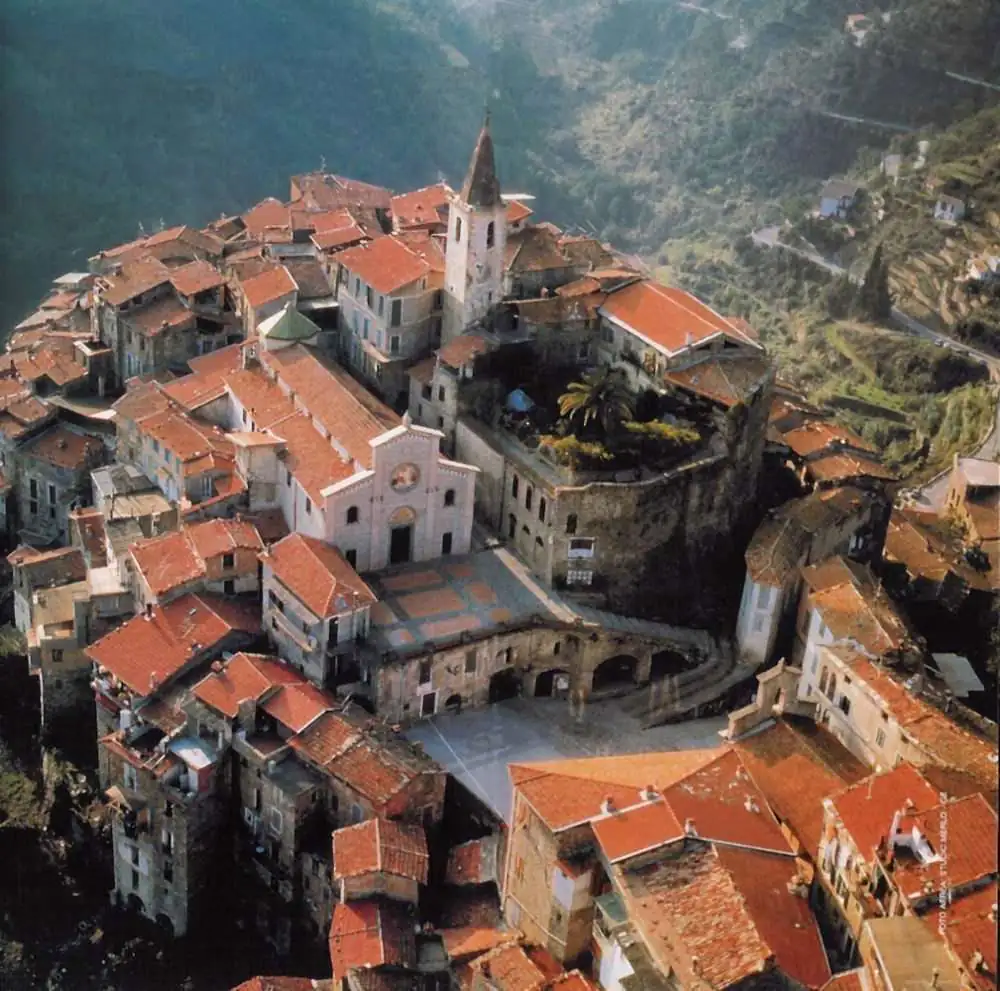
This is the heart of Apricale, a sloping square framed by churches, the town hall and porticoes. The Touring Club describes it as a theatre with two facing stages: on one side the churchyard of the parish church, on the other the castle looking down from above. The carruggi that wind down the hillside start from here.

Castello della Lucertola in Apricale

Castello della Lucertola

The castle stands on the rock above the village and dates back to the 10th century, when it was built by the Counts of Ventimiglia. It later passed to the Doria and the House of Savoy, and in the early 20th century it was turned into a private residence, with a hanging garden inside.

Today it houses the Museo della storia di Apricale (Museum of the History of Apricale), with seven rooms of documents, statutes and archaeological finds, as well as exhibitions and events. It is closed on Mondays; from Tuesday to Saturday it opens in the afternoon, and on Sunday from late morning. There is an admission charge and an audio guide is available. Check the opening times before walking up, as they can change.

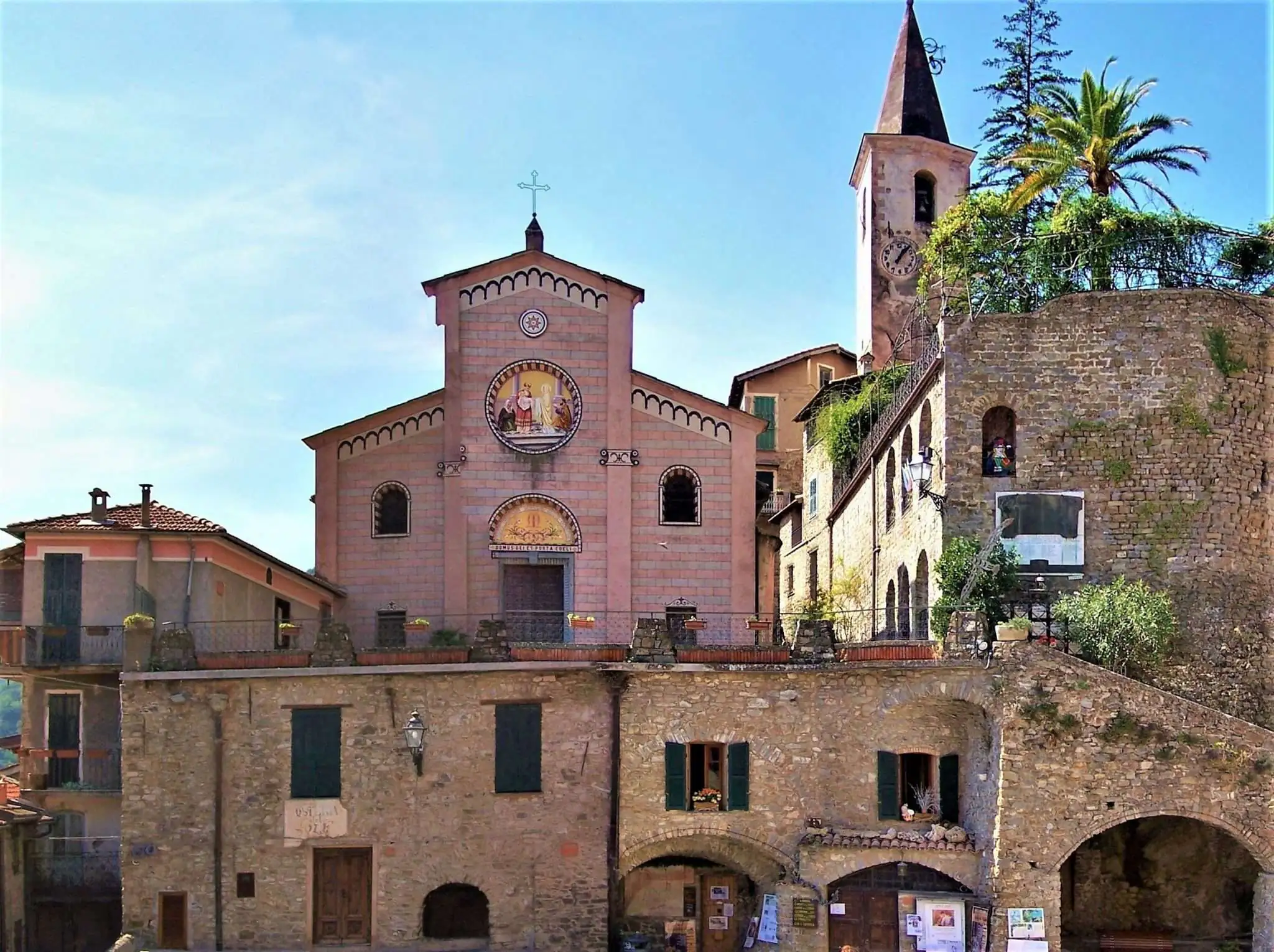
Church and square in the village of Apricale

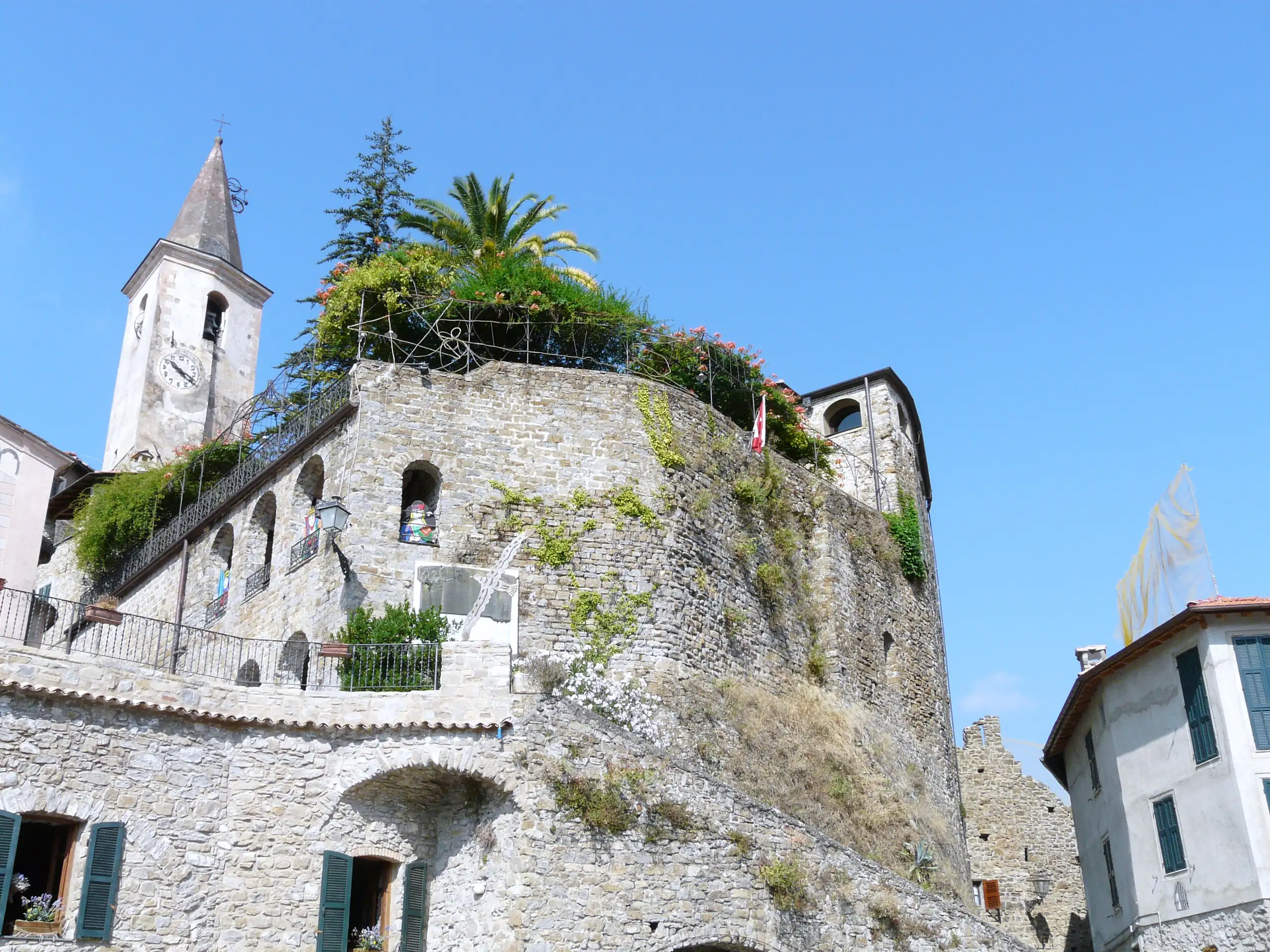
Chiesa della Purificazione di Maria Vergine

The parish church looks onto the square. It was rebuilt in Baroque style in the 18th century and restored again after the earthquake of 1887. Look up at the 16th-century bell tower: at the top a bicycle juts out into thin air, a work by the artist Sergio Bianco and one of the most photographed sights in the village.

Oratory of San Bartolomeo on the square in Apricale

Oratorio di San Bartolomeo

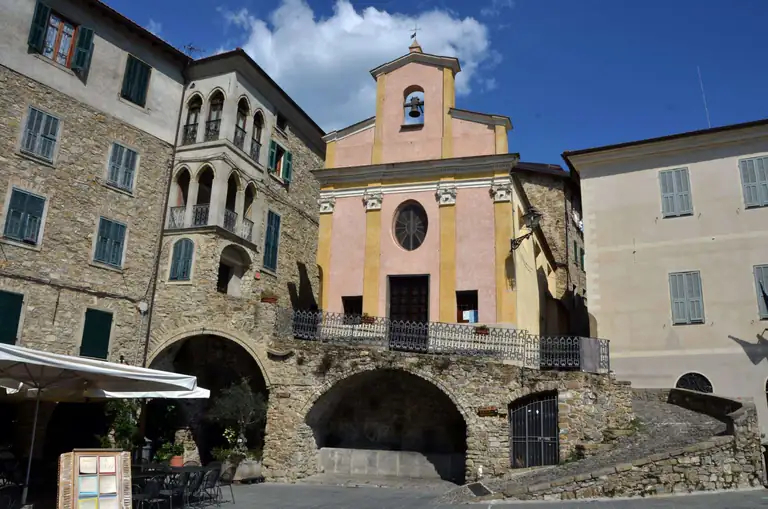
Next to the parish church, the oratory preserves 18th-century stuccowork and a polyptych from 1544 showing the Madonna between Saint Lawrence and Saint Bartholomew. If you find it open, go in: it is one of the village’s artistic treasures.

Murals in the alleys of Apricale

Murals of the artists' village

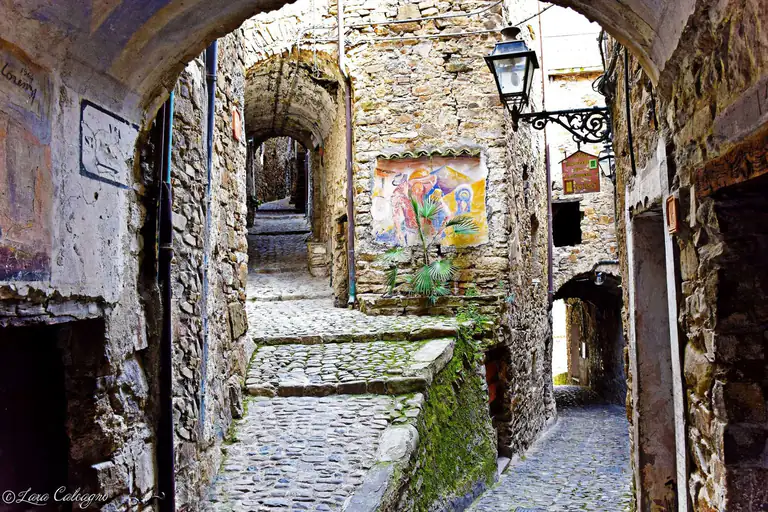
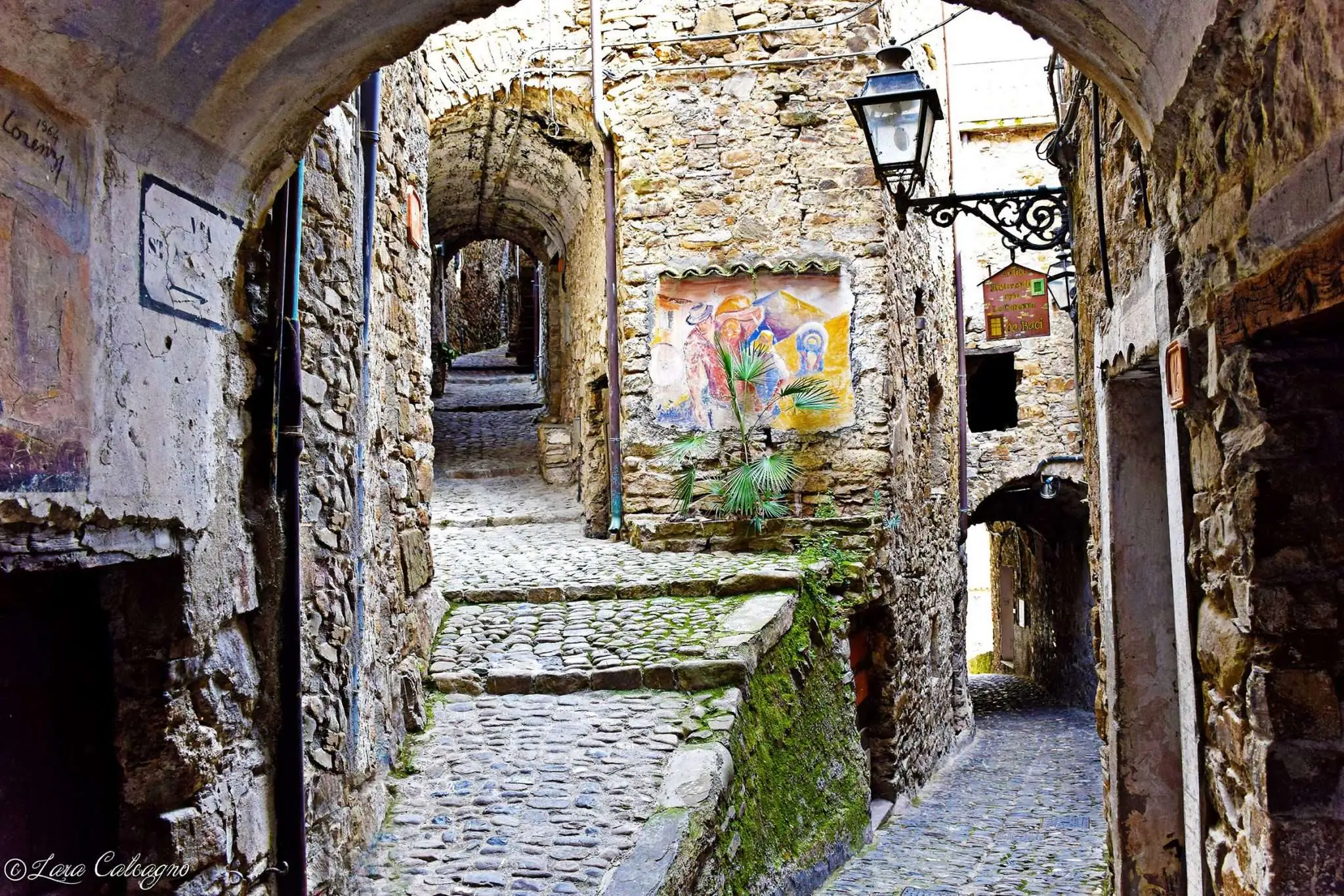
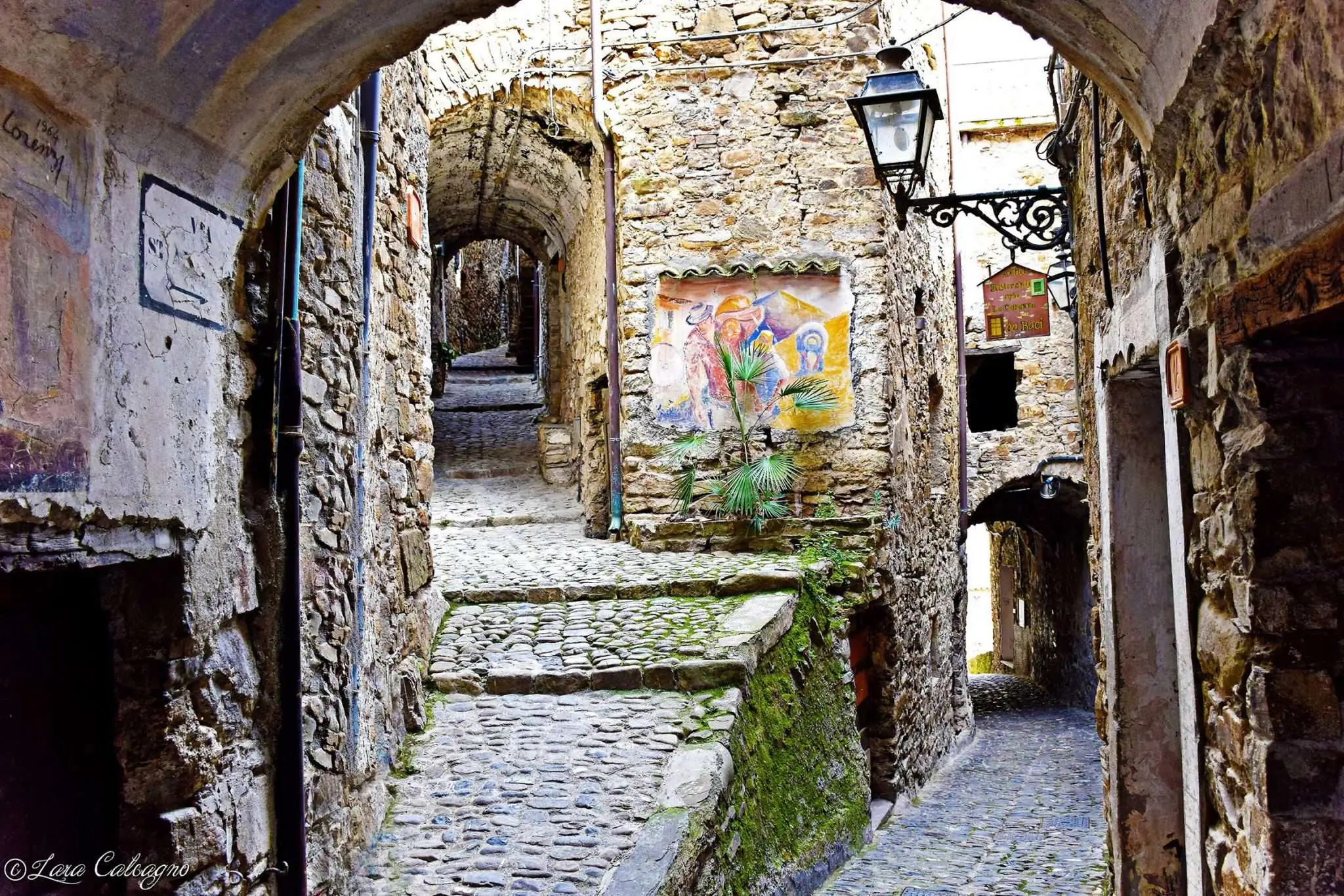
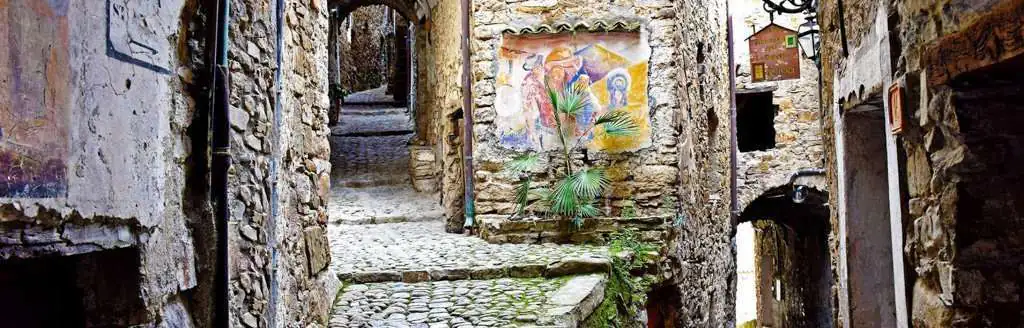
Since the 1960s the walls of Apricale have been painted with scenes of rural life and landscapes of the Ponente, the western Ligurian Riviera. This is why it is known as the artists’ village. The murals are scattered through the lanes: the best way to see them is to wander aimlessly between the houses.

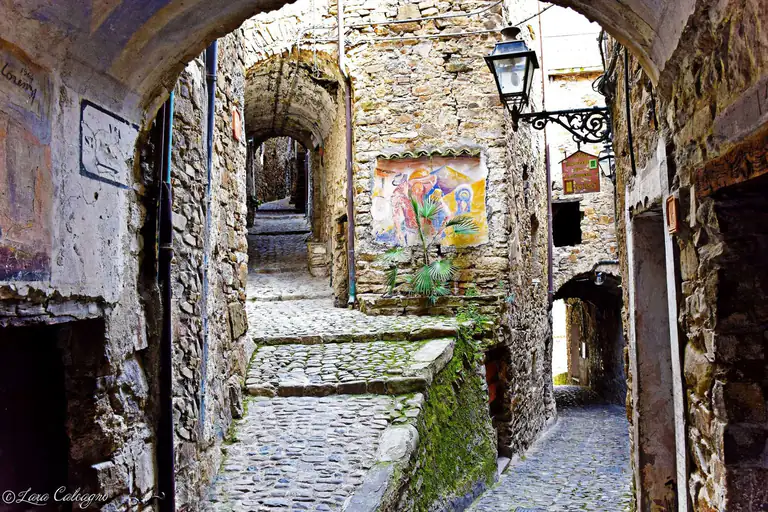
Alleys and stone arches of Apricale

Carruggi, gates and wash houses

The village is a tangle of stone lanes, arches, covered passageways and steep steps. The Doria built three pointed-arch gates into the walls, which were the only ways into the village. Near the old drawbridge you can still see the 19th-century wash houses under barrel vaults.

Church of Santa Maria degli Angeli in Apricale

Chiesa di Santa Maria degli Angeli

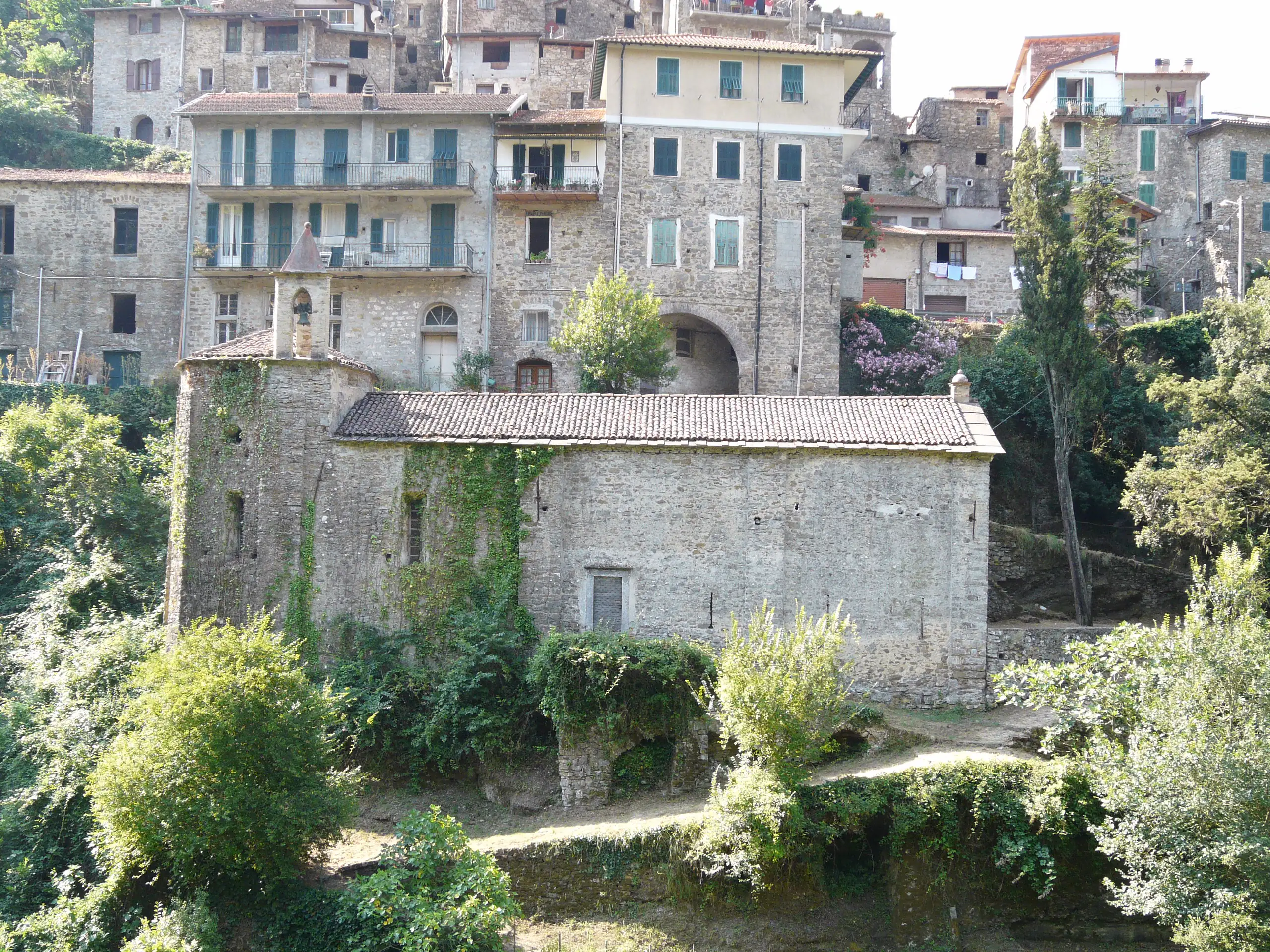
At the foot of the village, near the rio San Rocco stream, stands this 15th-century fortress church. Its walls and cross vault are covered in frescoes ranging from the 15th to the 18th century; the oldest depict the Assumption and the Evangelists. It lies on the footpath to Perinaldo.

Chiesa di Sant'Antonio Abate

Near the cemetery, this is a Romanesque church with a 13th-century apse and a Baroque façade dated 1793. Inside it holds 15th-century frescoes of Christ and the Evangelists.

Ruins of San Pietro in Ento

Outside the village stand the ruins of a single-nave church from around 1230, one of the oldest in the valley. It makes a good goal for anyone who enjoys walking among olive groves and woods.

The village of Apricale perched on its hill

Where to stay

Where to stay in Apricale

In the village you will mostly find B&Bs, holiday homes and apartments created in old stone houses, often with views over the valley. In the surrounding area there are agriturismi (farm stays) among the olive groves, handy if you are travelling by car and looking for peace and quiet. Bear in mind that many houses can only be reached on foot via steps: ask in advance where to leave the car and how much luggage you will need to carry.

If you would rather have the sea close at hand, you can stay in Bordighera or Ventimiglia and come up to Apricale for the day. In August, during the Teatro della Tosse, and in September for the sagra, rooms in the village sell out: book early.

Nearby alternative

Looking for more choice? Bordighera is 17 km away, by the sea, with hotels, B&Bs and apartments and trains along the coast and to France.

Where to stay in Bordighera →Day trips from Bordighera →

Getting there

How to get to Apricale

By car

From the A10 Genoa–Ventimiglia motorway, exit at Bordighera (or Ventimiglia), take the val Nervia provincial road to Isolabona and from there climb up to Apricale. From Bordighera it is about 16 kilometres and around twenty minutes; from Sanremo about 26 kilometres and 40 minutes. The last stretch is narrow and winding.

By train

There is no railway in Apricale. The nearest stations are Bordighera and Ventimiglia, on the Genoa–Ventimiglia line; from there you continue by bus or taxi.

By bus

The val Nervia is served by Riviera Trasporti buses departing from Ventimiglia. Services are few and mostly run on weekdays: check the current timetable on the company’s website before setting off, and check whether the bus goes all the way up to Apricale or stops at Isolabona.

By plane

The nearest airport is Nice Côte d’Azur, about 62 kilometres away: by car it takes about an hour via the motorway to Bordighera.

Parking

The historic centre is made up of lanes and steps and cannot be driven through. You park at the entrance to the village, in the via IV Novembre area and along the access road, and continue on foot. On summer weekends and during events, spaces fill up quickly: arrive in the morning.
By car

A10, Bordighera exit, then the val Nervia road to Isolabona (about 16 km, 20 minutes)

By train

Bordighera or Ventimiglia stations, then Riviera Trasporti bus (few services) or taxi

By plane

Nice Côte d'Azur (about 62 km); about 1 hour by car

The guide

Apricale in a day: a suggested itinerary

  • Morning: arrive and park at the entrance to the village, then climb through the carruggi to Piazza Vittorio Emanuele, the parish church with the bicycle on its bell tower and the Oratorio di San Bartolomeo.
  • Lunch: at a trattoria in the village, with barbagiuai, rabbit with olives and, to finish, pansarole with zabaione.
  • Afternoon: visit the Castello della Lucertola and its museum, then a tour of the murals and a walk down to Santa Maria degli Angeli.
  • Evening: sunset from the square, or a short drive to Dolceacqua, a few minutes away, to see the bridge and the castle lit up.

With a second day you can walk the trail to Perinaldo or head up the upper val Nervia towards Pigna.

Food and local dishes in Apricale

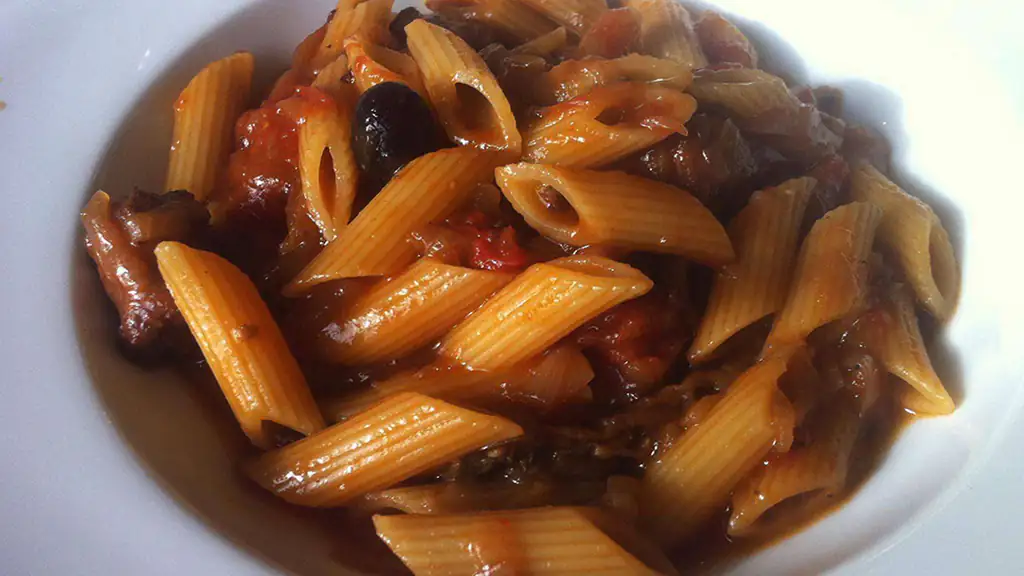
Pasta with sauce at a restaurant in Apricale

The cooking in Apricale is that of the Ponente hinterland: vegetables, herbs, olive oil, rabbit and a few traditional sweets with old roots.

  • Pansarola con zabaione: the village’s signature sweet, a fritter dusted with sugar and dipped in warm zabaione. The English writer William Scott was already writing about it in 1907.
  • Barbagiuai: large ravioli filled with pumpkin and cheese, flavoured with marjoram.
  • Torta verde: a savoury pie of vegetables, eggs and cheese, traditionally eaten during the olive harvest.
  • Coniglio alle olive: rabbit browned in a casserole with olive oil and Taggiasca olives.
  • Cubaite: two wafers sandwiching a hazelnut and honey brittle.
  • Oil and wine: extra virgin olive oil from Taggiasca olives and Rossese di Dolceacqua.

Events and festivals in Apricale

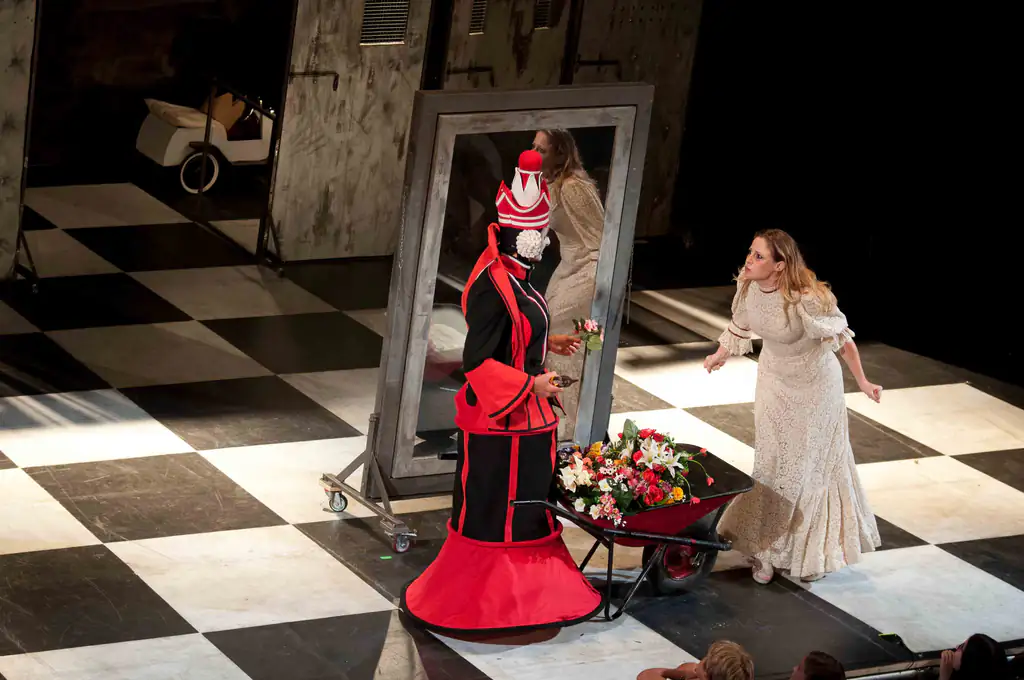
Teatro della Tosse performance in Apricale
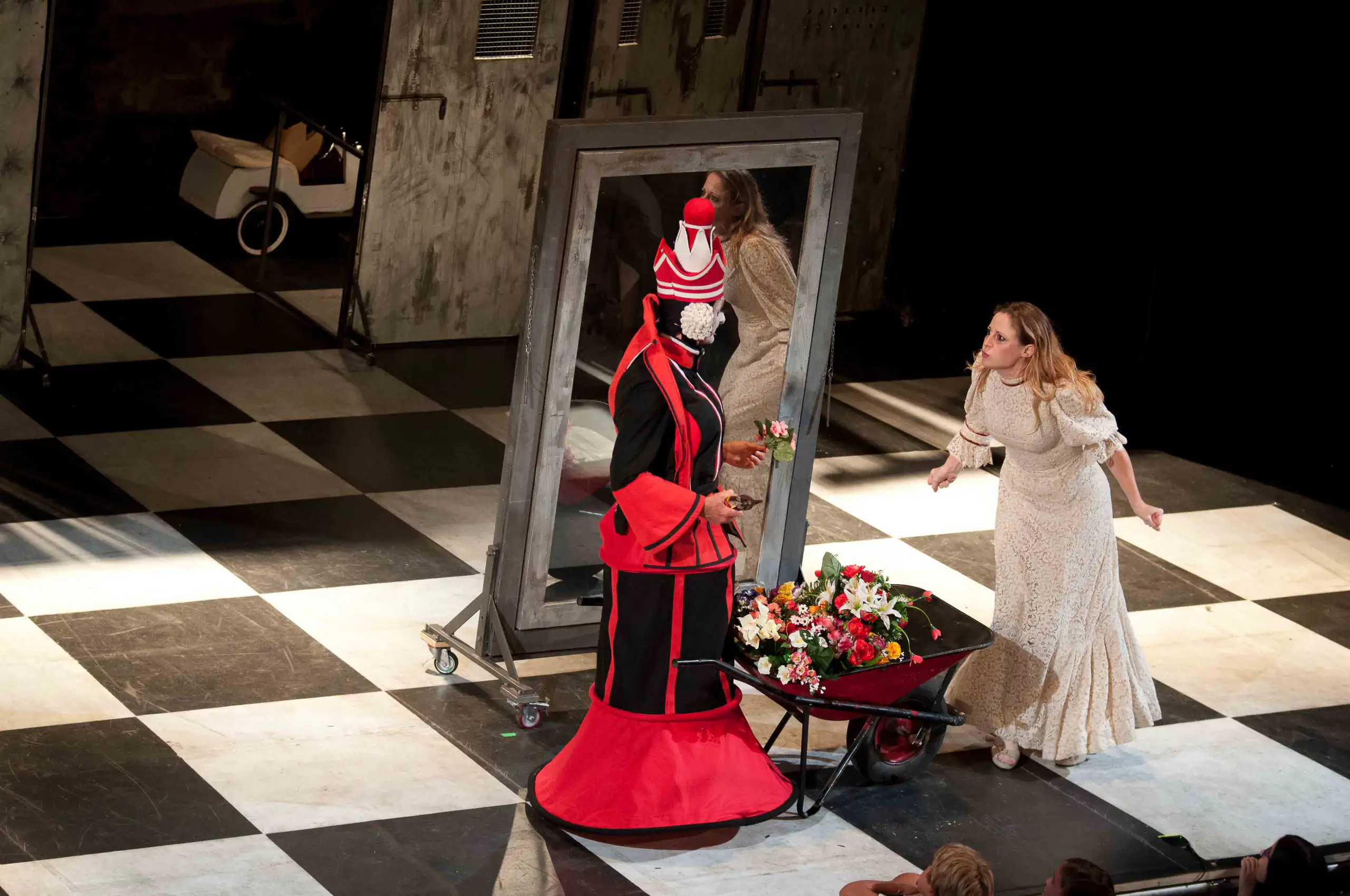
  • Teatro della Tosse (August): since 1990 the Genoese theatre company has turned the lanes and squares into a travelling stage every summer. In 2026 the show was “Il grande ballo di Venere”, from 5 to 15 August. Wear comfortable shoes: you follow the performance on foot.
  • Sagra della Pansarola e Zabaione (September): a Sunday in mid-September in the square, with the village band; in 2026 it took place on 13 September.
  • Festa patronale (8 September): the patron saint’s feast, with a procession through the village streets.
  • A come Amore (February): an event combining music and food in the week of Valentine’s Day.

Dates change every year: check them on the Riviera dei Fiori events calendar before you set off.

Walks and hiking trails

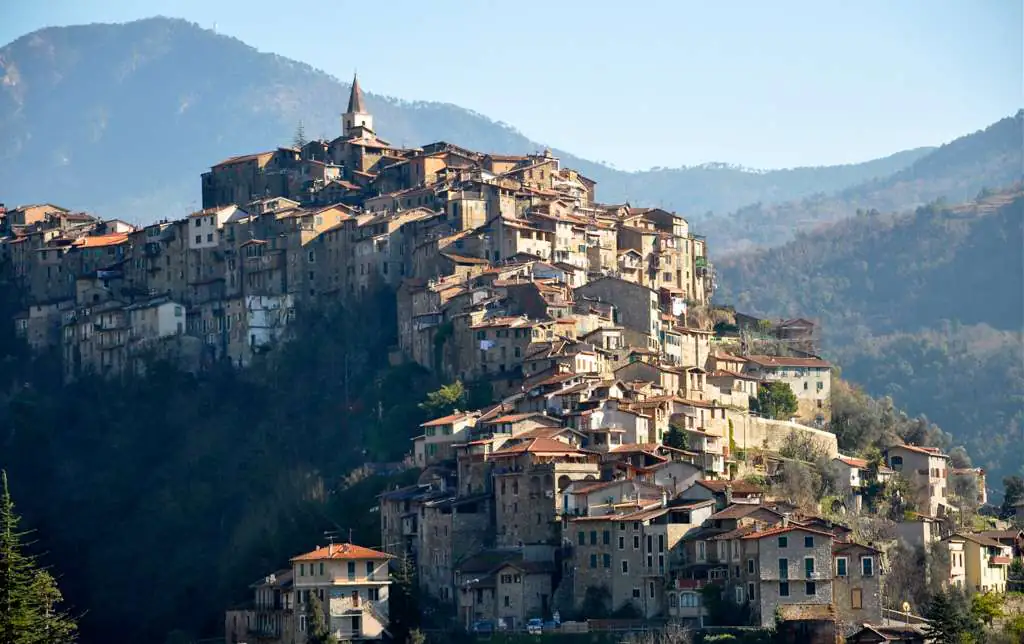
Apricale among the mountains of the hinterland

Apricale is surrounded by olive groves, woods and old mule tracks that once linked the villages of the valley. The best-known route is the trail to Perinaldo, the neighbouring village on the ridge towards the sea.

  • Apricale–Perinaldo loop: about 7 kilometres and 3.5 hours of walking, with 550 metres of elevation gain. It starts from the car park in via IV Novembre, passes Santa Maria degli Angeli, an old bridge and the remains of a mill, and climbs to Perinaldo on an old mule track through the woods. Moderate difficulty: hiking boots are needed.
  • To San Pietro in Ento: a shorter walk through the olive groves to the ruins of the 13th-century church.

In summer, walk early in the morning: the sun-facing slopes get very hot.

Day trips from Apricale

  • Dolceacqua (about 7 km, around ten minutes): the bridge painted by Monet, the Doria castle and Rossese wine.
  • Perinaldo: birthplace of the astronomer Giovanni Domenico Cassini, with a museum and observatory dedicated to him; you can also get there on foot along the trail.
  • Pigna and Rocchetta Nervina: more stone villages of the val Nervia, higher up the valley.
  • Bordighera (about 16 km, 20 minutes): the nearest seaside, the old upper town and the seafront promenade.
  • Ventimiglia: the old town, the gardens and the big weekly market, described in the guide to Ventimiglia market.
  • Sanremo (about 26 km, 40 minutes): La Pigna old town, the Casino and the cycle path.
  • Seborga: the “principality” in the hills above Bordighera.

Weather

Weather and best time to visit Apricale

Spring and autumn; August for the Teatro della Tosse, September for the sagra

⛅
15°CNow · wind 12 km/h
  1. Thu 8🌙15° 15° 
  2. Fri 9🌦️20° 12°2 mm
  3. Sat 10🌤️21° 10° 
  4. Sun 11🌤️21° 10° 
  5. Mon 12🌤️22° 14°1 mm
  6. Tue 13⛅21° 10° 

Forecast: MET Norway (Yr), CC BY 4.0 licence. Updated hourly.

Weather across Liguria →

MonthJanFebMarAprMayJunJulAugSepOctNovDec
SeaOff seasonOff seasonOff seasonOff seasonPossibleGoodIdealIdealIdealGoodOff seasonOff season
Sightseeing and hikingGoodGoodIdealIdealIdealGoodGoodGoodIdealIdealGoodGood
CrowdsFew peopleFew peopleFew peopleBusyBusyBusyVery busyVery busyBusyFew peopleFew peopleFew people
Don't missTeatro della TossePansarola Festival (Sagra della Pansarola)

IdealGoodPossibleOff season

Crowds:QuietFew peopleBusyVery busy

Gallery

Photos of Apricale

FAQ

Frequently asked questions about Apricale

What is there to see in Apricale?

Piazza Vittorio Emanuele, the Castello della Lucertola with its museum, the parish church with the bicycle on its bell tower, the Oratorio di San Bartolomeo, the murals in the lanes and the frescoed church of Santa Maria degli Angeli.

How long do you need to visit Apricale?

Half a day is enough for the village and the castle. With a full day you can add Dolceacqua or walk the trail to Perinaldo.

Where can you park in Apricale?

At the entrance to the village, in the via IV Novembre area or along the access road. The historic centre cannot be driven through.

How do you get to Apricale without a car?

By train to Bordighera or Ventimiglia, then on the Riviera Trasporti buses of the val Nervia, which run only a few services, or by taxi.

What is the nearest seaside to Apricale?

Bordighera, about 16 kilometres and around twenty minutes away by car. Ventimiglia is also close.

What is the pansarola of Apricale?

It is a sweet fritter dusted with sugar, eaten dipped in warm zabaione. A sagra (food festival) is dedicated to it in mid-September: in 2026 it took place on Sunday 13 September.

When is the Teatro della Tosse in Apricale?

Every summer in August, since 1990. In 2026 the travelling show “Il grande ballo di Venere” ran from 5 to 15 August.

Can you visit the Castello della Lucertola?

Yes, it houses the Museo della storia di Apricale. It is closed on Mondays, open in the afternoon from Tuesday to Saturday and from late morning on Sunday; there is an admission charge.

Why is Apricale called Apricale?

The name comes from the Latin “apricus”, meaning exposed to the sun: the village is built on a south-facing slope.

Nearby

What to see near Apricale

4 km as the crow flies

Dolceacqua

The bridge painted by Monet, the Castello dei Doria and Rossese, Liguria's first DOC: a guide to the iconic Val…

Discover →

5 km as the crow flies

Rocchetta Nervina

Medieval village in the Val Nervia on the Barbaira stream: humpback bridge, carruggi, E Dubarìe museum, natural swimming pools and…

Discover →

6 km as the crow flies

Pigna

Medieval village in the upper Val Nervia: the chibi alleys, the loggia, San Michele with Canavesio's polyptych, Buggio, Pigna beans…

Discover →

7 km as the crow flies

Seborga

The Principality village above Bordighera: Piazza San Martino, Palazzo dei Monaci, sentry boxes, mimosa and views over the Côte d'Azur.

Discover →
Scroll to Top