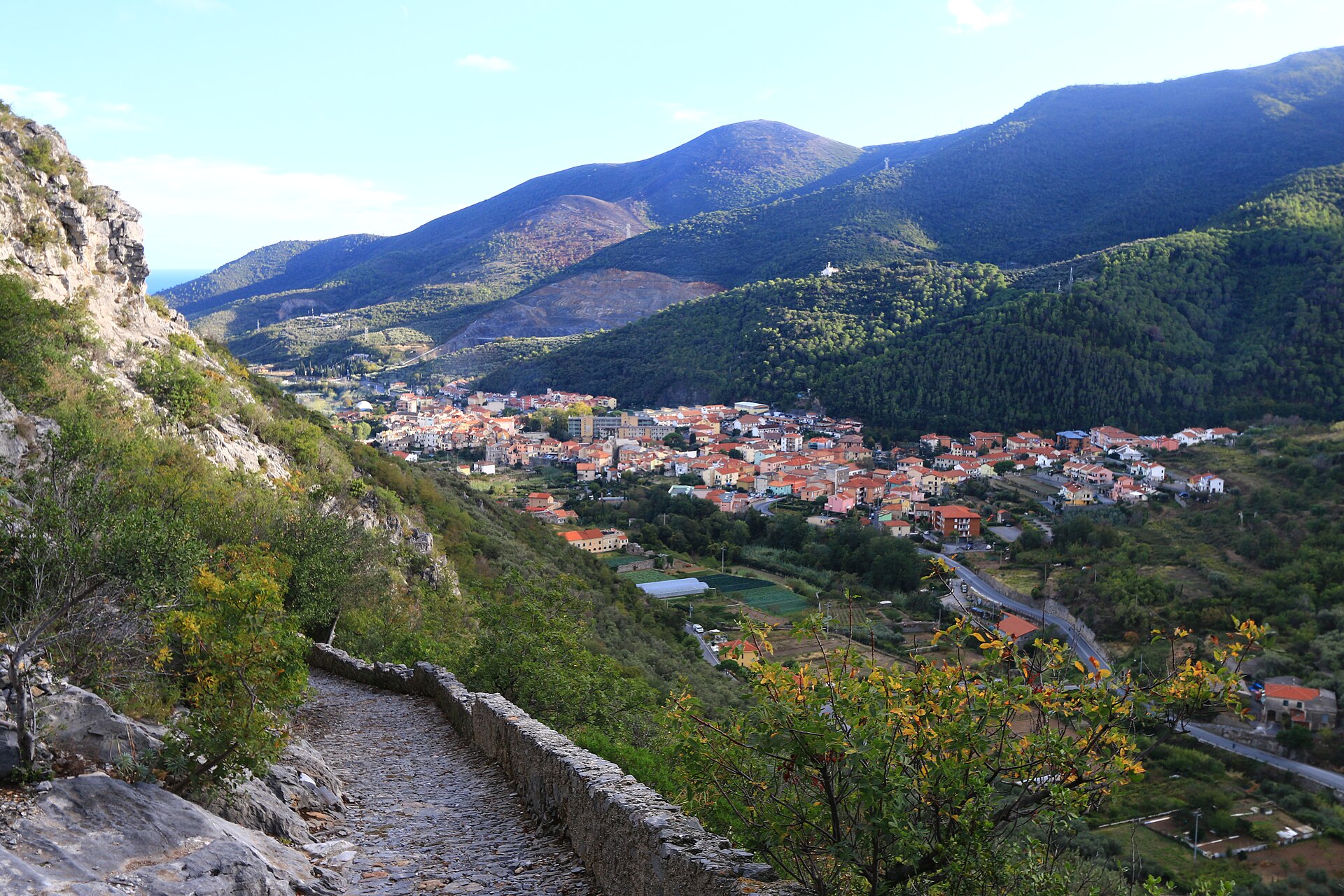
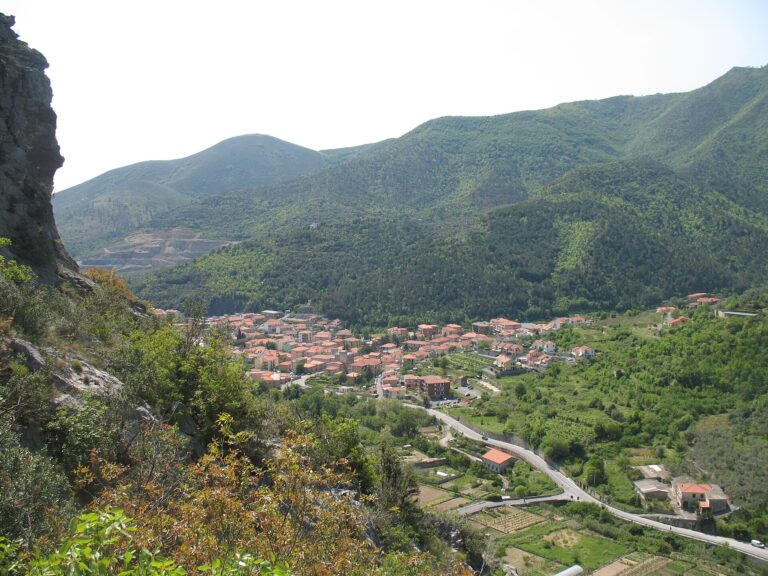
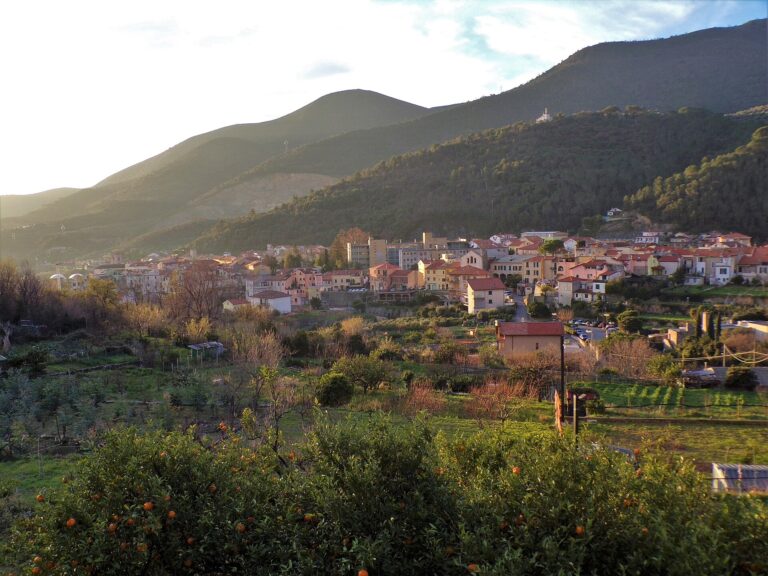
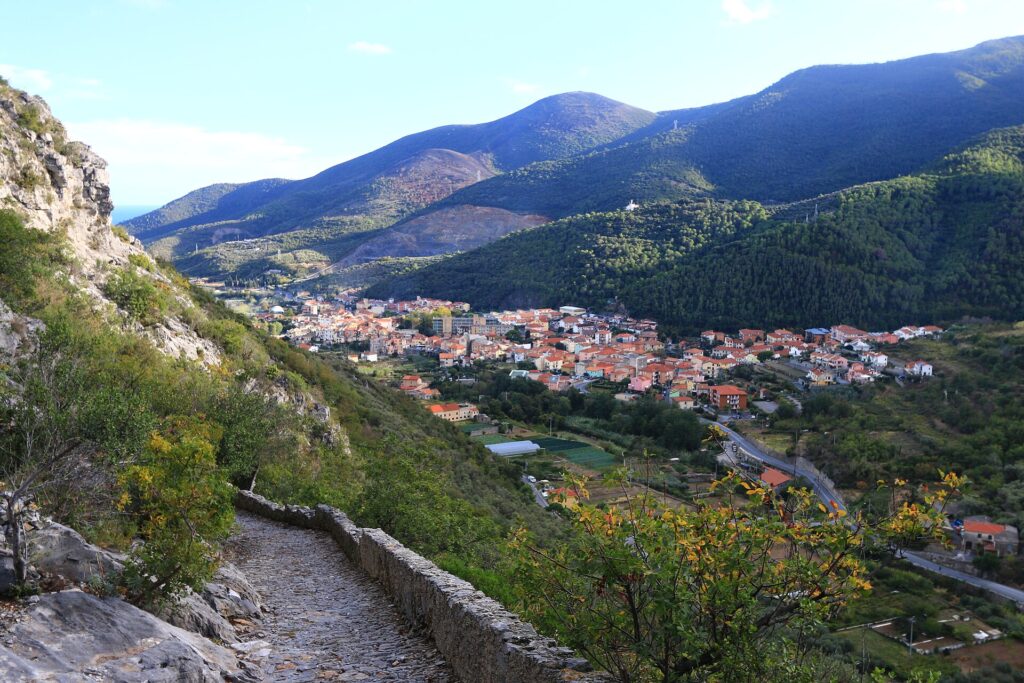
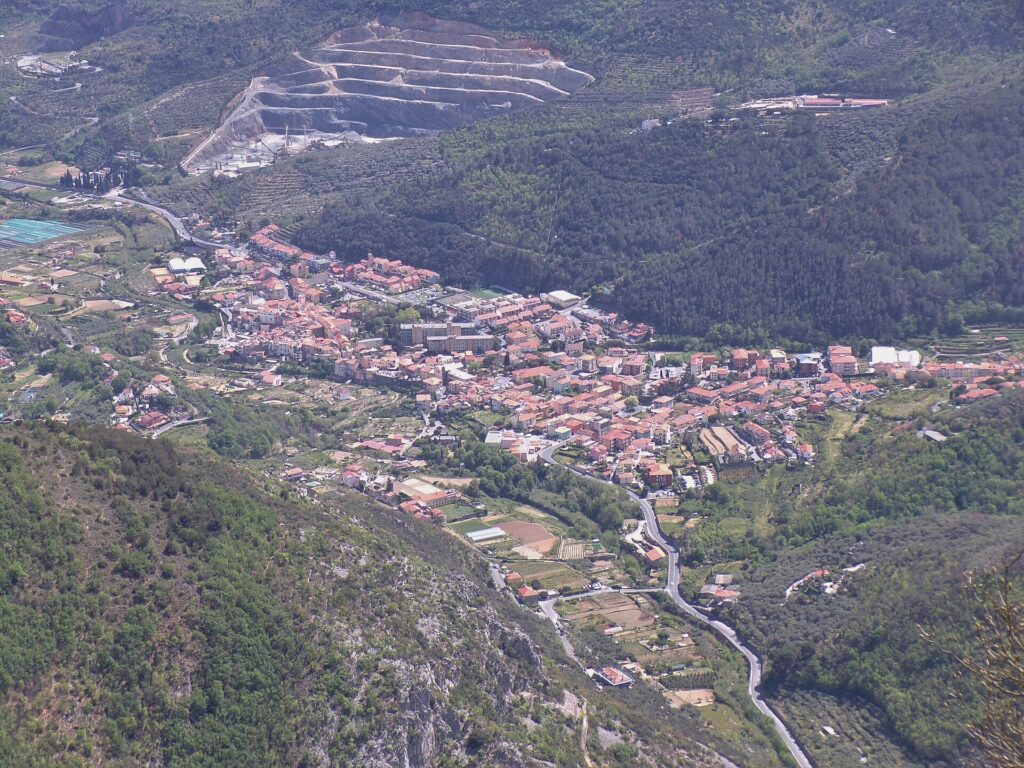
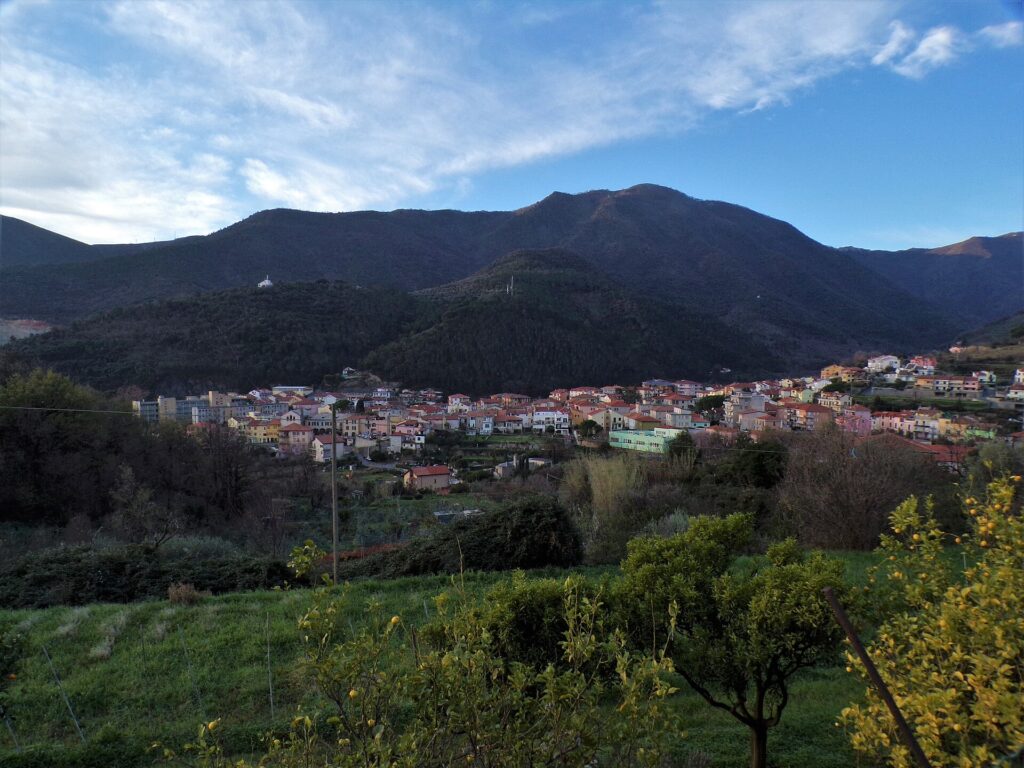
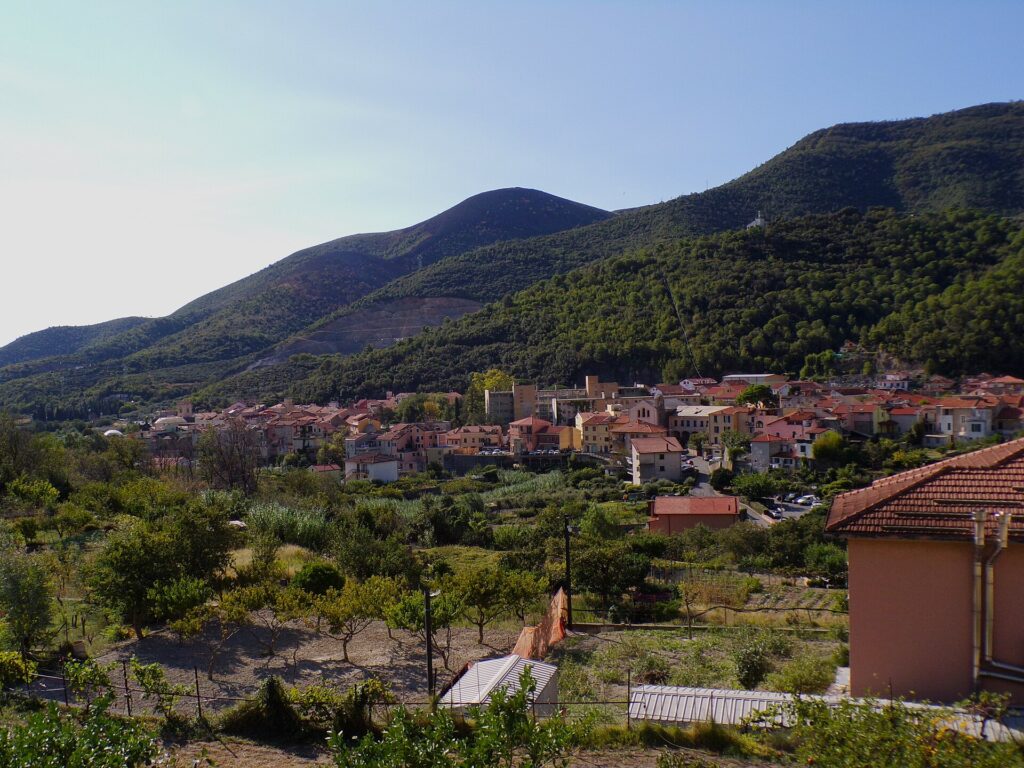
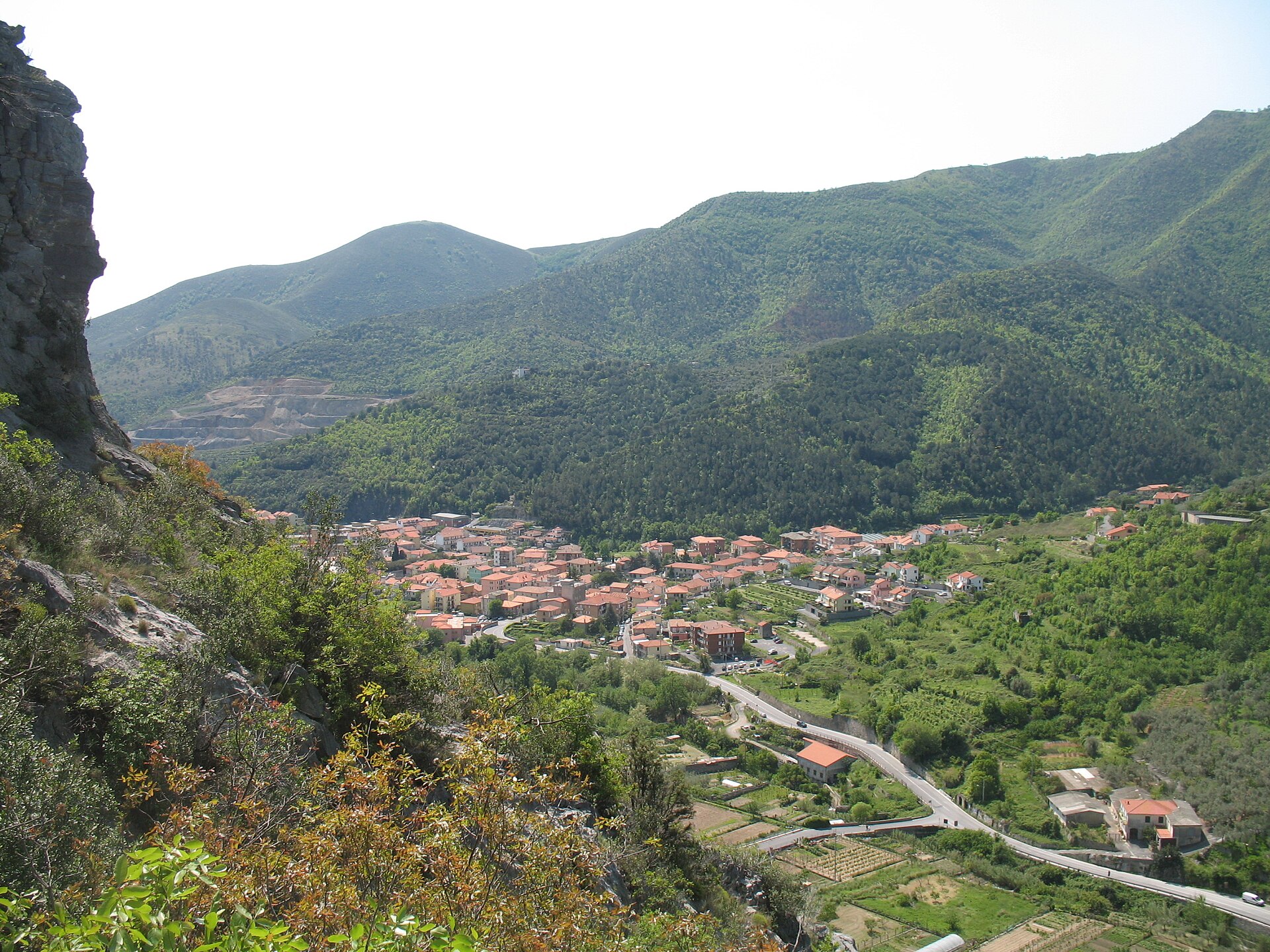
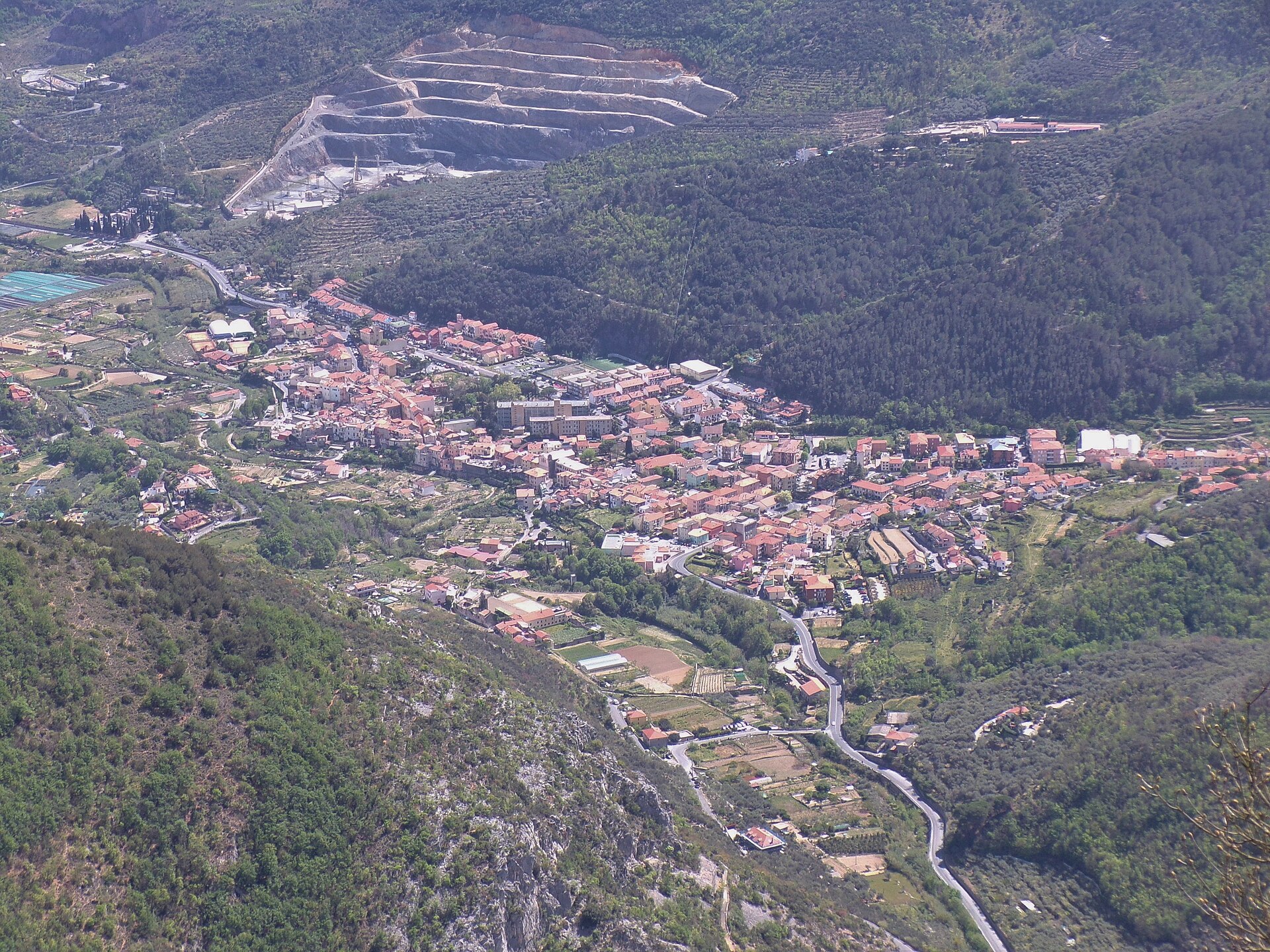
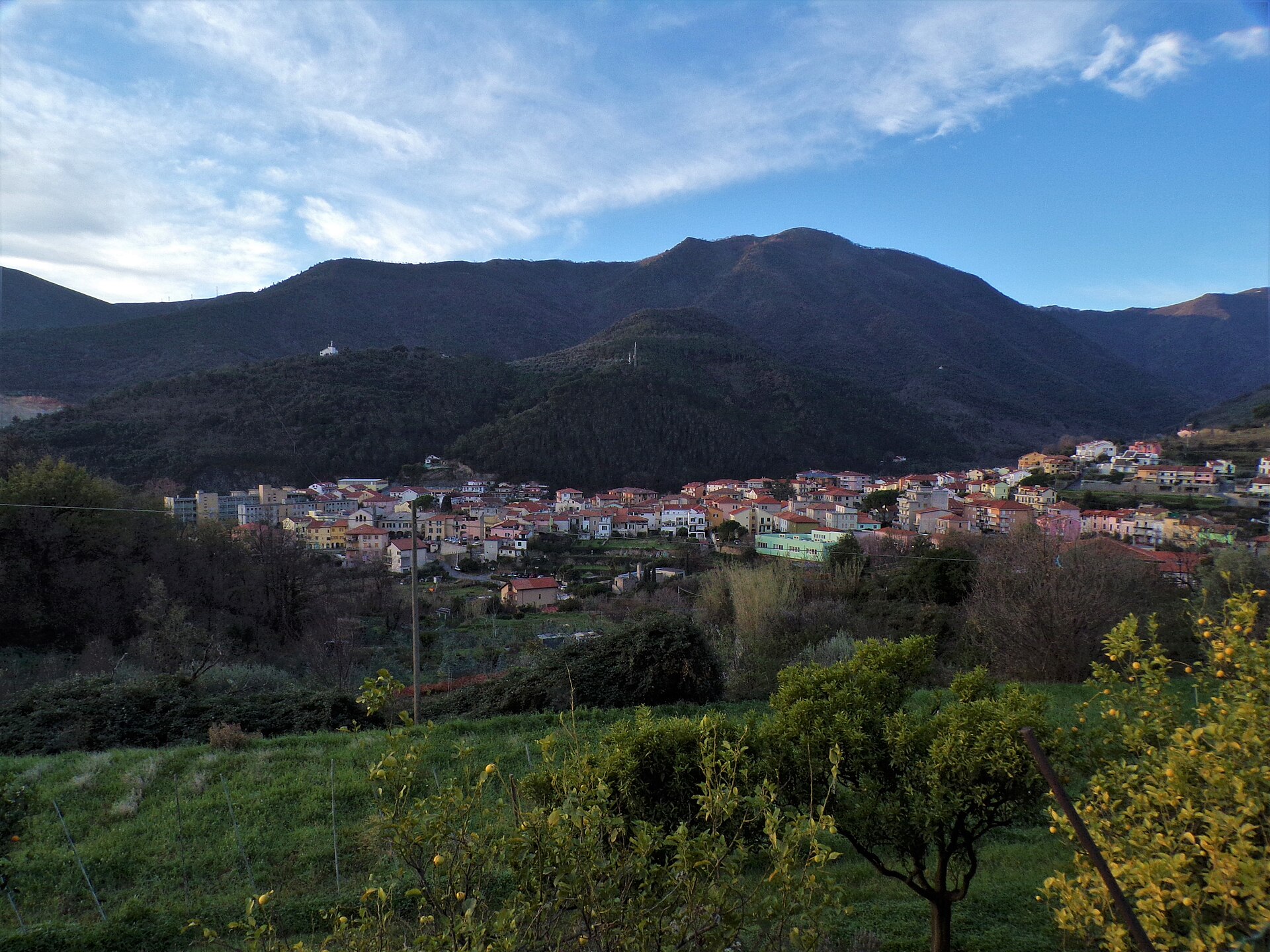
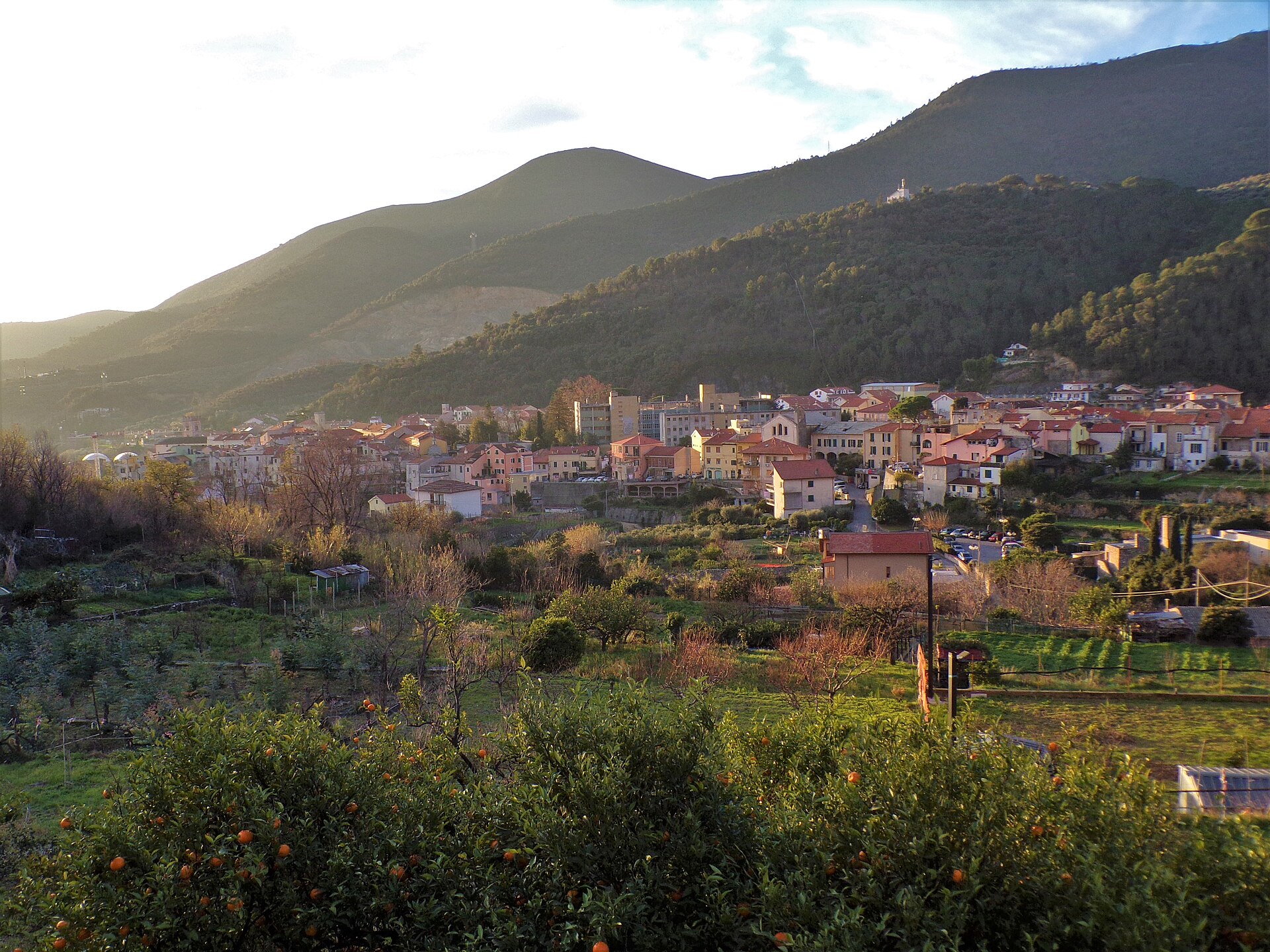
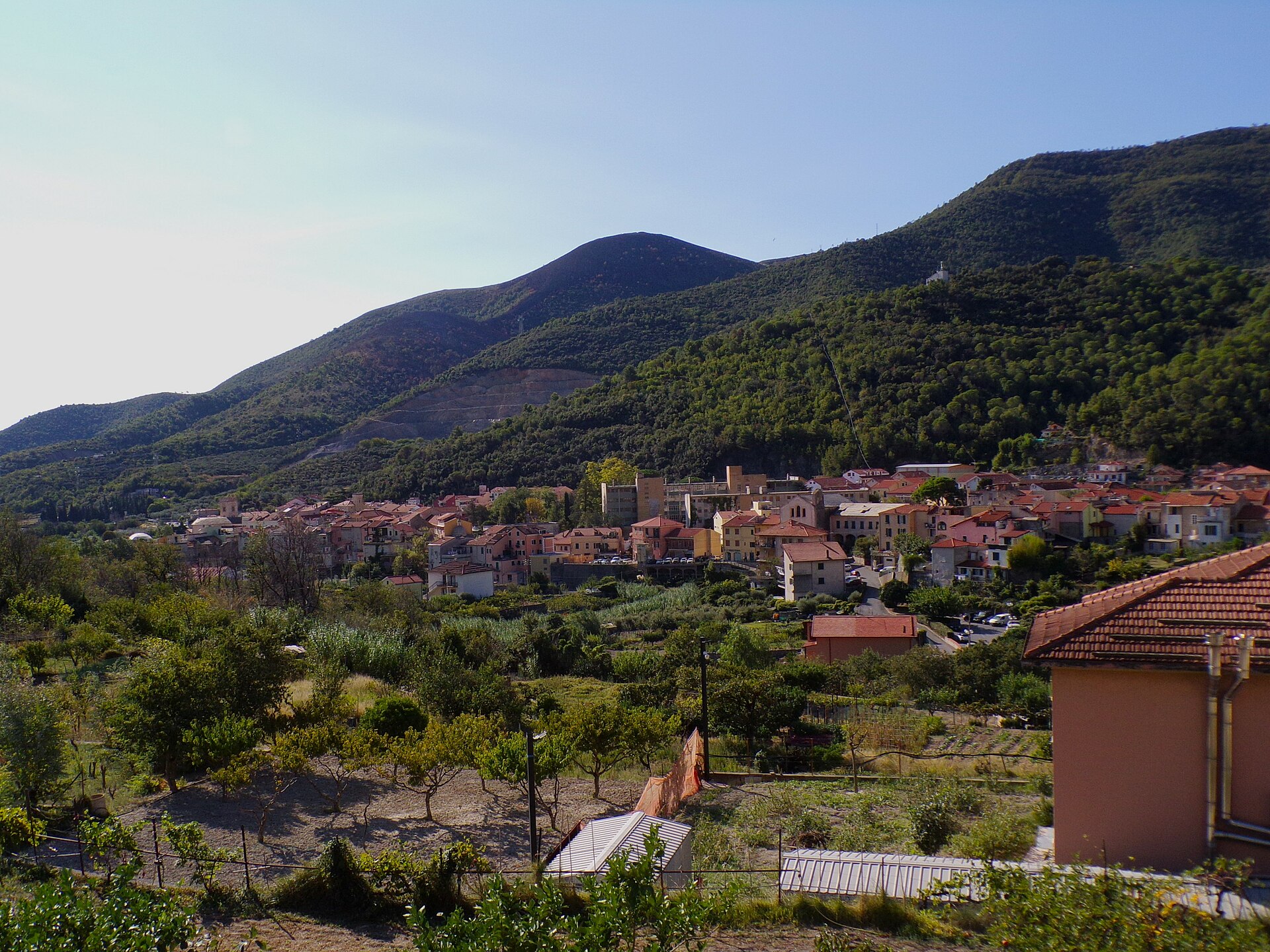
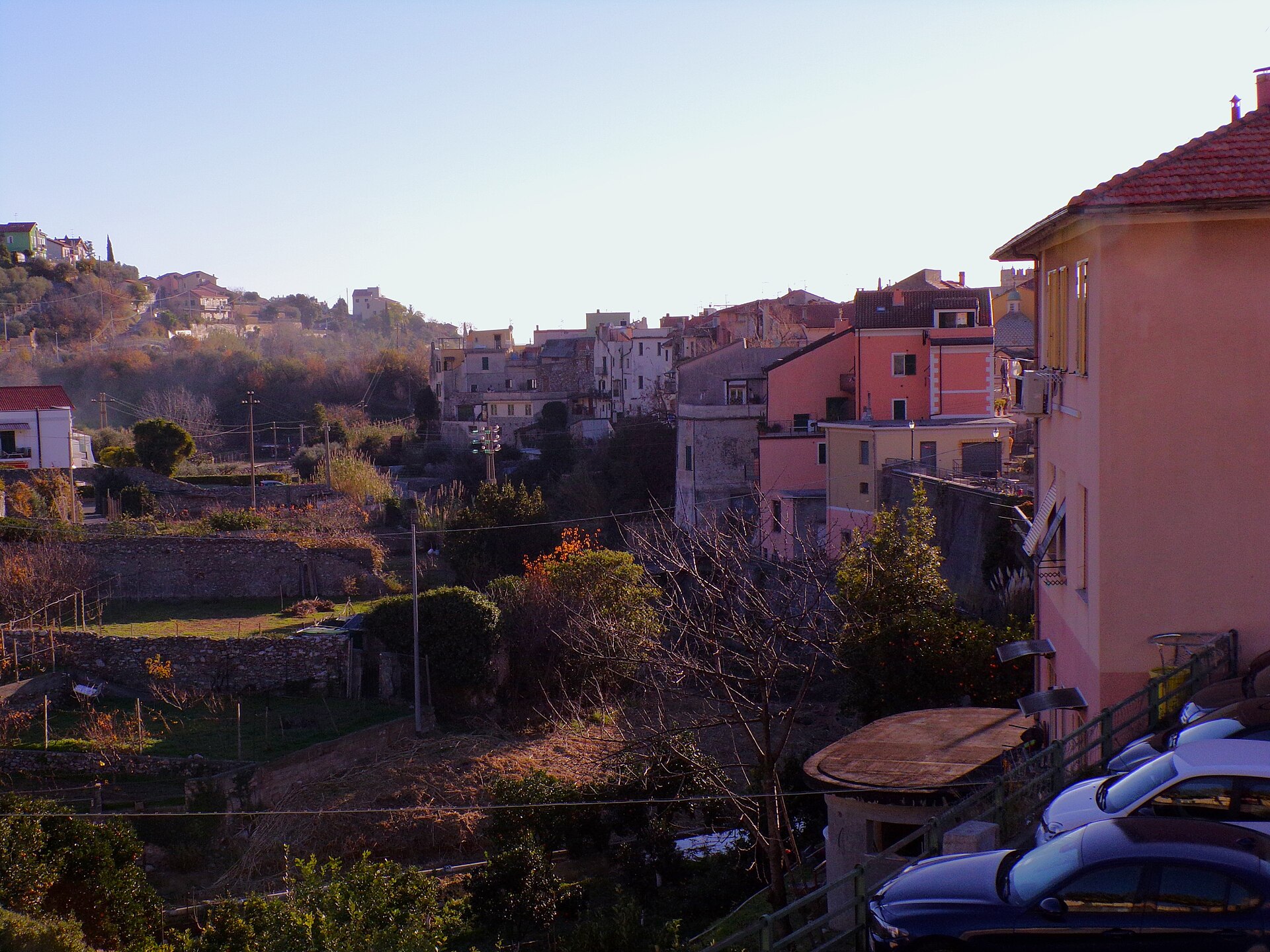
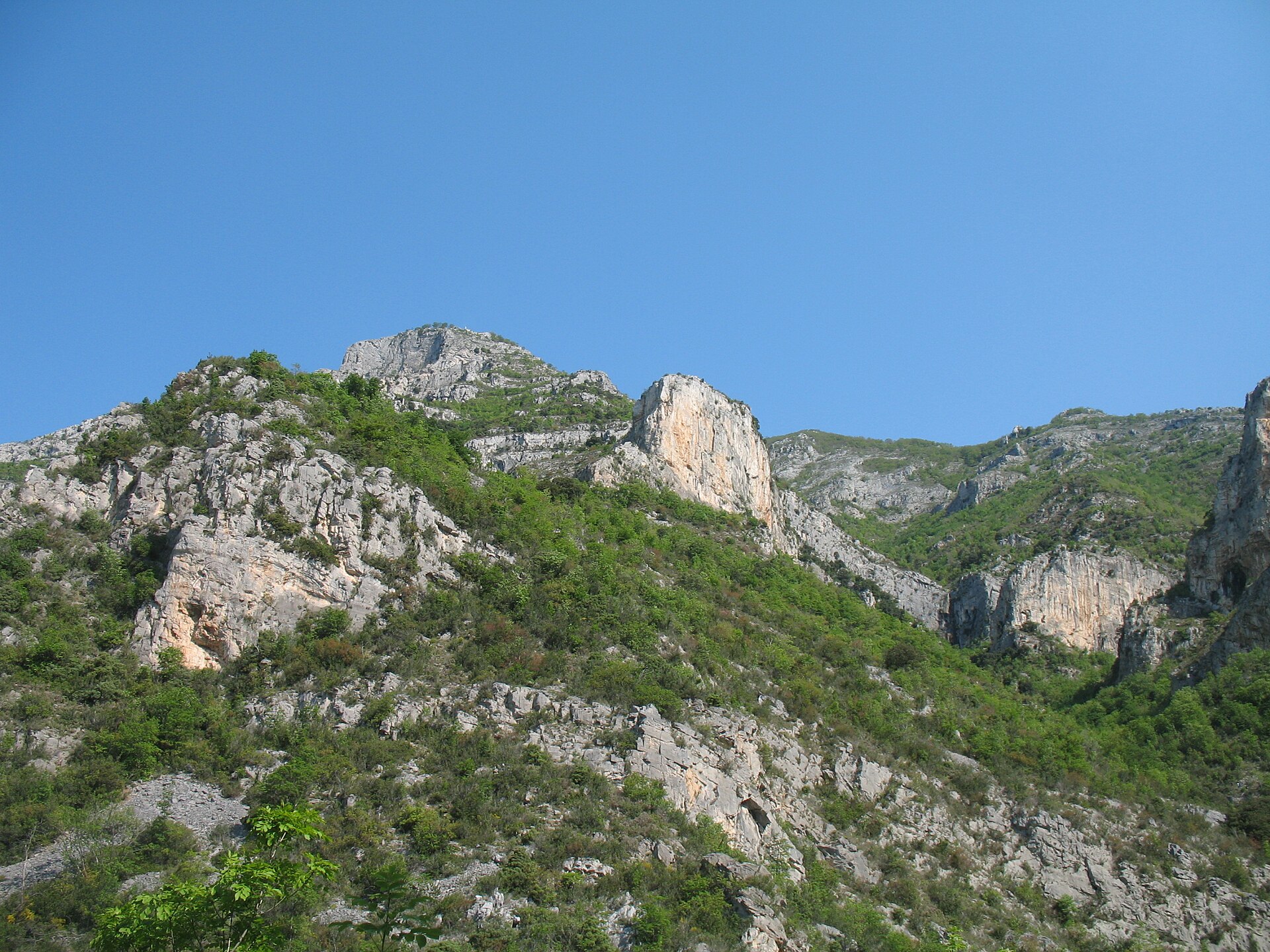
Toirano is a village of about 2,700 people in the Val Varatella, in the province of Savona, 3–4 km from the beaches of Borghetto Santo Spirito and Loano. The centre sits at 38 metres above sea level, among olive-covered hills and the limestone walls that close the valley. It has held the Touring Club’s Orange Flag for years and is known for one thing above all: the Toirano Caves, one of the best-known prehistoric sites in Liguria.
The caves are the reason to come, but not the only one. The village is a medieval core of lanes, small arches and slate doorways, with an ethnographic museum of eighteen sections in the D’Aste – Del Carretto palace. At Christmas it hosts the Nativity Trail, with more than 180 cribs on display in the alleys: it is covered in our guide to the Toirano Nativity Trail.
Toirano has no beach and no railway station: you get here by car or by bus from Loano. That is why it works well in two ways: as a cool, half-day cultural stop (the caves stay at 16 °C all year) during a beach holiday, or as a quiet base in the hinterland of the Riviera delle Palme, a few kilometres from Pietra Ligure and Ceriale.
By Italian Riviera editorial team·Updated on ·12 min read
Where is Toirano?
Toirano is in Liguria (Riviera di Ponente, Riviera delle Palme, province of Savona).
These are two caves joined by a tunnel dug in 1967 and visited in a single one-way tour. Inside you see formations and pools, and above all human and animal traces that exist almost nowhere else. The Corridor of the Footprints preserves hundreds of prints, including hands and knees, left about 14,400 years ago by five people: two adults and three children aged about 4, 6–7 and 11. They walked in single file along the wall by the light of pine torches. In the Hall of Mysteries you can still see charcoal marks and the handprints of the three children.
Further on is the Cemetery of the Bears, about 400 m from the entrance: bones of cave bears (Ursus spelaeus) gathered over tens of thousands of years from animals that died in hibernation. The municipality describes it as one of the largest deposits open to visitors in Europe. For the full description of the route read our page on the Toirano Caves; opening hours, prices and booking are in the section below.
Val Varatella Prehistoric Museum
It is in the hall next to the cave ticket office and opens when the caves are open. It displays finds from the Palaeolithic, Neolithic and Roman periods in the area, plus the display case with the skeleton of a lynx cub found in a cave near Albenga. It is a short stop and a useful one before going in: you understand what you are about to see.
The medieval village and the Torracco
Toirano stands where the Varatella meets the Barescione stream and is among the oldest settlements of the Ligurian Riviera di Ponente. A Byzantine chronicler of the early 7th century mentions a “Castron Baractelìa”, believed to be Toirano. From the late 14th century the village came under the Republic of Genoa. The oldest quarter is the Torracco: stone-and-lime tower houses leaning on each other.
Wander through the lanes without a plan. You will notice the small arches crossing the alleys, built to reinforce buildings after the 1887 earthquake, the sills of 16th-century workshops, slate portals, votive niches and frescoed façades. In the heart of the village there is a 15th-century fresco of the Dormitio Mariae. The centre is made for walking: leave the car at the edge and go on foot.
Piazza San Martino and the church
The church of San Martino, patron saint of the village (feast day 11 November), was already an archpriest’s church in the 13th century; the present building went up between the late 16th and early 17th century. The 14th-century Gothic bell tower is the only survivor of the village’s three towers: the other two, the town tower and the bishops’ palace tower, are gone. The churchyard is surrounded by arcades of the 14th–16th centuries, with slate benches and cobbled paving: a good place to sit after the caves.
Porta and ponte delle Giaire
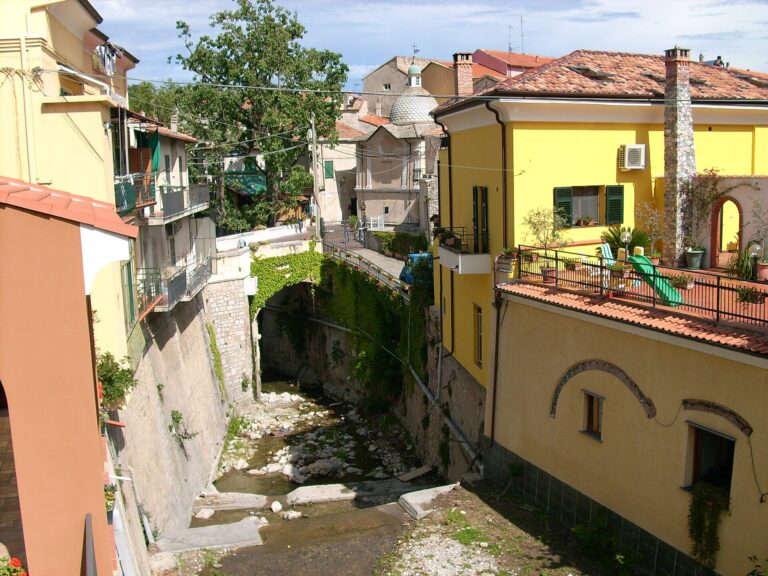
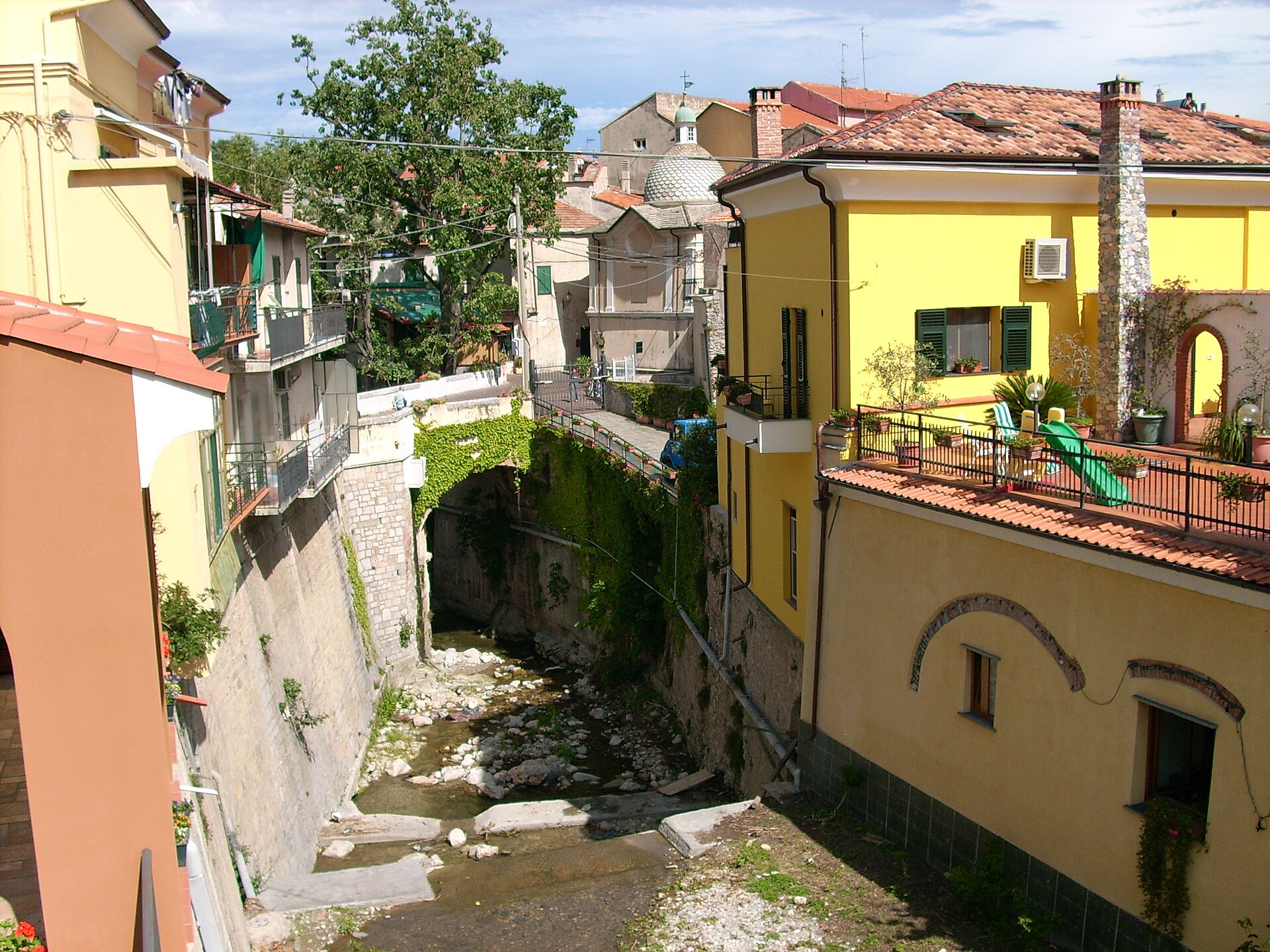
Of the village’s five gates, three remain. The best preserved is the Porta delle Giaire, facing the Ponte delle Giaire: a medieval three-arch bridge over the Varatella. It is the most photographed corner of Toirano, a couple of steps from the centre.
Val Varatella Ethnographic Museum
In the D’Aste – Del Carretto palace, Piazza Libertà, since 1997. It has eighteen sections on three floors: farming and crafts, home life, monastic orders, photographs and the permanent exhibition of the Ligurian folk nativity scene. The most interesting part is the reconstruction of the oil presses: the “gumbettu” (animal-driven press) and the “gumbu” (water-wheel press). Many objects were donated by local people. The Piano Nobile, with the palace’s reception rooms, needs a separate ticket.
According to the municipality the museum is open every day except Tuesday, 10–13 and 15–18; admission is €5 (Piano Nobile €2). Your cave ticket includes entry to the Ethnographic Museum. The municipality’s page does not say how long these hours apply: phone +39 0182 989968 before you go.
ToirArte, sculpture around the village
Since 2022 the village has an itinerary of sculptures and ceramics donated to the municipality by local artists. The works are scattered through the alleys and you find them as you stroll. A map is available on the municipality’s website.
Certosa and the hamlets
A little outside the centre, among the olive trees, is the locality of Certosa. Carthusian monks began a convent here in 1495; it was suppressed in 1798 and today only the 16th-century bell tower and the ruin of the church remain. The other hamlets, Barescione and Dari, are clusters of a few houses along the stream, linked by the Giro delle Borgate. Carpe, the highest hamlet, celebrates San Bernardo on 21 August.
Santa Lucia Superiore and the Colombo Cave: what you cannot visit
The rock sanctuary of Santa Lucia Superiore, with its marble stairway, the 1819 painting by Agostino Oxilia and a Genoese altar piece, is not part of the tour and opens only on special occasions. The Colombo Cave, in the same complex, cannot be visited: it is closed by a gate. If another site lists it as a stop, that is wrong.
Where to stay
Where to stay in Toirano
Toirano has few places to stay. The municipality lists farm stays in the countryside, a dozen B&Bs in the village and nearby streets, and one hotel. Choose according to how you travel:
Historic village: B&Bs in old palaces, on foot from the museum, lanes and restaurants. For atmosphere, if you have no car.
Countryside and hills: farm stays among the olive trees, with quiet and space; you need a car.
Valley floor: towards the coast, close to supermarkets and main roads.
By the sea: in Borghetto Santo Spirito, Loano, Pietra Ligure or Ceriale, more convenient if you arrive by train and want a beach.
If you want to see the caves in the morning without rushing, sleeping in the village or at the nearby seaside beats arriving from far away.
Leave the A10 at Borghetto Santo Spirito and follow the provincial road to Toirano (about 3 km). From the Via Aurelia, at the Borghetto Santo Spirito junction follow signs to Toirano (about 4 km). The caves are about 1 km beyond the village. From Genoa it is about 70 km.
By train
Toirano has no station. The municipality points to Loano station, on the Genoa–Ventimiglia line, and then the bus. There is also a taxi service at Loano.
By bus
TPL Linea bus 81 has daily runs from Pietra Ligure, Loano and Borghetto Santo Spirito, arriving at the cave square. Times and frequency are not confirmed: check TPL Linea (freephone in Italy 800 01 27 27) before planning your return.
By air
The most convenient airport is Genoa (about 70 km), then a train to Loano.
Parking
At the caves there is a large square (piazzale Dario Maineri) with free, unattended parking, picnic tables and public toilets; you can drive in until the last tour ends. In the village leave the car at the edge of the centre. For coaches the municipality lists 3 bays in Piazza Cavalieri di Vittorio Veneto. We have no verified rules for camper vans: ask the municipality.
A10 exit Borghetto Santo Spirito, 3 km; Caves 1 km beyond the village, free parking
By train
No station: get off at Loano, then TPL Linea bus 81 or a taxi
By plane
Genoa (about 70 km), then train to Loano
The guide
Toirano Caves: opening hours, tickets and booking
This is the practical part only. First of all: booking is compulsory and all visits are guided. Without a reservation entry is not guaranteed. Book on the official website or by phone (+39 0182 98062 or +39 0182 989938); the municipality does not take bookings by email. For booking and up-to-date news use only the municipality’s official site: Toirano Caves.
Opening hours
From 1 October to 30 November the caves are open Wednesday to Sunday, 9.00–12.30 and 14.00–16.30, and closed on Monday and Tuesday. This is the only period for which the municipality publishes hours. For December and for January to September there is no confirmed official timetable: check the website or phone. Do not trust “9.30–17” hours found on old travel pages.
Tickets
According to the official site the full ticket costs €16. Young people aged 5 to 18 pay €8. Families with more than one child aged 5 to 14 pay €6 per child. Children up to 5 enter free, as do Toirano residents and Disability Card holders. The ticket includes free entry to the Ethnographic Museum and gives discounts in the other caves of the AGTI circuit and at the Finale Archaeological Museum, in Finalborgo.
What the visit is like
It lasts about 70 minutes. The route is about 1 km with about 400 steps, up and down. Inside it is about 16 °C summer and winter and humidity is very high: bring a light sweater. You need closed shoes with rubber soles (trainers or hiking shoes); flip-flops, slippers, crocs, open sandals, heels and leather soles are not allowed, and the guide can refuse entry. Photos are allowed, but without flash; do not touch the formations and do not leave the group. Pets are admitted only if small and in a carrier or in your arms.
The uphill walk nobody mentions
From the car park to the entrance there is an uphill path of about 300 m, with an average gradient of 18% and short stretches close to 23%. After the exit you walk about 400 m down to the car park. Factor it into your time and energy, especially with small children and older people. The route is not suitable for people with severe mobility disabilities.
With children
It is one of the best visits in Liguria for children aged 5 and over, because three of the five people who left the footprints were children. No minimum age is listed; consider the steps, the dark and the time (70 minutes on your feet).
Bad weather and closures
With an orange or red weather alert the caves close. With strong wind or persistent rain they may close even without a regional alert. Notices are on the News section of the official site and on social media: check on the morning itself.
What to do in Toirano
The caves and the village easily fill a day. An order that works: book the caves for the morning, have lunch in the village, then spend the afternoon on the village and the museum. If you come on a Monday or Tuesday between October and November the caves are closed: you are left with the village and, on Monday, the museum (it is closed on Tuesday too).
Half a day: caves (70 minutes plus the walk up and down), the prehistoric museum next to the ticket office.
A full day: add the lanes, San Martino, the Ponte delle Giaire, the Ethnographic Museum and a coffee in the square.
With children: caves, then the reconstructed oil presses at the museum and a picnic at the cave square (tables and public toilets).
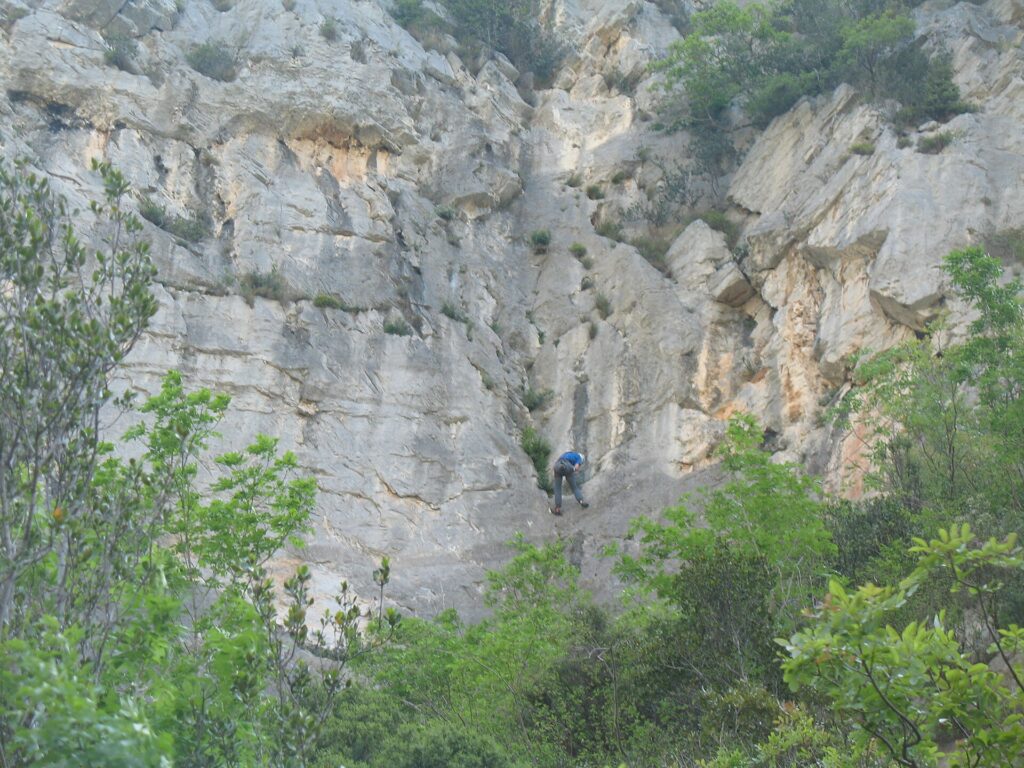
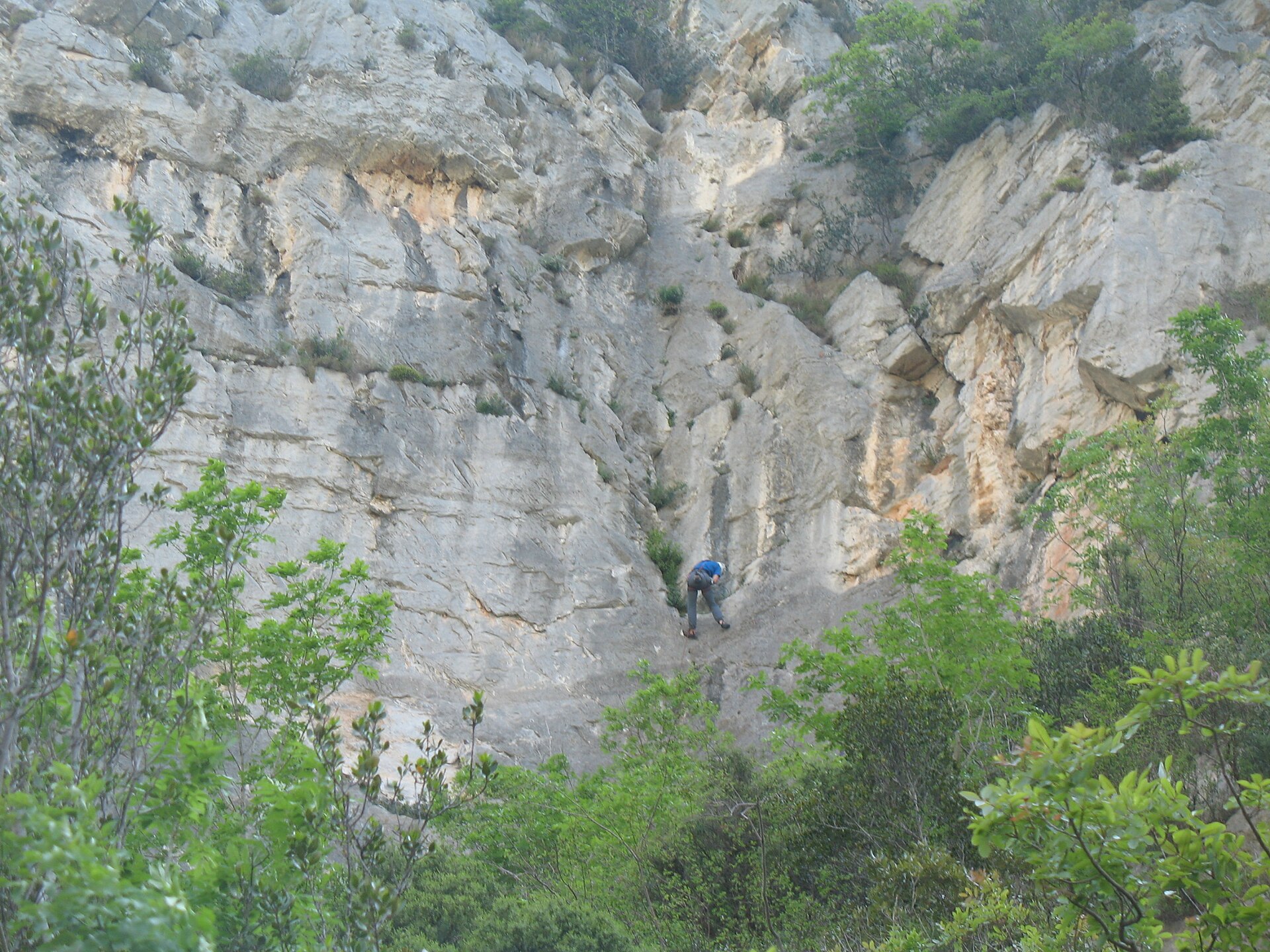
For climbers: the ASD Climbers Toirano has equipped and marked hundreds of routes on the walls above the village.
The limestone walls above the village are a year-round climbing spot. Routes and information are on the association’s site: Climbers Toirano.
What to eat in Toirano
The cooking is that of the Ligurian hinterland. The Touring Club lists as typical dishes zemin, a soup of chard, chickpeas and pork ribs linked to the period of All Saints and All Souls, and zeraria, an old dish that is now rare. The municipality lists bars, pizzerias and restaurants in the centre and at the cave square (there is a bar-restaurant at the square, handy before or after the visit) and an olive-oil mill in the village. Ask on the spot for hours and prices: we do not publish unverified data.
Festivals and events
Ulivissima: Saturday 17 and Sunday 18 October 2026, a municipal event; check the programme on the municipality’s site.
San Martino: 11 November, the patron saint’s day.
Nativity Trail: usually December–January. Check the calendar on the municipality’s site. More than 180 cribs in the alleys and an exhibition at the Ethnographic Museum: read how the Nativity Trail works.
Festa dei Gumbi: early August, dedicated to the water-powered oil presses; dates to be checked.
San Bernardo at Carpe: 21 August.
Walks and hikes
Toirano’s territory climbs to the ridge of the hinterland. The municipality offers several routes, with maps you can download from its site:
Giro delle Borgate: a walking loop through Bengiae, Dari, Certosa, I Mulini, Barescione, Crociata and the Borgo; slow tourism, suitable for families.
Via della Valle: an old path along the Varatella, with the Ponte del Sargente and the ruin of a 16th-century paper mill.
Via per San Pietro: an old salt road to the abbey of San Pietro ai Monti; the abbey belonged to the Benedictines until 1315, then to the Carthusians.
Alta Via dei Monti Liguri: two stages start from Toirano; the municipality also has a loop to Balestrino.
Giogo di Toirano: a pass at about 800 m on the Borghetto–Bardineto road, with picnic tables; the climb to Monte Carmo di Loano (1,389 m) starts here.
We do not publish unverified times, ascents and difficulty: download the municipality’s maps and get information before you set off. The Giogo and Monte Carmo are mountain routes.
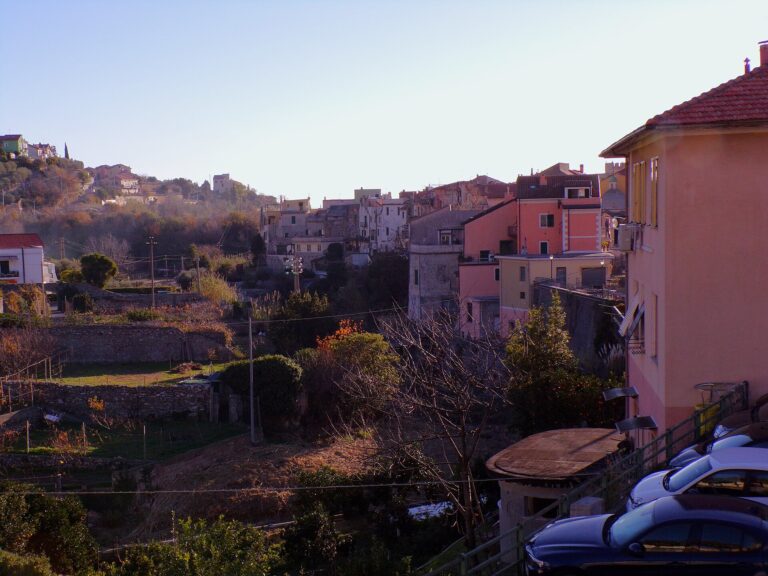
Toirano vista dal sentiero sopra il borgoLa Val Varatella e Toirano dalle rocceToirano vista dall'altoToirano e le montagne della Val VaratellaIl centro di Toirano tra gli uliviIl borgo di Toirano e le collineUn vicolo e il torrente nel centro di Toirano
FAQ
Frequently asked questions about Toirano
Can I visit Toirano without booking the caves?
The village yes, the caves no: booking is compulsory and without a reservation entry is not guaranteed.
How much is a ticket for the Toirano Caves?
The full ticket is €16, young people aged 5 to 18 pay €8, families with more than one child aged 5 to 14 pay €6 per child. It includes the Ethnographic Museum.
How long does the visit last?
About 70 minutes, with about 1 km of route and about 400 steps. Add the 300 m uphill walk from the car park.
When are the caves open?
From 1 October to 30 November Wednesday to Sunday, 9–12.30 and 14–16.30. For other months check the official website or phone.
What is the temperature in the caves?
About 16 °C all year and very high humidity. Bring a light sweater.
What shoes should I wear?
Closed shoes with rubber soles, trainers or hiking shoes. No flip-flops, slippers, open sandals or heels.
Can I take photos in the caves?
Yes, but without flash, staying on the route and with the group.
How do I get to Toirano without a car?
By train to Loano, then TPL Linea bus 81 to the cave square. Check times on tpllinea.it.
Is there a beach at Toirano?
No. The nearest beaches are at Borghetto Santo Spirito, Loano and Ceriale, 3–4 km away.
When can I see the Toirano cribs?
Usually in December and January. Official dates change every year: check the calendar on the municipality’s site.