Genoese focaccia, fugassa in the local dialect, is a low, golden, oil-glossy flatbread with hand-pressed dimples full of brine. It’s made with flour, water, extra virgin olive oil, salt and very little yeast, and in Genoa people eat it at any hour, breakfast included, dipped in a cappuccino. Here you’ll find the quantities for one tray, the timings and the mistakes to avoid.
It isn’t Recco focaccia: that one is paper-thin, unleavened and filled with cheese. The differences are further down, and Recco has its own guide: Recco cheese focaccia.
- Origin: Genoa, where it’s called fugassa
- Total time: about 3.5 hours, of which 30–40 minutes of actual work
- Servings: 4 generous ones (6 as a snack)
- Difficulty: medium
- Key ingredients: strong 00 flour, water, extra virgin olive oil, coarse salt, malt, fresh yeast
- When it’s eaten: breakfast, afternoon snack, or as a starter
Ingredients
Quantities for 4 people, for one large tray (about 40×50 cm) or two of 30×40.
Dough
- 500 g of 00 flour of medium strength (W around 280)
- 300 g of water at room temperature
- 25 g of extra virgin olive oil
- 12 g of fine salt
- 10 g of barley malt (or sugar, or honey)
- 3 g of fresh yeast
Tray and brine
- 30 g of extra virgin olive oil to grease the tray
- 50 g of water for the brine
- 50 g of extra virgin olive oil for the brine
- 10 g of coarse salt
How to make it
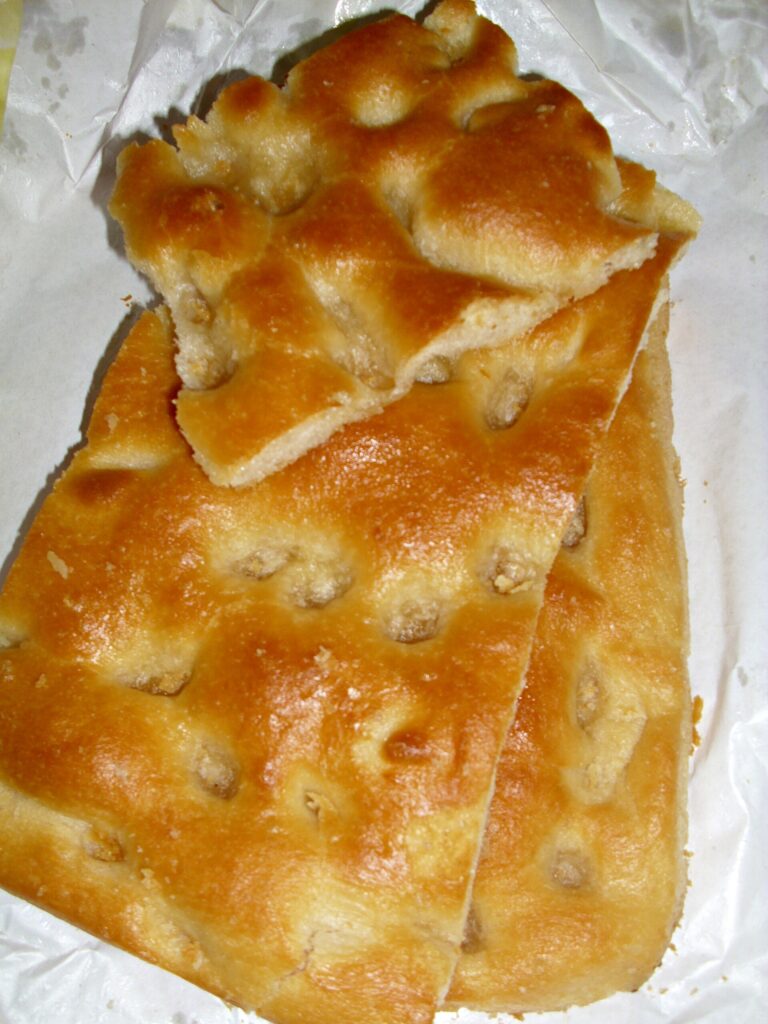
- Dissolve the yeast and the malt in the water, pour the liquid over the flour and mix. When the dough comes together, add the salt and the oil.
- Knead for 10–15 minutes, until the dough is smooth and elastic.
- Shape it into a ball, cover it and let it rise for about 2 hours at room temperature, until doubled.
- Grease the tray with the 30 g of oil, corners included. Spread the dough with oiled hands, without deflating it too much. If it shrinks back, rest it for a few minutes and carry on.
- Cover and let it rise again for 30 minutes to 1 hour.
- Whisk the water, oil and coarse salt of the brine into an emulsion. With the tips of your index, middle and ring fingers, press in lots of dimples, about a centimetre apart, almost to the bottom without piercing the dough.
- Pour the brine over the surface so that it fills the dimples.
- Bake in a preheated static oven at 230 °C (450 °F), on the middle shelf, for 15–20 minutes, until golden.
- Let it cool for a few minutes, slide the focaccia onto a rack, cut it into rectangles and serve.
Tips and common mistakes
- The yeast is low: judge the dough, not the clock. In a cold kitchen the first rise can take more than 2 hours; move on only when the dough has doubled.
- Dimples: if they’re shallow, or the dough is already too puffy, they vanish in the oven. Press firmly and bake right away.
- Brine: it isn’t optional. The water keeps the dimples soft and the oil browns the ridges. With oil alone the focaccia comes out drier.
- Yeast: recipes range from 3 g per 500 g of flour, with long rises, to about 15 g per 600 g for much shorter times. With little yeast, watch the dough, not the clock: it must double.
- Flour: a medium-strength 00 is enough. For a wetter dough some bakers add Manitoba flour, but then water and timings change.
- Baking: being low, it dries out fast. Take it out when the ridges are golden and check the base. A thin, dark metal tray helps get a crisp bottom.
- The next day: keep it in paper at room temperature and warm it for a few minutes in the oven. The fridge makes it firm and dry.
Variations
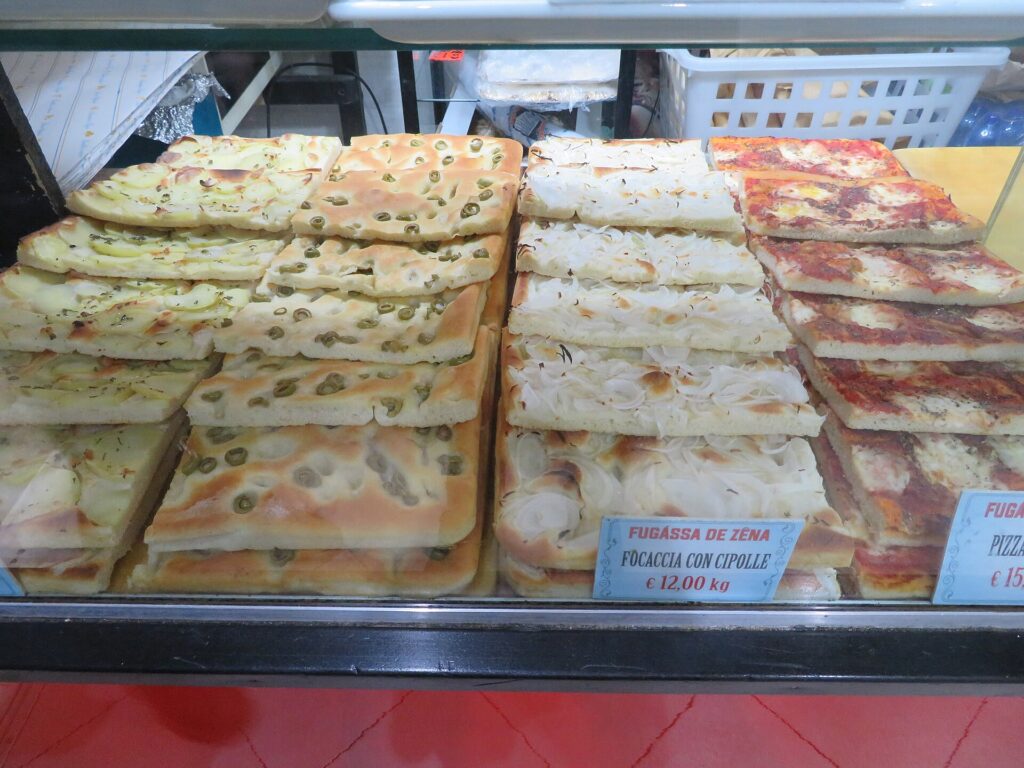
- With onions (fugassa co-a çiòula): the most common, a classic port workers’ snack. Very thin white onions, dressed with oil and salt, rested for about 20 minutes and spread on top before baking.
- With olives: they go on top of the focaccia, not in the dough.
- With sage, rosemary or potatoes: these go into the dough.
- With lard: some traditional recipes use about 25 g of lard instead of oil in the dough. Voltri focaccia, west of Genoa, has a different dough and baking.
- Sardenaira: in Sanremo the tall focaccia is topped with tomato, anchovies, Taggiasca olives and oregano. It’s a dish in its own right, not a variation of fugassa.
Genoese or Recco: the differences
| Genoese focaccia | Recco cheese focaccia | |
|---|---|---|
| Dough | Leavened | Unleavened |
| Look | Up to about 2 cm high, with dimples | Two paper-thin sheets, under 1 cm |
| Filling | None: oil and salt | Fresh soft cheese |
| Baking | At home 230 °C, 15–20 minutes | 270–320 °C for 4–8 minutes (specification) |
| Where it’s made | In Genoa and all over Liguria | Only in Recco, Avegno, Sori and Camogli (PGI since 2015) |
| How it’s eaten | At any hour, breakfast too | Hot, straight from the oven, never frozen |
History and origin
The word comes from the Latin focus, the hearth, and means a low bread baked on the fire. In Genoa focaccia is tied to bakeries and to the sciamadde, from fiammata (“flame”): port-side shops with a wood oven always lit, which also sold farinata and fried snacks. It was cheap and for years it was the breakfast of the dockers, the camalli.
The old recipe was simpler: flour, salt, a little oil, water. Today brewer’s yeast is almost always used instead of sourdough. Since November 2025 the “Focaccia Genovese” trademark belongs to the Genoa Chamber of Commerce, which took it over from the Confcommercio bakers to protect the specification and recognise the bakeries that follow it. It isn’t a PDO or a PGI.
Where to try it in Liguria
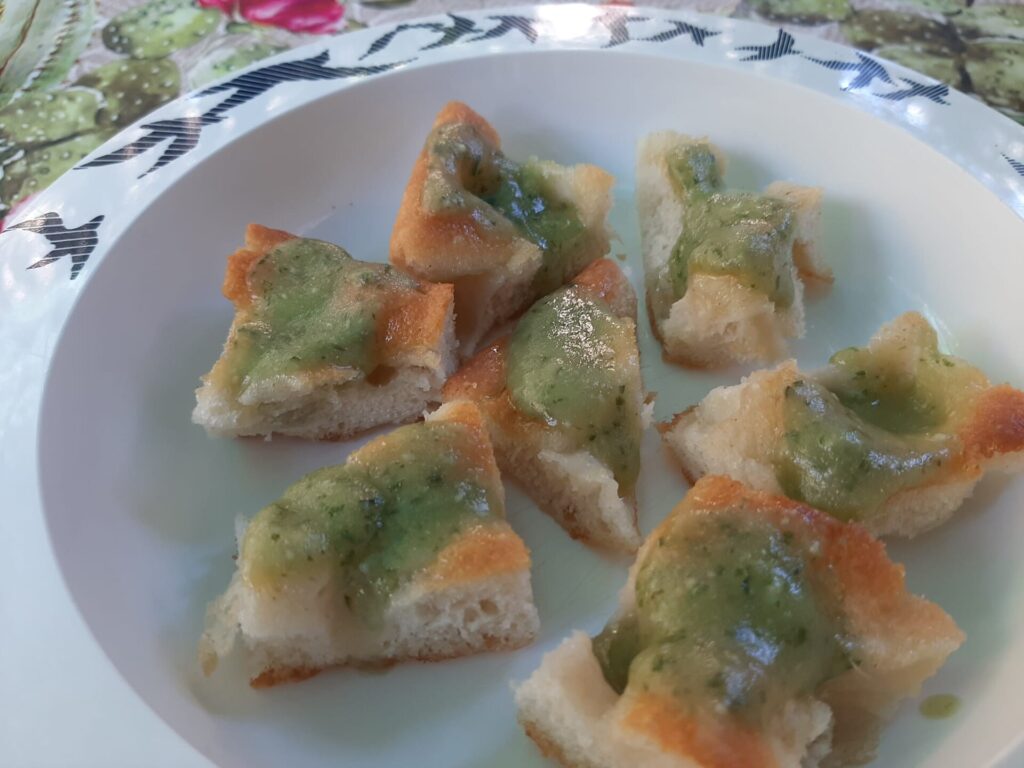
Fugassa is bought at a bakery counter, by weight, and eaten with your fingers straight from the oven. In Genoa you’ll find it in bakeries and focaccia shops all over the city, the old town and its caruggi included. For the rest of the menu read what to eat in Genoa.
At breakfast do as the Genoese do: focaccia still warm, to dip in your cappuccino or eat next to the cup. It’s a deep-rooted habit and worth trying once. For Liguria’s other focaccia go to Recco. If you’re staying a few days: where to stay in Genoa. From Genoese pesto to farinata, the full picture of the dishes is in Ligurian food.
What to drink
At breakfast, a cappuccino. As a snack or aperitif, tradition calls for a small glass of white wine: choose a young, savoury Ligurian white such as a Vermentino or a Pigato. More ideas among the wines of Liguria.
Frequently asked questions
What’s the difference between Genoese and Recco focaccia?
Genoese focaccia is leavened, up to about 2 cm high and dressed with oil and salt. Recco focaccia is unleavened, made of two paper-thin sheets with fresh cheese in between, and is PGI.
What flour do I need for Genoese focaccia?
A soft wheat type 00 flour of medium strength, with a W around 280. For a wetter dough you can add a little Manitoba flour.
What is the brine for?
It’s the emulsion of water, oil and coarse salt poured into the dimples before baking. It keeps the focaccia soft and gives the salty taste on the surface.
Can I let the dough rise overnight?
Yes, but with far less yeast: one source gives, for example, 0.1% for about 20 hours at 20 °C. Simply putting the dough of a quick recipe in the fridge isn’t enough.
Why do people in Genoa dip focaccia in cappuccino?
It’s a habit of the Genoese breakfast: the salt of oil and salt against hot milk. You can dip the focaccia or eat it next to the cup.
How do I store Genoese focaccia?
It’s best eaten right away. The next day keep it in paper at room temperature and warm it for a few minutes in the oven. The fridge makes it firm.
Does Genoese focaccia contain gluten? Is it vegan?
It contains gluten because it’s made with wheat flour. The basic recipe has no milk or eggs: it’s vegan as long as you use neither honey in place of the malt nor lard.