Medieval hill town in the Argentina valley, 3 km from the sea: bridge, via Soleri, San Domenico convent, castle, olive oil, Moscatello, buses and trains.
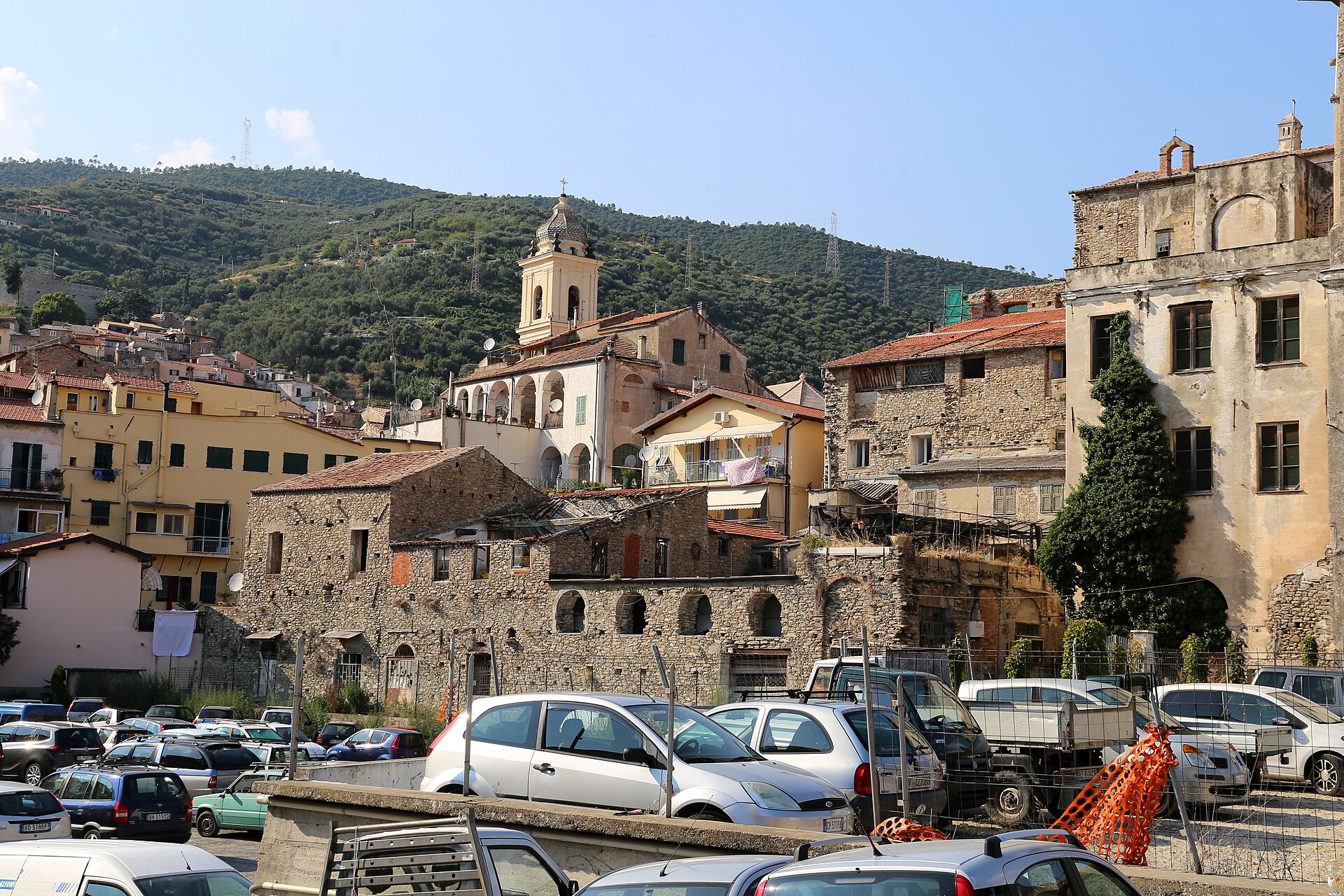
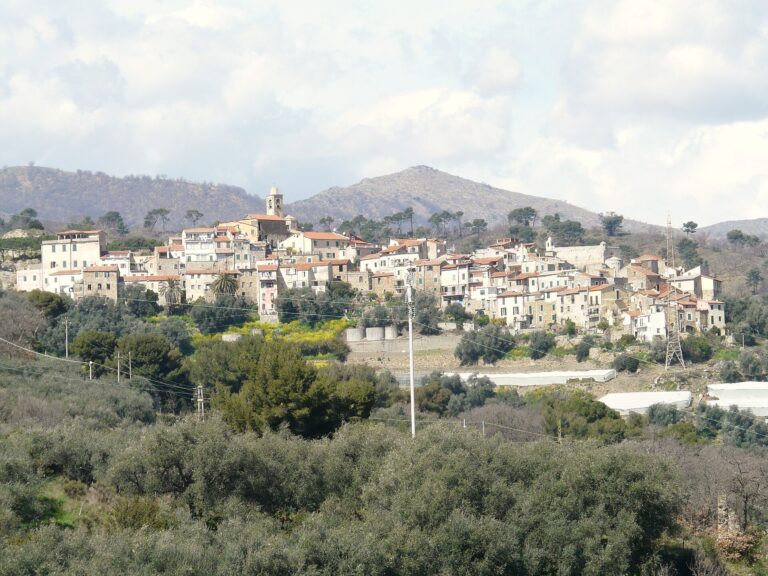
Taggia con il campanile e le case del borgo
Area
Riviera dei FioriRiviera di Ponente · Province of Imperia
Ideal for
Arthistory, slow walks, olive oil and Moscatello, without crowds
Beaches
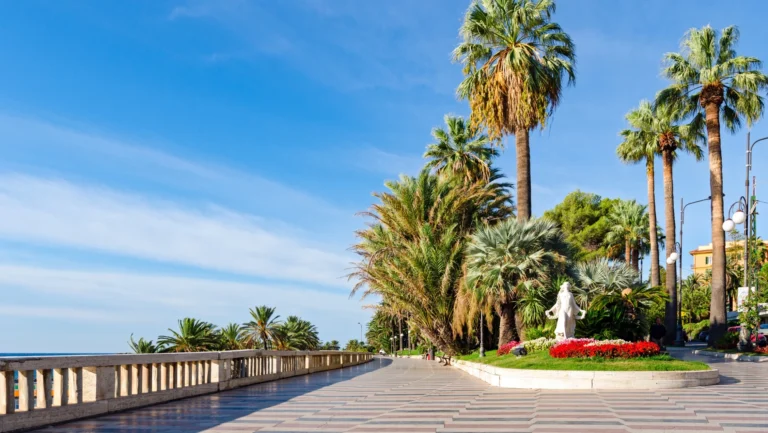
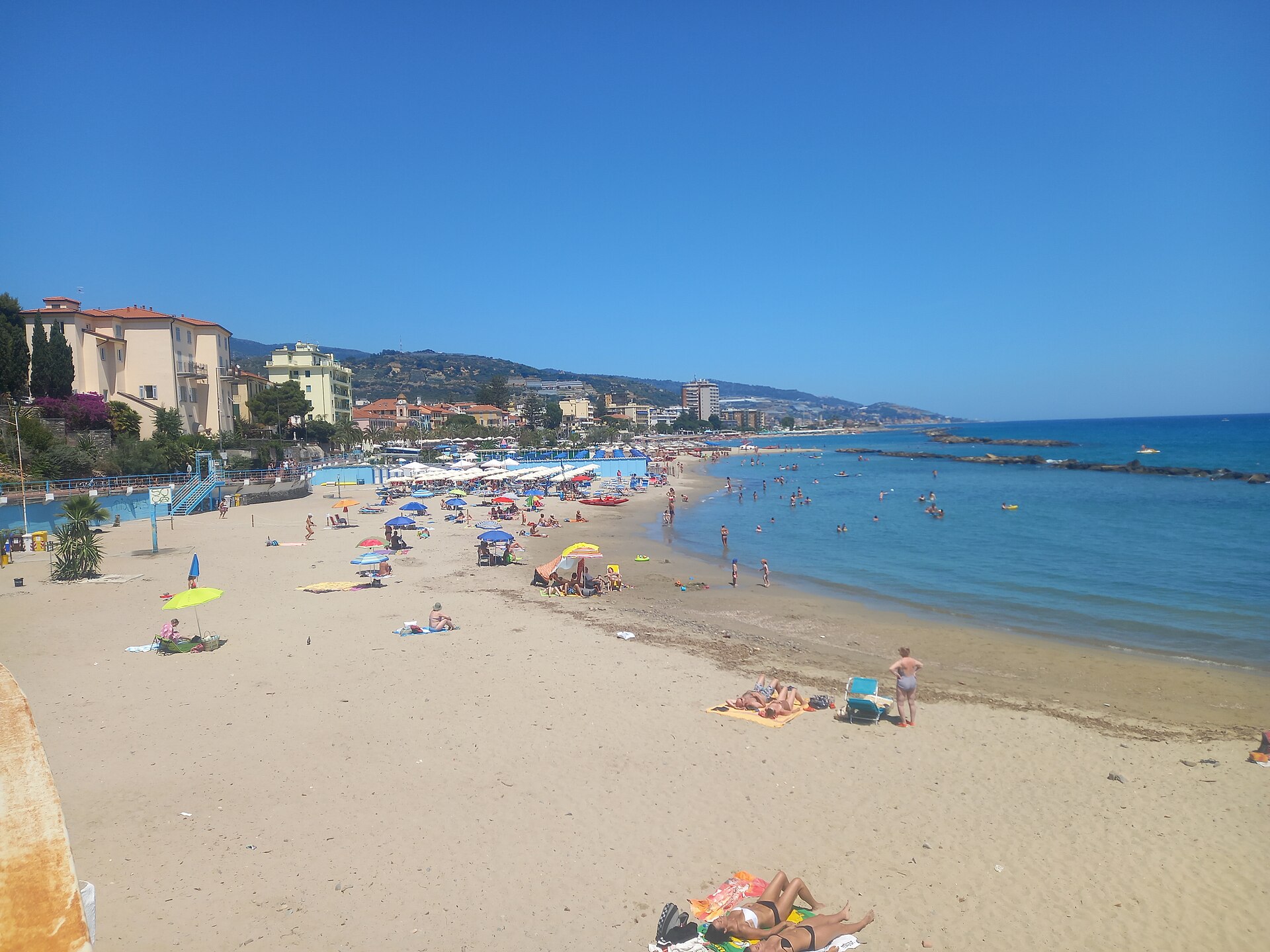
None in the old town: the beach is at Arma di Taggiaabout 3 km away
Best time to go
Spring and autumn for sightseeingmornings in summer
By train
Taggia-Arma station in Levà, about 1.8 km from the old townbuses 2 and 16 to the centre
By car
A10Arma di Taggia exit, then about 3 km up the Argentina valley
Airport
Niceabout 71 km, an hour by car), then train to Taggia-Arma
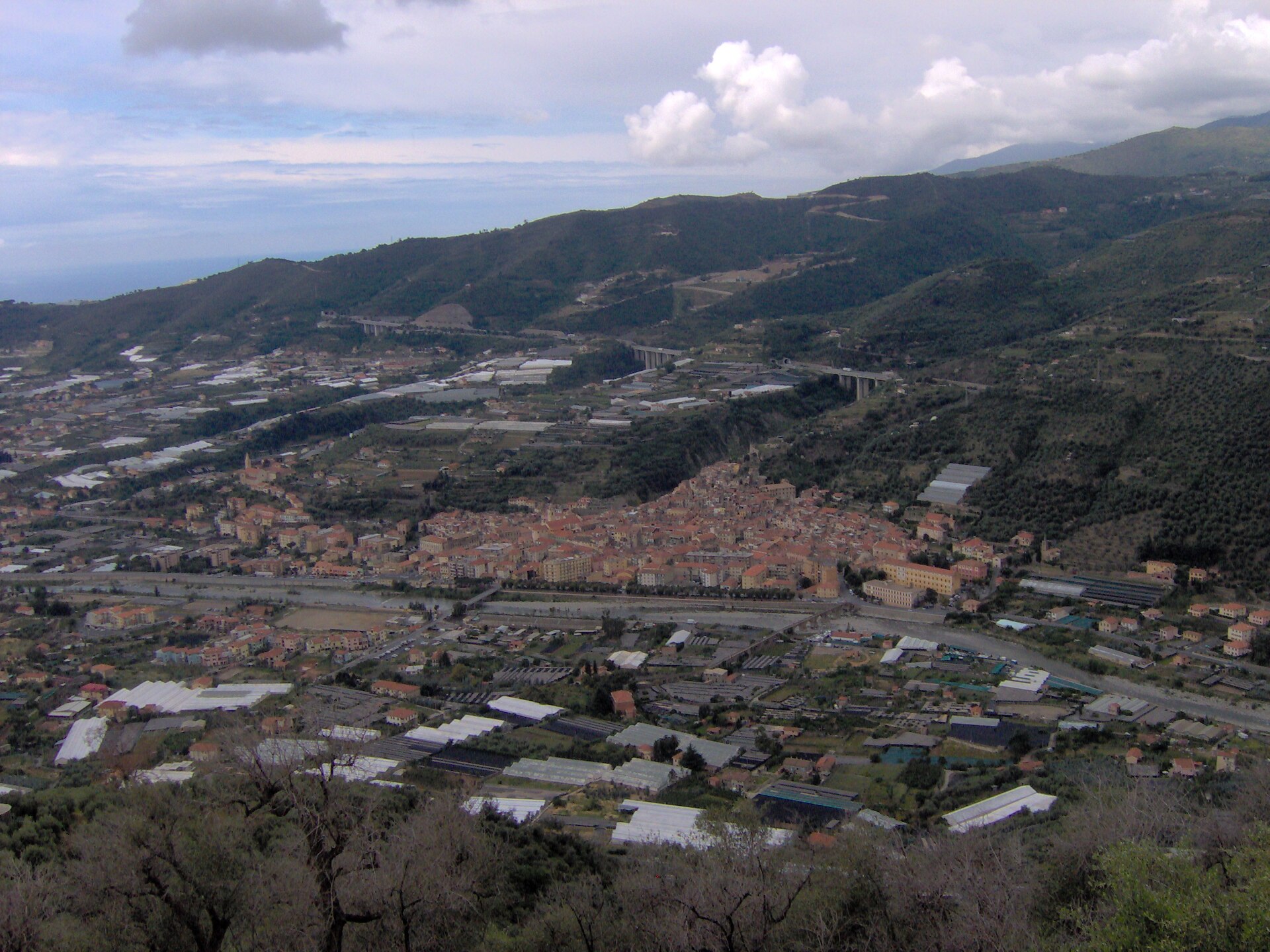
Taggia is a medieval hill town in the Argentina valley, in the province of Imperia, about 3 km from the sea. It has a stone bridge nearly 300 metres long, arcaded lanes paved with black slate, a fifteenth-century convent with important paintings, and a castle with views down to the coast. It works as a half-day or full-day visit, and it is one of the best art stops between Sanremo and Imperia.
One thing to sort out before you plan: “Taggia” means two different places. The municipality has about 14,000 inhabitants and three parts. Taggia is the historic town, with the monuments, on the hillside by the Argentina stream. Levà is the middle zone, with the railway station (called Taggia-Arma) and the town hall. Arma di Taggia is the seaside resort, with the beach and the hotels. Most residents live on the plain between Levà and Arma; the old town is much smaller. If you want the beach, read the guide to Arma di Taggia. This page is about the old town.
The station is about 1.8 km from the historic centre, so you need a bus or a walk. Below you will find the official bus times and a walking route in visiting order.
By Italian Riviera editorial team·Updated on ·10 min read
Where is Taggia?
Taggia is in Liguria (Riviera di Ponente, Riviera dei Fiori, province of Imperia).
You can walk around the old town in two or three hours without hurrying. It is a grid of parallel streets that grew between the 10th and 15th centuries, inside walls rebuilt in the 1500s, with palaces from the 17th and 18th centuries. The stops below are in a sensible order: start at the bridge, enter from the lower side, climb towards the castle. Opening hours of the churches and the convent are not confirmed, so check before you go (⚠️).
The medieval bridge over the Argentina
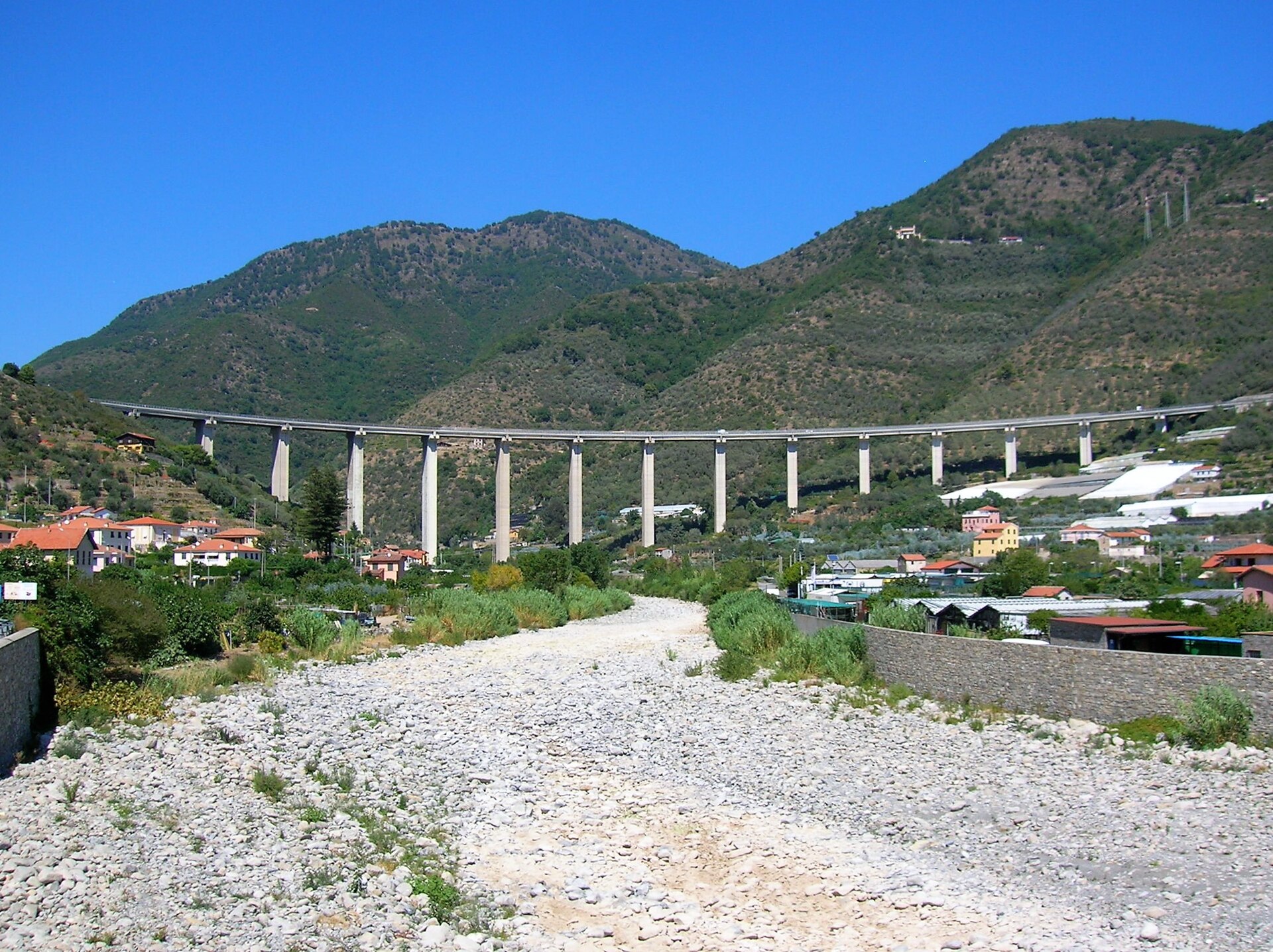
The bridge is the symbol of Taggia. It crosses the stream for about 270 metres with some fifteen arches (sources disagree on the exact count). The oldest part, on the east side, dates to the first half of the 13th century; there were additions in the 1600s and 1700s and two arches were rebuilt after the 1831 earthquake. It is free and you can walk across it. From here you see the town with its bell tower and the houses climbing the hill, which is the best way to understand the place before you go in.
Via Soleri and the slate arcades
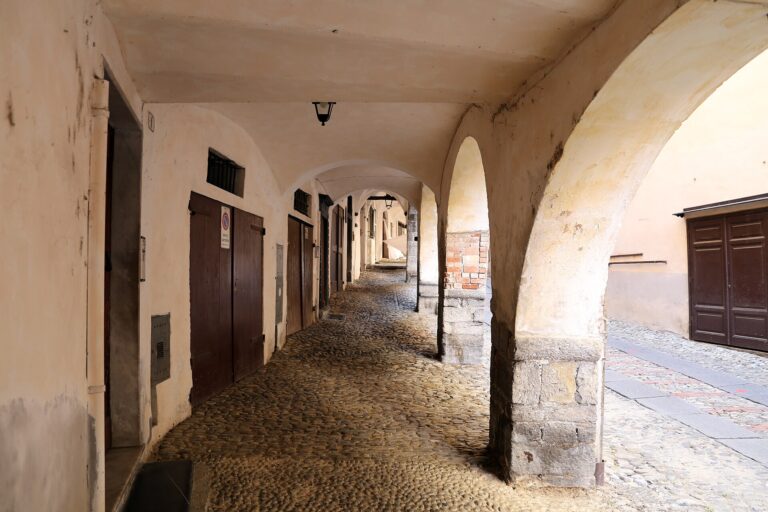
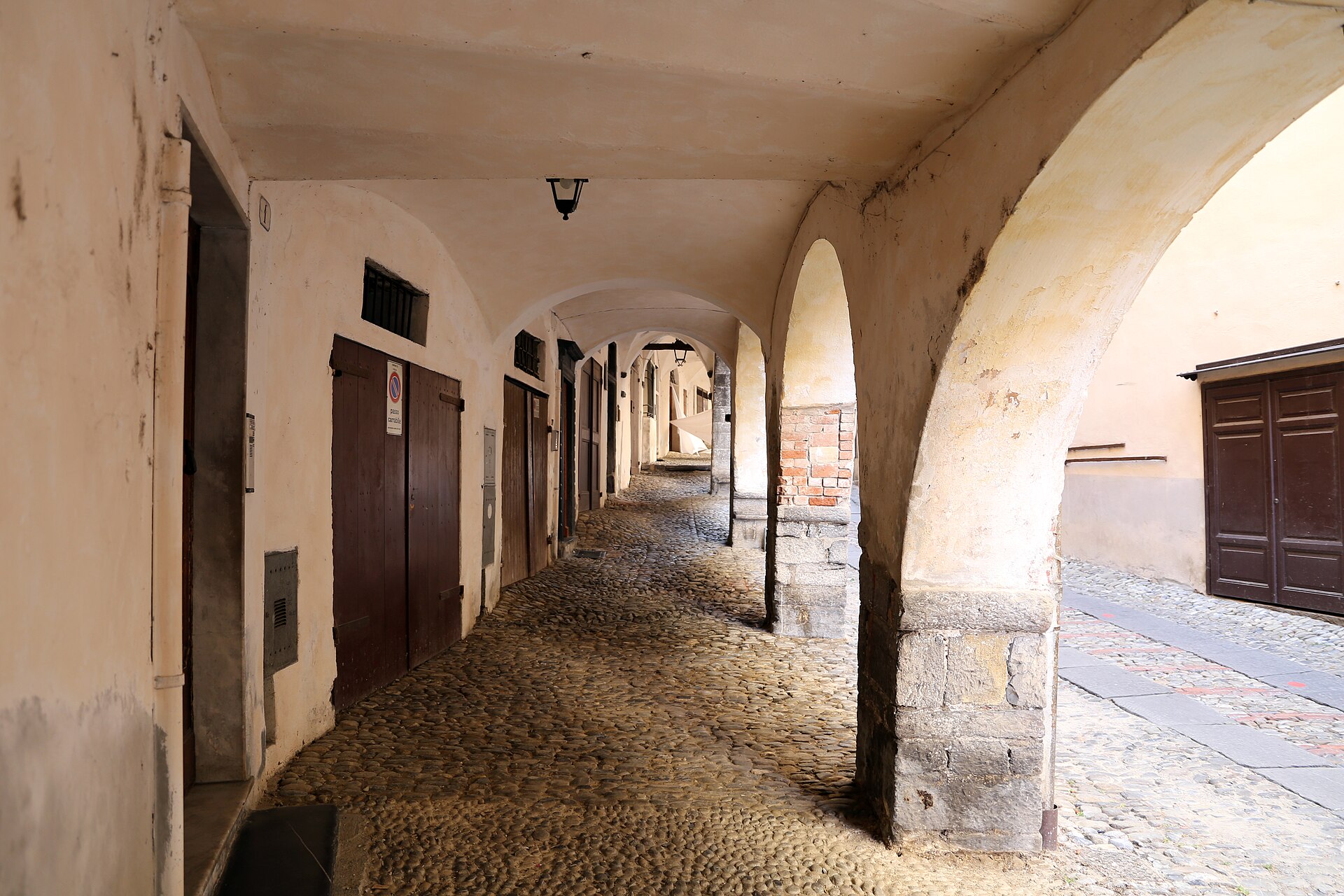
Via Soleri, known as “il Pantan”, is the most characteristic street: low arcades, black slate underfoot and sixteenth-century palaces. Palazzo Asdente-Carrega dates to the 1500s. Nearby is Palazzo Curlo, which is said to go back to 1448, while Palazzo Lercari, from the late 1600s, now houses the historical archive and the public library. They are two separate buildings, not a single “Lercari-Curlo” palace. You mostly see them from the outside. The arcades of via Gastaldi, in the photo, give a good idea of the medieval layout.
Basilica of Saints James and Philip (Sanctuary of the Madonna Miracolosa)
The basilica, in via Ruffini, was built between 1675 and 1681 on top of a fifteenth-century church. It holds the relics of Saint Benedict Revelli and works by Luca and Giovanni Cambiaso and Francesco Brea. It is also the sanctuary of the Madonna Miracolosa: in 1855 a statue is said to have moved its eyes after 11 March, an event recognised by the Church, and the feast is celebrated every year on 11 March. Opening hours are not confirmed.
The oratories of the White and Red confraternities
Two confraternities, two oratories. The White oratory is dedicated to Saints Fabian and Sebastian and has an orange facade; the Red one is dedicated to the Holy Trinity and dates to the 1400s. Both brotherhoods still keep local traditions alive: every Maundy Thursday they hand out fennel biscuits. You can only see the interiors when they happen to be open.
San Domenico convent
This is the most important stop. The convent was founded in 1460 by Blessed Cristoforo da Milano and completed in 1490. It has a fifteenth-century cloister with black stone columns. The church holds works dated from 1472 to 1710, including five polyptychs and a fresco attributed to Ludovico Brea; the former dormitory houses the picture gallery, with an altarpiece attributed to Parmigianino. The friars left in 2008 and the convent has since been entrusted to the Diocese of Ventimiglia–Sanremo. To know what to look at and in which order, read the in-depth page San Domenico convent: the works of art.
Opening hours ⚠️: four different versions circulate online, so we do not quote any of them. Check the hours by phoning the convent on +39 0184 477278. According to the Touring Club, entry is by donation.
The castle
The castle stands on the highest point of the town, reached from via San Dalmazzo. It has medieval origins and was almost entirely rebuilt in the 1500s; it served as a refuge from pirates and as a store for the town’s valuables. From the 1960s it was used as a reservoir for the town’s water supply, then restored, and it is now a public space for shows. From the top you see the valley and, on a clear day, the sea. The climb is short but steep: wear proper shoes.
Santa Maria del Canneto
Outside the walls, to the north along via Antica Badalucco, stands the Romanesque church of Santa Maria del Canneto, with a twelfth-century crypt, a Romanesque spire-topped bell tower and frescoes of 1547 by Giovanni and Luca Cambiaso. The church belongs to the municipality, has long been deconsecrated and the frescoes are in delicate condition. Visits and hours are not confirmed, so ask at the tourist office before you walk up.
Villa Curlo
An eighteenth-century villa across the Argentina, where a path leaves towards the sea. You mostly see it from outside, as it is used for events.
National Transport Museum, Taggia section
At the station in Levà there is a section of the National Transport Museum. According to the municipality’s guide it can be visited on Saturday afternoons or by appointment, but the information is undated: check first (⚠️). The main museum is in La Spezia.
Where to stay
Where to stay in Taggia
The choice depends on what you want to do. The historic centre has few places to stay, mostly apartments and B&Bs: it is quiet and atmospheric, but the sea is 3 km away and you need a bus or a bike. In Levà you are close to the station and buses, handy for transport but without the charm of the old town. Arma di Taggia has hotels, holiday flats and the beach: it is the most requested area, and you reach the old town by bus. If you have a car, look at the hills and the valley, where there are farm stays. Prices and availability change constantly and you can check them through the links below.
Leave the A10 at Arma di Taggia and follow the road towards the Argentina valley: the old town is about 3 km away. The Via Aurelia is the alternative. For parking in the historic centre we have no official data on spaces, fees or restricted traffic zones (⚠️): our advice is to leave the car at the edge of the town and walk up. A covered car park exists in via Lungo Argentina; fees are not confirmed.
By train
The station is called Taggia-Arma and is in Levà, between the old town and the sea: not in the historic centre and not on the beach, but about 1.8 km from the old town. From Sanremo it takes 4 to 8 minutes, from Imperia 8 to 14, from Ventimiglia 21 to 31, from Genoa Principe about 1 h 45 to 2 h 15. For connections from Nice, change at Ventimiglia.
By bus
From the station to the old town you use Riviera Trasporti buses (winter timetable 2026-27, valid from 14 September 2026). Line 2 (Ventimiglia–Sanremo–Arma–Taggia) takes 6 to 7 minutes from “Taggia Stazione FS” to “Taggia Capolinea”, with a bus about every 20 minutes on weekdays from 5 am to 6 pm, then every 30; on Sundays and holidays buses are much less frequent. From Sanremo it takes about 27 minutes. The exact position of the terminus is not confirmed: check the timetable. Line 16 (Sanremo–Arma–Taggia–Badalucco–Triora) stops at “Taggia Stazione FS” and at “Taggia”, 4 to 5 minutes later. Some runs are weekday-only or school-only: read the official timetable.
By air
The most convenient airport is Nice, about 71 km from Arma di Taggia, roughly an hour by car. Then take the train to Taggia-Arma.
Parking
As said, official data is missing: ask the IAT tourist office (+39 0184 43733) in Villa Boselli, in Arma.
A10, Arma di Taggia exit, then about 3 km up the Argentina valley
By train
Taggia-Arma station in Levà, about 1.8 km from the old town; buses 2 and 16 to the centre
By plane
Nice (about 71 km, an hour by car), then train to Taggia-Arma
The guide
A half-day walking route
Here is an order of visit that avoids backtracking. Timings are approximate.
Arrive at the bus terminus or the centre and walk onto the medieval bridge to see the town from outside.
Enter via Soleri, then the basilica of Saints James and Philip.
The White and Red oratories, if open.
The San Domenico convent: the longest stop, allow at least an hour and phone ahead for the hours.
Climb to the castle from via San Dalmazzo for the view.
If you have time and energy, walk down to Santa Maria del Canneto outside the walls.
What to eat in Taggia
The municipality calls Taggia the homeland of the Taggiasca olive. According to tradition, medieval Benedictine monks selected this variety and taught the dry-stone terracing. The oil is fruity, with little bitterness and little pepperiness. There are no official opening hours for mills open to visitors: if you want to visit one, book ahead and do not trust times found online (⚠️).
Try Moscatello di Taggia, the sweet wine that was exported to Rome in the Renaissance (the “wine of the popes”), disappeared with phylloxera from 1880 and was rediscovered from 2003. Since 2011 it has been a sub-zone of the Riviera Ligure di Ponente DOC, made dry, sparkling, late-harvest and as a passito. Then the canestrelli di Taggia, savoury rings of flour, water, salt, oil and yeast, once baked on 12 February for Saint Benedict. And the fennel biscuits, born in 1580 after a famine and handed out by the confraternities on Maundy Thursday. Bakeries sell them all year.
Events and festivals
For exact 2027 dates wait for the official programmes: where we have no confirmation we mark it with ⚠️.
February, Furgari and Saint Benedict Revelli: the Furgari fall on the second Saturday of February, since 1626. Around the same time there is a historical festival with flag-throwers, falconers, a market and a procession. 2027 dates ⚠️.
11 March, Madonna Miracolosa: feast of the sanctuary.
Maundy Thursday: fennel biscuits are handed out.
Early May, Meditaggiasca: a fair devoted to the Taggiasca olive and Moscatello; the 13th edition took place on 1 and 2 May 2026 in the squares of the centre. 2027 edition ⚠️.
July, Santa Maria Maddalena del Bosco: peaks on the Sunday closest to 22 July: the men of the company climb to the hermitage, spend the night in the woods and in the afternoon perform the Dance of Death. 2027 dates ⚠️.
8 August, feast of Saint Dominic: in 2026 there was a free visit to the convent; it is not confirmed that it will repeat.
Taggia represents Liguria in Il Borgo dei Borghi on Rai 3: the vote is expected in spring. The municipality also states that the historic centre belongs to the Most Beautiful Villages of Italy circuit.
Day trips from Taggia
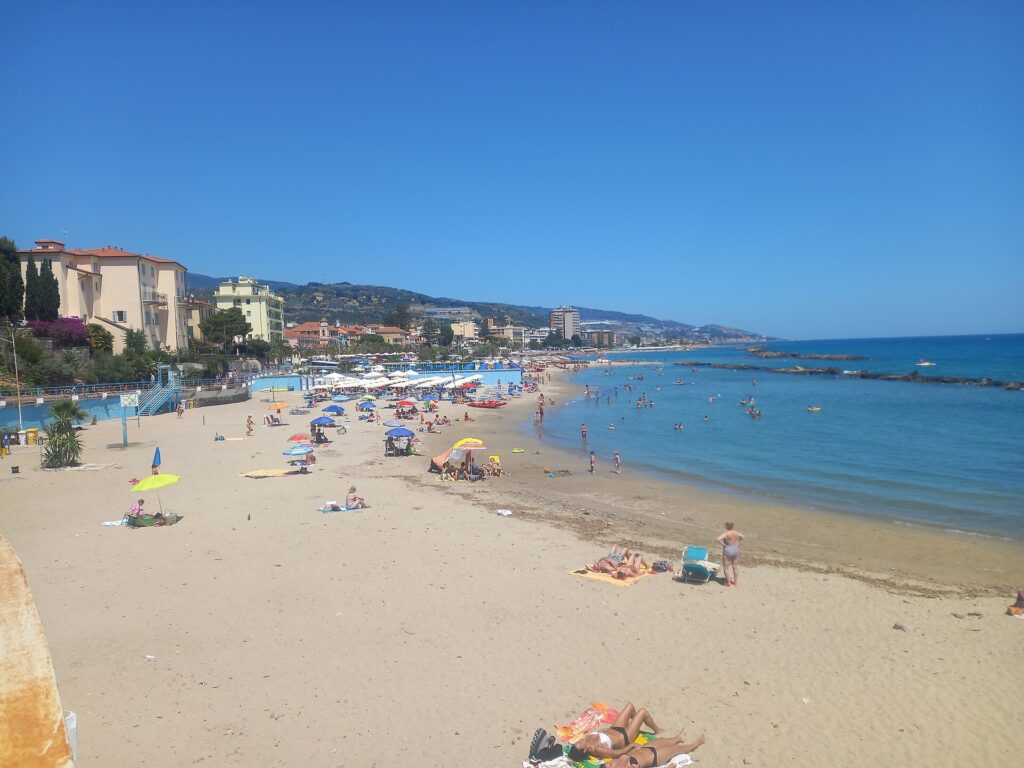
Arma di Taggia: the beach, about 3 km away. Bus line 16 in about 12 minutes, or the cycle and footpath along the Argentina.
Sanremo: 4 to 8 minutes by train from Taggia-Arma station.
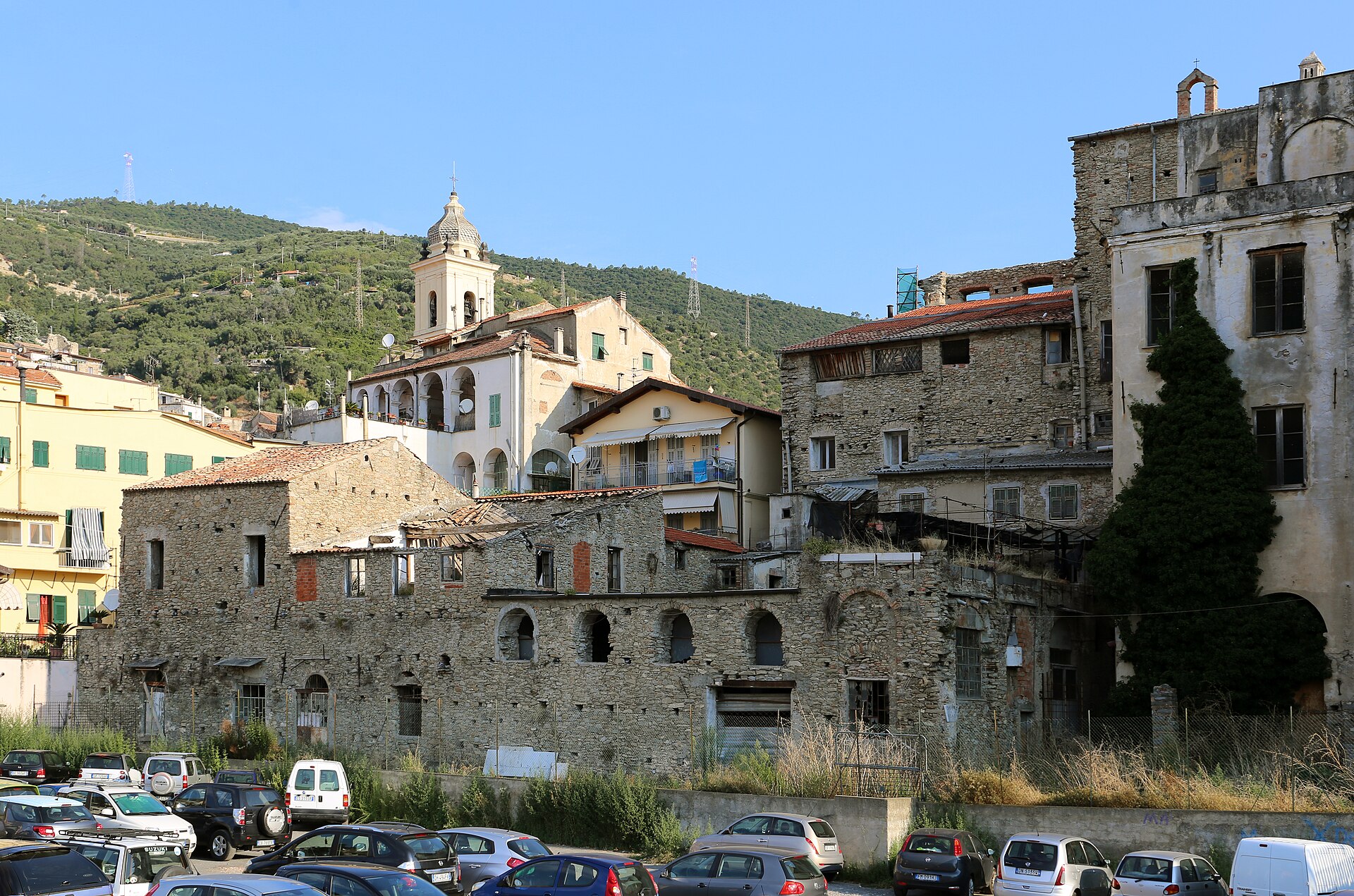
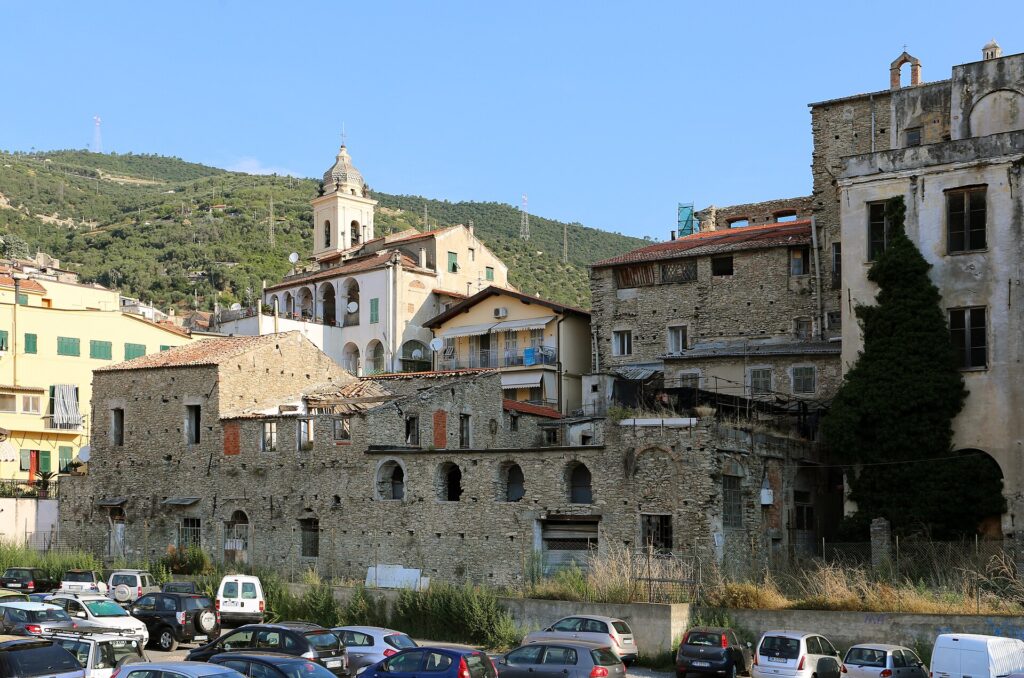
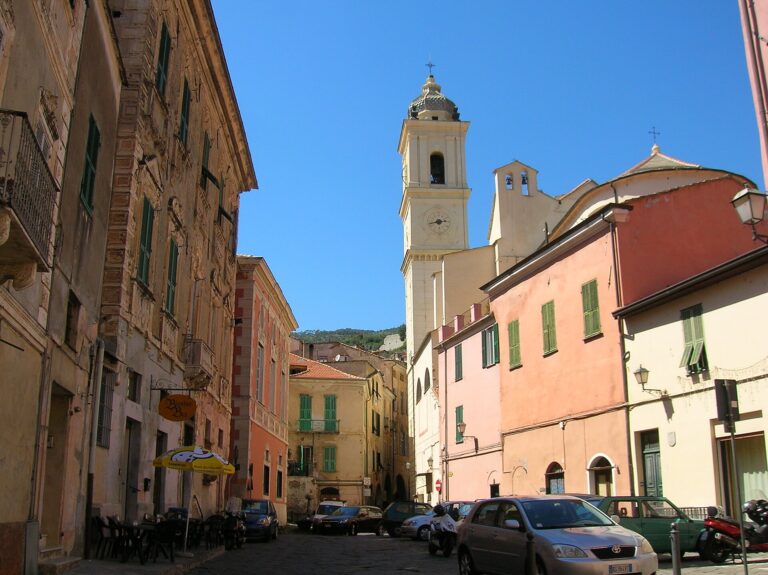
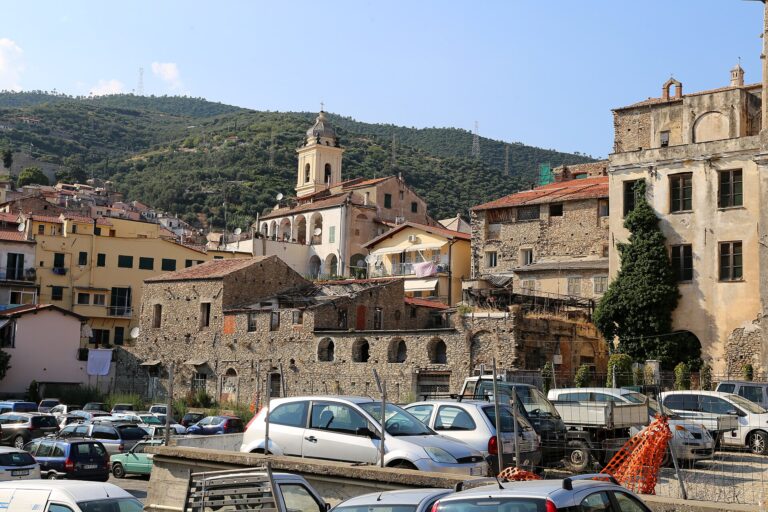
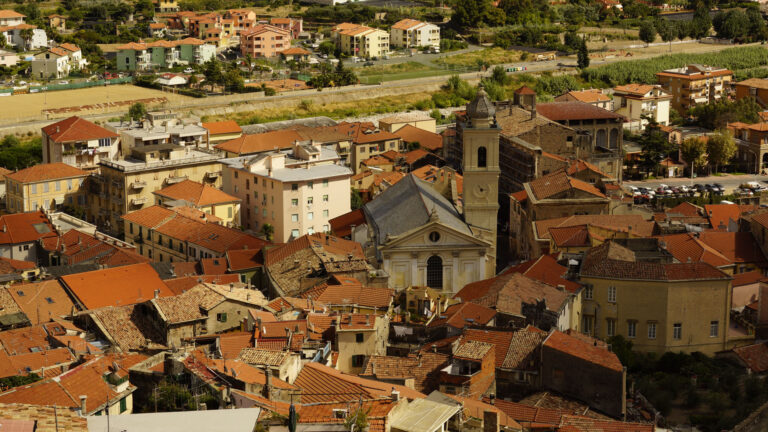
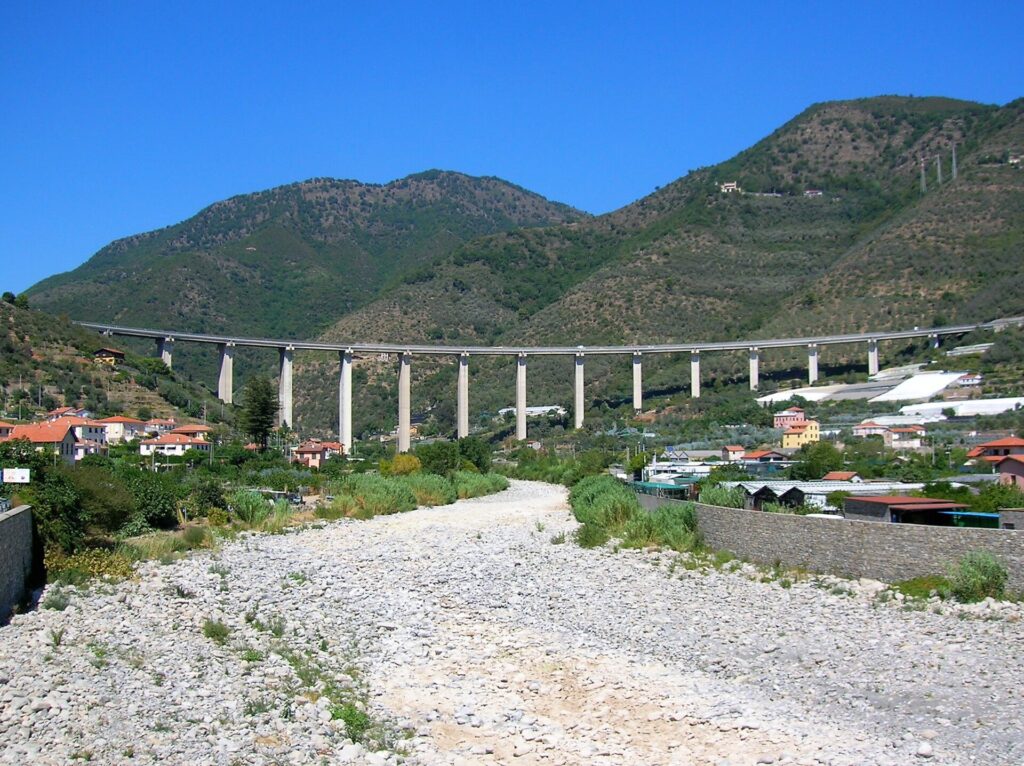
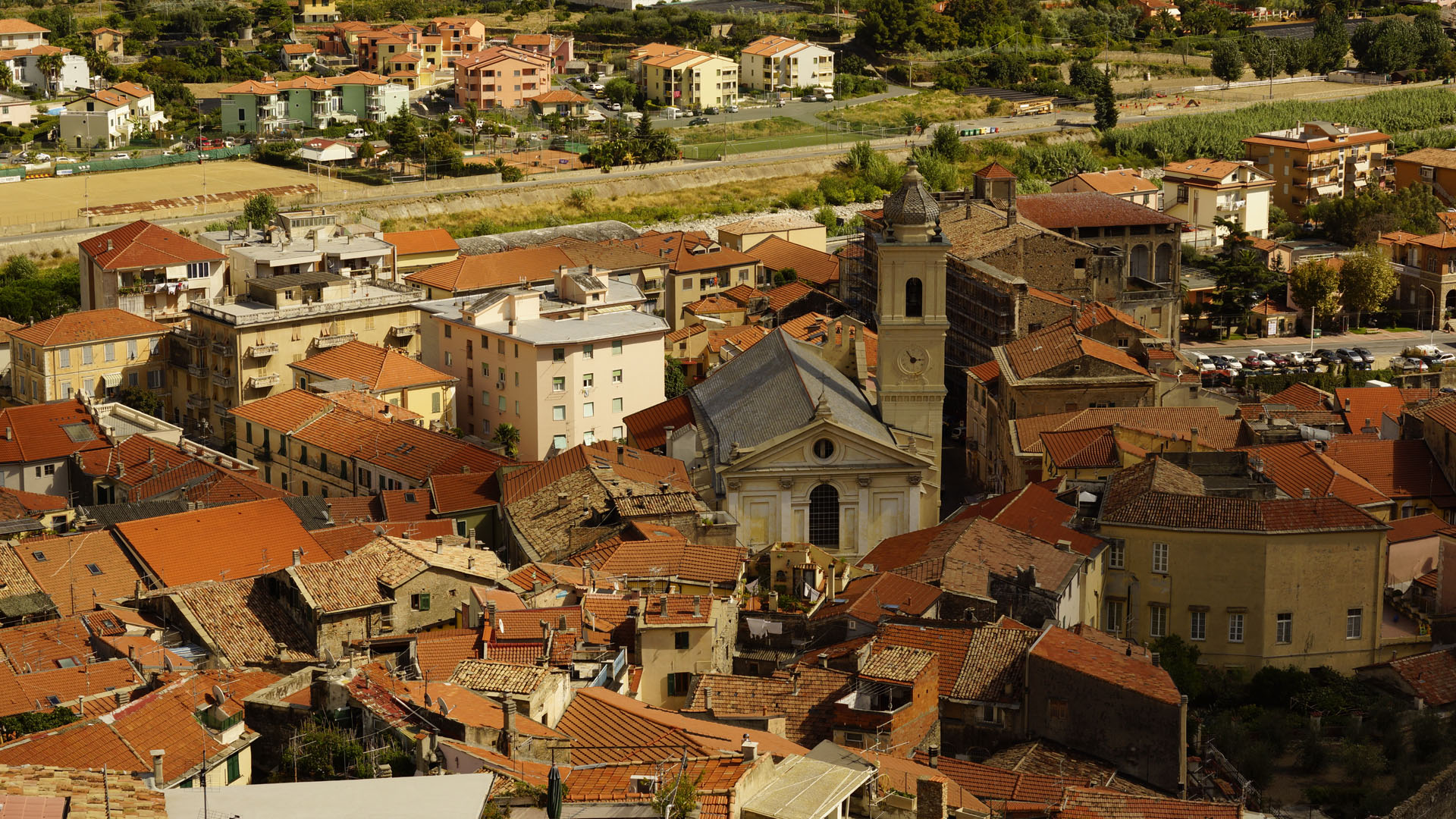
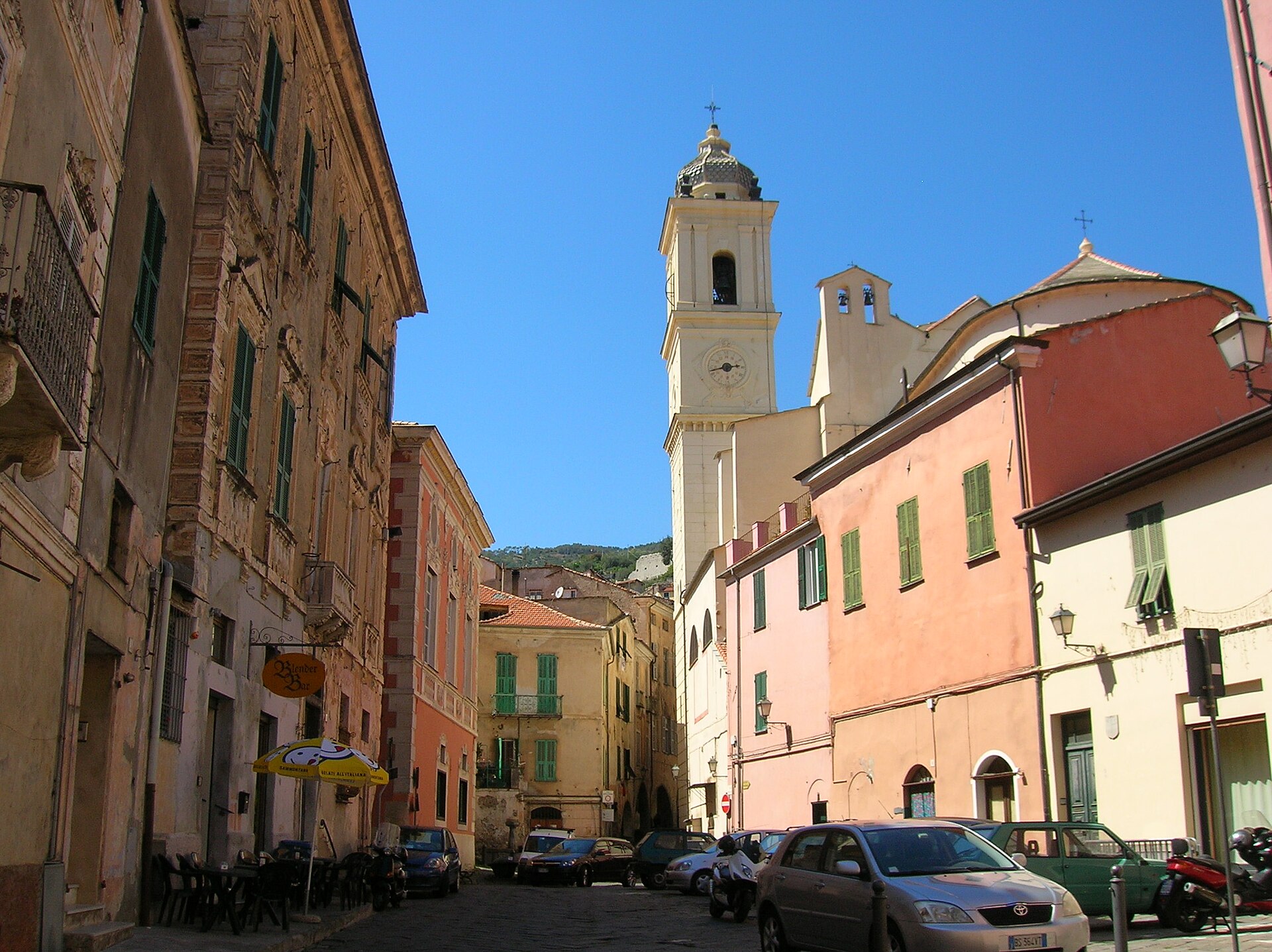
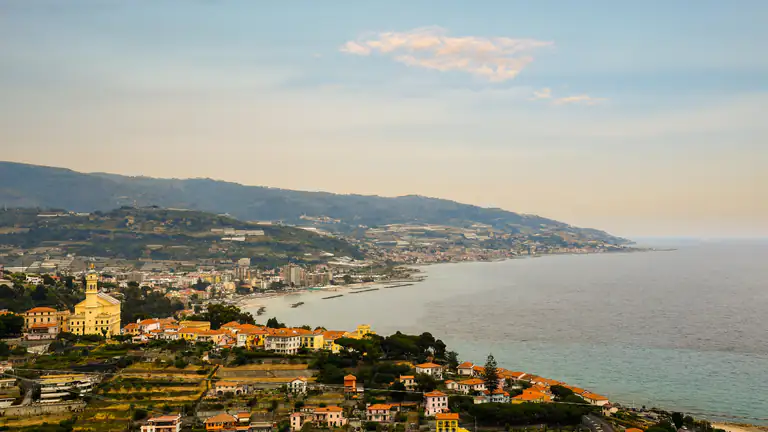
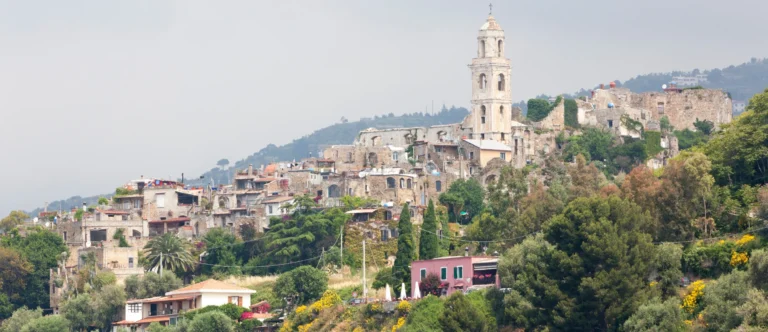
Taggia con il campanile e le case del borgoI tetti e il campanile di TaggiaI portici di via Gastaldi a TaggiaTaggia vista dall'altoIl campanile del Santuario della Madonna Miracolosa a TaggiaTaggia vista dalla collinaIl torrente Argentina e il viadotto sotto Taggia
FAQ
Frequently asked questions about Taggia
Are Taggia and Arma di Taggia the same place?
No, but they are the same municipality. Taggia is the historic hill town, Arma di Taggia is the seaside resort about 3 km away. In between is Levà, with the station.
Where is Taggia station?
It is called Taggia-Arma and sits in Levà, about 1.8 km from the old town. From the old town to the sea it is about 3 km.
How do I get from the station to the old town?
By Riviera Trasporti line 2 or line 16, in a few minutes, or on foot.
How long does it take to visit Taggia?
Half a day for the bridge, via Soleri, the basilica and the convent; a full day if you add the castle, Canneto and a meal.
What are the opening hours of the San Domenico convent?
Online sources contradict each other. Phone +39 0184 477278 before you go. Entry should be by donation.
Is there a beach in Taggia?
Not in the old town. The beach is at Arma di Taggia, which received the Blue Flag in 2026.
Can I get from Taggia to Triora without a car?
Yes, on line 16: Badalucco is 15 minutes away, Triora about an hour. Some runs are weekday-only, so read the official timetable.
Who is the patron saint of the town?
Sources do not agree. The Madonna Miracolosa is celebrated on 11 March and Saint Benedict Revelli on 12 February: they are the two saints most tied to Taggia.
When is the best time to go?
Spring and autumn, for walking in cool weather. In summer go in the morning.
Where can I buy Taggiasca olive oil?
In local shops and mills. If you want to visit a mill, book in advance: there are no official opening hours.