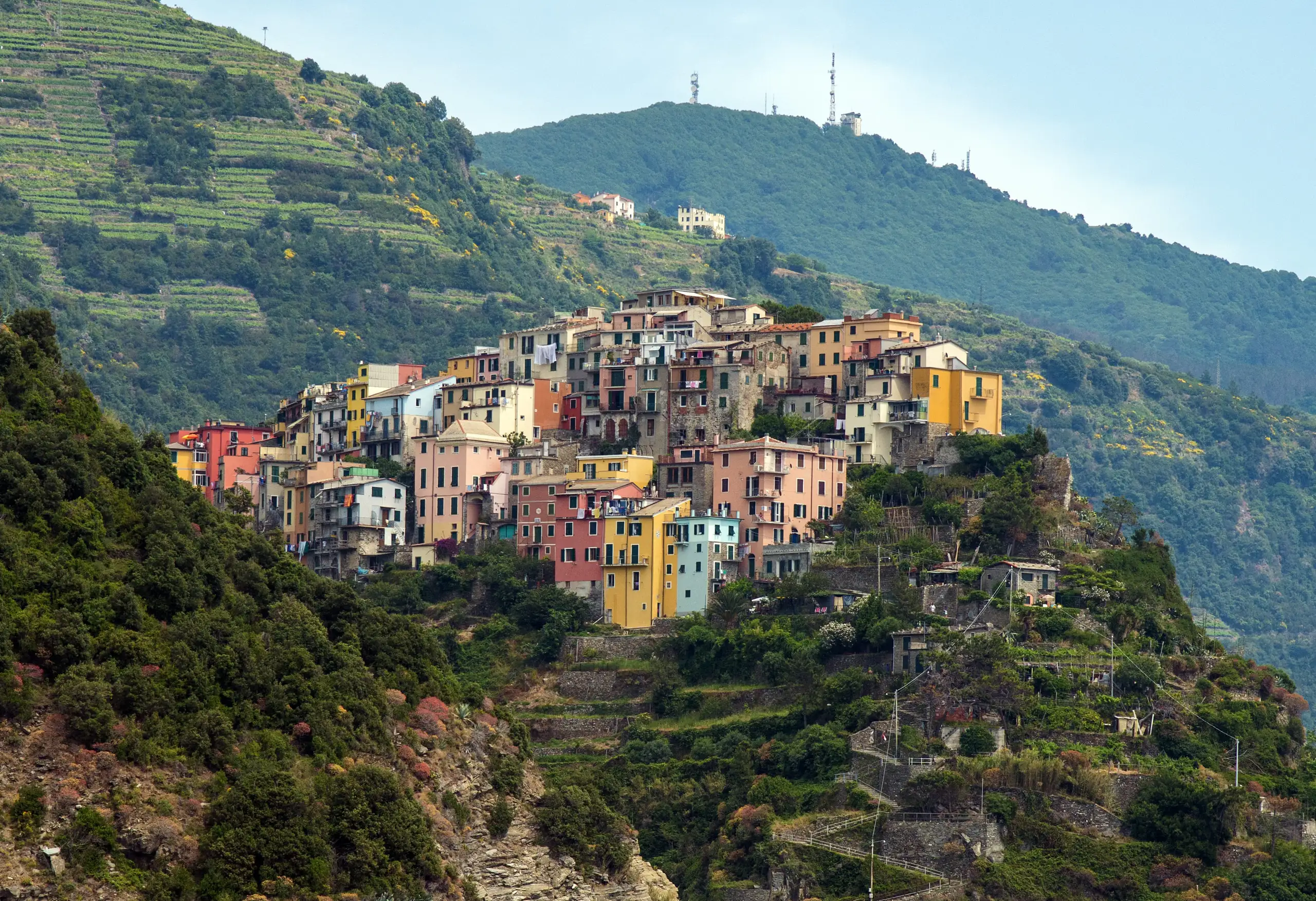
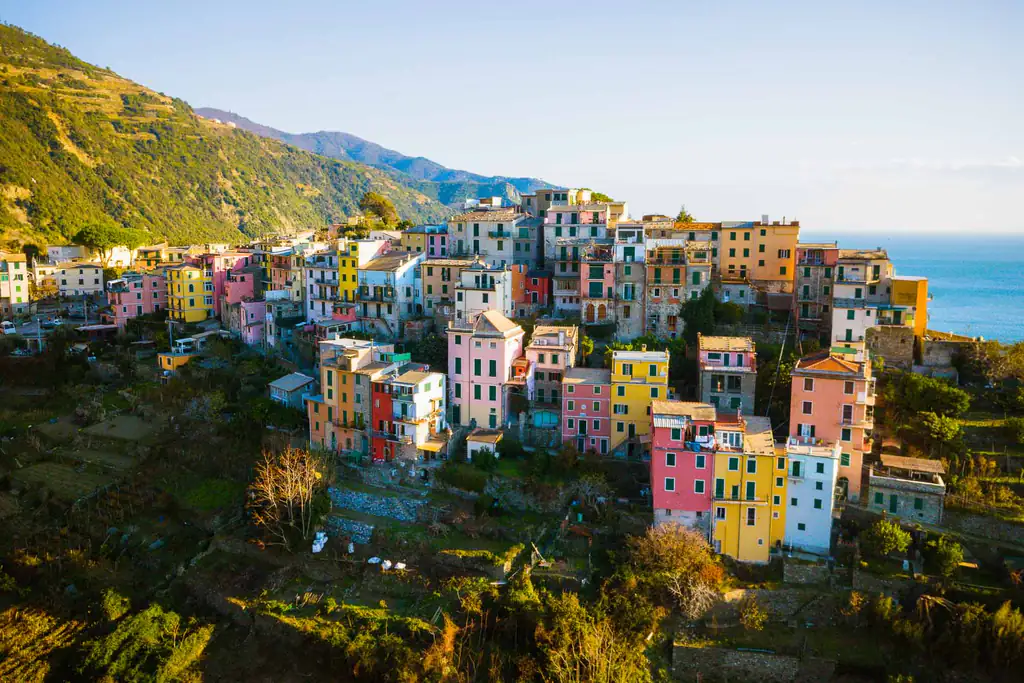
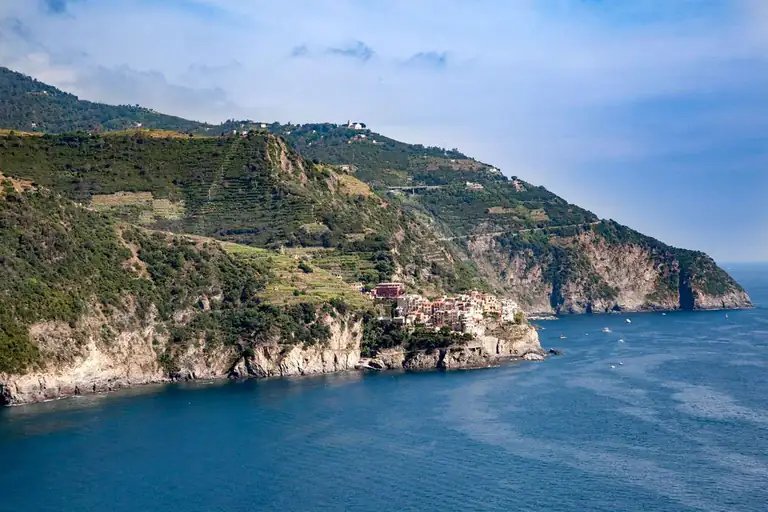
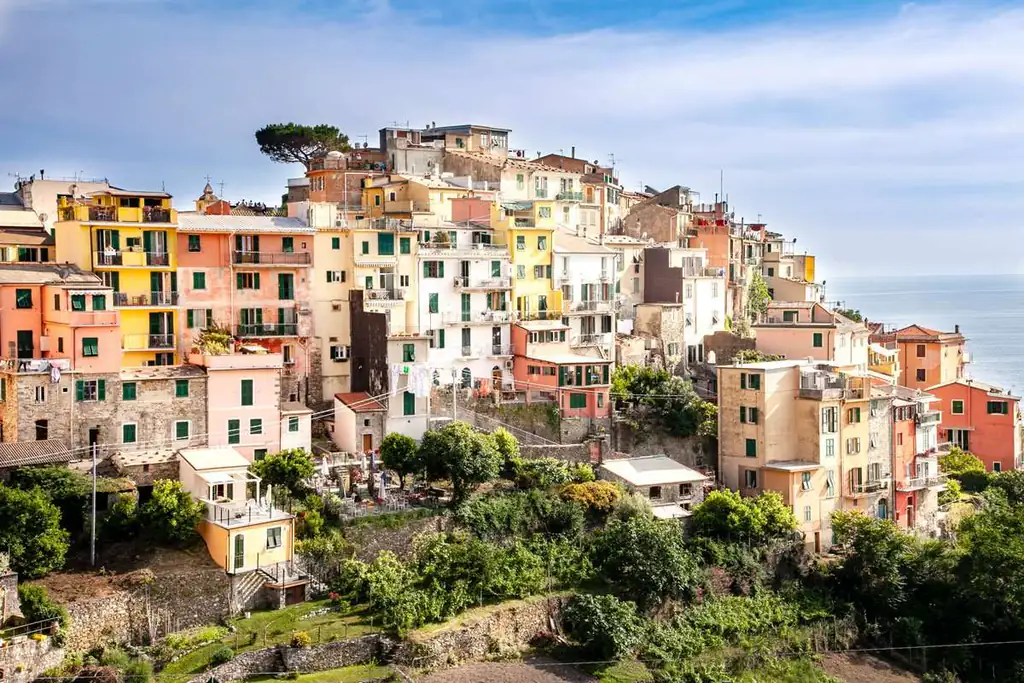
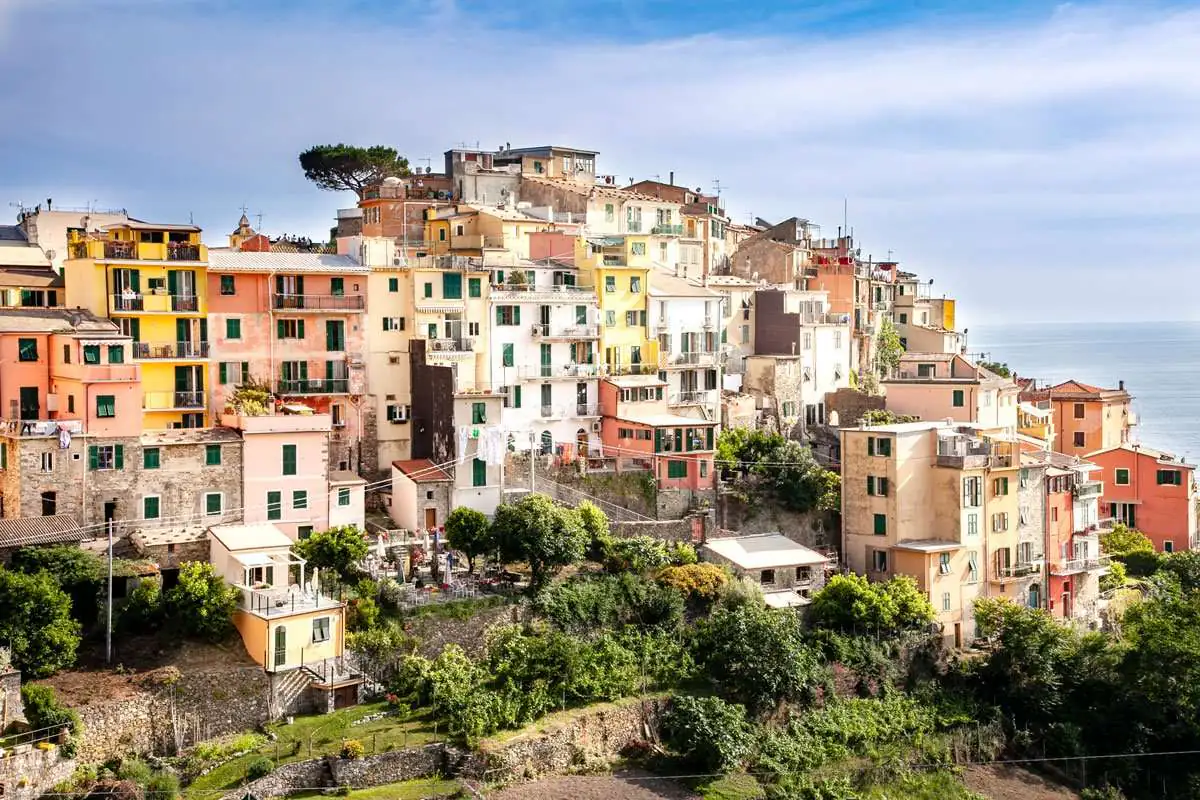
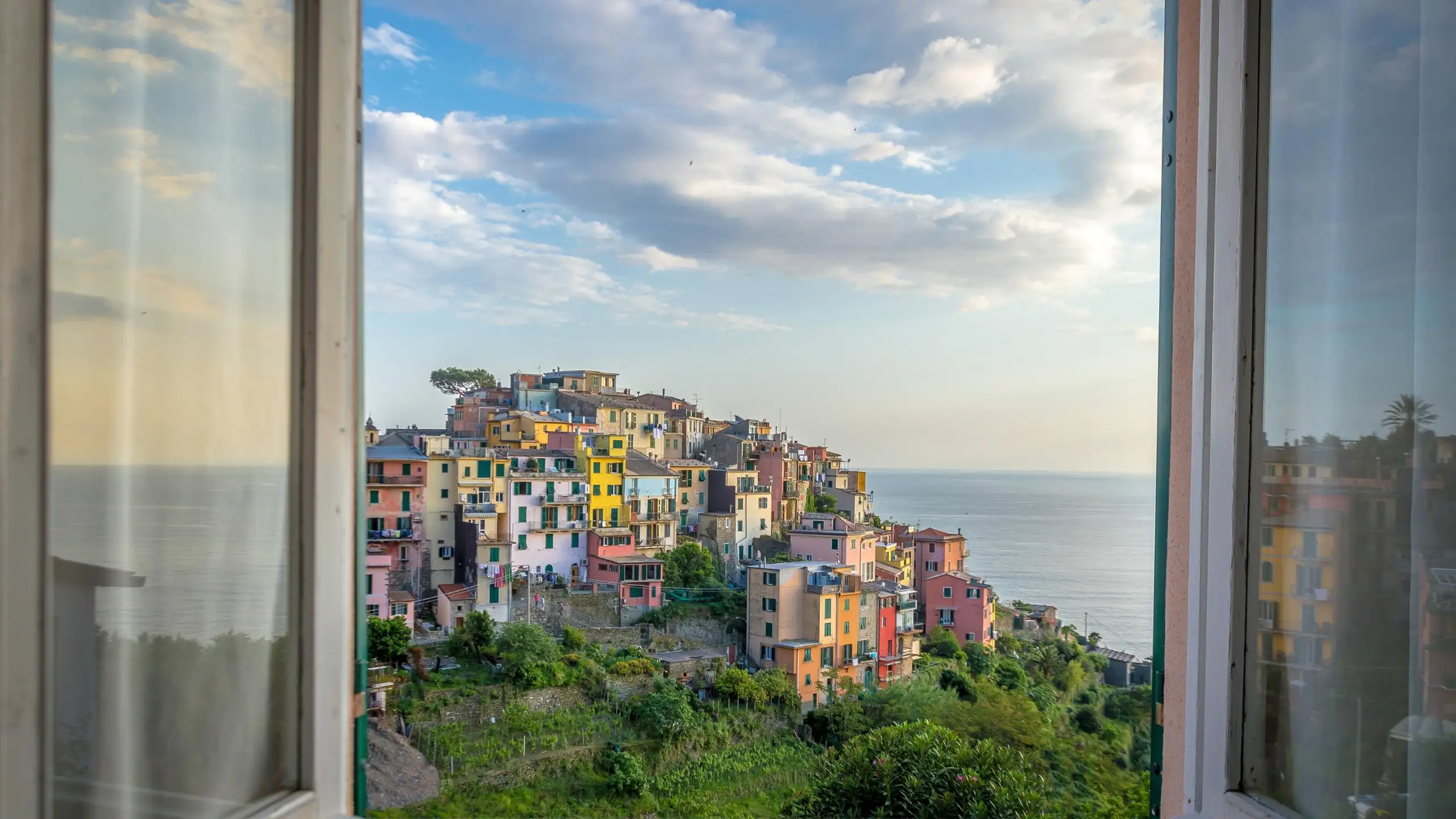
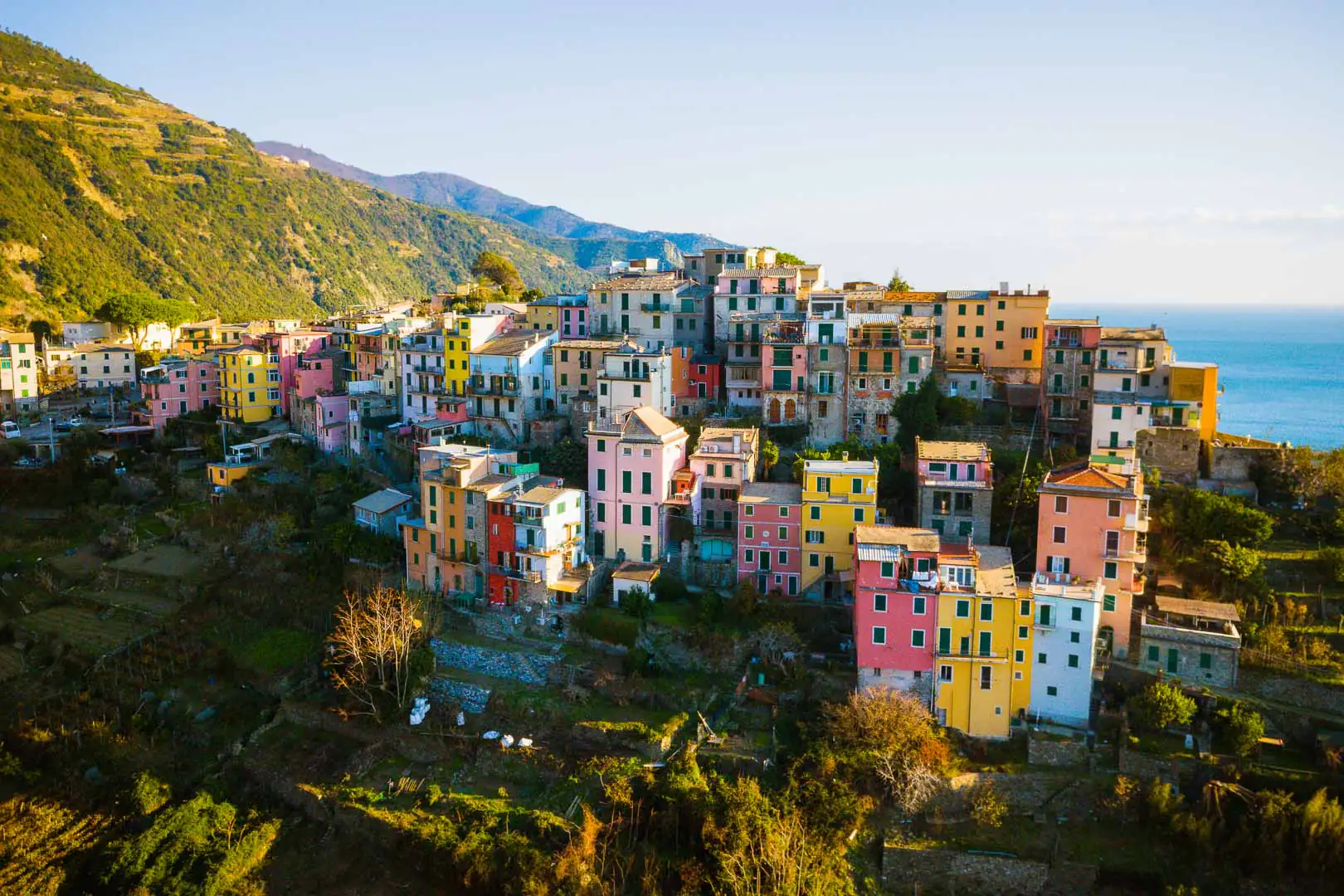
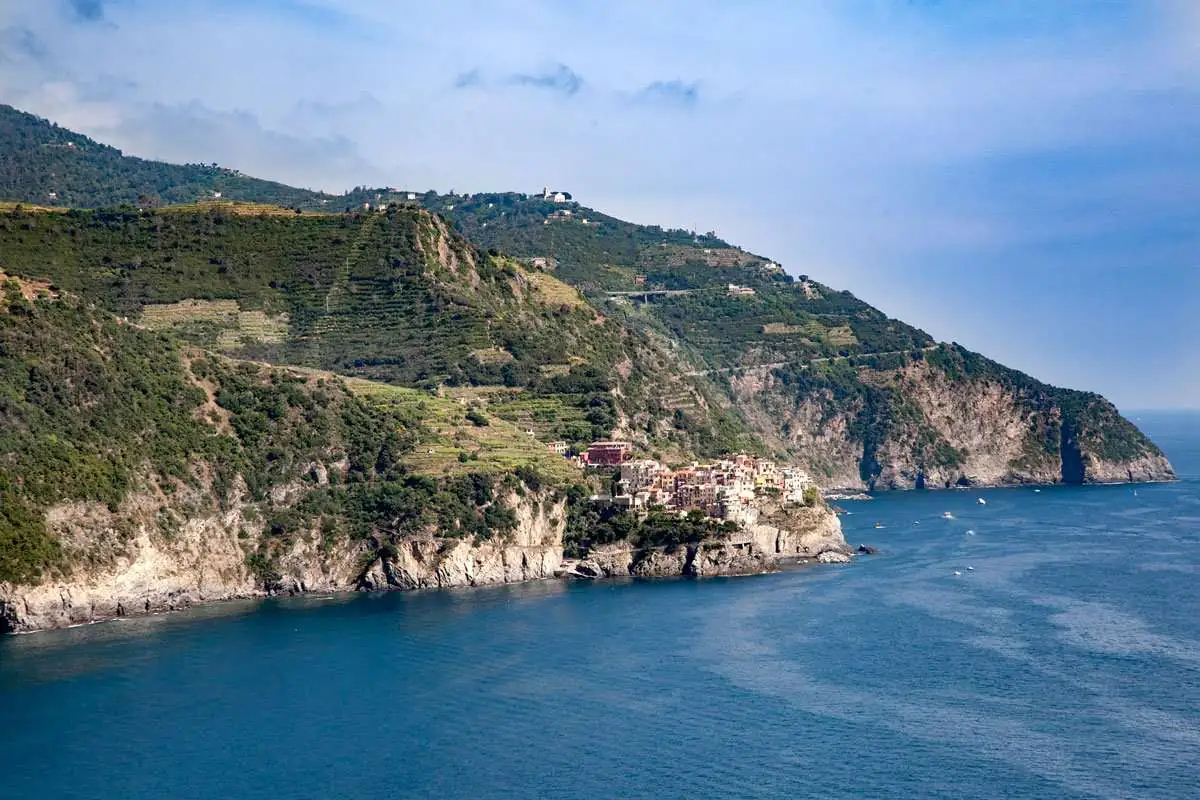
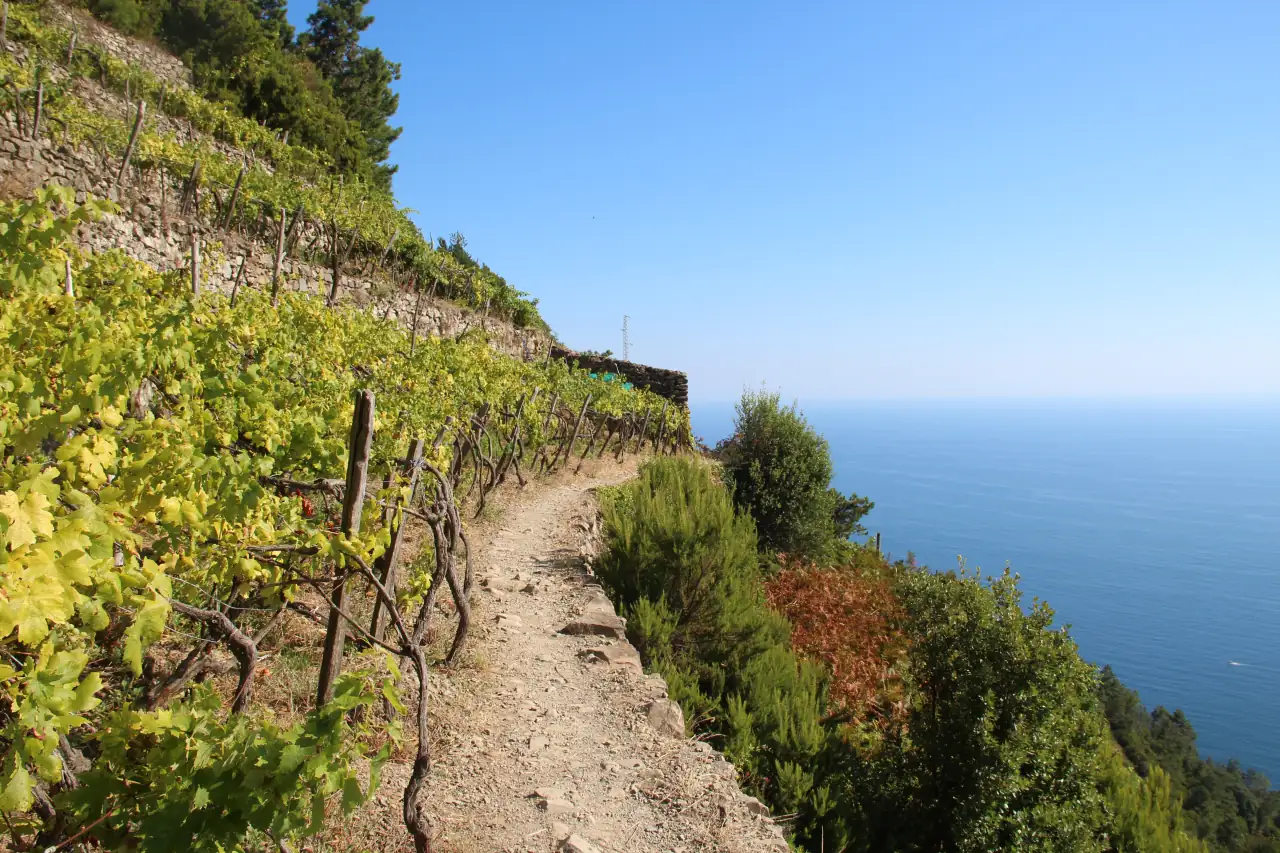
Corniglia is the middle village of the Cinque Terre and the only one of the five that doesn’t touch the sea. It sits on top of a rocky headland about 100 metres up, wrapped in terraced vineyards, with Vernazza on one side and Manarola on the other. Officially it is part of the municipality of Vernazza, and fewer than two hundred people live here.
The key thing to know before you go: the train station is down by the water and the village is not. To get up you either walk the Lardarina, a brick staircase of 377 steps, or take the shuttle bus. That small obstacle keeps the crowds thinner. Corniglia is the quietest of the Cinque Terre villages and has the widest view of the coast, from Punta Mesco to Manarola.
People here always lived from the land more than from fishing. Corniglia’s wine was traded in Roman times: amphorae marked “Cornelia” were found at Pompeii, and Boccaccio mentions its Vernaccia in the Decameron. The village belonged to the Fieschi family and passed to Genoa in 1276. Since 1997 it has been part of the UNESCO World Heritage site of Portovenere, the Cinque Terre and the islands.
By Italian Riviera editorial team·Updated on ·11 min read
Where is Corniglia?
Corniglia is in Liguria (Cinque Terre, province of La Spezia).
You can see the whole village on foot in an hour or two: one main street, a couple of small squares, stepped alleys and two big terraces over the sea. There are no museums. The pleasure is in walking slowly, stepping into the two churches and lingering at the viewpoints. If you come by train, allow time for the climb from the station: everything you need is in our guide to getting up to Corniglia from the station.
Via Fieschi and the old village
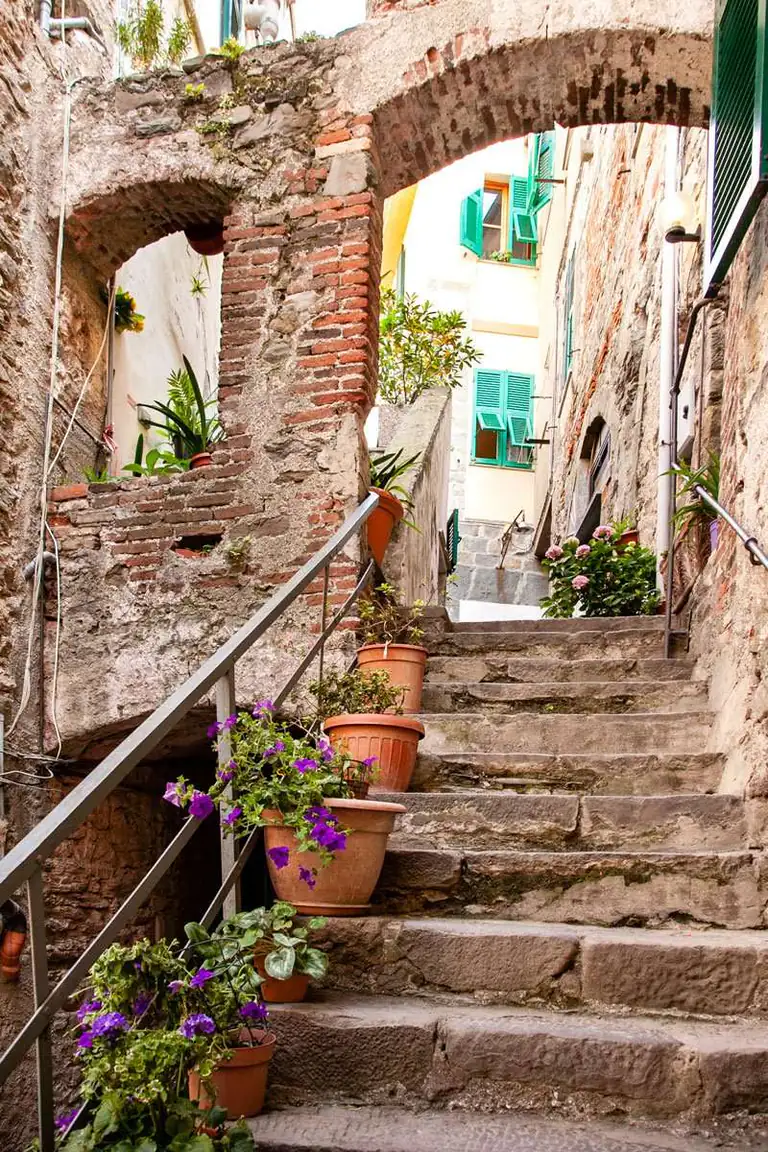
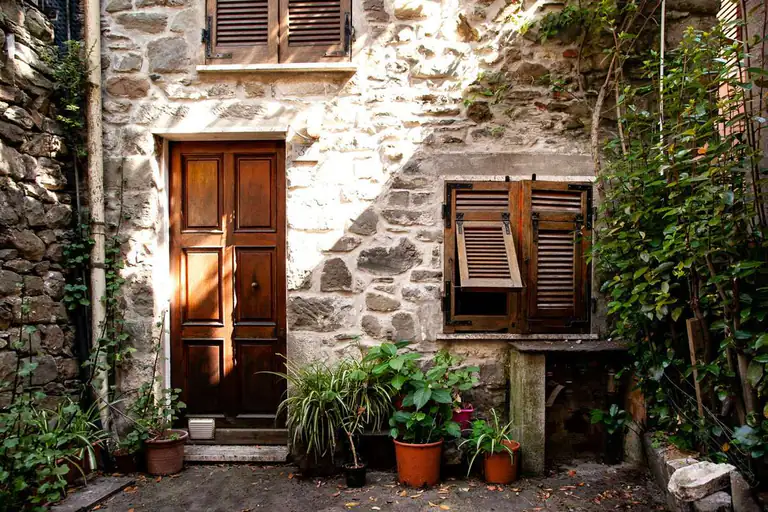
Via Fieschi is the main street: narrow, gently rising, lined with painted houses, small shops and cafés. It starts near the church of San Pietro and runs right across the village to the Santa Maria viewpoint. Stepped lanes and covered passages branch off on both sides, down towards the sea or up towards the vines. The houses are lower than in the other villages, because Corniglia spreads across a headland instead of climbing a narrow valley.
Church of San Pietro
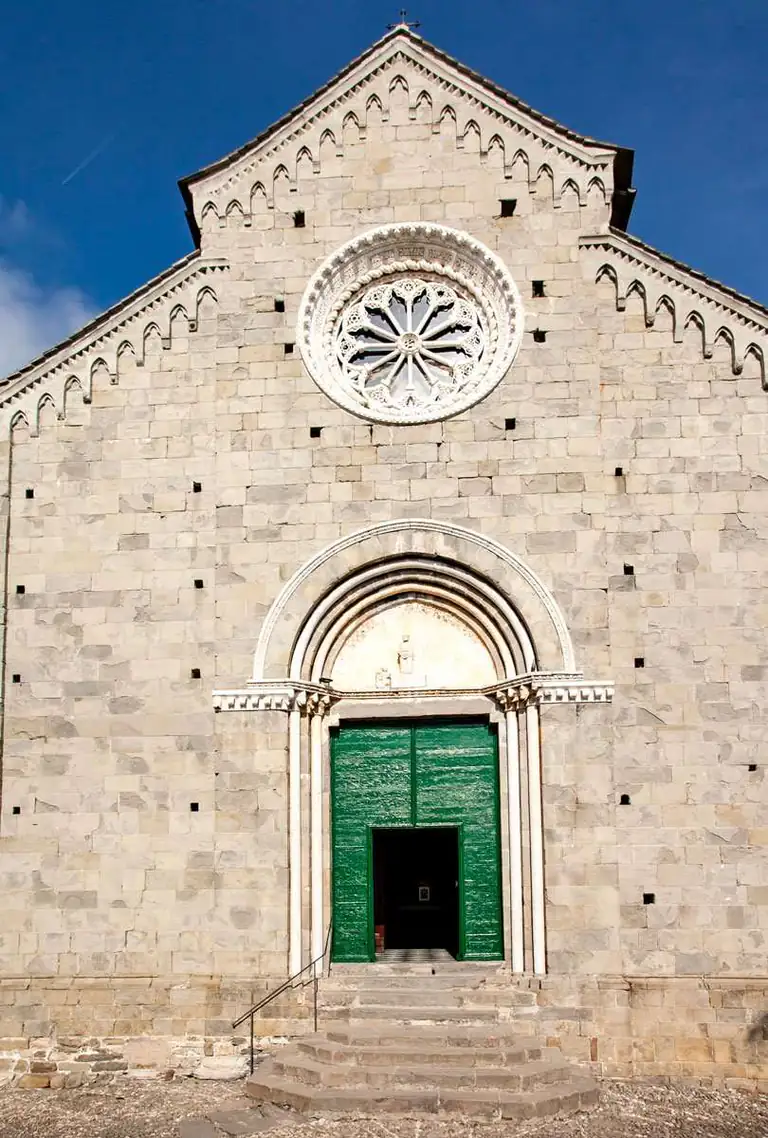
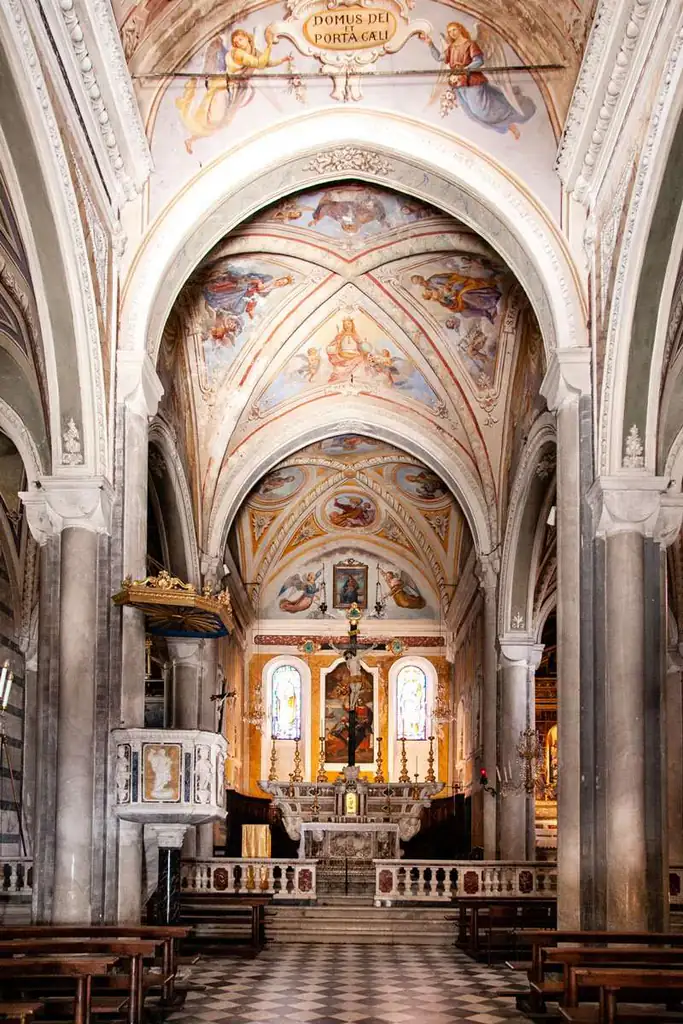
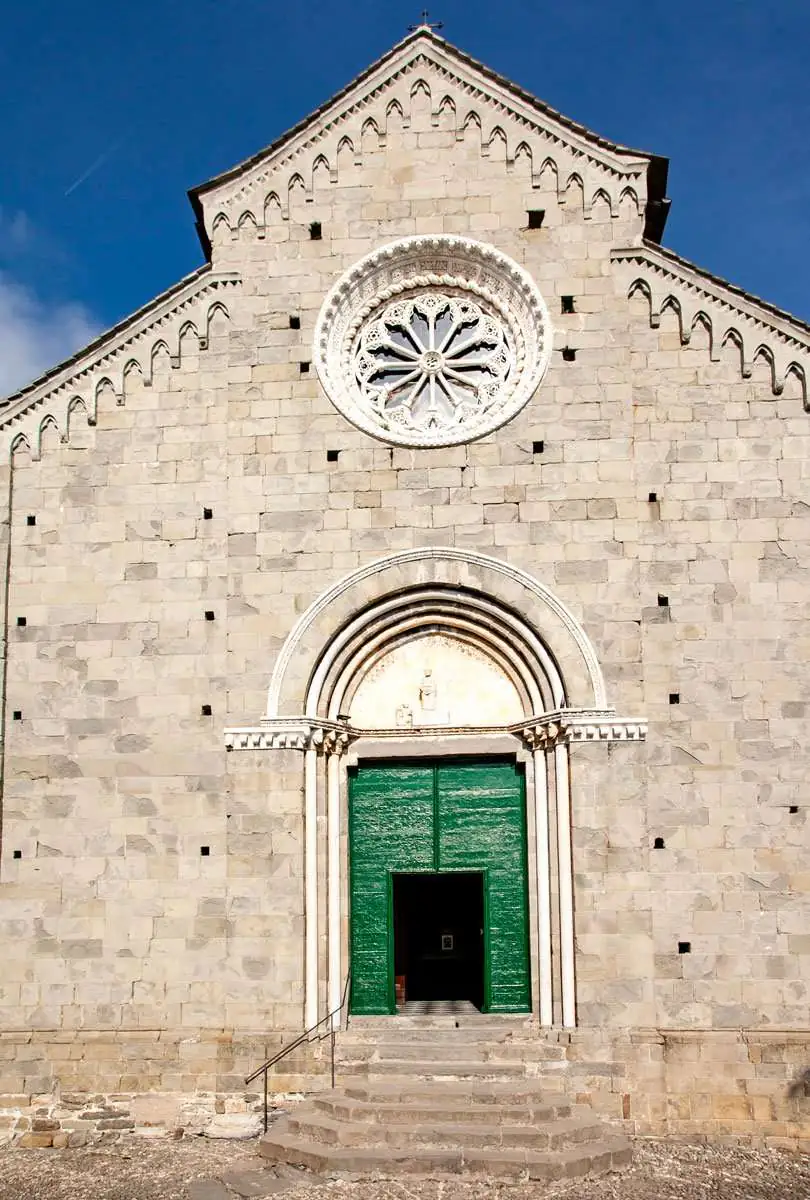
This is Corniglia’s most important monument and the first one you meet coming in by road. Work began in 1334 for the Fieschi family, on top of an 11th-century chapel whose traces you can still see on the left side. It is one of the finest examples of Ligurian Gothic in the Cinque Terre. The local-stone facade has a rose window in white Carrara marble dated 1351, made by the master masons Matteo and Pietro da Campilio. A statue of St Peter stands in the lunette above the door.
Inside, the three aisles were remodelled in Baroque style. Look for the 12th-century baptismal font, older than the church itself, and two modern stained-glass windows by the painter Trento Longaretti. The bell tower has an octagonal top. St Peter is also the village’s patron saint, celebrated on 29 June.
Largo Taragio and the Oratory of Santa Caterina
Largo Taragio is the main square, with the war memorial, café tables and shady trees. On one side stands the 18th-century Oratory of the Disciplinati di Santa Caterina: a single hall with a ceiling fresco of the martyrdom of St Catherine of Alexandria. Behind the oratory a small terrace opens over the sea, quiet and often empty, looking towards Manarola.
Santa Maria viewpoint
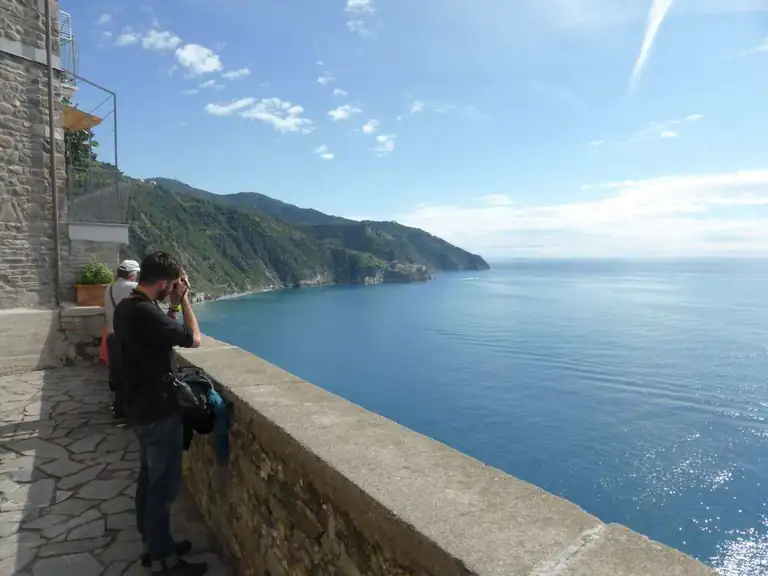
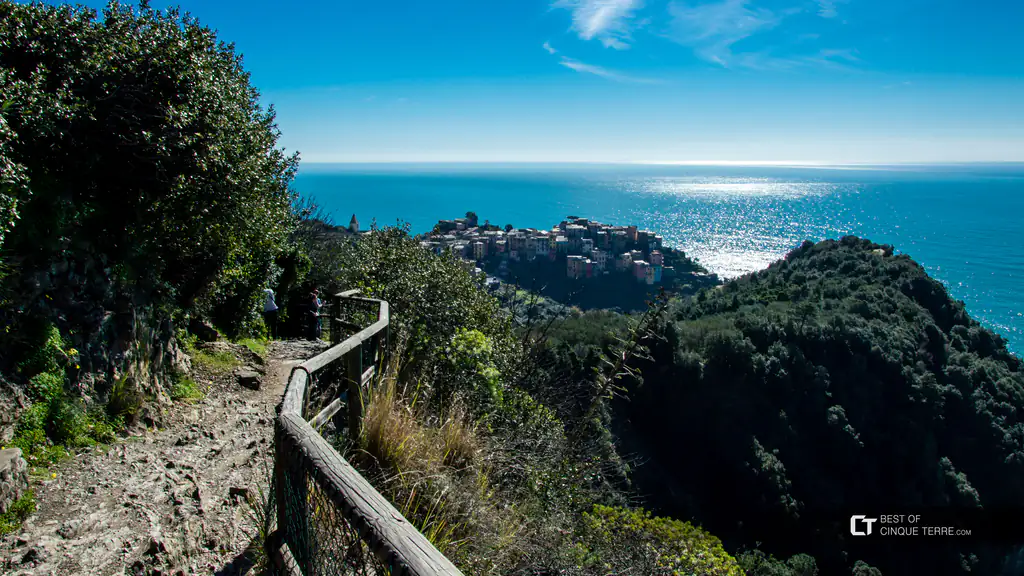
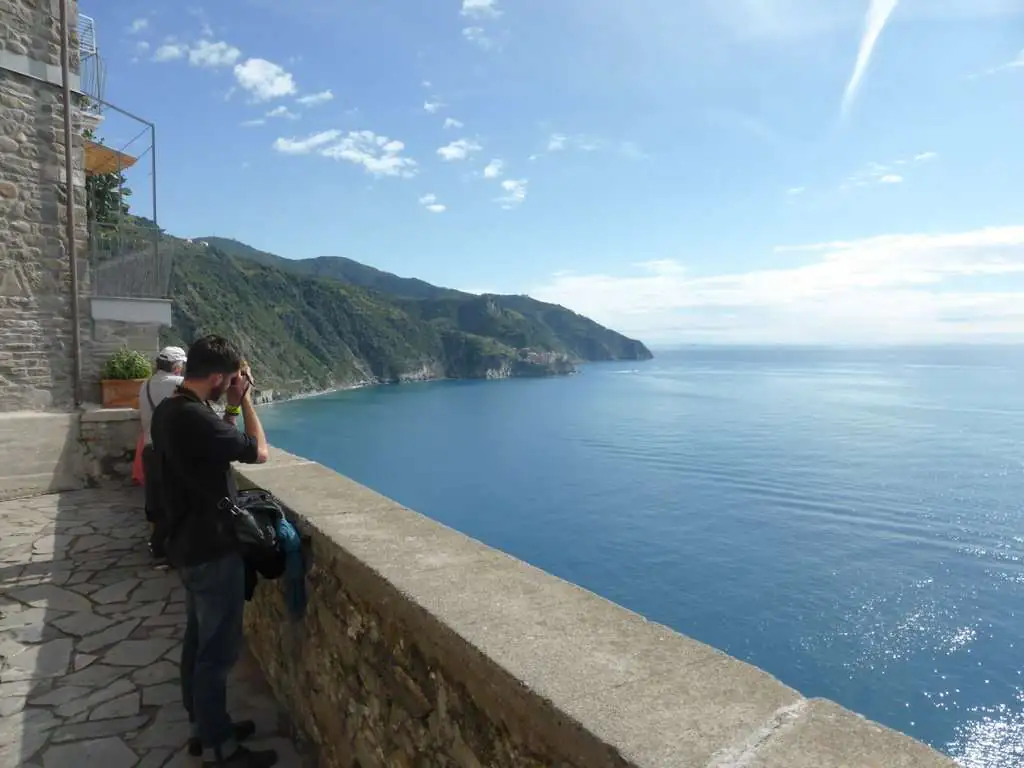
At the end of Via Fieschi the street stops at a terrace on the edge of the cliff. This is Corniglia’s best-known spot, with a 180-degree view of the sea: Vernazza and Monterosso on one side, Manarola on the other. Below you see the bay of the Marina and, to the west, the Guvano cove. Come at sunset or early in the morning, when the terrace is almost empty.
The Genoese tower
From Largo Taragio a ramp leads up to the remains of a 16th-century watchtower, the only surviving piece of the defences the Genoese built against pirate raids. Corniglia was itself sacked in the 16th century by the corsair Dragut, whose men carried off some of the villagers. Not much of the tower is left, but the spot is another fine viewpoint, facing east.
The Lardarina staircase
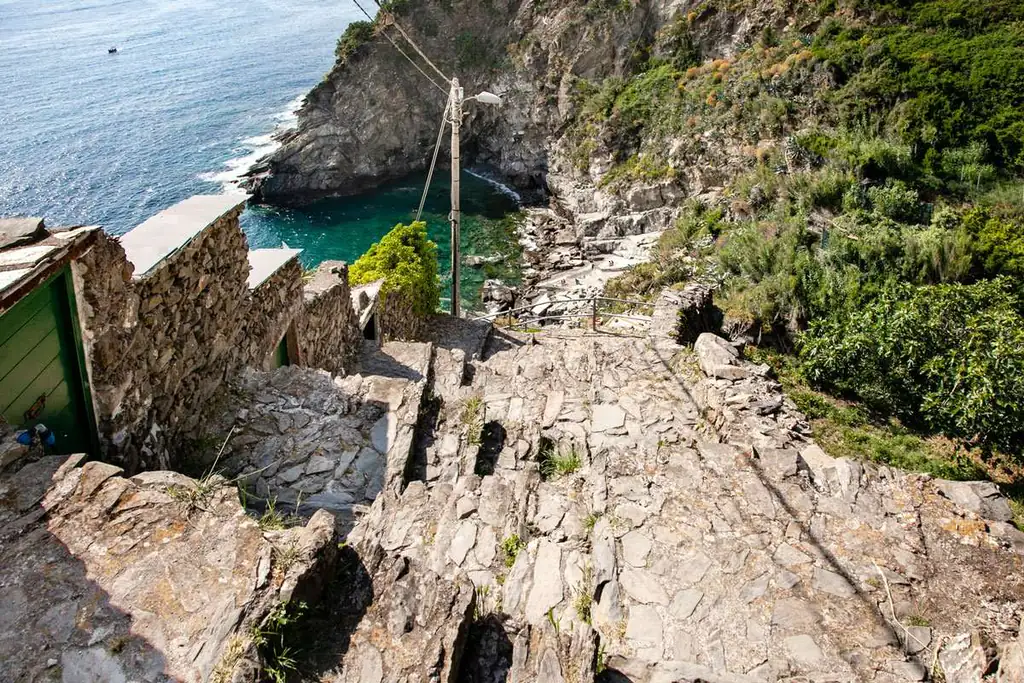
The staircase from the station is a sight in its own right: 377 brick steps in 33 flights, zigzagging above the railway between dry-stone walls and vegetable plots. Going up takes 15 to 20 minutes with a few pauses; coming down is much quicker. On summer afternoons there is no shade, so carry water. Steps, shuttle and alternatives are covered in our guide to the Lardarina and the shuttle bus.
Terraces and vineyards
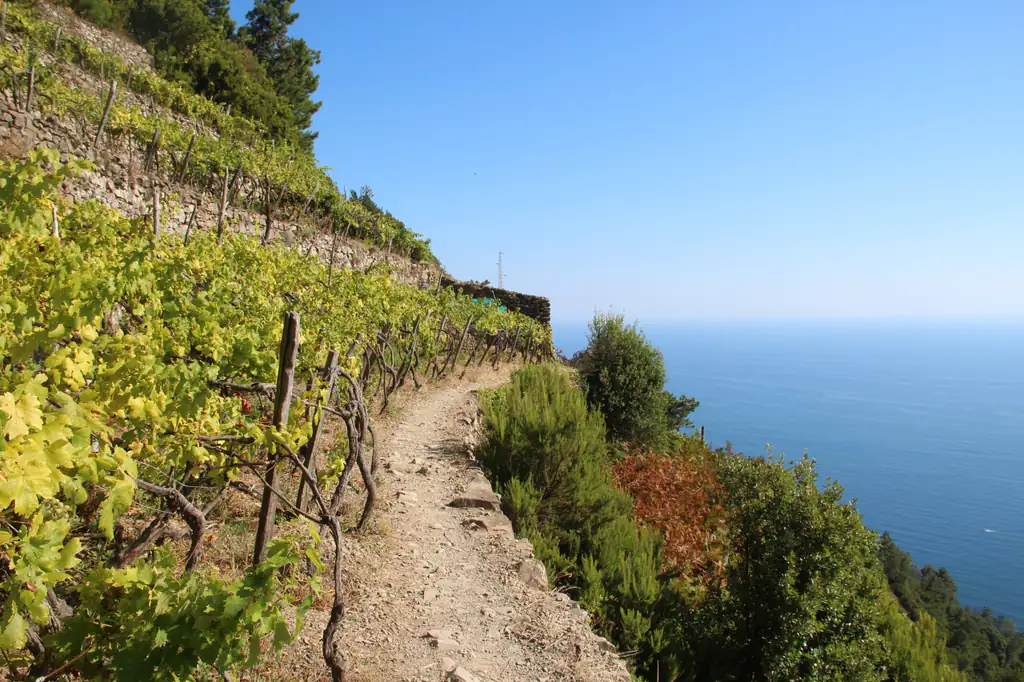
Corniglia is surrounded by cultivated terraces held up by miles of dry-stone walls. This is where Cinque Terre white wine and Sciacchetrà, the local dessert wine made from dried grapes, come from. A few minutes’ walk out of the village, along the road or the paths heading uphill, puts you among the vines with the sea below. In September, at harvest time, grapes are still carried by hand or on small monorail tracks.
Sanctuary of San Bernardino
Higher up, on the ridge towards Vernazza, stands the sanctuary of San Bernardino. You reach it on foot via the trails climbing from Vernazza and from Corniglia over the Cigoletta pass. The view down onto Corniglia’s headland is worth the effort, but these are trails for experienced hikers, with more than 500 metres of climbing.
Villaggio Europa
Walking from the station towards the sea you will notice a row of ruined bungalows. This is the Villaggio Europa, built in 1963–64 on the old railway line and later closed. It isn’t a place to visit, but it explains why there is no beach club at the foot of the stairs: the area has been abandoned for decades.
Where to stay
Where to stay in Corniglia
Corniglia has the fewest beds of all the Cinque Terre villages: mostly guest rooms, B&Bs and apartments, often in old houses. Choose based on how you’ll move around.
In the village: the best atmosphere, quiet evenings once the day-trippers leave and the sunset viewpoint on your doorstep. But every train means the Lardarina or the shuttle; with heavy luggage, ask your host how best to reach the door.
Near the station or along the road: handier for trains, more isolated in the evening.
In the hills towards Volastra or the vineyards: peace and views, but you need a car or strong legs.
Always check the exact location on the map before booking. From June to September book well ahead, as rooms are few. If Corniglia is full, Vernazza, Manarola or Levanto make practical bases, all a few minutes away by train.
The train is by far the best option. Corniglia station is on the Genoa–La Spezia line, served by the regional trains shuttling between Levanto and La Spezia (often called the Cinque Terre Express): Manarola and Vernazza are two or three minutes away, La Spezia about 15 minutes, Genoa a good hour and a half. From 14 March to 1 November 2026 the Cinque Terre fare applies between Levanto and La Spezia: a single ticket costs €5, €8 or €10 depending on the day’s demand band, is valid for one journey within 75 minutes of validation, and after 7.30pm you always pay the lowest band. Source: Trenitalia, Cinque Terre by train.
The Park’s Cinque Terre Card covers the paid trails, the Park’s village buses (including the Corniglia shuttle) and station toilets; the Train version adds unlimited regional trains between Levanto and La Spezia. Prices vary by date and are shown at card.parconazionale5terre.it.
From the station to the village
The station is at sea level, the village about 100 metres higher and just over a kilometre away by road. You have three choices: the Lardarina (377 steps, 15–20 minutes), the ATC shuttle bus (about five minutes) or walking up the paved road, longer but step-free. Shuttle tickets are not sold on board: buy one at the station or use your Cinque Terre Card. The minibuses fill up when a busy train arrives and stop early in the evening, so check the timetable on the ATC La Spezia website.
By car
Leave the A12 motorway at La Spezia–Santo Stefano Magra, drive into La Spezia and follow signs for the Cinque Terre: about 25 km of scenic, winding road. Alternatively exit at Carrodano-Levanto and go via Levanto, Monterosso and Soviore; the last stretch is narrow. A car only gets you there: in the village and between villages you’ll walk and take the train.
By boat
Corniglia has no landing stage. The Cinque Terre ferries call at Monterosso, Vernazza, Manarola and Riomaggiore, but not here. To see Corniglia from the water, take the boat from another village and get off at Vernazza or Manarola.
By plane
The nearest airports are Pisa and Genoa, both about 110 km by road. From Genoa there are direct trains to the Cinque Terre; from Pisa you’ll need one or two changes.
Parking
Cars can’t enter the village and visitor spaces are few: some paid parking along the road a few hundred metres away, usually full by mid-morning in summer. For a day trip it’s easier to leave the car in La Spezia or Levanto and come by train.
A12, La Spezia or Carrodano-Levanto exit; narrow road and few paid spaces
By train
Corniglia station (Genoa–La Spezia line), then the 377 Lardarina steps or the ATC shuttle
By plane
Pisa or Genoa (about 110 km), then train
The guide
Swimming in Corniglia: the Marina and Guvano
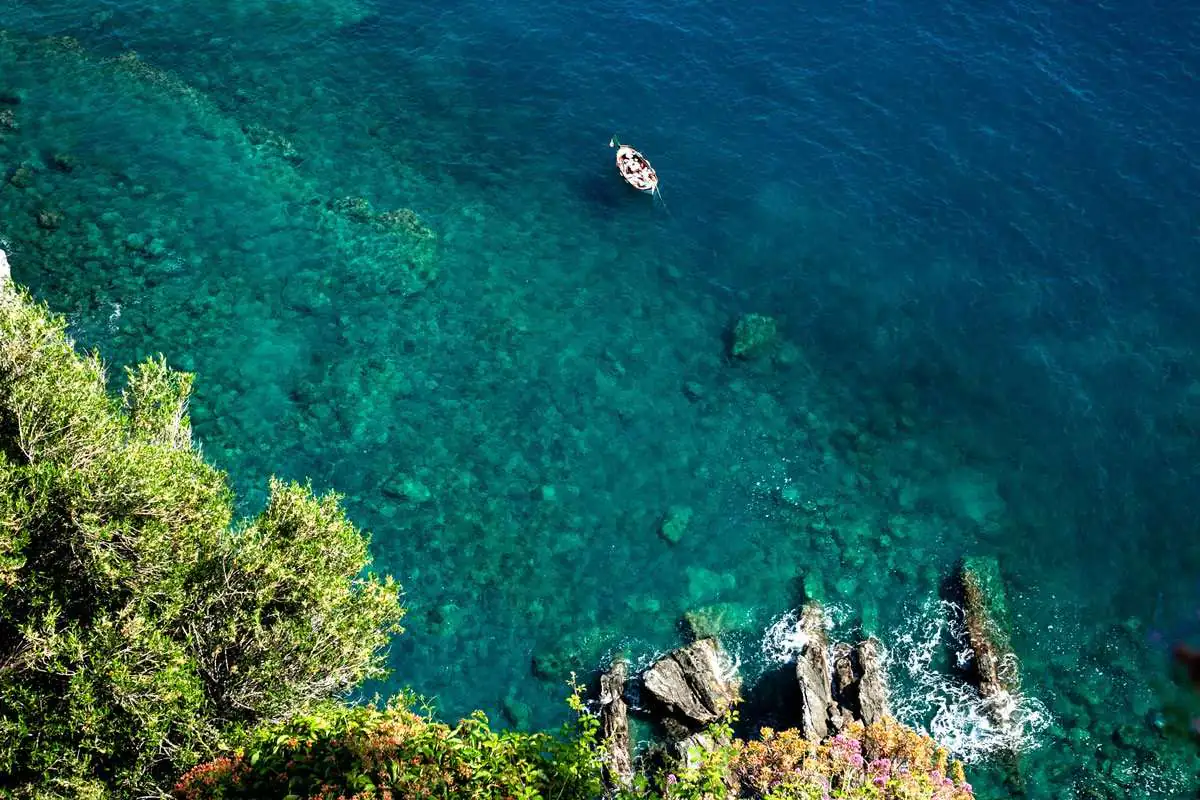
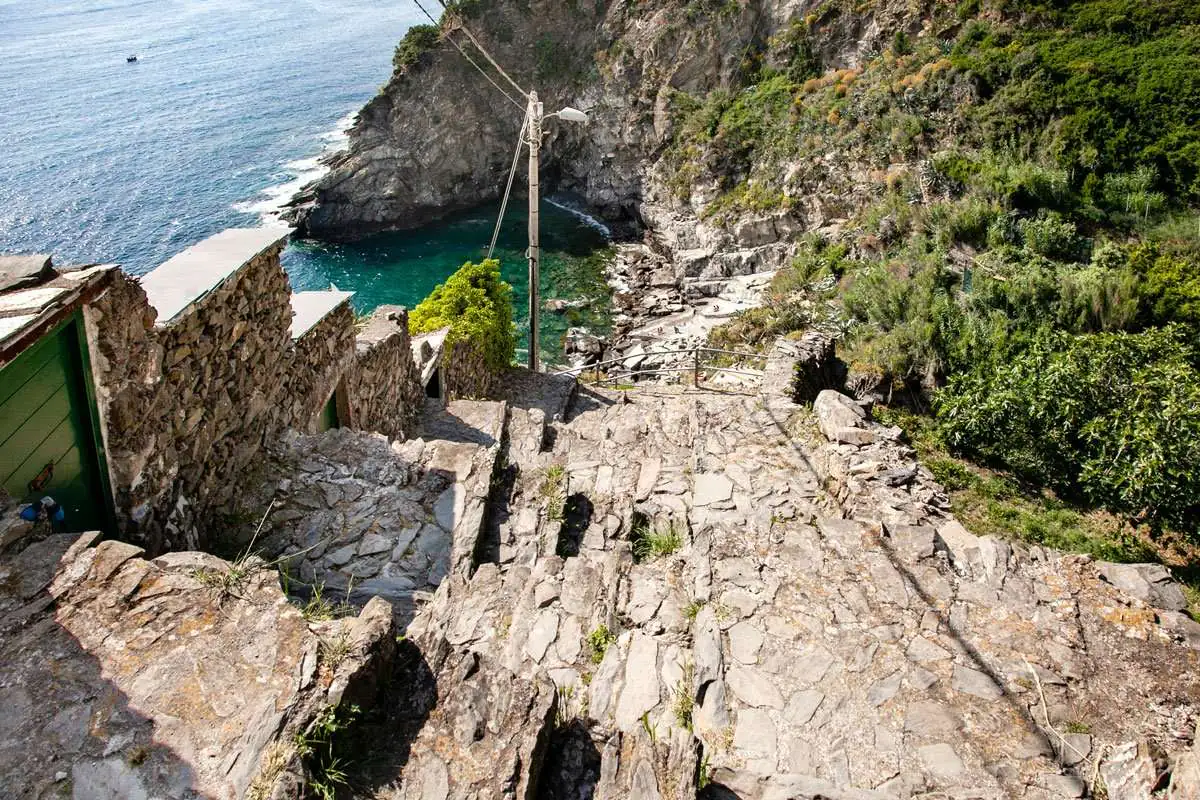
Corniglia has no beach in the village. If you want a swim, the only option nearby is the Marina di Corniglia: from Largo Taragio, in front of the Santa Caterina oratory, a flight of steps takes you down to the sea on the Vernazza side in a few minutes. At the bottom you’ll find rocks, ladders and a few local boats. There are no facilities, so bring water shoes and drinking water, and remember you have to climb back up.
The long pebble beach that used to lie below the station has all but disappeared: erosion has brought the sea right up against the railway wall.
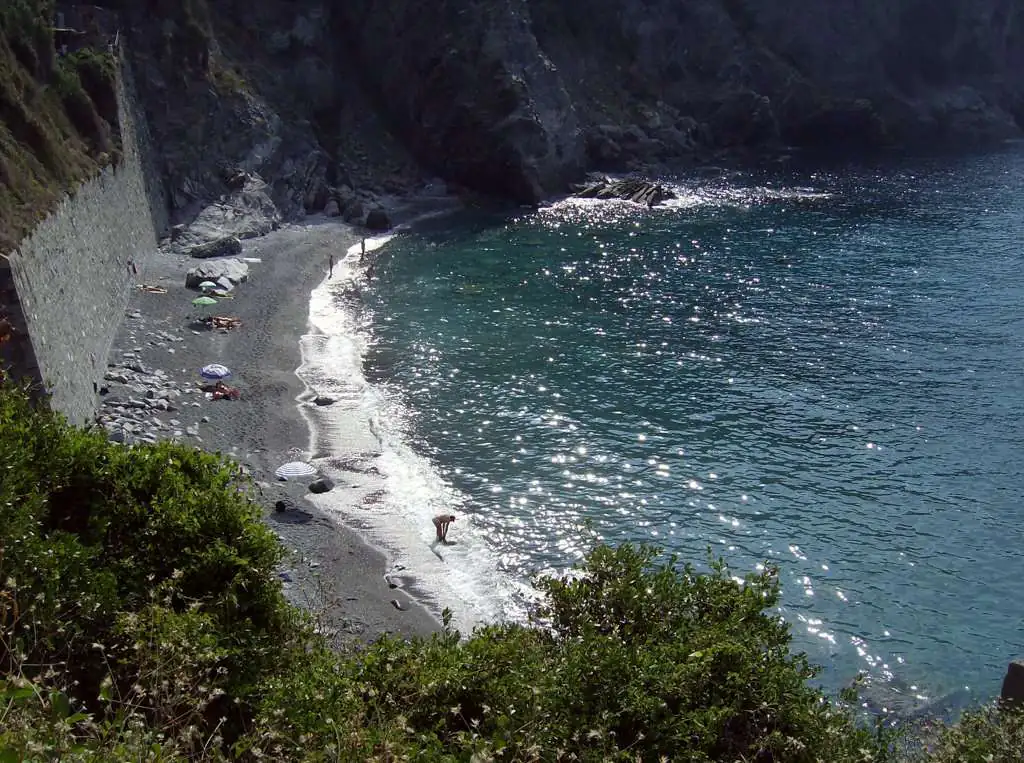
Guvano beach, the sand-and-pebble cove between Corniglia and Vernazza that hippies and naturists made famous in the 1970s, can no longer be reached. The old railway tunnel that led there has been closed since 2016, the path is in very poor condition, and because of landslide risk access is banned from the sea as well. You can see it from above, from the Santa Maria viewpoint and the trail to Vernazza. For a proper beach day, take the train to Monterosso, seven minutes away.
Walks and hikes
Corniglia to Vernazza on the Sentiero Verde Azzurro
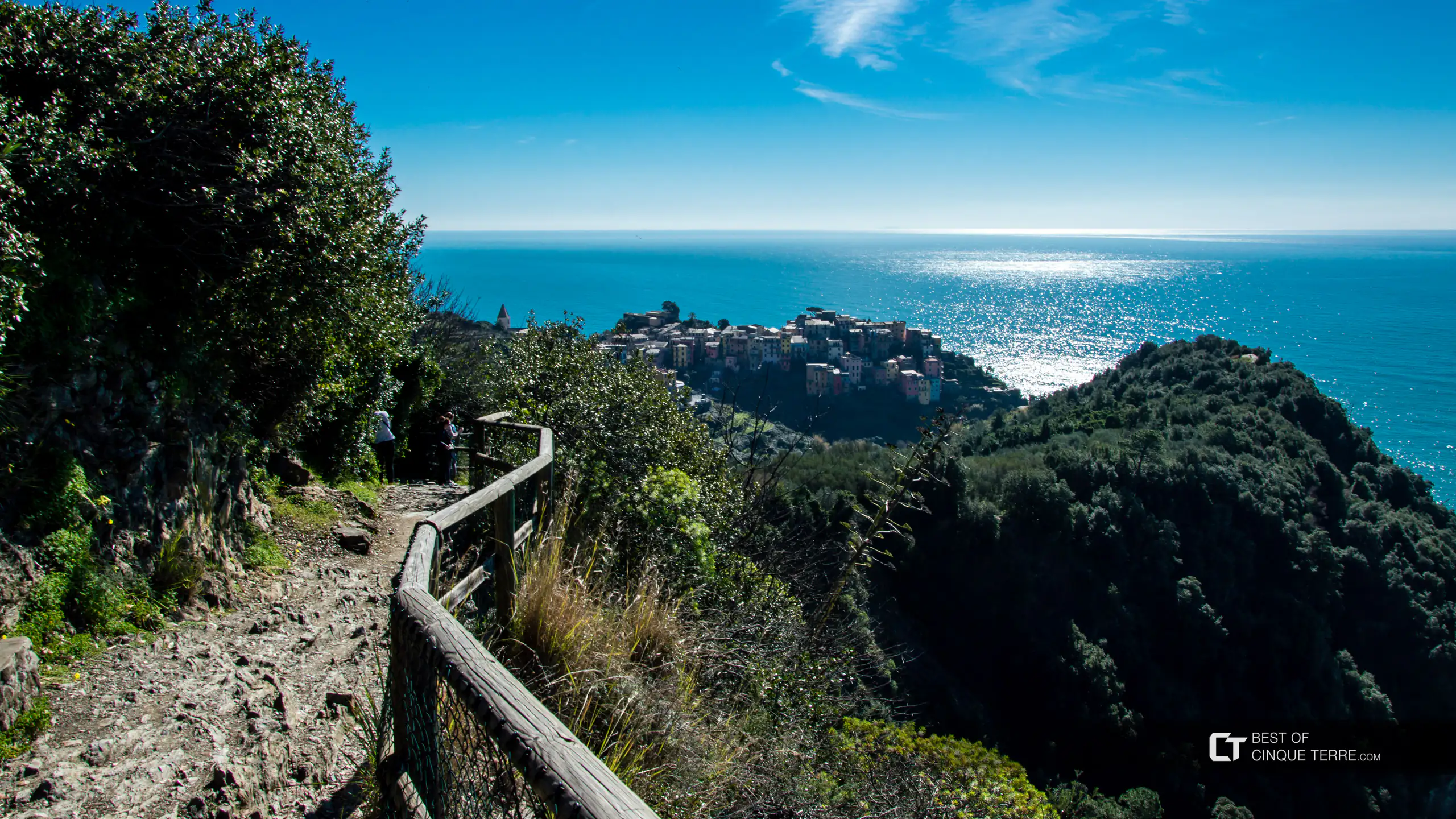
This is the longest and arguably the most beautiful stretch of the old Blue Trail: about 4 km and 270 metres of ascent, an hour and a half through olive groves and vines, via the hamlet of Prevo and a lookout over Guvano bay. It is graded for experienced hikers, with steps and some narrow, exposed sections.
Important: on 10 September 2026 the National Park closed the Corniglia–Vernazza–Monterosso section pending geological checks, with no reopening date. Before you set out, check the notices on the Cinque Terre National Park website. When open, the trail requires a Cinque Terre Card.
Corniglia to Manarola via Volastra
The direct coastal path between Corniglia and Manarola is closed because of landslides. The alternative is harder but spectacular: climb from Corniglia towards Case Pianca, follow the hillside through the vineyards to Volastra, then descend to Manarola on a long stone staircase. It’s about 5.5 km with 350 metres of ascent; allow around three hours. Volastra is a tiny village of vines and olives above Manarola, with the medieval sanctuary of Nostra Signora della Salute.
Up to the Cigoletta pass
For keen walkers, trail 587 climbs from the village to the Cigoletta pass on the ridge, gaining 500 metres in just over two kilometres. From there you can continue to San Bernardino or along the Alta Via delle Cinque Terre.
What to eat and drink in Corniglia
Cinque Terre white wine: a dry white from the terraced vineyards around the village, served by the glass in many bars.
Sciacchetrà: the Cinque Terre’s amber dessert wine, made from dried grapes and sipped after dinner.
Anchovies and seafood: even in this farming village, menus feature anchovies, shellfish and the catch of the day.
Focaccia and vegetable pies: ideal for a quick bite before a hike.
Day trips from Corniglia
Vernazza: the little harbour, the tower and the square on the sea, three minutes by train or an hour and a half on foot when the trail is open.
Manarola: colourful houses on the rock, two minutes by train or on foot via Volastra.
Riomaggiore: the easternmost village, with its harbour squeezed between the houses.
Monterosso: the widest beaches in the Cinque Terre, seven minutes by train.
Levanto: a long beach, an old town and lower prices, just outside the Cinque Terre.
La Spezia: the nearest city, with museums, a market and onward connections, a quarter of an hour by train.
Portovenere: the church of San Pietro on the cliff and the islands of the gulf, by boat from Vernazza or Monterosso.
Weather
Weather and best time to visit Corniglia
April–June and September–October; grape harvest in September
🌙
17°CNow · wind 21 km/h
Sat 10⛅21° 14°
Sun 11🌦️21° 14°3 mm
Mon 12☀️22° 15°1 mm
Tue 13🌤️22° 14°
Wed 14☀️21° 14°
Thu 15☀️23° 15°
Forecast: MET Norway (Yr), CC BY 4.0 licence. Updated hourly.
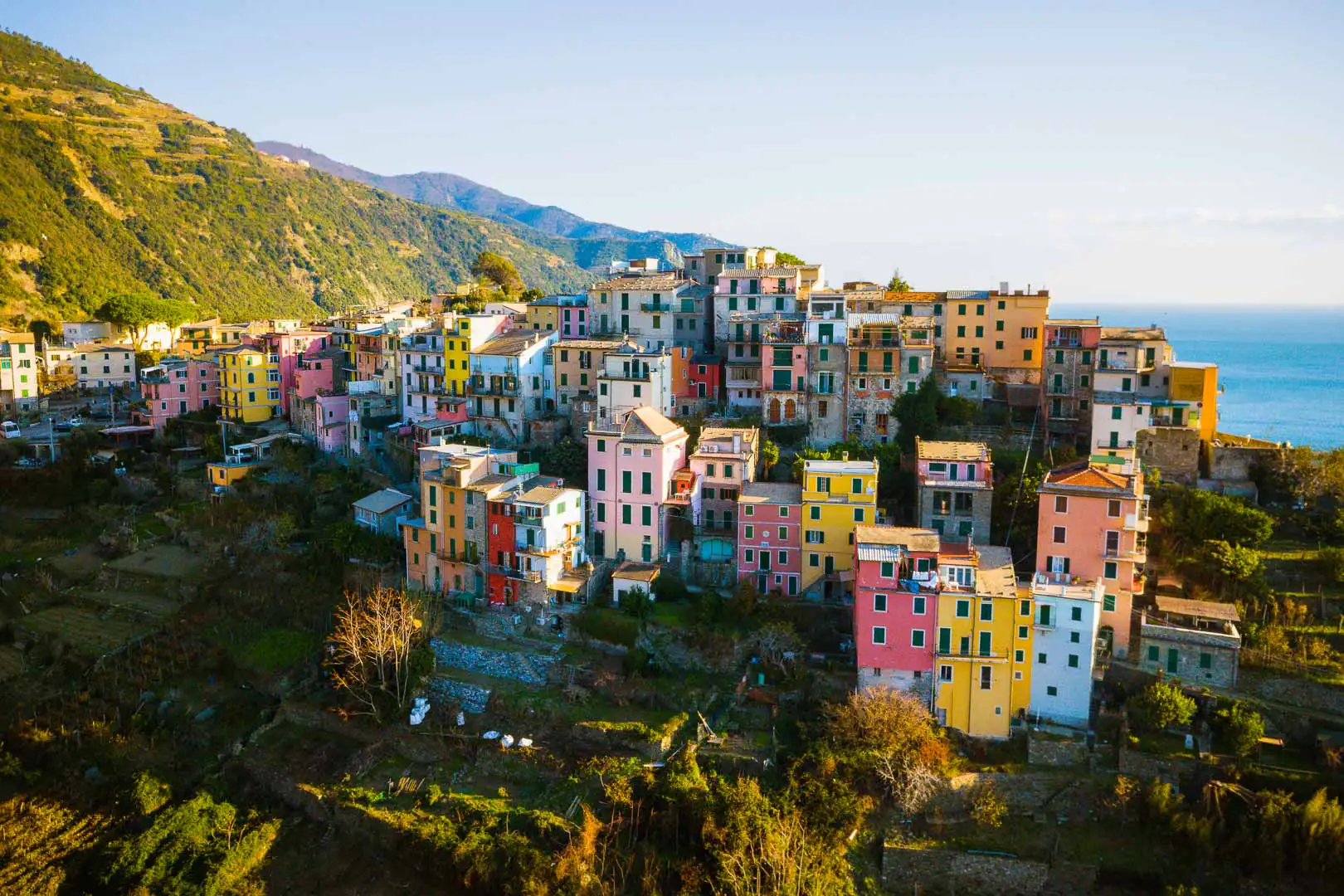
The village of Corniglia in the Cinque TerreView of Corniglia from a windowThe village of Corniglia, Cinque TerreCorniglia with its colourful houses and terracesCorniglia on its headland among the vineyardsSentiero Azzurro from Vernazza to CornigliaSanta Maria viewpoint in Corniglia overlooking the sea
FAQ
Frequently asked questions about Corniglia
How many steps does the Lardarina have?
377, in 33 flights. Going up takes 15 to 20 minutes with a few stops.
Is there a shuttle bus from the station to the village?
Yes, the ATC bus takes about five minutes. Tickets aren’t sold on board: buy one at the station or use the Cinque Terre Card, which includes it.
Does Corniglia have a beach?
No. For a swim there’s the Marina di Corniglia, a rocky inlet below the village. The beach below the station has almost vanished and Guvano is off limits.
Can you visit Guvano beach?
No. The tunnel that led there has been closed since 2016, the path is in very poor condition and, because of landslide risk, access is banned from the sea too.
Is the Corniglia–Vernazza trail open?
On 10 September 2026 the Park closed it for geological checks, together with the Vernazza–Monterosso section. Check the Park’s notices before you go.
Can you walk from Corniglia to Manarola?
The coastal path is closed because of landslides. The route goes higher, through the vineyards and Volastra: about 5.5 km and three hours.
Do ferries stop at Corniglia?
No, it is the only Cinque Terre village without a landing stage. Come by train or by car.
How much time do you need in Corniglia?
Two or three hours cover the village, the viewpoints and the climb from the station. Add a hike or a swim at the Marina and it becomes half a day.
When is the best time to visit Corniglia?
April, May, June, September and October: good walking weather and fewer crowds. September also brings the grape harvest on the terraces.