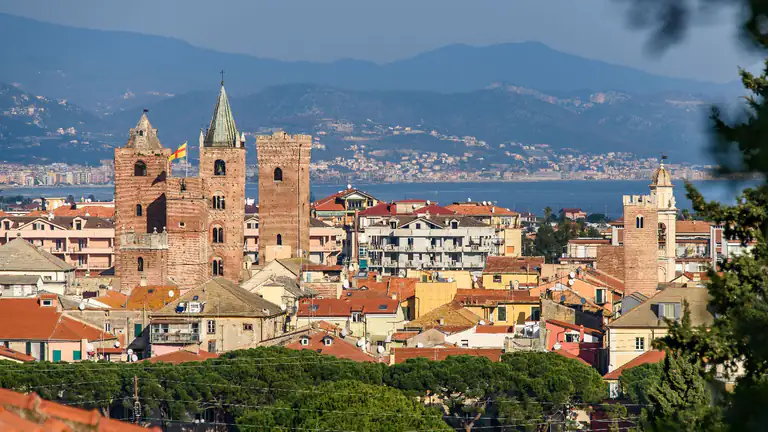
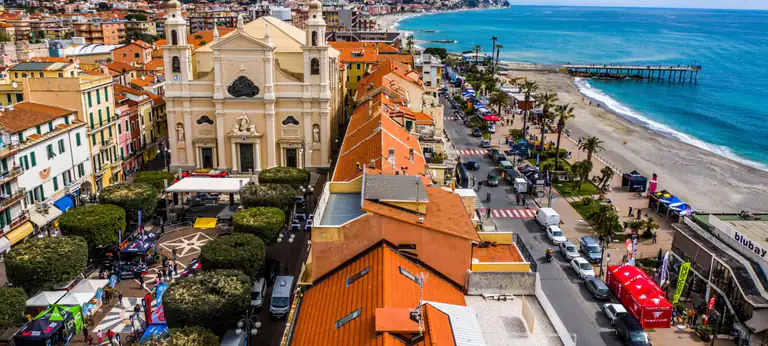
Albenga's historic centre with its medieval towers

Albenga

Town of medieval towers: early Christian baptistery, cathedral, Roman shipwreck museum, Roman road to Alassio, beaches facing Gallinara island.

Albenga's historic centre with its medieval towers
Area
Riviera delle PalmeRiviera di Ponente · Province of Savona
Ideal for
History and archaeologyfood, families and a budget base near Alassio
Beaches
Free beaches and beach clubs between the centre and Vadinofacing Gallinara island
Best time to go
June to September for the seaspring for asparagus, artichokes and sightseeing
By train
Albenga station (Genoa–Ventimiglia line), near the centre1 h 20 – 2 h from Genoa
By car
A10, Albenga exitthe old town is a ZTL, park outside
Airport
Genoa (about 85 km)Villanova d'Albenga airport has no scheduled flights
How long to stay
Half a day for the old town2–3 days with beach and day trips

Welcome to Albenga

The town of a hundred towers

Albenga is the town of towers on the western Italian Riviera: a medieval brick old town laid out on the grid of a Roman city, a short walk from the sea and facing Gallinara island. It sits in the province of Savona, at the mouth of the Centa river, between Alassio and Loano, and it is the main town of a fertile farming plain known for violet asparagus and spiny artichokes.

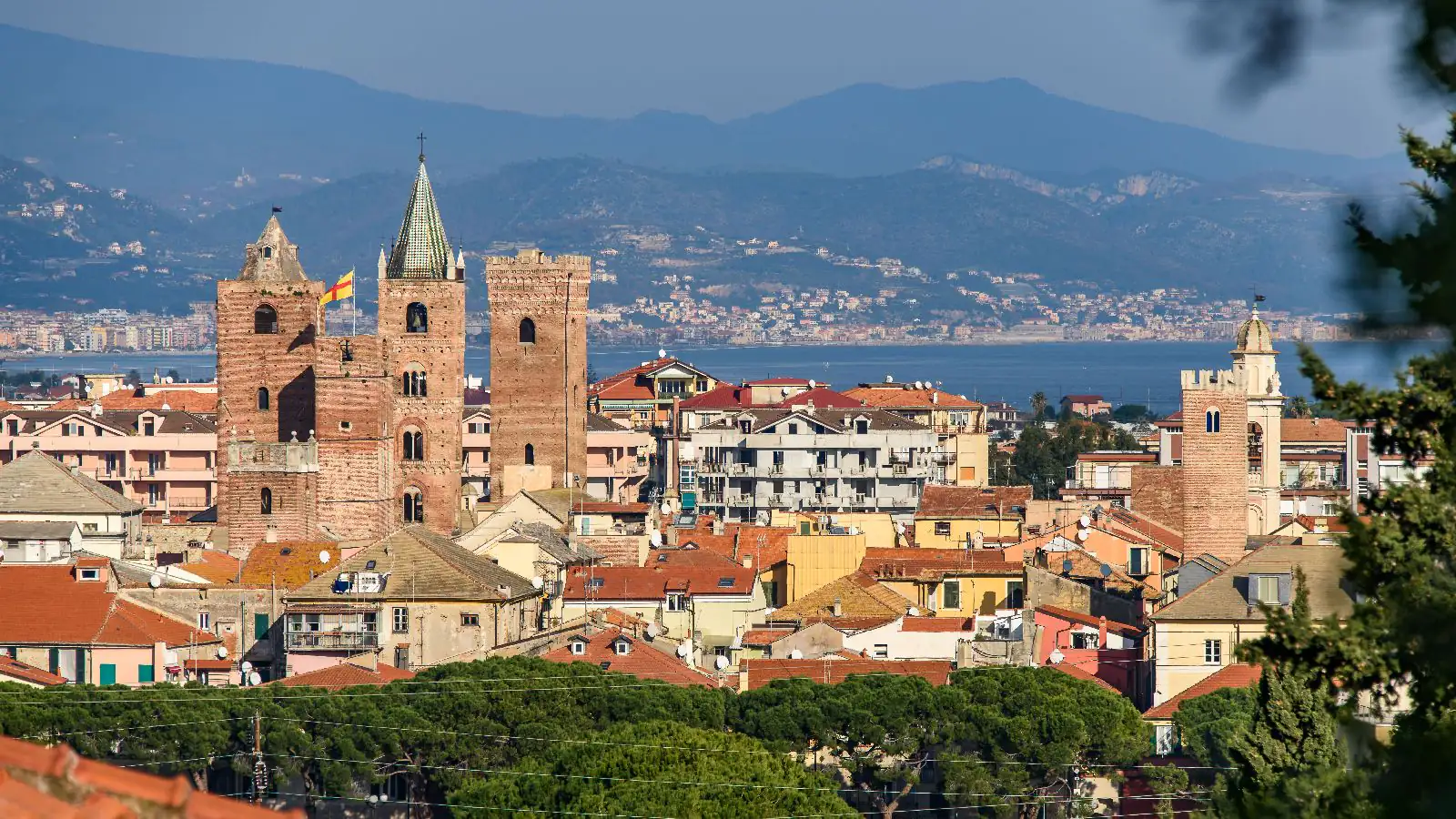
Its history runs deep. It was Albium Ingaunum, capital of the Ingauni, a Ligurian tribe; the Romans took it in 181 BC and renamed it Albingaunum. In the Middle Ages it was a rich, fiercely independent commune until it submitted to Genoa in 1251. The towers date from that time, built in the 12th and 13th centuries by powerful families as status symbols. There are no longer a hundred of them, as the nickname claims, but the skyline is still unlike anything else in Liguria.

Albenga has about 23,700 residents and a life that does not revolve around tourism alone: markets, farms, local shops. It makes a practical, often cheaper base than nearby Alassio, with fast trains along the coast. Half a day covers the old town; add the beach, the Roman road to Alassio and a few day trips and two or three days go by easily. Coming from Genoa, the Cinque Terre or Portofino, it is an easy stop on the way to France.

Where is Albenga?

Albenga is in Liguria (Riviera di Ponente, Riviera delle Palme, province of Savona).

Map: where Albenga is in LiguriaPIEDMONTLOMBARDYEMILIA-ROMAGNATUSCANYFRANCERIVIERA DI PONENTERIVIERA DI LEVANTELIGURIAN SEASavonaImperiaSanremoLa SpeziaAlbenga
Boundaries: ISTAT, Natural Earth · Interactive map →

What to see

What to see in Albenga

Albenga's historic centre with its medieval towers

The old town keeps the plan of the Roman castrum: two main streets crossing at right angles and a grid of narrow lanes, the carruggi, around them. It is flat, compact and closed to traffic, so park outside and walk. Everything revolves around Piazza San Michele, home to the cathedral, the baptistery, Palazzo Vecchio and most of the museums.

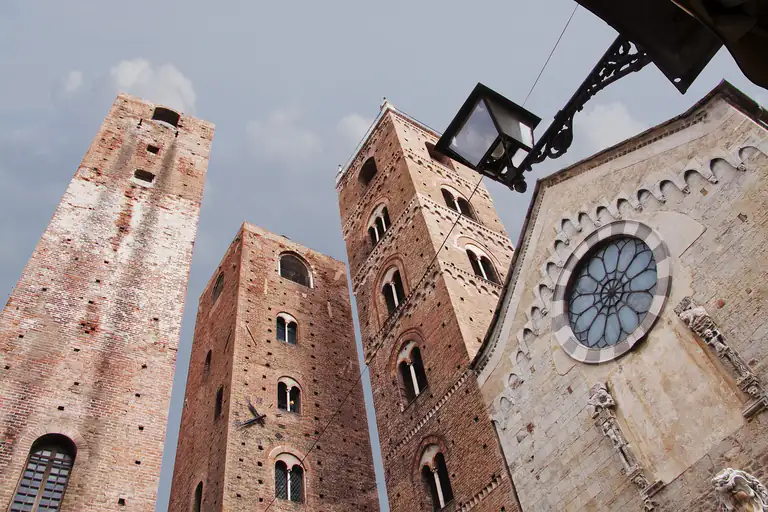
Towers and bell towers of Albenga from above

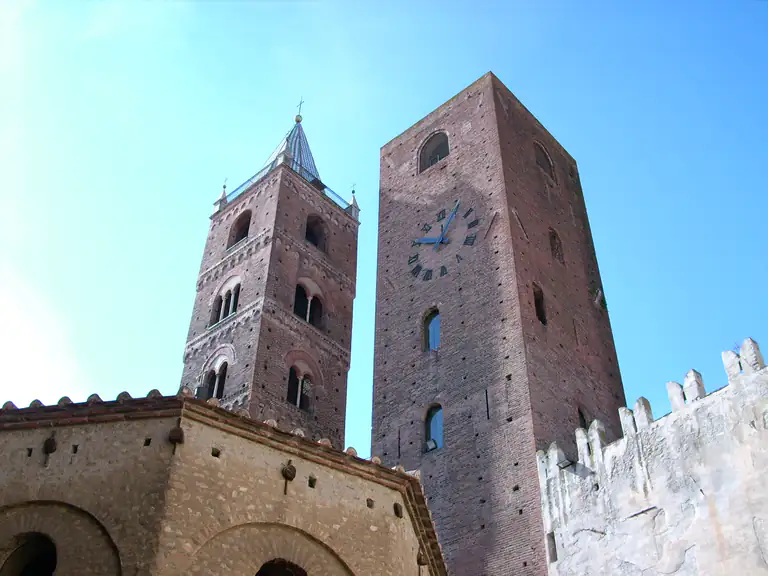
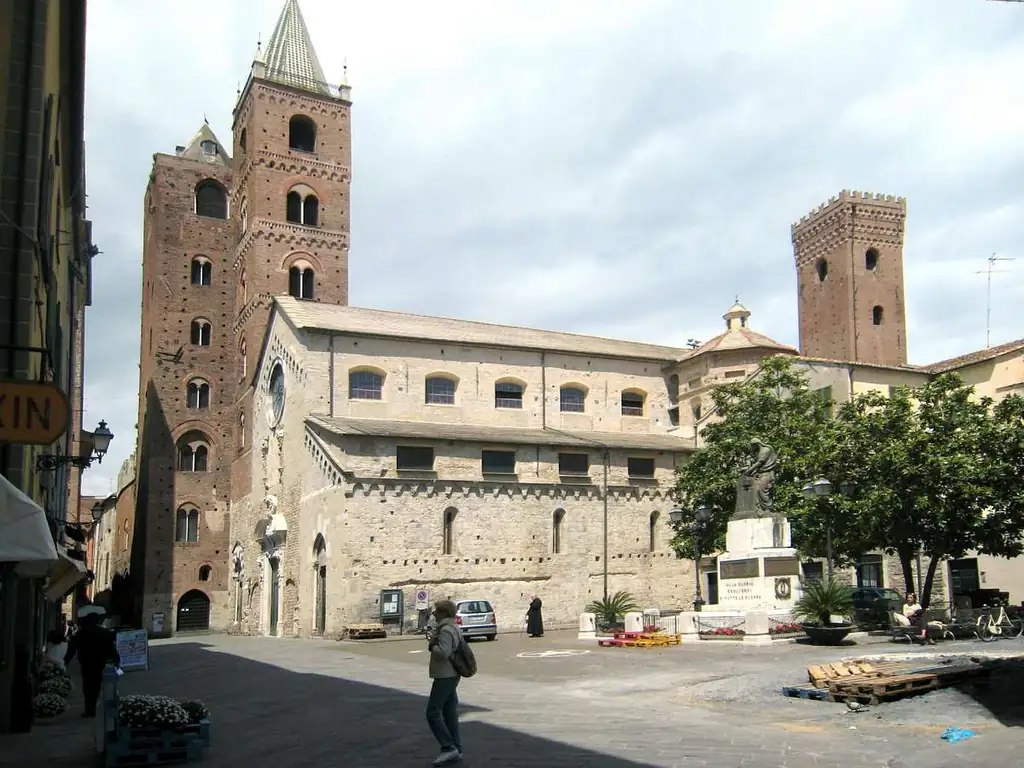
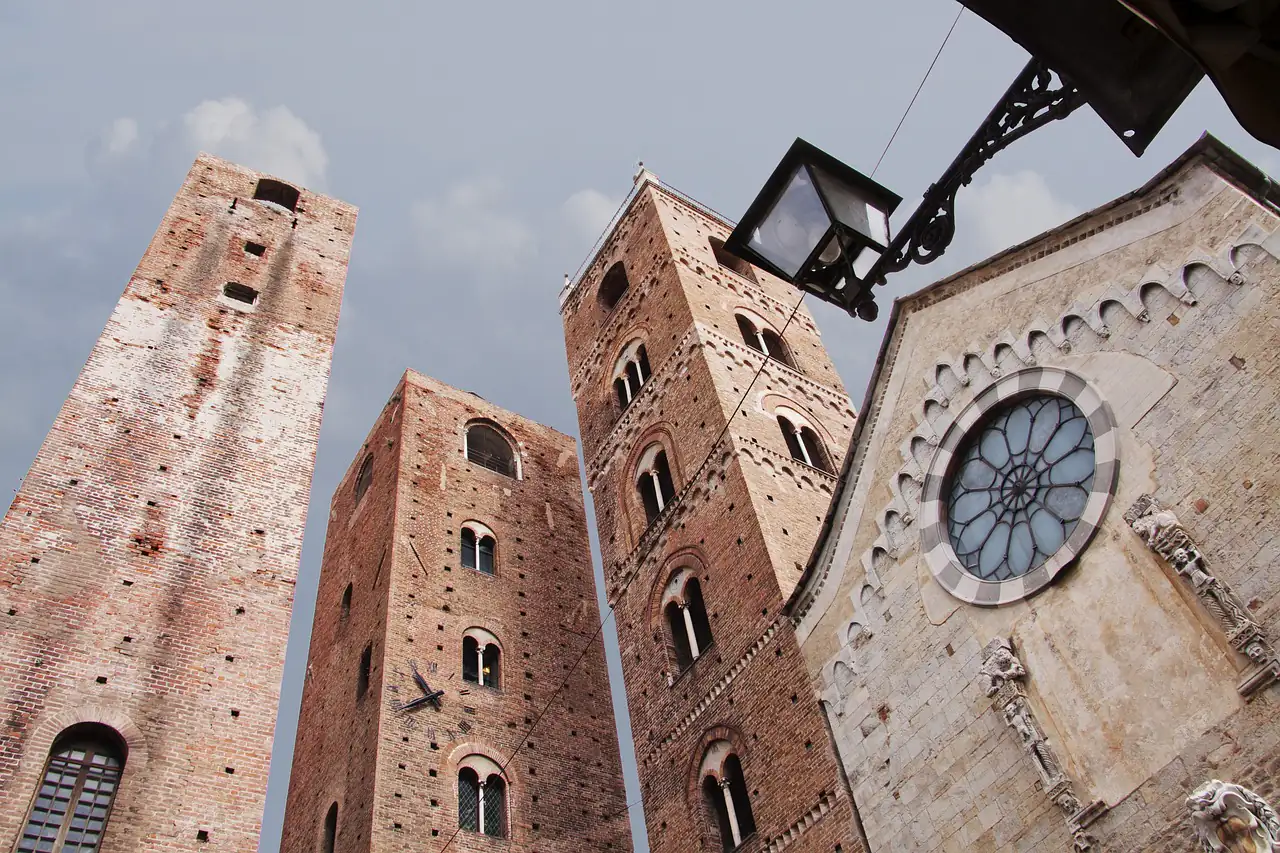
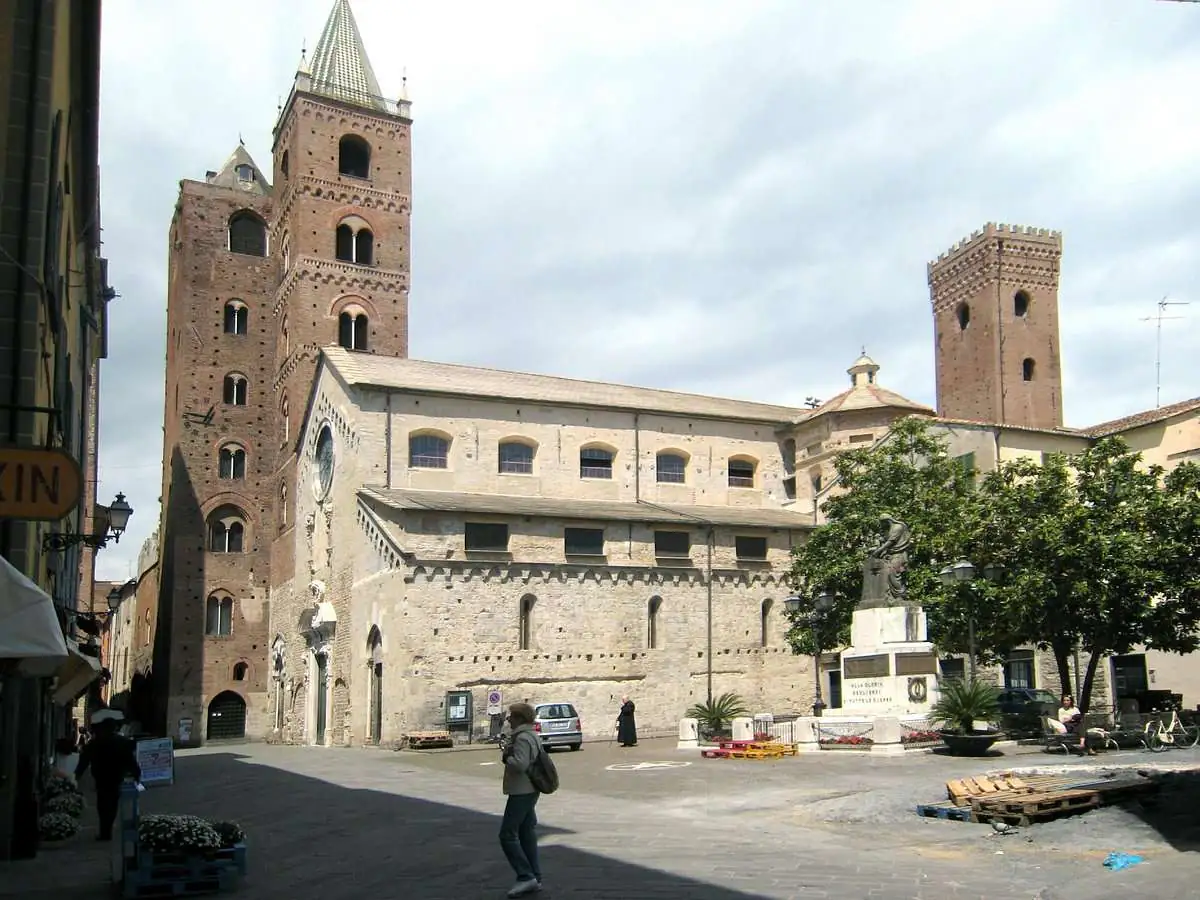
Piazza San Michele and the three towers

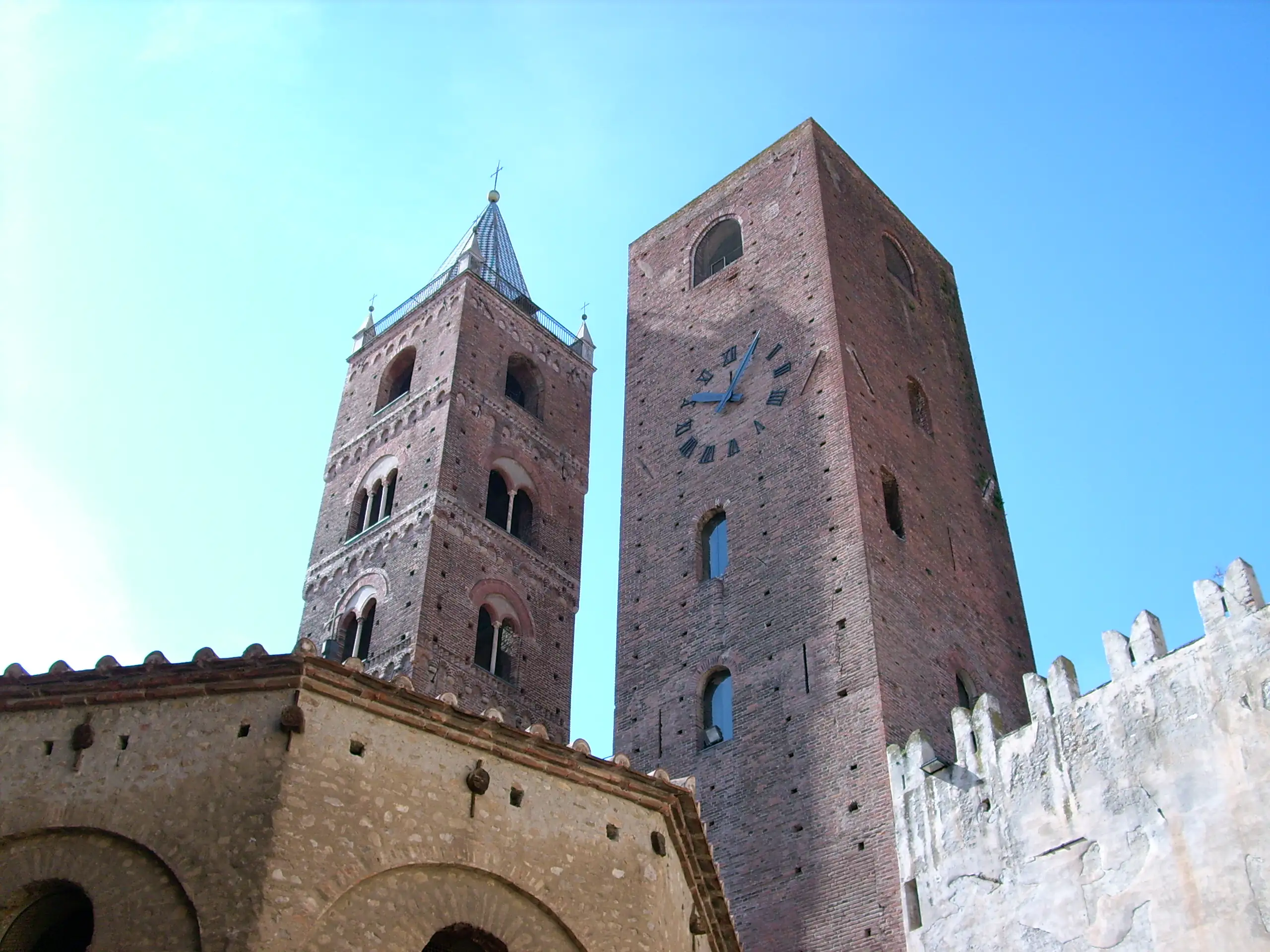
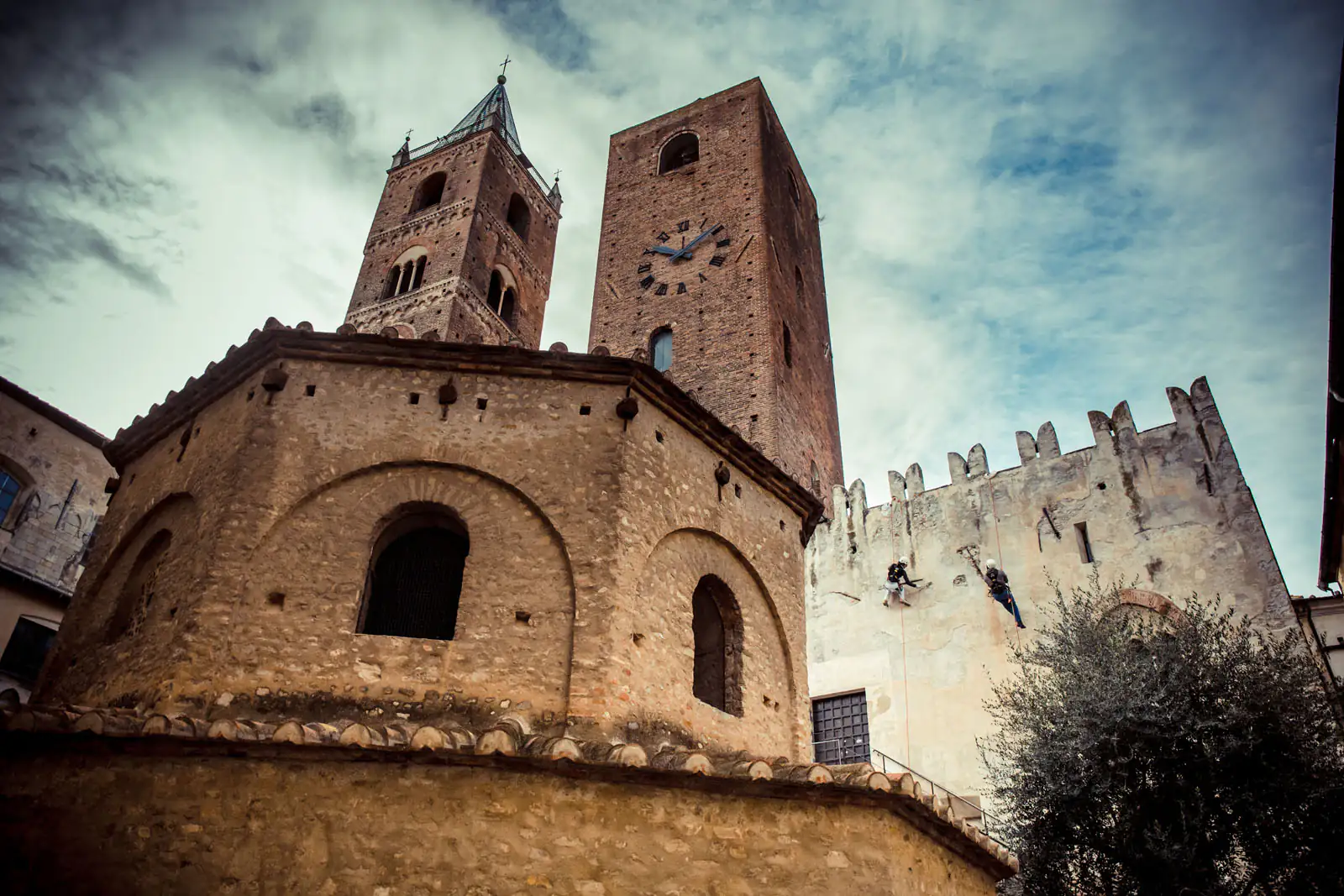
Three towers stand side by side here, each representing one of the powers of the medieval town: the Civic Tower, built in the late 13th or early 14th century; the 31-metre Town Hall tower, nicknamed Malasemenza, which held the town prison at its base in the 16th century; and the cathedral bell tower for the Church. Start here; you will keep coming back.

You can climb the Civic Tower on a paid guided visit, by reservation only and in a few morning slots with small groups. Book at the tourist information office inside Palazzo Vecchio.

Early Christian Baptistery

This is Albenga’s most important monument and the oldest building still standing in Liguria, dating from the second half of the 5th century or the early 6th. It has ten sides outside and eight inside. You walk down a staircase, because the floor sits at the level of the Roman town, well below today’s streets.

In the niche facing the entrance is a 6th-century mosaic in deep blue and gold: the monogram of Christ inside three circles, twelve doves for the apostles, two lambs approaching a jewelled cross and a starry sky. Take your time; mosaics this old are rare in northern Italy. The original dome was demolished in a late 19th-century restoration and today’s roof is wooden. The baptistery is part of the Diocesan Museum visit, with paid entry from Via Episcopio; check opening times locally or with the tourist office.

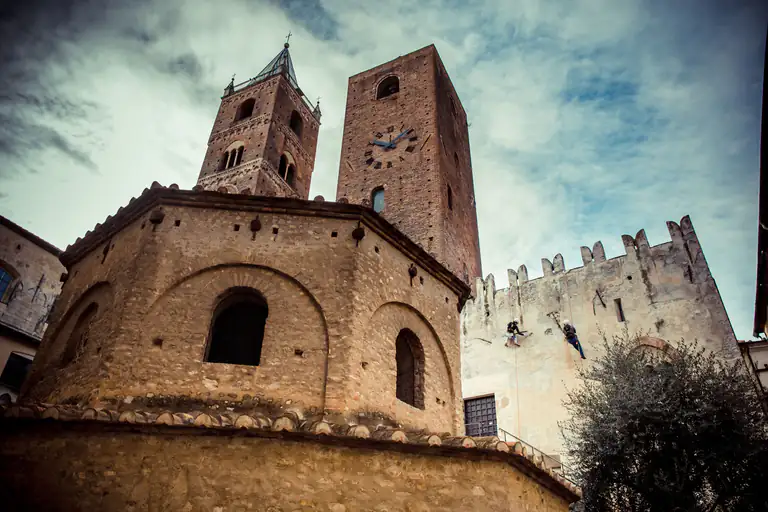
Cathedral of San Michele Arcangelo and towers of Albenga

Cathedral of San Michele Arcangelo

The cathedral stands on an early Christian place of worship and has been enlarged and rebuilt many times. It has three naves and holds the relics of Saint Veranus of Cavaillon. The bell tower has a Romanesque base and a brick upper part rebuilt in 1391, a fine example of Ligurian Gothic. The green and white majolica spire dates from 1900, rebuilt after a lightning strike.

Palazzo Vecchio and medieval towers of Albenga

Palazzo Vecchio and the Civic Museum

Next to the cathedral, Palazzo Vecchio was the seat of the medieval commune: the ground floor is 14th-century, the upper floor was rebuilt between 1387 and 1391. Since 1933 it has housed the Civico Museo Ingauno, with inscriptions, urns and fragments from Roman and Byzantine Albingaunum. The loggia, built in 1421, has a 1st-century AD floor mosaic and a large Crucifixion fresco by Giovanni Canavesio from the late 15th century. The tourist office and the ticket desk for the civic museums are in the same building.

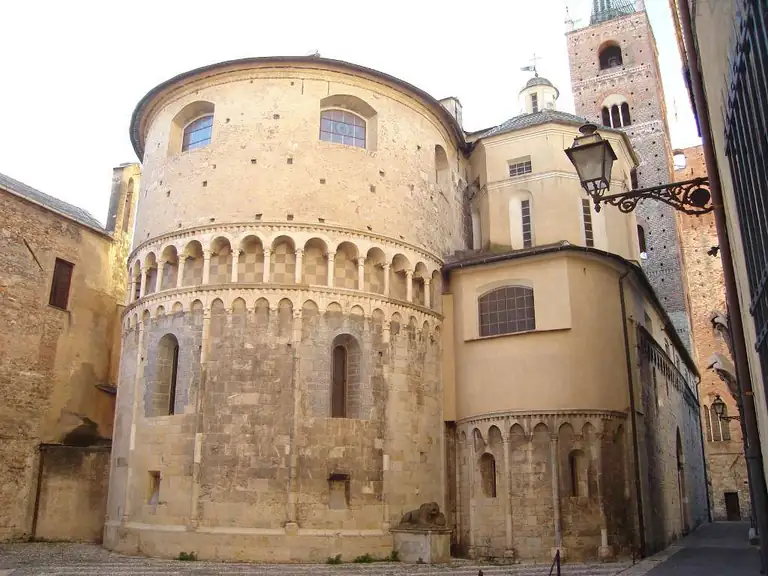
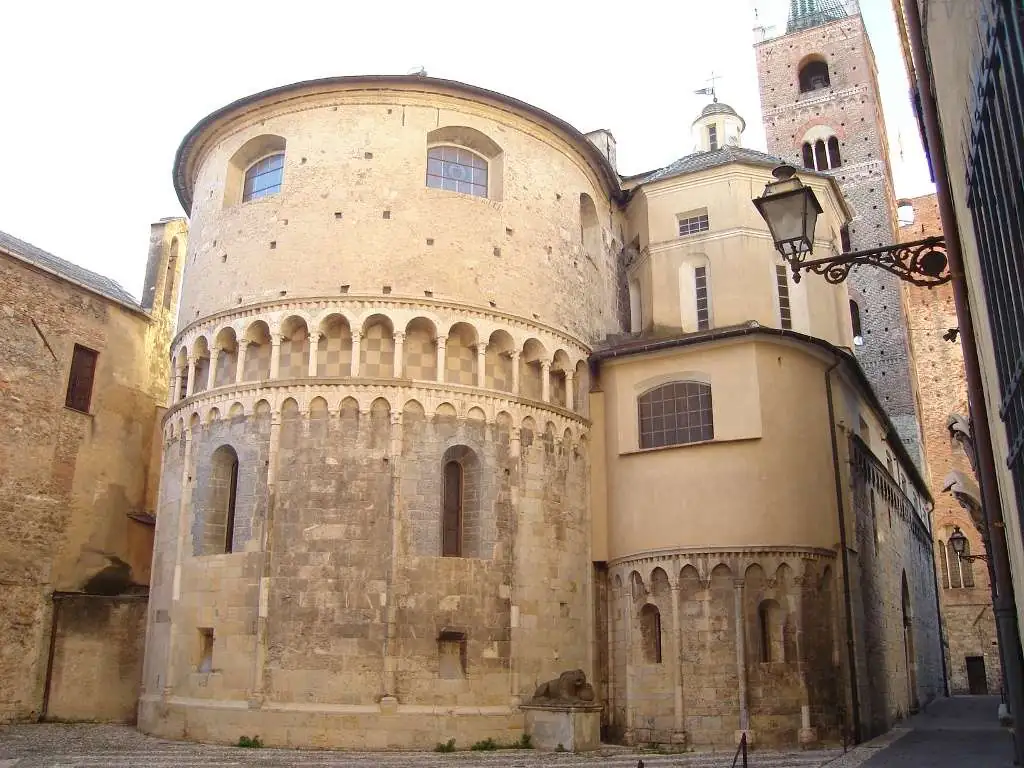
Cathedral apse and Diocesan Museum of Albenga

Piazza dei Leoni

Behind the cathedral apse is the town’s most photographed little square. It is named after three stone lions brought from Rome in 1608 by the Costa family, who owned the medieval houses and tower around it. Come back in the evening, when it is at its quietest.

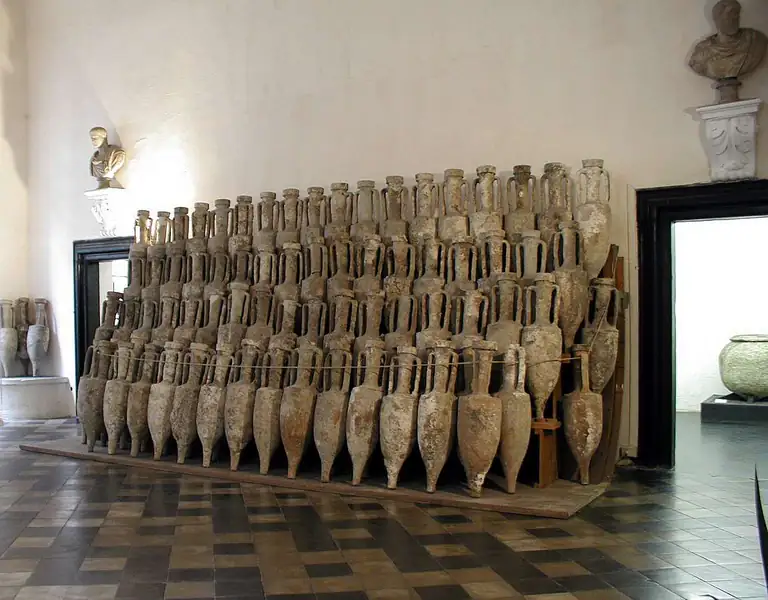
Roman amphorae at the Roman Naval Museum in Albenga

Roman Naval Museum

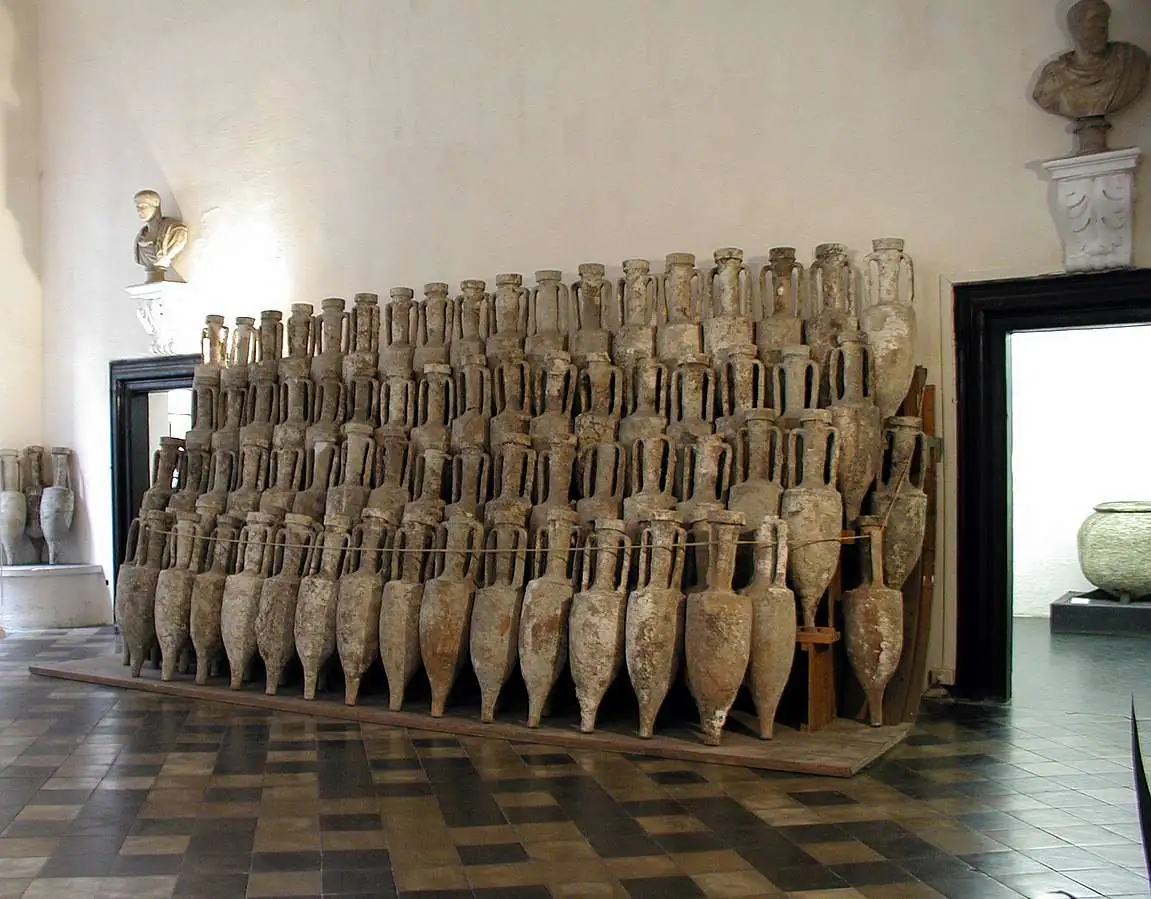
In Palazzo Peloso Cepolla on the main square, the museum named after archaeologist Nino Lamboglia tells the story of the Albenga Roman ship. It sank between 100 and 90 BC, about a mile offshore and more than 40 metres down, carrying over ten thousand wine amphorae. The 1950 investigations made it the first Roman ship explored on the Ligurian seabed. Inside you see around a hundred amphorae stacked as in a ship’s hold, on-board equipment and small personal objects, plus jars from an old pharmacy.

Check that it is open before you go: the official tourism website Scopri Albenga has listed it as temporarily closed to the public.

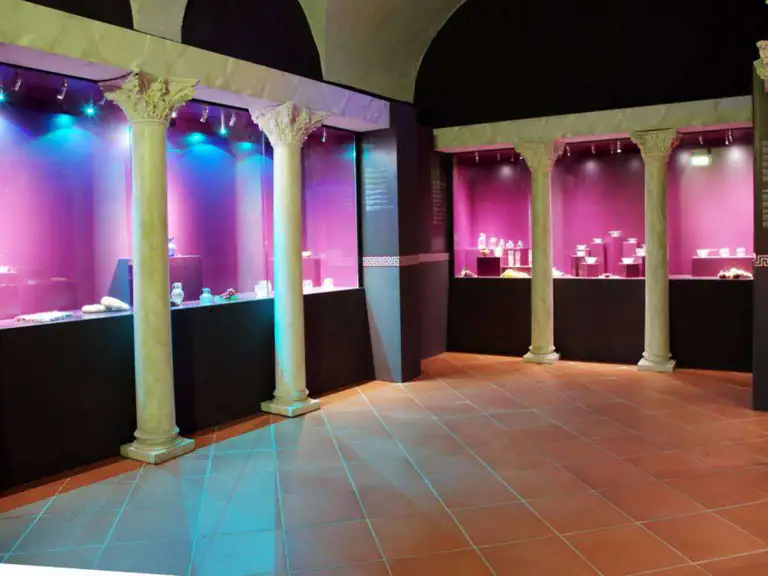
Room of the Magiche Trasparenze Museum in Albenga

Magiche Trasparenze glass museum

In Palazzo Oddo, the Magiche Trasparenze museum displays Roman glass found in the excavations of Albenga’s necropolis: cups, bottles and small containers, some remarkably intact. It is a short visit that works well with children and is part of the civic museum network, with a single ticket desk at the tourist office.

Medieval brick towers of Albenga

Towers and lanes

Beyond the three towers on the square you will spot many more as you walk: the Peloso Cepolla tower, the Oddo tower on Via Roma, the Navone tower on Via Medaglie d’Oro, the Costa tower above Piazza dei Leoni. Some are intact, others were cut down or absorbed into later houses. Keep looking up as you follow the two main streets and the side lanes, past shops, carved doorways and courtyards.

Pontelungo

On the old Via Aurelia towards Ceriale stands the Pontelungo, a 13th-century stone bridge with several arches. The Centa river changed course over the centuries, and the bridge now stands away from the water among the fields. Next to it is the sanctuary of Nostra Signora di Pontelungo, built in 1722.

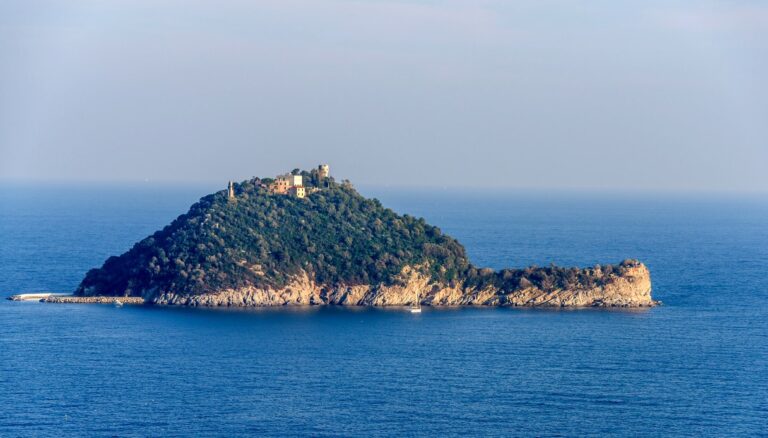
Gallinara Island off Albenga

Gallinara Island

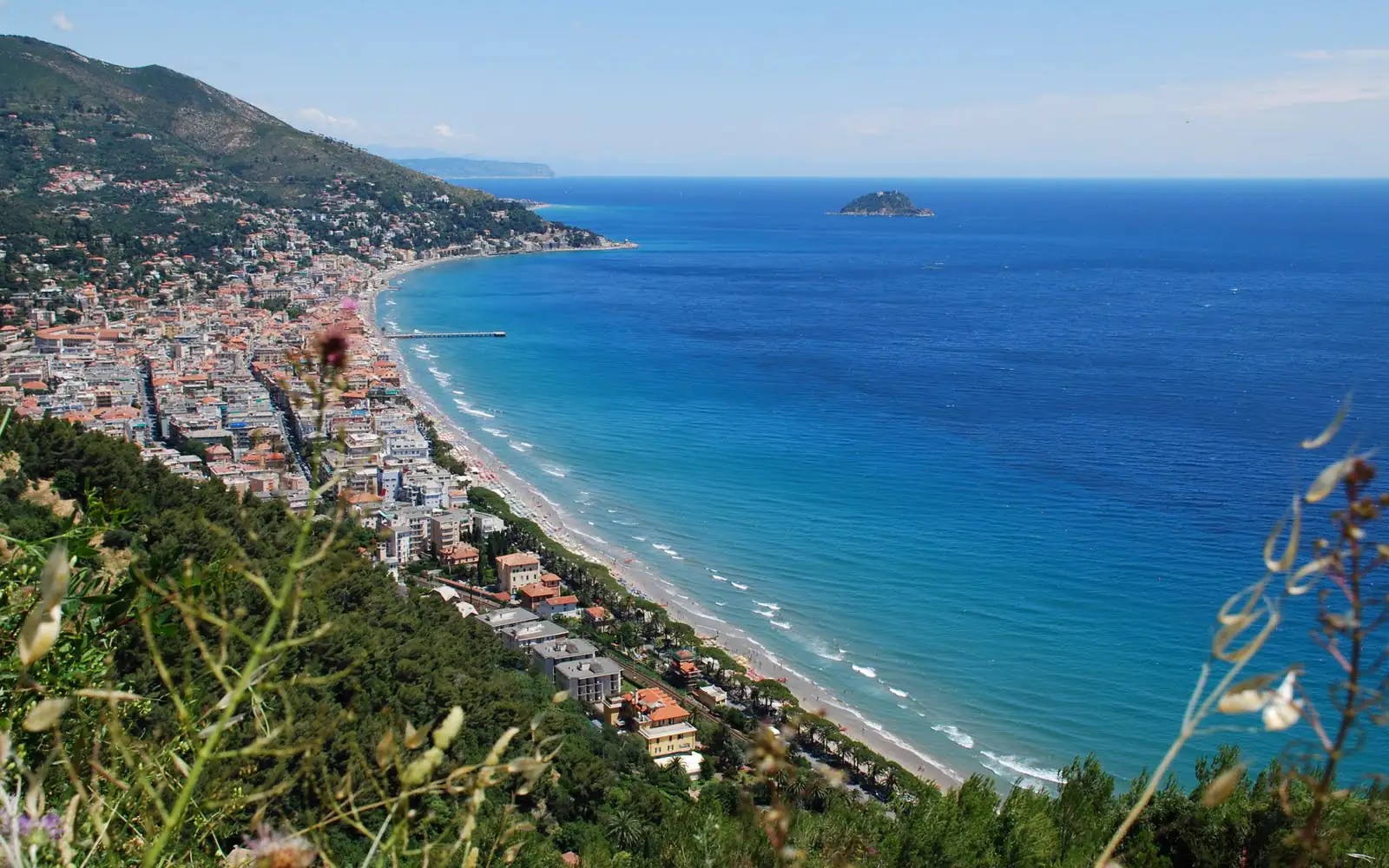
The small island you see from the beach belongs to Albenga: 21 hectares about one and a half kilometres offshore, now a regional nature reserve. Saint Martin of Tours retreated here in the 4th century, followed by a Benedictine monastery; the name comes from the wild hens mentioned by Latin writers. Today it hosts a large colony of yellow-legged gulls.

The island is private and landing is not allowed. You can circle it on a boat trip, mostly departing from Alassio, or dive its waters with an authorised diving centre.

Sea

Beaches in Albenga

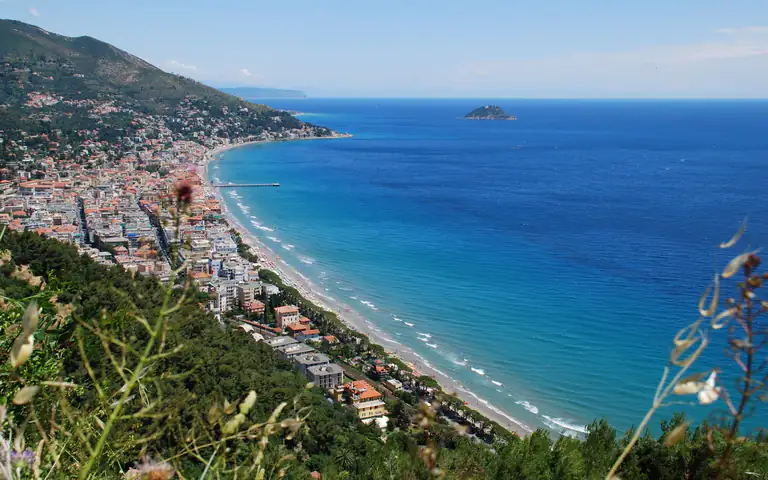
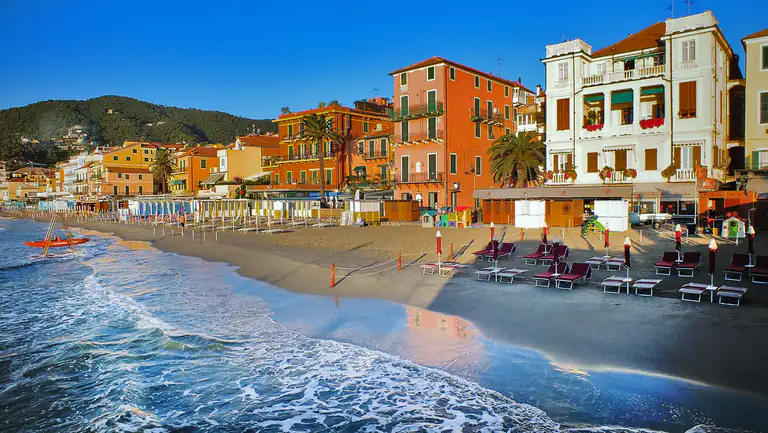
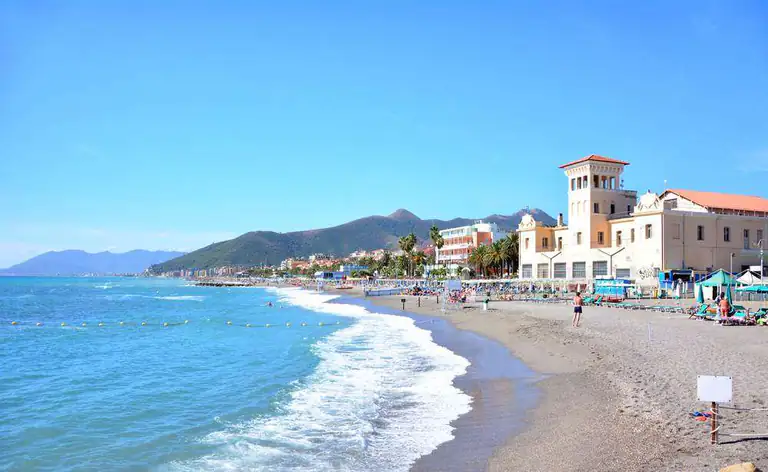
The old town is not on the seafront: you reach the beach along tree-lined avenues, or by bike, since the town is flat. The coast alternates beach clubs, free public beaches and “spiagge libere attrezzate”, where you only pay for the sunbeds and umbrellas you use. Gallinara is always in front of you.

Albenga beach and bay from above

Town seafront

Beach clubs

the most convenient if you stay in town, with bars, beach clubs and free stretches.

Vadino

Beach clubsFree beach

the district on the Alassio side of the Centa mouth, with wide free beaches and beach clubs; busy in summer.

Towards Ceriale

SandFamily friendly

flat sandy coast heading east, good for families.

Rules on dogs, hours and free areas change each season with the town’s beach ordinance: if you travel with a dog, ask the beach club first.

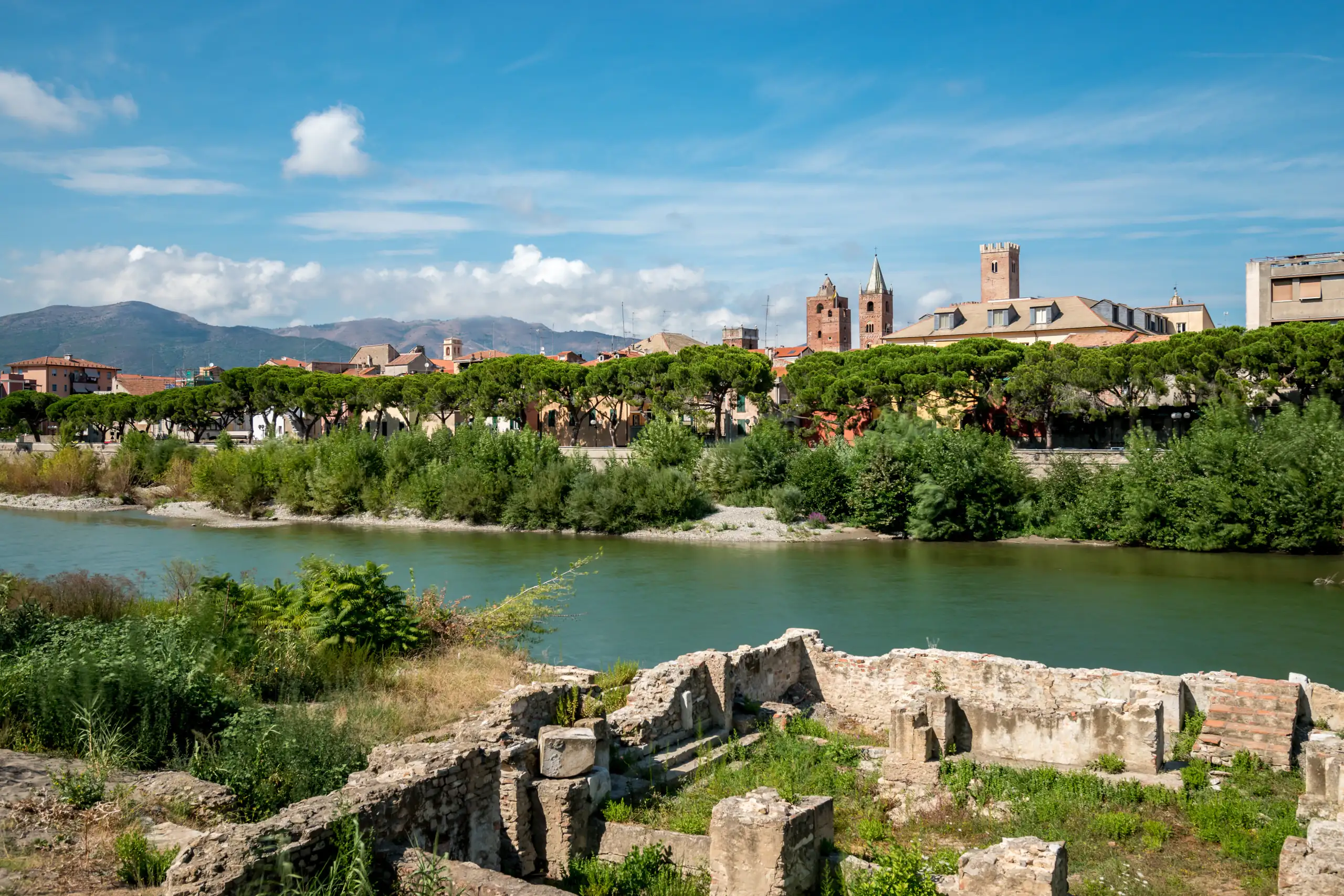
Square and medieval towers of Albenga

Where to stay

Where to stay in Albenga

Albenga has hotels, B&Bs, holiday apartments and campsites, usually at lower prices than Alassio.

  • Old town: for evenings among the towers and getting around on foot; close to the station, with the beach a walk away.
  • Seafront: if the beach is your priority, with rooms looking out at Gallinara.
  • Vadino: a residential area near the sea, handy for families.
  • Plain and villages: agriturismi and country houses for those with a car who want quiet.

Book ahead for July, August and the Palio.

Getting there

How to get to Albenga

By car

Albenga has its own exit on the A10 Genoa–Ventimiglia motorway, a few minutes from the centre. From Turin take the A6 to Savona, then the A10 towards Ventimiglia.

By train

The station is on the Genoa–Ventimiglia line, a short walk from the old town. Regional trains from Genoa take between about 1 hour 20 minutes and just under 2 hours depending on the service; Alassio is only a few minutes away. From the Cinque Terre or Portofino, change in Genoa. Timetables are on Trenitalia.

By bus

TPL Linea buses link Albenga with Alassio, Ceriale, Loano and the inland villages; Alassio is about 15 minutes away. Check times on TPL Linea, as they change between summer and winter.

By plane

The airport at Villanova d’Albenga, a few kilometres away, has no scheduled flights: it serves private and charter aviation only. The useful airports are Genoa, about 85 km away and just over an hour by motorway, and Nice, further west across the French border.

Parking

The old town is a limited traffic zone (ZTL) with cameras: enter without a permit and a fine will follow you home, rental cars included. Leave the car in the car parks around the centre, paid (blue lines) or free on the outer streets, and walk in: the centre is compact and Piazza San Michele is close. In summer, spaces near the sea fill up fast, so arrive early or cycle.
By car

A10, Albenga exit; the old town is a ZTL, park outside

By train

Albenga station (Genoa–Ventimiglia line), near the centre; 1 h 20 – 2 h from Genoa

By plane

Genoa (about 85 km); Villanova d'Albenga airport has no scheduled flights

The guide

Walks and hikes

Via Iulia Augusta to Alassio

This is Albenga’s best walk. It starts at the Ponte Rosso bridge over the Centa and follows a Roman road along the hillside, with the sea below and Gallinara ahead. On the way you pass the funerary enclosures and columbarium of the Roman necropolis, from the 1st–2nd century AD, and the little church of Sant’Anna ai Monti, before reaching the church of Santa Croce above Alassio.

It is about 6 km and two hours on foot including stops, on an easy path waymarked with two red circles on a white background. Bring water and a hat, as there is little shade in summer. Take the train or bus back from Alassio.

Cycling the plain

Country roads, greenhouses and vegetable fields: the Albenga plain is easy cycling country. Ride out to the Pontelungo and to villages such as Leca, Bastia and Lusignano.

What to eat in Albenga

Albenga’s food comes from its plain: vegetables, olive oil and white wine, even more than fish. The symbols are the “4 d’Albenga”, four vegetables that restaurants in the Albenga in Tavola project put on their menus.

  • Violet asparagus: a Slow Food Presidium, harvested by hand from mid-March to mid-June. Soft, almost buttery, never stringy.
  • Spiny artichoke: green with purple shading, tender and sweet; best raw, thinly sliced with olive oil and lemon.
  • Trombetta courgette: long and curved with firm flesh; used in savoury pies, stuffed or in pasta sauces.
  • Cuore di bue tomato: large, ribbed and nearly seedless, perfect in salads.
  • Pigato: the white wine of the surrounding hills, ideal with vegetables and fish.

Seasons and serving tips are in our guide to Albenga’s local produce.

Albenga in one day: itinerary

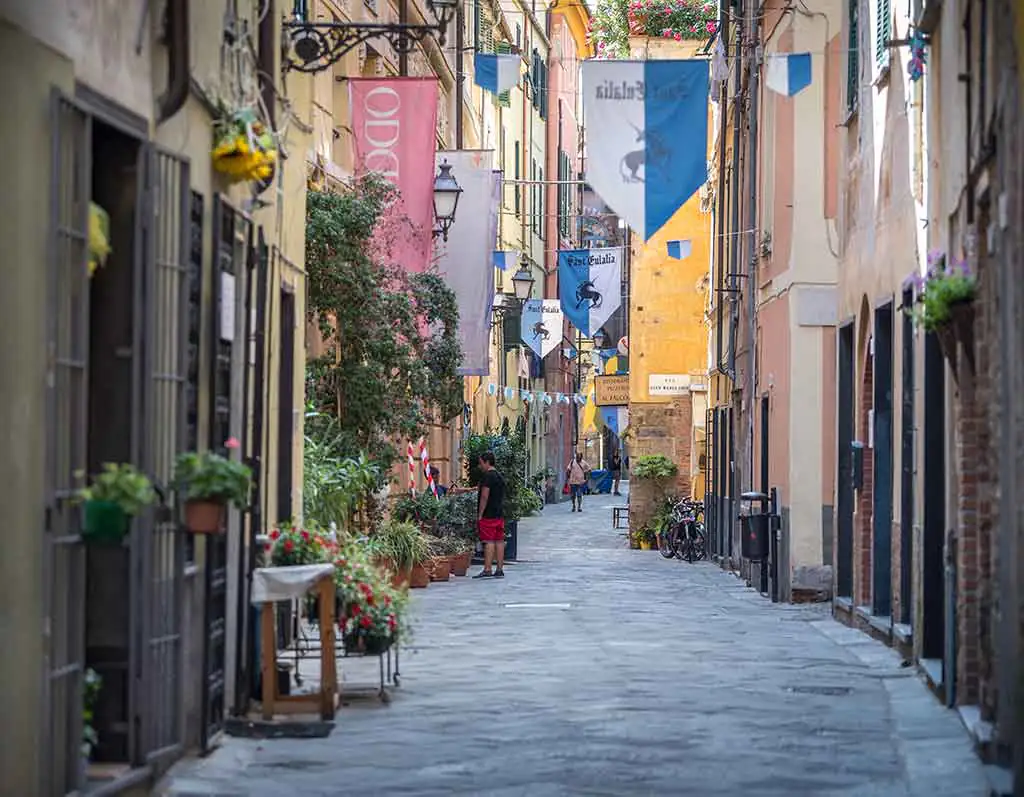
Alley with colourful houses in Albenga
  • Morning: Piazza San Michele, the baptistery and Diocesan Museum, then the cathedral.
  • Late morning: Palazzo Vecchio, Piazza dei Leoni and a loop through the towers and lanes; the Roman Naval Museum if it is open.
  • Lunch: a dish made with vegetables from the plain; in season, violet asparagus or artichokes.
  • Afternoon: the Via Iulia Augusta walk to Alassio, or the beach facing Gallinara.
  • Evening: an aperitivo in the old town as the towers light up.

Events in Albenga

  • Fior d’Albenga (spring): flower installations, markets and cooking shows in the old town. In 2026 it ran from 4 April to 3 May.
  • Palio Storico (July): medieval re-enactment and contests between the four districts. In 2026 on 10–12 and 16–19 July.
  • Sagralea (late August): a festival of Pigato and Riviera wines in the hamlet of Salea.
  • San Martino Fair (November): markets, tastings and local produce.

Day trips from Albenga

  • Alassio: the Budello lane, the Muretto wall and a long sandy beach, minutes away by train or on foot along the Via Iulia Augusta.
  • Laigueglia: a fishing village on the sea just past Alassio.
  • Loano: marina, promenade and old town to the east.
  • Pietra Ligure: family beaches and a compact old centre.
  • Finale Ligure: beaches, the walled village of Finalborgo and world-class climbing.
  • Cervo: a hilltop village with a baroque church facing the sea, to the west.
  • Imperia: Oneglia and Porto Maurizio, olive oil and harbours, about half an hour by car.

Weather

Weather and best time to visit Albenga

June to September for the sea; spring for asparagus, artichokes and sightseeing

🌙
14°CNow · wind 10 km/h
  1. Sat 10⛅22° 13° 
  2. Sun 11⛅22° 14° 
  3. Mon 12☀️23° 15° 
  4. Tue 13☀️24° 13° 
  5. Wed 14⛅22° 14° 
  6. Thu 15☀️24° 13° 

Forecast: MET Norway (Yr), CC BY 4.0 licence. Updated hourly.

Weather across Liguria →

MonthJanFebMarAprMayJunJulAugSepOctNovDec
SeaOff seasonOff seasonOff seasonOff seasonPossibleGoodIdealIdealGoodPossibleOff seasonOff season
Sightseeing and hikingPossiblePossibleGoodIdealIdealGoodGoodGoodIdealIdealGoodPossible
CrowdsQuietQuietFew peopleFew peopleFew peopleBusyVery busyVery busyFew peopleFew peopleFew peopleQuiet
Don't missFior d'AlbengaPalio StoricoSan Martino Fair

IdealGoodPossibleOff season

Crowds:QuietFew peopleBusyVery busy

Gallery

Photos of Albenga

FAQ

Frequently asked questions about Albenga

Why is Albenga called the town of a hundred towers?

Because in the 12th and 13th centuries wealthy families built dozens of towers to show off their power. There are no longer a hundred, as many were demolished or lowered, but enough remain to define the skyline.

What can you see in Albenga in one day?

Piazza San Michele with its three towers, the early Christian baptistery, the cathedral, Palazzo Vecchio with the Civic Museum, Piazza dei Leoni and the old town lanes. In the afternoon, the beach or the Via Iulia Augusta to Alassio.

How old is the Albenga baptistery?

It dates from the second half of the 5th century or the early 6th and is the oldest building still standing in Liguria. The mosaic in the niche is 6th-century.

Is the Roman Naval Museum open?

The official tourism website has listed it as temporarily closed. Ask at the tourist office in Palazzo Vecchio before you go.

Can you visit Gallinara Island?

No, the island is private and landing is not allowed. You can circle it on a boat trip, mostly from Alassio, or dive there with an authorised diving centre.

Does Albenga have free beaches?

Yes, alternating with beach clubs, especially around Vadino. There are also equipped free beaches where you only pay for a sunbed and umbrella.

Are there flights to Albenga airport?

No. Villanova d’Albenga airport has no scheduled flights. The most convenient airports are Genoa and Nice.

Where can I park in Albenga?

Outside the old town, which is a camera-controlled limited traffic zone. There are paid and free car parks a few minutes’ walk from Piazza San Michele.

When is violet asparagus in season?

From mid-March to mid-June, when you find it at markets and in local restaurants. The spiny artichoke comes earlier, from late winter.

How far is Albenga from Alassio?

Just a few kilometres: a few minutes by train, about 15 minutes by bus, or two hours on foot along the Via Iulia Augusta.

Nearby

What to see near Albenga

6 km as the crow flies

Alassio

Over three kilometres of fine sand, the Muretto, the Budello, Villa della Pergola and the Roman road to Albenga: a…

Discover →

9 km as the crow flies

Laigueglia

Fishing village on the Baia del Sole: San Matteo church, the old tower, lanes on the sea, a Blue Flag…

Discover →

10 km as the crow flies

Loano

Blue Flag family beach, Palazzo Doria with its Roman mosaic, old walls, Monte Carmelo and the marina: a practical guide…

Discover →

12 km as the crow flies

Pietra Ligure

Blue Flag sandy beaches, the Basilica of San Nicolò, the castle on its rock, a pedestrian old town and a…

Discover →
Scroll to Top