Testaroli (singular testarolo) are thin, spongy discs made of water, flour and salt, cooked on a red-hot plate called a testo, cut into diamonds, briefly boiled and usually dressed with pesto. They belong to Lunigiana, the valley on the border between Tuscany and Liguria: the best-known town is Pontremoli, in the province of Massa-Carrara (Tuscany), but they are also eaten around La Spezia. They are not a Genoese dish, and not quite a crêpe: they sit halfway between bread and pasta.
- Origin: Lunigiana, straddling Tuscany (Pontremoli) and eastern Liguria (province of La Spezia)
- Total time: about 1 hour, including a 30-minute rest for the batter
- Serves: 4
- Difficulty: medium: the batter is simple, the pan takes a little practice
- Key ingredients: flour, water, salt and pesto (or olive oil and cheese)
- When it is eaten: all year; one source calls it a warm-season dish, but it is happily served in winter too
Ingredients
For the testaroli
- 300 g type 0 flour (plain white flour)
- 450 ml water at room temperature
- 1 pinch of fine salt
- 1 potato and a little extra virgin olive oil to grease the pan
To dress
- 4 tablespoons Genoese pesto
- Instead of pesto: 4 tablespoons extra virgin olive oil and 3 tablespoons grated pecorino or Parmesan
How to make it
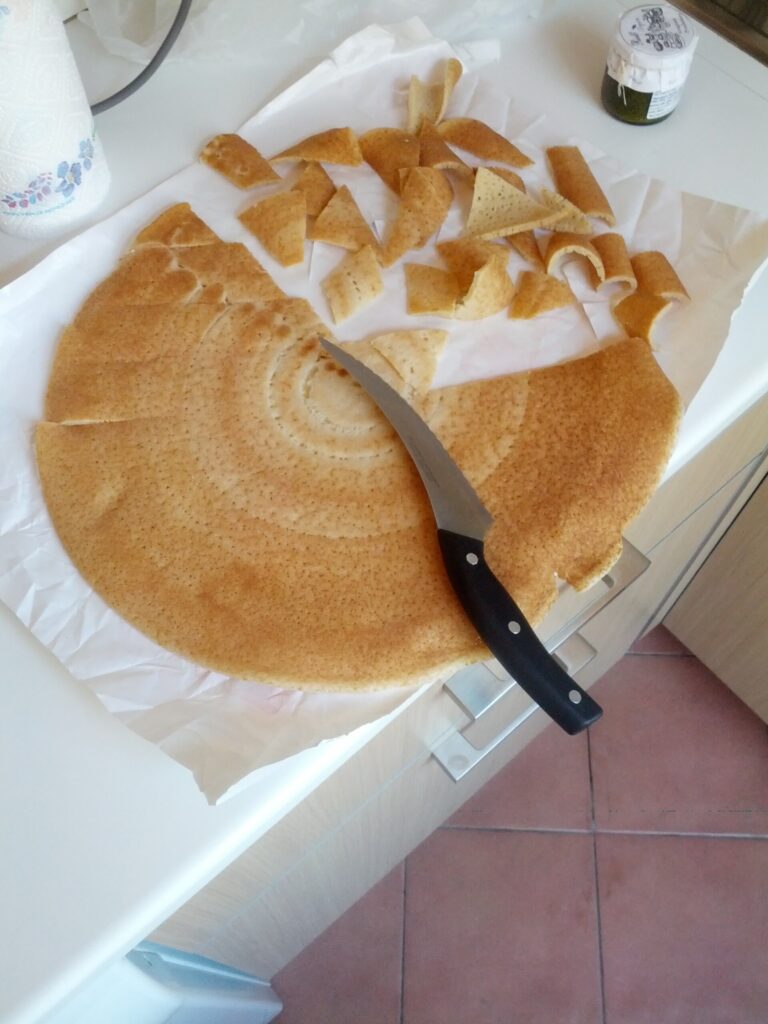
- Sift the flour with the salt and pour in the water in a thin stream, whisking until you have a smooth, runny batter without lumps.
- Let the batter rest for 30 minutes at room temperature.
- Heat a heavy pan (cast iron is best), a cast-iron griddle or a testo, and grease it lightly with half a potato dipped in oil.
- Pour in a ladleful of batter and spread it into a thin layer, 2-3 mm thick. Cover with a lid.
- When the surface sets and takes colour, flip the disc and cook it for about 1 minute on the other side. Repeat with the rest of the batter.
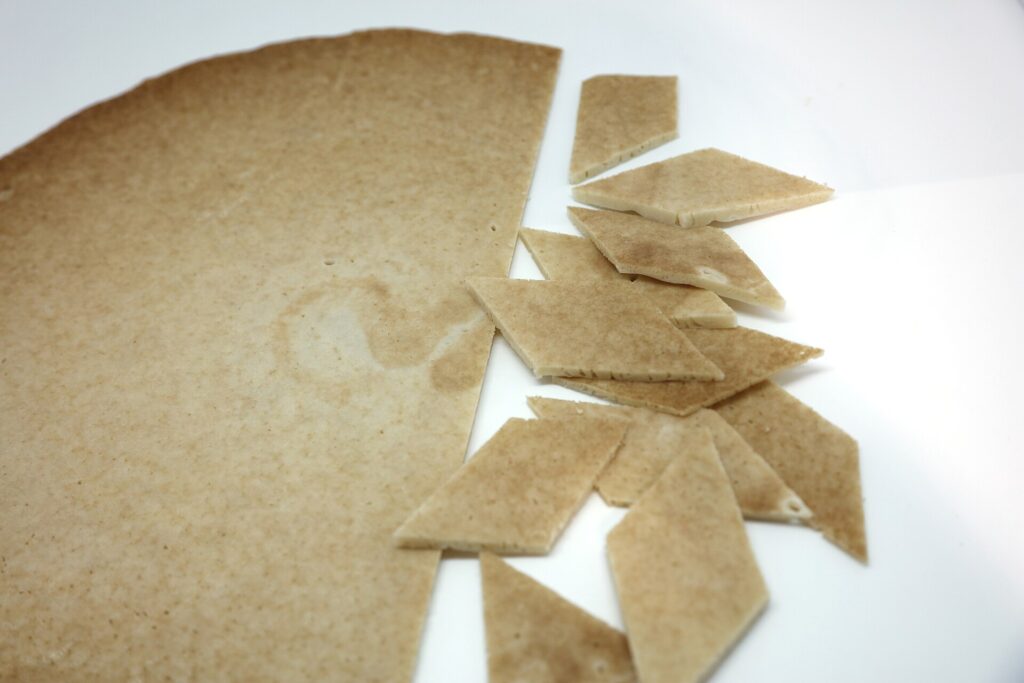
- Let the discs dry, then cut them into diamonds about 4-5 cm on each side.
- Bring salted water to the boil, turn off the heat and drop in the diamonds for 1-2 minutes.
- Lift them out with a slotted spoon, put them on a plate and dress them straight away with pesto (loosened with a little cooking water) or with oil and cheese.
In a traditional testo the disc is not flipped: it cooks against the base (the «sottano») and under the heat of the lid (the «soprano»). Turning it in an open pan is a home adaptation.
Tips and common mistakes
- Quantities: recipes differ a lot on the flour-to-water ratio. Start with 300 g and 450 ml and adjust the water: the batter should flow and spread by itself.
- Pan too hot: it burns outside and stays raw inside. Use medium-high heat, not the maximum.
- Too much oil: it greases the disc instead of cooking it. A thin film is enough.
- Hard boiling: the diamonds tear. Turn off the heat before adding them and do not leave them in the water longer than needed.
- Allergies: they contain gluten. The basic recipe has no eggs or dairy, but pesto does (cheese, pine nuts).
Variations
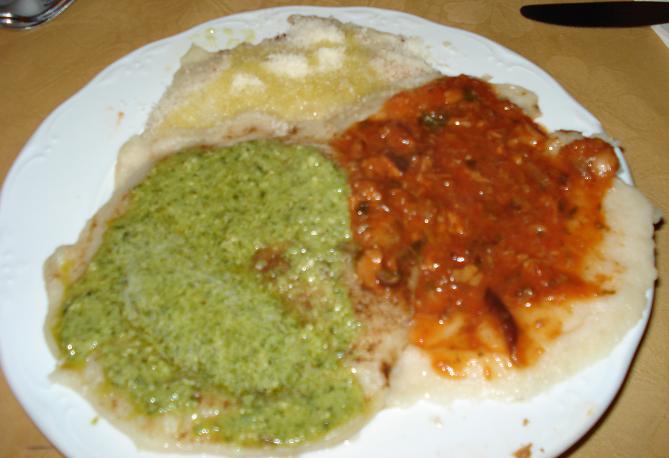
- Testaroli with pesto: the most common modern dressing. One Lunigiana recipe adds walnuts, wild mint and parsley to the pesto.
- Oil and cheese: the old poor-man’s dressing. The Slow Food version uses aged cheese, very finely chopped basil and extra virgin olive oil, with no garlic or pine nuts.
- With «erbi»: italia.it also mentions a mix of wild field herbs.
- Street-food testarolo (Val di Magra): small, 15-20 cm, neither cut nor boiled but filled with oil, pesto, cheese, mushrooms or cured meats and rolled up. It is made in Fosdinovo and, according to Wikipedia, also in Castelnuovo Magra and Sarzana.
- Falsi testaroli al ragù: «false» testaroli made from cut sheets of pasta dough, with no batter and no testo, served with ragù.
Testaroli, panigacci, testaieu and crêpes
- Panigacci: similar but not the same. They are round discs cooked between red-hot terracotta testi and eaten like bread with cured meats, cheeses or sauces, without cutting or boiling.
- Testaieu: the Val Graveglia version, inland from the Genoese Riviera di Levante. They are cooked in small terracotta pans (the «testetti»), are thicker and stay a little raw inside.
- Crêpes: testaroli batter has only flour, water and salt, with no eggs, milk or butter, and the disc ends up in boiling water like pasta.
History and origin
The name comes from the testo, the vessel it is cooked in. It was originally terracotta; cast iron, which lasts longer, spread at the start of the 20th century. The testo has two parts, the sottano and the soprano, and is heated over a wood fire.
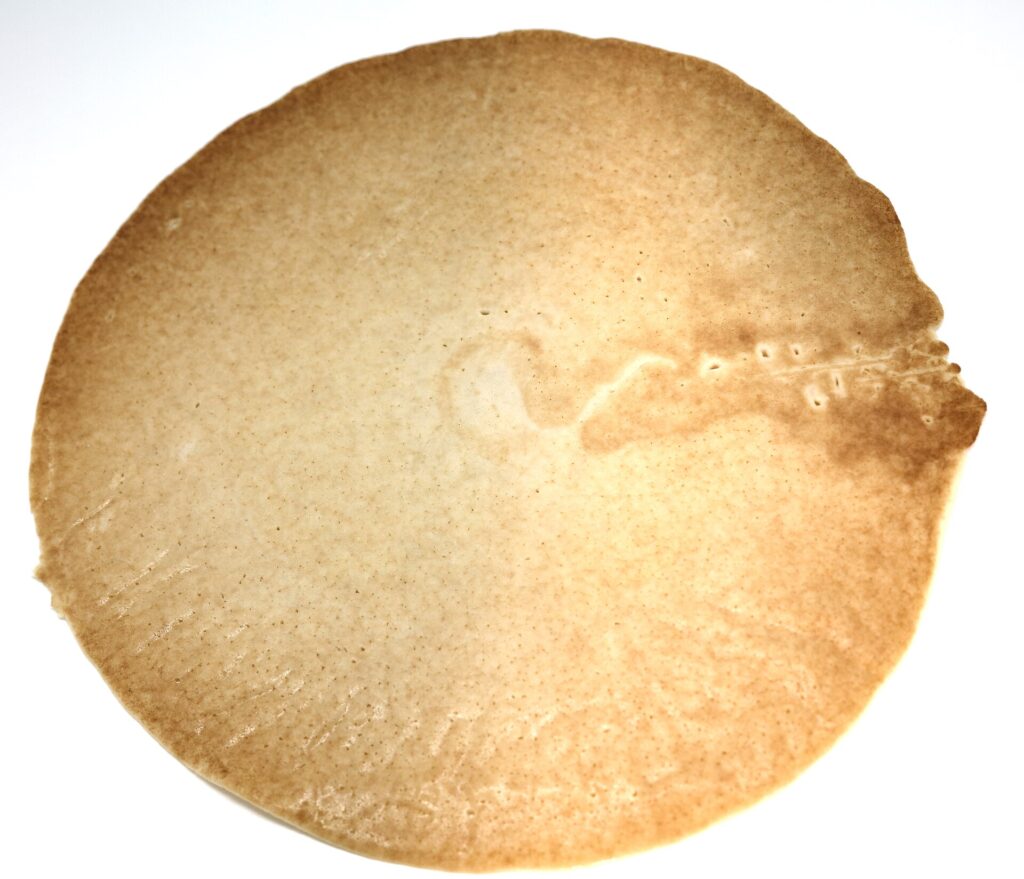
It is peasant and shepherd food. Some sources trace it to Roman or Etruscan times, but we found no documents to prove it: treat it as tradition, not as fact. According to Wikipedia, testarolo became a commercial product after the Second World War, with industrial production. Today the «testarolo artigianale pontremolese» is a Slow Food Presidium: it is full of small holes, thin and soft, 35-45 cm across, whereas the industrial kind is dense and thick.
Where to try it in Liguria
The heartland is Pontremoli, in Tuscany: if you want to taste it where it comes from, the Pontremolese railway leaves from Sarzana towards Parma and passes through it. In Liguria, italia.it lists it as a dish common to the province of La Spezia as well as Massa-Carrara.
- La Spezia and its gulf: the Ligurian province of Lunigiana, where the dish is at home.
- Sarzana and the Val di Magra: you also find the rolled-up testarolo here, next to panigacci and rice tart.
- Inland from the Genoese Riviera di Levante: in Val Graveglia, the testaieu.
For a main course, one source suggests stuffed anchovies. For the pesto, read our Genoese pesto recipe; for the rest of the table, see the guide to Ligurian cuisine, farinata and Ligurian wines.
What to drink
There is no obligatory pairing. With pesto, a dry, fresh white works: Vermentino is often cited, for example from the Colli di Luni, the wine area straddling Liguria and Tuscany. More ideas among the Ligurian wines.
Frequently asked questions
Are testaroli pasta or bread?
Something in between. They are made from a batter and cooked like an unleavened bread, then cut and briefly boiled like pasta. That is why they are described as both.
Are testaroli Tuscan or Ligurian?
They come from Lunigiana, which straddles the two regions. Pontremoli is in Tuscany, but the dish is also common in the province of La Spezia, in Liguria.
What is the difference between testaroli and panigacci?
The ingredients are similar, but panigacci are round discs cooked between terracotta testi and eaten like bread, without cutting or boiling. Testaroli are cut into diamonds and briefly boiled before dressing.
Can I make them without a testo?
Yes: a heavy pan, a cast-iron griddle or a non-stick pan will do. The result is a little different from a cast-iron or terracotta testo, but the home recipe works.
What do you dress testaroli with?
Today almost always Genoese pesto. The older dressing is oil and cheese; the Slow Food version uses aged cheese, chopped basil and extra virgin olive oil.
Can I make them ahead?
The discs, yes: cook them, let them cool and keep them in a closed container in the fridge. Cut and boil the diamonds only just before serving.
Do they contain gluten or eggs?
They contain gluten. The basic recipe has no eggs or dairy, but pesto contains cheese and pine nuts.