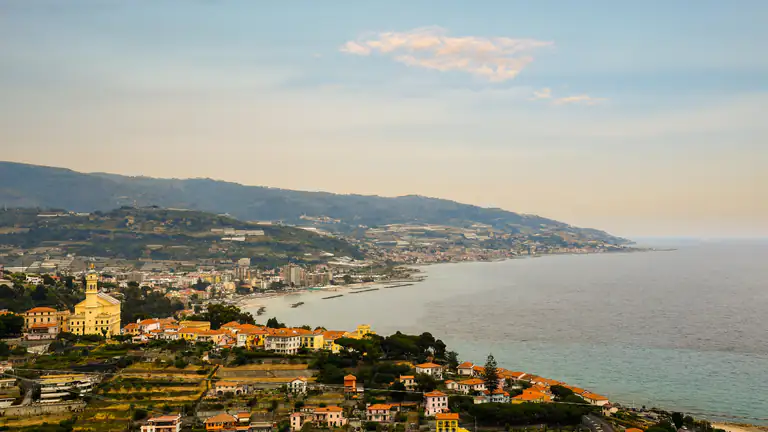
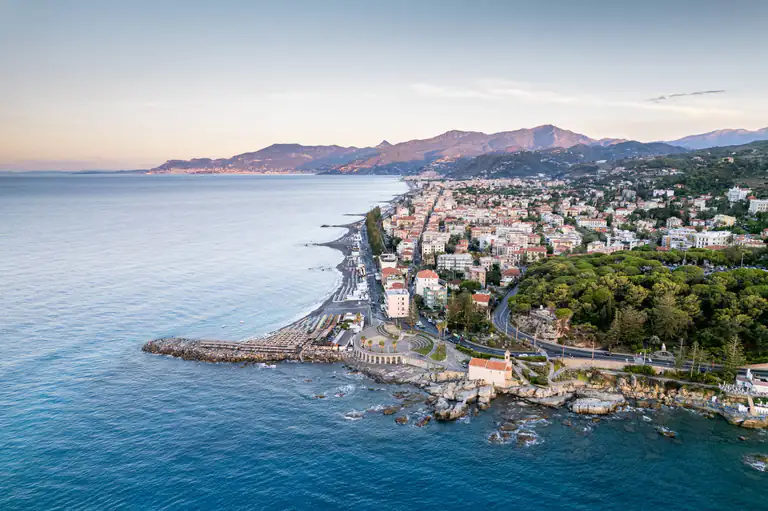
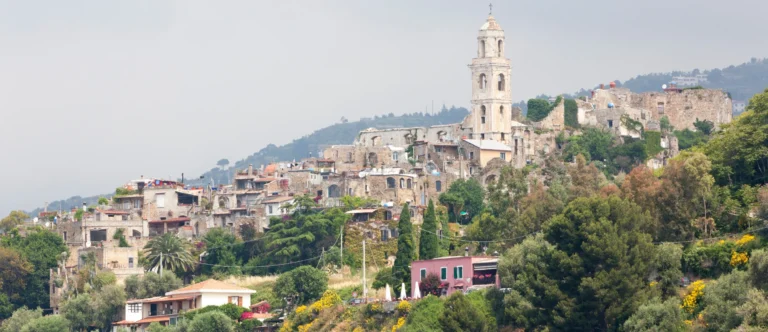
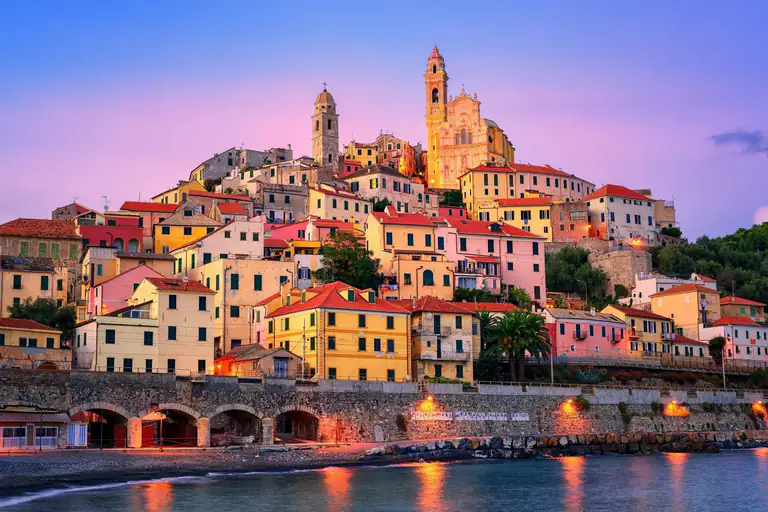
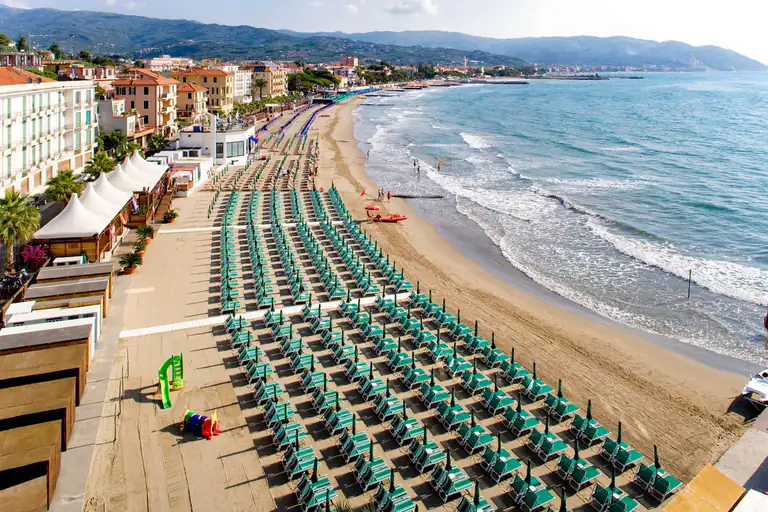

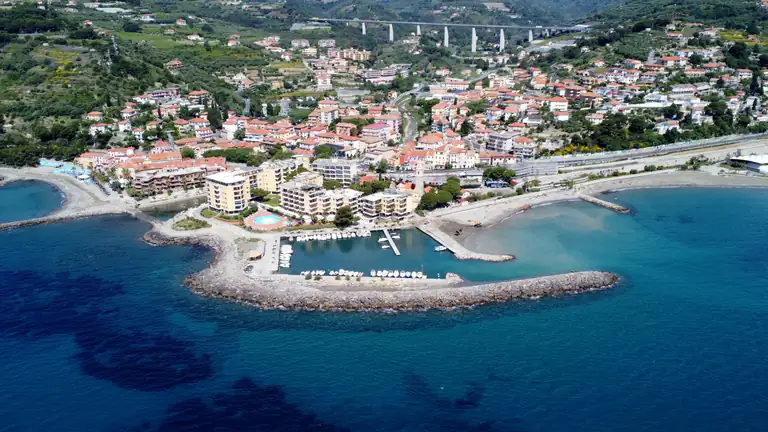
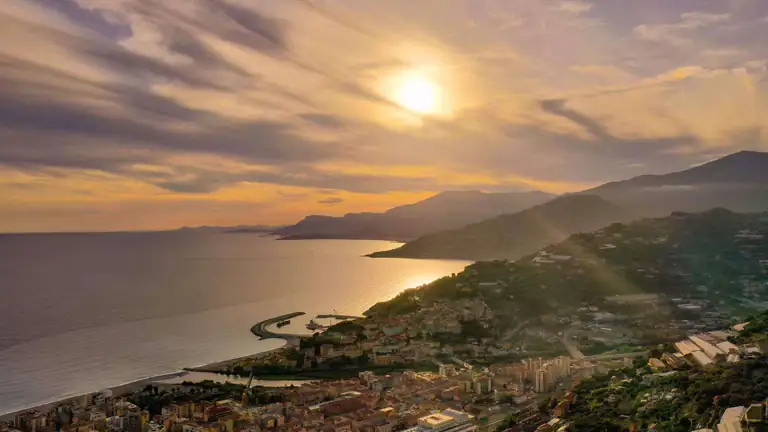
The Riviera dei Fiori (Riviera of Flowers) is the westernmost part of Liguria: the coast of the province of Imperia, from the French border at Ventimiglia to Cervo. In little more than fifty kilometres it packs in Sanremo and its song festival, Bordighera and its 19th-century villas, the provincial capital Imperia, the beaches of the Gulf of Diano and a seaside cycle path that since 2026 runs continuously for almost 48 km. The name comes from flower growing, which for over a century filled the hills between Ventimiglia and Sanremo with greenhouses.
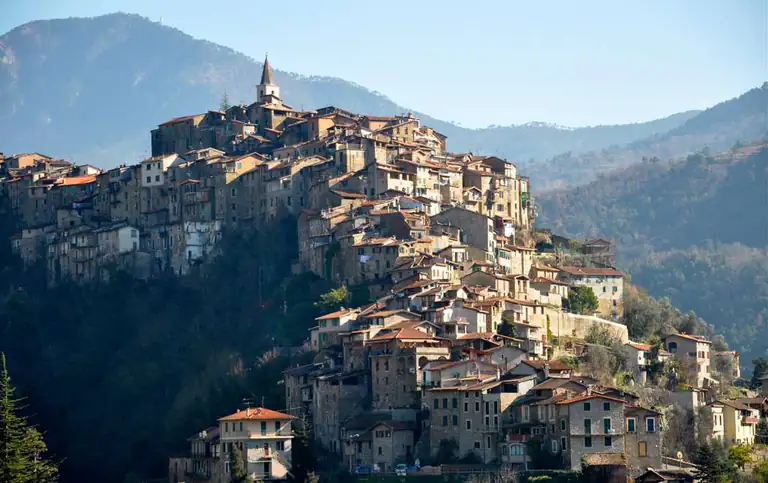
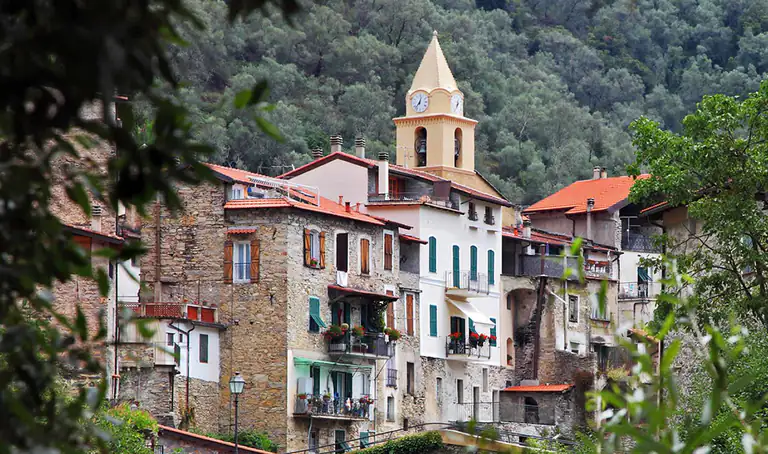
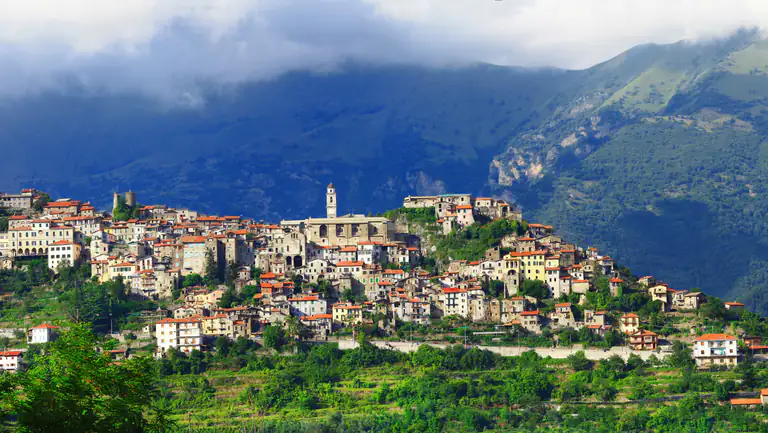
Half its charm, though, lies behind the coast. In half an hour by car you climb narrow valleys to stone villages such as Dolceacqua, Apricale and Triora, among olive groves, Rossese vineyards and woods. This guide focuses on exactly that: the valleys, Sanremo, the cycle path and practical tips for getting around. For the whole coast up to Genoa, including the Riviera delle Palme, read the Riviera di Ponente guide.
How the Riviera dei Fiori is laid out
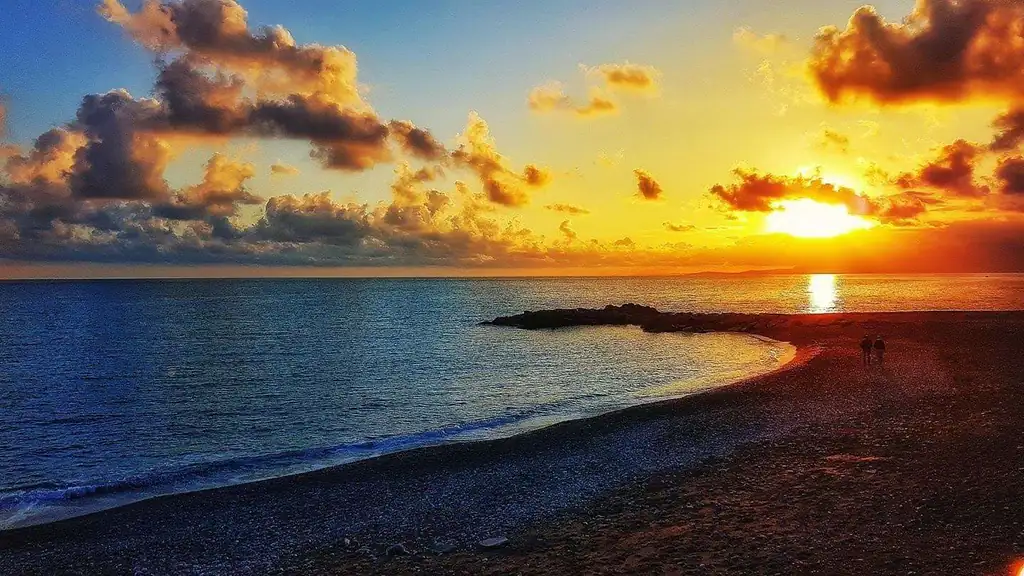
The coast splits into three stretches, each with its own main town.
- The Ventimiglia area: from Ventimiglia to Bordighera, with La Mortola, the Balzi Rossi and the Côte d’Azur next door. Inland: the Val Nervia.
- The Sanremo area: from Ospedaletti to Arma di Taggia, with Sanremo in the middle. Inland: the flower-growing Valle Armea and the Valle Argentina.
- The Imperia area: from San Lorenzo al Mare to Cervo, with Imperia and the Gulf of Diano. Inland: the Impero valley and the olive hills.
The mountains rise very close to the sea and block the cold northern winds, which is why winters here are among the mildest in Italy, averaging about 11°C in January. That is the reason the British, Russians and Germans came to winter in Sanremo and Bordighera from the mid-1800s.
Ventimiglia and Bordighera, between Italy and France
Ventimiglia is the last town before the border. Visit for the medieval old town of Ventimiglia Alta, for the Hanbury Gardens, an 18-hectare botanical garden at La Mortola, and for the Balzi Rossi caves, where remains of Palaeolithic humans were found. On Fridays the big market draws shoppers from all along the Côte d’Azur. The beaches, including Le Calandre, are covered in Ventimiglia’s beaches.
Bordighera is the town of palm trees: a fortified old village on the Capo, the seafront promenade, and the villas and gardens of the British colony. In 1884 Claude Monet stayed almost three months to paint (Monet in Bordighera). It is the handiest base for the Val Nervia and for trips into France: Menton is less than half an hour away.
The Val Nervia and the inland villages
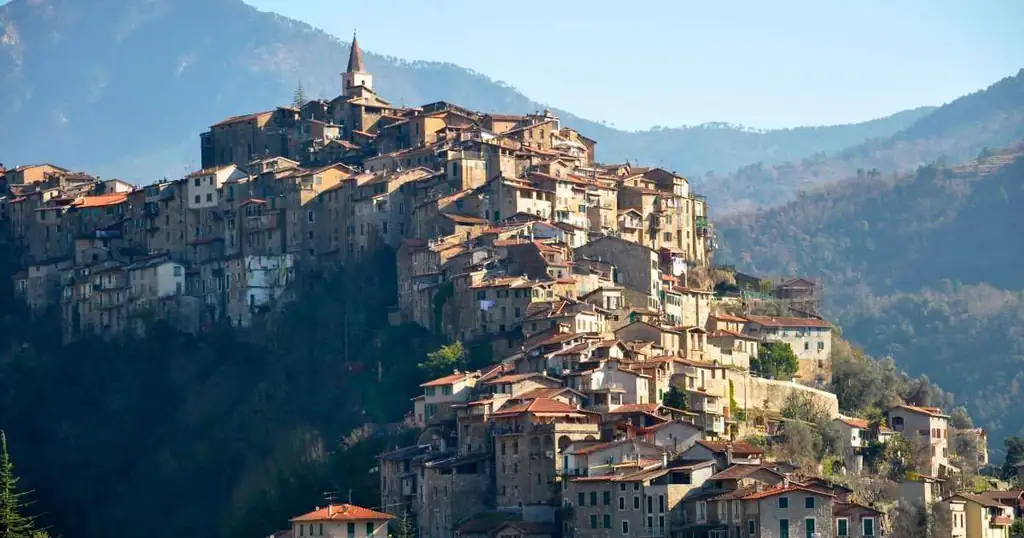
The Val Nervia rises from the sea between Ventimiglia and Bordighera and is the most visited valley of the Riviera dei Fiori. It makes a good day out by car, stopping in two or three villages.
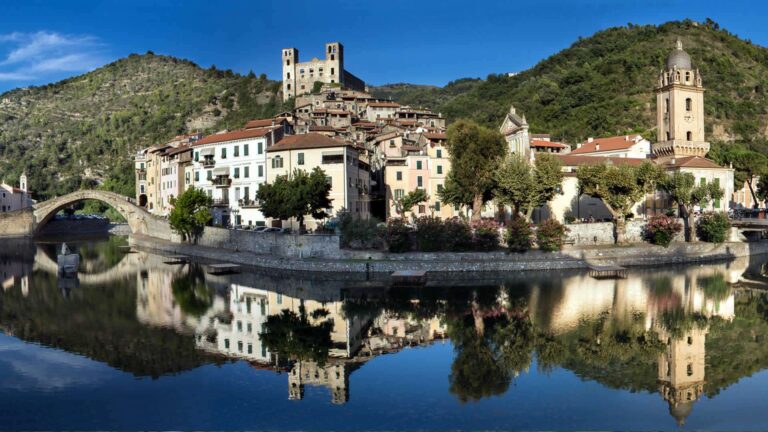
- Dolceacqua: about 10 km from the sea, with the humpbacked medieval bridge painted by Monet and the Doria castle (Dolceacqua castle). It is the home of Rossese, the local red wine.
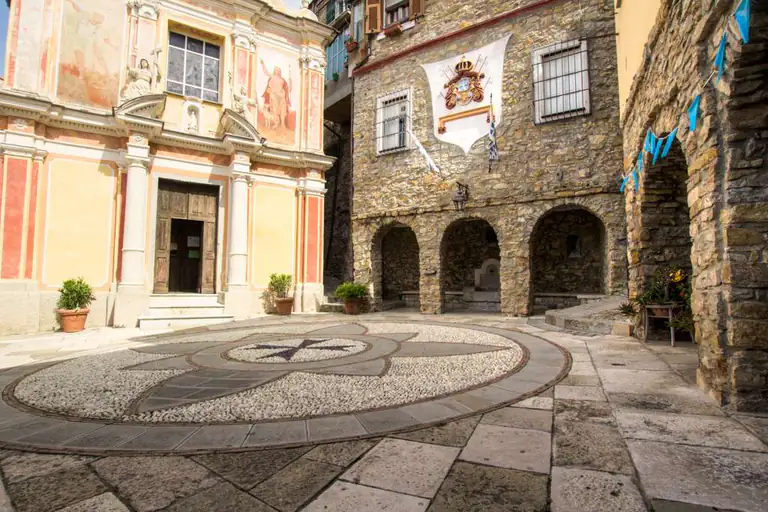
- Apricale: sun-facing stone houses on a steep slope, a square that looks like a stage and the Lucertola castle. One of the “Most Beautiful Villages in Italy”.
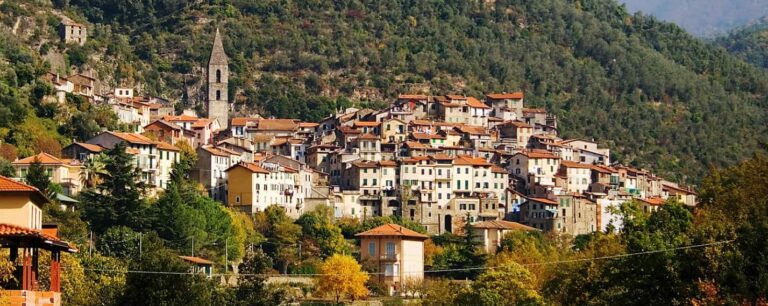
- Pigna: in the upper valley, about 20 km from the sea, with covered alleys, works by Giovanni Canavesio and white beans protected as a Slow Food Presidium. A gateway to the Ligurian Alps nature park.
- Rocchetta Nervina: in a side valley, famous for the natural pools of the Barbaira stream where people swim in summer (Rocchetta Nervina’s river pools) and for canyoning.
On the hills above Bordighera, at 500 metres, sits Seborga, with views over the sea and the Alps and the curious story of its “Principality” (the Principality of Seborga). Between Apricale and the sea is Perinaldo, birthplace of the astronomer Giovanni Domenico Cassini.
Sanremo and the Festival
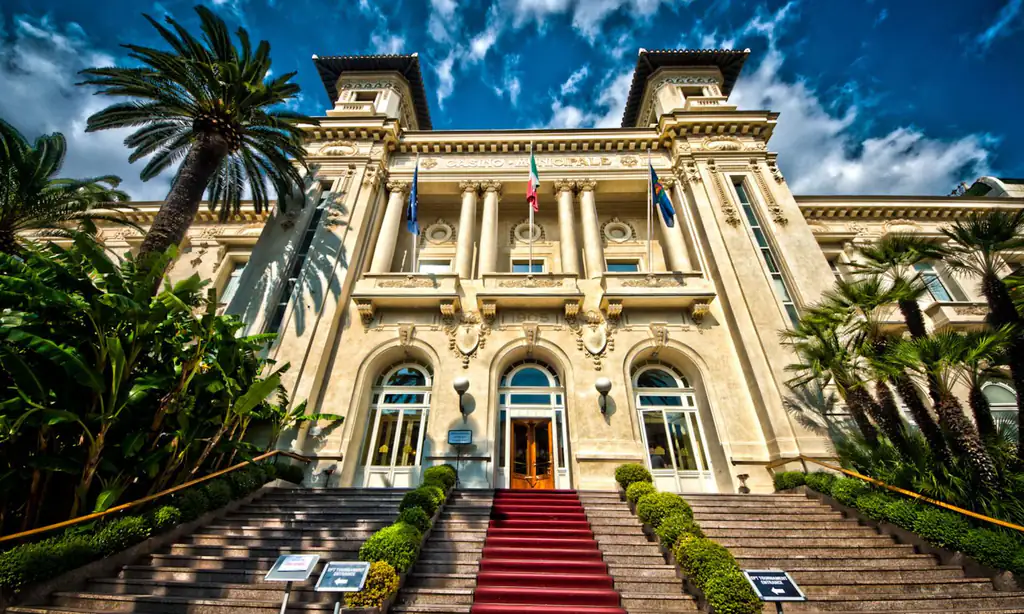
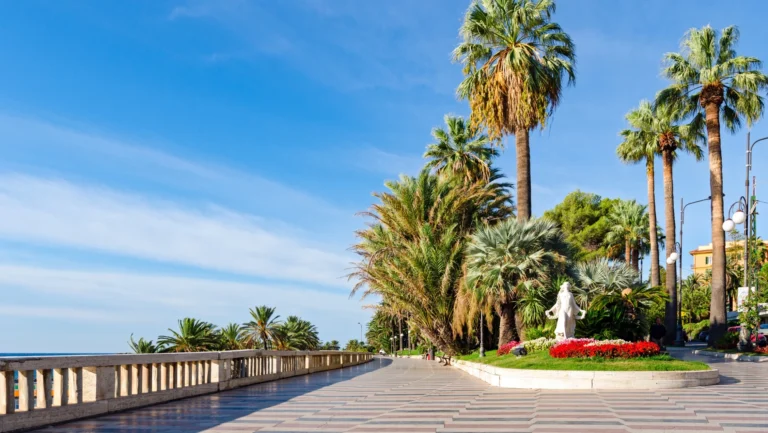
With over fifty thousand inhabitants, Sanremo is the largest town in western Liguria and the liveliest all year round. Its medieval core is called La Pigna, a maze of alleys and covered passages climbing up to the Regina Elena gardens. Lower down are the 1905 Art Nouveau Casino, the Russian church, the shopping street Via Matteotti and the palm-lined Corso Imperatrice.
The Italian Song Festival was born at the Casino in 1951 and has been held at the Ariston Theatre since 1977. The 2027 edition is scheduled for 16–20 February. That week the town fills up: if you want to be there, book well ahead; if you don’t care about it, pick another week. History and practical tips are in the Sanremo Festival.
The other big event is Sanremo in Fiore in spring: in 2026 the Corso Fiorito, the parade of floats covered in fresh flowers, took place at the end of March. The town’s beaches are in Sanremo’s beaches, parking in parking in Sanremo.
The Valle Argentina: Taggia, Bussana Vecchia and Triora
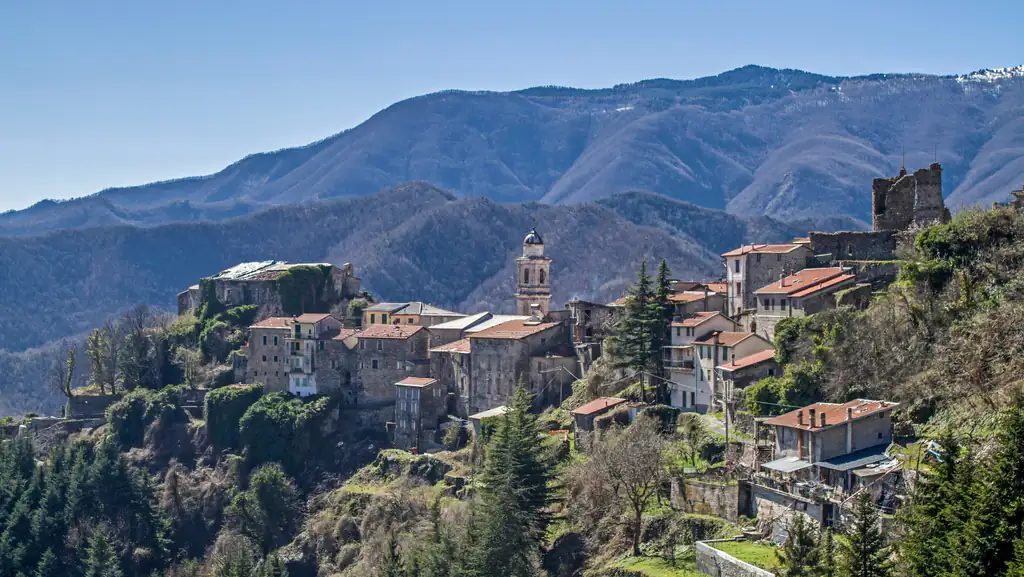
East of Sanremo, the Valle Argentina climbs from the sea at Arma di Taggia to the highest mountains in Liguria. Arma has a long beach of light sand, awarded the Blue Flag for the first time in 2026. A few kilometres up is Taggia, with its medieval centre, slate-paved arcades, long arched bridge and the convent of San Domenico (Taggia’s old town). The Taggiasca olive is named after it.
About 40 minutes further up the mountain road, through Badalucco and Molini di Triora, you reach Triora at 780 metres: the “witches’ village”, famous for the trial of 1587–1589 (the witches of Triora). Above it rises Monte Saccarello, 2,201 metres, the highest peak in Liguria.
On the hill between Sanremo and Arma lies Bussana Vecchia, the village destroyed by the 1887 earthquake and resettled by artists from the 1950s.
The Riviera dei Fiori cycle path
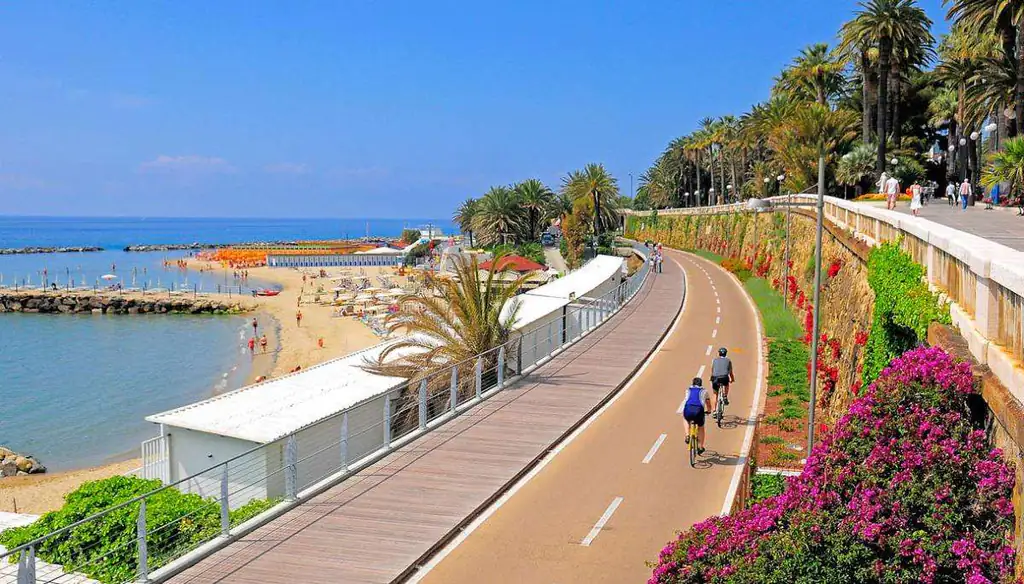
It is the best way to see the coast. The cycle and pedestrian path follows the old seaside railway line, closed in 2001 when the tracks were moved inland. It is paved, practically flat, with separate lanes for bikes and walkers, lit tunnels and old stations turned into cafés and rest stops. Along the way you’ll find several bike and rickshaw rentals by the hour or day.
On 20 June 2026 the last missing section opened at Capo Berta, between Imperia and Diano Marina: the route now runs continuously for almost 48 km between Ospedaletti and Andora. The best-known stretch is between Sanremo and San Lorenzo al Mare, where the 2015 Giro d’Italia started. Route, rentals and access points are in the Riviera dei Fiori cycle path.
Imperia and the Gulf of Diano
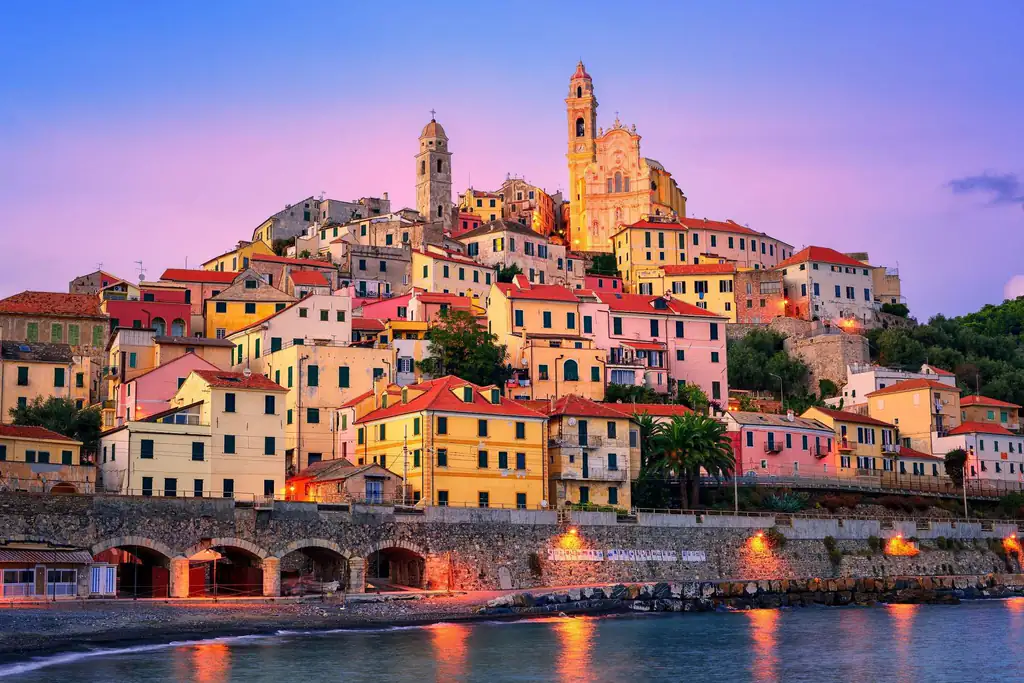
Imperia is the provincial capital and has two centres three kilometres apart, linked by the cycle path: Porto Maurizio, with the Parasio quarter on its headland and the largest basilica in Liguria, and Oneglia, with the arcades of Calata Cuneo, the Olive Museum and the new-oil festival in November. Between them is Villa Grock, home of the 20th century’s most famous clown (Villa Grock).
Beyond Capo Berta opens the Gulf of Diano. Diano Marina has a long beach of fine sand with shallow water and is a family favourite; for Corpus Domini its streets are carpeted with petals for the Infiorata. At the end of the gulf is Cervo, a terraced medieval village with the Baroque Corallini church, which hosts a chamber music festival in summer. West of Imperia, San Lorenzo al Mare is Liguria’s smallest municipality, with the cycle path running along its seafront.
Olive oil, Rossese and flowers: local produce
The Riviera dei Fiori is olive country before it is fish country. The small dark Taggiasca olive gives a delicate oil and turns up in countless dishes: with rabbit, on Sanremo’s sardenaira flatbread, in vegetable pies. The signature wine is Rossese di Dolceacqua, a light red from the Val Nervia vineyards. From the upper valley come the white beans of Pigna.
Flowers are everywhere: in the greenhouses on the hills, at the wholesale flower market in the Valle Armea, in the villa gardens and, once a year, on the floats of the Corso Fiorito.
Getting around and where to stay
The coast is easy by train: the Genoa–Ventimiglia line stops at Ventimiglia, Bordighera, Sanremo, Arma di Taggia, Imperia and Diano Marina, and there are dozens of trains a day between Sanremo and Ventimiglia, taking about 15–20 minutes. From Ventimiglia, French trains reach Nice in about an hour. The nearest airport is Nice Côte d’Azur, about 50 minutes’ drive from Ventimiglia and an hour from Sanremo. For the valleys you need a car: buses exist, but with few departures and often only on weekdays. By bike, the cycle path links Ospedaletti with Andora.
As a base, Bordighera is the most convenient for the Val Nervia and France (see where to stay in Bordighera), Sanremo has more services and nightlife, and Diano Marina and Arma di Taggia suit a beach holiday with children. Below are some hotels in Sanremo; for all other areas see where to stay in Liguria.
Hotel ★★★★
Hotel De Paris Sanremo
Sanremo
Fabulous
Hotel De Paris is located near the Russian Church and a few minutes from the city center. Spacious and elegant, rooms at Hotel De Paris come with wooden floors, white…
Check availabilityGuest rooms ▣▣▣
Residence Dei Due Porti
Sanremo
Excellent
Located in the center of Sanremo, Residence Dei Due Porti offers a sun terrace overlooking the sea. Due Porti Residence studios and apartments feature free WiFi, air conditioning and satellite…
Check availabilityApartments ▣▣▣
Sanremo Luxury Suites
Sanremo
Fabulous
Located in a splendid position, facing the beach, the Sanremo Luxury Suites offers comfortable accommodation at affordable prices in a peaceful and quiet environment. Free WiFi is available throughout the…
Check availabilityHotel ★★★
Best Western Hotel Nazionale
Sanremo
Optimal
Located near the Sanremo Casino, on the most famous shopping street of the city, the Best Western Hotel Nazionale features a rooftop terrace with a mini swimming pool with hydromassage…
Check availabilityHotel ★★★
Lolli Palace Hotel
Sanremo
Optimal
Surrounded by the huge palm trees of Sanremo's famous Lungomare Imperatrice, Lolli Palace Hotel offers free WiFi. At your disposal you will appreciate the well-equipped gym, and a lounge bar…
Check availabilityIf you want to see both the Riviera dei Fiori and the Côte d’Azur, Bordighera is a convenient base all year round: a railway station, buses every 15–20 minutes and France half an hour away. See day trips from Bordighera.
Frequently asked questions
Where is the Riviera dei Fiori?
It is the coast of the province of Imperia, at the far west of Liguria, from the French border at Ventimiglia to Cervo. It is the western part of the Riviera di Ponente.
Why is it called the Riviera of Flowers?
Because of flower growing: from the late 19th century the hills between Ventimiglia and Sanremo filled with greenhouses and flower fields. Sanremo still has its wholesale flower market and holds the Corso Fiorito every spring.
Which are the most beautiful inland villages?
In the Val Nervia, Dolceacqua, Apricale and Pigna; in a side valley, Rocchetta Nervina with its river pools; above Bordighera, Seborga. In the Valle Argentina, Taggia and Triora. Many hold the Touring Club’s Orange Flag.
How long is the Riviera dei Fiori cycle path?
Since 20 June 2026 it runs continuously for almost 48 km, from Ospedaletti to Andora. It is almost entirely flat, along the old railway line by the sea.
When is the 2027 Sanremo Festival?
From 16 to 20 February 2027 at the Ariston Theatre. Accommodation in town and nearby sells out early for those days.
Do you need a car on the Riviera dei Fiori?
Not for the coast: train and cycle path are enough. For the valleys, yes, as buses run infrequently. A good compromise is to stay on the coast and hire a car for just a day or two.
Is it a good winter destination?
Yes. It is one of the mildest areas in Italy, averaging about 11°C in January, and towns like Sanremo and Bordighera stay lively all year. February brings the Festival, and the mimosa blooms in early spring.