Finale Ligure's walled medieval village: 15th-century gates, San Biagio, Santa Caterina cloisters, archaeology museum and castles on the Strada Beretta.
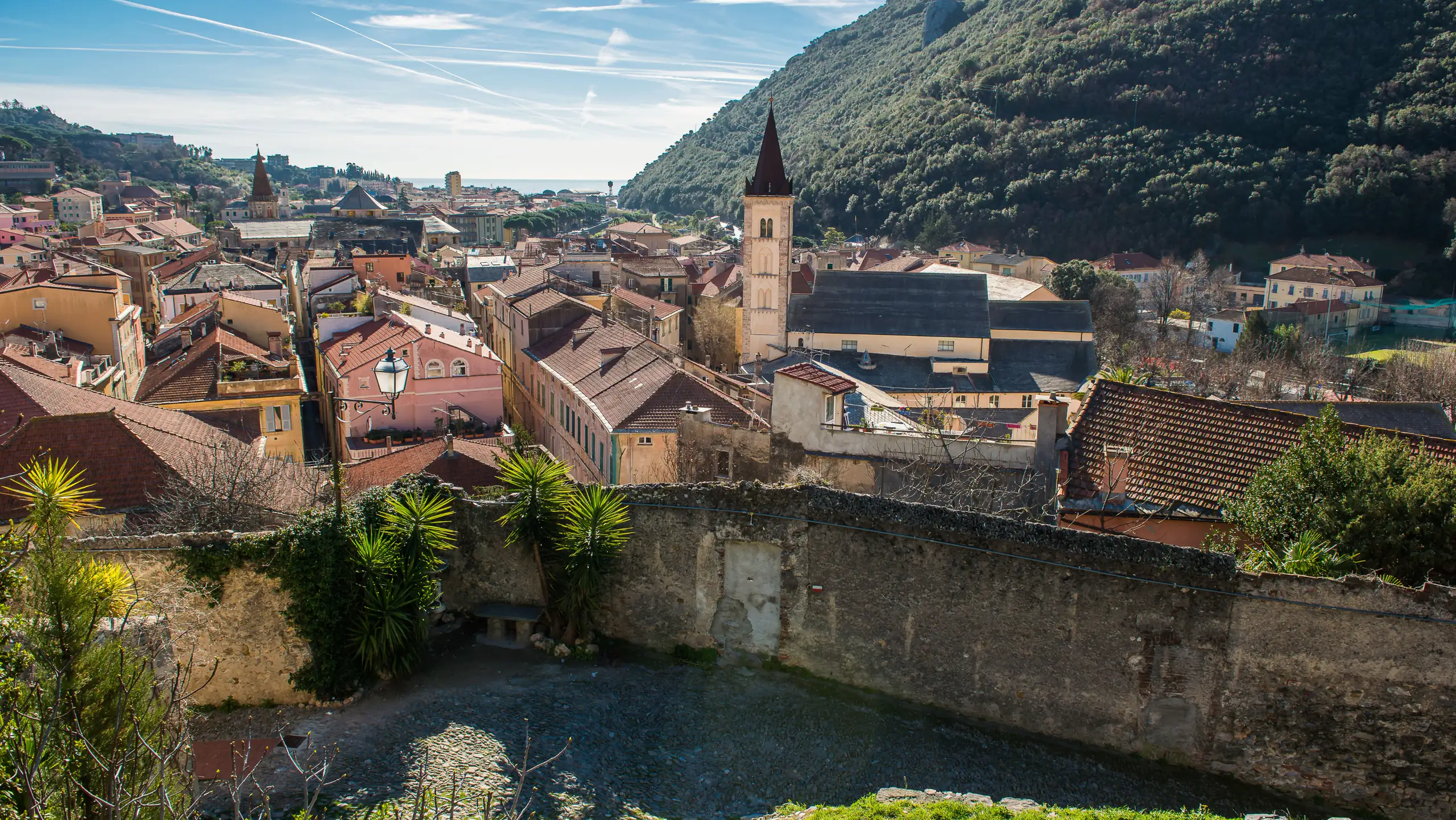
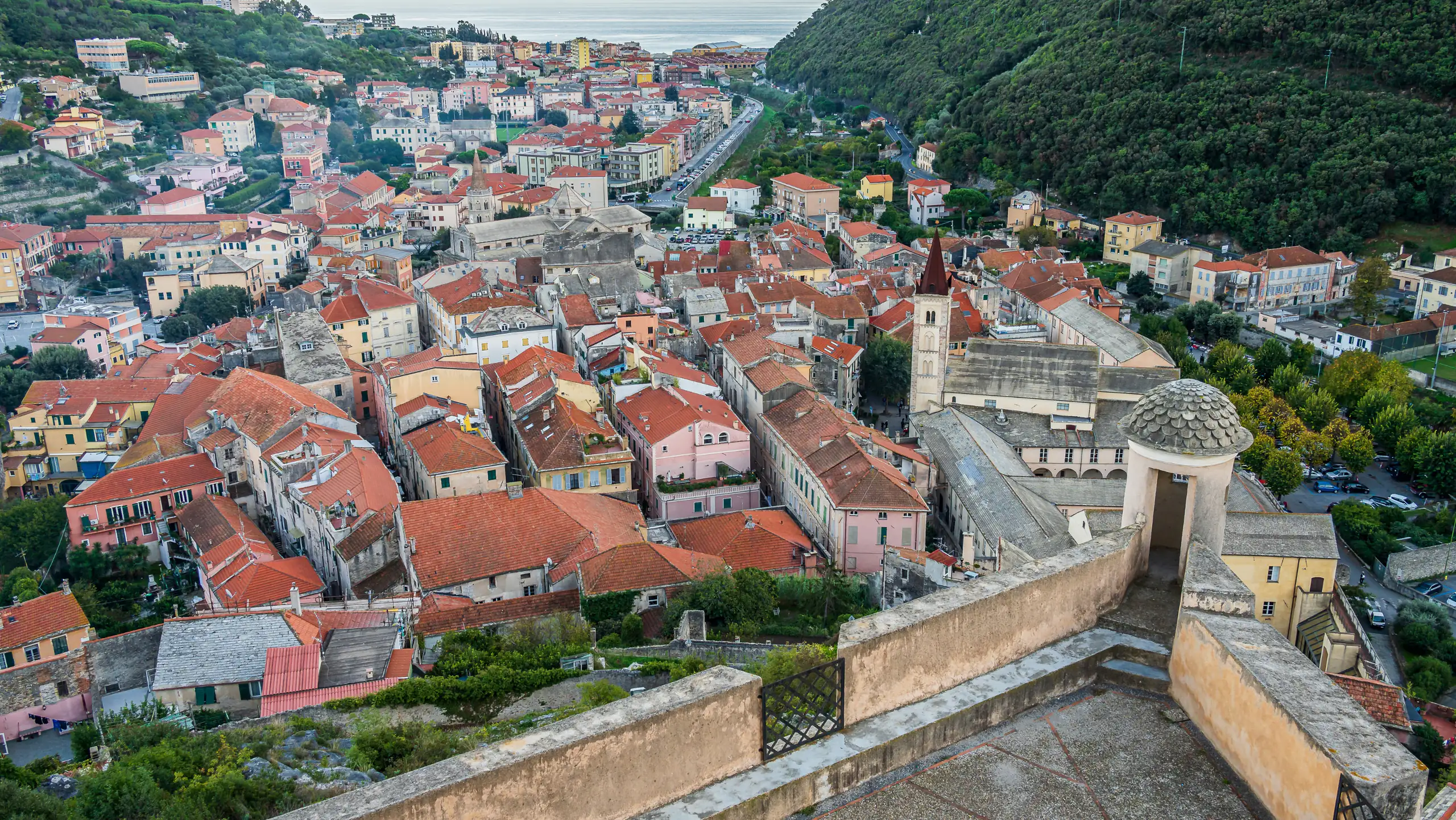
Rooftops and bell tower of Finalborgo among the mountains
Area
Riviera delle PalmeRiviera di Ponente · Province of Savona
Ideal for
Historic-village loversmountain bikers, climbers, couples and hikers
Beaches
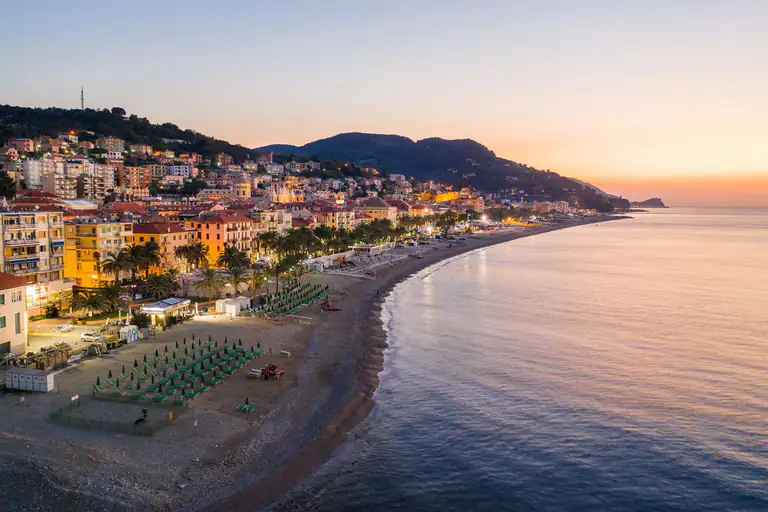
None in the village: Finalmarina's beaches are about 2 km away
Best time to go
All yearspring and autumn for biking and climbing, late August for the medieval festival
By train
Finale Ligure Marina stationthen a 20–30 minute walk or a few minutes on a TPL Linea bus
By car
A10, Finale Ligure exit, then a few kmcentre is a ZTL, park outside the walls
Airport
Genoa Cristoforo Colombo (about 70 km)Nice about 140 km
How long to stay
Half a day for the village, a day with the castleslonger for outdoor sports
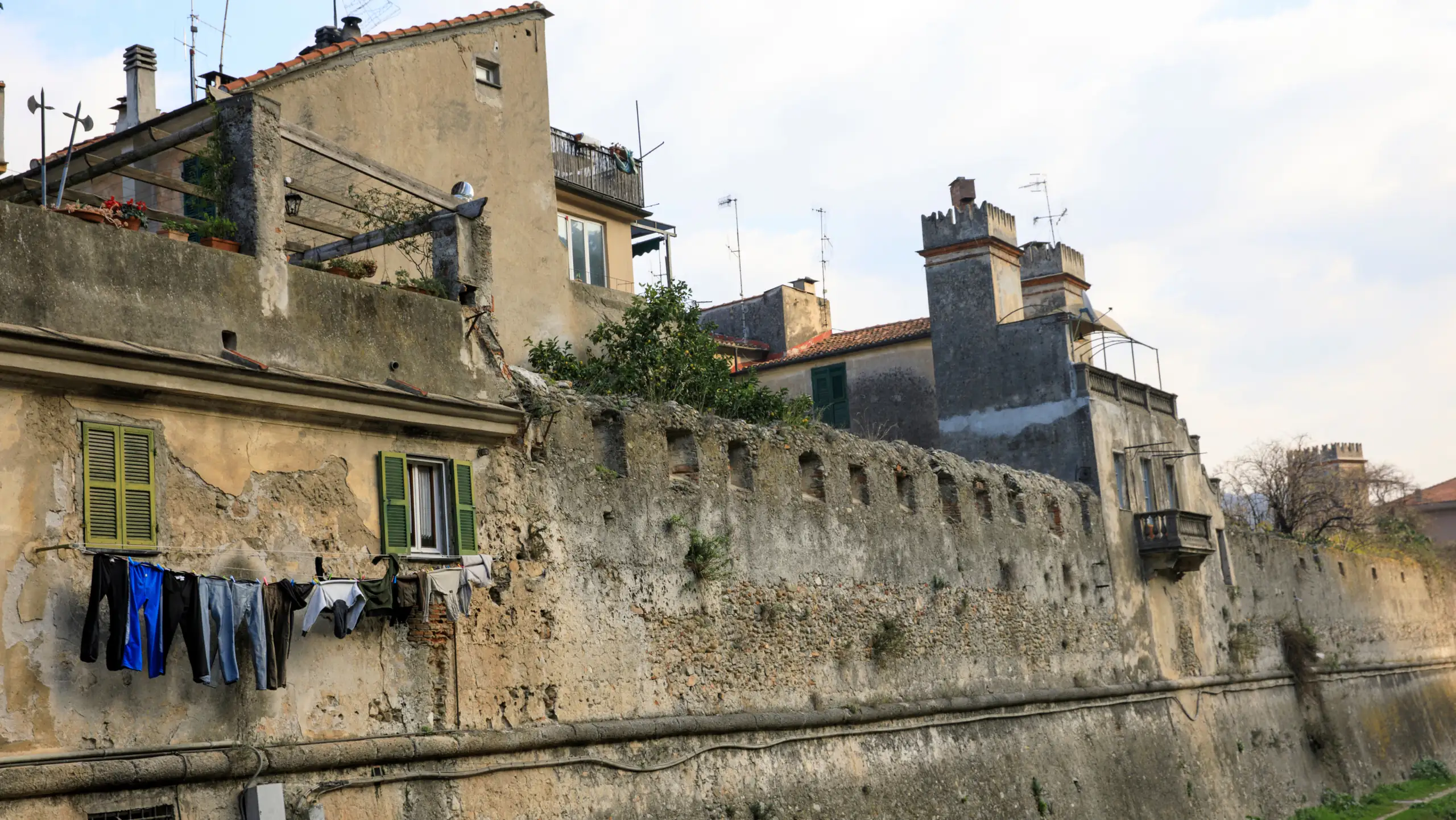
Finalborgo is the walled medieval quarter of Finale Ligure, on the Riviera di Ponente between Genoa and the French border. It sits about 2 km inland, where the Aquila and Pora streams meet and once served as a moat, and it is still enclosed by its 15th-century walls. For almost four centuries it was the capital of the Marquisate of Finale, the small state of the Del Carretto family. Today it is listed among the “Borghi più belli d’Italia”, the most beautiful villages in Italy, and in 2021 it represented Liguria in the national “Borgo dei Borghi” TV contest, finishing eleventh.
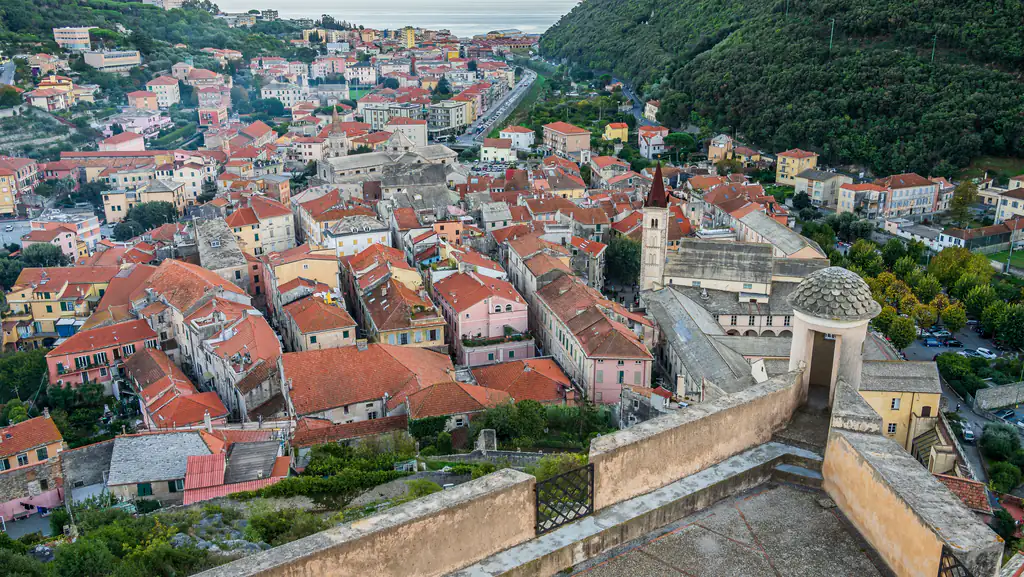
You can walk the whole village in a couple of hours: four gates, a basilica with an octagonal bell tower, a 14th-century convent with the archaeological museum, palaces with painted façades and an early 19th-century theatre. Above the walls, the old Strada Beretta climbs to two castles, Castel San Giovanni and Castel Gavone, and on to the hamlet of Perti.
Finalborgo also has a second life as the base camp for mountain bikers and climbers in the Finale area: in the evening you see more enduro bikes than cars in its squares. The sea is 20–30 minutes away on foot, or a few minutes by bus. For beaches, the seafront and Varigotti, see our guide to Finale Ligure.
By Italian Riviera editorial team·Updated on ·10 min read
Where is Finalborgo?
Finalborgo is in Liguria (Riviera di Ponente, Riviera delle Palme, province of Savona).
Everything inside the walls is a few minutes apart. Allow half a day for the village and museum, and another half day if you want to walk up to the castles. The centre is a limited traffic zone (ZTL): leave the car outside.
The walls and the four gates
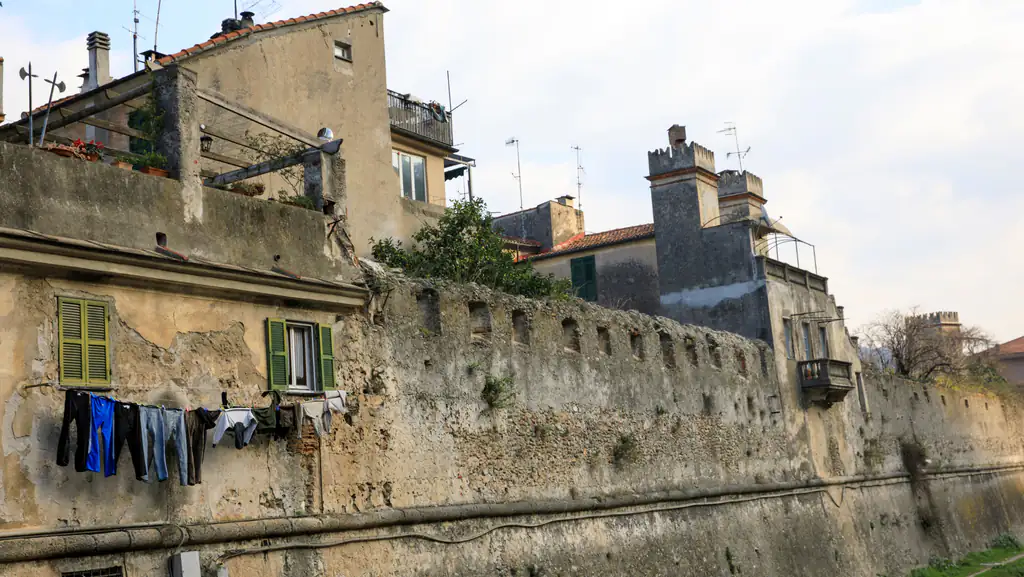
The walls you see today were rebuilt in 1452 by Giovanni I Del Carretto, after the Genoese had destroyed them in the war of 1447–1450. Several semicircular towers survive along the circuit; the most impressive is on the south side. There are four main gates.
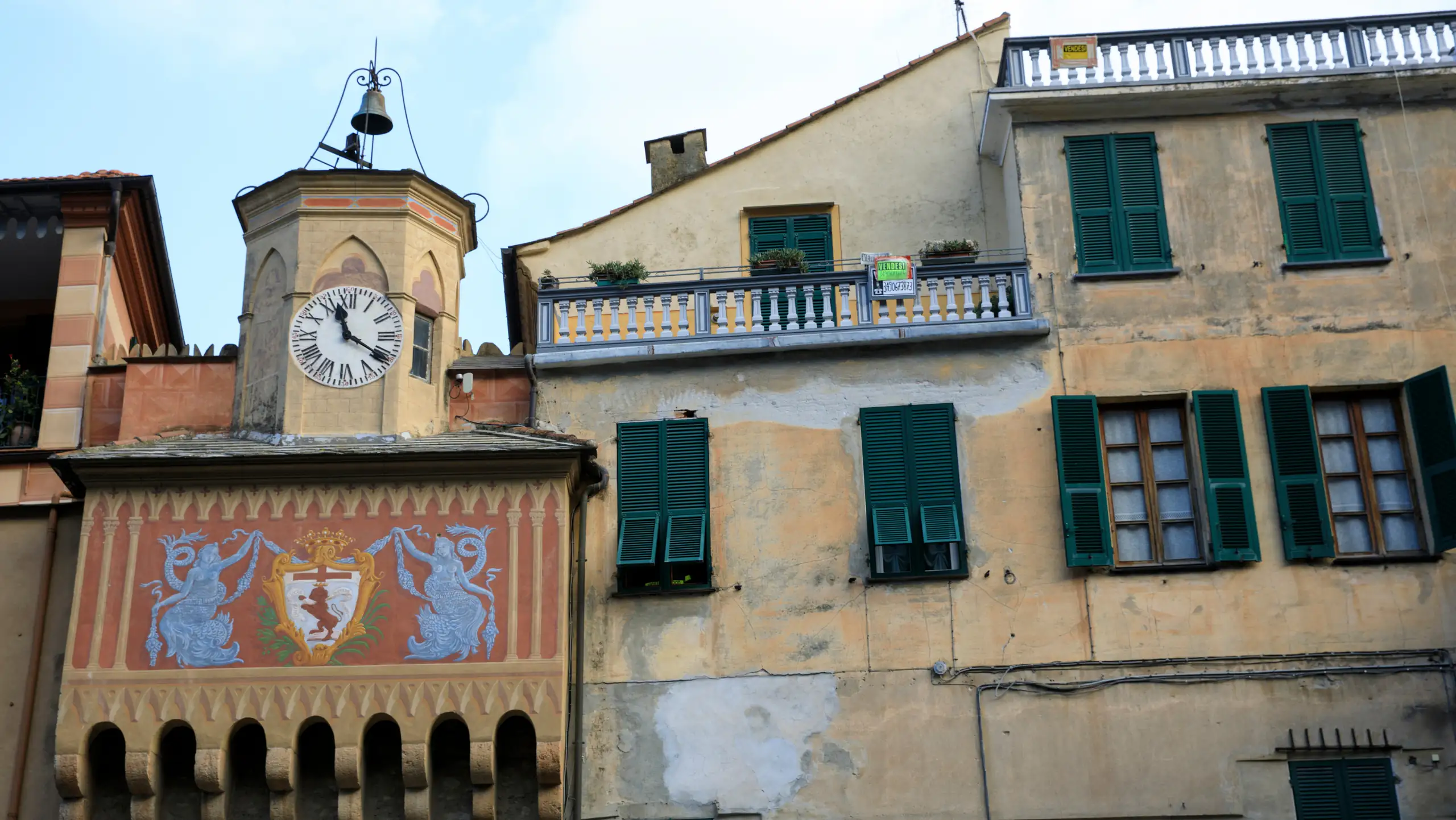
Porta Testa: dated 1452 by an inscription in Gothic letters, and also called Porta San Giorgio. Its better-known name recalls the heads of executed criminals once displayed here. The clock tower stands above it.
Porta Reale: built in 1702, with a large Del Carretto coat of arms beside it. It replaced the medieval entrance in the Spanish period; the painted architecture with the Savoy crest dates from the 19th century.
Porta Romana, also called Porta del Mulino, on the north side.
Porta Mezzaluna: the highest gate, at the foot of the hill. The Strada Beretta to the castles starts here.
Basilica of San Biagio
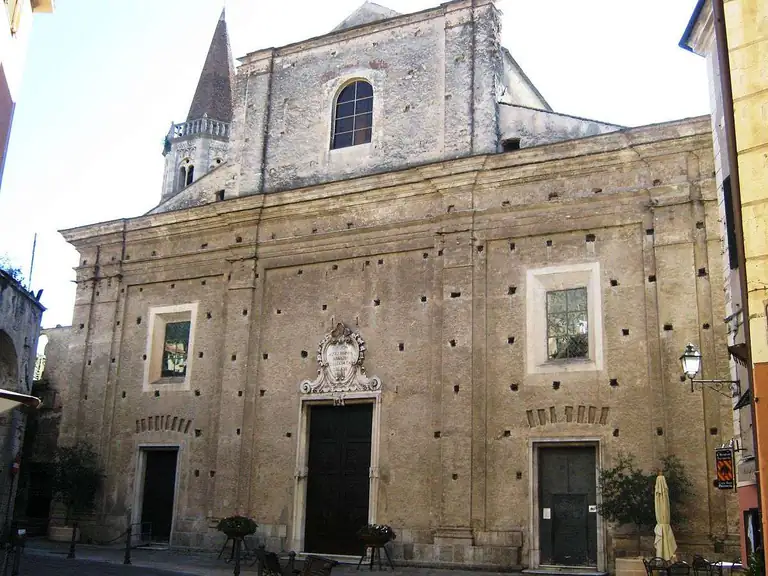
The main church has a layered history. The first Gothic church inside the walls was built in 1372–1375; in the mid-17th century it was almost entirely demolished and rebuilt in Baroque style, with the floor plan turned by ninety degrees. The new basilica was finished in 1659 and consecrated in 1690. The façade was never completed.
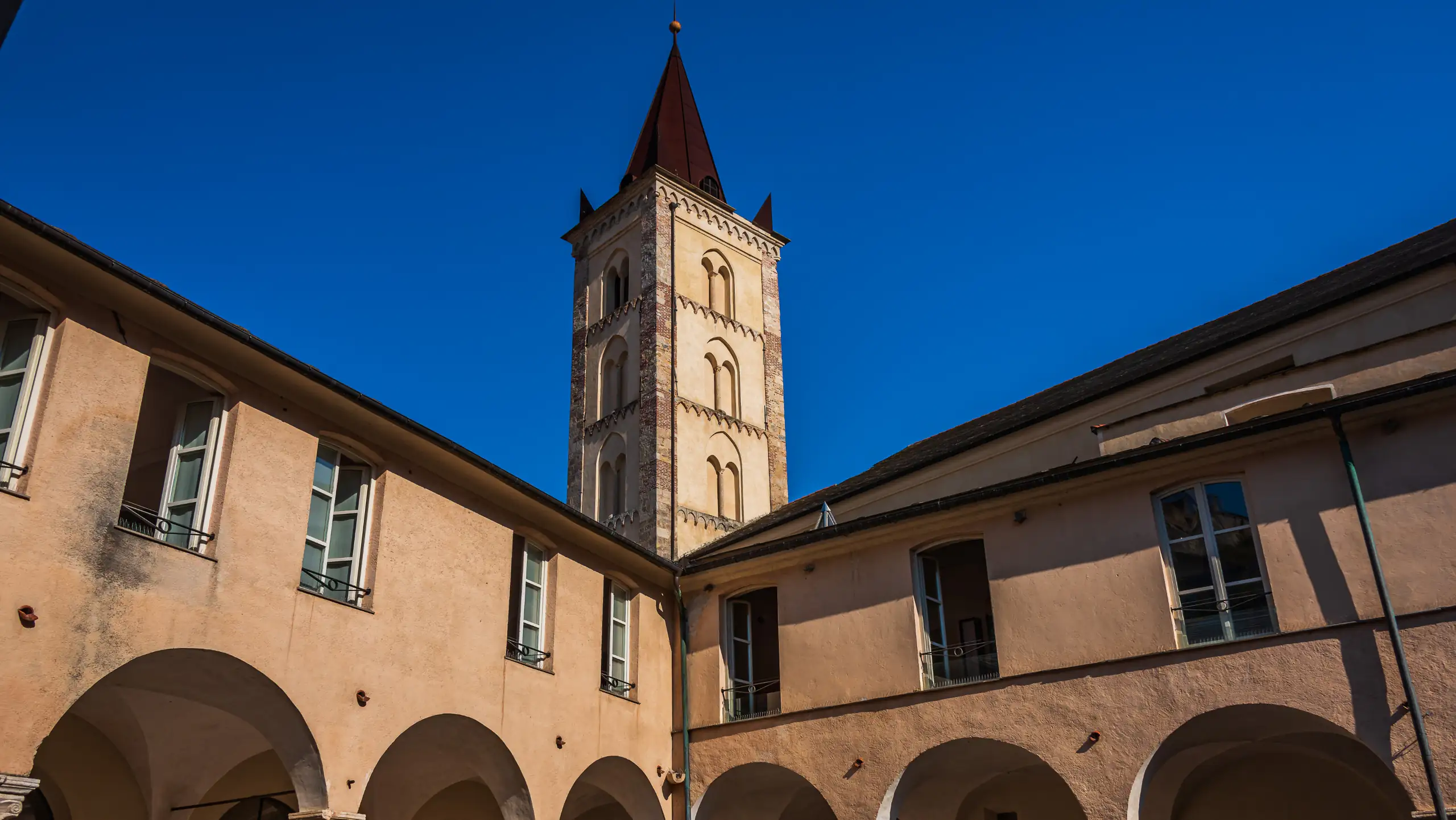
The symbol of Finalborgo is the octagonal bell tower: it stands on a semicircular tower of the town walls, a unique case in Liguria, and was rebuilt by Giovanni I after 1452. Inside, look for the white marble pulpit of 1765 by Pasquale Bocciardo and the tomb of Sforza Andrea Del Carretto, the last marquis, carved by Battista Orsolino in 1604 for the church of Santa Caterina and later moved here.
Cloisters of Santa Caterina
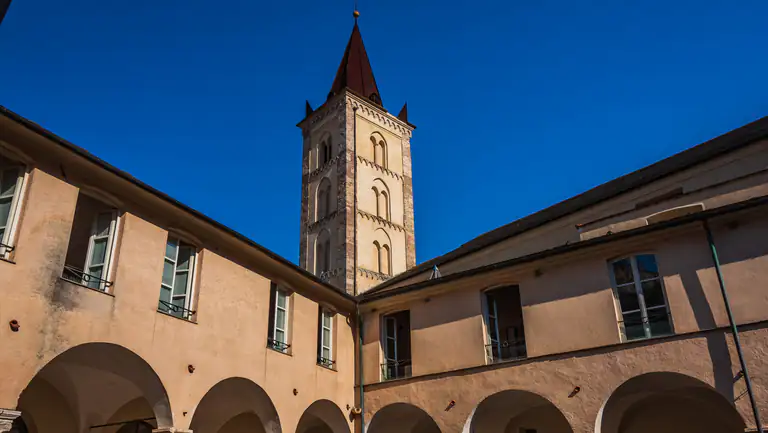
The convent of Santa Caterina was founded in 1359 by the Del Carretto family, who used it as their burial place. Dominican friars lived here from 1381 to 1802; from 1864 until the 1980s the complex was a prison. Restoration completed in 2004 reopened the church, with early 15th-century frescoes of the life of the Virgin, the bell tower and two Renaissance cloisters in Finale stone.
On the south side of the church, look for the two walled-up Gothic doorways known as the “Women’s” and the “Men’s” door. The Oratorio dei Disciplinanti, in the same complex, hosts temporary exhibitions.
Archaeological Museum of Finale
Around the cloisters is the Museo Archeologico del Finale, founded in 1931 and moved here in the 1970s. It covers more than 350,000 years of human presence in the Finale area, from prehistory to the Byzantine period, with finds from local caves, reconstructions and dioramas. Its best-known piece is the cast of the “Young Prince”, the Palaeolithic burial of a teenage boy found in the Arene Candide cave.
In June 2026 the museum opened a new layout in some rooms, designed for accessibility. Opening hours change with the seasons: check the museum website or call +39 019 690020 before you go.
Palazzo del Tribunale and the squares
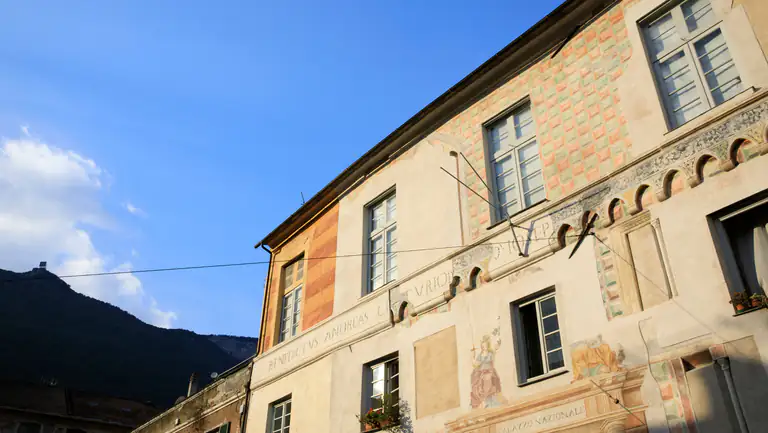
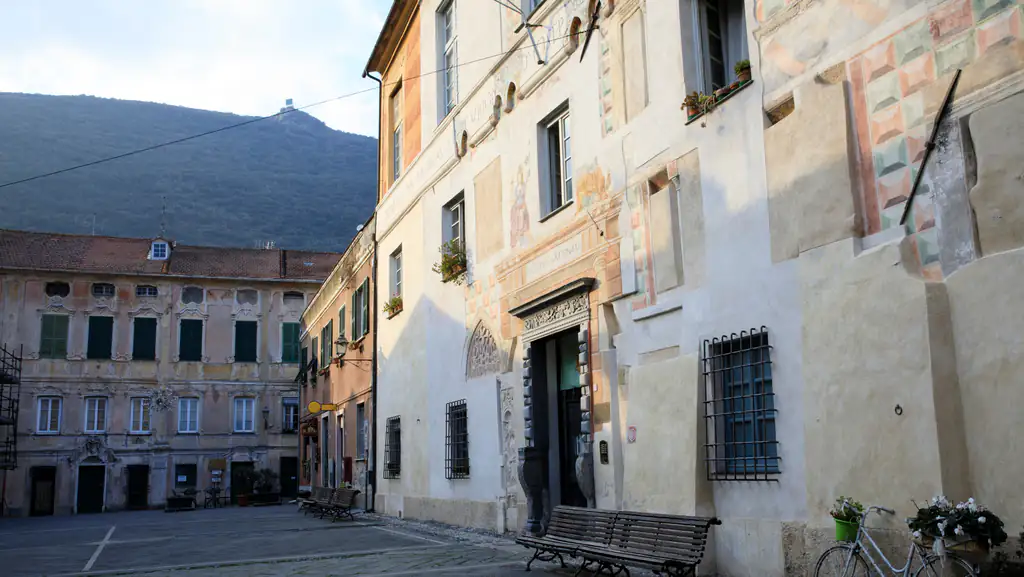
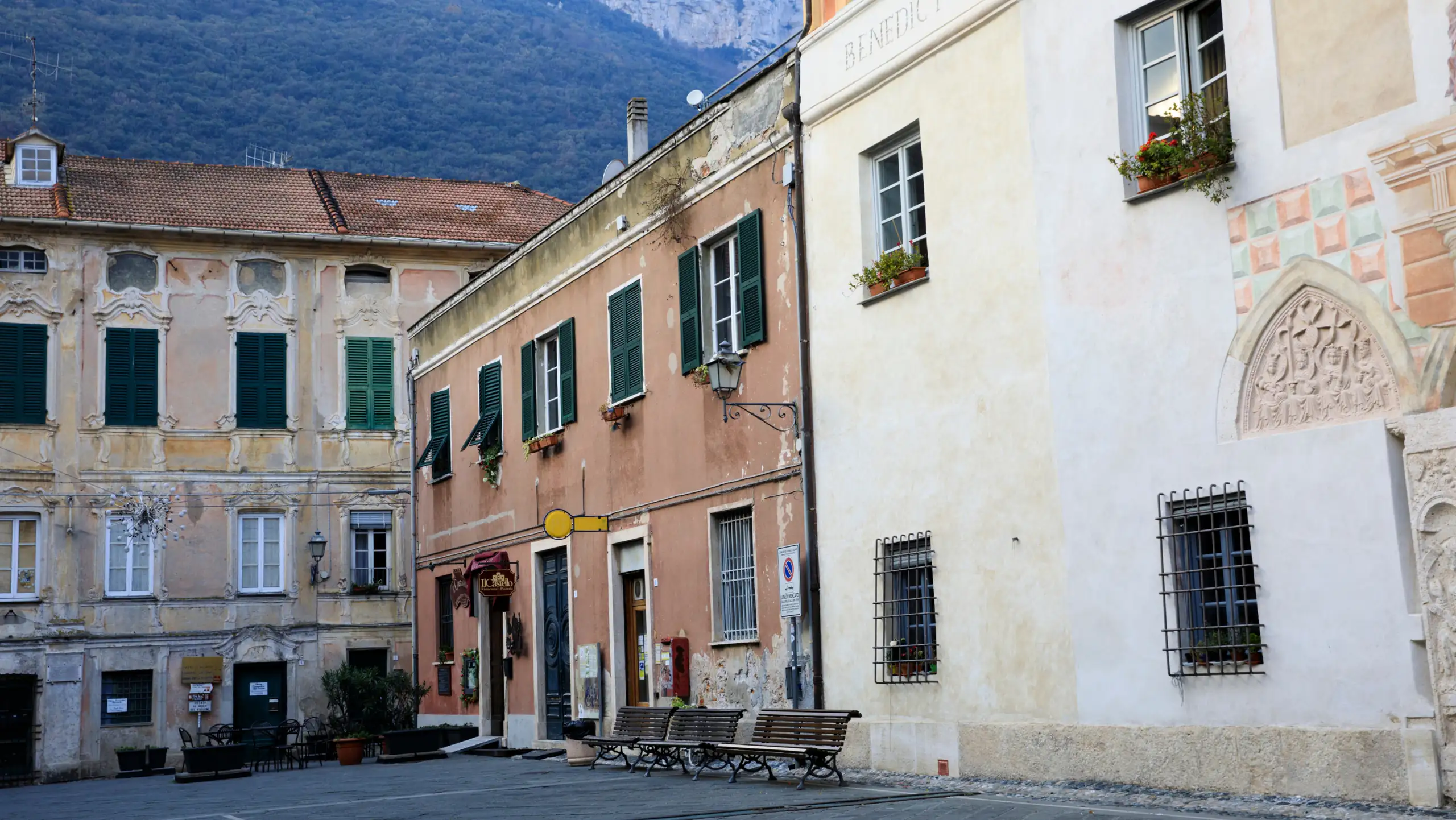
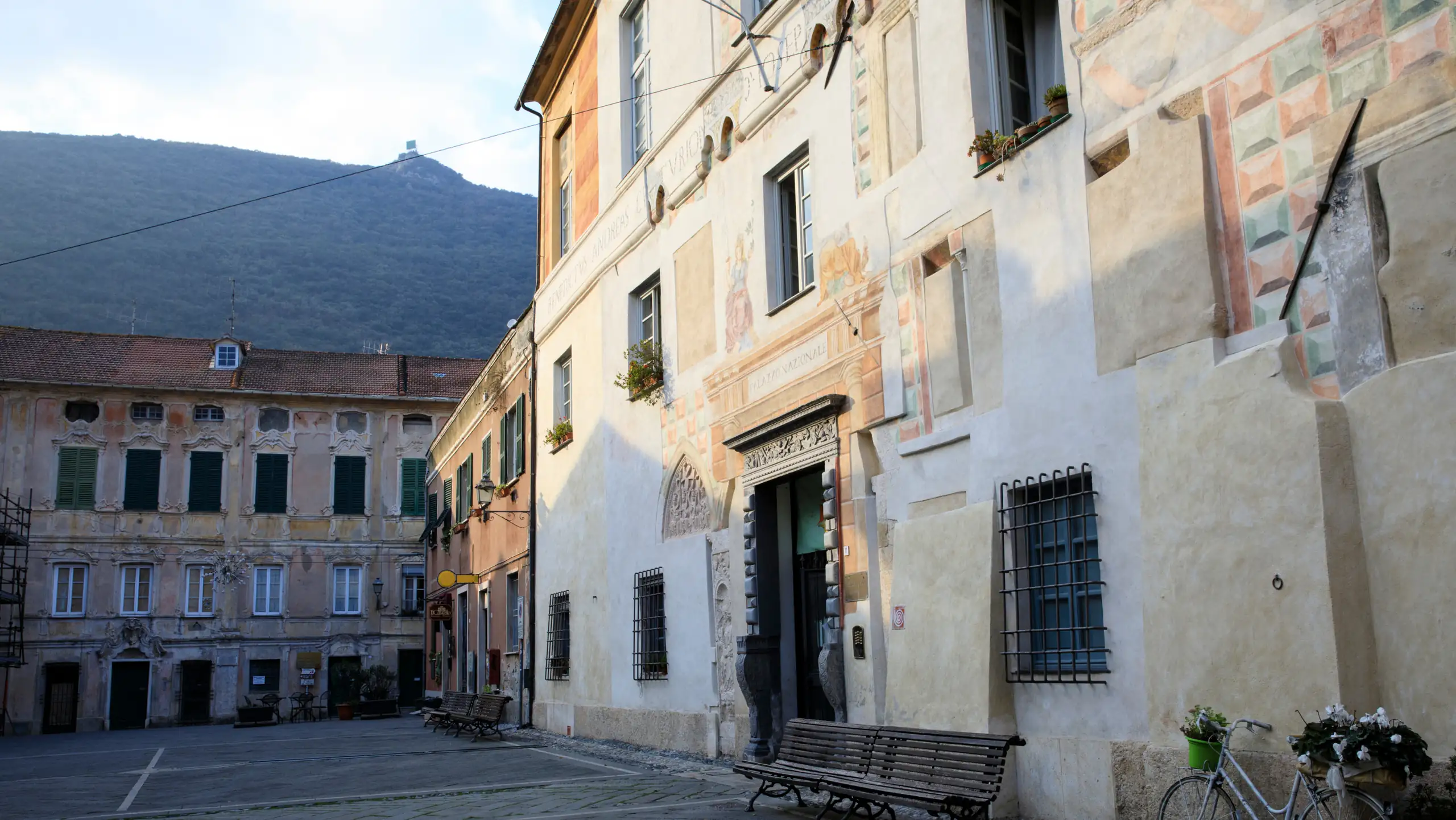
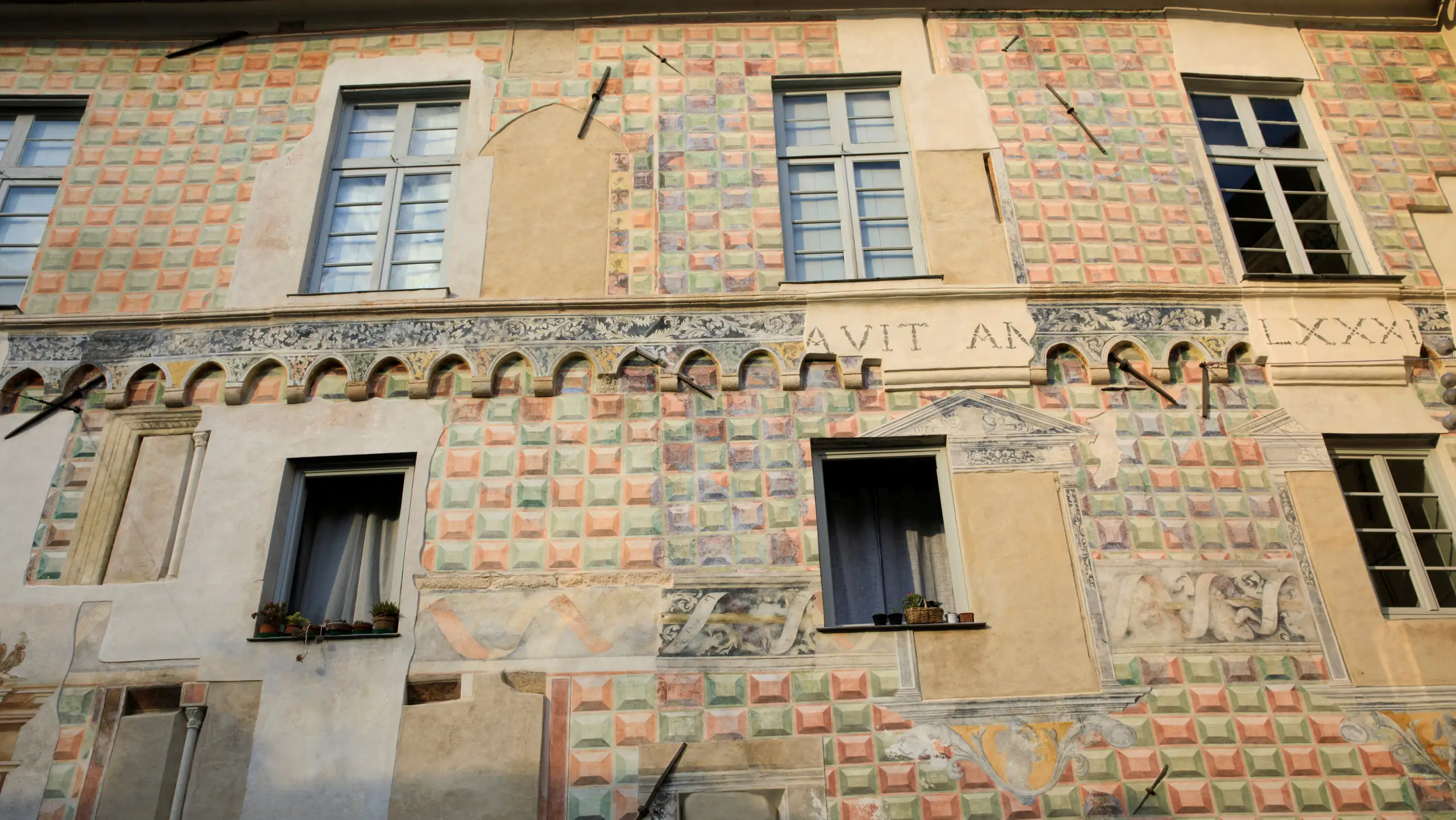
On Piazza del Tribunale stands the palace from which the Del Carretto governed the marquisate; it later housed the courts under the Spanish and the Genoese. It already existed in the 14th century and was remodelled in 1462 by Giovanni I: the façade keeps its 15th-century painted decoration. Palazzo Arnaldi, with a Baroque stucco façade, faces the same square.
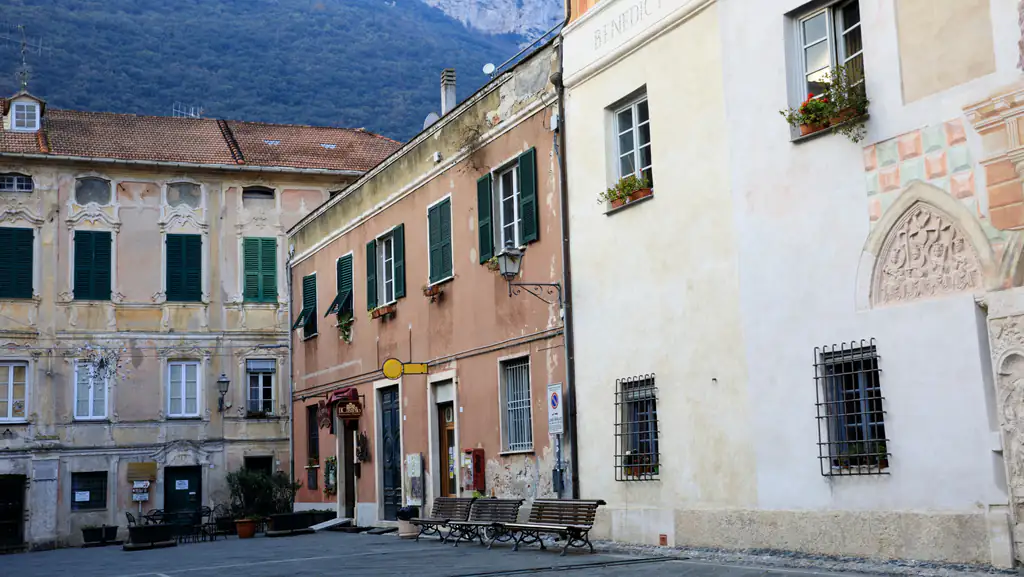
The rest of the village is best discovered by wandering from square to square. Palazzo Ricci, founded around 1460, is one of the earliest Renaissance buildings in Liguria and was Finalborgo’s town hall until 1927. On Piazza Aycardi is Palazzo Brunengo with its double-arched loggia; Palazzo Cavassola once hosted Pope Pius VII. Piazza Garibaldi is the meeting point, with outdoor tables.
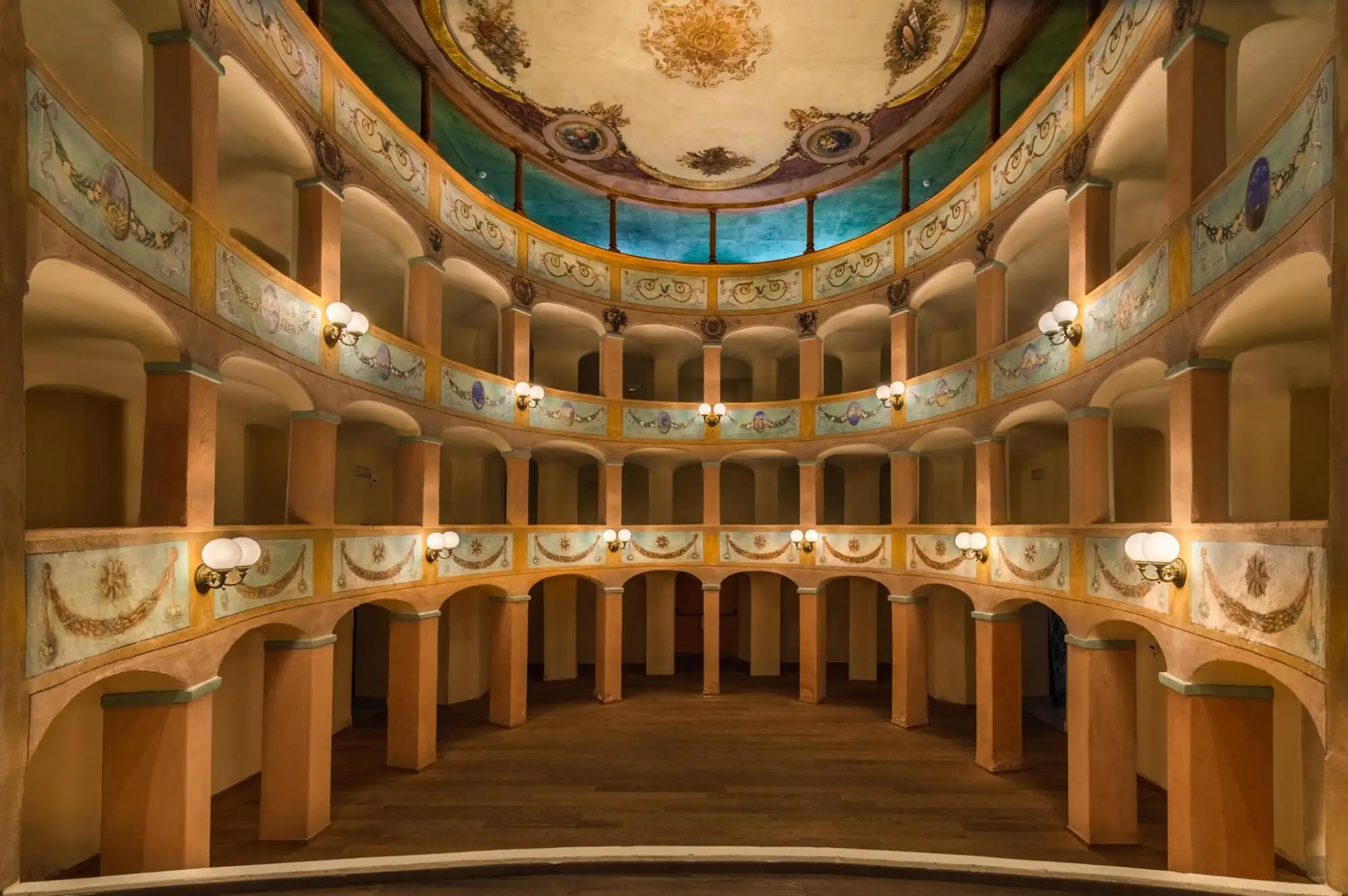
Teatro Aycardi
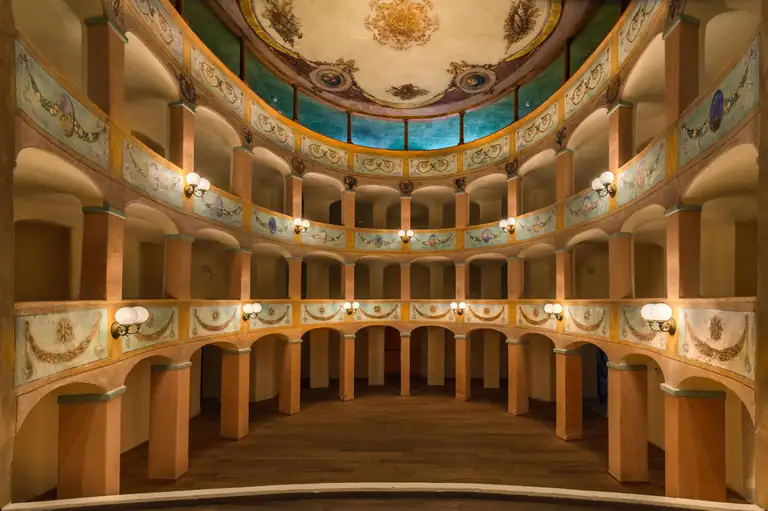
The theatre was built between 1804 and 1806, in the Napoleonic era, inside the college of the Piarist Fathers founded with a bequest from Giovanni Andrea Aycardi. It is the oldest 19th-century theatre in Liguria to keep its original stalls and boxes. Closed in 1965 for safety reasons, it has been restored and now opens to the public on set dates: check the town’s event calendar.
Castel San Giovanni
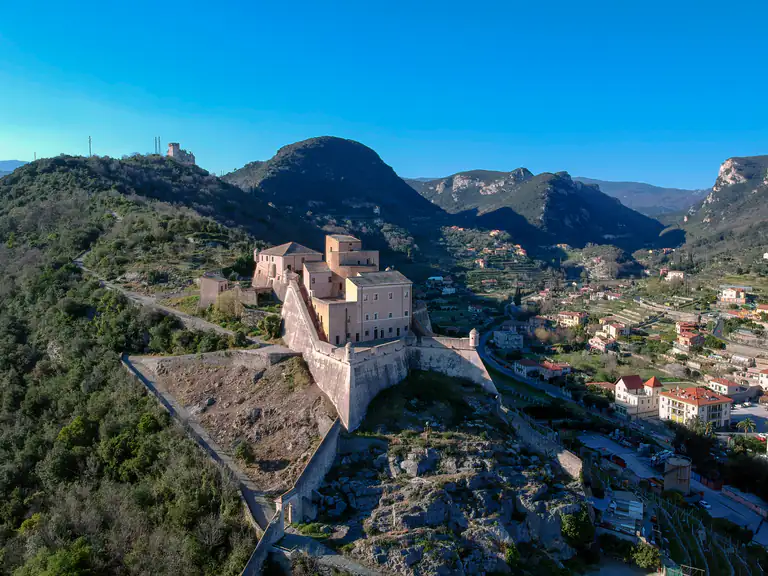
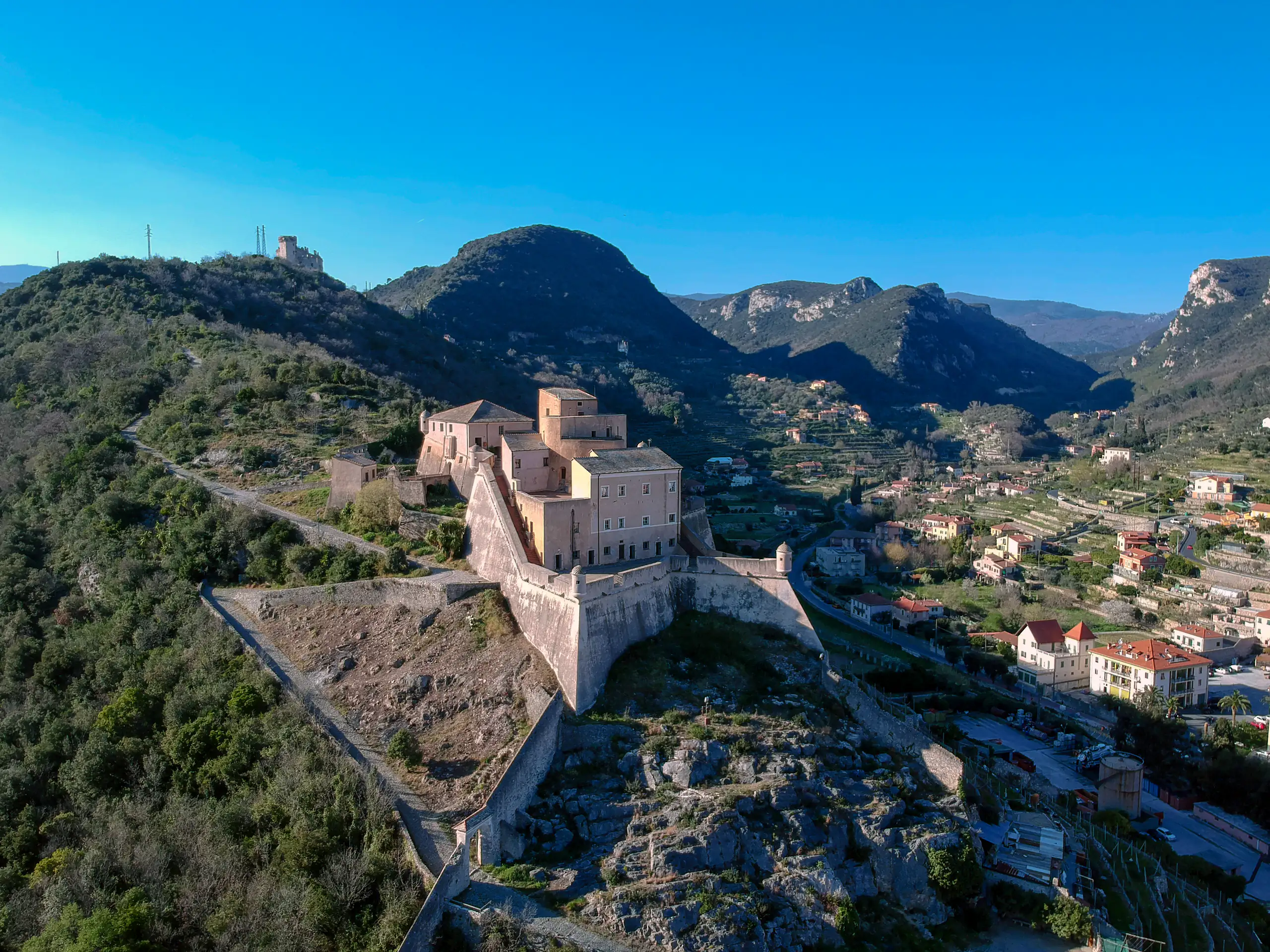
Leave through Porta Mezzaluna and, after a five-minute climb on the Strada Beretta, you reach the fort the Spanish built in the first half of the 17th century around a medieval tower. Partly demolished by Genoa in 1713, it became a prison in 1822 and stayed one until the early 20th century: prisoners’ graffiti survive on the slate slabs by the cells. Entry is free, and the terraces look over the rooftops and the valley.
Castel Gavone and the Torre dei Diamanti
Continue up the Strada Beretta for about twenty minutes to reach the Del Carretto castle, first recorded in 1128. What stands out is the Torre dei Diamanti, the “Diamond Tower”, built around 1490 with blocks of Finale stone cut into diamond points. The Genoese blew up the castle in the early 18th century, but the tower survived. The interior can only be visited with an archaeologist, by reservation: route, walking times and tours are in our guide to the castles of Finalborgo and the Strada Beretta.
Perti, Sant'Eusebio and the Five Bell Towers
Beyond the castle the Strada Beretta reaches Perti, the hamlet on the hill. The church of Sant’Eusebio has an 11th-century Romanesque crypt and a 15th-century bell tower decorated with majolica bowls and Spanish azulejo tiles. Nearby is Nostra Signora di Loreto, known as the church of the Five Bell Towers for its five slender spires: a small centrally planned church from the late 15th century, inspired by Florentine architecture. Interior visits are guided and must be booked through the archaeological museum.
Where to stay
Where to stay in Finalborgo
In and around the walls you will mostly find B&Bs, guesthouses and apartments in historic buildings. Staying in the village makes sense if you are travelling with a bike or coming to climb: many places offer bike storage and a wash area. In the evening, once the day visitors have left, Finalborgo is the most atmospheric part of the town.
For a beach holiday without a car, stay in Finalmarina, close to the station, and walk or take the bus up to the village. The inland hamlets, such as Perti and Calvisio, have farm stays and hillside houses. Book early for big mountain bike race weekends and for late August.
Take the A10 Genoa–Ventimiglia motorway and exit at Finale Ligure: the village is a few kilometres from the toll booth, on the road down to the sea.
By train
The station is Finale Ligure Marina, on the Genoa–Ventimiglia line: direct regional trains from Genoa take about an hour, and there are also direct trains from Milan. From the station to Finalborgo it is about 2 km, a 20–30 minute walk. Timetables on Trenitalia.
By bus
TPL Linea buses link Finale Ligure station with Finalborgo in a few minutes. On Trenitalia you can search for Finalborgo as a destination for a combined train-and-bus ticket: check availability when you book. Routes and timetables on TPL Linea.
By plane
The nearest airport is Genoa Cristoforo Colombo, about 70 km away: allow around an hour by car. By public transport, take the bus to Genova Sestri Ponente station and then the train. Nice airport is about 140 km away.
Parking
Finalborgo is a limited traffic zone, with camera-controlled gates at Porta Testa, Porta Reale and Via Gallesio: do not drive past the gates, as fines are sent to rental companies too. If you are staying inside the walls, ask your host how access works. There are car parks outside the walls, a few minutes’ walk away, but spaces are limited. On market and event weekends arrive early, or leave the car in Finalmarina and take the bus.
A10, Finale Ligure exit, then a few km; centre is a ZTL, park outside the walls
By train
Finale Ligure Marina station, then a 20–30 minute walk or a few minutes on a TPL Linea bus
By plane
Genoa Cristoforo Colombo (about 70 km); Nice about 140 km
The guide
Things to do in Finalborgo
Mountain biking
Finalborgo is the natural starting point for the Finale trail network: more than 200 trails running from the hills down to the sea, one of Europe’s best-known enduro destinations. From 16 to 18 October 2026 the area hosts the UCI Enduro and E-Enduro World Championships. In and around the village you will find bike rental, workshops and shuttle services to the top of the trails. Official maps and trail rules are on the Finale Outdoor Region website.
Climbing
The Rocca di Perti, one of the historic crags of the Finale area, looms above the village. The first modern routes here date from 1968; today there are more than 4,000 routes on Finale limestone, from easy grades up to 8c+. Many climbers stay in Finalborgo precisely because the crags are so close. If you lack experience, book a mountain guide.
Walks from the village
The easiest walk is the Strada Beretta to the castles and Perti: half a day at an easy pace, uphill on the way out. The Via del Purchin, waymarked “VP”, also starts from Piazza del Tribunale and climbs into the hills. For the Roman bridges of Val Ponci and the caves, see our guide to Finale Ligure.
Antiques market
On the first Sunday of every month, and the Saturday before, the squares and streets host the “Antiquariato Fuori e Dentro le Mura” market, from 10 am to 7.30 pm. It may be cancelled in bad weather.
Events
Viaggio nel Medioevo (late August): four days recreating the 15th century, with street performers, falconers, a medieval dinner in the cloisters of Santa Caterina and a final battle in the bed of the Aquila stream.
Notte dei Tarocchi (August): a tarot-themed night in the village, held every year since 2018.
Palio delle Compagne Finalesi (July): the town’s pageant with flag-wavers.
Dates change every year: check the town calendar before you travel.
Day trips from Finalborgo
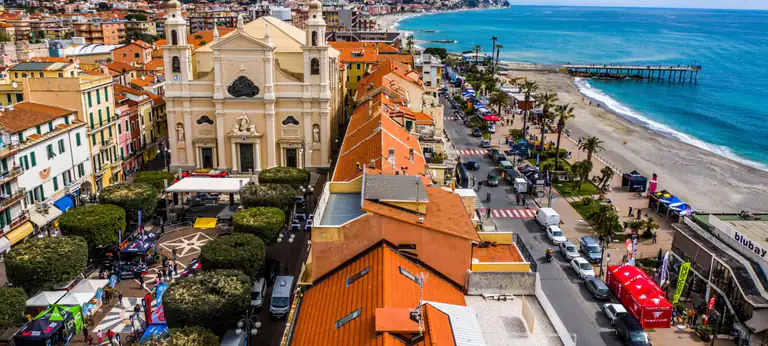
Finale Ligure (about 2 km): Finalmarina with the Spanish Arch, the beaches and the abbey at Finalpia.
Varigotti: colourful houses on the beach and the start of the Sentiero del Pellegrino coastal path.
Noli: the former maritime republic with its medieval towers, beyond Capo Noli.
Pietra Ligure and Loano: to the west, old towns and seafronts, a few minutes by train.
Albenga: the town of medieval towers, an easy pairing with Finalborgo if you love historic centres.
Weather
Weather and best time to visit Finalborgo
All year; spring and autumn for biking and climbing, late August for the medieval festival
☁️
15°CNow · wind 19 km/h
Thu 8🌙15° 15°
Fri 9🌤️21° 13°1 mm
Sat 10⛅20° 13°
Sun 11⛅21° 13°1 mm
Mon 12⛅19° 14°4 mm
Tue 13🌤️20° 13°
Forecast: MET Norway (Yr), CC BY 4.0 licence. Updated hourly.
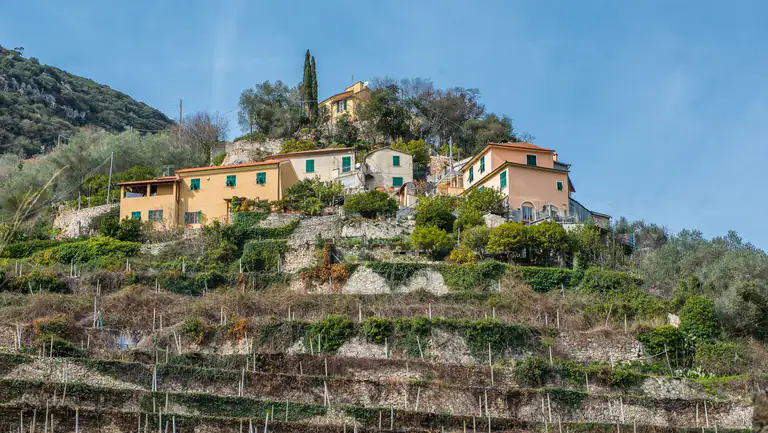
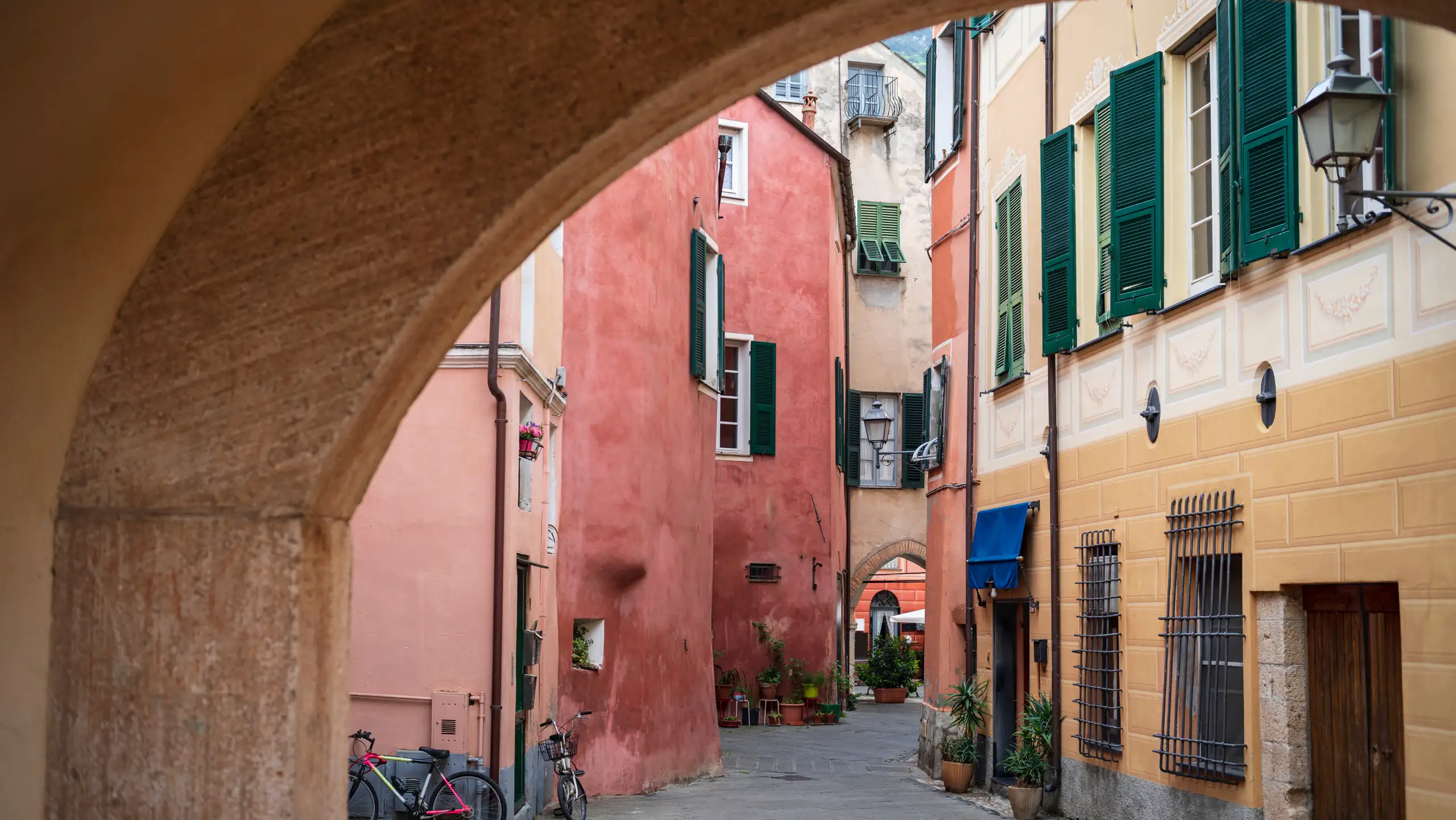
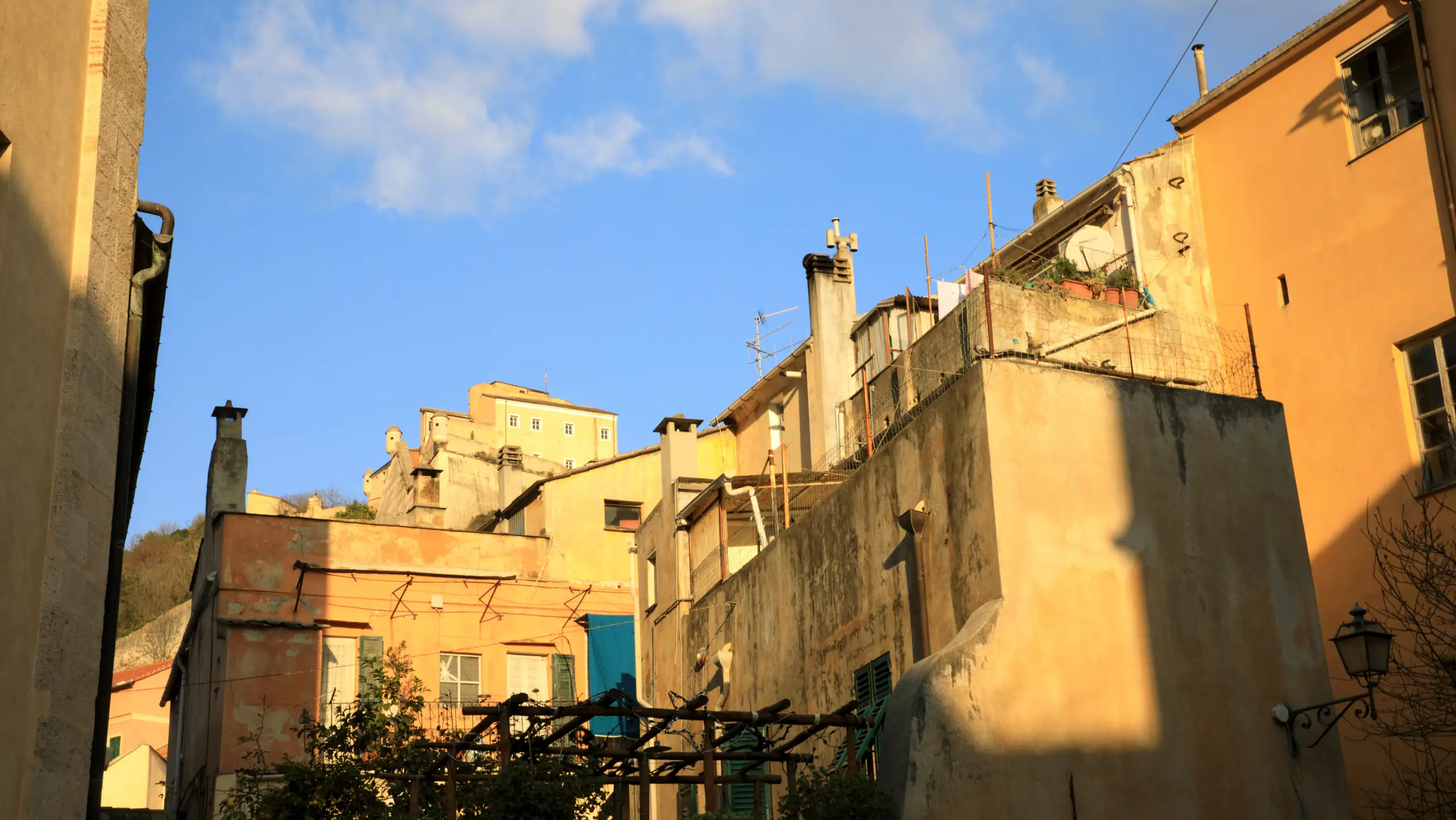
Finalborgo seen from above with its wallsHouses and medieval walls of FinalborgoArched gate and colourful houses of FinalborgoClock tower and buildings of FinalborgoSquare and colourful buildings of FinalborgoOchre houses in the centre of FinalborgoMain street of Finalborgo's historic centre
FAQ
Frequently asked questions about Finalborgo
Are Finalborgo and Finale Ligure the same place?
Finalborgo is one of the three historic villages that make up the town of Finale Ligure, together with Finalmarina and Finalpia. It is the walled village inland, about 2 km from the sea.
How long do you need to visit Finalborgo?
Two to three hours for the village and museum. Add the walk to Castel San Giovanni, Castel Gavone and Perti and you need a full day.
Is Finalborgo on the sea?
No, it is inland. The beaches of Finalmarina are about 2 km away, a 20–30 minute walk or a few minutes by bus.
Where can I park in Finalborgo?
Outside the walls: the centre is a limited traffic zone with gates at Porta Testa, Porta Reale and Via Gallesio. The car parks outside are a few minutes’ walk away.
Can you visit Castel Gavone?
Yes, but the interior only on a guided tour booked through the archaeological museum. On foot from Finalborgo it takes about 20–25 minutes along the Strada Beretta.
Is Castel San Giovanni free?
Yes, entry is free. Opening hours vary, so check before you walk up.
What is in the Archaeological Museum of Finale?
Finds covering more than 350,000 years of human history in the Finale area, from prehistory to the Byzantine era, including the cast of the Young Prince from the Arene Candide cave.
When is the Viaggio nel Medioevo?
Usually in the last week of August, over four days. Check the exact dates each year.
When is the Finalborgo antiques market?
On the first Sunday of the month and the Saturday before, all year round, from 10 am to 7.30 pm.
Is Finalborgo a good base for mountain biking?
Yes, it is one of the most convenient bases in the Finale area: trails, bike rental, shuttles and bike-friendly accommodation are all close by.