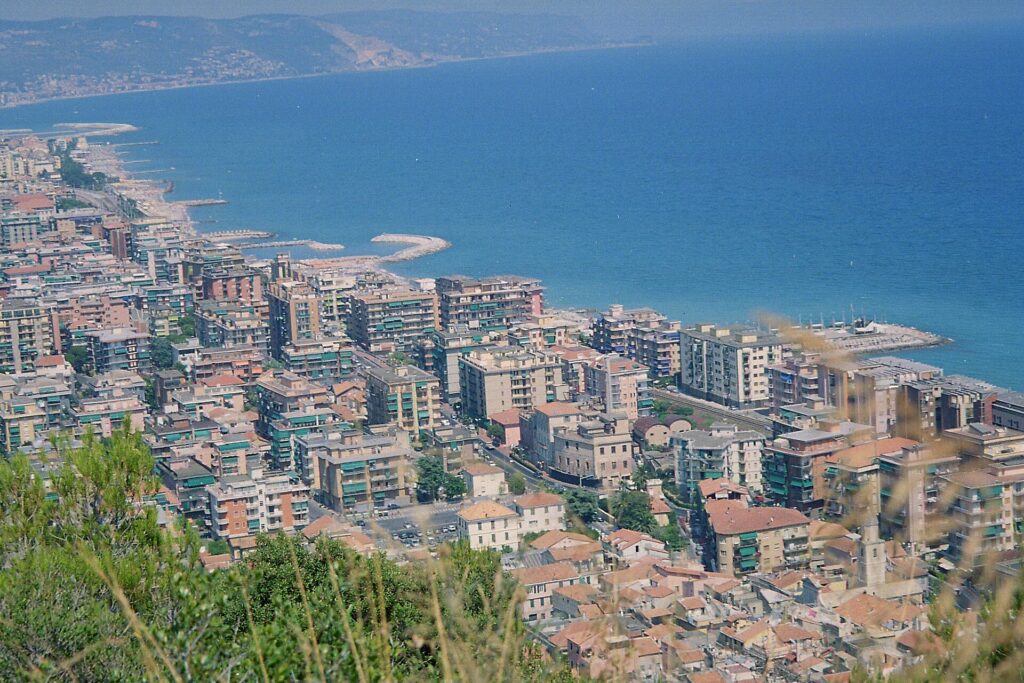
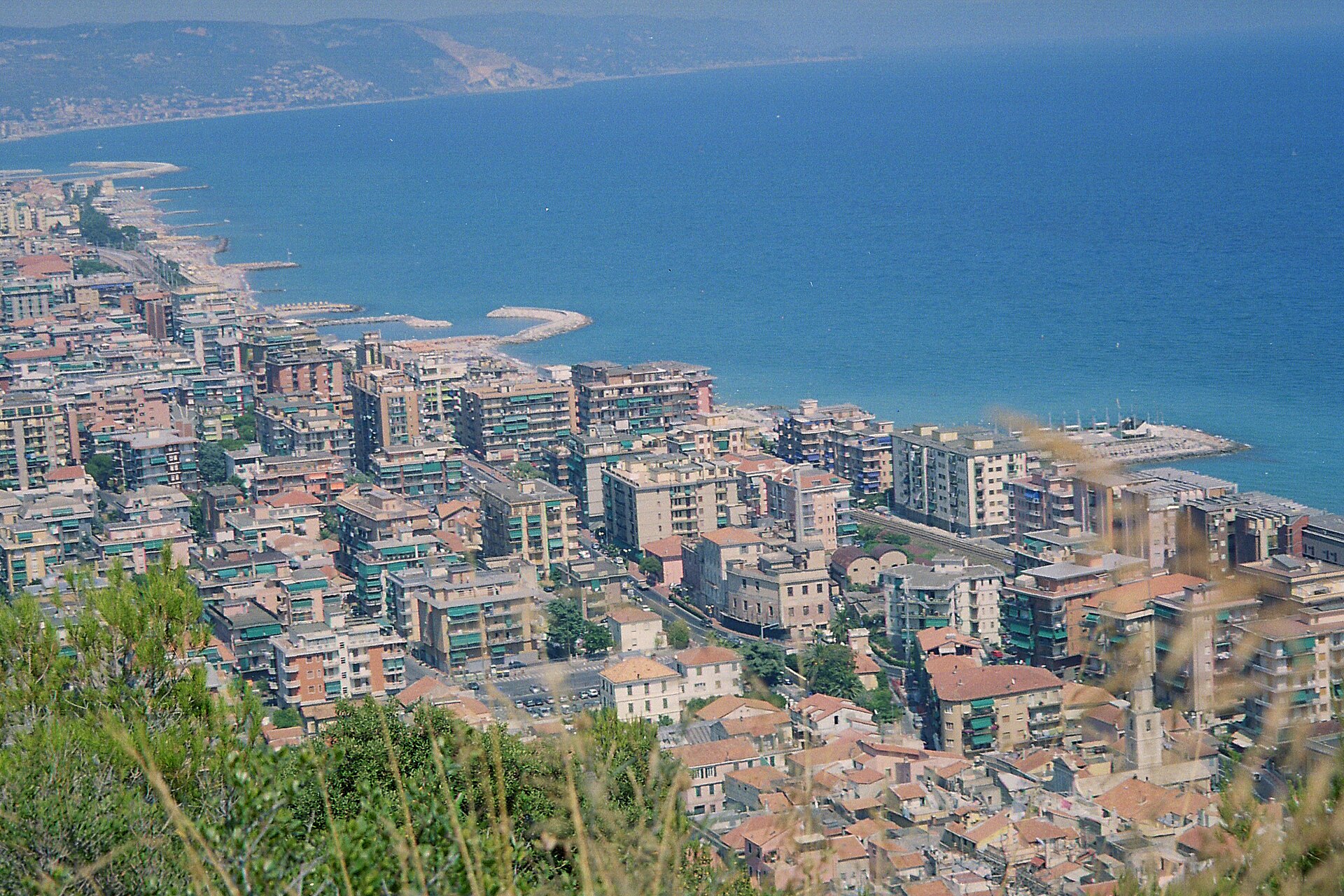
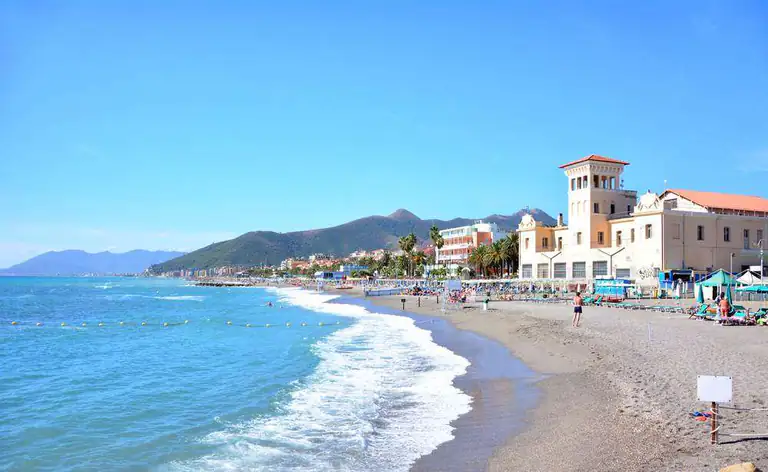
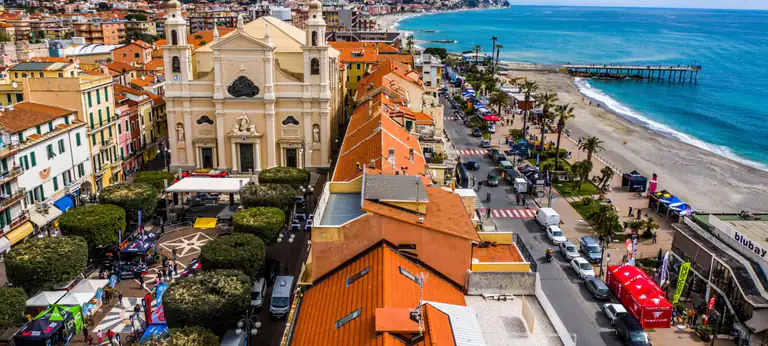
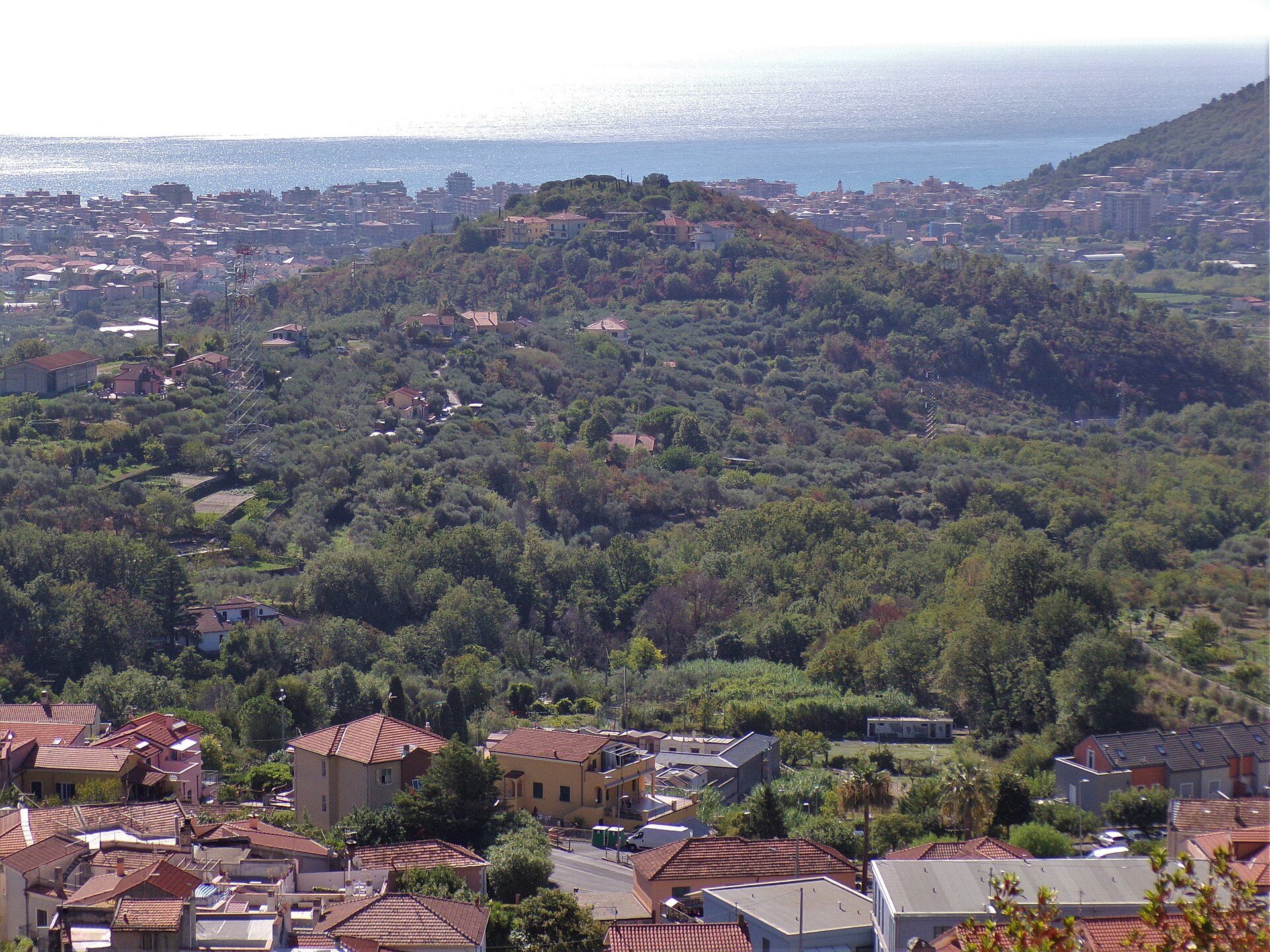
Borghetto Santo Spirito is a seaside town on the Riviera delle Palme, the stretch of the western Italian Riviera in the province of Savona, between Loano and Ceriale. It has around 4,500 residents, a sandy beach that runs the full length of the town and holds a Blue Flag for 2026, a small old town founded in the 13th century, and a headland, Capo Santo Spirito, topped by a 19th-century neo-Gothic castle.
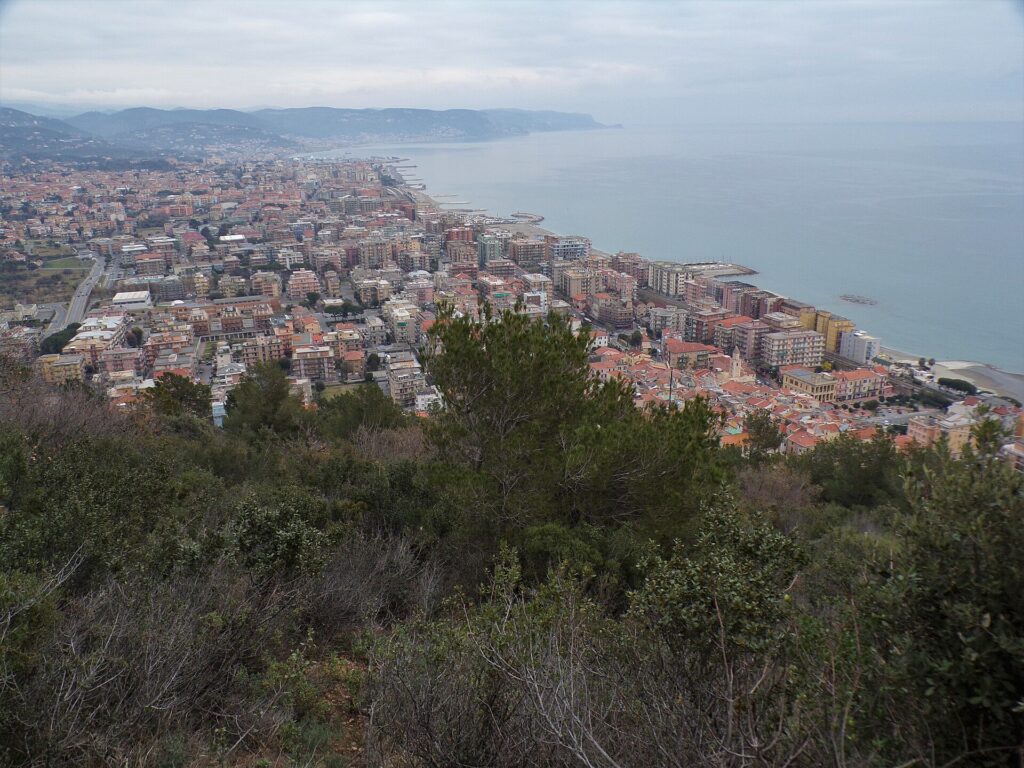
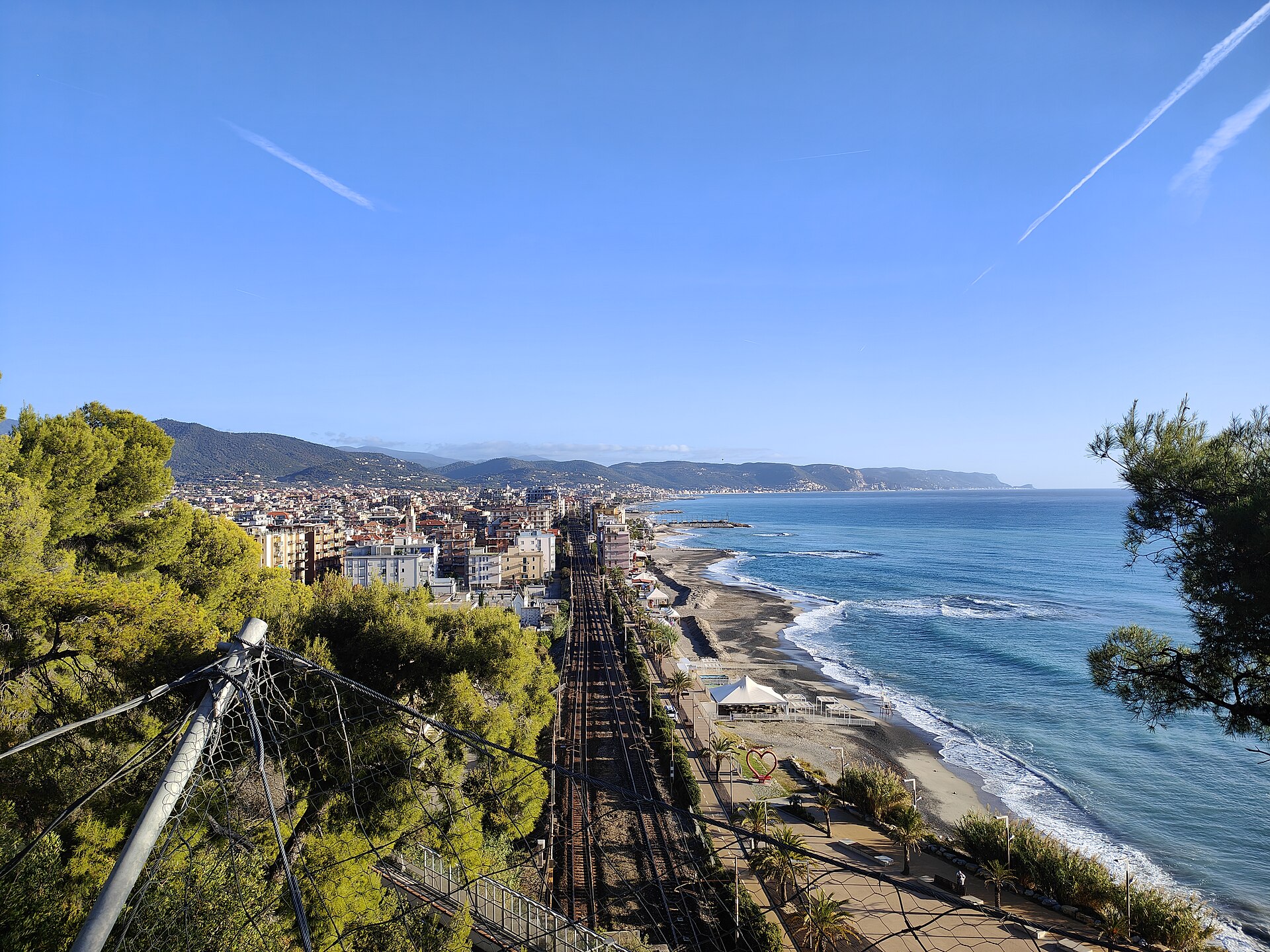
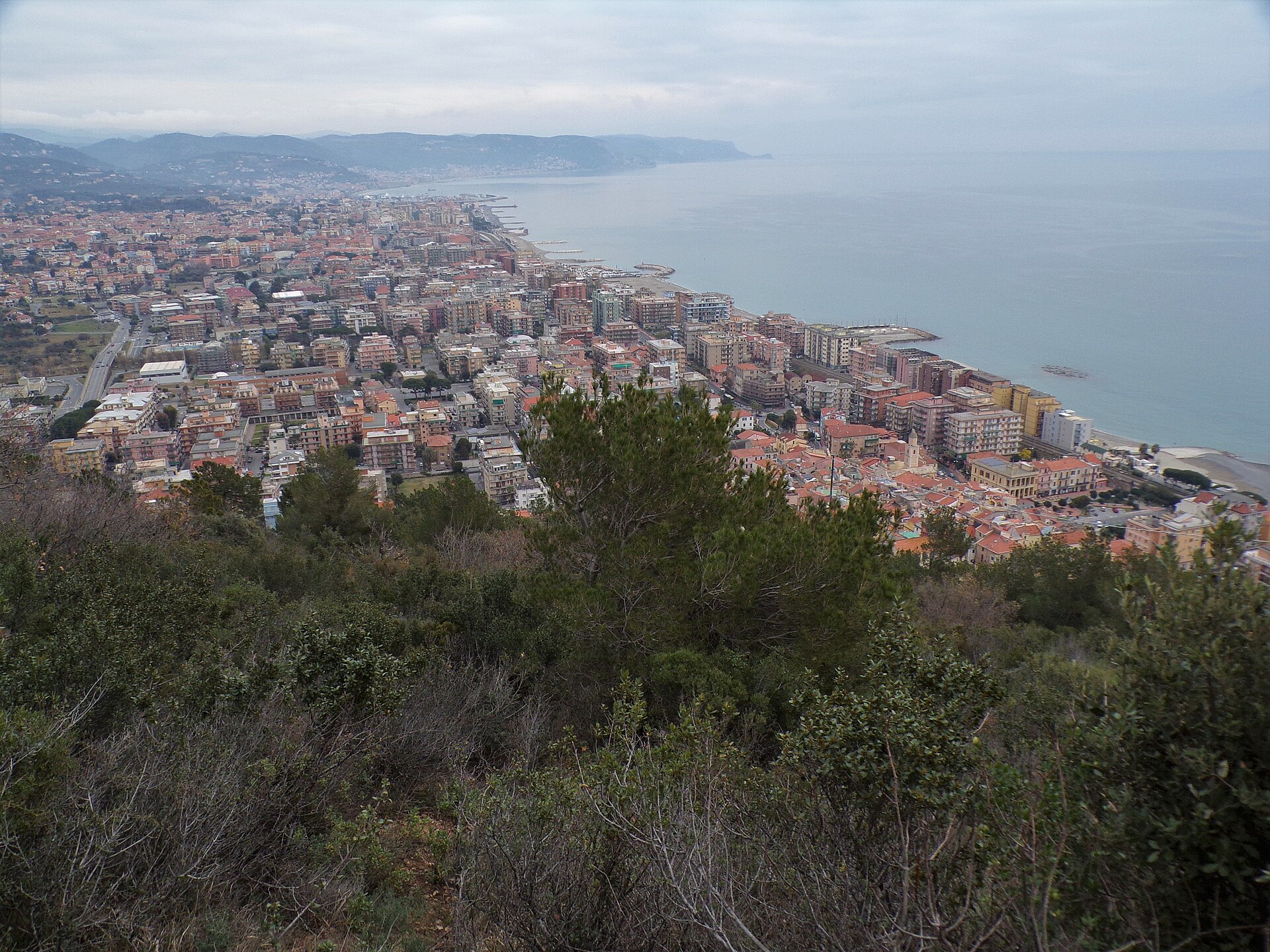
It is not a postcard village. Since the 1960s the seafront has filled with apartment blocks, and that is what you see from the coast road. What it does offer is an easy beach holiday: a gently shelving sandy beach, a seafront promenade that runs all the way to Loano, a railway station a few minutes from the sand and a motorway exit two kilometres away. Prices are generally lower than in the better-known resorts nearby.
It also works as a base for the hinterland. The Toirano Caves are a few kilometres inland, the hill of Monte Piccaro behind town is a half-day walk, and Albenga and Pietra Ligure are a few minutes away by train. Two or three days cover the town and surroundings; stay a week if you are here mainly for the beach.
By Italian Riviera editorial team·Updated on ·11 min read
Where is Borghetto Santo Spirito?
Borghetto Santo Spirito is in Liguria (Riviera di Ponente, Riviera delle Palme, province of Savona).
Borghetto has two distinct halves. The old town sits on the plain of the Varatella stream, inland of the railway; the modern part, with the promenade and beach clubs, lies between the tracks and the sea. An underpass links the two, so the walk from the old streets to the beach takes only a few minutes. Everything worth seeing can be done on foot in half a day.
The old town
The town was founded in 1288, when the commune of Albenga bought land on the Varatella plain and laid out a new settlement, partly to rival neighbouring Loano. The name comes from an old hospice of the Holy Spirit (Santo Spirito) on the headland; documents from 1292 already call it “Burgus Sancti Spiritus”. Walls with four gates soon enclosed a rectangular grid of streets.
Only stretches and traces of the walls survive, but the plan is still easy to read: parallel lanes, narrow houses linked by arches, small squares. It is a quiet, lived-in centre with shops and cafés used mostly by locals. Borghetto remained under Albenga until 1797, when it became a municipality in its own right.
Church of San Matteo
The parish church of San Matteo stands where the town’s first church was built at the end of the 13th century. The present building is 17th century, with a Baroque bell tower. Inside are four canvases by the Genoese painter Giuseppe Badaracco, painted between 1644 and 1655. Look for the altarpiece in the left aisle, showing the Madonna with Saints Peter, Erasmus and Anthony Abbot: in the background is a view of Borghetto in the 1600s. Next to the high altar is a statue of Saint Matthew from the workshop of Anton Maria Maragliano, the great Genoese woodcarver of the 18th century. Entry is free; opening times vary, so mornings are your best bet.
Piazza Fontana and the wash-house
At the foot of Monte Piccaro, Piazza Fontana is named after a spring that supplied the town and also gave its name to one of the old gates, the Porta della Fontana. The public wash-house of 1902, still fed by the same spring, stands in the square. It is a small corner, but it shows well what the town was like before tourism.
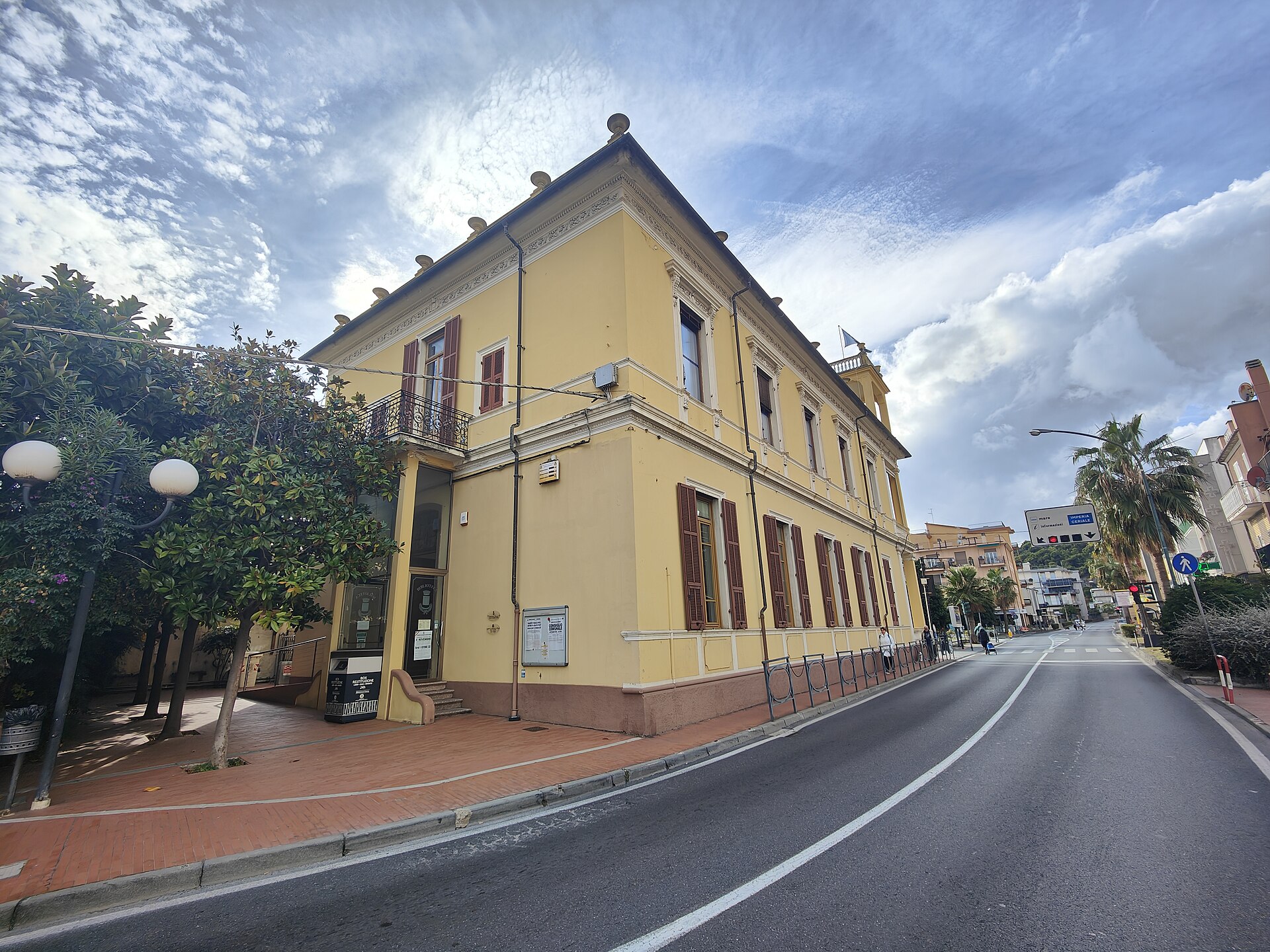
Palazzo Pietracaprina
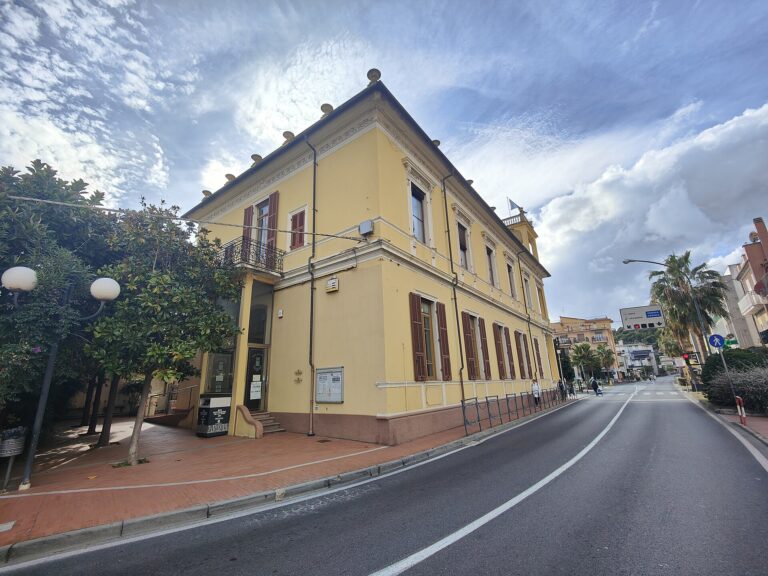
Built in 1915–1916 and donated to the town in 1920, this early 20th-century palazzo is one of Borghetto’s most recognisable buildings and houses municipal offices. You see it from outside on the walk between the old town and the station.
Sanctuary of Sant'Antonio da Padova
The town’s second parish church is modern: built in the 1970s and consecrated in 1984, it is also a sanctuary because it keeps a relic of Saint Anthony. In June, for the saint’s feast, there is a procession with the crucifixes of the local confraternities.
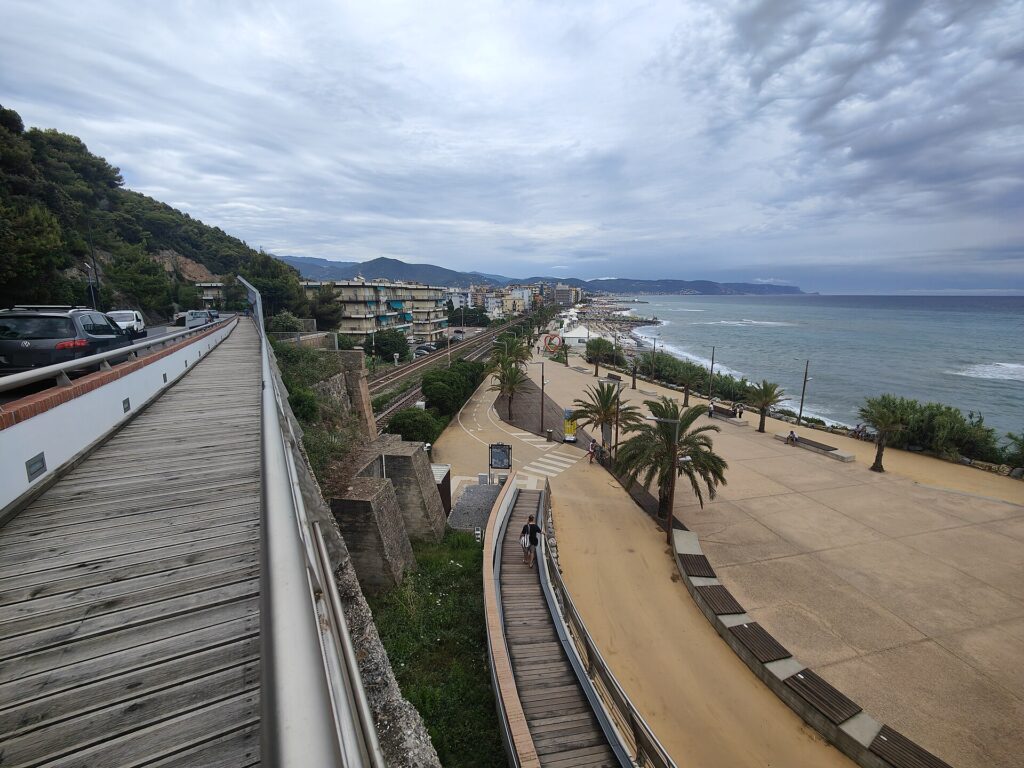
The seafront promenade
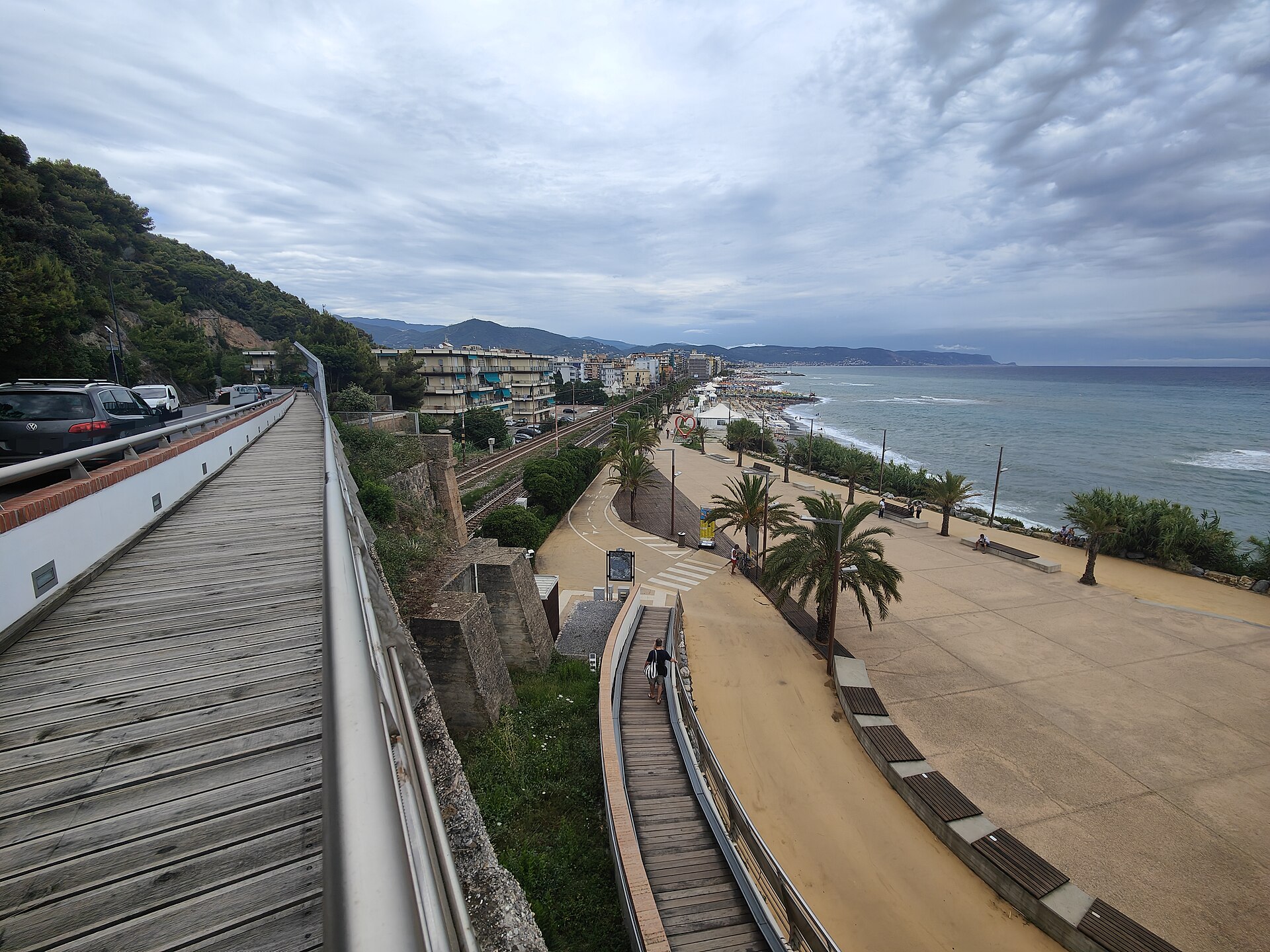
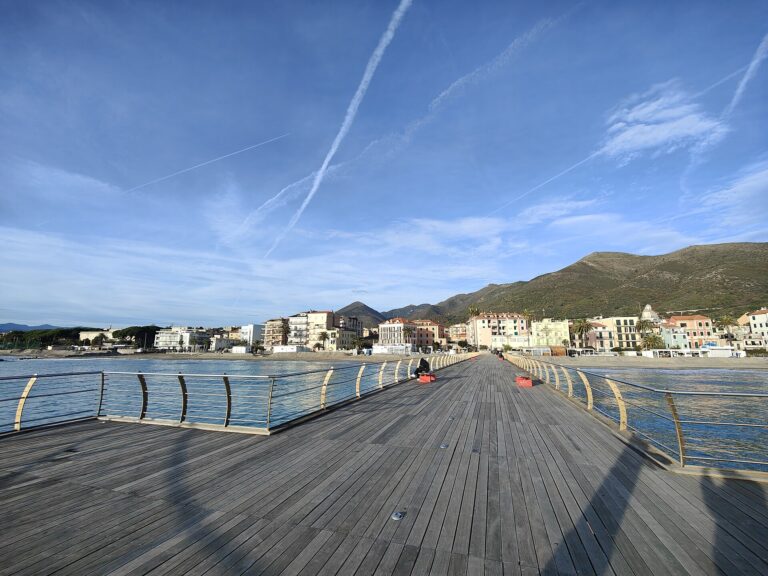
The promenade runs the length of town in front of the beach clubs and carries on without a break to Loano, so you can walk or cycle from one town to the next without leaving the sea. On summer evenings it is where everyone strolls, with bars and gelato shops. To the south it ends under Capo Santo Spirito, where the footbridge to Ceriale begins.
Capo Santo Spirito and the footbridge to Ceriale
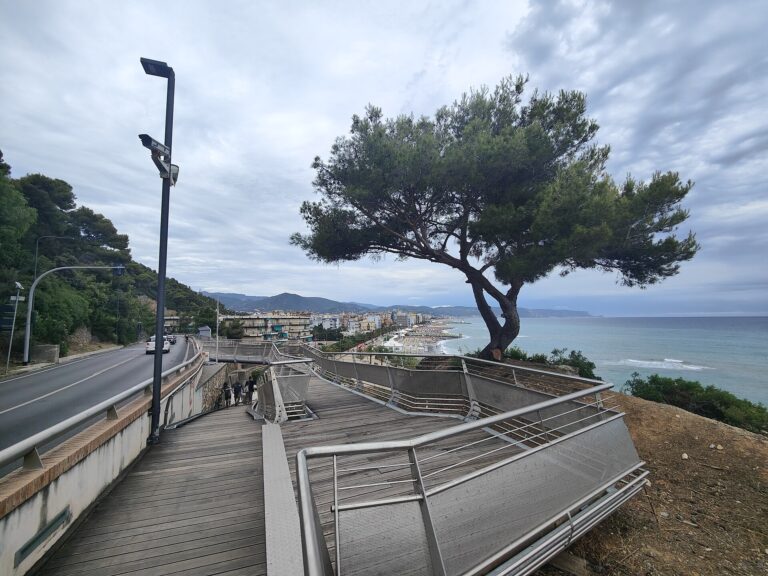
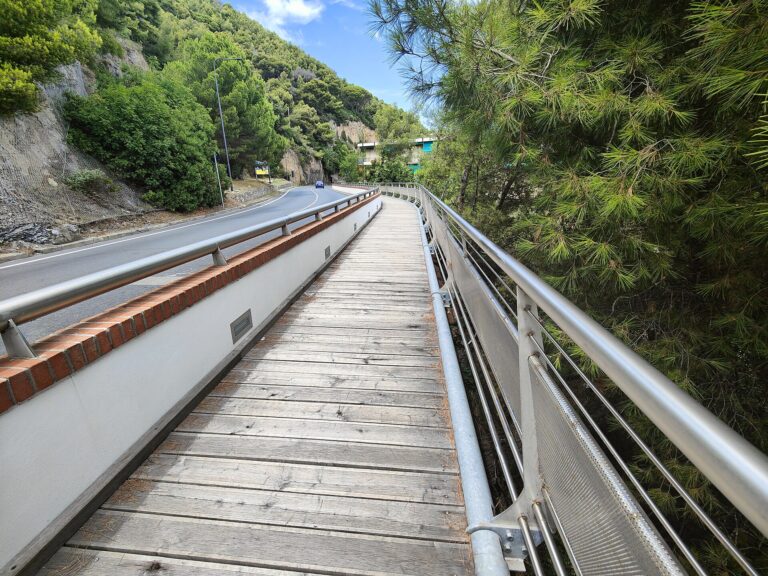
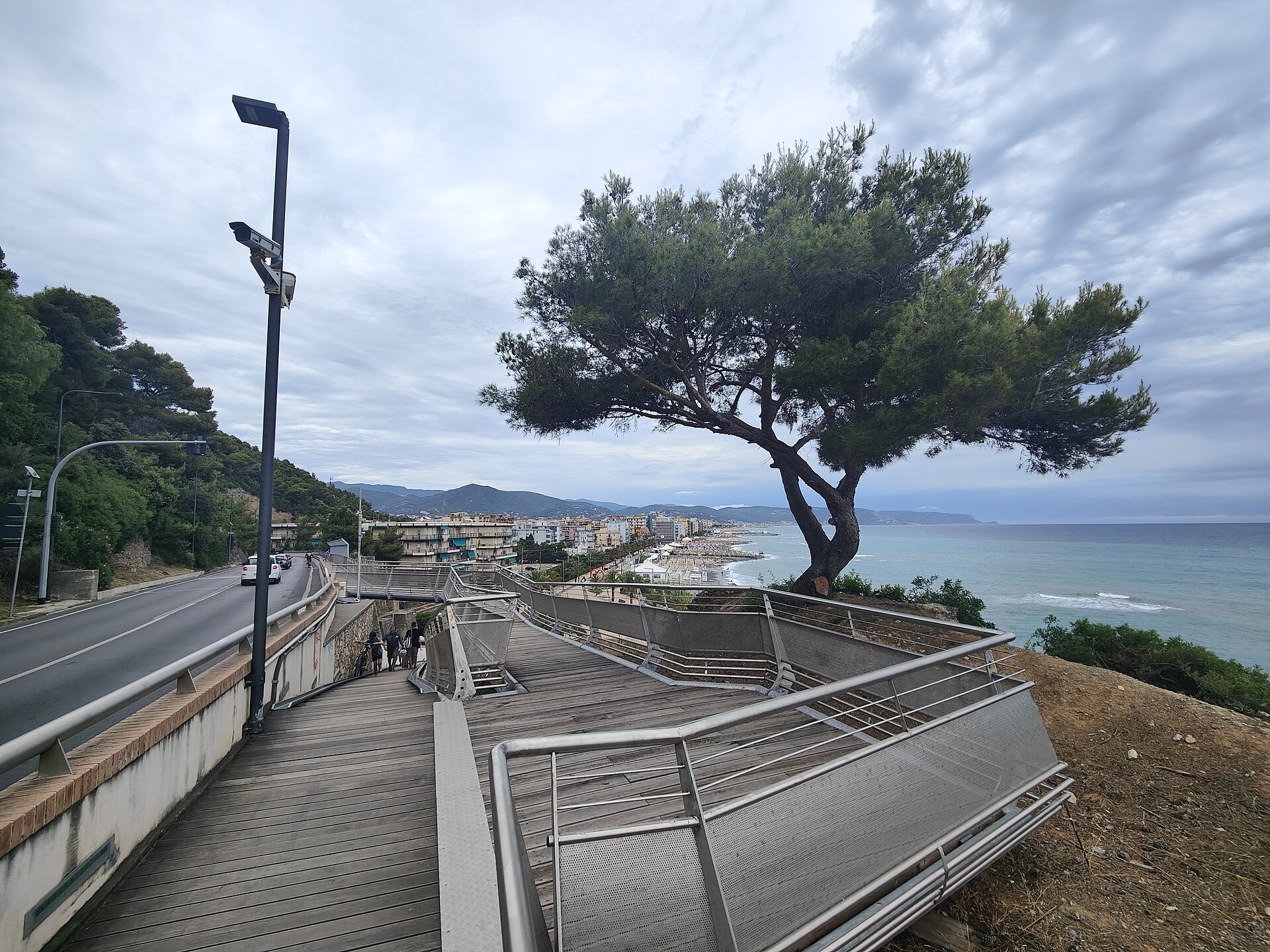
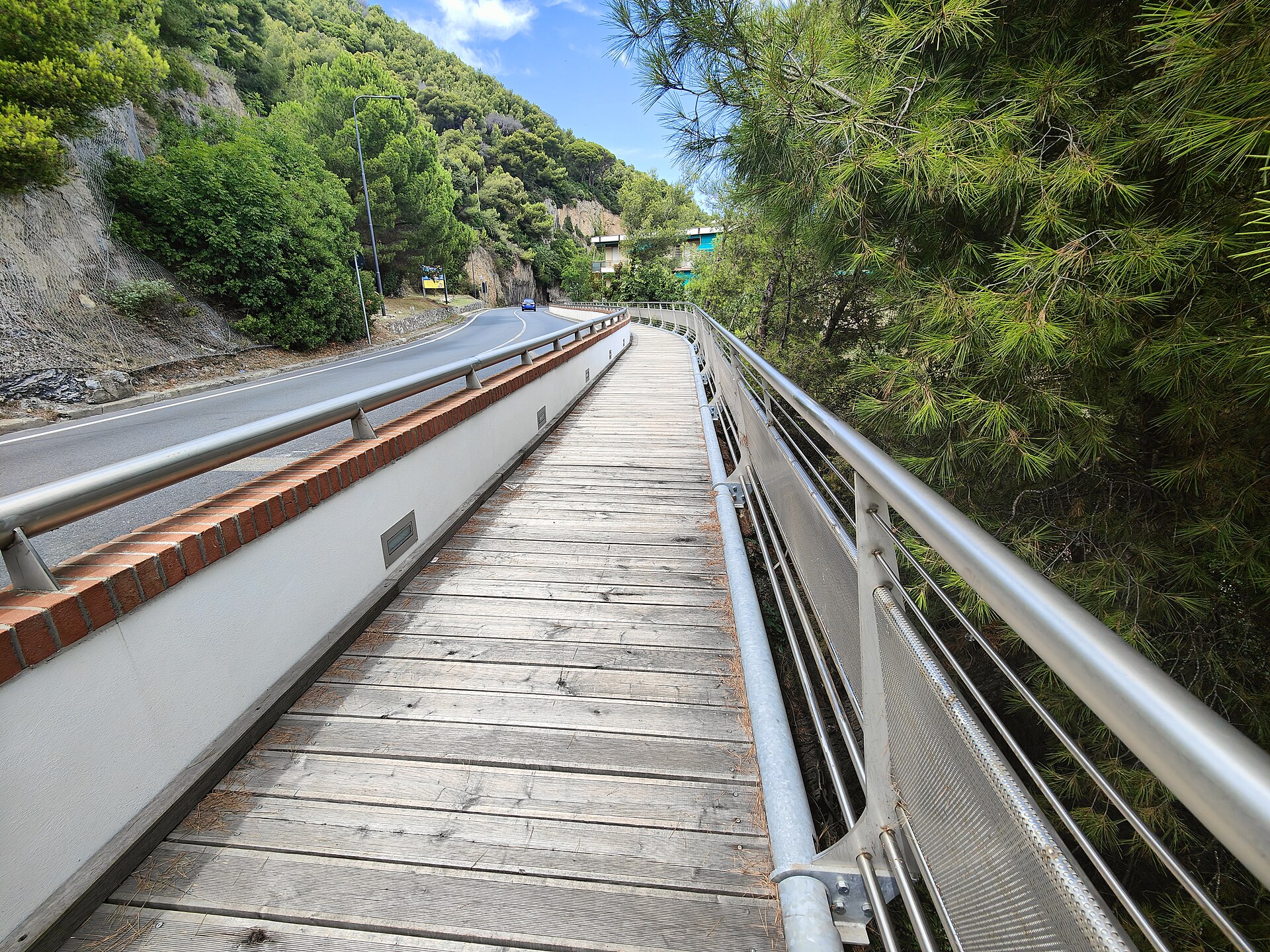
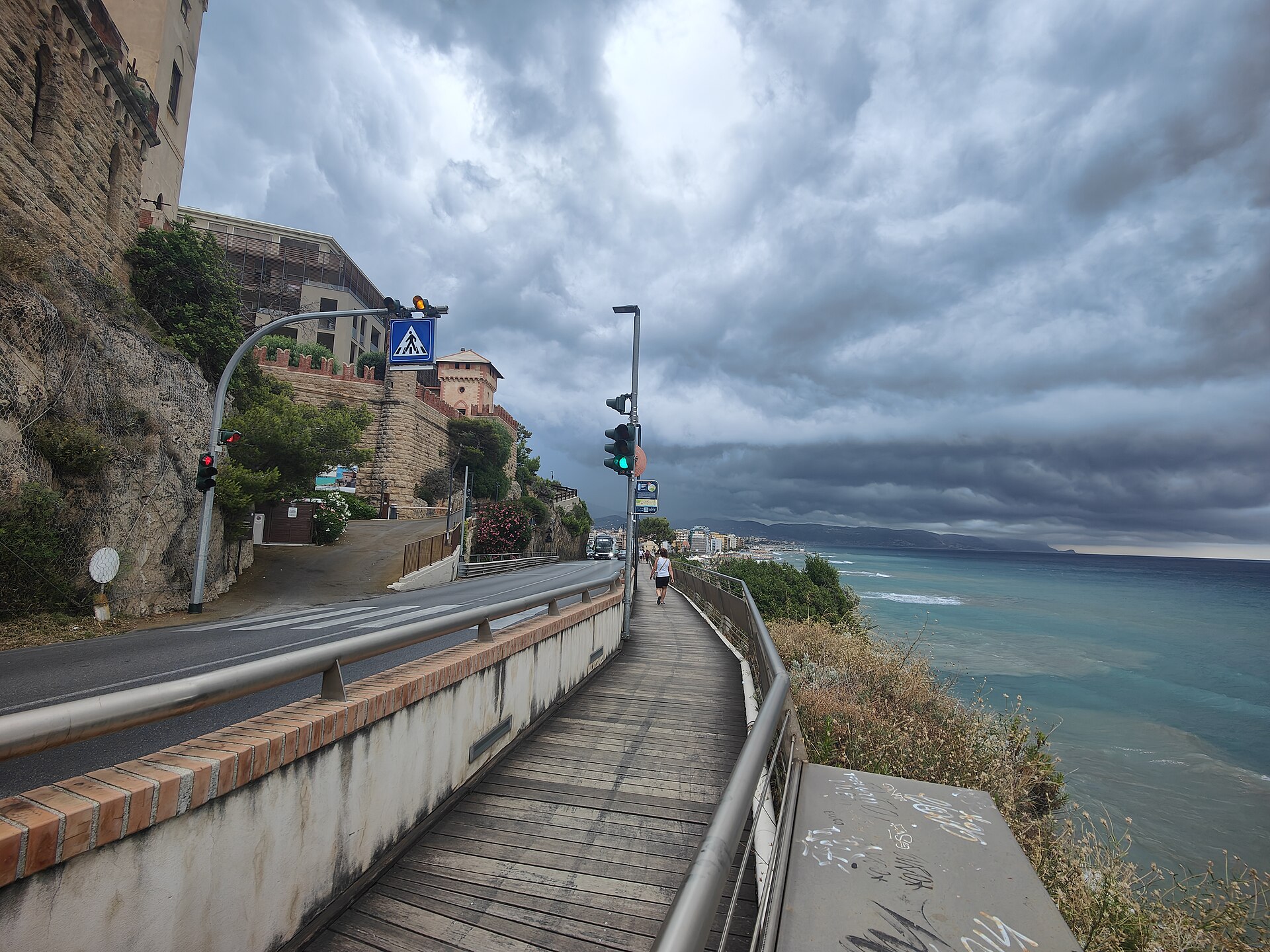
The headland that closes Borghetto to the south is where the town began: the Santo Spirito hospice stood here, and in Roman times there was already a small shrine. For decades, walking to Ceriale meant edging along the busy Via Aurelia. Since 2017 a pedestrian footbridge above the rocks has linked the two promenades: a few hundred metres with the sea beneath you and open views towards Albenga and Gallinara island.
It is one of the best short walks on this part of the coast, but there is no shade at all: in summer go early in the morning or at sunset. On the Ceriale side, the stretch towards the promenade was rebuilt in spring 2026; if you find roadworks, follow the signs for the temporary route.
Castello Borelli
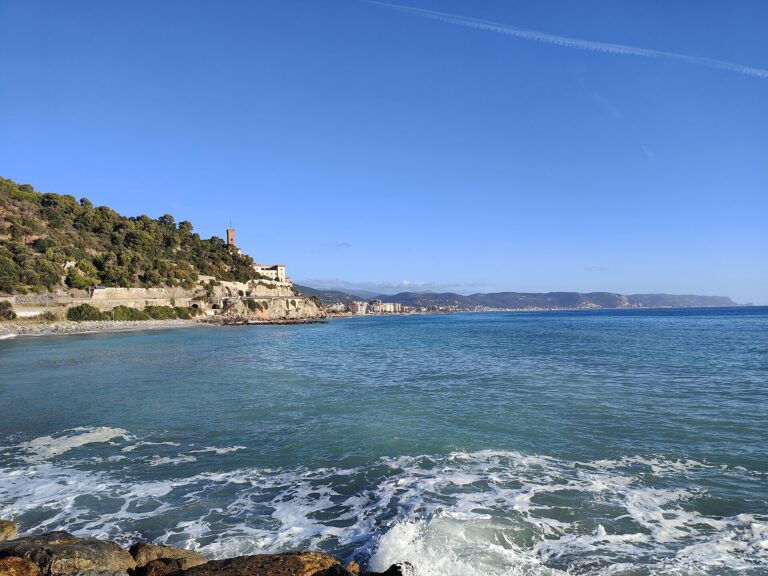
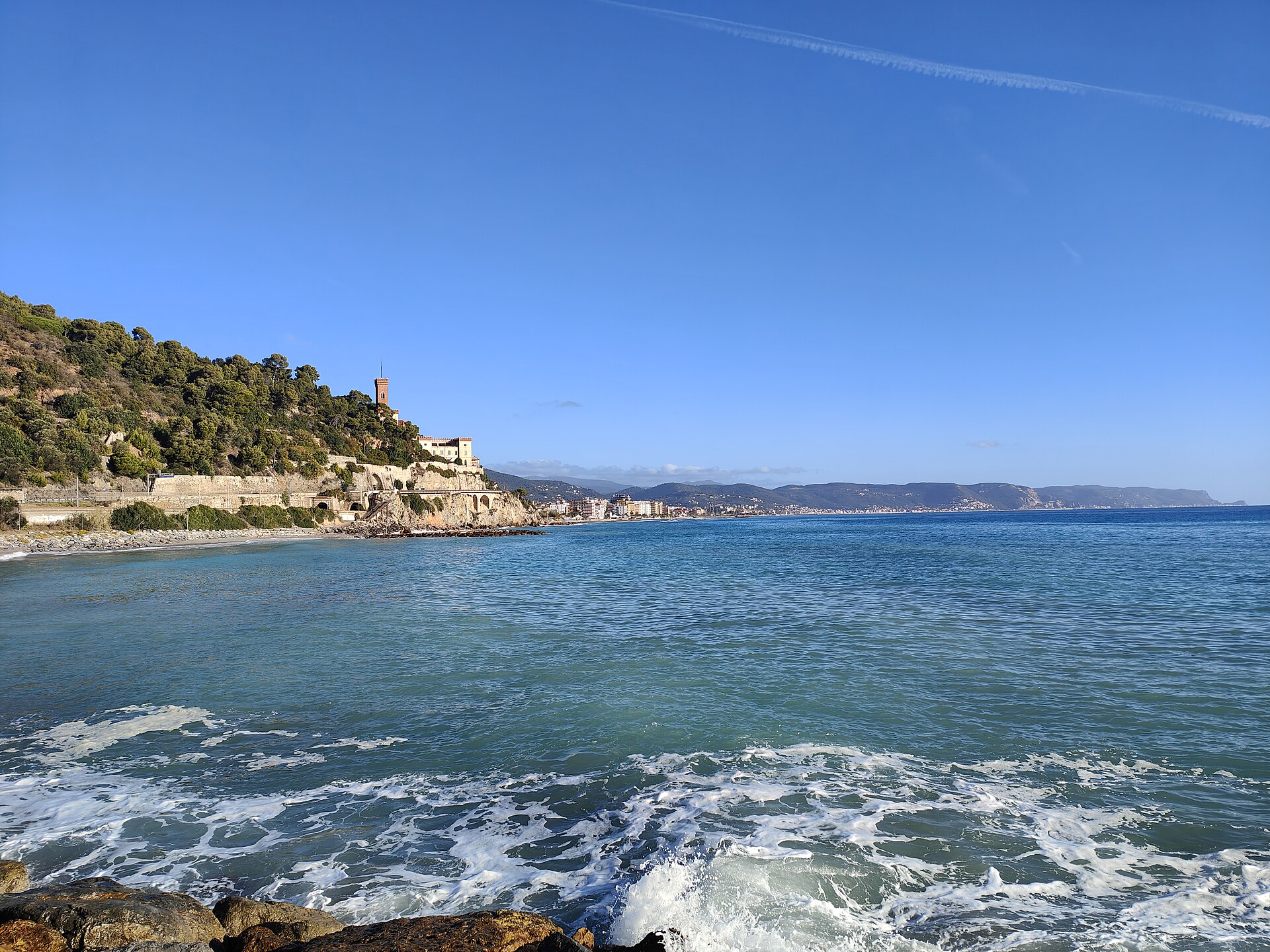
Above the headland, among the pines, rises Castello Borelli. It is not medieval: engineer and senator Bartolomeo Borelli, who had worked on the Fréjus rail tunnel under the Alps, had it built from around 1870 on the remains of a 17th-century friary. It is a neo-Gothic residence, designed even then to be self-sufficient.
The castle is private and cannot be visited; plans to turn it into a hotel and apartments have been discussed for years. You get good views of it from the promenade, from the footbridge and above all from Piazzetta Castello Borelli, a viewpoint on the headland that you can walk to from the centre, with parking nearby. The Monte Piccaro trail runs along its walls.
The beach runs along the whole town, from the Loano boundary to the rocks of Capo Santo Spirito. It is sandy and shelves gently, which is why it is popular with families with small children. Borghetto’s shoreline holds a Blue Flag again in 2026. Beach clubs alternate with free public stretches, and the station is just a few minutes’ walk from the sand.
There are also free beaches where dogs are allowed under strict rules, and several beach clubs accept dogs. Where the free stretches are, what to bring for your dog, which area suits children and how to walk to the next beach in Loano or Ceriale: it is all in our guide to the beaches of Borghetto Santo Spirito.
Where to stay
Where to stay in Borghetto Santo Spirito
Borghetto has mostly family-run hotels, apartments and holiday homes, plus a few B&Bs. Prices are generally lower than in Loano or Alassio, and in summer many places ask for weekly stays.
On the seafront: for a beach holiday where you do everything on foot. The most sought-after area in July and August.
Near the station and old town: handy if you plan to use the train for Albenga, Loano and Finale; the sea is still minutes away.
Towards Capo Santo Spirito: quieter, close to the footbridge to Ceriale and the Monte Piccaro trail.
Inland towards Toirano: houses with gardens and hillside stays, quieter and convenient if you have a car and want the caves close by.
From June to September, and on spring holiday weekends, book early: the Riviera delle Palme is very popular with Italian families.
Take the A10 Genoa–Ventimiglia motorway (tolls apply) and exit at Borghetto Santo Spirito: the toll booth, opened in 2005, is about two kilometres from the centre. It is also the best exit for Toirano. Genoa is about 70 kilometres away. The Via Aurelia coast road runs through town and links it with Loano and Ceriale.
By train
Borghetto Santo Spirito station is on the Genoa–Ventimiglia line, close to the old town and a few minutes’ walk from the sea. Regional trains stop here: from Genoa the trip usually takes one to one and a half hours, and Albenga and Loano are minutes away. Remember to validate paper tickets before boarding. Times and tickets on Trenitalia.
By bus
TPL Linea buses link Borghetto with Loano, Pietra Ligure, Finale Ligure and Albenga along the Via Aurelia, with frequent services in season. One route runs from the coast up to the Toirano Caves. Timetables on TPL Linea.
By plane
The nearest airport is Genoa, about 75–80 kilometres away: take a bus or taxi to the railway station, then the train west. Nice is about 120 kilometres away and has many more international flights; from there you can drive along the A8 and A10 or take trains via Ventimiglia. The small airport at Villanova d’Albenga has no scheduled flights.
Parking
Near the sea, parking is in blue-line bays, paid during the day with a lunchtime break, and you can pay by app. In summer seafront spaces fill early: if you are staying in town, ask your accommodation about parking. There is a car park near the headland for the Piazzetta Castello Borelli viewpoint.
A10, Borghetto Santo Spirito exit about 2 km from the centre; Via Aurelia SS1
By train
Borghetto Santo Spirito station (Genoa–Ventimiglia line), a few minutes from the sea
By plane
Genoa (about 75–80 km); Nice about 120 km
The guide
Things to do in Borghetto Santo Spirito
Visit the Toirano Caves
The Toirano Caves are the closest and most popular excursion, about five kilometres from the Borghetto motorway exit in the Varatella valley. Visits are guided only, in small groups with limited places, and booking is required; times and prices change with the season, so check the official Toirano Caves website before you go. It stays cool underground all year: bring a sweater even in August. Afterwards, walk around the car-free medieval village of Toirano, with parking at its entrance.
Walk or cycle along the sea to Loano
From Borghetto’s promenade head north to Loano, with its art fountains, Palazzo Doria and marina. The route is flat and suits children and relaxed cyclists. At midday in summer it is busy and shadeless: evenings are better.
Water sports
The open sea and wide beach suit sailing, windsurfing and, on windy days, kitesurfing; under Capo Santo Spirito, where sand gives way to rocks, you can snorkel. In season you will find pedal boats and equipment for hire on the beach.
With children: the Ceriale water park
Just past the headland in Ceriale is Le Caravelle, a water park open in summer, from June to early September. It is a good plan B for children on rough-sea days. Prices and hours change every season, so check before you go.
What to eat
The plain between Borghetto, Ceriale and Albenga is one of Liguria’s main farming areas: artichokes, asparagus, vegetables and olive oil. In spring look for violet asparagus, a Slow Food Presidium also grown in Ceriale; all year round you will find farinata, focaccia, stuffed vegetables and fresh fish. More in our guide to Albenga’s local food.
Walks and hikes
Monte Piccaro
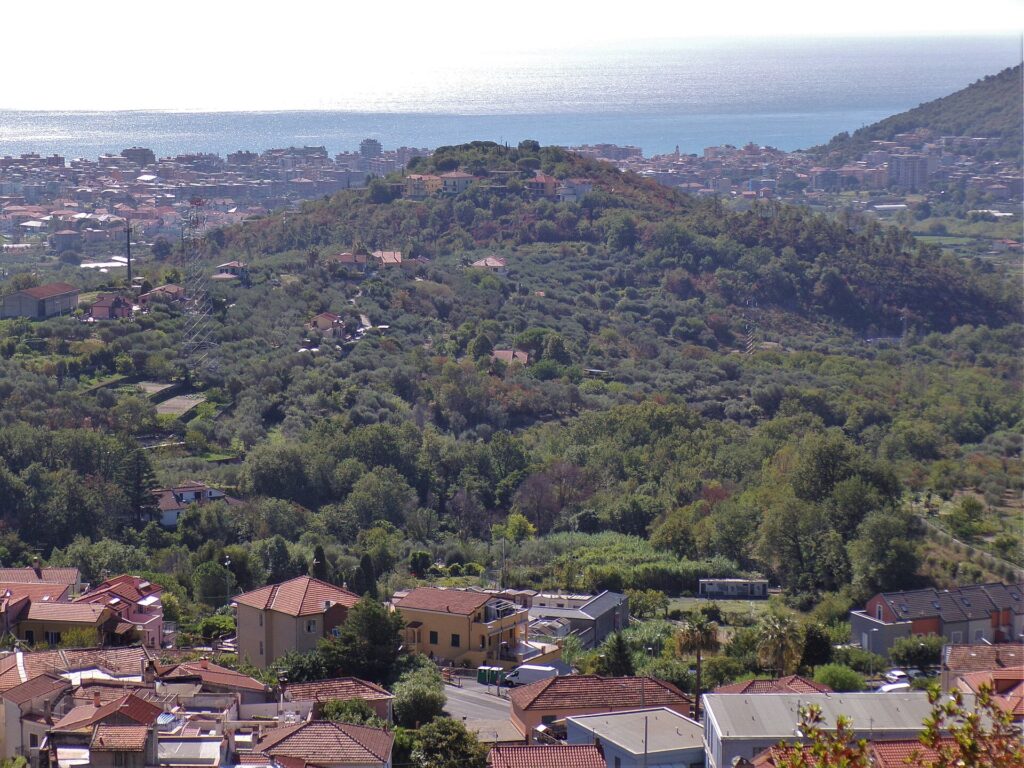
The 281-metre hill behind town is Borghetto’s classic walk. The trail leaves from town, crosses the Via Aurelia, follows the walls of Castello Borelli and climbs through Mediterranean scrub on red-square waymarks. It reaches a saddle with a small chapel and a statue of the Madonna: this is the viewpoint, looking over Loano, the Albenga plain, Ceriale and the sea. The true summit, a little further, is covered in antennas.
The climb is short but steep, around 300 metres of ascent: allow a relaxed half day, with hiking shoes and water. Avoid the heat of a summer afternoon, as there is little shade. Experienced hikers can continue along the ridge towards Monte Croce and the hills between Ceriale and Toirano; these are long, more demanding routes that need a proper hiking map.
Day trips from Borghetto Santo Spirito
Loano: next door, on foot along the sea: Palazzo Doria with its Roman mosaic, the Monte Carmelo convent and a family beach.
Pietra Ligure: the basilica of San Nicolò, the old town below its castle rock and a long sandy beach.
Albenga: the town of towers, with an early Christian baptistery and the cathedral; a few minutes by train.
Alassio: the Muretto, the Budello lane and one of Liguria’s most famous beaches, about twenty minutes beyond Albenga.
Finale Ligure and Finalborgo: beach, climbing and mountain biking, plus one of Italy’s finest walled villages.
Laigueglia: a small fishing village with colourful houses on the beach, beyond Alassio.
Toirano: the caves and the medieval village, a few minutes inland by car.
Weather
Weather and best time to visit Borghetto Santo Spirito
June and September for the beach; spring and autumn for Monte Piccaro and Toirano Caves
🌙
17°CNow · wind 11 km/h
Sat 10🌙17° 16°
Sun 11🌦️23° 15°2 mm
Mon 12☀️24° 15°
Tue 13⛅22° 14°
Wed 14🌤️23° 13°
Thu 15☀️24° 14°
Forecast: MET Norway (Yr), CC BY 4.0 licence. Updated hourly.
La passeggiata a mare di Borghetto Santo SpiritoBorghetto Santo Spirito visto dall'altoUna via del centro di Borghetto Santo SpiritoLa passeggiata panoramica sul mare a Borghetto Santo SpiritoLa passerella pedonale di Borghetto Santo SpiritoIl mare e gli scogli di Borghetto Santo SpiritoLa passeggiata tra Ceriale e Borghetto Santo Spirito
FAQ
Frequently asked questions about Borghetto Santo Spirito
Is the beach in Borghetto Santo Spirito sandy?
Yes. It is a sandy beach that shelves gently, with rocks only towards Capo Santo Spirito.
Does Borghetto Santo Spirito have a Blue Flag?
Yes, Borghetto Santo Spirito’s shoreline was awarded the Blue Flag again in 2026.
Can you visit Castello Borelli?
No, it is private. You can see it from outside from the viewpoint on the headland, the footbridge to Ceriale and the Monte Piccaro trail.
Can you walk from Borghetto to Ceriale?
Yes, on the pedestrian footbridge above the sea under Capo Santo Spirito, which links the two promenades without using the main road.
How far are the Toirano Caves?
About five kilometres from the Borghetto motorway exit, a few minutes by car. Visits are guided and must be booked.
Are there dog-friendly beaches in Borghetto Santo Spirito?
Yes, some free beaches are open to dogs under municipal rules, and several beach clubs accept them. Check the current rules before you go.
Is Borghetto Santo Spirito good for families?
Yes: a sandy beach with shallow water, a flat promenade, a station close by and the Ceriale water park a few minutes away.
Is it the same as Borghetto di Vara?
No. Borghetto Santo Spirito is on the coast in the province of Savona; Borghetto di Vara is inland near La Spezia and the Cinque Terre.
When is the town festival?
The patron saint, Saint Matthew, is celebrated on 21 September. In June there is also the feast of Saint Anthony with a procession.
When is the best time to visit Borghetto Santo Spirito?
June and September for the beach without the August crowds; spring and autumn for Monte Piccaro and the Toirano Caves.