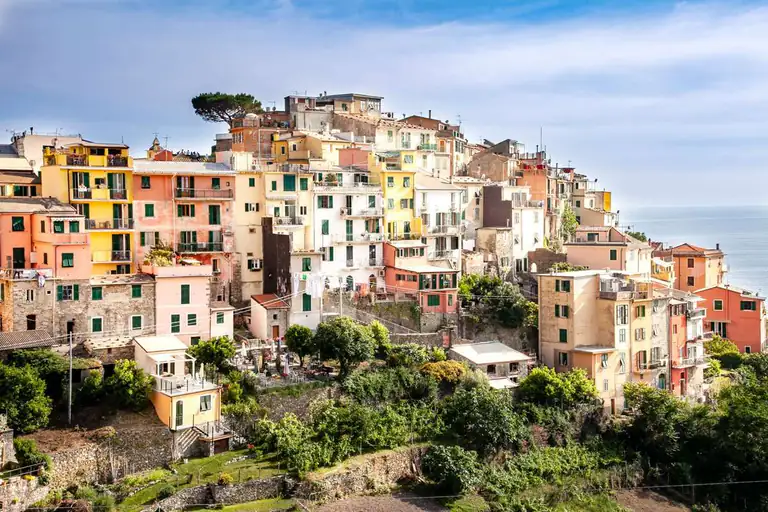
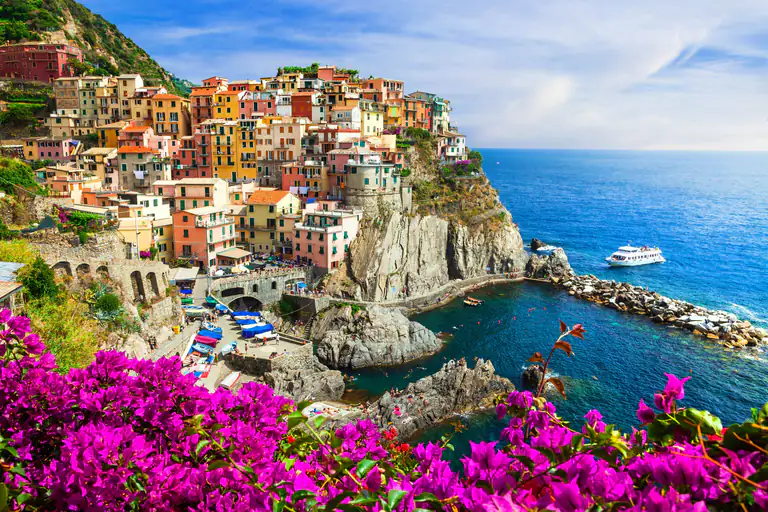
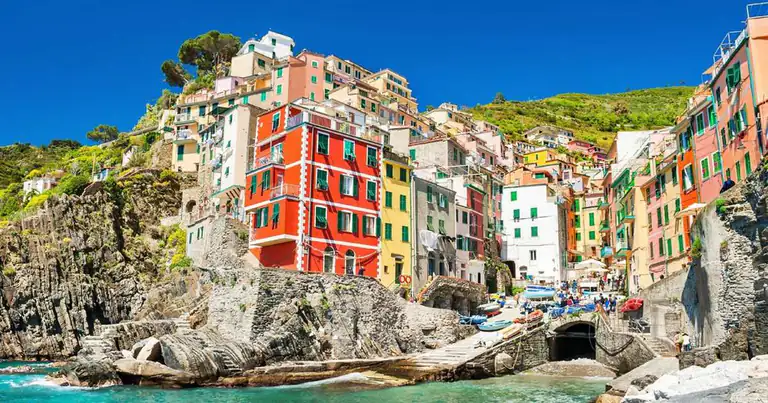
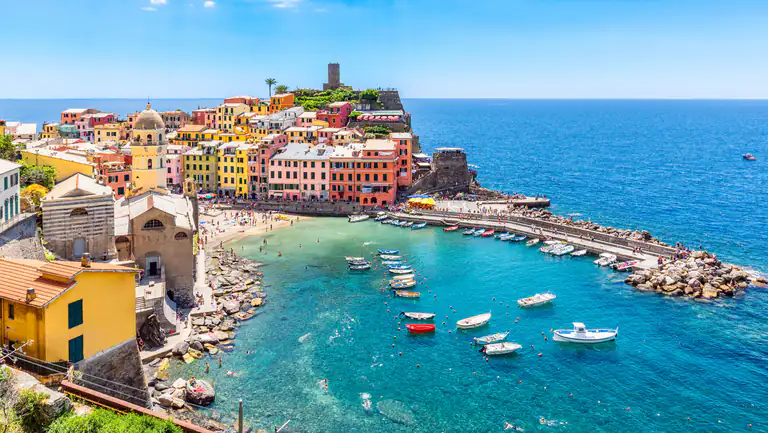
The Cinque Terre are five seaside villages between Levanto and La Spezia: from west to east Monterosso, Vernazza, Corniglia, Manarola and Riomaggiore. They are linked by a railway that runs almost entirely through tunnels, by footpaths through terraced vineyards and, in season, by ferries. Driving here is hard work: the right way to visit is by train, with a base in one of the villages, in Levanto or in La Spezia.
This page gives you the big picture: what the Cinque Terre are, how to get around, which trails are open as of October 2026, where to stay and when to go. For details on each village, the trains and the trails, follow the links to the dedicated guides.
- Where: Riviera di Levante, province of La Spezia, between Punta Mesco and Capo Montenero
- Getting around: regional trains Levanto–La Spezia, a few minutes between villages
- 2026 ticket: €5, €8 or €10 per ride depending on the day’s fare band, 14 March to 1 November
- Trails: Corniglia–Vernazza–Monterosso closed since 10 September 2026; Via dell’Amore open with a ticket
- How long: one day for a taste, two or three to see them properly
- Nearest airports: Pisa and Genoa, then train via La Spezia or Genoa
What the Cinque Terre are
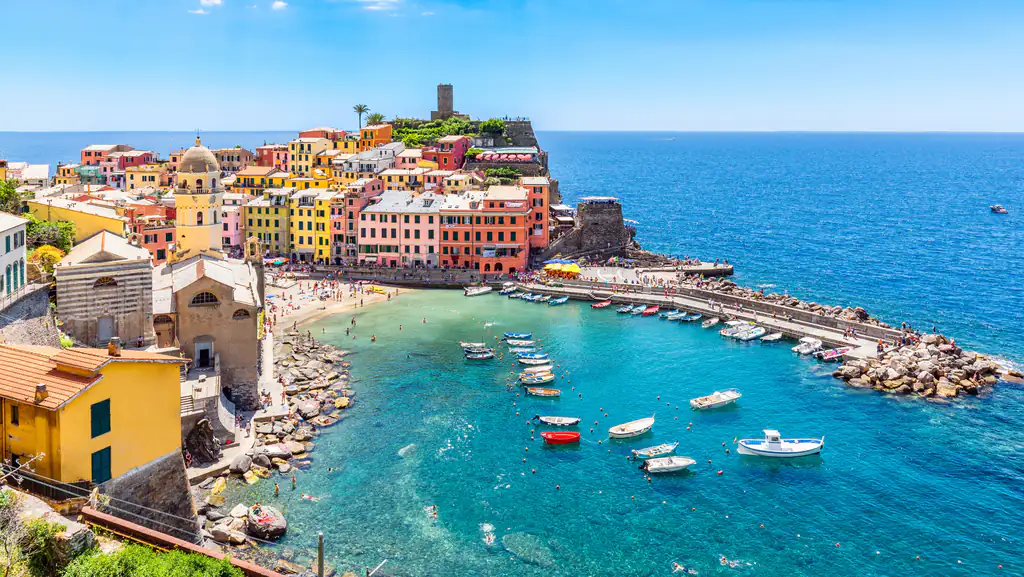
The Cinque Terre are a steep stretch of coast where for centuries people lived from fishing, vines and olives, carving farmland out of the mountain with miles of dry-stone walls. That work gives you the white Cinque Terre DOC wine and Sciacchetrà, a sweet wine made from grapes left to dry for a long time. The villages are made of narrow, colourful tower houses, alleys (carruggi), stairways and tiny harbours where boats are hauled up on the slipway.
Since 1997 Portovenere, the Cinque Terre and the islands of Palmaria, Tino and Tinetto have been a UNESCO World Heritage cultural landscape. The Marine Protected Area was set up the same year, and in 1999 came the Cinque Terre National Park, which runs the trails, the cards and visitor services. The park and the protected sea explain many of the rules you’ll meet: paid trails, limits on fishing and diving in some zones, proper footwear required.
The five villages at a glance
The cards above take you to the full guide for each village. Here’s what sets them apart, so you can decide where to linger.
Monterosso
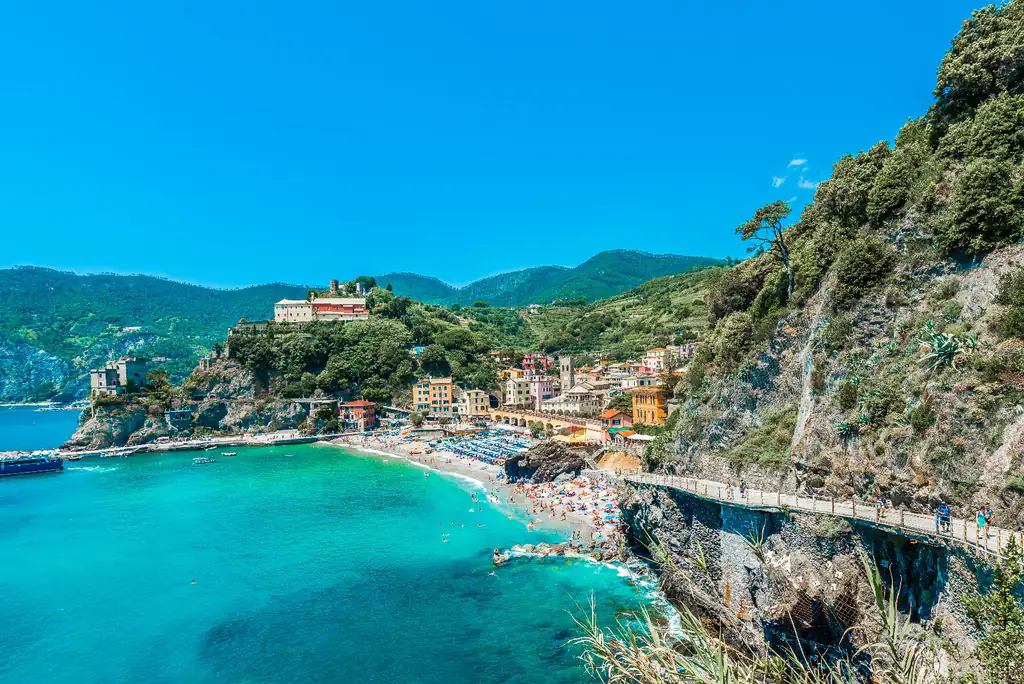
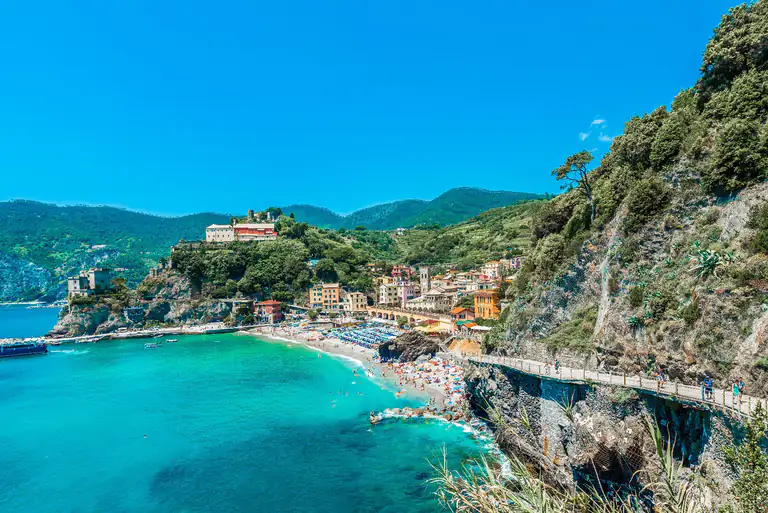
The westernmost and largest village, and the only one with proper beaches with sunbeds: the long Fegina beach in front of the station and the old-town beach, joined by a seafront walk. It has the Gothic church of San Giovanni Battista, the concrete Giant on the rocks and memories of the poet Montale, who spent his summers here. It’s the easiest village if you want sea and services. For swimming and sunbeds, see the guide to Monterosso’s beaches.
Vernazza
A little harbour with a square on the water, the church of Santa Margherita d’Antiochia on the rocks and the tower of Castello Doria above: it’s the most famous postcard of the Cinque Terre and the most crowded village in the middle of the day. Come early or stay until evening. If you’re thinking of driving, read how to get to Vernazza first.
Corniglia
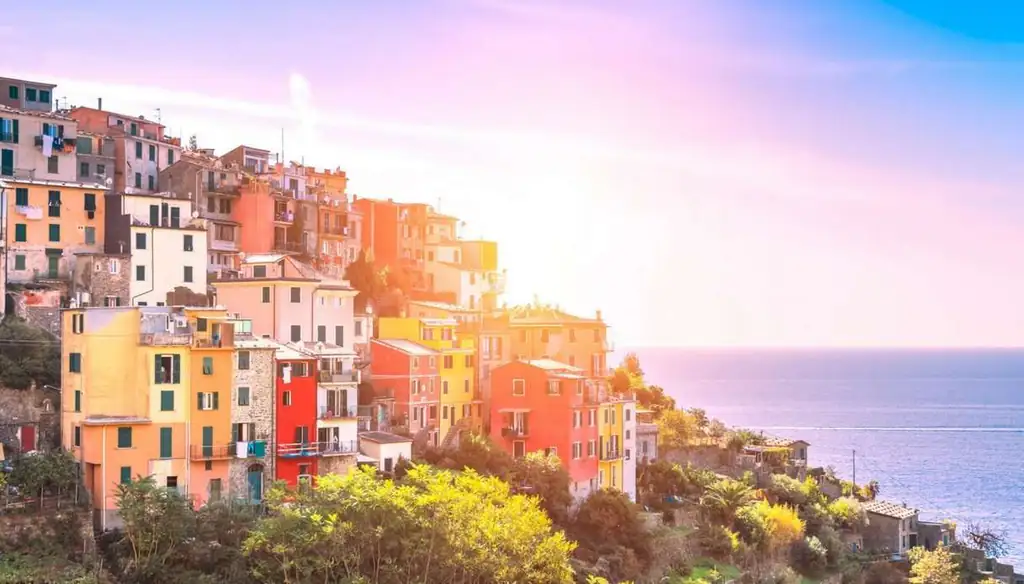
The only village that doesn’t touch the sea: it sits on a headland about a hundred metres up, among the vines. From the station you climb the Lardarina stairway, 377 steps, or take the shuttle bus. In return you get the quietest village and the Santa Maria viewpoint, looking over the whole coast.
Manarola
Colourful tower houses around a boat slipway, swimming off the harbour rocks and the classic view from the path towards Punta Bonfiglio. Above the village are the vineyards of Volastra and, from December to January, the hillside lights up with the illuminated nativity scene. This is where the Via dell’Amore from Riomaggiore arrives.
Riomaggiore
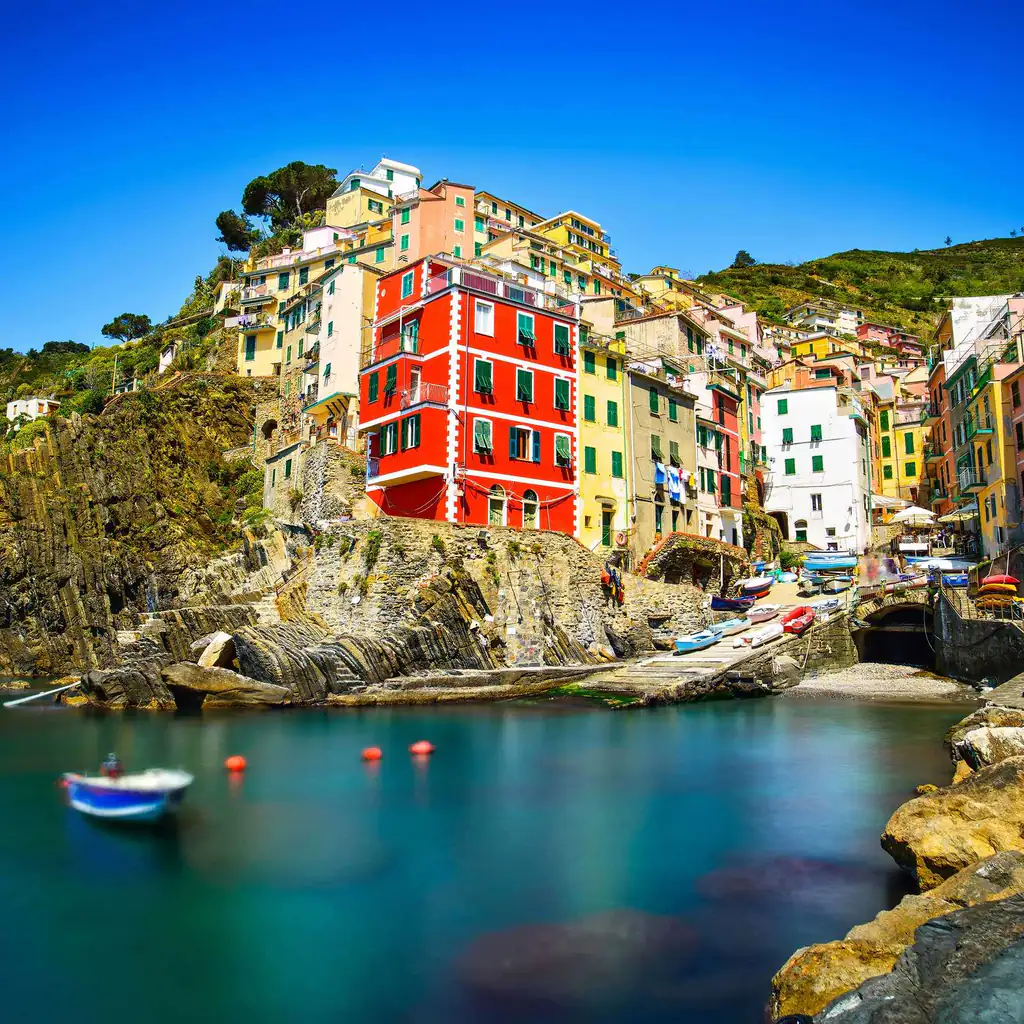
The easternmost village, the first coming from La Spezia: a narrow valley with houses stacked up on both sides of the main street, a small harbour and the castle above. On foot or by bus you can go up to the Montenero sanctuary, one of the best viewpoints in the area.
Getting around
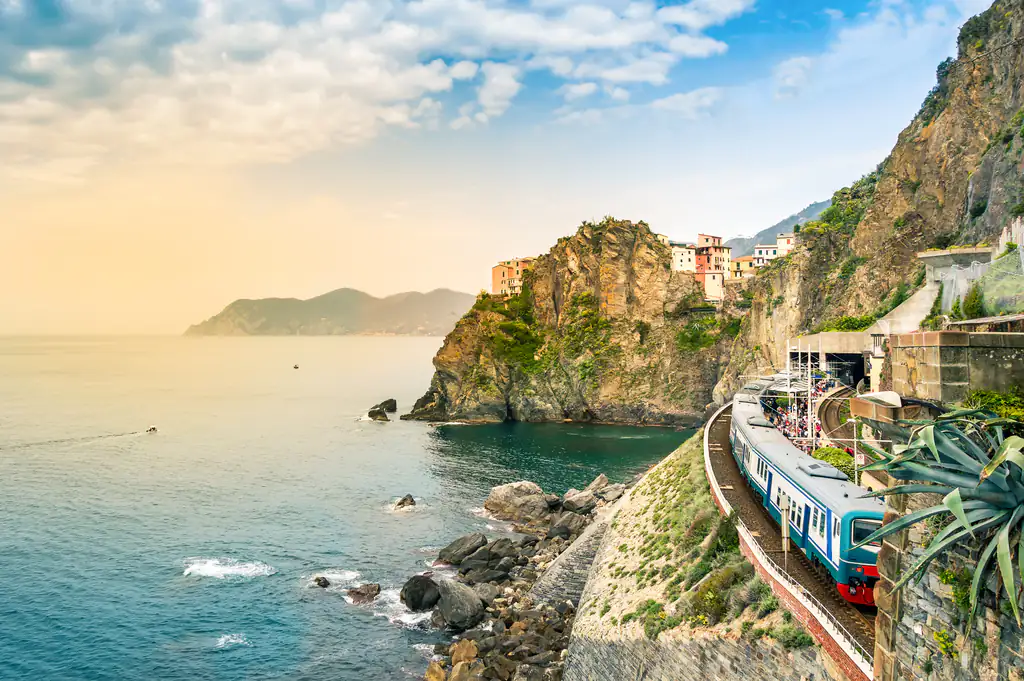
To get here from the airport or from Rome, Florence, Milan and Nice, read how to get to the Cinque Terre; villages, stations, ferry stops and trails are all on our Cinque Terre map.
By train
The train is the main way to move. All five villages have a station on the Genoa–La Spezia line, and the regional trains between Levanto and La Spezia stop at every one. From 14 March to 1 November 2026 Trenitalia adds the Cinque Terre Express, 46 extra trains a day, roughly every half hour. Riomaggiore to Monterosso takes about a quarter of an hour, La Spezia to Riomaggiore about ten minutes.
In season a special fare applies: a single ride between Cinque Terre stations costs €5 in band A, €8 in band B and €10 in band C, according to a crowd calendar; the ticket is valid for one ride and 75 minutes from validation. After 7.30 pm you pay the band A fare. Timetables, fare bands and tips are on the Cinque Terre train timetable page.
The Cinque Terre Card
The park sells two day cards, both in your name. The Trekking Card (from €10 a day, more on peak days) covers the paid trails, the park buses in the villages, station toilets and wi-fi. The Train Card adds unlimited second-class regional trains between Levanto and La Spezia: in 2026 it costs €22, €29.50 or €35 a day for an adult, depending on the band. It pays off if you take at least four train rides in the same day; to visit one village and come back, two single tickets are cheaper. Prices and calendar on the official Cinque Terre Card website. The card-versus-tickets maths, with a sample day, is in our guide to the Cinque Terre from La Spezia.
By ferry
From late March to late October or early November, the boats of the Consorzio Marittimo Turistico 5 Terre Golfo dei Poeti connect La Spezia, Portovenere, the villages and Levanto. They’re slower and pricier than the train, but the coast seen from the sea is something else. Corniglia has no landing; in rough seas sailings are cancelled. A good plan is to go out by train and come back by boat via Portovenere. Timetables on the Navigazione Golfo dei Poeti website.
By car: better not
The villages are closed to visitors’ cars, the connecting roads are narrow and winding, and the few paid car parks fill up early. If you arrive by car, leave it in Levanto or La Spezia and continue by train. If you’re staying in a village and need to bring luggage, ask your host where to park before you set off.
Cinque Terre day trip from Florence
The Cinque Terre are an easy day trip from Florence by train. From Firenze Santa Maria Novella to La Spezia Centrale takes about 2 to 2.5 hours, on a direct regional train or with a change at Pisa Centrale. In La Spezia you switch to the Cinque Terre Express, which reaches Riomaggiore in about 10 minutes and stops at every village.
- Leave early: take a train before 8am to have a full day on the coast.
- Pick two or three villages: trying to see all five in one day means spending most of it on platforms.
- Consider the Train Card: if you plan several hops, it covers unlimited trains between Levanto and La Spezia for the day.
- Check the last train back: plan your return from La Spezia, especially out of season.
Organised day tours from Florence also exist, but by train you are freer and usually spend less. Fares and timetables are on the Cinque Terre train timetable page.
Trails: what’s open in 2026

The Sentiero Verde Azzurro (the old Blue Trail) used to link all five villages along the coast. As of October 2026 the situation is:
- Monterosso–Vernazza–Corniglia: closed since 10 September 2026 for geological checks, no reopening date (park notice).
- Corniglia–Manarola: the coastal section has been closed for years after landslides; the alternative is the high route via Volastra, through the vineyards, about three hours.
- Manarola–Riomaggiore (Via dell’Amore): open, about 900 metres, one way only from Riomaggiore to Manarola, with a ticket and a time slot to book on viadellamore.info.
- Levanto–Monterosso: over Punta Mesco, about three hours, reported open in early October.
Beyond the coast there are dozens of paths up to the sanctuaries and along the ridge, often quieter and just as scenic. Times, difficulty and alternatives are in the guide to the Cinque Terre hiking trails. Before you go, always check the notices on the Cinque Terre National Park website: during weather alerts the trails are closed.
The sea
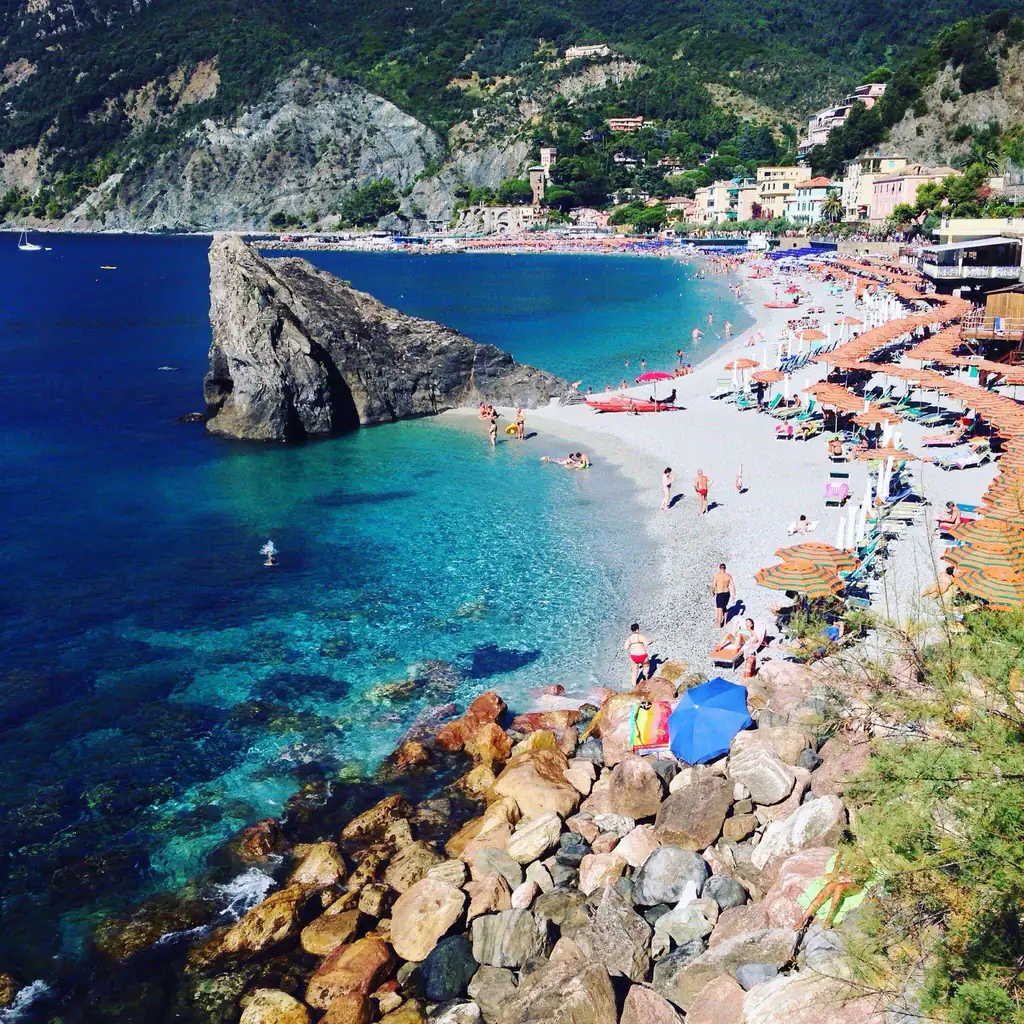
The coast is rocky and the beaches are few and small. Sand and umbrellas are only in Monterosso; Vernazza and Riomaggiore have small pebble beaches, and in Manarola and Corniglia you swim off the rocks. For a real beach day, Levanto and Bonassola are a few minutes away by train. Every beach, with seabed, access and 2026 status, is in the guide to Cinque Terre beaches.
Where to stay
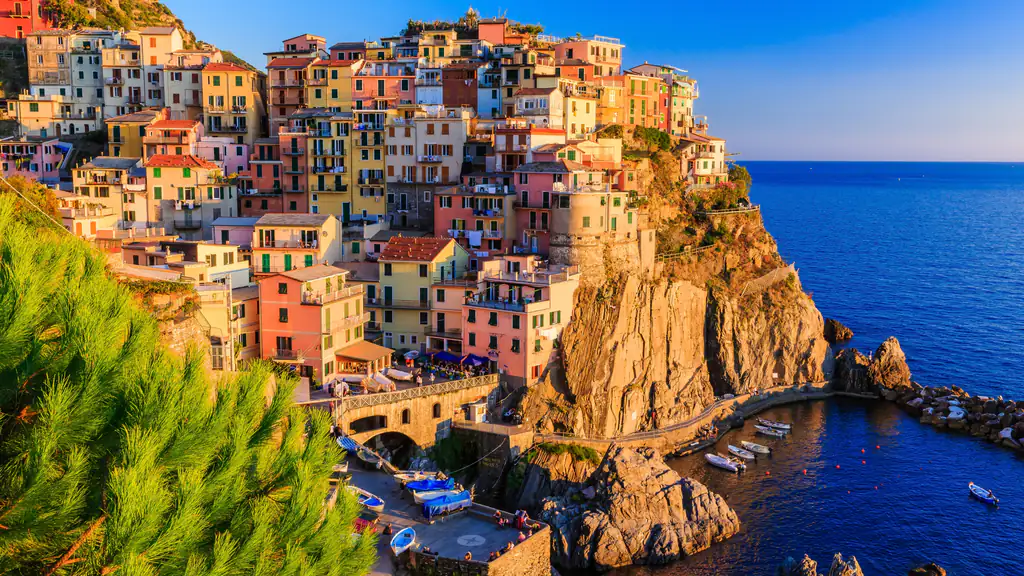
The villages mostly offer guesthouses (affittacamere), B&Bs and apartments in old houses, few hotels and high prices in summer. Sleeping inside the Cinque Terre gives you the best hours, early morning and evening, after the day-trippers have left. Location matters: many rooms are at the top of steep stairs, and the distance from the station counts when you have suitcases.
- Monterosso: the easiest choice, with the most places to stay, beaches and restaurants. Where to stay in Monterosso
- Vernazza: unique atmosphere in the evening, few rooms and lots of steps. Where to stay in Vernazza
- Corniglia: the quietest, but the station is down below. Where to stay in Corniglia
- Manarola: romantic and central on the line. Where to stay in Manarola
- Riomaggiore: the closest to La Spezia, with a good choice of rooms. Where to stay in Riomaggiore
If you want to spend less or park easily, choose Levanto or La Spezia: they’re the two ends of the line, with more beds. Areas compared and recommended places are on the Cinque Terre hotels page.
Recommended places to stay in Monterosso
Hotel ★★★★
Hotel Porto Roca
Monterosso
Perched on the edge of a cliff overlooking the fascinating ocean, Hotel Porto Roca boasts enviable views and luxurious, comfortable accommodations. With its infinity pool, elegant rooms, and delicious Italian…
Check availabilityHotel ★★★★
Roca Du Ma Pasu
Monterosso
Excellent
Roca Du Ma Pasu offers air-conditioned rooms with free WiFi. The property has a terrace from where you can also admire the sea view. Roca Du Ma Pasu serves a…
Check availabilityHotel ★★★
Albergo Degli Amici
Monterosso
Fabulous
Hotel Amici is located in Monterosso, nestled between blue and green with its colorful houses it almost seems to have stopped time. Just 200 meters from the beaches, the Amici…
Check availabilityGuest rooms ★★★
Locanda a Cà du Gigante
Monterosso
Fabulous
A Cà du gigante is located near the punta mesco trail a stone's throw from the sea and hiking trails in Monterosso. Elegant and charming furnishings characterize the interiors with…
Check availabilitySee hotels and prices in the Cinque Terre
The Booking button is an affiliate link: it costs you nothing extra and supports this guide.
When to go
The best months are April, May, June, September and October: good weather for walking, sea warm enough to swim from late May to early October, fewer crowds than in July and August. In summer the trains and villages are packed from late morning to afternoon, and the heat makes the exposed trails tiring.
Autumn brings heavy rain: during weather alerts the park closes the trails and the ferries stay in port. In winter many places close, but the villages are empty and in December Manarola lights its nativity scene. Forecasts and month-by-month climate on the Cinque Terre weather page.
Crowds and rules
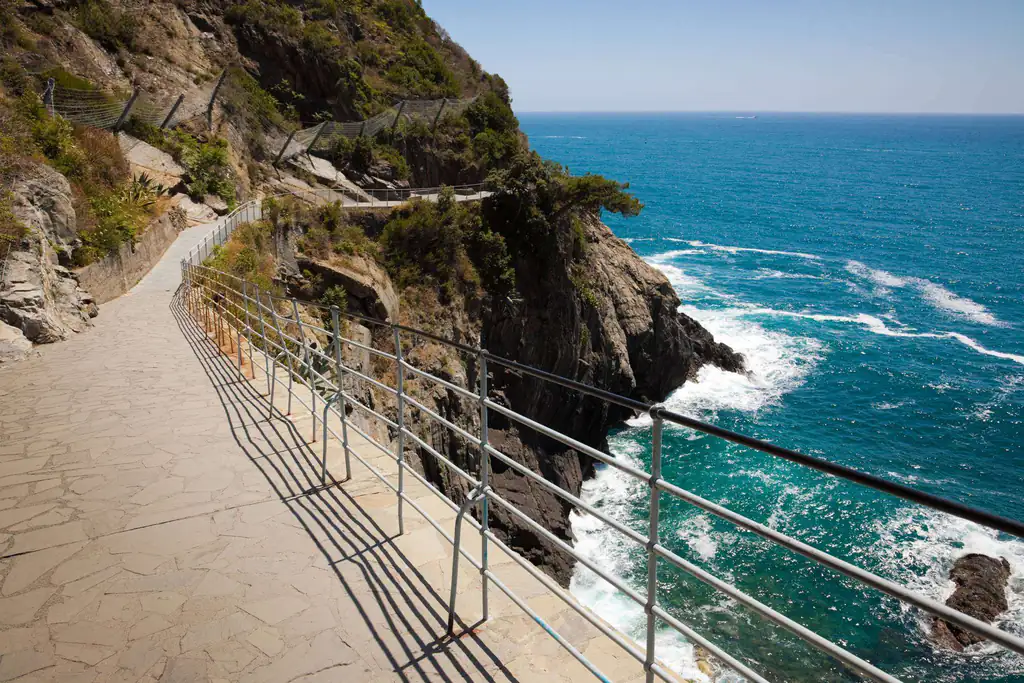
The Cinque Terre are among the most visited places in Italy, and the villages are tiny. To make it better for you and for the people who live here: start early, visit Vernazza and Manarola in the late afternoon, and avoid spring weekends and August if you can. There’s no visitor cap for independent travellers, but from 2027 Vernazza will have stricter rules for organised groups.
- Footwear: on the trails you need closed shoes with a grippy sole; in flip-flops or sandals you risk a fine of up to €2,500.
- Paid trails: the Sentiero Verde Azzurro and the Via dell’Amore require a card or ticket.
- Water and heat: few fountains and little shade on the trails; bring water and a hat.
- Protected sea: fishing and diving are regulated by the Marine Protected Area; check before you go.
- Respect: people live here: keep your voice down in the alleys and let residents through.
Frequently asked questions
What are the five villages of the Cinque Terre?
From west to east: Monterosso, Vernazza, Corniglia, Manarola and Riomaggiore. Levanto and Portovenere lie just outside, at either end, and make excellent bases.
Can you visit the Cinque Terre as a day trip from Florence?
Yes. The train from Florence to La Spezia takes about 2 to 2.5 hours, then the Cinque Terre Express reaches the villages in minutes. Leave early and focus on two or three villages.
Can you see the Cinque Terre in one day?
Yes, by train, but only in a rush. Two or three days are better: one for the villages, one for an open trail and one for the sea or Portovenere.
Is the trail from Monterosso to Vernazza open?
No. The Corniglia–Vernazza–Monterosso section has been closed since 10 September 2026 for geological checks, with no reopening date. Check the park’s notices before you go.
Is the Cinque Terre Card worth it?
The Train Card pays off if you take at least four train rides in one day. For one village and back, two single tickets cost less.
Can you drive to the Cinque Terre?
You can, but it’s awkward: the villages are closed to visitors’ cars and parking is scarce and expensive. Leave the car in Levanto or La Spezia and use the train.
Which village should I stay in?
Monterosso for beach and services, Vernazza or Manarola for atmosphere, Corniglia for peace and quiet, Riomaggiore to be close to La Spezia. Levanto and La Spezia are usually cheaper.
When is the best time to visit?
May, June and September: good weather, warm sea and fewer crowds than in July and August. In autumn, keep an eye on weather alerts.
Cinque Terre or Amalfi Coast?
It depends on your trip: the Cinque Terre are easier by train and better for hiking, the Amalfi Coast for beaches and luxury hotels. See the full comparison in Cinque Terre vs Amalfi Coast.