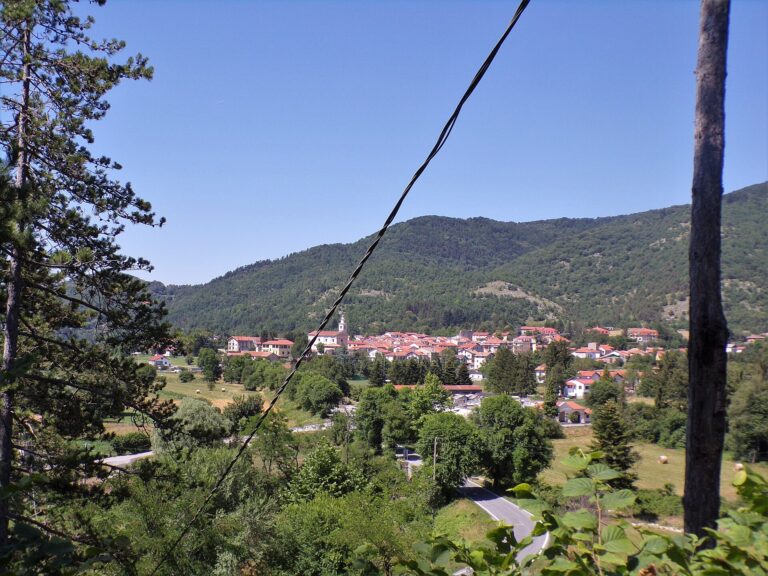
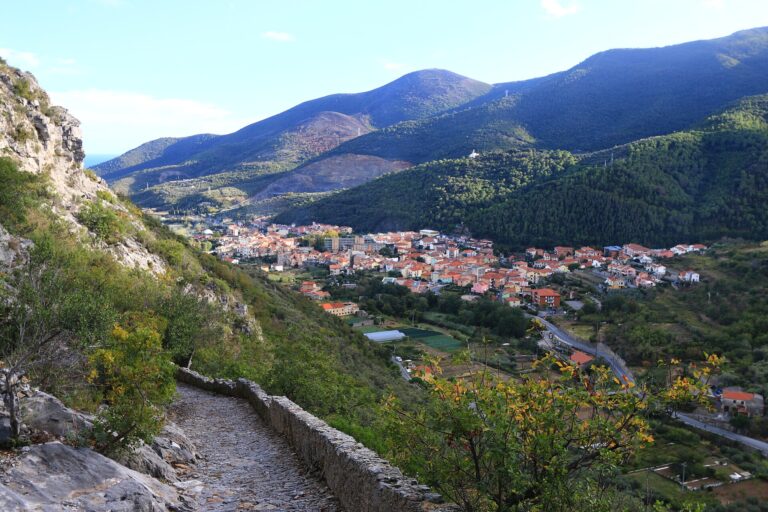
Castelbianco is a small municipality in the Val Pennavaire, in the hinterland of Albenga, in the province of Savona. It has just over 300 inhabitants (311 on 31 May 2026, ISTAT) spread over five hamlets: Veravo, where the town hall is, Vesallo, Oresine, Teccio and Colletta. The land climbs from the valley floor to almost 1,100 metres, through olive groves, chestnut woods and limestone cliffs.
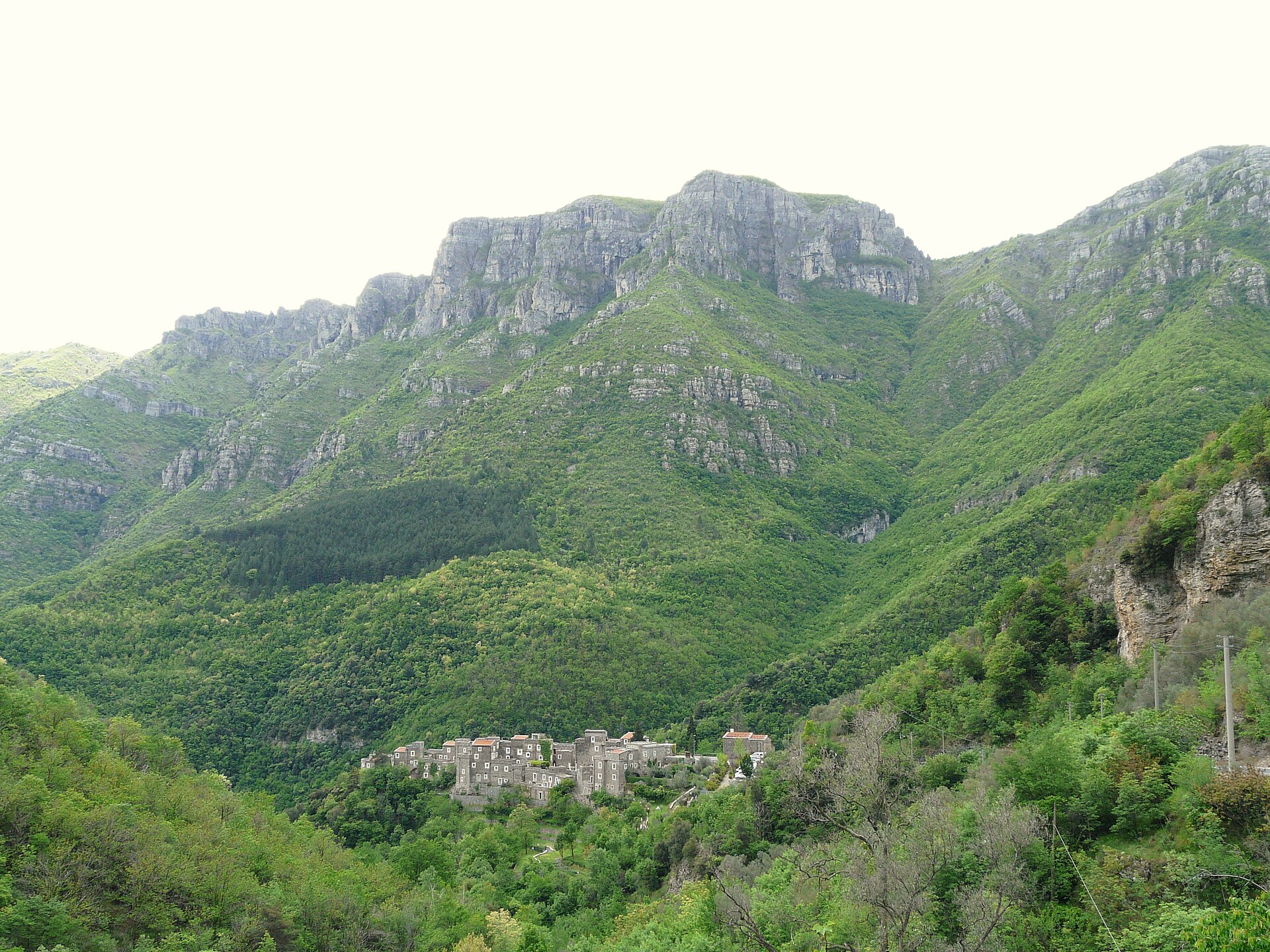
The name most people search for, though, belongs to one of the hamlets: Colletta di Castelbianco, a stone village of medieval origin. According to several guides it emptied after the 1887 earthquake and stayed almost deserted for decades. In the 1990s it was restored to a design by the architect Giancarlo De Carlo and wired with fibre optics, which is why it is remembered as Italy’s first “telematic village”. Today it is lived in and partly run as an albergo diffuso (rooms and flats scattered through the village). It belongs to the Borghi più belli d’Italia (Italy’s most beautiful villages).
This guide covers the whole municipality, not just Colletta: the restored village, the churches of Veravo and Vesallo, the castle ruins, the trails and the climbing crags. Half a day or a full day is enough, and it combines well with the sea at Albenga (about 17 km) or with Zuccarello, the neighbouring village (about 10 km). The story of Colletta’s restoration, with the dates the sources do not agree on, is in the in-depth page Colletta di Castelbianco: the telematic village.
By Italian Riviera editorial team·Updated on ·9 min read
Where is Castelbianco?
Castelbianco is in Liguria (Riviera di Ponente, Riviera delle Palme, province of SV).
The hamlets are a few minutes apart by car, so a car makes everything easier. Colletta, Veravo and Vesallo each take about an hour on foot, stops included. Bring comfortable shoes: the lanes are stone and often steep.
Colletta di Castelbianco
This is why most visitors come. Colletta is a compact cluster of grey stone houses with white-framed windows, coloured doors, small squares and paved lanes (caruggi in Ligurian). According to the guides, the village was probably founded in the 13th century as a defence against Saracen raids. For a long time it belonged to the Clavesana and then the Del Carretto, because it sat on the route between the sea and Piedmont.
The restoration kept the original shape of the settlement: from outside you see an old village, while the houses inside were rebuilt. Colletta is inhabited and many houses are private or let out, so walk the lanes but do not step into courtyards. It is not a museum, and no opening hours or entry tickets are published: there is no official information on visits ⚠️. The overall recovery plan is covered in the in-depth page on the village.
The chapel of Santa Lucia and the medieval bridges
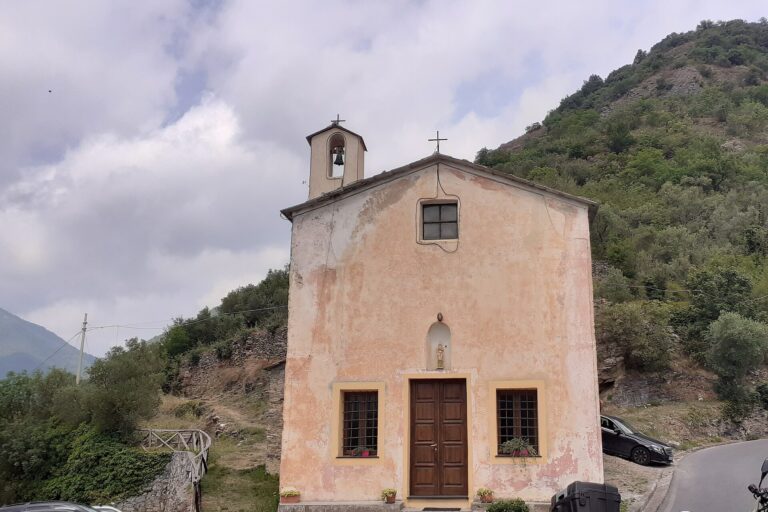
In the upper part of Colletta you find the chapel and oratory of Santa Lucia. According to Wikivoyage, 13 December, St Lucy’s day, is the hamlet’s feast. Opening hours are not published: you often see them only from outside.
Around the village a few single-arch medieval bridges survive over the Oresine and Pennavaire streams. One is near Colletta, others are on the mule tracks towards Arnasco and towards Monte Nero. You reach them on foot along the valley trails (see below).
Veravo: the parish church of the Assunta and the old centre
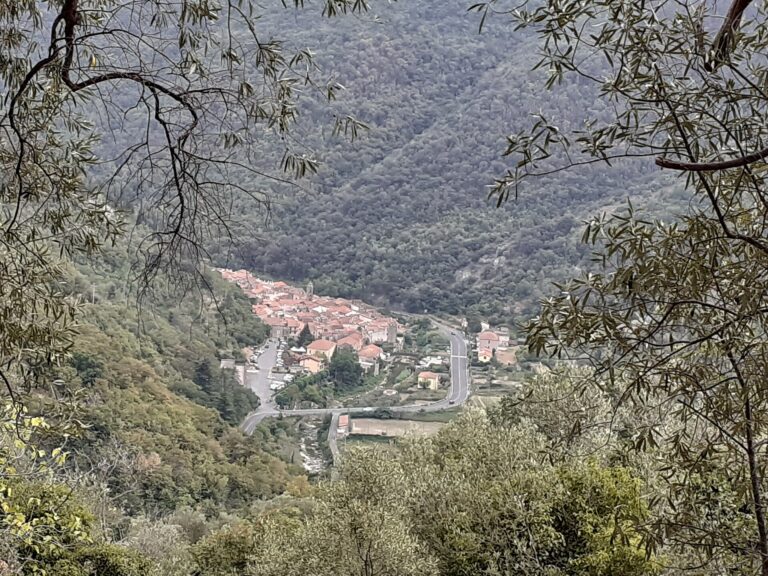
Veravo is the largest hamlet and the seat of the town hall, about 3 km from Colletta. The Baroque parish church of Nostra Signora Assunta has an 18th-century organ. Opposite stands the oratory of Santa Caterina, with a single nave and a polygonal apse, while the centre of the village has the chapel of San Francesco di Sales, with a fresco of the saint on an 18th-century altar, and the Palazzo dei Signori, the old rectory.
The municipality’s patron feast is the Assumption, on 15 August. Opening hours for the churches are not published, so do not count on getting in.
Vesallo and the sanctuary of the Nunziata
Vesallo is a smaller hamlet on the opposite side of the valley from Veravo. The sanctuary of the Santissima Annunziata, on the square, dates from somewhere between the 13th and 17th centuries and has two bell towers of different heights, one with an onion-shaped spire. Outside the village is the chapel of San Sebastiano. The village is best seen from the road coming from Veravo.
The castle ruins
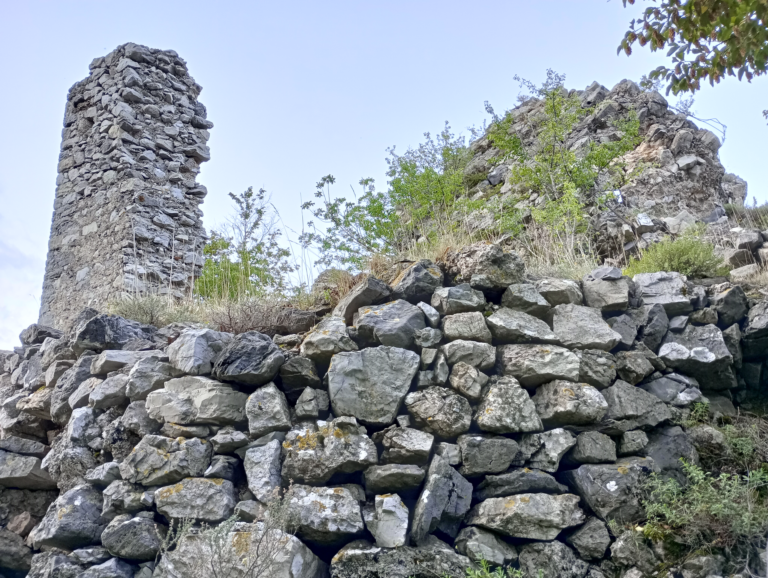
Above Veravo and Vesallo stand the ruins of a castle built by the Clavesana marquises. The name “Castelbianco” may come from this small stronghold, which also helped control the movement of goods between the coast and Piedmont. Genoa used it as a garrison and lookout until the Napoleonic era. No official documents about the castle survive, and there is no information on access or visits: it is a ruin on a hillside, reached on foot.
Oresine and Teccio
Oresine has the 17th-century chapel of Sant’Antonio abate, with a painting of the Madonna and Child with saints. Teccio is a small hamlet on the provincial road. These are places to pass through rather than to visit: they help you complete a loop trail or photograph the valley.
Where to stay
Where to stay in Castelbianco
The best-known option is Colletta, which works as an albergo diffuso: flats in the village’s stone houses, owned by Italians and foreigners and let for short or long stays, with shared services such as the pool and the bar. You sleep in silence among the lanes, but with no sea and few places open in the evening. Elsewhere in the municipality beds are few. If you want the sea, choose Albenga or Ceriale, 17–18 km away, or Laigueglia and Alassio.
A10, exit Albenga, then the Val Pennavaire: about 18 km, 29 minutes to Colletta
By train
No station: the nearest is Albenga (about 17 km), then a scheduled bus (few runs ⚠️) or a car
By plane
Genoa (about 96 km) or Nice (about 133 km)
By car
Leave the A10 at Albenga and follow the Val Pennavaire: Colletta is about 18 km and 29 minutes from the toll gate (about 17 km from central Albenga). The municipality is crossed by the SP 14, which leads to Nasino to the west and to Zuccarello and Cisano sul Neva to the east. From Veravo to Colletta it is about 3 km.
By train
Castelbianco has no station. The nearest is Albenga, on the Genoa–Ventimiglia line. From there you need a bus or a private vehicle, about 25 minutes.
By bus
Guides mention a scheduled service from Albenga with two runs a day, but we did not find official timetables ⚠️. Check TPL Linea and plan the return carefully: without a car this is a difficult trip.
By air
The most convenient airport is Genoa Cristoforo Colombo, about 96 km by road (roughly an hour and a half). Nice is about 133 km away. In both cases you go through Albenga.
Parking
There is no official data on car parks or fees. Colletta has narrow streets: leave the car at the edge of the village, follow the signs and do not block residents’ access.
A network of trails links the hamlets along old mule tracks. The “Borghi di Riviera” circuit marks a series of loops. They are the easiest way to see the area without committing to a real hike.
Yellow route: short excursion from Colletta, about 1.5 km, easy. It drops into the valley and passes two bridges, one over the Oresine and one with three arches.
Red route: Colletta loop, about 7.5 km, medium difficulty. It touches Oresine, the bridges over the Pennavaire (San Pietro, delle Carpe, de Conche), the chapel of San Lorenzo with late-medieval frescoes, limestone and olive groves.
Orange route: Veravo loop, about 2 km, easy. It starts from the parish church and crosses the centre past the Palazzo dei Signori.
Blue route: Vesallo loop, about 2 km, medium. It climbs to the castle ruins, with views over Veravo and the valley.
The source gives no walking times: as a rough guide (our own estimate), allow 30–40 minutes for the short routes and about 3 hours for the red loop, and check against the map on site. The routes are listed on the trails page of the Borghi di Riviera site; the ground gets slippery after rain.
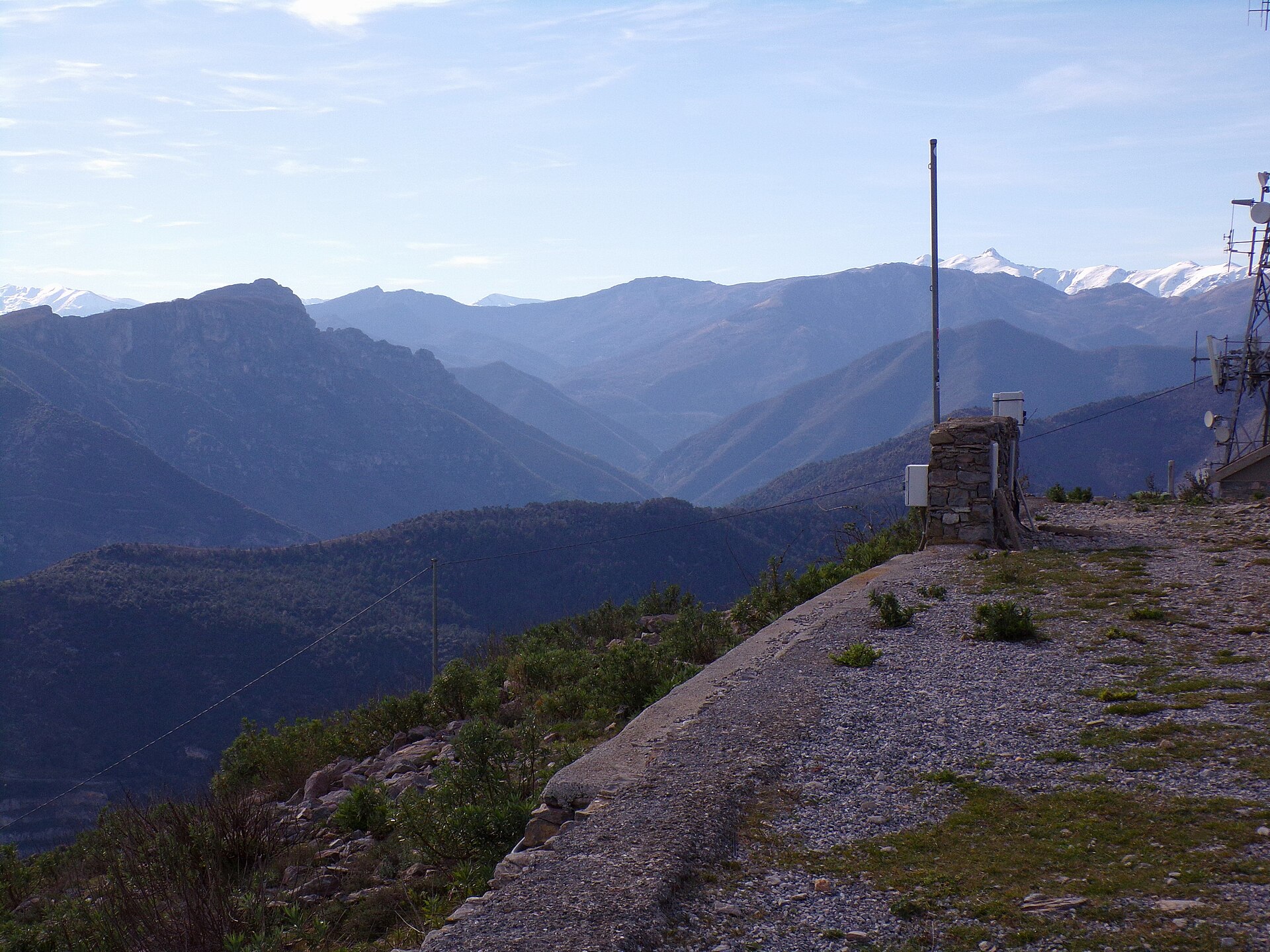
The Val Pennavaire is also one of Italy’s best-known valleys for climbing: guides speak of more than a hundred sectors on limestone, with crags near Colletta and Veravo and grades from roughly 5a to 8b+. The reference book is the guidebook “Pennavalley”. You reach the walls on foot, along paths that are sometimes steep and muddy after rain. Above the village is also Monte Castell’Ermo (1,092 m), a rock face on the border with the province of Imperia.
What to eat in Castelbianco
The municipality’s farming is cherries, apricots and olives, plus pulses and vegetables. Colletta has a restaurant on the main square, with a terrace, and a bar; hours vary with the season ⚠️. Restaurants in the municipality are few: book at weekends. The olives are Taggiasca: they have been harvested at Colletta again since 2005, and the village makes small amounts of oil.
We do not name venues because we did not find an official, up-to-date list. Ask the town hall or the albergo diffuso in advance.
Events in Castelbianco
The calendar changes every year and the 2026 dates are not confirmed ⚠️. These are the recurring events.
Cherry Festival (Sagra della Ciliegia): usually early June (in 2024 it was on 1–2 June).
Mixed Fried Fish Festival (Sagra del Fritto Misto): in summer, in Veravo (the 2022 edition was in July).
Assumption: patron feast, 15 August.
Olive Festival at Colletta: in November, according to the village’s albergo diffuso.
Colletta di Castelbianco vista dalla valleUna terrazza e le case in pietra di Colletta di CastelbiancoCase in pietra ristrutturate a Colletta di CastelbiancoColletta di Castelbianco nella valle, sotto le pareti di calcareLa cappella di Santa Lucia a Colletta di CastelbiancoUn antico ponte in pietra tra la vegetazione, presso CastelbiancoI ruderi del castello di Castelbianco: muro in pietra e torre
FAQ
Frequently asked questions about Castelbianco
Are Colletta di Castelbianco and Castelbianco the same thing?
No. Colletta is a hamlet of the municipality of Castelbianco. The town hall is in Veravo, and the municipality has five hamlets: Colletta, Oresine, Teccio, Veravo and Vesallo.
Why is Colletta called a "telematic village"?
Because in the 1990s its restoration also included a fibre-optic network for people working remotely. It is covered in the in-depth page.
Who restored Colletta?
The recovery plan is by the architect Giancarlo De Carlo. The sources do not agree on exact dates (the 1990s).
Can you visit Colletta for free?
The village is open on foot and the guides do not mention a ticket, but there is no official source on hours and rules ⚠️. It is a lived-in place: respect the residents.
How much time do you need?
An hour is enough for Colletta. With Veravo, Vesallo and a short trail you reach half a day; a full day if you add a long loop or Zuccarello.
Are there beaches in Castelbianco?
No. The nearest sea is at Albenga and Ceriale, about 17–18 km away.
Can you get there without a car?
You take the train to Albenga and then a scheduled bus, but runs are few. Check the timetables with TPL Linea.
Where can you climb in the Val Pennavaire?
There are more than a hundred sectors on limestone, including near Colletta and Veravo. The reference book is “Pennavalley”.
When is the best time to go?
Spring and autumn, April to June and September to October. In summer the heat is less intense than on the coast; in winter the village is quiet.
What is the best-known festival?
The Cherry Festival, in early June. The 2026 dates are not confirmed.