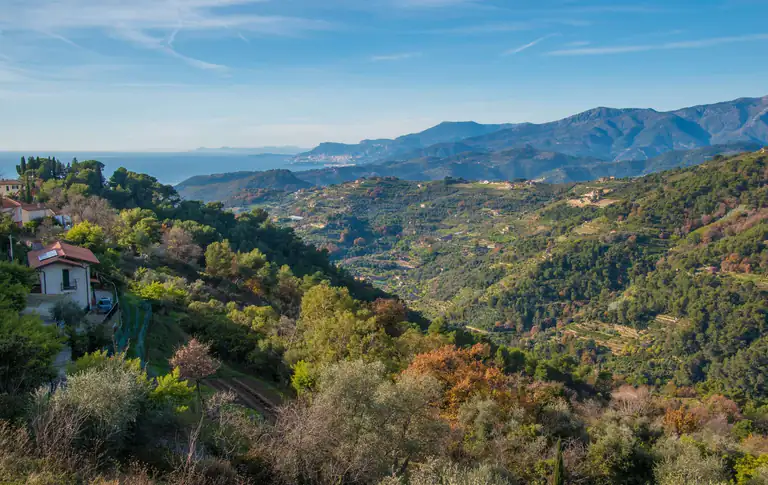
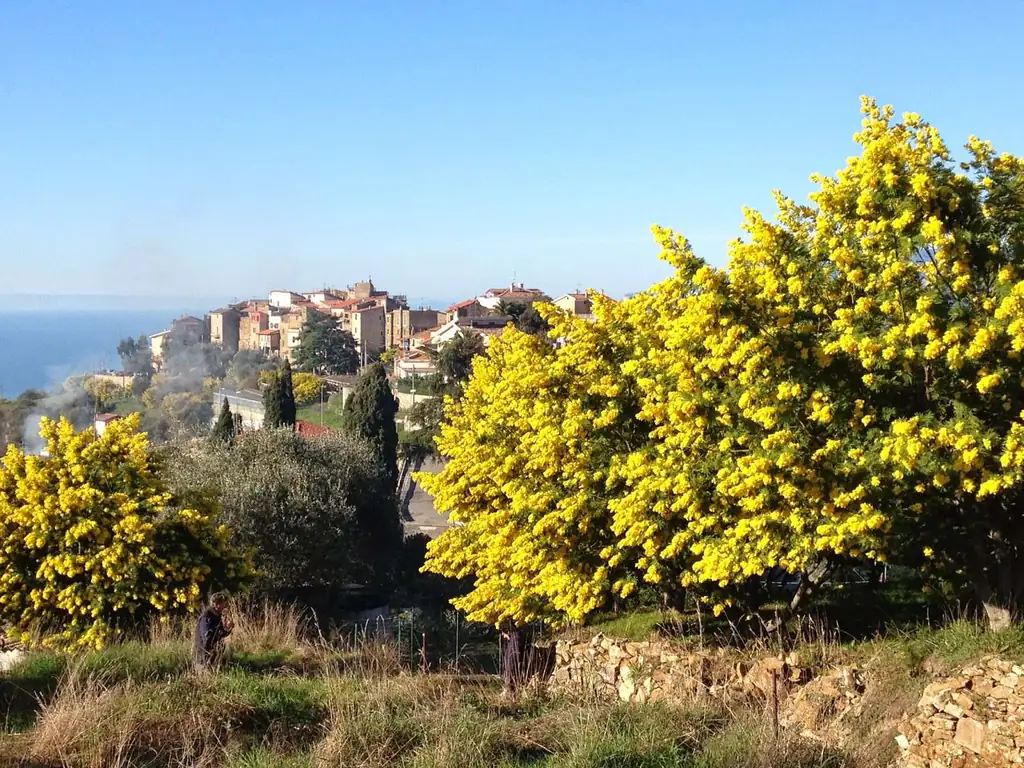
View of the village of Seborga with mimosas in bloom

Seborga

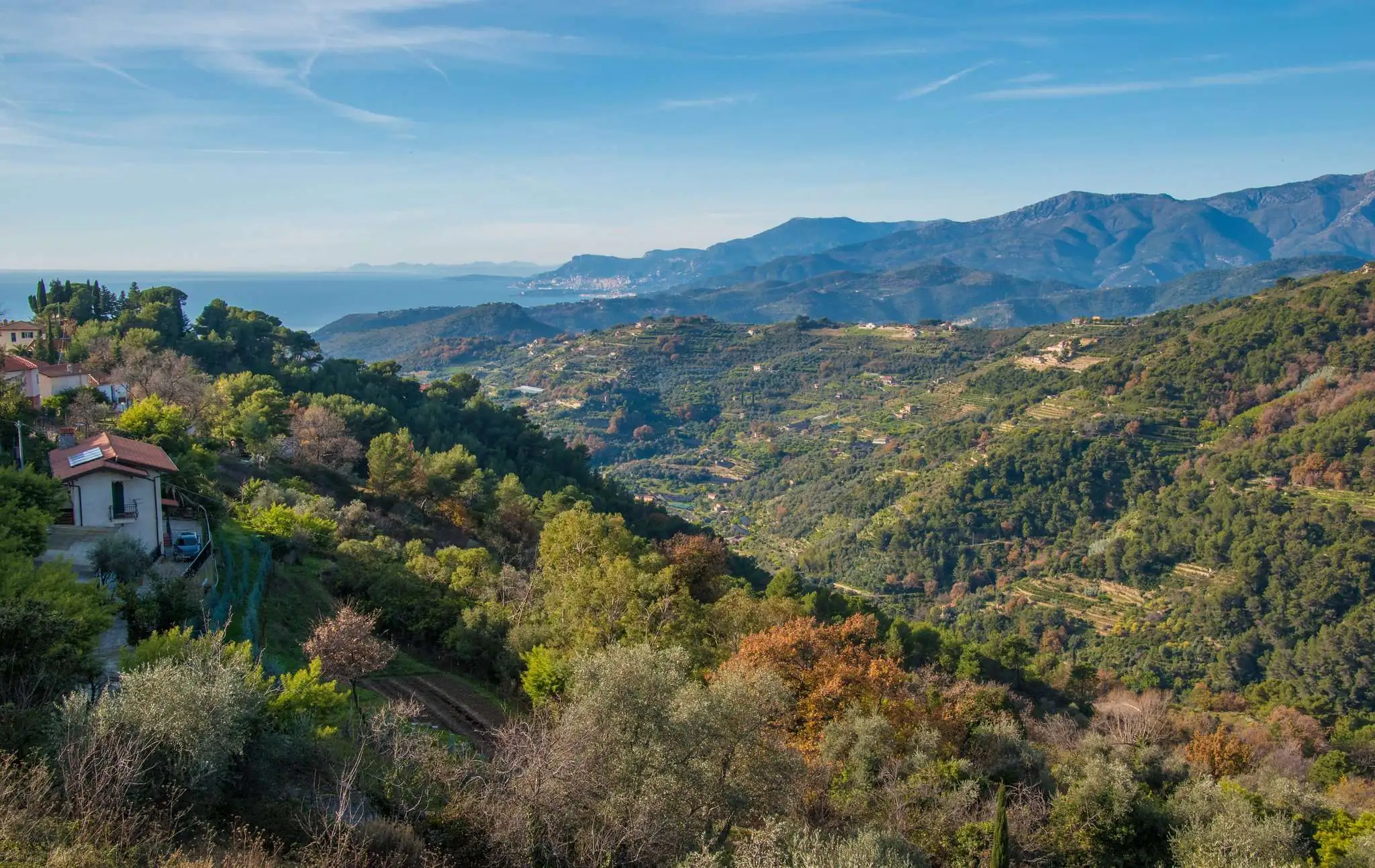
The Principality village above Bordighera: Piazza San Martino, Palazzo dei Monaci, sentry boxes, mimosa and views over the Côte d'Azur.

View of the village of Seborga with mimosas in bloom
Area
Riviera dei FioriRiviera di Ponente · Province of Imperia
Ideal for
Village, history and Principality curiositiescouples, families and day trips
Beaches
The nearest sea is at Bordighera, about 10 km15–20 minutes
Best time to go
Late winter for the mimosaspring and autumn; 20 August San Bernardo
By train
Bordighera stationthen bus 10 (weekdays only, about 25 minutes) or taxi
By car
A10, Bordighera exitthen the provincial road via Sasso, 15–20 minutes
Airport
Nice Côte d'Azur (about 55 km)about 50 minutes by car
How long to stay
Half a daya full day with lunch and the countryside

Welcome to Seborga

The Principality in the hills

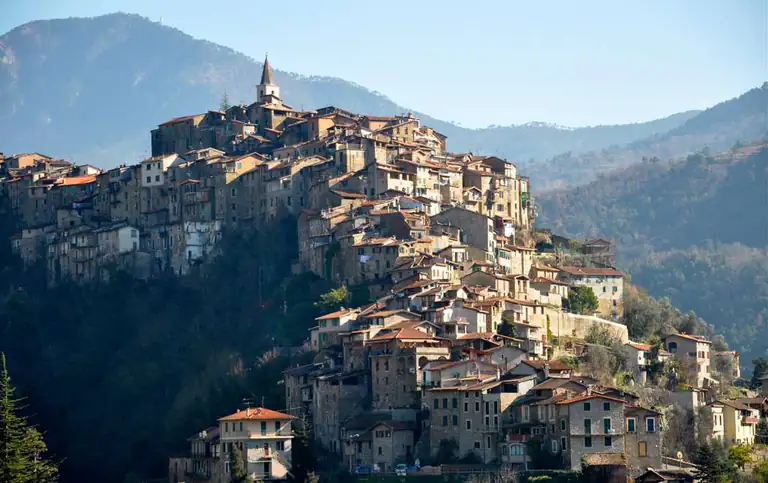
Seborga is a small village in the hills behind Bordighera, 500 metres above sea level, with fewer than three hundred inhabitants. From its squares you can see the Ligurian Sea, the Maritime Alps and the French coast. The old town is compact and well kept, and you can explore it on foot in a few hours. This has earned it the Touring Club’s Orange Flag and a place among the Borghi più belli d’Italia (the most beautiful villages in Italy).

Seborga is best known for its “Principality”. For centuries the village belonged to the monks of Lérins Abbey, who held the title of princes, until it was sold to the House of Savoy in 1729. Since 1963 a local movement has claimed that the sale was invalid and that Seborga is therefore an independent state. No country recognises it: Seborga is an Italian municipality in every respect, but the principality, with its princess, its currency and its sentry boxes, has become an important part of the village’s identity and the main reason many visitors make the trip up here.

The landscape alone makes the visit worthwhile: olive groves, fields of mimosa and broom, stone alleys and viewpoints over the sea. It is an ideal half-day trip from Bordighera or Sanremo, easy to combine with time at the beach or another village in the area.

Where is Seborga?

Seborga is in Liguria (Riviera di Ponente, Riviera dei Fiori, province of Imperia).

Map: where Seborga is in LiguriaPIEDMONTLOMBARDYEMILIA-ROMAGNATUSCANYFRANCERIVIERA DI PONENTERIVIERA DI LEVANTELIGURIAN SEASavonaImperiaSanremoLa SpeziaSeborga
Boundaries: ISTAT, Natural Earth · Interactive map →

What to see

What to see in Seborga

The old town is laid out in concentric rings of narrow alleys lined with small craft shops, all leading to Piazza San Martino. You can see everything on foot in a couple of hours.

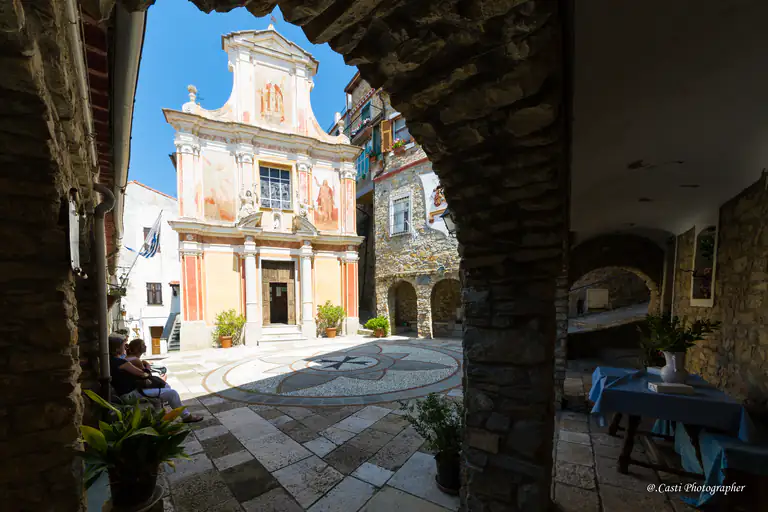
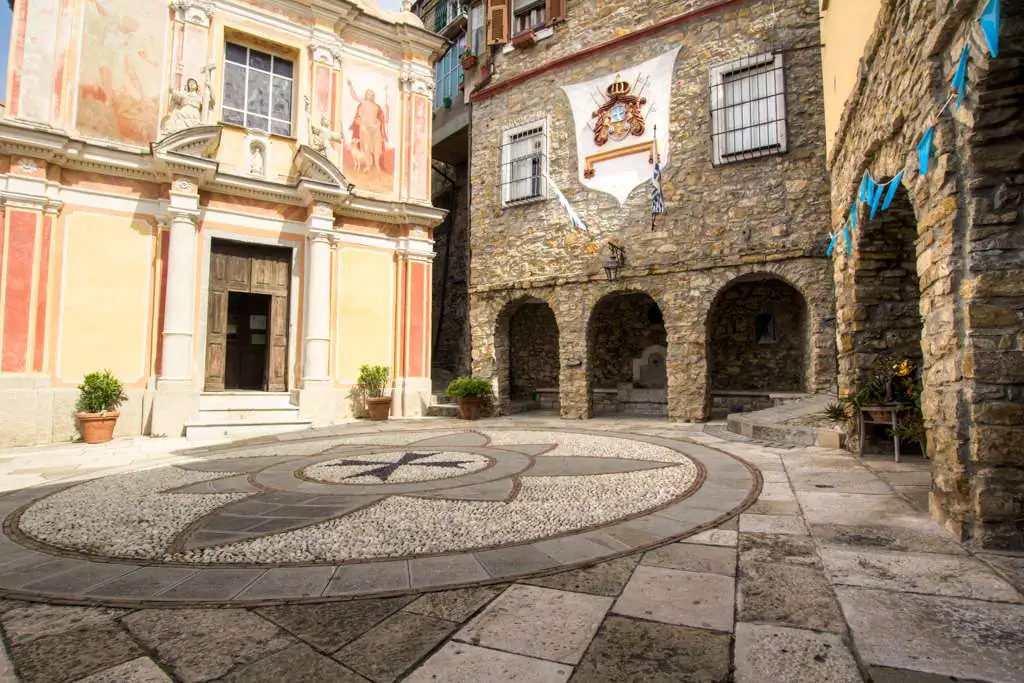
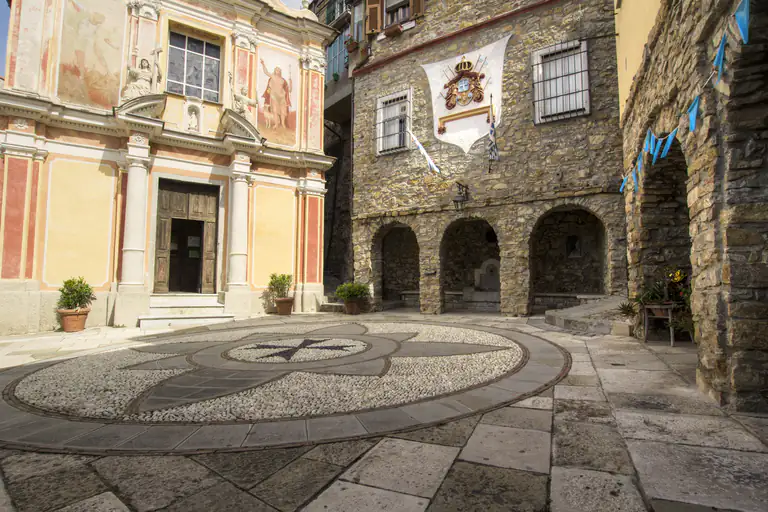
Square with mosaic paving in the village of Seborga

Piazza San Martino and the old town

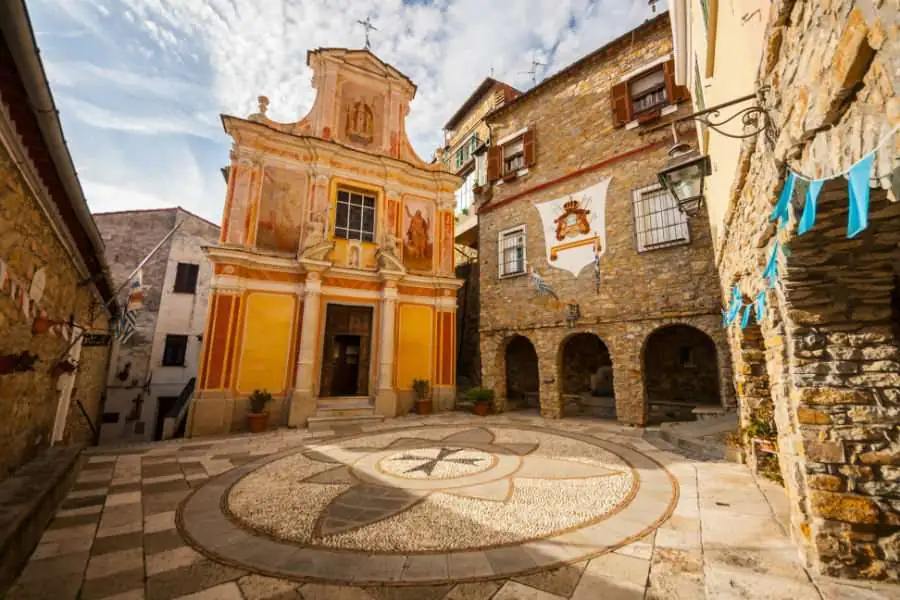
This is the heart of the village, overlooked by the parish church and the Palazzo dei Monaci. The cobbled paving and the arched passages leading down towards the houses give a clear sense of the village’s medieval character. In the surrounding alleys you will find shops selling local produce and principality souvenirs such as luigini coins and stamps.

Church of San Martino in Seborga seen through an archway

Church of San Martino

The parish church was built in the first half of the 17th century and has a Baroque façade. It is dedicated to St Martin, the village’s patron saint, whose feast day is 11 November. A cross is laid out in the cobbled churchyard, which local tradition links to the Knights Templar.

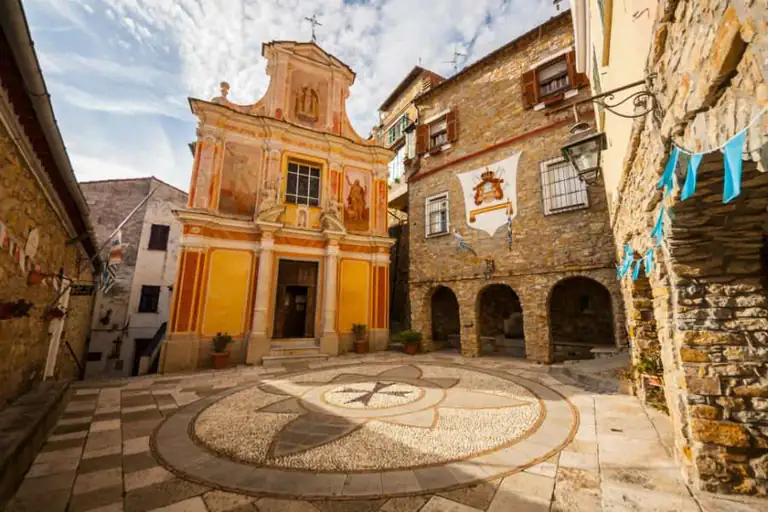
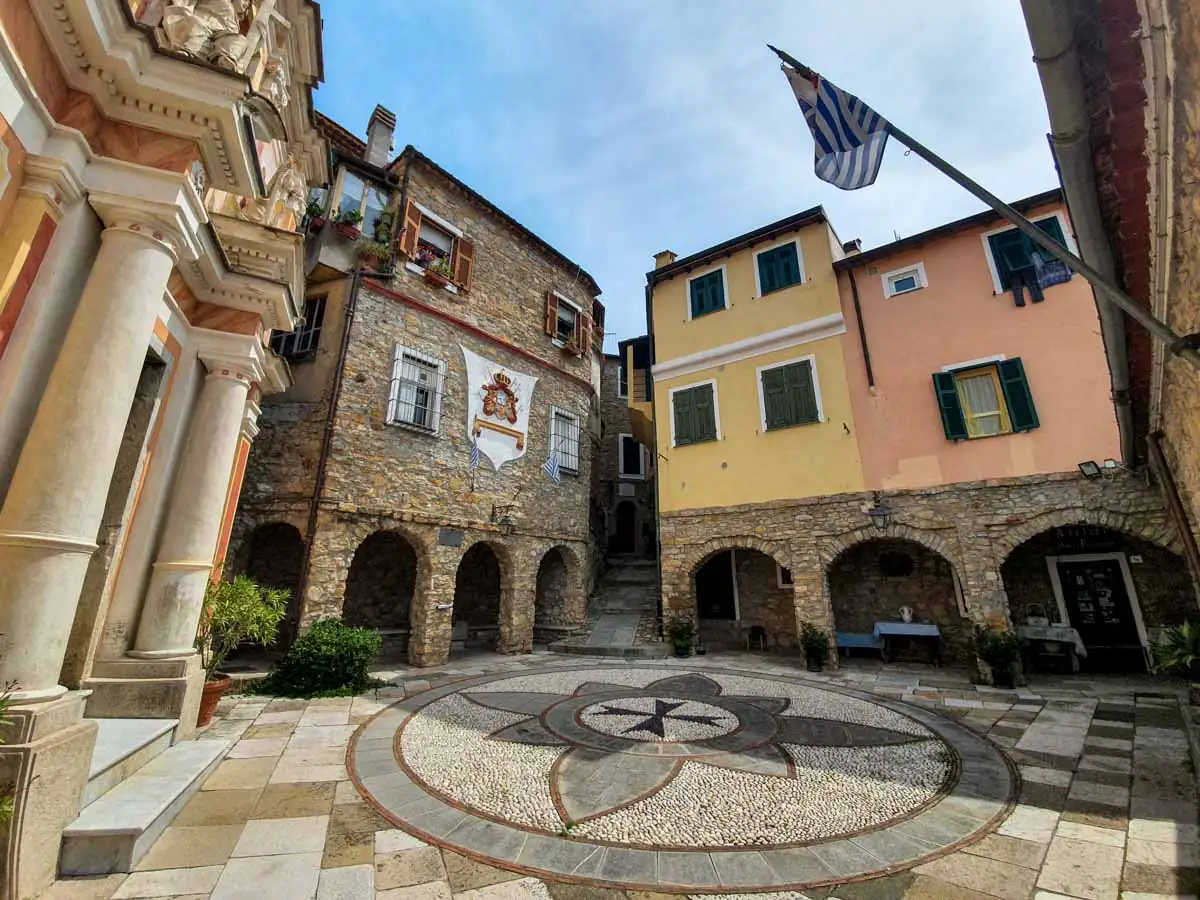
Palazzo dei Monaci on the square in Seborga

Palazzo dei Monaci

Also on Piazza San Martino, the Palazzo dei Monaci was the residence of the Lérins monks and housed the mint: in the 17th century the luigini were struck here, coins used for trade with the Levant. The principality’s coat of arms is clearly visible on the façade. Today it is a private building and can only be seen from outside.

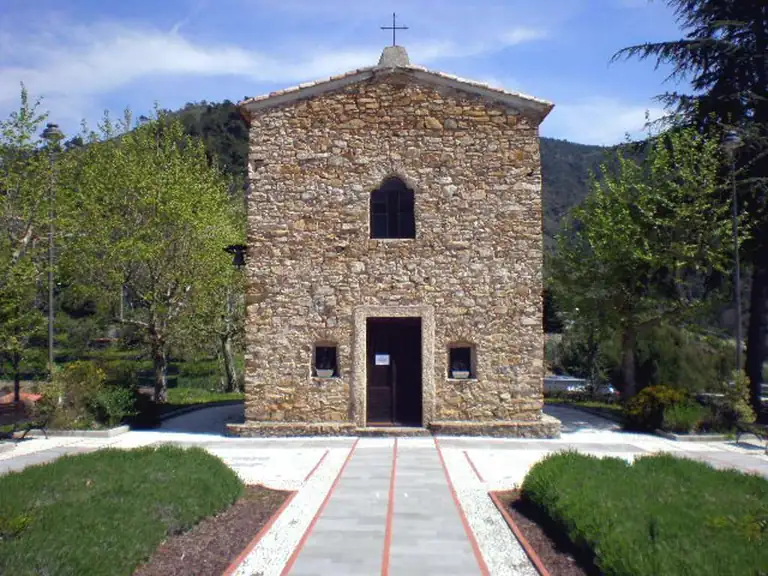
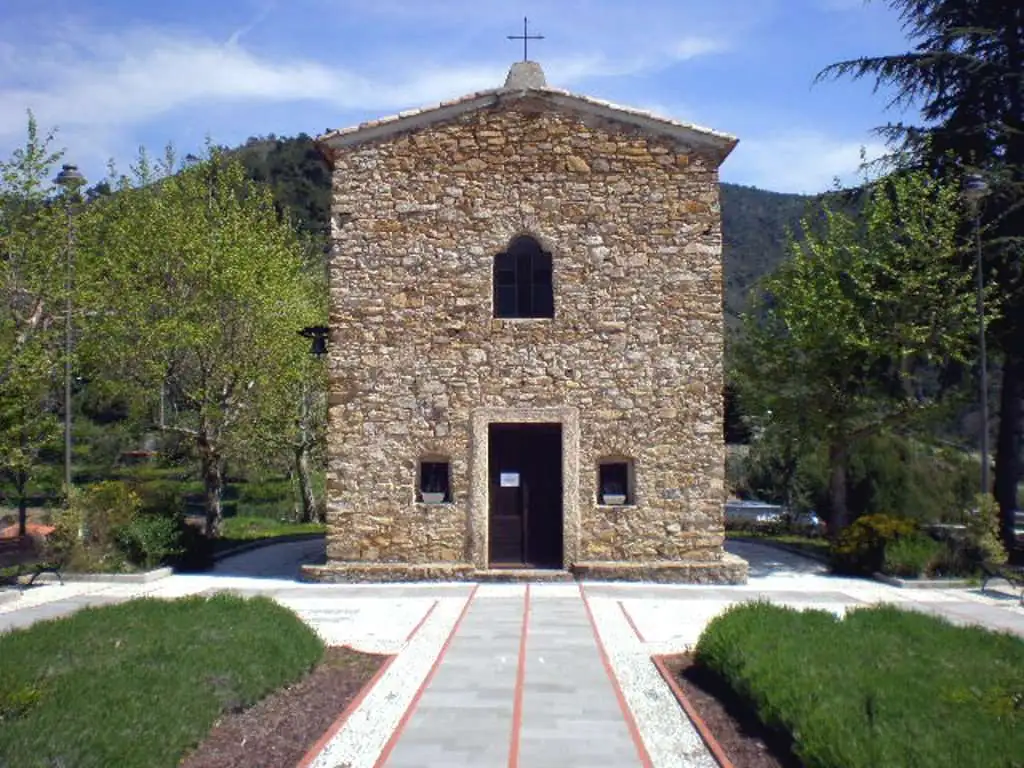
Church of San Bernardo in Seborga

Oratorio di San Bernardo

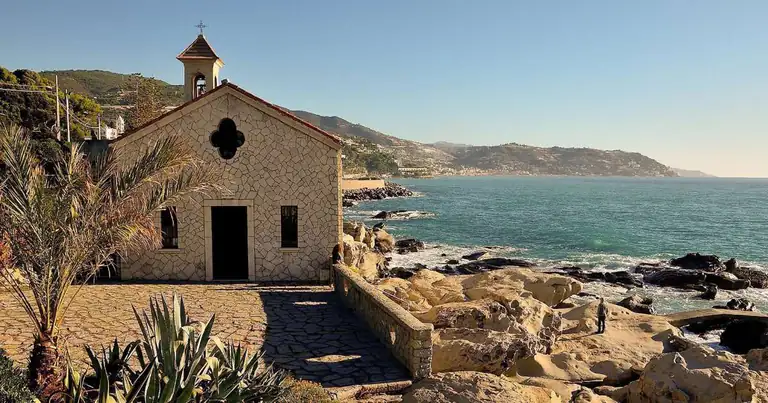
At the entrance to the village stands the Oratorio di San Bernardo, a small church of medieval origin remodelled in the Baroque period. It is the focus of the Feast of San Bernardo on 20 August, the most heartfelt celebration of the summer. According to a tradition widely held in Seborga, Bernard of Clairvaux knighted the first Templars here: historical documents do not confirm this legend, but it is part of the place’s appeal.

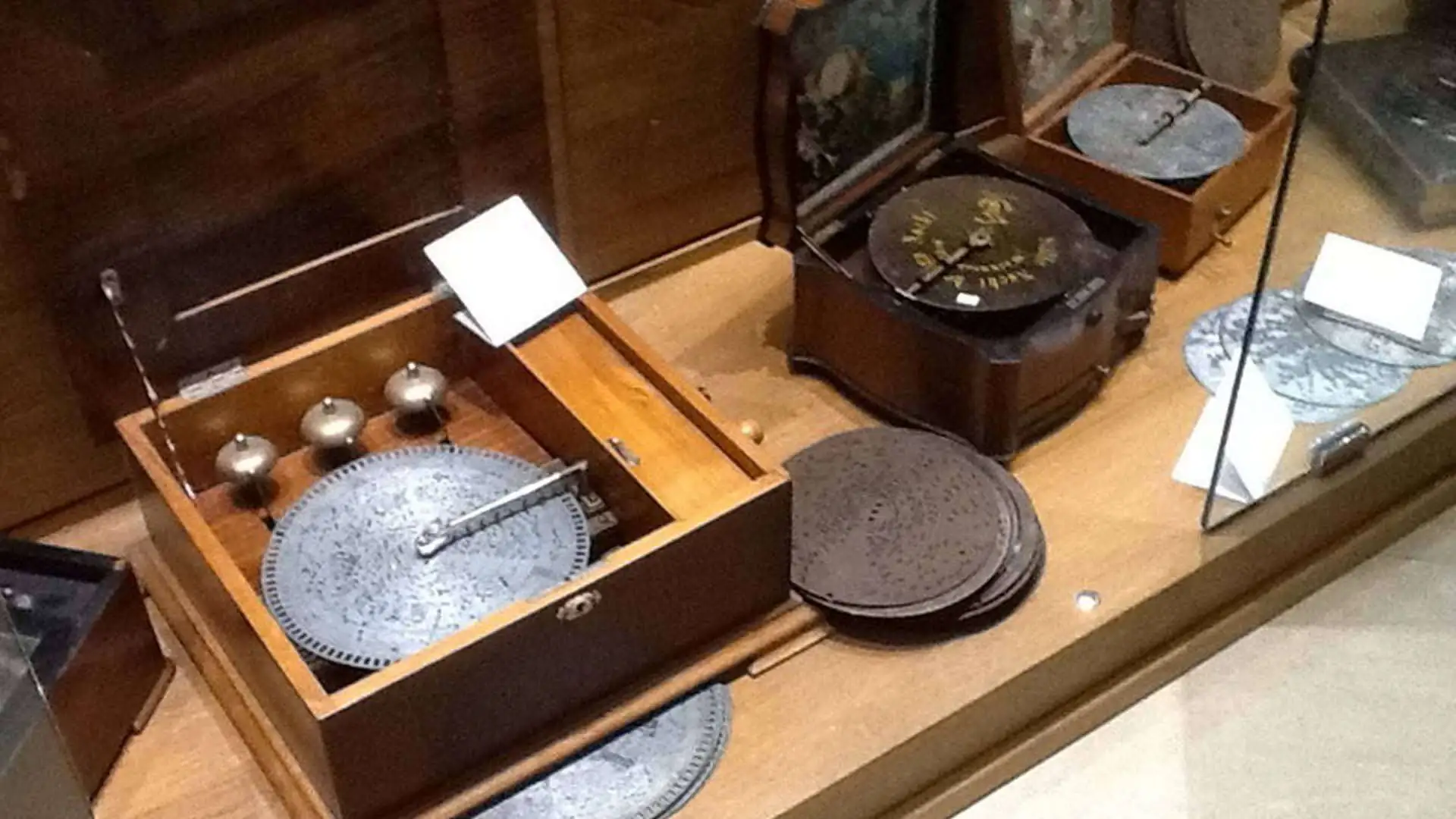
Antique instruments at the Musical Instruments Museum in Seborga

Permanent exhibition of musical instruments

A private collection of 135 antique musical instruments from different periods, some with unusual shapes. It is a short and curious visit, suitable for children too. Opening times change with the seasons, so check with the Pro Seborga tourist office before you go.

The old prisons

In the old town you will find the village’s former prison, a small cell that you can look at from outside. A plaque marks the spot; without it, it would be easy to walk past without noticing.

Square of the Principality of Seborga

The sentry boxes and symbols of the principality

Along the road and at the entrance to the village you will come across the sentry boxes painted in the principality’s colours, and signs welcoming you to the “Principality of Seborga”. In the village you will see the blue and white flag with the crown alongside the Italian tricolour flown by the municipality. The whole story, from the 1729 sale to the 2026 elections, is in our guide to the Principality of Seborga.

Nature and green hills around Seborga

Viewpoint at Piazza Martiri Patrioti

From this panoramic square the view stretches from valleys covered in olive trees down to the sea and the Côte d’Azur. It is the best spot for photos, especially on clear days in winter and early spring.

Square with mosaic paving in Seborga

Where to stay

Where to stay in Seborga

Seborga is very small and has no large hotels: in the village and the surrounding countryside you will mostly find B&Bs, guest rooms and holiday homes. It is the right choice if you want peace and quiet, cool air in summer and sea views at sunset. Without a car, though, getting around is awkward, because the bus does not run on Sundays.

If you want to divide your time between the village and the sea, stay in Bordighera or Sanremo, which have plenty of hotels and good connections, and come up to Seborga for the day.

Nearby alternative

Looking for more choice? Bordighera is 10 km away, by the sea, with hotels, B&Bs and apartments and trains along the coast and to France.

Where to stay in Bordighera →Day trips from Bordighera →

Getting there

How to get to Seborga

By car

Leave the A10 motorway at Bordighera and follow the signs for Seborga: the provincial road climbs through olive groves via Sasso and reaches the village in about 15–20 minutes. The road has quite a few bends, so drive carefully.

By train

The nearest station is Bordighera, on the Genoa–Ventimiglia line. From the station continue by bus or taxi.

By bus

Riviera Trasporti line 10 links Bordighera station with Seborga via Sasso in about 25 minutes. It runs on weekdays only, with few journeys a day: on the 2026/27 winter timetable, departures from Bordighera are at 6:25, 10:45, 14:00 and 18:00, with return journeys from Seborga at 6:50, 11:15, 14:30 and 18:30. There is no service on Sundays and public holidays. Always check the current timetable on the Riviera Trasporti website.

By plane

The nearest airport is Nice Côte d’Azur, about 55 km away: by car it takes around 50 minutes, passing Ventimiglia and leaving the motorway at Bordighera. Alternatively, take the train to Ventimiglia and then on to Bordighera.

Parking

The old town is small and best explored on foot: leave your car in the car parks near the entrances to the village. On festival days it is worth arriving early.
By car

A10, Bordighera exit; then the provincial road via Sasso, 15–20 minutes

By train

Bordighera station; then bus 10 (weekdays only, about 25 minutes) or taxi

By plane

Nice Côte d'Azur (about 55 km); about 50 minutes by car

The guide

The Principality of Seborga in brief

The principality is the first question everyone asks on arrival, so it helps to have the facts straight.

  • Documented history: for centuries the territory belonged to the monks of Lérins; on 30 January 1729 it was sold to Victor Amadeus II of Savoy, King of Sardinia. Historians consider the deed valid.
  • The claim: in 1963 the flower grower Giorgio Carbone argued otherwise and was proclaimed prince as Giorgio I, a title he held until his death in 2009.
  • Today: since 2019 the princess has been Nina Menegatto, the first woman elected. The next elections are set for Sunday 22 November 2026.
  • Legal status: no state recognises the principality. Seborga is an Italian municipality with a mayor and Italian law; the principality operates as an association and works with the municipality on events and tourism.
  • The luigino: the modern coin, minted since the 1990s, is a collector’s souvenir. In the village you pay in euros.

Seborga in half a day: a suggested route

  • Arrival: stop at a sentry box at the entrance to the village and visit the Oratorio di San Bernardo.
  • Old town: climb the alleys up to Piazza San Martino, with the parish church and the Palazzo dei Monaci.
  • Curiosities: look for the old prisons and, if it is open, step into the musical instrument exhibition.
  • Panorama: finish at the viewpoint on Piazza Martiri Patrioti, with views as far as the Côte d’Azur.
  • Lunch or a snack: at a trattoria in the village, then head down to Bordighera for the sea or continue to another village.

Food and shopping in Seborga

Seborga has lived from farming for centuries: olive trees and flowers fill the terraces around the village. The cooking is typical of the western Ligurian hinterland, with vegetables, herbs and olive oil.

  • Extra virgin olive oil: made from Taggiasca olives, it falls under the Riviera Ligure designation.
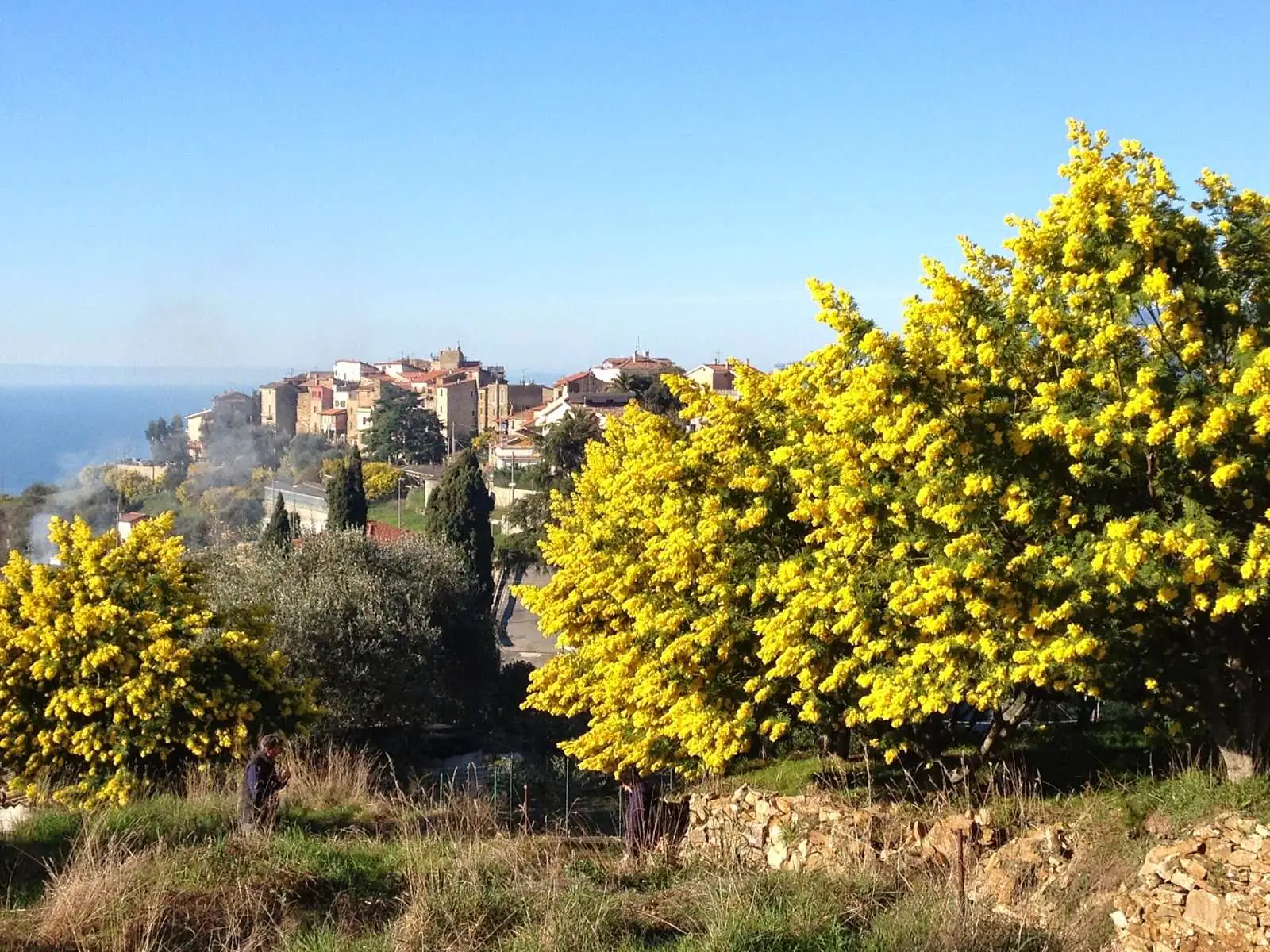
  • Mimosa: Seborga grows several varieties; in late winter the hills turn yellow.
  • “Seborghina” broom: a late-flowering local variety that blooms until mid-April.
  • Principality souvenirs: luigini, stamps and items bearing the coat of arms, sold in the shops of the old town.

Events and when to go

View of the village of Seborga with mimosas in bloom

Seborga can be visited all year round. The loveliest time is between late winter and early spring, when the mimosa blooms, followed by the broom; in summer the village is cool compared with the coast and hosts evening events and festivals.

  • Mimosa in bloom (late winter): the exact timing varies each year with the weather.
  • Festa di San Bernardo (20 August): a procession and celebrations at the Oratorio di San Bernardo.
  • Festa di San Martino (11 November): the patron saint’s feast day.
  • Election of the prince (22 November 2026): the vote for the new seven-year term.
  • Summer: food evenings, music and festivals in the square; the programme is published every year by the municipality and Pro Seborga.

Day trips from Seborga

  • Bordighera (about 10 km, 15–20 minutes): the nearest sea, Bordighera Alta and the Passeggiata del Capo.
  • Sanremo (about 22 km): La Pigna, the Casino and the seafront promenade.
  • Ventimiglia: the old upper town and the big Friday market.
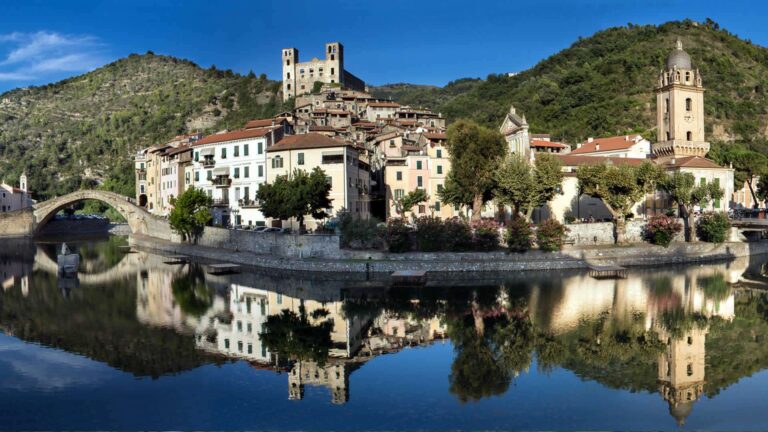
  • Dolceacqua: the village with the bridge painted by Monet, in the Val Nervia.
  • Apricale: one of the Borghi più belli d’Italia, also in the Val Nervia.
  • Bussana Vecchia: the artists’ village in the hills behind Sanremo.

Weather

Weather and best time to visit Seborga

Late winter for the mimosa; spring and autumn; 20 August San Bernardo

⛅
15°CNow · wind 12 km/h
  1. Thu 8🌦️15° 15° 
  2. Fri 9🌦️18° 13°2 mm
  3. Sat 10🌤️19° 12° 
  4. Sun 11🌦️20° 12°1 mm
  5. Mon 12🌤️21° 14°1 mm
  6. Tue 13🌤️20° 12° 

Forecast: MET Norway (Yr), CC BY 4.0 licence. Updated hourly.

Weather across Liguria →

MonthJanFebMarAprMayJunJulAugSepOctNovDec
SeaOff seasonOff seasonOff seasonOff seasonPossibleGoodIdealIdealIdealGoodOff seasonOff season
Sightseeing and hikingGoodIdealIdealIdealIdealGoodGoodGoodIdealIdealGoodGood
CrowdsFew peopleBusyBusyBusyBusyBusyVery busyVery busyBusyFew peopleFew peopleFew people
Don't missFeast of San BernardoSan Martino and election of the prince

IdealGoodPossibleOff season

Crowds:QuietFew peopleBusyVery busy

Gallery

Photos of Seborga

FAQ

Frequently asked questions about Seborga

Is Seborga an independent state?

No. The “Principality of Seborga” is a micronation not recognised by any state. Seborga is an Italian municipality in the province of Imperia; the principality is a symbolic entity run as an association, with an elected princess and its own collector’s currency.

Who is the princess of Seborga?

Since 2019 it has been Nina Menegatto, the first woman elected to lead the principality. Her seven-year term ends in 2026 and the elections are set for 22 November 2026.

What is there to see in Seborga?

Piazza San Martino with the parish church and the Palazzo dei Monaci, the Oratorio di San Bernardo, the musical instrument exhibition, the old prisons, the sentry boxes and the viewpoint over the Côte d’Azur.

How long do you need to visit Seborga?

Half a day is enough for the old town and the viewpoints. With lunch in the village and a walk in the countryside you can stay the whole day.

How do you get to Seborga without a car?

By train to Bordighera and then on Riviera Trasporti line 10, which takes about 25 minutes. It runs on weekdays only, with four journeys a day on the 2026/27 winter timetable; on Sundays you will need a taxi.

Can you pay with luigini?

No, in the village you pay in euros. The modern luigino is a collector’s coin that you can buy as a souvenir.

Does Seborga really have links to the Knights Templar?

It is a widely held local tradition, according to which Bernard of Clairvaux knighted the first Templars here. There are no historical documents to confirm it.

When does the mimosa bloom in Seborga?

In late winter, usually between late January and March depending on the year. The seborghina broom flowers later, until mid-April.

How far is Seborga from the sea?

About 10 km from Bordighera, 15–20 minutes by car. The nearest beach is in Bordighera.

Nearby

What to see near Seborga

5 km as the crow flies

Bordighera

The city of palms: Bordighera Alta, Capo Sant'Ampelio, the villas and gardens of the English colony, Blue Flag beaches and…

Discover →

6 km as the crow flies

Dolceacqua

The bridge painted by Monet, the Castello dei Doria and Rossese, Liguria's first DOC: a guide to the iconic Val…

Discover →

7 km as the crow flies

Sanremo

The town of the Festival and flowers: La Pigna, the Liberty-style Casino, the Russian Church, the Passeggiata Imperatrice, Blue Flag…

Discover →

7 km as the crow flies

Apricale

Sun-drenched stone village in the val Nervia: the Castello della Lucertola, murals, a theatre-like square, pansarola and the Teatro della…

Discover →
Scroll to Top