Monet's 1884 stay in Bordighera: dates, the places he painted, where to see the paintings today and how to follow in his footsteps.
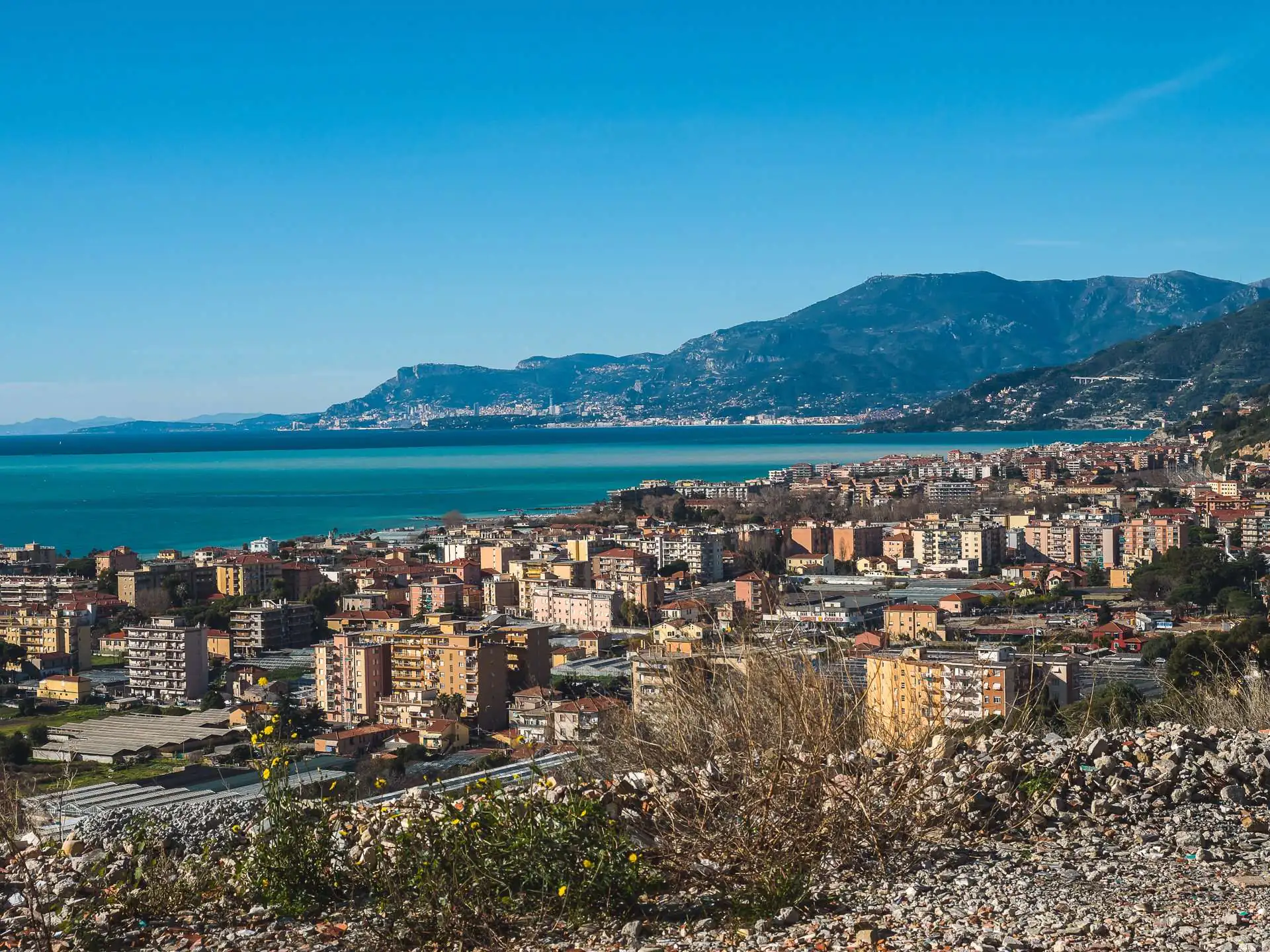
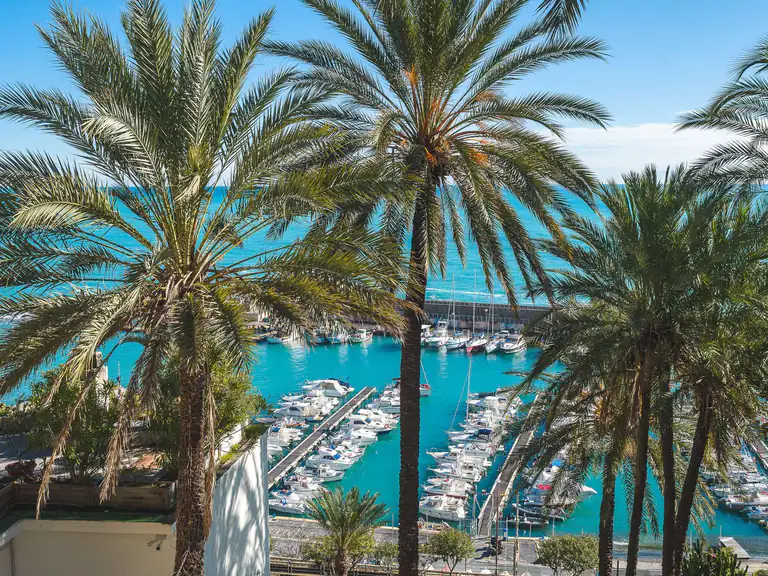
Bordighera and the coast towards France from above
When
from 18 January to early April 1884
Where he stayed
Pension Anglaise
Paintings
around fortysources give anywhere from 38 to more than 50
Main locations
Giardino MorenoVallone del Sasso, Bordighera Alta, via Romana
Where to see the paintings
ParisChicago, Los Angeles and private collections
Guided tours
"I luoghi di Monet"Monet's places), run in town
In 1884 Claude Monet spent almost three months in Bordighera and painted around forty pictures: palms, olive trees, gardens, the old village and the mountains behind the coast. It was one of the most intense periods of his career, and the first in which he took on the light of the Mediterranean. This guide covers his stay, the places he painted, where to see his canvases today and how to follow in his footsteps around town.
By Italian Riviera editorial team·Updated on ·5 min read
Monet's stay in Bordighera
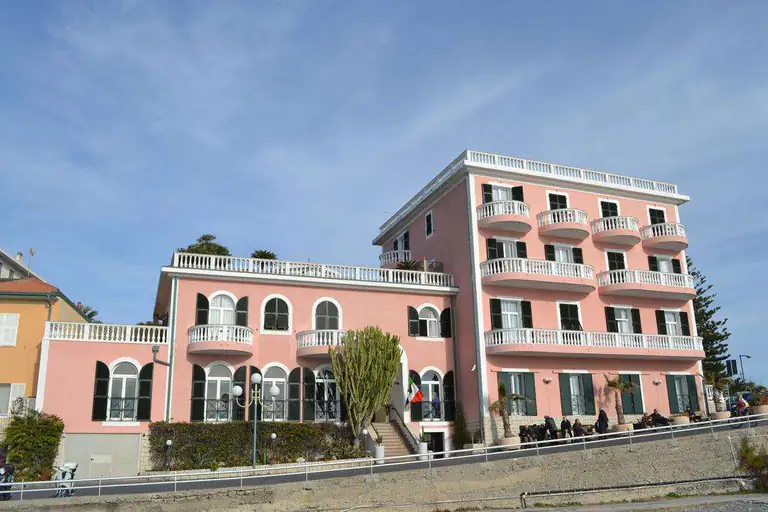
In December 1883 Monet and Renoir travelled along the Riviera, from Marseille to Genoa. Monet was struck by Bordighera and decided to come back alone, without telling Renoir. He arrived on 18 January 1884 and took a room at the Pension Anglaise, one of the guesthouses popular with the town’s English visitors.
He meant to stay a few weeks; he remained until early April. In his letters to his partner Alice Hoschedé he describes both his enthusiasm and his struggle: the light was so intense and the colours so vivid that he said he had to change his palette, and the palms drove him mad. He painted outdoors every day, moving between the gardens, the hillside and the village, and working on several canvases at once depending on the time of day.
During his stay he also made a trip to Dolceacqua, where he painted the castle and the medieval bridge, and passed through Ventimiglia.
The places Monet painted
Many of the spots where Monet set up his easel can still be recognised, even though the town has grown in 140 years. These are the main ones.
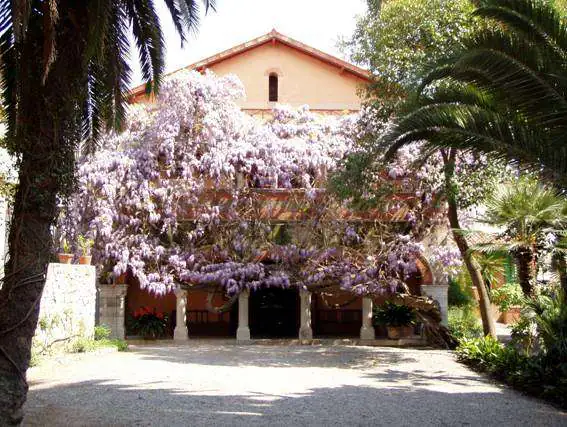
The Giardino Moreno
The large garden created around 1830 by the olive-oil merchant Vincenzo Moreno was famous for its palms and exotic plants. Monet obtained permission to paint it and returned many times: this is where the canvases of palms and intertwined olive trees come from. Part of that garden survives today in the Giardini Monet.
The Vallone del Sasso
Behind Bordighera, the valley that climbs towards the village of Sasso is dominated by olive trees and mountains. Monet painted it in several versions, with the village up high and the light changing over the hills.
Bordighera Alta and the Torre dei Mostaccini
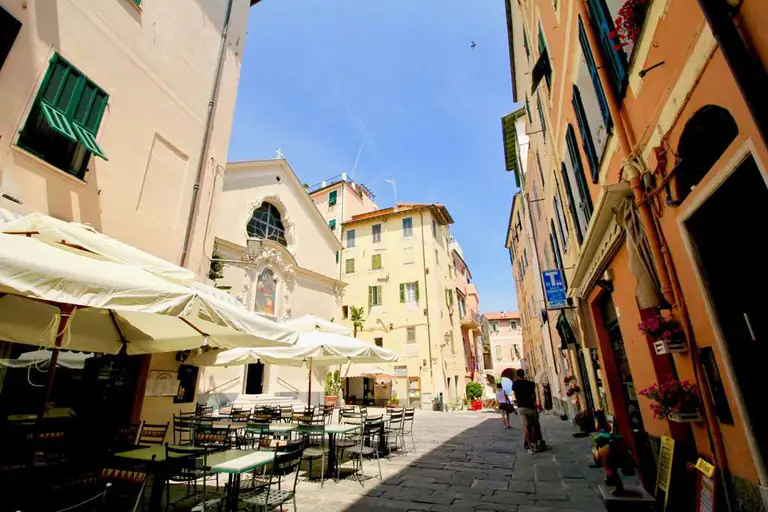
From the area around the Torre dei Mostaccini, a 16th–17th-century watchtower, Monet painted the old village among the pines, with the bell tower of the Maddalena and the sea in the background. It is the most famous view of Bordighera.
Via Romana and the villas
Along via Romana he painted the villas of the English colony set among their gardens: in “Villas at Bordighera”, now in the Musée d’Orsay, you can recognise Villa Bischoffsheim, today’s Villa Etelinda.
The Beodo path
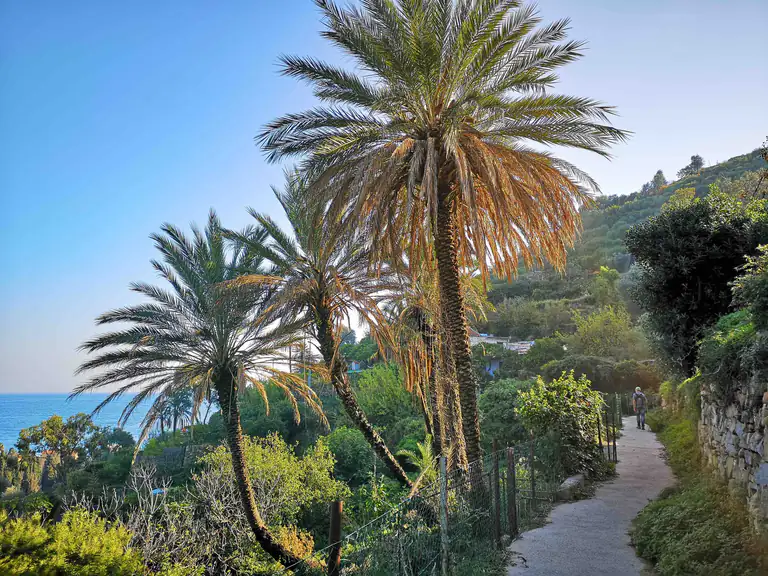
The path along the old Beodo channel, which leads towards the Sasso valley, appears in three canvases. It is still a walk among olive trees and palms today.
The park of Villa Pompeo Mariani
In the park of the villa that belonged to the painter Pompeo Mariani you can recognise the three spots where Monet placed his easel in 1884. The villa can be visited by appointment.
Where to see the Bordighera paintings today
The canvases painted in Bordighera are scattered around the world, in museums and private collections. Among the best known are “Villas at Bordighera” at the Musée d’Orsay in Paris, “Bordighera” at the Art Institute of Chicago and a view of the town at the Hammer Museum in Los Angeles. There are no original Monet paintings on permanent display in Bordighera; from time to time the town organises exhibitions and events dedicated to him, such as the one planned for 5 December 2026 to mark the centenary of his death.
In Monet's footsteps in Bordighera
The best way to discover Monet’s places is on a guided tour. The tourist office runs “I luoghi di Monet”, a walk of about three hours, and tours with experts are held during the year, such as those organised by Villa Pompeo Mariani. If you prefer to go on your own, you can follow this route:
Start from the Giardini Monet and via Romana, with its Belle Époque villas and Villa Etelinda.
Climb towards Bordighera Alta and the area around the Torre dei Mostaccini for the view of the village.
Continue along the Beodo path towards the Vallone del Sasso, among olive trees and palms.
If you have booked, visit the park of Villa Pompeo Mariani.
By car or on bus 7 from Ventimiglia you can round off the trip in Dolceacqua, where Monet painted the bridge and the castle: there, reproductions of the paintings stand on panels along the route.
5 December 2026 marks a hundred years since Monet’s death: an event is planned in Bordighera at Villa Regina Margherita, which is not usually open to the public. It is also a good reason to discover the town in winter, the season in which he painted it: see Bordighera all year round.
Why Monet chose Bordighera
At the end of the 19th century Bordighera was one of the most elegant winter destinations in Europe, with hotels, villas and exotic gardens created by the English. For a painter from the north it was a new world: palms, citrus trees, silvery olives and a sharp white light, very different from that of Normandy. The Bordighera canvases mark Monet’s shift towards brighter colours and stronger contrasts, which would return in the years that followed.
FAQ
Frequently asked questions about Monet in Bordighera
When was Monet in Bordighera?
From 18 January to early April 1884. He had first seen the town in December 1883, on a trip with Renoir.
How many paintings did Monet paint in Bordighera?
Around forty: sources give anywhere from 38 to more than 50 works, including the canvases painted in the surrounding area, such as those of Dolceacqua.
Where can you see Monet's paintings of Bordighera?
In museums in Paris (Musée d’Orsay), Chicago (Art Institute) and Los Angeles (Hammer Museum) and in private collections. There are no originals on permanent display in Bordighera.
Where did Monet stay in Bordighera?
At the Pension Anglaise, one of the guesthouses popular with the town’s English visitors.
Are there guided tours of Monet's places?
Yes, the Bordighera tourist office runs the “I luoghi di Monet” tour, and themed tours with experts are held during the year. It is worth asking for the schedule at the IAT tourist office, at via Vittorio Emanuele 172.
Where to stay
Where to stay in Bordighera
All places to stay in Bordighera on Booking: compare prices and availability.