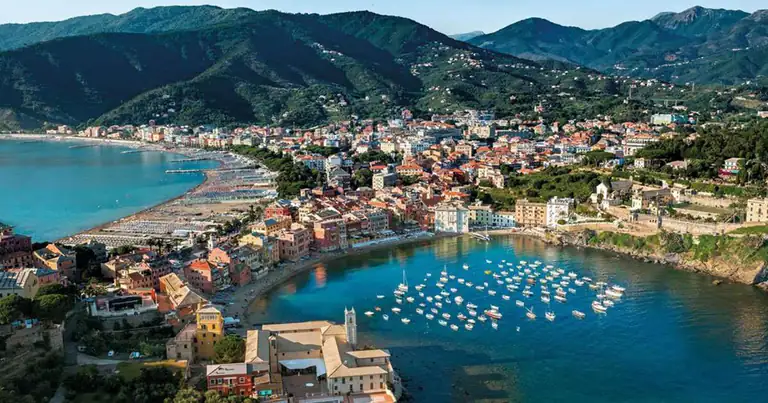
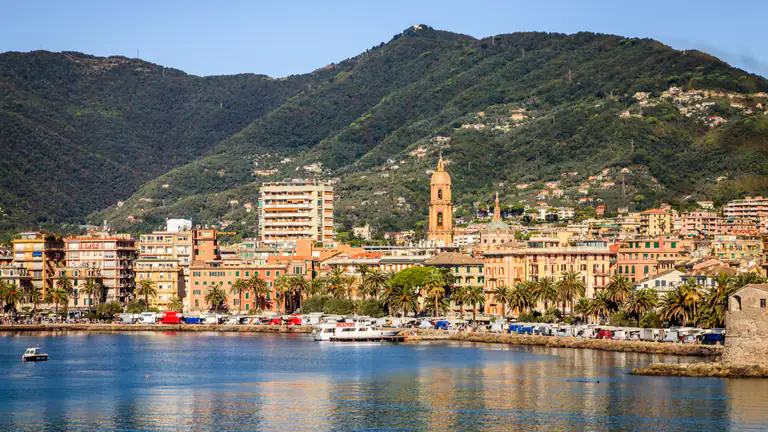
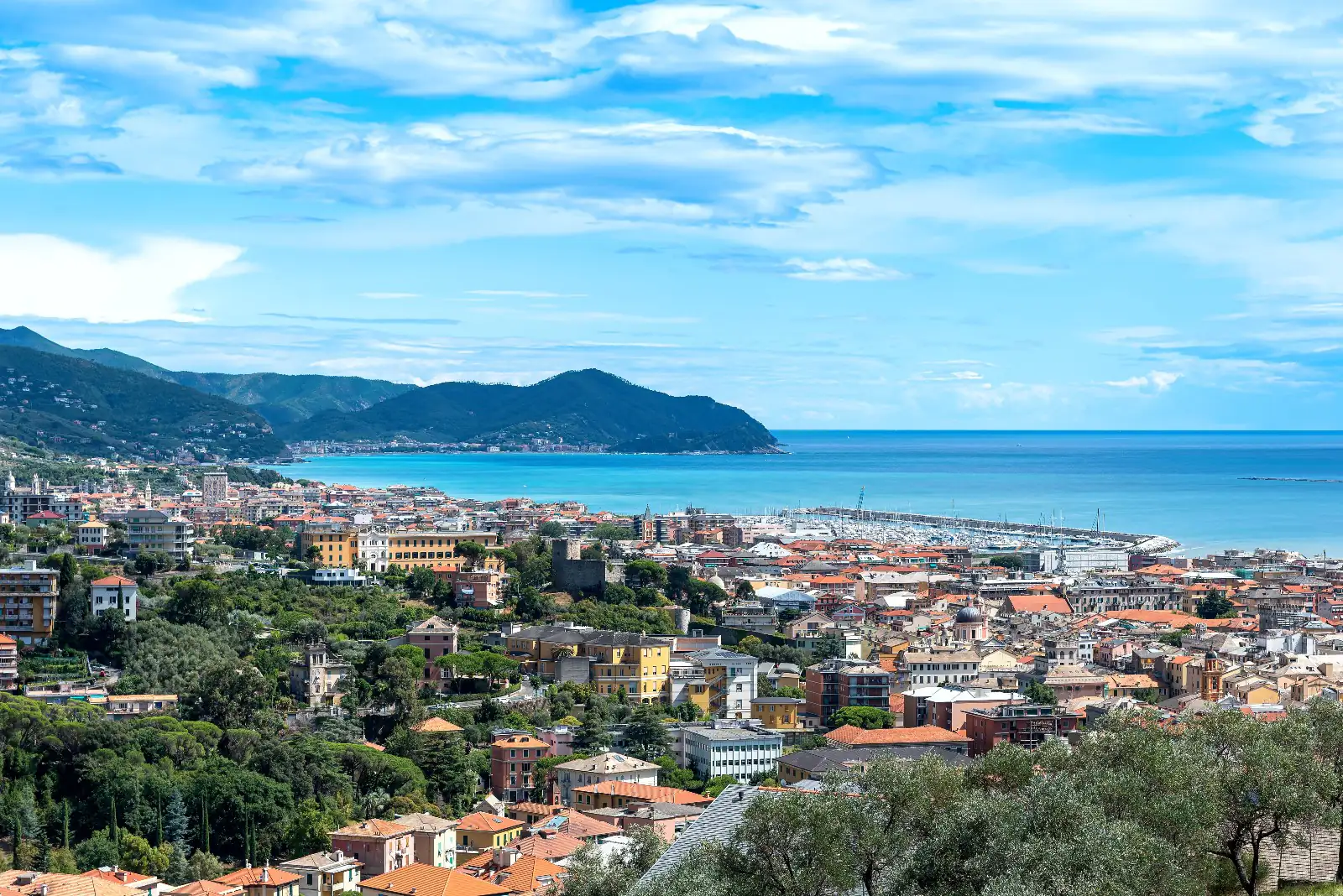
View of Chiavari and the Tigullio coast

Chiavari

The town of arcades: the carruggio dritto, cathedral, Palazzo Rocca and its museum, a monthly antiques market, free beaches and easy trips to Portofino.

View of Chiavari and the Tigullio coast
Area
Golfo del TigullioRiviera di Levante · Province of Genoa
Ideal for
Travellers wanting a real towneasy by train, with markets, sea and Tigullio trips
Beaches
Long pebble beacheswith wide free stretches in front of the Colonia Fara
Best time to go
June and September for the seathe old town and antiques market all year
By train
Chiavari stationGenoa–La Spezia line): 30–60 min from Genoa, 45–60 min from La Spezia
By car
A12, Chiavari exit, a few minutes from the centrethe old town is pedestrianised
Airport
Genoa Cristoforo Colombo (about 35–40 km)Pisa about 130 km
How long to stay
Half a day for the centre3–4 days as a base for the Tigullio and Cinque Terre

Welcome to Chiavari

The town of arcades

Chiavari is the largest town on the Gulf of Tigullio: about 27,500 people, an old centre threaded with roughly five kilometres of arcades, and a seafront that runs from the marina to the white tower of the Colonia Fara. It sits at the mouth of the Entella river, halfway between Portofino and Sestri Levante, with Lavagna just across the bridge.

It is not a postcard village like Portofino, and that is the point. Chiavari is a real town that stays busy all year, with old-fashioned shops, cafés under the arcades and a monthly antiques market that fills the centre. The famous Chiavari chair was born here in 1807, and the town’s Iron Age necropolis is one of the most important in Liguria.

Chiavari also makes a practical base. The station is on the Genoa–La Spezia line, boats leave from the marina, and Rapallo, Santa Margherita and Sestri Levante are all within half an hour. You can see the centre in half a day; allow three or four days if you want beaches, hikes and day trips to Portofino and the Cinque Terre.

Where is Chiavari?

Chiavari is in Liguria (Riviera di Levante, Golfo del Tigullio, province of Genoa).

Map: where Chiavari is in LiguriaPIEDMONTLOMBARDYEMILIA-ROMAGNATUSCANYFRANCERIVIERA DI PONENTERIVIERA DI LEVANTELIGURIAN SEASavonaImperiaSanremoLa SpeziaChiavari
Boundaries: ISTAT, Natural Earth · Interactive map →

What to see

What to see in Chiavari

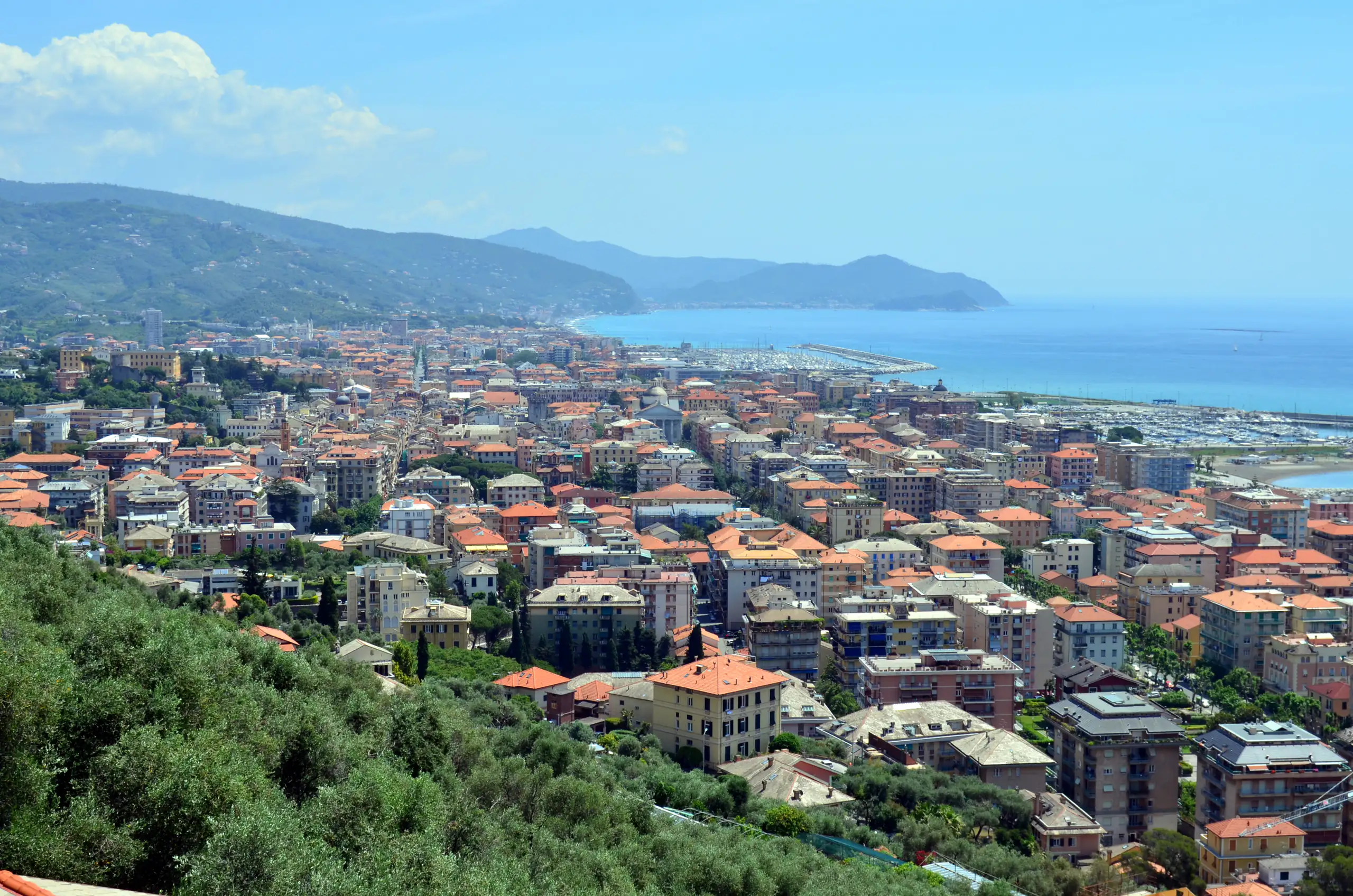
View of Chiavari and the Gulf of Tigullio

The old centre is flat, compact and best explored on foot. Start from the station, which faces the marina, and you are under the arcades in five minutes. Leave the car outside the centre: spaces are few and all paid.

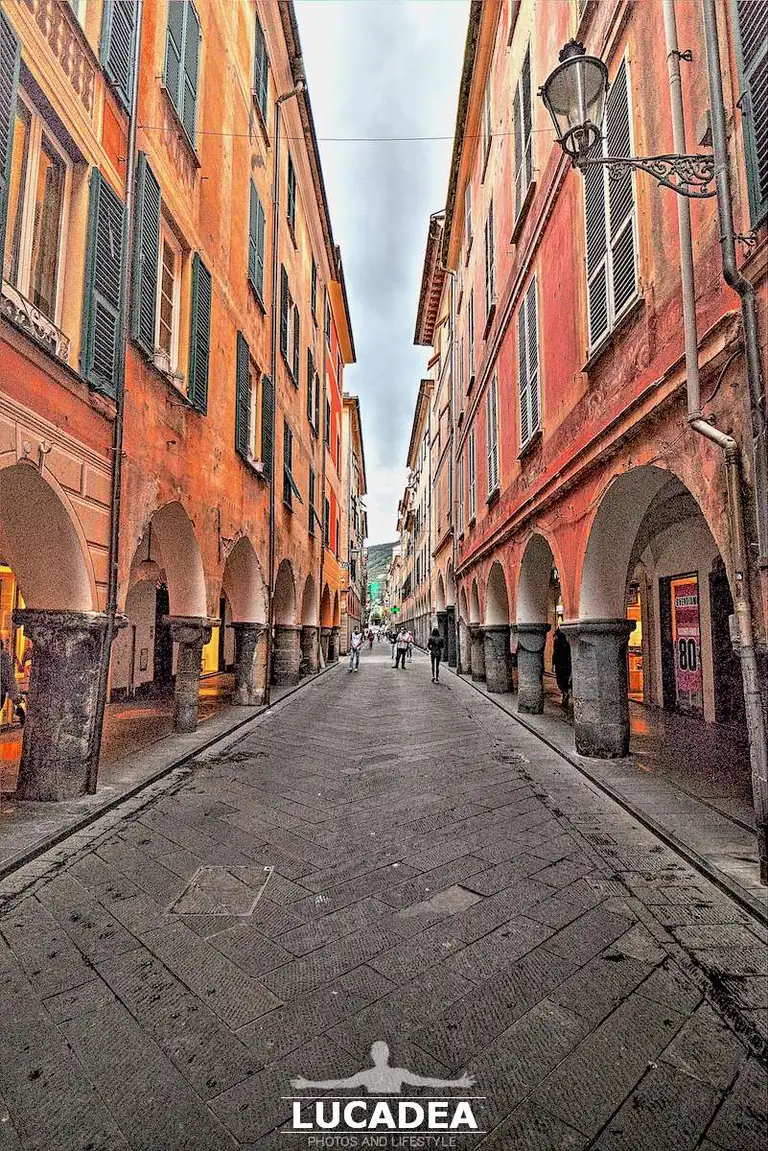
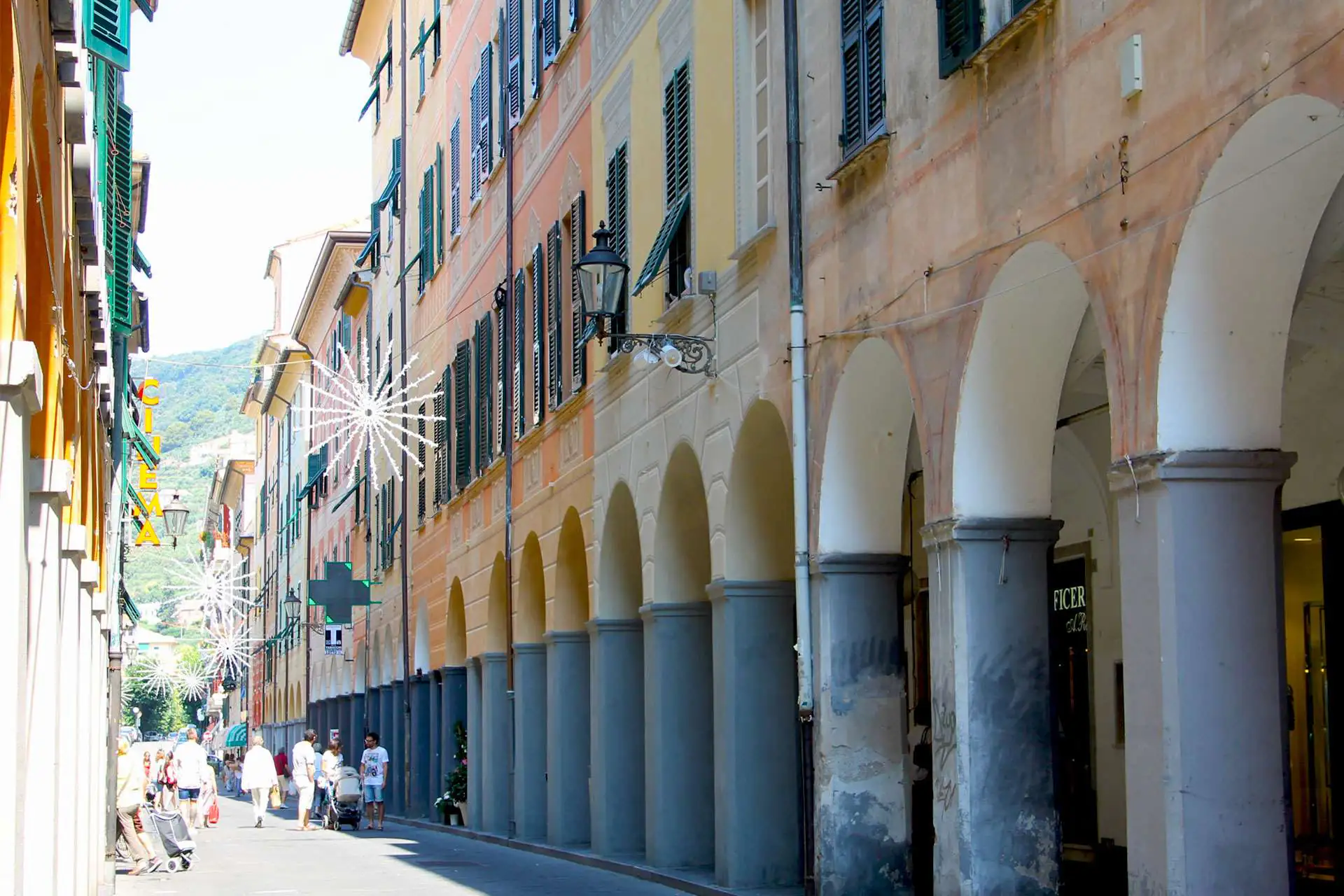
Arcaded Carruggio Dritto in Chiavari

The carruggio dritto

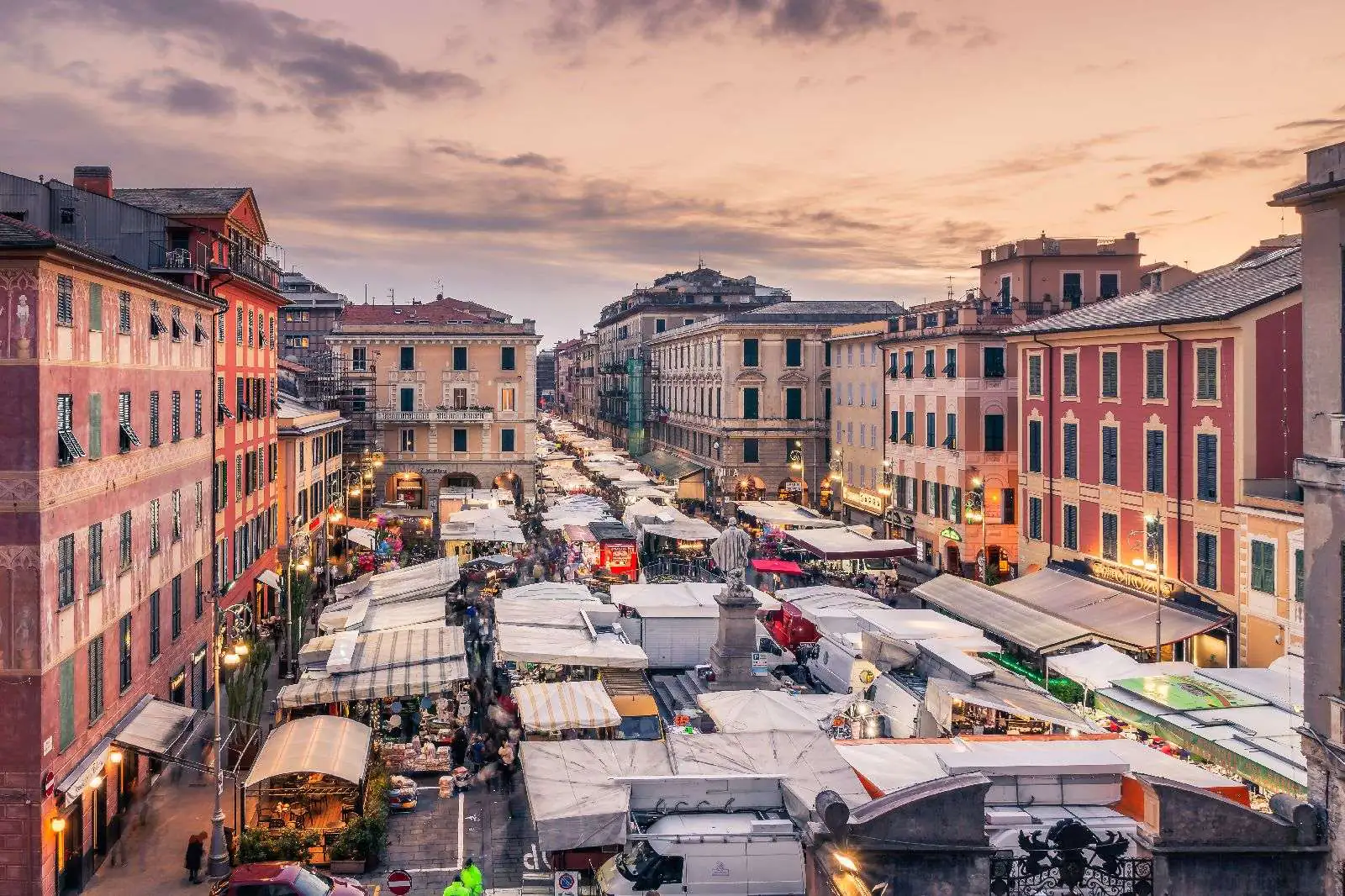
Via Martiri della Liberazione is the backbone of the old town, and everyone calls it the “carruggio dritto”, the straight lane. It is long, dead straight and arcaded on both sides, lined with pastry shops, historic cafés and old shops selling everything from fabric to anchovies. This is where locals take their evening stroll, especially on Saturdays.

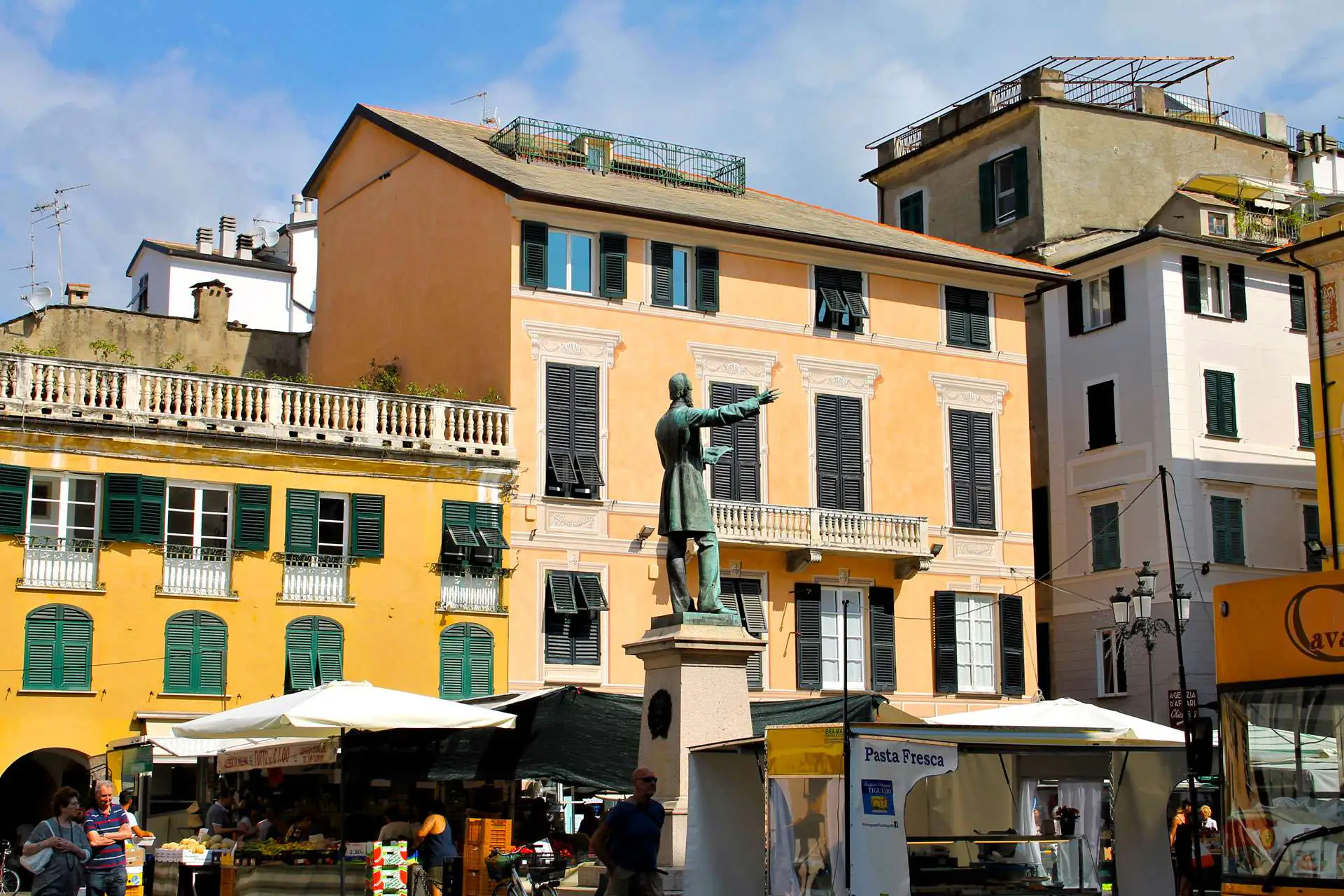
On the second weekend of every month the street and the lanes around it fill with the stalls of the antiques market. Dates for 2026, opening hours and tips are in our guide to the Chiavari antiques market.

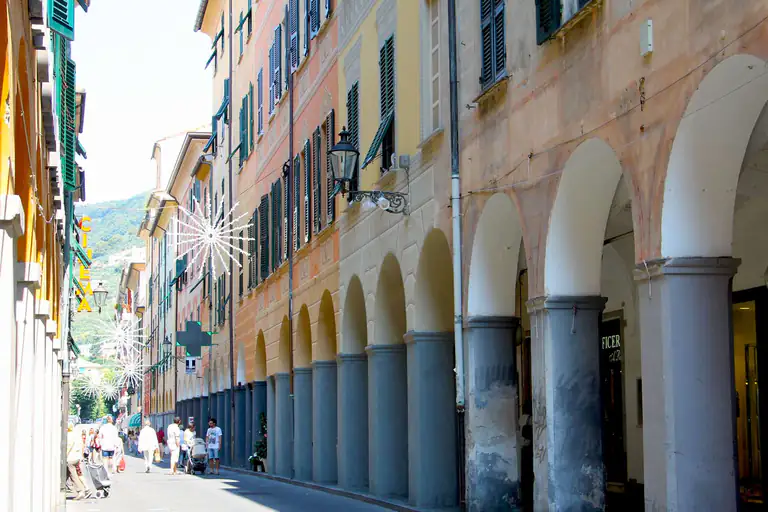
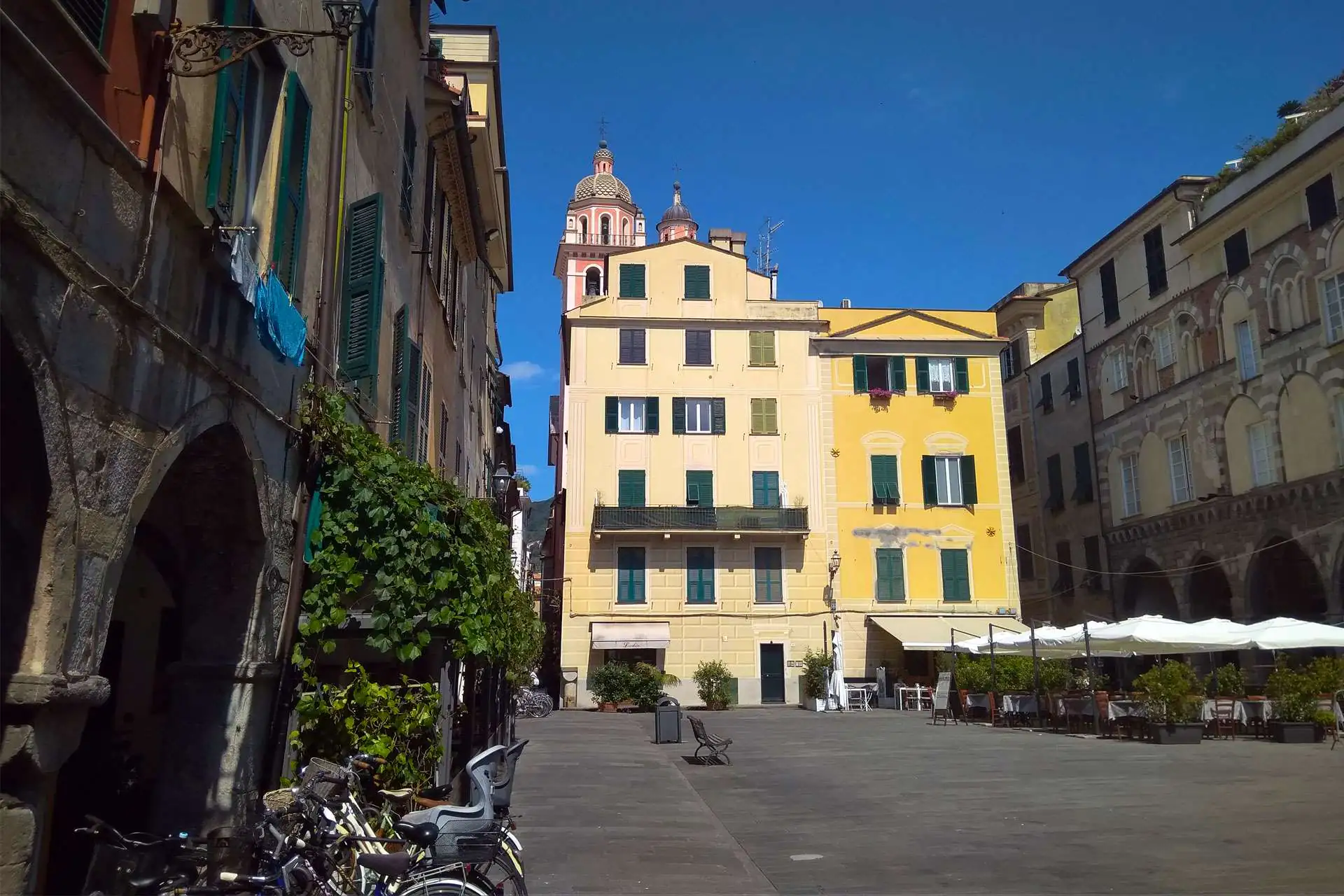
Arcades in Chiavari's historic centre

The arcades and old palazzi

No two stretches of arcade are the same: low medieval arches, stone columns, whitewashed vaults. The oldest is Palazzo Masina, known as the “black arcades”, built in the first half of the 13th century with a Gothic façade. In the streets parallel to the carruggio you will also find the palazzi of the Fieschi and Ravaschieri families, who ran the town under the Republic of Genoa.

Walk slowly and look up: many façades have slate doorways, coats of arms and painted decoration. The centre began as a fortified Genoese town, with walls built in 1167.

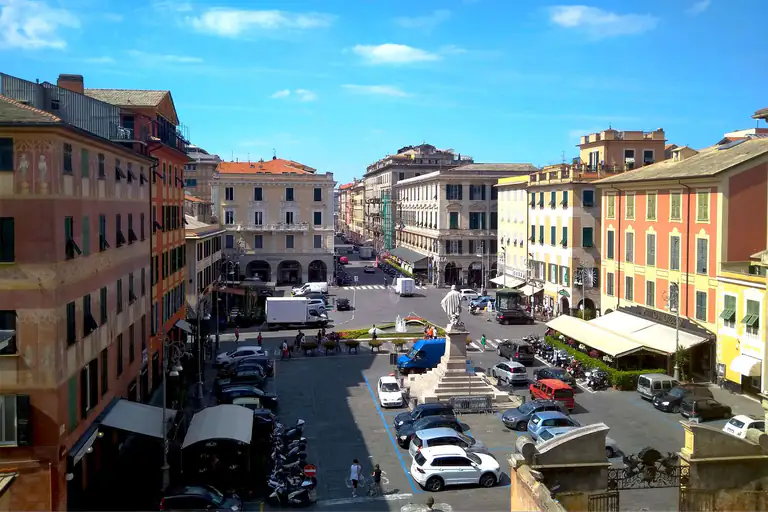
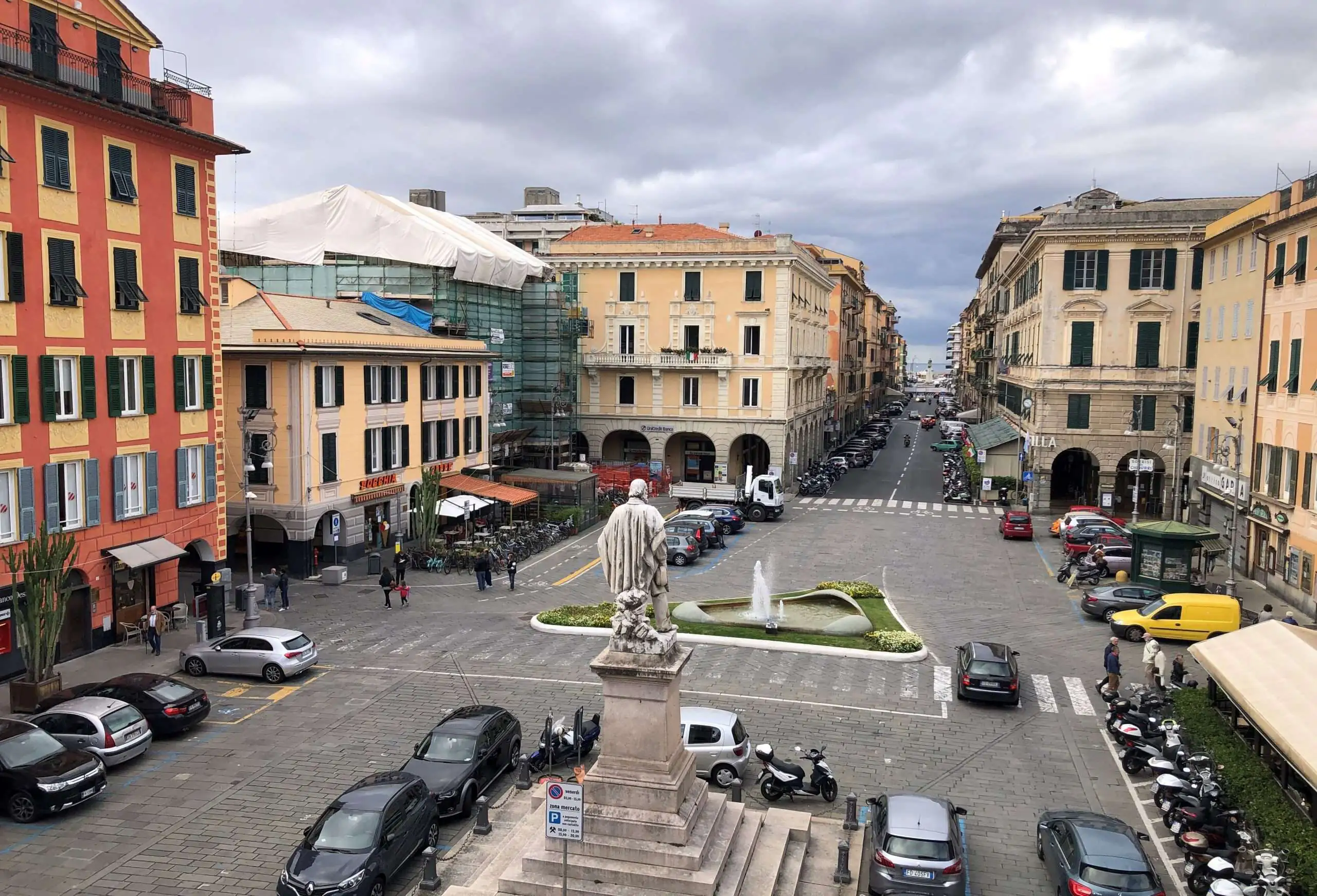
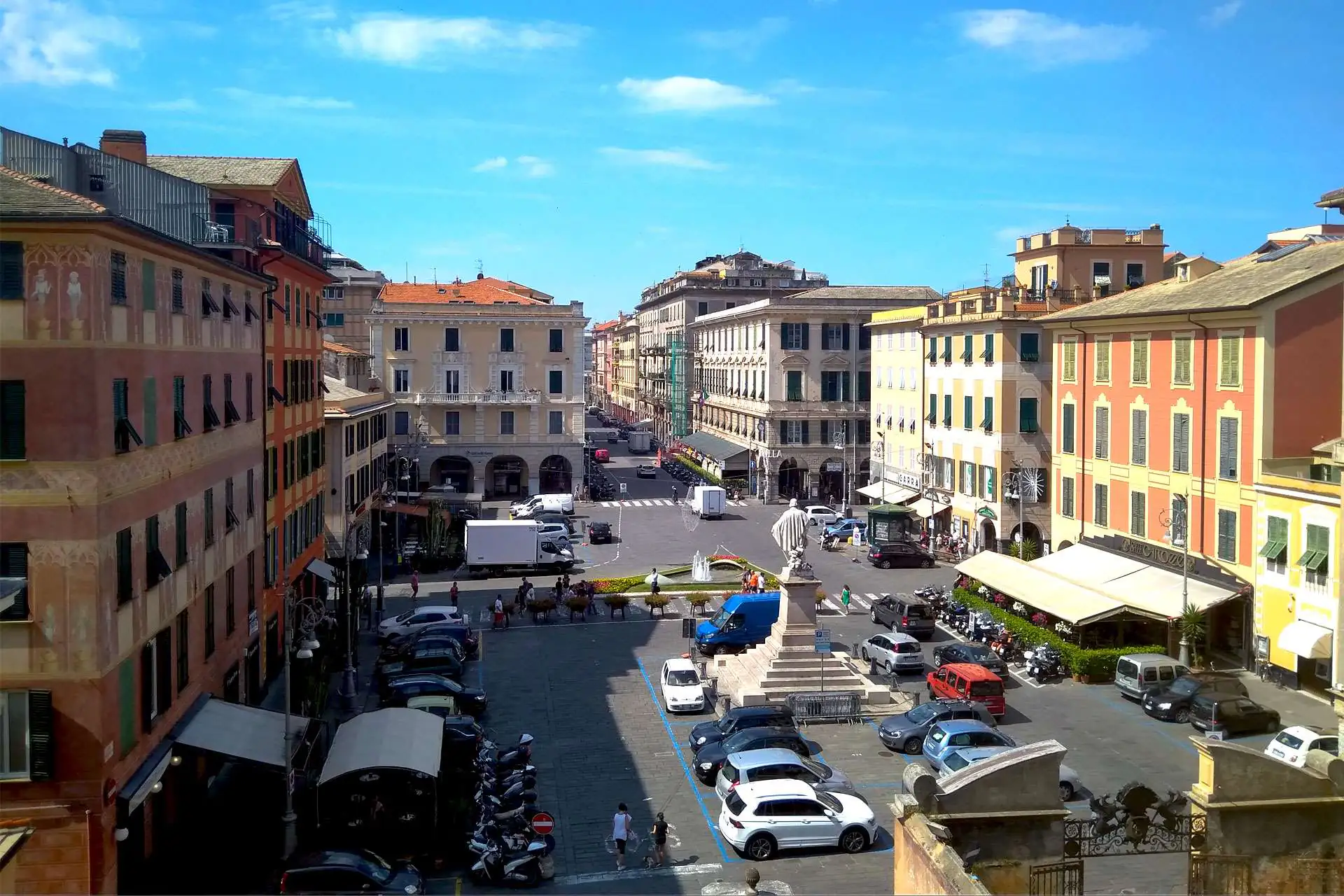
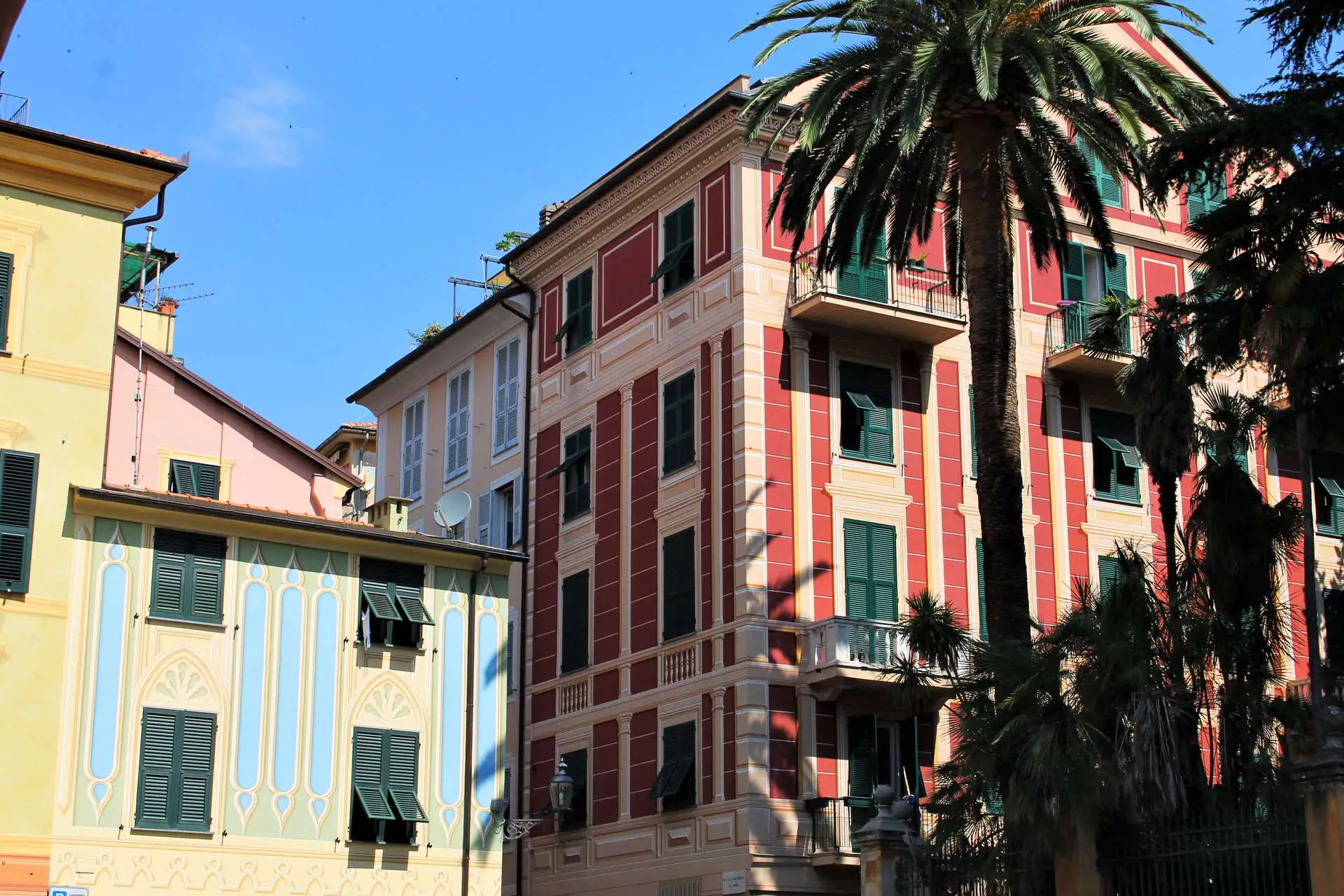
Square and colourful buildings in central Chiavari

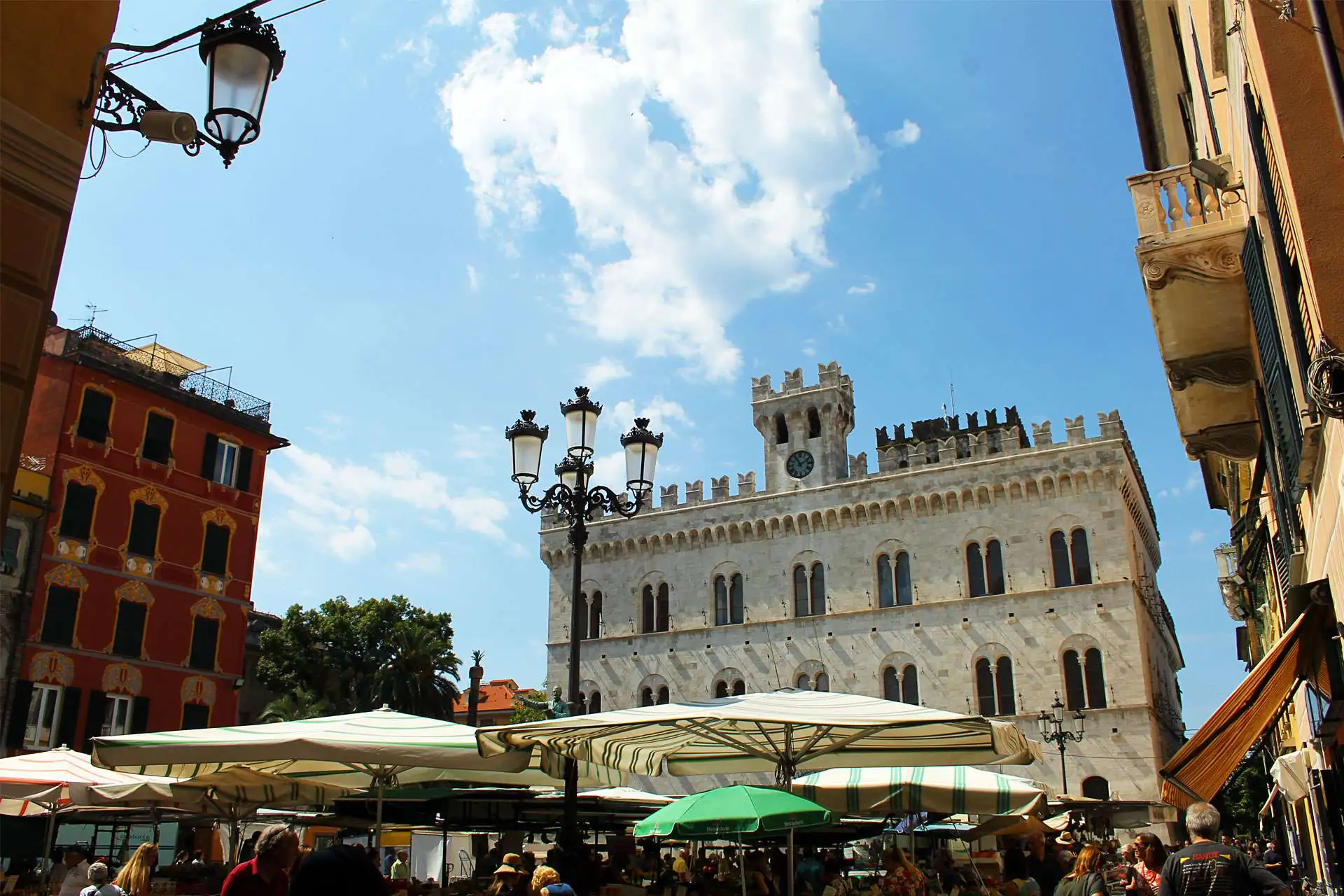
Piazza Mazzini and Palazzo Torriglia

Piazza Mazzini is the heart of town, surrounded by colourful buildings and café terraces. On the square stands Palazzo Torriglia, from the early 1600s. In the 19th century its ground floor was the Albergo della Posta, where Giuseppe Garibaldi stayed in 1849 and the novelist Alessandro Manzoni in 1852. On the Sunday of the antiques market the square hosts craft stalls and street artists.

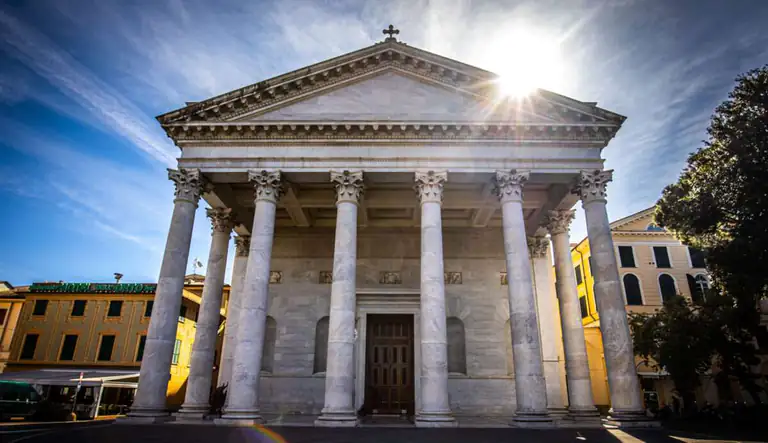
Neoclassical façade of the Cathedral of Nostra Signora dell'Orto in Chiavari

Cathedral of Nostra Signora dell'Orto

The cathedral is Chiavari’s best-known landmark, with a huge marble portico of columns that looks like a classical temple. Building began in 1613, after an apparition of the Virgin traditionally dated 2 July 1610. The portico was designed by Luigi Poletti in 1836 but only finished in 1907. Our Lady of the Orchard is the town’s patron: on 2 July there is a big street fair and fireworks over the marina.

Church of San Giovanni Battista

This is the oldest foundation in the centre. It was founded in 1181 by Bardo Fieschi and rebuilt between 1624 and 1631 by the architects Andrea Ceresola and Bartolomeo Bianco. The marble façade dates from 1935. Inside it is a large Genoese Baroque church.

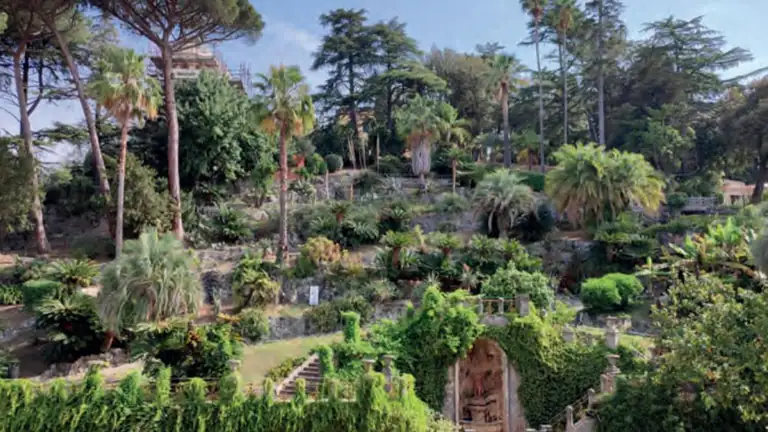
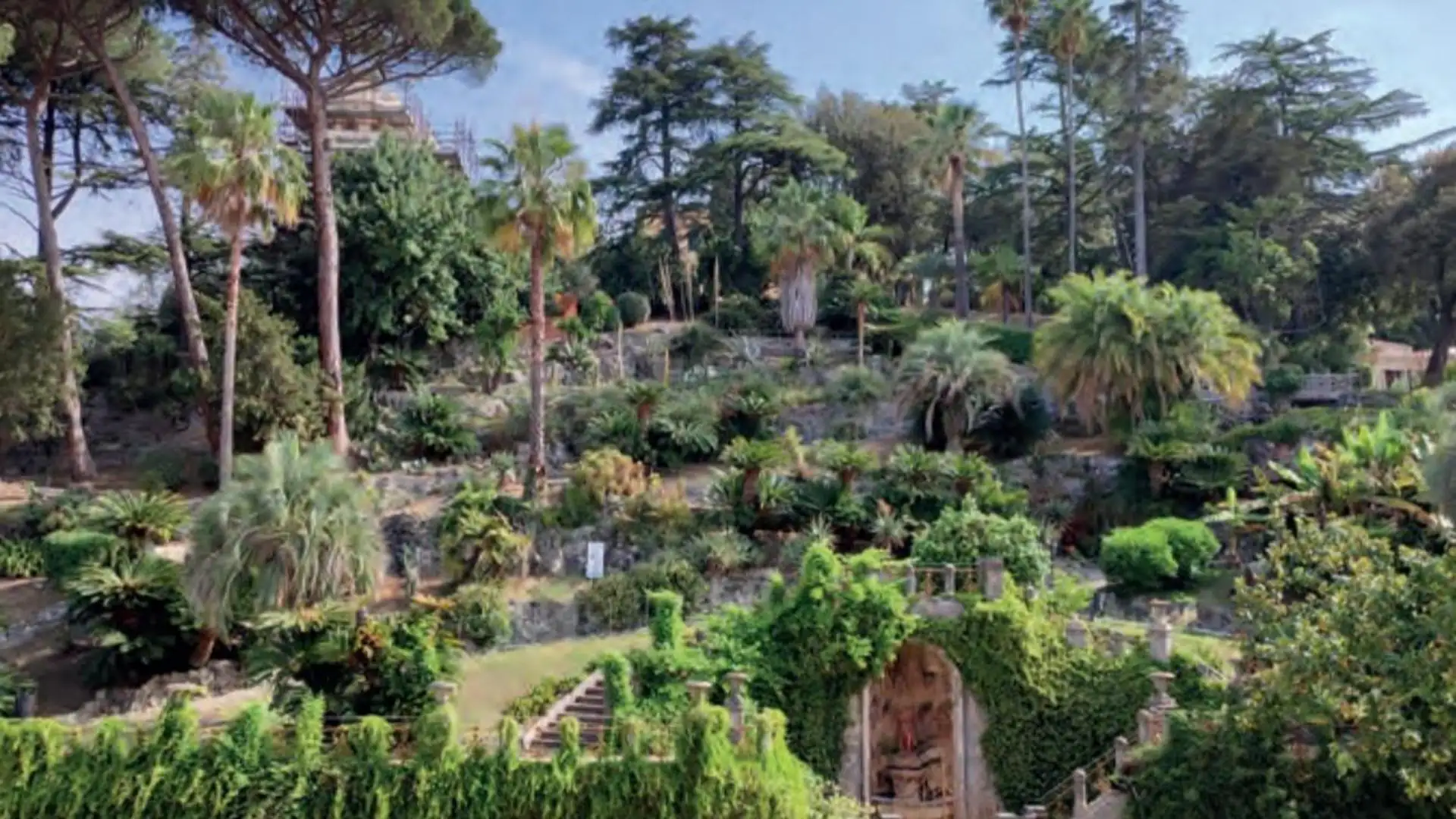
Park of Villa Rocca in Chiavari

Palazzo Rocca and the Villa Rocca park

At the foot of the hill, a few minutes from the centre, Palazzo Rocca was built in 1629–1630 for the Costaguta marquises, again to a design by Bartolomeo Bianco. The town has owned it since 1912. The main floor houses the Civic Gallery of paintings, with limited opening times, so check before you go. Behind it the Villa Rocca park climbs the hillside with paths, old trees and views over the rooftops: a good shady break on a hot day.

Archaeological museum and pre-Roman necropolis

The former stables of Palazzo Rocca house the National Archaeological Museum. It tells the story of a discovery made in 1959, when building work near viale Millo uncovered a necropolis from the 8th–7th centuries BC, the early Iron Age. The graves were stone “box” tombs with valuable grave goods. The 2021 layout starts with the area’s raw materials and ends with Roman and medieval finds.

In 2026 the museum opens Tuesday to Saturday, 9am–2pm (Thursday until 5pm), and on the second Sunday of the month, the same day as the antiques market. A full ticket costs €3, and under-18s go free. Check for changes on the official museum page.

The Società Economica and the Chiavari chair

On via Ravaschieri stands the Società Economica, founded in 1791 by local nobles and merchants to promote farming, crafts and education. It houses a historic library, a picture gallery and the Risorgimento Museum.

This is where the Chiavari chair was born. In 1807 the society’s president, the Marquis Stefano Rivarola, asked the cabinetmaker Giuseppe Gaetano Descalzi, known as “Campanino”, to make a lighter version of some Empire-style chairs brought back from Paris. Descalzi slimmed down the frame, used cherry wood and a woven seat, and the “chiavarina” was born: so light you can lift it with one finger. Today you know it from every wedding and gala dinner. In the 1950s Gio Ponti drew on its structure for his Superleggera chair, and a few local workshops still make it by hand.

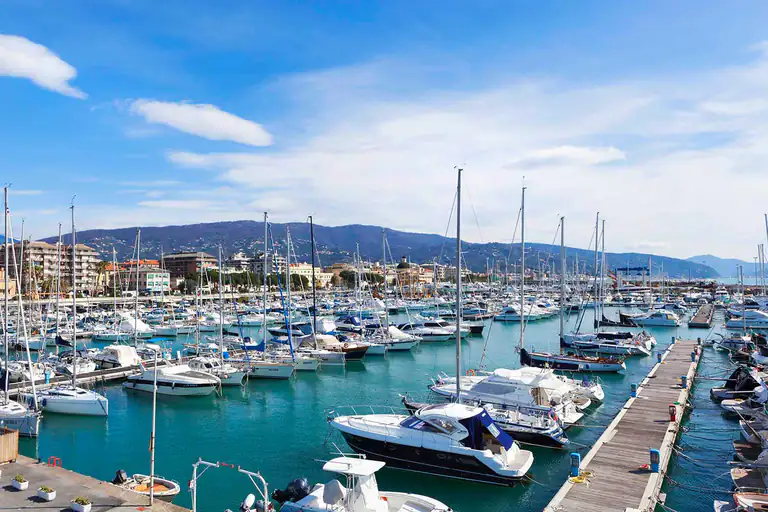
Chiavari marina

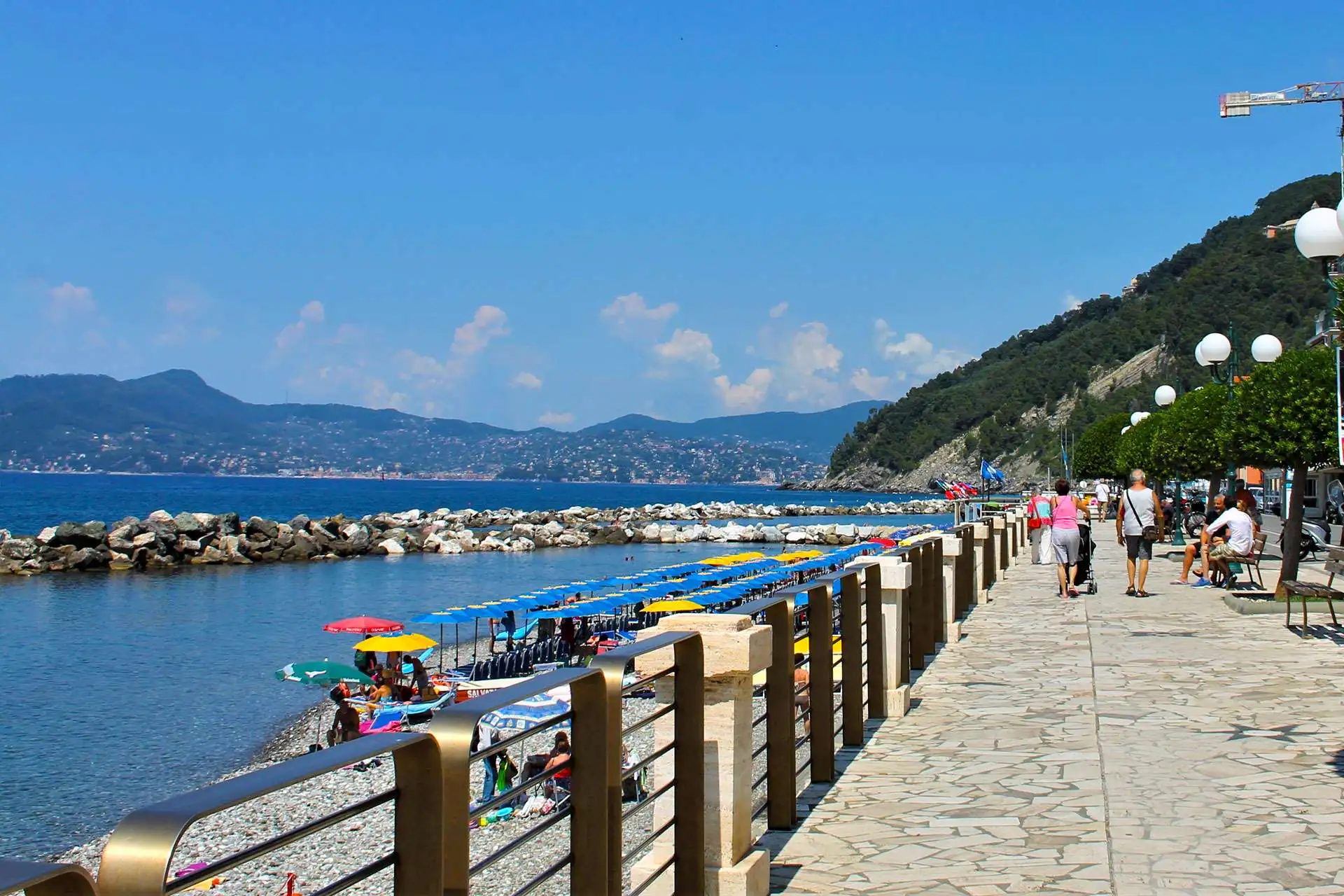
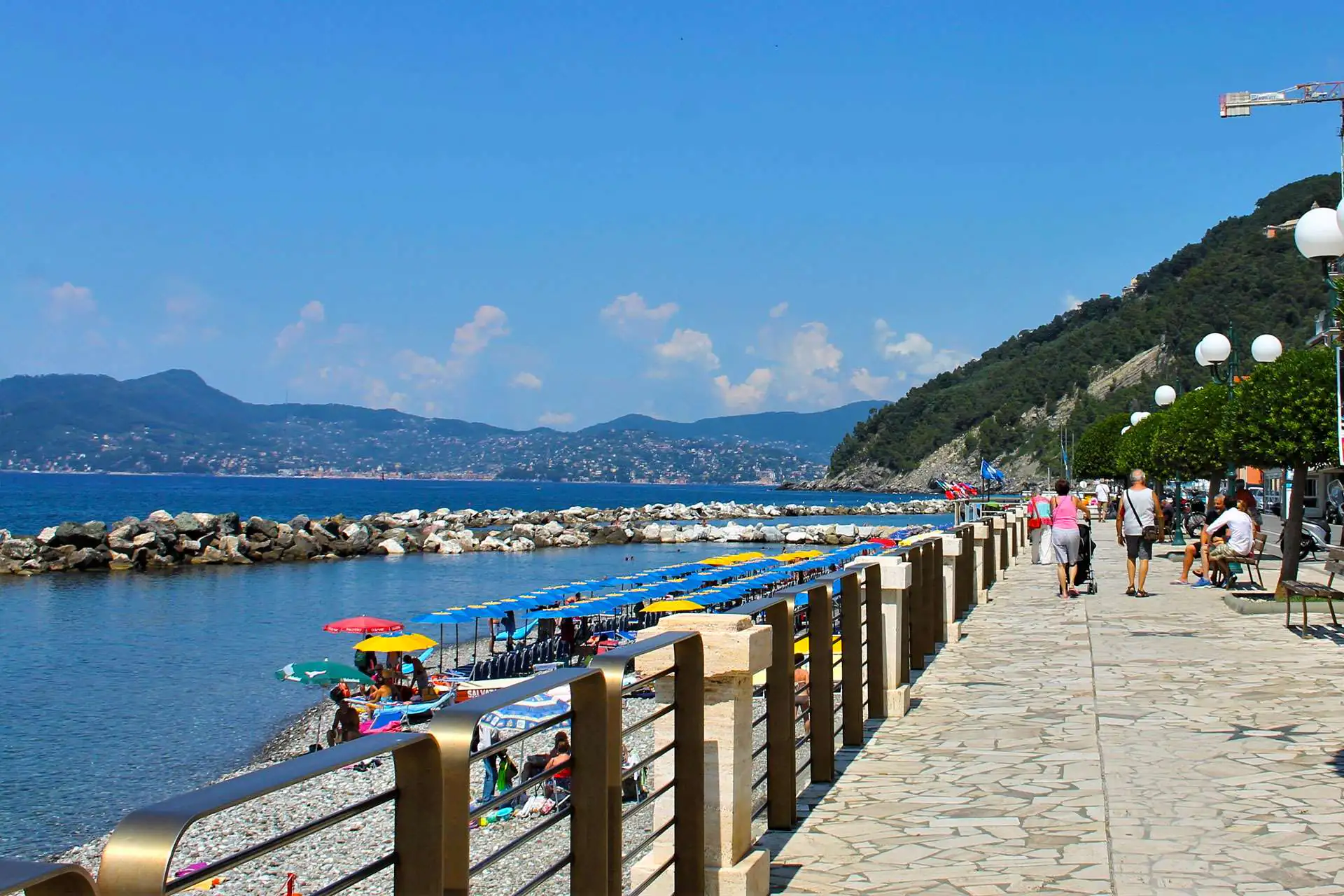
The marina and the seafront promenade

Right opposite the station is the marina, full of sailing boats and yachts; the tour boats leave from here too. From the marina, corso Valparaiso runs along the sea: a long promenade with gardens, playgrounds, kiosks and ice-cream shops. Joggers use it in the morning, everyone else at aperitivo time.

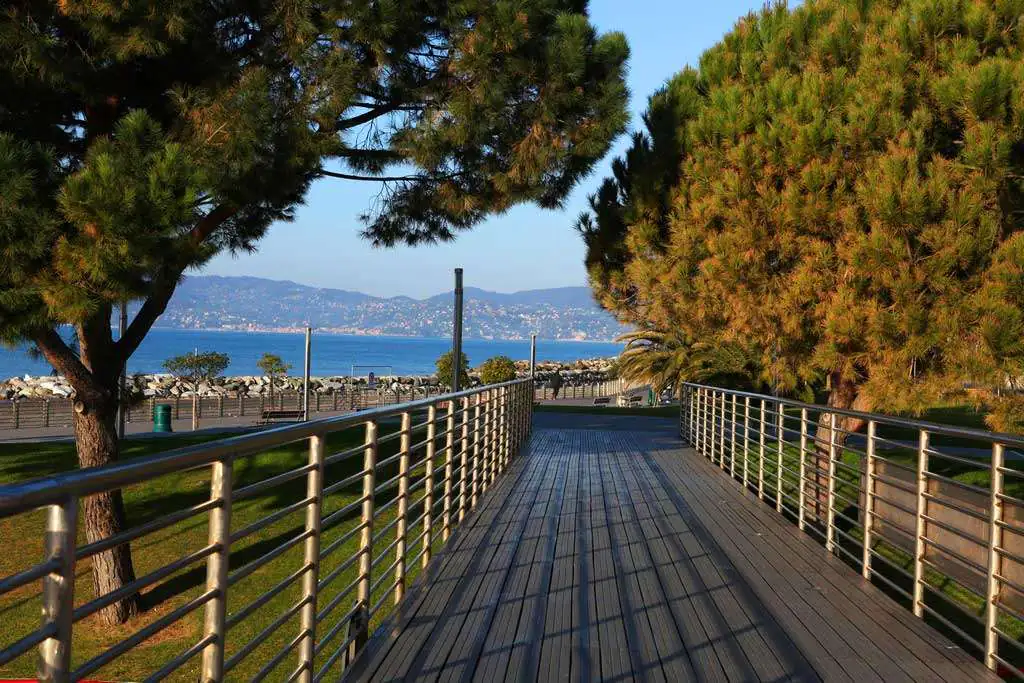
Wooden boardwalk on the Chiavari seaside promenade

Heading west, the promenade continues to the Preli area on a newer boardwalk that ends at the foot of the Colonia Fara.

Colonia Fara

The white tower at the end of the seafront is the Colonia Fara, built in 1935–1936 by the engineer Camillo Nardi Greco as a seaside holiday camp for 400 children. It is one of the purest examples of Rationalist architecture in Liguria: a long horizontal base and a round tower 49 metres high, with Futurist “aeropaintings” inside. Abandoned from the 1980s, it was sold by the town and restored privately, with work completed in 2022. You see it from outside, and one of the town’s free beaches lies right in front.

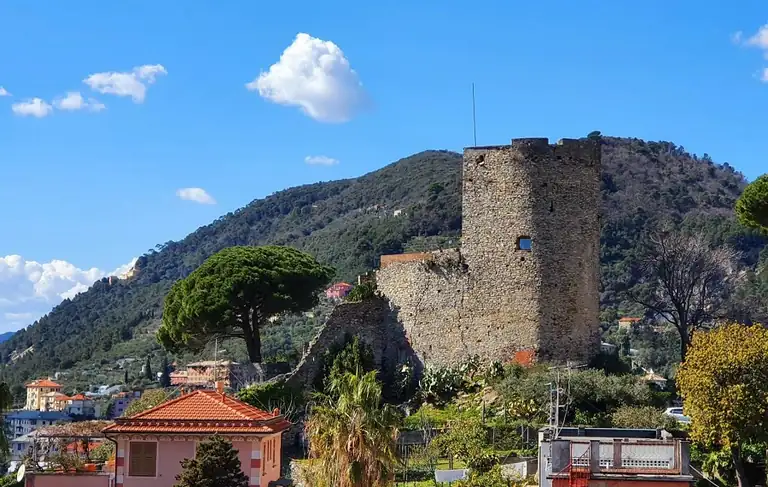
Chiavari Castle on the hill

The castle

On the hill behind the centre stand the walls and keep of the Genoese castle, built as an outpost against the Malaspina family, who besieged it in vain in 1172. You see it best from the ring road and the steps that climb into the hills; it is not set up for visits. The same steps lead to the footpaths towards Leivi.

Sea

Beaches in Chiavari

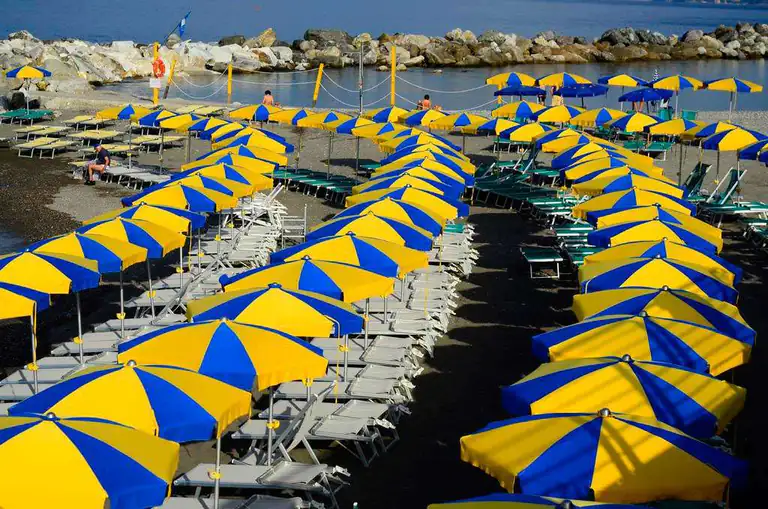
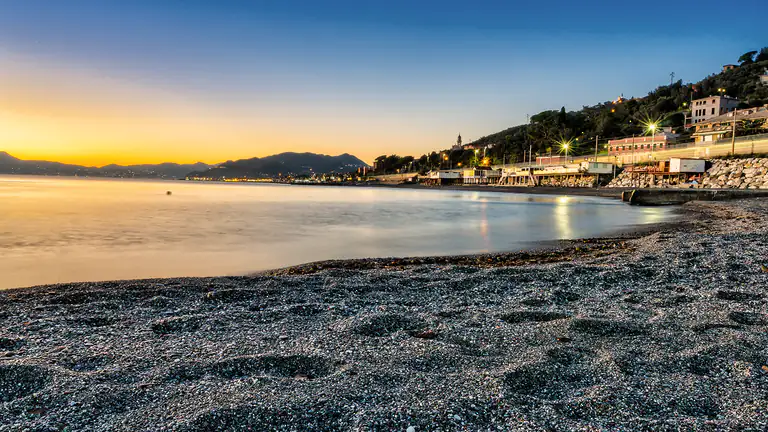
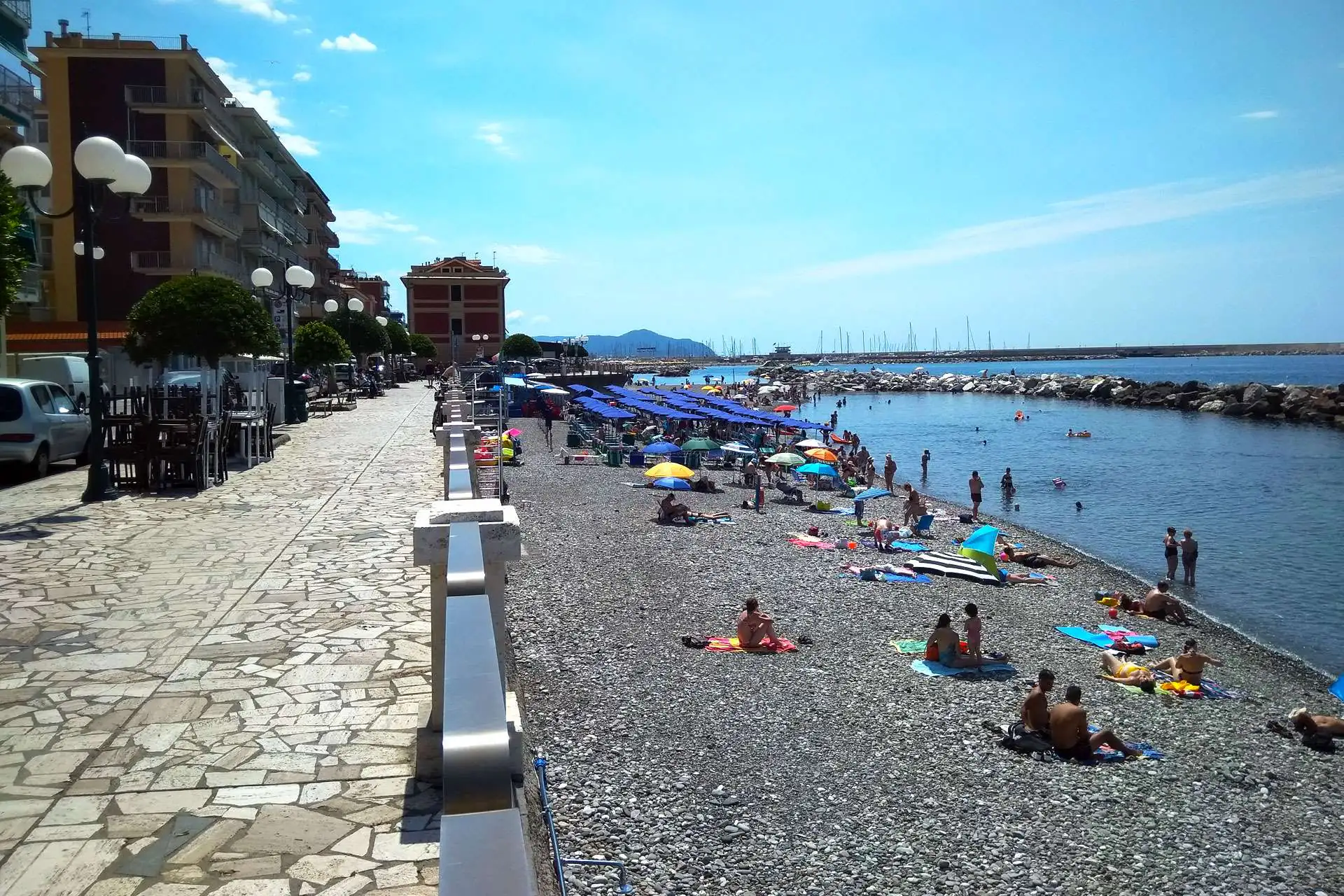
Chiavari’s beaches are long and mostly pebbles or coarse sand, so bring water shoes. They run west from the marina along corso Valparaiso, with a mix of beach clubs and free stretches. In 2026 the Blue Flag went to the Spiaggia Porto, the beach by the marina.

Yellow and blue umbrellas on the beach at Chiavari

Town and marina beach

Beach clubs

the most convenient, close to the station, mostly beach clubs with paid loungers.

Free beach at the former Colonia Fara

wide and free, in front of the tower. In summer the town rents out parasols, loungers and chairs (in 2026 from 8 June to 13 September); you pay at the machines on corso Valparaiso and set up wherever you like.

Marina Giulia and Spiaggia dei Velieri

Rocks

two more free stretches with the same rental service, to the west and towards the rocks.

For finer sand and shallow water for small children, the long beach at Lavagna is about a twenty-minute walk across the Entella bridge. For clearer water and rocks, head to Sestri Levante and Moneglia.

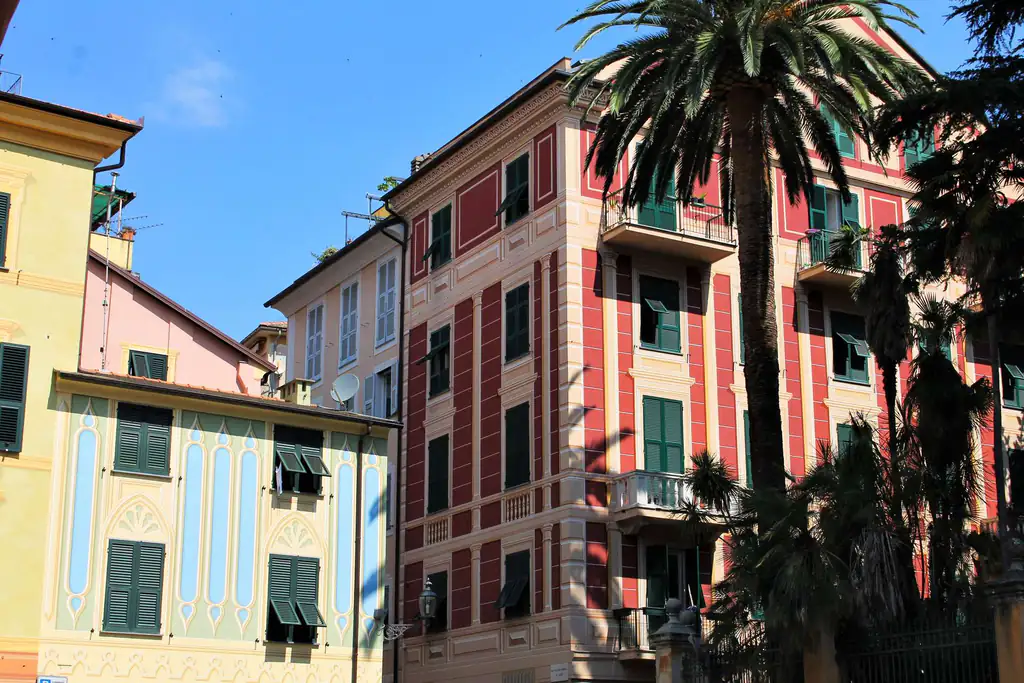
Palms and colourful buildings in Chiavari

Where to stay

Where to stay in Chiavari

Old town and station area: the best choice if you arrive by train and want to do day trips without a car. Arcades, marina and boats are a few minutes away, and there is life in the evening.

Seafront and corso Valparaiso: for a beach holiday, with the sea on your doorstep and the promenade on foot. It is the most popular area in summer, so book early.

Hills and outlying villages: for drivers looking for quiet, gulf views and lower prices, at the cost of a few bends to get into town.

Chiavari has mostly mid-range hotels, B&Bs and apartments. In July, August and on antiques market weekends it pays to book ahead. It is also a cheaper base than Portofino or Santa Margherita for exploring the same coast.

Getting there

How to get to Chiavari

By car

Take the A12 Genoa–Livorno motorway and exit at Chiavari: the toll booth is a few minutes from the centre. The Via Aurelia (SS1) runs through town and links it with Rapallo and Lavagna. The old centre is pedestrianised.

By train

Chiavari station is on the Genoa–La Spezia line, served by regional and Intercity trains. From Genoa Brignole it takes 30–60 minutes depending on the train; from La Spezia, 45–60 minutes. For the Cinque Terre, change at Sestri Levante or Levanto, where the 5 Terre Express stops. Timetables on Trenitalia.

By bus

Local buses leave from piazza Nassiriya, piazza Roma and corso Buenos Aires and connect Chiavari with its villages, the inland valleys and nearby towns. For trips along the coast the train is almost always faster.

By boat

In season, boats run by the Servizio Marittimo del Tigullio leave Chiavari marina for Portofino, San Fruttuoso and the Cinque Terre, with some trips to Portovenere. Timetables and fares change every year: check traghettiportofino.it.

By plane

The nearest airport is Genoa Cristoforo Colombo, about 35–40 km away: take the airport bus to Genoa station and then the train. Pisa (about 130 km) and Nice (about 200 km) are further options.

Parking

In the centre and on the seafront almost all parking is blue-line, managed by Marina Chiavari and paid during the day. The most convenient car parks for visitors are on corso Assarotti, near the station, and in piazza Cattaneo; on market weekends and in August, arrive early. If you are staying in town, ask your accommodation about parking.
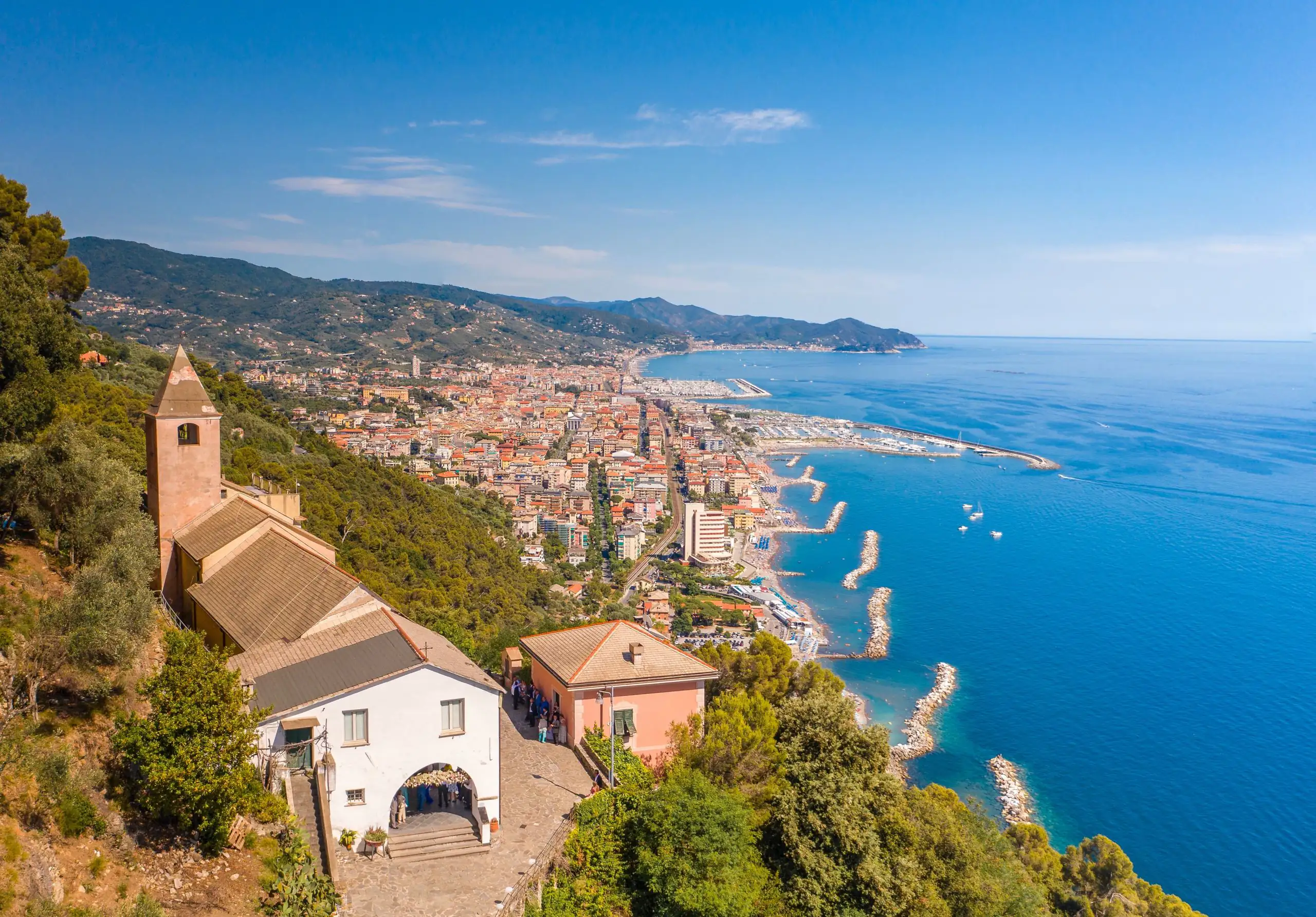
By car

A12, Chiavari exit, a few minutes from the centre; the old town is pedestrianised

By train

Chiavari station (Genoa–La Spezia line): 30–60 min from Genoa, 45–60 min from La Spezia

By plane

Genoa Cristoforo Colombo (about 35–40 km); Pisa about 130 km

The guide

Walks and hikes

The hills behind Chiavari are covered in olive groves and crossed by waymarked trails. Before you set off, pick up the town’s footpath map at the tourist office: times and waymarks in apps do not always match.

  • Five Towers loop (Cinque Torri): from Chiavari up into the hills of Leivi and back via Maxena and Sampierdicanne, past a medieval tower and four bell towers. About 5 hours and almost 500 metres of ascent; easy but long. Best from October to May.
  • Chiavari–Montallegro–Rapallo: a demanding traverse over the Passo dell’Anchetta to the Montallegro sanctuary, then down to Rapallo and back by train. A full day.
  • Sentiero delle Grazie: from the sanctuary of Nostra Signora delle Grazie, on the hill to the west, towards Zoagli through olive groves with views over the gulf.

What to eat in Chiavari

The food is classic eastern Riviera: focaccia, trofie with pesto, pansoti with walnut sauce, vegetable pies, anchovies and fried fish. The truly local product is the radice di Chiavari, a white root of the chicory family grown in the area and blanched by repeated washing and rubbing; it is eaten raw in salads or boiled. For local produce, look out for the regional food markets held from time to time on via Rivarola.

Events in Chiavari

  • Antiques market: second Sunday of the month and the Saturday before, all year.
  • Chiavari in Fiore: a flower and plant fair in the old centre in May (16–17 May in 2026).
  • Feast of Nostra Signora dell’Orto: 2 July, with a huge street fair and fireworks at the marina; more fireworks on the evening of 3 July.
  • Palio marinaro del Tigullio: summer rowing races in traditional wooden boats between the towns of the gulf.
  • Confeugo: mid-December, an old Christmas ceremony with traditional costumes.

Day trips from Chiavari

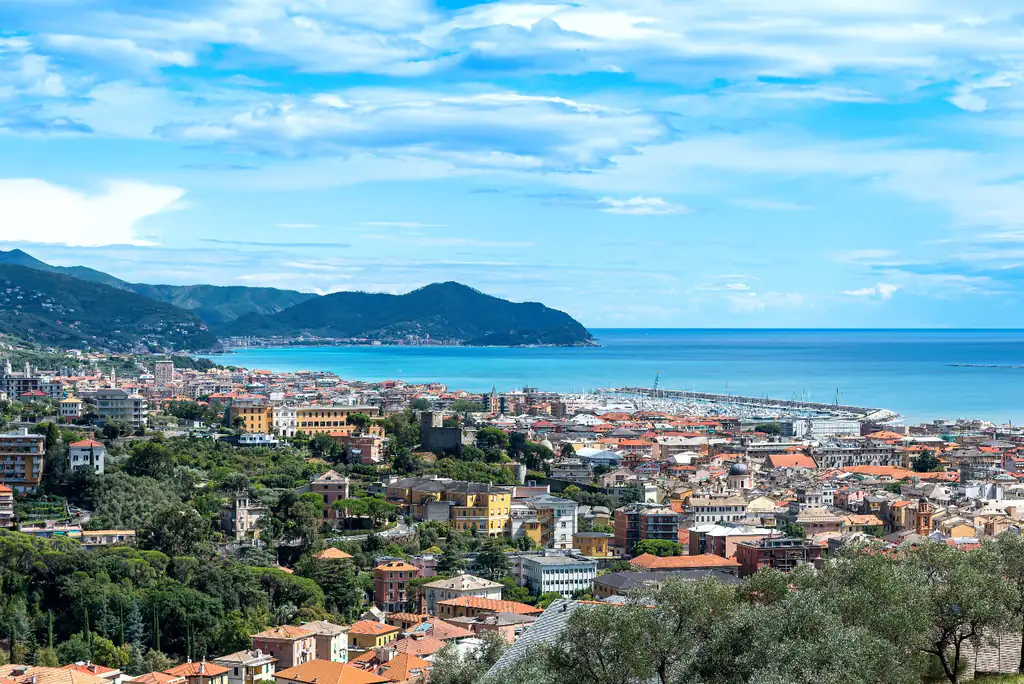
Gulf of Tigullio between Chiavari, Lavagna and Sestri Levante
  • Lavagna: right next door across the bridge, with a seafront, a long sandy beach and a quiet old centre.
  • Sestri Levante: the Bay of Silence and the Bay of Fables, a few minutes away by train.
  • Rapallo: the seafront, the little castle on the water and the cable car up to Montallegro.
  • Santa Margherita Ligure: harbour, villas and the cliff road to Portofino.
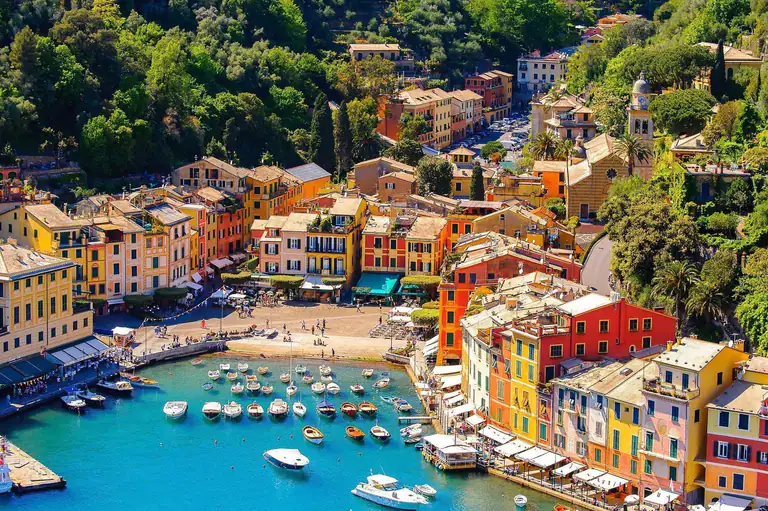
  • Portofino: by boat from Chiavari marina in season, or by train to Santa Margherita and then the bus. Avoid driving: parking in Portofino is very limited.
  • Camogli: colourful houses on the sea and the starting point for San Fruttuoso.
  • Moneglia: a wide beach and a quiet village beyond Sestri Levante.
  • Cinque Terre: by train, changing at Sestri Levante or Levanto, or by boat from May to September as far as Monterosso.

Weather

Weather and best time to visit Chiavari

June and September for the sea; the old town and antiques market all year

🌦️
17°CNow · wind 30 km/h
  1. Thu 8🌙17° 17° 
  2. Fri 9🌤️21° 17° 
  3. Sat 10☁️21° 17° 
  4. Sun 11🌤️22° 15°2 mm
  5. Mon 12☀️22° 17°7 mm
  6. Tue 13☀️21° 15° 

Forecast: MET Norway (Yr), CC BY 4.0 licence. Updated hourly.

Weather across Liguria →

MonthJanFebMarAprMayJunJulAugSepOctNovDec
SeaOff seasonOff seasonOff seasonOff seasonPossibleGoodIdealIdealGoodPossibleOff seasonOff season
Sightseeing and hikingGoodGoodGoodIdealIdealIdealGoodGoodIdealIdealGoodGood
CrowdsFew peopleFew peopleFew peopleFew peopleBusyBusyVery busyVery busyBusyFew peopleFew peopleFew people
Don't missChiavari in FioreFeast of Nostra Signora dell'OrtoConfeugo

IdealGoodPossibleOff season

Crowds:QuietFew peopleBusyVery busy

Gallery

Photos of Chiavari

FAQ

Frequently asked questions about Chiavari

What can you see in Chiavari in one day?

The carruggio dritto and the arcades, piazza Mazzini, the cathedral, Palazzo Rocca with its archaeological museum and park, then the seafront walk to the Colonia Fara.

When is the Chiavari antiques market?

Every month, on the second Sunday and the Saturday before, in the streets of the old town. The 2026 dates are in our market guide.

Does Chiavari have free beaches?

Yes. The largest are in front of the former Colonia Fara, at Marina Giulia and at the Velieri. In summer you can rent parasols and loungers from the town service.

Are Chiavari's beaches sandy?

They are mostly pebbles and coarse sand. For finer sand, go to Lavagna, just across the Entella bridge.

What is a Chiavari chair?

The “chiavarina”, a very light wooden chair with a woven seat, invented in 1807 by the cabinetmaker Giuseppe Gaetano Descalzi. A few local workshops still make it by hand.

How do you get from Chiavari to Portofino?

By boat from Chiavari marina in the warmer months, or by train to Santa Margherita Ligure and then the bus.

Can you visit the Cinque Terre from Chiavari without a car?

Yes: by train, changing at Sestri Levante or Levanto, or by boat from May to September.

How far is Chiavari from Genoa?

About 40 km. The train takes between 30 minutes and an hour; by car it is about 40 minutes on the A12.

When is the best time to visit Chiavari?

June and September for the sea without the August crowds. Spring and autumn for walking, sightseeing and day trips; the antiques market is on the second weekend of the month.

Where can you park in Chiavari?

In the paid car parks on corso Assarotti, near the station, or in piazza Cattaneo. The old town is pedestrianised and seafront parking is blue-line.

Nearby

What to see near Chiavari

2 km as the crow flies

Lavagna

The slate town of the Tigullio: sandy beaches to Cavi, Santo Stefano basilica, Torre del Borgo, a huge marina and…

Discover →

8 km as the crow flies

Sestri Levante

The town of two seas: Bay of Silence and Bay of Fables, the headland with San Nicolò, old lanes, Punta…

Discover →

8 km as the crow flies

Rapallo

A castle in the sea, an Art Nouveau seafront, a cable car to Montallegro and boats to Portofino: Rapallo is…

Discover →

9 km as the crow flies

Portofino

The Piazzetta, Castello Brown, San Giorgio and the lighthouse, Paraggi and the San Fruttuoso trail: a practical guide to Portofino…

Discover →
Scroll to Top