Lavagna beaches and seafront

Lavagna

The slate town of the Tigullio: sandy beaches to Cavi, Santo Stefano basilica, Torre del Borgo, a huge marina and the Torta dei Fieschi festival.

Lavagna beaches and seafront
Area
Golfo del TigullioRiviera di Levante · Province of Genoa
Ideal for
Familiesbeach holidays and anyone wanting an affordable base for the Tigullio
Beaches
Over 3 km of sand between the centre and Cavi, with free stretchesBlue Flag 2026
Best time to go
June–September for the beach14 August for the Torta dei Fieschi; spring for walks
By train
Lavagna and Cavi stationsGenoa–La Spezia line): about 40–75 min from Genoa
By car
A12, Lavagna exit, right next to townpaid parking in summer
Airport
Genoa Cristoforo Colombo (about 50 km)Pisa about 120 km
How long to stay
Half a day for the centre3–5 days as a base for beaches and day trips

Welcome to Lavagna

The town of slate

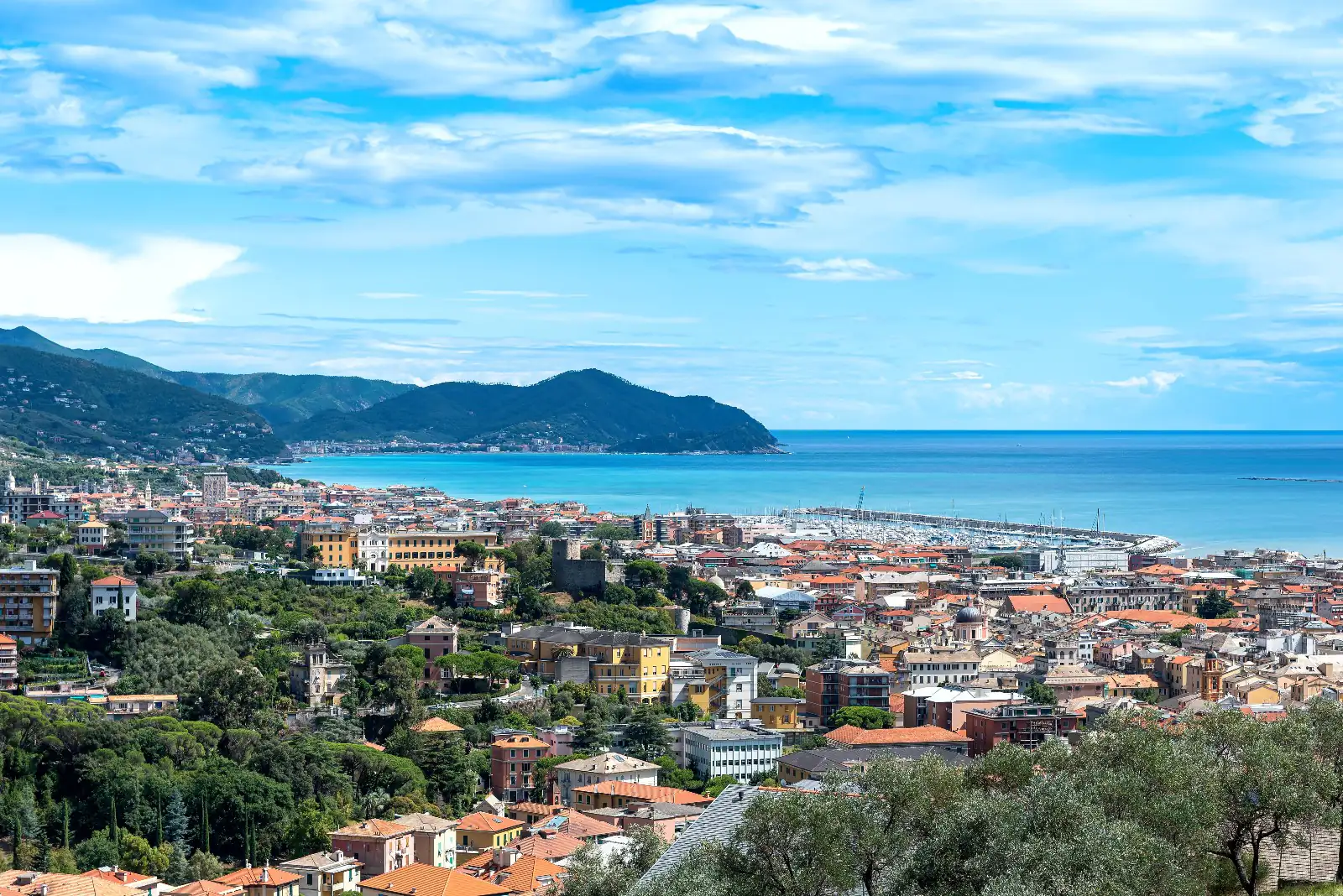
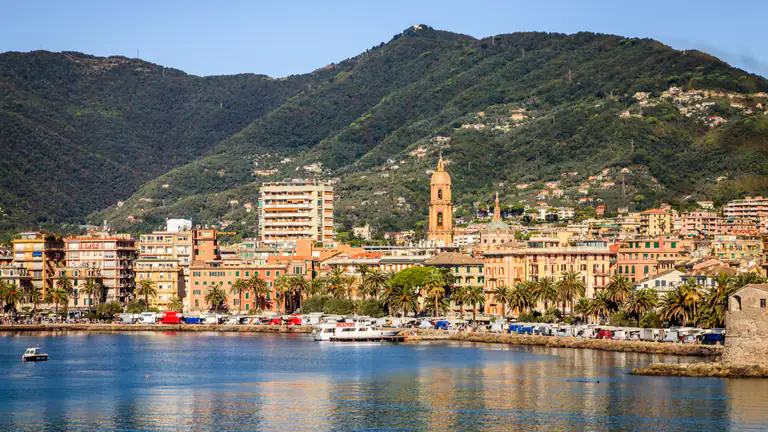
Lavagna is a seaside town on the Gulf of Tigullio, on the Riviera di Levante, between Chiavari and Sestri Levante. It has a long sandy beach split between the town centre and the village of Cavi, one of the largest marinas in the Mediterranean, an old centre of arcades and narrow lanes and, above the rooftops, a Baroque basilica reached by a grand flight of steps. Around 12,400 people live here, and the beaches hold a Blue Flag in 2026.

If the name sounds familiar to Italian speakers, there is a reason: “lavagna” is the Italian word for slate, and the stone took its name from this town. In the Middle Ages Lavagna belonged to the Fieschi, a family of counts who gave the Church two popes, Innocent IV and Adrian V. You will find them everywhere: in the Basilica dei Fieschi on the hill behind town, and in the Torta dei Fieschi, the 14 August festival where a giant cake is shared out to people who find their “match” in the crowd.

Lavagna works well as a base for a beach holiday with day trips. It sits on the Genoa–La Spezia railway, so Sestri Levante and Chiavari are a few minutes away, Santa Margherita and Rapallo about half an hour, and the Cinque Terre and Portofino are easy day trips. It is quieter and usually cheaper than the big names of the gulf.

Where is Lavagna?

Lavagna is in Liguria (Riviera di Levante, Golfo del Tigullio, province of Genoa).

Map: where Lavagna is in LiguriaPIEDMONTLOMBARDYEMILIA-ROMAGNATUSCANYFRANCERIVIERA DI PONENTERIVIERA DI LEVANTELIGURIAN SEASavonaImperiaSanremoLa SpeziaLavagna
Boundaries: ISTAT, Natural Earth · Interactive map →

What to see

What to see in Lavagna

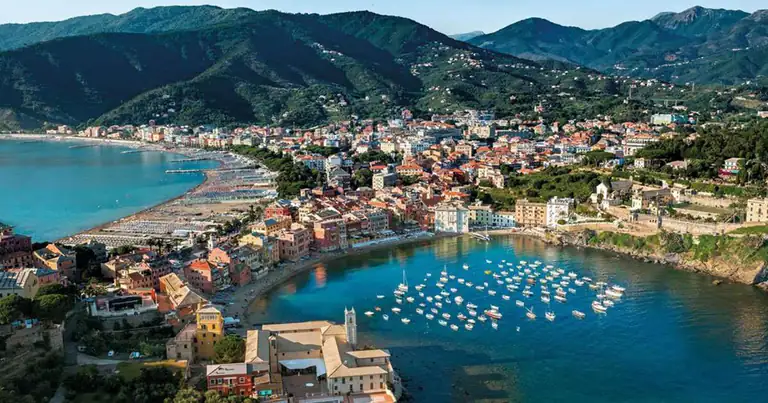
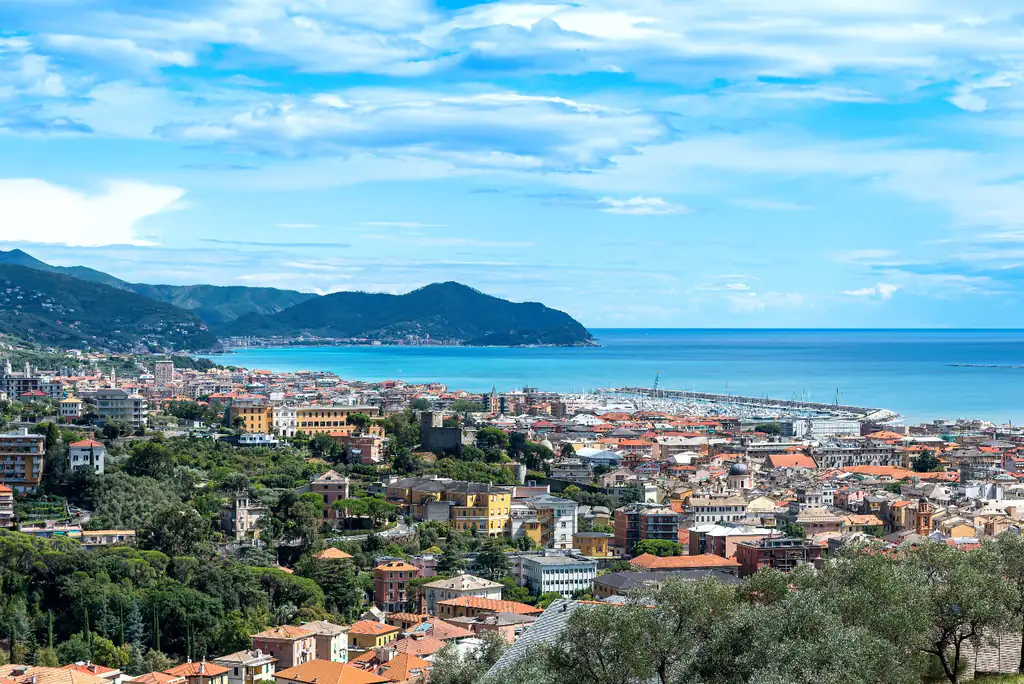
Gulf of Tigullio between Chiavari, Lavagna and Sestri Levante

The centre is easy to cover on foot in half a day. Start at the station, walk down to the sea through the arcades, climb to the basilica and finish with a stroll along the seafront to the marina. Allow another half day for the Basilica dei Fieschi and Santa Giulia.

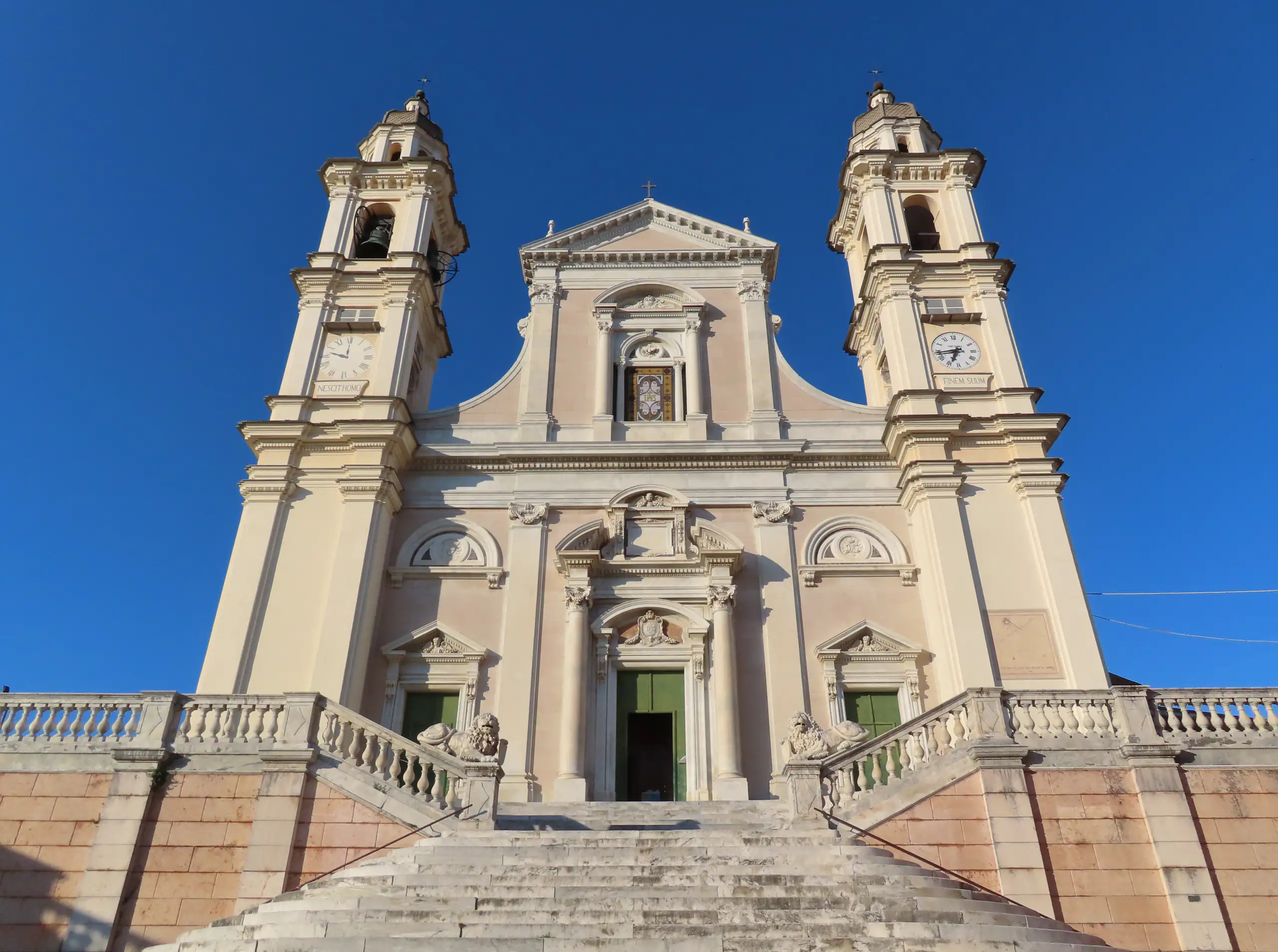
Basilica of Santo Stefano in Lavagna

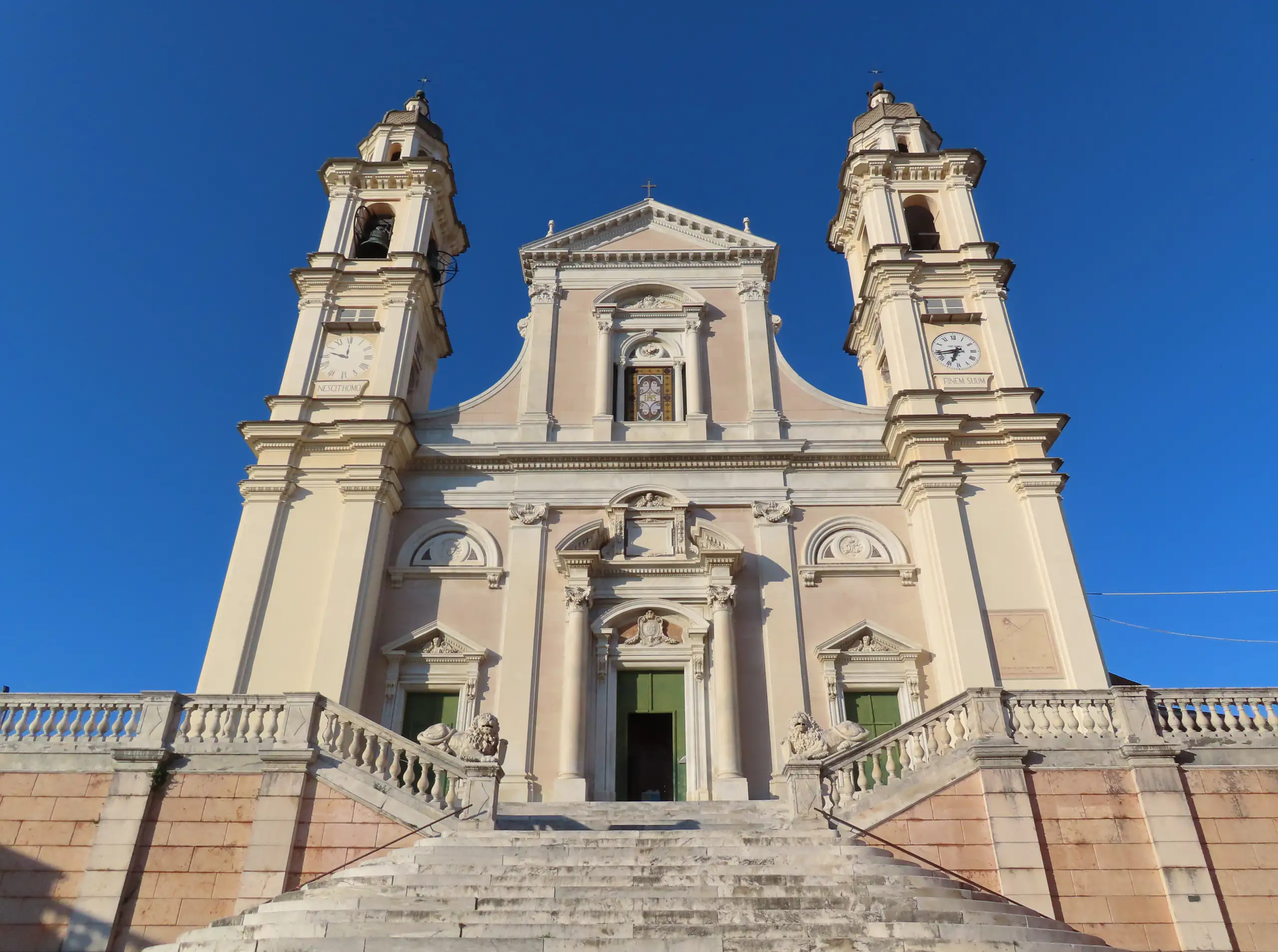
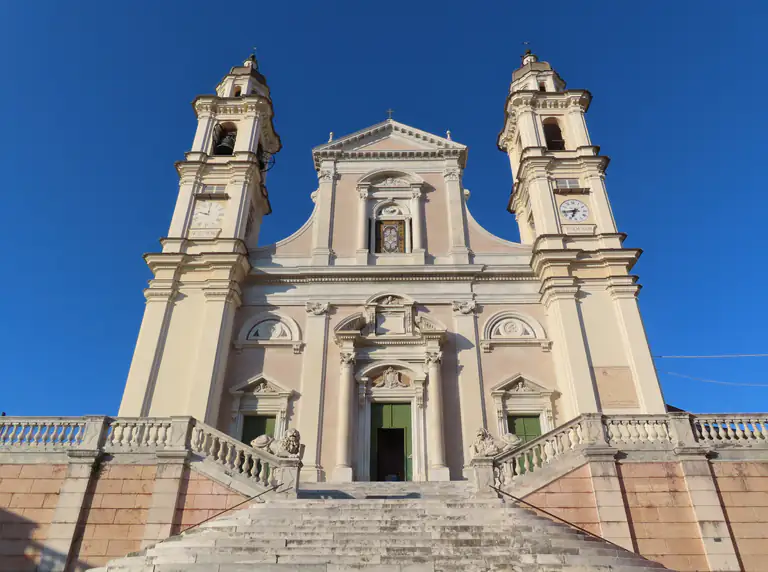
Basilica of Santo Stefano and its steps

The town’s landmark is a Baroque church with twin bell towers, set high above Piazza Marconi and reached by a sweeping staircase. A parish church stood here as early as the 10th century; the present building was rebuilt around 1653 under Giovanni Battista Ghiso, and the two towers were finished in 1657. It has been a minor basilica since 1921.

Inside are three naves with stucco work and altars. From the steps and the terrace above the arcade on Piazza Marconi you look out over the rooftops of the old town. If you would rather skip the stairs, the Porticato Bignardello (1897) climbs to the monumental cemetery behind the church, with 19th-century marble tombs.
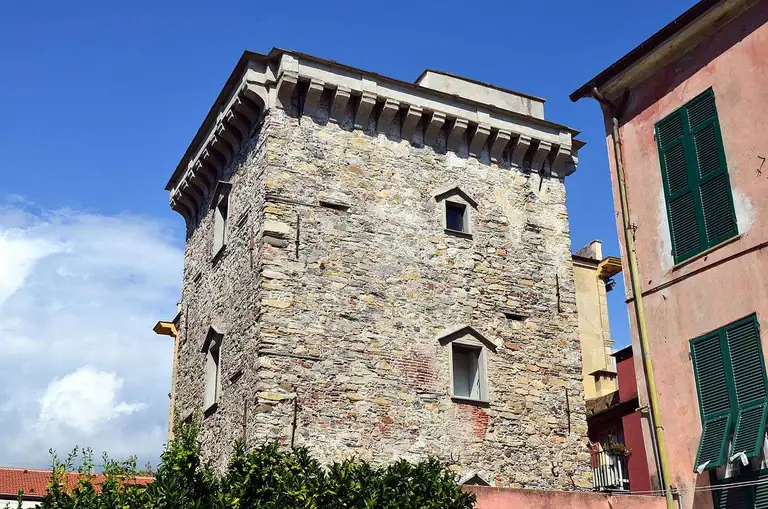
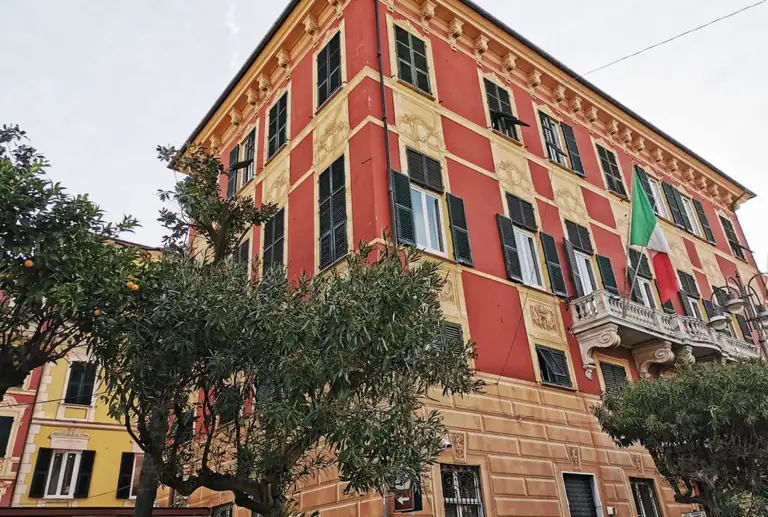
Torre del Borgo, Lavagna's medieval tower

Torre del Borgo

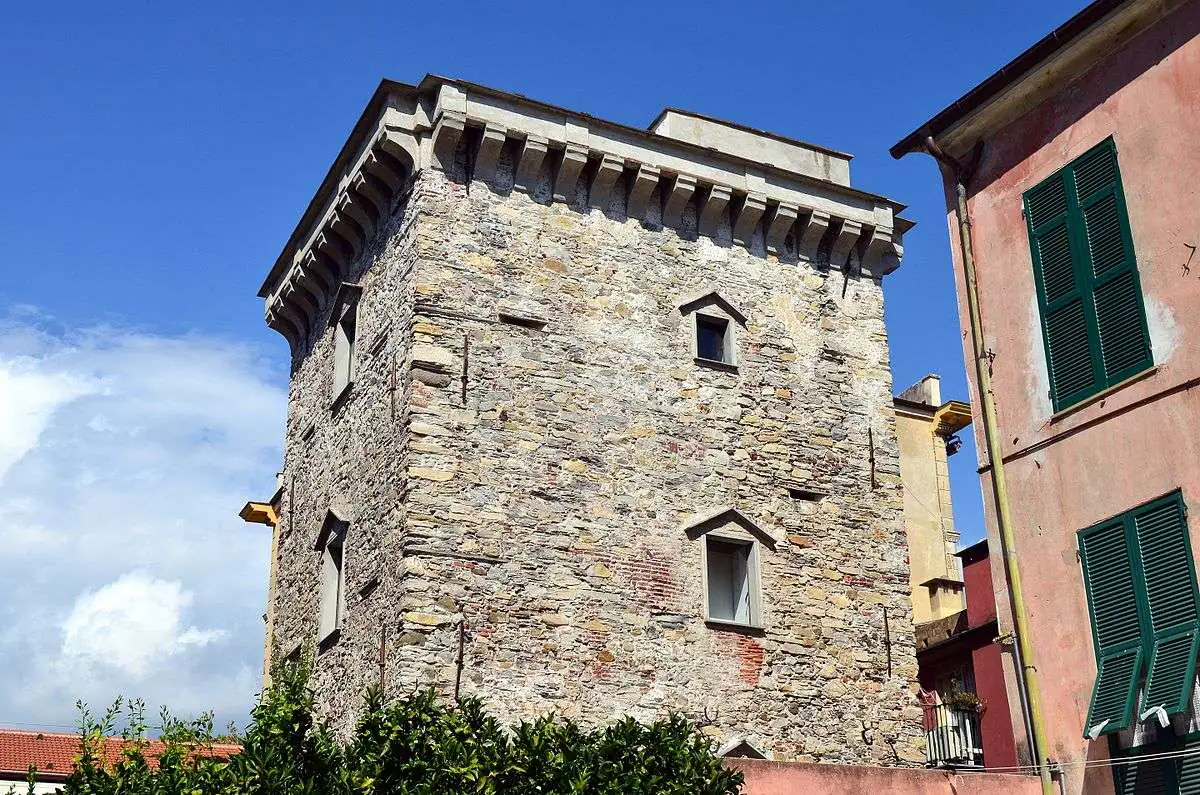
In the heart of the old town, on Via XX Settembre, the Torre del Borgo is an old defensive tower built against pirate raids and possibly linked to the Fieschi; its exact date is uncertain. Over time it was also a home with a private chapel. Today it houses the “Alloisio” civic archaeological collection and the Slate Gallery of local sculptor Francesco Dallorso, the best place to see what can be carved from this stone. At Christmas it hosts a nativity scene showing old Lavagna.

Opening is limited, usually on some summer evenings, so check with the town’s tourist office before you go.

Palazzo Franzoni in Lavagna

Palazzo Franzoni

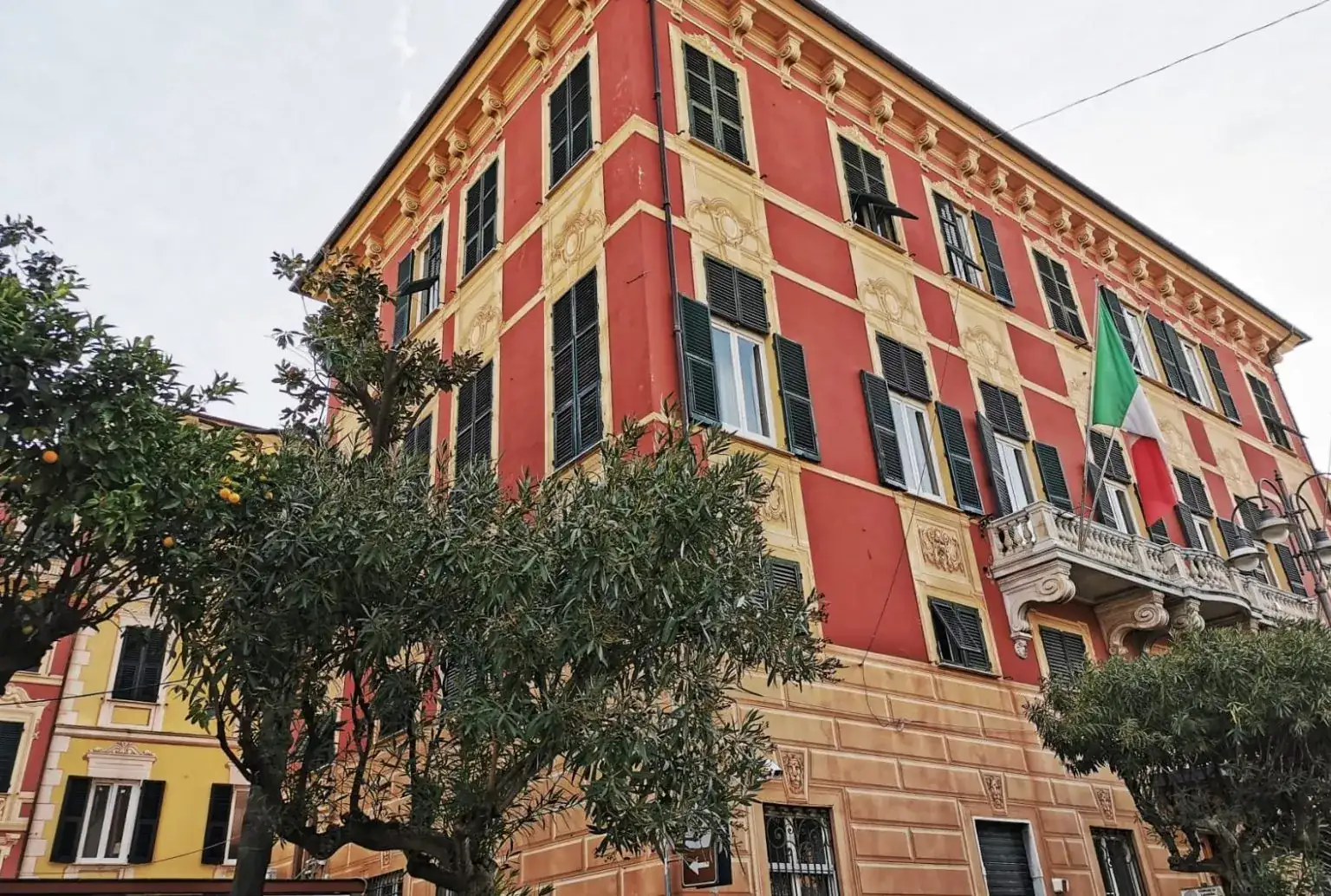
Lavagna’s town hall occupies a noble palace from 1696 with a painted façade. French troops took it over in 1797 and it later served as a hospital during cholera epidemics. In 1931 the town bought it through a public subscription. You see it from the outside: it is a working office, not a museum.

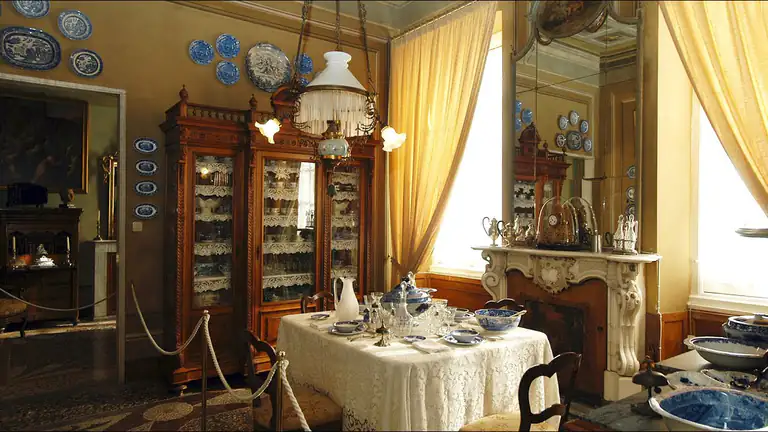
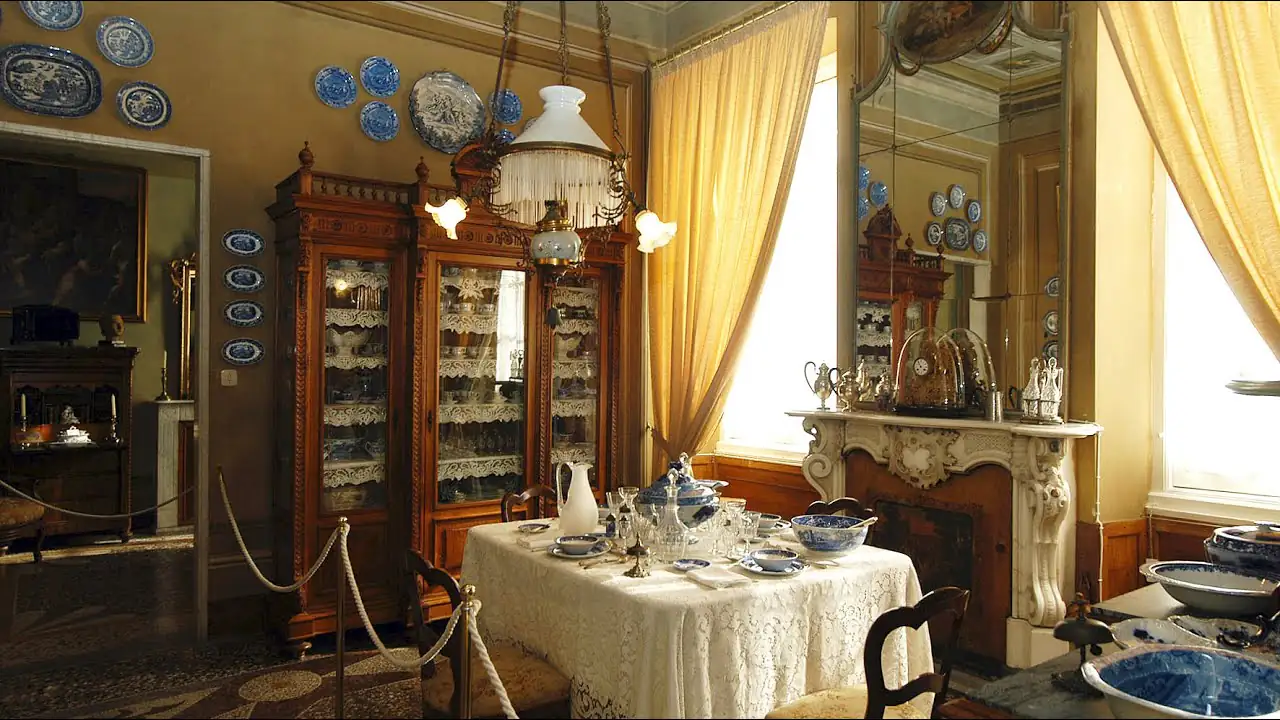
Period drawing room of Casa Carbone in Lavagna

Casa Carbone

At Via Riboli 14, right in the centre, Casa Carbone is a house museum run by FAI, the Italian National Trust. It is a mid-19th-century middle-class home left as it was, with furniture, paintings, ceramics and objects from the 17th to the 20th century. It is small and takes under an hour, but it shows well how a well-off Tigullio family lived.

In 2026 it opens on Saturday afternoons and Sunday mornings in spring and autumn, with summer evening openings in the garden; a full ticket costs €5. Check the calendar on the FAI website.

The arcades and lanes of the old town

The old town is a short walk from both the station and the sea. Main streets such as Via Roma are lined with long arcades full of shops; between them run narrow lanes, carved slate doorways and small squares. Piazza della Libertà and Piazza Vittorio Veneto are the meeting points, and on the evening of 14 August they fill up for the Torta dei Fieschi.

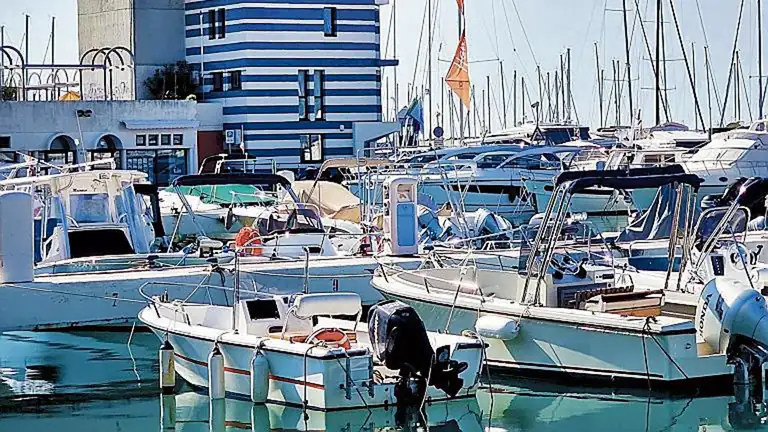
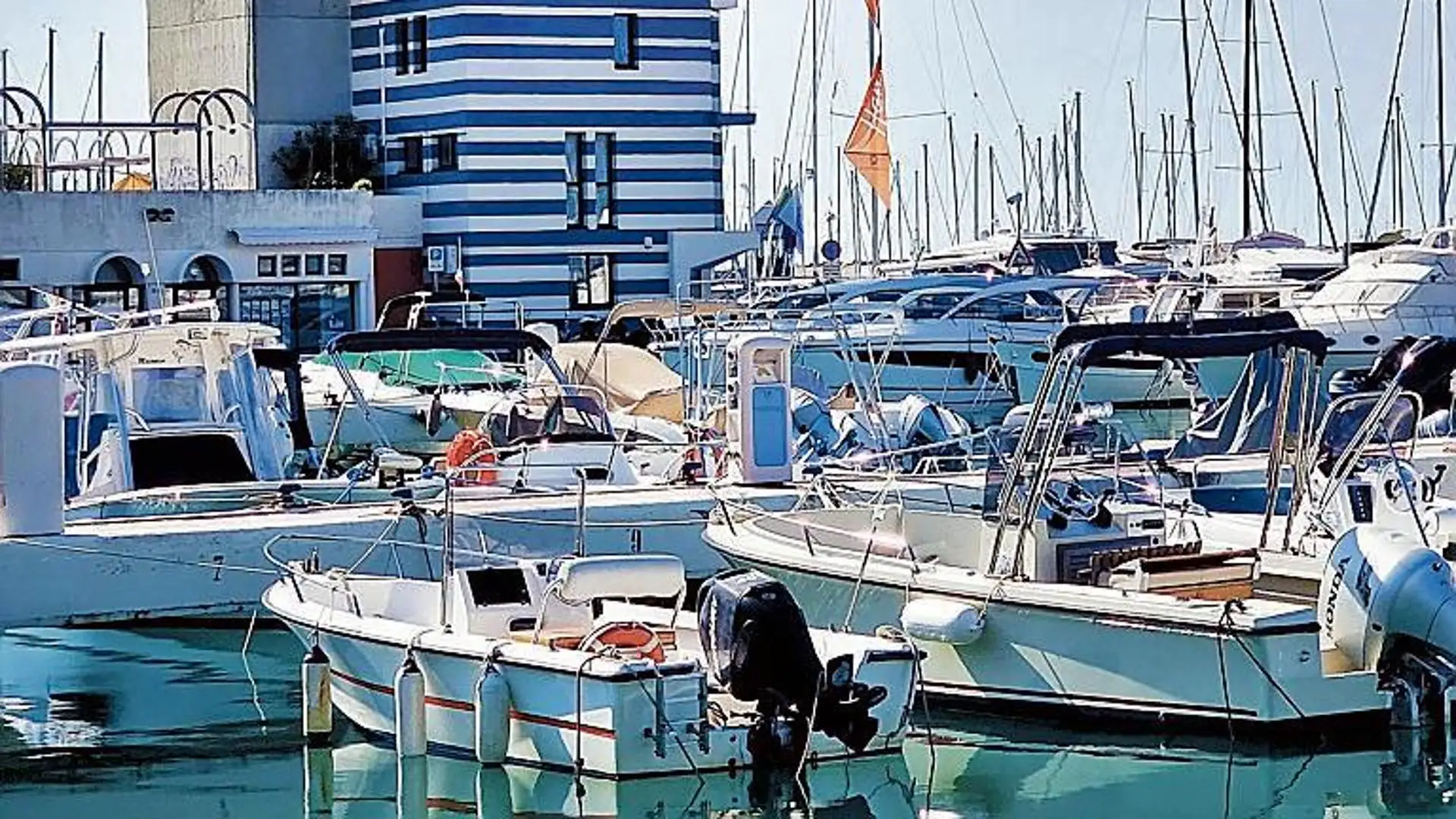
Lavagna marina with yachts

The marina

Lavagna’s marina is one of the largest in the Mediterranean, with around 1,500 berths for boats from 8 to 51 metres, protected by a breakwater more than a kilometre long. Since 2026 it has been run under a 50-year concession by an investment fund that plans major works and will rename it “Marina di Lavagna”, so expect some building sites in the coming years.

If you don’t own a boat, it is mainly a place for a walk: bars, restaurants, yachts to look at and views across to Chiavari and the Portofino promontory.

Sanctuary of Nostra Signora del Ponte

Near the Entella river, at the foot of an old bridge, stands this sanctuary consecrated in 1492, with a 40-metre neo-Gothic bell tower. It is a quick stop on the way to the Basilica dei Fieschi or along the river walk.

Basilica dei Fieschi at San Salvatore

On the hill behind Lavagna, a few kilometres away in San Salvatore (part of the municipality of Cogorno), is the most important church linked to the Fieschi. Pope Innocent IV, born Sinibaldo Fieschi, had it built from 1244, and work was completed in 1252. It is a rare example of the shift from Romanesque to Gothic: a central nave with sturdy columns, pointed arches, a rose window and a massive square bell tower above the apse. Local slate plays a leading role in the architecture.

Opposite the church, the Palazzo Comitale dei Fieschi hosts exhibitions and events. Opening times for the basilica are not published reliably: go in the morning or ask at the parish. From Lavagna it is a few minutes by car, or a walk along the Entella.

Santa Giulia di Centaura

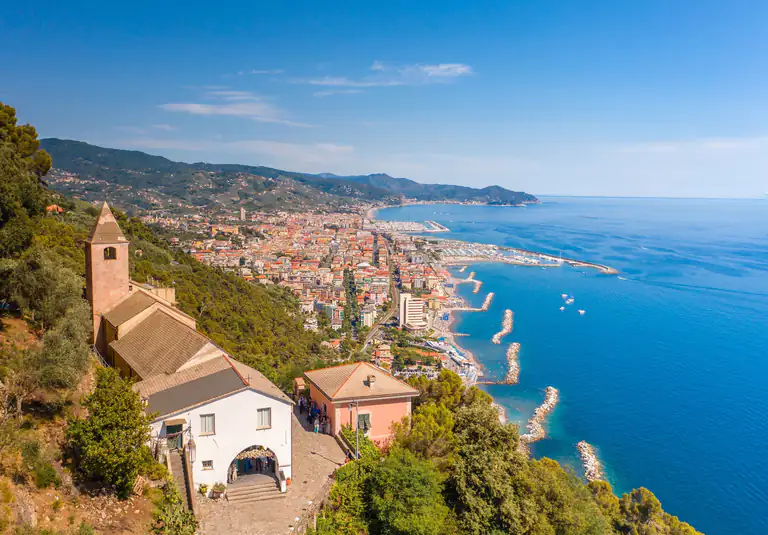
Santa Giulia is a hillside hamlet with a 17th-century church and an ancient holm oak in front of it. From the churchyard you see the whole Gulf of Tigullio, from the Sestri Levante headland to the Portofino promontory. It is the best view in Lavagna, especially at sunset.

You can drive up on narrow roads or walk from the station on a steep climb along lanes and mule tracks (follow the yellow signs for Santa Giulia and the red dot waymarks). Allow about an hour uphill.

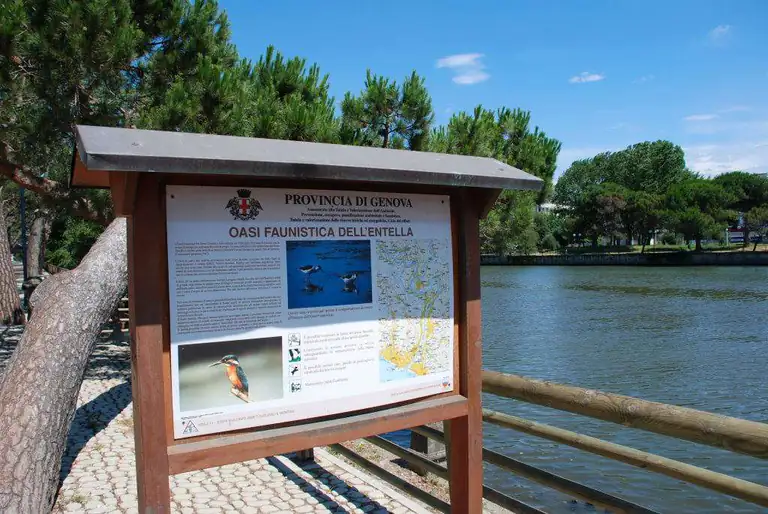
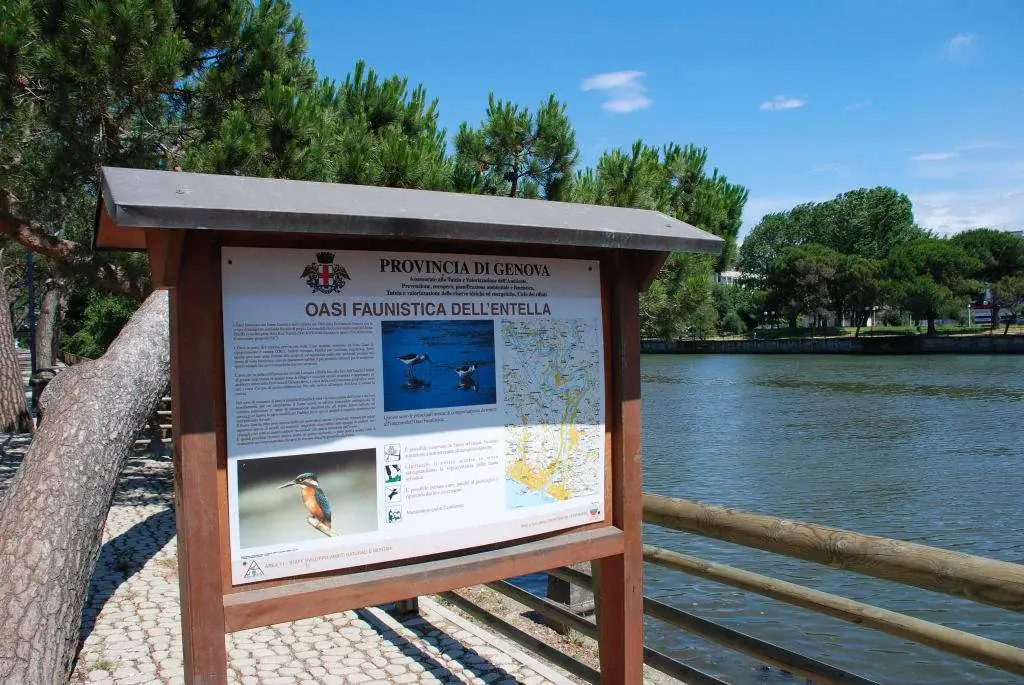
Entella wildlife reserve in Lavagna

The Entella river mouth

The Entella separates Lavagna from Chiavari. At its mouth is a small wetland where herons, black-winged stilts, kingfishers and other migrating birds stop in spring and autumn. The riverside path is flat, suitable for bikes and buggies, and leads inland towards Cogorno.

Sea

Beaches in Lavagna

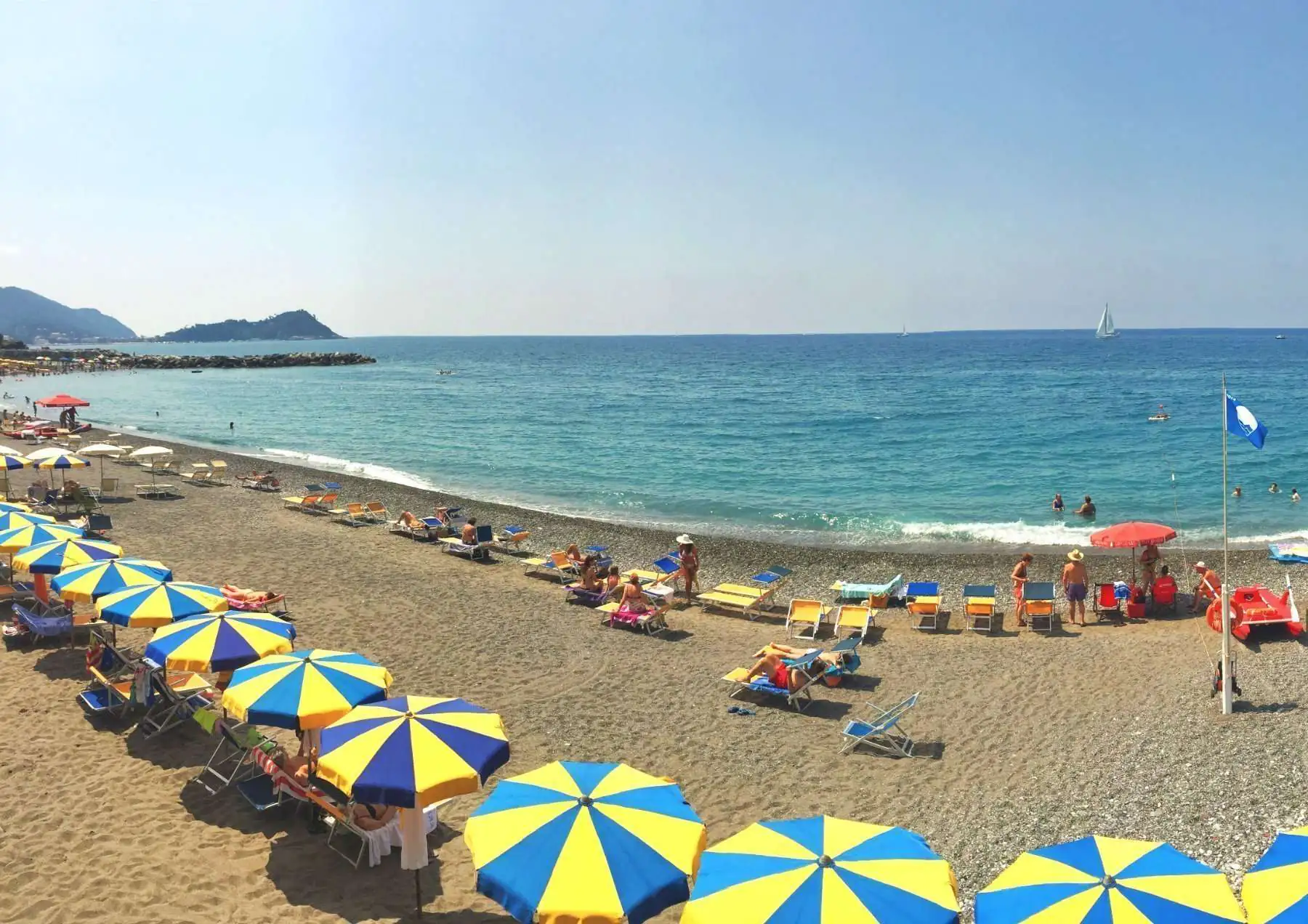
Lavagna’s shoreline runs for more than 3 km and is almost all sand, one of the longest stretches on the Riviera di Levante. Beach clubs alternate with free public beaches, separated by breakwaters. In 2026 Lavagna holds a Blue Flag.

Lavagna beach with waves

Lavagna town beach

Beach clubs

It runs east from the marina, in front of the centre and the promenade. It is the most convenient: the station is a few minutes’ walk away, with bars, showers and beach clubs renting loungers and umbrellas. There are free stretches too, but in August they fill up early, so arrive before 10am.

Cavi di Lavagna

SandPebblesFamily friendly

Further east, towards Sestri Levante, the village of Cavi has its own long, wide beach with a mix of sand and fine shingle. It has its own station on the Genoa–La Spezia line, so you can arrive by train and forget about parking. It feels more like a resort village, popular with families.

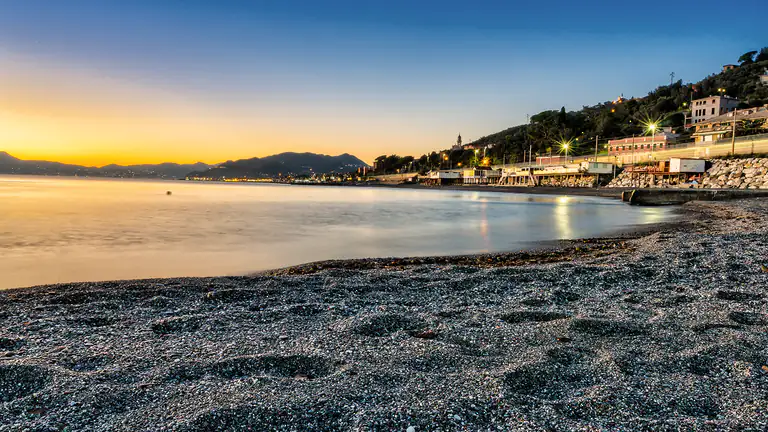
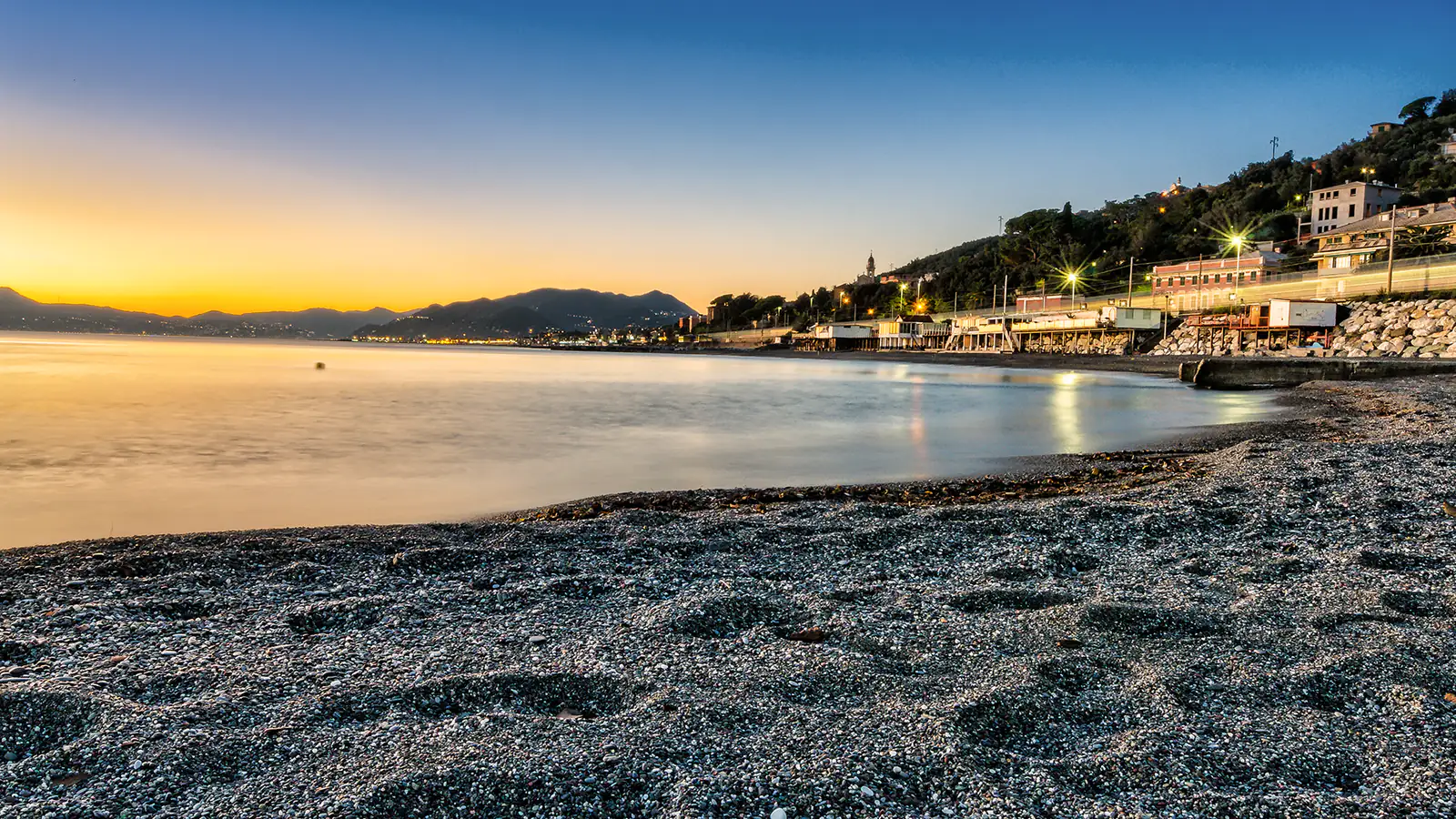
Lavagna beach at sunset

The seafront promenade

The promenade is the place for an evening stroll, a morning run or an ice cream at sunset. It is not continuous all the way to Cavi: in places you have to cross the beach or walk along the road.

Painted façade of Palazzo Franzoni in Lavagna

Where to stay

Where to stay in Lavagna

Lavagna is generally cheaper than Santa Margherita or Sestri Levante, with mostly mid-sized hotels, B&Bs and holiday apartments.

  • Centre and seafront: the best choice if you arrive by train and want everything on foot: beach, shops, restaurants and station.
  • Cavi di Lavagna: for families who want a quieter beach holiday, with Cavi station close by.
  • Hillside (Santa Giulia and around): for travellers with a car looking for quiet and views over the gulf.

For August, and especially the week of Ferragosto (15 August), book well ahead.

Getting there

How to get to Lavagna

By car

Take the A12 Genoa–Livorno motorway and exit at Lavagna: the toll gate is right next to town. The old Via Aurelia coast road links Lavagna with Chiavari and Sestri Levante, but it is often busy in summer.

By train

Lavagna has two stations on the Genoa–La Spezia line: Lavagna, in the centre, and Cavi. From Genoa the trip takes roughly 40–75 minutes depending on the train; from La Spezia about 35–45 minutes. For the Cinque Terre, change at Sestri Levante or Levanto. Timetables and tickets on Trenitalia.

By boat

Lavagna is one of the stops of the Servizio Marittimo del Tigullio, the ferry service linking the gulf towns with Portofino, San Fruttuoso and, in summer, the Cinque Terre. Departures vary by season: check timetables on traghettiportofino.it.

By bus

ATP buses connect Lavagna with Chiavari, Sestri Levante and the inland villages, including Cogorno.

By plane

The nearest airport is Genoa Cristoforo Colombo, about 50 km away: take a bus or taxi to a Genoa station, then the train. Pisa is the alternative, about 120 km away.

Parking

In summer almost all parking near the sea is paid, including the areas along the seafront and towards Chiavari. In August finding a space near the beach is hard: if you can, come by train, especially on the evening of 14 August.

By car

A12, Lavagna exit, right next to town; paid parking in summer

By train

Lavagna and Cavi stations (Genoa–La Spezia line): about 40–75 min from Genoa

By plane

Genoa Cristoforo Colombo (about 50 km); Pisa about 120 km

The guide

Lavagna and slate

In Italian, “lavagna” means both slate and blackboard. The reason is simple: the oldest and best-known quarries were in the hills behind the town, on Monte San Giacomo above Cogorno, and the stone was traded from here. As early as the 16th century, writers such as Benedetto Varchi noted that the stone took its name from the town. Later the word passed to school blackboards.

Until the 19th century it was often women who carried the slabs on their heads along the paths from the quarries down to Lavagna beach, where they were loaded onto boats. In 1857 most quarrymen moved to the nearby Fontanabuona valley, still Italy’s main slate-producing area. The old mule tracks are now the Slate Trails, open to walkers and cyclists. In town you can see slate in carved doorways, steps, roofs and in the Slate Gallery at the Torre del Borgo.

Things to do in Lavagna

The Torta dei Fieschi

Every 14 August Lavagna re-enacts the wedding of Count Opizzo Fieschi and the Sienese noblewoman Bianca de’ Bianchi. A costumed procession with the six historic districts winds through the centre, the wedding is proclaimed and a cake weighing several hundred kilos is cut. To get a slice you buy a ticket printed with a word and must find someone in the crowd with the same word. In 2026 the festival falls on Friday 14 August: history, rules and practical tips are in our guide to the Torta dei Fieschi.

Walks and hikes

  • Santa Giulia and Monte Capenardo: from the station up to Santa Giulia, then via Crocetta to the Colletta pass (640 m) and Monte Capenardo (693 m), with views over the whole gulf.
  • Sestri Levante to Lavagna: a hillside path of about 6 km via Cavi Borgo and Santa Giulia, roughly 2 hours 15 minutes at a steady pace.
  • Along the Entella: a flat walk from the river mouth towards Cogorno and the Basilica dei Fieschi.

What to eat

The food is classic Tigullio: focaccia, farinata (chickpea flatbread), anchovies and other local fish, vegetable pies. The local speciality is gaggette, cabbage leaves stuffed and made with a variety grown in the area. In August, try the Torta dei Fieschi itself, a sponge cake filled with custard cream.

Day trips from Lavagna

  • Chiavari: just across the Entella, within walking distance; an old town with long arcades and a lively market.
  • Sestri Levante: a few minutes by train; the Bay of Silence, the Bay of Fables and the Punta Manara walk.
  • Moneglia: a seaside village beyond Sestri, with a wide beach and the tunnels of the old railway.
  • Rapallo: the promenade, the little castle on the sea and the cable car to Montallegro.
  • Santa Margherita Ligure: the coastal walk towards Paraggi and the gateway to Portofino.
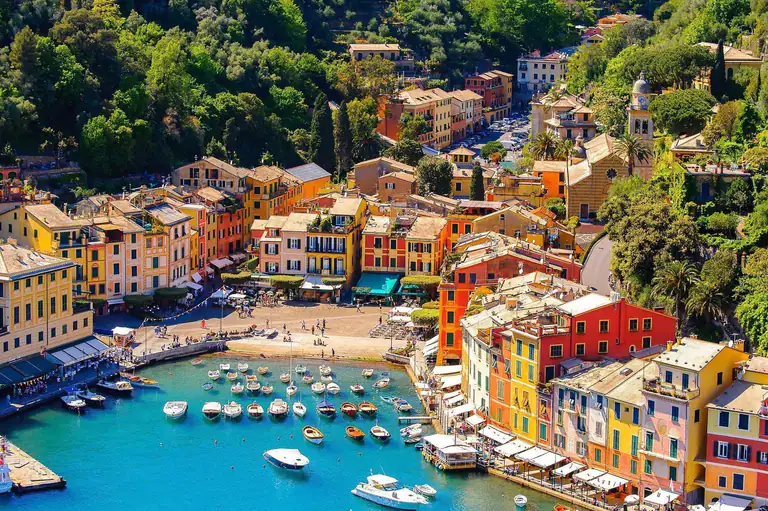
  • Portofino: by boat from the Tigullio towns in season, or by train to Santa Margherita and then bus or boat.
  • Cinque Terre: by train with a change at Sestri Levante or Levanto; Monterosso is the closest village.

Weather

Weather and best time to visit Lavagna

June–September for the beach; 14 August for the Torta dei Fieschi; spring for walks

⛅
22°CNow · wind 12 km/h
  1. Sat 10⛅22° 18° 
  2. Sun 11🌦️22° 16°1 mm
  3. Mon 12☀️23° 15° 
  4. Tue 13☀️21° 15° 
  5. Wed 14⛅21° 15° 
  6. Thu 15🌤️23° 16° 

Forecast: MET Norway (Yr), CC BY 4.0 licence. Updated hourly.

Weather across Liguria →

MonthJanFebMarAprMayJunJulAugSepOctNovDec
SeaOff seasonOff seasonOff seasonOff seasonPossibleGoodIdealIdealGoodPossibleOff seasonOff season
Sightseeing and hikingPossiblePossibleGoodGoodIdealIdealGoodGoodIdealGoodPossiblePossible
CrowdsQuietQuietQuietFew peopleFew peopleBusyVery busyVery busyBusyFew peopleQuietQuiet
Don't missTorta dei Fieschi

IdealGoodPossibleOff season

Crowds:QuietFew peopleBusyVery busy

Gallery

Photos of Lavagna

FAQ

Frequently asked questions about Lavagna

Does Lavagna have sandy beaches?

Yes. The shoreline runs for more than 3 km and is almost all sand; at Cavi it is a mix of sand and shingle.

Are there free beaches in Lavagna?

Yes, there are free stretches between the beach clubs, both in town and at Cavi. In August, arrive early.

Why does "lavagna" mean slate in Italian?

Slate was quarried in the hills above Lavagna and traded from here, so the stone took the town’s name. Later the word passed to school blackboards.

When is the Torta dei Fieschi?

Every year on 14 August. In 2026 it falls on a Friday, and Trenitalia runs a vintage train from Genoa Brignole.

Is Lavagna's marina the largest in Europe?

No source confirms that. It is one of the largest marinas in the Mediterranean, with around 1,500 berths.

How long should I spend in Lavagna?

Half a day for the centre, a full day with the Basilica dei Fieschi and Santa Giulia. As a base for beaches and day trips, 3–5 days.

Lavagna or Sestri Levante: where should I stay?

Sestri is more picturesque and more expensive; Lavagna has longer beaches and usually lower prices. They are a few minutes apart by train.

Can I visit the Cinque Terre from Lavagna?

Yes, by train with a change at Sestri Levante or Levanto, or by boat in summer.

Can I reach Portofino from Lavagna without a car?

Yes: by boat in season, or by train to Santa Margherita Ligure and then by bus or boat. Driving to Portofino is not recommended, as parking is very limited.

Is Lavagna good for families?

Yes: sandy beaches, a flat promenade, stations close to the sea and lower prices than other towns on the gulf.

Nearby

What to see near Lavagna

2 km as the crow flies

Chiavari

The town of arcades: the carruggio dritto, cathedral, Palazzo Rocca and its museum, a monthly antiques market, free beaches and…

Discover →

6 km as the crow flies

Sestri Levante

The town of two seas: Bay of Silence and Bay of Fables, the headland with San Nicolò, old lanes, Punta…

Discover →

10 km as the crow flies

Rapallo

A castle in the sea, an Art Nouveau seafront, a cable car to Montallegro and boats to Portofino: Rapallo is…

Discover →

11 km as the crow flies

Portofino

The Piazzetta, Castello Brown, San Giorgio and the lighthouse, Paraggi and the San Fruttuoso trail: a practical guide to Portofino…

Discover →
Scroll to Top