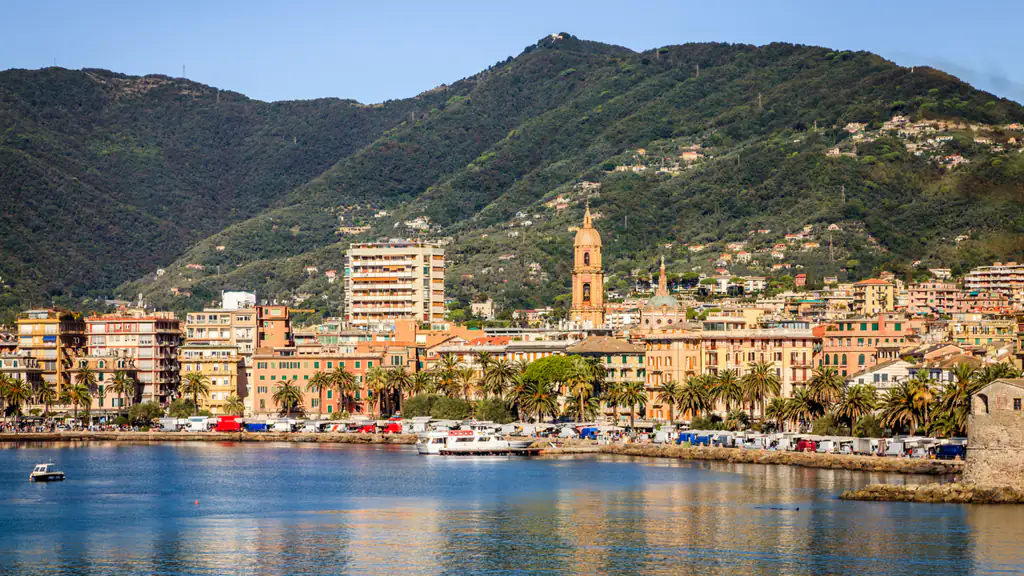
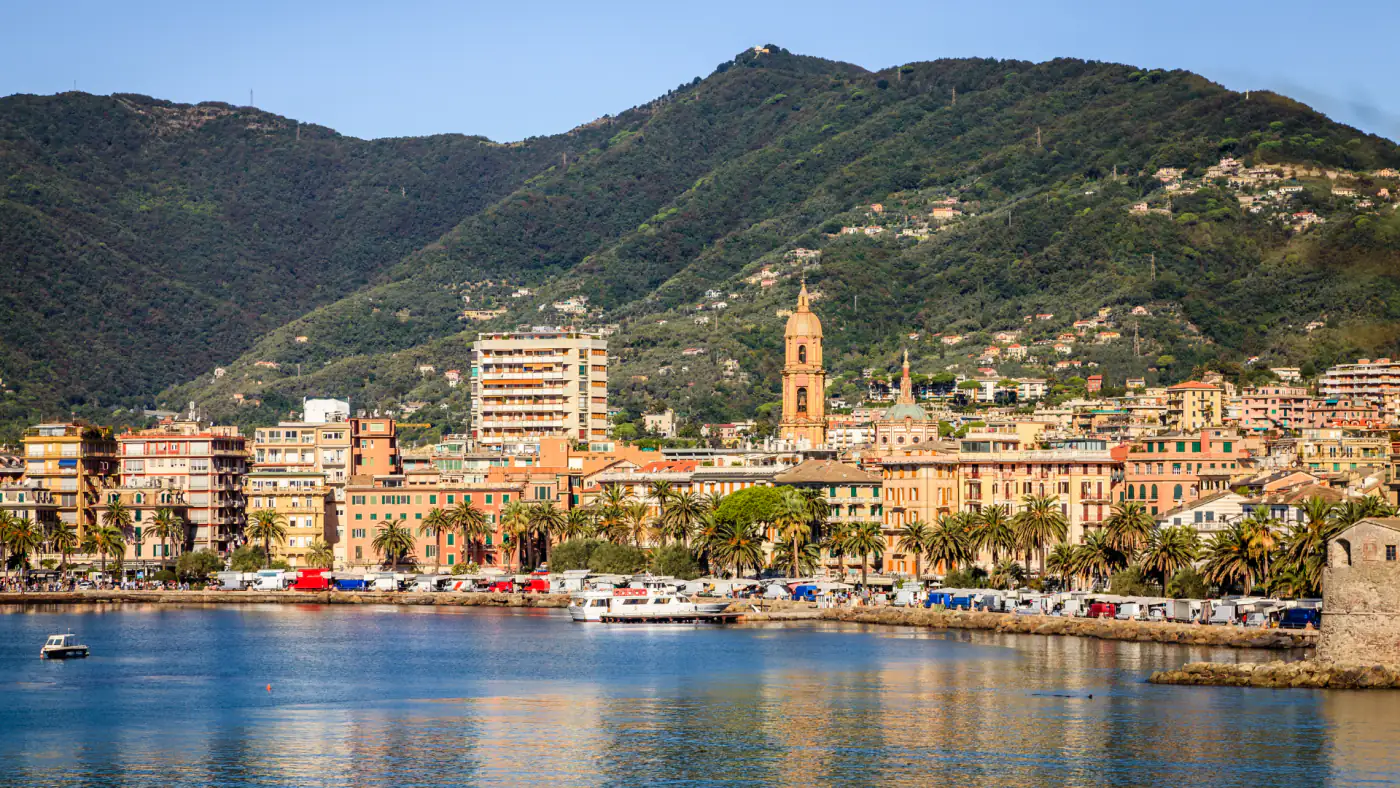
Rapallo is the largest town on the Gulf of Tigullio: almost 30,000 people, a palm-lined seafront with Art Nouveau buildings, a 16th-century castle standing in the sea and, behind it, olive groves and woods climbing up to the sanctuary of Montallegro at 612 metres. It is half an hour by train from Genoa and about 8 km from Portofino.
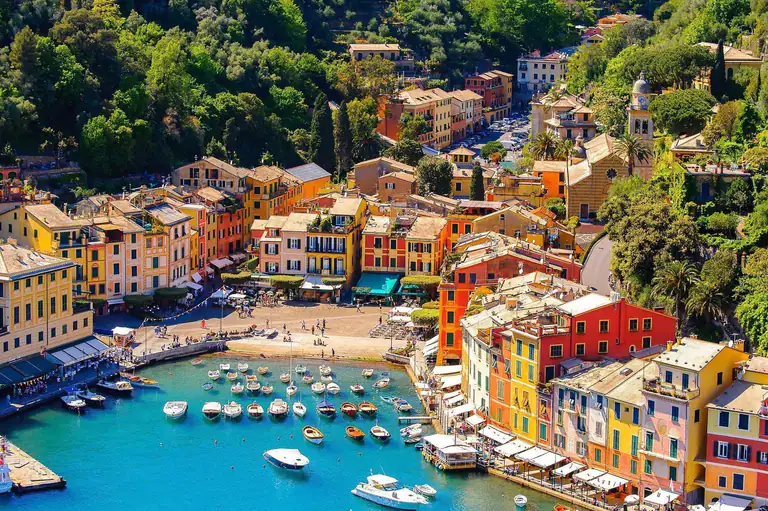
It isn’t a postcard village like Portofino or Camogli. It’s a real town with shops, markets and life all year round, and that is exactly why it makes a good base. You have a station on the Genoa–La Spezia line, its own motorway exit and boats leaving from the seafront for Portofino and San Fruttuoso. Sleep here, pay less than in the famous villages and get around without a car.
Rapallo was a fashionable resort for European travellers in the late 19th and early 20th centuries, and its name made it into the history books with two international treaties. This guide covers what to see, how to get up to Montallegro, the beaches, the July festival with the “burning” of the castle, and all the practical details for arriving and getting around.
By Italian Riviera editorial team·Updated on ·11 min read
Where is Rapallo?
Rapallo is in Liguria (Riviera di Levante, Golfo del Tigullio, province of Genoa).
You can see the centre on foot in half a day. Add Montallegro and a walk to San Michele di Pagana and it’s a full day; with boat trips, plan two or three.
The Castle on the Sea
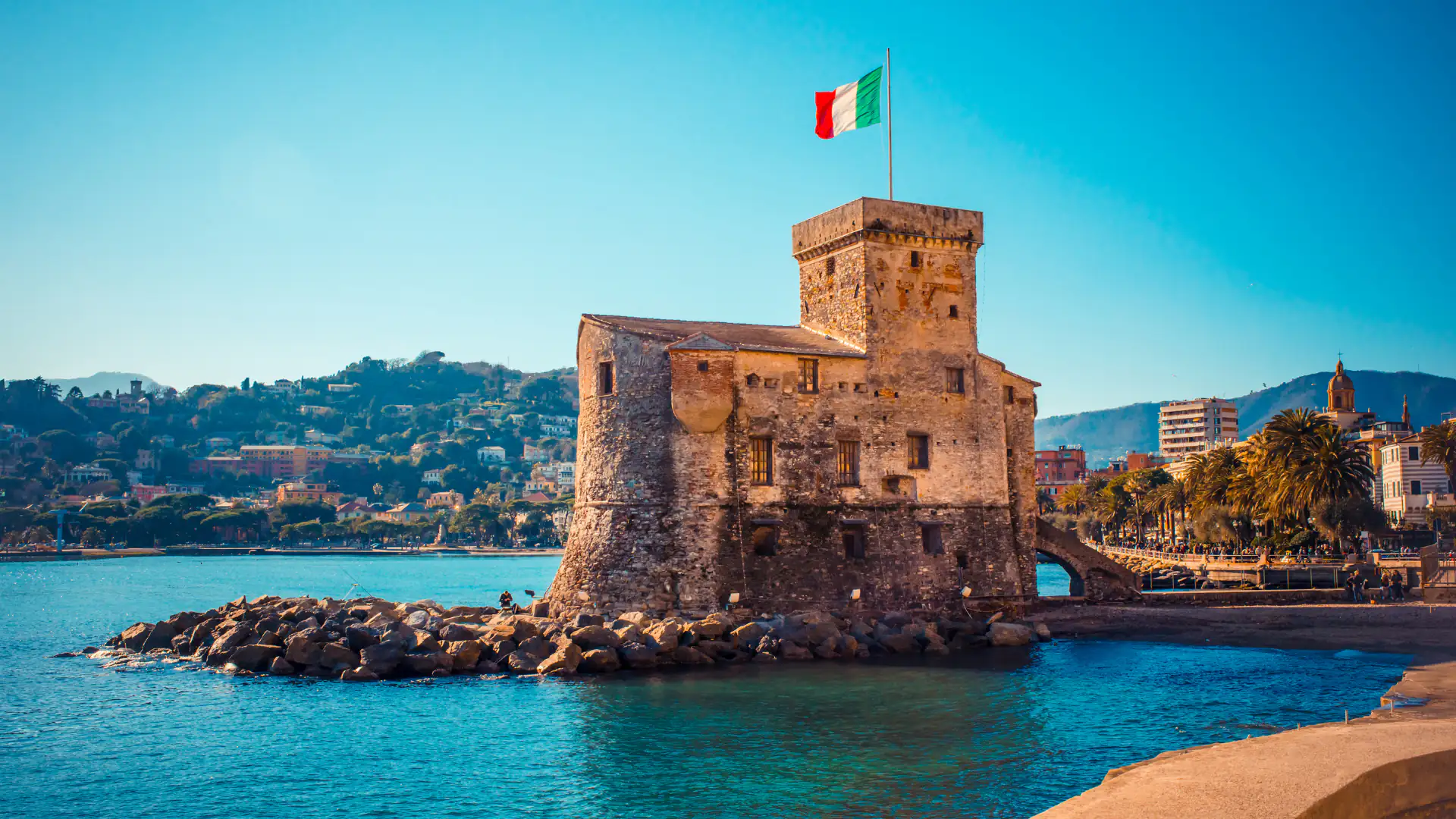
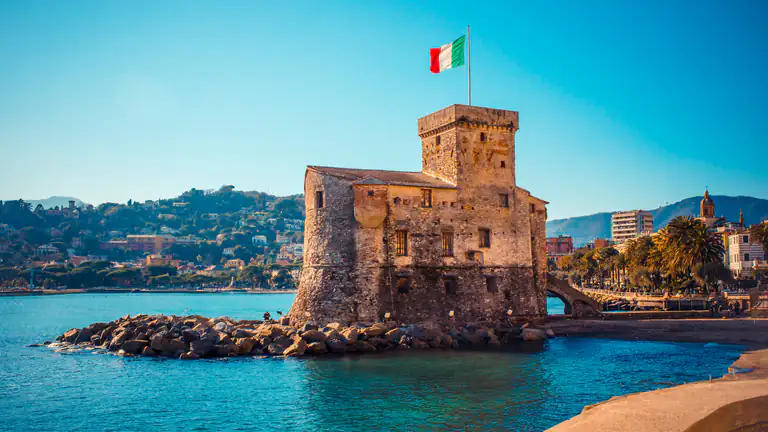
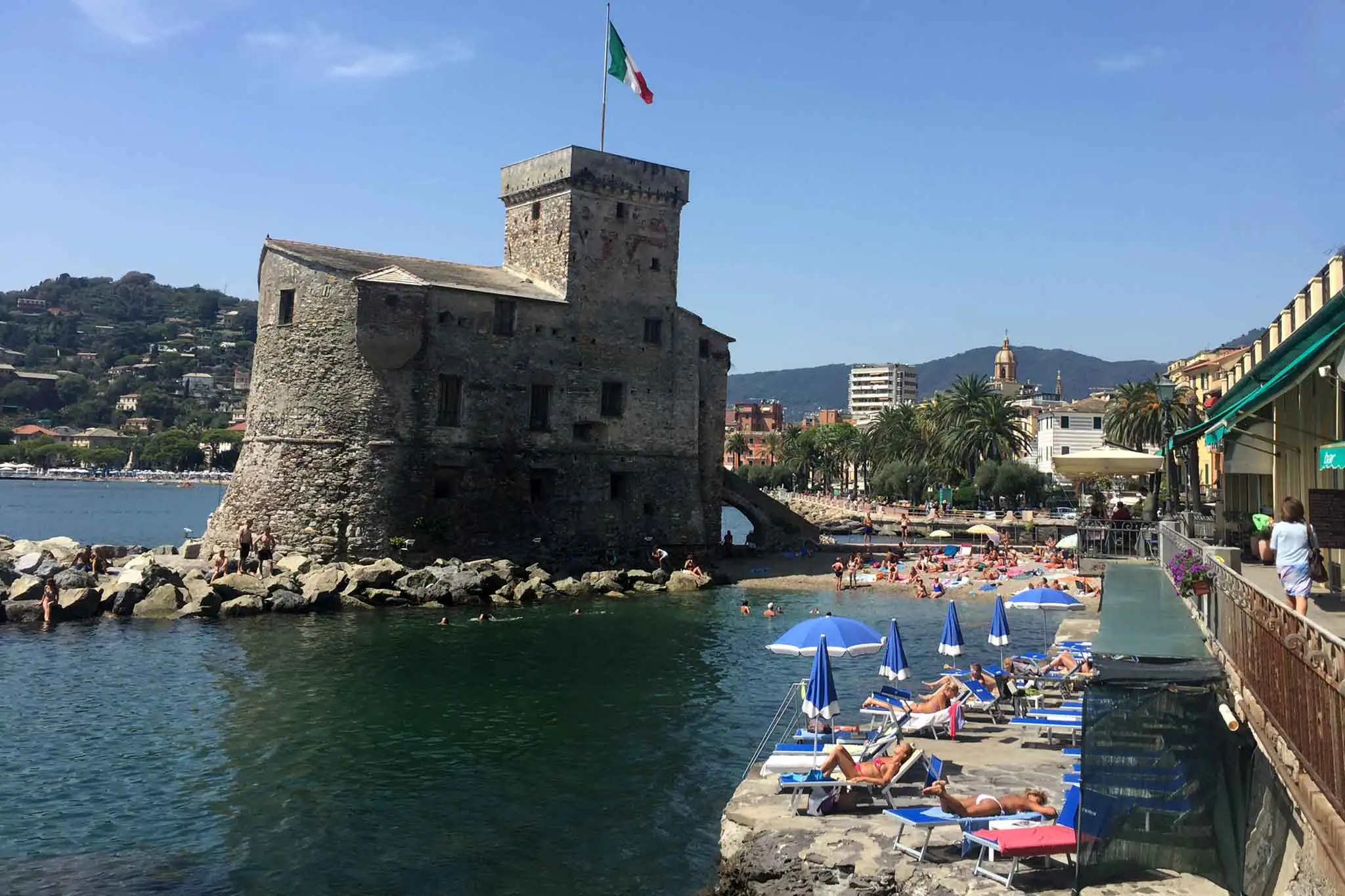
Rapallo’s symbol is a small fortress on a rock at the eastern end of the seafront, linked to the shore by a short causeway. It was built in the mid-1500s, right after the corsair Dragut raided the town in July 1549, to defend it from attacks from the sea. Over the centuries it also served as a prison.
After restoration it reopened to the public in November 2025, and the old prison cells can be visited; the small tower is still closed for safety works. Opening is mainly at weekends and during temporary exhibitions, so check the times before you go. Even from outside it’s worth a stop, especially at sunset.
Lungomare Vittorio Veneto
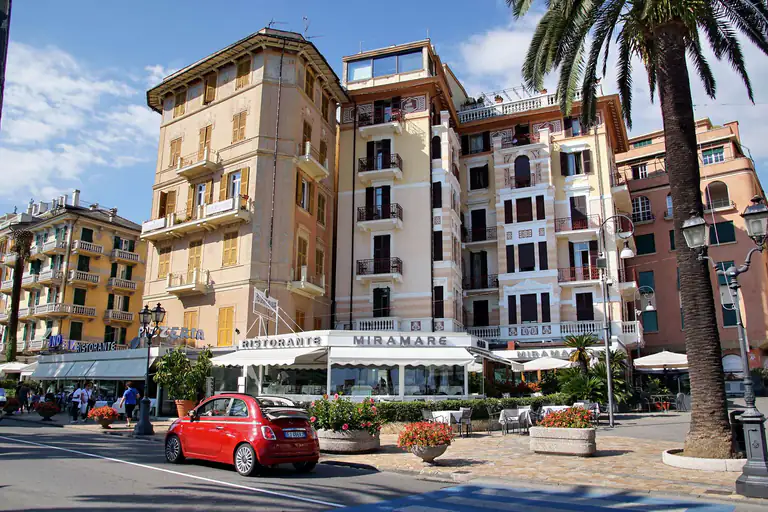
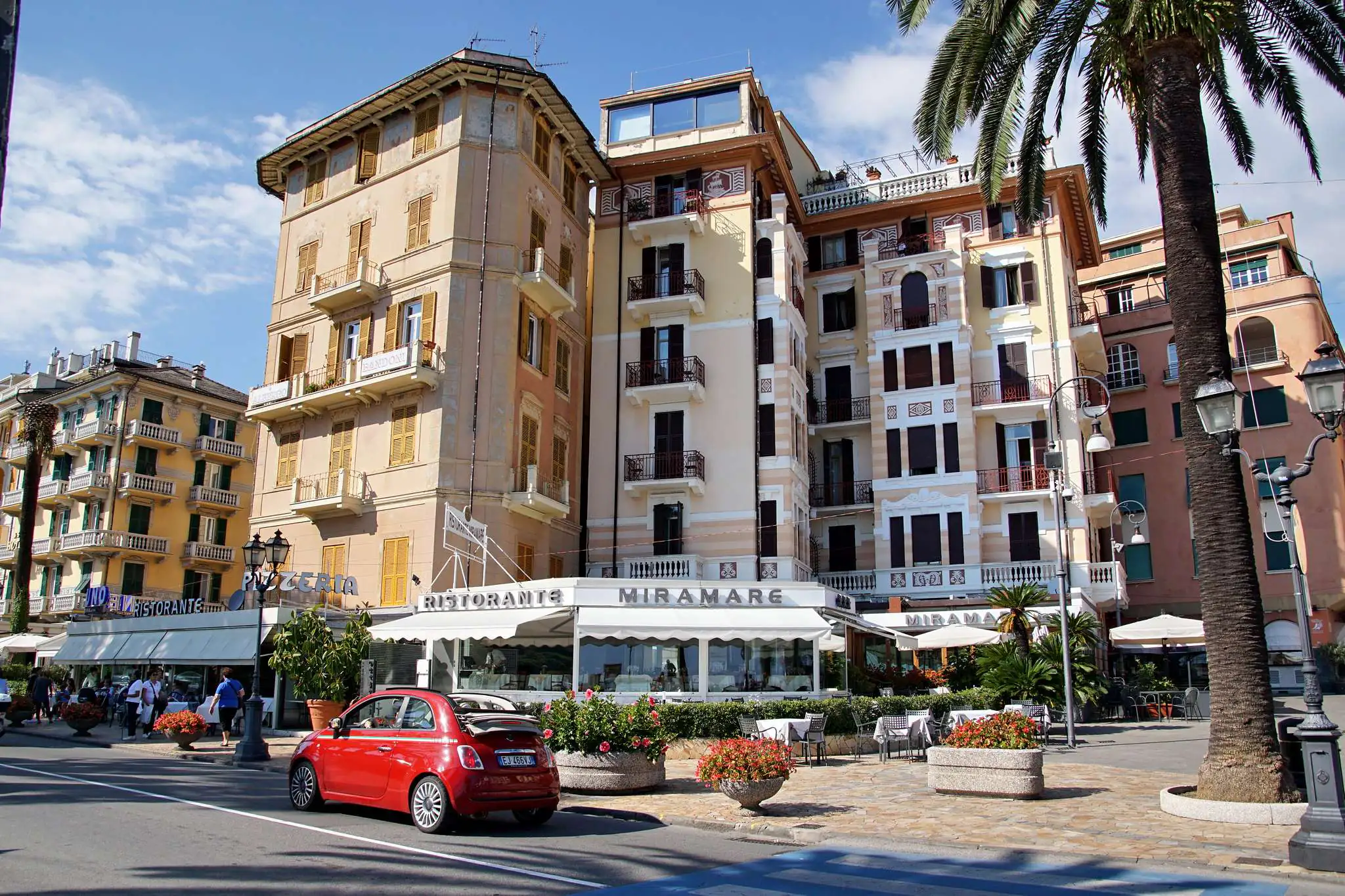
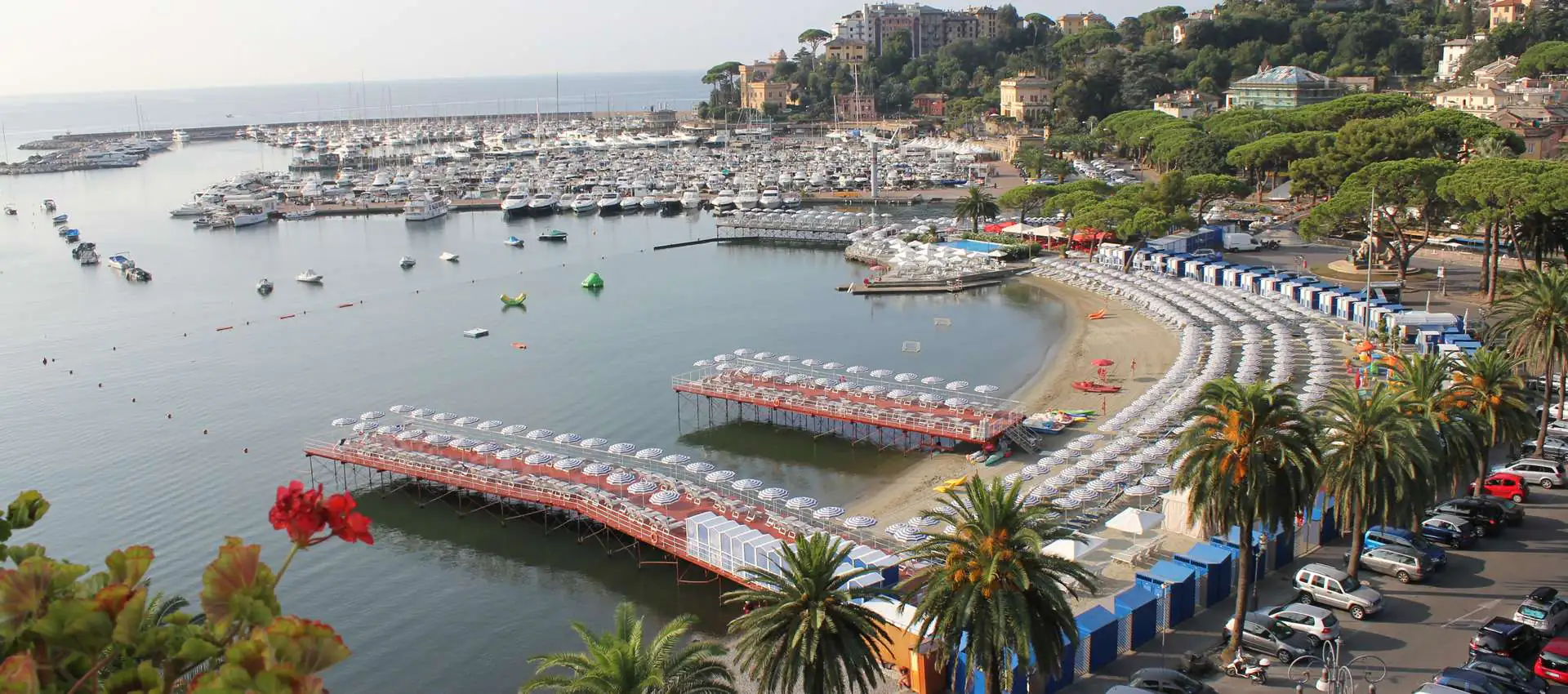
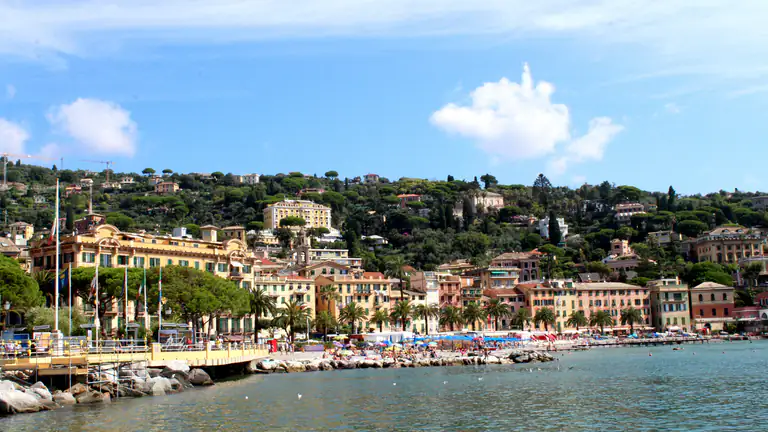
Rapallo’s living room is this seafront promenade with palms, Art Nouveau façades, cafés with outdoor tables and an open view across the gulf to the Portofino headland. It takes about twenty minutes to walk from the castle towards the marina, but the point is to stop. Most of the town’s events, and the July fireworks, happen here.
The bandstand
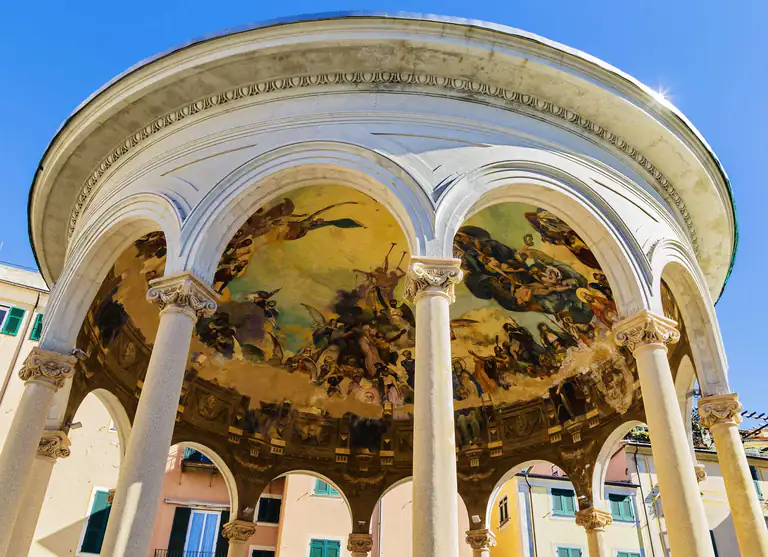
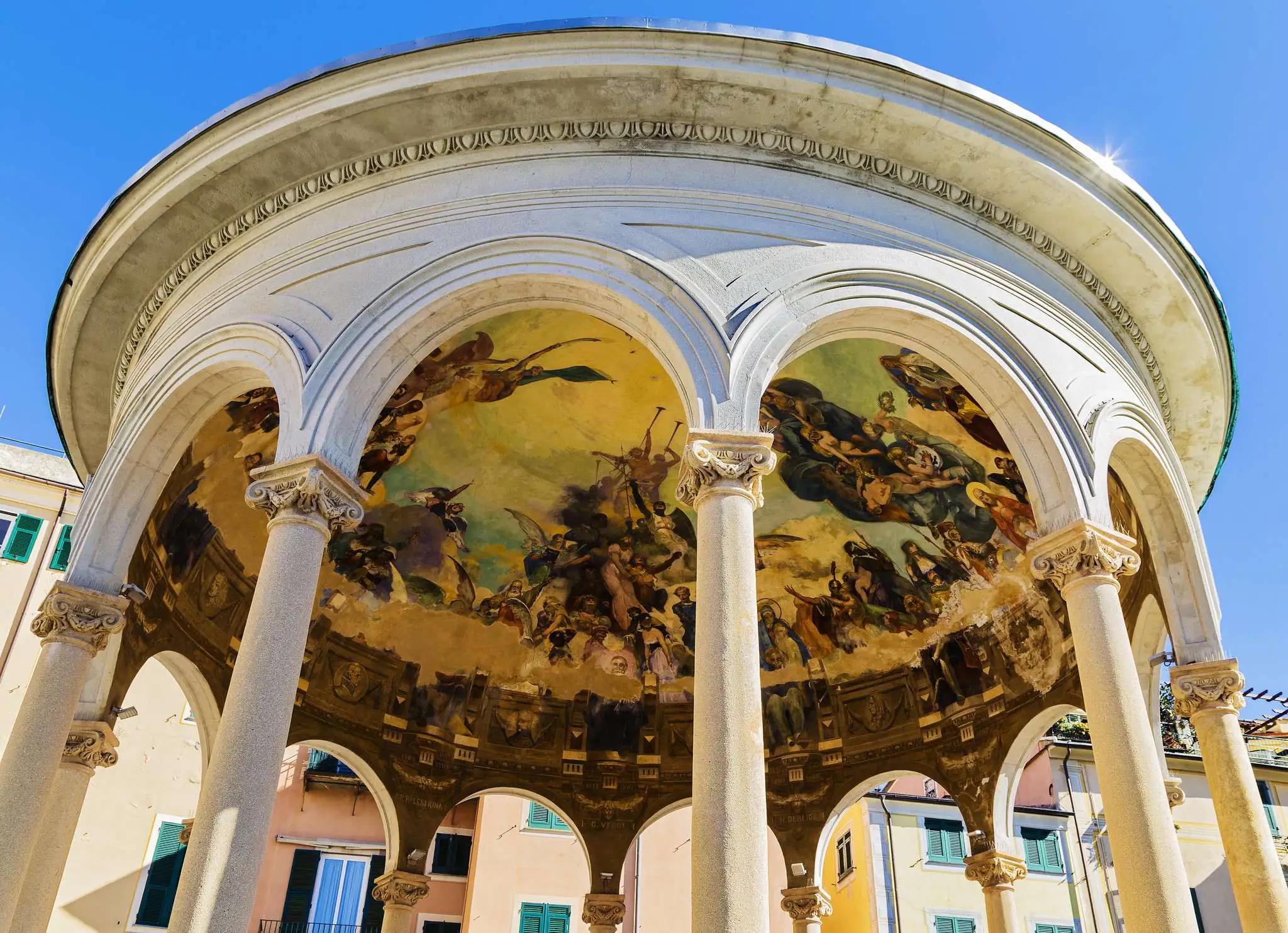
Halfway along the seafront stands the bandstand, a pavilion with a decorated dome painted on the inside. It’s a reminder of Rapallo’s resort years, when orchestras played for guests of the seafront hotels. Look up at the ceiling: that’s the best part.
Old town and the Basilica of Santi Gervasio e Protasio
Behind the seafront lies the old centre, with pedestrian lanes (caruggi), tall colourful houses and local shops. The neoclassical Basilica of Santi Gervasio e Protasio was hit by bombing in 1944; its leaning bell tower and the civic tower shape the town’s skyline from the sea. Look out for the Porta delle Saline, one of the surviving gates of the old town.
Hannibal's Bridge
A small stone arch bridge a few steps from the centre is one of the oldest structures in Rapallo: its name already appears in a notary deed of 1049. It looks Roman but is probably medieval, and there’s no evidence that Hannibal ever came this way. The stream that once ran beneath it was diverted long ago, so today the bridge stands a little stranded: a five-minute curiosity.
Former Poor Clares' convent
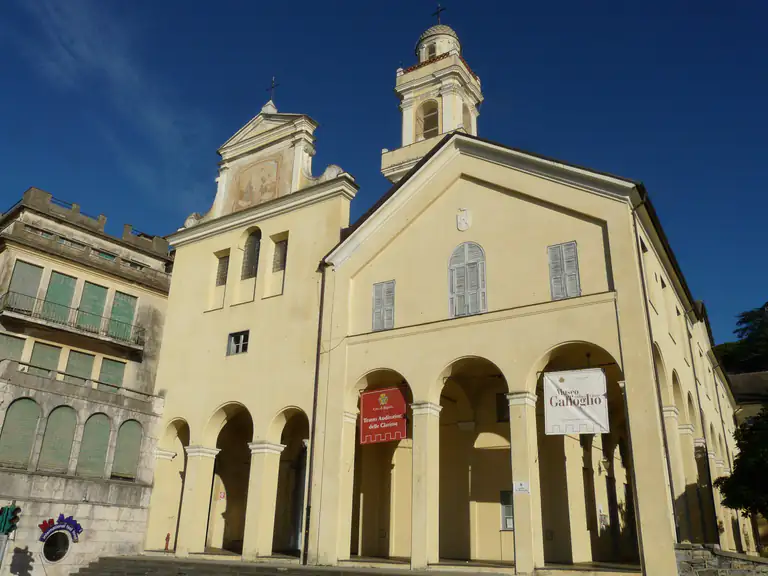
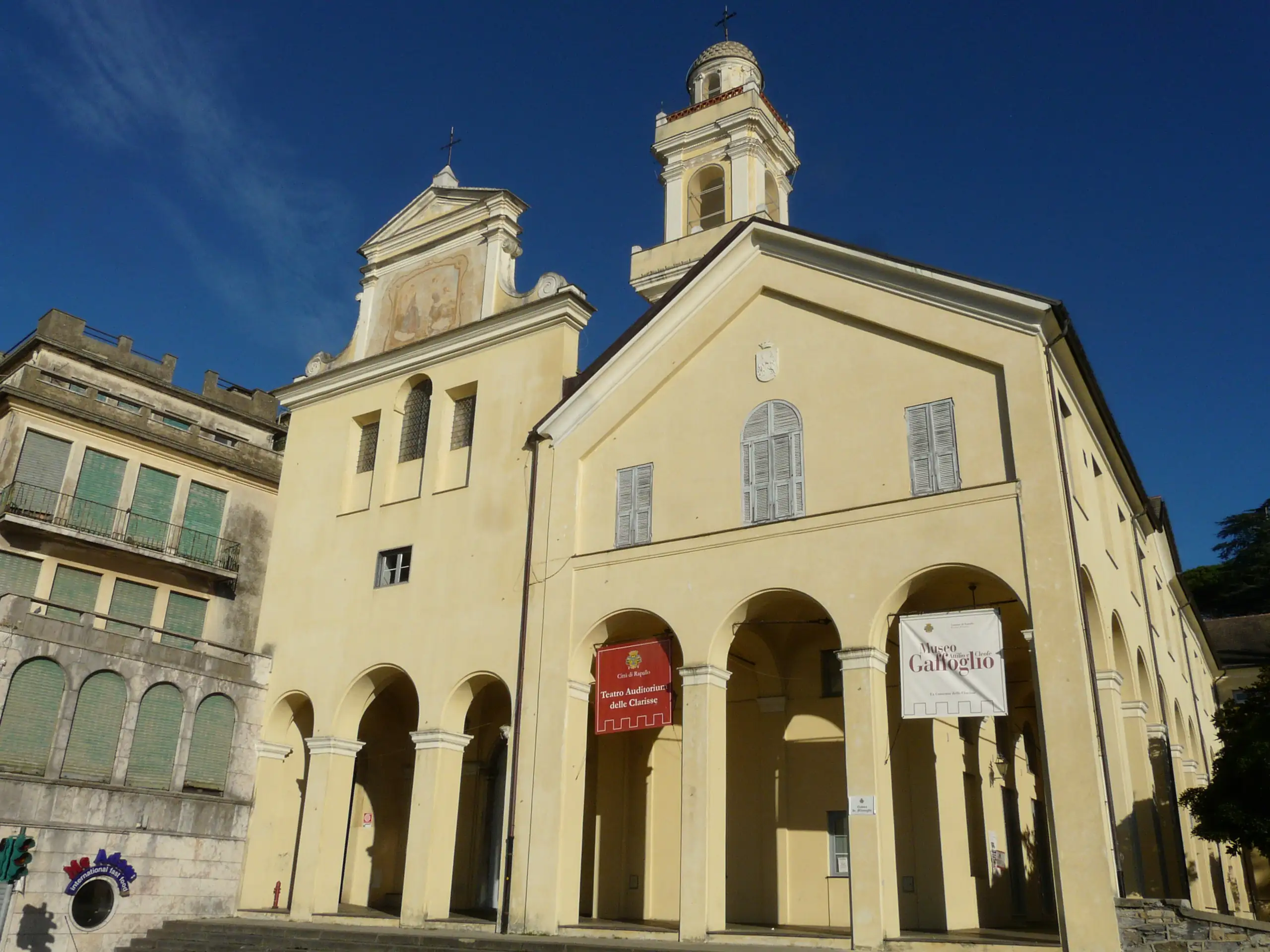
On the seafront, a few metres from the castle, the former convent of the Poor Clares has had many lives: enclosed convent, barracks, warehouse, school. Today it houses a civic auditorium and theatre, the town museum and a school. From the sea you recognise it by its long, regular façade.
Villa Tigullio, Lace Museum and Parco Casale
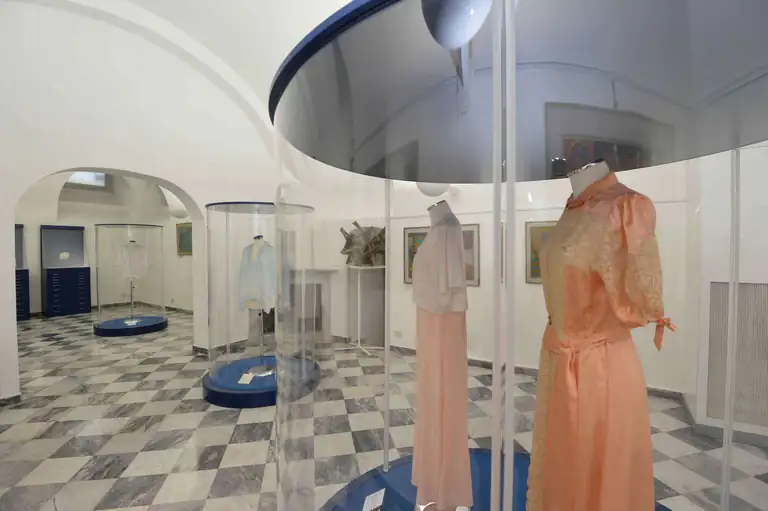
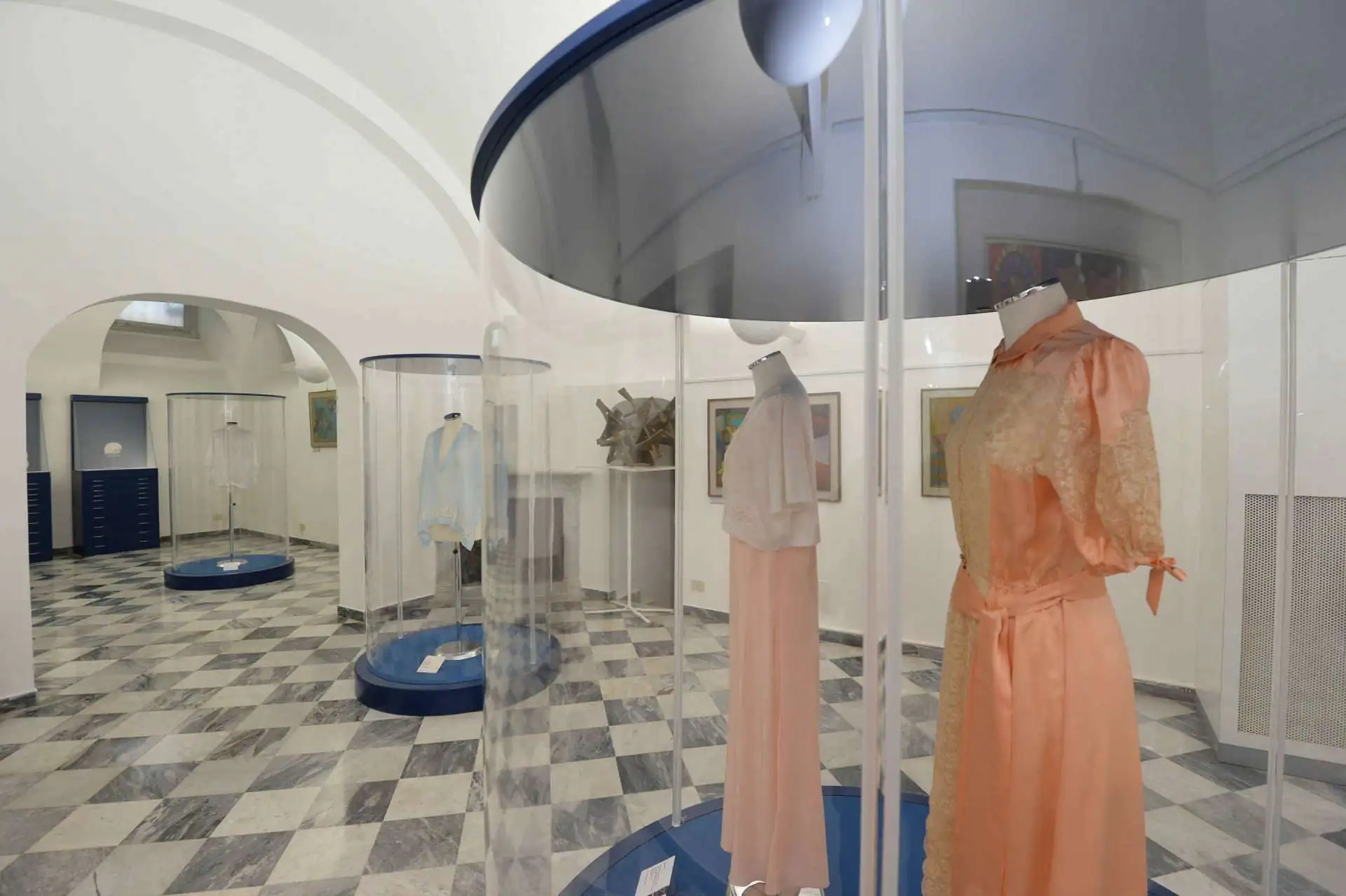
Parco Luigi Casale is Rapallo’s green lung, between the centre and the marina, with palms, old trees and sloping avenues. At the top is Villa Tigullio, where Pope Pius VII stayed in 1806. It now houses the town library and the Lace Museum, with more than 1,400 pieces from the 16th to the 20th century: dresses, accessories and bobbin lace, the traditional craft of Tigullio women. Opening hours are limited, so check before you walk up.
Montallegro sanctuary and cable car
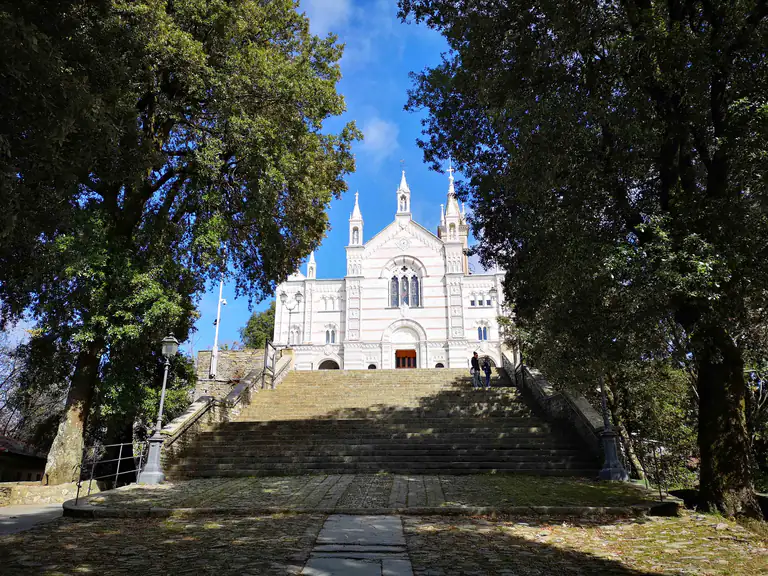
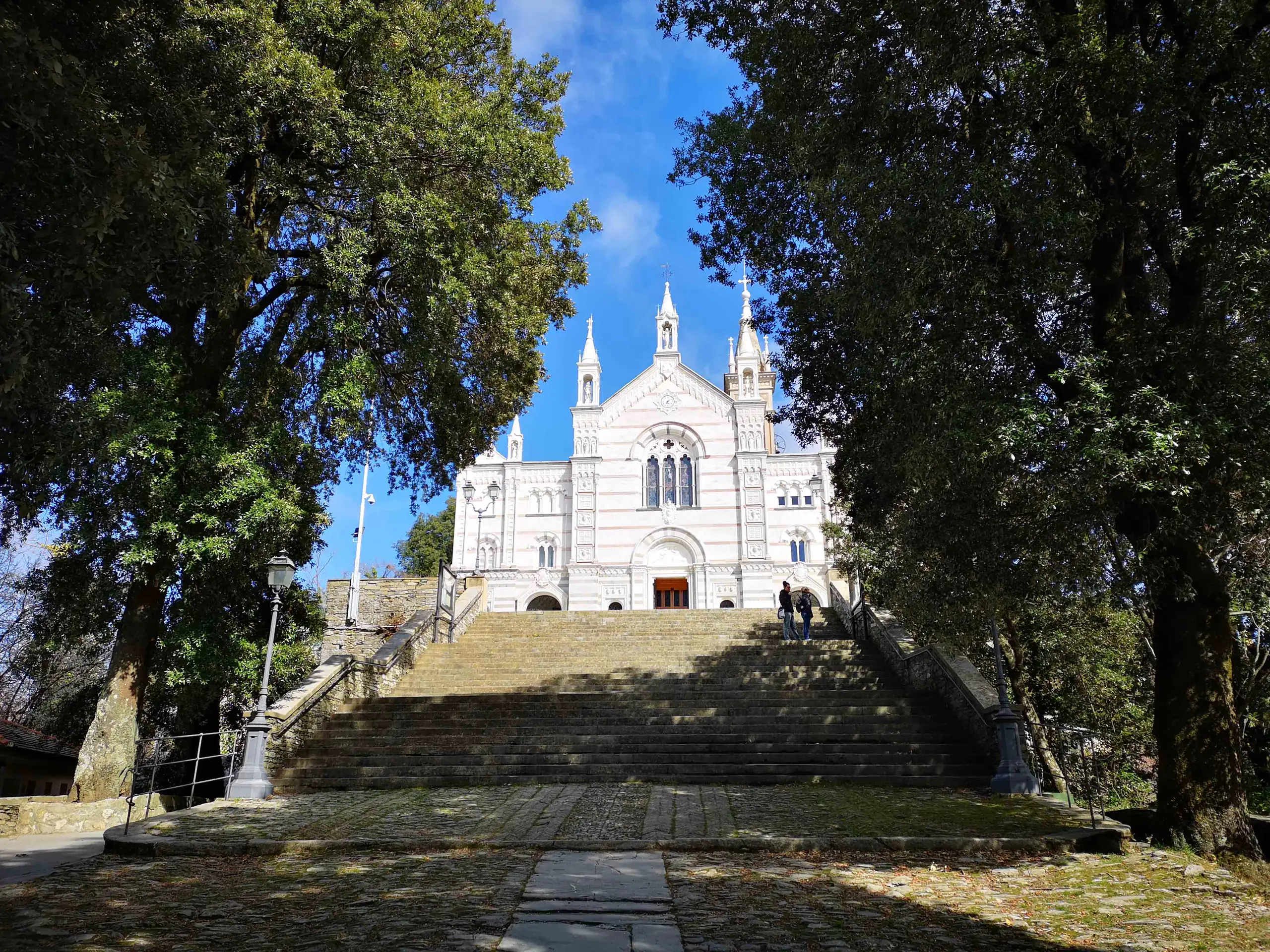
The sanctuary stands at 612 metres, where, according to tradition, the Virgin appeared to a farmer on 2 July 1557. Inside is a small Byzantine icon at the heart of a story involving sailors from Ragusa (today’s Dubrovnik) who claimed it in 1574. From the square you see the whole gulf, from Portofino to Sestri Levante.
You get there by cable car in about seven minutes over the woods, by car on a road of around ten kilometres, or on foot along the old pilgrims’ mule track in about an hour and a half. The cable car, built in 1934, reopened at Easter 2026 after major maintenance work. Times, tickets, the path and the history are in our guide to Montallegro and the cable car.
Valle Christi
On the hills of San Massimo, next to the golf course, stand the Gothic ruins of the Valle Christi monastery, founded in the early 1200s and home to Cistercian and then Poor Clare nuns until the late 16th century. The bell tower, apse and transept survive, roofless and surrounded by greenery. It has been a national monument since 1903 and hosts open-air shows in summer. One of the least known and most atmospheric places around: drive up, or walk in about half an hour from the centre.
San Michele di Pagana
West of the centre, on the road to Santa Margherita, the village of San Michele di Pagana has small pebble coves (Prelo, Trelo and Pomaro), villas set in gardens and Punta Pagana with its castle, in the grounds of Villa Spinola. Here, in November 1920, Italy and the Kingdom of Serbs, Croats and Slovenes signed the first Treaty of Rapallo, which set their Adriatic borders. The villa can be seen from outside.
The better-known second treaty, signed on 16 April 1922 between Germany and Soviet Russia, also bears Rapallo’s name but was actually signed at the Hotel Imperiale, which lies within Santa Margherita Ligure.
The marina and the 2018 storm
The Carlo Riva marina was one of Italy’s first modern yacht harbours. On the night of 29–30 October 2018 an exceptional storm brought down about 300 metres of the breakwater: hundreds of boats were smashed on the rocks or sank, and the road to Portofino collapsed. Pictures of yachts piled up on the seafront went round the world. The marina was rebuilt with a higher breakwater and reopened in 2024. Walk along the quay and you’ll understand how hard the sea can hit this coast in autumn.
Sea
Beaches in Rapallo
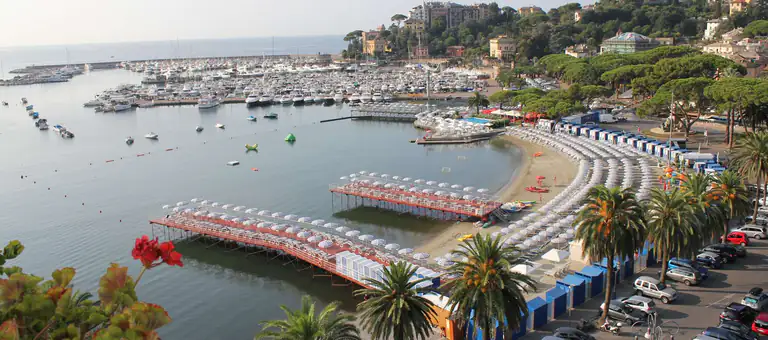
Rapallo is not a big-beach resort. In the centre the sea is reached mostly through beach clubs, many built on stilts and wooden piers with colourful cabins: a typical Tigullio sight. The bottom is pebbles and fine gravel, with a little sand here and there, which is rare on this coast.
There are some free public stretches, an accessible beach for people with disabilities near the marina and a few dog-friendly areas: ask the tourist office for an up-to-date map. For clearer water and fewer people, head to San Michele di Pagana and the coves towards Punta Pagana, or take the boat to San Fruttuoso. In July and August, book beach club sunbeds in advance.
Where to stay
Where to stay in Rapallo
Rapallo has a wide choice, from historic seafront hotels to B&Bs and apartments in the centre. Overall it costs less than Santa Margherita and much less than Portofino.
Seafront and old town: for doing everything on foot, boats included. Sea-view rooms are the most sought after; the downside is noise on summer evenings.
Near the station: handy if you’re taking trains to the Cinque Terre and Genoa; the seafront is a few minutes away.
San Michele di Pagana: quieter, with coves on your doorstep, halfway between Rapallo and Santa Margherita.
Hills and villages: agriturismi and houses with a view, more peace, but you’ll need a car.
Book well ahead for the first days of July, during the festival, and for summer weekends.
Rapallo has its own exit on the A12 Genoa–Livorno motorway, right next to town. The old Via Aurelia coast road is scenic but slow, especially in summer. The narrow road to Portofino is often jammed: leave the car in Rapallo.
By train
Rapallo station is on the Genoa–La Spezia line, a few minutes’ walk from the seafront. Regional trains from Genova Brignole take about 25–35 minutes, and several Intercity trains stop here too. The same line takes you to the Cinque Terre, Sestri Levante and La Spezia. Timetables on Trenitalia.
By boat
Servizio Marittimo del Tigullio links Rapallo with Santa Margherita, Portofino and San Fruttuoso every day, all year round, with seasonal timetables; from May to September there are also excursions to the Cinque Terre and Portovenere. Departures depend on the weather and tickets are sold at the ticket office. Routes and times on the Servizio Marittimo del Tigullio website.
By bus
Local buses connect Rapallo with Santa Margherita, the hill villages and Montallegro. For Portofino, take the bus to Santa Margherita and change to line 782. With summer traffic, the boat is often faster.
By plane
The nearest airport is Genoa Cristoforo Colombo, about 40 km away: 40–50 minutes by car without traffic. Alternatively, take a bus or taxi to a Genoa station and continue by train. Pisa and Milan airports are further but have more international flights.
Parking
Parking in the centre is almost all paid, on blue lines and in car parks near the seafront and the station. In summer and during the July festival they fill early. On a day trip, arrive in the morning or leave the car on the edge of town and walk in. If you’re staying in the centre, ask in advance whether parking is included: it’s worth a lot.
A12 Genoa–Livorno, Rapallo exit, right next to town
By train
Rapallo station (Genoa–La Spezia line): 25–35 minutes from Genova Brignole
By sea
Boats from Genoa’s Porto Antico and Camogli
By plane
Genoa Cristoforo Colombo, about 40 km (40–50 minutes by car)
The guide
Things to do in Rapallo
July festival: from 1 to 3 July the town celebrates Our Lady of Montallegro with processions, day and night fireworks and a contest between its six districts. On the evening of 3 July, after the procession of the silver ark, comes the “burning of the castle”, when fireworks wrap the castle on the sea. Arrive early: the seafront fills up.
Boat to Portofino and San Fruttuoso: Servizio Marittimo del Tigullio boats leave from the pier for Santa Margherita, Portofino and San Fruttuoso all year round, with seasonal timetables. It’s the best way to skip the traffic on the Portofino road.
Walk up to Montallegro: the mule track starts in town and climbs through steps, Stations of the Cross and woods; come back down by cable car.
Hikes in the hills: from the sanctuary, trails lead to Monte Pegge and along the ridges towards Recco and Camogli.
Coastal walk to Santa Margherita: via San Michele di Pagana you reach Santa Margherita in just over an hour (partly on pavements along the main road).
Day trips from Rapallo
Santa Margherita Ligure: one train stop or a few minutes by boat; harbour, villas and an elegant seafront.
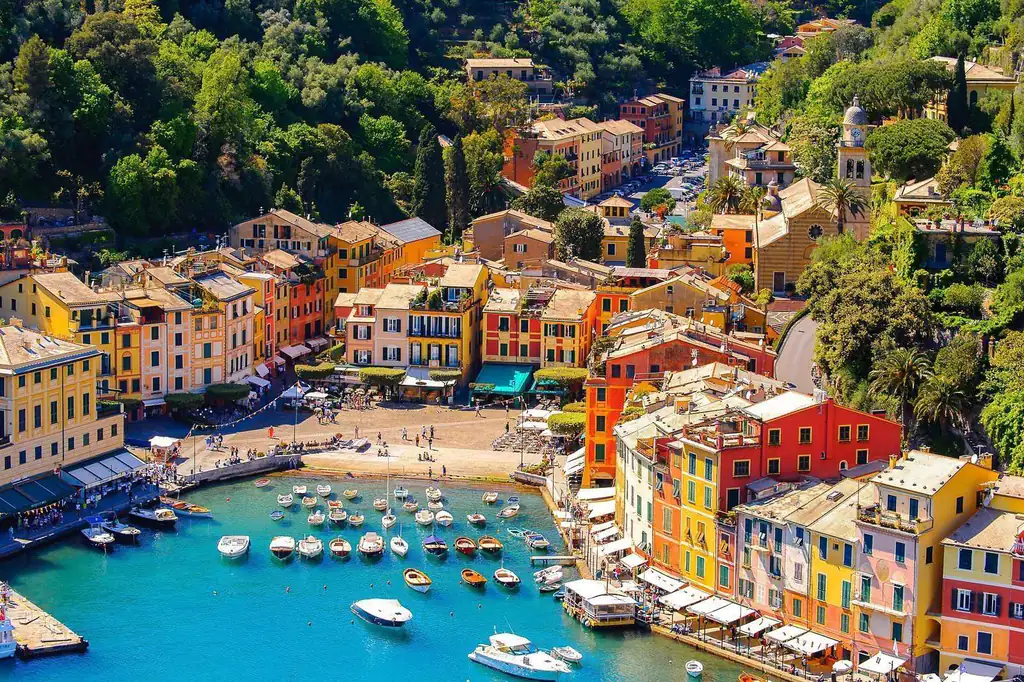
Portofino (about 8 km): best by boat, landing right on the famous piazzetta.
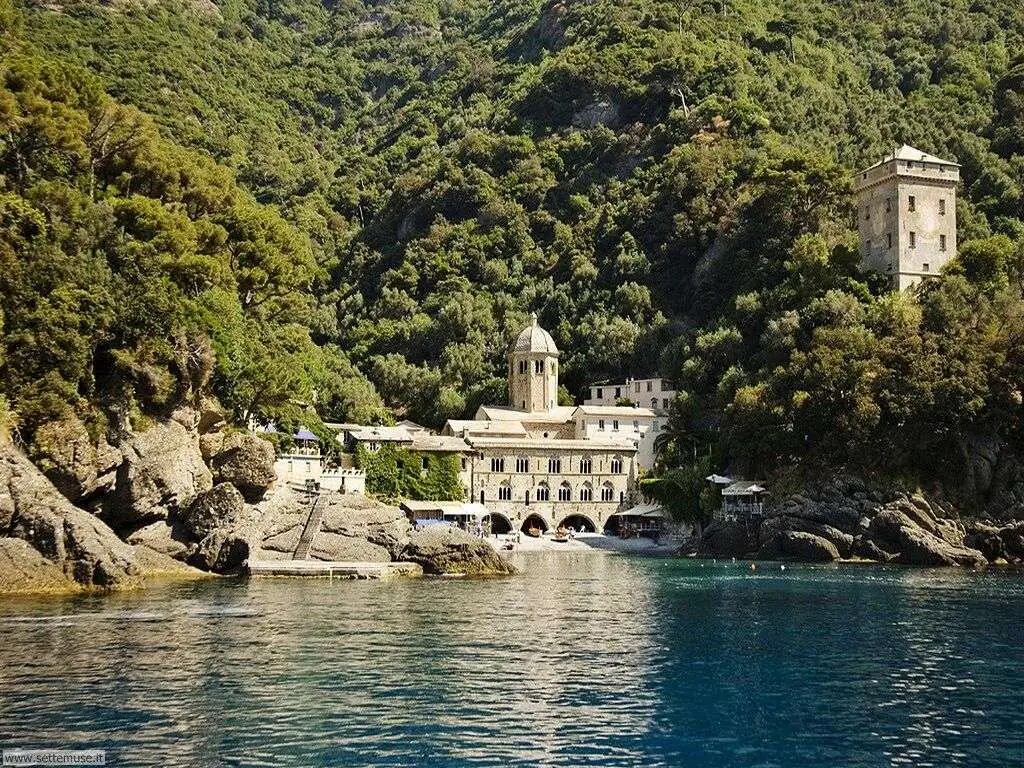
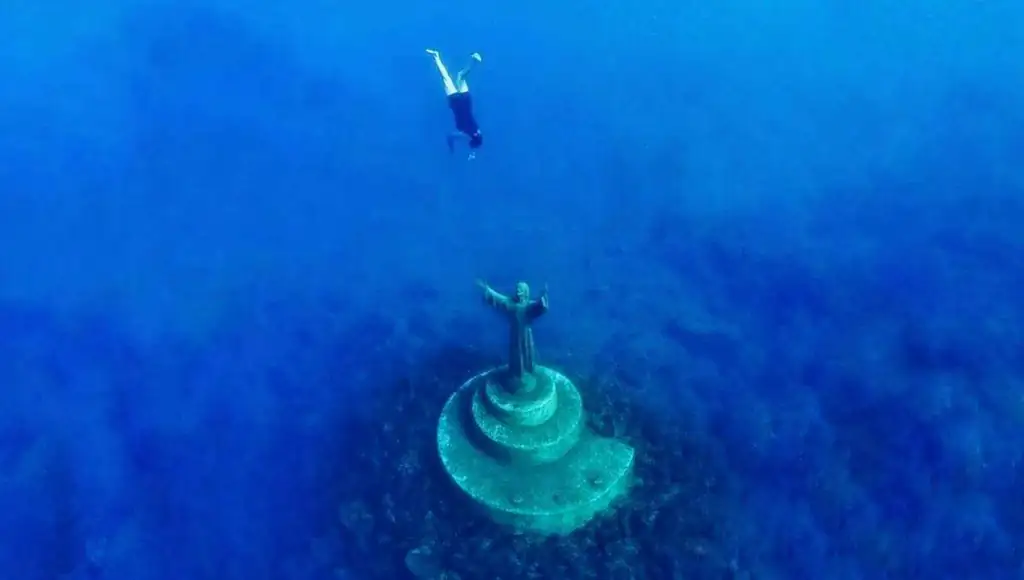
San Fruttuoso Abbey: reachable only by sea or on foot; underwater in the bay lies the Christ of the Abyss.
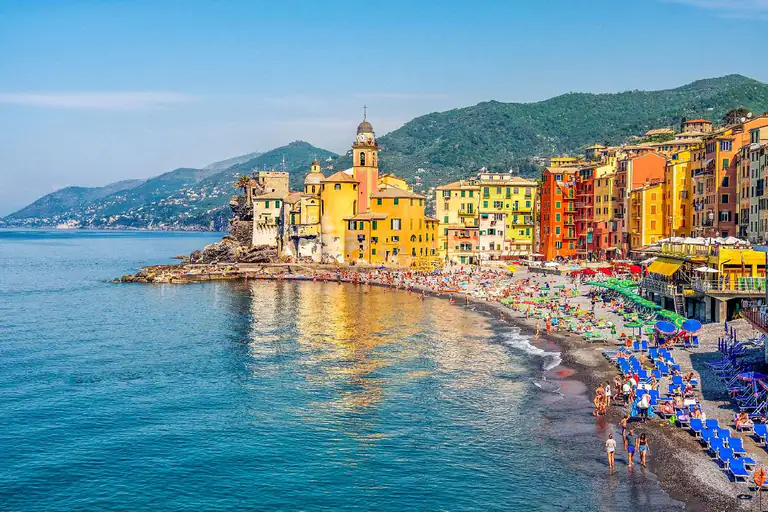
Camogli: colourful houses and a tiny harbour, about twenty minutes by train towards Genoa.
Recco: home of focaccia col formaggio, on the same railway line.
Chiavari and Lavagna: arcades, market and seafront, about a quarter of an hour by train heading east.
Sestri Levante: the Bay of Silence and the Bay of Fables, an easy train ride away.
Genoa: about half an hour by train, for the Aquarium, the old town and the Rolli palaces.
The Christ of the Abyss, a bronze statue placed in the bay of San Fruttuoso in 1954, can be seen on a guided dive or, when the sea is calm, glimpsed from the surface with mask and snorkel.
The Cinque Terre are also within reach: about an hour by train to Monterosso, or by boat in the summer season.
Weather
Weather and best time to visit Rapallo
May to September for the sea; spring and autumn for sightseeing and hiking
🌙
17°CNow · wind 31 km/h
Thu 8🌙17° 17°
Fri 9🌤️21° 16°
Sat 10☁️21° 15°
Sun 11🌤️22° 12°5 mm
Mon 12🌦️22° 15°5 mm
Tue 13🌤️21° 14°
Forecast: MET Norway (Yr), CC BY 4.0 licence. Updated hourly.
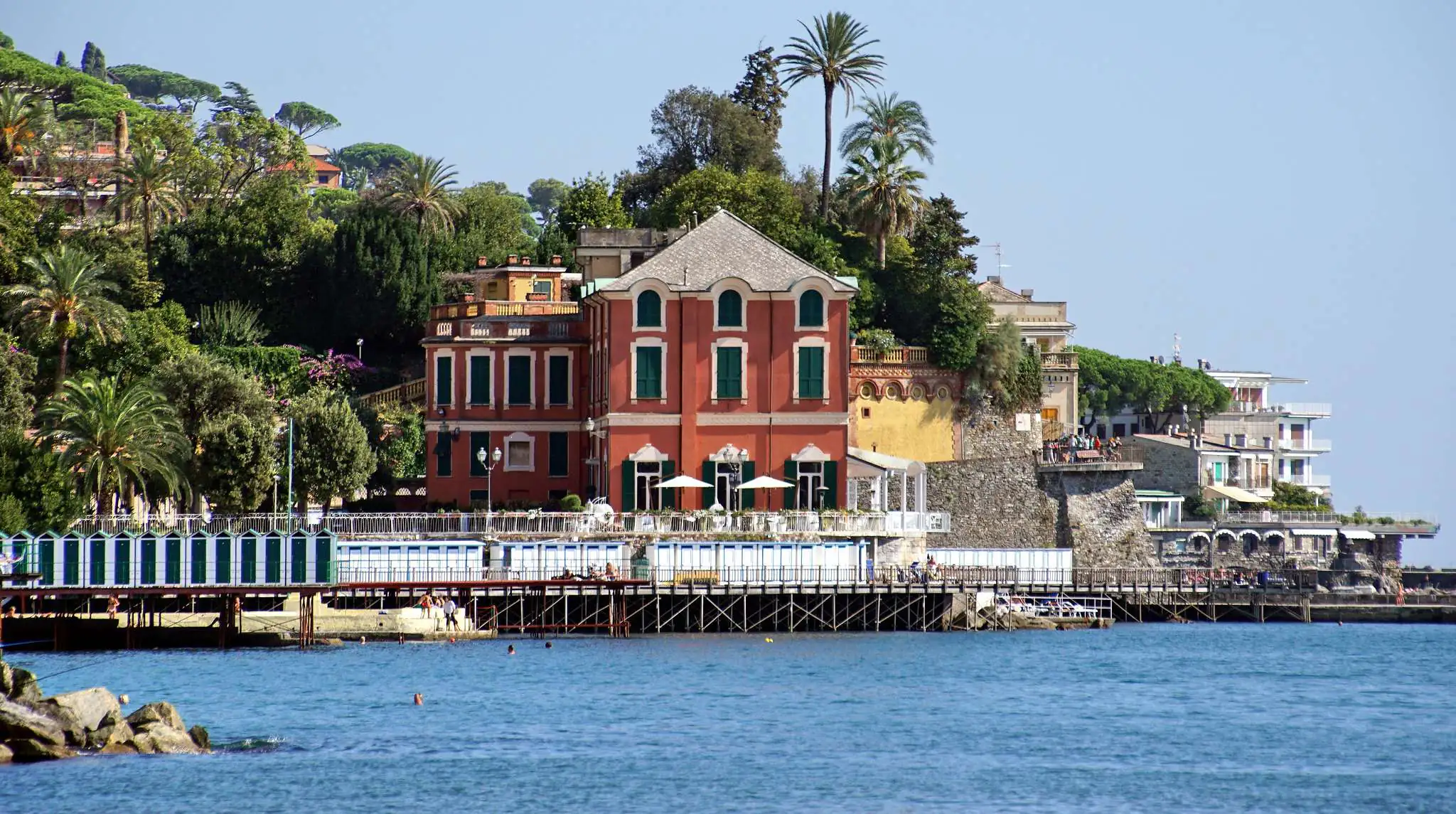
Rapallo harbour and seafrontRapallo's seaside castleLungomare Vittorio Veneto in RapalloSanctuary of Nostra Signora di Montallegro above RapalloRapallo harbour and seafront from aboveSeafront and villa overlooking the Gulf of RapalloBandstand with frescoed dome in Rapallo
FAQ
Frequently asked questions about Rapallo
What can I see in Rapallo in one day?
The castle on the sea, the seafront with the bandstand, the old town and Hannibal’s Bridge in the morning; in the afternoon, the cable car to Montallegro and Parco Casale with Villa Tigullio.
Is the Montallegro cable car open in 2026?
Yes, it reopened at Easter 2026 after a first phase of extraordinary works, running daily 9:00–12:30 and 14:30–19:00. It can stop for wind or maintenance, so phone before you go.
How long does it take to walk from Rapallo to Montallegro?
About an hour and a half uphill on the old mule track, with around 600 metres of ascent; about 50 minutes back down.
When is the July festival in Rapallo?
From 1 to 3 July every year, closing at the sanctuary the following Sunday. The burning of the castle takes place on the evening of 3 July, after the procession.
Can you visit Rapallo castle?
Yes. After restoration it reopened in November 2025, mainly at weekends and during exhibitions. The small tower is still closed.
How do I get from Rapallo to Portofino?
By boat from the seafront, the easiest way; or by bus to Santa Margherita, then line 782. By car the road is narrow and parking in Portofino is scarce and expensive.
Does Rapallo have free beaches?
Yes, but few and small: most of the shore in the centre is taken by beach clubs. For quieter coves, go to San Michele di Pagana.
Why is it called the Treaty of Rapallo?
Because in 1920 Italy and the Kingdom of Serbs, Croats and Slovenes signed their Adriatic border agreement here. The 1922 treaty between Germany and Soviet Russia was signed in Santa Margherita Ligure but took the same name.
Is Rapallo a good base for the Cinque Terre?
Yes, by train on the La Spezia line or by summer boat. Allow about an hour by train to Monterosso.
How long should I stay in Rapallo?
One day for the town and Montallegro. As a base for the Tigullio, Portofino and San Fruttuoso, three or four days.