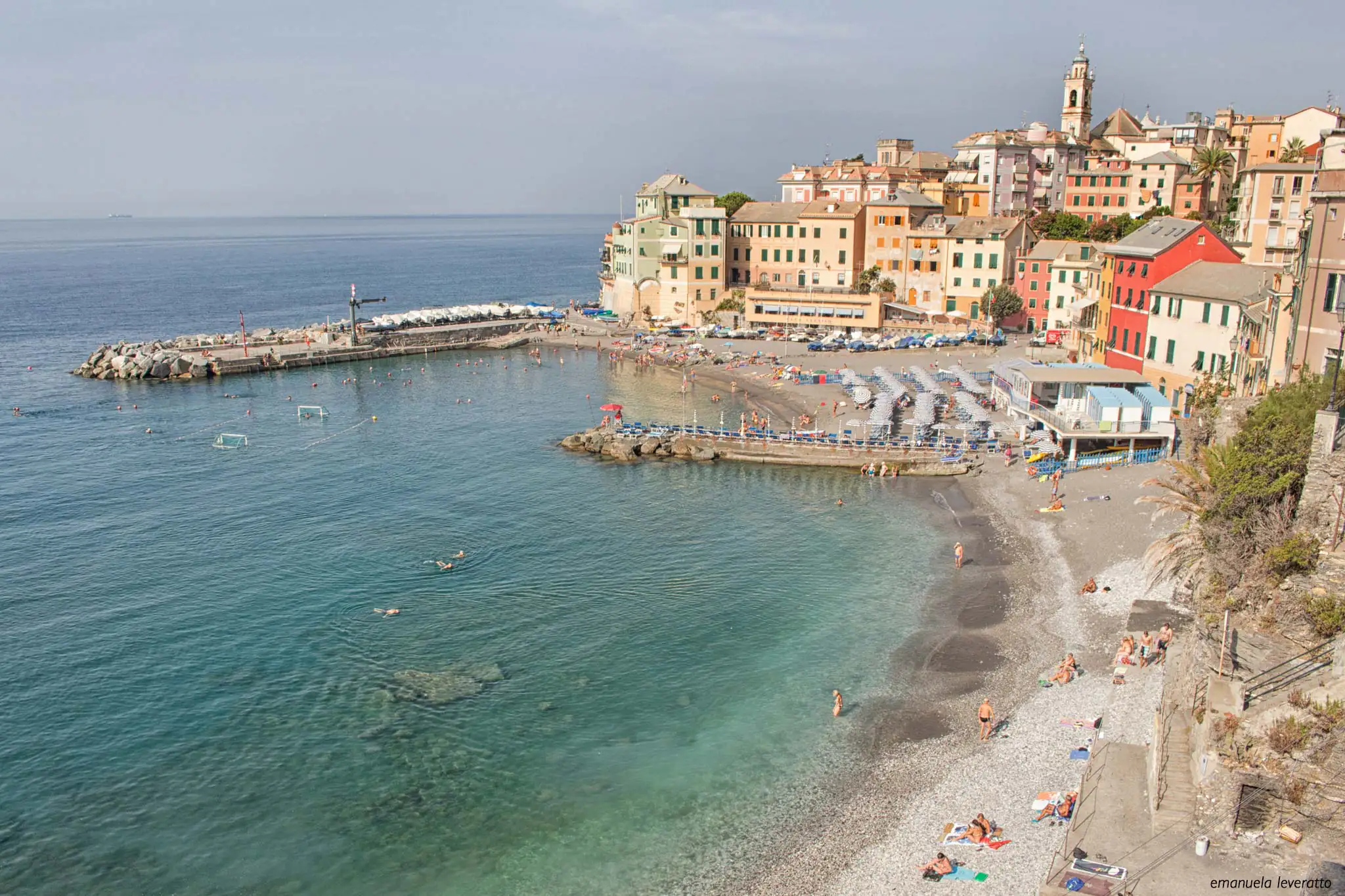
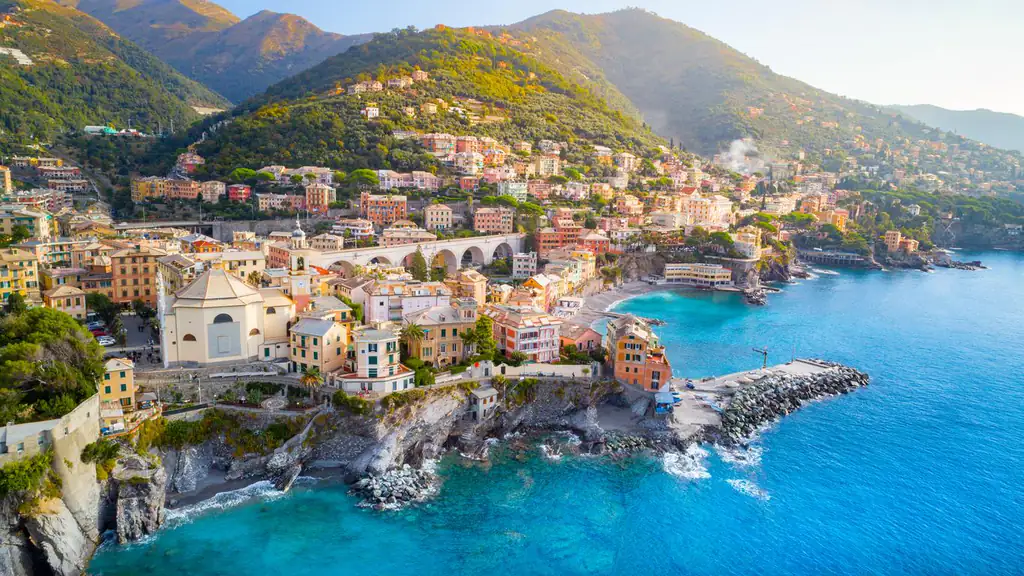
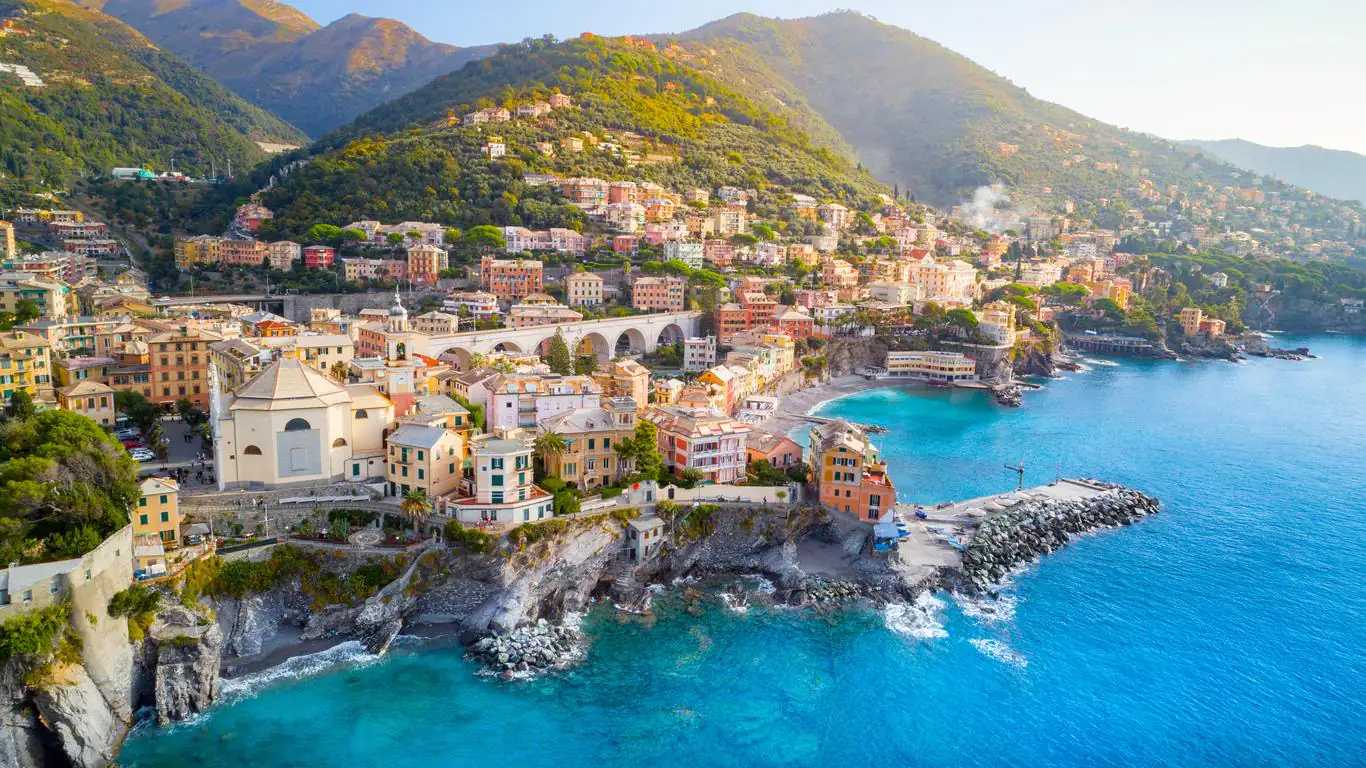
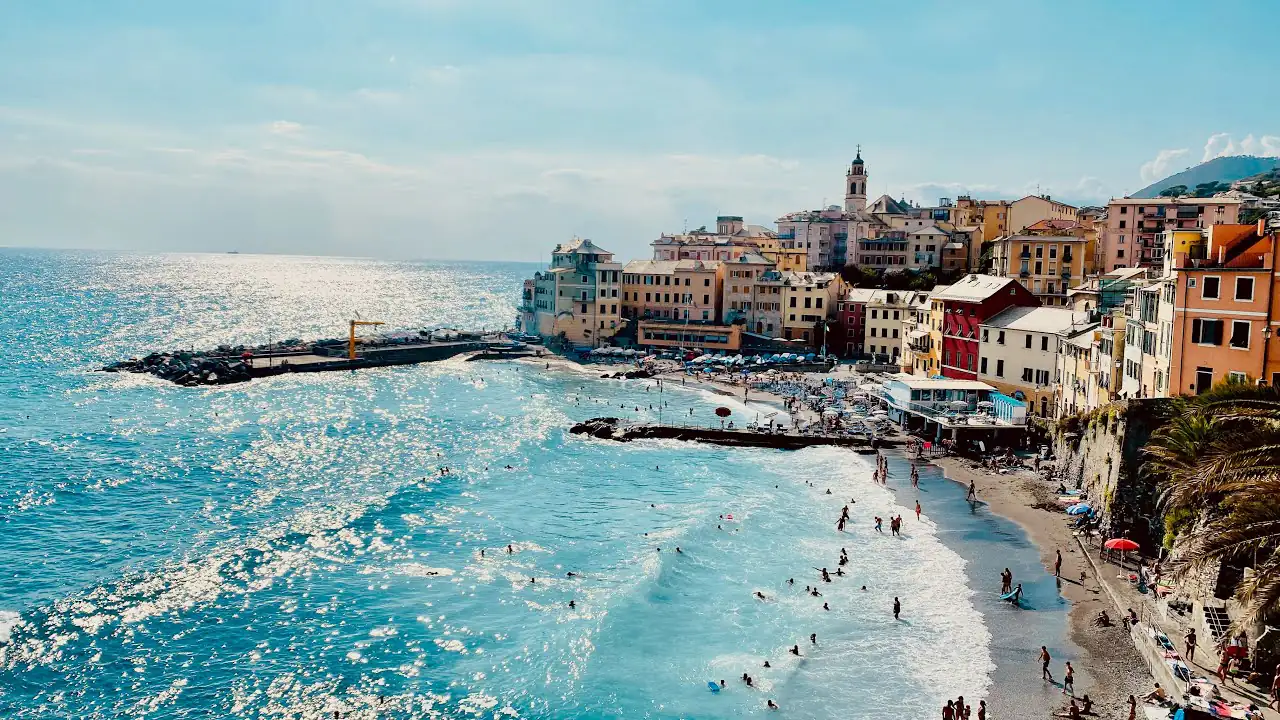
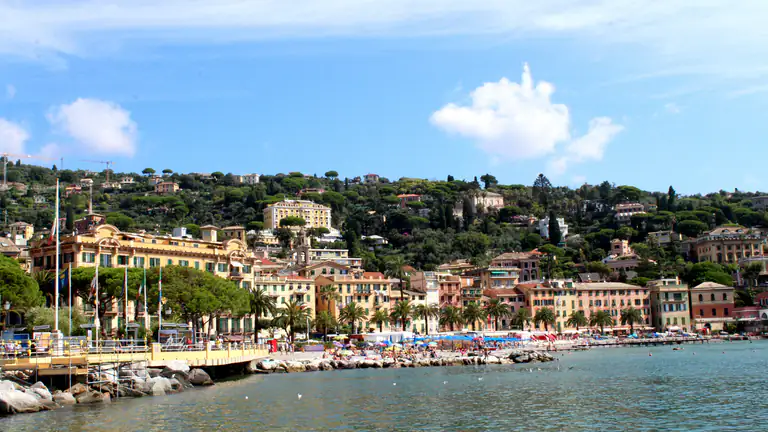
Bogliasco is the first village of the Golfo Paradiso as you leave Genoa heading east. A compact old core of painted houses wraps around a small pebble beach, a medieval bridge spans the mouth of the stream, a Baroque church stands right on the rocks, and terraced hills climb behind it to the 800 metres of Monte Cordona.
It has about 4,200 residents and covers just over 4 km². In practice it runs straight on from Nervi, Genoa’s easternmost district, but the seafront village has kept the scale and pace of a fishing community. In 2026 its beach was ranked fifth among the most beautiful beaches in Europe by European Best Destinations, the only Italian entry in the top 10.
Why go: regional trains from Genova Brignole take around fifteen minutes, which makes Bogliasco a quiet, car-free base for Genoa, Camogli and Portofino, and a good half-day of sea and walking if you are already nearby. Don’t expect major monuments: the appeal is the village as a whole.
By Italian Riviera editorial team·Updated on ·9 min read
Where is Bogliasco?
Bogliasco is in Liguria (Riviera di Levante, Golfo Paradiso, province of Genoa).
The seafront core takes an hour on foot. Allow half a day if you also want to reach the Pontetto rocks and one of the hill hamlets.
The "Roman" bridge
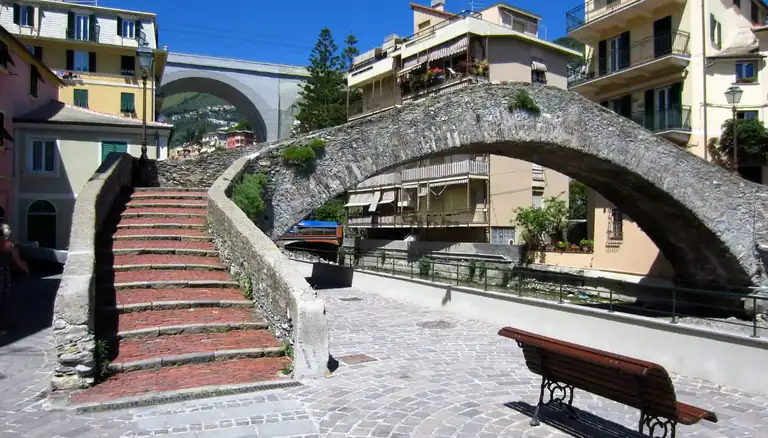
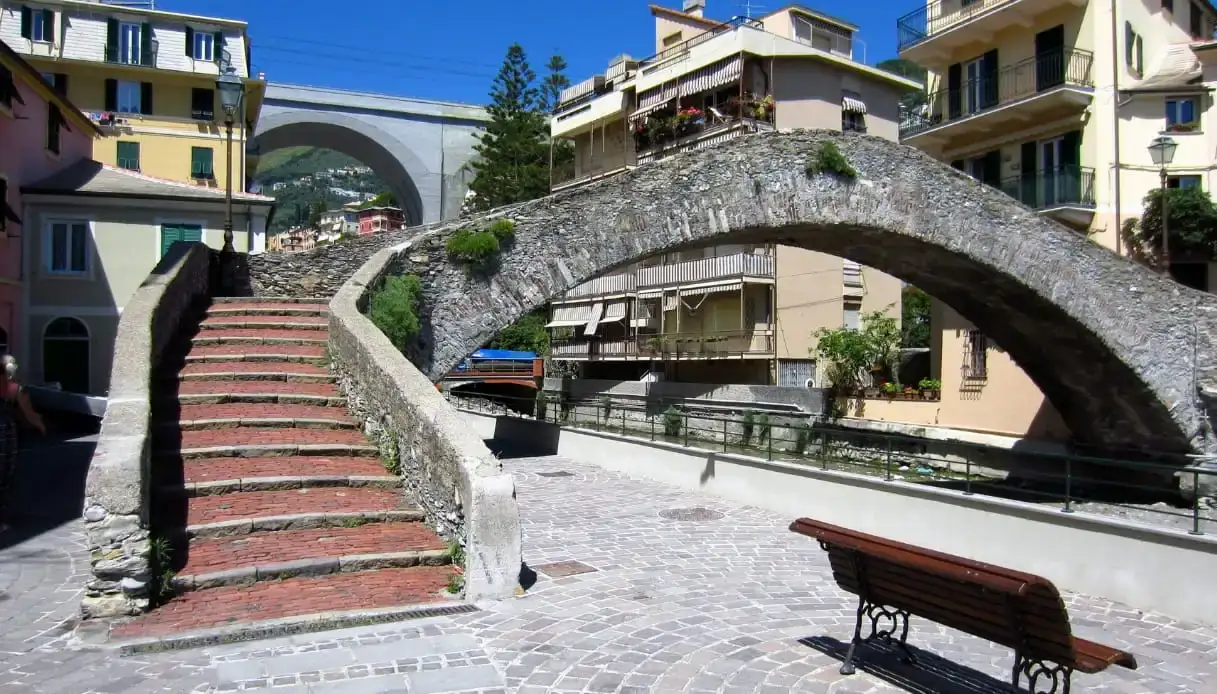
Everyone calls it the Roman bridge, but it is medieval: it took its present shape in the 13th century and was reworked in the 1600s. A single stone arch crosses the stream just above the beach. It is the classic Bogliasco photo, taken from the beach with the bridge in front and the painted houses behind.
You can still walk across it. A pilgrims’ hospice, San Bartolomeo, once stood nearby, a reminder that the coast road ran through here long before the modern Via Aurelia.
The village beach
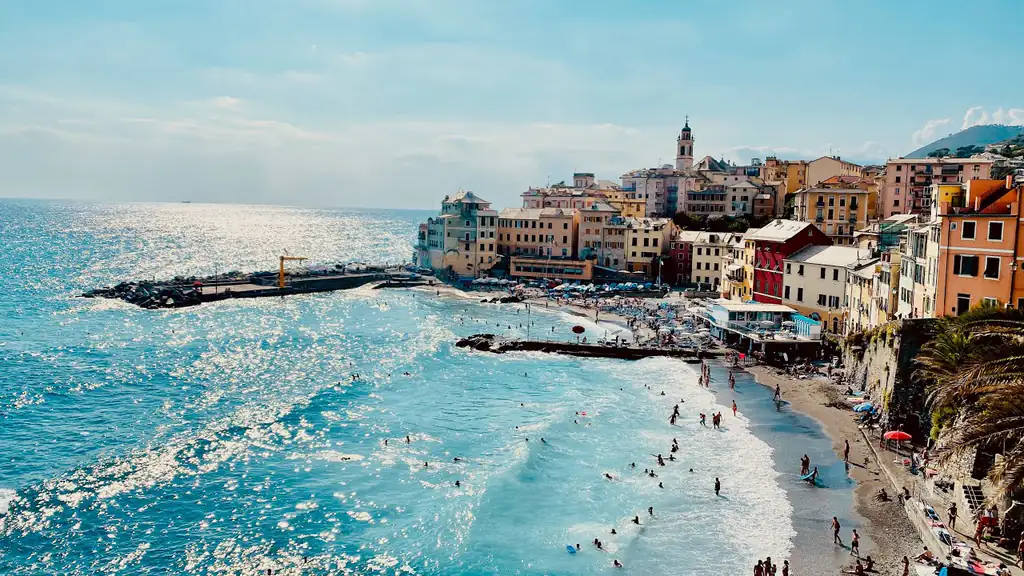
A small cove of pebbles and coarse gravel, about 200 metres long, between the bridge and the eastern end of the village, with free stretches and beach clubs. The water is usually clear and gets deep quickly. It is a three-minute walk from the station. Every beach and rock platform, with practical tips, is covered in our guide to the beaches of Bogliasco.
Church of the Nativity of Mary
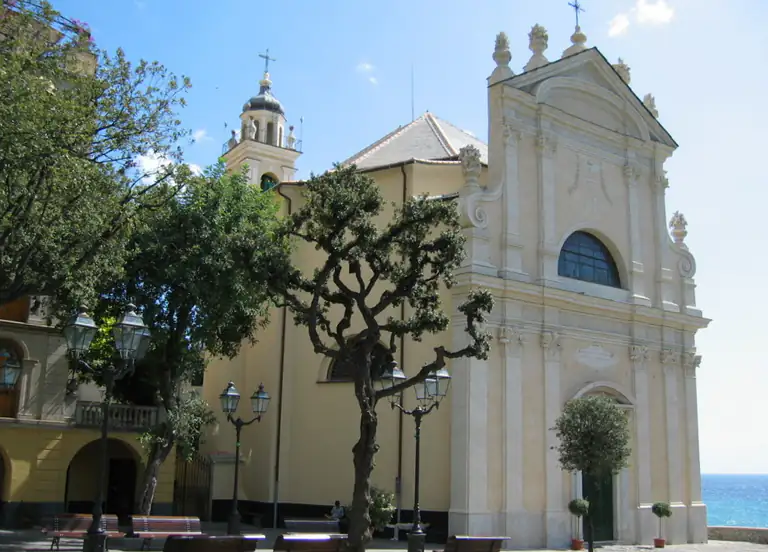
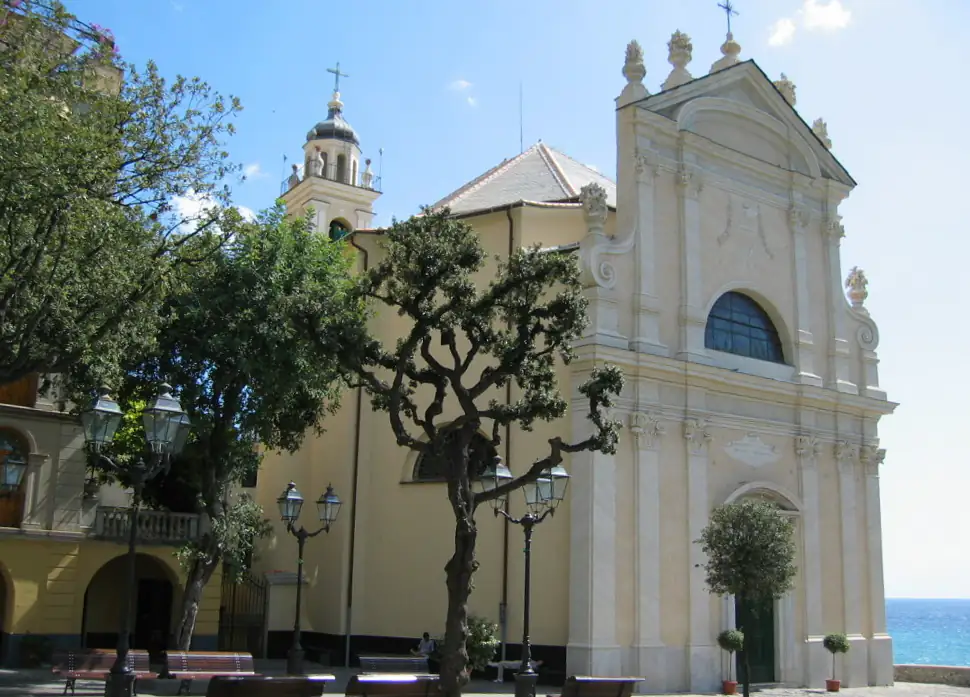
The parish church is recorded from 1182, but the building you see was rebuilt between 1731 and 1737 by the architect Antonio Maria Ricca: elliptical plan, octagonal nave, Baroque façade. The highlight is the churchyard, a terrace over the rocks paved with black and white pebbles, right above the sea.
During the Carmine festival in July, mass is celebrated on the rock below the church after a procession by boat.
The "Castle"
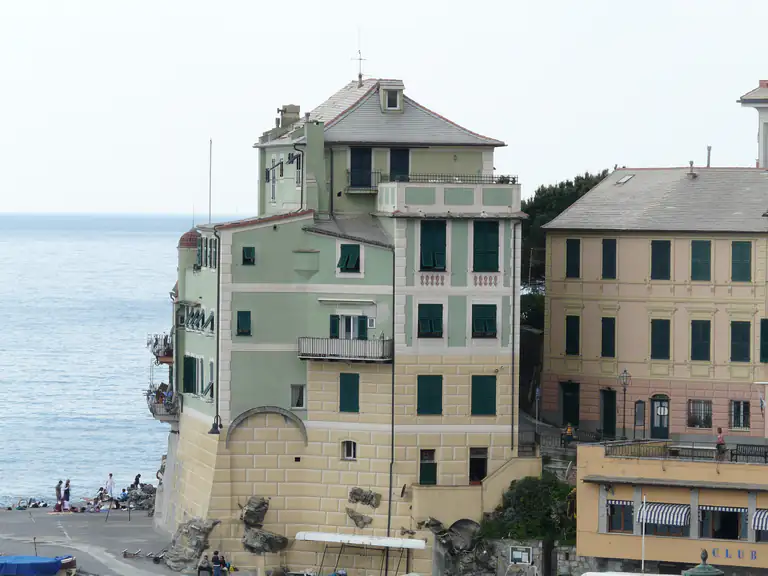
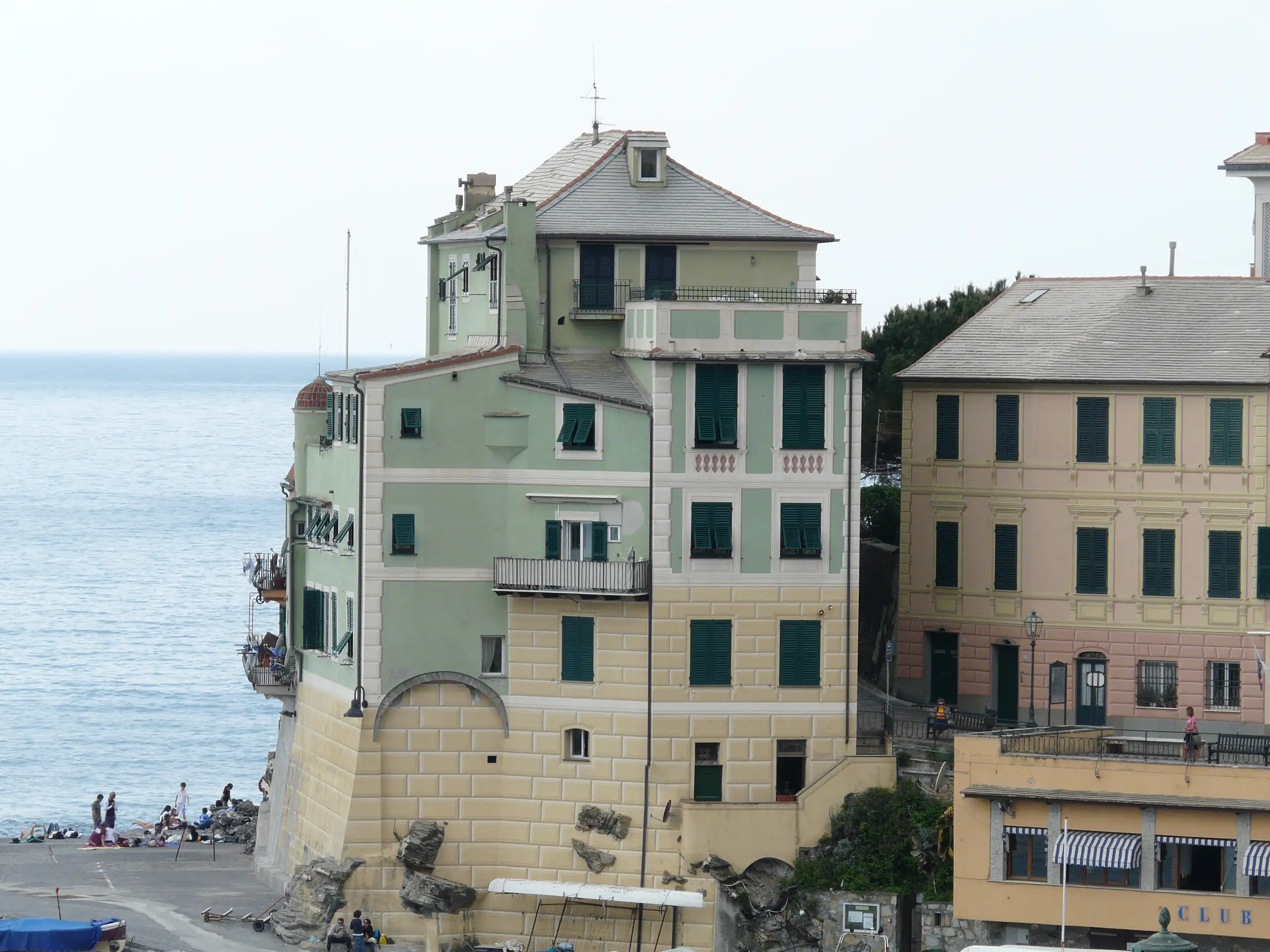
On the small headland closing the harbour to the west stands what locals call the Castello. It was actually a defensive tower built by the Republic of Genoa against pirate raids, later absorbed into a house. Today it contains private flats and cannot be visited: see it from the beach or from the churchyard.
Oratory of Santa Chiara
Dating from the early 1400s, it is home to the village confraternity. It keeps the large processional crucifixes, one attributed to Anton Maria Maragliano, Genoa’s greatest woodcarver. They are carried through the streets during the July festival.
Sanctuary of Nostra Signora delle Grazie
A small sanctuary tied to a local legend about a girl who fell from the cliff and survived unharmed. Worth a short detour if you like seafaring votive churches, not a destination in itself.
The seafront walk and Pontetto
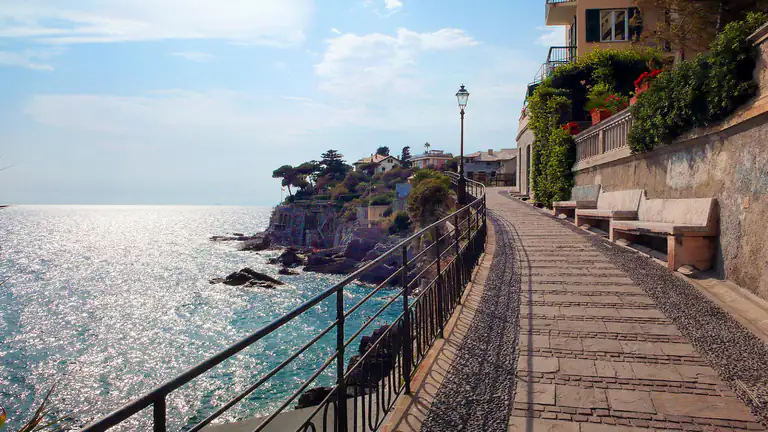
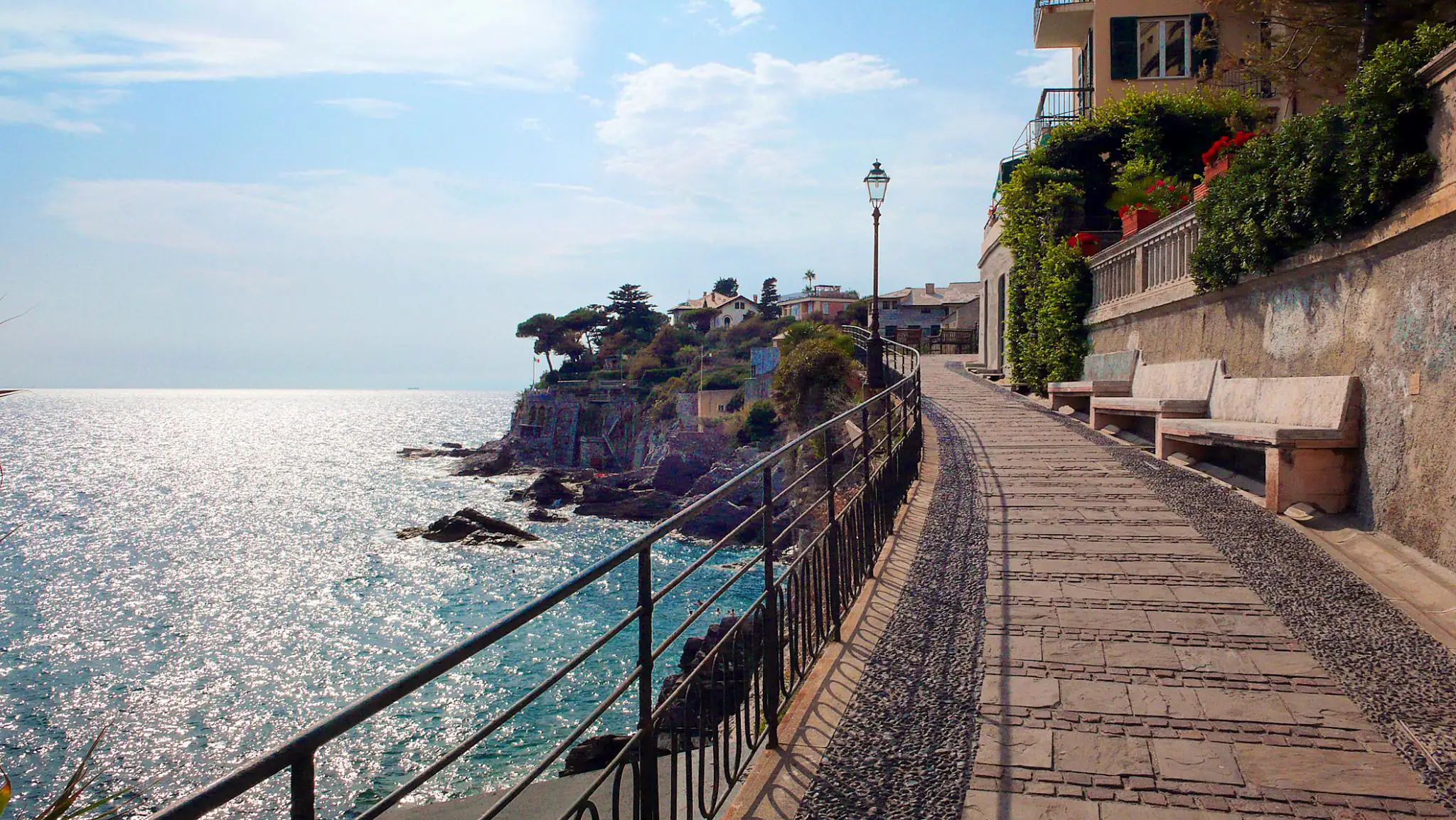
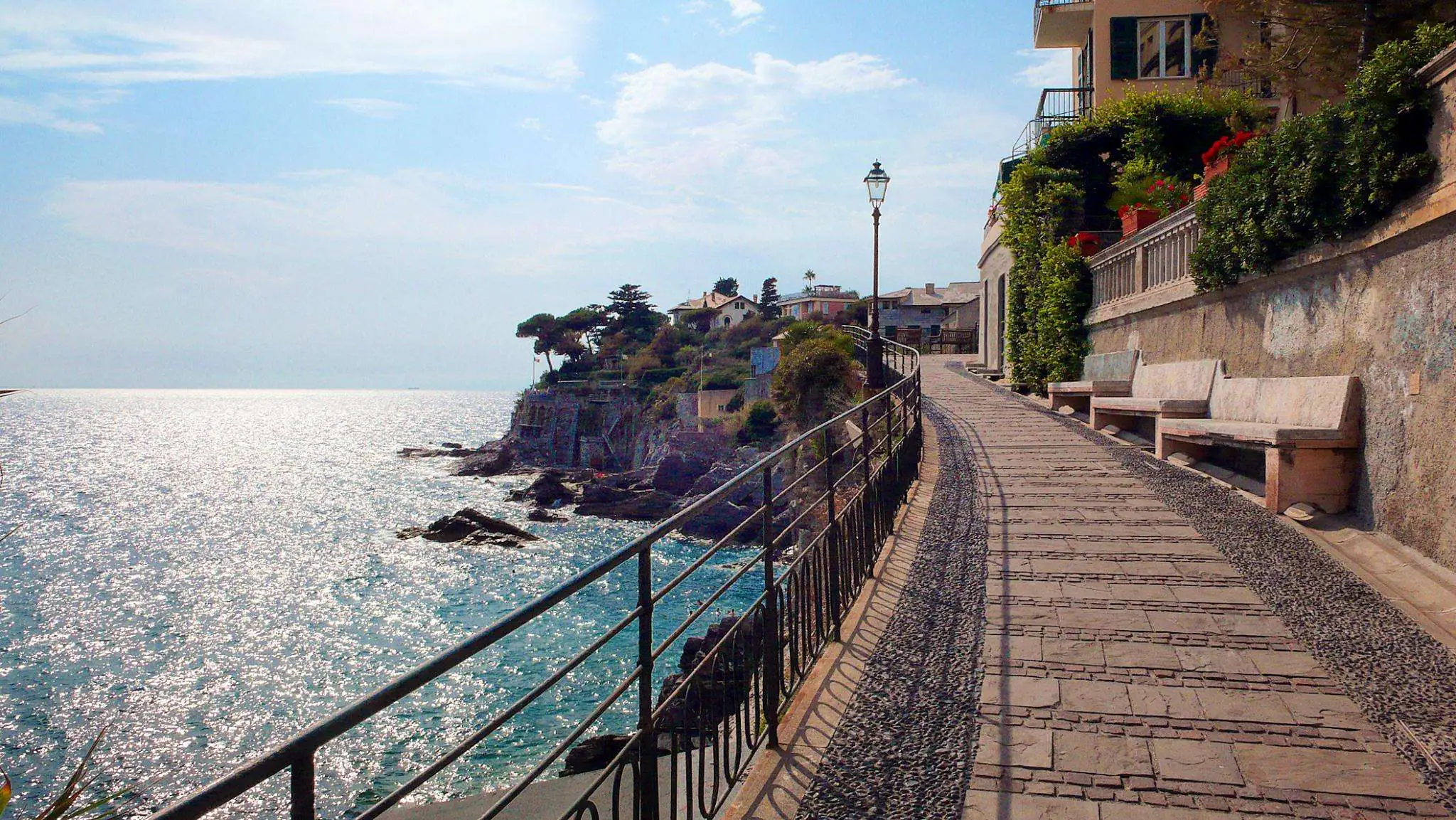
Heading east, a walkway along the sea leads from the village to the Pontetto rocks on the border with Pieve Ligure. This is the best spot for swimming off the rocks: smooth rock shelves, clear water and seagrass meadows protected as a Natura 2000 site. A small viewpoint on the rocks is dedicated to Umberto Bindi, the Italian songwriter born in Bogliasco. You can see the Portofino headland on one side and Genoa on the other.
The Bogliasco Foundation
The villas above the cliffs, Villa dei Pini and Villa Orbiana, house the Bogliasco Foundation, a study centre for artists, writers, composers and scholars. Set up by a New York-registered foundation and open since 1996, it hosts around sixty fellows a year for one-month residencies. It is not a museum and the villas can only be seen from outside, but it explains why the name Bogliasco is better known in American arts circles than in much of Italy.
San Bernardo, Poggio Favaro and Sessarego
The hamlets sit on the hills behind the village. San Bernardo and Poggio Favaro form a single hamlet with the church of San Bernardo and open views over the gulf; the paths to Santa Croce start here. Sessarego, higher up towards Sant’Ilario, is where villagers took refuge during the Venetian raid of 1432. You reach them by car or on foot via stepped mule tracks: this is the Bogliasco few visitors see.
Besides the village beach there is a small cove below the church, towards Genoa, and flat rock shelves towards Pieve Ligure, such as Scalo Fontana and Scalo Pontetto. In summer the main beach fills up early, especially at weekends when Genoese families arrive by train: come in the morning or late afternoon. Access, crowds and family tips are in the Bogliasco beach guide.
Where to stay
Where to stay in Bogliasco
Accommodation is mostly apartments, holiday homes and a few B&Bs; hotels are scarce. There are two areas to choose from.
The seafront village: close to the beach and the station, everything on foot. Best if you travel without a car or want a base for Genoa and the Tigullio coast.
The hills (San Bernardo, Poggio Favaro): quieter, with views from above, but you need a car and patience with narrow roads and steps.
Sea-view apartments go early in summer, so book ahead. If availability is short, look at Nervi, Sori and Recco, all on the same train line.
Take the A12 motorway, exit Genova Nervi, then follow the Via Aurelia east for about 5–7 km. Alternatively exit at Recco and drive back towards Genoa for just over 10 km. The Aurelia is often slow at rush hour and in summer.
By train
Bogliasco station is on the Genoa–La Spezia line, a few minutes’ walk from the beach. Regional trains from Genova Brignole are frequent and take around fifteen minutes; from Genova Piazza Principe allow a few minutes more. There is also a small stop at Pontetto, handy for the rocks but with fewer trains. Timetables on Trenitalia.
By bus
AMT buses run along the Aurelia, linking Bogliasco with Genoa and Recco. Useful for intermediate stops, but the train is much faster.
By plane
The nearest airport is Genoa Cristoforo Colombo, about 25 km away. Get into central Genoa and continue by train from Brignole. Milan and Nice airports are around two to three hours away.
Parking
The centre is small and spaces run out early in summer. You can park along the Aurelia between Pontetto and the beach and on Via Cavour and Via Pontiroli; there is a small pay car park near the medieval bridge. On a day trip from Genoa, the train saves you the hassle.
A12, Genova Nervi exit, then the Via Aurelia east for 5–7 km
By train
Bogliasco station (Genoa–La Spezia line): about 15 minutes from Genova Brignole
By plane
Genoa Cristoforo Colombo, about 25 km
The guide
Walks and hikes
Walking from Bogliasco to Nervi
Worth knowing before you set off: the famous Passeggiata Anita Garibaldi is in Nervi, not Bogliasco. It runs for about 2 km along the cliffs from Nervi’s little harbour to the old landing at Capolungo, and stops there. Between Capolungo and Bogliasco there is no seafront path, only the Via Aurelia, with no continuous pavement: avoid walking it.
The easy plan is to take the train to Nervi (a few minutes), walk the promenade to Capolungo and back, then visit the Parks of Nervi. If you want a proper walk, an old stepped lane climbs from Capolungo to Sant’Ilario in about twenty minutes, and from there paths and steps lead down to Bogliasco.
Santa Croce
A white chapel on the hill between Bogliasco and Pieve Ligure. From San Bernardo it is about 45 minutes up a steep but waymarked path lined with the crosses of a Way of the Cross. At the top you’ll find meadows, picnic tables and a drinking fountain, with views from the Portofino headland and Camogli to Genoa.
Monte Cordona
For keen hikers, a loop climbs from Bogliasco to Sessarego and the summit of Monte Cordona (about 800 m), returning via San Bernardo and stepped lanes down to the sea. Some sections between Sessarego and Poggio are unmarked and exposed: carry a GPS track or the local hiking map.
Festivals
The patron saint’s festival, the Madonna del Carmine, is held in mid-July: a week of music in the square, a procession by sea with mass on the rock below the church, the procession of the crucifixes and fireworks. Late July brings the sagra dei pansoti, a food festival for the Ligurian ravioli served with walnut sauce. Up in Poggio Favaro there is a prawn festival in June and a polenta and salt-cod fritter festival at the end of September.
Day trips from Bogliasco
Genoa: old town, port and museums about fifteen minutes away by train. Get off at Brignole.
Recco: home of focaccia col formaggio, a few minutes east by train.
Bogliasco and the coastline from aboveBogliasco seaside promenadeThe former castle by the sea in BogliascoRoman arched bridge of BogliascoChurch of the Nativity of Mary in BogliascoBogliasco sea and beachBogliasco seaside promenade
FAQ
Frequently asked questions about Bogliasco
What can I see in Bogliasco in half a day?
The medieval bridge, the beach, the pebble-paved churchyard of the Nativity church, the Castello from outside, the oratory of Santa Chiara and the walk to the Pontetto rocks.
Is the Bogliasco bridge really Roman?
No. It is called Roman, but it took its present shape in the 13th century and was reworked in the 1600s.
What is the beach in Bogliasco like?
A small cove of pebbles and gravel, about 200 metres long, with free stretches and beach clubs, three minutes from the station. In 2026 European Best Destinations ranked it fifth in Europe.
Can you walk from Bogliasco to Nervi along the sea?
Not all the way. The Anita Garibaldi promenade runs from Nervi to Capolungo; between Capolungo and Bogliasco there is only the main road. Take the train to Nervi, or the stepped lane from Capolungo to Sant’Ilario.
How far is Bogliasco from Genoa?
About fifteen minutes by train from Genova Brignole. By car it depends on traffic on the Aurelia.
Can you visit the castle in Bogliasco?
No. It is a Genoese defensive tower converted into private homes. You can see it from the beach or the churchyard.
What is the Bogliasco Foundation?
A study centre that has hosted artists, writers and scholars from around the world for one-month residencies since 1996, at Villa dei Pini and Villa Orbiana. It is not open like a museum.
Where can I park in Bogliasco?
Along the Aurelia, on Via Cavour and Via Pontiroli, and in a small pay car park near the bridge. In summer it is hard: the train is easier.
Is Bogliasco a good base for Genoa and Portofino?
Yes, if you travel by train: Genoa is fifteen minutes away, Camogli and Santa Margherita roughly half an hour, and from Santa Margherita you continue to Portofino.
When is the Bogliasco festival?
In mid-July, for the Madonna del Carmine (16 July): procession by sea, procession of the crucifixes and fireworks. The pansoti food festival follows at the end of July.