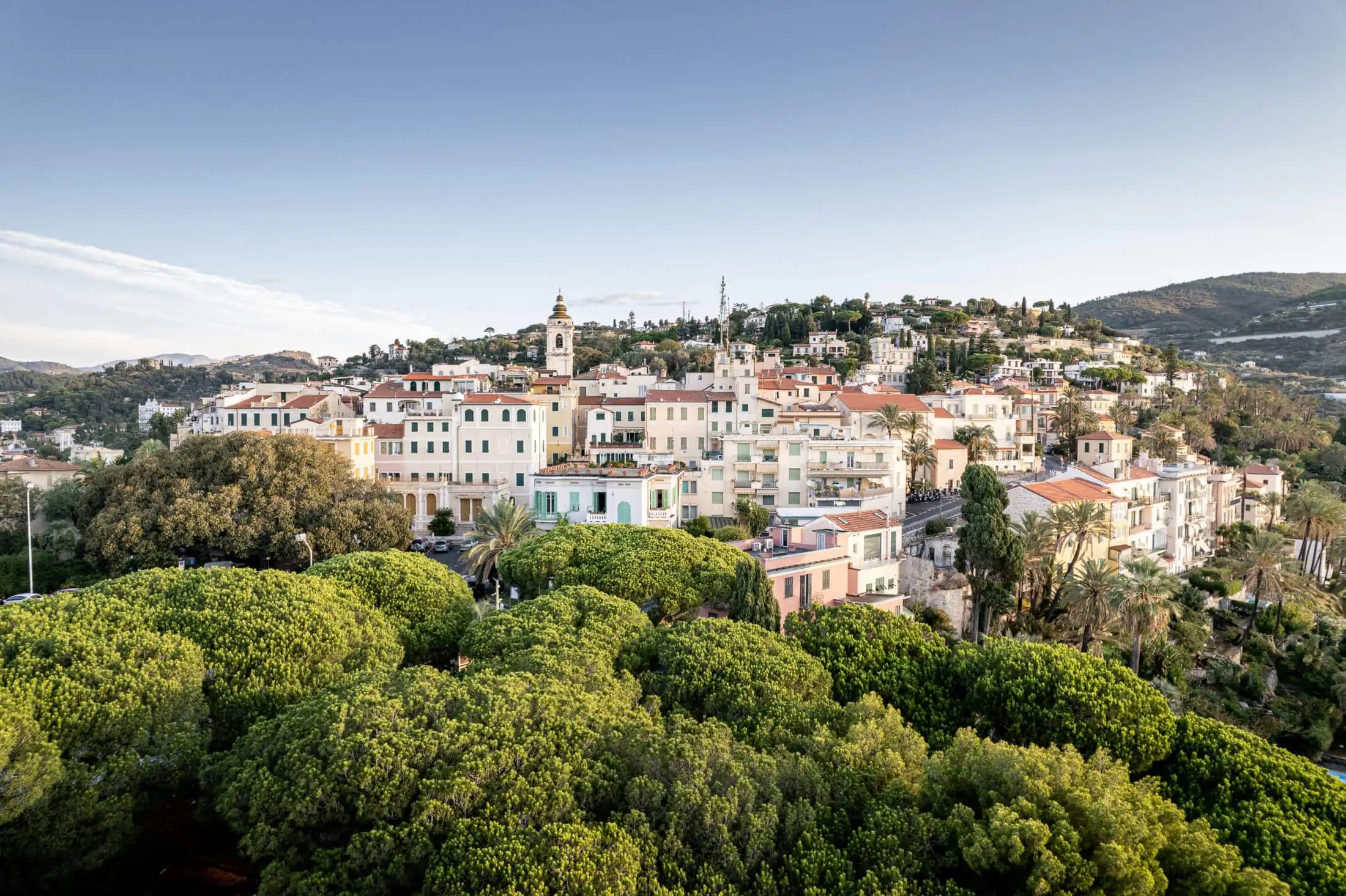
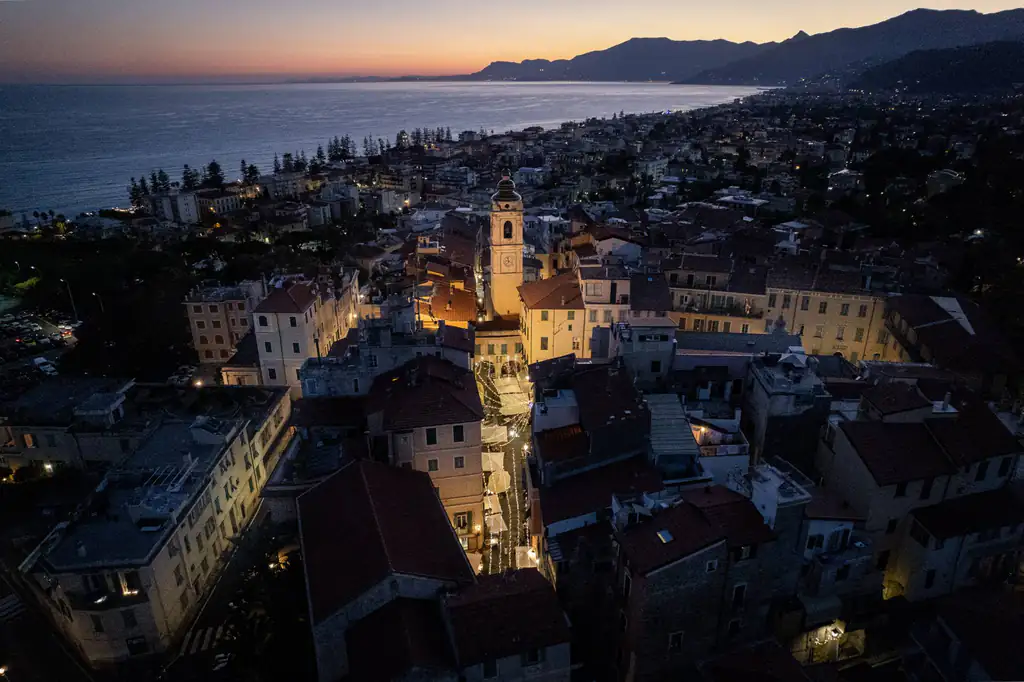
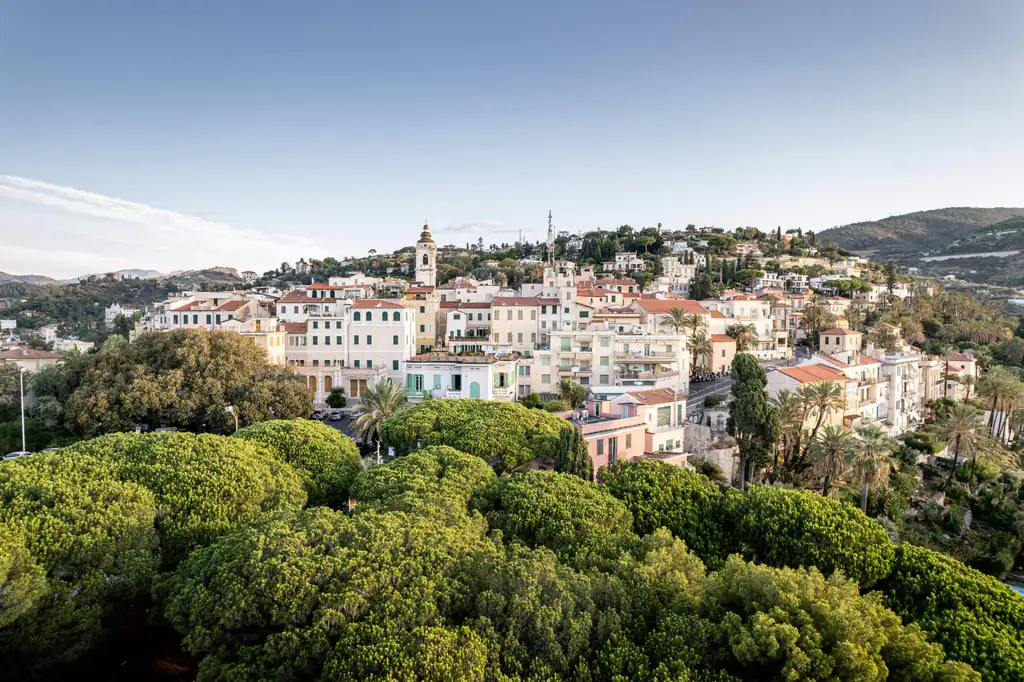
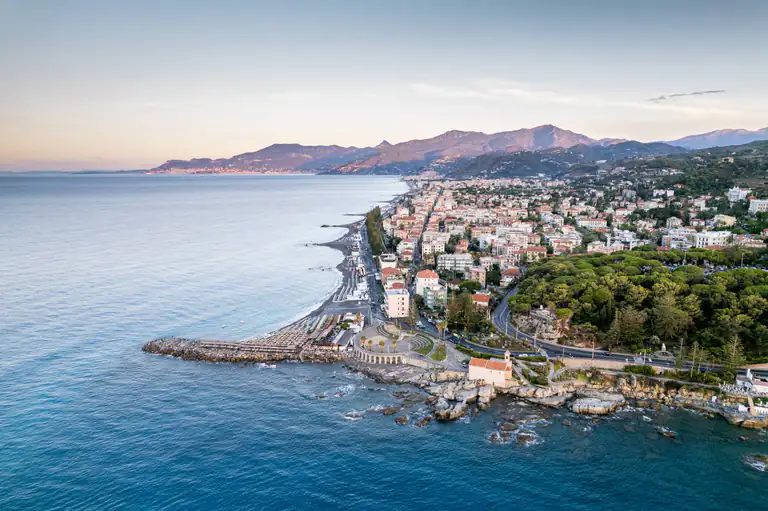
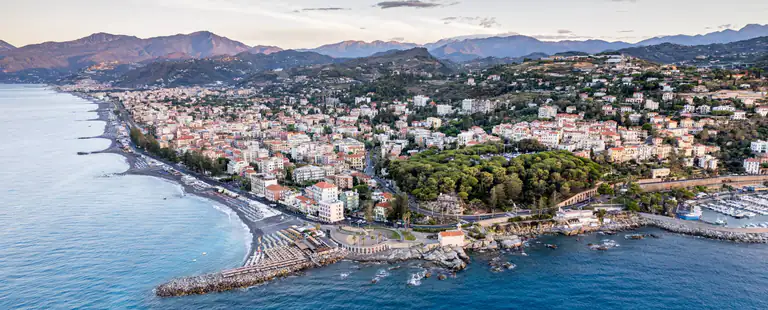
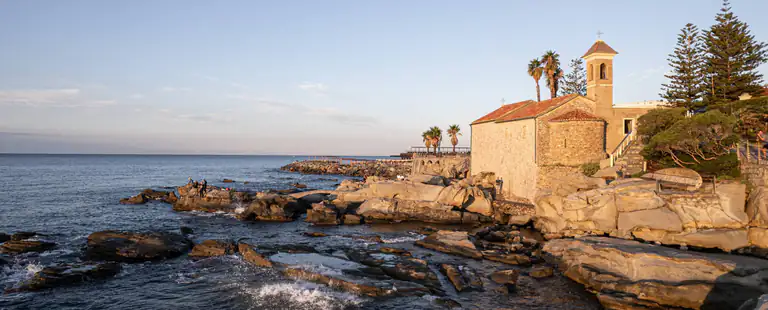
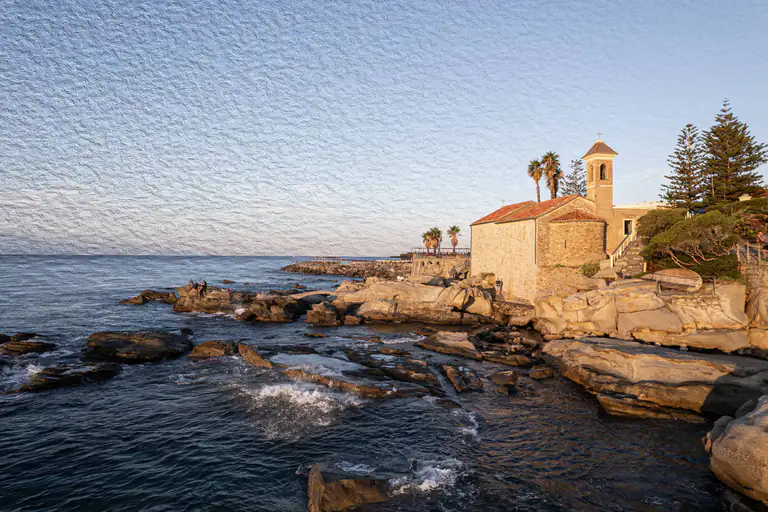
Bordighera Alta is the fortified old village where the town began: a compact knot of colourful houses, arches and narrow lanes (caruggi) on the hill above the Capo, a few minutes’ walk from the sea and from via Romana. You can see it in about an hour, with no ticket: the streets and squares are always open, and inside the walls you get around on foot only. The morning is quiet and bright; the evening is livelier.
By Italian Riviera editorial team·Updated on ·6 min read
A short history
The name “Burdigheta” appears in a bull of Pope Boniface VIII dated 1296. Today’s Bordighera, however, was born on 2 September 1470, when thirty-two families from the Castrum Sancti Nicolai, now Borghetto San Nicolò, met in their church and decided to rebuild the abandoned village “in capo a Burdigheta”. The new settlers were farmers and fishermen.
The village took the shape of an irregular pentagon, closed by walls that were strengthened in the mid-16th century against pirate raids. In 1686 representatives of eight villages, Bordighera among them, founded the Magnifica Comunità degli Otto Luoghi in the oratory of San Bartolomeo, a self-governing body no longer dependent on Ventimiglia; a plaque on the oratory records the dates. Only in the 19th century, with the arrival of English travellers, did the town grow towards the sea and along via Romana.
What to see in Bordighera Alta
The gates and the walls
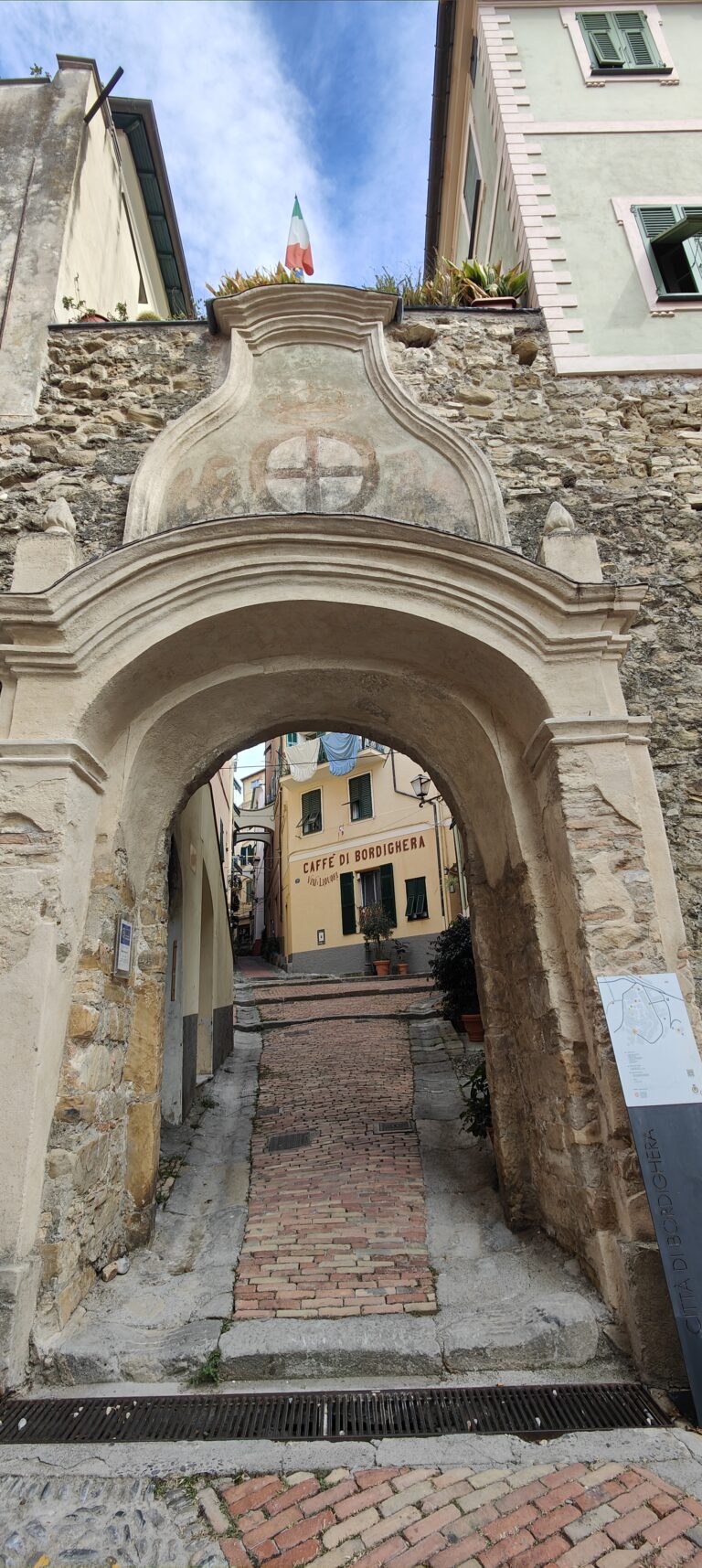
You enter through the old gates. The Porta Sottana, on the west side, dates from 1470 and was rebuilt in the Baroque period: above the arch is the Genoese coat of arms with St George. The Porta Soprana, also called the Maddalena gate, dates from 1780; the two floors above the arch housed the town prison until the 1950s. There is also the 17th-century Porta del Capo.
The caruggi, the arches and the little squares
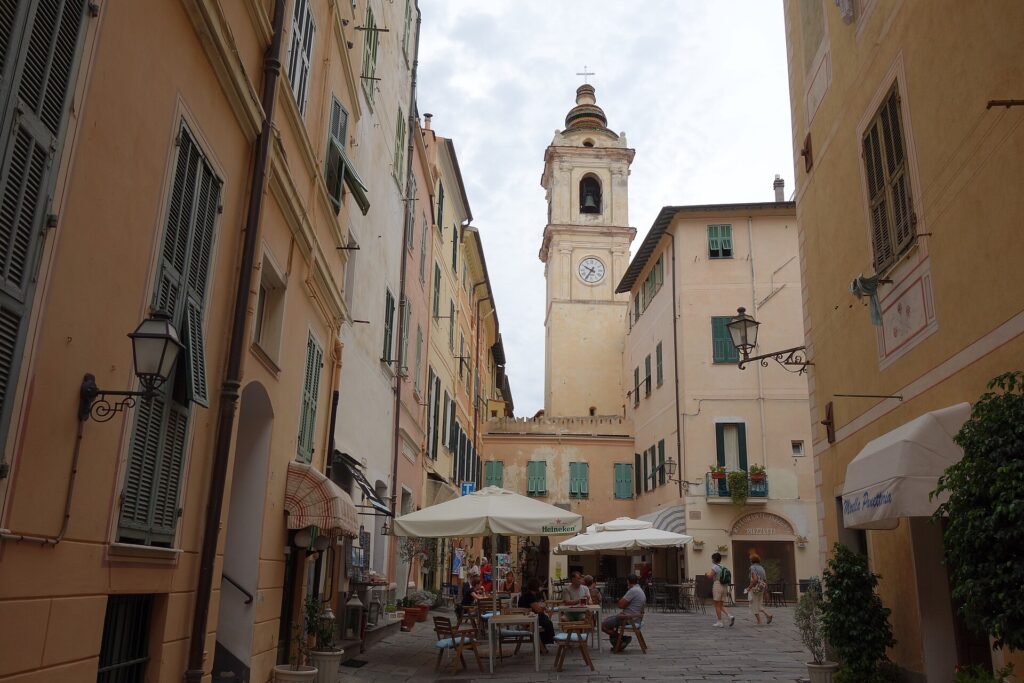
The main streets are via Dritta and via Lunga, surrounded by a web of narrow lanes, flights of steps and small squares. The arches linking one house to the next are not decoration: they hold the buildings up.
Piazza del Popolo and Santa Maria Maddalena
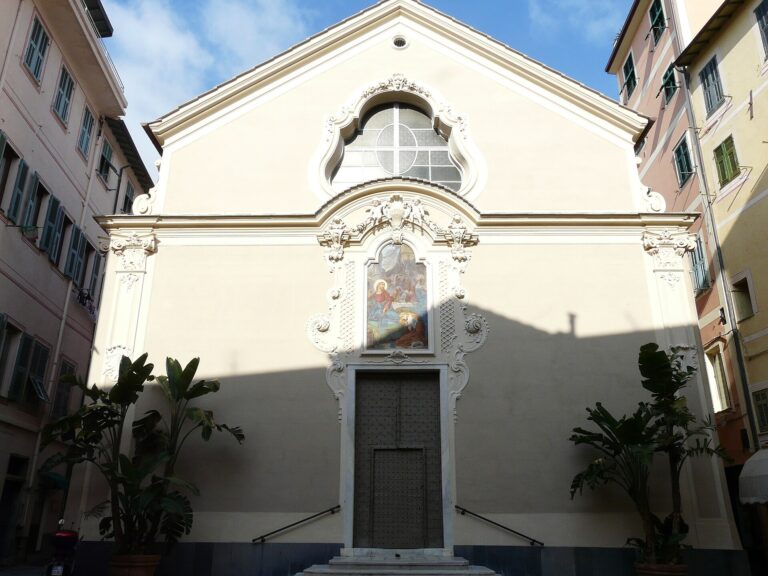
The heart of the village is piazza del Popolo, with the parish church of Santa Maria Maddalena, consecrated in 1617. The Rococo stucco façade was completed in 1906; inside are the gilded stuccowork of 1866 and, on the high altar, the marble Magdalene in Glory, an 18th-century statue designed by Filippo Parodi and perhaps carved by his son Domenico. In the second chapel on the right a wax statue holds the relics of Sant’Ampelio, Bordighera’s patron saint, brought back to the town on 16 August 1947.
The bell tower
The bell tower began as a watchtower against pirates; it was raised and converted in the 18th century, and its spire is clad in coloured majolica tiles. In 1884 Claude Monet, who stayed at the Pension Anglaise right outside the gates, painted it several times in the background of his canvases: for the viewpoints, read our feature on Monet in Bordighera.
A one-hour route
Enter by the Porta Sottana, on the via Romana side, and climb through the lanes.
Follow via Dritta and via Lunga to piazza del Popolo and look inside the church.
Leave by the Porta Soprana and turn round: from here you see the village with the bell tower above the roofs.
By train. Bordighera station is on the Genoa–Ventimiglia line: about 5–10 minutes from Ventimiglia, about 8–10 from Sanremo, around two hours from Genoa. From the station you walk to the village or take the bus.
On foot. This is the simplest way: about 1 km, 15 minutes from the station, partly uphill. Follow the signs for the historic centre: you reach Palazzo Garnier and, from there, the gates.
By bus. The urban line 11/2 of Riviera Trasporti passes through Bordighera Alta (via dei Colli). It runs on working days only and we could not find an official stop inside the village, so check times and stops on the Riviera Trasporti website before you go.
By car. Bordighera Alta has been a ZTL since 3 January 2022, active 24 hours a day all year: only bicycles, taxis, emergency vehicles and vehicles for people with disabilities may enter without a permit. The camera is at the junction of via Circonvallazione and via al Capo. Around the village, on the Spianata del Capo, in piazza del Capo and in piazzale Ottoluoghi, blue-line spaces are paid all year until 11 pm, but in July 2026 the areas reserved for residents were extended: in summer, finding a space is hard. 2026 rates are not confirmed: read the signs. All the town’s car parks are in our guide to parking in Bordighera.
Practical tips
Shoes: comfortable ones: steps and slopes everywhere.
When to go: quiet and bright in the morning; livelier in the evening.
Events: in summer the village hosts concerts, open-air exhibitions and dinners in the squares; in July the feast of Santa Maria Maddalena is celebrated. Dates change every year: check the calendar on Visit Bordighera.
Church: it is a place of worship: go in quietly and outside service times.
The village has places with tables in the squares: read our guide to restaurants in Bordighera. To sleep in the village or nearby, see where to stay in Bordighera; always ask the accommodation how to manage car and luggage, since the village is a ZTL.
Where it is
Bordighera Alta is in Bordighera (Riviera di Ponente, Riviera dei Fiori).
Not without a permit: it is a ZTL 24 hours a day all year since 3 January 2022. Bicycles, taxis, emergency vehicles and vehicles for people with disabilities are allowed.
How much does it cost to visit Bordighera Alta?
Nothing: streets and squares are always open and free. The church of Santa Maria Maddalena is free but mainly open during services.
How long do you need?
About an hour; half a day with the Capo and the pine wood.
When was Bordighera Alta founded?
On 2 September 1470, by thirty-two families from Borghetto San Nicolò.
How do you get there from the station?
On foot: about 1 km, 15 minutes, partly uphill, following the signs for the historic centre. Alternatively take urban line 11/2, on working days only.
Where can you park?
On the blue-line spaces of the Spianata del Capo, piazza del Capo and piazzale Ottoluoghi, paid all year until 11 pm. Spaces for visitors are few, especially in summer.
Where to stay
Where to stay in Bordighera
All places to stay in Bordighera on Booking: compare prices and availability.