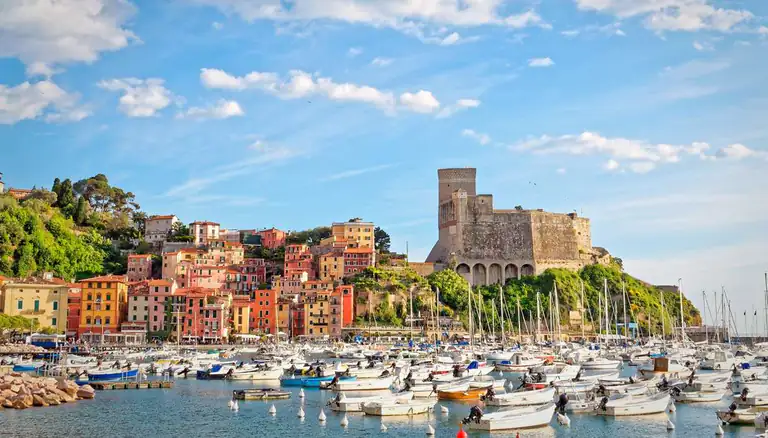
History of Lerici Castle
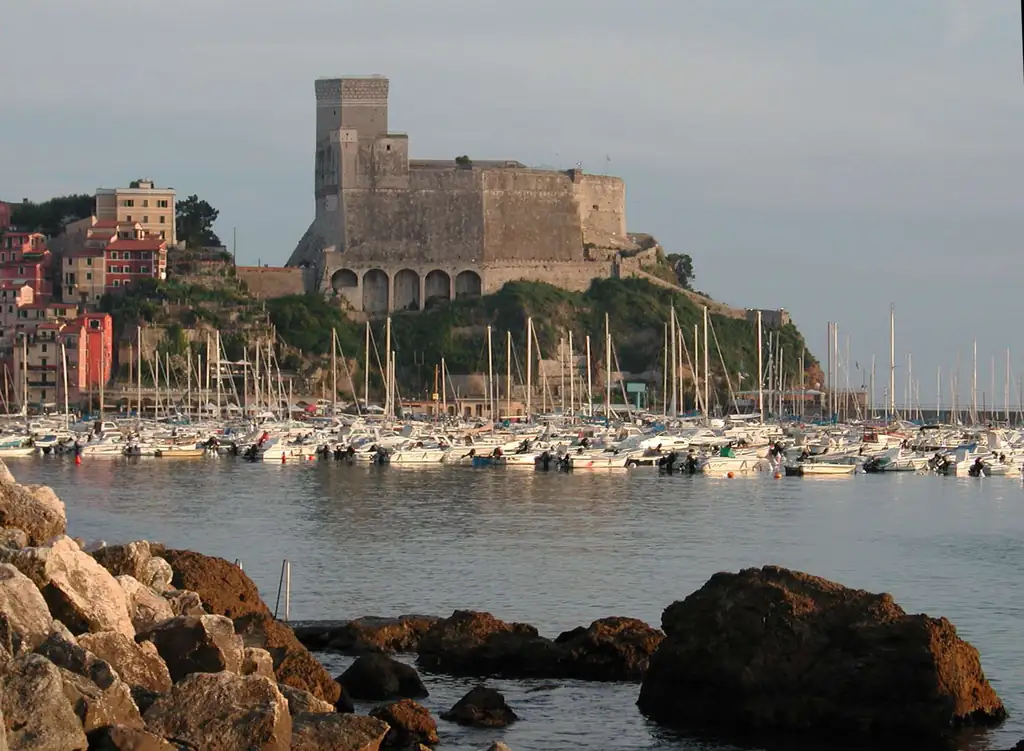
In the Middle Ages Lerici was a free port with no defences. The earliest building work on the castle dates back to the 12th century, but the turning point came in 1241: after defeating the Genoese at the Battle of Giglio, the Pisans occupied the port and built the first castle and the fortified village facing the harbour entrance. Chroniclers recall a mocking inscription they placed on the walls, aimed at their enemies: “Shut the mouth of the Genoese, break the heart of the Portovenerese, snatch the purse of the Lucchese”.
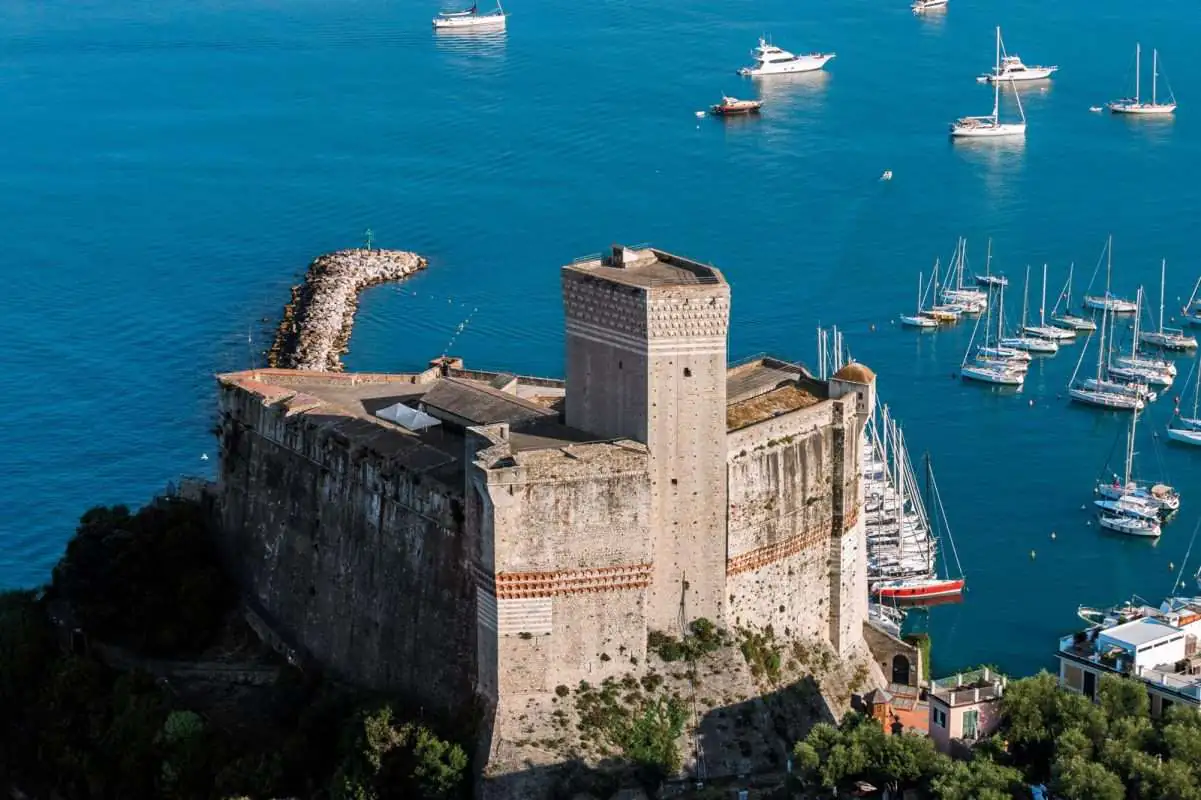
In 1256 Genoa retook Lerici and, after its victory at Meloria in 1284, the castle became one of the strongholds of Genoese rule over the eastern Riviera. With the arrival of firearms it was reinforced several times. In 1555 the Republic of Genoa and the Banco di San Giorgio “encased” it in the great sloping walls that still wrap around it today, as recorded on the plaque above the entrance bearing the names of the eight Genoese magistrates who ordered the work. This is when the castle took on its present polygonal shape.
Over the centuries it served as a fortress, a barracks and a prison. It was within these walls, in 1528, that Admiral Andrea Doria decided to abandon his alliance with Francis I of France and side with Charles V of Spain, a decision that freed Genoa from the French and changed the course of the Republic’s history. After the Second World War the castle became a youth hostel, looked after by its legendary custodian Madì. Since 2022 it has been run by Sviluppo Turistico Lerici and hosts art exhibitions and events.
What to see inside
The visit follows the building from the bottom up, and the different types of masonry tell the story of its construction, from the 13th-century Pisan core to the 16th-century bastions.
The entrance and the drawbridge
You enter via a ramp running alongside the western spur. On either side of the doorway you can still see the grooves of the drawbridge and, above it, the Latin inscription of 1555. The original entrance was on the opposite side, facing piazza San Giorgio.
The courtyard, once the moat
The space you cross after the entrance was the castle’s dry moat. Today it is roofed over and used as an exhibition hall. At the foot of the inner wall the rock of the headland breaks through, along with a staircase cut into the stone.
The vaulted hall and the three cells
On the middle floor is the large vaulted hall with three small 13th-century rooms: two have a well, while the third has a kind of chimney linked to the terrace. What they were used for is still a mystery.
The Chapel of Santa Anastasia
This is the oldest part of the castle and a gem of medieval art: its decoration in bands of black stone and white marble, typical of the Pisan-Genoese style, is practically untouched since the 13th century. The dedication to Santa Anastasia, a saint venerated in Tuscany, is probably a legacy of the Pisans.
The kitchens
To the right of the chapel are the rooms of the so-called “affioramento”, a polygonal block jutting out towards the sea. It is more recent than the 13th-century core but older than the 1555 reinforcements.
The tower and the walkways
Petrarch wrote of the “slender tower” of Lerici Castle. Today the tower is almost entirely absorbed into the building, enclosed by walls that in places are more than six metres thick. The sentry walkways have also recently reopened to the public.
The panoramic terrace
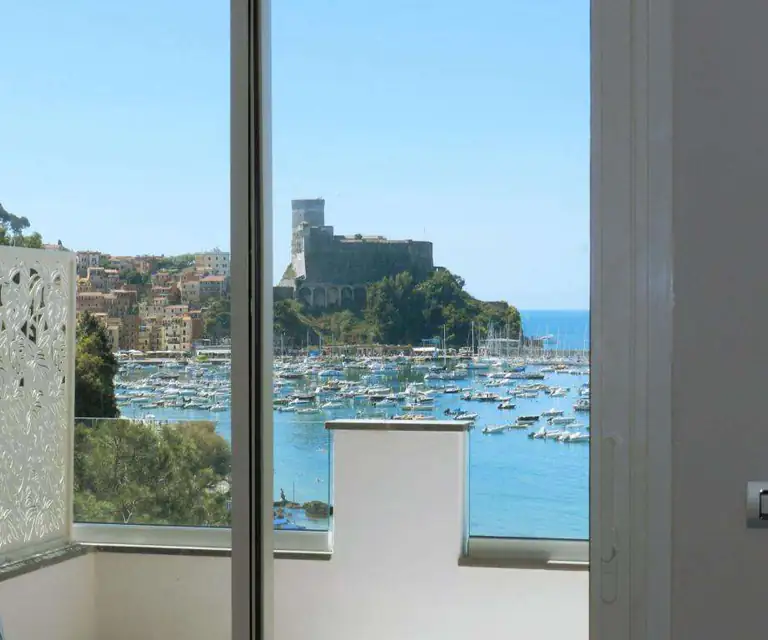
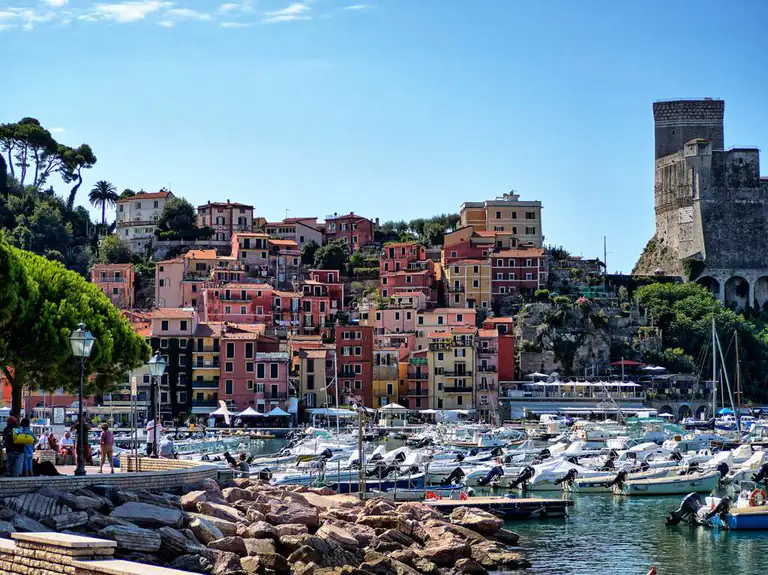
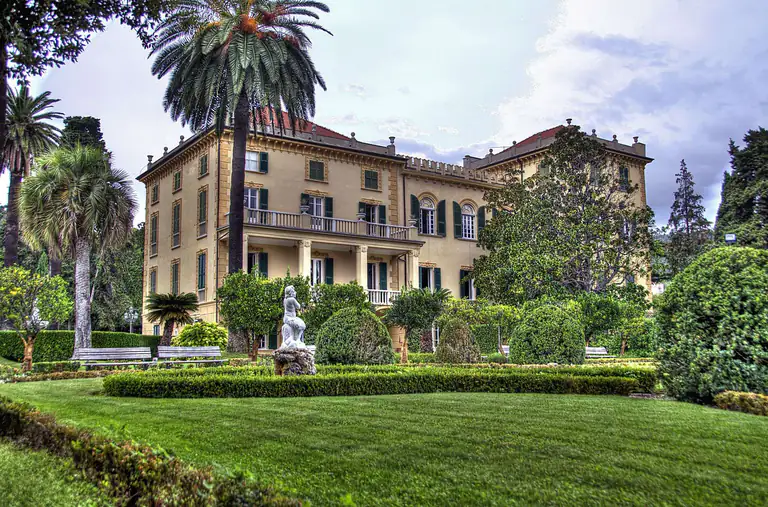
From the top floor, past the conference room, you step out onto the terrace. The view takes in the whole Gulf of Poets: the harbour and colourful houses of Lerici, the promenade to San Terenzo with the hamlets of Solaro and Pugliola, Villa Marigola and, to the west, Portovenere and the islands. It is the best spot for photographing the gulf, especially in the late afternoon.
Getting to the castle
The castle is about a ten-minute walk from piazza Garibaldi, climbing the narrow lanes (carruggi) and stairways of the old village up to piazza San Giorgio. If you would rather avoid the steps, take the lift that starts from the San Giorgio tunnel on Calata Mazzini, by the harbour, which runs every day from 8am to 1am.
In summer the centre of Lerici is a restricted traffic zone (ZTL), so it is best to leave your car in one of the car parks outside the centre and continue on foot or by the free shuttle bus. You will find all the details in the Lerici parking guide.
Opening hours and tickets
- Winter hours (1 October – 31 May): Tuesday to Friday 10am–1pm and 3pm–5pm; Saturdays, Sundays and public holidays 10am–1pm and 3pm–6pm; closed on Mondays.
- Summer hours (1 June – 30 September): Monday to Friday 10am–1pm and 3pm–6pm; Saturdays, Sundays and public holidays 10am–1pm and 3pm–8pm.
- Last admission is 30 minutes before the end of each opening slot.
- Full ticket: €6. Reduced: €3 for over-65s and students.
- Free admission for residents of the Municipality of Lerici, people with disabilities and their companions.
- The castle closes when an orange or red weather alert is in force.
Opening hours and prices may change during exhibitions, so check the website of Sviluppo Turistico Lerici, which runs the castle, before you go (tel. 0187 964617).
Tips for your visit
- Combine the visit with a stroll through the old village and an aperitivo in piazza Garibaldi.
- In summer, go up in the late afternoon: the light over the gulf is at its best and the terrace is cooler.
- Check the exhibition calendar, as at certain times of year the ticket includes the current exhibition.
- The castle can be hired for weddings and events, subject to the exhibition calendar.