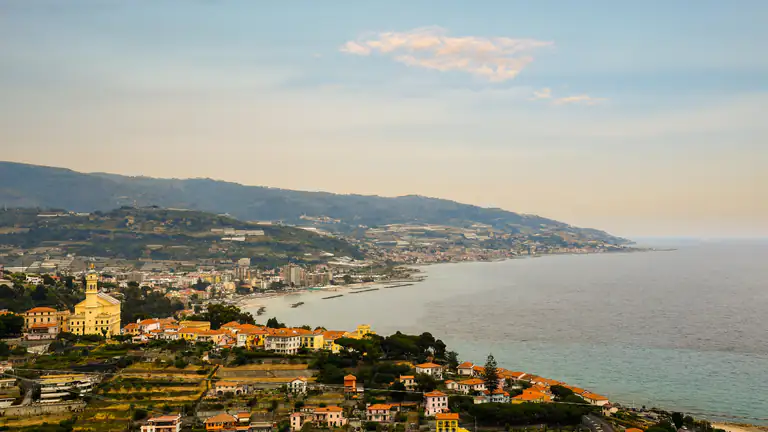
Riviera di Ponente › Riviera dei Fiori
Arma di Taggia
Blue Flag 2026 sandy beach, the cave of the Madonna dell'Arma, the cycle path and the medieval centre of Taggia…
Discover →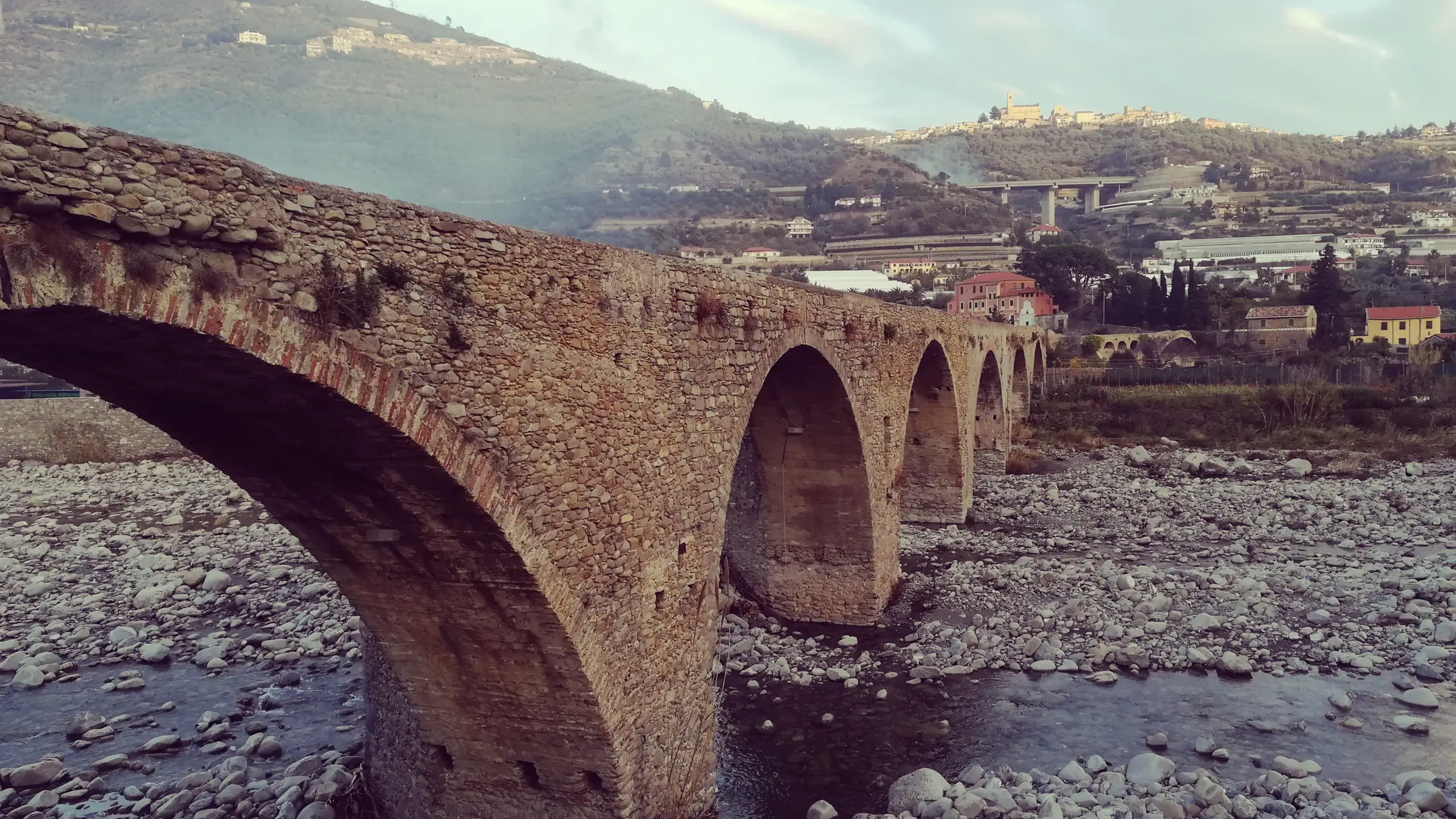
Medieval Taggia on foot: the bridge over the Argentina, the convent of San Domenico with its Parmigianino, the Pantan, the basilica and the castle.
The old town of Taggia is the historic heart of the municipality of Arma di Taggia: a medieval village on the right bank of the Argentina river, enclosed by 16th-century walls, with black slate arcades, noble palazzi, a bridge dating back to the 13th century and a convent that holds one of the most important art collections in western Liguria. You can see it on foot in half a day. This guide follows a route from the bridge to the castle, with the history of each stop and practical tips.
In Roman times the coast was home to Costa Balenae, a staging post on the via Julia Augusta. With the Lombard invasions of the 7th century, the inhabitants moved up the hill, where towards the end of the 10th century the village of “Tabia” grew up, giving Taggia its name. From 1228 it came under the Republic of Genoa.
In the 16th century, to defend itself against raids by Barbary pirates, Taggia was enclosed by new walls and the castle was almost completely rebuilt. In the same period the convent of San Domenico was the centre of a school of painting working between Nice and western Liguria. Many of the palazzi in the centre were built in the 17th and 18th centuries.

The route starts at the bridge, the symbol of the town. It is about 260–270 metres long and has around fifteen arches. The first two, Romanesque, date from the 13th century; the others were built and rebuilt in the 17th and 18th centuries, when the bridge was extended. For centuries it was the crossing between the coast and the valley.
Cross it to the opposite bank: from there you see the outline of the village with its bell towers and, higher up, the remains of the castle. It is the best spot for photos.
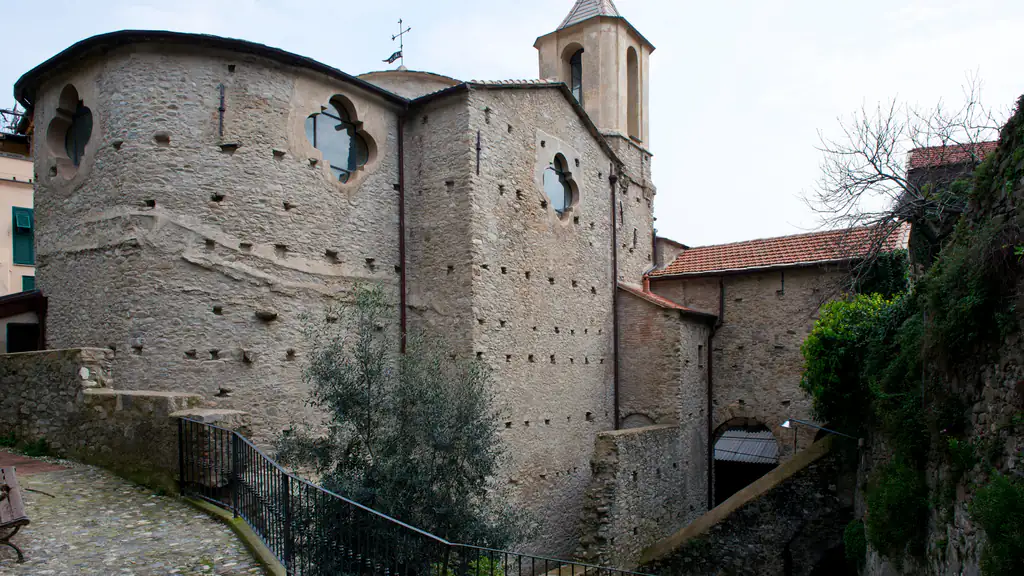
The convent was founded in 1460 by the Blessed Cristoforo da Milano, a Dominican friar, and completed in 1490 by Lombard master builders. In 1564 it was attacked by pirates; under the laws on church property it was closed from 1866 to 1926, when the friars returned, staying until 2008. Today it is run by the Diocese of Ventimiglia-Sanremo and visits are often guided by volunteers.
The 15th-century cloister has black stone columns, the same slate you see all over the village. The Gothic church holds paintings dating from 1472 to 1710.
Opening times change during the year: ask at the tourist office in Villa Boselli, in Arma, before heading up.
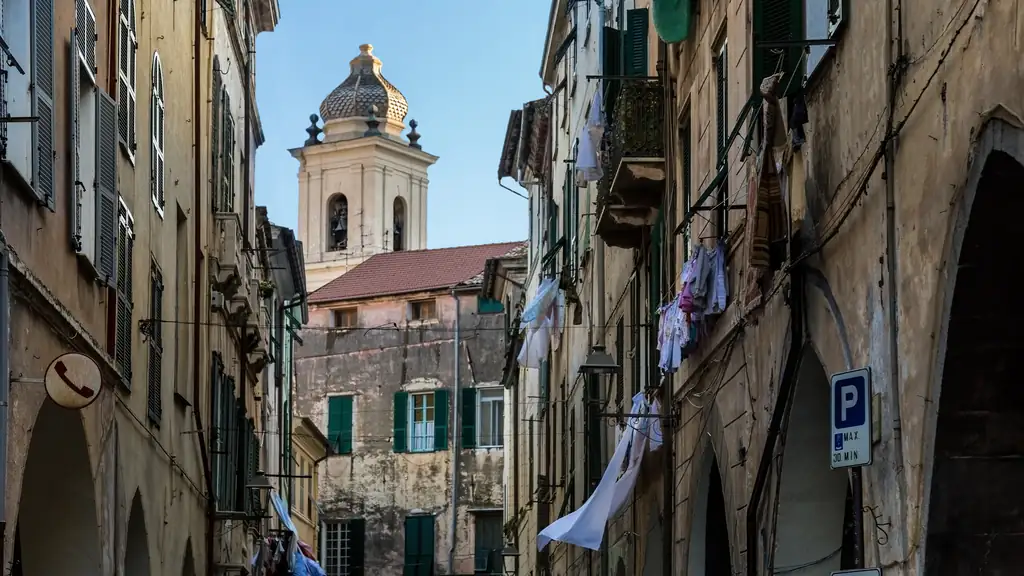
From the convent you enter the village and walk along via Soleri, which everyone calls the Pantan. It is the most elegant street in Taggia, with arcades paved with slabs of black slate and the façades of noble palazzi. Slate decorates many buildings, so much so that Taggia is known as the city of slate.
Among the palazzi is Palazzo Lercari, a noble residence from the late 17th century.
Taggia’s main church was built between 1675 and 1681 and is also the sanctuary of the Madonna Miracolosa. The name comes from a marble statue of the Immaculate Conception carved by Salvatore Revelli: in 1855 many worshippers saw the statue move its eyes, and the Church recognised the event as miraculous. The basilica holds the relics of San Benedetto Revelli, the patron saint, and paintings by Luca Cambiaso and Francesco Brea.
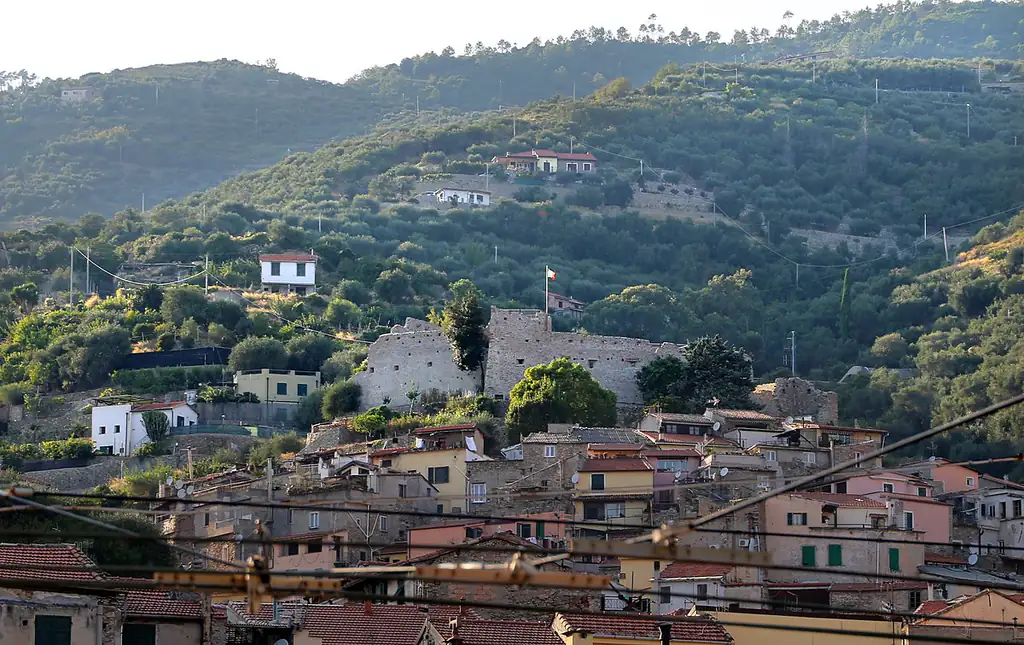
At the top of the old town stand the ruins of the castle. The first castrum dates from the centuries after the year 1000; in the 16th century it was almost entirely rebuilt to keep watch over the valley and the coast. As you climb, the view opens up over the rooftops of the village, the Argentina valley and the sea.
This is the oldest site in Taggia: an abbey founded in the 7th century by the monks of San Colombano, destroyed by the Saracens in 891 and rebuilt by the Benedictines around the year 1000. Inside are frescoes from 1547. Near the church is the historic olive grove planted by the monks, a good way to understand the bond between Taggia and the taggiasca olive.
Nearby
Riviera di Ponente › Riviera dei Fiori
Blue Flag 2026 sandy beach, the cave of the Madonna dell'Arma, the cycle path and the medieval centre of Taggia…
Discover →