Riviera di Ponente › Riviera delle Palme
Albenga
Town of medieval towers: early Christian baptistery, cathedral, Roman shipwreck museum, Roman road to Alassio, beaches facing Gallinara island.
Discover →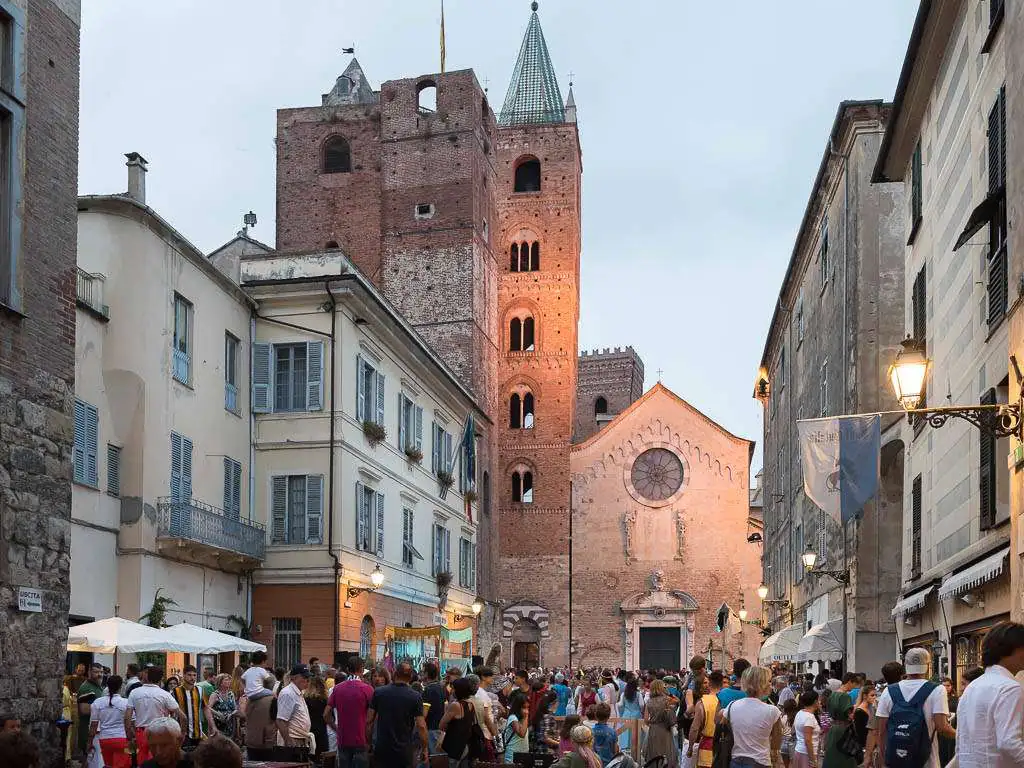
The 4 d'Albenga: violet asparagus, spiny artichoke, trombetta courgette and cuore di bue tomato. Seasons, how to eat them, where to taste them.
Around Albenga lies the Albenga plain, farmland built up over centuries by the Centa river. Herbs, flowers and vegetables grow here, and four of them have become the town’s emblem: the “4 d’Albenga”. This guide explains what they are, when to find them and how to eat them, so you can plan your trip for the right season.
This is the plain’s most famous product and its rarest. The spears are thick and deep purple, fading towards the base. The colour comes from genetics, not from how it is grown: violet asparagus has 40 chromosomes instead of the usual 20, so it cannot cross with other varieties and stays true to type.
The flavour is soft, almost buttery, without the stringiness of ordinary asparagus. In the 1930s Liguria grew more than 300 hectares of it; by 1970 there were 143, by 2000 fewer than ten, replaced by more profitable crops. A Slow Food Presidium was set up to save it and today brings together three farms in Ceriale, Andora and Leca d’Albenga.
It is harvested entirely by hand from mid-March to mid-June; locals say “from Saint Joseph to Saint John”. The best way to eat it is the simplest: boiled for a few minutes and dressed with Taggiasca extra virgin olive oil. Skip heavy sauces and long cooking, which hide the taste. It pairs well with steamed or baked fish and white meat. Do not freeze it: if you buy some, eat it within a few days.
Also called the violetto of Albenga, it has a cone-shaped head, dark green outer leaves shaded with purple and yellowish spines. Inside it is surprisingly tender, crunchy and sweet, less fibrous than spiny artichokes from elsewhere. The stem is edible too.
The first artichokes reach the market stalls in late winter and the season runs through spring. The classic way to taste it is raw, thinly sliced with olive oil and lemon, or as pinzimonio with a dip of oil. It also goes into savoury pies, pasta sauces and fritters.
The climbing courgette of the western Riviera is long and curved, with one end swelling like the bell of a trumpet. Most seeds sit in that bulb, so the rest of the flesh is firm and dense, with a sweeter taste than ordinary courgettes. It is a summer vegetable.
Ligurian cooks use it everywhere: in vegetable pies, stuffed, sautéed, fried or as a pasta sauce.
Albenga’s “ox heart” tomato is large, around 300 grams, ribbed and heart-shaped, light red or orange. The flesh is dense with few seeds and little juice, and balances sweetness and acidity well. It is the salad tomato par excellence: just olive oil, salt and basil. Look for it in summer.
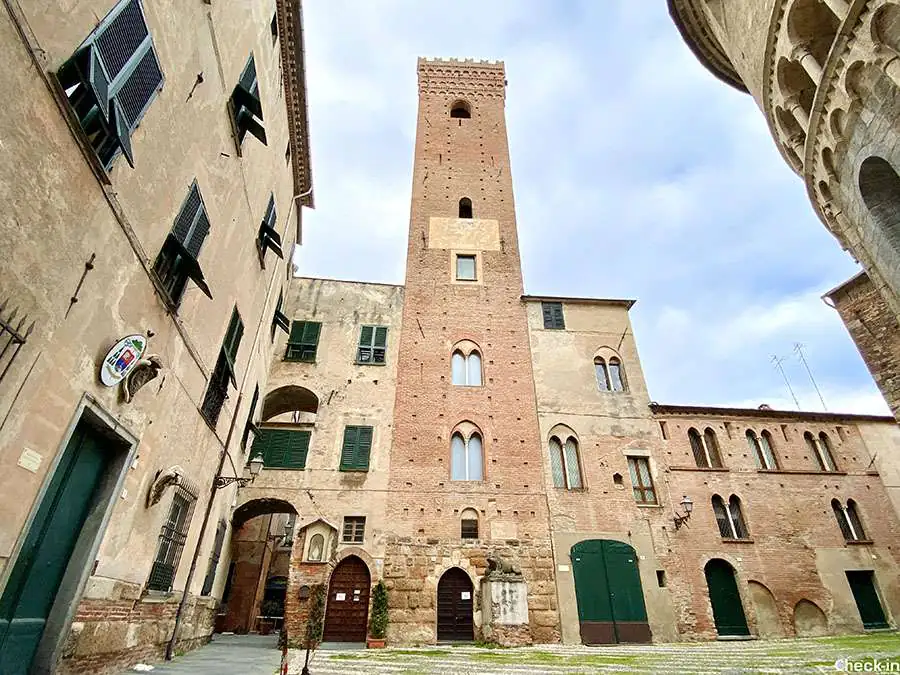
The Albenga in Tavola project involves restaurants around town that serve dishes made with the four vegetables in season. Ask about the dedicated menu when booking, or check with the tourist office in Palazzo Vecchio for current initiatives.
The four vegetables are not the only things to look for. The plain is known for herbs, flowers and vegetables exported mainly to Germany. The hills around produce Pigato, the area’s signature white wine, celebrated in late August at the Sagralea festival in the hamlet of Salea. Taggiasca olive oil, farinata (a thin chickpea pancake) and baxin, Albenga’s fennel biscuits, complete the table.
If you want to combine food and sightseeing, come in spring: between March and May you find artichokes and asparagus together, the old town is quiet and the days are already long. Everything else, from monuments to beaches, is in our Albenga guide.
Nearby
Riviera di Ponente › Riviera delle Palme
Town of medieval towers: early Christian baptistery, cathedral, Roman shipwreck museum, Roman road to Alassio, beaches facing Gallinara island.
Discover →Guide
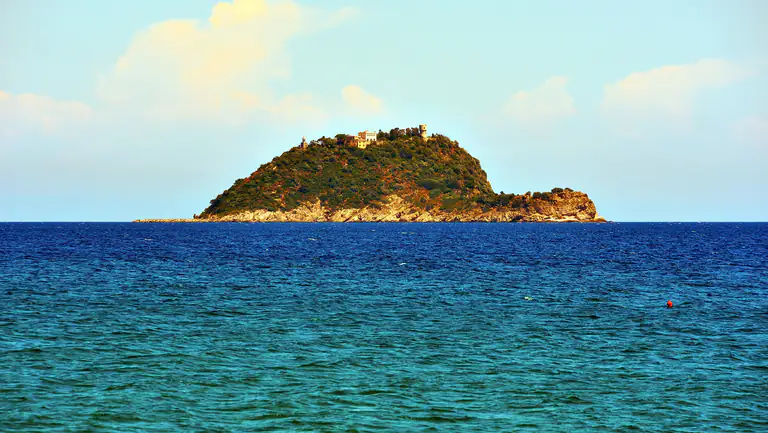
The island off Albenga: nature reserve, history, why you can't land, boat trips from Alassio, diving and where to see…
Discover →