Villa Nobel
The Sanremo house where Alfred Nobel lived and died in 1896, now a museum: history, hours, tickets and directions.
- Where
- Corso Felice Cavallotti 116Sanremo
- Opening hours
- according to the official website Tuesday to Friday, 9:30 am to 12:30 pmclosed on Saturday, Sunday, Monday and public holidays (⚠️ check before you go)
- Tickets
- €7 full, €5 reduced (children 5 to 10, over-65s, groups of 25 or more)audioguide included
- Time needed
- about one hour
- Booking
- not requiredtickets are sold on site
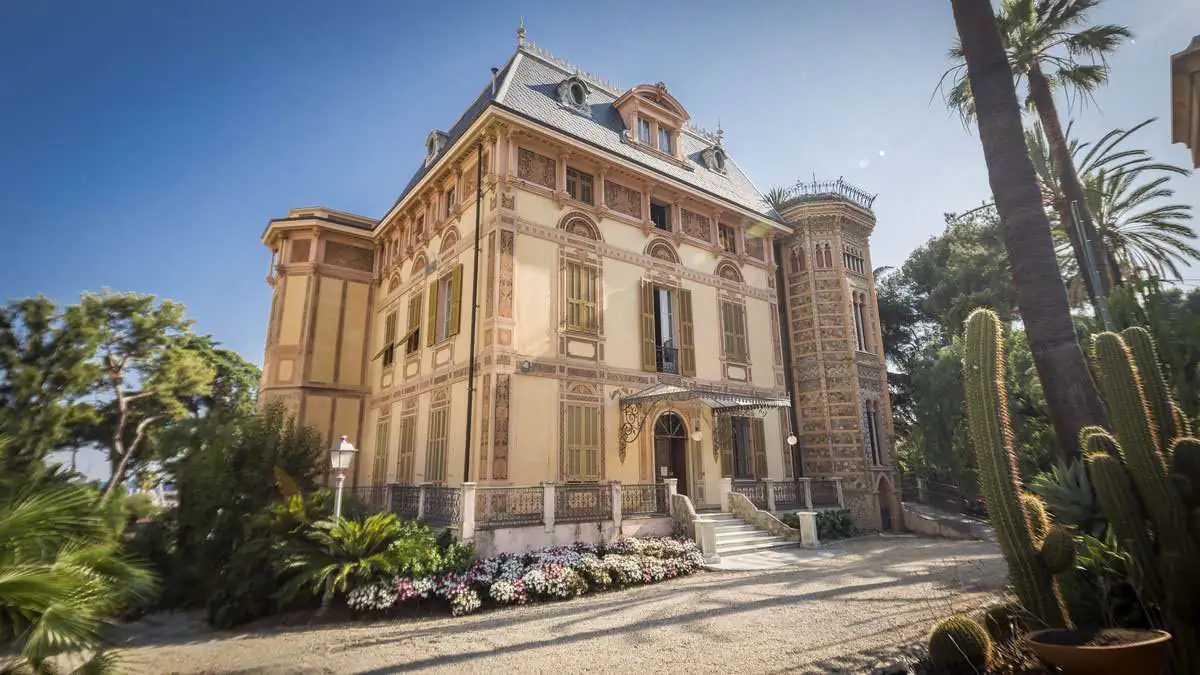
Villa Nobel is the house where Alfred Nobel, the inventor of dynamite and founder of the prize that bears his name, spent his last years and died on 10 December 1896. It stands on the Sanremo seafront on Corso Felice Cavallotti: an eclectic, Moorish-flavoured building with a small park. Today it houses a museum on Nobel and the scientific discoveries of the 19th century. It is a short visit that pairs well with a walk along the seafront.
History of the villa
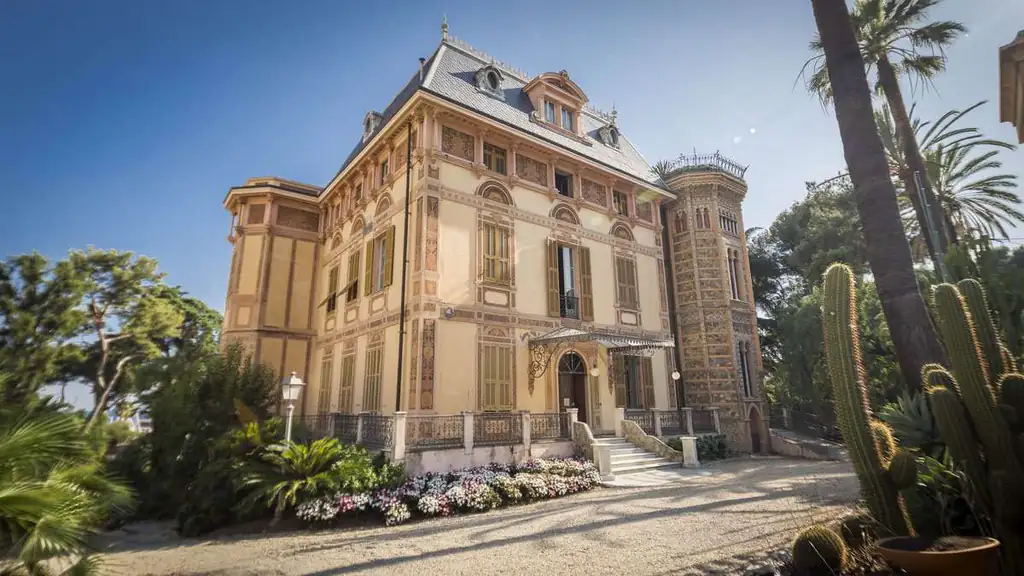
The villa was not built for Nobel. It was built in 1871 to a design by the architect Filippo Grossi for the pharmacist Pietro Vacchieri, in an area that was then still olive and citrus groves. In 1874 it passed to the Genoese knight Lazzaro Patrone. Alfred Nobel bought it in the early 1890s: sources give different years, from 1890 to 1892, and the most quoted is 1891. In 1892 he commissioned the architect Pio Soli to carry out the works that added a floor and a mansard roof.
The result is an eclectic, neo-Moorish building whose quirky details became even more striking after Nobel’s alterations. His own name for the house, “Mio Nido” (My Nest), gives the idea.
Nobel in Sanremo
Nobel chose the Riviera di Ponente for health reasons and set up a laboratory here for his work on explosives. He lived in the villa in his final years and died here on 10 December 1896, after a stroke. His will left most of his fortune to the prize that is now known worldwide.
According to the Sanremo municipal page, Nobel also had a walkway built over the sea for ballistics experiments with his collaborators, which the neighbours did not appreciate. After his death the villa changed hands.
The museum
After conservation work the villa has been open to the public since 2002 as a museum dedicated to Alfred Nobel, the scientific discoveries of the 19th century and the Nobel laureates. Other listings mention a permanent exhibition on the century’s inventions, “Scopri l’Ottocento”, and rooms recreated with some original furniture. The official website gives no details of the rooms, so we cannot say exactly what you will find on the day of your visit.
The visit is not guided: your ticket includes an audioguide to listen to on your own smartphone, so bring headphones and a charged phone.
The garden
A small park surrounds the villa. The municipal page mentions old date palms in front of the building, an old boxwood and a cannon from Bofors, the Swedish company Nobel was linked to, recalling his experiments. The official website does not say whether or how the garden can be visited, so ask at the entrance.
Getting there and what to combine
The villa is in central Sanremo, close to the sea, and you can walk to it from the Empress’s Promenade. Right opposite is the park of Villa Ormond, which fits into the same morning. Towards the centre, the Casino and Via Matteotti are within walking distance. The villa has no car park: by car, look for a space in the public car parks nearby. To continue along the coast, there is the Sanremo cycle path.
Practical tips
- It opens only in the morning and only four days a week: if your time in Sanremo is short, plan the visit for Tuesday to Friday. Hours and tickets on the official website
- The villa is run by a private company and also hosts dinners and evening events: if you are interested, check the programme on the official website.
- For information write to info@villanobel.it.
- Wheelchair access is not stated on the official website: ask before you go.
Who it is for
You will enjoy it if you like house museums and the history of science, or want to understand what tied Nobel to Sanremo. If you want a big museum or a garden to wander in, combine it with Villa Ormond and the Russian Church.
Where to stay
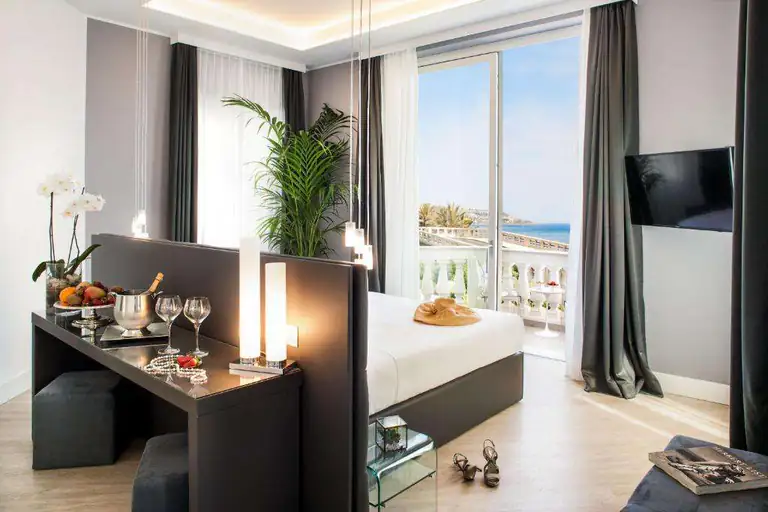
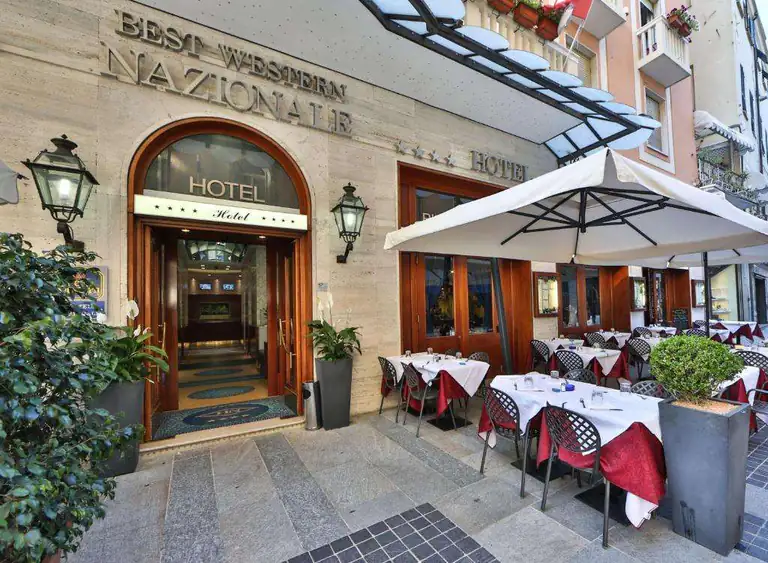
Where to stay in Sanremo
All places to stay in Sanremo on Booking: compare prices and availability.
Nearby
More to see in Sanremo
Riviera di Ponente › Riviera dei Fiori
Sanremo
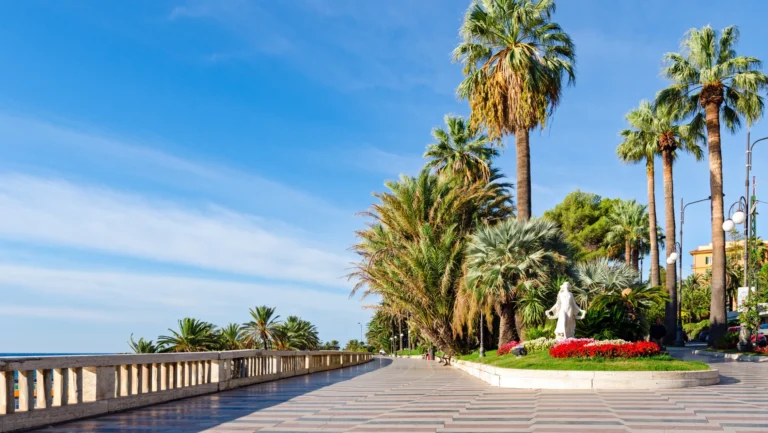
The town of the Festival and flowers: La Pigna, the Liberty-style Casino, the Russian Church, the Passeggiata Imperatrice, Blue Flag…
Discover →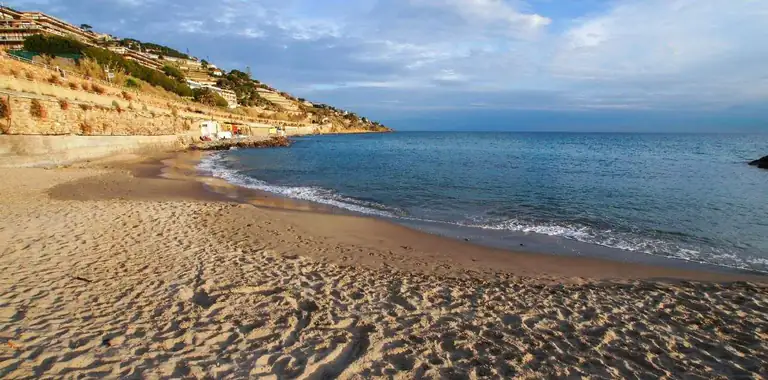
Guide
Beaches in Sanremo
Sanremo's beaches from Pian di Poma to Bussana: the five 2026 Blue Flag stretches, the dog beach, free beaches and…
Discover →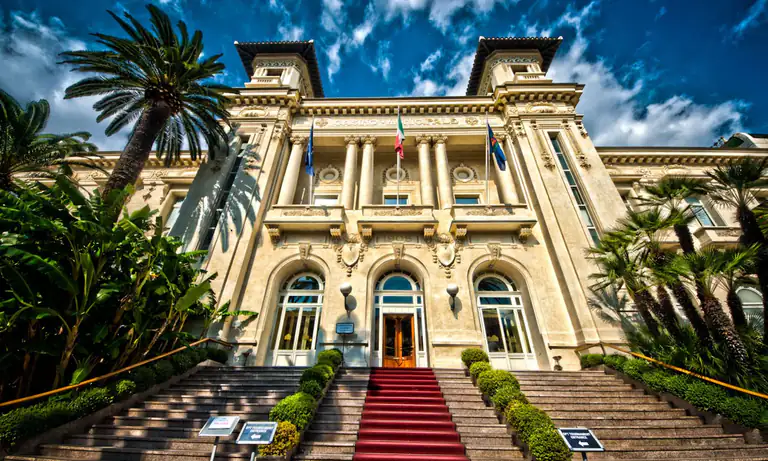
Villas and historic houses
Casino of Sanremo
1905 Art Nouveau building, free entry from 18: hours, dress code, theatre and the history of the Sanremo Festival.
Discover →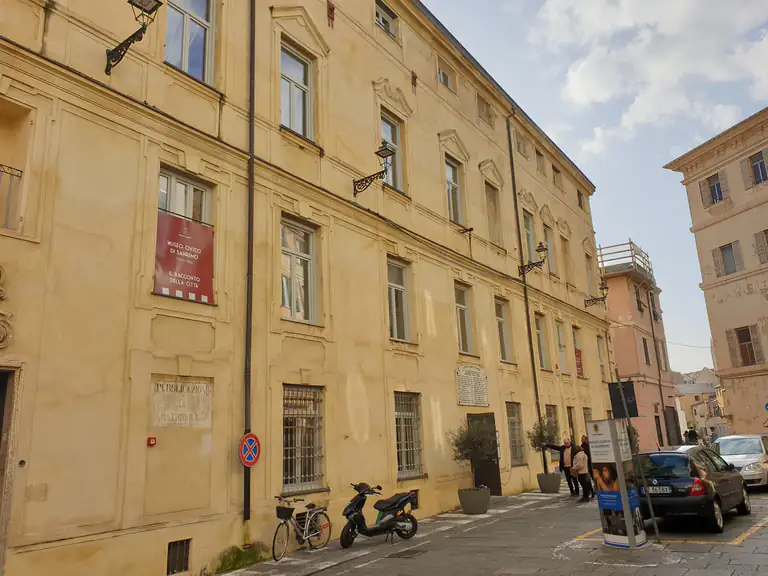
Museums
Civic Museum of Sanremo
Sanremo's museum is in Palazzo Nota, no longer on Via Matteotti: archaeology, picture gallery and Garibaldi. Hours and tips.
Discover →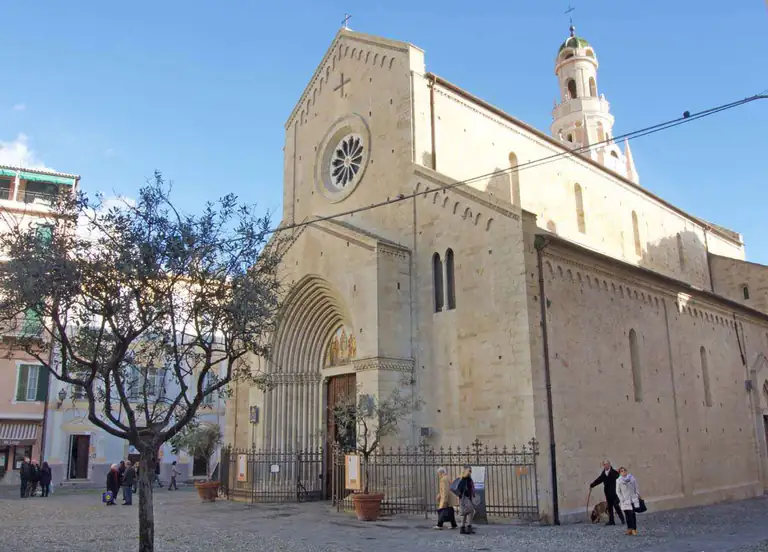
Churches and sanctuaries
Co-Cathedral of San Siro
Sanremo's oldest church, in Piazza San Siro: history, what to see inside and how to visit.
Discover →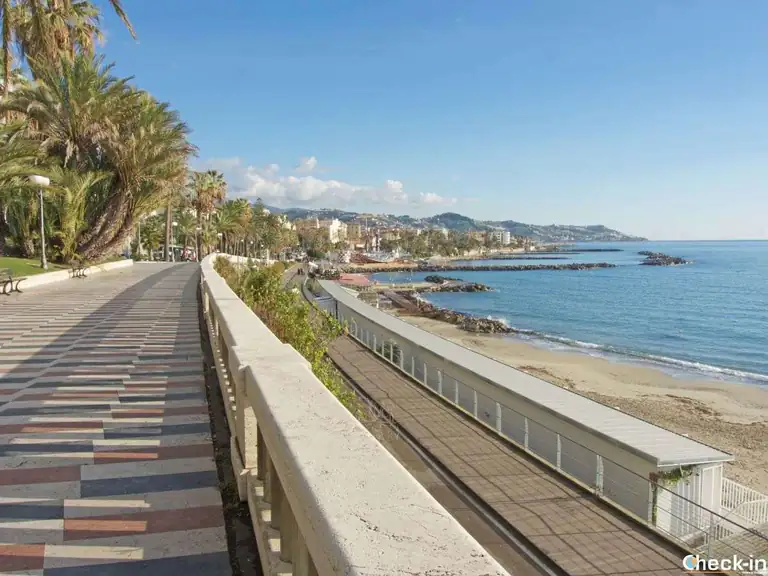
Walks and promenades
Empress Promenade
Sanremo's palm-lined seafront named after Empress Maria Alexandrovna: history, what to see and how to get there.
Discover →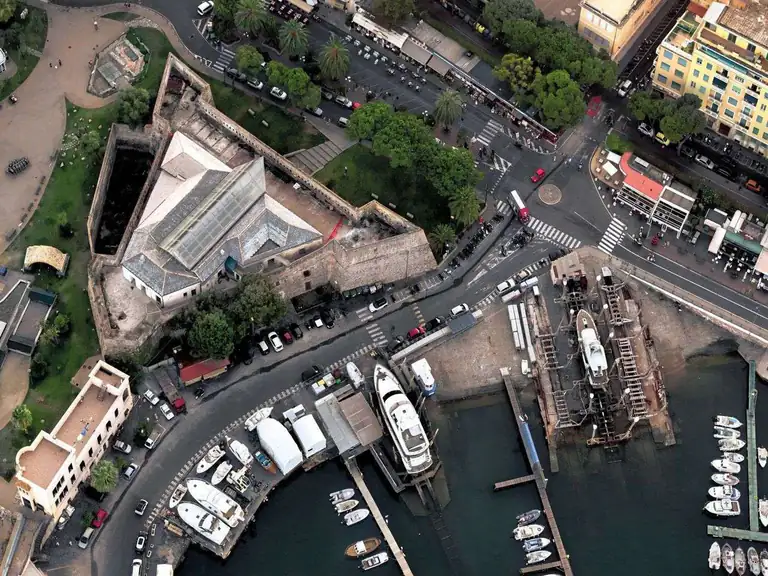
Castles and fortresses
Forte di Santa Tecla
Genoese fortress on the Sanremo seafront, a former prison, now hosting exhibitions and concerts: history, tickets, directions.
Discover →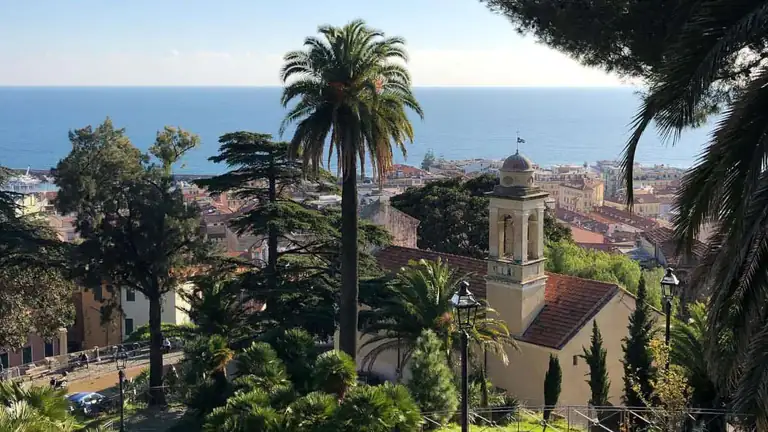
Gardens and parks
Giardini Regina Elena
The terraced park at the top of Sanremo's Pigna, with views over rooftops and sea: history and how to get…
Discover →