Riviera di Ponente › Riviera dei Fiori
Imperia
Porto Maurizio and Oneglia: the Parasio and Logge di Santa Chiara, San Maurizio, Villa Grock, the Olive Museum, Blue Flag…
Discover →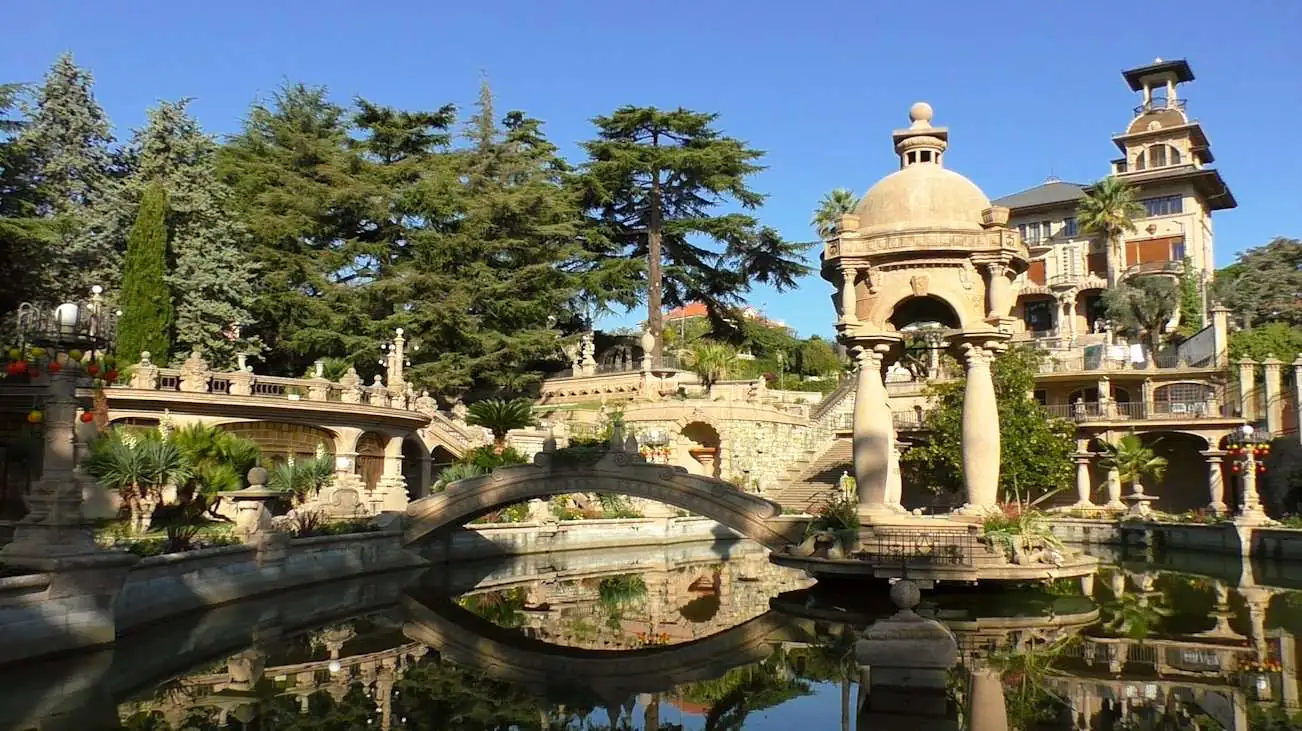
The king of clowns' villa above Oneglia: Grock's story, the architecture and park, the Clown Museum and tips for your visit.
Villa Grock is the most extravagant house on the Riviera: a white villa with a tower, colonnades and a park full of symbols, built on the hill above Oneglia by the most famous clown of the 20th century. Today it houses the Museo del Clown (Clown Museum), with interactive rooms devoted to the circus and to Grock’s life. This guide explains who Grock was, what the villa is like, what you can see in the museum and how to plan your visit.
By Italian Riviera editorial team·Updated on ·3 min read
Grock was the stage name of Charles Adrien Wettach, born in Reconvilier, Switzerland, on 10 January 1880. A musical clown, he played the violin, the piano and many other instruments in his acts. In 1919, after his triumph at the Olympia in Paris, he was hailed as the “king of clowns”, and for a time he was the highest-paid performer in Europe.
After marrying the singer Ines Ospiri he chose to live in Oneglia. He retired from the stage in 1954, aged 74, and died in Imperia on 14 July 1959. He used to say that his birth name no longer mattered: he was Grock.
The first building, Villa Bianca, was built in 1922. From 1927 Grock had it enlarged on a bigger plot, personally overseeing the design and the decoration, and the new villa was inaugurated in 1930. It has three floors and 47 rooms.
In 2002 the villa was bought by the Province of Imperia, which restored it; the Museo del Clown opened on 20 August 2013, with European Union funding.
The style is a deliberate mix: Liberty and Art Deco with Persian, Baroque and Rococo touches. A tower dominates the main building, which is surrounded by colonnades, balustrades, stained glass, flower beds and palm trees.
The park is an integral part of the visit. There is a fish pond with an exedra and a little bridge, and many details refer to the circus, astrology and astronomy. Grock was fascinated by esotericism, and some see in the villa’s decoration a path of initiatory symbols. The villa’s tower can also be seen from Oneglia harbour, from Calata Cuneo.
The museum fills fourteen rooms with a multimedia layout designed for adults and children. You enter beneath a starry vault and pass through spaces with film projections about the great circus artists, costumes, a music room, magic tricks and a panoramic terrace over the Ligurian Sea.
Grock’s memorabilia include photographs, posters, his enormous stage shoes, portraits, his workshop and his violin. The museum also holds a collection of esoteric and Masonic prints. The visit comes with an audio guide.
Opening times change during the year, and at certain times the museum is open only at weekends or by booking: before you go, check the calendar on the Musei nazionali di Genova website or contact the museum. In 2025 a full-price ticket cost €9 and a reduced one €7.
The villa is on the hill above Oneglia and can be reached on foot from the centre or by car. Allow time for the park too, as it is part of the visit. You can combine it with the Olive Museum, also in Oneglia, or with a stroll along Calata Cuneo. Everything else worth seeing in town is in the Imperia guide.
FAQ
Charles Adrien Wettach, a Swiss musical clown (1880–1959), known as the “king of clowns” after his success at the Olympia in Paris in 1919. He lived in Oneglia and died in Imperia.
In 2025 a full-price ticket cost €9 and a reduced one €7. Check the current prices before your visit.
Yes: the Clown Museum has multimedia installations, games and spaces designed for younger visitors too.
In via Fanny Roncati Carli, on the Cascine hill above Oneglia, in Imperia.
Opening times vary during the year: check the Musei nazionali di Genova website or contact the museum before you go.
Where to stay
All places to stay in Imperia on Booking: compare prices and availability.
Nearby

Riviera di Ponente › Riviera dei Fiori
Porto Maurizio and Oneglia: the Parasio and Logge di Santa Chiara, San Maurizio, Villa Grock, the Olive Museum, Blue Flag…
Discover →