Riviera di Ponente › Riviera delle Palme
Finalborgo
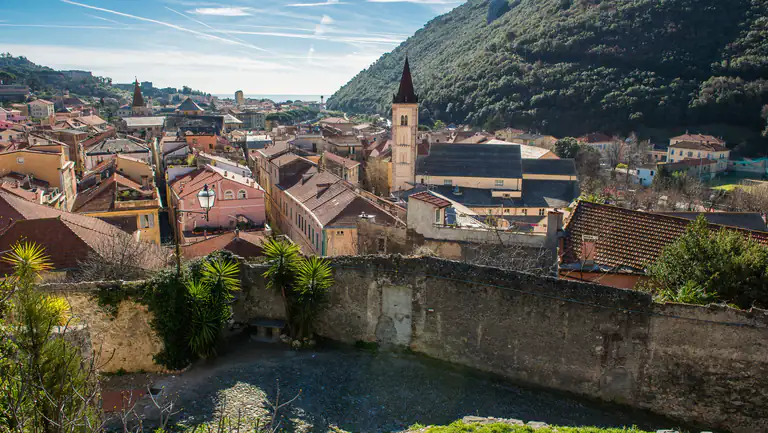
Finale Ligure's walled medieval village: 15th-century gates, San Biagio, Santa Caterina cloisters, archaeology museum and castles on the Strada Beretta.
Discover →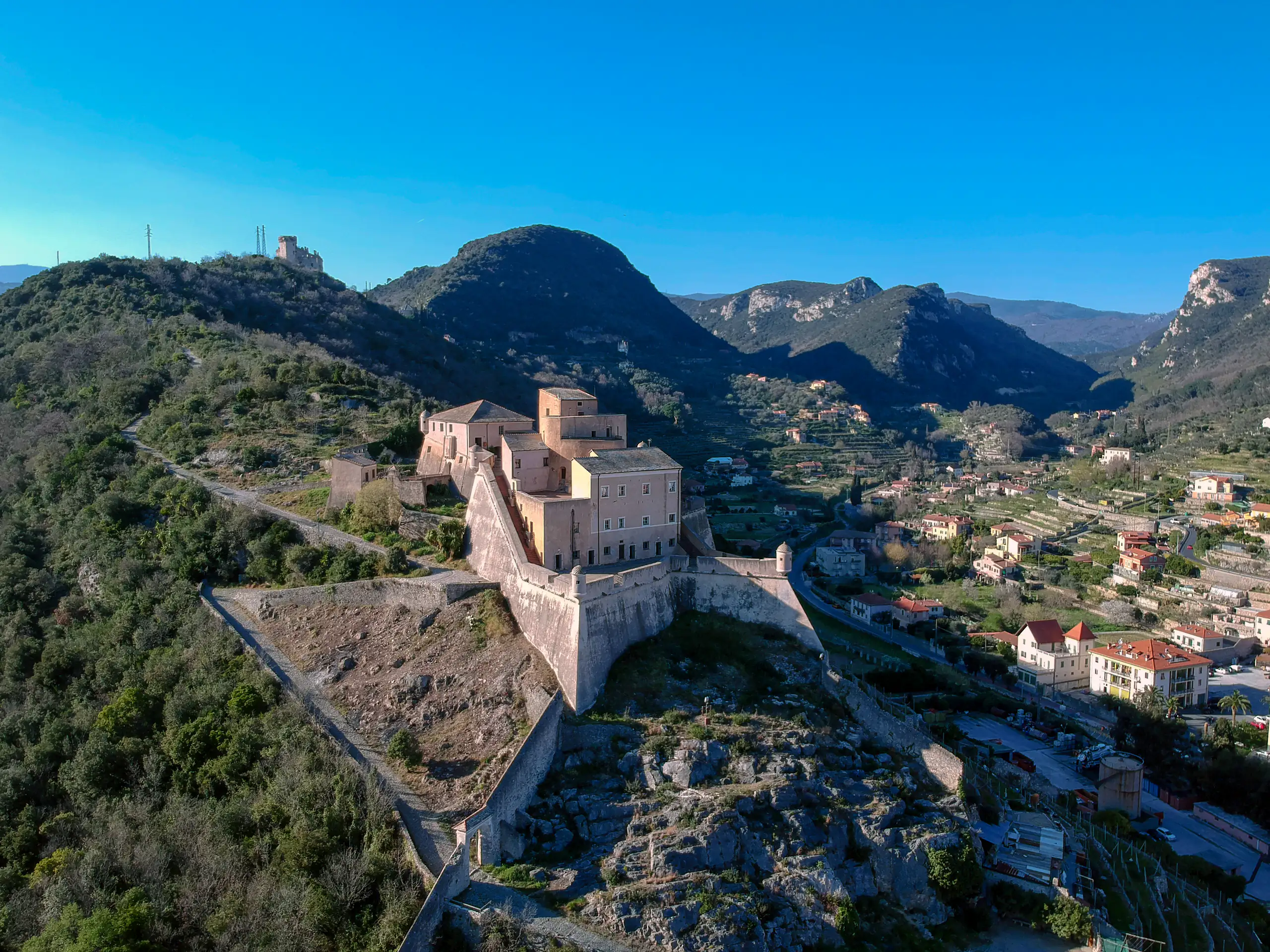
The Strada Beretta walk: Castel San Giovanni, Castel Gavone with its Diamond Tower and the churches of Perti, with walking times and tours.
Above the walls of Finalborgo an old paved road, the Strada Beretta, climbs in under an hour to two castles and a hill village: Castel San Giovanni, the Spanish fort; Castel Gavone, the Del Carretto residence with its Diamond Tower; and Perti, with its 15th-century churches. It is the best walk you can do straight from the village, and few visitors do the whole thing.
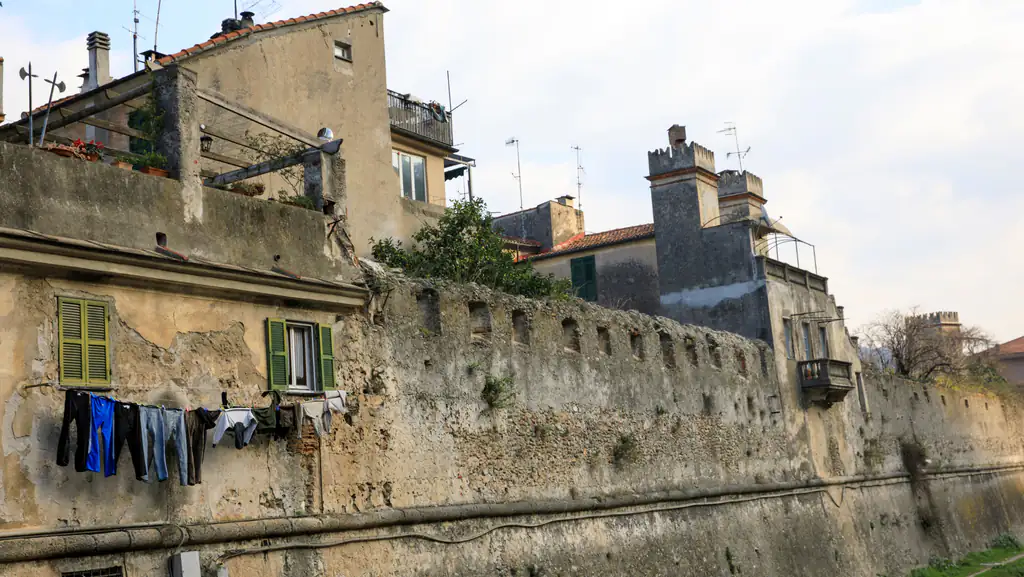
The road dates from the Spanish period in the 17th century, when the Marquisate of Finale was the Duchy of Milan’s outlet to the sea. It follows the ridge from Porta Mezzaluna up to Castel Gavone and Perti, and from there continued inland. It has been known as the Strada Beretta since 1666.
The first stretch, from Piazza del Tribunale, is easy to spot thanks to the brick strip down the middle; it then becomes a steep cobbled lane between dry-stone walls, olive trees and Mediterranean scrub. Early on you will also see the “VP” waymarks of the Via del Purchin. It gets hot in summer: set off early in the morning or late in the afternoon, and carry water.
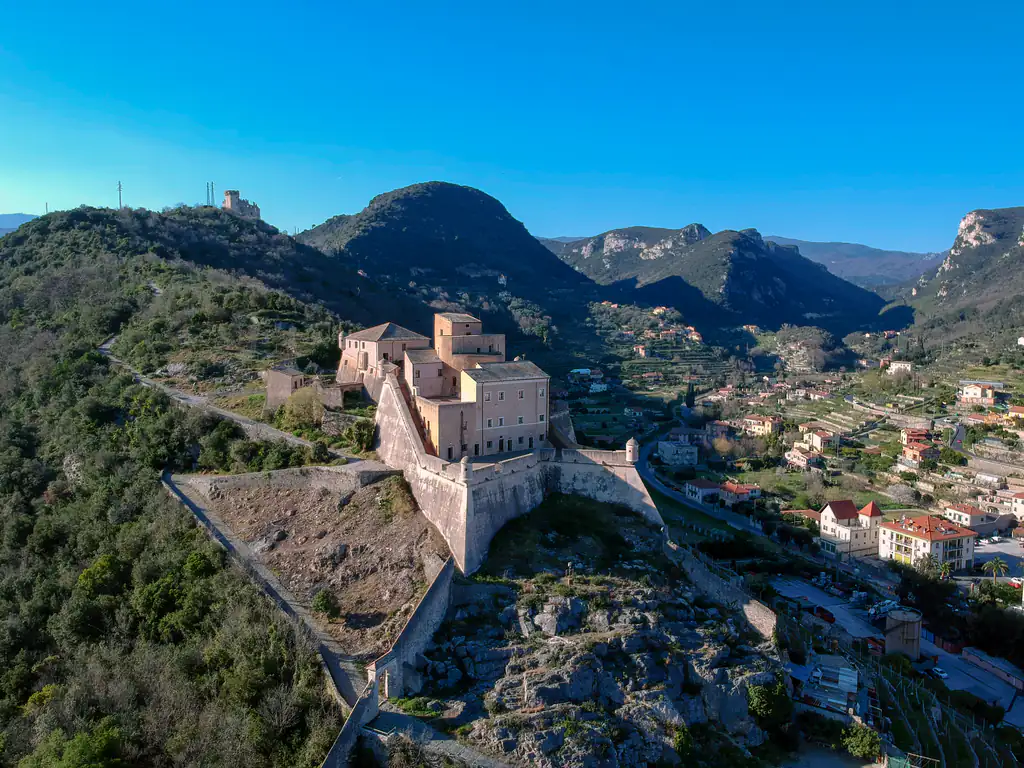
After a five-minute climb, about 500 metres from the village, you reach the fort the Spanish built in the first half of the 17th century around a medieval tower, to a design by the Lombard engineer Francesco Prestino. It was enlarged between 1674 and 1678 under Gaspare Beretta. In 1713, when Finale passed to Genoa, the Genoese partly demolished it.
From 1822 the Savoy government used it as a prison, until the early 20th century: around the cell doors you can still see prisoners’ graffiti scratched into the slate. A late 20th-century restoration opened it to visitors. Entry is free; the fort hosts exhibitions and events, and the terraces look over the rooftops of Finalborgo, the bell tower of San Biagio and the valley towards the sea. Opening hours vary, so check before you go.
Back on the Strada Beretta, a signposted turning with an information panel leads to the path for Castel Gavone, on the spur of Becchignolo hill that protected the north side of the town. Allow 20–25 minutes from the village.
The castle is first recorded in 1128 and was the fortified residence of the Del Carretto marquises. In the war against Genoa of 1447–1450 it was handed to the Genoese by treacherous mercenaries; Galeotto Del Carretto escaped by climbing down the walls. In December 1450 Giovanni I recaptured the town and rebuilt the castle, with a chapel of Saint George dated 1461.
Around 1490 the Torre dei Diamanti was added: its blocks of Finale stone are cut into pyramids, “diamond points”, and it is one of the most original examples of Renaissance military architecture in Italy. In the 16th century the castle gained a new outer wall with four corner towers, designed to withstand artillery. After Genoa bought Finale in 1713, the Genoese mined the castle and blew it up in the early 18th century; the Diamond Tower survived.
A recent restoration, funded by the EU, made the ruin safe while leaving the marks of its destruction visible. The interior can only be visited with an archaeologist, by booking with the Museo Archeologico del Finale; you pay the guide on the day. Tours are cancelled in the rain and the site is not accessible to people with reduced mobility. The schedule changes with the seasons: check the museum website or MUDIF, Finale’s museum network.
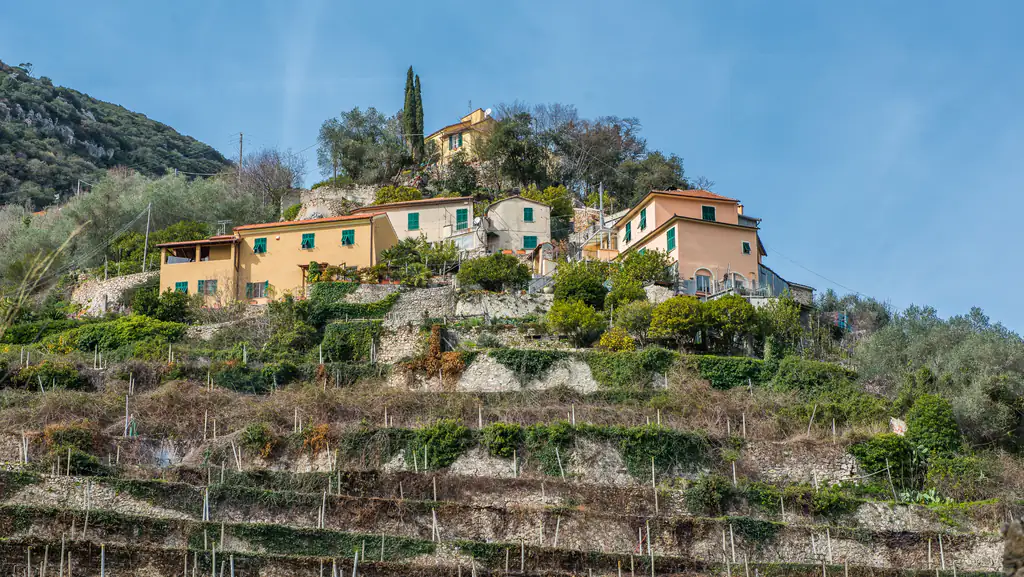
Beyond the castle the road climbs to Perti, the hill hamlet beneath the Rocca di Perti, one of the historic crags of Finale climbing. There are two churches worth seeing here.
Interior visits are guided and must be booked through the archaeological museum. From Perti you return to Finalborgo the same way, downhill. By car, Perti is reached from the road to Calice Ligure.
Nearby
Riviera di Ponente › Riviera delle Palme
Finale Ligure's walled medieval village: 15th-century gates, San Biagio, Santa Caterina cloisters, archaeology museum and castles on the Strada Beretta.
Discover →