Riviera di Ponente › Riviera dei Fiori
Dolceacqua
The bridge painted by Monet, the Castello dei Doria and Rossese, Liguria's first DOC: a guide to the iconic Val…
Discover →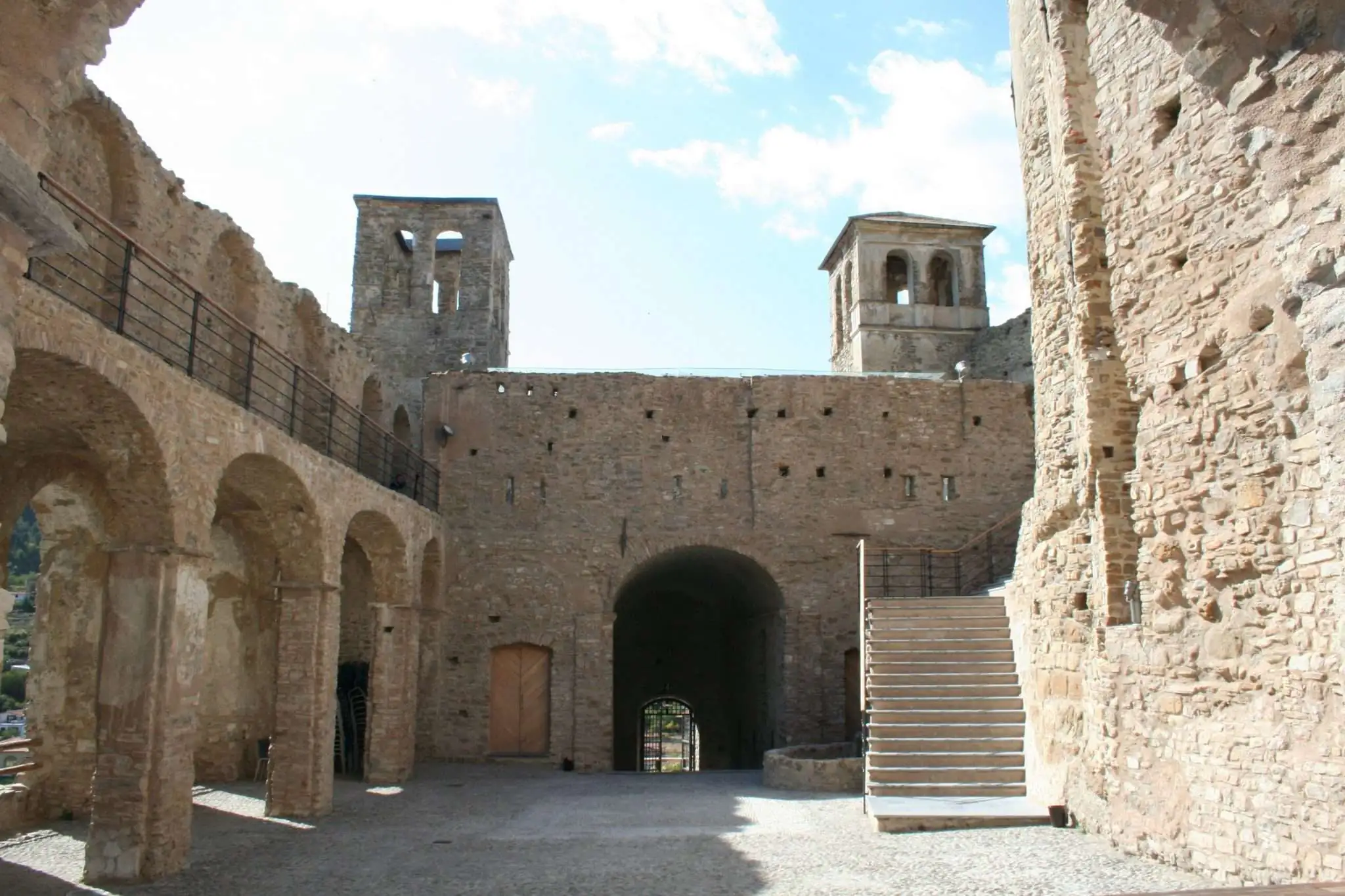
The castle above Dolceacqua: history from the 11th century to the Doria, what to see inside, seasonal opening hours, tickets and visiting tips.
The Castello dei Doria looks down over Dolceacqua from the top of the Terra, the medieval core of the village. It is the castle you see in Monet’s paintings, behind the Ponte Vecchio, and one of the most visited monuments in the western Ligurian hinterland. After centuries of neglect and lengthy restoration, almost all of it can now be visited: this guide covers its history, what you see inside, when it is open and how to plan your visit.
By Italian Riviera editorial team·Updated on ·4 min read
The castle was built at the start of the 11th century as a defensive structure: a square ring of walls with a round tower in the middle, replaced in the mid-13th century. Its position was strategic, on a rocky spur above the Nervia stream, controlling the valley.
In 1270 it was bought by Oberto Doria, the Genoese admiral who a few years later, in 1284, would lead the Genoese fleet to victory over Pisa at Meloria. From then on Dolceacqua was the centre of the Doria domain, which lasted until the end of the 18th century.
Between the 15th and 16th centuries, under Enrichetto Doria in 1442 and Stefano Doria in 1563, the castle was turned into a noble residence, with rooms decorated with rich stucco and frescoes. Between the mid-17th and early 18th centuries a tower was added on the east side.
On 27 July 1744, during the War of the Austrian Succession, Franco-Spanish troops badly damaged the castle. From then on it fell into decline, and by the 19th century the building lay in ruins. Restoration began in 1986: the castle opened to the public in 2007, and further work completed in 2018 made almost the entire structure accessible.
Today the castle is a small multimedia museum devoted to the history of the village and the surrounding area. The visit includes:
A 3D virtual tour is also available. Throughout the year the castle hosts exhibitions, concerts and cultural events.
In 1884 Claude Monet, staying in Bordighera, came up to Dolceacqua and painted three views of the bridge with the castle in the background. One, “The Castle of Dolceacqua”, is in the Musée Marmottan in Paris; another, “The Bridge at Dolceacqua”, is at the Clark Art Institute in Williamstown, in the United States. In 2019 the Marmottan painting was displayed for a few months inside the castle itself. To discover the painter’s spots on the coast, see the guide to Monet in Bordighera.
The castle is open for most of the year, with hours that vary by season. Broadly speaking:
Last admission is 30 minutes before closing. There is an admission charge: check prices and the exact dates when hours change on the Dolceacqua tourism website or by phoning the castle, as online sources give different hours.
The castle can only be reached on foot, climbing the carruggi of the Terra after crossing the Ponte Vecchio. The climb is short but steep, with steps and cobbles: you need comfortable shoes and the route is not suitable for pushchairs. Allow about an hour for the visit.
In summer it is best to go up early in the morning or in the late afternoon, when it is cooler and the light on the walkway is at its best. Leave your car in one of the car parks along the valley road: the San Filippo car park, behind the Ponte Vecchio, is the closest to the entrance to the Terra. In the second half of August the castle is the backdrop for the fireworks display linked to the michetta festival.
FAQ
There is an admission charge. Up-to-date prices are on the municipality’s tourism website, or you can call the castle on +39 337 1004228.
Not in winter: the castle is closed on Mondays, except public holidays. In spring and summer it is open every day.
About an hour, including the walk up from the Terra and the panoramic walkway.
The climb through the carruggi is steep and has steps, so access is difficult for wheelchairs and pushchairs. Ask the castle for information before your visit.
The first core dates from the early 11th century. From 1270 the castle belonged to the Doria family of Genoa, who turned it into a residence in the 15th and 16th centuries.
Where to stay
All places to stay in Dolceacqua on Booking: compare prices and availability.
Nearby alternative
Looking for more choice? Bordighera is 10 km away, by the sea, with hotels, B&Bs and apartments and trains along the coast and to France.
Nearby
Riviera di Ponente › Riviera dei Fiori
The bridge painted by Monet, the Castello dei Doria and Rossese, Liguria's first DOC: a guide to the iconic Val…
Discover →