Ligurian cuisine is based on herbs, olive oil, and seafood, rather than meat. Must-try dishes include Genoese basil pesto, focaccia (both the Genoese variety and the cheese-topped version from Recco), chickpea farinata, trofie pasta, pansoti with walnut sauce, and, in western Liguria, sardenaira and brandacujun. Here’s what they are, where they come from, and where to eat them in Liguria.
- The symbol: pesto, made with Genoese basil (PDO)
- Street food: focaccia, farinata, panissa, and fritters
- Protected products: Genoese basil (PDO), Riviera Ligure olive oil (PDO), salted anchovies from the Ligurian Sea (PGI), and Recco focaccia with cheese (PGI)
- Speaker: Taggiasca olives, sardenaira, brandacujun, barbagiuai
- Desserts: Genoese pandolce, Alassio baci
- Where: bakeries and sciamadde in Genoa, Recco for focaccia, Monterosso for anchovies
Genoese Pesto and PDO Basil

Genoese pesto is made with basil, pine nuts, garlic, aged cheese (Parmigiano and pecorino), coarse salt, and extra-virgin olive oil. Traditionally, a marble mortar and a wooden pestle are used. The first written recipe appears in the 19th century, in Giovanni Battista Ratto’s *Cuciniera genovese*.
At the heart of it all is Genoese basil (DOP), recognized in 2005: small, oval leaves with a full-bodied aroma, without the minty note found in other types of basil. In Genoa, at the Palazzo Ducale, the World Pesto Championship (using a mortar and pestle) is held every two years. You’ll find it served with trofie and trenette, in lasagna, and even in Genoese-style minestrone.
Focaccia: Genoese-style and Recco-style
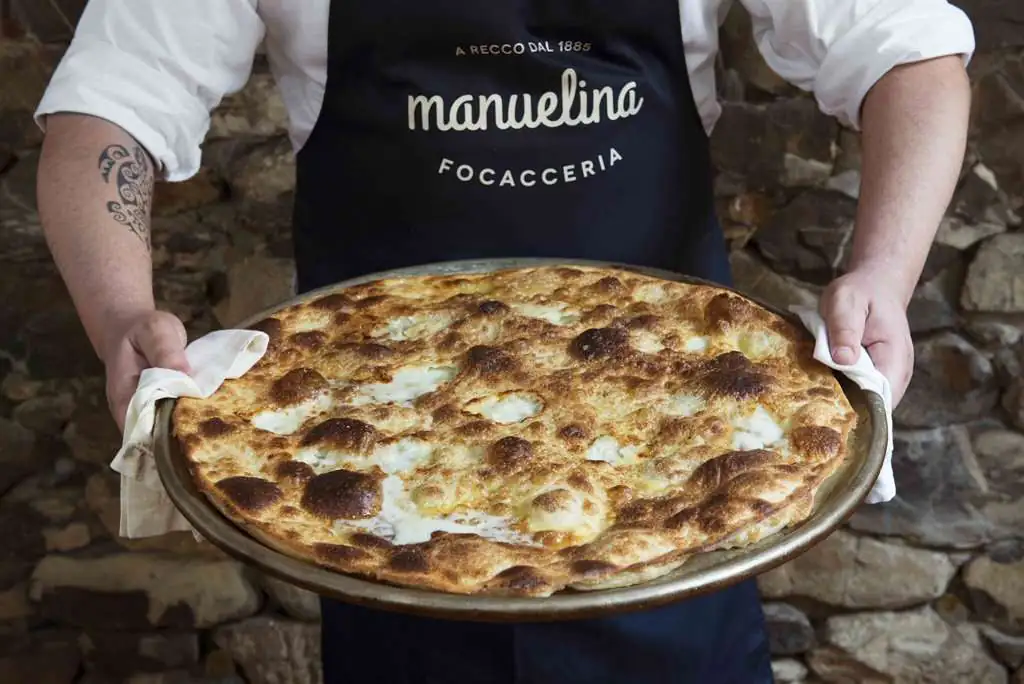
Genoese focaccia (“fügassa”) is flat, brushed with oil, and full of holes, with coarse salt on top. The Genoese eat it at all hours of the day, even for breakfast, dipped in cappuccino. The focaccia from Recco with IGP cheese (2015) is something else entirely: two paper-thin, yeast-free layers with soft, fresh cheese in the middle that melts in the oven. The production regulations limit its production to Recco, Sori, Camogli, and Avegno.
To try it where it originated, read our guide to Recco focaccia: every year, on the fourth Sunday in May, the town offers it for free at the Festa della Focaccia.
Farinata and Panissa: Chickpeas
Farinata is a thin flatbread made from chickpea flour, water, salt, and oil, baked in large copper pans in a wood-fired oven. It’s crispy on the outside and soft on the inside, and is eaten hot, right out of the oven. In Savona, there’s also a “white” version made with wheat flour.
Panissa is made with the same ingredients, but cooked like polenta: it’s left to set, then cut into sticks and deep-fried, or served in cubes and seasoned. In Genoa, they’re fried at the “sciamadde”—small shops with wood-fired ovens that are always lit—and the historic district for fried foods is Sottoripa, near the harbor. Find more recommendations in the guide on what to eat in Genoa.
Panissa is at home on the western Riviera: in Bordighera, for example, it is one of the local dishes, together with brandacujun, stockfish creamed with potatoes.
Pasta dishes: trofie and pansoti
Trofie are small, hand-twisted pasta shapes that originated in the Golfo Paradiso, between Sori, Recco, and Camogli; in Sori, they are De.Co.-certified. They are the classic pasta for pesto.
Pansoti (“panciuti”) are ravioli stuffed with wild herbs (preboggion), eggs, and prescinsêua, a tangy curd typical of Genoa. They are served with walnut sauce. In Levanto, try gattafin, a fried ravioli stuffed with herbs and cheese.
Savory pies and holiday dishes
The torta pasqualina is the queen of vegetable pies: paper-thin layers of puff pastry, Swiss chard, prescinsêua, and whole eggs that appear in every slice when cut. It’s made at Easter; however, you can find torta verde and stuffed vegetables all year round.
Cappon magro is a dish served on special occasions, especially at Christmas: layers of fish and vegetables on sailor’s crackers, bound together with a green sauce made from parsley, pine nuts, and anchovies. There are various theories about the origin of its name.
The Sea: Anchovies and Fried Seafood
The region’s iconic fish is the anchovy. Salted anchovies from the Ligurian Sea have held PGI status since 2008. In Monterosso, salted anchovies are a Slow Food Presidium, linked to traditional fishing and the feast of St. Peter on June 29. They are eaten fried, stuffed, marinated, or salted.
At the fry shops in Genoa, ask for “fritto misto” and “frisceu,” which are savory fritters. In the Levante region, in Moneglia, they also prepare “scabeggio”—fish that is fried and then marinated in vinegar and sage.
Il Ponente: Taggiasca olives, sardenaira, and brandacujun
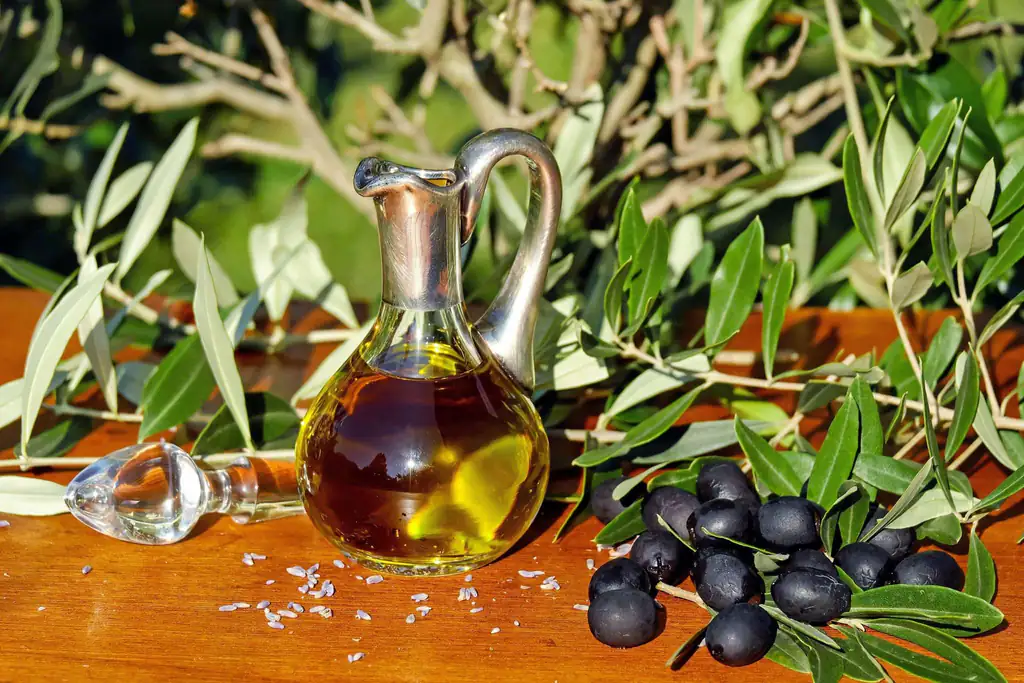
As you head toward France, the cuisine changes. Taggiasca olives are named after Taggia and produce a delicate oil that may bear the Riviera Ligure DOP designation. You’ll find them everywhere, even in Ligurian-style rabbit.
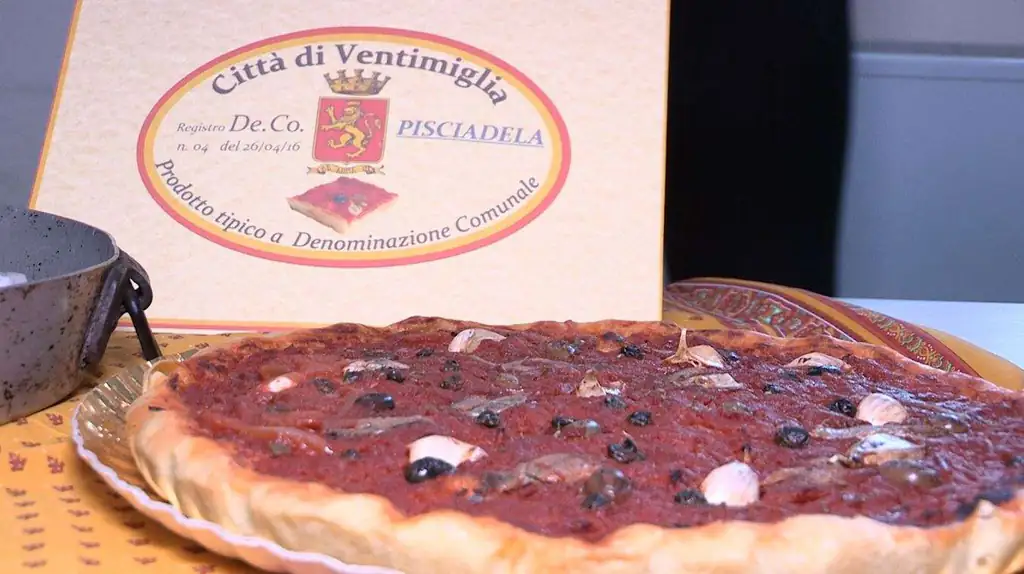
Sardenaira, which originated in Sanremo, is a thick focaccia topped with tomatoes, anchovies, Taggiasca olives, garlic, and oregano; its historical name is pissalandrea. In Ventimiglia, the local version is called pisciadela and holds the municipality’s De.Co. certification. Brandacujun is stockfish mashed with potatoes, oil, and parsley, served warm. Inland, in Apricale, people eat barbagiuai, large fried ravioli stuffed with pumpkin and cheese. In Taggia, for an aperitif, there are savory canestrelli with olive oil.
Further east, on the Albenga plain, you’ll find the purple asparagus, a Slow Food Presidium: see Albenga’s local specialties.
Desserts and Wines
The traditional Christmas dessert is Genoese pandolce, made with raisins, candied fruit, and pine nuts: the “tall,” leavened version is the original, while the “flat” version is more recent. In Alassio, you can buy “baci”—two hazelnut and cocoa shells held together by chocolate; in Ventimiglia, the “castagnola”; and in Dolceacqua, the “michetta.”
For wine, try the white Vermentino and Pigato, the Rossese di Dolceacqua—Liguria’s first DOC (1972)—and the Sciacchetrà, the passito wine of the Cinque Terre. You’ll find it all in our guide to Ligurian wines.
Where to Eat Ligurian Cuisine
- Genoa: focaccia fresh from the oven in the morning, farinata and panissa in the sciamadde, and pesto and pansoti at the trattoria.
- Recco and Camogli: IGP cheese focaccia, hot and fresh out of the oven.
- Cinque Terre: anchovies in Monterosso, with a glass of local white wine.
- Riviera dei Fiori: sardenaira at the bakeries in Sanremo, pisciadela, and fresh produce at the covered market in Ventimiglia.
Frequently Asked Questions
What are some typical dishes from Liguria?
Genoese pesto, Genoese and Recco focaccia, farinata, trofie with pesto, pansoti with walnut sauce, torta pasqualina, cappon magro, anchovies, and—in the western part of the region—sardenaira and brandacujun.
What is farinata?
A thin flatbread made from chickpea flour, water, salt, and oil, baked in a wood-fired oven on copper pans. It is eaten warm; in Genoa, it is especially popular in the “sciamadde.”
Is Genoese pesto a PDO?
Pesto itself isn’t: Genoese basil, the main ingredient, is PDO. Riviera Ligure olive oil is also PDO.
What is the difference between Genoese focaccia and Recco focaccia?
The Genoese version is leavened, flat, and brushed with oil. The Recco version has PGI status and is made without yeast: two very thin layers of dough with fresh cheese in the middle.
What are Taggiasca olives?
A variety of olive typical of western Liguria, named after Taggia. They are eaten fresh and produce a delicate oil.