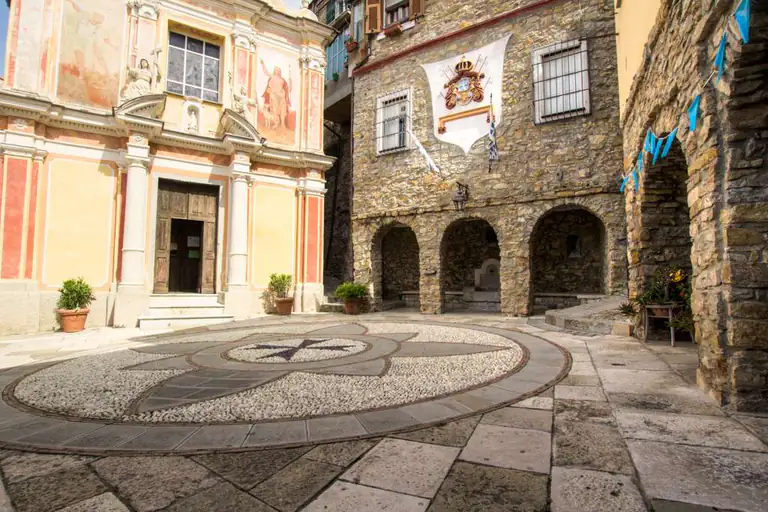
The sentry boxes
Along the road and at the entrance to the village you will come across the sentry boxes painted in the principality’s colours. They are the classic photo of any visit.
History and legend of the Principality of Seborga: the Lérins monks, the 1729 sale, Giorgio I, Princess Nina and the 2026 elections.
The Principality of Seborga is a micronation that claims independence for the small Ligurian village above Bordighera. It has an elected princess, a flag, a currency and its own sentry boxes, but no state recognises it: Seborga is an Italian municipality in every respect. This guide separates documented history from legend, explains how the modern claim came about and what you will find when you visit the village today.
For centuries Seborga belonged to the Abbey of Lérins, on the islands off Cannes. Tradition dates the ownership to a donation by the Counts of Ventimiglia in 954, but historians regard that document as doubtful; the first reliable confirmation dates from 1063. The abbots who governed the fief held the title of princes, and this is where the name “principality” comes from.
In the second half of the 17th century Seborga had its own mint, in the Palazzo dei Monaci, where luigini were struck, coins intended for trade with the Levant. On 30 January 1729, after lengthy negotiations, the monks sold the territory to Victor Amadeus II of Savoy, King of Sardinia. From then on Seborga shared the fortunes of the Savoy states and later of unified Italy. Historians consider the 1729 sale valid.
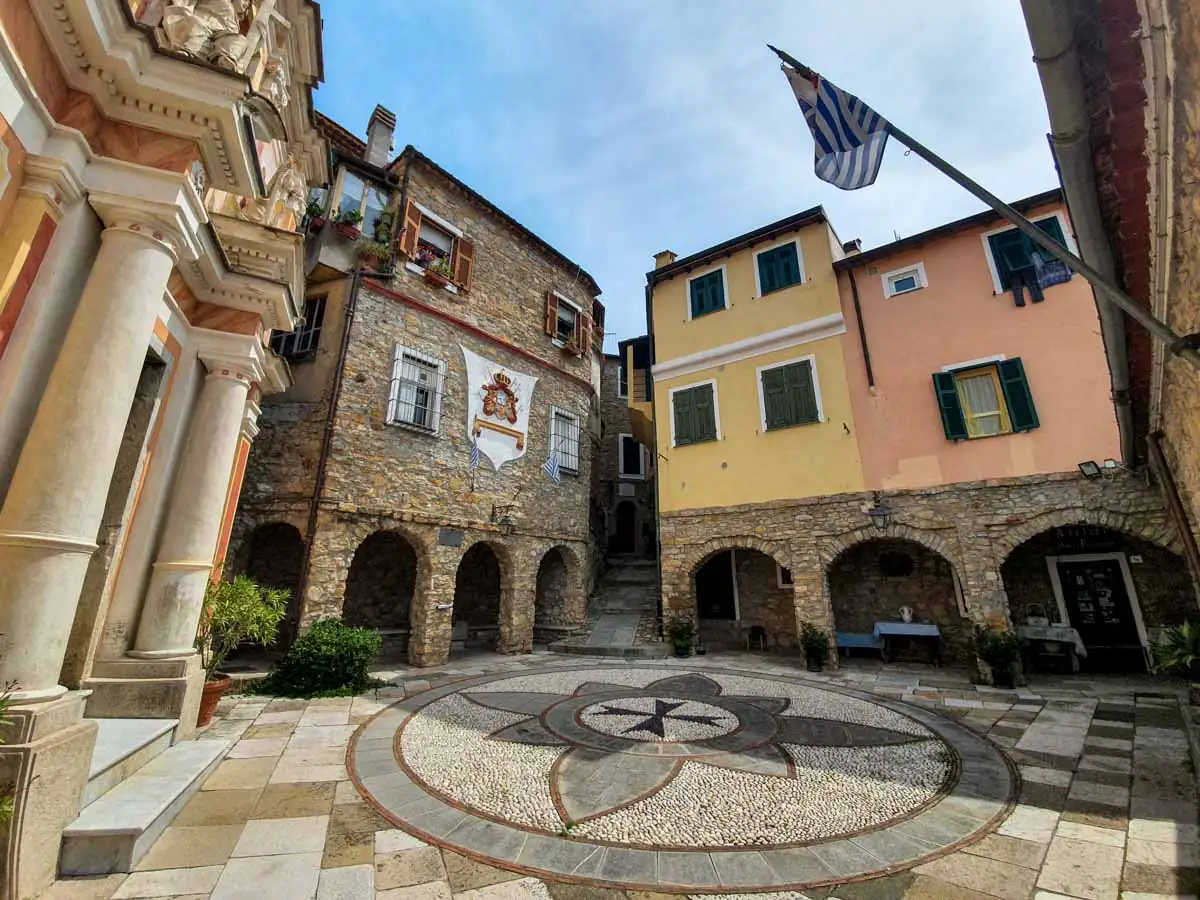
In Seborga people tell how Bernard of Clairvaux passed through and knighted the first members of the Order of the Temple here. The nine stripes of the flag and the cross laid out in the churchyard of San Martino are linked to this tradition.
However, there are no documents confirming any connection between Seborga and the Templars, and scholars regard it as a modern reconstruction. It is worth knowing because it is part of the village’s imagination, but it should be read as legend rather than history.
In 1963 Giorgio Carbone, a local flower grower, argued that the 1729 sale had never been properly registered and that Seborga had therefore never legitimately become part of the Kingdom of Sardinia or the Kingdom of Italy. On 14 May 1963 he was proclaimed prince as Giorgio I. He created a flag, currency, stamps and a small government, and kept the title until his death on 25 November 2009. In 1995 the inhabitants voted to approve a statute for the principality.
Princess Nina’s term ends in 2026: the elections are set for Sunday 22 November 2026. As of September, candidacies had not yet been made official.
For the Italian state, Seborga is a municipality like any other, with a mayor, a town council and Italian law. In 2008 the Constitutional Court declared the request for recognition inadmissible. Mayor Pasquale Ragni has put it plainly: the principality does not exist as a state, and the Italian tricolour flies over the town hall.
Today the principality is formally an association. The municipality and the principality work together on events and tourism promotion, and the claim has strengthened the identity of a village of fewer than three hundred people, attracting visitors from all over the world.
Along the road and at the entrance to the village you will come across the sentry boxes painted in the principality’s colours. They are the classic photo of any visit.

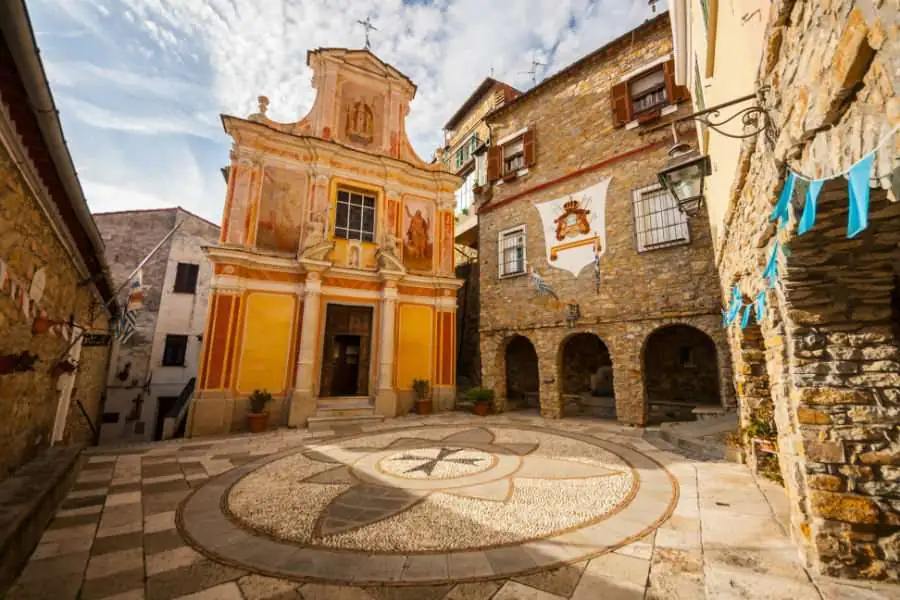
On Piazza San Martino, this is the former residence of the monks and home of the 17th-century mint. The principality’s coat of arms is visible on the façade. It can be seen from outside.
The modern luigino has been minted since the late 1990s and is a collector’s item: in the shops of the old town you will find coins, stamps and plaques bearing the coat of arms. They are not legal tender, and everything in the village is paid for in euros.
Blue and white stripes with a crown: you will see it flying in the village alongside the Italian tricolour.
For the rest of your visit, from the churches and viewpoints to getting there by bus, read our guide to Seborga.
To get up to Seborga without a car, take bus line 10 from Bordighera station, about 25 minutes, weekdays only. More ideas in day trips from Bordighera.
Nearby
Riviera di Ponente › Riviera dei Fiori
The Principality village above Bordighera: Piazza San Martino, Palazzo dei Monaci, sentry boxes, mimosa and views over the Côte d'Azur.
Discover →