
Riviera di Ponente › Riviera delle Palme
Altare
The glass town of the Val Bormida: Glass Museum at Villa Rosa, furnace, churches and forts. 11 km from Savona.
Discover →
The Guild, Perotto, the SAV and the furnace: confirmed dates of Altare's glassmaking and how to see museum and furnace.
In Altare glass is not a souvenir: it is the history of the town. Glassmakers worked here for centuries under a Statute, took the craft to France and the rest of Italy, and in 1856 joined in a cooperative. This page lines up the dates that official sources confirm, says where they disagree, and explains how to see the museum and the furnace today.

The origins are not precisely documented. Tradition credits the Benedictine monks of Bergeggi, who in the 12th century also founded the new village; the Comune writes that they are «probably Benedictine». What is known is more concrete: glassmaking is documented without a break from the 12th to the 20th century, and the first glassmakers with names appear in 13th-century notarial deeds.
In the 14th century the work consolidates and the deeds show men from Genoa, Venice, Savona, Pisa and the valley villages. Medieval output included everyday glass «of every sort and kind», glass for pharmacies and hospitals, and objects of artistic value.
Anyone who wanted to work glass in Altare had to join the Guild. The Statute of the Art asked outsiders for 300 lire in Savona currency; the candidate stayed four years as a «tizzatore», the person who tends the fire, and another four as an apprentice before becoming a master. By the end of the 15th century about 200 master glassmakers belonged to it.
The date of the Statute is unclear: some texts say 1495, Italian Wikipedia reports new rules in 1512, and the Comune’s history page gives no year. We do not choose: we only say that it already existed at the end of the 15th century.
The glassmaking families followed the landing of raw material in the port of Savona and the shipping of finished goods to the peninsula, Tunisia, Spain and Provence; some steered the boats themselves. They opened furnaces in Italy, up to 52 glassworks in the 17th century, and in the early 1400s they were already looking in France for good wood and sand: France granted them tax privileges and their presence spread to Lyon, Nevers, Brittany and many other regions.
The best known is Bernardo Perotto, born in Altare on 26 June 1619. He obtained from the brother of Louis XIV the privilege of building a glassworks in Orléans, and on 25 September 1688 received royal letters patent from Louis XIV for casting crystal on tables. The method replaced blowing the sheet and allowed mirrors of more than a square metre; it remained the only industrial process until 1920.
In 1856 the furnaces merged into a single cooperative, the SAV. It was the only structural change in centuries of history, and the company grew fast. In the 20th century glass for chemistry was added, resistant to thermal shock, and in 1947 a group of glassmakers emigrated to Argentina, in the province of Santa Fe, where the craft is still alive.

The Museo dell’Arte Vetraria Altarese began as the SAV’s company museum and is at Villa Rosa, an Art Nouveau building of 1905–1906. The State bought the villa in 1992 and, after restoration, it became the museum’s home; until 2004 the museum had been housed temporarily in the oratory of San Sebastiano. The route runs from 1650 to today: everyday objects, glass for chemistry, moulds and tools, multimedia displays. Villa Rosa also has a specialist glass library.
In the garden is a demonstration furnace for blown glass, lit often during the year. The museum website also lists Tickets, Guided visits and Workshops: prices and the 2026 calendar are not published on the main page, so for a workshop or guided visit write to info@museodelvetro.org or call 019 584734 ⚠️.
Hours: closed on Mondays. In October 2026 the museum’s website shows Tuesday to Saturday, 14:00 to 18:00, winter hours; the Ministry of Culture listings say Tuesday to Sunday 14:00–18:00. The Ministry gives tickets as 7 € full and 5 € reduced (listing updated May 2026).
For glassmakers the work in the furnaces began at Saint Martin’s. In the rite of the Messa del Fuoco the priest, with two altar boys dressed as angels and two blessed candles, followed by the consuls and the masters, went to the furnaces to light the melting fire. The first job, a blow by the Maestro di Piazza, was a large flask that the owner filled with wine and offered with riso in cagnone: the rite is called «Bagnare la Piazza».
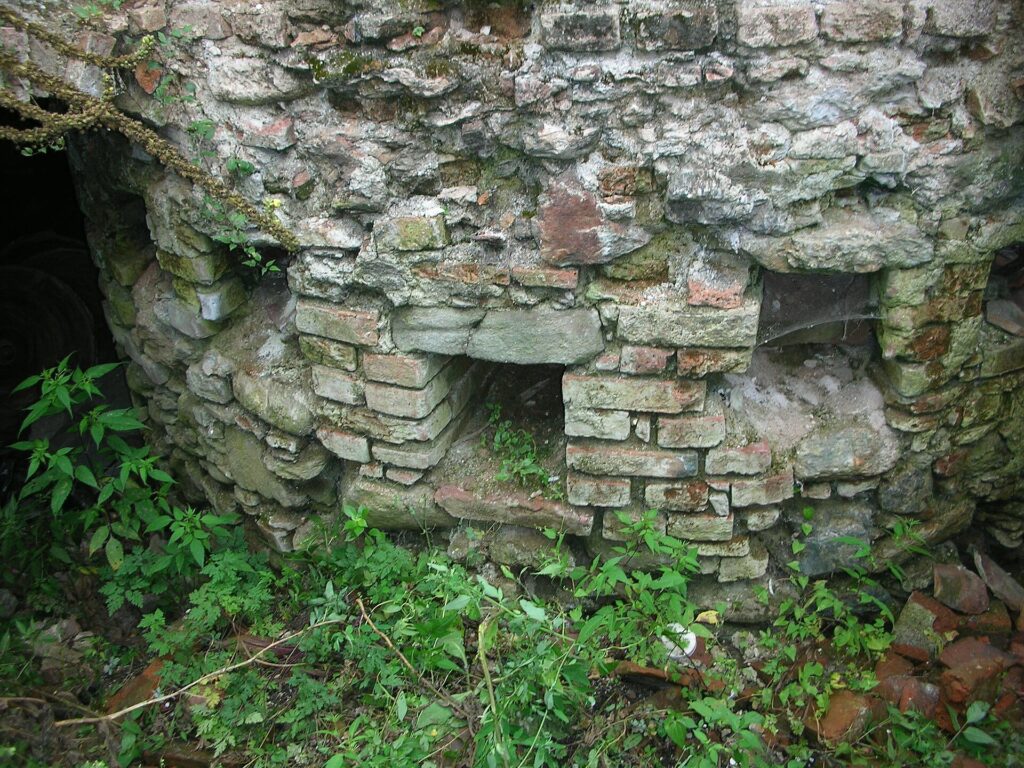
Today the museum recalls it in mid-November, with the furnace lit in the garden and a commemorative object. For 2026 the museum’s website shows Sunday 15 November: demonstration 14:00 to 18:00, presentation of the object at 15:00, and the Fiera di San Martino in the town’s streets all day ⚠️. Altare also keeps the Racchetti furnace, from the 17th–18th century, the oldest physical trace of glassmaking in the area.
The museum opens in the afternoon: a simple day is a walk round the centre of Altare in the morning, the museum from 14:00 and, if there is a demonstration, the furnace in the garden. In summer check the programme of the Altare Glass Fest, usually between July and early August ⚠️.
Nearby
Riviera di Ponente › Riviera delle Palme
The glass town of the Val Bormida: Glass Museum at Villa Rosa, furnace, churches and forts. 11 km from Savona.
Discover →Guide
The weather in Altare today, tomorrow and for the next 10 days: hourly forecast, wind, rain and the climate month…
Discover →