Riviera di Ponente › Riviera dei Fiori
Taggia
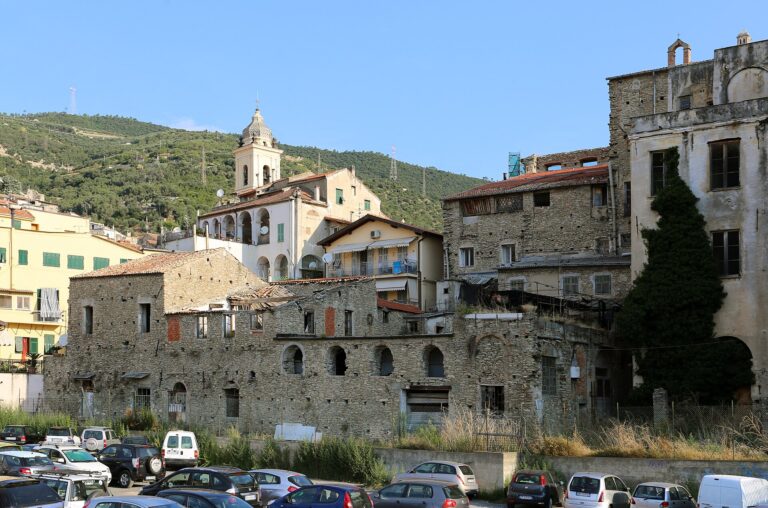
Medieval hill town in the Argentina valley, 3 km from the sea: bridge, via Soleri, San Domenico convent, castle, olive…
Discover →
Cloister, Brea polyptychs and an altarpiece attributed to Parmigianino: what to see in Taggia's convent and why to phone for the hours.
The San Domenico convent is the main reason to go up to Taggia: a fifteenth-century cloister, a church with polyptychs of the Ligurian-Nice school and a picture gallery with an altarpiece attributed to Parmigianino. Here is what to look at, in which order, and how to cope with the contradictory information about opening hours.
The convent was founded in 1460 by the Dominican Blessed Cristoforo da Milano, and building went on until 1490. In 1564 it was attacked by pirates. It was closed between 1866 and 1926, then returned to the friars, who left in 2008: since then it has been entrusted to the Diocese of Ventimiglia–Sanremo. Today volunteers also help keep it alive, as with the free visit on 8 August 2026, the feast of Saint Dominic, organised with the support of the municipality and FAI Imperia.
This is the first space you meet: a fifteenth-century cloister with black stone columns. Stop here for a few minutes before entering the church, because it is the quietest place in Taggia.
The church keeps works dated from 1472 to 1710. They are mostly polyptychs of the 1400s and early 1500s: five in all, plus a fresco, attributed to Ludovico Brea (about 1450–1523), the Nice-born painter who worked for a long time in Liguria. The best known is the Misericordia polyptych on the high altar. Taggia is also credited with a polyptych of 1472 attributed to Giovanni Canavesio, but the source is secondary.
A note on attributions: dates and authors of some works are debated by art historians. One fresco is dated 1482 and some see Canavesio, others Francesco da Pavia or Francesco Brea; Brea’s Asdente polyptych is dated between 1484 and 1490, or to 1494. That is why we write “attributed to” when sources disagree.
The gallery occupies the former dormitory. The most famous work is the Adoration of the Magi of 1528-29, an altarpiece attributed to Parmigianino; some guides call it “Adoration of the Shepherds”, so the title changes from source to source. The painting was stolen in 1994 and recovered in 2003. The rooms also hold works by Assereto, Malosso, Turchi, De Ferrari and Ponsonelli.
A simple order: enter by the cloister to understand how the friars lived, move on to the church and look first at the high altar, where the Misericordia polyptych stands. Finish with the gallery, which needs more attention because the paintings come from different periods, from the 1400s to the 1700s. If you have only a few minutes, go straight to Brea’s polyptych and the Parmigianino: those two works alone justify the climb. Bring a light jacket even in summer, because the stone rooms are cool, and remember it is a place of worship: modest clothing and quiet.
Hours are the weak point. The sources we found say four different things: Tuesday to Sunday mornings and afternoons, Monday to Friday all day, Saturday and Sunday closed. Some listings are stuck in 2020. For this reason we quote none: check the hours by phoning the convent on +39 0184 477278 before you leave. The published e-mail address also varies between sources. Entry, according to the Touring Club, is by donation.
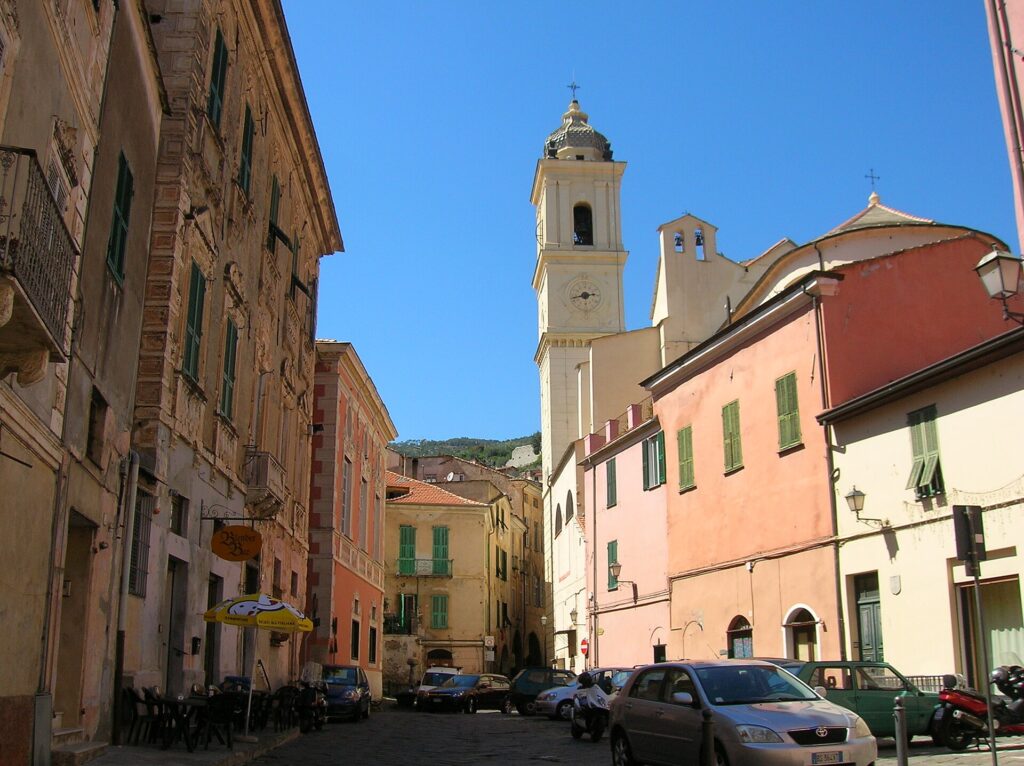
Take your time: from the bus terminus you walk through the old town, and the guide to Taggia has a walking route that includes the convent. Afterwards you can head down to Arma di Taggia for the sea, or continue by bus to Badalucco and Triora.
Nearby
Riviera di Ponente › Riviera dei Fiori
Medieval hill town in the Argentina valley, 3 km from the sea: bridge, via Soleri, San Domenico convent, castle, olive…
Discover →Guide
The weather in Taggia today, tomorrow and for the next 10 days: hourly forecast, wind, rain, the climate month by…
Discover →