Cogoleto between Arenzano and Varazze: gravel beaches, Columbus's house, De André seafront, botanical garden, the Beigua from Sciarborasca, trains and parking.
Il lungomare e la spiaggia di Cogoleto
Area
Riviera di PonenteProvince of Genoa
Ideal for
Familiescyclists and anyone after a quiet sea near Genoa and the Beigua
Beaches
About 3 km of gravel and stones with some sandbathing establishments and free stretches; no Blue Flag 2026
Best time to go
June–September for the seacycle path and Beigua in spring and autumn
By train
Cogoleto station (Genoa–Ventimiglia line), regional trains, a few steps from the seacheck RFI works
By car
A10, Arenzano exitabout 2 km) or Varazze (about 4 km), then the Via Aurelia
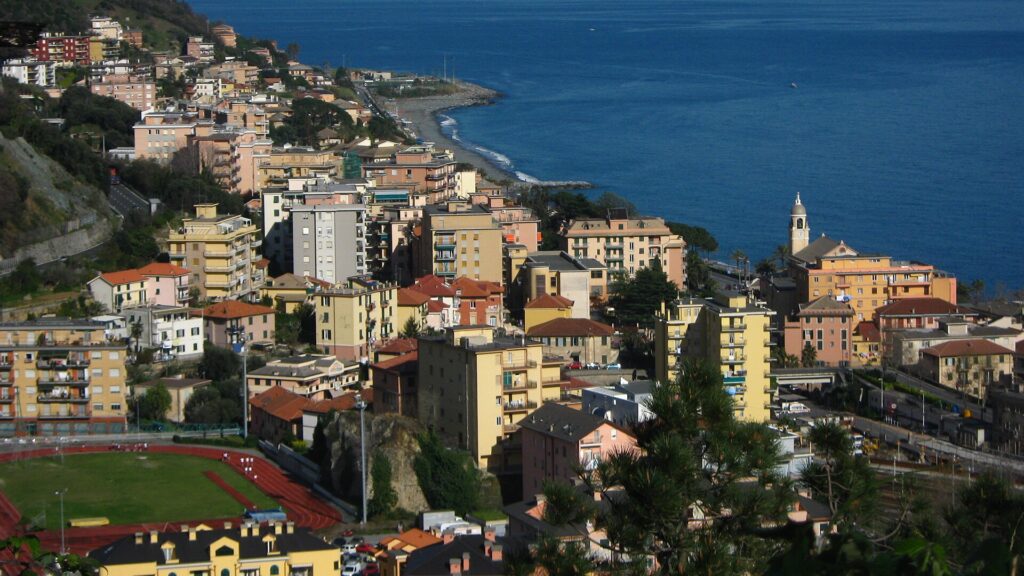
Cogoleto is a town of about 8,200 people on the Riviera di Ponente, the last municipality in the province of Genoa before Varazze and the Savona coast. It sits between Arenzano and Varazze, with the sea in front and the hills of the Beigua Regional Park behind. The old centre is a grid of lanes running down to the beach, the train station is a few steps from the water, and the seafront is part of one of the most used cycle and walking paths in Liguria.
People come to Cogoleto for three reasons. The first is the sea: about 3 kilometres of coast with gravel and pebble beaches, bathing establishments and free stretches. The second is Christopher Columbus: the town claims he was born here, and on via Rati it shows the house that local tradition attributes to him. The third is the location: from here you can go on foot, by bike or by train to Genoa, along the Savona coast or up into the Beigua trails.
It is not a postcard village and it has no big museums. It does have a history of lime, kilns and industry that you can still read in the landscape, and an environmental clean-up (the former Stoppani plant) that is worth knowing about if you come to swim. Here you will find what to see, the beaches with checked facts, how to get around and what to verify before you leave.
By Italian Riviera editorial team·Updated on ·11 min read
Where is Cogoleto?
Cogoleto is in Liguria (Riviera di Ponente, province of Genoa).
You can walk through the town in two or three hours. The natural route starts at the station, goes down to the sea, crosses the old centre and reaches the two main churches. The botanical garden and the Fornace Bianchi are a little outside and have limited opening, so plan those ahead.
The old centre and the "scali"
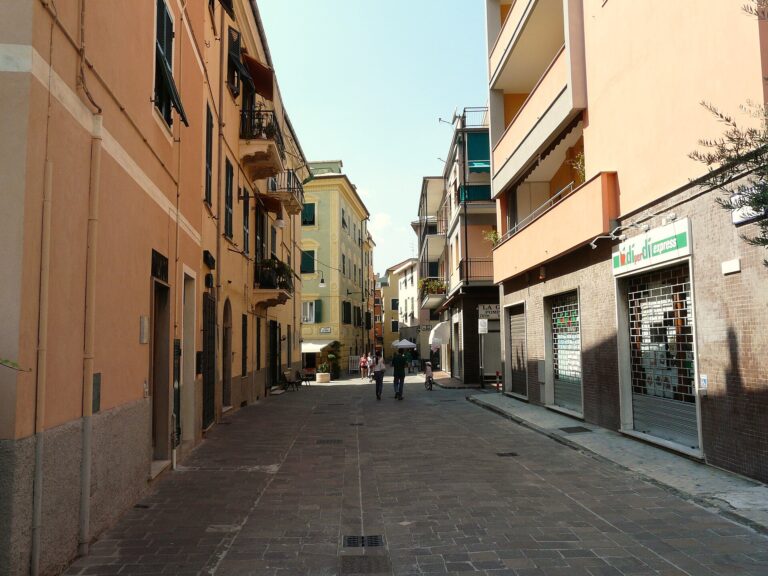
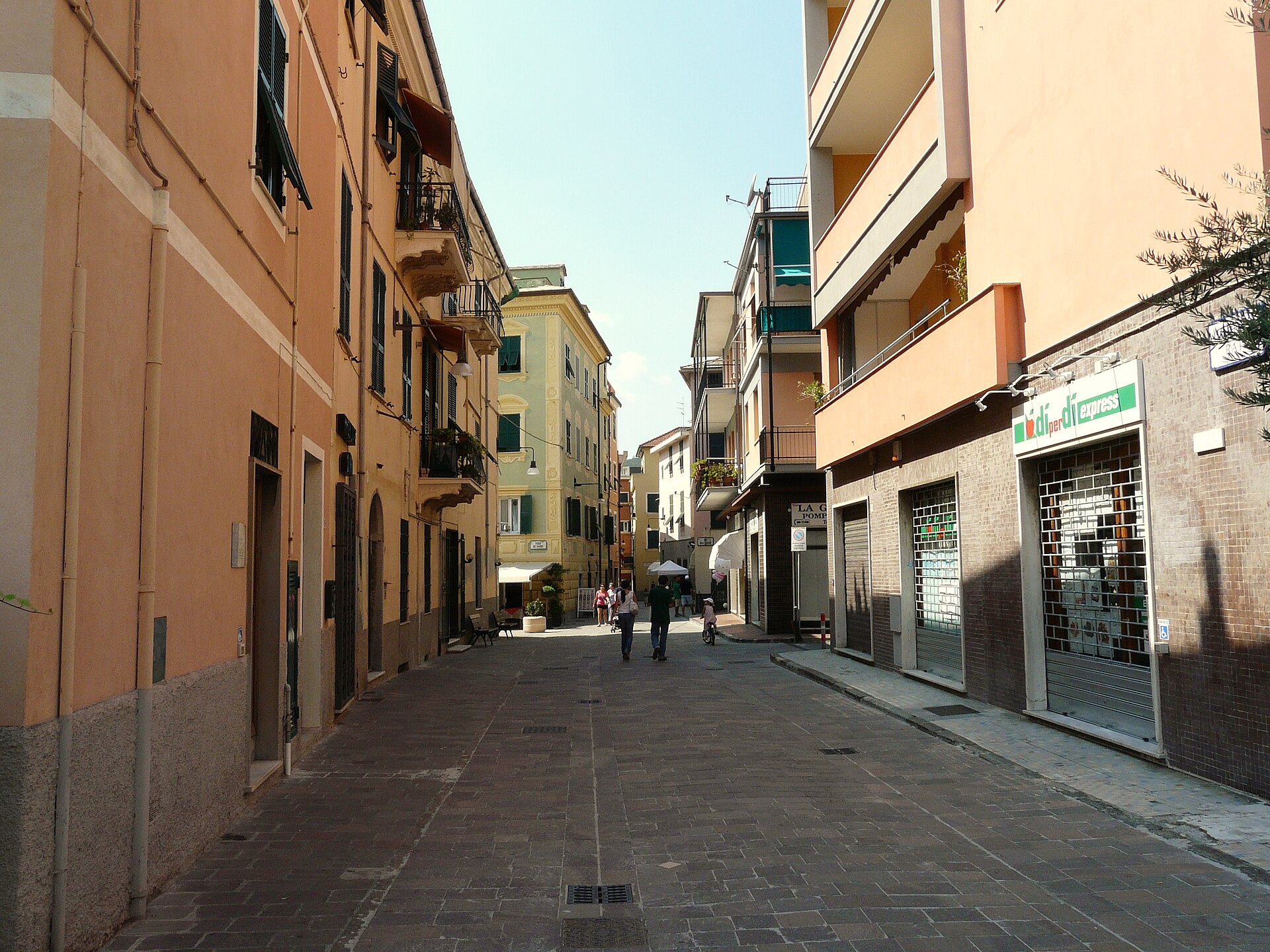
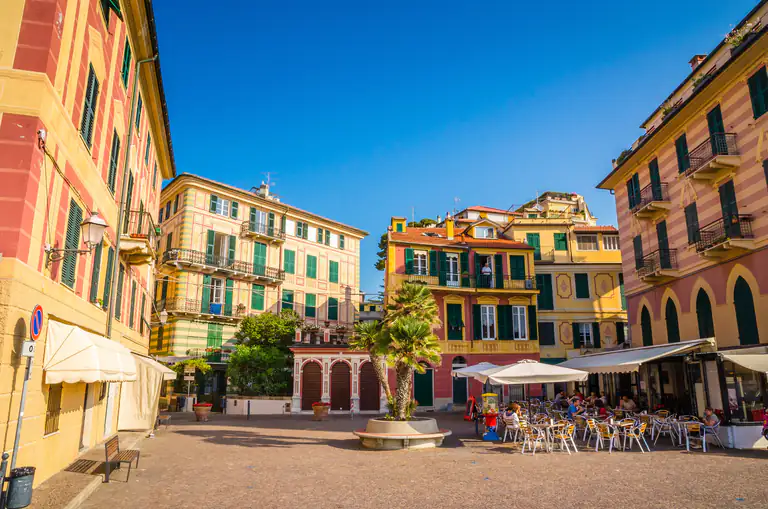
The lanes of the old centre run straight down to the sea. Here they are called “scali”, because they were used to launch and haul out boats. A simple route starts at via Rati, passes the Town Hall and reaches the church of Santa Maria Maggiore, with a detour along the seafront.
Columbus's house and the monument in piazza Giusti
The house that tradition names as Columbus’s home is on via Rati. You can only see it from outside: the facade has decorations, an effigy and several plaques, and the decoration dates from 1650. You cannot go in, and the municipality presents it as an exterior visit. In piazza Giusti stands the monument to Columbus, unveiled on 26 August 1888. In the church of Santa Maria Maggiore, an altar dedicated to St John the Baptist is known as the Colombo family altar.
One useful clarification: Cogoleto’s claim is a local tradition. The prevailing historical view is that Columbus was born in Genoa in 1451, and Columbus himself says in his will that he was Genoese. Cogoleto relies on a 1582 document, an inheritance case naming a Bernardo Colombo of Cogoleto. Read the house as a piece of the town’s memory, not as a fact: saying “Columbus was born here” goes further than we know.
Church of Santa Maria Maggiore
The parish church, in piazza della Chiesa, is first mentioned in 1308. The old church was consecrated on 11 April 1554; it was demolished in 1877-78 and rebuilt to a design by Maurizio Dufour. Inside are a canvas of the death of St Joseph, a Crucifixion and frescoes by Raffaele Albertella. The wooden statue of the Virgin can only be seen in September, for the feast of the Nativity of Mary. Entry is free and the church is accessible; opening times are on request, so ask the municipality (town hall website). An inscription on the seaward facade recalls the castle destroyed in 1809.
Church of San Sebastiano
On via Luigi Parenti, the sixteenth-century rural chapel was built, tradition says, to thank the saint for protecting the town from a serious epidemic. In 1835 it served as a lazaretto during the cholera in Genoa. The present building was rebuilt by the parish priest Edoardo Del Buono: first stone in 1912, consecration in 1915, with frescoes by Ettore Mazzini. Entry is free here too and opening times are on request.
Oratory of San Lorenzo
The old oratory, probably thirteenth century, is tied to the town’s patron saint. You see it mostly during the feast on 10 August, when documents on the history of Cogoleto are displayed.
The lime trail
In 2004 local ceramicists created a trail of 15 stops in the old centre about the history of lime, the industry that shaped the town. It is a simple way to piece together kilns, transport and work as you walk, without a guide.
Fornace Bianchi
On via della Fornace, in the Donegaro area near the station, stands a nineteenth-century lime kiln that worked until the 1950s. It was restored between 2008 and 2011 and since 2013 it has been the “Tiziano Mannoni” industrial archaeology area, run by the Associazione Fornace Bianchi Cogoleto. It has no fixed hours: you visit by booking and during events, such as the European Heritage Days. Write or call the association before you go.
Villa Beuca botanical garden
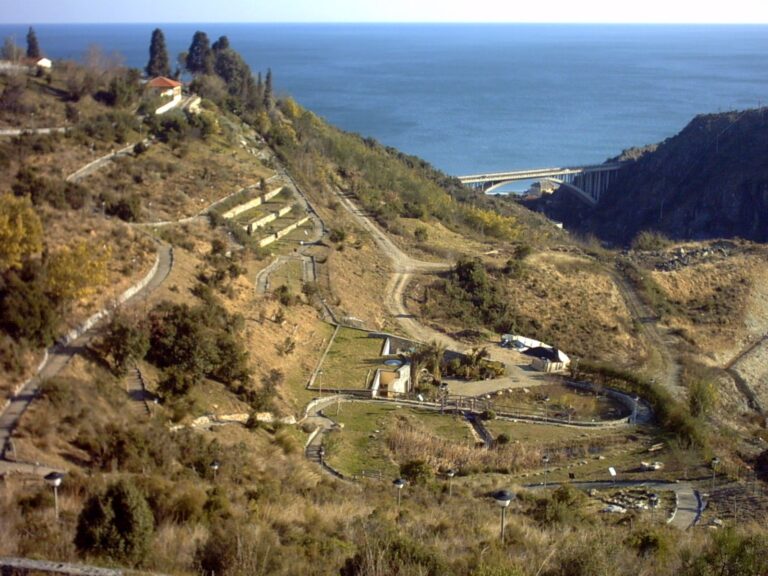
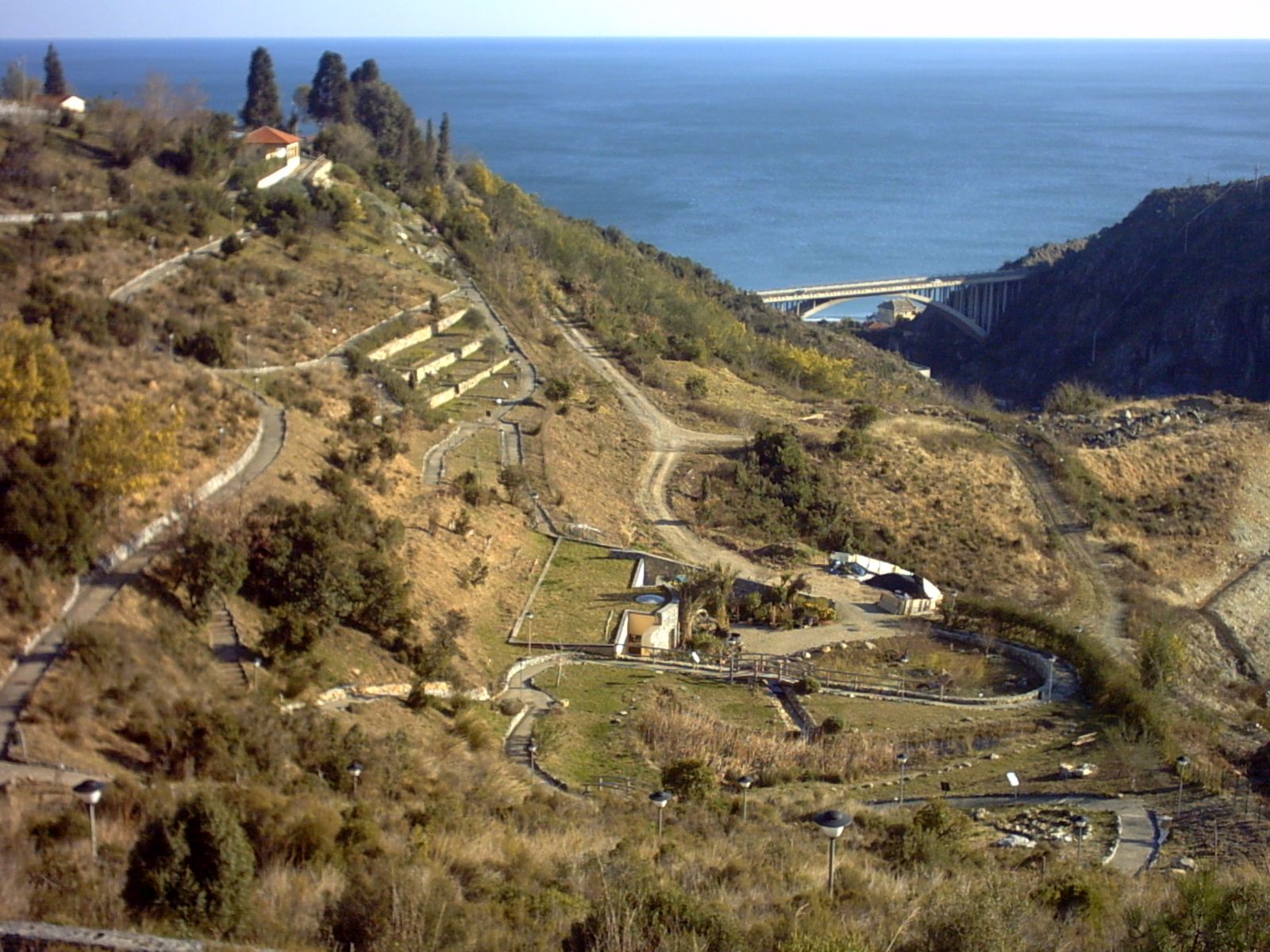
On the hill of Beuca, about 100 metres above the sea, a botanical garden of about 34,000 square metres holds Mediterranean and local plants, some of them at risk, with an educational trail and two ponds with water birds. It opened in 2002 and is run by the municipality. The flora of the sea cliff flowers in March and spring is the best season. The address is via Frankenberger 31, in the former Dutch Village. It opens on fixed days and time slots that change with the season, and the latest information is undated: write to info@ortobotanicocogoleto.it or call the municipality (+39 010 91701) before you go up. Basic information is on the Metropolitan City page.
The towers and the vanished castle
A few old towers remain in the area. The oldest, the Torre Genovese and the Torre Isolata, date from the eleventh century; the Torre del Parasco is eighteenth century. The castle, built for Berengar II, was demolished in 1809 to open the Nice-Rome road. If you walk along the sea, look for these shapes above the houses.
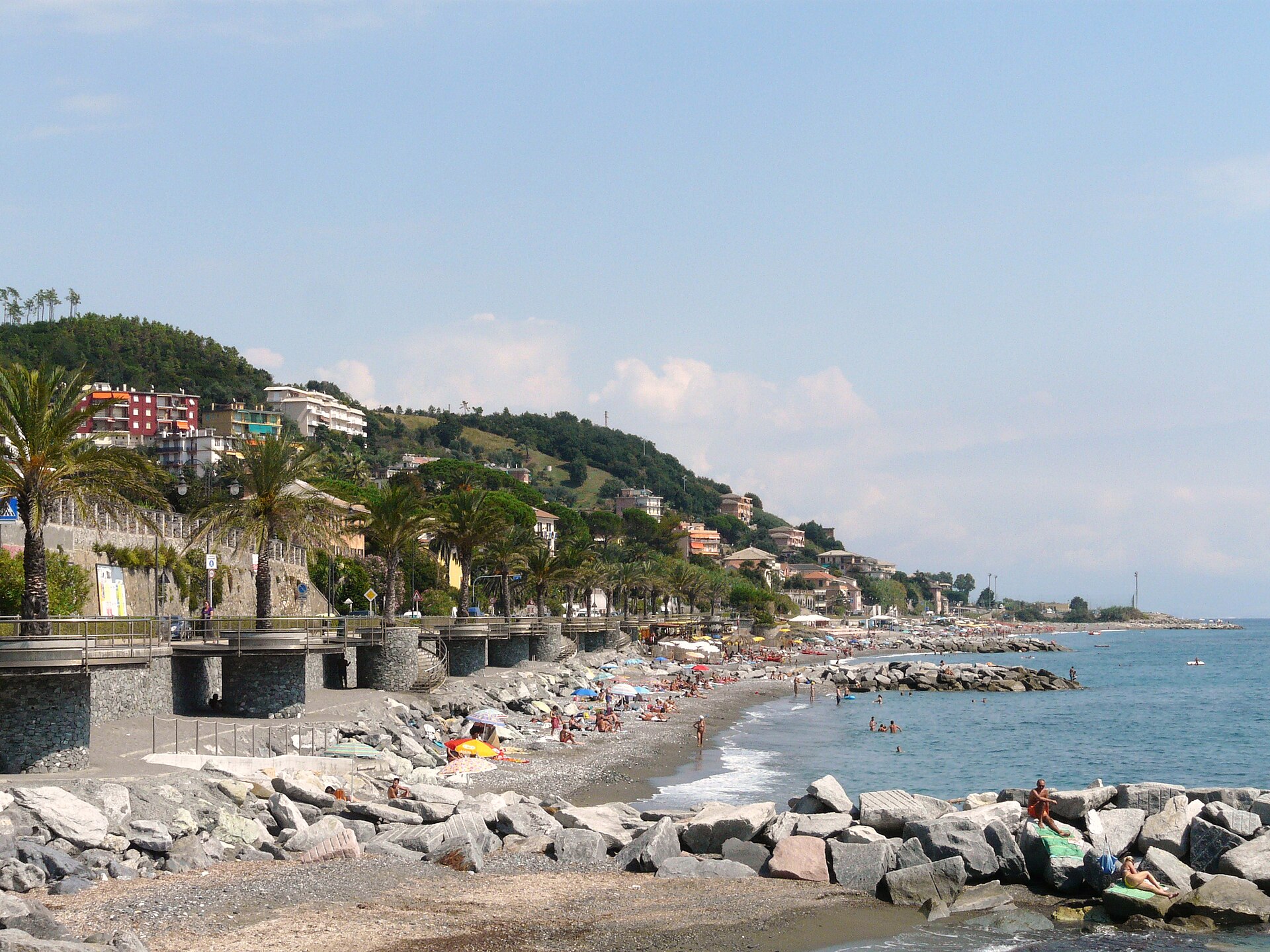
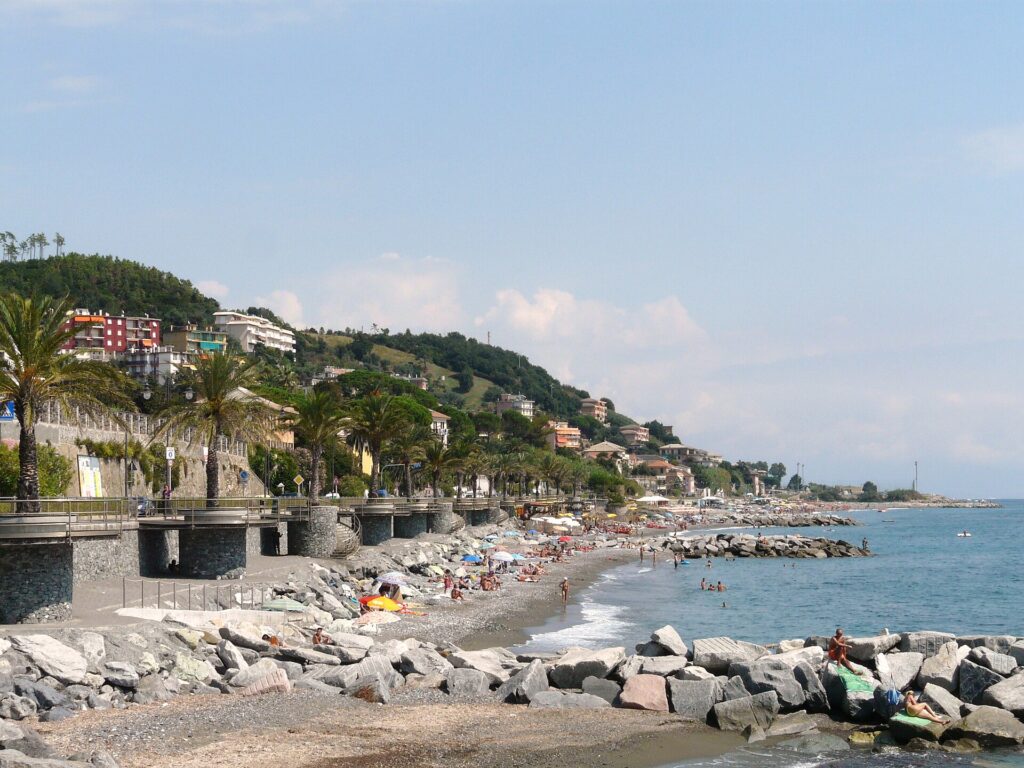
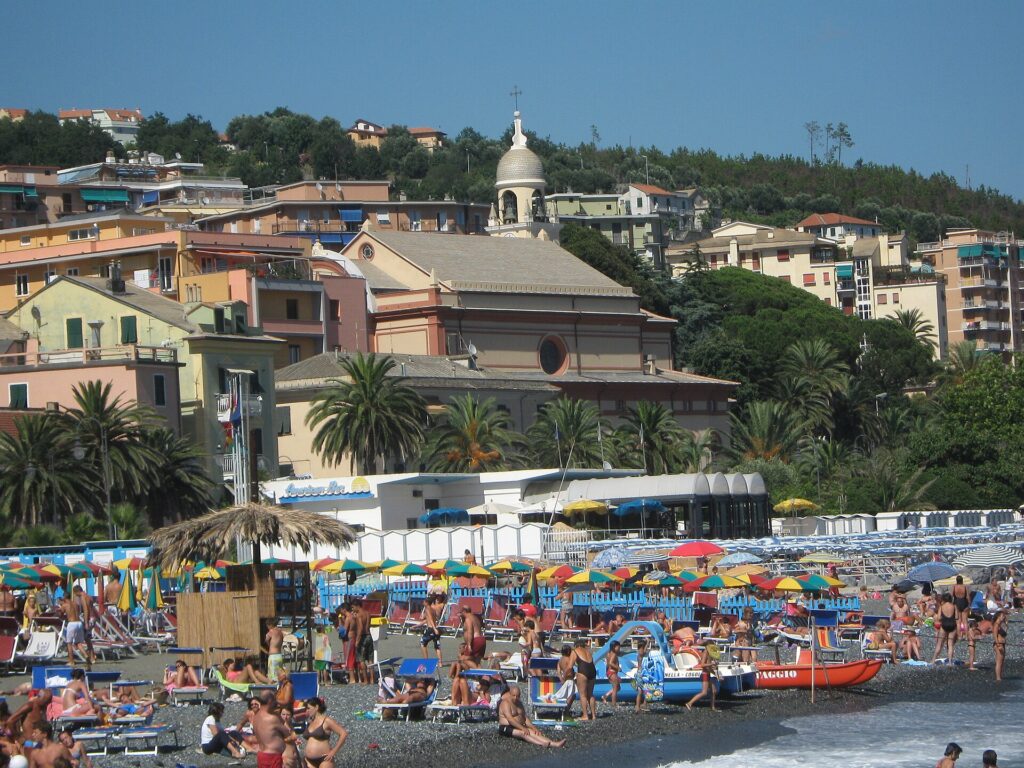
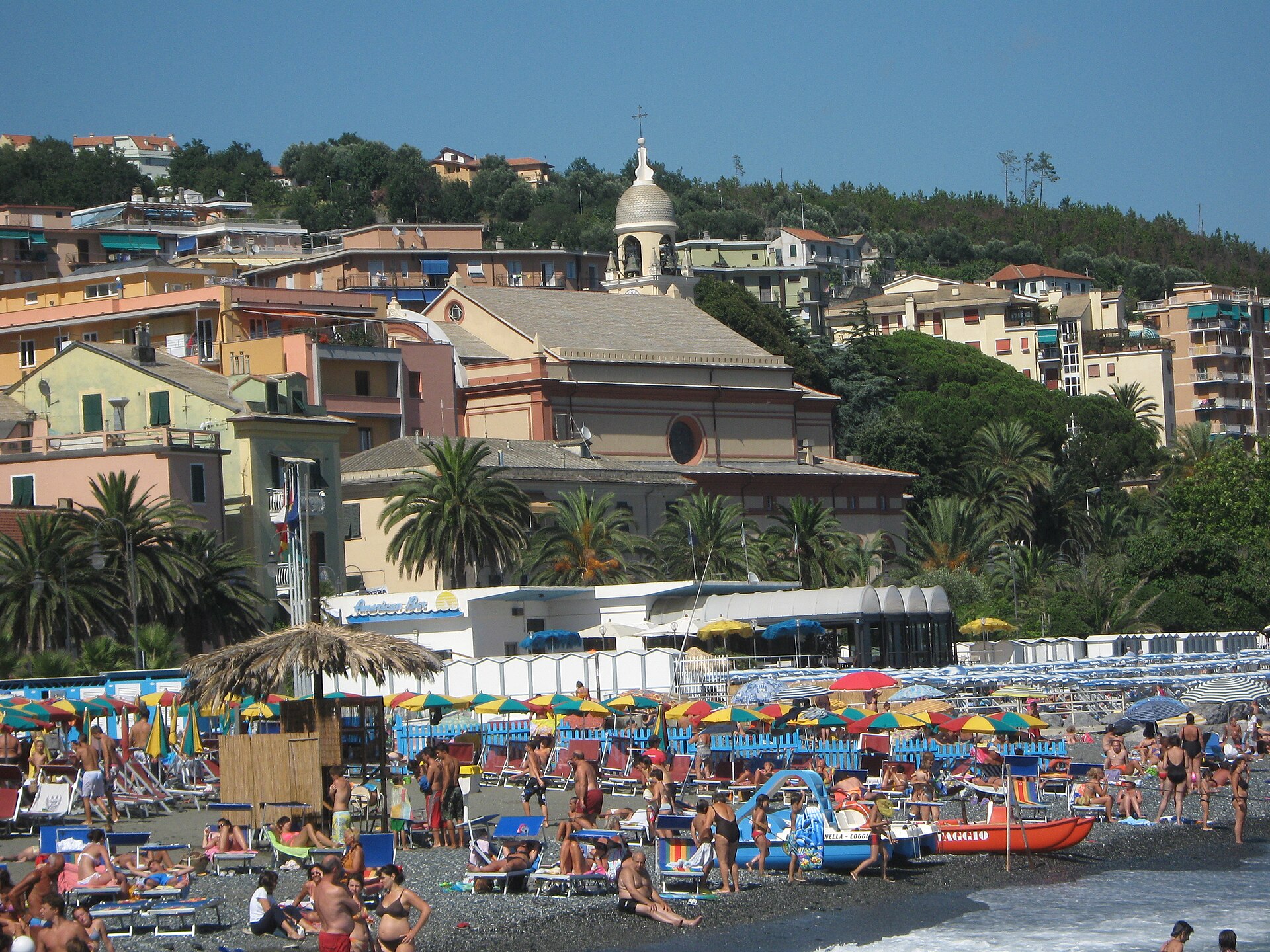
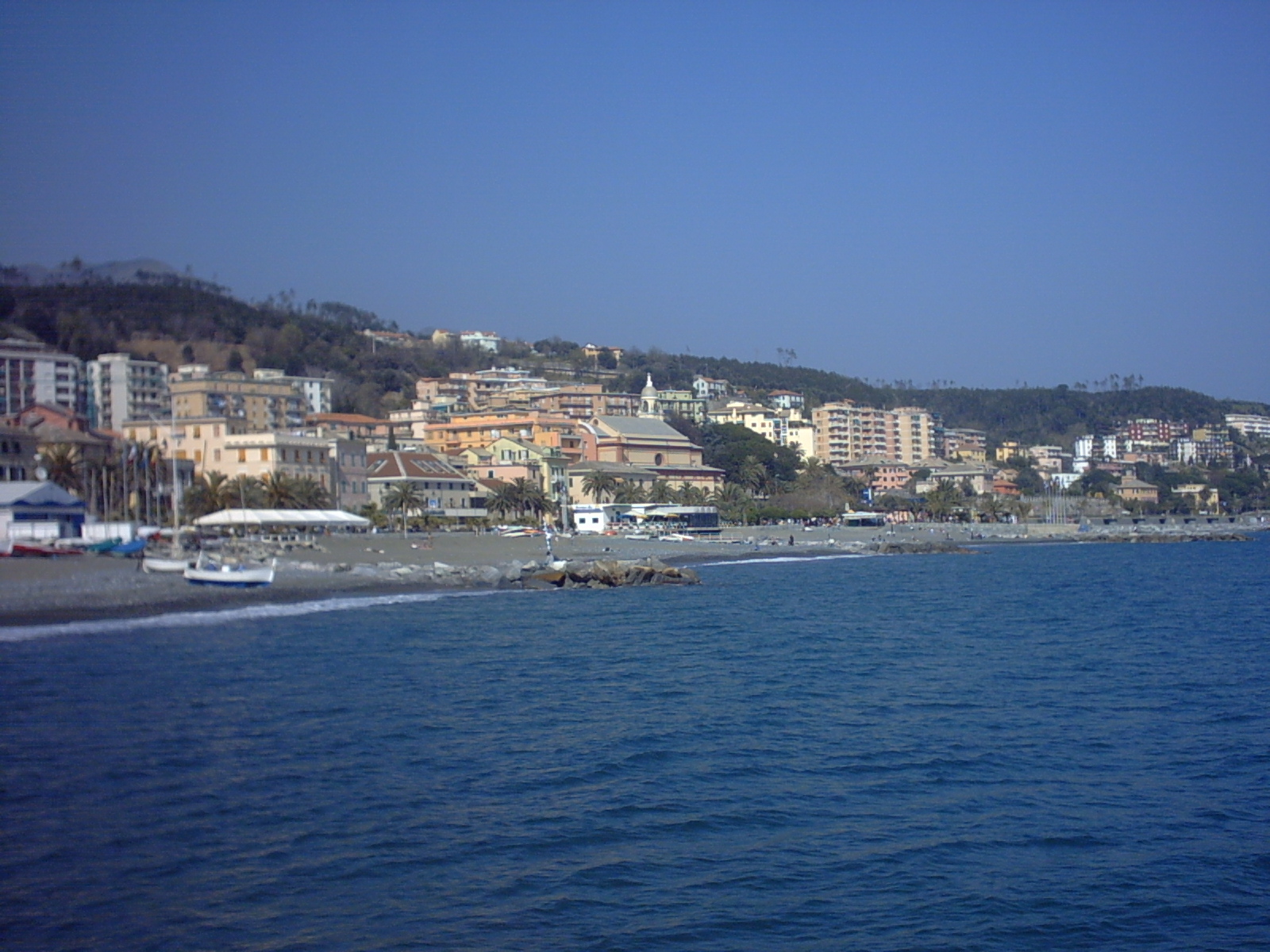
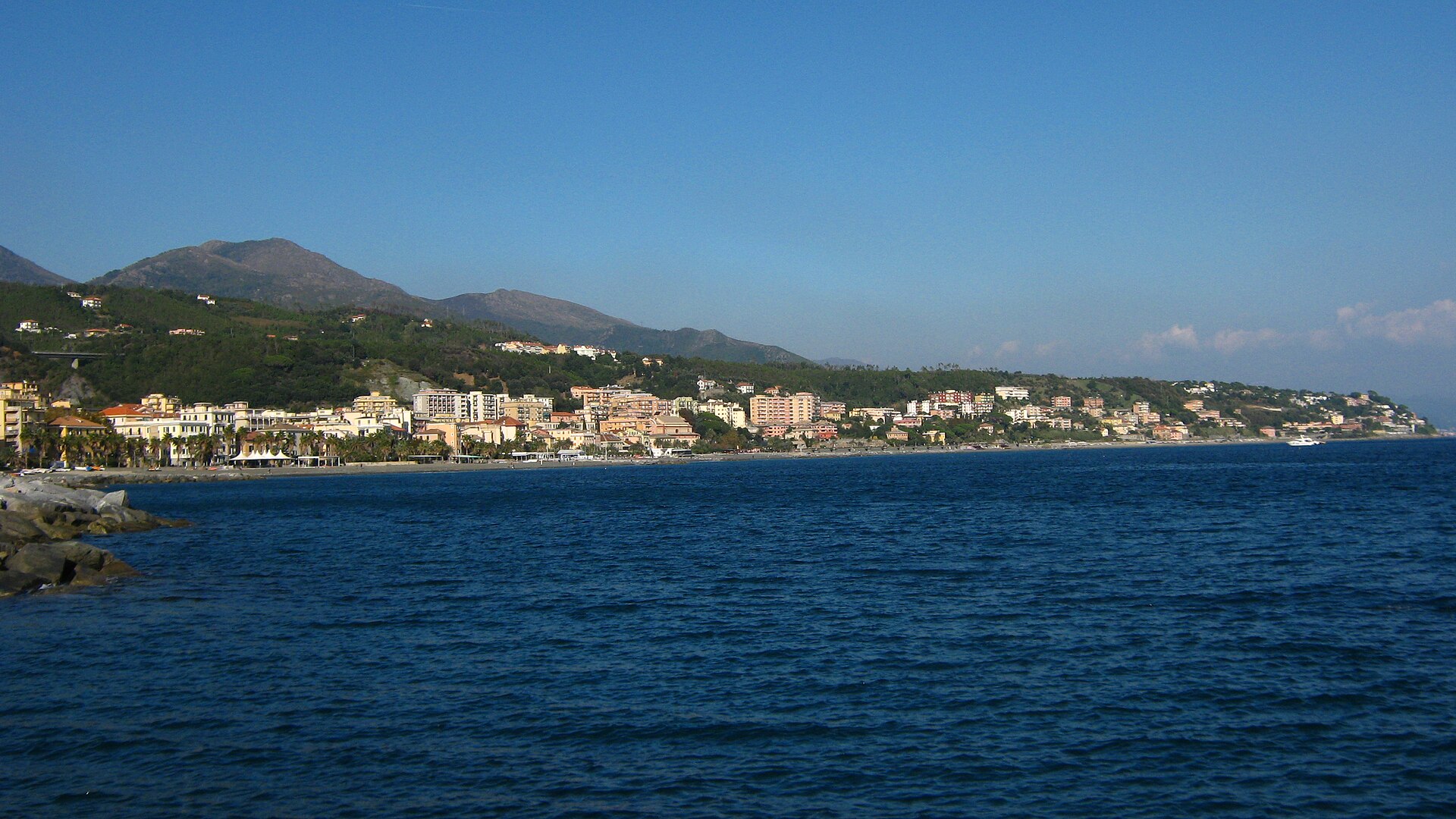
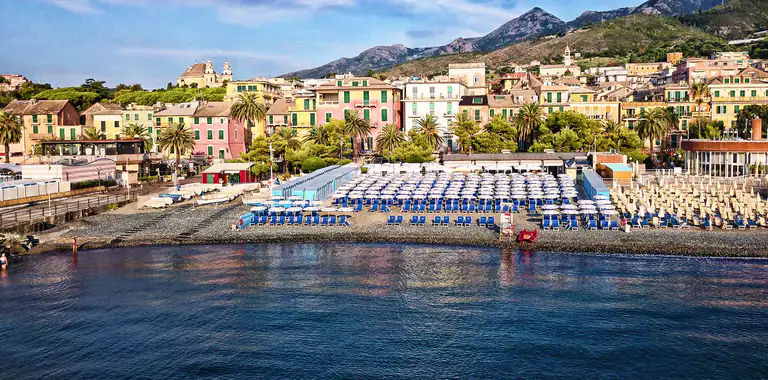
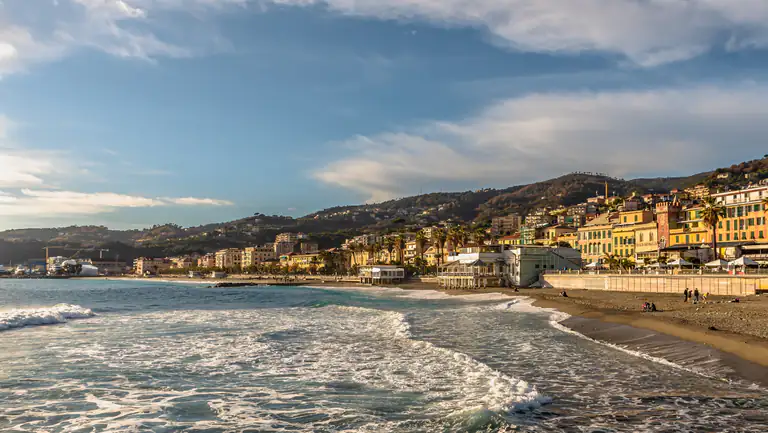
The coast of Cogoleto has about 3 kilometres of beach. The bed is made of stones, gravel and grey-white pebbles, with stretches of fine sand. There are bathing establishments and free stretches, especially near the centre.
Two things to know. First: in 2026 Cogoleto does not have the Blue Flag (nor does Arenzano). Varazze, to the west, does. Second is the former Stoppani chemical plant, closed in 2003: the clean-up has treated much of the beaches of Cogoleto and Arenzano, but a short stretch next to the Lerone is still excluded and off limits. We explain it calmly, together with the free stretches and a comparison with the neighbouring towns, in the guide to the beaches of Cogoleto. Before you go, always read the bathing bulletin from Arpal.
Where to stay
Where to stay in Cogoleto
The offer is mostly apartments and holiday homes, with a few hotels and some B&Bs and farm stays. The area matters more than the name of the property.
Centre and seafront: near the station, the beaches and the cycle path; everything on foot. The best choice if you arrive by train or come for the sea.
Lerone area, towards Arenzano: handy for the motorway exits and Arenzano, but close to the former Stoppani site.
Beuca and Lerca, on the hill: quieter and with views, with a car; from Lerca you reach the golf course.
Sciarborasca: useful if you want an early start for the Beigua.
For more choice of hotels and services also consider Arenzano and Varazze, a few minutes away.
Take the A10 Genoa-Ventimiglia. The nearest exits are Arenzano, about 2 kilometres from the centre, if you come from the east, and Varazze, about 4 kilometres, if you come from the west. Then follow the Via Aurelia (SS1), which runs through the town.
By train
Cogoleto station is on the Genoa-Ventimiglia line, a few steps from the sea and the centre; regional trains stop here. From Genoa it takes about 40-50 minutes. Between September and October 2026 RFI has scheduled maintenance on the line, with some trains cancelled between Cogoleto and Savona and replacement buses: check the notices from RFI and Trenitalia before you leave.
By bus
The area is served by ATP Esercizio (Genoa) and TPL Linea (Savona), with a local line between Varazze and Arenzano. Times and fares are not confirmed: check the companies’ websites.
By air
The nearest airport is Genoa Cristoforo Colombo, about 25-30 kilometres away. Nice is about 170 kilometres away.
Parking
The municipality does not publish a page on parking, so there are no confirmed fares or spaces. Near the sea, in summer, there are blue-line paid spaces; in the inner streets, paid parking. Read the signs and, if you can, arrive by train: the station is a few steps from the beach.
A10, Arenzano exit (about 2 km) or Varazze (about 4 km), then the Via Aurelia
By train
Cogoleto station (Genoa–Ventimiglia line), regional trains, a few steps from the sea; check RFI works
By plane
Genoa (about 25–30 km); Nice about 170 km
The guide
De André seafront and the cycle path
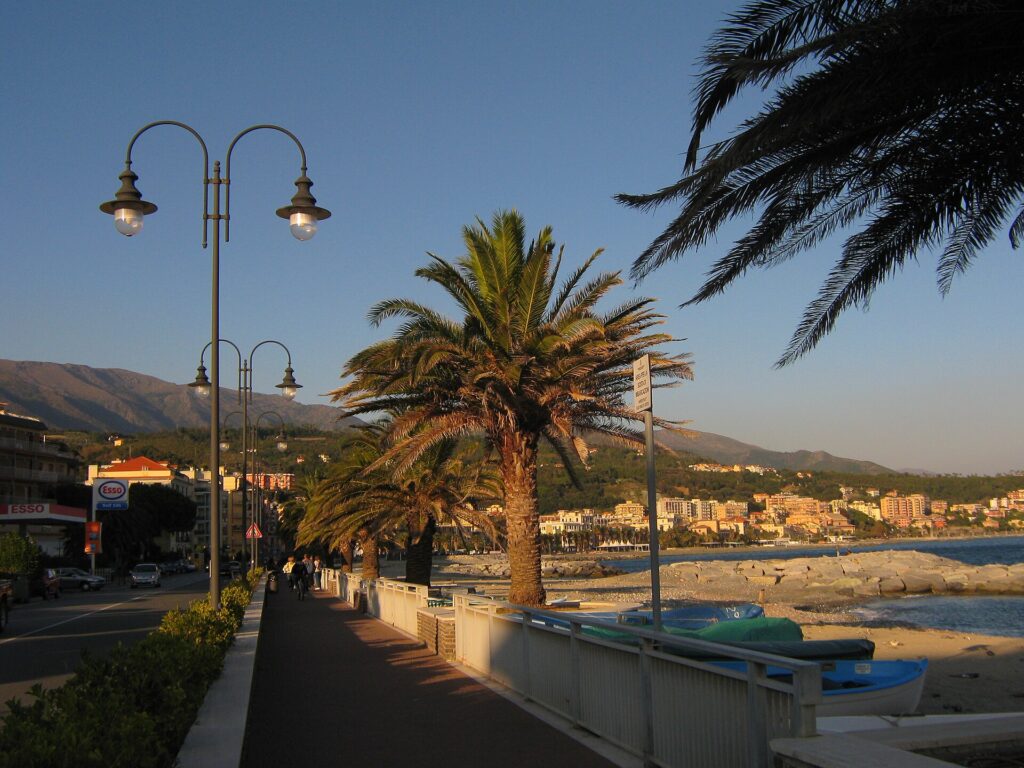
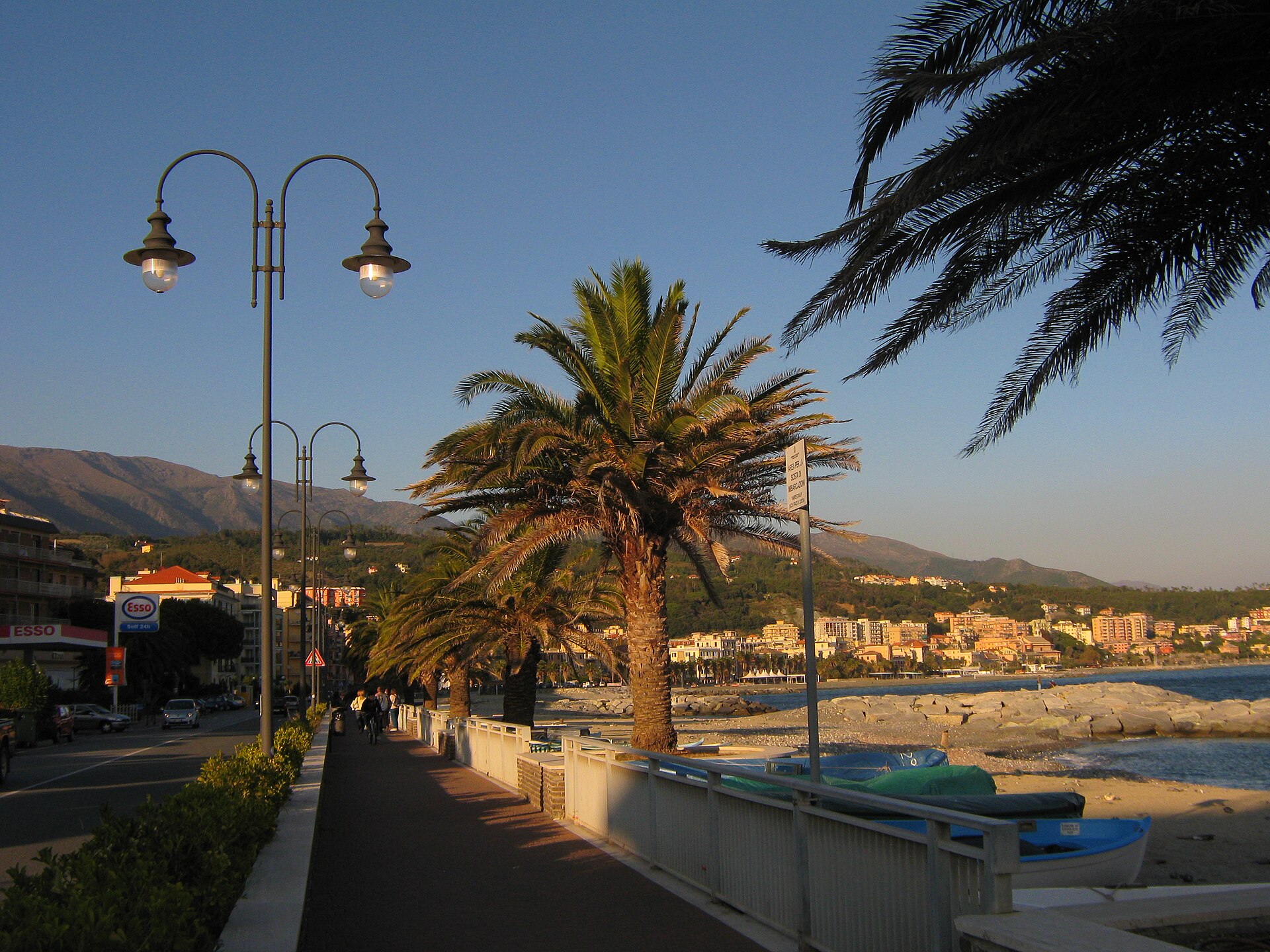
The seafront of Cogoleto is named after Fabrizio De André. It opened on 15 April 2006 on the line of the old Genoa-Ventimiglia railway, closed at the end of the 1960s. From here you can walk or cycle in two directions.
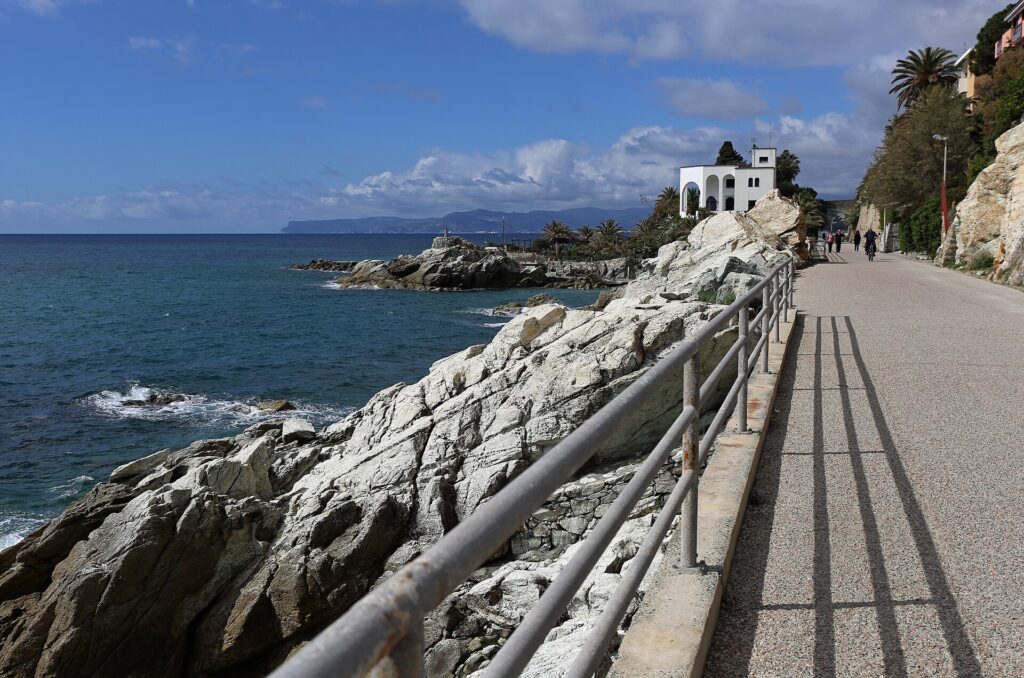
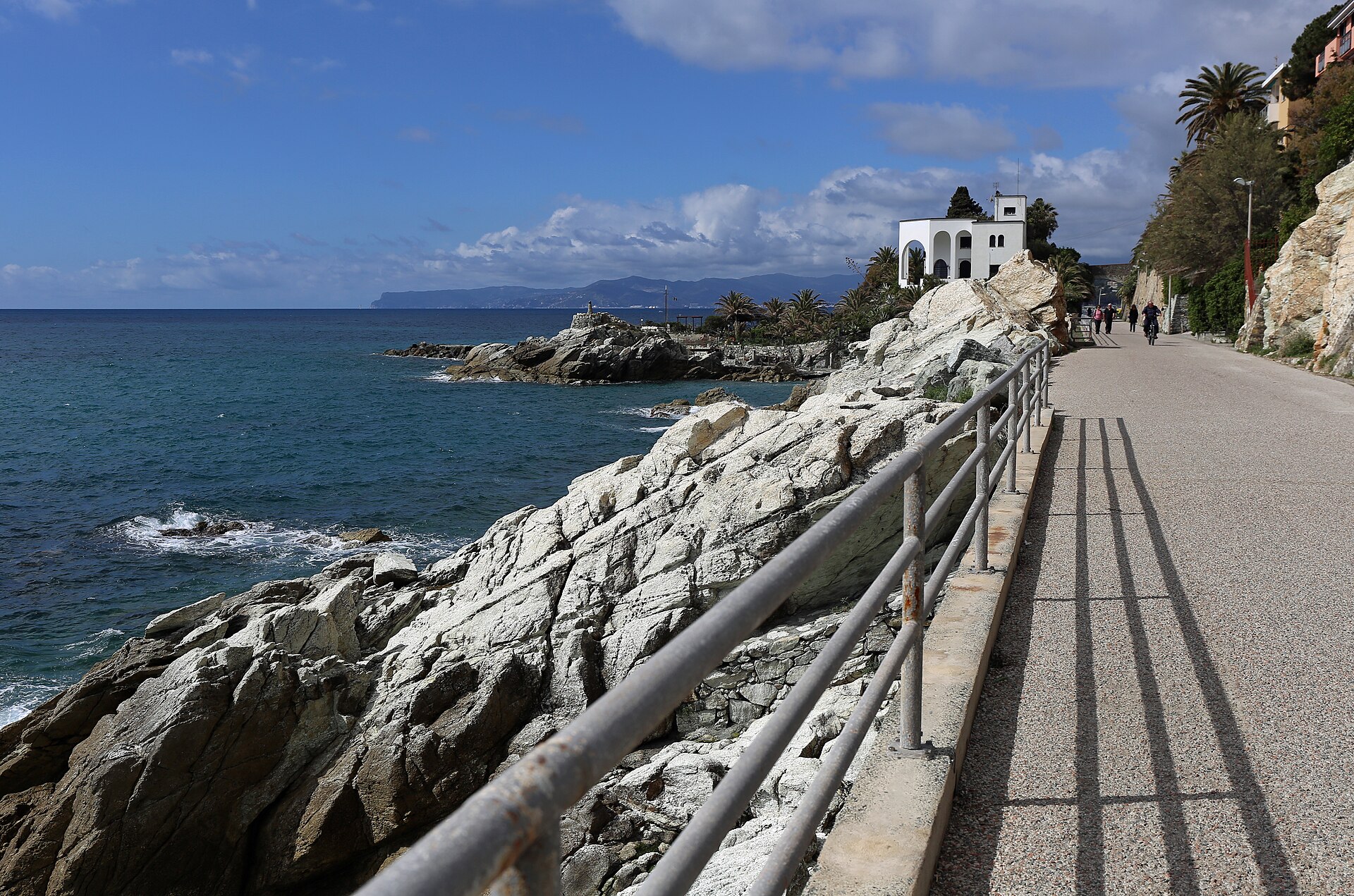
Towards Arenzano: about 4-5 kilometres to the little harbour, along the coast with coves among the rocks, benches and drinking fountains.
Towards Varazze: about 4-5 kilometres along the Europa promenade, with former railway tunnels to walk through with a light.
Arenzano-Varazze: about 11 kilometres, almost flat and paved, nearly two hours by bike, with the train for the way back.
In Cogoleto the seafront is narrow and shared with pedestrians; in summer you may be asked to walk your bike on some stretches, so read the signs. After the flood of October 2024 the bridge over the Arenon, on the Varazze side, was damaged and the stretch reopened temporarily on 28 June 2025: check for closures or diversions before you set out. The safest bike rental is in Arenzano, at the little harbour; for Cogoleto we have no confirmation.
The Beigua from Sciarborasca
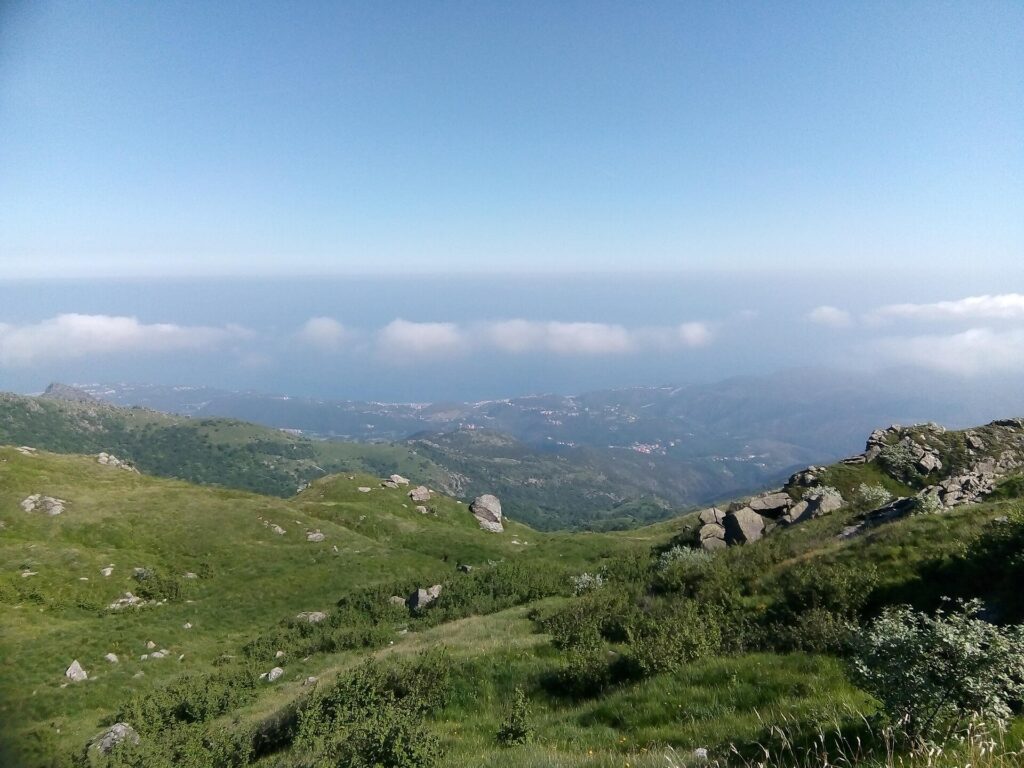
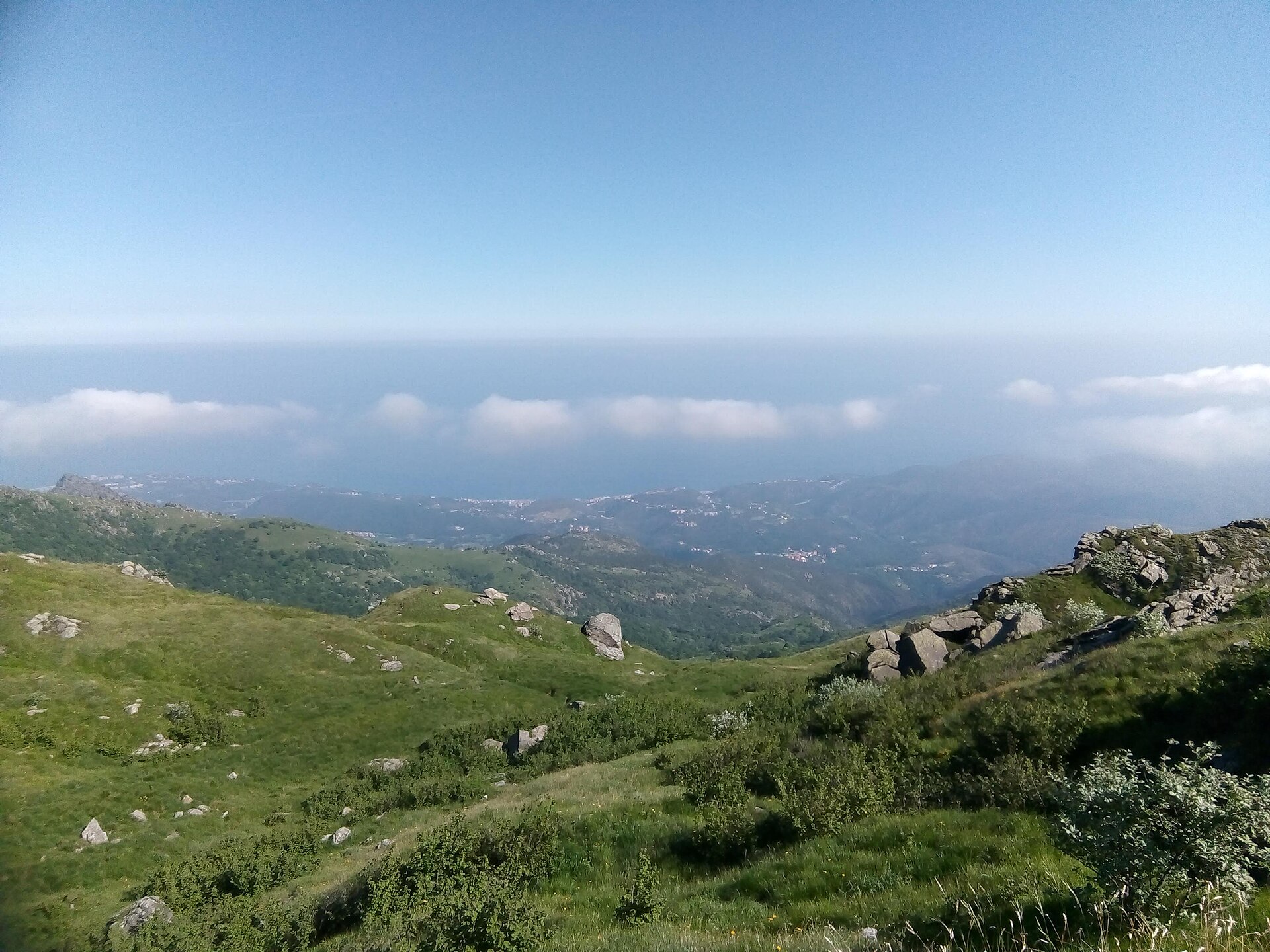
The municipal territory lies inside the Beigua Regional Park, established in 1995, and in the Beigua Geopark, an UNESCO Global Geopark since 2015. The highest point of the municipality is the Rifugio Prato Rotondo, at 1,108 metres; the summit of the Beigua, 1,287 metres, is in Varazze. The natural starting point is Sciarborasca, one of the hamlets (the others are Lerca and Pratozanino).
Sciarborasca to Prato Rotondo: CAI trail 150C with a red square marker, about 11 kilometres and almost 900 metres of climb according to the tracks. Park in the village near the church; there is a spring after about an hour and a quarter. The last part meets the Alta Via dei Monti Liguri towards Pra Riondo.
Monte Reixa: a rounded grassy summit at 1,183 metres, where Genoa, Arenzano and the municipality of Sassello meet, reachable from Sciarborasca.
Easy loop: towards Lerca past the former Stoppani plant, the Ponte delle Ratte and Sciarborasca, about 8 kilometres.
The data come from tracks and reports by third parties, not from the Park: before you set out, check routes, closed trails and refuge opening on the Beigua Park website. Carry water and food, and expect fog and slippery ground. Nearby is also Forte Geremia, a late nineteenth-century military complex on the Bric Geremia: we have no confirmation of visits.
What to eat in Cogoleto
The cooking is the Ligurian cooking of every coastal town. Typical here is breakfast with focaccia and cappuccino, from one of the bakeries in the centre. In town you also find trattorias and butchers with a kitchen, where you may eat Genoese-style tripe and other home dishes. Beyond that, pesto, pansoti and pandolce are common to the whole region, not specialities of Cogoleto.
Festivals and events
The biggest festival is San Lorenzo, the town’s patron saint, on 10 August. In 2026 it ran from 1 to 10 August, with food stalls, focaccette in the oratory gardens, a concert by the “Città di Cogoleto” band on the 9th, solemn mass on the 10th at 18:00, the evening procession with the “cristi”, a concert at the Molo Speca and fireworks over the sea if the weather allows. The 2027 programme is not yet known.
Other recurring events are the Spring Fair between April and May, the July festivals (Ecofesta and the Croce d’Oro festival in Sciarborasca), the feast of the Nativity of Mary in September, when the wooden statue in Santa Maria Maggiore is displayed, and the Autumn Fair in Sciarborasca in October. Dates and times change from year to year: ask the municipality.
Day trips from Cogoleto
Arenzano: little harbour, centre and the seafront on foot or by bike.
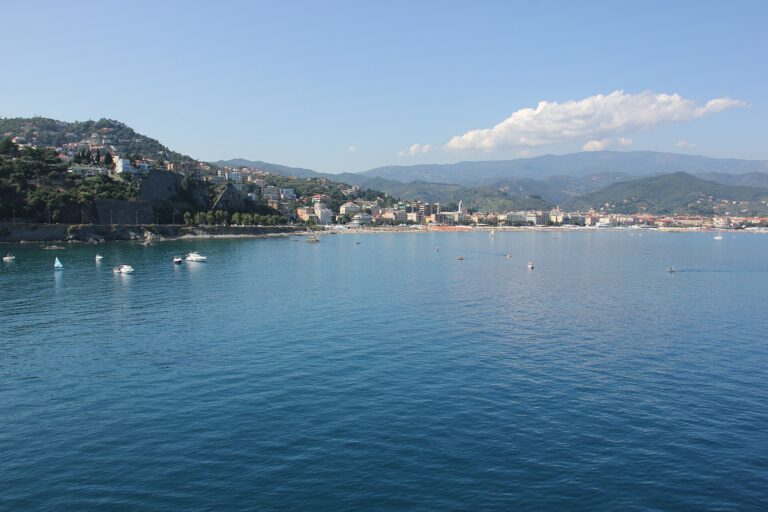
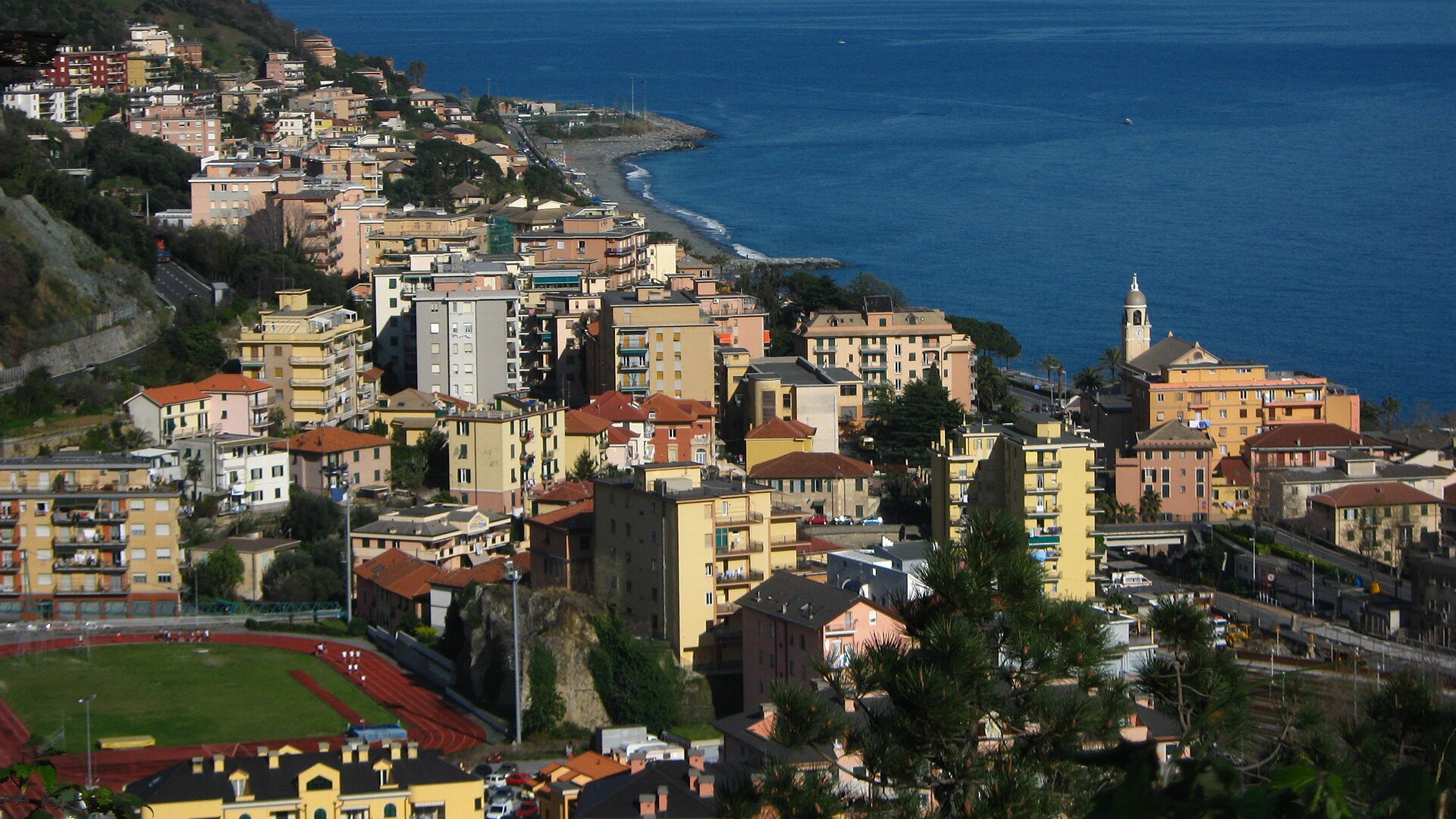
Il lungomare e la spiaggia di CogoletoLa passeggiata sul mare di Cogoleto tra le palmeIl lungomare di Cogoleto sugli scogliLa spiaggia di Cogoleto con la chiesa sullo sfondoCogoleto vista dal mareLa costa di Cogoleto vista dal mareUna via del centro storico di Cogoleto
FAQ
Frequently asked questions about Cogoleto
What to see in Cogoleto in a few hours?
The old centre with its scali, Columbus’s house on via Rati (from outside), Santa Maria Maggiore and the De André seafront. With more time, the Villa Beuca botanical garden.
Was Columbus born in Cogoleto?
According to local tradition yes, but the prevailing historical view is that he was born in Genoa in 1451. Cogoleto keeps the house on via Rati, visible only from outside.
Can you visit Columbus's house?
No, you can only see it from the outside. The municipality presents it as an exterior visit.
Are the beaches of Cogoleto sandy?
Mostly stones, gravel and pebbles, with stretches of fine sand. There are bathing establishments and free stretches.
Does Cogoleto have the Blue Flag?
No, it is not on the 2026 list. Varazze, the neighbouring town to the west, has it.
Can you swim in Cogoleto after the Stoppani affair?
The clean-up has treated most of the beaches, but a short stretch near the Lerone remains excluded. Before you go, check the bathing bulletin from Arpal.
How do you get from Cogoleto to Arenzano on foot or by bike?
By the De André seafront, about 4-5 kilometres, almost flat. The Arenzano-Varazze stretch is about 11 kilometres long.
Is there a train to Cogoleto?
Yes, the station is on the Genoa-Ventimiglia line, a few steps from the sea. Check the RFI works in October 2026.
Where do you park in Cogoleto?
Near the sea and in the inner streets there is paid parking, especially in summer. Fares and spaces are not confirmed: read the signs.
Can you hike up the Beigua from Cogoleto?
Yes, the trail to the Rifugio Prato Rotondo starts at Sciarborasca, about 11 kilometres and almost 900 metres of climb. Check the route and opening on the Park website.
Better to stay in Cogoleto or Arenzano?
Cogoleto if you want to be near the station, sea and cycle path; Arenzano if you want more hotels and services. They are a few kilometres apart.