Sandy beach with free stretches, pier and seafront walk to Borghetto, the 1564 bastion and the 1637 pirate raid, Peagna, Le Caravelle and how to get there.
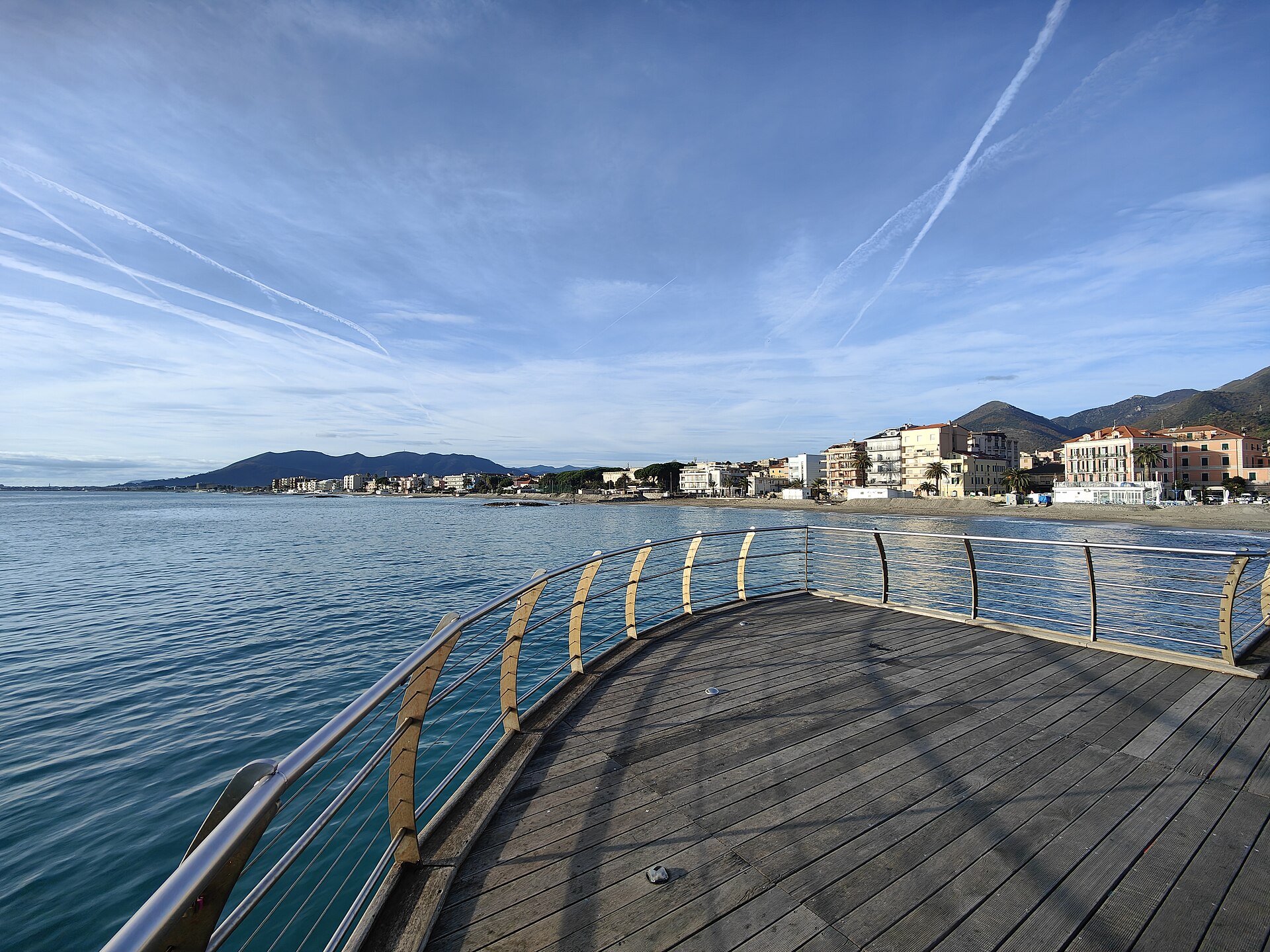
La passerella sul mare di Ceriale
Area
Riviera delle PalmeRiviera di Ponente · Province of Savona
Ideal for
Families with childrencamping holidays, base for Albenga and the Toirano Caves
Beaches
Sandy beach with 9 beach clubs and 6 free beaches (2 equipped)rocks towards Borghetto
Best time to go
June and September for the beachLe Caravelle open from early June to early September
By train
Ceriale stationGenoa–Ventimiglia line), a few minutes' walk from the seafront
By car
A10: Borghetto S. Spirito exit from Genoa, Albenga exit from Imperia and FranceVia Aurelia SS1
Airport
Genoa (about 80 km)Nice about 120 km
How long to stay
Two days for the town and Peagnaa week for a beach holiday
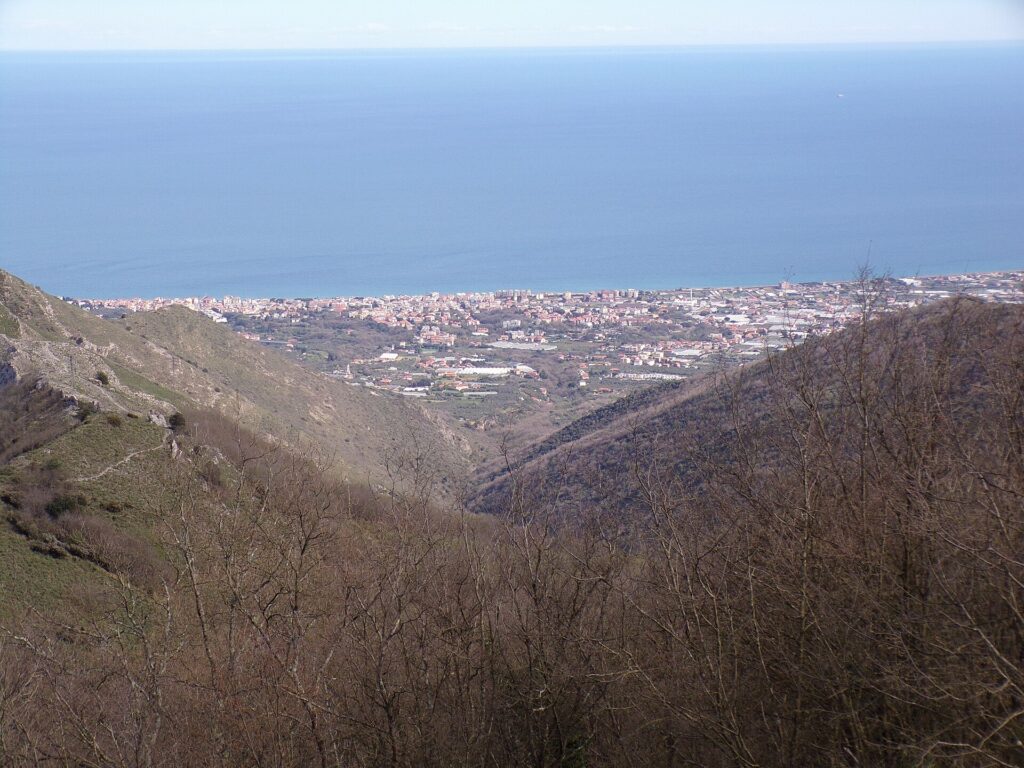
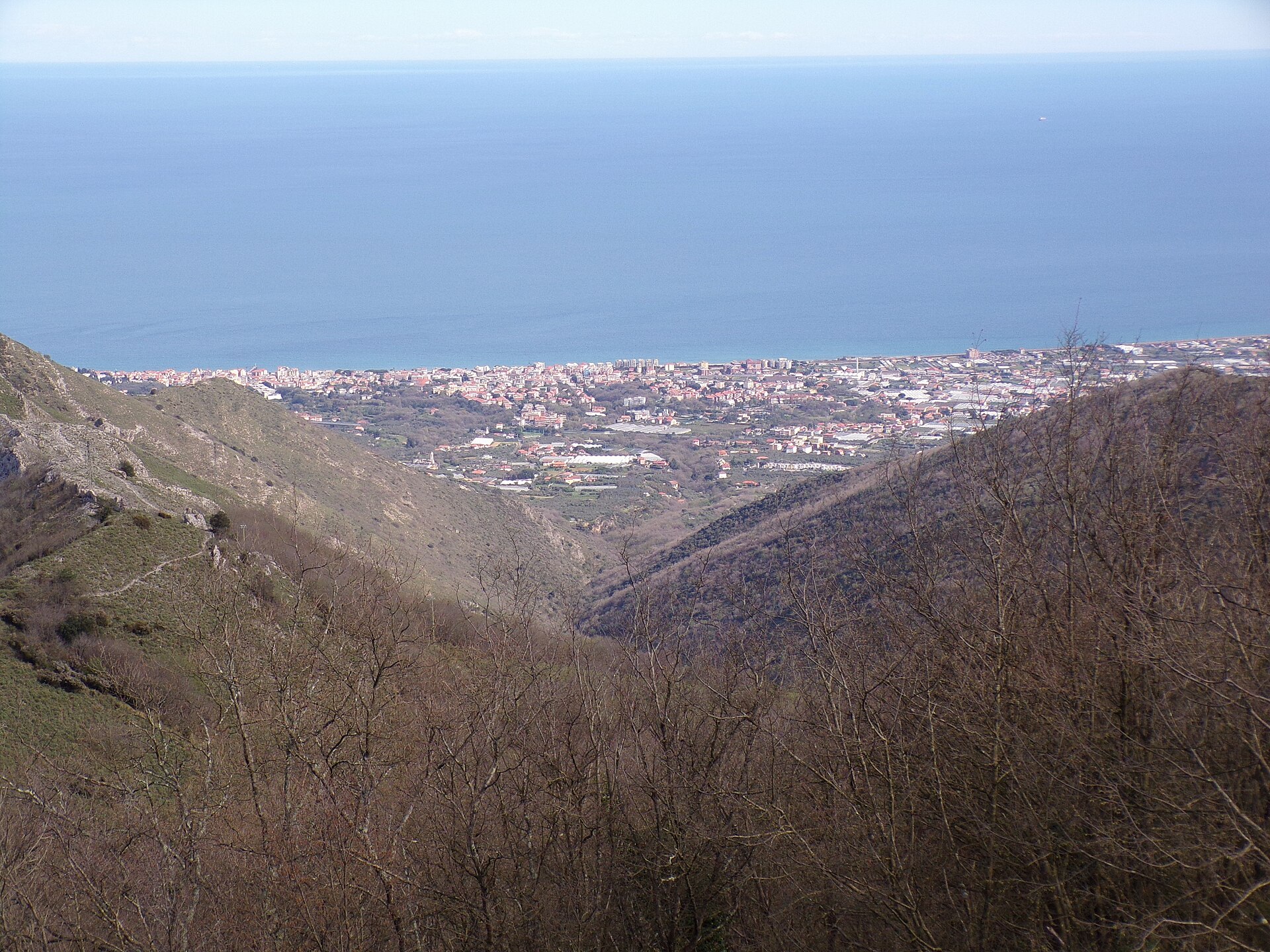
Ceriale is a seaside town on the Riviera delle Palme, in the province of Savona, between Borghetto Santo Spirito and Albenga. It has about 5,400 residents, a few kilometres of sandy beach with beach clubs and free stretches, a seafront promenade with a long pier, and a small old town that still keeps the bastion built against the pirates. Behind it lies the Albenga plain, with its greenhouses and market gardens; up in the hills is its only village, Peagna.
It is a place for simple beach holidays, popular with families and campers: the beach is easy, the Le Caravelle water park is in town, the station is a short walk from the seafront and, according to the town’s tourist website, municipal car parks are free. It is not a postcard village: the seafront is mostly apartment blocks, and the railway still runs between the town and the beach. But the history is real and dramatic: in 1637 Barbary corsairs landed at night and carried off about three hundred inhabitants.
From here you reach Albenga, Loano and the Toirano Caves in a few minutes. Two days are enough for the town and Peagna; a week if you come for the beach and want to explore the Riviera delle Palme. Genoa is about 75 km away; the Cinque Terre and Portofino are much further east, more than two hours by car or train.
By Italian Riviera editorial team·Updated on ·11 min read
Where is Ceriale?
Ceriale is in Liguria (Riviera di Ponente, Riviera delle Palme, province of Savona).
Ceriale is easy to see on foot in half a day. The old town sits between the Via Aurelia and the sea, gathered around the parish church; the Lungomare Armando Diaz runs along the beach, with the railway alongside; Peagna and the Rio Torsero reserve are a few kilometres inland and best reached by car.
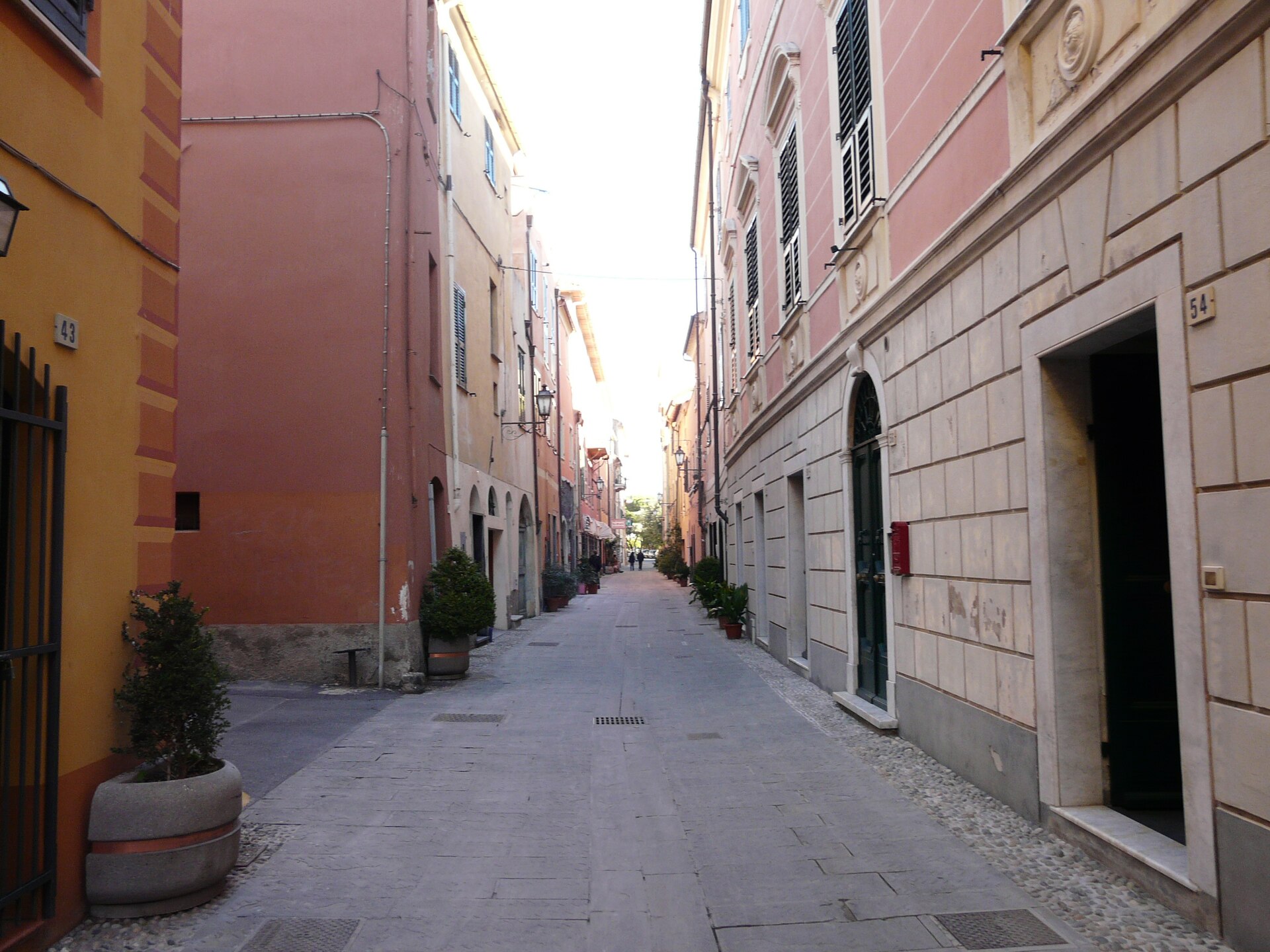
The old town and the caruggio
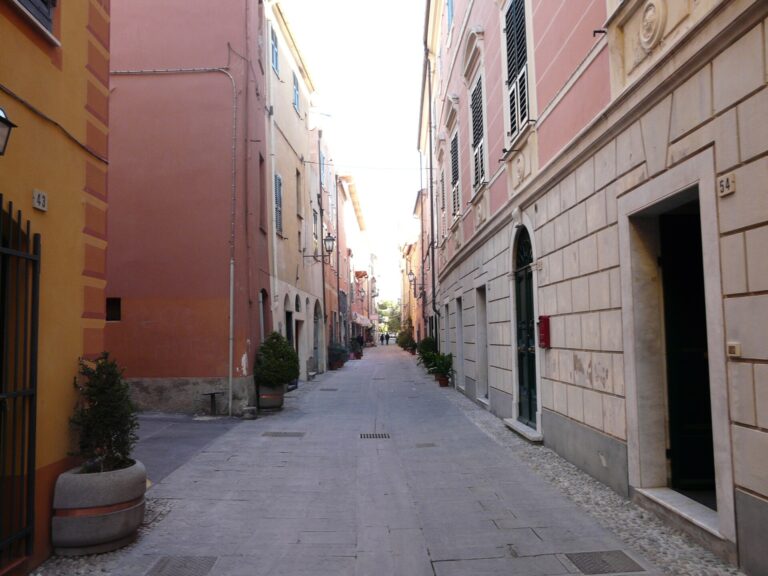
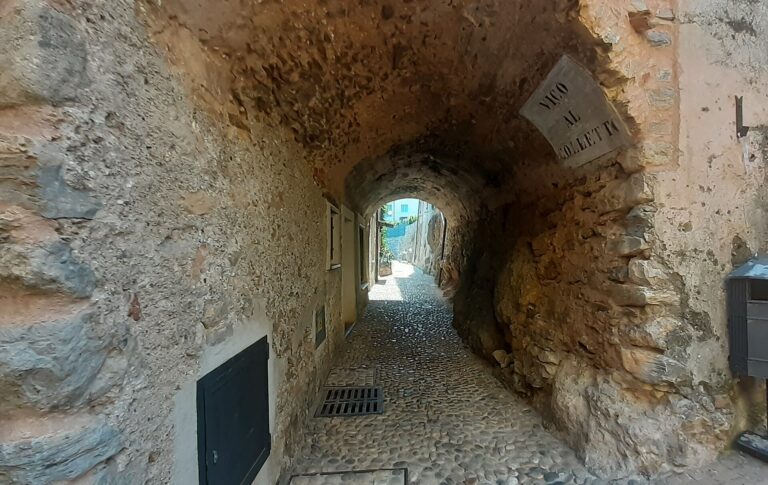
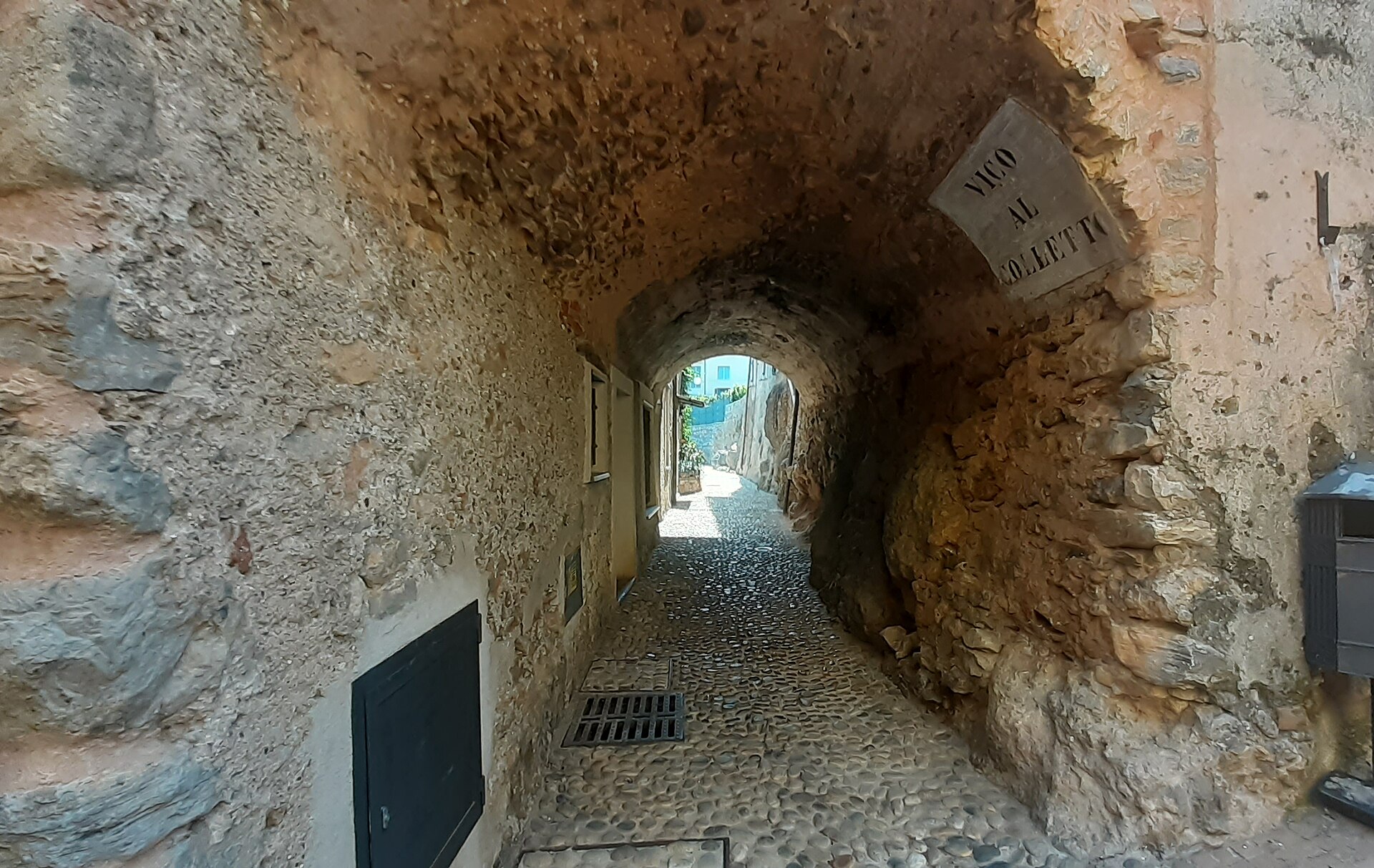
In the Middle Ages Ceriale was a small farming estate of the bishops of Albenga, absorbed in 1225 into the territory of the Commune of Albenga. The name may come from a Roman consul called Cerialis or from the cult of the goddess Ceres: both theories are still around. What survives of the old village is the caruggio, the narrow main lane with small shops, tall houses pressed together, arches and covered passages.
The centre is small and lived-in, without spectacular monuments but full of signs of its past as a frontier town on the sea: towers, plaques and place names recalling pirate raids. Start from Piazza della Vittoria and walk towards the parish church.
The Bastion and Piazza della Vittoria
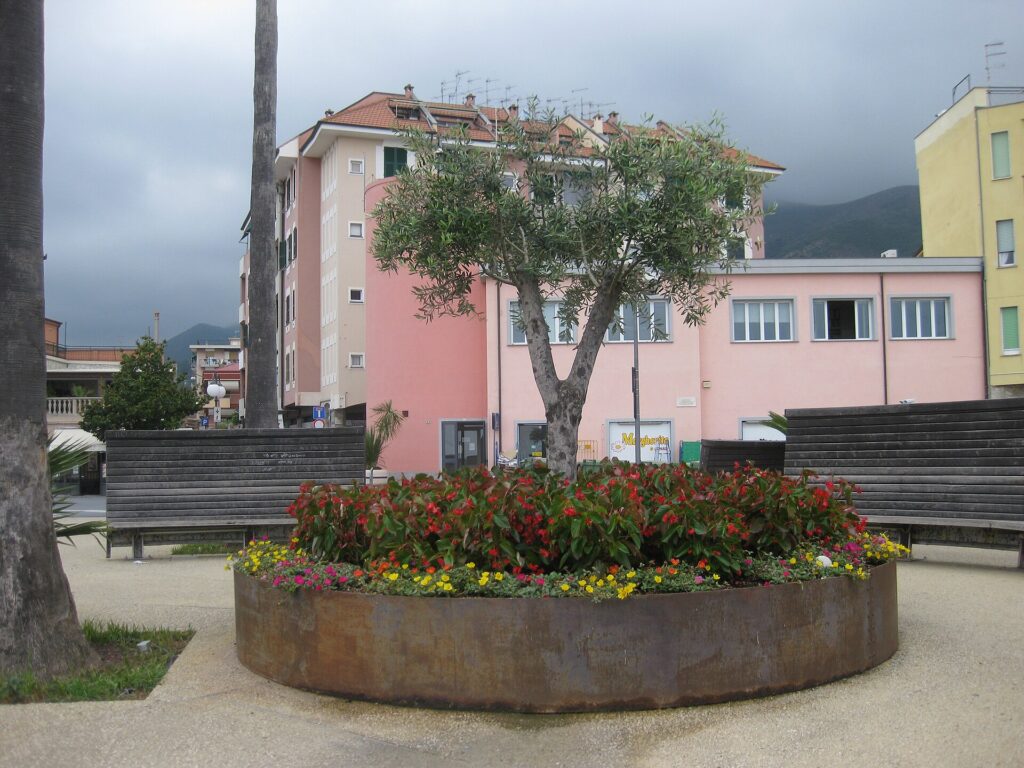
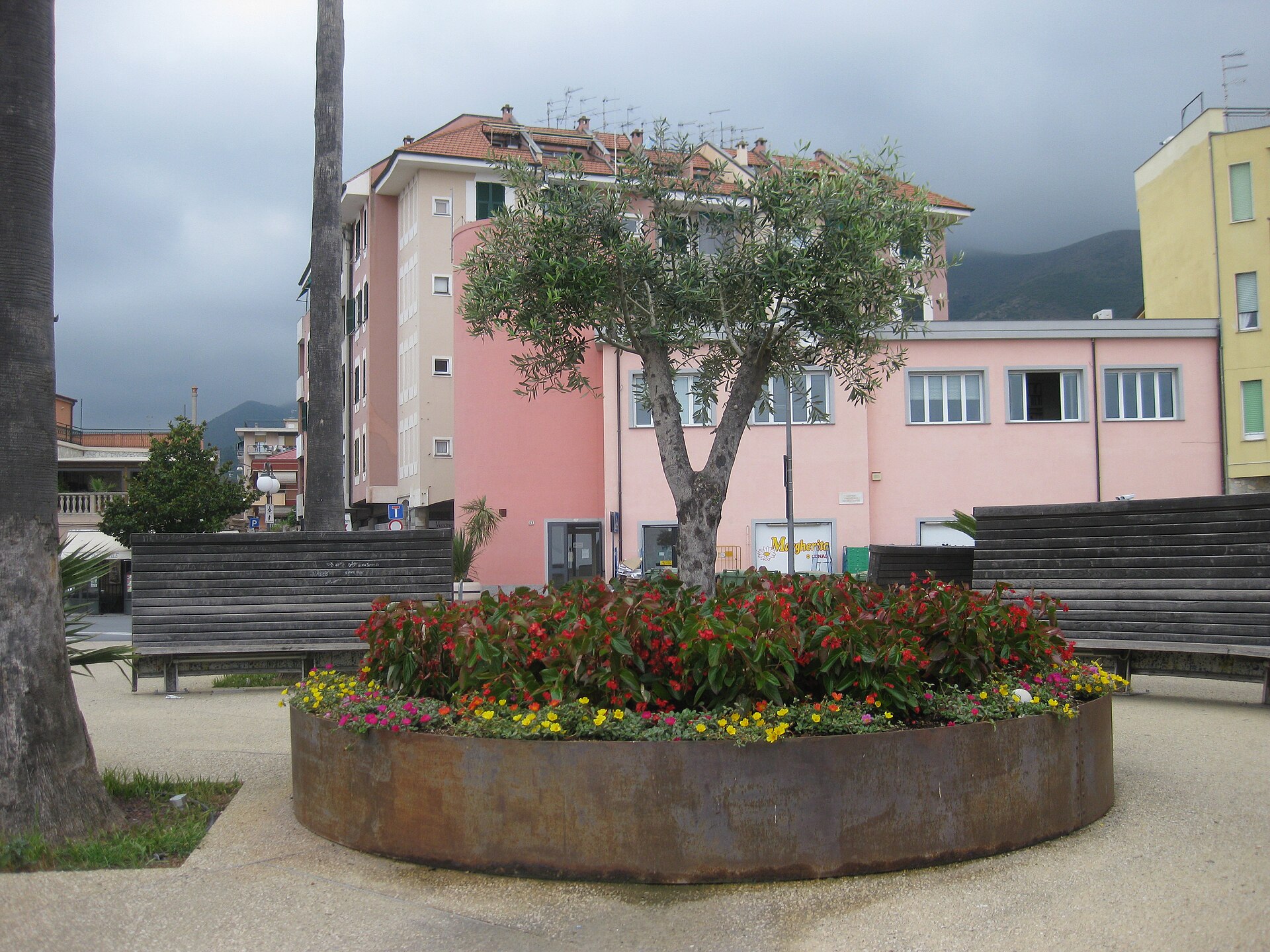
The round tower overlooking Piazza della Vittoria is the Bastione, or Torrione: it was built in 1564 to defend the town from Barbary raids, with a sloping base and a terrace on top for cannons. The square, which took its present name in 1926, was once almost part of the beach; today it has the war memorial and an octagonal 15th-century fountain-trough in pink marble.
The bastion was not enough. On the night of 1–2 July 1637 eight corsair galleys came close to shore unchallenged: they were mistaken for Spanish ships, and that night the tower had no watchman. The raiders sacked the village, killed several people and took about three hundred captives, later sold as slaves in Algeria and Tunisia. For years families paid ransoms, and the town fell into deep crisis. A rock in the eastern part of town is named after that night: it is still called the Scoglio della Galea, the Galley Rock.
The Square Tower and the old walls
Behind the parish church stands a second, older tower: the Torre Quadrata, from the 15th century, three storeys of stone and brick. Next to it are a few remaining sections of the walls that once closed the village off from the sea.
Church of Santi Giovanni Battista ed Eugenio
The parish church, with three naves and a dome, was rebuilt in Baroque style in the 17th century, in the years of the pirate raid. Inside are altarpieces from the 16th and 17th centuries and a wooden crucifix known as the “Christ of the Turks”: it bears the hole of an arquebus ball and is believed to be miraculous. It is the most direct link between the church and the night of 1637.
Oratory of Santa Caterina and Chapel of San Rocco
Also in the centre is the Oratory of Santa Caterina, with a neoclassical façade: look for the two plaques, one recalling the pirate raid, the other the Second World War bombing that hit the apse. At the junction of Via Aurelia and Via Romana is the Chapel of San Rocco, the patron saint, with its rectangular bell tower: tradition says the saint stayed here briefly.
The seafront and the Carlo Camino pier
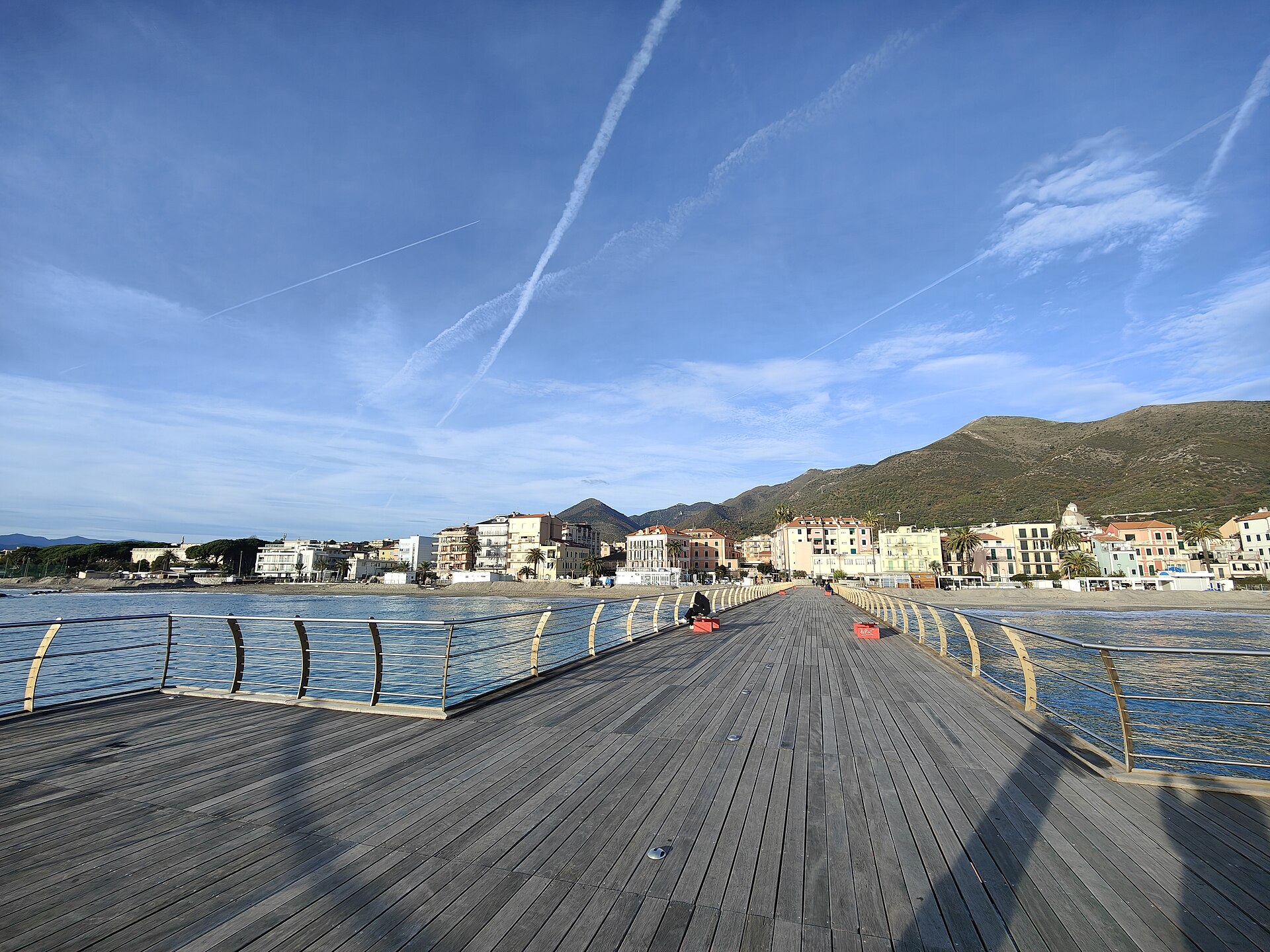
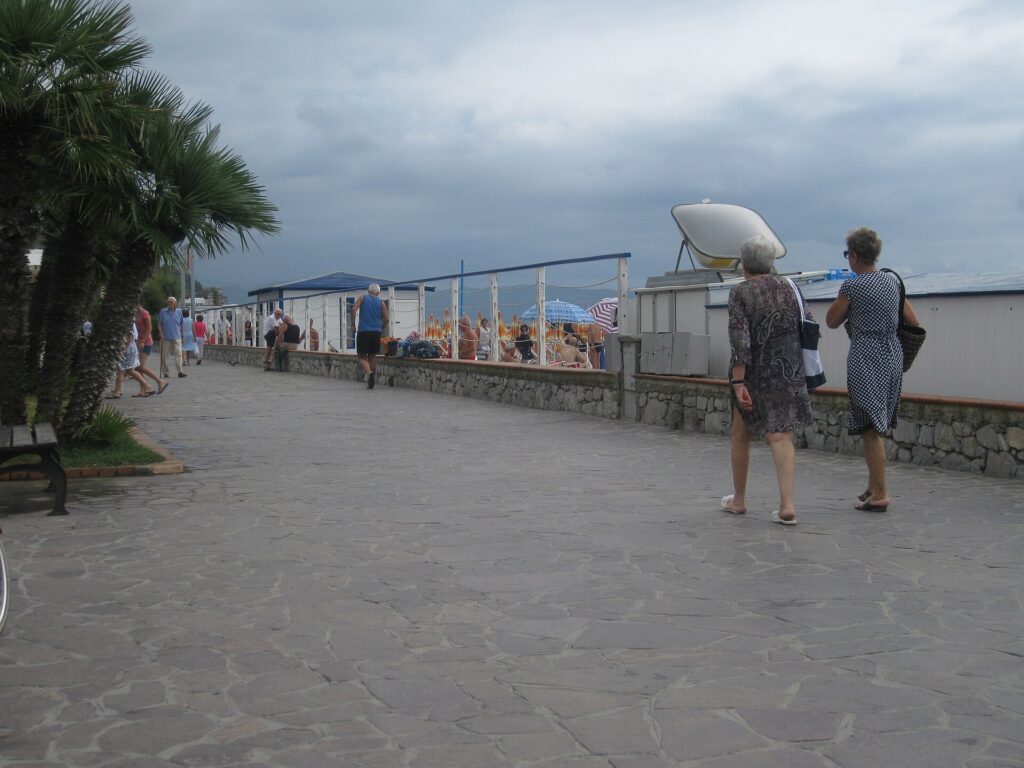
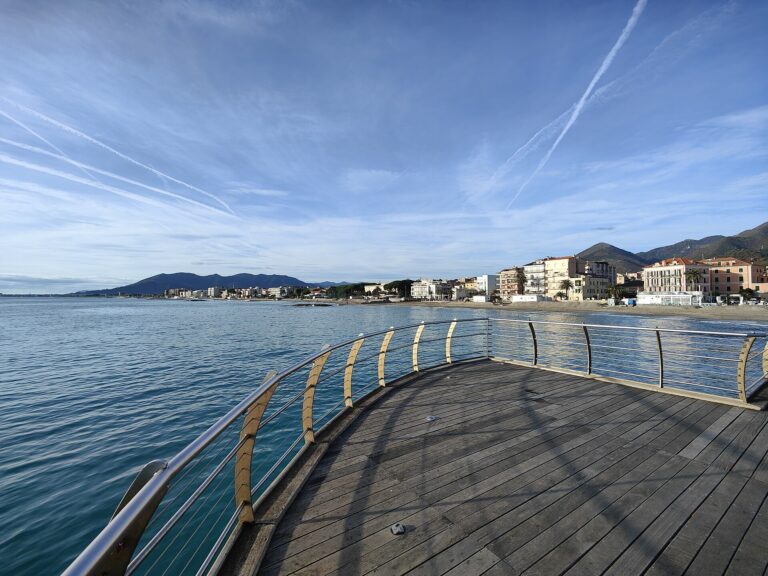
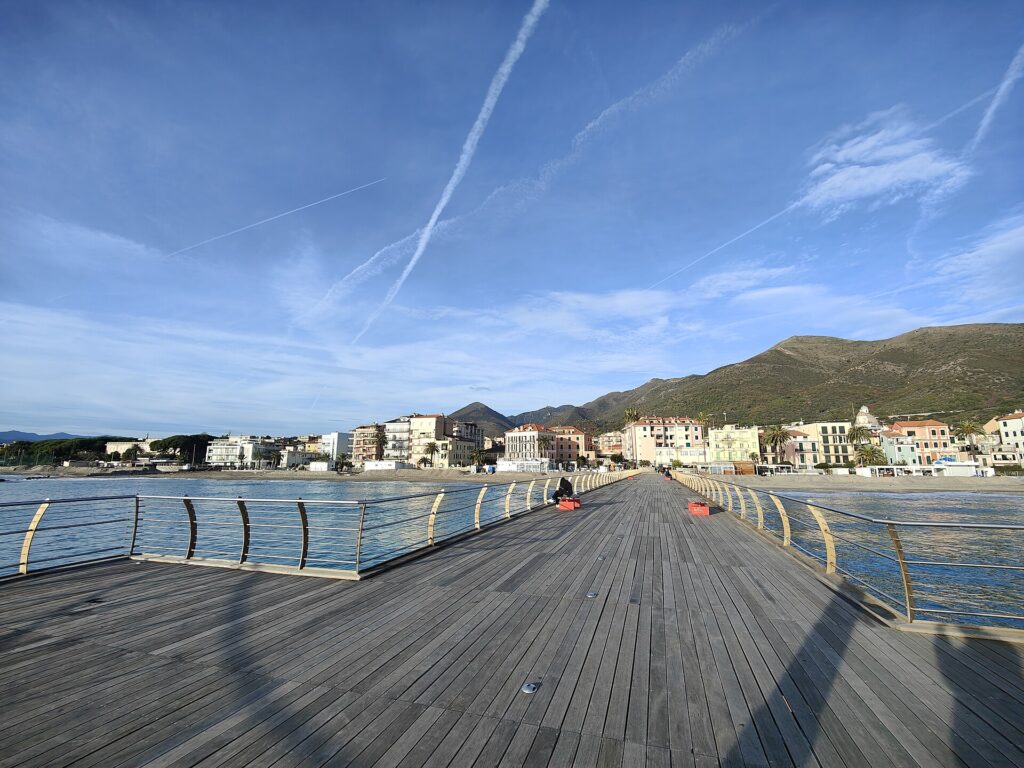
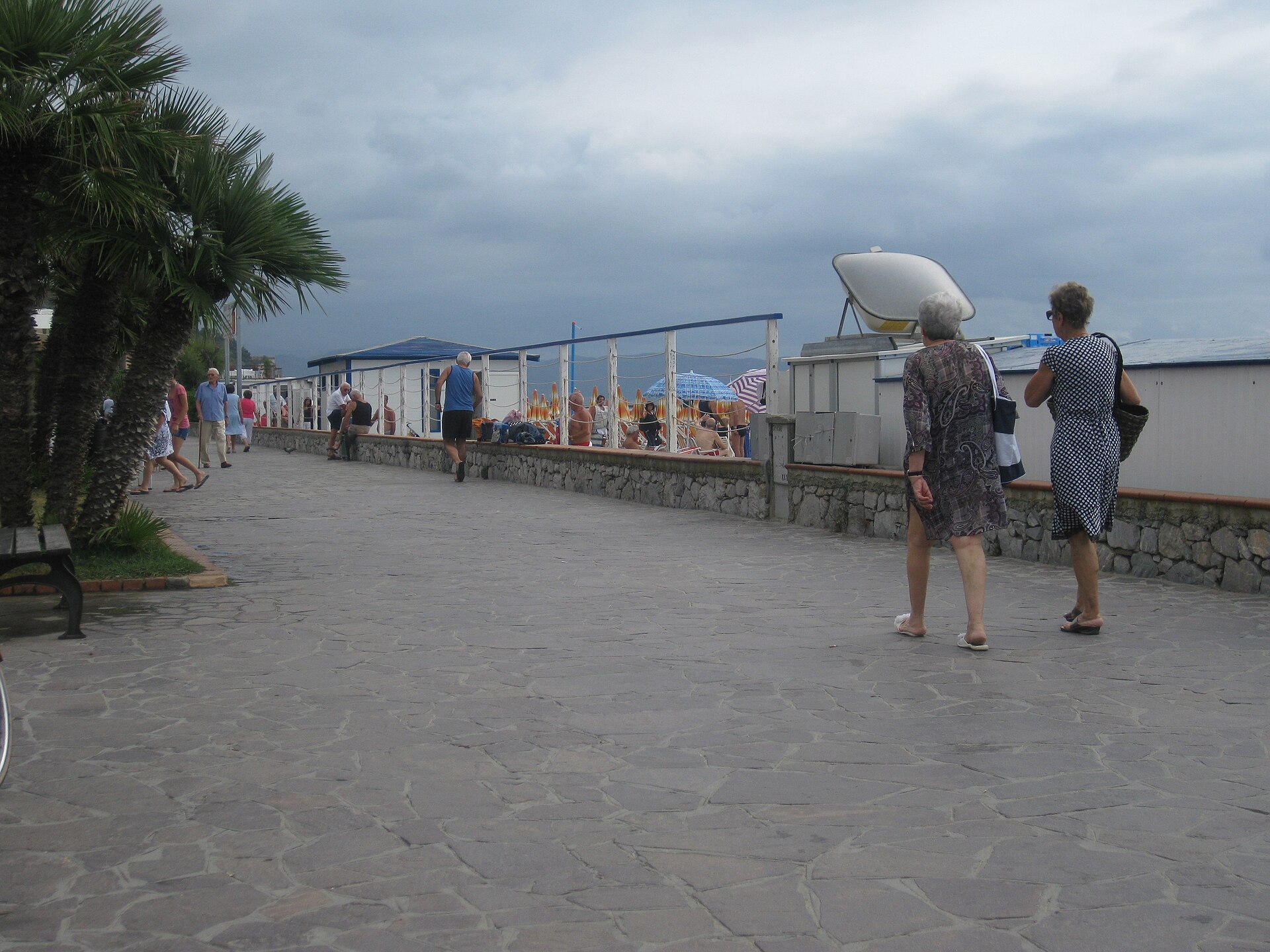
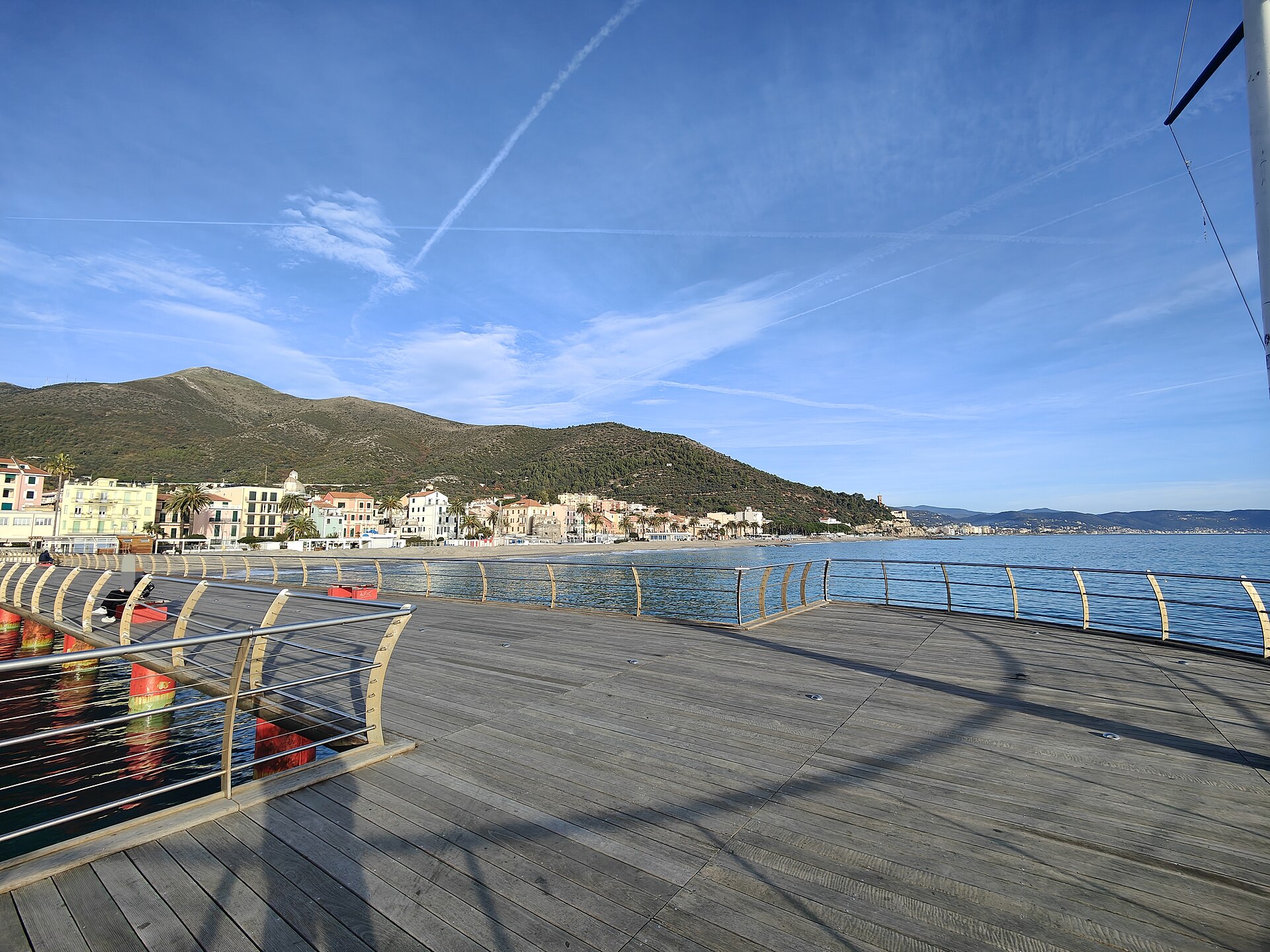
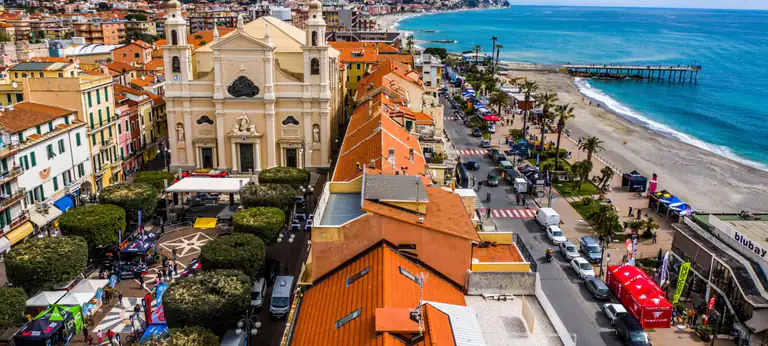
The Lungomare Armando Diaz is the heart of summer life: beach clubs, bars, ice-cream shops and benches facing the sea. Halfway along is the Carlo Camino pier, built in 2007: a wood-and-steel walkway that runs more than 115 metres out to sea and ends in a semicircular terrace. From the end you see the whole coast, from Capo Santo Spirito to the Albenga plain and Gallinara island. In the evening the pier is lit up, and it is the classic after-dinner stroll.
On the seafront you will also find the remains of the Fortino, known as the “Casa Matta”: a bunker from the coastal defence line built by the Germans in the Second World War.
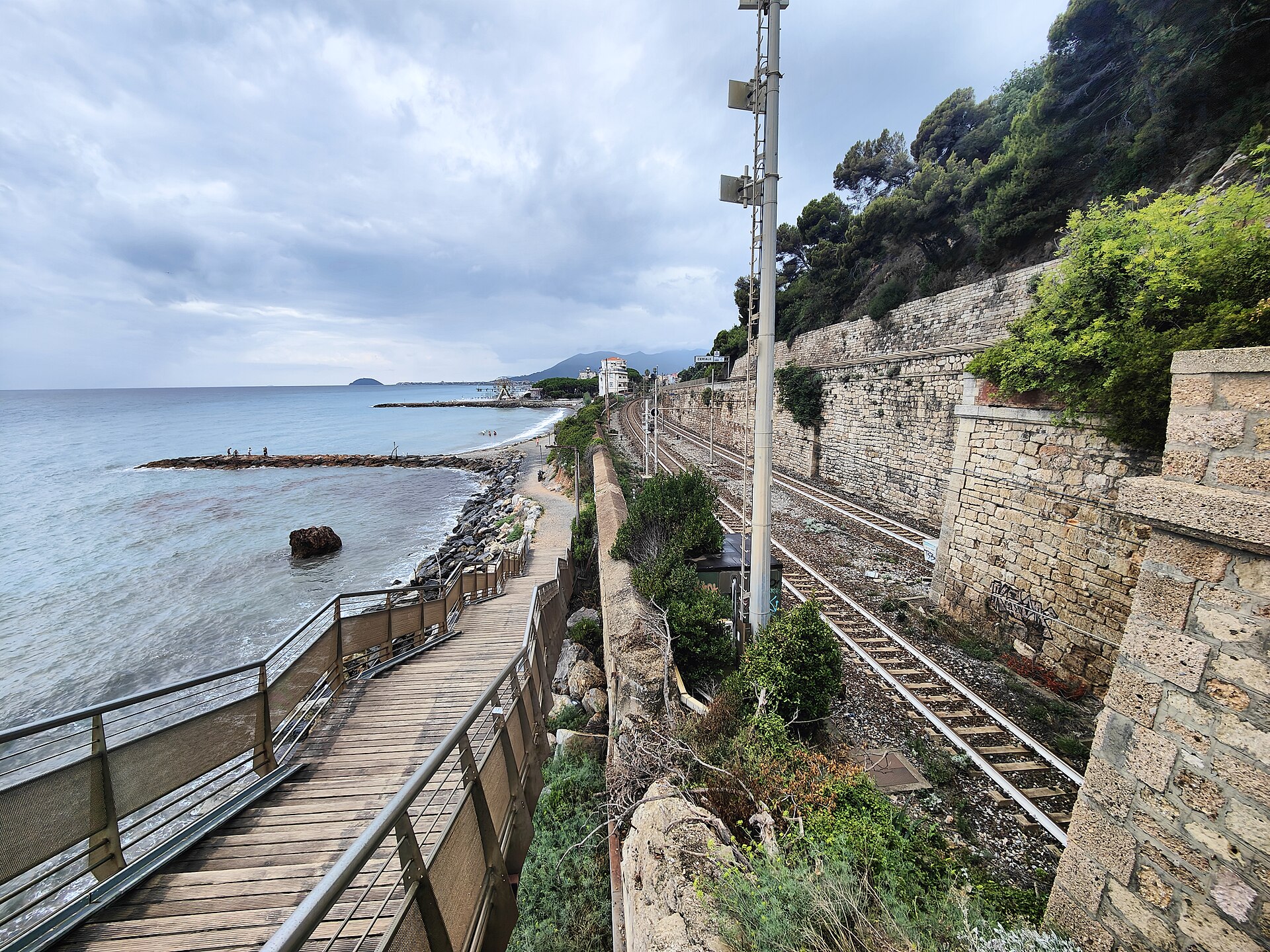
The walk along the railway to Borghetto
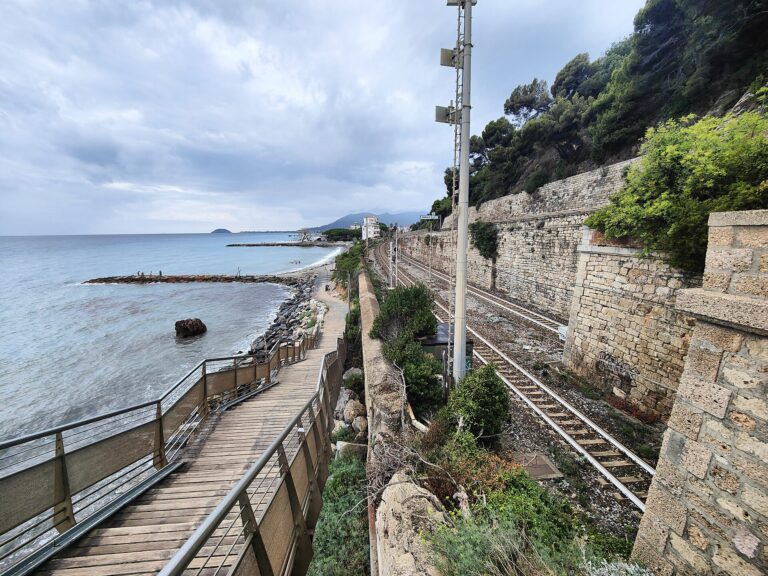
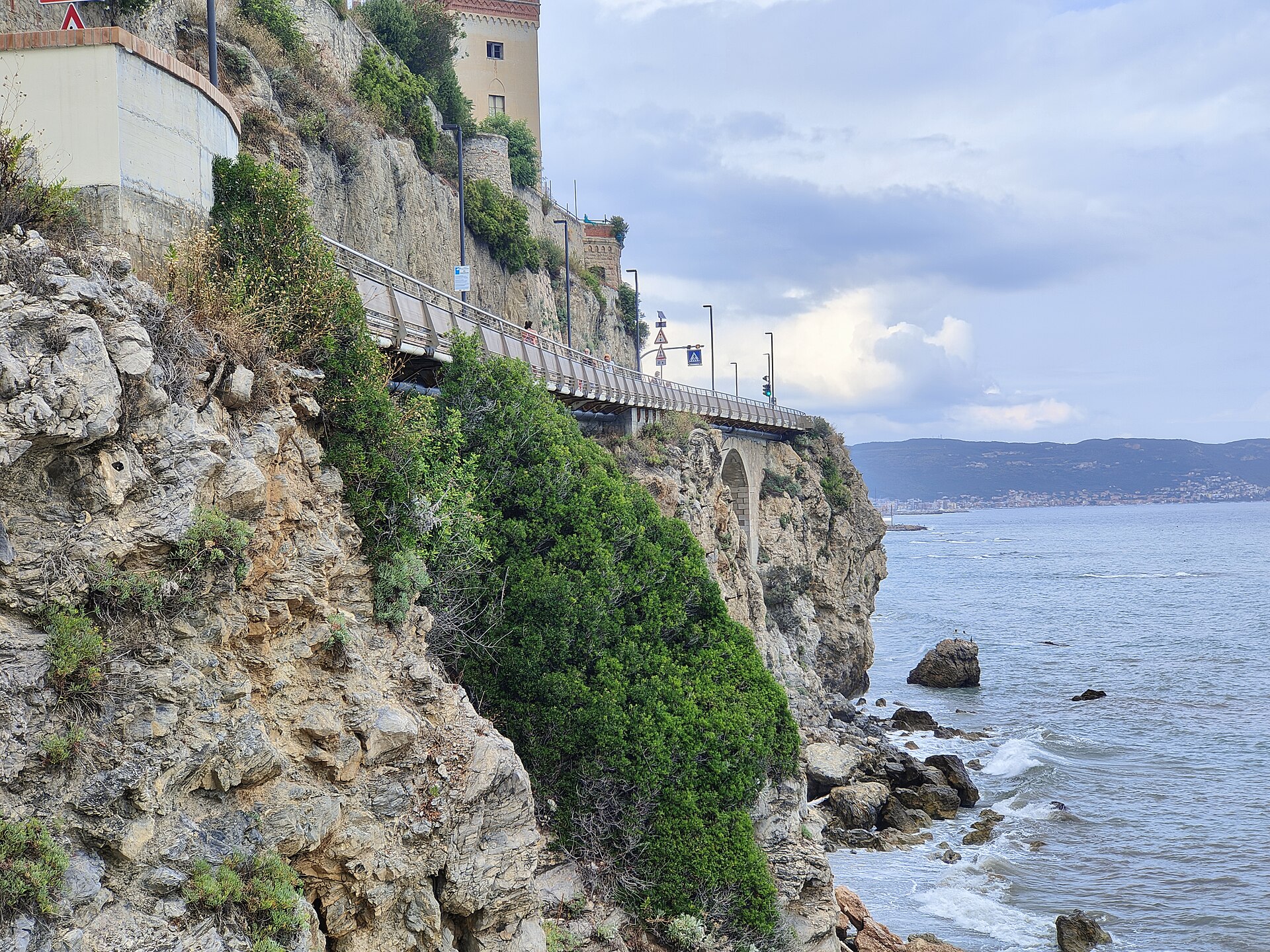
In Ceriale the Genoa–Ventimiglia railway still runs along the sea, right next to the promenade: it has not been moved inland as on other stretches of the Riviera. Heading east, the promenade continues between the tracks and the breakwater as far as Capo Santo Spirito, where steps lead up to the pedestrian walkway to Borghetto. It is only a few hundred metres, but with the sea beneath your feet and no need to walk on the busy Via Aurelia.
The section between the Lungomare Diaz and the walkway steps was rebuilt in spring 2026, with new paving and two gazebos with tables: if you still find works, follow the temporary path. There is no shade, so in summer go early in the morning or at sunset. From Borghetto the promenade continues to Loano.
Peagna
Ceriale’s only outlying village is a small hamlet a few kilometres inland that has kept almost intact the layout of a 16th-century settlement: stone lanes, houses built against each other and an 18th-century parish church in the middle. Near the cemetery is the old church of San Giovanni Battista, from the 14th century, with a Romanesque gabled façade; next to it are the ruins of Capriolo, an abandoned village. In summer the small Teatro Carlo Vacca hosts theatre and music seasons.
The village mascot is the ocellated lizard, a large green lizard that in Italy lives only in western Liguria: the area around Peagna is protected partly for its sake.
Palaeontology museum and Rio Torsero reserve
On the road to Peagna is the “Silvio Lai” palaeontology museum, renovated in 2008. It displays fossils from the Rio Torsero regional nature reserve, an area of about four hectares established in 1985: between 5 and 3.6 million years ago there was a warm-water bay here, and the stream has exposed shells of species that are now tropical. The museum also has a garden showing the evolution of plants. Opening hours change with the season and some activities must be booked: check the Rio Torsero museum and reserve website.
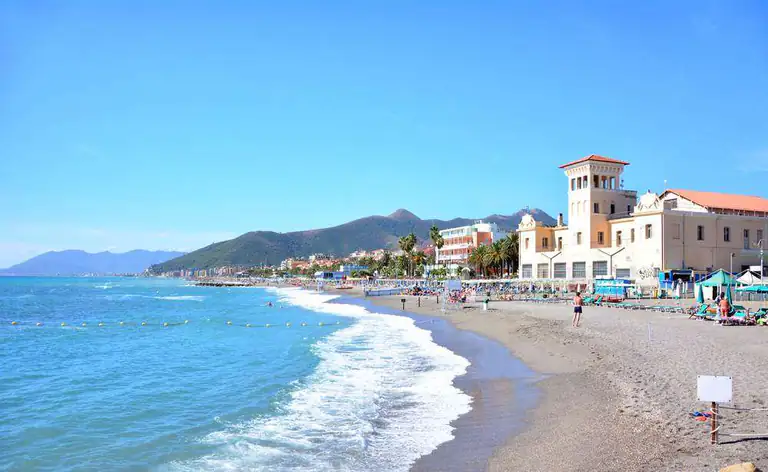
The beach runs along the whole town, from the Albenga boundary to the rocks of Capo Santo Spirito. It is sandy, and in the central stretches the water deepens gently. The town’s tourist website lists nine beach clubs and six free beaches, all on the Lungomare Diaz; two of the free beaches are equipped, with umbrellas and loungers for hire. Towards Borghetto the sand gives way to rocks.
Ceriale is not on the 2026 Blue Flag list, while its neighbours Borghetto Santo Spirito and Loano are. For dog owners there is one dedicated beach club; free dog beaches are in Borghetto. All the details, stretch by stretch, are in our guide to the beaches of Ceriale.
Where to stay
Where to stay in Ceriale
Ceriale is one of the Riviera towns with the most campsites and holiday villages, some with swimming pools and mobile homes, close to the sea. Otherwise you will find family-run hotels, holiday apartments and a few B&Bs; in summer many places ask for weekly stays. The town charges a tourist tax.
On the Lungomare Diaz: for beach holidays, with everything on foot; the railway is close, so if you are a light sleeper ask for a room on the right side.
In the centre, near the station: handy if you travel by train to Albenga, Alassio and Finale.
Towards Albenga and Le Caravelle: the campsite and holiday-village area, ideal for families with children.
Peagna and the hills: quieter country houses and rentals with views over the plain, for those with a car.
From June to August book early, especially campsites and mobile homes: Ceriale is very popular with Italian families from Piedmont and Lombardy.
Take the A10 motorway. Coming from Genoa or Savona, exit at Borghetto Santo Spirito; coming from Imperia or France, exit at Albenga. From either exit it is a few kilometres along the Via Aurelia, which runs through the town. Genoa is about 75 km away.
By train
Ceriale station is on the Genoa–Ventimiglia line, in Piazza della Stazione, a few minutes’ walk from the sea. Only regional trains stop here, some running through to Genoa and Savona; Albenga is the next stop. From Genoa it usually takes about an hour and a half. If you are coming from Milan or Turin, change at Genoa or Savona. Times and tickets on Trenitalia; validate paper tickets before boarding. There is a plan to move the railway into tunnels between Finale Ligure and Andora: when it is built Ceriale station will close, but there are no dates yet.
By bus
TPL Linea buses link Ceriale with Albenga, Borghetto, Loano and the other coastal towns along the Via Aurelia. Up-to-date timetables on TPL Linea.
By air
The nearest airport with scheduled flights is Genoa, about 80 km away: from there continue by train. Nice is about 120 km away and has more international flights. The small Villanova d’Albenga airport, a few kilometres away, has no scheduled flights.
Parking
According to the town’s tourist website, municipal car parks are free, some with a parking disc. The main ones are near the station, in Piazza Aicardi, at Parco Sasso, by the cemetery and the one named after the Carabinieri d’Italia; in Peagna there is the Piazza Martiri di Nassiria car park. Always check the signs on site: in summer spaces near the sea fill up early.
A10: Borghetto S. Spirito exit from Genoa, Albenga exit from Imperia and France; Via Aurelia SS1
By train
Ceriale station (Genoa–Ventimiglia line), a few minutes' walk from the seafront
By plane
Genoa (about 80 km); Nice about 120 km
The guide
Things to do in Ceriale
Le Caravelle water park
The Le Caravelle water park, opened in 1989, is in town, on Via Sant’Eugenio. It has a large wave pool, several kinds of slides, a long rubber-ring ride, a lazy river, an area for small children and a spa zone for over-16s. It opens only in summer, usually from early June to early September: the 2026 season is over and the park reopens in June 2027. Times and prices change every year: check the official Le Caravelle website.
Beach and water sports
Several beach clubs run sailing, windsurfing and kitesurfing courses and have beach-volleyball courts. Under Capo Santo Spirito, where the sand meets the rocks, you can snorkel on calm days. In season you can hire pedalos and canoes.
Visit the Toirano Caves
The Toirano Caves are about ten minutes away by car, in the Varatella valley. Visits are guided only, with limited numbers and advance booking: times and prices on the official Toirano Caves website. It is cool inside all year, so bring a sweater.
What to eat
The plain between Ceriale and Albenga is Liguria’s vegetable garden: artichokes, courgettes, tomatoes, basil and, in spring, the violet asparagus, a Slow Food Presidium also grown in Ceriale. On the seafront you will find farinata, focaccia, stuffed vegetables and fish. To know what to buy and when, read our guide to Albenga’s local produce.
Festivals and traditions
The biggest celebration is the feast of San Rocco, the patron saint, on 16 August: a fair on the seafront, a procession in the evening and fireworks over the sea. In summer Peagna hosts seasons at the Teatro Carlo Vacca. The up-to-date calendar is on the Ceriale tourist website.
Day trips from Ceriale
Borghetto Santo Spirito: on foot over the walkway, with its 13th-century old town, Castello Borelli and the climb to Monte Piccaro.
Albenga: the town of towers, with its early Christian baptistery and cathedral; a few minutes by train or car.
Loano: Palazzo Doria with its Roman mosaic, the marina and a long family beach.
Alassio: the Muretto, the Budello and the most famous beach on the western Riviera, about twenty minutes beyond Albenga.
Pietra Ligure: the basilica of San Nicolò and the old town below the castle.
Finalborgo: the walled village in the Pia valley, about twenty minutes by car, with Finale Ligure on the coast.
Toirano: the caves and the medieval village, inland.
Weather
Weather and best time to visit Ceriale
June and September for the beach; Le Caravelle open from early June to early September
🌙
16°CNow · wind 8 km/h
Sat 10🌙16° 16°
Sun 11🌦️23° 15°2 mm
Mon 12☀️24° 15°
Tue 13⛅22° 14°
Wed 14🌤️23° 13°
Thu 15☀️24° 14°
Forecast: MET Norway (Yr), CC BY 4.0 licence. Updated hourly.
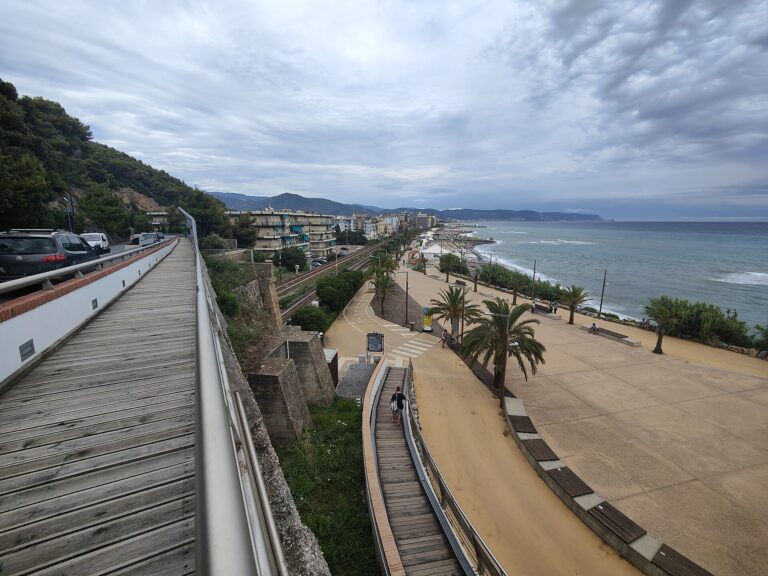
La passerella sul mare di CerialeIl pontile Carlo Camino a CerialeIl lungomare Armando Diaz a CerialeUna via del centro storico di CerialeLa passeggiata a mare di Ceriale accanto alla ferroviaCeriale vista dalla passerella sul mareLa costa rocciosa tra Ceriale e Borghetto
FAQ
Frequently asked questions about Ceriale
Does Ceriale have a sandy beach?
Yes. The beach is sandy along almost the whole town, with rocks only towards Capo Santo Spirito.
Does Ceriale have a Blue Flag?
No, Ceriale is not on the 2026 Blue Flag list. Neighbouring Borghetto Santo Spirito and Loano are.
Are there free beaches in Ceriale?
Yes, six, all on the Lungomare Diaz; two are equipped, with umbrellas and loungers for hire.
Is Le Caravelle open?
The water park opens only in summer, usually from early June to early September. In 2026 it closed in September and reopens in June 2027.
Can you walk from Ceriale to Borghetto Santo Spirito?
Yes, along the seafront promenade and the pedestrian walkway under Capo Santo Spirito, without using the Via Aurelia.
Has the railway in Ceriale been moved inland?
No, it still runs along the sea and the station is open. Moving it into tunnels is only a project, with no dates.
What happened in Ceriale in 1637?
On the night of 1–2 July Barbary corsairs sacked the town and carried off about three hundred people to North Africa.
Where can I park in Ceriale?
In the municipal car parks, listed as free by the town’s tourist website, some with a parking disc: near the station, in Piazza Aicardi and at Parco Sasso.
When is the patron saint's festival?
On 16 August, for San Rocco, with a fair, a procession and fireworks over the sea.
Is Ceriale good for families with children?
Yes: a sandy beach, a flat promenade, a water park in town and plenty of campsites with pools.