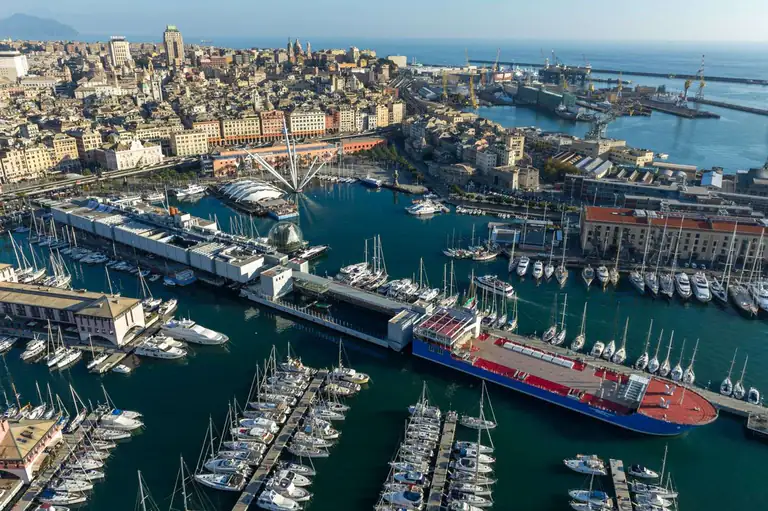
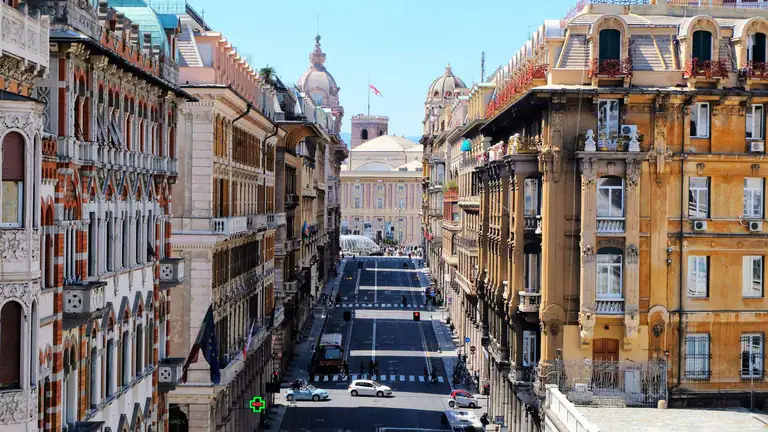
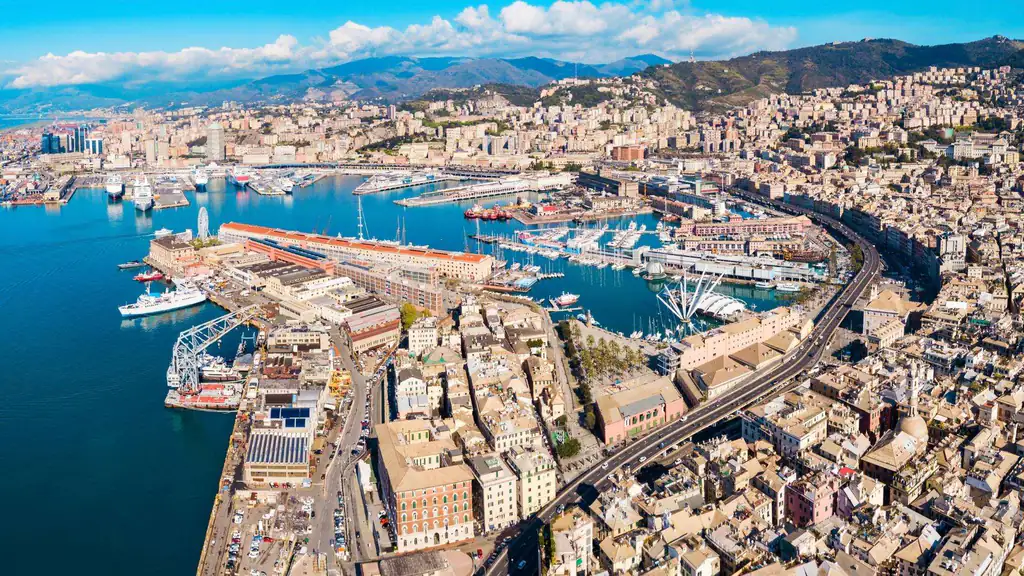
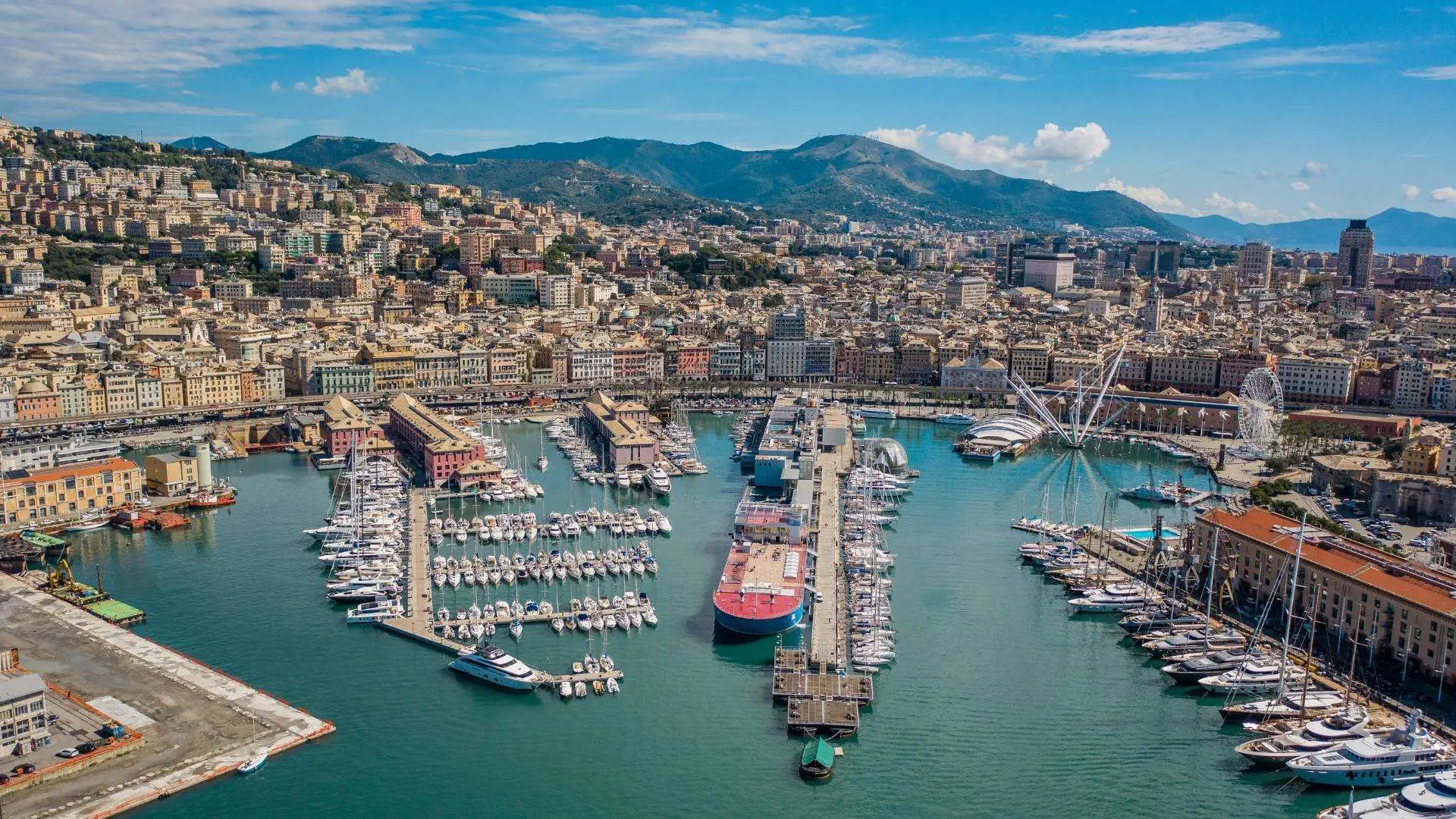
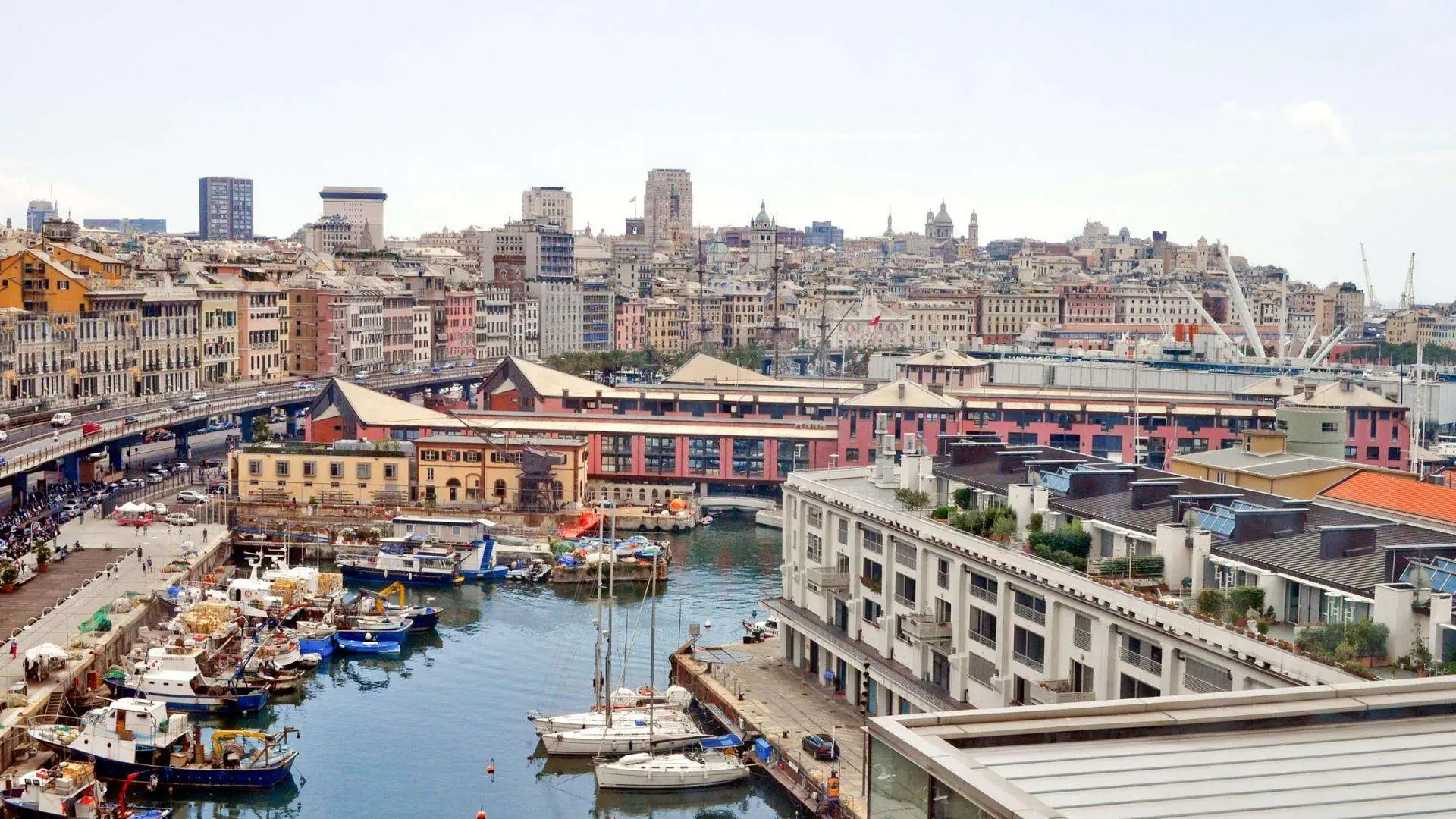
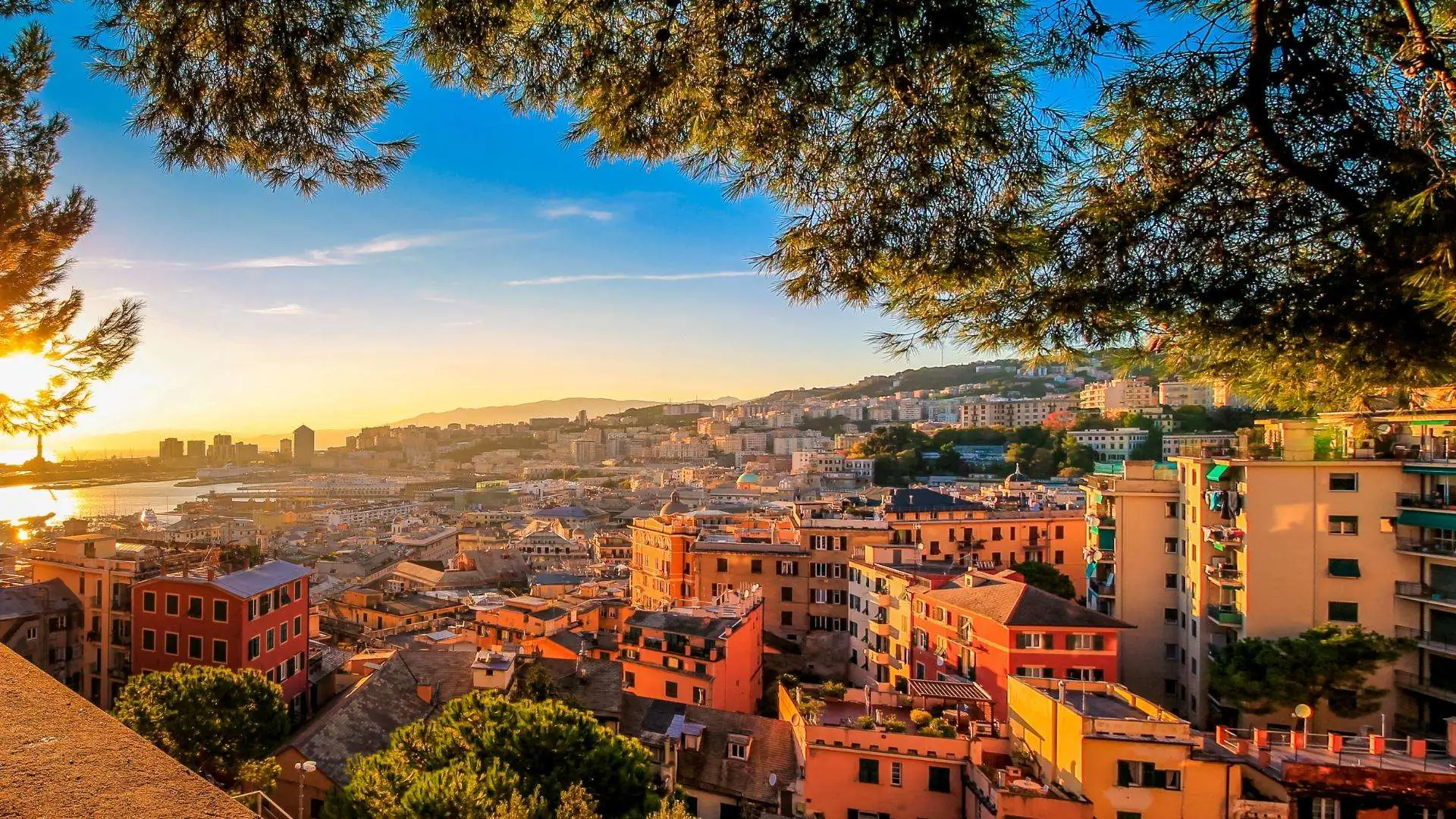
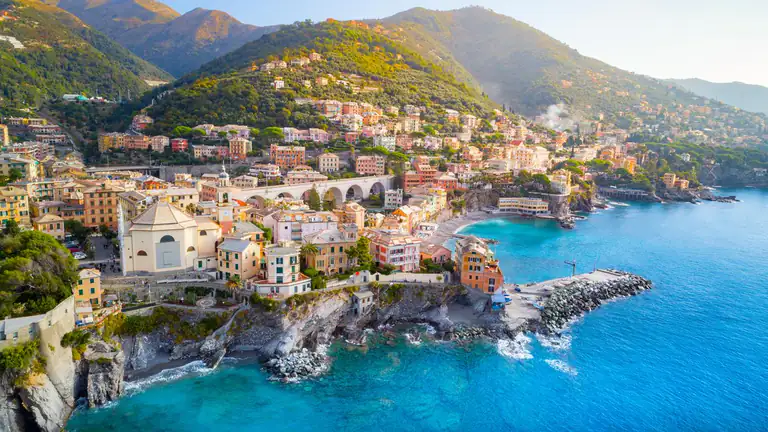
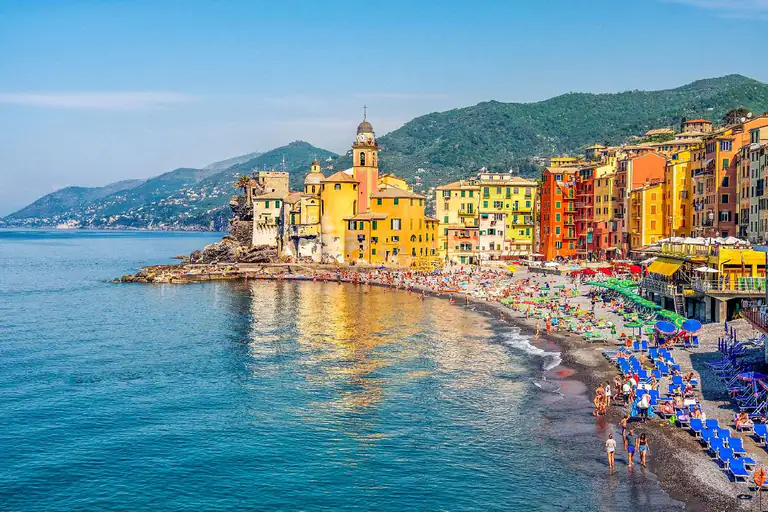
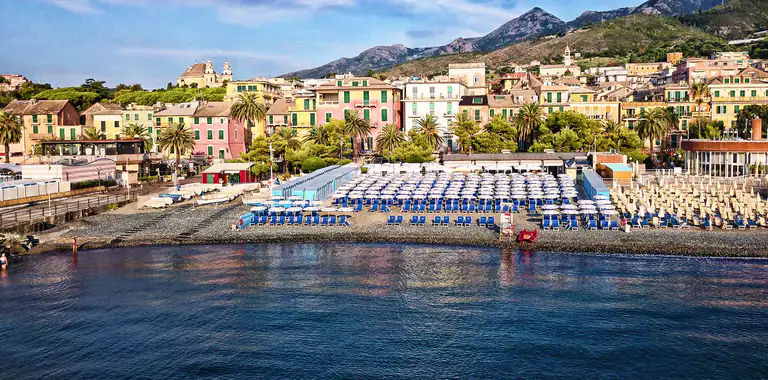
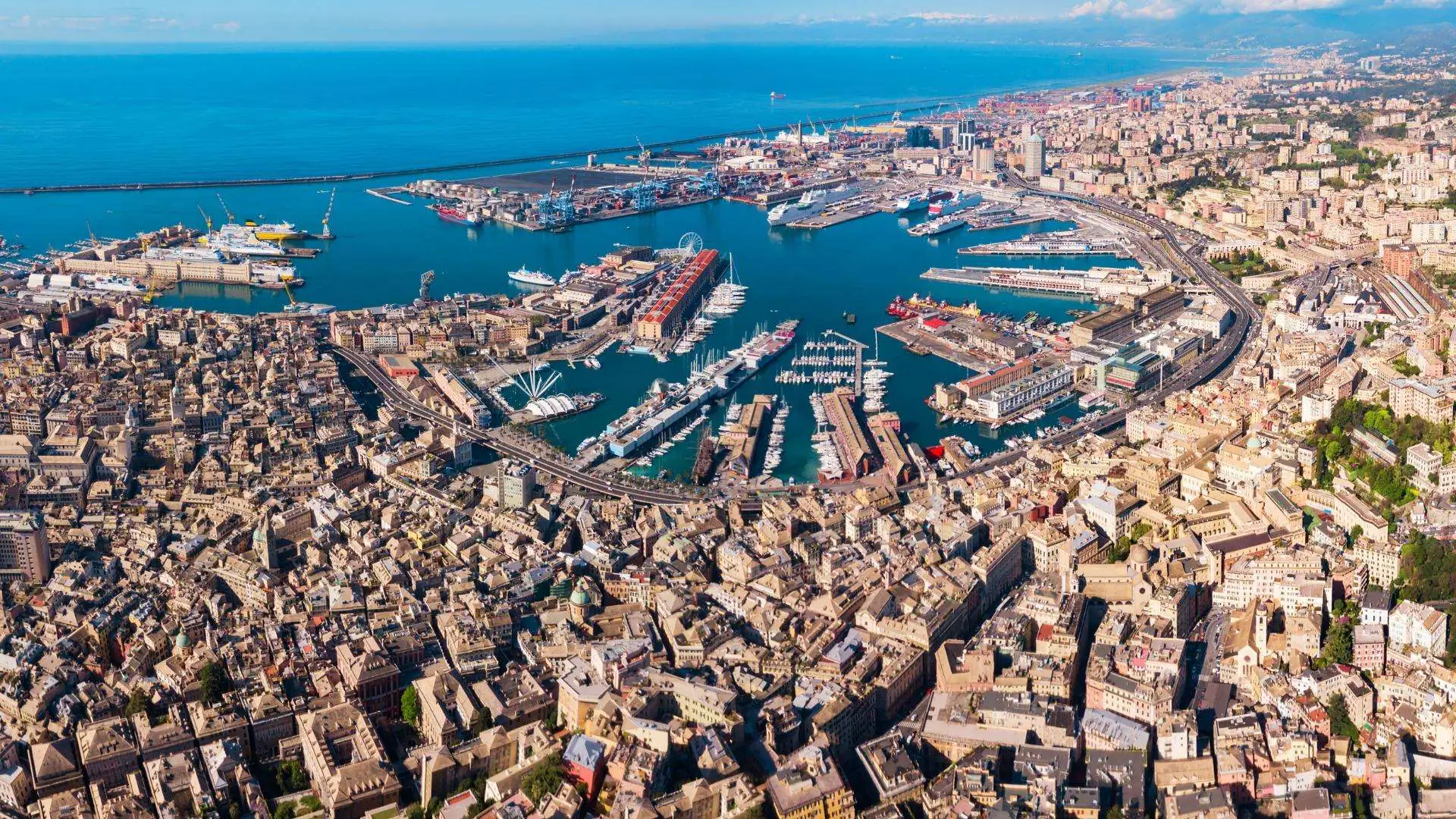
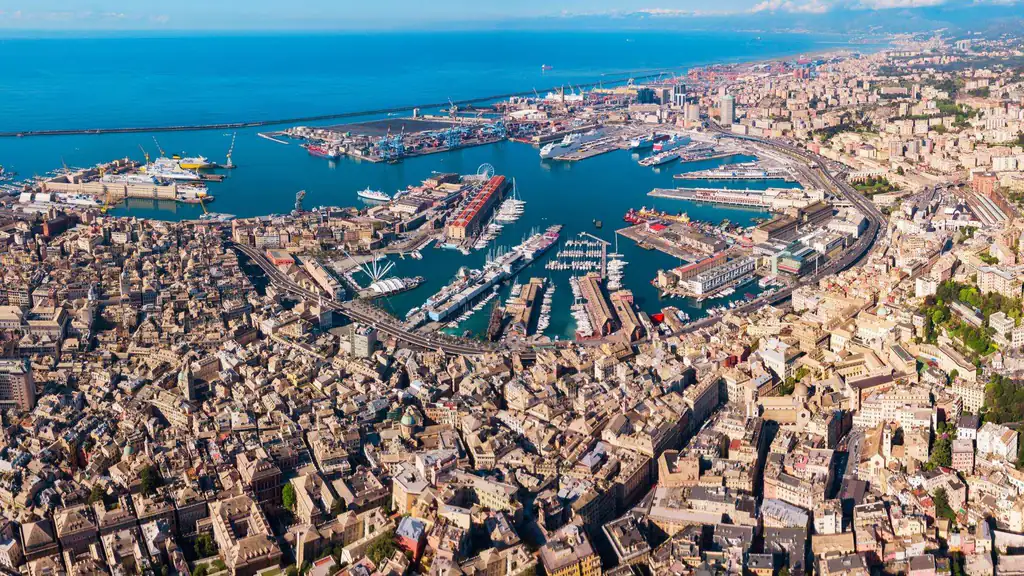
Aerial view of Genoa's old town and harbour

Genoa

La Superba: medieval alleys, UNESCO Rolli palaces, the Porto Antico and Aquarium, Boccadasse, Nervi and the forts, with focaccia and pesto on every corner.

Aerial view of Genoa's old town and harbour
Area
GenovaProvince of Genoa
Ideal for
Art, history, street food and city lifecouples, families, travellers without a car
Beaches
Swimming in town at Boccadasse, Vernazzola, Corso Italia and Nervireal beaches on the Golfo Paradiso
Best time to go
All yearApril–June and September–October are best for walking
By train
Piazza Principe and Brignole stationsCamogli in about 25 min, Cinque Terre from about 1 h 15
By car
A7, A10, A12 and A26Genova Ovest and Est exits. The old town is a limited traffic zone
Airport
Genoa Cristoforo Colombo, about 7–9 km from the centreAMT Volabus to the stations
How long to stay
Two days for the old town and portthree or four with Nervi, the forts and Riviera trips

Welcome to Genoa

La Superba, the proud city

Genoa (Genova in Italian) is the capital of Liguria and the largest city on the Italian Riviera, with about 565,000 inhabitants: more than one in three Ligurians lives here. It sits in the middle of the region’s arc, between the Riviera di Ponente to the west and the Riviera di Levante to the east, squeezed between the sea and the hills. The result is a vertical city of tall buildings, very narrow alleys, public lifts and funiculars climbing to the hillside districts.

For centuries Genoa was a maritime republic with banks and fleets across the Mediterranean, and the wealth of that era is still visible. The old town, one of the largest medieval centres in Europe, is a maze of narrow lanes (carruggi) running down to the harbour. Above it are the Strade Nuove, the 16th- and 17th-century “new streets” lined with the Palazzi dei Rolli, a UNESCO World Heritage Site since 2006. The Porto Antico, redesigned by Renzo Piano in the 1990s, is now the city’s waterfront, with the Aquarium and the Galata Maritime Museum.

Genoa is not a two-hour stop on the way to the Cinque Terre. Give it at least two days for the old town and the harbour, and a third for Nervi, the forts and Boccadasse. It also makes a practical base for the Riviera: Camogli is under half an hour by train, and in summer boats leave the Porto Antico for Portofino and San Fruttuoso. Prices for food and hotels are usually lower than in the famous resorts nearby.

Where is Genoa?

Genoa is in Liguria (Genova, province of Genoa).

Map: where Genoa is in LiguriaPIEDMONTLOMBARDYEMILIA-ROMAGNATUSCANYFRANCERIVIERA DI PONENTERIVIERA DI LEVANTELIGURIAN SEASavonaImperiaSanremoLa SpeziaGenoa
Boundaries: ISTAT, Natural Earth · Interactive map →

What to see

What to see in Genoa

Aerial view of Genoa's old town and harbour

The centre is walkable: Porto Antico to Piazza De Ferrari takes ten minutes, Principe station to the Aquarium about fifteen. The hills are real, though, and where the streets get steep it is worth using the metro, the public lifts or the funiculars (see “Getting around Genoa” below).

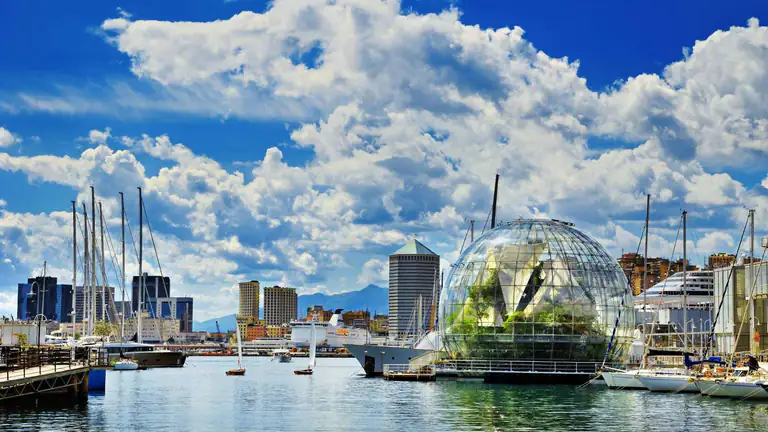
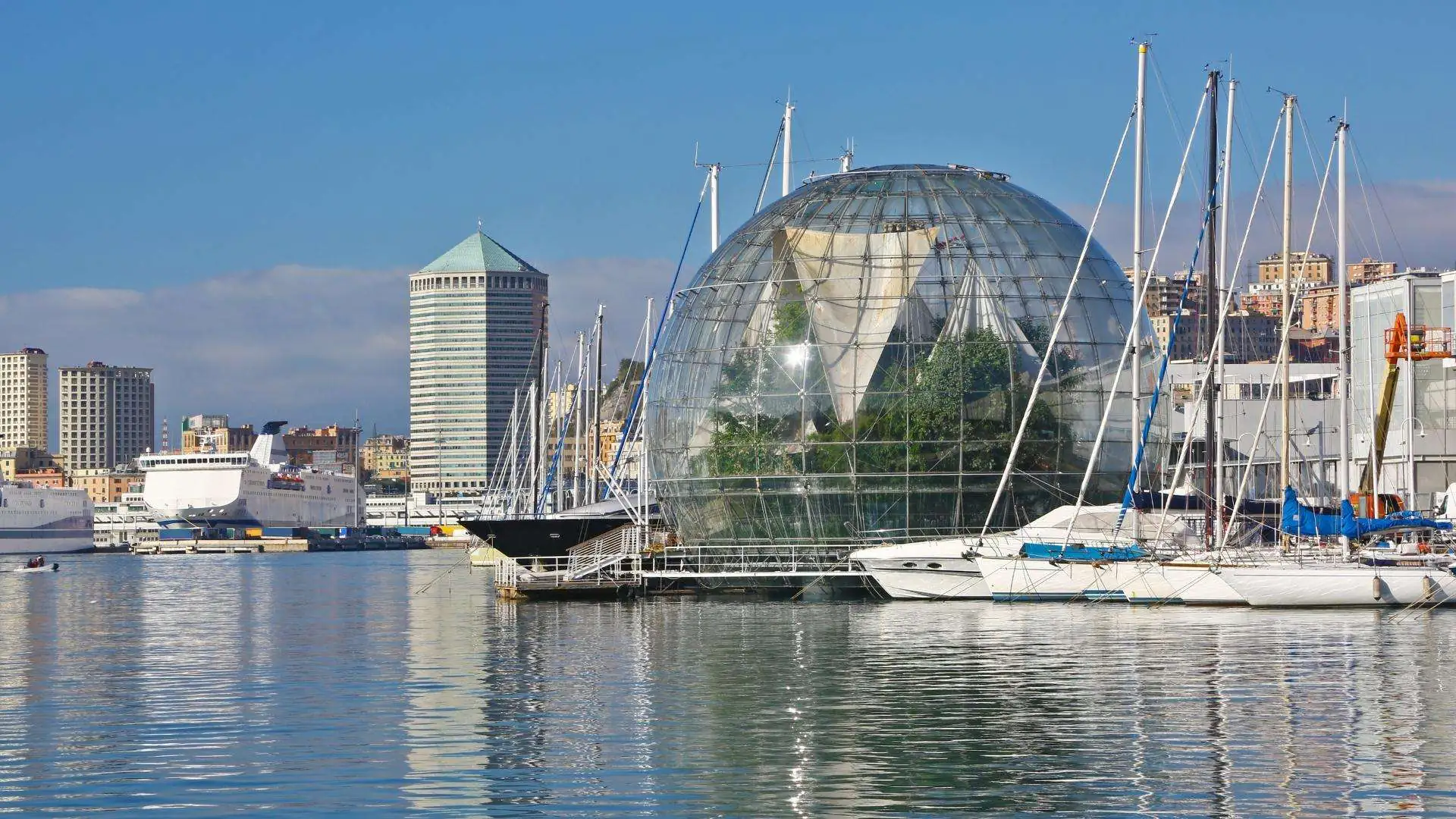
Genoa's Porto Antico with the Biosphere and skyscrapers

Porto Antico and the Bigo

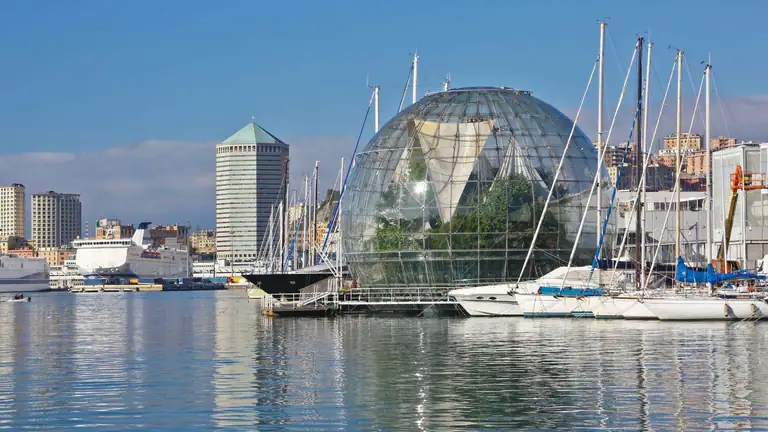
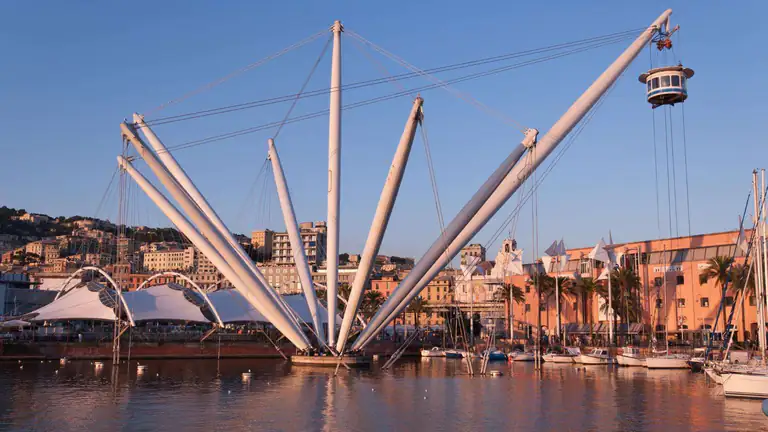
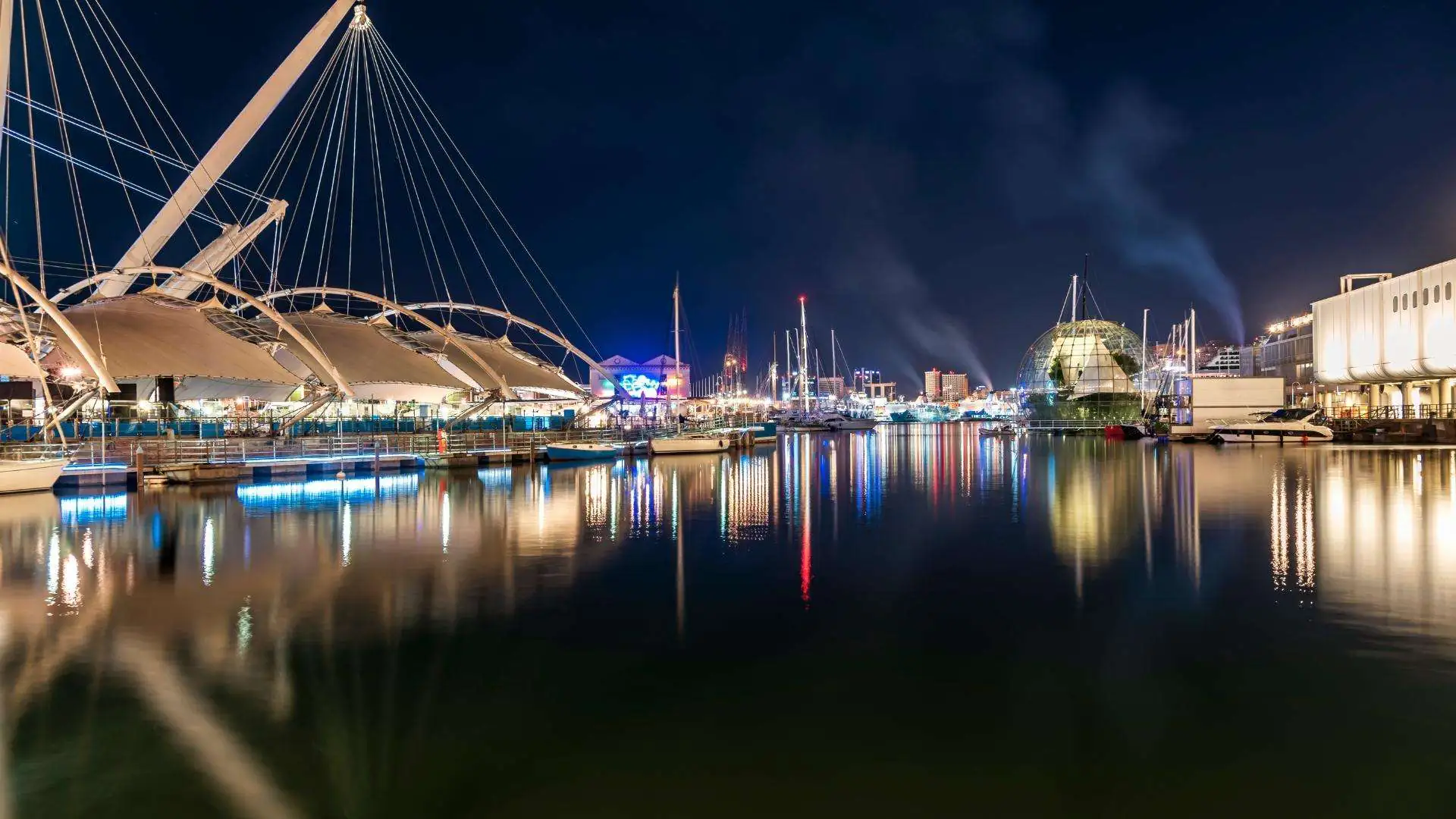
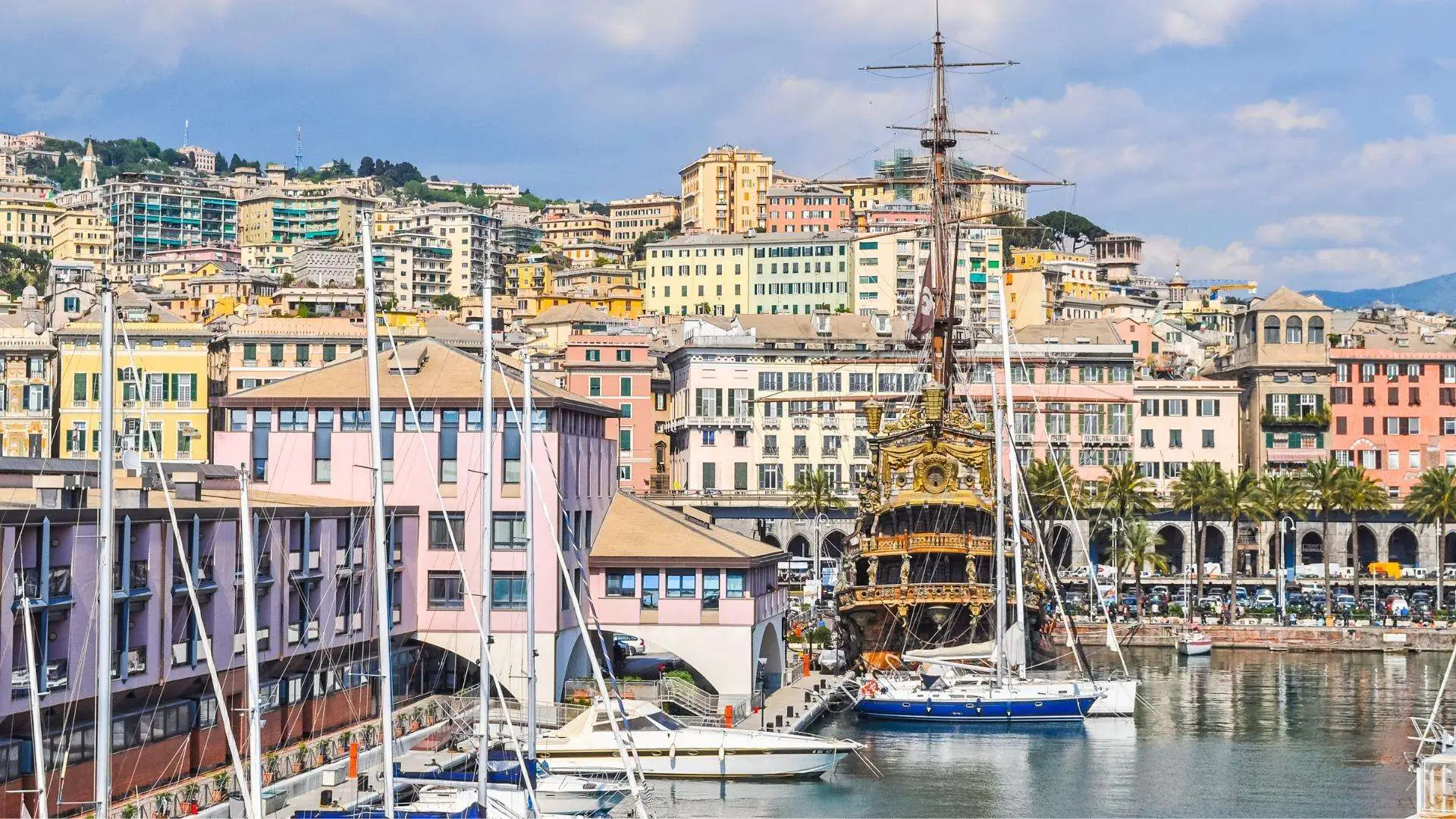
The Porto Antico is the old commercial port, turned into a pedestrian waterfront by Renzo Piano for the 1992 Columbus celebrations. Along the quays you will find the Aquarium, the Biosfera, a glass greenhouse suspended over the water, and the Bigo, the white crane-like structure with a panoramic lift that rises above the rooftops. Harbour tours and boats to the Riviera di Levante leave from here.

Genoa Aquarium

The Genoa Aquarium is one of the largest in Europe and the most visited sight in the city. The route passes tanks of dolphins, sharks, penguins and seals and takes two to three hours. Weekends, Easter and Italian bank holidays bring queues: buy tickets online and choose the first time slot of the morning.

Full guide →

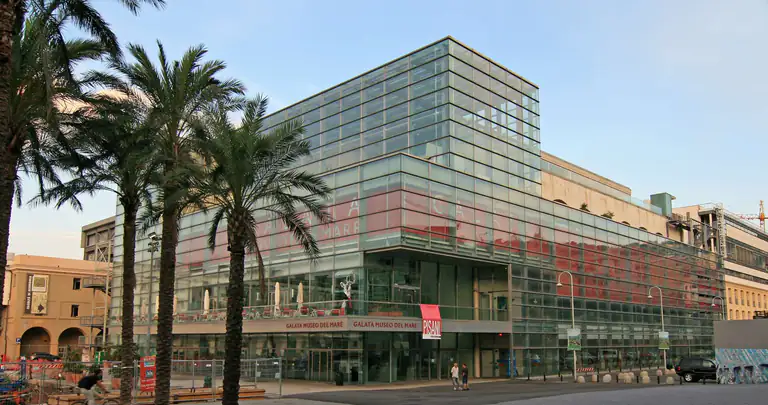
Galata Museum of the Sea in Genoa

Galata Maritime Museum

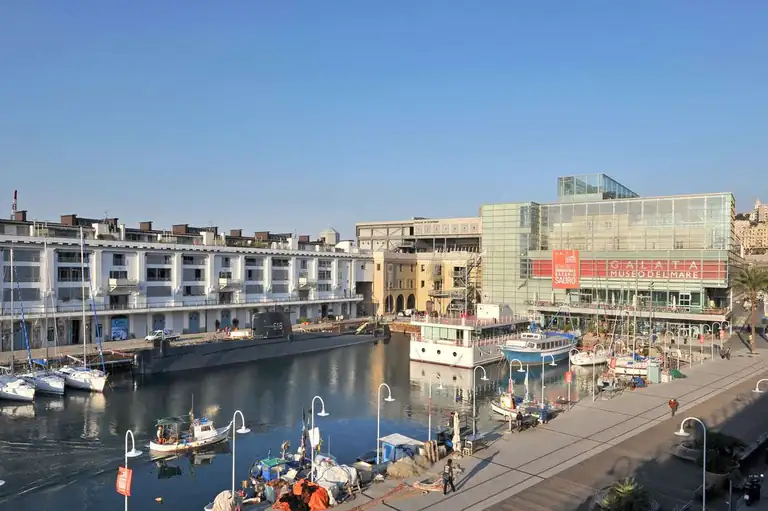
In the Darsena, a few minutes from the Aquarium, the Galata Museo del Mare tells the story of Genoa and the sea: a full-size reconstruction of a galley, nautical charts and rooms on Italian emigration to the Americas. The Nazario Sauro submarine is moored outside and can be visited inside. With teenagers, it pairs well with the Aquarium.

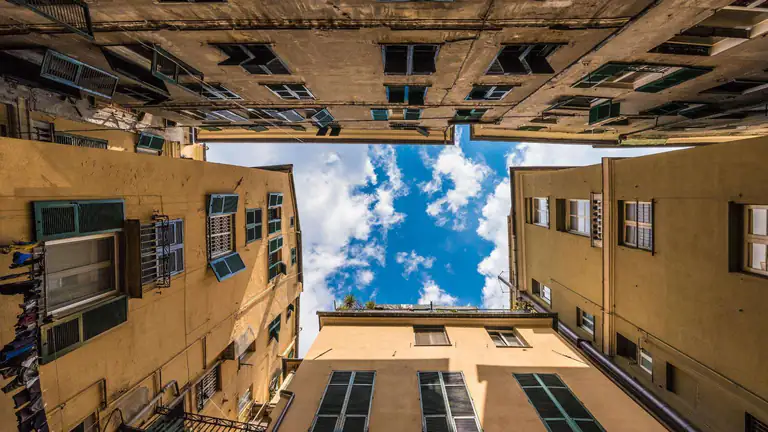
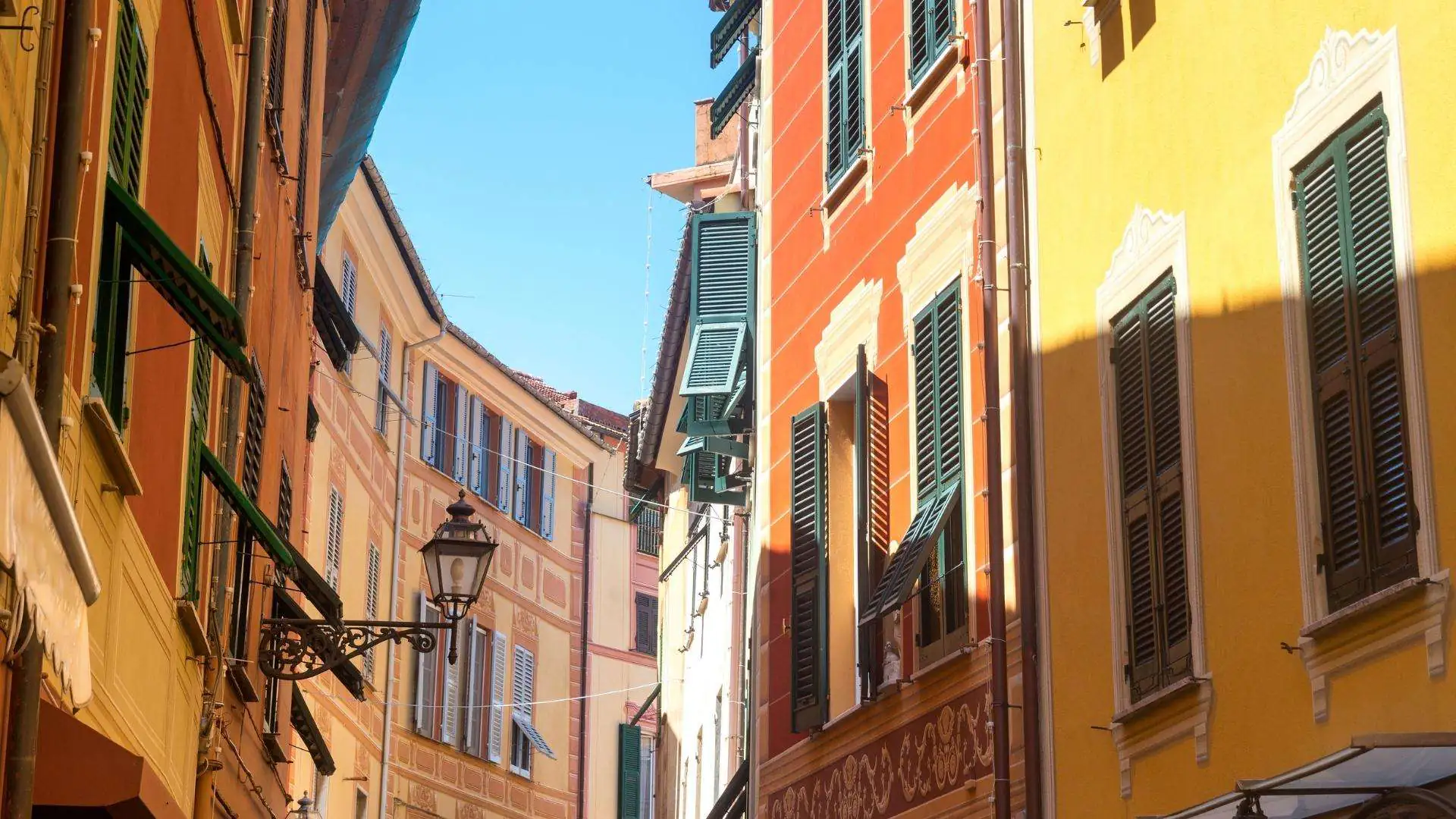
Narrow alleys of Genoa's old town seen from below

The carruggi and Via del Campo

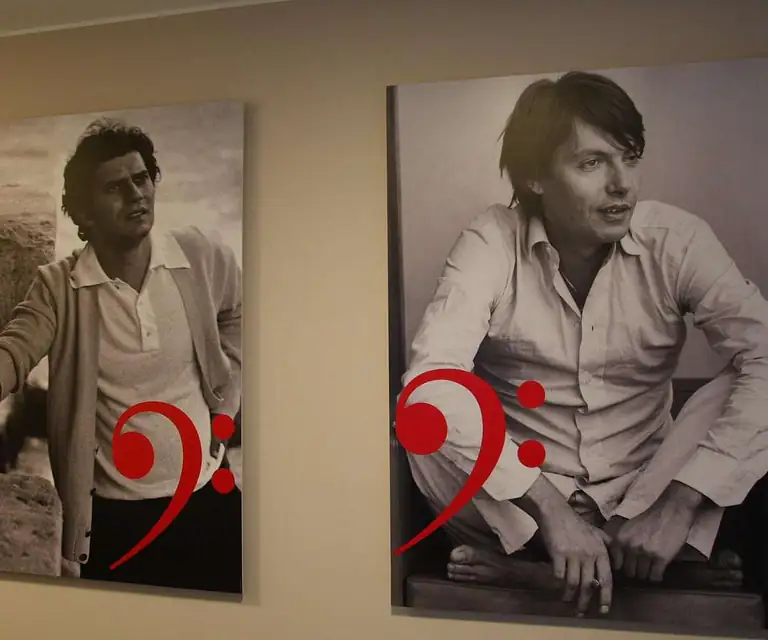
Behind the harbour the old town begins: lanes squeezed between six- and seven-storey houses, small squares, workshops and hidden churches. The carruggi of Genoa are best explored without a plan, but two streets are worth keeping in mind: Via San Luca, the medieval merchants’ street, and Via del Campo, made famous by the songwriter Fabrizio De André. At Via del Campo 29 rosso there is a small museum dedicated to Genoa’s singer-songwriters.

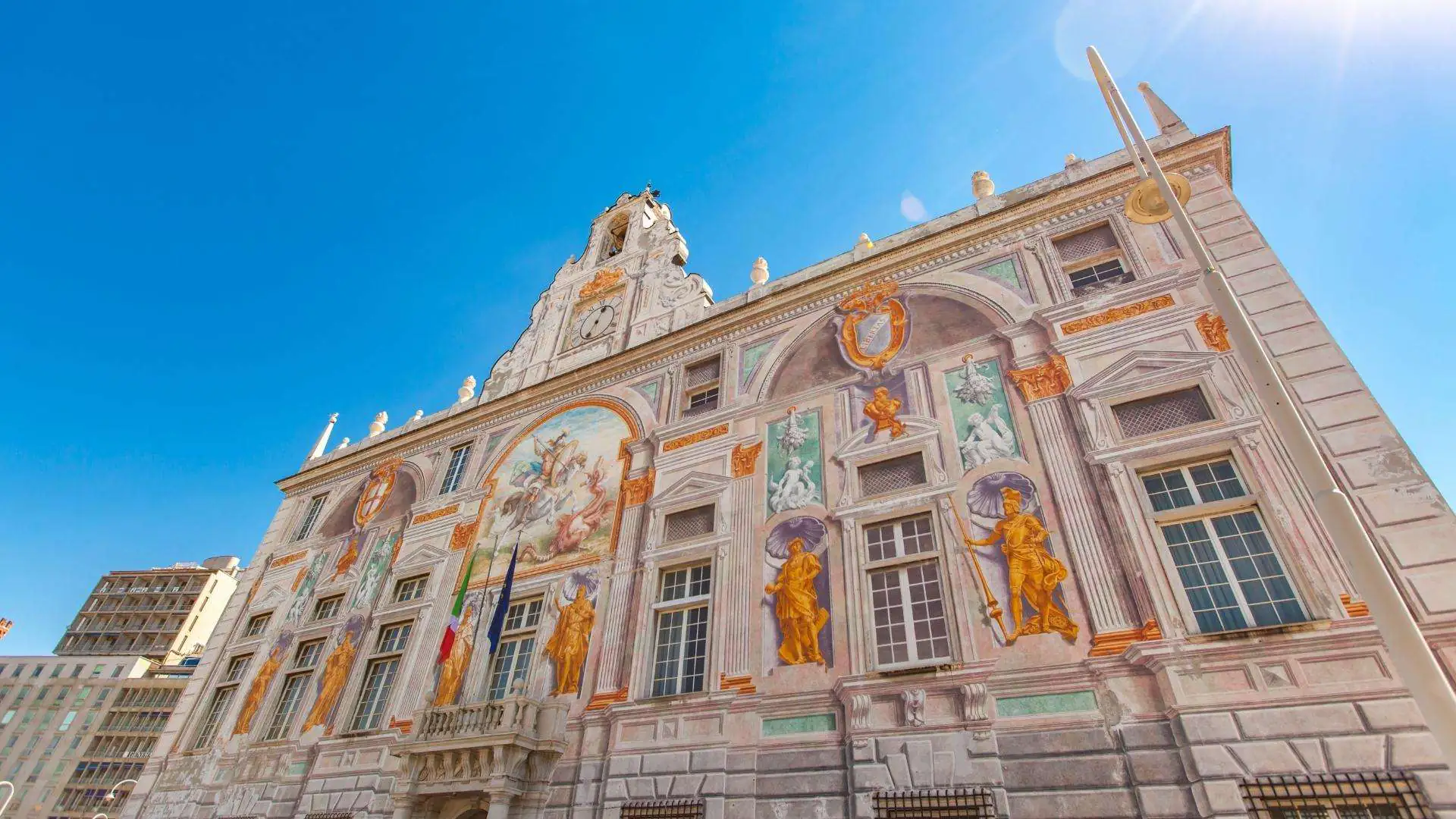
Frescoed façade of Palazzo San Giorgio in Genoa

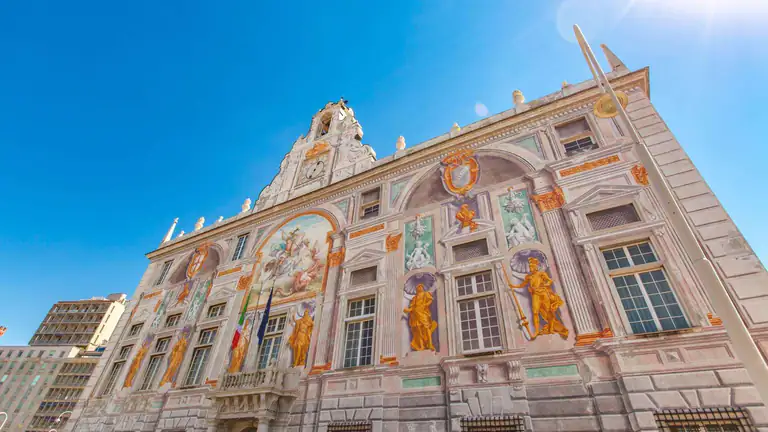
Palazzo San Giorgio and Sottoripa

On the harbour side, Palazzo San Giorgio has the most photographed frescoed façade in the city. It was the seat of the Banco di San Giorgio, one of Europe’s first banks, and now houses the port authority. Opposite, the medieval arcades of Sottoripa have sold fried fish, focaccia and farinata for centuries: the right place for a standing lunch.

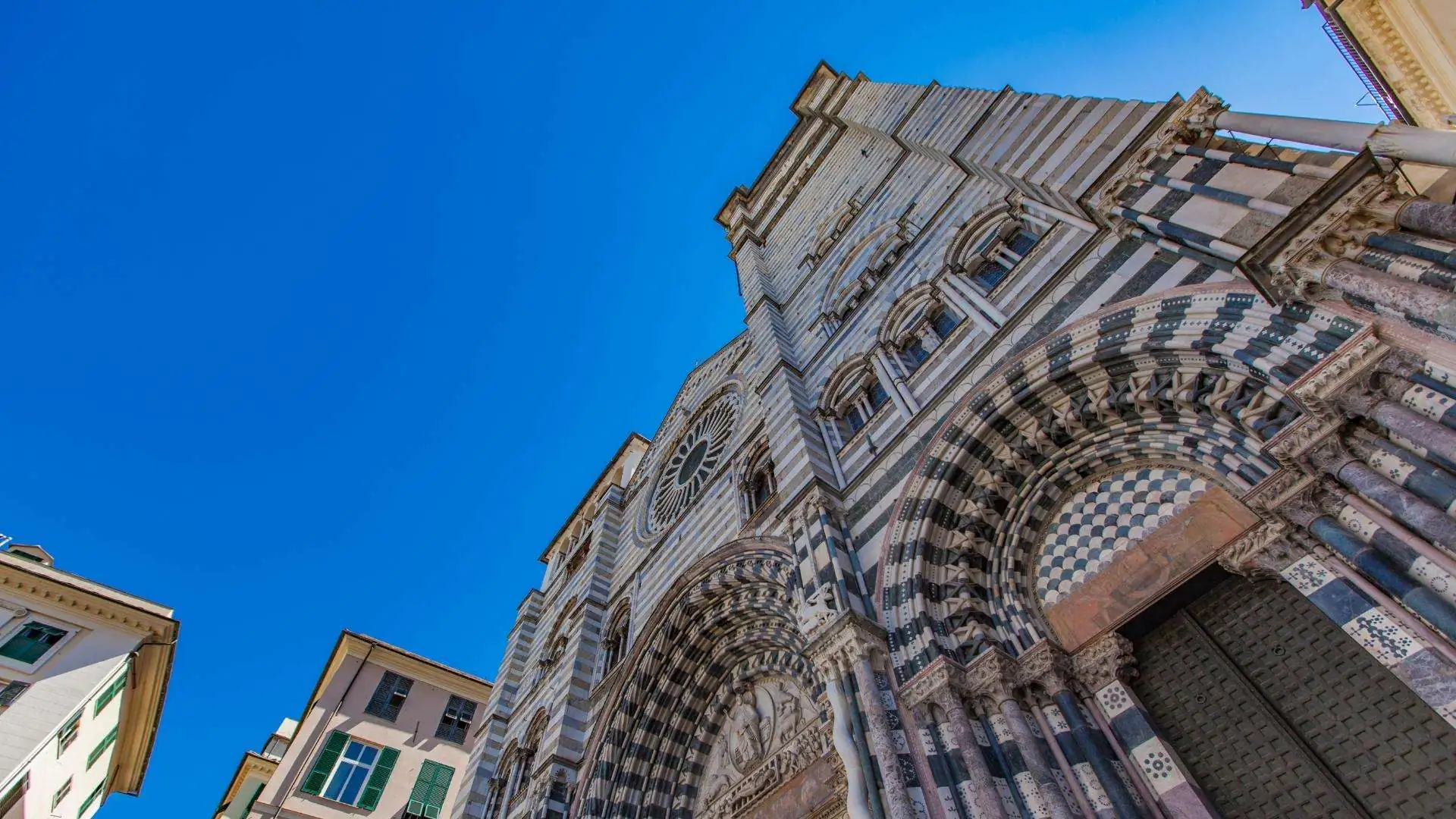
Striped façade of San Lorenzo Cathedral in Genoa

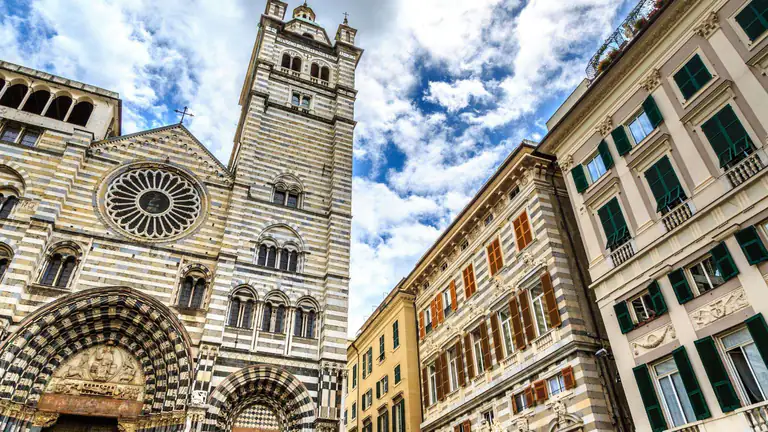
San Lorenzo Cathedral

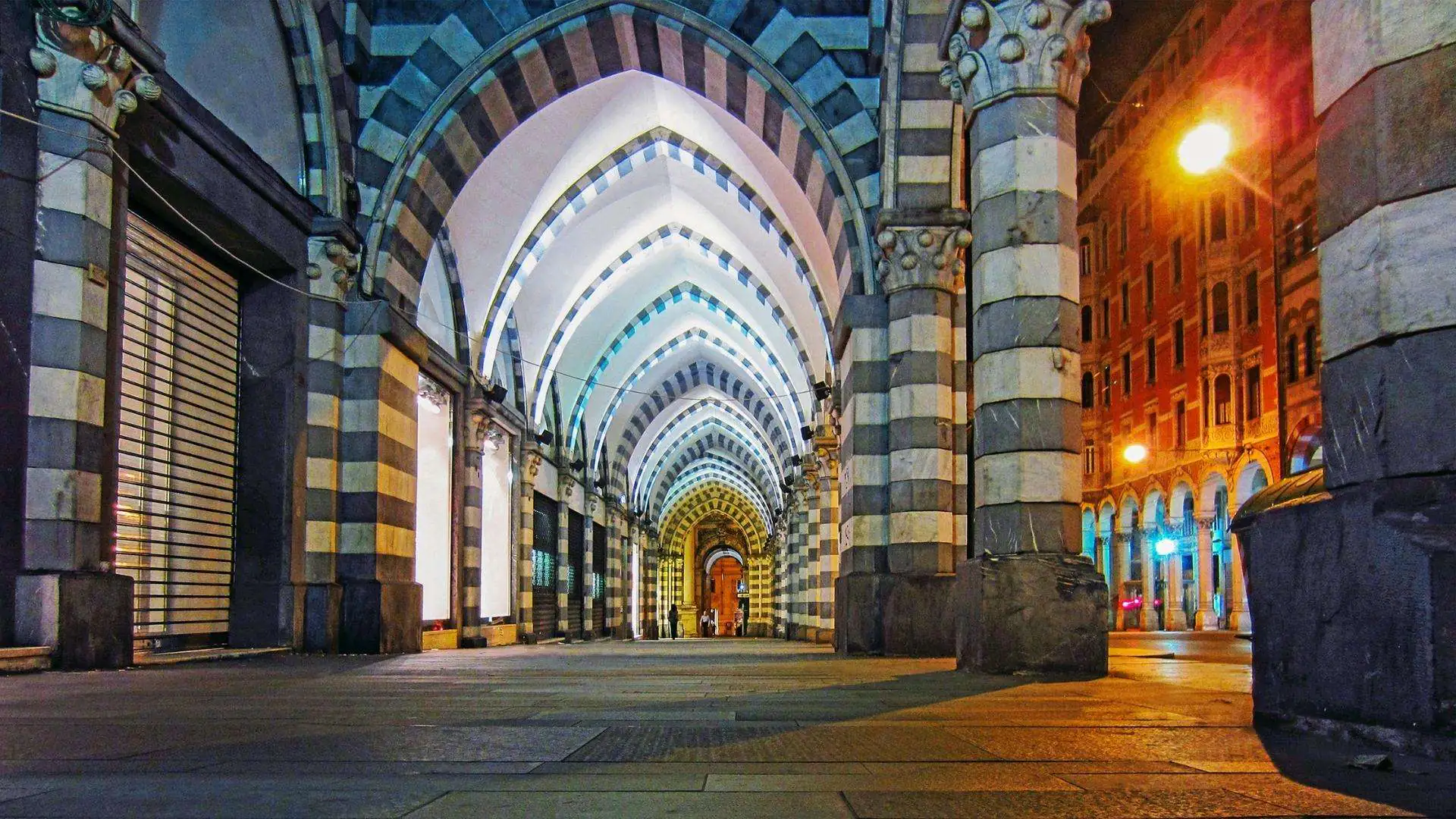
The Cathedral of San Lorenzo is easy to spot thanks to its black-and-white striped façade, typical of medieval Genoa’s important churches, and the marble lions on the steps. Inside are the Treasury Museum and, in the right aisle, a British shell from the Second World War that crashed through the roof without exploding.

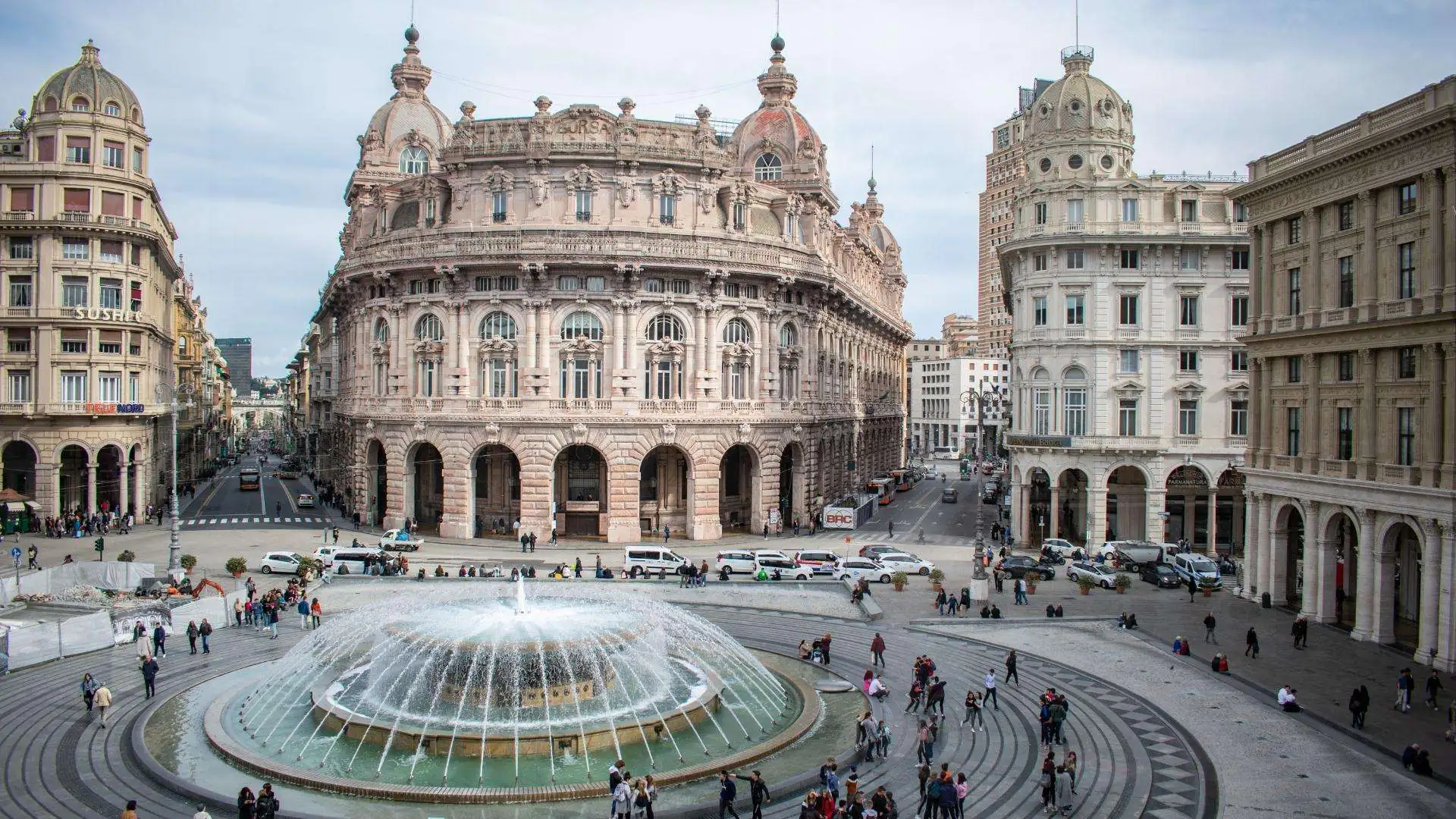
Piazza De Ferrari with its fountain in Genoa

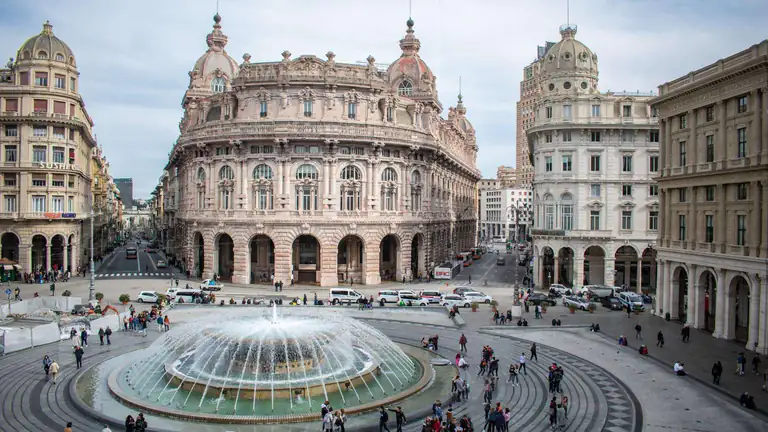
Piazza De Ferrari and the Doge's Palace

Piazza De Ferrari is the heart of the modern city, with its large bronze fountain, the Carlo Felice opera house and the old Stock Exchange. From here Via XX Settembre, the arcaded shopping street, heads east, and Via Roma leads to the Galleria Mazzini.

The square is also home to the Palazzo Ducale, the seat of the Republic’s government. Construction began at the end of the 13th century and it became the doge’s residence in 1339. After a fire in 1777 it was rebuilt in neoclassical style; the medieval Grimaldina Tower survives. Today it hosts the city’s major exhibitions: see the Palazzo Ducale website.

Porta Soprana, Genoa's ancient medieval gate

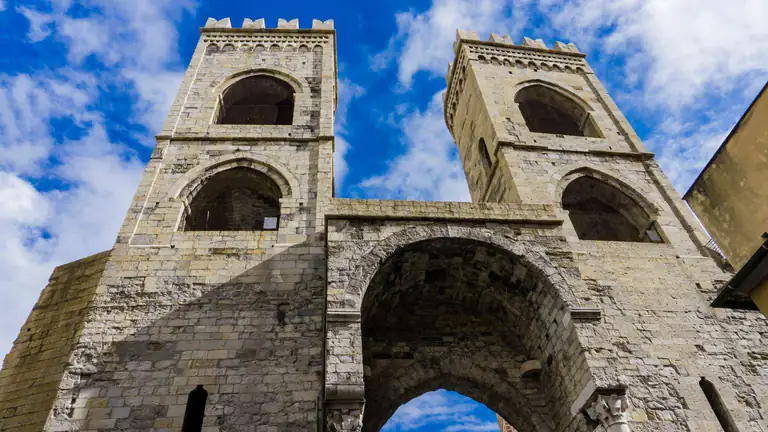
Porta Soprana and Columbus's House

Five minutes from De Ferrari, Porta Soprana is the medieval gateway to the city: two crenellated towers either side of an arch, part of the walls begun in 1155 to defend Genoa against Emperor Frederick Barbarossa. At its foot stands the house of Christopher Columbus, a small 18th-century reconstruction of the home where the navigator spent his youth.

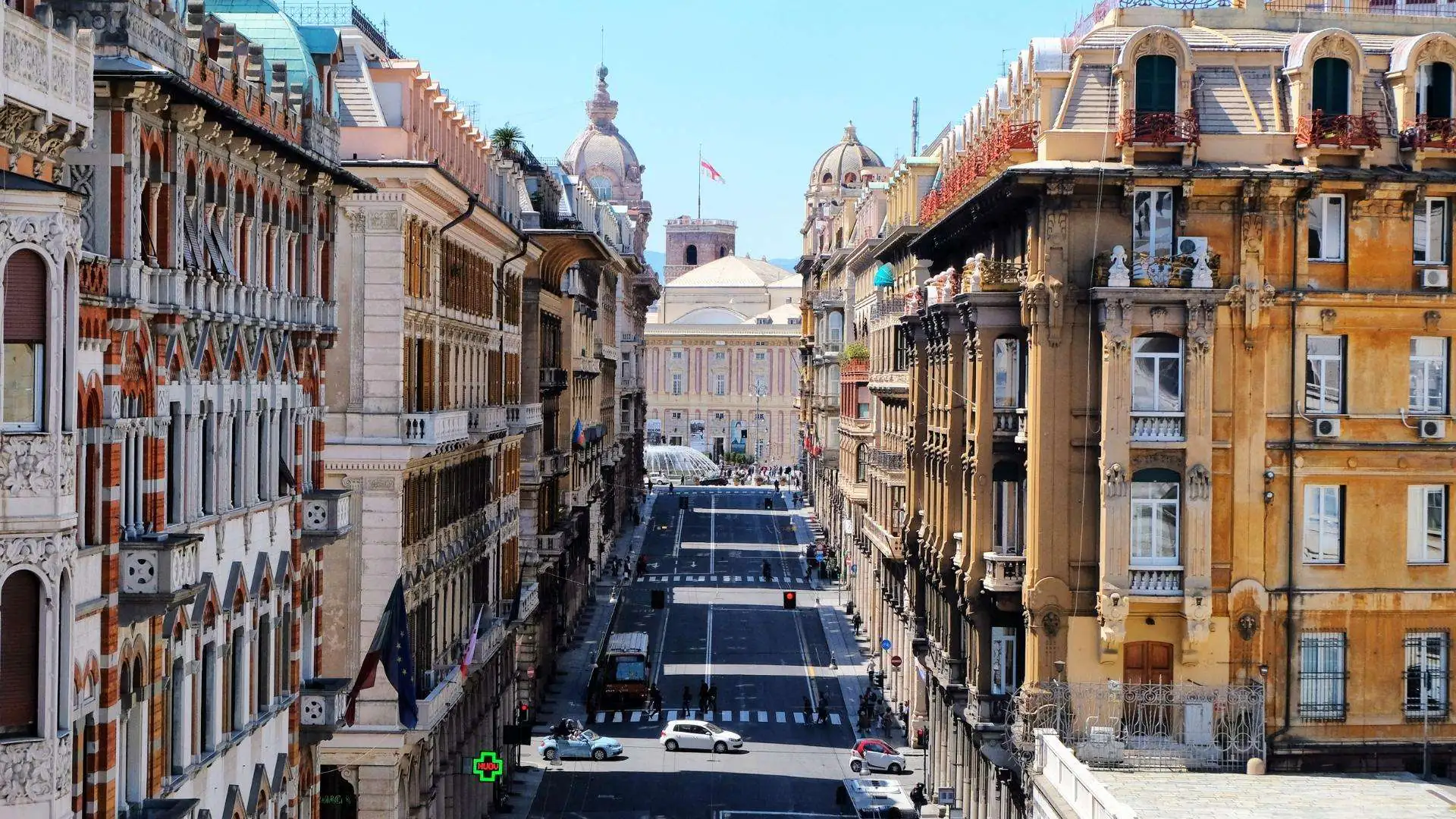
Elegant street with historic buildings in central Genoa

Via Garibaldi and the Palazzi dei Rolli

Via Garibaldi, the 16th-century “Strada Nuova”, is Genoa’s most elegant street: in less than 300 metres one great family palace follows another, with frescoed entrance halls and courtyards. The Palazzi dei Rolli were the noble residences listed in the official registers (“rolli”) of houses obliged to host kings, popes and ambassadors on state visits; 42 of them are UNESCO-listed.

Three palaces on Via Garibaldi form the Musei di Strada Nuova: Palazzo Rosso, Palazzo Bianco and Palazzo Doria Tursi, the town hall, with paintings by Van Dyck, Rubens and Caravaggio, and Paganini’s violin. Opening times and tickets are on the Musei di Genova website. Twice a year, during the Rolli Days, private palaces open too: in 2026 at the end of March and in mid-October.

Via Balbi, the Royal Palace and the Annunziata

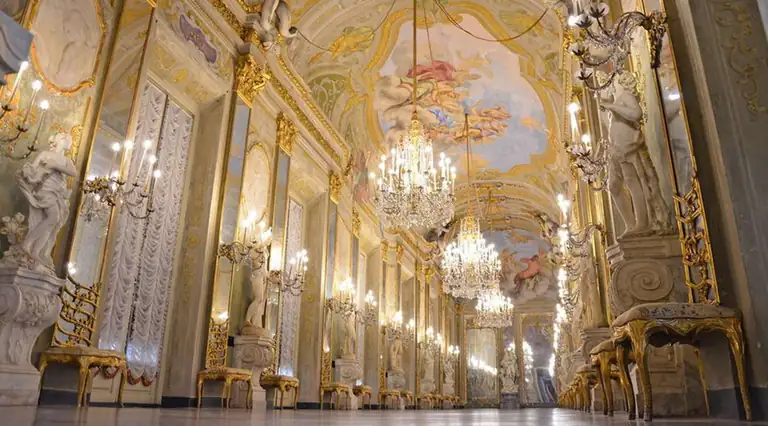
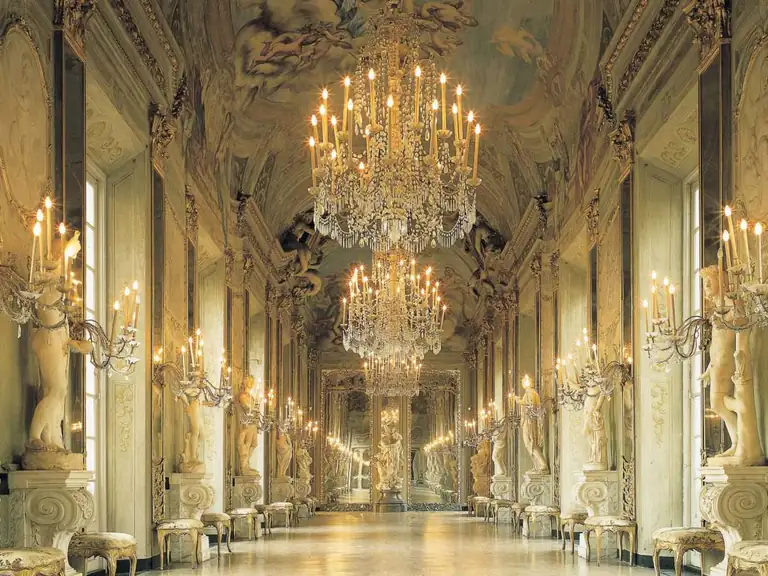
Via Balbi continues the line of palaces towards Principe station. Here you will find the University and the Palazzo Reale, built by the Balbi family in the mid-17th century, enlarged by the Durazzo and a Savoy royal residence from 1824. It is the most complete historic palace to visit, with furnished apartments, a hanging garden and the Hall of Mirrors.

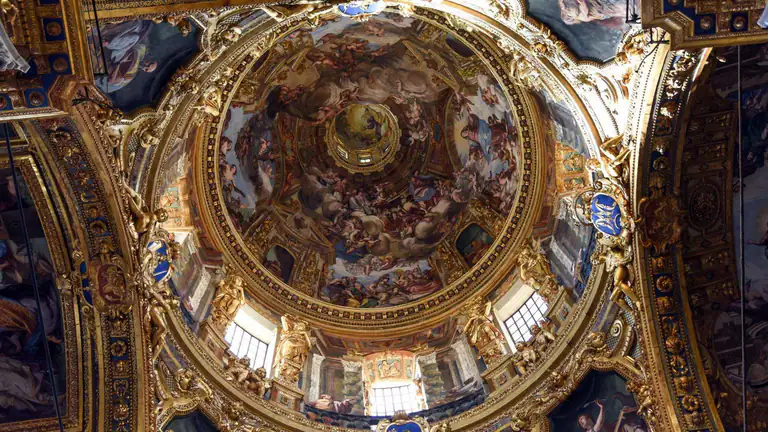
Just below, the Basilica of the Annunziata looks plain from outside, but inside it is one of Italy’s richest Baroque churches, covered in gold and frescoes.

Villa del Principe

Next to Principe station, Andrea Doria’s villa was built from the 1520s just outside the walls. Inside are frescoes by Perin del Vaga, a pupil of Raphael, including the “Fall of the Giants”; Emperor Charles V stayed here in 1533. It still belongs to the Doria family and is open as a museum, with an Italian garden overlooking the port.

Castelletto and Castello d'Albertis

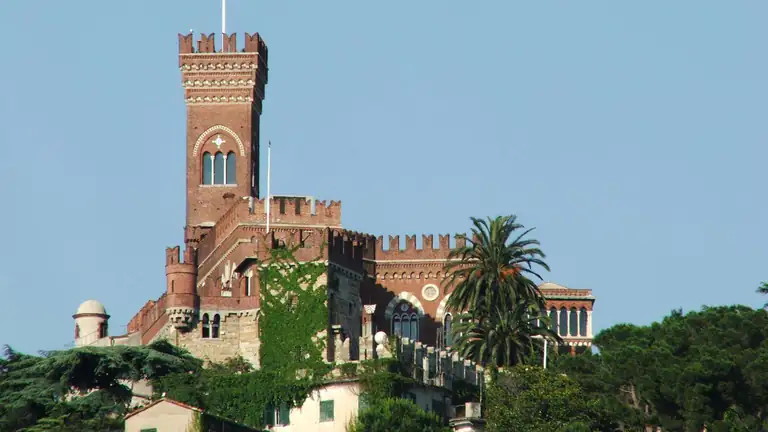
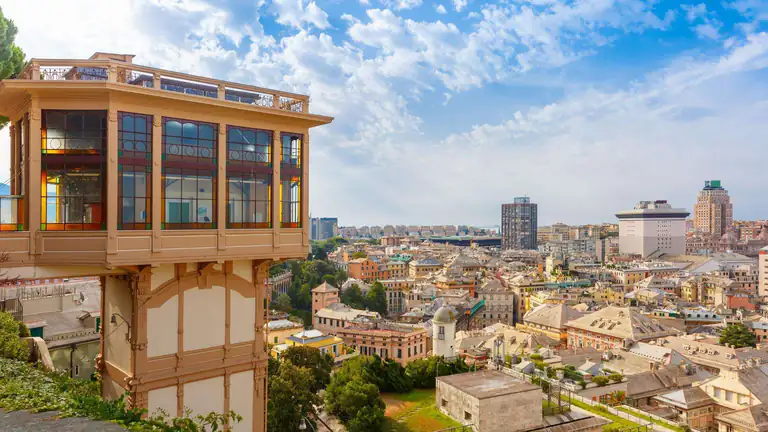
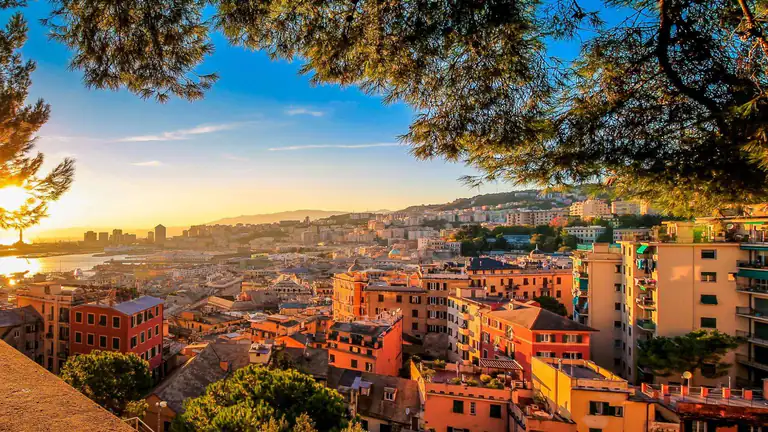
For a view over Genoa without the climb, take the Castelletto Levante lift from Piazza Portello: in a few seconds you are on the Spianata di Castelletto, the city’s best-known viewpoint, with slate roofs, domes and the harbour below. On the other side of the centre, above Principe station, the Castello d’Albertis is the neo-Gothic home of a naval captain, now the Museum of World Cultures, with another panoramic terrace.

Full guide →

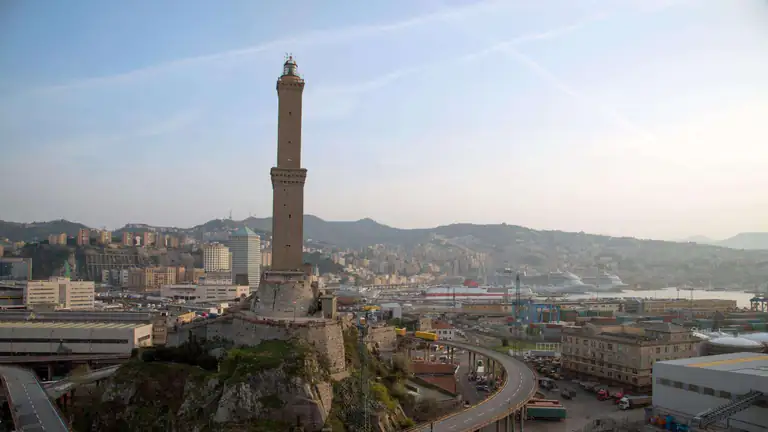
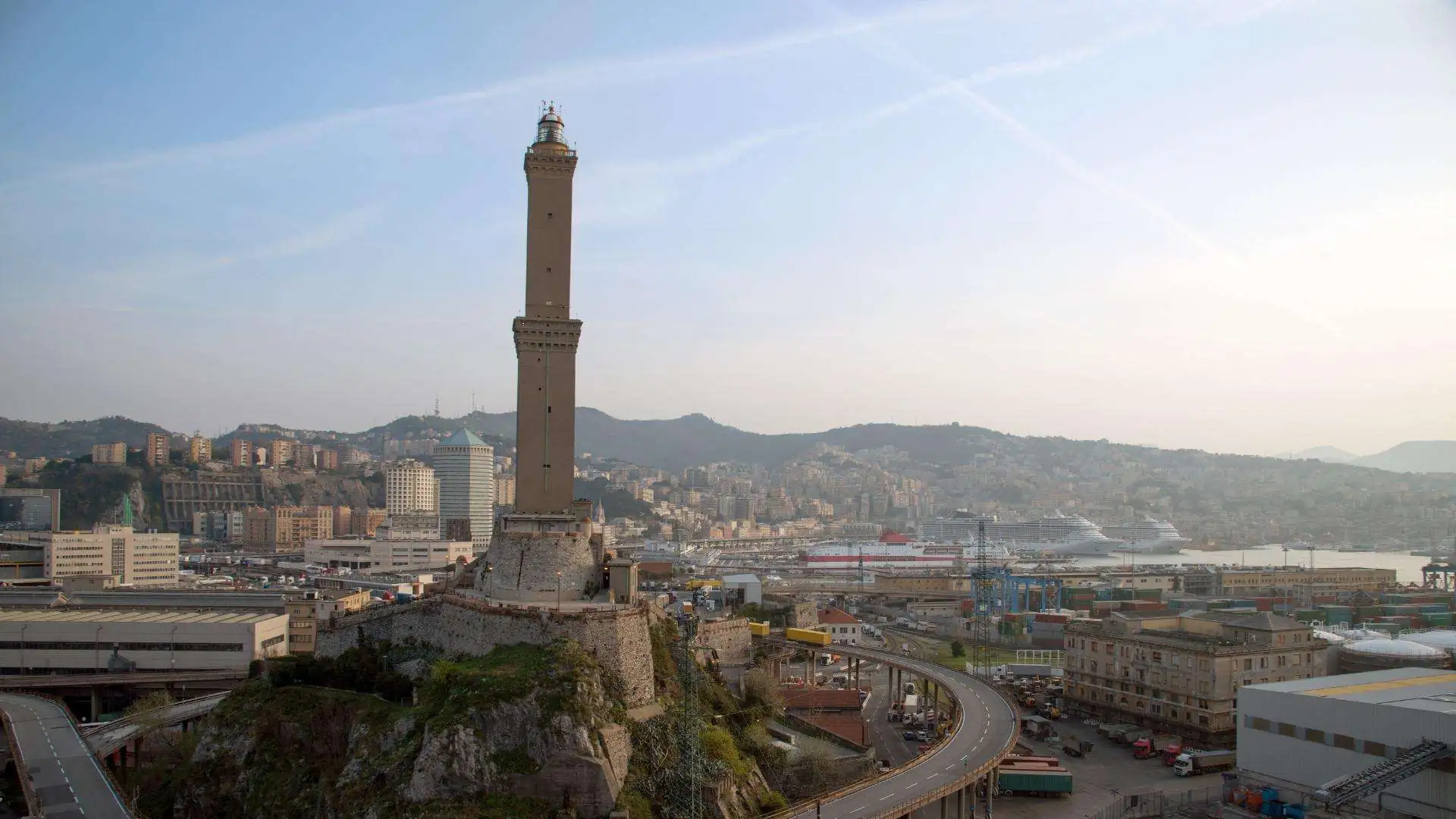
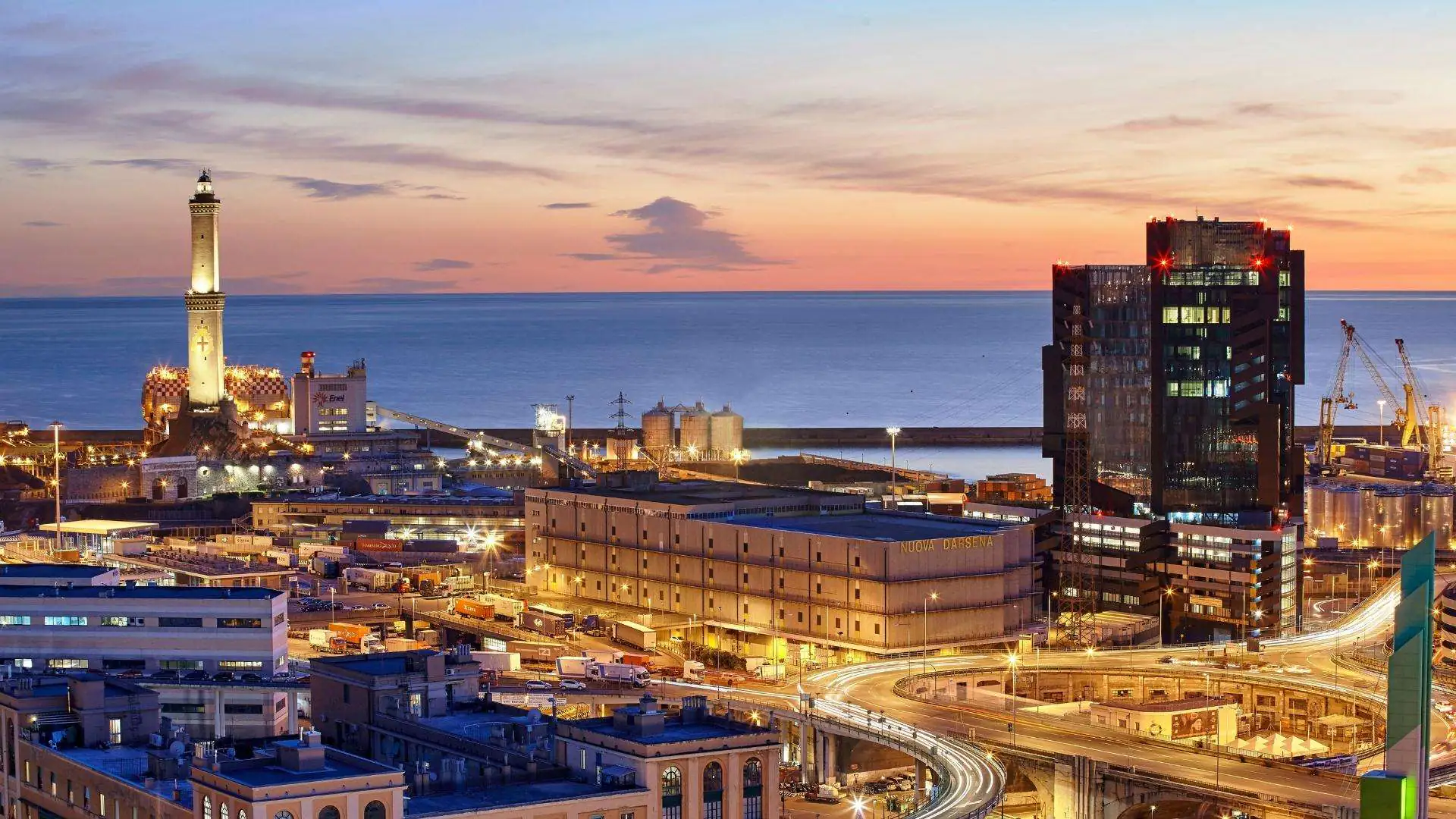
La Lanterna, Genoa's iconic lighthouse

The Lanterna

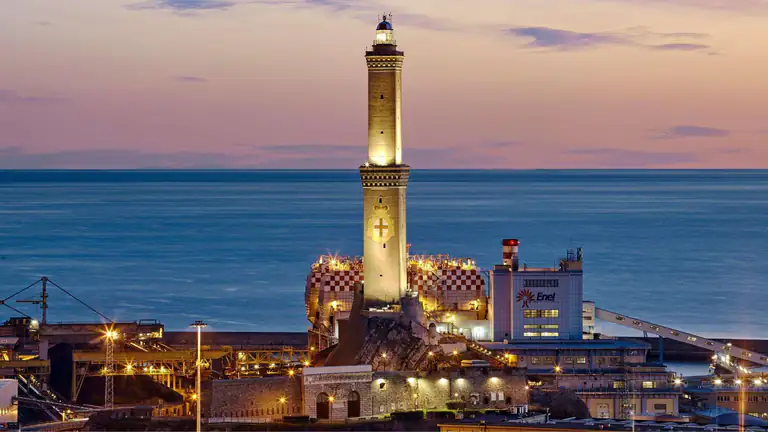
The Lanterna is Genoa’s lighthouse and the symbol of the city, guarding the harbour entrance for centuries. You can reach it on foot along a protected walkway beside the port, starting near the ferry terminal; on opening days you can climb to the first terrace and visit the museum at its base.

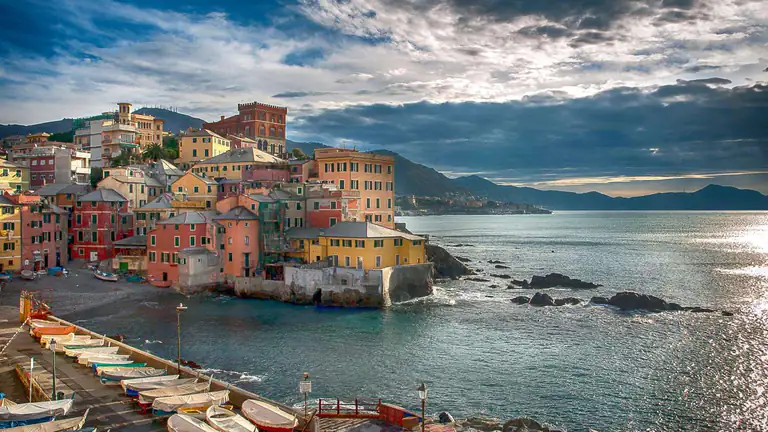
Boccadasse and Corso Italia

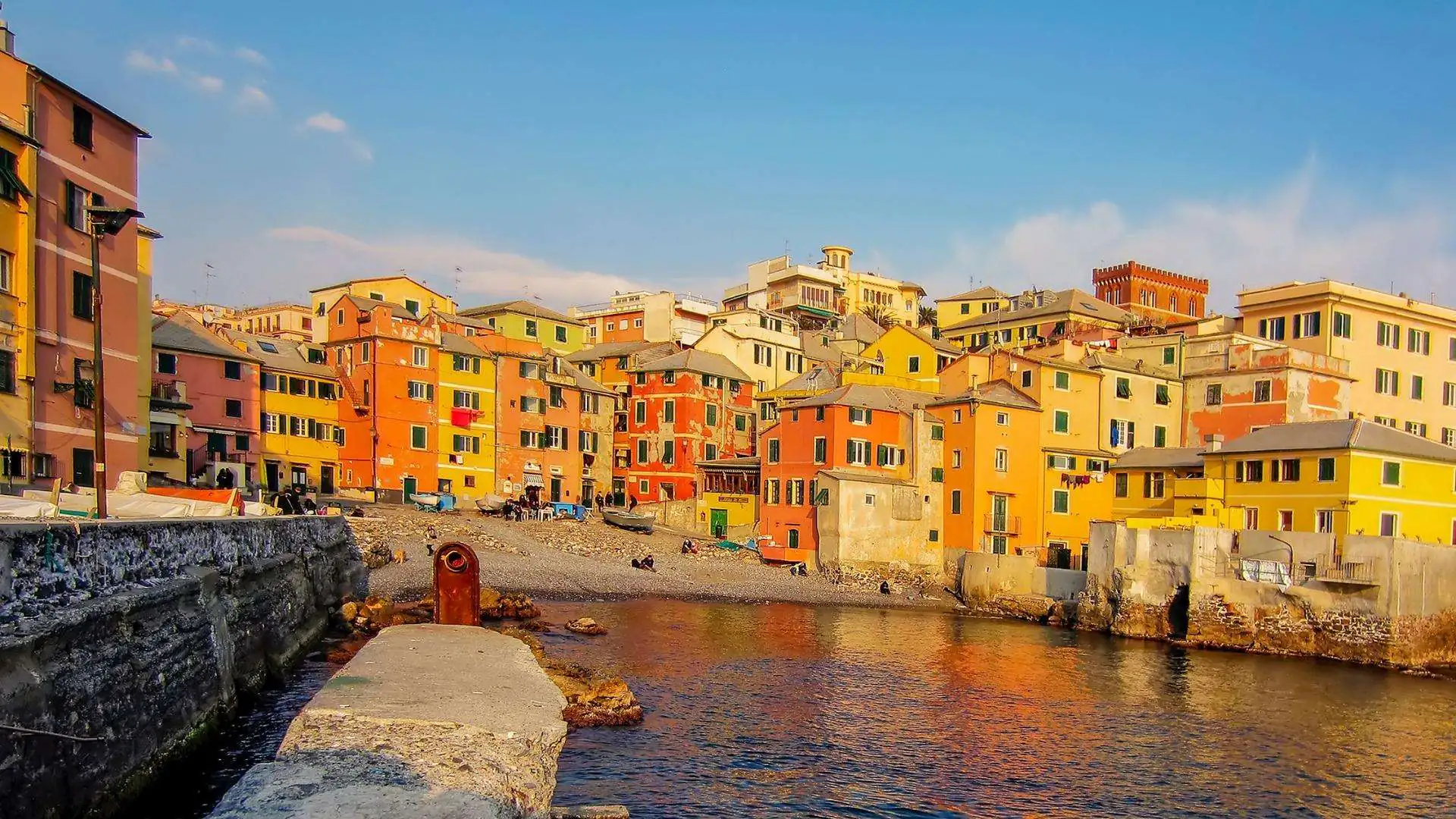
Boccadasse is the old fishing village on the city’s eastern side: a small pebble beach, boats pulled up on the shore and colourful houses stacked one above the other. Get there by bus from the centre or walk along Corso Italia, the seafront promenade of more than two kilometres starting from the Foce district. Come at sunset; on summer weekends it gets very busy.

Full guide →

Museums

Biosphere

The large glass sphere designed by Renzo Piano at the Old Port, with a small tropical forest inside.

Full guide →

Churches and sanctuaries

Church of the Annunziata

The basilica of the Santissima Annunziata del Vastato, one of Genoa’s richest Baroque interiors, just off Via del Campo.

Full guide →

Viewpoints

Lanterna of Genoa

The lighthouse that symbolises Genoa, 77 metres high on the San Benigno promontory: you can climb up to the panoramic terrace.

Full guide →

Gardens and parks

Nervi Parks

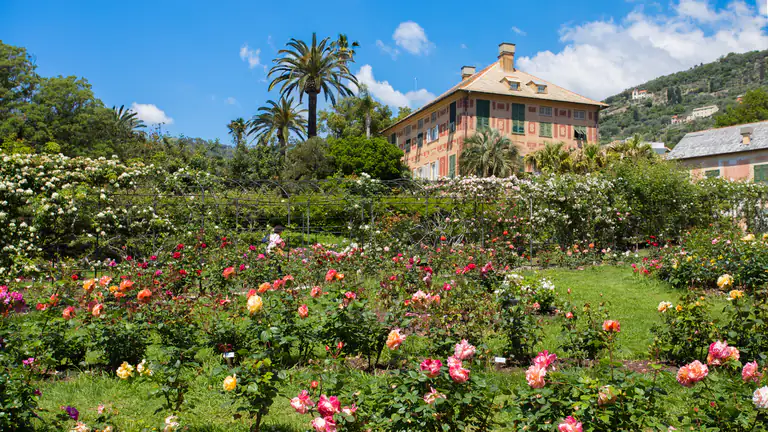
Large historic parks overlooking the sea at Nervi, with villas, museums and the Anita Garibaldi promenade.

Full guide →

Walks and promenades

Old Port (Porto Antico)

The old port renewed by Renzo Piano: the Aquarium, the Bigo, the Biosphere and a seaside promenade in the heart of Genoa.

Full guide →

Villas and historic houses

Rolli Palaces

Via Garibaldi and the UNESCO-listed noble palaces: Palazzo Rosso, Bianco and Tursi, the Strada Nuova museums.

Full guide →

Villages and old towns

The Caruggi of Genoa

A walking route through Europe’s largest historic centre, from Piazza Caricamento to Via San Luca and Via del Campo.

Full guide →

Villages and old towns

Via del Campo 29 rosso

The small museum of Genoese singer-songwriters in the Via del Campo shop celebrated by De André, with guitars and memorabilia.

Full guide →

Porto Antico and central Genoa from above

Where to stay

Where to stay in Genoa

Old town and Porto Antico: the most practical choice for two or three days if you want to walk everywhere, with the Aquarium, the carruggi and restaurants on your doorstep. Rooms are often in historic buildings, sometimes without a lift, and some streets are noisy at night.

De Ferrari, Via XX Settembre and Brignole: 19th-century Genoa, quieter and well connected. Brignole is the right station for day trips to Camogli, Portofino and the Cinque Terre, so this is the best base if the Riviera is part of your plan.

Principe and Via Balbi: convenient if you arrive by train from Milan or the western Riviera, or if you have a ferry to catch. The harbour and the Rolli palaces are a few minutes away.

Castelletto and Albaro: quieter residential districts, the first on the hill with lifts down to the centre, the second towards the sea and Corso Italia. Good for couples and families looking for calm.

Nervi and Boccadasse: for a slower stay by the sea, with the centre reachable by train or bus. A good option if you have a car.

Recommended places to stay

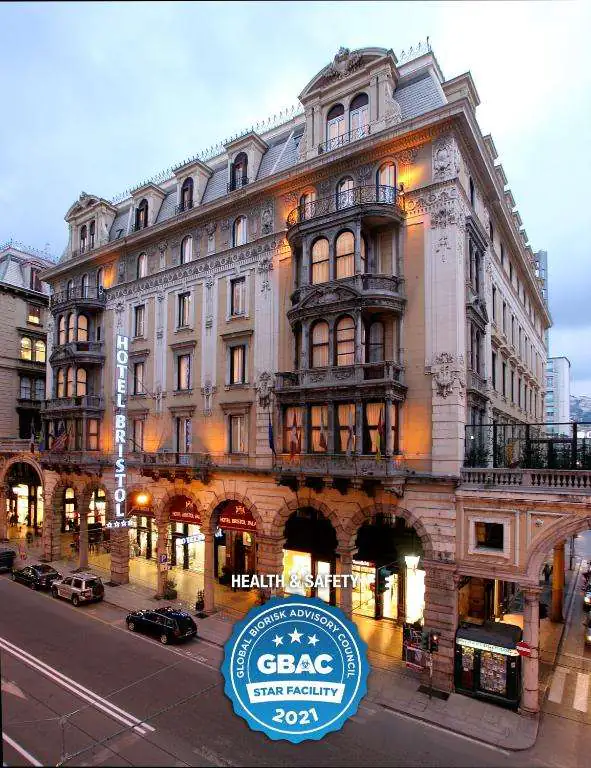
Façade of the Hotel Bristol Palace in Genoa

Hotel · Recommended accommodations in the historic center of Genoa ★★★★

Hotel Bristol Palace

Featuring a majestic elliptical staircase leading to the elegant rooms, Hotel Bristol Palace is set in…

Check availability →
Room at Hotel Continental in Genoa

Hotel · Recommended accommodations in the historic center of Genoa ★★★★

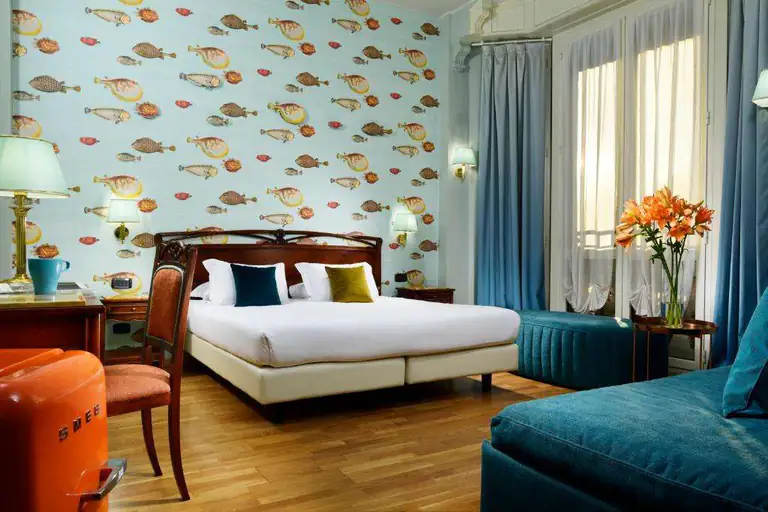
Hotel Continental Genova

Hotel Art Nouveau opposite the Piazza Principe Station, offers a view of the city. It offers…

Check availability →
Entrance and outdoor seating at Hotel Bologna in Genoa

Hotel · Recommended accommodations in the historic center of Genoa ★★

Hotel Bologna

Located in the historic center of Genoa, 120 meters from Palazzo Reale, 1 km from the…

Check availability →

Hotel · Recommended accommodations in the historic center of Genoa ★★★

Le Nuvole Residenza d’Epoca

Located in Genoa, just a 5-minute walk from the port, Hotel Le Nuvole Residenza d'Epoca offers…

Check availability →
Hotel Palazzo Grillo on its square in Genoa at night

Hotel · Recommended accommodations in the historic center of Genoa ★★★★

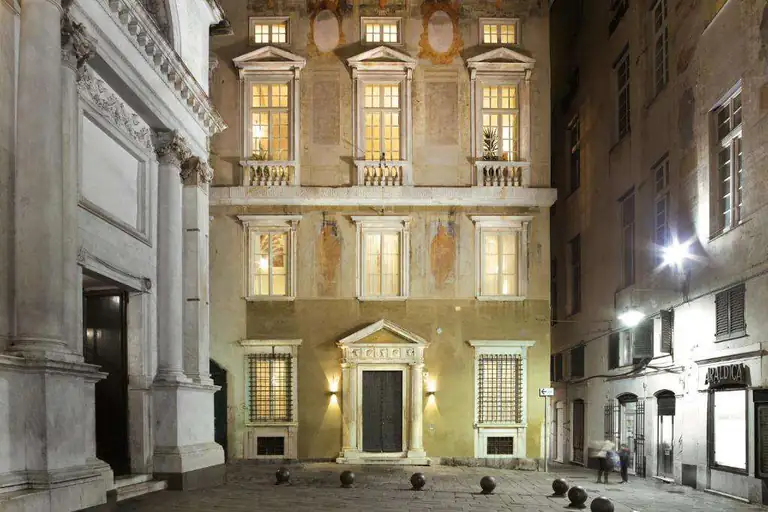
Hotel Palazzo Grillo

Hotel Palazzo Grillo is set in a historic building in Genoa, 300 meters from the Aquarium.…

Check availability →
Entrance of the Best Western Porto Antico in Genoa

Hotel · Porto Antico ★★★

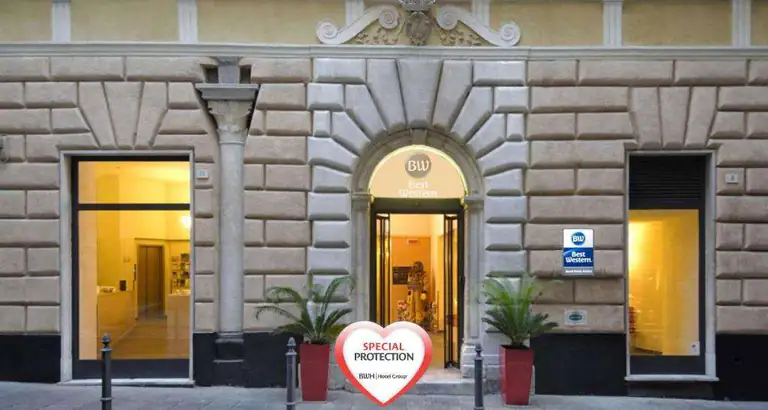
Best Western Porto Antico

The Best Western Porto Antico overlooks the tourist port of Genoa and is located next to…

Check availability →
Hotel NH Collection Genova Marina on the Porto Antico

Hotel · Porto Antico ★★★★

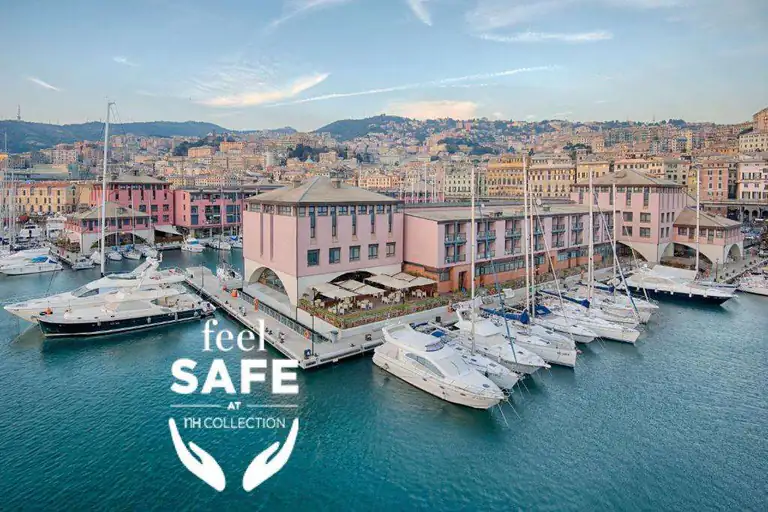
NH Collection Genova Marina

Located in the Porto Antico area, a 5-minute walk from the center, Genova Marina is near…

Check availability →
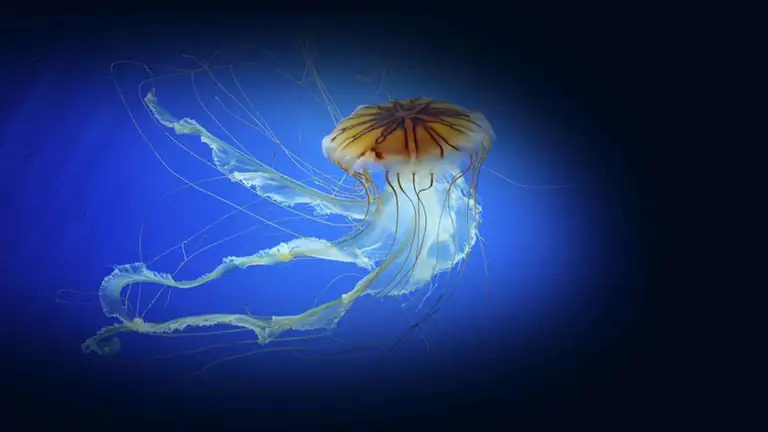
Jellyfish in the Jellyfish Room at the Genoa Aquarium

B&B · Porto Antico ★★★

B&B dell’Acquario

In the center of Genoa, a short distance from the port and 400 meters from San…

Check availability →

All places to stay in Genoa on Booking: compare prices and availability.

All places to stay on Booking.com

Getting there

How to get to Genoa

By car

Genoa is the junction of four motorways: the A10 from Ventimiglia and France, the A7 from Milan, the A26 from Piedmont and Switzerland, and the A12 from La Spezia and Tuscany. For the centre and the Porto Antico, exit at Genova Ovest; for Brignole, Albaro and Nervi, use Genova Est or Nervi. The old town is a limited traffic zone (ZTL) with camera-controlled gates: do not drive into it, as fines are sent to rental companies too.

By train

The main stations are Genova Piazza Principe, west of the centre, and Genova Brignole, to the east; most trains stop at both. From Milan the journey takes from about an hour and a half to over two hours depending on the train, and Turin is similar. Regional trains run along the whole coast: Camogli in about 25 minutes, the Cinque Terre in an hour and a quarter or a little more. Timetables and tickets on Trenitalia.

By boat

From spring to autumn, Golfo Paradiso boats leave the Porto Antico and Nervi for Camogli, San Fruttuoso and Portofino; the service depends on the season’s calendar and on sea conditions. Timetables and fares on Golfo Paradiso.

By plane

Genoa’s Cristoforo Colombo airport is at Sestri Ponente, about 7–9 km from the centre, with domestic and international flights. AMT’s Volabus links arrivals with Principe, De Ferrari and Brignole; a taxi takes about 15–20 minutes without traffic. Further away, Milan and Nice airports have many more flights, including from the UK and the US: from either, allow about two hours by car, more in traffic, or take the train via Milan.

Parking

Parking in the centre is difficult and expensive. Blue-line street parking (Blu Area) is paid Monday to Saturday from 8am to 8pm, with rates that rise after the first hours; some bays are for residents only. There are paid multi-storey car parks near the Porto Antico and the Aquarium, which fill up quickly at weekends and on cruise departure days.

The easiest option is a park-and-ride car park run by Genova Parcheggi, such as Dinegro near the Genova Ovest exit and the metro, with a combined parking and transport ticket, or a hotel with a garage. If you can, arrive by train: in Genoa a car is of little use.

By car

A7, A10, A12 and A26; Genova Ovest and Est exits. The old town is a limited traffic zone

By train

Piazza Principe and Brignole stations; Camogli in about 25 min, Cinque Terre from about 1 h 15

By sea

Ferries and boats to the Riviera di Levante

By plane

Genoa Cristoforo Colombo, about 7–9 km from the centre; AMT Volabus to the stations

The guide

Things to do in Genoa

Nervi and its parks

Nervi, at the far eastern end of the city, feels like a different town. The Passeggiata Anita Garibaldi runs for about two kilometres along the cliffs, and behind it lie the Parks of Nervi, the gardens of three historic villas with palms, rose gardens and art museums. It is about a quarter of an hour by train from Brignole station. Plan half a day, and bring a swimsuit in summer.

The Righi, the forts and the walls

The Zecca–Righi funicular, opened in 1897, climbs from the centre to the Righi viewpoint. This is the start of the Parco delle Mura: around a dozen kilometres of 17th-century walls and a chain of forts (Sperone, Begato, Diamante and others) linked by footpaths. It is the best hike you can do without leaving the city: wear proper shoes, carry water, and use the Granarolo rack railway to come down near Principe station. Some forts are closed for restoration.

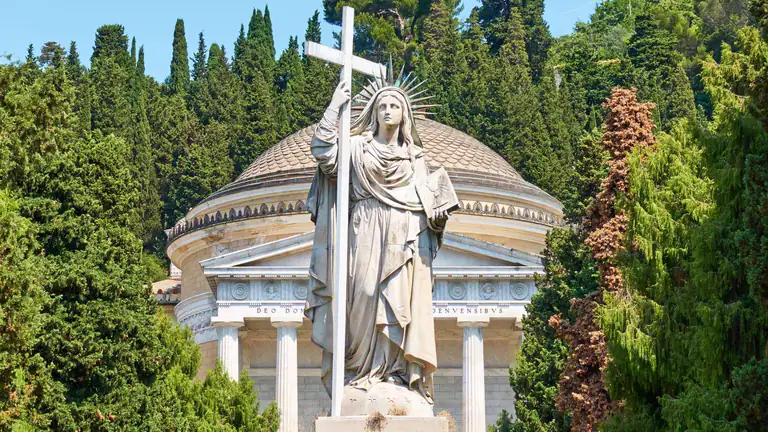
Staglieno Cemetery

The Monumental Cemetery of Staglieno, in the Bisagno valley, is one of the most important monumental cemeteries in Europe: galleries of 19th-century marble statues, chapels and woodland paths. An unusual, quiet visit, reached by bus from Brignole.

Street food

Genoa is a city to eat while walking: oily, salty focaccia in the morning, farinata and panissa from a sciamadda (wood-fired bakery) at lunch, trofie with pesto in the evening. At the Mercato Orientale on Via XX Settembre you can buy basil, olive oil and anchovies, and there is a food hall upstairs. Dishes, timings and tips are in our guide to what to eat in Genoa.

Getting around Genoa

The centre is best on foot, but AMT public transport takes care of the ups and downs. The metro has a single line with eight stations, from Brin to Brignole, via Principe, Darsena, San Giorgio, Sant’Agostino and De Ferrari: the fastest way from Principe station to the centre.

Public lifts (such as Castelletto) and funiculars (Zecca–Righi and Sant’Anna) are part of the urban network. Since November 2025 the metro, lifts and funiculars are no longer free: you need an AMT ticket, and if you are moving around a lot a day ticket makes sense. Current fares are on the AMT website.

Day trips from Genoa

  • Camogli: the fishing town of tall, colourful houses on the Golfo Paradiso, about 25 minutes by regional train from Brignole. Boats leave here for San Fruttuoso.
  • Recco: home of the cheese focaccia (IGP), on the same railway line just before Camogli.
  • Bogliasco: a small village just past Nervi with a beach at the mouth of a stream; good for half a day.
  • Portofino and the Abbey of San Fruttuoso: by boat from the Porto Antico in summer, or by train to Santa Margherita and then bus or boat.
  • Santa Margherita Ligure: the elegant town on the Tigullio gulf, with its seafront and villas; about 35–40 minutes by train.
  • Sestri Levante: the Bay of Silence and the Bay of Fables, under an hour by train.
  • Monterosso and the Cinque Terre: an easy day trip by train, from about an hour and a quarter on the fastest services. Leave early, as summer trains are crowded.
  • Arenzano: to the west, a seaside town with a long pedestrian promenade and a large park in the centre, about half an hour by train.
Weather

Weather and best time to visit Genoa

All year; April–June and September–October are best for walking

☁️
21°CNow · wind 23 km/h
  1. Sun 11⛅21° 19° 
  2. Mon 12☀️23° 16° 
  3. Tue 13☀️21° 15° 
  4. Wed 14⛅22° 16° 
  5. Thu 15☀️23° 16° 
  6. Fri 16🌤️22° 16° 

Forecast: MET Norway (Yr), CC BY 4.0 licence. Updated hourly.

Genoa weather: 10-day forecast and climate →

Weather across Liguria →

MonthJanFebMarAprMayJunJulAugSepOctNovDec
SeaOff seasonOff seasonOff seasonOff seasonPossibleGoodIdealIdealGoodPossibleOff seasonOff season
Sightseeing and hikingGoodGoodIdealIdealIdealIdealGoodGoodIdealIdealGoodGood
CrowdsFew peopleFew peopleFew peopleBusyBusyBusyBusyBusyBusyBusyFew peopleBusy
Don't missRolli DaysSan GiovanniSalone Nautico (Boat Show)

IdealGoodPossibleOff season

Crowds:QuietFew peopleBusyVery busy

Events

Upcoming events in Genoa

16–18 October 2026

Rolli Days

Genoa’s Rolli Days, 16–18 October 2026: which palaces open, opening times, how to book, paid sites and tips for your…

Discover →

22 October – 1 November 2026

Genoa Science Festival 2026

Genoa’s Festival della Scienza, 22 October – 1 November 2026: programme, guests, ticket prices, booking and how to plan your…

Discover →

Gallery

Photos of Genoa

FAQ

Frequently asked questions about Genoa

Is Genoa worth visiting?

Yes. Genoa has one of the largest medieval old towns in Europe, the UNESCO-listed Rolli palaces, Italy’s largest aquarium and very good food, and it is usually less crowded than Florence or the Cinque Terre. It is also the best base for day trips along the Riviera.

How many days do you need in Genoa?

Two full days for the old town, the Palazzi dei Rolli, the Porto Antico and the Aquarium. With three or four days add Nervi, the forts, Boccadasse and a trip to Camogli or Portofino.

What can you see in Genoa in one day?

Start at Principe with the Villa del Principe and Via Balbi, continue along Via Garibaldi to Piazza De Ferrari and San Lorenzo, wander down through the carruggi to Sottoripa and end at the Porto Antico, with the Aquarium or the Bigo. At sunset, go up to Castelletto.

Is Genoa's old town safe?

By day, yes: it is busy with residents and visitors. In the evening some areas towards Via Prè and the Maddalena are quieter; take the usual big-city precautions.

Are the metro and lifts in Genoa free?

Not any more: since November 2025 the metro, lifts and funiculars require an AMT ticket. The urban ticket is also valid on buses.

How do you get from the airport to the centre?

On AMT’s Volabus, which stops at Principe, De Ferrari and Brignole, or by taxi in about a quarter of an hour. Check Volabus times and fares on the AMT website.

Can you swim in Genoa?

Yes: Boccadasse, Vernazzola, Corso Italia and Nervi are the most popular spots. For proper beaches take the train to Camogli, the Golfo Paradiso or the Tigullio.

Is Genoa a good base for the Cinque Terre and Portofino?

Yes, especially if you stay near Brignole. Portofino is reachable by boat from the Porto Antico in season or by train to Santa Margherita; the Cinque Terre by train in just over an hour. Hotels are often cheaper than in the villages themselves.

Where should I park for the Aquarium?

In the multi-storey car parks at the Porto Antico, or at a park-and-ride such as Dinegro and then by metro. Avoid blue-line street parking, which has time limits and rising rates.

When is the best time to visit Genoa?

Spring and autumn, from April to June and from September to October: mild weather, long days and cooler alleys. Genoa works all year; winter is windier, but museums and the Aquarium are always open.
What should I eat in Genoa?

Focaccia, farinata, pesto with trofie or trenette, pansoti with walnut sauce, fried fish and, at Christmas, pandolce. Find out more in our Genoa food guide.
Nearby

What to see near Genoa

11 km as the crow flies

Bogliasco

Fishing village on Genoa's doorstep: medieval bridge, a beach among painted houses, a church on the rocks and Pontetto, 15…

Discover →

17 km as the crow flies

Recco

The home of cheese focaccia on the Golfo Paradiso: Blue Flag beach, Suffragio sanctuary, September fireworks, boats to San Fruttuoso…

Discover →

18 km as the crow flies

Camogli

Painted houses on the harbour, a basilica and castle on the sea, boats to Punta Chiappa and San Fruttuoso and…

Discover →

20 km as the crow flies

Arenzano

Between Genoa and Savona: Villa Negrotto Cambiaso park with its peacocks, a pilgrimage sanctuary, a seafront path on the old…

Discover →
Scroll to Top