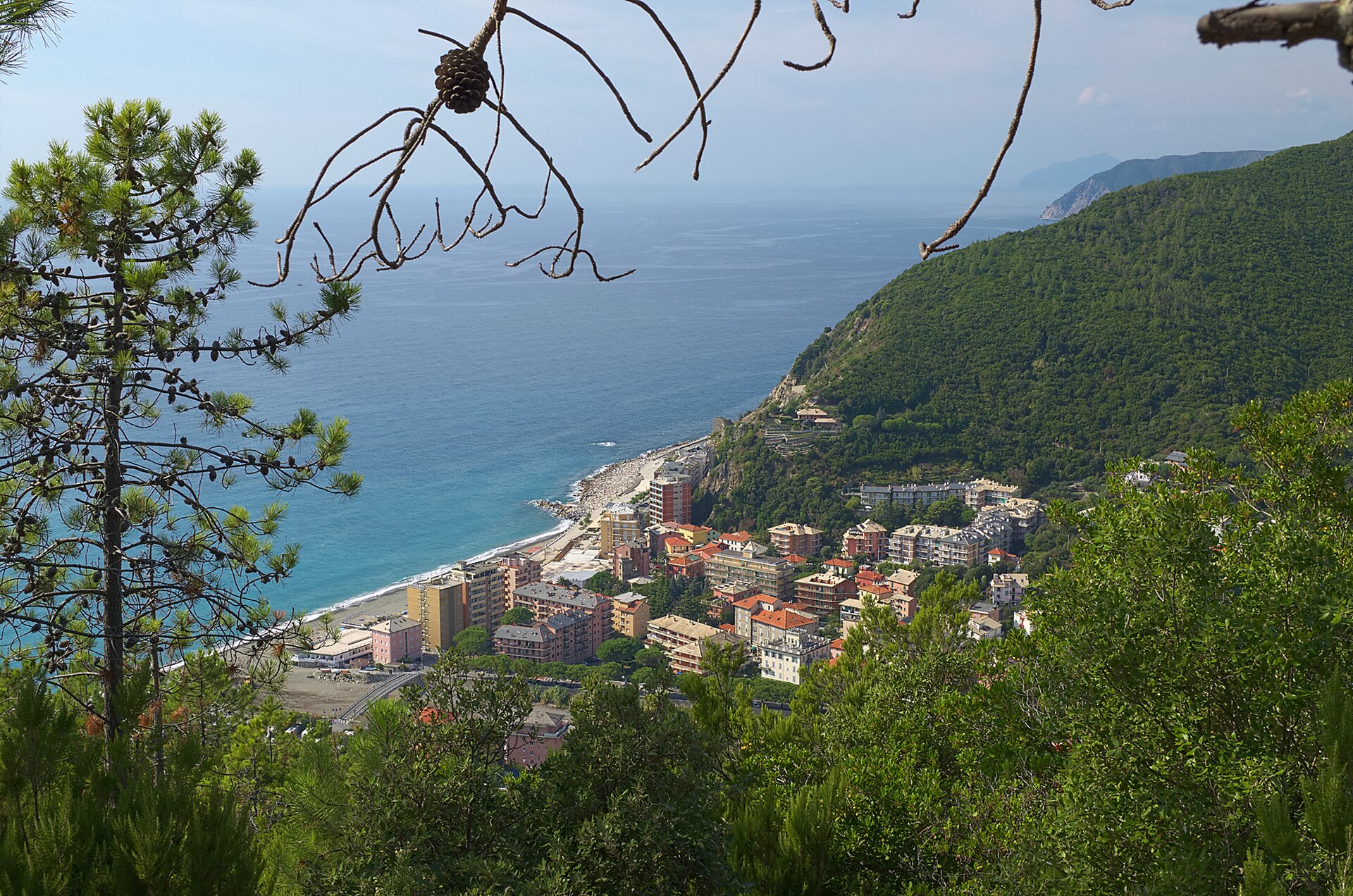
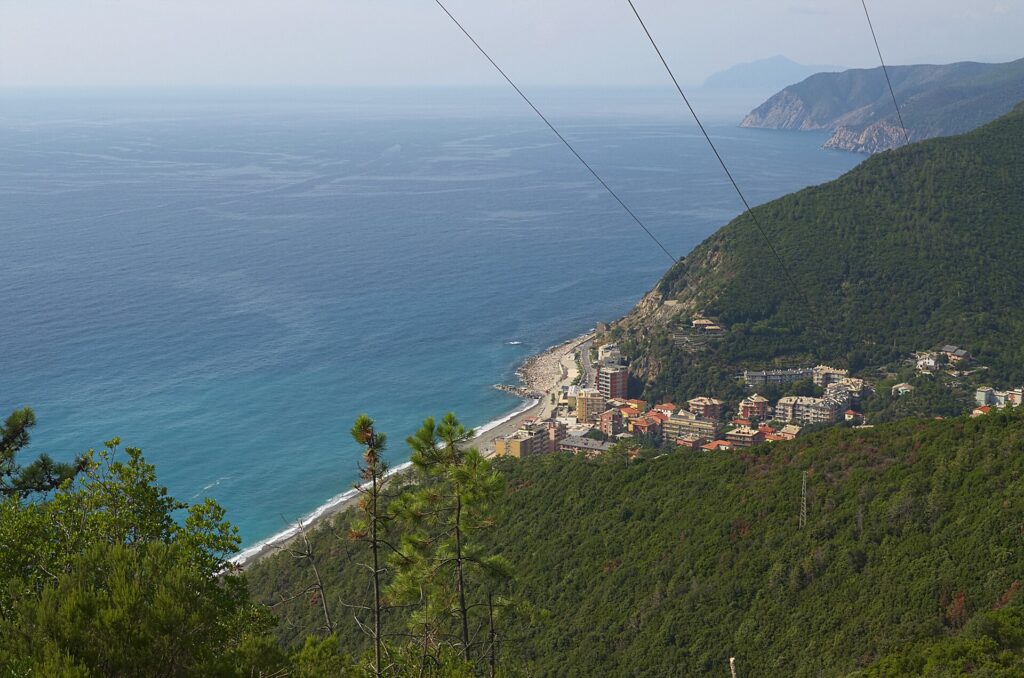
Deiva Marina is a small seaside town of about 1,300 people in the province of La Spezia, at the end of a narrow valley that opens onto the sea between Moneglia and Framura. It has a sand-and-shingle beach about 800 metres long, a compact old village around its church and a 16th-century watchtower, and hill hamlets that are far older than the resort on the shore. It is listed among the Borghi più belli d’Italia, the club of Italy’s most beautiful villages.
Most visitors pick it for practical reasons. Deiva is one of the main camping areas in Liguria, its railway station is a short walk from the beach, and Monterosso, the first of the Cinque Terre villages, is roughly 15–20 minutes away by train. Accommodation usually costs less than in the five villages, and the beach is wider than almost anything else on this stretch of coast.
One thing to know before you go: the coastal road through the old railway tunnels towards Moneglia and Sestri Levante has been closed since 2025 and is not expected to reopen before 2027. You can still drive in from the motorway or the Via Aurelia, but for getting along the coast the train is the way to go. Allow a day for the town and surroundings, or a week if you come for the beach and use Deiva as a base for the Cinque Terre.
By Italian Riviera editorial team·Updated on ·11 min read
Where is Deiva Marina?
Deiva Marina is in Liguria (Riviera di Levante, province of La Spezia).
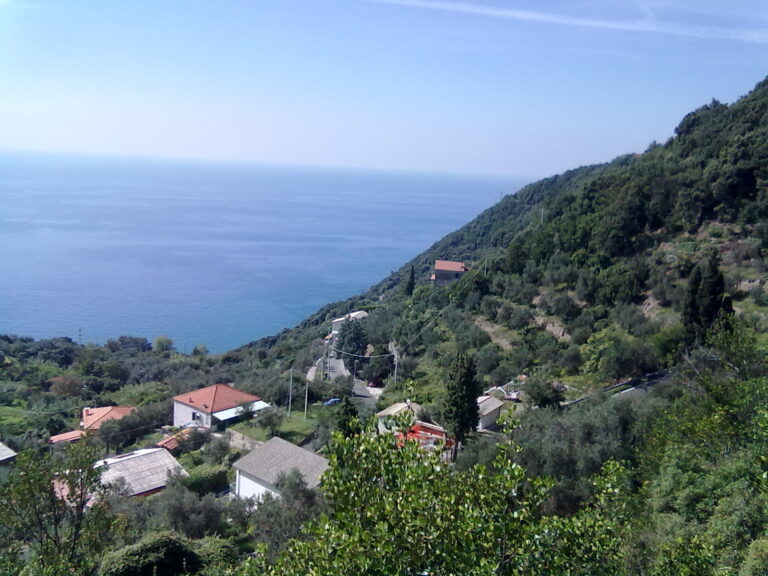
Deiva has two sides. The Marina, on the seafront, was almost entirely built after the Second World War: promenade, hotels, beach clubs. The old village sits a little further back in the valley, around the parish church. Higher up are the hamlets of Mezzema, Piazza, Passano and Caraschi, the valley’s first settlements. For centuries people lived up there, safe from pirate raids, and only moved down to the coast from the late 18th century.
Church of Sant'Antonio Abate
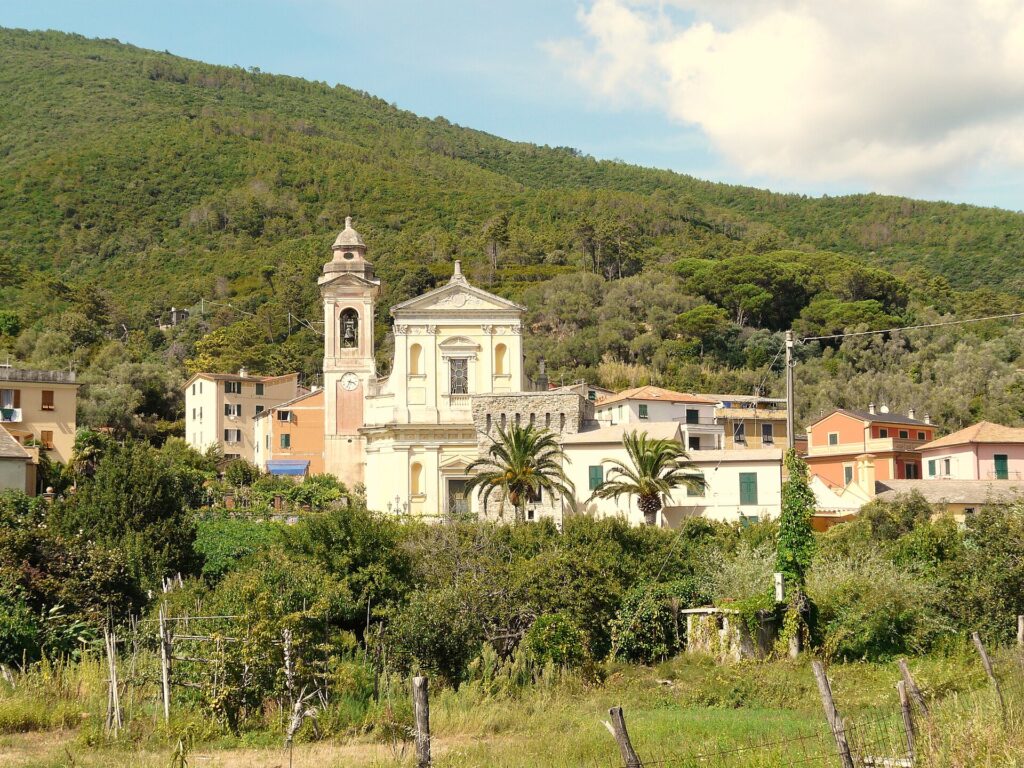
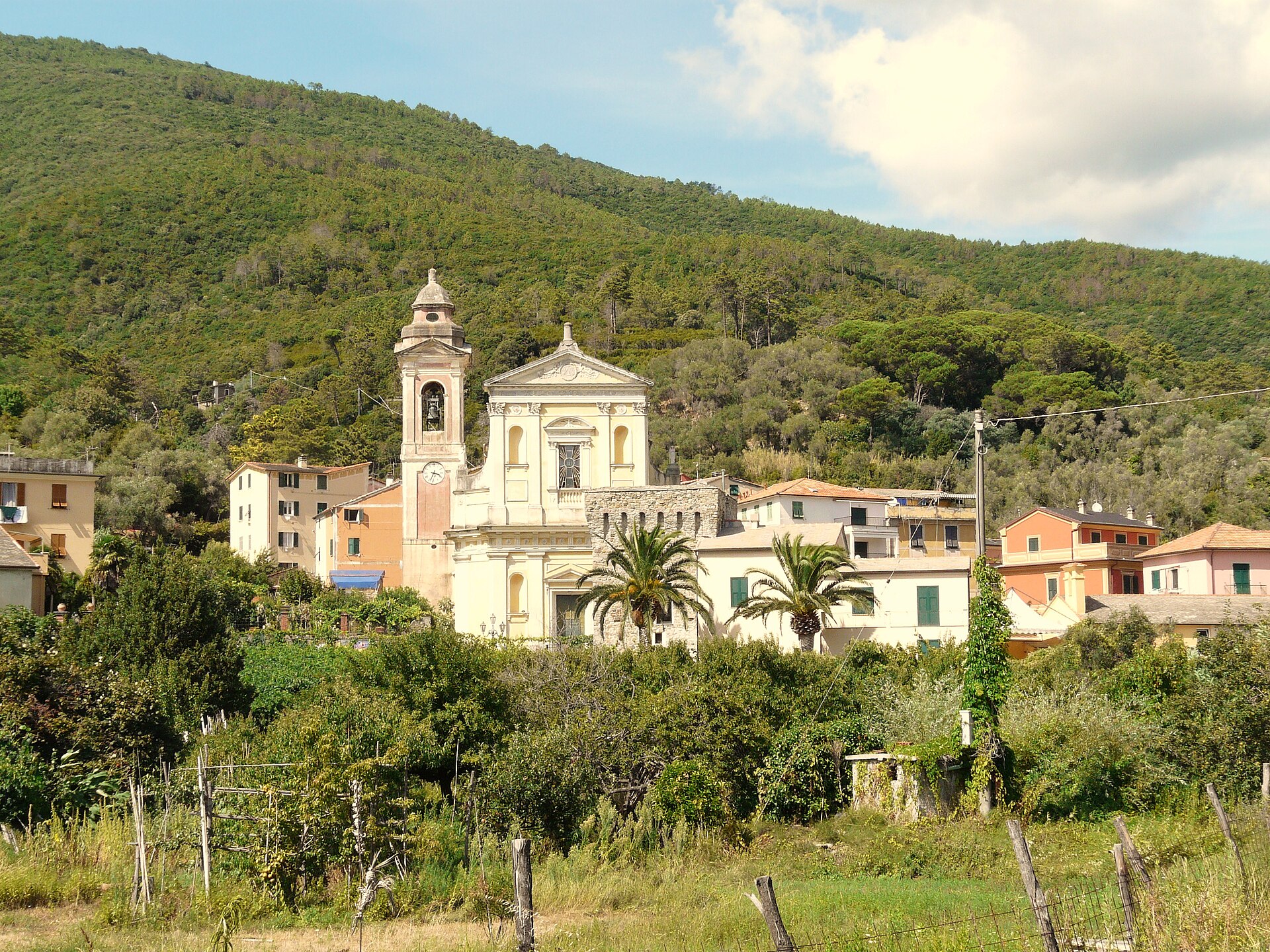
The heart of the old village is this 18th-century Baroque church, dedicated to the saint celebrated on 17 January. In front of it is a churchyard paved in risseu, the Ligurian mosaic of black and white pebbles, laid in 1766 with a compass rose and sea motifs. Inside, look for the pulpit in coloured marble and the 19th-century organ by the Agati workshop.
The Saracen Tower
Right opposite the church stands the square tower, built in the mid-16th century to spot pirate ships and raise the alarm. It has been restored and hosts exhibitions and cultural events. Opening times vary, so ask the town’s tourist office whether it is open during your stay.
The round tower by the sea
A second, cylindrical watchtower stood near the shore. A flood in 1852 brought half of it down, and today only an ivy-covered semicircle of wall remains. It is worth a look on your way to the beach.
The old village
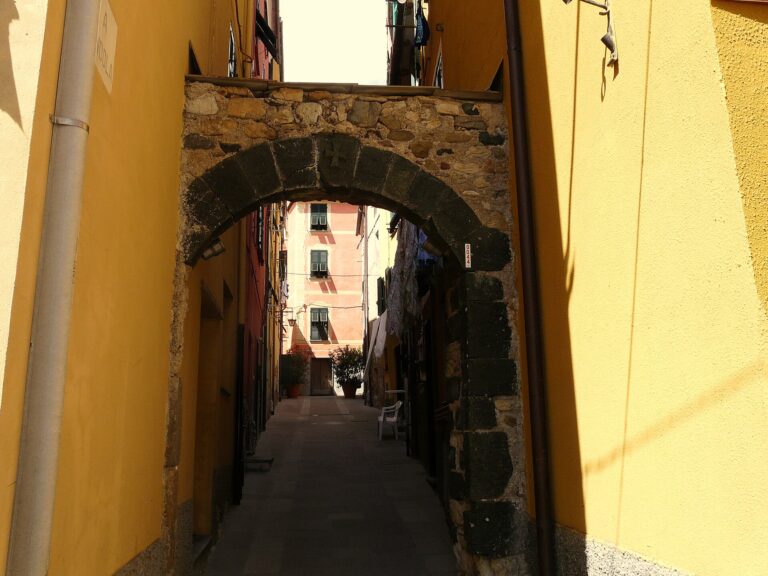
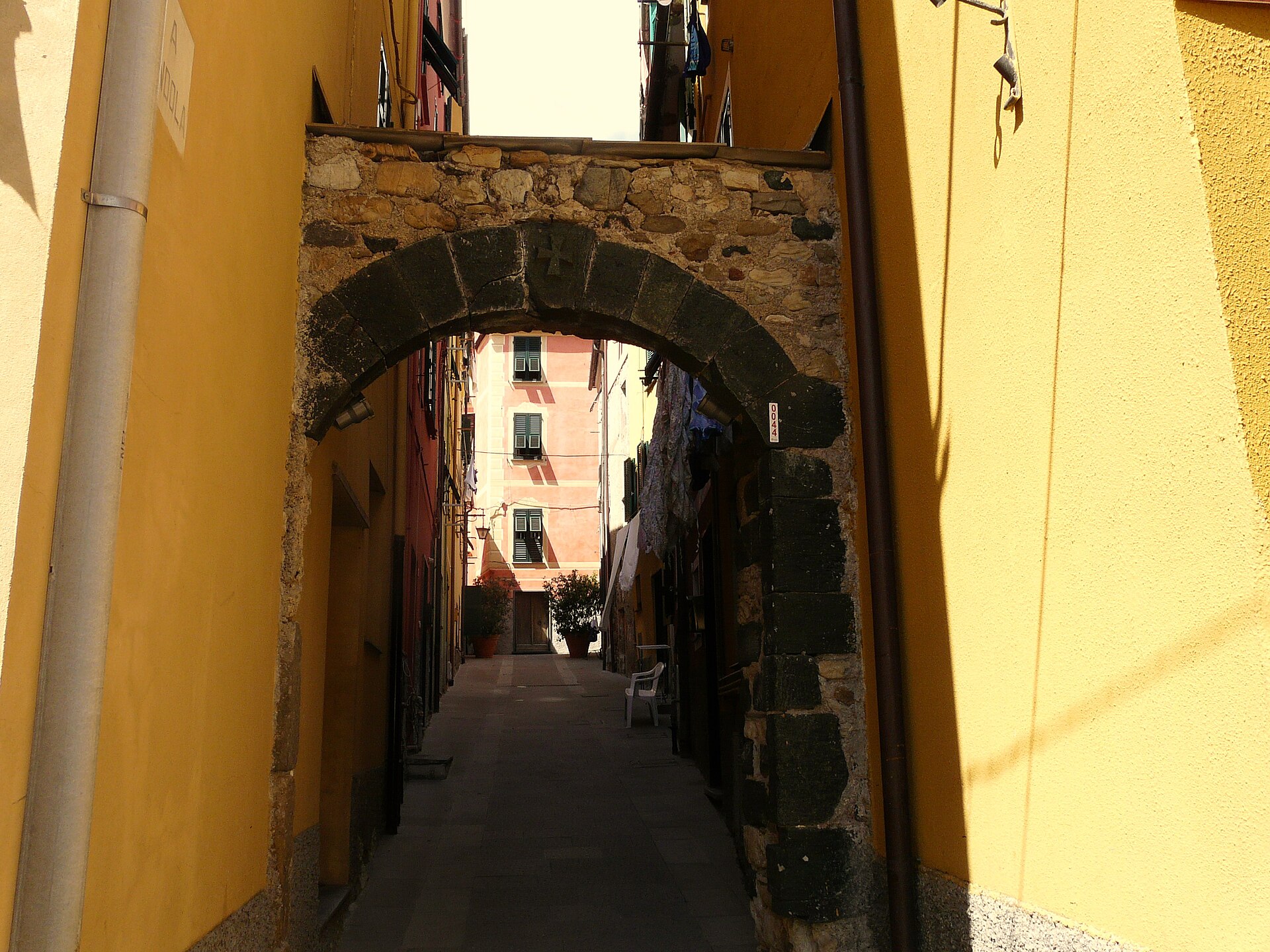
Around the church you will find pastel houses, narrow lanes, arches and covered passageways. It is small and takes half an hour to explore, but it is the part of Deiva that earns the “most beautiful villages” label. On Saturdays a weekly market sets up along the stream.
Lungomare Cristoforo Colombo
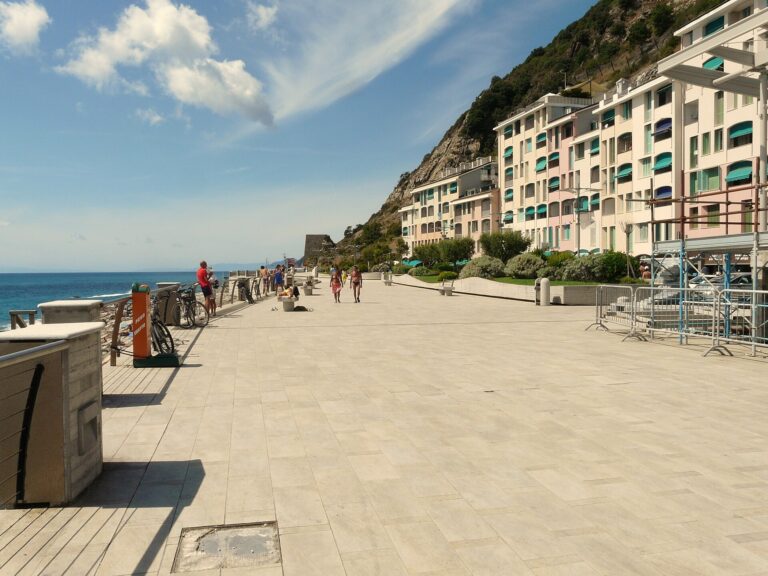
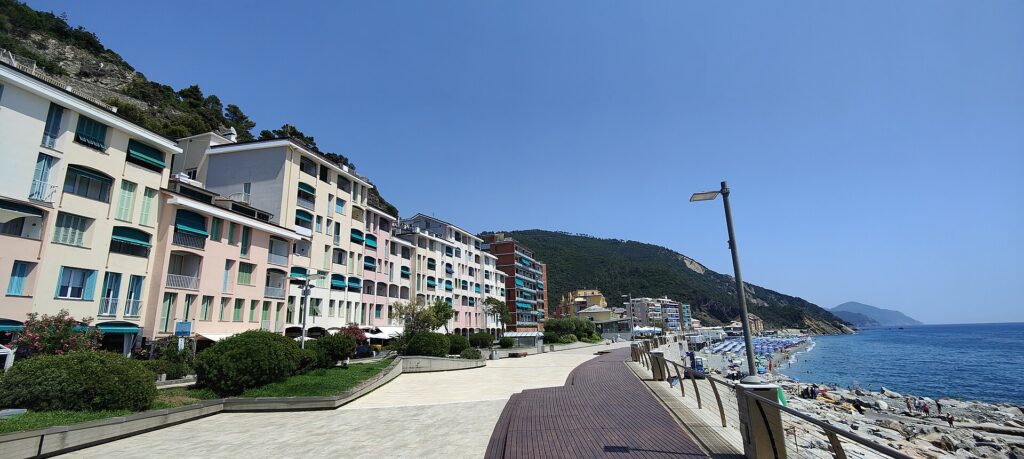
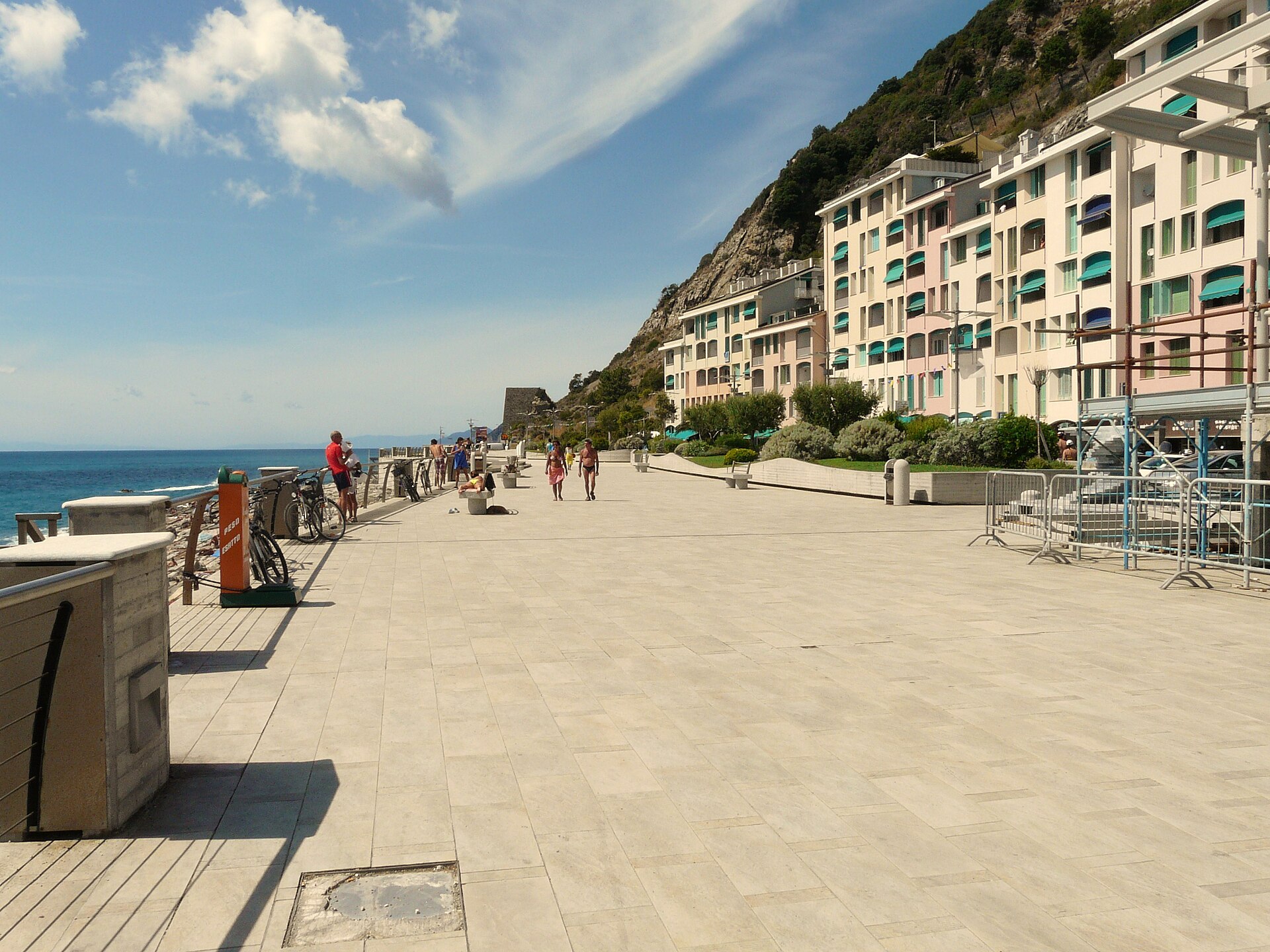
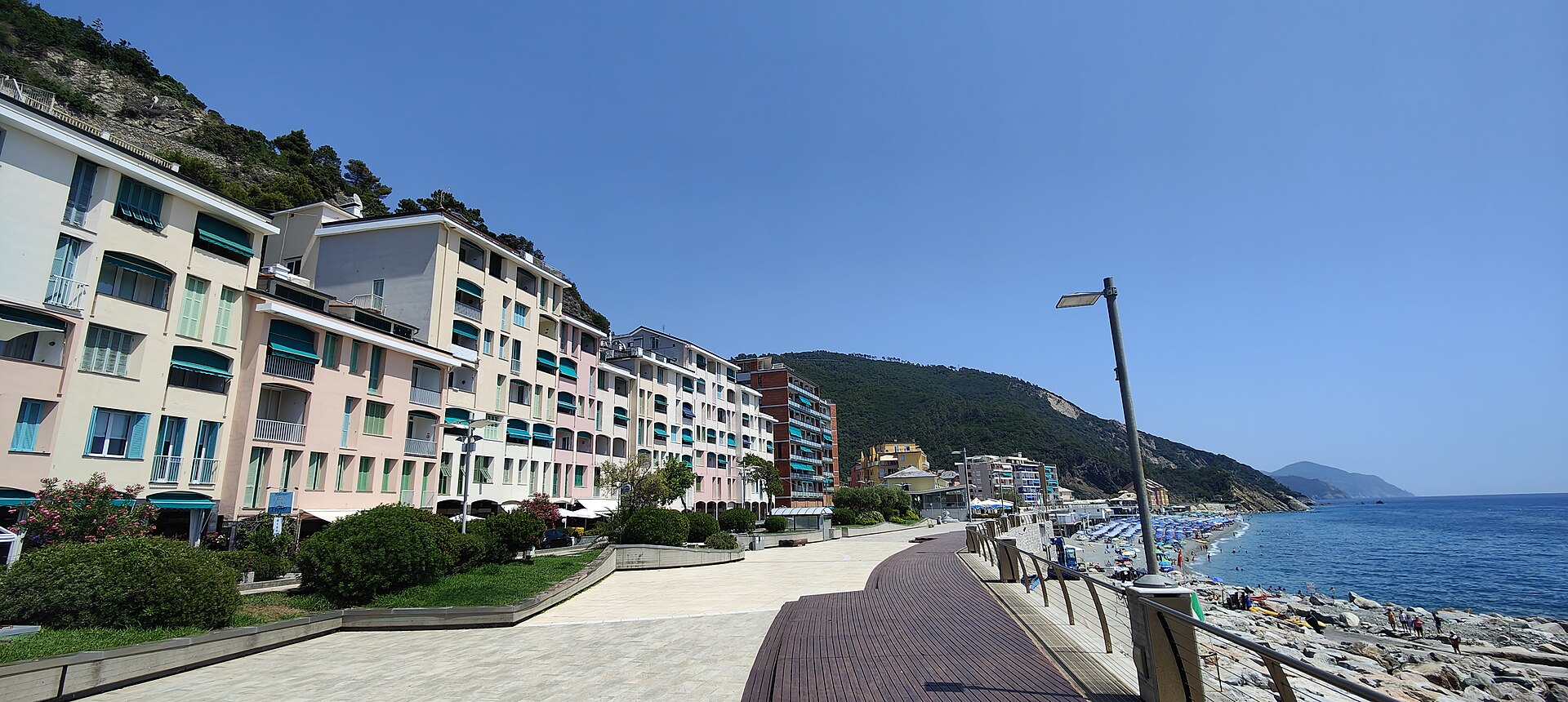
The promenade runs the full length of the beach, lined with beach clubs, bars and hotels. In the evening it is where the town meets; in summer it hosts concerts and shows. The summer boat to the Cinque Terre also leaves from here.
Mezzema and the church of San Michele
Mezzema is the oldest hamlet: it already appears in a charter of Charlemagne dated 774. The church of San Michele Arcangelo has a statue of the saint from the school of Maragliano, Genoa’s great wood sculptor. You can drive up or walk the old cobbled mule tracks that link the village to the hamlets.
Piazza and the church of Sant'Anna
Piazza, the other main hamlet, sits on the hillside with the 18th-century church of Sant’Anna and a wide view over the valley and the sea. It is a good place to stay if you want quiet and do not mind driving down to the beach.
Passano: sanctuary and castle
Passano was the fief of the Da Passano family, who ruled the area before becoming vassals of Genoa in the 12th century. The ruins of their castle still overlook the Valdeiva. Nearby is the sanctuary of Santa Maria Assunta e San Colombano, founded around the year 1000 on an even older building.
Sea
Beaches in Deiva Marina
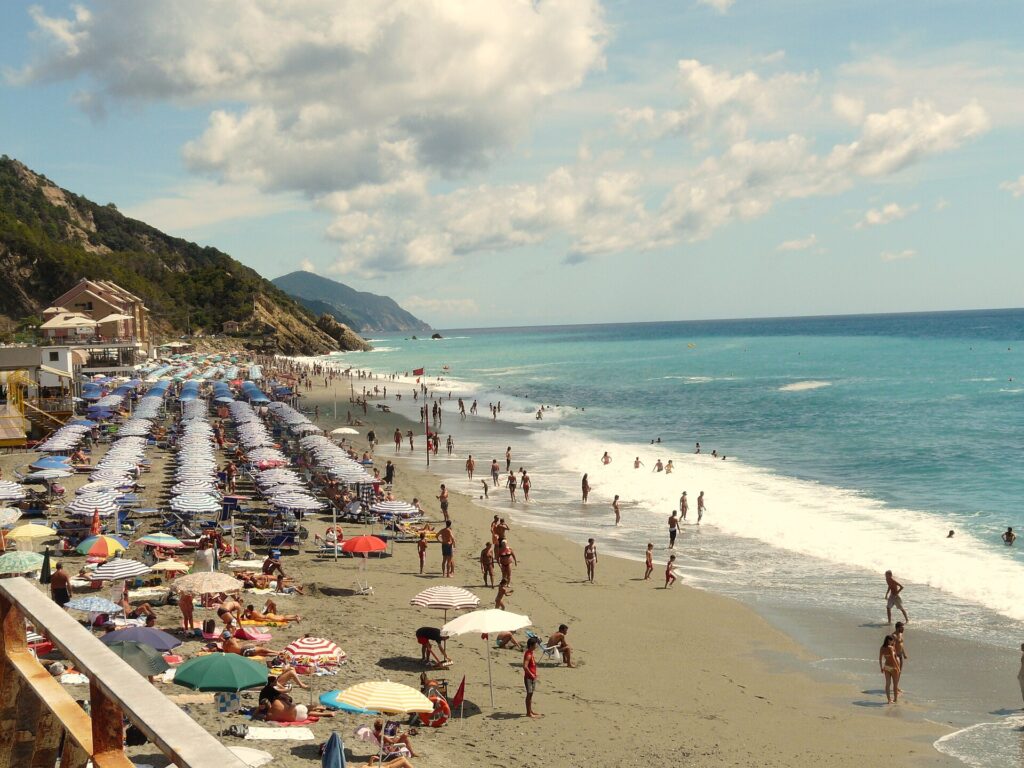
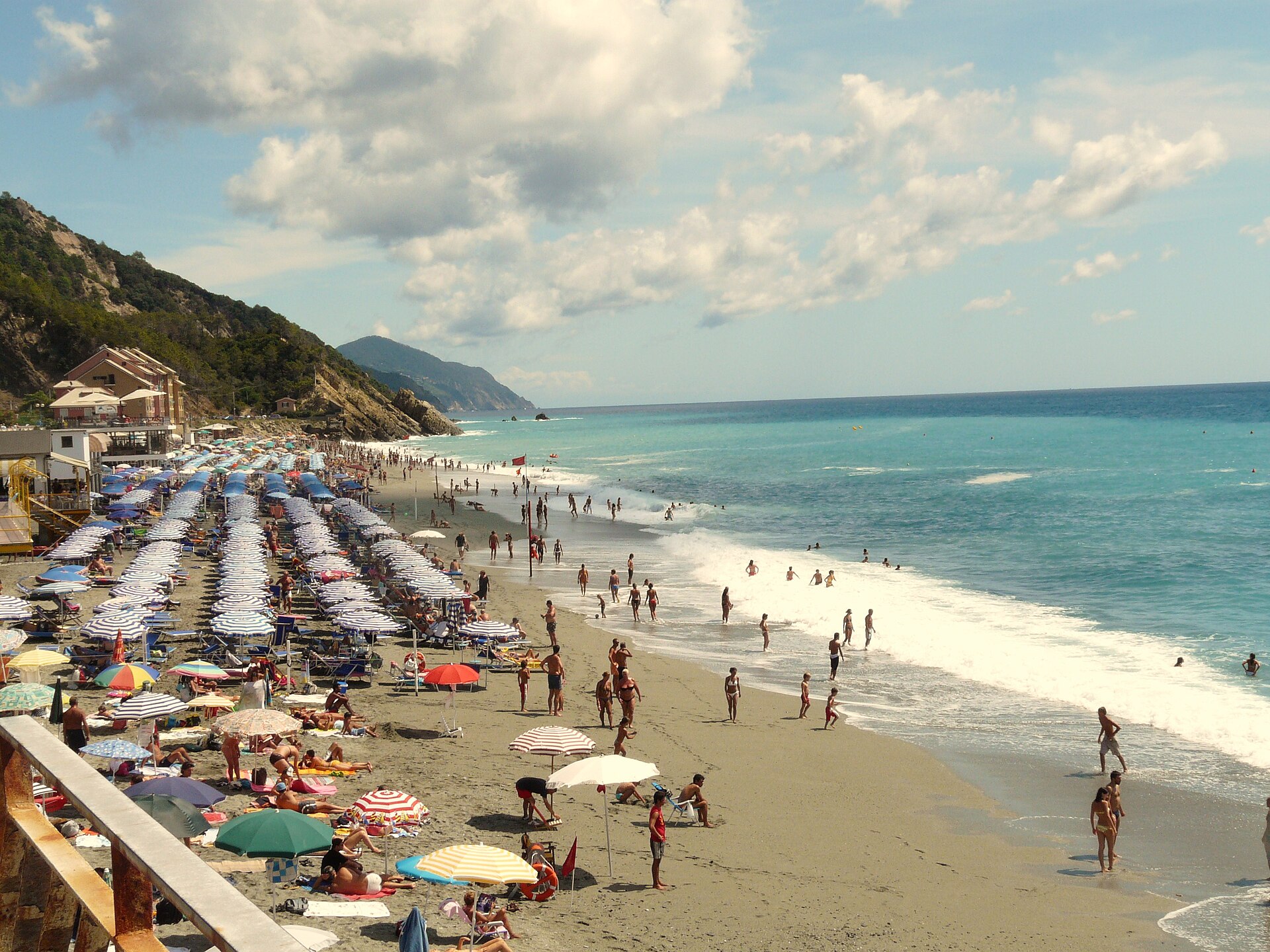
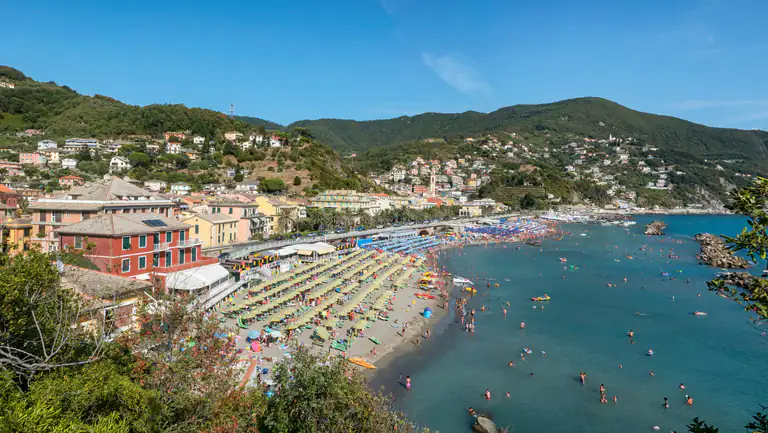
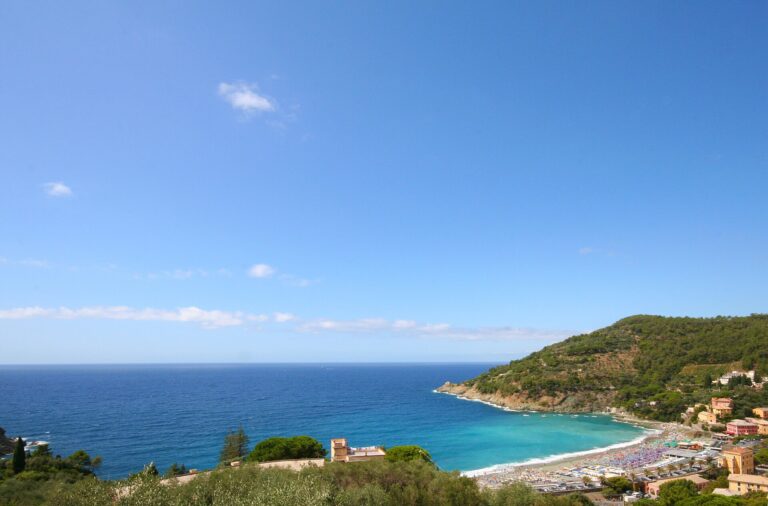
The main beach runs for about 800 metres in front of the town, up to the border with Framura. It is a mix of sand, gravel and small pebbles, with the clear water typical of this rocky stretch of coast. There are beach clubs with loungers and umbrellas and stretches of free beach; on July and August weekends the free sections fill up early.
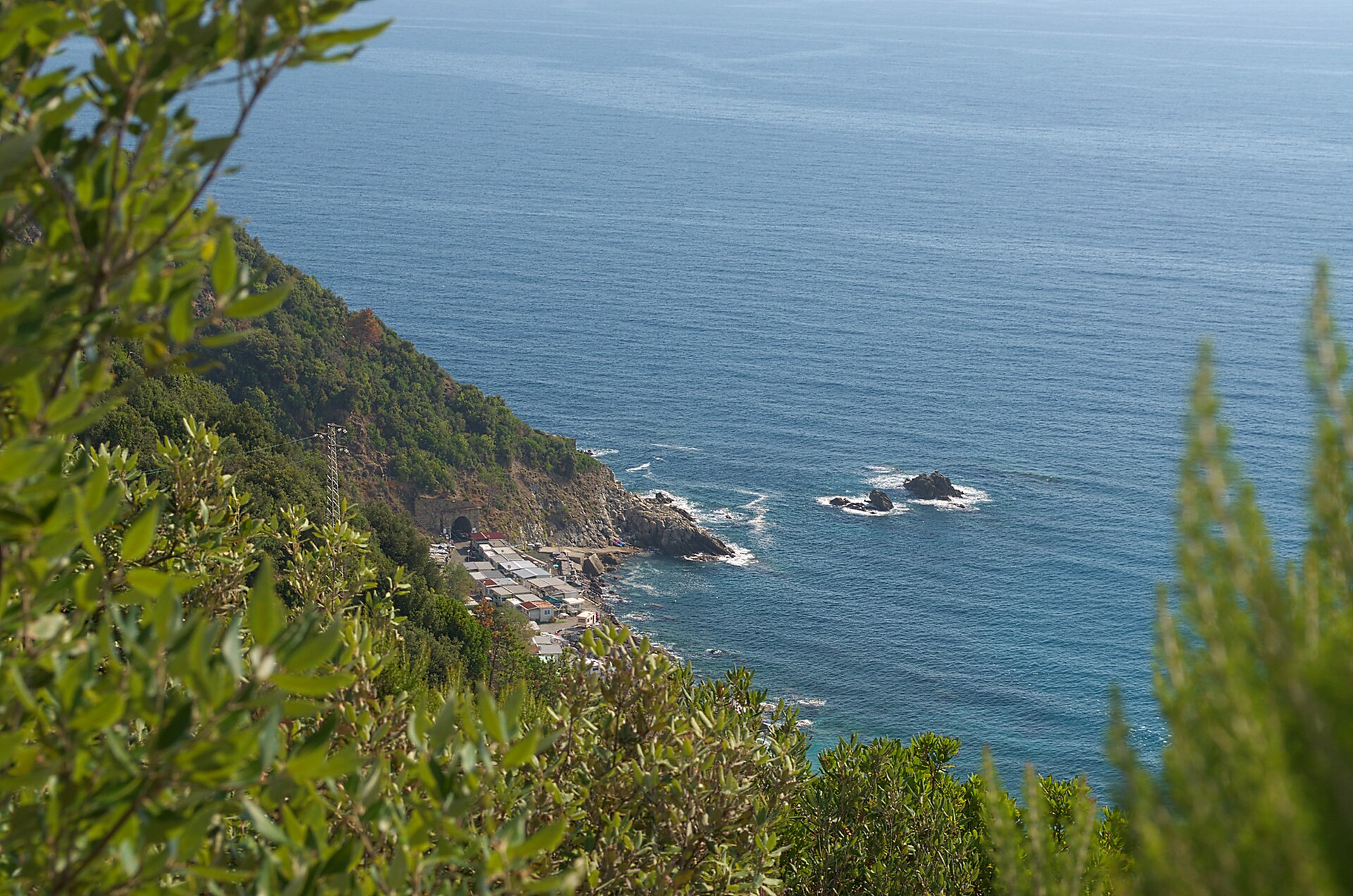
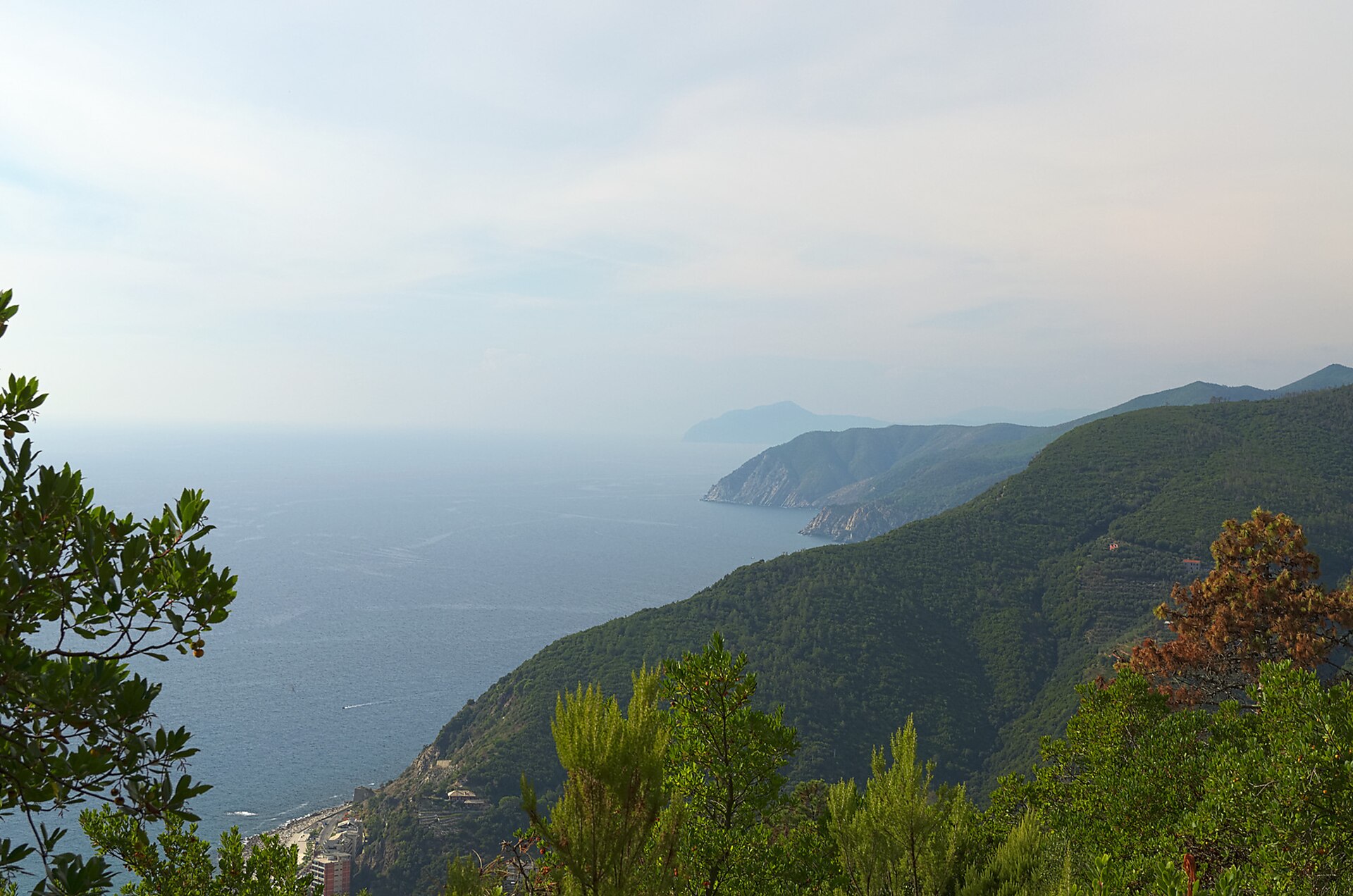
The station is only about 300 metres from the sea, so this is an easy beach without a car. At either end of the bay the coast turns rocky, with pebble coves towards Framura and Moneglia: some can be reached on foot with a bit of effort, others only by boat. The rocks and clean seabed are popular for snorkelling and diving.
Deiva does not have a Blue Flag in 2026, but neighbouring Framura, Bonassola and Levanto do, and they are a few minutes away by train.
Where to stay
Where to stay in Deiva Marina
Deiva has hotels, apartments, B&Bs, farm stays and a lot of campsites. Prices are generally lower than in the Cinque Terre, and there is more room for travellers with a car or motorhome.
On the seafront: best if you are here for the beach and want to walk everywhere. The most sought-after area in July and August.
Near the station and the old village: handy if you take the train to the Cinque Terre every day; the beach is still a few minutes away.
In the valley: many campsites and holiday homes, greener and cooler; you need a car or the campsite shuttle for the beach.
Hill hamlets (Piazza, Mezzema, Passano): farm stays and houses with a view, total quiet, but a car is essential.
Book early for summer: Deiva is popular with Italian families and with travellers looking for a Cinque Terre base.
Take the A12 Genoa–Livorno motorway to the Deiva Marina exit, then follow about 9 km of hill road down to the sea. You can also come over the Passo del Bracco on the Via Aurelia, which has plenty of hairpins. The coastal tunnel road towards Moneglia and Sestri Levante has been closed since 2025; the works have been handed to Anas and reopening is not expected before 2027. Check before you travel and ignore satnavs that send you that way.
By train
Deiva Marina station is on the Genoa–La Spezia line and is served by regional trains. It is about 300 metres from the beach. The train is the best way to move along the coast: west to Moneglia and Sestri Levante, east to Framura, Bonassola, Levanto and the Cinque Terre. Timetables on Trenitalia.
By boat
In summer, Navigazione Golfo dei Poeti runs a day trip from Deiva to the Cinque Terre and Portovenere. In 2026 it ran from 30 June to 29 August on Tuesdays, Thursdays and Saturdays: departure at 9:30 from the pier on the promenade, stops at Levanto, Monterosso, Vernazza, Manarola and Riomaggiore (Corniglia has no landing), arrival in Portovenere at 11:50; return from Portovenere at 16:00, back in Deiva at 18:20. The day ticket cost €42, or €15 for children aged 6 to 11. Sailings are cancelled in rough seas. Next summer’s dates are on the Navigazione Golfo dei Poeti website.
By bus
With the tunnel road closed, coastal buses towards Moneglia and Sestri Levante have been suspended or diverted. Use the train to move between towns.
By plane
The nearest airport is Genoa; from there continue by train along the coast. Pisa is further, with a change at La Spezia. From Nice and the French Riviera, the train runs via Ventimiglia and Genoa.
Parking
In summer, finding a space near the sea is hard. The most practical option is the long pay car park at the end of Corso Italia, 500 m to 1 km from the beach. Motorhomes have a paid municipal area: check prices and availability on site. If you are staying at a campsite, ask whether it runs a shuttle to the beach and station.
A12, Deiva Marina exit, then about 9 km; tunnel road to Moneglia closed since 2025
By train
Station on the Genoa–La Spezia line, 300 m from the beach; Monterosso in 15–20 minutes
By plane
Genoa, then train along the coast; Pisa with a change at La Spezia
The guide
Things to do in Deiva Marina
Camping and outdoor holidays
Deiva is one of Liguria’s camping capitals, with several campsites, some in the wooded valley along the stream, others above the coast. Families, motorhome travellers and hikers heading for the Cinque Terre by train fill them in summer. Where they are, how to reach the beach, shuttles and booking tips are all in our guide to campsites in Deiva Marina.
The Cinque Terre by train or boat
By train you reach Monterosso in about 15–20 minutes and Levanto in about a quarter of an hour. Note that the special Cinque Terre fare and the Cinque Terre Card Treno only cover the Levanto–La Spezia section: from Deiva, buy a normal regional ticket to the village you want, or ride to Levanto and switch to the card there. In summer there is also a day-trip boat stopping in the villages and at Portovenere (times below).
Rock climbing
In the valley, near one of the campsites, the Sfinge crag is a sport-climbing wall a few minutes’ walk from a gravel car park by the stream. Check routes and rock conditions locally before you go.
What to eat
Food here is classic eastern Riviera: focaccia and farinata, fried or oil-cured anchovies, stuffed mussels, trofie and trenette with pesto, testaroli, savoury vegetable pie and fish ravioli. In autumn, chestnuts from the woods above town star at the October chestnut festival.
Walks and hikes
Deiva to Framura and Levanto on the Sentiero Verde Azzurro
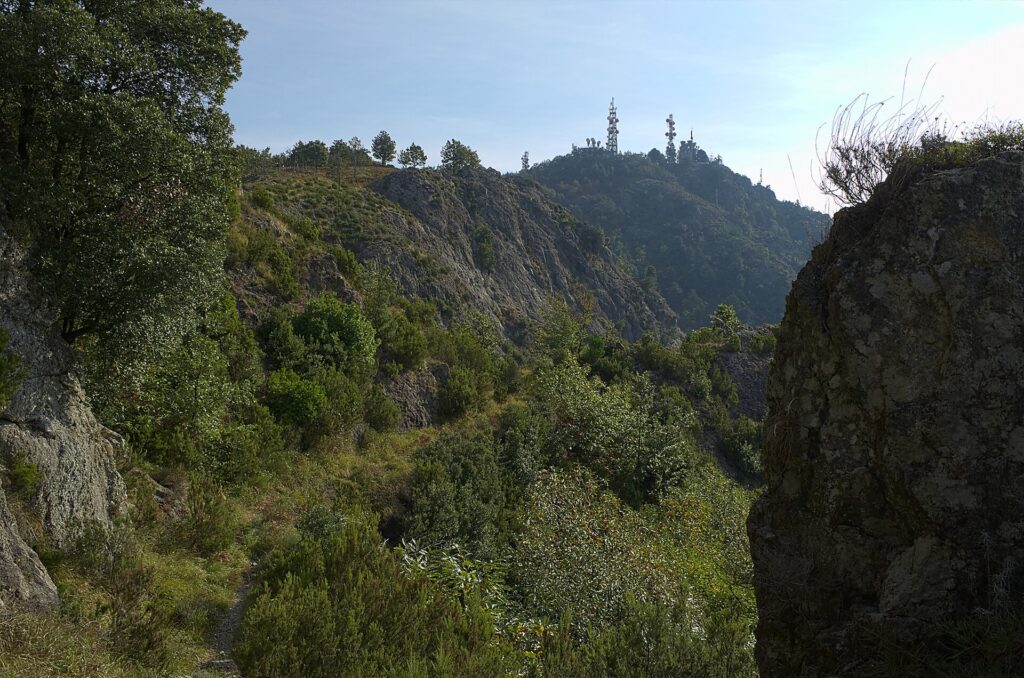
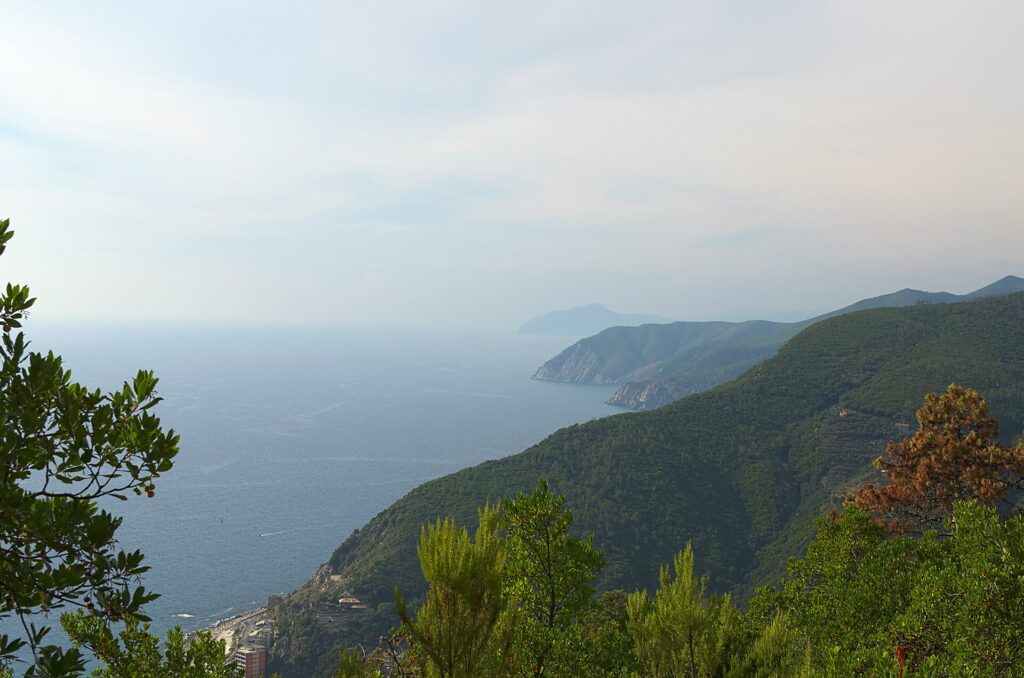
This is Deiva’s best walk. A steep but short climb takes you out of town, then the path runs through woods and above the cliffs to the hamlets of Framura: allow 2–3 hours. If you have the legs, carry on to Bonassola and Levanto, about 16 km and 5 hours of actual walking in total, with plenty of ups and downs. Return by train. The Deiva–Framura section has the best sea views.
Deiva to Moneglia via Lemeglio
Heading west, the trail climbs through the scrub to San Pantaleo at about 350 m, then drops to Lemeglio, a terraced hamlet above Moneglia, and down to the sea: 2–3 hours, about 6 km. Some sections are steep and slippery, so wear hiking shoes. With the tunnel road closed, it is also the most direct way to reach Moneglia without a car; come back by train.
Monte San Nicolao and the Bracco Pass
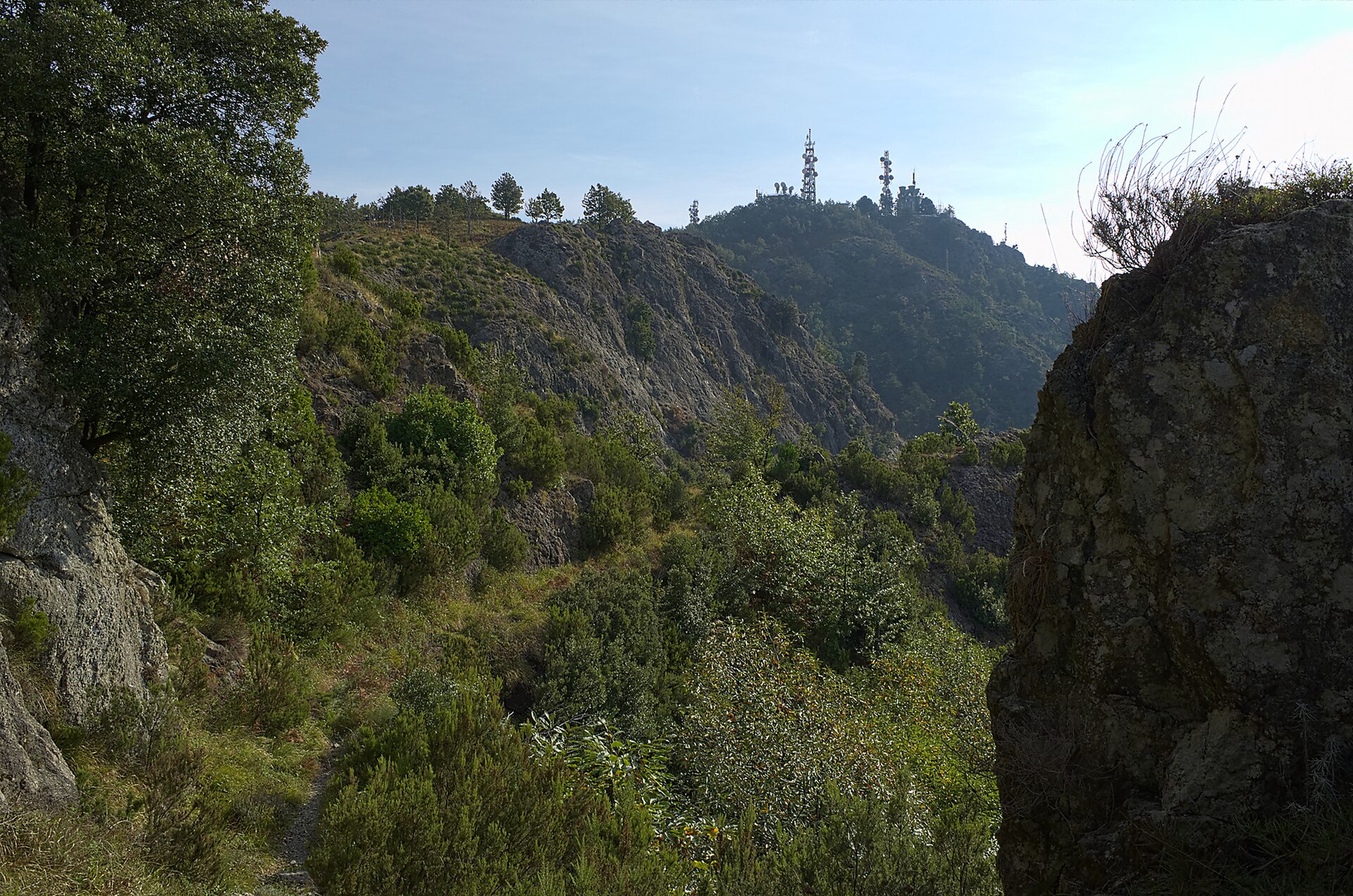
Monte San Nicolao, 847 m, is the highest peak above Deiva. Many people drive up to the Passo del Bracco on the Via Aurelia and walk from there through woods and along the ridges; from nearby Monte Pietra di Vasca, 801 m, the view stretches from Sestri Levante to La Spezia. On the far side of San Nicolao, just outside the municipality, are the remains of a medieval pilgrims’ hospice. Above Casa Marcone you can still see traces of the ancient Via Aurelia.
Trail conditions change after heavy rain: check with the tourist office or the waymarks before setting out.
Day trips from Deiva Marina
Framura: hamlets scattered on the hillside and a tiny harbour, start of the cycle and walking path along the old railway to Bonassola and Levanto. One stop by train.
Bonassola: a quiet bay with a wide beach, on the same cycle path.
Levanto: medieval centre, long beach and the western terminus of the Cinque Terre trains.
Monterosso al Mare: the first Cinque Terre village, with the biggest beaches, 15–20 minutes by train.
Vernazza: the most photographed harbour in the Cinque Terre; in summer you can also get there by boat.
Moneglia: a village with two fortresses and a Blue Flag beach, one stop towards Genoa.
Sestri Levante: the Bay of Silence and the peninsula, by train along the coast.
Portovenere: the end point of the summer boat trip, with the church of San Pietro on the rocks.
Weather
Weather and best time to visit Deiva Marina
June and September for the beach; spring and autumn for hiking
🌙
17°CNow · wind 14 km/h
Sun 11🌦️21° 15°2 mm
Mon 12☀️22° 15°1 mm
Tue 13🌤️21° 13°
Wed 14⛅21° 15°
Thu 15🌤️23° 16°
Fri 16⛅22° 16°
Forecast: MET Norway (Yr), CC BY 4.0 licence. Updated hourly.
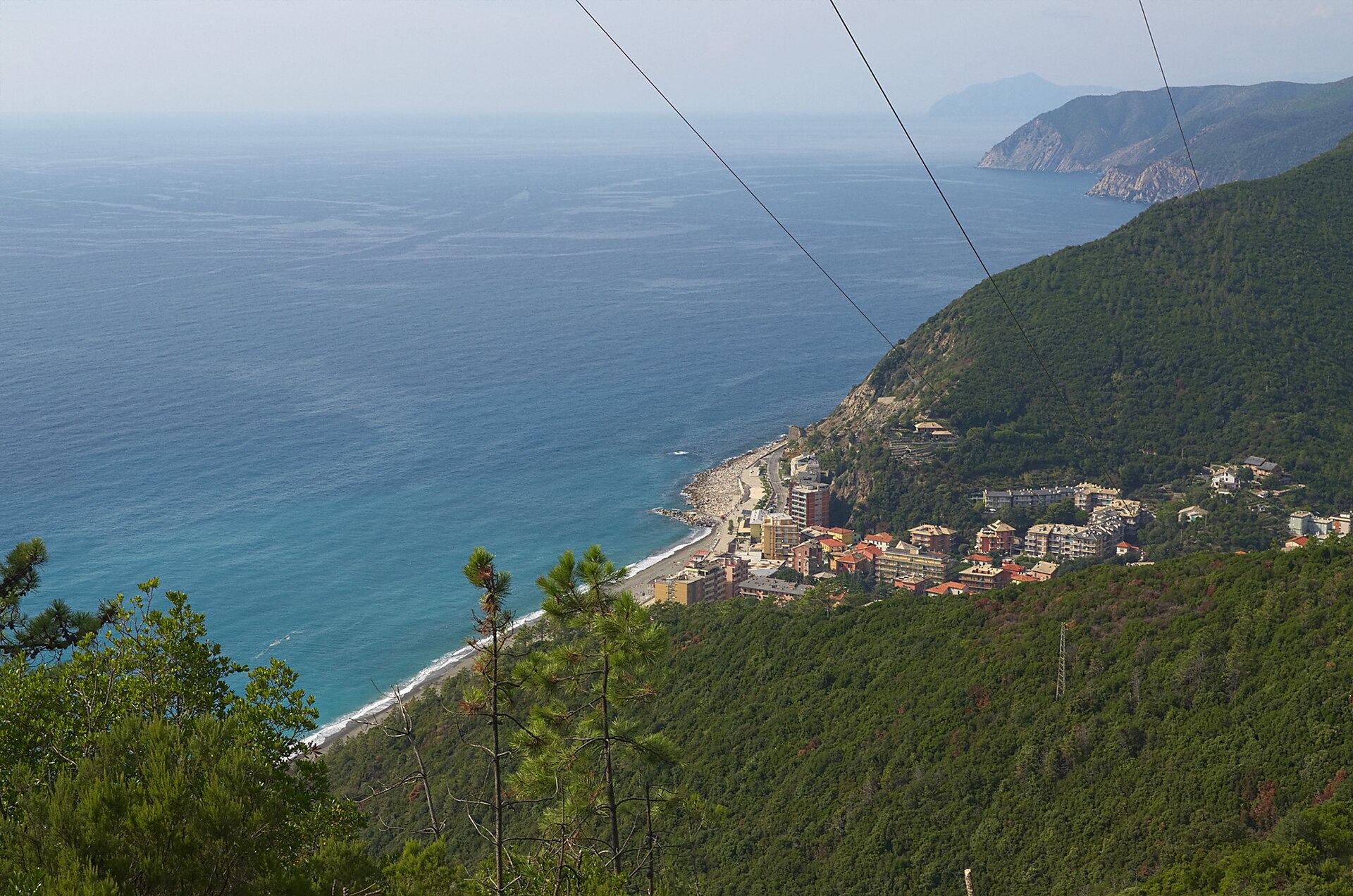
La spiaggia di Deiva Marina con gli ombrelloniIl lungomare di Deiva MarinaDeiva Marina con la chiesa parrocchialeUn arco nel centro storico di Deiva MarinaDeiva Marina tra il mare e le collineIl lungomare di Deiva Marina e le case sul mareLa costa rocciosa vicino a Deiva Marina
FAQ
Frequently asked questions about Deiva Marina
Is Deiva Marina part of the Cinque Terre?
No. It lies further west, beyond Framura, Bonassola and Levanto. Monterosso, the first of the five villages, is about 15–20 minutes away by train.
Is Deiva Marina a good base for the Cinque Terre?
Yes, if you want lower prices, a campsite or a big beach. The train is close and quick; you just ride a few more stops each day than from Levanto.
Is the tunnel road between Deiva Marina and Moneglia open?
No. It has been closed since 2025 and is not expected to reopen before 2027. Use the motorway, the Via Aurelia or the train.
Is the beach in Deiva Marina sandy?
It is sand mixed with gravel and small pebbles, about 800 metres long, with beach clubs and free sections.
Are there free beaches in Deiva Marina?
Yes, parts of the main beach are free, plus pebble and rock coves at either end of the bay. In high season, arrive early.
How far is the station from the beach?
About 300 metres, a few minutes on foot.
Is there a boat from Deiva Marina to the Cinque Terre?
Yes, in summer only and on certain days: in 2026 on Tuesdays, Thursdays and Saturdays from 30 June to 29 August, leaving at 9:30 and returning at 18:20.
Can you walk from Deiva Marina to Framura?
Yes, on the Sentiero Verde Azzurro, in 2–3 hours with a steep climb at the start. You can carry on to Levanto and return by train.
Where can I park in Deiva Marina?
In the pay car park at the end of Corso Italia, 500 m to 1 km from the sea. In summer the spaces near the beach go early.
When is the San Giovanni festival in Deiva Marina?
On 23 and 24 June: on the evening of the 23rd a flag-throwers’ parade and a bonfire on the stream bed, on the 24th a fair, a procession and fireworks over the sea.