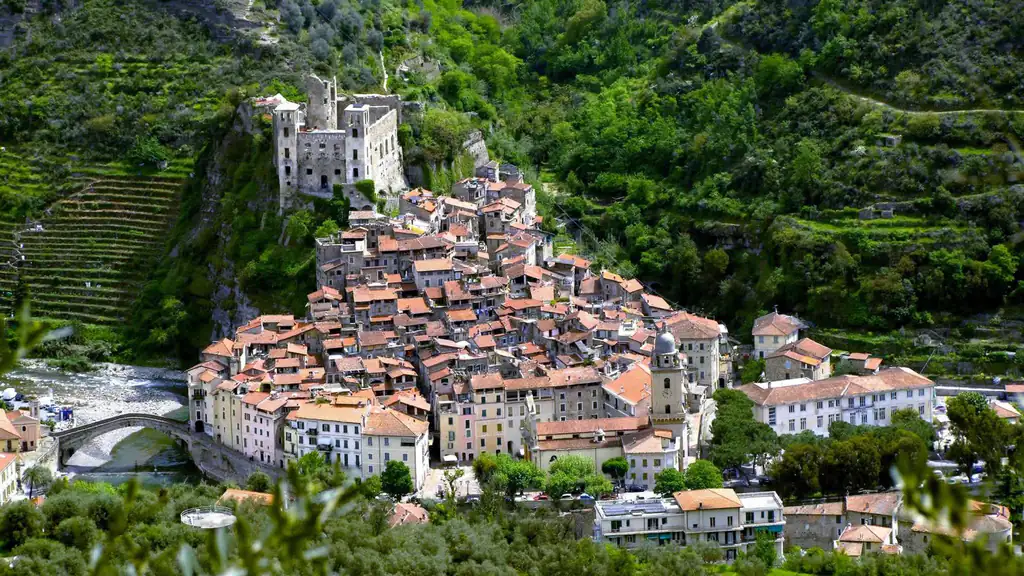
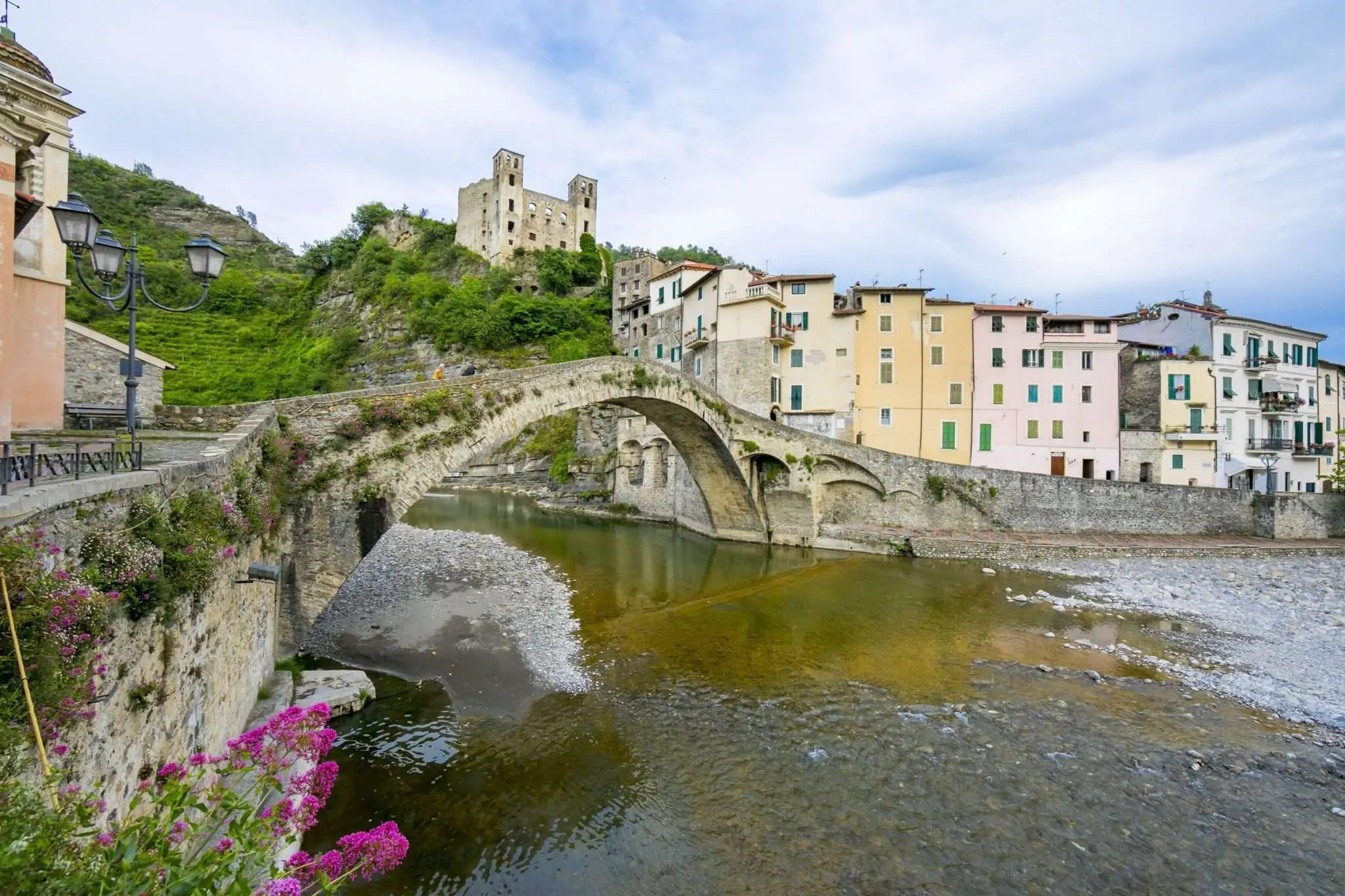
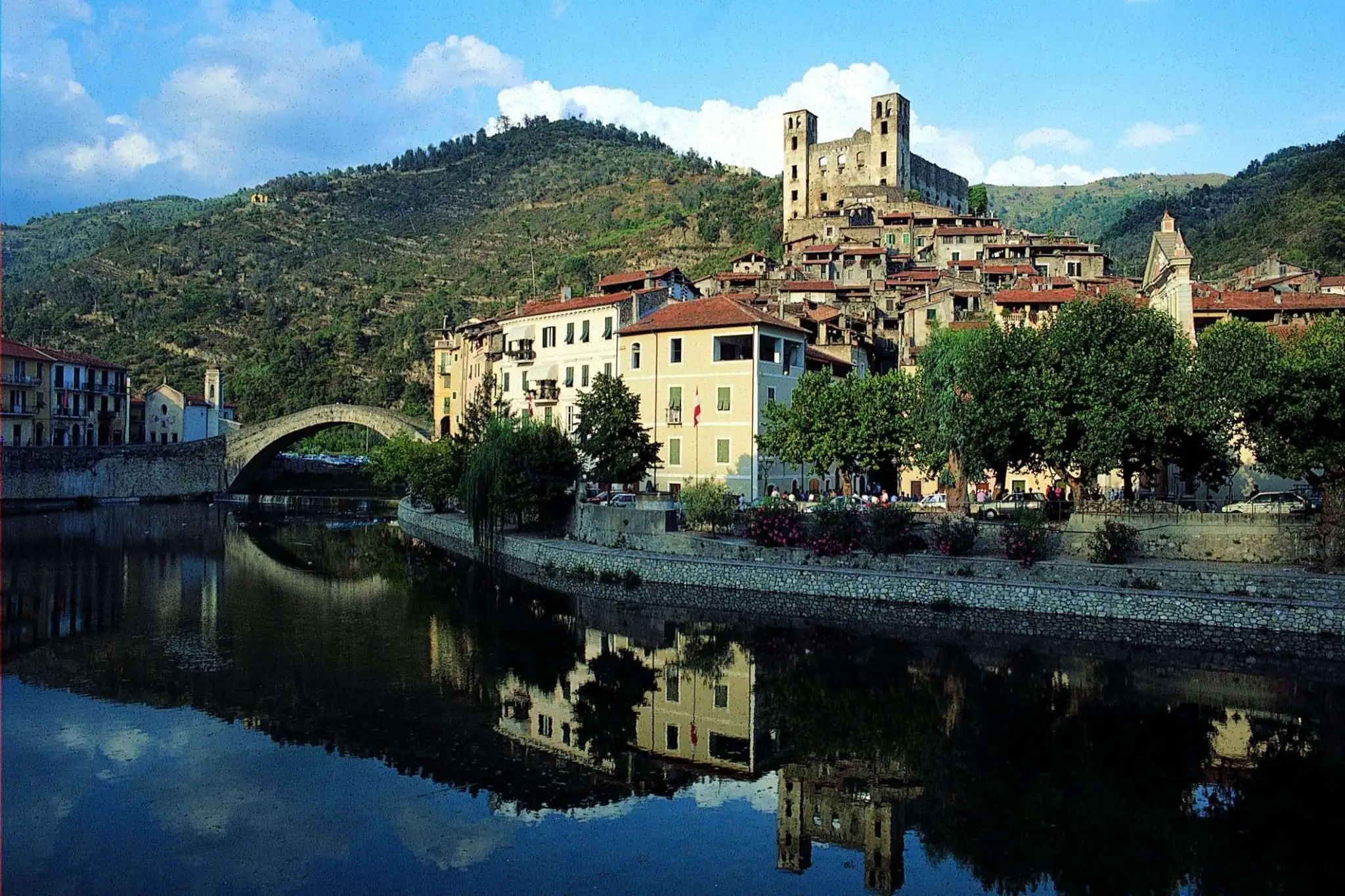
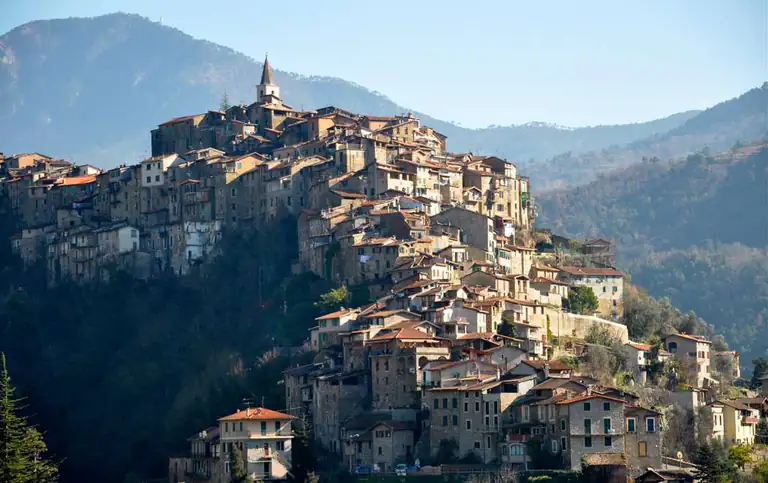
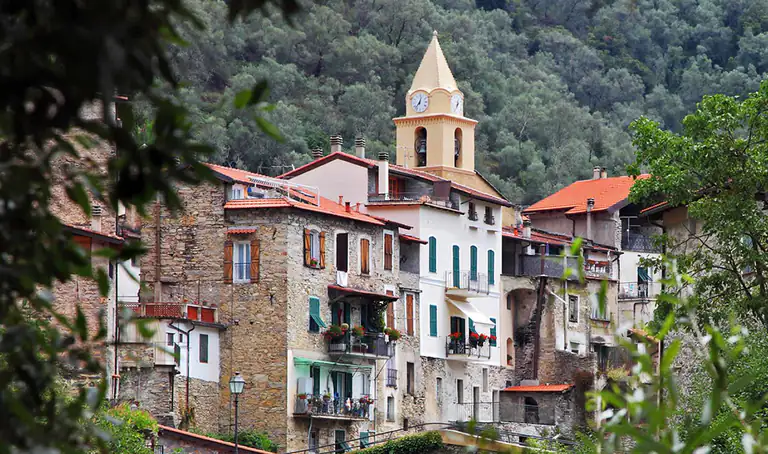
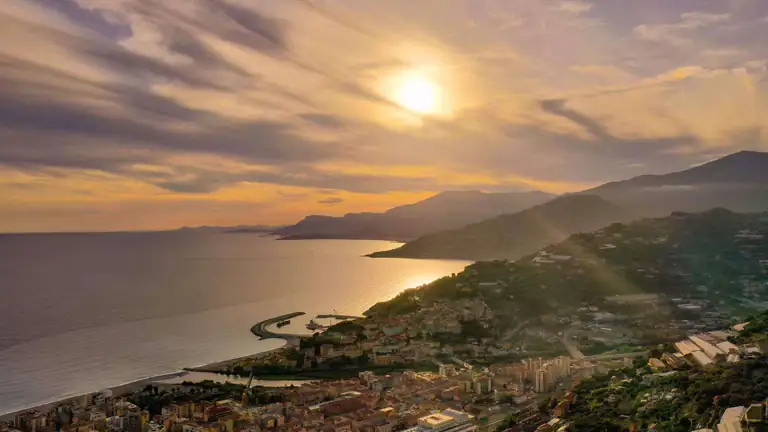
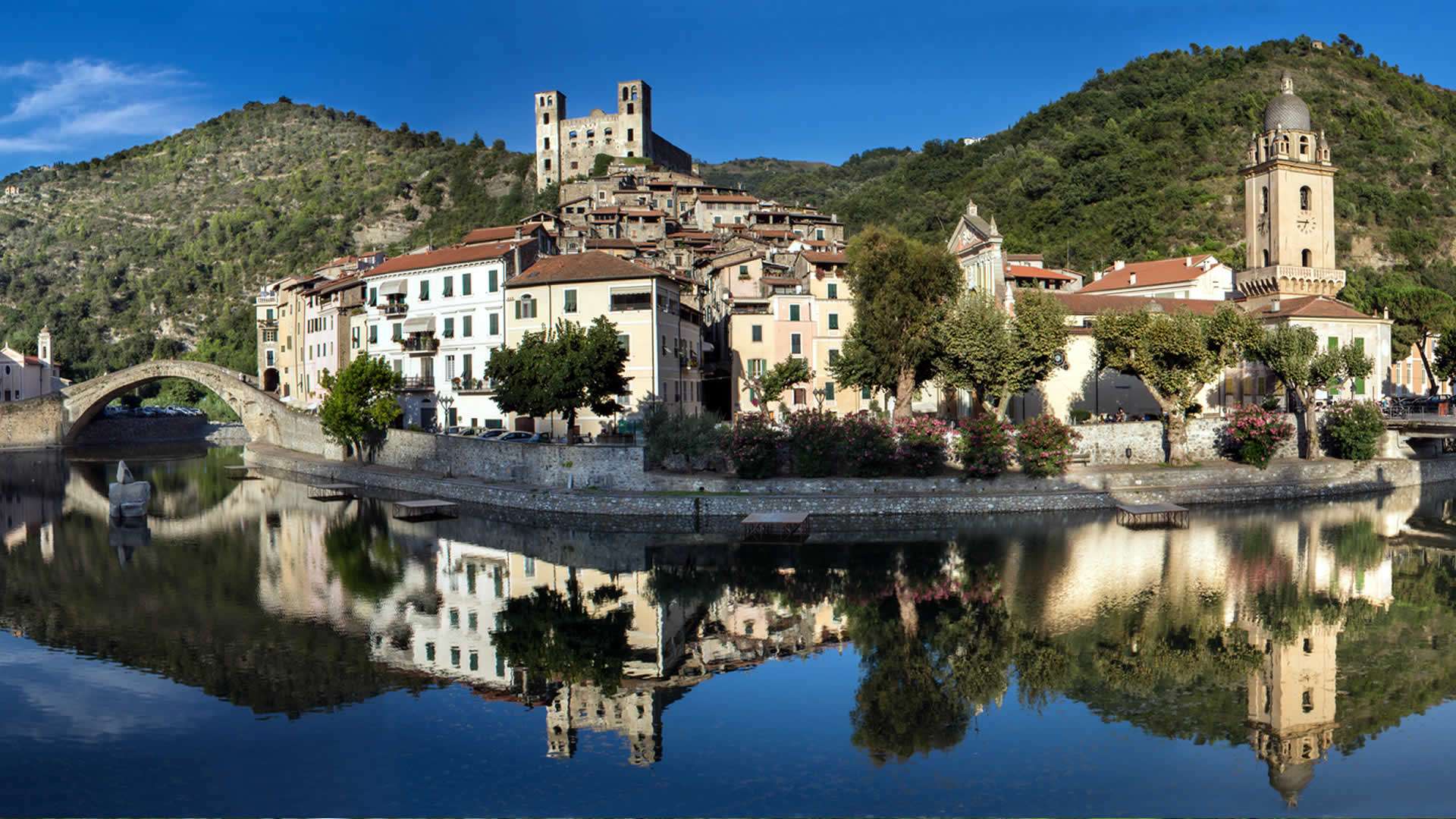
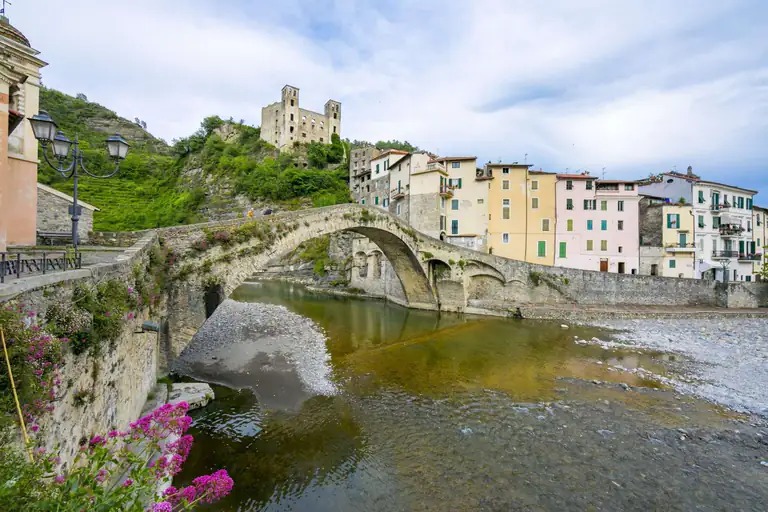
Dolceacqua with its bridge and castle reflected in the Nervia

Dolceacqua

The bridge painted by Monet, the Castello dei Doria and Rossese, Liguria's first DOC: a guide to the iconic Val Nervia village, 10 km from the sea.

Dolceacqua with its bridge and castle reflected in the Nervia
Area
Riviera dei FioriRiviera di Ponente · Province of Imperia
Ideal for
Medieval villages, history, wine and photographycouples and day trips
Beaches
Sea at Ventimiglia about 10 km awayunder 20 minutes by bike on the Nervia cycle path
Best time to go
Spring and autumnAugust for the michetta festival and fireworks
By train
Ventimiglia stationabout 10 km), then Riviera Trasporti bus line 7
By car
A10, Ventimiglia or Bordighera exits, then the Val Nervia roadpedestrian centre
Airport
Nice Côte d'Azur (about 50 km)alternatively Genoa
How long to stay
1 dayhalf a day

Welcome to Dolceacqua

Monet’s bridge and Rossese wine

Dolceacqua is the best-known village in the Val Nervia, in the hills behind Ventimiglia and Bordighera, in the province of Imperia. It lies about 10 kilometres from the sea, along the Nervia stream, and is famous for three things: its humpbacked medieval bridge, the Castello dei Doria towering over the village, and Rossese, the red wine that bears its name.

The stream splits the village in two. On one side is the Terra, the medieval core clinging to the hillside below the castle; on the other is the Borgo, newer and flatter, where you now find shops, bars and services. The two halves are joined by the Ponte Vecchio, which so struck Claude Monet in 1884 that he painted it three times.

Dolceacqua is first mentioned in a document from 1151, and from 1270 it was for centuries the centre of the domain of the Doria family of Genoa. Today it holds the Orange Flag (Bandiera Arancione) of the Touring Club Italiano and is the national headquarters of the Associazione Paesi Bandiera Arancione. It makes a perfect half-day or full-day outing, even from the coast or the French Riviera.

Where is Dolceacqua?

Dolceacqua is in Liguria (Riviera di Ponente, Riviera dei Fiori, province of Imperia).

Map: where Dolceacqua is in LiguriaPIEDMONTLOMBARDYEMILIA-ROMAGNATUSCANYFRANCERIVIERA DI PONENTERIVIERA DI LEVANTELIGURIAN SEASavonaImperiaSanremoLa SpeziaDolceacqua
Boundaries: ISTAT, Natural Earth · Interactive map →

What to see

What to see in Dolceacqua

You can explore the centre on foot in two or three hours: cross the bridge, climb the carruggi (alleys) of the Terra up to the castle and come back down to the Borgo. Wear comfortable shoes, because the Terra is all slopes, steps and cobbles.

Medieval bridge and village of Dolceacqua

Ponte Vecchio

The symbol of Dolceacqua is the 15th-century stone bridge, with a single humpbacked arch spanning about 33 metres. It links the Borgo to the Terra and is the most beautiful way into the old village.

Monet came here in 1884, during his stay in Bordighera, and wrote that the place was superb and the bridge “a jewel of lightness”. His sessions produced three canvases: one is in the Musée Marmottan in Paris, one at the Clark Art Institute in the United States and one in a private collection. To follow in the painter’s footsteps on the coast, see the guide to Monet in Bordighera.

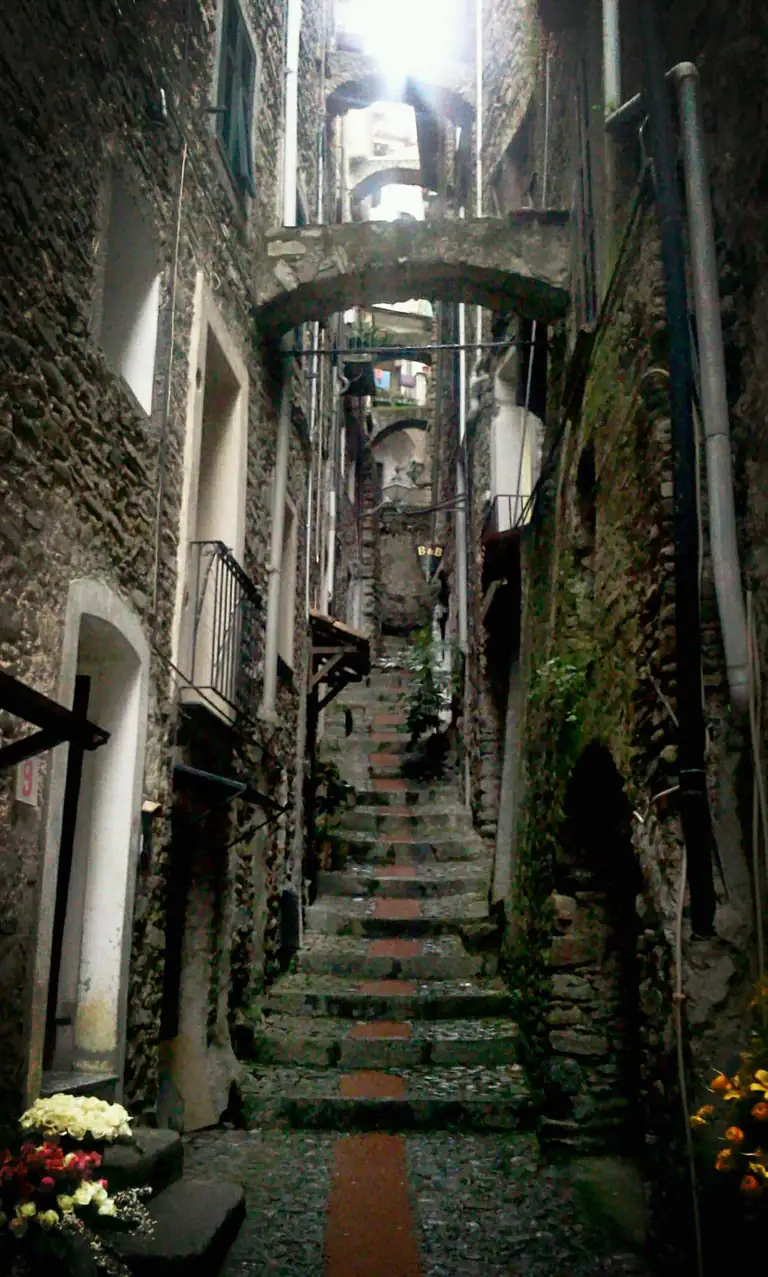
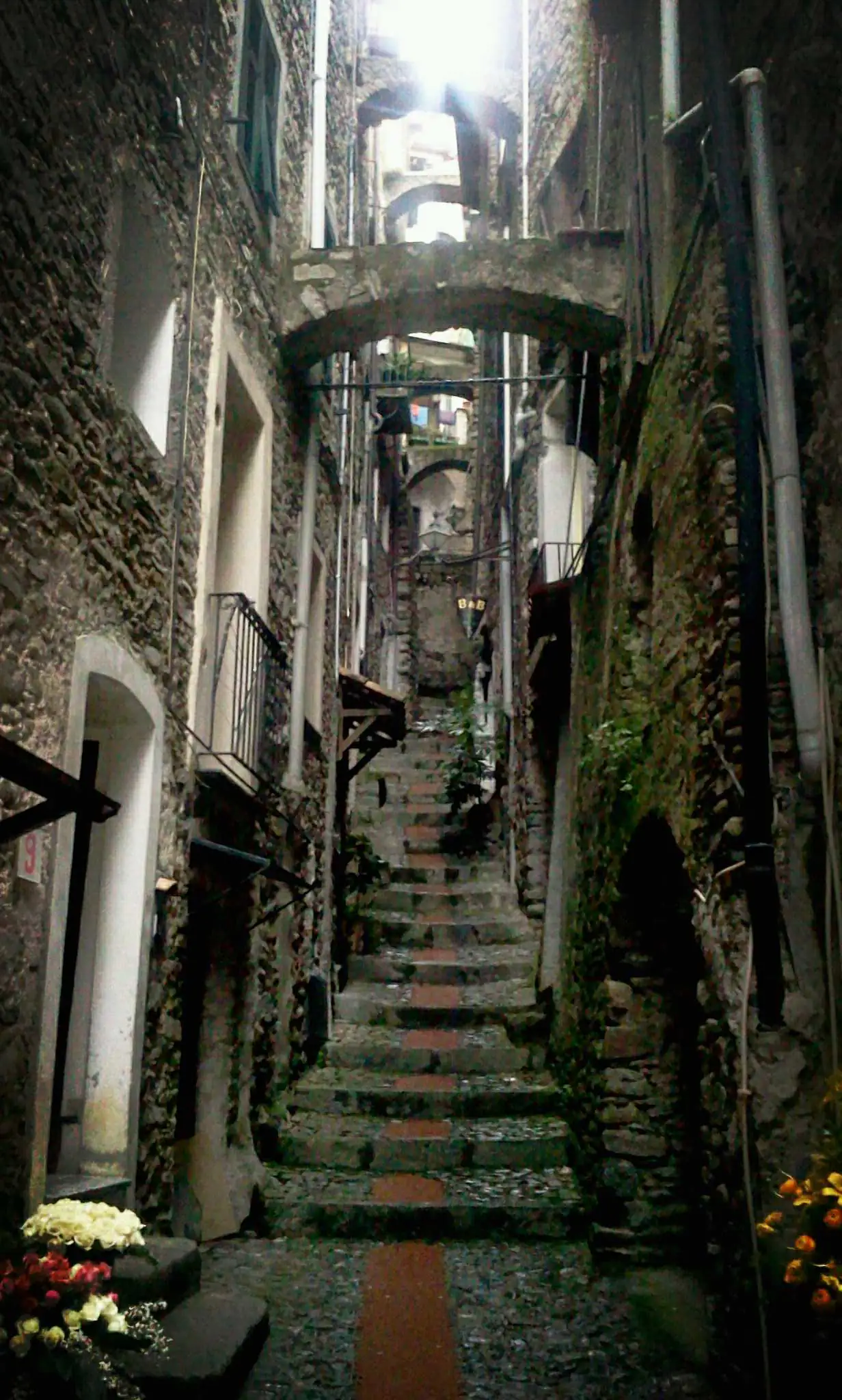
Narrow alley with steps in Dolceacqua

The Terra and its carruggi

Once over the bridge you enter the Terra, the medieval village built in semicircles around the fortress. Alleys, stairways, arches and covered passages formed a natural defence: each sector could be sealed off and defended. Climbing towards the castle you will find craft workshops, artists’ studios, cellars where you can taste Rossese, and the regional Enoteca.

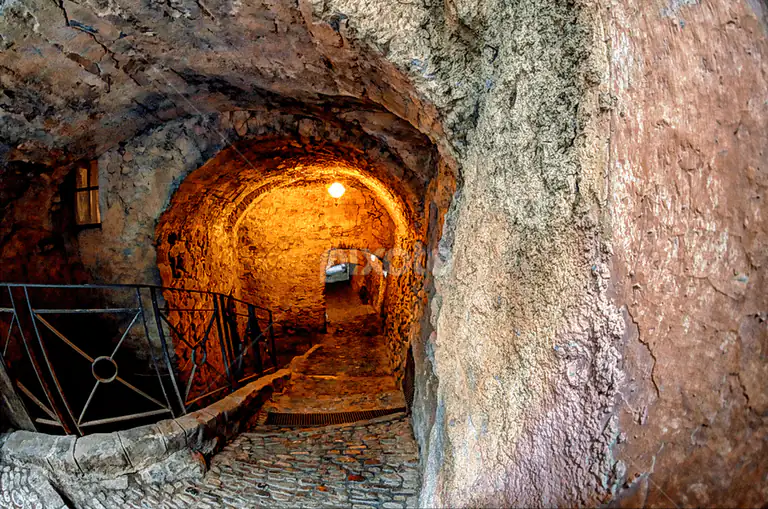
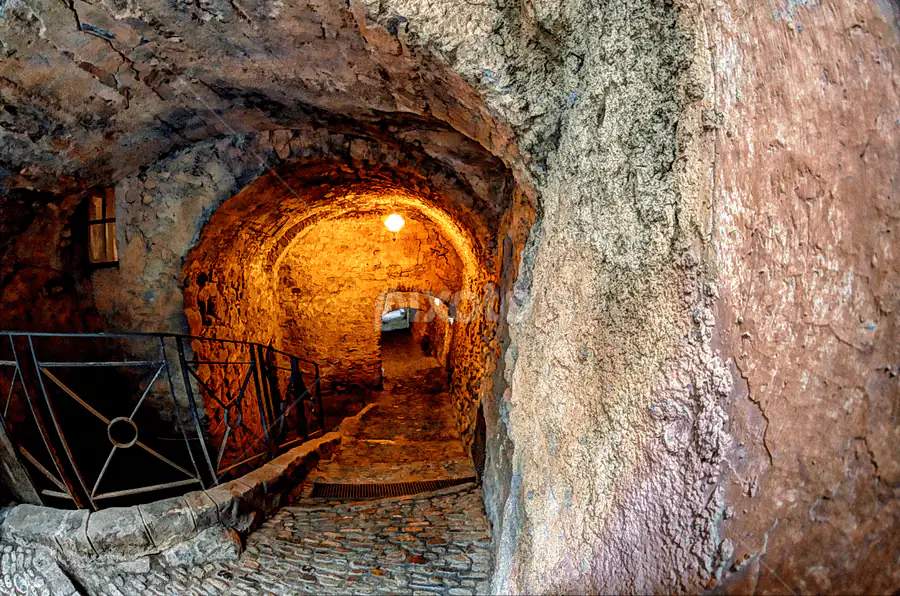
Passage carved in the rock in Dolceacqua

The Scasasse

Among the lanes of the Terra are the Scasasse, dark, narrow tunnels and covered passages running beneath the houses near the stream. They are one of the most curious corners of the village and well worth seeking out on your way down from the castle.

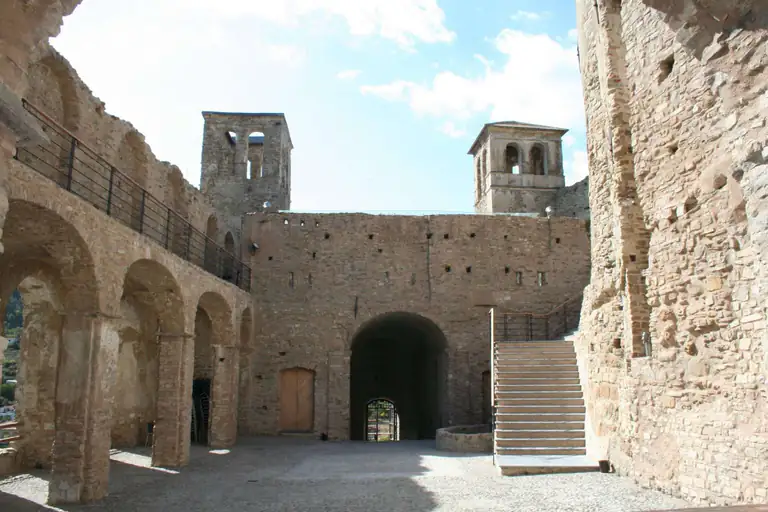
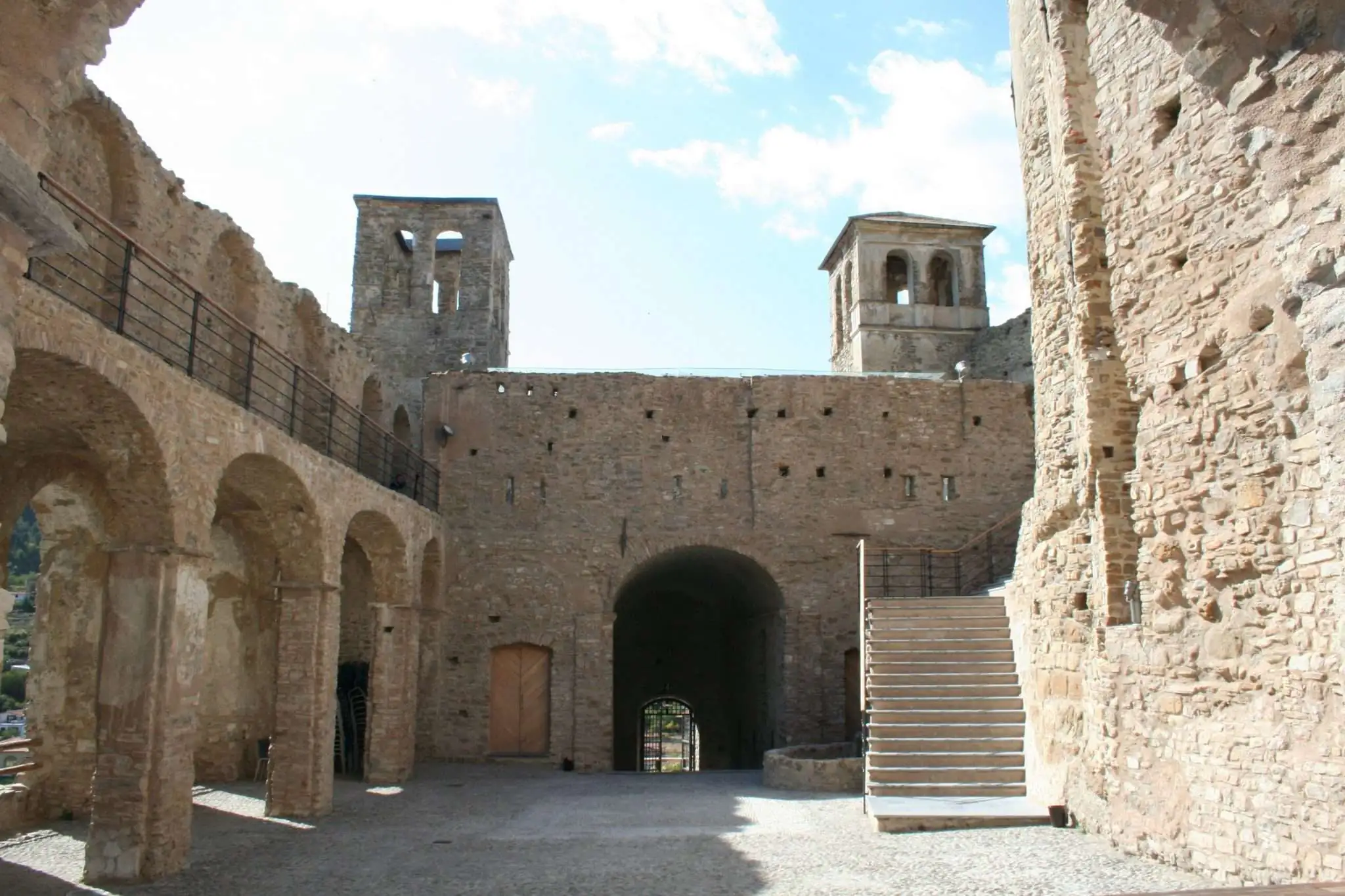
Courtyard of the Doria Castle in Dolceacqua

Castello dei Doria

At the top of the Terra rises the castle, built at the start of the 11th century as a fortress and bought in 1270 by Oberto Doria, the Genoese admiral who won the Battle of Meloria. In the 15th and 16th centuries the Doria family turned it into a residence with rooms decorated with stucco and frescoes. On 27 July 1744, during the War of the Austrian Succession, it was damaged by Franco-Spanish troops; by the 19th century it lay in ruins.

After lengthy restoration it is open to visitors: inside are multimedia rooms on the history of the village and of the Doria and Grimaldi families, a film about Monet and a walkway with views over the valley, the Rossese vineyards and the sea. Opening hours, history and visiting tips are in the guide to the Castello dei Doria.

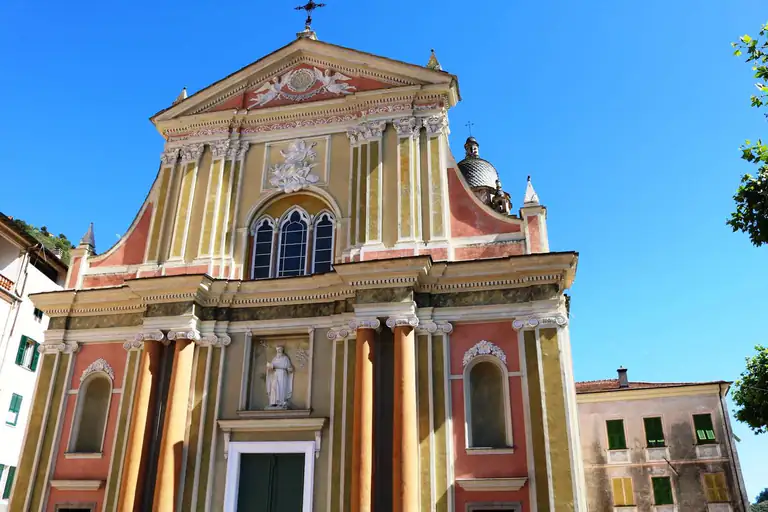
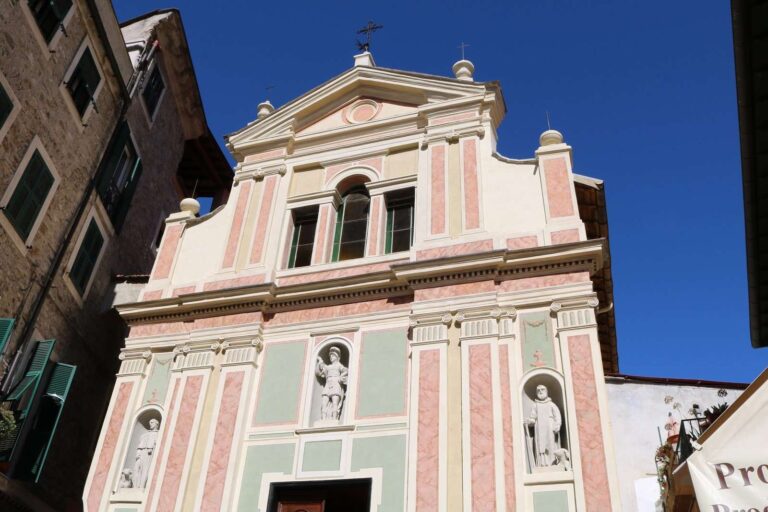
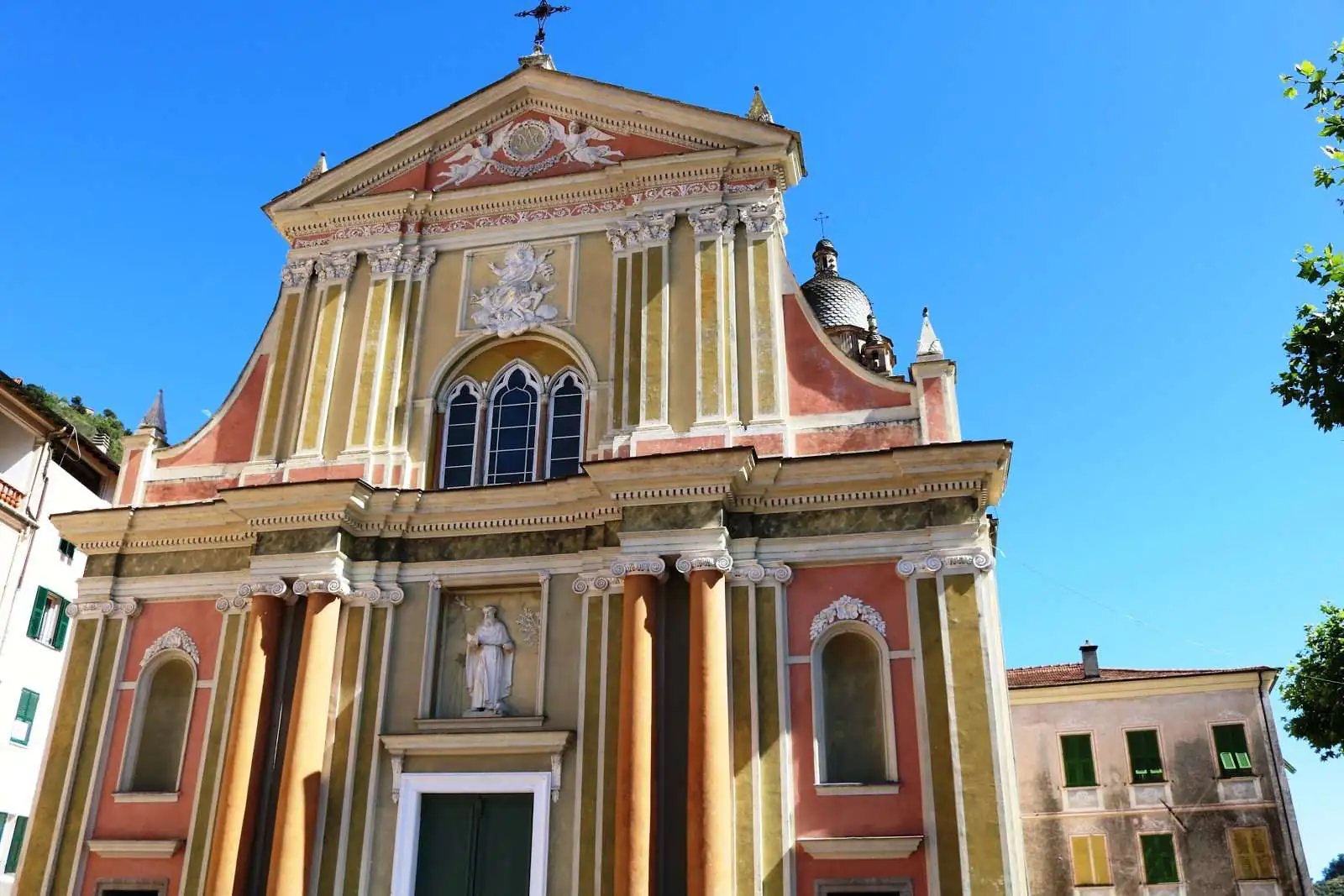
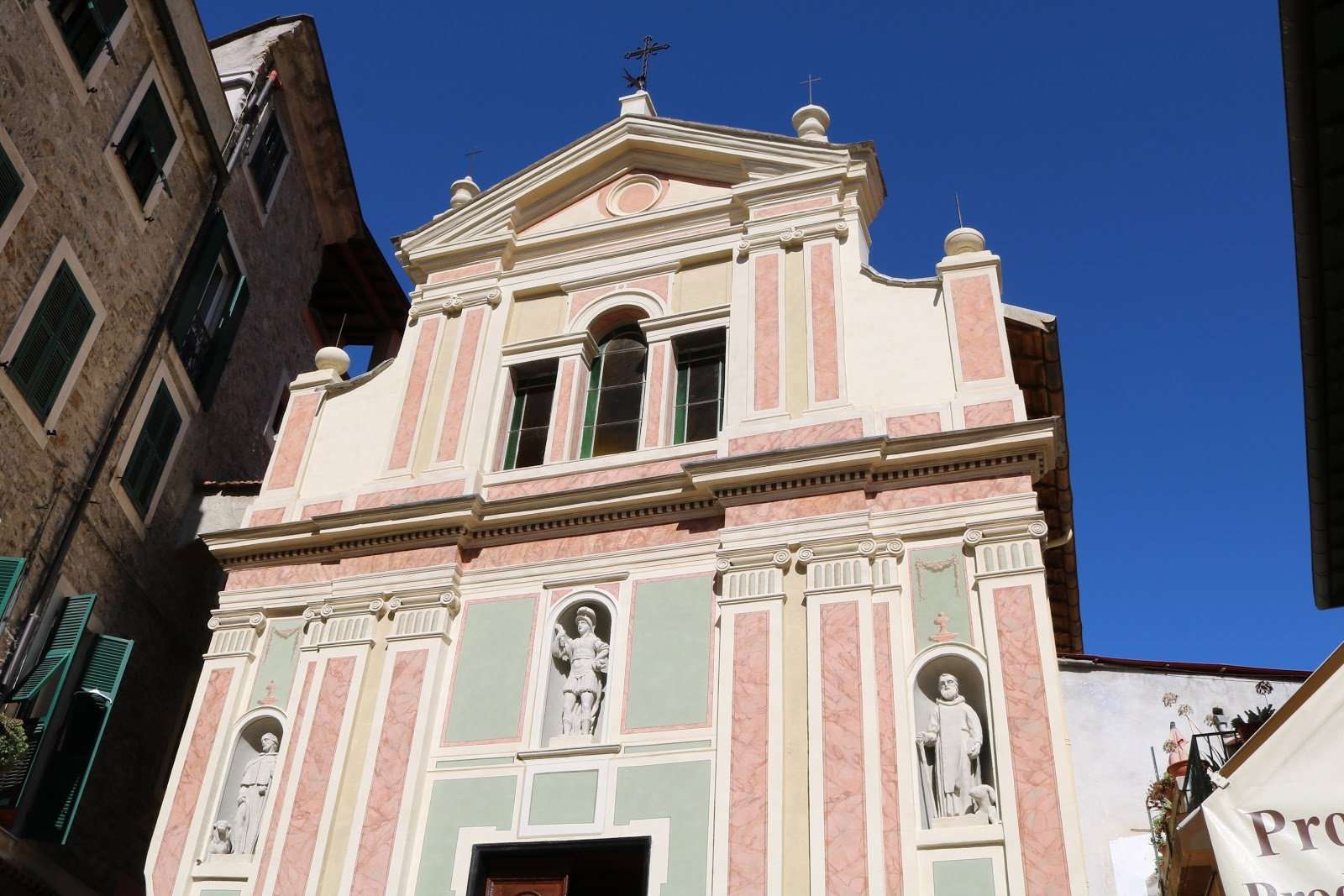
Church of Sant'Antonio Abate in Dolceacqua

Chiesa di Sant'Antonio Abate

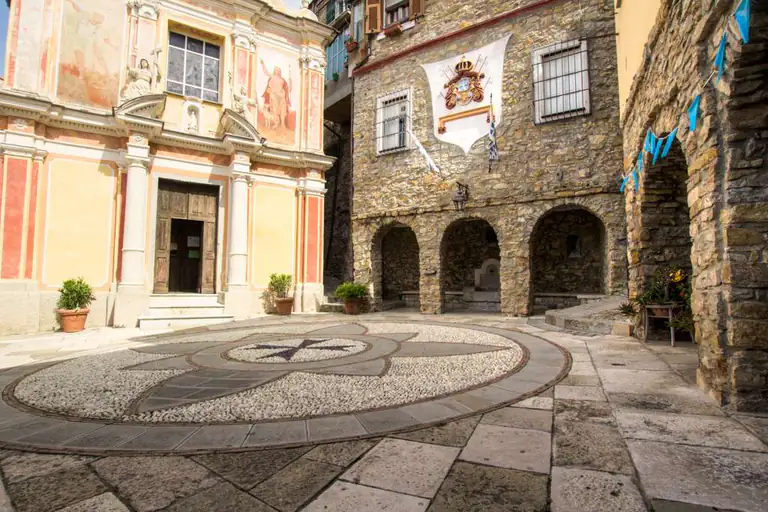
Heading back down towards the stream you reach the square of the parish church, a 15th-century building remodelled in Baroque style. Its bell tower stands on a corner tower of the old walls. Inside is the polyptych of Santa Devota, painted in 1515 by Ludovico Brea, the most important Renaissance painter between Liguria and Nice.

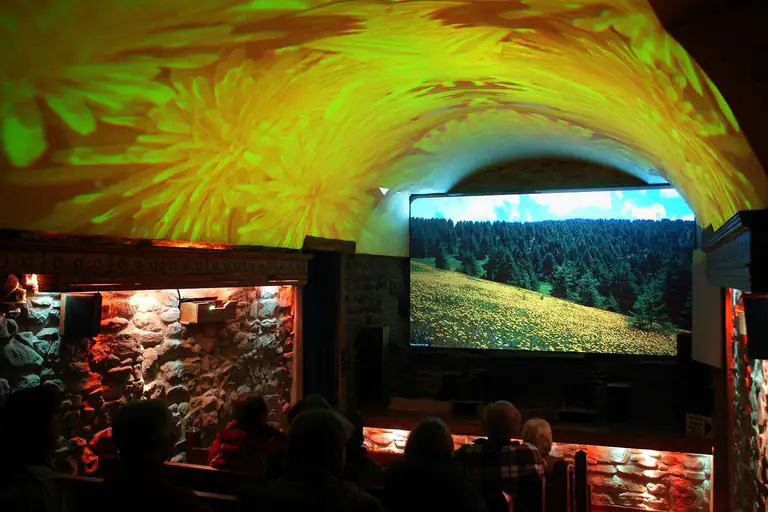
Immersive room of the Visionarium in Dolceacqua

Visionarium

On the street leading down to Sant’Antonio Abate is the Visionarium, an immersive projection room. Opening hours and programme change with the season, so ask at the tourist office.

Façade of the Oratory of San Sebastiano in Dolceacqua

Oratorio di San Sebastiano

In the Borgo, the Oratorio di San Sebastiano is the home of the “Bastianin” confraternity. It holds a wooden statue of the saint attributed to the Genoese sculptor Anton Maria Maragliano. Every January the procession with the laurel tree decorated with coloured wafers sets off from here.

Chiesa di San Giorgio

At the entrance to the village, among the olive groves, the Chiesa di San Giorgio is the oldest building in Dolceacqua: it is Romanesque, with its original façade and lower bell tower, and a wooden ceiling with 15th-century beams. The crypt holds the tombs of the Doria marquises, including those of Stefano Doria (1580) and Giulio Doria (1608), with suits of armour carved into the marble slabs.

Medieval alleys of Dolceacqua

The Borgo

The newer part of the village stretches along Via Barberis Colomba, with shops, bars and stores selling local produce. This is where you will find the shops selling michetta and the squares where the summer festivals are held, such as Piazza Mauro. The cycle path that follows the Nervia down to the sea also starts from the Borgo.

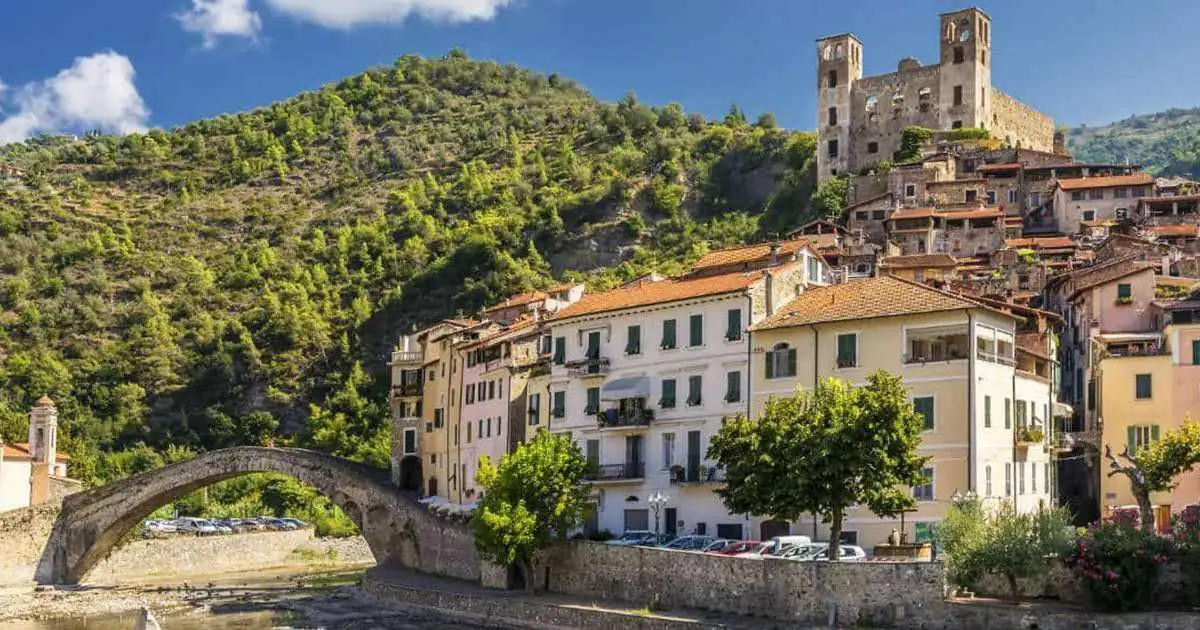
Dolceacqua and its castle among the hills

Where to stay

Where to stay in Dolceacqua

Dolceacqua is small but has a number of B&Bs, guest rooms and apartments, many of them inside the old houses of the Terra or in the Borgo. Staying in the village is worthwhile to see the bridge lit up in the evening and the village quiet in the morning, before the day visitors arrive.

If you prefer the seaside you can stay in Ventimiglia, Bordighera or Camporosso and drive up to Dolceacqua in a few minutes. In summer and during the August festivals it is best to book ahead.

Nearby alternative

Looking for more choice? Bordighera is 10 km away, by the sea, with hotels, B&Bs and apartments and trains along the coast and to France.

Where to stay in Bordighera →Day trips from Bordighera →

Getting there

How to get to Dolceacqua

By car

Leave the A10 motorway at Ventimiglia or Bordighera, take the Aurelia and then the Val Nervia provincial road, which passes through Camporosso.

By train

The nearest station is Ventimiglia, about 10 kilometres away, on the Genoa–Ventimiglia line and connected with Nice and the French Riviera. From the station continue by bus or taxi.

By bus

Riviera Trasporti line 7 links Ventimiglia with Dolceacqua, Isolabona, Pigna and Castelvittorio. Services are not frequent: check the summer or winter timetable on the Riviera Trasporti website.

By plane

The nearest airport is Nice Côte d’Azur, about 50 kilometres away. From there you can drive, or take the train to Ventimiglia and then the bus. Alternatively there is Genoa airport.

Parking

Cars cannot enter the centre: leave yours in one of the numbered car parks along the main road. According to the municipality’s tourism website, most are free: P1 and P2 at the entrance to the village near the cemetery, P3 near the town hall, P5 after the Ponte Nuovo, P7 “San Filippo” behind the Ponte Vecchio and P8 on the bypass beyond the village. P4, near the post office, and P6, above the sports grounds, are paid from 8am to 8pm. In 2025 the Praeli area along the cycle path was also laid out, with about 80 spaces and a campervan area. On festival days the car parks fill up early: arrive in the morning.
By car

A10, Ventimiglia or Bordighera exits, then the Val Nervia road; pedestrian centre

By train

Ventimiglia station (about 10 km), then Riviera Trasporti bus line 7

By plane

Nice Côte d'Azur (about 50 km); alternatively Genoa

The guide

Dolceacqua in a day: suggested itinerary

  • Morning: arrive in the Borgo for coffee and a michetta, then photograph the Ponte Vecchio from the riverbank and cross over to the Terra.
  • Late morning: climb through the carruggi to the Castello dei Doria and its panoramic walkway.
  • Lunch: local valley cooking in a village trattoria, with a glass of Rossese.
  • Afternoon: walk down through the Scasasse to Sant’Antonio Abate and the Visionarium, then on to the Oratorio di San Sebastiano and the Chiesa di San Giorgio.
  • Evening: a tasting in a wine cellar or sunset by the sea in Ventimiglia or Bordighera, a few minutes away by car.

With a second day you can head up to Apricale and Pigna or walk a stretch of trail through the vineyards and olive groves.

What to eat in Dolceacqua

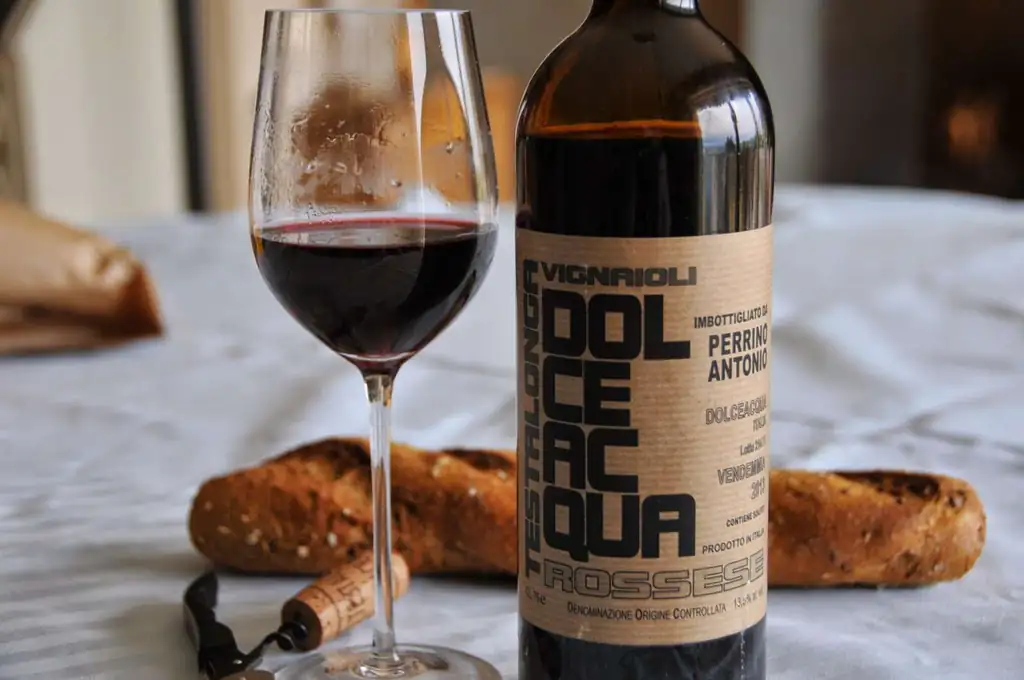
Bottle of Rossese di Dolceacqua with a glass

Dolceacqua’s cooking is that of the western Ligurian hinterland: vegetables, herbs, olive oil, meat and pulses, with Rossese as the common thread.

  • Rossese di Dolceacqua: the valley’s ruby-red wine, Liguria’s first DOC since 1972. It is made in Dolceacqua and other villages of the Val Nervia and surrounding area, and was a favourite of Napoleon.
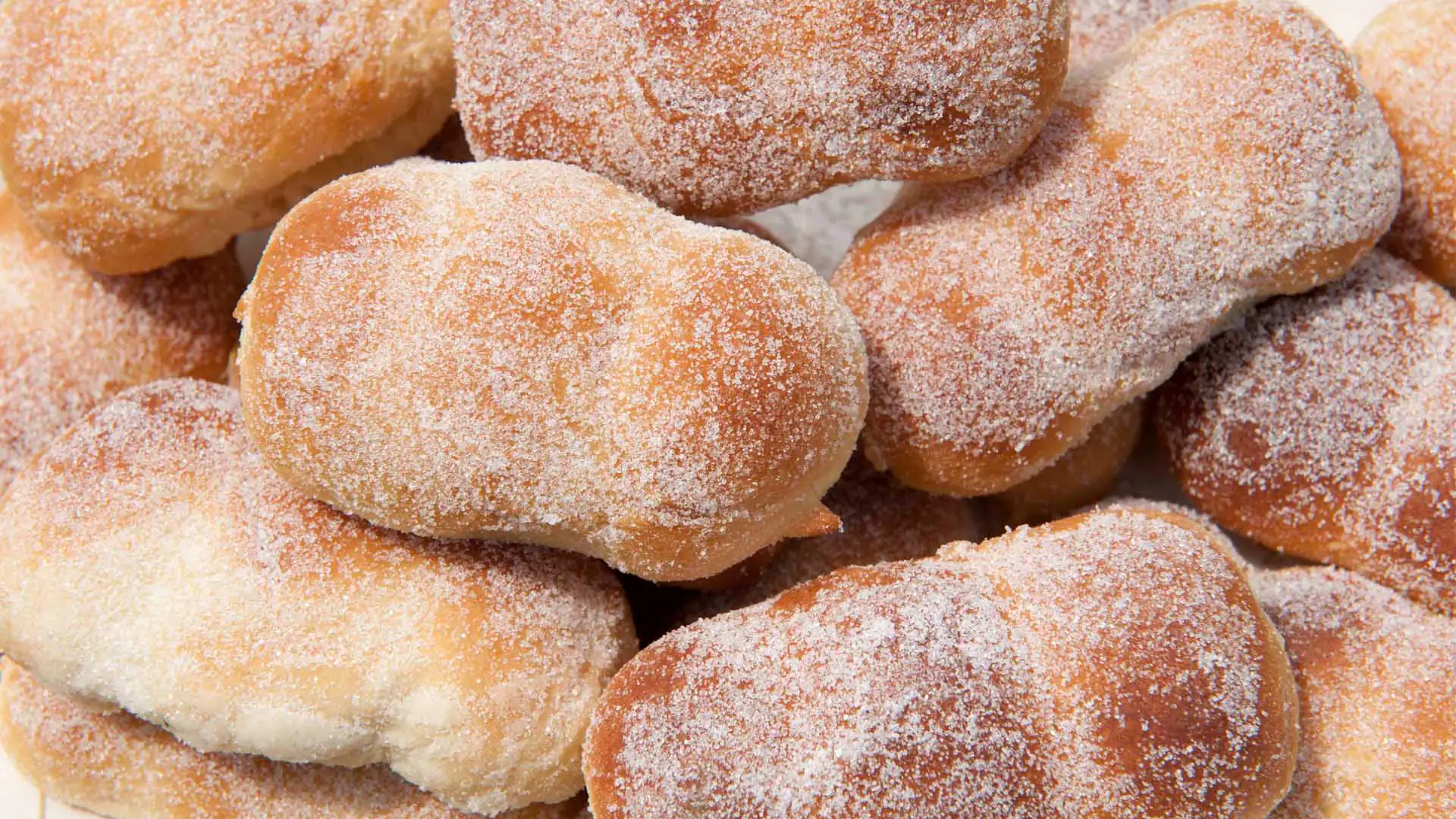
  • Michetta: the village’s own sweet, a soft sugar-coated brioche linked to a medieval legend. It is protected by a municipal designation and available all year round.
  • Fresciöi: fritters made with salt cod, courgettes or apples, the stars of a summer food festival.
  • Capra e fagioli: goat with beans, the valley’s most typical meat dish, slowly stewed.
  • Extra virgin olive oil: made from Taggiasca olives, golden in colour and delicate in flavour.

Events in Dolceacqua

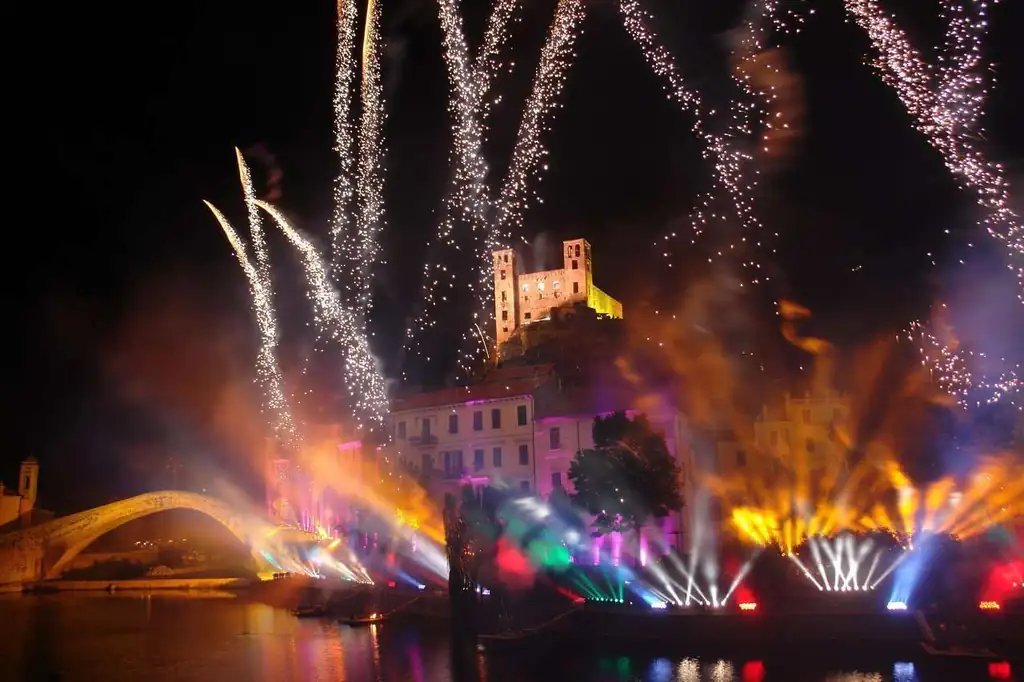
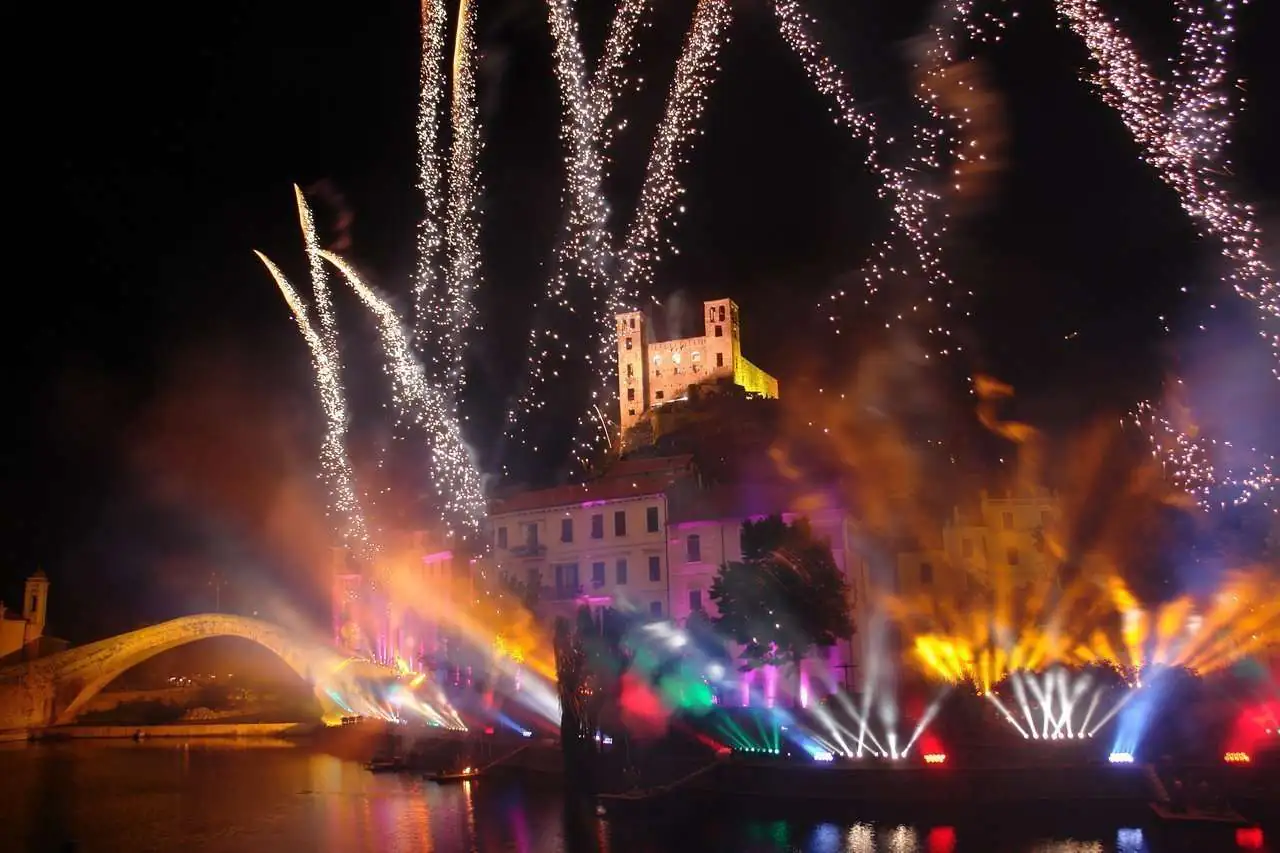
Fireworks over Dolceacqua castle
  • Processione di San Sebastiano (January): on the Sunday closest to 20 January the confraternity carries a laurel tree decorated with coloured wafers in procession.
  • Carugi in fiore (April): the village alleys fill with flowers around 25 April.
  • Il Dolceacqua in piazza (July): Rossese tasting with the producers in Piazza Mauro; in 2026 it was held on 18 July, with 16 wineries.
  • Sagra dei Fresciöi (late July or early August): in 2026 it was held on Saturday 1 August in Piazza Mauro.
  • Festa della michetta (16 August): in the morning young people in costume tour the village with a small band and ask the girls beneath their windows for a michetta.
  • Fireworks display (second half of August): musical fireworks over the castle that draw thousands of people.
  • Market: organic produce, crafts and antiques on the last Sunday of every month.

Hiking and trails

Dolceacqua is a good base for walks through Rossese vineyards, olive groves and the villages of the valley. Mule tracks climb from the village to the church of San Bernardo and the sanctuary of the Madonna Addolorata on the surrounding hills. There are also multi-stage routes linking Dolceacqua with other villages of the western Riviera, such as the crossing from Airole, and higher up you can join the Alta Via dei Monti Liguri.

For cyclists there is the cycle path along the left bank of the Nervia, which takes you to the seafront at Ventimiglia in under 20 minutes, plus several routes for mountain bikes and e-bikes.

Day trips from Dolceacqua

  • Rocchetta Nervina: the next village up the valley, with its stone bridges over the stream.
  • Apricale: the village perched on a hilltop in the valley, with its square and stone alleys.
  • Pigna: further up the Val Nervia, also reachable on bus line 7.
  • Ventimiglia (about 10 km): the old town, the sea and the Friday market.
  • Bordighera: palm trees, the old town and the spots painted by Monet.
  • Seborga and Sanremo: the hilltop “principality” and the city of flowers.

Weather

Weather and best time to visit Dolceacqua

Spring and autumn; August for the michetta festival and fireworks

🌦️
20°CNow · wind 17 km/h
  1. Fri 9🌦️20° 13°1 mm
  2. Sat 10🌤️22° 11° 
  3. Sun 11⛅22° 12° 
  4. Mon 12🌤️22° 13° 
  5. Tue 13☁️21° 10° 
  6. Wed 14⛅21° 11° 

Forecast: MET Norway (Yr), CC BY 4.0 licence. Updated hourly.

Weather across Liguria →

MonthJanFebMarAprMayJunJulAugSepOctNovDec
SeaOff seasonOff seasonOff seasonOff seasonPossibleGoodIdealIdealGoodPossibleOff seasonOff season
Sightseeing and hikingGoodGoodIdealIdealIdealGoodGoodGoodIdealIdealGoodGood
CrowdsFew peopleFew peopleFew peopleBusyBusyBusyVery busyVery busyBusyBusyFew peopleFew people
Don't missSan Sebastiano processionCarugi in fioreIl Dolceacqua in piazzaMichetta festival and fireworks

IdealGoodPossibleOff season

Crowds:QuietFew peopleBusyVery busy

Gallery

Photos of Dolceacqua

FAQ

Frequently asked questions about Dolceacqua

What is there to see in Dolceacqua?

The Ponte Vecchio painted by Monet, the carruggi of the Terra with the Scasasse, the Castello dei Doria, the Chiesa di Sant’Antonio Abate with Ludovico Brea’s polyptych, the Oratorio di San Sebastiano and the Romanesque Chiesa di San Giorgio.

How long do you need to visit Dolceacqua?

Three or four hours are enough for the village and the castle. With lunch, a Rossese tasting and a walk in the surroundings, it is worth giving it a full day.

Can you visit the Castello dei Doria?

Yes, it is open for most of the year with a ticket, with opening hours that change with the seasons and closure on Mondays in winter. Up-to-date hours are on the municipality’s tourism website.

Where can you park in Dolceacqua?

In the numbered car parks along the valley road: almost all are free, while P4 and P6 are paid from 8am to 8pm. The San Filippo car park is the closest to the Ponte Vecchio.

Which painting did Monet paint in Dolceacqua?

In 1884 Monet painted three views of the bridge and the castle. “The Castle of Dolceacqua” is in the Musée Marmottan in Paris; another, “The Bridge at Dolceacqua”, is at the Clark Art Institute in Williamstown.

How can you reach Dolceacqua without a car?

By train to Ventimiglia and then on Riviera Trasporti line 7. Alternatively, you can cycle up from Ventimiglia along the Nervia cycle path.

When is the michetta festival?

On 16 August. In the second half of August there is also the big fireworks display over the castle.

Is Dolceacqua close to the sea?

Yes, the sea at Ventimiglia is about 10 kilometres away: a few minutes by car or under 20 minutes by bike on the cycle path.

What is Rossese di Dolceacqua?

It is a red wine made from Rossese grapes in the Val Nervia and surrounding area. In 1972 it became Liguria’s first DOC.

Nearby

What to see near Dolceacqua

4 km as the crow flies

Apricale

Sun-drenched stone village in the val Nervia: the Castello della Lucertola, murals, a theatre-like square, pansarola and the Teatro della…

Discover →

5 km as the crow flies

Rocchetta Nervina

Medieval village in the Val Nervia on the Barbaira stream: humpback bridge, carruggi, E Dubarìe museum, natural swimming pools and…

Discover →

6 km as the crow flies

Seborga

The Principality village above Bordighera: Piazza San Martino, Palazzo dei Monaci, sentry boxes, mimosa and views over the Côte d'Azur.

Discover →

7 km as the crow flies

Ventimiglia

The border town: Ventimiglia Alta, the Roman theatre, the Hanbury Gardens, the Balzi Rossi, the sand at Le Calandre and…

Discover →
Scroll to Top